
Glass threads and electronic eyes
Nobel Prize in Physics, 2009: Charles K. Kao, Willard S. Boyle, and George E. Smith
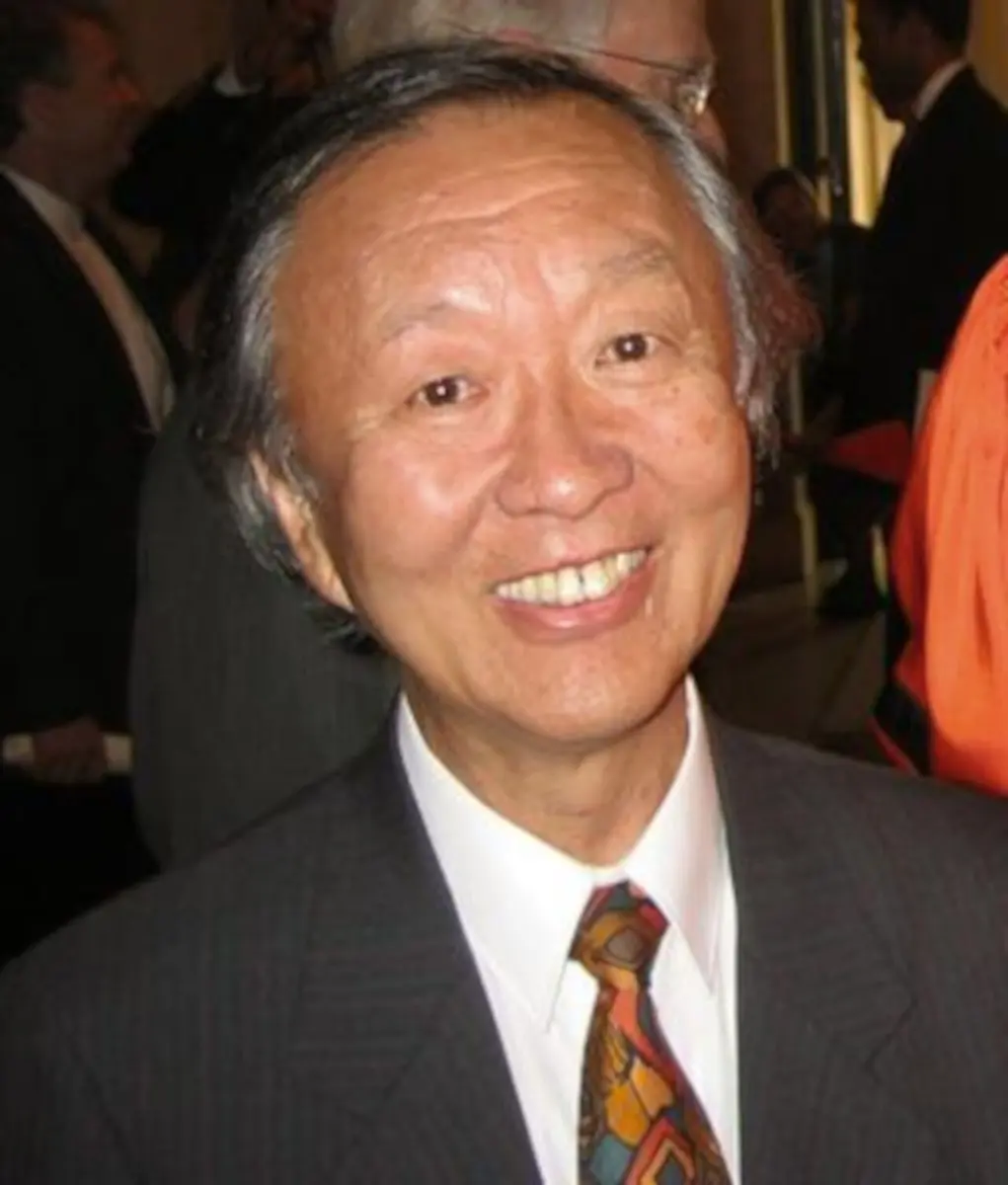
Charles K. Kao
1933–2018, born in China
An engineer from Shanghai and Hong Kong, working in England, who believed glass could carry light for kilometers when few others did.
Photo: David Dobkin [1], CC BY-SA 3.0
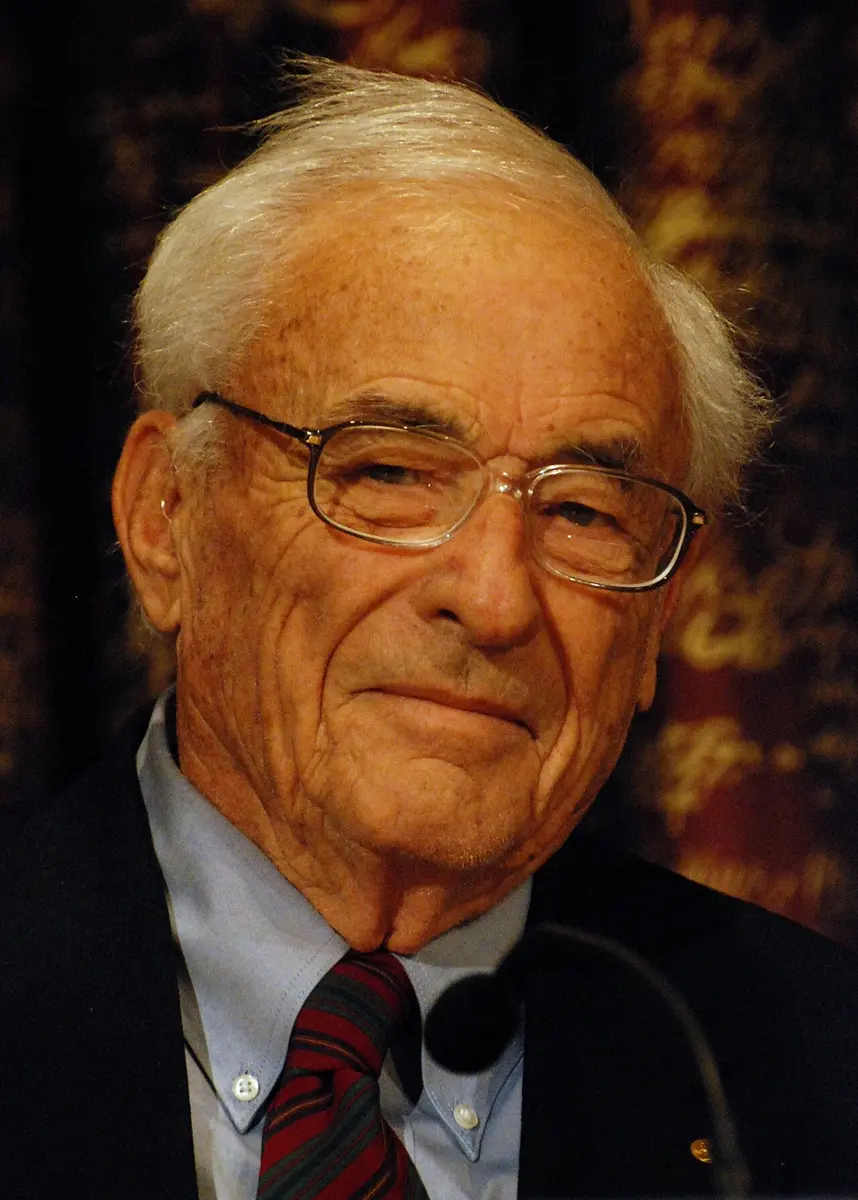
Willard S. Boyle
1924–2011, born in Canada
Taught at home by his mother until he was a teenager; later a wartime pilot and a laser pioneer at Bell Labs.
Photo: Prolineserver ( talk ), CC BY-SA 3.0
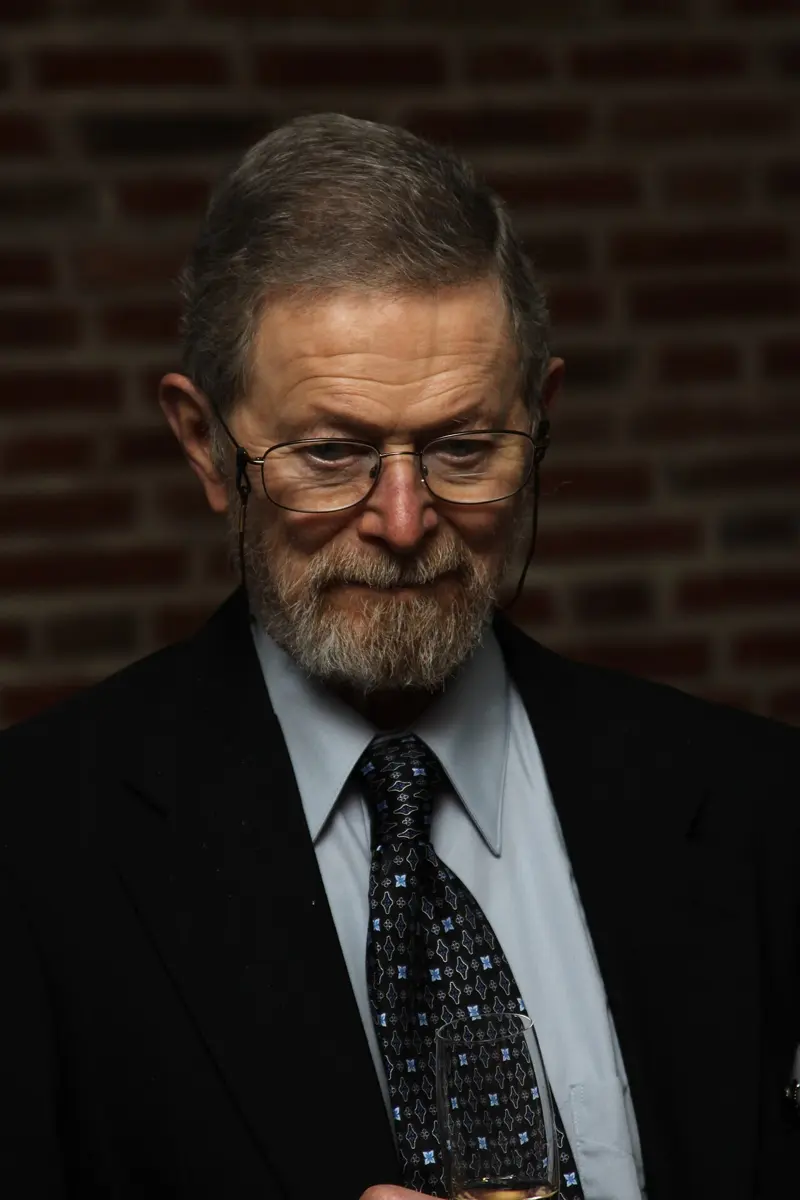
George E. Smith
1930–2025, born in the USA
Boyle’s colleague at Bell Labs and his sailing partner. After he retired, he sailed round the world.
Photo: US Embassy Sweden, CC BY 2.0
Send a photo to a friend in Pokhara. In a fraction of a second, your phone’s camera has turned light into numbers, and those numbers have raced away, partly as radio waves through the air and, for most of the journey, as flashes of light inside threads of glass thinner than a hair.
Both halves of that journey come from the work honored by the 2009 Nobel Prize in Physics. Half the prize went to Charles Kao, who showed how light could carry messages through glass over long distances. The other half went to Willard Boyle and George Smith, who invented the CCD, the first successful electronic eye: a chip that turns a picture into electric charges that can be counted.
Part 1: light in a thread of glass
The problem: copper cables were full
In the 1950s and 60s, telephone calls traveled as electric currents along copper wires, or as radio waves. The first telephone cable under the Atlantic Ocean, laid in 1956, could carry 36 calls at once. The world wanted many, many more, and television needed more still.
Light could do far better. Like radio waves, light is an electromagnetic wave, but it shakes tens of thousands of times faster, so it can be switched on and off far faster and carry far more information Grade 9: Electromagnetic spectrum. A message can be sent as very fast flashes: light on for a 1, off for a 0 Grade 10: Binary numbers. After the laser was invented in 1960, there was a bright, steady light to send.
But light travels in straight lines, and through air it is blocked by fog, rain and hills. It needed a pipe.
How a glass thread holds light
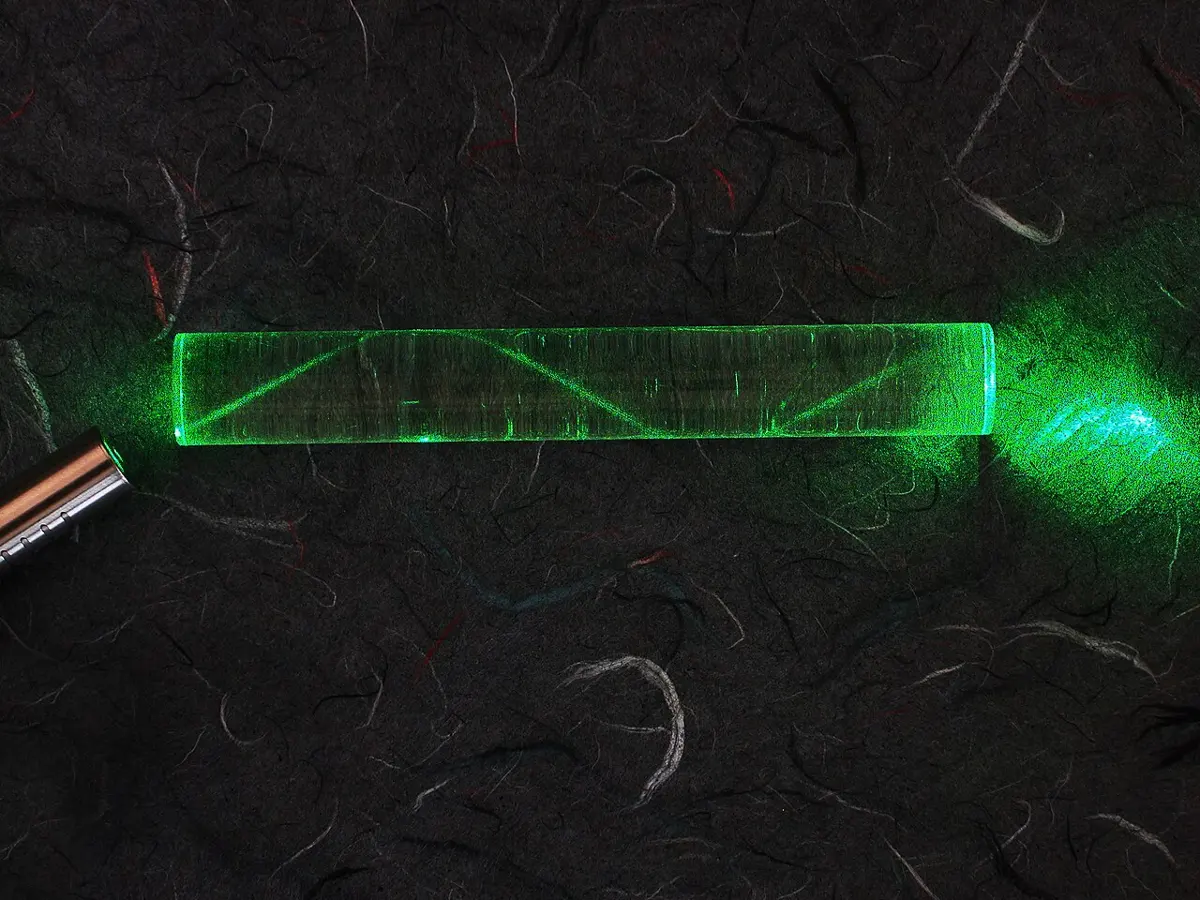
When light goes from glass into air at a slant, it bends away from the glass Grade 10: Refraction of light. If the slant is great enough, it can’t get out at all: it is reflected back into the glass completely. This is total internal reflection Grade 10: Total internal reflection. An optical fiber uses it: a thread of glass, about as thick as a hair, with a core of glass wrapped in a cladding of glass that bends light slightly less. Light sent into the core bounces off the wall again and again, and follows the fiber round bends Grade 10: Optical fibers.
Why it was hard: glass that swallowed light
By the early 1960s doctors already used bundles of short glass fibers to look inside the stomach. But for sending messages these fibers were useless. Glass that looks perfectly clear in a window is not clear over a long distance. In the best fibers of the time, after just 20 meters only 1% of the light was left. A telephone line needs to reach kilometers.
Most engineers thought this was simply how glass is, and turned to other ideas.
What Kao did, step by step
Kao was born in Shanghai in 1933 and grew up there and in Hong Kong. He studied electrical engineering in London and worked at Standard Telecommunication Laboratories in Harlow, England.
- 1964–1966: asking why. With a younger colleague, George Hockham, Kao studied what really happens to light inside glass. Some of it is lost because the fiber is uneven or bent, and some because the light is scattered. But they found that most of it was absorbed by impurities: tiny amounts of other substances in the glass, such as iron, a few atoms in every million.
- January 1966: the claim. Kao showed that if the impurities were removed, glass could be clear enough that 1% of the light would be left after a whole kilometer: fifty times further than the 20 meters of the time. That would be enough for telephone lines. He suggested the purest glass there is, fused silica: melted quartz, the mineral that makes up most sand. It has to be heated to around 2,000 °C to be drawn into threads, which makes it hard to work.
- Persuading the world. Many experts doubted him. Kao traveled to glass makers and telephone companies in the USA, Japan and Europe, testing samples and persuading them to try.
- 1970: it works. Four years after his paper, the glass company Corning, in the USA, made a fiber of very pure silica that met his target.
What did Kao find was the main reason glass fibers lost so much light?
Pick an answer to see why.
Fibers today
Today’s fibers are so clear that 95% of the light is still there after a kilometer, and a signal can go about 100 km before it needs to be boosted. The light used is infrared, just beyond what the eye can see, at the wavelength that the glass absorbs least. In 1988 the first fiber-optic cable was laid across the bottom of the Atlantic Ocean. By 2009 there was over a billion kilometers of optical fiber in the world, enough to go round the Earth more than 25,000 times.
Part 2: the electronic eye
The problem: pictures on film
Until the 1990s, almost every photograph was taken on film: a strip of plastic coated with chemicals that change when light falls on them. You could not see your photo until the film had been developed in a laboratory, with more chemicals. A space probe could not send film home, and a telescope needed hours of exposure on a photographic plate to record a faint galaxy.
What was needed was a chip that could turn a picture straight into electric signals.
How light makes a charge
When light falls on silicon, the material of computer chips, each tiny packet of light (a photon) can knock an electron free inside it. More light knocks free more electrons. This is a form of the photoelectric effect, which Albert Einstein explained in 1905 (The photoelectric effect). So a small square of silicon can measure brightness: count the electrons, and you know how much light fell on it.
The hard part is the counting. A camera chip has millions of these squares, called pixels. How do you read millions of tiny charges, one by one, without a wire to each?
What Boyle and Smith did, step by step
Boyle and Smith worked at Bell Labs, the research laboratory of the American telephone company, near New York.
- 1969: a race over memory. Their boss pushed them to compete with another Bell Labs team, which was building computer memory from tiny magnetic “bubbles”. Boyle and Smith wondered: could little packets of electric charge on a silicon chip be stored and moved along in the same way?
- One afternoon in autumn 1969: the idea. In Boyle’s office, they sketched the design on a blackboard in about an hour. A row of tiny metal plates sits on a silicon chip. A voltage on a plate holds a packet of electrons underneath it, like water in a bucket. Change the voltages on the plates one after another, and every packet slides along to the next plate, like buckets passed from hand to hand down a line of people. They called it a charge-coupled device, or CCD. (Sources disagree on the day: the Nobel Prize’s story says September, the IEEE’s history says 17 October.)
- About a week later, technicians had built the first one, and it worked.
- 1970: pictures. They saw at once that if light made the charges, the device was an image sensor. In 1970 they showed a CCD in a simple video camera.
As computer memory the CCD is forgotten. As an eye it changed the world.
How a CCD camera takes a picture
- Collect. The lens makes a picture on the chip. On each pixel, light knocks electrons free, and they are held in that pixel’s “bucket”. A bright part of the picture fills its buckets with many electrons; a dark part, with few.
- Shift down. When the picture has been taken, the voltages pass every row of buckets down one step. The bottom row drops into a read-out row.
- Shift along and count. The read-out row passes its buckets sideways, one at a time, to an amplifier at the corner, which measures each packet of charge. The number becomes a 0-to-255 brightness, for example, in the computer.
- Repeat. The next row drops into the read-out row, and so on, until every pixel has been counted. A computer puts the numbers back together as a picture.
A CCD on its own sees only brightness, not color. To take color photos, each pixel is covered with a tiny red, green or blue filter, with twice as many green ones as red or blue, because our eyes are most sensitive to green.
In a CCD, how does the chip tell a bright part of a picture from a dark part?
Pick an answer to see why.
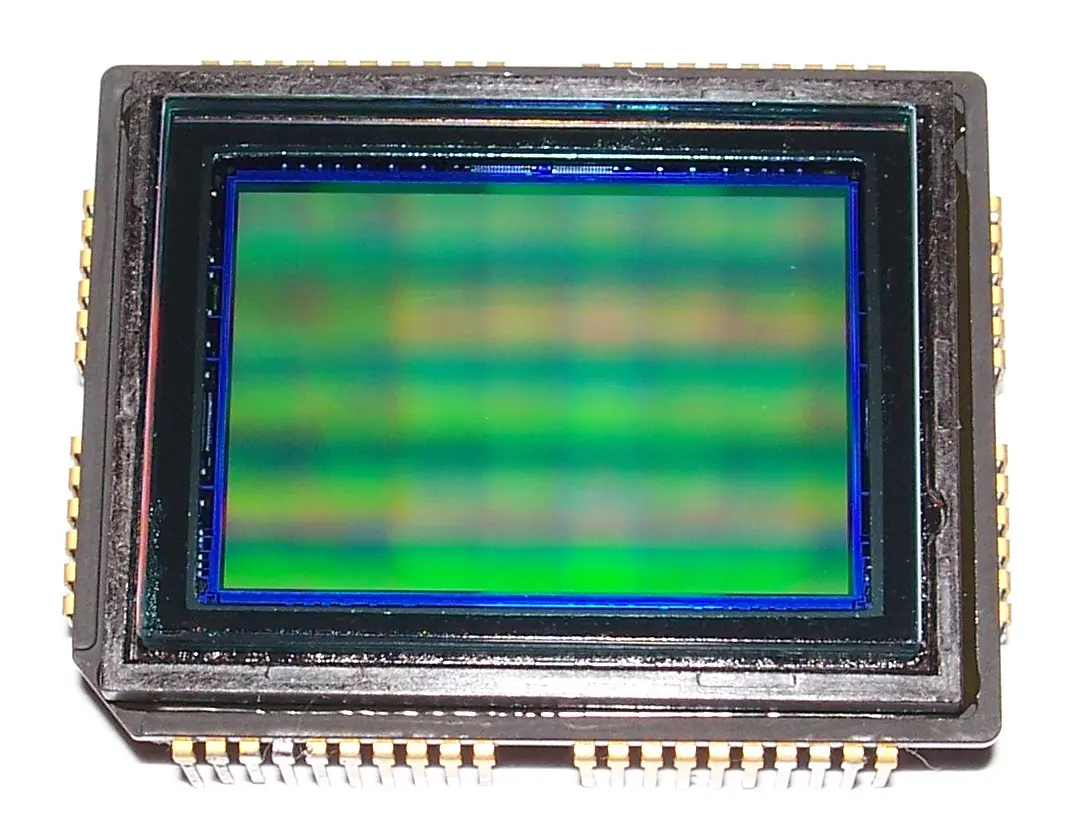
Eyes on the universe
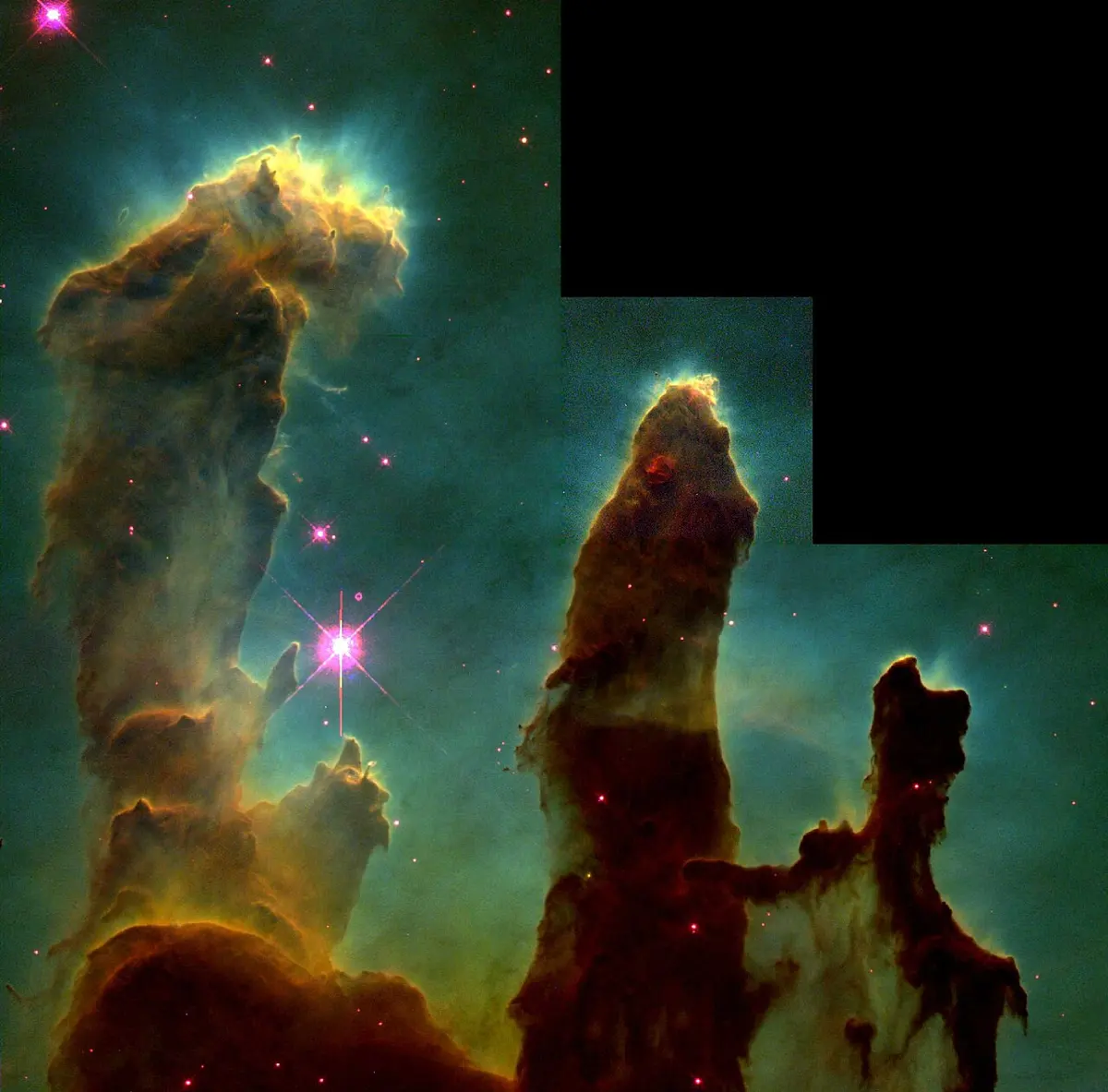
Astronomers were among the first to use CCDs, because a CCD catches far more of the light that falls on it than film does: most of the photons that reach it, where a photographic plate records only a few in every hundred. The Hubble Space Telescope was launched in 1990 with CCD cameras, and robots on Mars send home pictures from electronic eyes.
In your life today
- The internet. Almost all the world’s phone calls and internet data travel through optical fibers for most of their journey. Nepal’s internet reaches the rest of the world through fiber cables across the border into India and, since January 2018, into China at Rasuwagadhi. Fibers run along the East-West Highway and the Mid-Hill Highway, and many homes in Nepal’s towns now have “fiber internet” Grade 10: Optical fibers in telecommunication.
- Medicine. An endoscope uses optical fibers, and at its tip a tiny camera chip, to look inside the body without cutting Grade 10: Endoscopy.
- Cameras. Every digital camera is built on the idea that a chip can turn light into charge.
What came next
- Faster and faster fibers. A single fiber under the ocean now carries many terabits per second. New fibers with several cores, or with hollow cores filled with air, are being tested to carry still more.
- Bigger electronic eyes. Camera chips for astronomy now have hundreds of millions of pixels. The Vera C. Rubin Observatory in Chile, which began work in 2025, photographs the whole southern sky every few nights with a camera of 3,200 million pixels, built from CCDs.
- Seeing the very faint. Cooled CCDs can count single photons, to see the faintest galaxies.
An open question: the amount of data we send keeps doubling every few years. One fiber can carry only so much before the light itself begins to change the glass it travels through. How will the world carry the data of the future: more fibers, better fibers, or a new idea nobody has had yet?
In your science books
- Grade 9: the electromagnetic spectrum and visible light.
- Grade 10: refraction of light, total internal reflection, optical fibers, analog and digital signals and signal transmission.
- Going Further: the photoelectric effect and photons at work.
Learn more
- The Nobel Prize’s own explanation: The masters of light (nobelprize.org).
- The Nobel lectures: Kao’s (read by his wife, Gwen May-Wan Kao, as he had Alzheimer’s disease), Boyle’s and Smith’s.
The official reason
The prize was given “for groundbreaking achievements concerning the transmission of light in fibers for optical communication.”
The prize was given “for the invention of an imaging semiconductor circuit - the CCD sensor.”