
Turning grown-up cells back into stem cells
Nobel Prize in Physiology or Medicine, 2012: Sir John B. Gurdon and Shinya Yamanaka
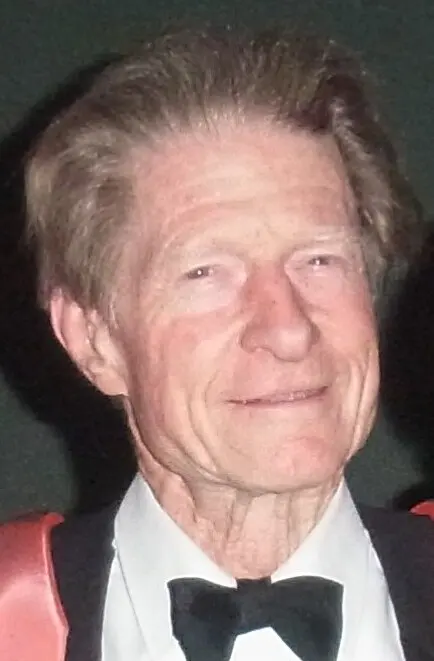
Sir John B. Gurdon
1933–2025, born in Britain
At school he came last of 250 boys in biology, and his teacher called his wish to be a scientist “quite ridiculous”. He kept the report above his desk.
Photo: Deryck Chan , courtesy to cameraman Sien Yi Tan., CC BY-SA 3.0
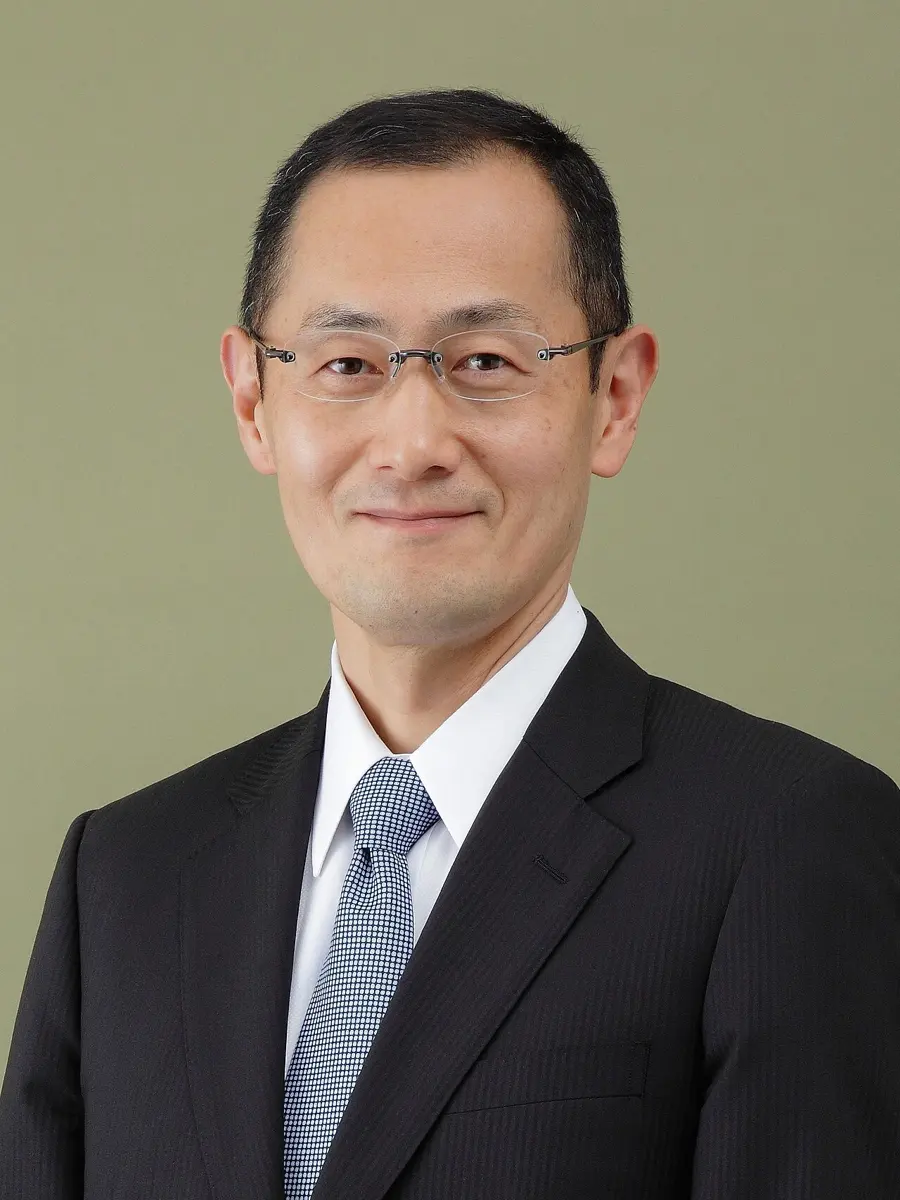
Shinya Yamanaka
born 1962 in Japan
The son of a small factory owner in Osaka, he trained as a bone surgeon after breaking many bones himself at judo and rugby. He was so slow at operations that he turned to research instead.
You began as one cell, smaller than the full stop at the end of this sentence. Today you are made of tens of trillions of cells, of more than 200 kinds: nerve cells as long as your leg, muscle cells that pull, red blood cells with no nucleus at all, skin cells that flake off as dust. Every one of them came from that first cell, by dividing again and again.
Once a cell has become a skin cell or a nerve cell, it stays that way. For a long time scientists thought this road ran one way only, like water flowing downhill. The 2012 Nobel Prize in Physiology or Medicine went to two scientists who showed that it can be run backwards: John Gurdon, who did it with a frog in 1962, and Shinya Yamanaka, who did it in a dish with just four genes in 2006.
The problem: a one-way road?
In the first few days after an egg is fertilized, the young embryo is a little ball of cells that are all alike. Each of them can still become any kind of cell in the body. Cells like this are called pluripotent stem cells (pluri means “many”, potent means “able”). As the embryo grows, they take different paths. One becomes a nerve cell, another a muscle cell. This is called specialization, and a specialized cell normally never changes back (Same DNA, different cells).
In 1957 the biologist Conrad Waddington drew a picture of this that scientists still use: a ball rolling down a hillside of valleys.
But why does a specialized cell never go back? There were two possible answers.
- A cell loses the genes it doesn’t need as it specializes. A skin cell would then have thrown away the instructions for making a nerve cell, and could never go back.
- A cell keeps all its genes but switches most of them off. Then the instructions would still be there, only locked away.
Your genes are written in DNA, kept in the nucleus of each cell Grade 10: Deoxyribonucleic acid (DNA). To find out which answer was right, someone had to test whether the nucleus of a specialized cell still held everything needed to build a whole animal.
Which of these cells can become any kind of cell in the body?
Pick an answer to see why.
Why it was hard
- You can’t read a whole genome by eye. In the 1950s nobody could read DNA. The only way to test whether a nucleus held every gene was to make it build an animal.
- Moving a nucleus is delicate work. A nucleus is far smaller than a grain of sand. It has to be taken out of one cell with a very fine glass needle and put into another without damage.
- Early tries said “no”. In 1952 two American scientists, Robert Briggs and Thomas King, moved nuclei from frog embryos into frog eggs. Nuclei from very young embryos worked. Nuclei from older, more specialized cells mostly failed. Many concluded that specialized cells lose something for good.
What they did, step by step
Gurdon: a frog from a gut cell
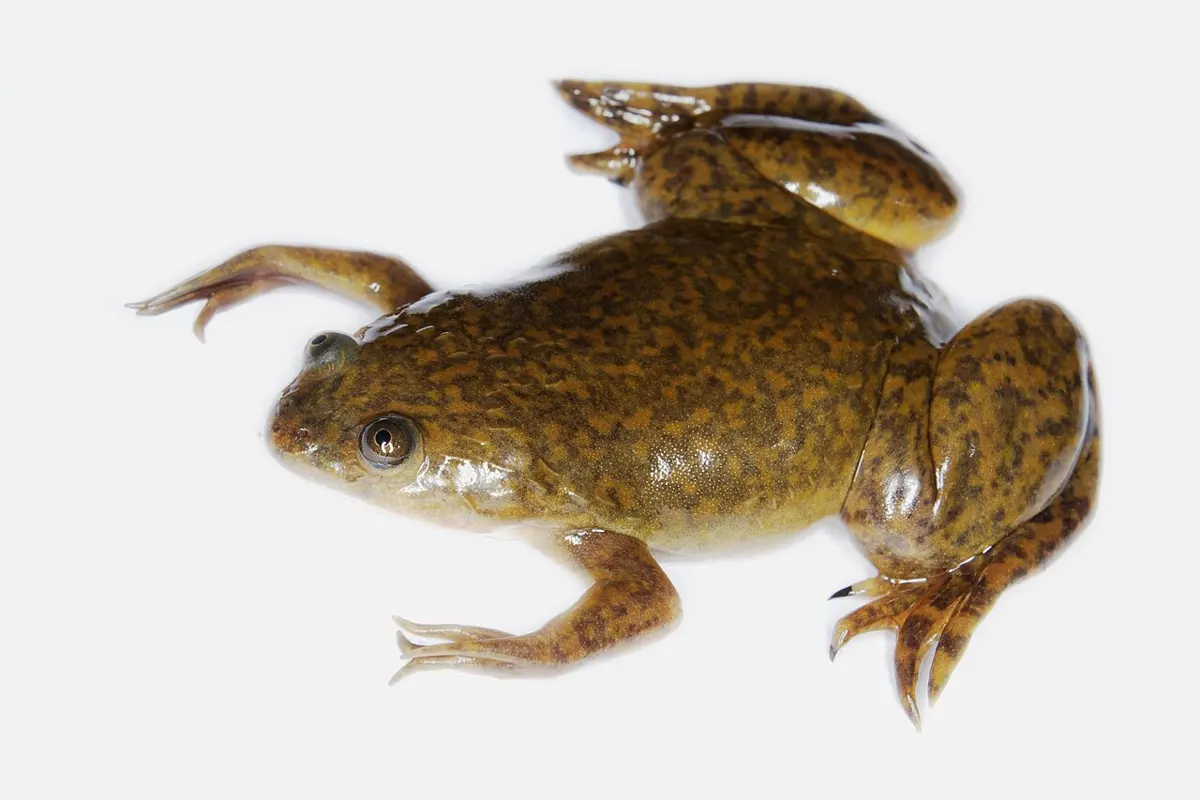
John Gurdon began this work in 1956 as a student at Oxford University, with his supervisor Michael Fischberg. He used the African clawed frog, whose large eggs are easy to work with.
- Empty the egg. He shone ultraviolet light on a frog’s egg to destroy its own nucleus.
- Take a specialized nucleus. He took cells from the intestine of a tadpole, a fully specialized kind of cell, and sucked the nucleus out of one with a very fine glass needle.
- Swap. He put that nucleus into the emptied egg.
- 1962, the result. Most of these eggs died. But some divided and grew into normal, swimming tadpoles, and in later experiments some grew into adult frogs that could have young of their own. A frog had been cloned: copied from one of its own body cells.
So the answer was the second one. A specialized cell keeps all its genes. The egg had somehow switched the old instructions back on.
At first many scientists doubted it. Perhaps, they said, the few nuclei that worked came from gut cells that were not fully specialized. Over the next years other experiments, by Gurdon and others, gave the same answer. In 1996 scientists in Scotland used the same idea to clone a mammal from an adult cell: Dolly the sheep.
Yamanaka: a recipe of four genes
Gurdon’s method needed an egg and a needle. Could a grown-up cell be turned back on its own, with no egg at all? More than 40 years later, Shinya Yamanaka found how. He was born in 1962, the year Gurdon’s tadpoles were reported.
- Late 1990s, the question. Yamanaka had seen as a surgeon that many patients had injuries or diseases no surgeon could cure. He switched to research, and in his own laboratory, in Nara in Japan, he studied embryonic stem cells: pluripotent cells taken from early mouse embryos and grown in dishes. Something must keep these cells young. He thought it might be the genes that are switched on only in them.
- 24 candidates. He and his student Kazutoshi Takahashi chose 24 genes that are active in embryonic stem cells. They carried them into fibroblasts, ordinary connective-tissue cells from mice, using harmless viruses as delivery vans. One gene at a time, nothing happened.
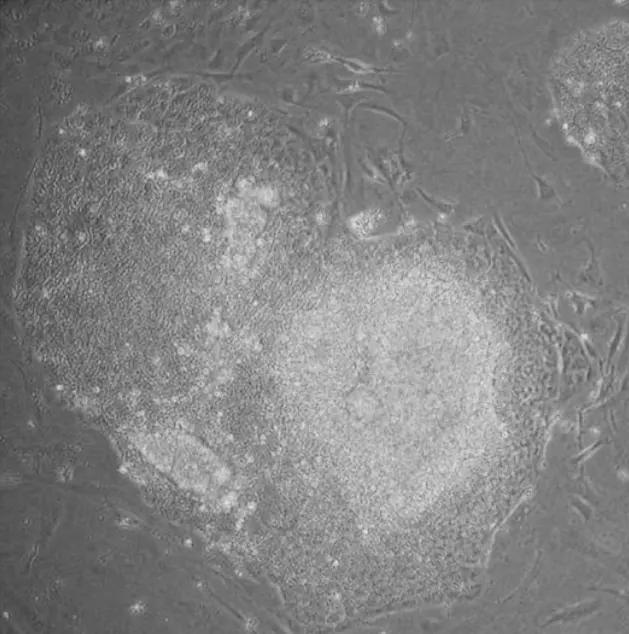
- All 24 at once. When they added all 24 together, a few of the cells changed. They grew plump with big nuclei, and clumped together in little colonies, just like embryonic stem cells.
- Down to four. They then left out one gene at a time, to see which ones really mattered. Only four were needed. In 2006, in Kyoto, they published the recipe. They called the new cells induced pluripotent stem cells, or iPS cells: stem cells made (induced) from ordinary cells.
- 2007, human cells. A year later Yamanaka’s team, and separately a team in the United States, made iPS cells from human skin cells.
Why was Yamanaka’s discovery so important, when Gurdon had already shown that specialized cells keep all their genes?
Pick an answer to see why.
How it works now: diseases in a dish
iPS cells have changed how diseases are studied. Many illnesses happen in cells that doctors can’t easily take out of a living person: the nerve cells of the brain, or the muscle of the heart. Now scientists can take a small piece of skin, or a few blood cells, turn them into iPS cells, and then grow them into the kind of cell that is ill. These cells carry the patient’s own genes, including any faulty one.
So scientists can watch a disease start in a dish, and test thousands of possible medicines on the patient’s own cells without putting the patient at risk. This is used to study, among others, diseases in which nerve cells die, such as motor neurone disease and Alzheimer’s disease.
In your life today
- New treatments. In 2014, in Japan, a woman losing her sight was the first person to receive cells grown from her own iPS cells: a thin sheet of cells for the back of the eye. In March 2026 Japan gave the first approvals anywhere for treatments made from iPS cells: nerve cells for Parkinson’s disease and sheets of heart muscle for heart failure. The approvals are conditional: the companies must show over the next years, on more patients, that the treatments really work.
- Fewer embryos needed. Before iPS cells, the only pluripotent human cells came from embryos, which many people felt was wrong to use. iPS cells can be made from an adult’s skin or blood.
- Medicines tested on human cells. Many new medicines are now tested on heart and nerve cells grown from iPS cells, before they are given to people.
What came next
- Safer recipes. One of Yamanaka’s four genes can also cause cancer, and the viruses he used put the genes into random places in the cell’s DNA. Some of his first mice grew tumors. Scientists now deliver the genes in safer ways that leave the cell’s own DNA unchanged.
- Skipping the stem cell. With a different set of genes, scientists can turn one kind of specialized cell straight into another, for example a skin cell into a nerve cell, without going back to the top of the hill.
- Young again? Some scientists are testing whether a short, gentle dose of Yamanaka’s genes can make old cells behave like younger ones without turning them into stem cells.
In your science books
- Grade 8: asexual reproduction and clones, cuttings and tissue culture.
- Grade 10: cell division, DNA and chromosomes.
- Going Further (Grades 9–12): How does one cell become a whole person?, with stem cells and stem cells in medicine.
Learn more
- The Nobel Prize’s own explanation: They opened up a world of possibilities (nobelprize.org).
- The laureates’ Nobel lectures: Gurdon and Yamanaka.
The official reason
The prize was given “for the discovery that mature cells can be reprogrammed to become pluripotent.”