
After the first heavy rains of the monsoon, walk through a forest or a field and mushrooms seem to pop up overnight: on mounds of soil, on dung, on rotting logs and on the bark of trees. Where were they hiding before the rain? And why does a mushroom never need sunlight, when every plant does?
A mushroom is a fungus. It has no chlorophyll, and it is saprophytic: it gets its food from dead and decaying organic matter. Many mushrooms are good to eat. In Nepal, people grow and eat the kanye chyau (oyster mushroom), the gobre chyau (button mushroom), the parale chyau (paddy-straw mushroom) and the dalle chyau. Some wild mushrooms are poisonous. Today, mushroom farming is a good way to earn a living.
3.1 Structure of mushroom
A mushroom has two parts: the mycelium and the fruiting body.
The mycelium is the vegetative part, the part that feeds and grows. It lies hidden in the soil (or inside the log or straw), and it is a network of very fine threads called hyphae (singular: hypha). The hyphae absorb water and organic food from their surroundings.
The fruiting body is the part above the ground, the part we call “a mushroom”. It is the reproductive part: its job is to make and scatter spores. It has:
- a stipe, the stalk;
- a pileus, the umbrella-shaped cap on top;
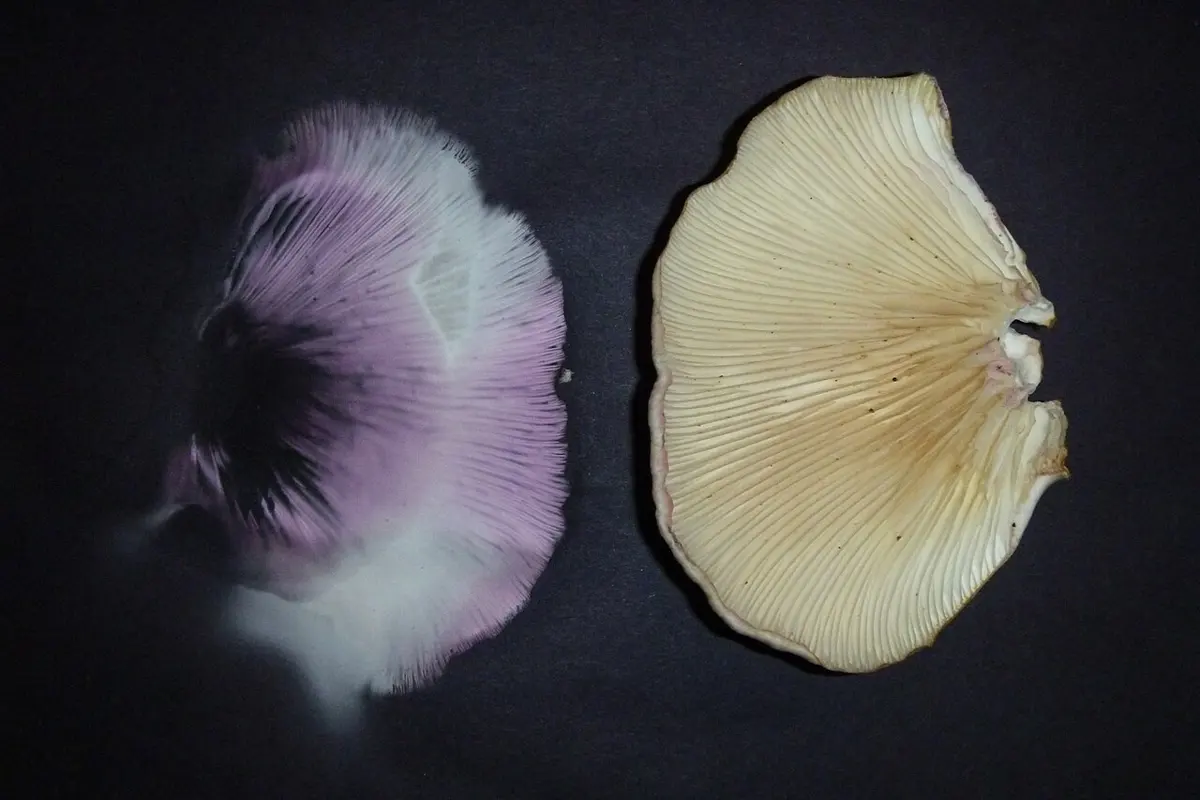
- gills, thin plates like the pages of a book, under the pileus; the spores, called basidiospores, are made on the gills;
- in many kinds, an annulus, a ring of tissue round the stipe, and a volva, a cup at the base of the stipe.
Which part of a mushroom absorbs water and food?
Pick an answer to see why.
3.2 Life cycle of mushroom
Inside a gill
Cut a gill across and look at it under a microscope, and you see three layers:
- Trama, the central core of loosely packed hyphae;
- sub-hymenium, a layer of small cells on each side of the trama;
- hymenium, the outermost layer, where the spores are made.
The hymenium has two kinds of cells standing side by side, like a fence:
- basidia (singular: basidium), club-shaped cells that make the spores;
- paraphyses (singular: paraphysis), cells between the basidia that make no spores: they are sterile. They hold the basidia apart.
How the spores are made
A young basidium has two nuclei, one of each mating type: a plus (+) strain and a minus (−) strain. (In mushrooms there are no male and female; the two strains are just two mating types that can join.) Then:
- The two haploid nuclei (each with one set of chromosomes) fuse to make one diploid nucleus (two sets).
- This nucleus divides by meiosis into four haploid nuclei: two plus and two minus.
- Four small finger-like stalks, the sterigmata (singular: sterigma), grow out from the tip of the basidium.
- One nucleus moves into each sterigma, and a basidiospore forms at its tip.
So each basidium makes four basidiospores: two plus and two minus.
From spore to mushroom
- When the basidiospores are ripe, they are thrown off the sterigmata and carried by the air.
- A spore that lands in a suitable place (damp, with organic matter, at the right temperature) germinates and grows into a primary mycelium. Its cells have one nucleus each, of one strain only.
- When a plus and a minus primary mycelium meet, their hyphae fuse. The new mycelium has two nuclei in each cell, one from each strain. It is called the secondary mycelium, or dikaryotic mycelium (di = two, karyon = nucleus).
- With the right temperature and moisture, the secondary mycelium forms small, round buttons, which grow and open into umbrella-shaped mature mushrooms.
- Their gills make basidiospores again, and the life cycle is complete.
How many nuclei are there in each cell of a secondary mycelium?
Pick an answer to see why.
3.3 Use of mushroom
For thousands of years people have eaten mushrooms and used them as medicine. Modern science shows that mushrooms are a healthy food: they have protein, vitamins, minerals and fiber, and almost no fat, and like all foods from fungi and plants they have no cholesterol. They are tasty, and they are a good source of income.
A. Importance of mushroom for human health
1. A source of protein
Dried mushrooms are 19–35% protein, more than many grains:
| Food | Protein |
|---|---|
| rice (grain) | 7.5% |
| wheat (grain) | 12.5% |
| chicken meat (fresh) | 18–20% |
| mushroom (dried) | 19–35% |
| soybean (dry beans) | 38.1% |
Mushroom protein contains the amino acids the human body needs to grow and repair itself.
2. A source of vitamins
Mushrooms are a good source of the B vitamins: riboflavin (B₂), niacin (B₃), pantothenic acid (B₅), thiamine (B₁), biotin and folate, and some kinds have a little vitamin B₁₂. That makes them especially useful in a vegetarian diet.
3. A source of minerals
Mushrooms contain potassium, phosphorus, copper, iron, calcium, sodium (only a little) and selenium.
4. As medicine
In China, Japan and Korea, mushrooms have been used as medicine for a very long time, and in Nepal Ayurvedic doctors also advise eating them. Research suggests that eating mushrooms regularly can help the body’s immune system, and may help people with diabetes, high blood pressure and heart disease, because mushrooms are rich in fiber and potassium and low in fat, salt and sugar. Medicines and health products are made from red mushrooms, such as the shiny red-brown Ganoderma (reishi), and people take them for asthma, diabetes, cancer, piles and diseases of the airways. The bright red bracket fungus Pycnoporus cinnabarinus, which grows on dead wood, is another red mushroom whose substances are being studied.
B. Economic importance of mushroom
Because they are nutritious and useful as medicine, mushrooms are grown commercially, and it is a profitable business: they grow fast, in a small space, on cheap farm waste like straw.
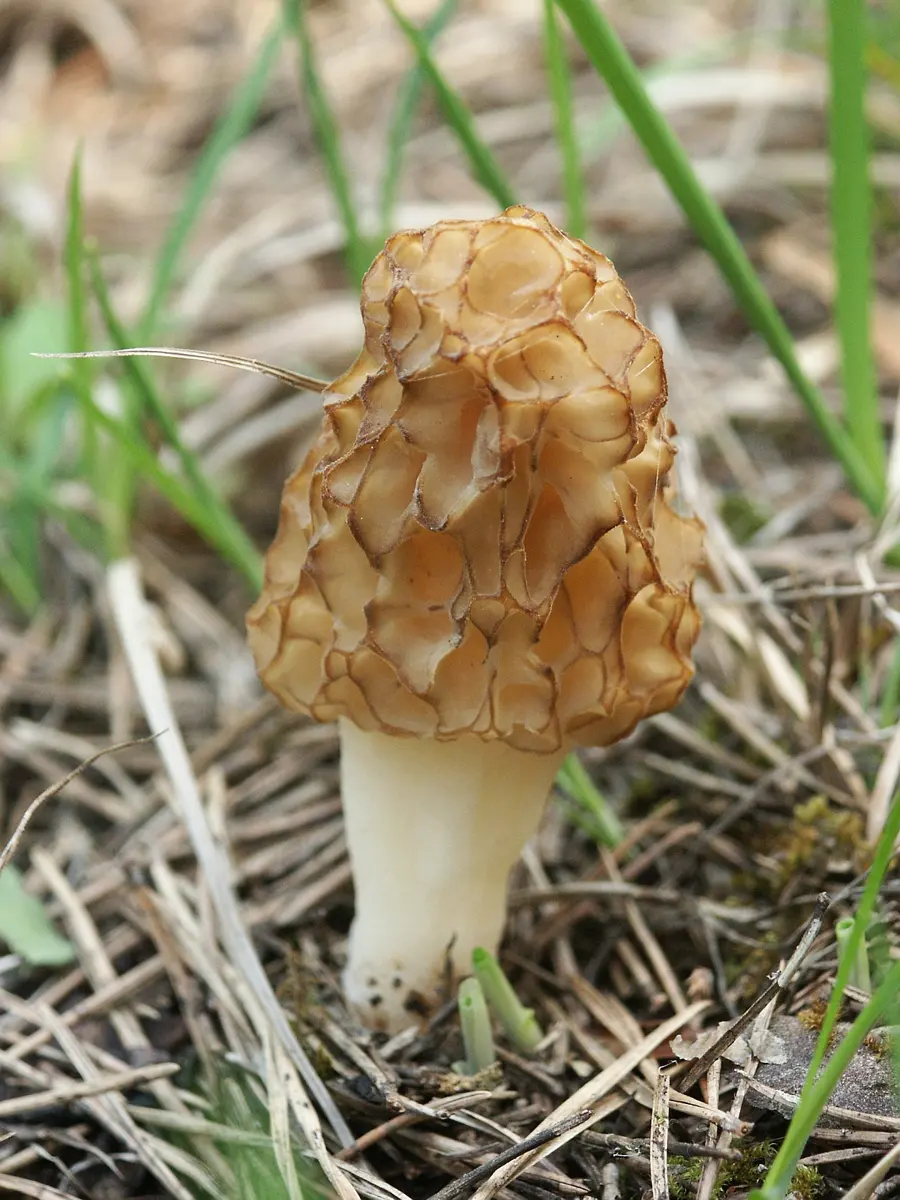
- The morel, Morchella (guchi chyau), grows wild in the forests of Jumla and other parts of western Nepal. Dried morels fetch very high prices in the international market, and collecting them is an important income for families in the hills.
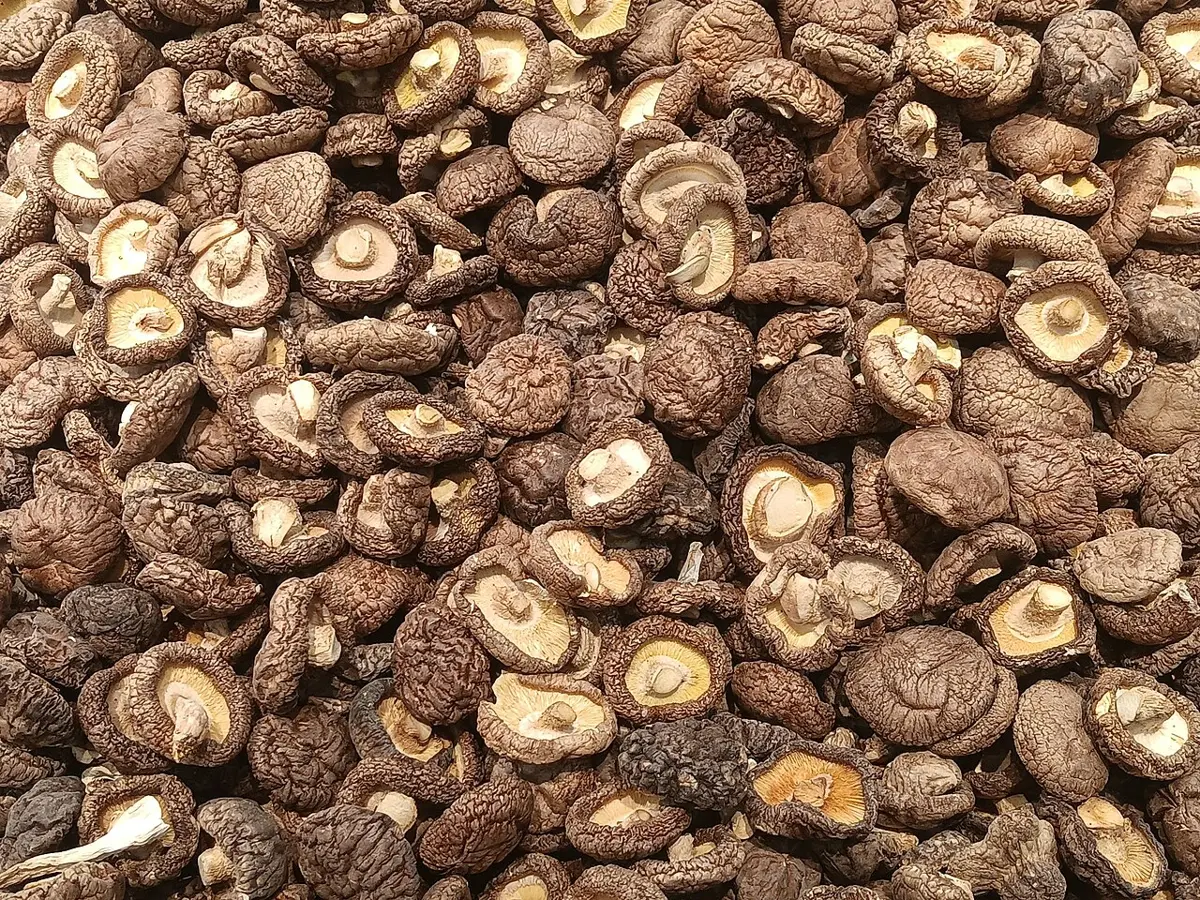
- In Nepal, mushroom sukuti (dried mushroom) and mushroom pickles are made and sold, and are good sources of income.
- Kanye chyau, the oyster mushroom (Pleurotus ostreatus), is the mushroom most farmed in Nepal. In the Kathmandu Valley it can be grown for much of the year.
- Gobre chyau, the button mushroom (Agaricus bisporus), is grown commercially in the hills.
Mushroom farming is a good business for a village family mainly because:
Pick an answer to see why.
3.4 Mushroom farming
There are many ways to farm mushrooms, and the method depends on the kind. Some can be grown at home with simple tools; others need special equipment and rooms. The oyster mushroom (kanye chyau) is the easiest, grown on paddy straw.
Method of kanye chyau farming
- Collect good, clean paddy straw, and cut it into pieces 1–3 inches (about 2.5–7.5 cm) long.
- Boil the pieces in water for about 15–20 minutes. This kills the germs and molds in the straw and makes it soft, so the mushroom grows well in it.
- Drain the boiled straw well and let it cool and dry until it is only damp, not dripping, for about a day.
- Fill a plastic bag with the straw in layers, sprinkling mushroom spawn (the “seed”: grains covered with the mushroom’s mycelium) on each layer.
- Usually make 5–6 layers, each about 8–10 cm thick.
- Press the layers down well with your hand, tie the bag, and make 10–12 small holes in it for air.
- Keep the bag in a dark room for about seven days. By then, fine white threads (the mycelium) have spread through the straw inside the bag.
- Make three or four more holes, and sprinkle water on the bag as needed to keep it moist.
- After about 10 days, the white mycelium has filled the bag. Now make cuts in the plastic (some growers remove it altogether) so that the mushrooms can come out. Around 17 days, tiny mushrooms appear at the cuts and holes.
- Around 25 days, the mushrooms are fully grown and can be picked.
3.5 Storage and use of mushroom
Fresh mushrooms spoil in a few days, so many ways are used to store them for a long time: drying them into sukuti, or making pickle, ketchup, chutney and soup. Mushroom pickle, ketchup and chutney keep for at least six months at 20–22 °C. Mushrooms are also cooked in curry, pakoda, omelette and sandwiches.
Making mushroom sukuti
- Wash the mushrooms clean.
- Cut them into small pieces.
- Dip them in boiling water for a short time (blanch them).
- Dry them in the sun, over a fire, or in an oven.
- When they are completely dry, pack them so that no air gets in.
- Store the packets in a cool, dry place.
Methods of drying mushrooms
A. Drying with chemicals. Soak the mushrooms for 16 hours in a solution of 1% potassium bisulphite, 0.2% citric acid, 6% sugar and 3% common salt, then dry them at 60–62 °C for 8 hours. This gives good-quality sukuti, which can be ground into a powder and kept in a closed, airtight jar.
B. Drying in the sun. Oyster mushrooms can be dried in the sun when it is warmer than 25 °C, or in a machine at 40–45 °C. Dried this way and kept in a sealed polythene bag, they last up to 120 days.
3.6 Edible and poisonous mushroom
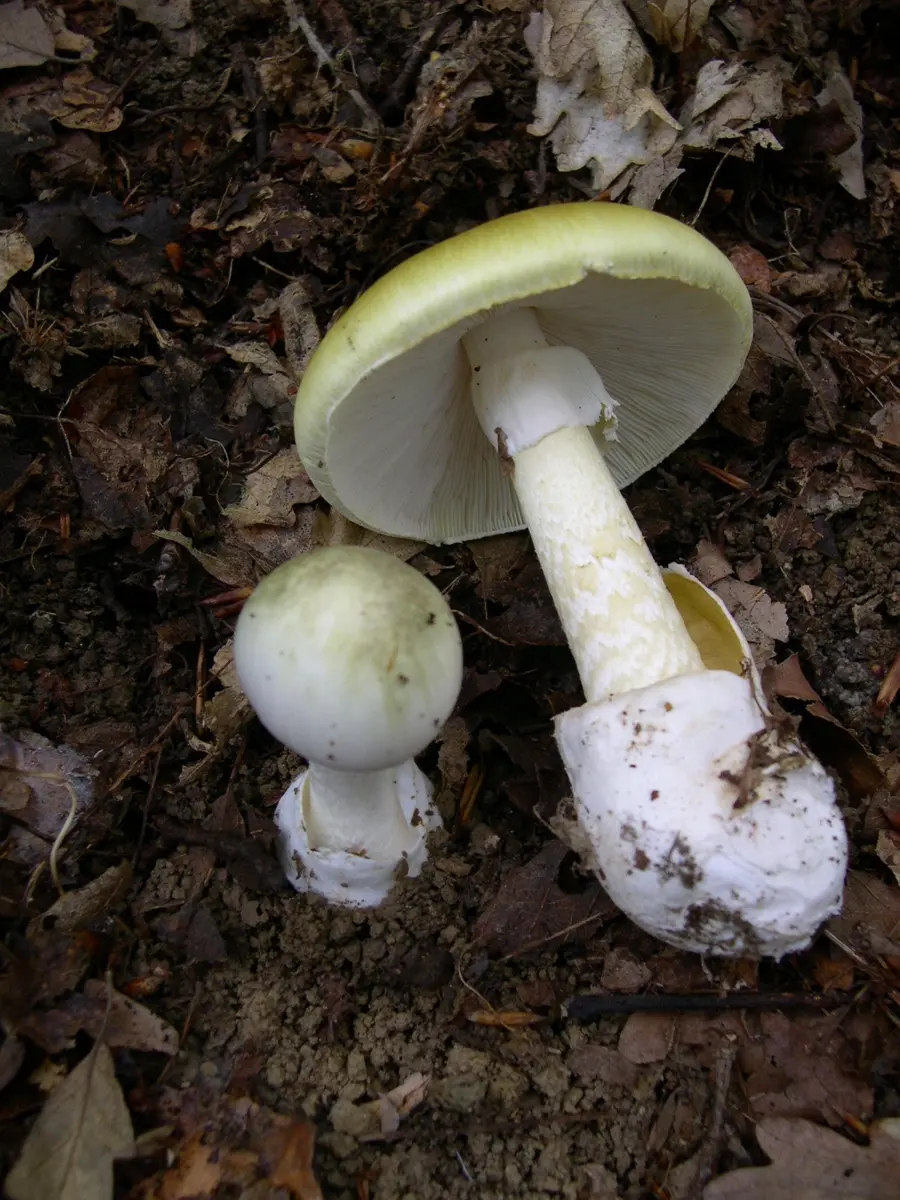
Almost every monsoon, newspapers in Nepal report people, sometimes whole families, falling ill or dying after eating wild mushrooms. It is very hard to tell an edible mushroom from a poisonous one in the forest, and there is no simple test that can do it. People have always gone by the experience of their elders, but even experienced people make deadly mistakes.
Mushrooms with these features are often thought to be poisonous:
- a dull gray or light brown color;
- white gills;
- a ring (annulus) on the stipe, or a cup (volva) at its base;
- a bright red color;
- a red stipe or a red pileus;
- a smooth, shiny pileus that insects have not eaten;
- a yellow liquid that oozes out when the pileus is pressed.
But these are only guesses, never a rule. Many poisonous mushrooms break them, and many edible ones have some of these features. Whether a mushroom is poisonous can only be known for sure by an expert or a laboratory test.
Which is the safest way to know whether a wild mushroom is safe to eat?
Pick an answer to see why.
Exercise
1. Choose the correct answer
a. Why is a mushroom called saprophytic?
Pick an answer to see why.
b. Which are the main nutrients found in mushrooms?
Pick an answer to see why.
c. Which mushroom is used to make medicines for cancer?
Pick an answer to see why.
d. What is the name of the sterile cell in the hymenium?
Pick an answer to see why.
e. Where are basidiospores formed?
Pick an answer to see why.
2. Give reasons
A mushroom is called saprophytic.
Answer
A mushroom has no chlorophyll, so it can’t make its own food by photosynthesis. Its mycelium absorbs ready-made food from dead and decaying organic matter such as rotting wood, dung, leaves and straw. An organism that gets its food from dead and decaying matter is called saprophytic, so a mushroom is saprophytic.
Mushrooms are both beneficial and harmful to human beings.
Answer
Beneficial: many mushrooms are nutritious food, rich in protein, vitamins and minerals and low in fat; some are used as medicine; growing and selling them (and morels, sukuti and pickles) earns money; and in nature they decompose dead matter and return nutrients to the soil.
Harmful: some wild mushrooms are poisonous and can kill people who eat them, and they are hard to tell from edible ones; some fungi also spoil stored food and wood.
Patients with high blood pressure, diabetes and heart disease are encouraged to eat mushrooms.
Answer
Mushrooms are low in fat, sugar and salt and have no cholesterol, while they are rich in fiber, potassium, protein and vitamins. Such food helps keep blood sugar, blood pressure and blood fats under control, and research suggests mushrooms also support the immune system. So they are a healthy food for these patients (along with their medicines, not instead of them).
Care must be taken before eating wild mushrooms.
Answer
Some wild mushrooms are poisonous, and some of them look very like edible ones. There is no simple test (color, smell, silver, cooking) that can tell them apart, cooking does not destroy the strongest poisons, and their symptoms may begin only many hours later, after the liver is damaged. Eating an unknown wild mushroom can kill, so only farmed or expertly identified mushrooms should be eaten.
3. Differentiate between
Edible and poisonous mushrooms
Answer
| Edible mushroom | Poisonous mushroom |
|---|---|
| Safe to eat; nutritious. | Contains poisons that can cause illness or death. |
| Many are farmed, e.g. oyster and button mushrooms. | Grow wild, e.g. the death cap (Amanita). |
| Usually known to local people and experts. | Often thought to have bright red colors, white gills, a ring or cup, or a smooth untouched cap, though these signs are not reliable. |
| Used for food, sukuti and pickles. | Must never be eaten. |
Primary and secondary mycelium
Answer
| Primary mycelium | Secondary mycelium |
|---|---|
| Grows from a basidiospore. | Forms when a plus and a minus primary mycelium fuse. |
| One nucleus in each cell (monokaryotic). | Two nuclei in each cell, one of each strain (dikaryotic). |
| Of one strain only, + or −. | Has both strains. |
| Short-lived; does not form mushrooms. | Long-lived; forms the fruiting bodies. |
Paraphysis and basidium
Answer
| Paraphysis | Basidium |
|---|---|
| A sterile cell: makes no spores. | A fertile cell: makes basidiospores. |
| Has no sterigmata. | Has four sterigmata at its tip. |
| Its job is to support and space out the basidia. | Its nuclei fuse and divide by meiosis to make four spores. |
4. Answer the following questions
Name the nutrients found in mushrooms.
Answer
Protein (19–35% of the dry weight, with essential amino acids); vitamins: riboflavin (B₂), niacin (B₃), pantothenic acid (B₅), thiamine (B₁), biotin, folate and a little B₁₂ (and vitamin D after sunlight); minerals: potassium, phosphorus, calcium, copper, iron and selenium; and fiber. They are low in fat and have no cholesterol.
Describe the medicinal value of mushrooms.
Answer
Mushrooms have long been used as medicine in China, Japan and Korea, and Ayurvedic doctors in Nepal advise eating them. Research suggests that eating them regularly supports the immune system and helps people with diabetes, high blood pressure and heart disease, since they are high in fiber and potassium and low in fat, sugar and salt and have no cholesterol. Medicines and health products made from red mushrooms (such as Ganoderma) are taken for asthma, diabetes, cancer, piles and diseases of the airways, though they can only support a doctor’s treatment: no mushroom is a proven cure for these diseases.
“Mushrooms are important for human health and income.” Explain with facts.
Answer
Health: dried mushrooms are 19–35% protein (more than rice at 7.5% or wheat at 12.5%), with the amino acids the body needs; they are rich in B vitamins, potassium, phosphorus, iron and copper; they are low in fat and free of cholesterol, so they suit patients with diabetes, high blood pressure and heart disease; and they are used in medicine.
Income: oyster mushrooms grow in about 25 days on cheap straw in a small dark room, so farming them is profitable even for a small family; button mushrooms are grown commercially in the hills; wild morels (guchi chyau) from Jumla fetch very high prices abroad; and sukuti, pickles and ketchup made from mushrooms are sold.
How are mushrooms farmed at home with simple technology? Describe in short.
Answer
Oyster mushrooms (kanye chyau) are grown on straw: cut clean paddy straw into 1–3 inch pieces, boil it for 15–20 minutes to kill germs, and let it cool and dry until just damp. Fill a plastic bag with 5–6 layers of straw, sprinkling spawn on each layer, press it down, and make 10–12 holes. Keep it in a dark room for about seven days, until white mycelium spreads through it. Then make a few more holes and sprinkle water as needed. Around day 10, cut the plastic so the mushrooms can come out; around day 17, small mushrooms appear; around day 25, pick the grown mushrooms.
List the products made from mushrooms.
Answer
Sukuti (dried mushroom) and mushroom powder, pickle (achar), ketchup, chutney and soup; also dishes such as curry, pakoda, omelette and sandwiches; and medicines and health products from red mushrooms.
Describe how mushroom sukuti is made.
Answer
Wash the mushrooms clean and cut them into small pieces. Dip them briefly in boiling water. Dry them in the sun, over a fire or in an oven: in the sun at over 25 °C or in a machine at 40–45 °C (or, for the best quality, soak them for 16 hours in a solution of 1% potassium bisulphite, 0.2% citric acid, 6% sugar and 3% salt, then dry them at 60–62 °C for 8 hours). When completely dry, pack them airtight and store them in a suitable place; they keep for up to 120 days in a sealed polythene bag.
Write the features of poisonous mushrooms.
Answer
Mushrooms with these features are often thought to be poisonous: a dull gray or light brown color; white gills; a ring (annulus) on the stipe or a cup (volva) at its base; a bright red color, or a red stipe or pileus; a smooth, shiny pileus that insects have not touched; and a yellow liquid when the pileus is pressed. These are only guesses, not reliable rules: only an expert or a laboratory test can say for sure, so no wild mushroom should be eaten on a guess.
Draw a diagram of a mushroom and label its parts.
Answer
Draw a mushroom as in Figure 3.1, and label the pileus (cap), gills (under the cap), annulus (ring on the stalk), stipe (stalk), mycelium and hyphae (threads in the soil).
Describe the life cycle of a mushroom, with a diagram.
Answer
- The mature mushroom’s gills have a hymenium with basidia. In each basidium, a plus and a minus nucleus fuse into a diploid nucleus.
- It divides by meiosis into four haploid nuclei (two +, two −). Four sterigmata grow on the basidium, one nucleus goes into each, and four basidiospores form.
- The ripe basidiospores are released and spread by air.
- In a suitable place, each spore germinates into a primary mycelium with one nucleus per cell.
- A plus and a minus primary mycelium fuse to form the secondary (dikaryotic) mycelium, with two nuclei per cell.
- In the right temperature and moisture, the secondary mycelium forms buttons that grow into mature mushrooms, and the cycle repeats.
Draw the cycle as a ring of these stages: mature mushroom → basidiospores → primary mycelium → secondary mycelium → button → mature mushroom.
Study the diagram and answer:
A. Name the parts marked A to D, with one function of each.
B. Where are the basidiospores?
C. Sort the parts into the fruiting body and the mycelium.
Answer
A. A: pileus, the cap, which carries and shelters the gills. B: gills, which make the basidiospores. C: stipe, the stalk, which holds the pileus up so that the spores can be carried away by the air. D: mycelium (hyphae), which absorbs water and food from the soil.
B. On the gills (B), in their outer layer, the hymenium, on the tips of the basidia.
C. Fruiting body: pileus (A), gills (B) and stipe (C). Mycelium: D.
The diagram shows a section through a gill. Answer:
A. Name the parts in the diagram.
B. What is the difference between A and B?
C. How is a basidiospore formed? Describe.
Answer
A. A: basidium; B: paraphysis; C: hymenium; D: sub-hymenium; E: trama.
B. A, the basidium, is fertile: it makes four basidiospores on four sterigmata. B, the paraphysis, is sterile: it makes no spores and only supports and spaces the basidia.
C. A young basidium has two haploid nuclei, one + and one −. They fuse to form a diploid nucleus, which divides by meiosis into four haploid nuclei. Four sterigmata grow at the tip of the basidium; one nucleus moves into each, and a basidiospore forms at the tip of each sterigma.
Practice every question in the book, and keep track of the ones you miss →