
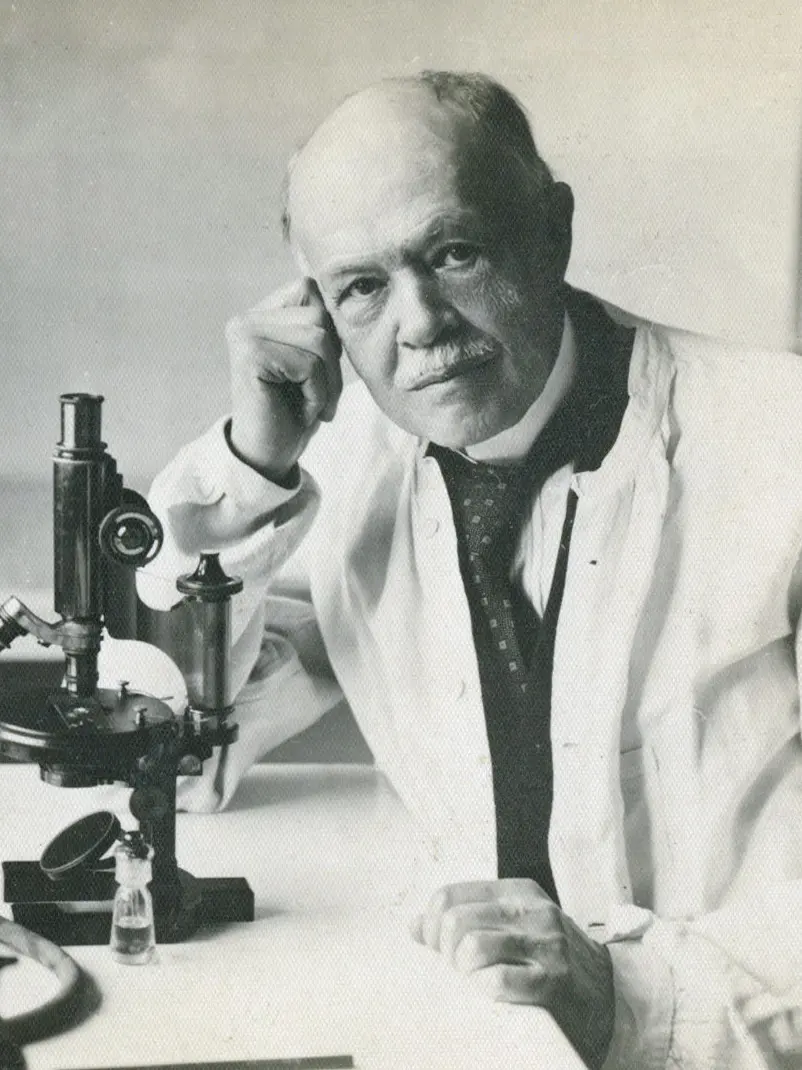
Charles Nicolle
1866–1936, born in France
A doctor who became too deaf to use a stethoscope, so he turned to the laboratory, and who also wrote novels.
Photo: Roland Huet, Public domain
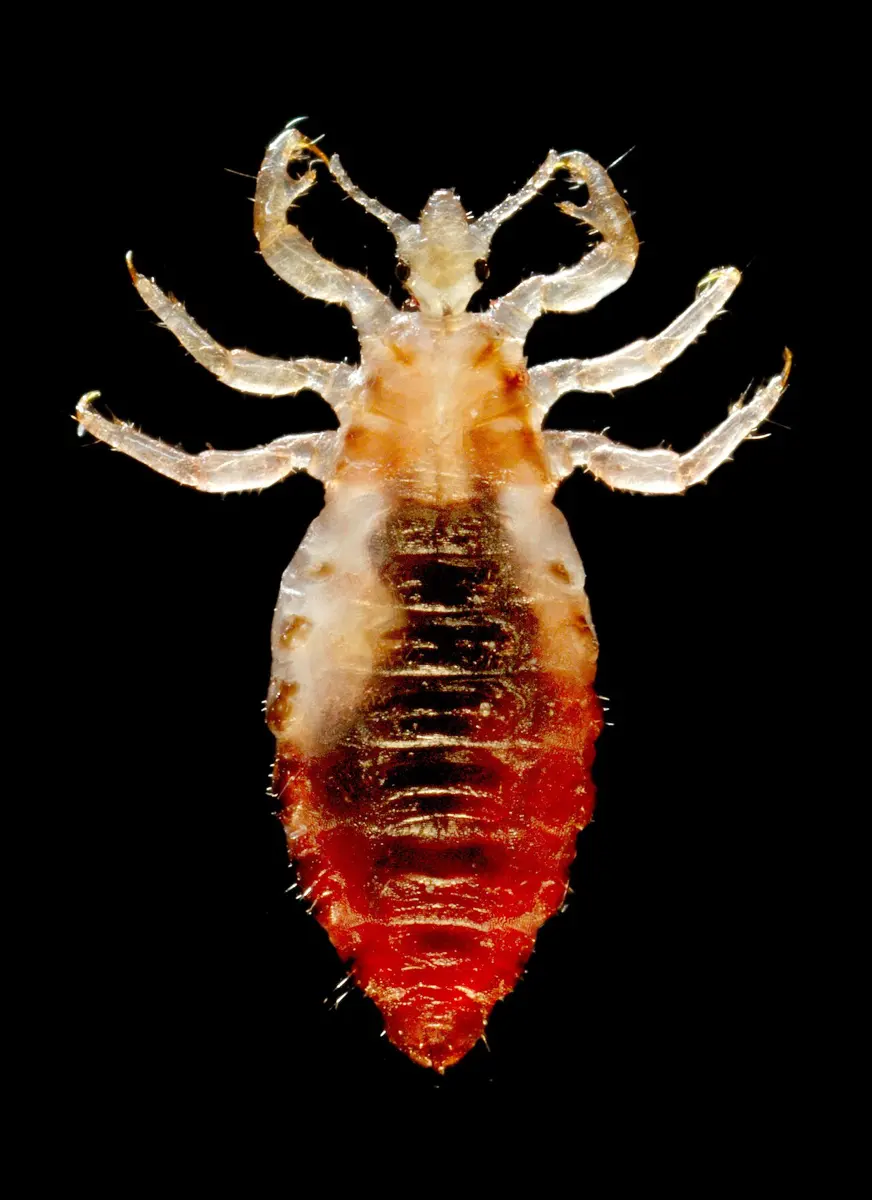
Have you ever had lice in your hair, or seen a classmate sent home to have them combed out? Lice are small, wingless insects that live on people and drink their blood. Head lice are a nuisance, nothing more. But their close cousin, the body louse, which lives in dirty clothes, once killed millions of people.
It carries a disease called typhus. For thousands of years typhus followed wars, famines and crowded prisons, and nobody knew how it spread. In 1909 a French doctor in Tunisia, Charles Nicolle, found the answer by noticing something in a hospital doorway. For this he received the Nobel Prize in Physiology or Medicine in 1928.
The problem: the fever of war and famine
Typhus starts with a sudden high fever, a terrible headache and aching all over. After a few days a rash of red spots spreads over the body. Many patients become confused or fall into a deep sleep, like a stupor; the name typhus comes from a Greek word for smoke or haze, for that clouded mind. Without treatment, many die. The presentation speech at Nicolle’s prize said that among adults, in bad conditions, between half and three in five of those who caught it could die.
Typhus was worst where people were crowded together, cold and unable to wash or change their clothes: in armies, prison camps, ships, and among refugees fleeing war or hunger. That is why it had names like “camp fever”, “jail fever” and “famine fever”. It ravaged the armies of Europe for centuries, and it killed huge numbers of Napoleon’s soldiers on their retreat from Russia in 1812. As one writer put it, “the history of typhus is the history of human misfortune.”
Why it was so hard
Doctors could see that typhus spread from person to person, but how?
- It seemed to spread through the air. Most doctors thought typhus passed like measles or flu: by breathing, touching or dust. Nurses and doctors caught it while caring for patients, even when they were careful.
- Nobody could see the germ. The cause turned out to be a bacterium so tiny that it can only live inside cells. It can’t be grown in a dish like ordinary bacteria, so for years nobody could find it.
- No animal seemed to catch it. To study a disease, scientists give it to animals, but every attempt to give typhus to animals had failed.
- It was dangerous to study. Many doctors who studied typhus caught it and died.
What Nicolle did, step by step
Tunis: a disease every winter (1903)
In 1903 Nicolle became the director of the Pasteur Institute in Tunis, in Tunisia, in North Africa. Typhus came back there every winter and was greatly feared. In his first year, two colleagues went to study an outbreak in a prison, and both caught typhus and died.

The clue in the hospital doorway
Nicolle went into patients’ homes and watched carefully at the Sadiki Hospital in Tunis, where many poor patients came. He noticed something that others had seen without thinking about it:
- Typhus patients spread the disease to others at home, on the way to hospital, and even in the hospital’s waiting room. The staff who took their clothes when they arrived often caught it.
- But once a patient had been given a hot bath and dressed in clean hospital clothes, he was harmless. He could lie in a ward with other patients, and nobody caught typhus from him.
What could the bath and the change of clothes have taken away? Not the germ in the patient’s blood: that was still there. Something that lived on the body and in the clothes, and came off with them. The obvious suspect was the body louse.
Why did Nicolle suspect lice, rather than the air or touching the patient?
Pick an answer to see why.
The experiment (June–September 1909)
A guess is not a proof. Nicolle needed to show that lice really carry typhus, and to do that he needed an animal that could catch it Grade 9: The steps of scientific learning.
- A chimpanzee (June 1909). Apes are our closest relatives, so Nicolle tried a chimpanzee, sent to him from the Pasteur Institute in Paris. He injected it with blood from a typhus patient. It fell ill with fever and a rash: typhus had been given to an animal at last.
- A smaller monkey. Chimpanzees were rare and costly, so he injected a smaller monkey, a macaque, with blood from the sick chimpanzee. It fell ill too.
- The lice (August 1909). He let 29 body lice feed on the sick macaque. Then he moved them onto healthy macaques. Days later, the healthy monkeys came down with typhus. The lice had carried it.
- Published (September 1909). With his colleagues Charles Comte and Ernest Conseil, Nicolle reported to the French Academy of Sciences that the body louse carries typhus.
More discoveries
Over the next years Nicolle and his team worked out much more:
- A louse isn’t dangerous at once. The germ has to multiply inside the louse’s gut for about a week first.
- The droppings matter most. The germ comes out in the louse’s droppings. When the bite itches and the person scratches, the droppings are rubbed into the tiny wound. This is probably the main way people catch it.
- The louse dies too. Typhus kills the louse within a couple of weeks, and the germ is not passed on to its eggs. So when the infected lice are gone, the outbreak ends.
- Guinea pigs can carry it. Typhus could be kept alive in the laboratory by passing it from one guinea pig to the next. Some guinea pigs carried the germ without ever showing any sign of illness. Nicolle called this inapparent infection, and found it in many other diseases too. He thought it was his most important discovery.
How typhus is stopped
The cause of typhus is a tiny bacterium called Rickettsia prowazekii. It can only live and multiply inside cells, like a parasite Grade 9: Parasitism: inside the cells of the louse’s gut, and inside the cells lining a person’s blood vessels. It was found in 1916 by the Brazilian doctor Henrique da Rocha Lima, and named after two scientists who had died of typhus while studying it: Howard Ricketts, in Mexico in 1910, and Stanislaus von Prowazek, in 1915.
Because the louse is the only way it spreads between people, typhus can be stopped by getting rid of lice:
- Wash and change. A hot bath, clean clothes, and boiling or hot-washing the old clothes and bedding remove the lice and their eggs.
- Starve them. Body lice die within about a week away from a human body, so clothes left unworn for a week are safe.
- Kill them. Steam, heat and, later, insect-killing powders kill lice in clothes.
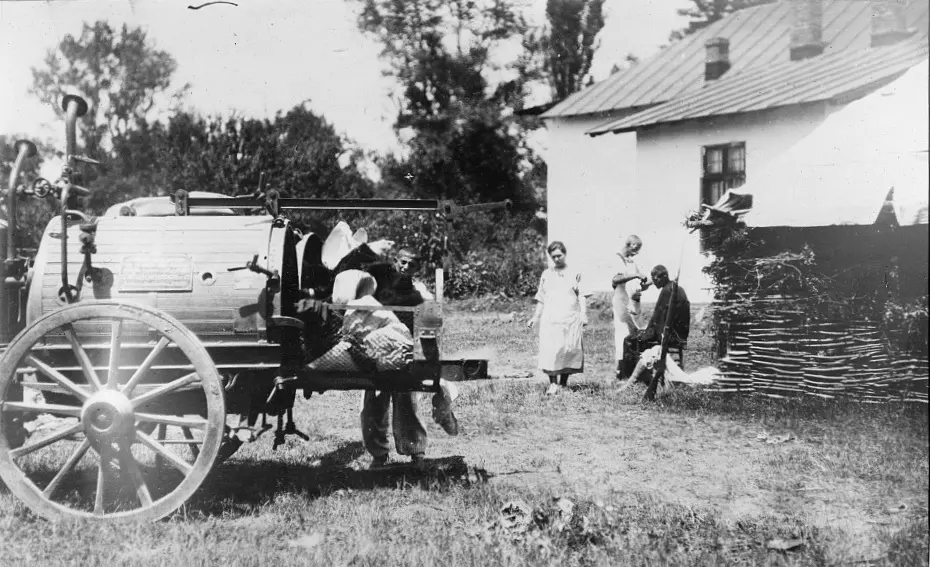
Within two years of Nicolle’s discovery, these simple steps had rid Tunis of the typhus that had come every winter. A few years later, in the First World War, the same ideas saved armies: soldiers and prisoners passed through delousing stations, where they bathed while their clothes were steamed.
Why does killing lice stop a typhus outbreak, even without a medicine?
Pick an answer to see why.
In your life today
- Typhus is now rare, because most people can wash and change their clothes. But it still breaks out where people are crowded and can’t: in the 1990s, during a civil war in Burundi, in Africa, it spread among people in a prison and in refugee camps. Antibiotics such as doxycycline now cure it if given early.
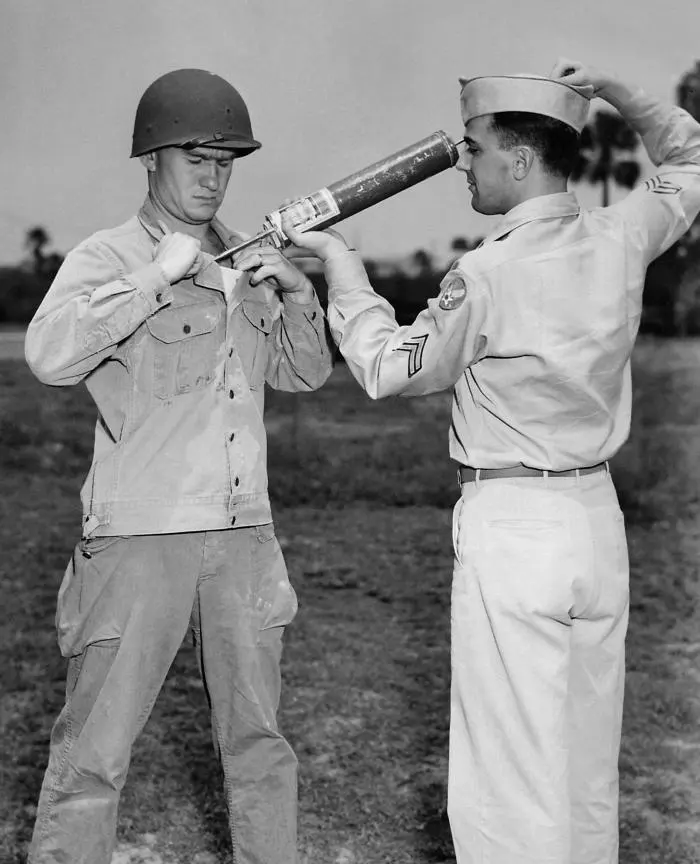
- DDT and a second Nobel Prize. In the Second World War, a new insect-killing powder, DDT, was dusted onto people’s clothes. In Naples, in Italy, in 1943–1944, it stopped a typhus epidemic in its tracks. Paul Müller, who found that DDT kills insects, won the Nobel Prize in 1948. (DDT was later found to harm birds and other wildlife and is now banned for farming in most countries.)
- Every disease spread by an animal. Nicolle’s way of thinking (find the animal that carries the germ, and break the chain) is how we fight malaria and dengue (mosquitoes), plague (fleas) and scrub typhus in Nepal (mites). Scrub typhus became common in Nepal after the 2015 earthquake, with most cases in August and September. Wearing long sleeves and trousers in grassy fields, and seeing a doctor quickly for a fever with a small black scab, are the best protection.
What came next
- Vaccines. In 1930 the Polish scientist Rudolf Weigl made the first useful typhus vaccine, by growing the germ in the guts of lice and grinding them up. People were paid to let the lice feed on their blood. Later vaccines were grown in chicken eggs.
- Medicines. From the late 1940s, antibiotics could cure typhus. A disease that once killed half its victims became curable.
- The open question. Some people who recover from typhus carry the germ hidden in their bodies for years, and can fall ill again decades later. If they have lice at that time, a new outbreak can start. How the germ hides, and how to find these silent carriers, is still being studied: it is Nicolle’s inapparent infection again.
In your science books
- Grade 9: parasitism: the louse is a parasite, and so is the typhus germ.
- Grade 9: the steps of scientific learning: an observation, a hypothesis and an experiment that tested it.
- Grade 8: bacteria and the harmful effects of microorganisms.
Learn more
- The prize at nobelprize.org: The Nobel Prize in Physiology or Medicine 1928, with the presentation speech, which tells the story of the hospital doorway.
- Nicolle’s Nobel lecture.
- Related prize: Ronald Ross and the mosquito that carries malaria, another disease carried by an insect.
The official reason
The prize was given “for his work on typhus.”