
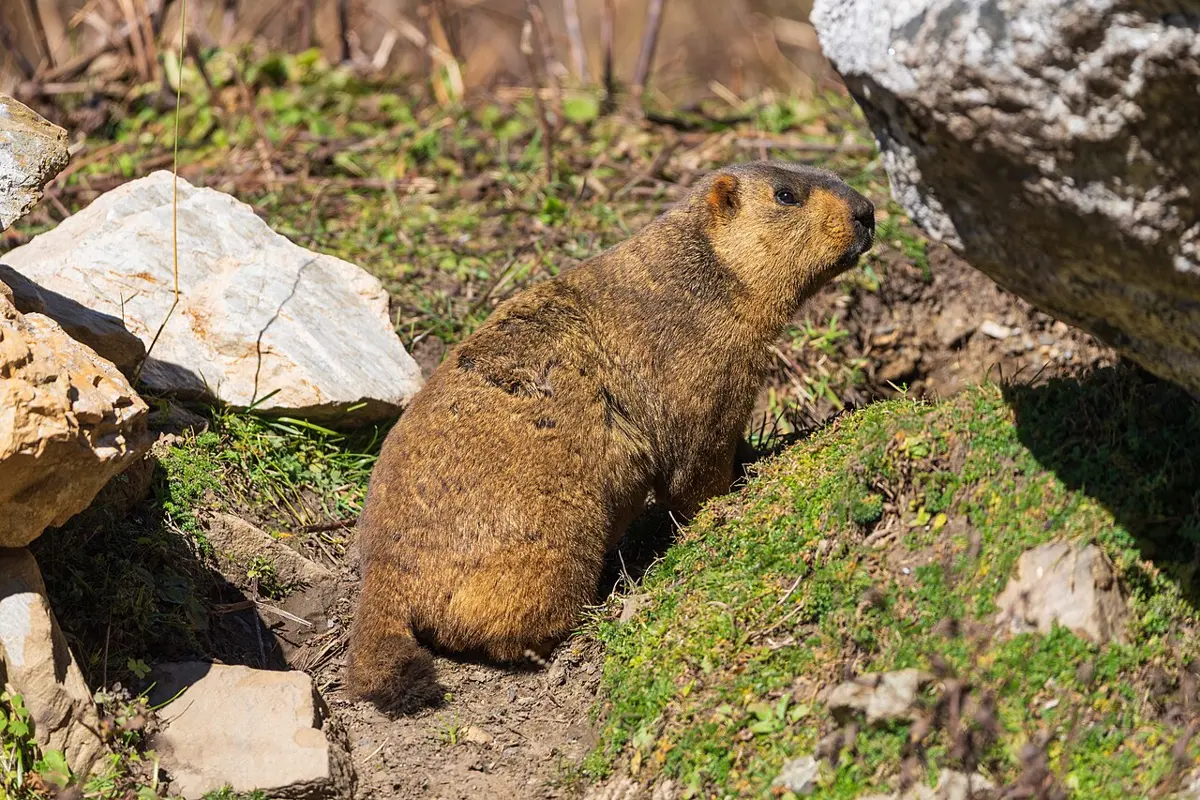
When the first snow falls on the high pastures of Gorkha and Manang, the Himalayan marmots go down into their burrows and don’t come out again for about half a year. High above them, flocks of bar-headed geese cross the Himalaya on their way to India. Down in the Tarai, a frog digs itself into the mud of a pond. And in a potato field, a farmer sprays a poison for the tenth year running, only to find more moths than ever. Every living thing has to deal with its environment, and the environment answers back.
This unit is about ecology and environment: how living things fit into the world around them, and what happens when people upset the balance. You will read how animals spend the winter and how a farmer’s pesticides made resistant moths, and listen to facts about the Amazon rainforest. You will learn to make, accept and decline offers, to say ten weather words correctly, and to use the first conditional (If it rains, you will get wet) with unless. You will write a paragraph with a clear topic sentence and a letter to the editor of a newspaper.
Getting started: the parts of the environment
Your environment is everything around you that affects your life: the air you breathe, the water you drink, the ground you walk on, and every plant, animal and microbe you share them with. Ecology is the study of how living things depend on one another and on these surroundings.
Scientists divide the Earth’s environment into four parts, often called spheres (from a Greek word for a ball, since each wraps round the Earth):
| Part | What it is | Examples |
|---|---|---|
| atmosphere (atmo- = vapor, air) | the layer of air round the Earth | the oxygen we breathe, wind, clouds, rain |
| hydrosphere (hydro- = water) | all the water on and around the Earth | seas, rivers, lakes, glaciers, groundwater, water vapor |
| lithosphere (litho- = stone) | the solid, rocky outer layer of the Earth | mountains, rocks, soil, minerals |
| biosphere (bio- = life) | every place where life is found, and all the living things in it | forests, coral reefs, soil full of worms, you |
The four don’t sit apart: they overlap Figure 7.1. A fish lives in the hydrosphere, breathes oxygen that came from the atmosphere, and eats insects that grew on plants rooted in the lithosphere. The biosphere is exactly where the other three meet. All four working together as one system are sometimes called the ecosphere (the whole Earth as one great ecosystem). Some pictures of the spheres write ecosphere in the middle and biosphere round the outside; the idea is the same: life is found where air, water and rock meet, and together they work as one system.
A snow leopard hunting on a rocky slope in Dolpa is part of which sphere?
Pick an answer to see why.
Look at the picture and talk about the components of the environment.
A model answer
Reading I: How Do Animals Spend the Winter?
Before you read
- a.What preparations do you and your family make as the winter season approaches?
- b.How do animals and birds protect themselves from the cold?
Model answers
What kind of text it is
The text is an informative essay (an expository text, as you saw in Unit 6): it explains, with facts and examples, and doesn’t tell a story or argue. A short introduction asks the question, then five paragraphs, labeled A to E, each give one answer: five ways animals get through the winter. The animals in it are mostly from North America and Europe (caribou, elk, weasels, snowshoe rabbits, skunks, chipmunks), but the same five ways work in Nepal’s hills and mountains too.
The text, part by part
Introduction: and what about animals?
As winter comes, the weather gets colder, the days get shorter, and leaves change color and fall. Snow covers the ground. People keep warm in houses and heavy coats, and buy their food from a grocery store (a shop for food and things used at home). Animals have none of these. So how do they survive?
A. Migrating
Some animals migrate: they travel to a place where the weather is warmer or food is easier to find.
- Birds: many migrate in autumn. The trip is dangerous, so some fly in large flocks (groups), like geese in their noisy V-shaped lines; others fly alone. How do they know when to go? Scientists are still studying this, but migration seems to be part of a yearly cycle in a bird’s body, controlled by changes in the amount of daylight and the weather.
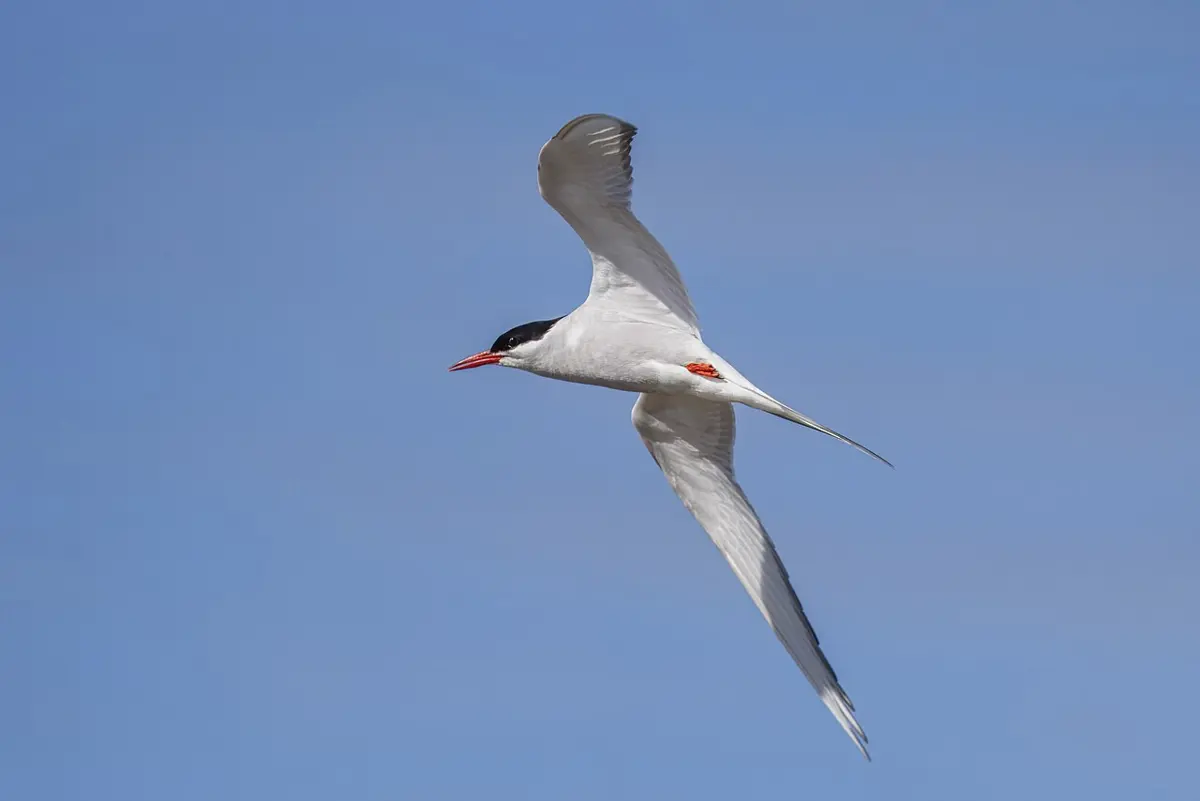
- Long journeys: the Arctic tern nests near the North Pole in summer, flies all the way to Antarctica in autumn, and comes back north each spring. Most birds travel much shorter distances.
- Finding the way: birds seem to navigate (find their way) as sailors once did, by the Sun, Moon and stars, and they also seem to have a kind of compass in the brain that senses the Earth’s magnetic field.
- Other animals: some mammals (some bats, caribou, elk, whales) travel in search of food; many fish swim south or into deeper, warmer water; some insects migrate too. Monarch butterflies fly from Canada and the northern United States as far south as Mexico. Most insects only go a short way: termites and Japanese beetles move down into the soil, and earthworms go as deep as six feet (about 1.8 meters).
B. Adapting
Some animals stay and stay active. They must adapt (change to suit the new conditions), in their bodies or their behavior:
- Thicker fur: many grow a new, thicker coat in autumn. On weasels and snowshoe rabbits (snowshoe hares) it is white, to hide them in the snow.
- Storing food: squirrels, mice and beavers gather extra food in autumn to eat later.
- Eating what is there: rabbits and deer search for moss, twigs, bark and leaves. The red fox eats fruit and insects in spring, summer and autumn, but in winter, when those are gone, it eats small rodents (mice, voles and other gnawing animals).
C. Finding shelter
Animals shelter in holes in trees or logs, under rocks or leaves, or underground. Some mice even dig tunnels (underground passages) through the snow. Squirrels and mice huddle (crowd close together) to keep warm. Some spiders and insects stay active in places that don’t freeze, and a few insects, like the winter stonefly, the crane fly and snow fleas, are normally active in winter. Some fish stay active in cold water.
D. Hibernating
Some animals hibernate for part or all of the winter: they go into a special, very deep sleep. The body’s temperature drops, the heartbeat and breathing slow down, and the animal uses very little energy. To get ready, it eats extra food in autumn and stores it as body fat, which it lives on while it sleeps; some also store nuts or acorns to eat later. Bears, skunks, chipmunks and some bats hibernate.
E. Becoming dormant
Cold-blooded animals (fish, frogs, snakes, turtles) can’t keep their bodies warm with their own heat: they are as cold as the air or water around them. Snakes and many other reptiles shelter in holes or burrows and stay dormant (inactive, as if asleep) all winter, which is like hibernation. Many others use water as a shelter: in cold weather, frogs, turtles and many fish go to the bottom of lakes and ponds, hide under rocks, logs or fallen leaves, or bury themselves in the mud, and become dormant. Cold water holds more oxygen than warm water, so the frogs and turtles can take in enough oxygen through their skin.
What controls a bird’s yearly cycle of migration, according to the text?
Pick an answer to see why.
How do frogs and turtles at the bottom of a frozen pond get oxygen?
Pick an answer to see why.
Words from the text
Words linked here open in English Vocabulary, where you can see an example and practice them in the word game. The meanings below are the ones the words have in this text.
| Word | Meaning here |
|---|---|
| grocery (store) | a shop that sells food and other things used at home |
| migrate | to move to another place for a season, to find warmth or food |
| flock | a large group of birds (or sheep, goats) |
| Arctic | of the cold region round the North Pole |
| navigate | to find your way; (also) to deal with a difficult situation |
| sailor | a person who works on a ship as one of its crew |
| adapt | to change so as to suit a new situation |
| weasel | a small, thin, fierce animal with a long body that hunts mice |
| moss | a small, soft green plant that grows in a thick mat on wet ground, rocks and trees |
| rodent | a small animal with long front teeth for gnawing, such as a rat, mouse or squirrel |
| tunnel | a passage under the ground (or through the snow) |
| huddle | to crowd closely together, usually because of cold or fear |
| hibernate | to spend the winter in a very deep sleep |
| dormant | not active for a time, as if asleep |
A. Find the words
Find the words from the text that have the following meanings.
- a.a shop that sells food and other things used in homes
- b.related to the regions around the North Pole
- c.an underground passage
- d.to find the right way to deal with a difficult situation
- e.a person who works on a ship as a member of the crew
- f.to change behavior in order to deal more successfully with a new situation
- g.a very small green or yellow plant that spreads over wet surfaces, rocks, trees, etc.
- h.to gather closely together, usually because of cold or fear
Answer
B. Match the titles
Read the paragraphs A–E and match them to the suitable titles.
Paragraphs: A, B, C, D, E
Titles: Going into a Deep Sleep; Migration to New Places; Other Ways to Survive; Living in Underground Holes; Adaptation to New Weather
Answer
C. True or false
Write True or False against the following statements.
- a.Animals wear thick coats to protect themselves from the cold.
- b.Flying in flocks helps birds protect themselves from the cold.
- c.Birds do not travel far to avoid the cold.
- d.Some animals collect extra food for winter.
- e.Snow fleas hibernate in winter.
- f.Cold water makes it difficult for some animals to breathe.
Answer
D. Answer the questions
Why do birds migrate in groups?
Answer
What controls the migration cycle of birds?
Answer
How do birds find the same place for migration each year?
Answer
Why do you think squirrels and mice huddle close together in winter?
Answer
How do animals maintain energy during hibernation?
Answer
How do frogs, turtles and fish change their habitats to survive in winter?
Answer
E. Keeping safe from the cold
What do people do to be safe from cold weather? Talk to your friends.
A model talk
Pronunciation: weather words
Ten words you hear in every weather report. The capital letters in “Sounds like” show the stressed syllable.
| Word | Meaning | Sounds like | IPA |
|---|---|---|---|
| avalanche | a large mass of snow and ice sliding fast down a mountain | “AV-uh-lanch” | /ˈævəlɑːnʃ/, US /ˈævəlæntʃ/ |
| blizzard | a snowstorm with very strong winds | “BLIZ-urd” | /ˈblɪzəd/ |
| breeze | a light, gentle wind | “breez” (long ee, ending in a z sound) | /briːz/ |
| drought | a long time with little or no rain | “drout” (rhymes with out) | /draʊt/ |
| Fahrenheit | a scale of temperature: water freezes at 32 °F and boils at 212 °F | “FA-run-hite” (fa as in fat; the h after a is silent; -heit rhymes with kite) | /ˈfærənhaɪt/ |
| flurries | short, light falls of snow | “FLUH-reez” | /ˈflʌriz/, US /ˈflɜːriz/ |
| forecast | a statement of what the weather will probably be | “FOR-kahst” (US “FOR-kast”) | /ˈfɔːkɑːst/ |
| frostbite | damage to fingers, toes, ears or nose from freezing | “FROST-bite” | /ˈfrɒstbaɪt/ |
| humidity | the amount of water vapor in the air | “hyoo-MID-i-tee” | /hjuːˈmɪdəti/ |
| precipitation | water that falls from clouds: rain, snow, sleet or hail | “pri-sip-i-TAY-shun” | /prɪˌsɪpɪˈteɪʃn/ |
Which word is stressed on the second syllable?
Pick an answer to see why.
Speaking: making, accepting and declining offers
An offer is when you say you are willing to do something for someone, or to give them something. You can accept it (say yes) or decline it (say no, politely).
| Making an offer | Accepting | Declining politely |
|---|---|---|
| Can I help you? | Yes, please. | No, thanks. I’m just having a look. |
| Would you like (a cup of tea)? | Yes, please. That would be nice. | No, thanks. |
| Would you like me to (help you)? | That would be very kind of you. | That’s kind of you, but I can manage. |
| Shall I (help you with your homework)? | Yes, please. Thanks a lot. | It’s OK, I can do it. |
| I’ll (do the washing), if you like. | Oh, thank you! | Thanks, but there’s no need. |
| Let me (carry that for you). | Thanks, that would be great. | Thanks anyway, but it isn’t heavy. |
| Can I offer you (some cake)? | I’d love some. | I’m fine, thanks. |
Three things to notice:
- After Would you like comes a noun (a cup of tea) or me to + a verb (Would you like me to carry it?). After Shall I and Let me comes the base verb (Shall I open it? Let me help).
- Shall I…? is only an offer: Shall I close the door? means “Do you want me to close it?”
- A polite refusal thanks the person, and often gives a reason: That’s kind of you, but my brother is coming to get me. A plain No. sounds rude.
Your friend’s pencil has just broken in the middle of a drawing. What do you say?
Pick an answer to see why.
A. Six conversations
Act out the following conversations.
What happens in each
B. Conversations from clues
Have similar conversations in pairs using the given clues.
- a.Your friend has got a new camera but cannot operate it.
- b.Your friend has forgotten to bring money to buy snacks.
- c.Your friend has a problem with English grammar.
- d.Your friend feels unwell in the classroom.
- e.Your friend looks thirsty, and he doesn’t have any water.
- f.Your friend is drawing a picture, but his/her pencil gets broken.
Model conversations
C. Make, accept or reject offers
Work in pairs. Take turns to make and accept or reject offers based on the clues below.
a. a chocolate b. a seat on a bus c. to carry his/her bag d. to drive you back home e. some money f. provide a discount
Model exchanges
Grammar I: the zero and first conditionals
A conditional sentence has two parts: a condition (the if-clause) and a result (the main clause). The zero and first conditionals are about things that are real or possible.
| Type | Form | Use | Example |
|---|---|---|---|
| zero | if + present, present | a fact that is always true: whenever this happens, that happens | If you heat snow, it melts. Water changes into vapor if it is heated. |
| first | if + present, will + base verb | a possible situation in the future, and its likely result | If it rains, you will get wet. If you don’t hurry, you will miss the bus. |
In the zero conditional, if means “whenever”, and you can say when instead: When you heat snow, it melts. In the first conditional, the condition may or may not happen: If it rains (perhaps it will, perhaps not).
The result of a first conditional doesn’t have to use will:
- a modal for something possible, allowed or necessary: I may finish that letter if I have time. You can cause an accident if you drive so carelessly. You must study hard if you want to join college.
- an imperative (an order or advice): If you want to borrow a book from the library, show your library card.
- a question: What will you do if you miss the plane?
Unless
Unless means if … not. It is followed by a positive verb, because the not is already inside it:
- If you don’t use your English, it won’t improve. = Unless you use your English, it won’t improve.
- I won’t go to the doctor unless the pain increases. (= if the pain doesn’t increase, I won’t go)
“If the river ……… over the road tonight, the bus won’t run tomorrow.” Which is correct?
Pick an answer to see why.
Which sentence means the same as If Kushal doesn’t water the seedlings, they will die?
Pick an answer to see why.
Which is a zero conditional?
Pick an answer to see why.
A. Study the sentences
Study the following sentences. Say which are zero and which first conditionals, and what the result clause uses.
- a.If you heat snow, it melts.
- b.If it rains, you will get wet.
- c.If you don’t hurry, you will miss the bus.
- d.What will you do if you miss the plane?
- e.I may finish that letter if I have time.
- f.If you want to borrow a book from the library, show your library card.
- g.Water changes into vapor if it is heated.
Answer
B. Use the correct form of the verbs
Use the correct form of the verbs from the brackets to complete the sentences.
- a.If you call me, I ……… (come).
- b.If you ……… (not leave), I’ll call the police.
- c.Somebody ……… (notice) if you make a mistake.
- d.If I see her, I ……… (tell) her to call you.
- e.She ……… (be) very angry if you don’t apologize.
- f.They will be happy if we ……… (invite) them to the party.
- g.Will they pay any more if I ……… (work) harder?
- h.If you don’t lock your bicycle, someone ……… (steal) it.
- i.I ……… (lend) you some money if you promise not to waste it.
- j.Unless you use your English, it ……… (not improve).
- k.You must study hard if you ……… (want) to join college.
Answer
Writing I: the parts of a paragraph
A paragraph is a group of sentences about one main idea. A good one has three parts:
- The topic sentence states the main idea. It usually comes first, so the reader knows at once what the paragraph is about.
- Supporting details explain, prove or give examples of the main idea: facts, reasons, examples, numbers, a short story from life.
- The concluding sentence ends the paragraph: it sums up the main idea in new words, or says what should be done. It adds no new facts.
A paragraph also has unity: every sentence is about the main idea, and a sentence that wanders off the topic is cut, however true or interesting it is. Linking words (moreover, for example, as a result, unfortunately, so) join the sentences smoothly.
A. A paragraph about city buses
The paragraph to study is about a city whose buses and taxis can’t be relied on. Read it, then answer.
Which is the topic sentence or main idea of the paragraph? Where is it stated?
Answer
What details does the writer use to support the main idea?
Answer
Underline the conclusion of the paragraph.
Answer
What ought to be the topic of this paragraph?
Answer
B. Write paragraphs
Write similar paragraphs on the following topics in about 100 words.
a. Deforestation b. Endangered Animals
Hint
Model paragraphs
In your final exam, a paragraph like these can be asked in Guided writing I (about 100 words from given clues, 5 marks) or Free writing I (about 150 words giving your views, 6 marks).
Reading II: The Resistant Moths
Before you read
The picture before the reading shows a man in a wide hat with a tank on his back, walking through a bright green paddy field and spraying a fine white mist over the crop from a long nozzle.
- a.What do you think the man is doing?
- b.Why do you think he is doing so?
Model answers
What kind of text it is
It is a feature article, the kind of story a magazine or newspaper prints about real people: it tells one farmer’s experience in his own words, with quotations, and explains the wider problem around it. It was adapted from Campus English, a Macmillan English course book. Its theme is that chemicals sold as a quick fix can upset the balance of nature.
The text, part by part
1. A bitter farmer
Mahendra Yadav, a potato farmer, speaks bitterly (angrily and sadly). First, he says, they were told to buy poisons to kill the pests; then to buy more poisons to combat (fight) the problems the first pesticides caused; now they are told they shouldn’t have used so much. He fears the insects “will eat us alive”.
2. How it began
His fields have been swamped (flooded, overwhelmed) by a plague (a huge, harmful number) of moths that nothing will shift (get rid of). In the early 1990s, government officials told farmers about amazing pesticides that would kill the insects and soon make them rich. The farmers were only too willing to buy them, and shopkeepers made them easy to get. First one product, then another, then an avalanche of them (a huge number, all at once).
3. Too much, used badly
The salesmen were so energetic that it was hard to say no, and enormous amounts were sold. The chemicals were used indiscriminately (without care or thought): often in the wrong way and at the wrong time. “It wasn’t our fault,” Mahendra says: the farmers were so excited to be free of the whims of nature (the sudden, unpredictable changes of weather and pests). He asks: what would you have done?
4. The nasty surprise
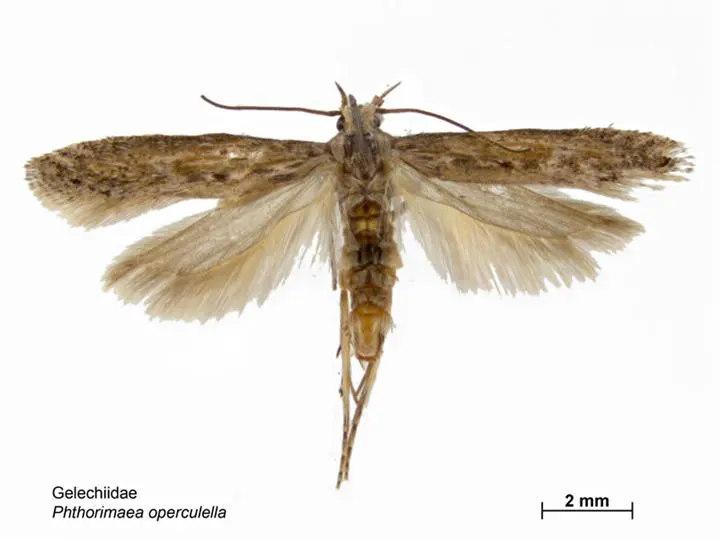
After a few years came a nasty (very unpleasant) surprise. In spite of the mixture of powerful chemicals, a few moths survived. They reproduced at a terrifying rate, devouring (eating hungrily) every potato they could find. The chemicals had killed not only the pests but also their natural predators (the birds, spiders and insects that ate them), so the natural balance was upset and the new moth had the crop all to itself.
5. Stronger and stronger
The farmers first raised the dose, then tried new chemicals, one after another. But one or two resistant moths (moths the poison couldn’t kill) were enough: they bred a new, tougher strain (type), immune to even the most powerful pesticide. New pesticides came with new promises to finish off the “evil moth”, and worked for a while, but never for good.
6. Despair, and hope
Farmers are in despair (they have lost hope): they have watched their harvests disappear, and feel the land itself has lost its creative potential (its power to grow things). But Mahendra is more hopeful. He has gone back to more natural methods: he is letting some of his land lie fallow (unplanted for a season, to rest) and changing the way he irrigates his fields, hoping the moths will go away.
Why the moths became resistant
How could one or two moths make a whole strain that no poison can kill? The poison didn’t teach the moths to resist it. Among millions of moths, a very few happen to be born different, because of a small change in their genes: their bodies can break the poison down, or it can’t reach the place it attacks. Spraying kills the ordinary moths and leaves these few. With the field to themselves, and their predators dead, they breed, and their young inherit the same resistance. Spray again, and again only the resistant survive. After a few seasons nearly every moth in the field is resistant. This is natural selection, the same process Charles Darwin described, here sped up by people.
Why did the moths have “the crop all to itself”?
Pick an answer to see why.
Mahendra lets some of his land lie fallow. This means he…
Pick an answer to see why.
Words from the text
| Word | Meaning here |
|---|---|
| pest | an insect or animal that damages crops or stored food |
| pesticide | a chemical used to kill pests |
| combat | to fight against, to try to stop |
| swamp | (swamped) to overwhelm with too much of something |
| plague | a very large number of harmful animals or insects that suddenly appear |
| avalanche | a huge amount of something arriving at once |
| overpowering | too strong to resist |
| indiscriminately | without care or thought, without choosing |
| whim | a sudden change of mind with no clear reason; the whims of nature: its sudden, unpredictable changes |
| nasty | very unpleasant |
| devour | to eat hungrily and quickly |
| predator | an animal that kills and eats other animals |
| resistant | not harmed or affected by something (resistant to a pesticide) |
| strain | a type of an animal, plant or germ with its own features |
| immune | not affected by something, protected from it |
| despair | the feeling of having lost all hope |
| potential | the power to develop, grow or produce |
| fallow | (of land) plowed but left unplanted for a time |
A. Complete the sentences
Complete the following sentences using the correct words from the box.
avalanche, plague, combat, predator, despair, resistant, nasty
- a.As responsible citizens it is our duty to ……… all social evils.
- b.The whole town is suffering from the new ……… of rats.
- c.The minister’s opinion has created ……… of controversy.
- d.He got a ……… cut above his eye in the accident.
- e.Some animals do not have a natural ……… .
- f.Mosquitoes seem to have become ……… to the toughest insecticides.
- g.He is in ……… due to all the failures in business.
Answer
B. Ways of eating
Devour means to eat hungrily, fast and in large amounts. English has many verbs for ways of eating.
The word ‘devour’ refers to a style of eating. It means ‘eating hungrily’. The following words also refer to different styles of eating. Use a dictionary to find their meanings.
a. munch b. nibble c. gobble d. gnaw e. swallow
Answer
A rat has made a hole in the sack by biting the same spot again and again. It has ……… through the sack.
Pick an answer to see why.
C. True or false
Write whether the following sentences are True or False.
- a.The first use of pesticides caused further problems to the farmers.
- b.The shopkeepers made the farmers buy many pesticides.
- c.Mahendra Yadav admits that the farmers used chemicals carelessly.
- d.The pesticides not only killed the pests but also increased the fertility of the land.
- e.Mahendra Yadav expects that the moths will go away one day.
Answer
D. Answer the questions
Why do you think Mahendra Yadav says “these insects will eat us alive”?
Answer
What did the farmers hope when they bought the pesticides for the first time?
Answer
What was the ‘nasty surprise’ for the farmers?
Answer
Find different words in the text that refer to the pesticide and the moth.
Answer
Do you think that Mahendra Yadav has made a wise decision at the end? Why?
A model answer
E. Pesticides and their alternatives
Why is the use of pesticide harmful for both people and the environment? What could be a good alternative to pesticides? Discuss with your friends.
A model answer
Listening: the Amazon rainforest
The listening is a short talk of facts about the Amazon rainforest. CDC’s own recording is below: read the questions in B first, then listen, as many times as you need.
A. Before you listen
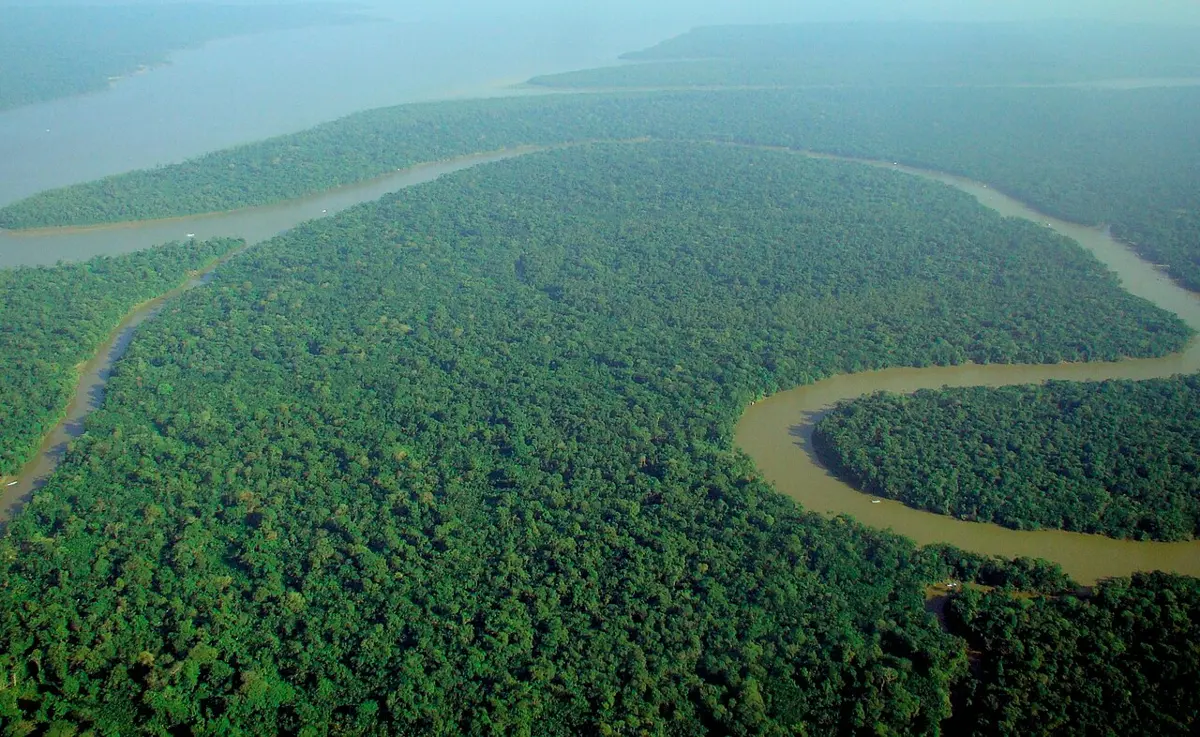
The two pictures show a wide river winding through thick green forest, seen from the air, and the top of a dense, misty rainforest at dawn.
- a.What do you see in the pictures below?
- b.Do you know the three biggest rainforests in the world?
Model answers
B. Circle the correct answers
What is the area of the Amazon Forest?
Pick an answer to see why.
Where does the Amazon River flow?
Pick an answer to see why.
How much oxygen is produced by the Amazon Forest?
Pick an answer to see why.
How many species of mammals are found in this forest?
Pick an answer to see why.
How many native tribes live in this forest region?
Pick an answer to see why.
These answers have been checked against the recording. It also says that the Amazon is the biggest tropical rainforest in the world; that most of it is in Brazil (almost 60 percent), and the rest in Peru, Venezuela, Colombia, Ecuador, Guyana, Bolivia, Suriname and French Guiana; that it is home to cougars, jaguars and anacondas; that the forest is so dense that sunlight can’t reach the floor; and that it has 40,000 plant species, 3,000 types of fish and 20 percent of the world’s bird species.
C. Nepal’s forests
Find out the percentage of forest in Nepal. What can we do to save it? Discuss with your friend.
A model answer
Grammar II: practice with the first conditional
Remember: the if-clause takes the present; the result takes will, a modal (can, may, must) or an imperative; unless = if … not, with a positive verb.
“You will catch a cold ……… you wear a warm cap.” Which word fits?
Pick an answer to see why.
A. Complete the sentences
Complete the sentences with the correct form of the verbs given in the brackets.
- a.If we hurry, we ……… there in time. (get)
- b.I won’t go to the doctor unless the pain ……… . (increase)
- c.If you spit in a public place, you ……… into trouble. (get)
- d.We ……… for a picnic tomorrow if the weather stays nice. (go)
- e.Everyone ……… you if you tell them the truth. (believe)
- f.If he ……… up, he won’t get to work on time. (not wake)
- g.If the baby ……… a boy, I’ll call him Nitesh. (be)
- h.You can cause an accident if you ……… so carelessly. (drive)
- i.Unless she ……… the ambulance immediately, her father may die. (call)
- j.If you try harder, you ……… in your exams. (succeed)
Answer
B. Complete with your own endings
Complete the following sentences with suitable endings.
- a.If you are hungry, ……… .
- b.If he runs fast, ……… .
- c.They will win the match if ……… .
- d.If you phone him, ……… .
- e.If Mira fails the exam, ……… .
- f.Manashi will be promoted to grade ten if ……… .
Model answers
Writing II: a letter to the editor
A letter to the editor is a formal letter to a newspaper, written to be printed so the public can read it. People write one to draw attention to a problem (bad roads, pollution, a dangerous crossing), to give their opinion on something in the news, or to ask the authorities to act.
A. Label the parts
Read the letter to the editor of a newspaper and label the given parts in it: subscription and signature, date, salutation/greetings, sender’s address, body.
Answer
How to write a letter to the editor
- Your address and the date, at the top.
- The editor’s address: The Editor, The Rising Nepal, Dharmapath, Kathmandu (or a local paper’s name and address).
- Subject: a few words on what the letter is about.
- Salutation: Dear Sir/Madam, or Dear Editor,
- Body, in three or four paragraphs: the problem and why you are writing (Through your esteemed newspaper, I would like to draw the attention of…); details and effects, with an example or a fact; what should be done, and by whom; a closing request (I hope the concerned authorities will take action soon).
- Subscription and signature: Yours faithfully, and your name (and, if you like, your address in a line under it).
Keep it formal: no short forms (don’t, can’t), no slang, and polite even when you are angry. In your final exam, a letter to the editor is a Free writing II task (about 200 words, 8 marks), marked on its content, organization, language and layout.
B. Write a letter
Write a letter to the editor of a local newspaper highlighting the importance of natural resources in Nepal, and ways of preserving them.
Hint
A model letter
Project work
The water cycle is the endless movement of water between the Earth and the air Figure 7.6. Its main steps:
- Evaporation: the Sun warms seas, lakes and rivers, and liquid water turns into invisible water vapor. Plants also give off water vapor through their leaves (transpiration).
- Condensation: the vapor rises, cools, and turns into tiny droplets that make clouds.
- Precipitation: the droplets join into drops that fall as rain, or, where it is cold enough, as snow or hail.
- Collection: the water runs into rivers and lakes, soaks into the ground (groundwater, which feeds our springs and wells), or freezes into glaciers, and in the end flows back to the sea, where the cycle begins again.
Male, female and young animals
Many animals have special names for the male, the female and the young.
| Animal | Male | Female | Young |
|---|---|---|---|
| ass (donkey) | jack | jenny | foal |
| bear | boar | sow | cub |
| deer | buck (stag for large deer) | doe (hind for large deer) | fawn (calf for large deer) |
| horse | stallion | mare | foal (a young male is a colt, a young female a filly) |
| sheep | ram | ewe | lamb |
| dog | dog | bitch | puppy |
| cattle | bull | cow | calf |
| goat | billy goat (buck) | nanny goat (doe) | kid |
| chicken | cock (rooster) | hen | chick |
| duck | drake | duck | duckling |
| pig | boar | sow | piglet |
| lion | lion | lioness | cub |
| tiger | tiger | tigress | cub |
| elephant | bull | cow | calf |
The first six rows are the textbook’s; the rest are animals you see in Nepal’s farms and national parks. Notice that bull, cow and calf are also used for elephants (and for rhinos and whales), and boar and sow for both bears and pigs. Ewe is said /juː/, exactly like you.
A ewe and her ……… were grazing on the hillside above Jiri.
Pick an answer to see why.
Exercise
Practice on this unit in the style of the final exam (Grade 9’s exam follows the SEE’s kind of chart). Try each one as in the exam, then open the answer.
Write True or False after each statement about the two readings.
- a.Geese fly in V-shaped flocks when they migrate.
- b.A hibernating animal’s heartbeat speeds up to keep it warm.
- c.Snakes spend the winter dormant in holes and burrows.
- d.The pesticides were first promoted in the early 1990s.
- e.Mahendra Yadav has decided to use a stronger pesticide.
Answer
Choose the correct answer for each numbered blank.
Tashi’s grandmother says that if you (a) ……… (plant / planted / will plant / are planting) a tree near a spring, the spring never dries up. Tashi isn’t sure, but she has decided to try. “If we (b) ……… (start / will start / started / starting) now, the saplings will be strong before the monsoon,” she tells her brother. “But unless someone (c) ……… (water / waters / doesn’t water / will water) them every day, they (d) ……… (die / will die / died / would die).” Her brother laughs: “If you (e) ……… (need / will need / needed / are needing) help, just call me.”
Answer
Change these sentences as instructed in brackets.
- a.If you don’t water the plants, they will dry up. (Use unless.)
- b.Unless the moths find potatoes, they cannot breed. (Use if.)
- c.You heat ice. It melts. (Join with if.)
- d.It rains tomorrow. We will cancel the picnic. (Join with if, starting with We.)
- e.Would you like a cup of tea? (Write a polite answer declining the offer.)
Answer
Read the clues and write a paragraph of about 100 words on “The Himalayan Marmot in Winter”.
lives in high grasslands of the Himalaya, 3,000–5,000 m … eats grass and flowers all summer … grows fat … autumn: digs deep burrow, family together … hibernates about six months … body cools, heart slows … wakes in spring, thin and hungry
A model paragraph
Your village spring has started drying up since the forest above it was cut. Write a letter to the editor of a national daily, in about 200 words, describing the problem and suggesting what should be done.
A model letter
Practice every question in the book, and keep track of the ones you miss →
A companion to your textbook, not a replacement for it: study from the book your school uses, and where the two differ, follow your teacher. Found a mistake? Please tell us.