
An old man travels from his village to the city to see his son, whom he hasn’t seen for years. The son is busy, too busy even to come home for a few days. So the father goes back alone, without saying a word about the trouble his family is in. Why didn’t he ask for help? And what would you have done in the son’s place?
This unit is about the places where we spend our days: at home with our family, in the market, and in public places such as an office, a bus or an airport. In all of them we keep asking people for things, and offering to help. So you will learn to make requests and offers in English, from the friendly Can you…? to the very polite Would you be so kind as to…?, and to answer them. You will also meet a shy young man at a disco who finds out that the politest words aren’t always the ones that work.
Getting started: asking in public places
The unit opens with three pictures and a question: what are they about, and how do people make requests (ask for something politely) in each place?
| Picture | What it shows | A request someone might make there |
|---|---|---|
| a man with a camera to his eye | a photographer at work | Could you move a little to your left, please? (the photographer to the person he is photographing) |
| crowds among piles of shoes | a shoe fair in a market | Can you show me these in size 40? Could you give me a better price? |
| travelers with suitcases in a big hall | an airport | Could you tell me where the check-in counter for Pokhara is? Would you mind keeping an eye on my bag for a minute? |
Notice what the requests have in common: they are questions (Can you…? Could you…? Would you mind…?), not orders (Show me!), and many have please in them. In English a request phrased as a question sounds polite, because it leaves the other person free to say no.
Reading I: Thomas and Jerry
Before you read
What do you see in the picture?
A model answer
What is more important for you: family or work, or both? Why?
A model answer
What kind of text it is
Thomas and Jerry is a short story with a lesson, like a fable but set in our own time. It is told in the past tense by a narrator, and much of it is dialogue, the words the characters say, in quotation marks. Watch how the people in it ask for things: Could you please tell me…?, May I know…?, Will you go home with me?, Would you stay for a few days? Those are this unit’s requests, in action.
The story moves between three places: the city where the son works, his office, and the village where his parents live.
The story, part by part
1. A father sets out
Jerry is an old man who lives in a village. He hasn’t seen his son, Thomas, who lives in the city, for a few years, and he wants to meet him. So he travels to the city and approaches (comes near to) the house his son’s letters used to come from long ago. He knocks, smiling with joy, but a stranger opens the door: Thomas has moved away. Jerry is disappointed and ponders (thinks hard about) how he will find his son now.
2. Finding the office
As he walks down the street, the neighbors ask whether he is looking for Thomas. He nods (moves his head up and down to say yes), and they give him the address of Thomas’s office. At the reception counter he asks politely where Thomas works in the building. The receptionist (the person at the front desk who greets visitors) asks how he is related to Thomas: “I’m his father.” She phones Thomas, who is stunned (too shocked to react) and asks for his father to be sent to his cabin (his small office) at once.
3. “I’m afraid I can’t”
When Jerry sees his son, his eyes fill with tears. Thomas is happy to see him. After a while, Jerry asks: Thomas’s mother dearly wants to see him; will he come home with his father? Thomas says no: he is busy working for his success, his hands are full of stressful work, and it is hard to get leave (time off work). Jerry smiles and says he will go back to the village that evening. Thomas asks him to stay with him a few days, but Jerry refuses gently: he doesn’t want to be a burden (a heavy load, a trouble) to his busy son; he would be happy to meet him again some day. Then he departs (leaves).
4. Thomas feels guilty
A few weeks later, Thomas starts to wonder why his father had come all that way alone, after so long. He feels he treated his father in a weird (strange) way, and he feels guilty. So he takes a few days’ leave and goes to his village. But his parents are not in the house where he was born and grew up. Shocked, he asks the neighbors where they are, and they give him an address.
5. A sad new home
Thomas scurries (hurries with short, quick steps) there, and finds a place so bleak and lonely that it seems like a graveyard (a place where the dead are buried). With tears in his eyes he walks slowly toward it. His father sees him in the distance and waves; Thomas runs to him and hugs him.
6. The truth comes out
Jerry is surprised and glad to see him. Thomas is ashamed and keeps his head down: he never imagined he would find his parents living like this. Then Jerry explains, smiling. He had taken a loan (borrowed money) to pay for Thomas’s college education when he moved to the city, and another when Thomas wanted a new car. But the farm made a loss, and he couldn’t pay the loans back. He thought of asking Thomas for help, but his son was so busy, bustling (rushing about) with his work, that he stayed silent rather than burden him. To repay the loan, he had to let the family home go (give it up).
7. What parents want
Thomas whispers that his father could have told him: he is not an outsider. Jerry answers that his son was so busy and stressed that he chose to stay quiet: all they had ever wanted was his happiness. Thomas cries, hugs his father again, says sorry and asks him to forgive him. Jerry radiates (shines with happiness): there is no need for that. He is content (satisfied) with what he has. All he asks is that Thomas spares (gives) some time for them, because they love him, and at their age it is hard to travel to see him.
What it means. Thomas is not a bad son: he is busy, and he loves his father. His mistake is that he puts his work first and never asks how his parents are. Jerry, too, is proud and kind in the same way: he would rather lose his home than burden his son. The story asks us to notice the people who gave us everything, and to ask, listen and visit before it is too late. The lesson is in Jerry’s last words: what parents want most is not money but time.
Why did Jerry go back to the village the same evening?
Pick an answer to see why.
How did Jerry pay back the loans?
Pick an answer to see why.
Words from the story
Words linked here open in English Vocabulary, where you can see an example and practice them in the word game. The meanings below are the ones the words have in this story.
| Word | Meaning here |
|---|---|
| approach | to come near to a place or a person |
| ponder | to think carefully about something for a time |
| nod | to move your head down and up, to say yes |
| receptionist | the person at the front desk of an office or hotel who greets visitors |
| stunned | so shocked that you can’t speak or react for a moment |
| burden | a heavy load; a trouble or worry that someone must carry |
| depart | to leave, especially to start a journey |
| weird | very strange, not normal |
| scurry | to hurry with short, quick steps |
| graveyard | a piece of land where the dead are buried |
| ashamed | feeling bad because you have done something wrong |
| bustle | to move about busily, in a hurry |
| repay | to pay back money you borrowed |
| whisper | to speak very quietly, using your breath, not your voice |
| radiate | to show a feeling clearly, as if shining with it |
| content | (adjective, stressed con-TENT) happy and satisfied with what you have |
| spare | to give time or money to someone, even when you are busy |
A. Find the words
The words in red in the story correspond to the meanings below. Find the words and write them.
- a.a load, typically a heavy one
- b.came near
- c.so shocked that one is temporarily unable to react
- d.left, especially in order to start a journey
- e.a burial ground
- f.very strange; bizarre
- g.satisfied
- h.shined with energy or happiness
- i.moved or ran somewhere suddenly or rapidly
Answer
B. True or false?
Jerry did not use to get letters from his son.
Pick an answer to see why.
The neighbors helped Jerry find the way to meet his son.
Pick an answer to see why.
Thomas was eager to meet his father in his office.
Pick an answer to see why.
Thomas asked his father to stay with him for a week.
Pick an answer to see why.
Thomas felt bad to see his father in his workplace.
Pick an answer to see why.
The story tries to show that parents’ happiness is tied up with their children’s success and happiness.
Pick an answer to see why.
C. Answer the questions
Why did Jerry go to the city?
Answer
What did the father want from his son?
Answer
Did the father come back to the village happily? Why?
Answer
What made Thomas decide to visit his father?
Answer
Why did Jerry take the loan?
Answer
Why did Jerry return home without telling his son about the loan?
Answer
What lesson do you learn from this story?
A model answer
D. Talk about it
Have you ever witnessed or heard of an event similar to the one in the story? Share it in small groups.
A model answer
Pronunciation: word stress
In every English word of two or more syllables (beats), one syllable is said louder, longer and a little higher than the others: it is stressed. HOL-i-day has three syllables, the first one stressed. Put the stress in the wrong place and a listener may not recognize the word at all. Dictionaries mark the stress with ˈ just before the stressed syllable: /ˈhɒlədeɪ/.
| Word | Syllables, stress in capitals | British | American |
|---|---|---|---|
| holiday | HOL-i-day | /ˈhɒlədeɪ/ | /ˈhɑːlədeɪ/ |
| continue | con-TIN-ue | /kənˈtɪnjuː/ | /kənˈtɪnjuː/ |
| intention | in-TEN-tion | /ɪnˈtenʃn/ | /ɪnˈtenʃn/ |
| attitude | AT-ti-tude | /ˈætɪtjuːd/ | /ˈætɪtuːd/ |
| unlikely | un-LIKE-ly | /ʌnˈlaɪkli/ | /ʌnˈlaɪkli/ |
| membership | MEM-ber-ship | /ˈmembəʃɪp/ | /ˈmembərʃɪp/ |
| conditional | con-DI-tion-al | /kənˈdɪʃənl/ | /kənˈdɪʃənl/ |
| mistake | mis-TAKE | /mɪˈsteɪk/ | /mɪˈsteɪk/ |
| apology | a-POL-o-gy | /əˈpɒlədʒi/ | /əˈpɑːlədʒi/ |
| family | FAM-i-ly | /ˈfæməli/ | /ˈfæməli/ |
| surprise | sur-PRISE | /səˈpraɪz/ | /sərˈpraɪz/ |
| distance | DIS-tance | /ˈdɪstəns/ | /ˈdɪstəns/ |
| unnatural | un-NAT-u-ral | /ʌnˈnætʃrəl/ | /ʌnˈnætʃrəl/ |
| hotel | ho-TEL | /həʊˈtel/ | /hoʊˈtel/ |
| deny | de-NY | /dɪˈnaɪ/ | /dɪˈnaɪ/ |
| monument | MON-u-ment | /ˈmɒnjumənt/ | /ˈmɑːnjumənt/ |
| marriage | MAR-riage | /ˈmærɪdʒ/ | /ˈmærɪdʒ/ |
| secondary | SEC-ond-ar-y | /ˈsekəndri/ | /ˈsekənderi/ |
| progressive | pro-GRES-sive | /prəˈɡresɪv/ | /prəˈɡresɪv/ |
| believe | be-LIEVE | /bɪˈliːv/ | /bɪˈliːv/ |
| examination | ex-am-i-NA-tion | /ɪɡˌzæmɪˈneɪʃn/ | /ɪɡˌzæmɪˈneɪʃn/ |
So eight of the words are stressed on the first syllable (holiday, attitude, membership, family, distance, monument, marriage, secondary), twelve on the second (continue, intention, unlikely, conditional, mistake, apology, surprise, unnatural, hotel, deny, progressive, believe), and examination on the fourth. (Marriage and distance have only two syllables. Secondary has four in American English, SEC-ond-ar-y, but usually only three in British English, SEC-ond-ry.)
Which word is not stressed on its first syllable?
Pick an answer to see why.
In examination, which syllable carries the main stress?
Pick an answer to see why.
Speaking: making requests
A request asks someone to do something for you, or asks if you may do something. In English, the more polite you want to be, the longer and the less direct the request becomes:
| How polite | Asking someone to do something | Asking if you may do something |
|---|---|---|
| friendly, direct (family, friends) | Can you pass the salt? | Can I use your pen? |
| polite (almost anyone) | Could you pass the salt, please? Would you pass the salt? | Could I use your pen? May I use your pen? |
| more polite (a stranger, a bigger favor) | Could you possibly pass the salt? Would you mind passing the salt? Do you think you could pass the salt? | Do you mind if I use your pen? |
| very polite (someone important, a big favor) | I wonder if you could pass the salt. Would you be so kind as to pass the salt? | Would you mind if I used your pen? Might I use your pen? |
To answer: Yes, sure. / Of course. / No problem. / Here you are. And to say no, politely: I’m sorry, I can’t… / I’m afraid not, because… / I’d rather you didn’t.
A. Four conversations
The task’s four short conversations each show a different way of asking. Here is what happens in each:
- Conversation I, in a gift shop. A customer asks the shopkeeper, Would you help me find a birthday gift for my father? The shopkeeper answers with a very polite suggestion, Might I suggest this tie?, and the customer likes it.
- Conversation II, in a shop. A customer asks to see a shoe brush and a nail cutter (Could you show me…, please?), then adds a second, softer request: I wonder if you could give me gift paper. The shopkeeper says No problem and offers to wrap them.
- Conversation III, at home. A child finds the room stuffy and asks for permission: Do you mind if I turn the fan on? Her mother answers No, I don’t mind at all: she would like some fresh air too.
- Conversation IV, at the table. Someone asks, very politely, Do you think you could possibly pass the pepper? The answer: Yes, of course. Here you are.
B. Conversations from clues
Work in pairs. Have similar conversations using the given clues.
- a.a shampoo / bigger one
- b.sugar / tooth brush / detergent powder
- c.birthday / sister / a shawl
- d.wedding / cousin / wedding ring
- e.close the window / cold / cold too
- f.buy / ice cream / no – cough
Model answers
Grammar I: Requests and offers with can, could and would
Can, could and would are modal verbs: no -s for he, she, it, and the base form of the verb after them (Could you help?, never Could you helps? or Could you to help?). Here they are in the four jobs this unit uses them for:
| To | Use | Example | Answers |
|---|---|---|---|
| request: ask someone to do something | Can / Could / Would you + base form? | Can you help me with this desk for a moment? Could you say congratulations to your brother for me? | Yes, sure. / Of course. / I’m sorry, I can’t. |
| ask permission: ask if you may do something | Can / Could / May I + base form? | Can I play now? Could I borrow your pen? | Yes, of course. / Go ahead. / I’m afraid not. |
| offer help or something | Can I…? / Shall I…? / Would you like me to + base form? / Would you like + a thing? | Can I help you? Would you like me to answer the phone? Would you like some help? | Yes, please. / That would be lovely. / No, thanks, I’m fine. |
| invite | Would you like to + base form? | Would you like to come for lunch this weekend? | Oh, I’d love to, thank you. / I’d love to, but I’m busy then. |
Your friend is carrying a heavy box. What do you say to offer help?
Pick an answer to see why.
Which request is correct?
Pick an answer to see why.
A. Study the examples
Study these examples of requests and offers, with their responses. Which are requests, and which are offers or invitations?
- a.‘Can I help you?’ ‘Yes, sure.’
- b.‘Would you like some help?’ ‘Yes, of course.’
- c.‘Would you like to come for lunch this weekend?’ ‘Oh, I’d love to, thank you.’
- d.‘Can you help me with this desk for a moment?’ ‘Yes, sure. Where do you want to put it?’
- e.‘Could you say congratulations to your brother on my behalf?’
Answer
B. Complete the conversations
Complete the following conversations using can, could and would.
- a.A: ……… I get you something to drink? B: Yes, please. A glass of lemonade for me.
- b.A: ……… you tell me where the nearest community school is, please? B: I’m sorry, I’m not from around here.
- c.A: ……… you like me to answer the phone? B: Yes, please, that ……… be lovely.
- d.A: I’ve finished my homework. ……… I play now? B: OK. You may.
- e.A: ……… I come round to your house sometime later? B: Well, actually, my dad’s not feeling well. Maybe another time.
- f.A: ……… you mind passing me that register, please? B: Yes, of course. Here you go.
- g.A: ……… you like me to talk to the head teacher? B: Oh. Yes, please! ……… you?
- h.A: ……… you lend me Rs. 200, please? B: I suppose so, but I need it back before next month.
- i.A: ……… you mind if I used your pen, madam? B: Not at all, go ahead.
Answer
Writing I: A request letter to the head teacher
Write a letter to the head teacher of your school on behalf of your class requesting him/her to organize an inter-house volleyball tournament in your school. Make requests for managing all required sporting goods for the tournament.
Hint
A model letter
How to write a request letter
A request letter is a formal letter (also called an official letter): you write to someone in their official role (a head teacher, a ward chairperson, an office) to ask for something. Its parts, in order:
- Your address and the date at the top. In a school letter, your class and school will do.
- The receiver’s title and address: The Head Teacher, the school’s name and address.
- Subject: what the letter is about, in a few words: Request to organize….
- Salutation: Dear Sir, / Dear Madam, (or Dear Sir/Madam,).
- Body: paragraph 1, who you are and what you request; paragraph 2, why (the reasons); paragraph 3, exactly what you need, with details; a short polite close (We hope you will kindly consider our request.).
- Closing: Yours faithfully, then your name and position (Class Captain, Grade 9 ‘B’).
The language of requests in a letter is longer and more careful than in speech: I would like to request you to…, We would be grateful if you could…, Could the school possibly…?, We would request you to…, We hope you will kindly consider….
In your final exam, an official letter like this is a Free writing II task (about 200 words, 8 marks), marked on its content, organization, language and layout.
Reading II: Dance
Before you read
The reading begins with two pictures of dancers.
What type of dance are they performing?
A model answer
In which parts of Nepal are they most popular?
A model answer
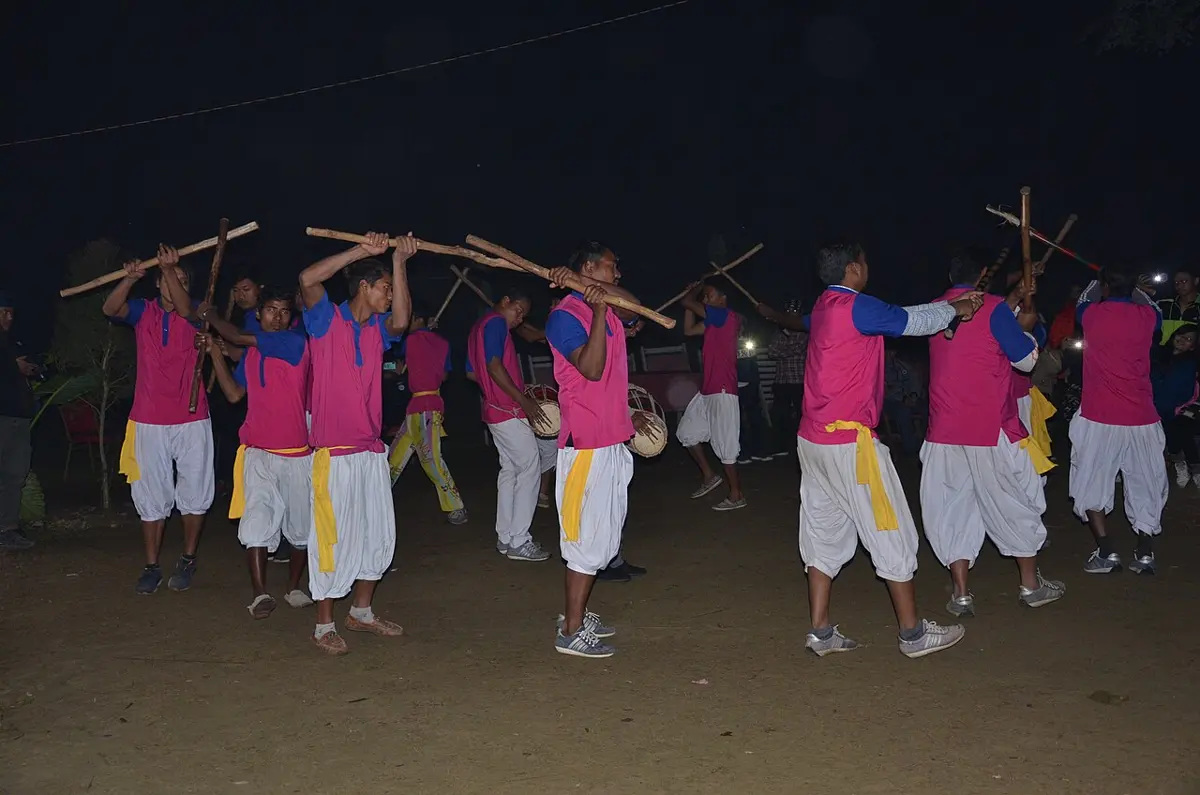
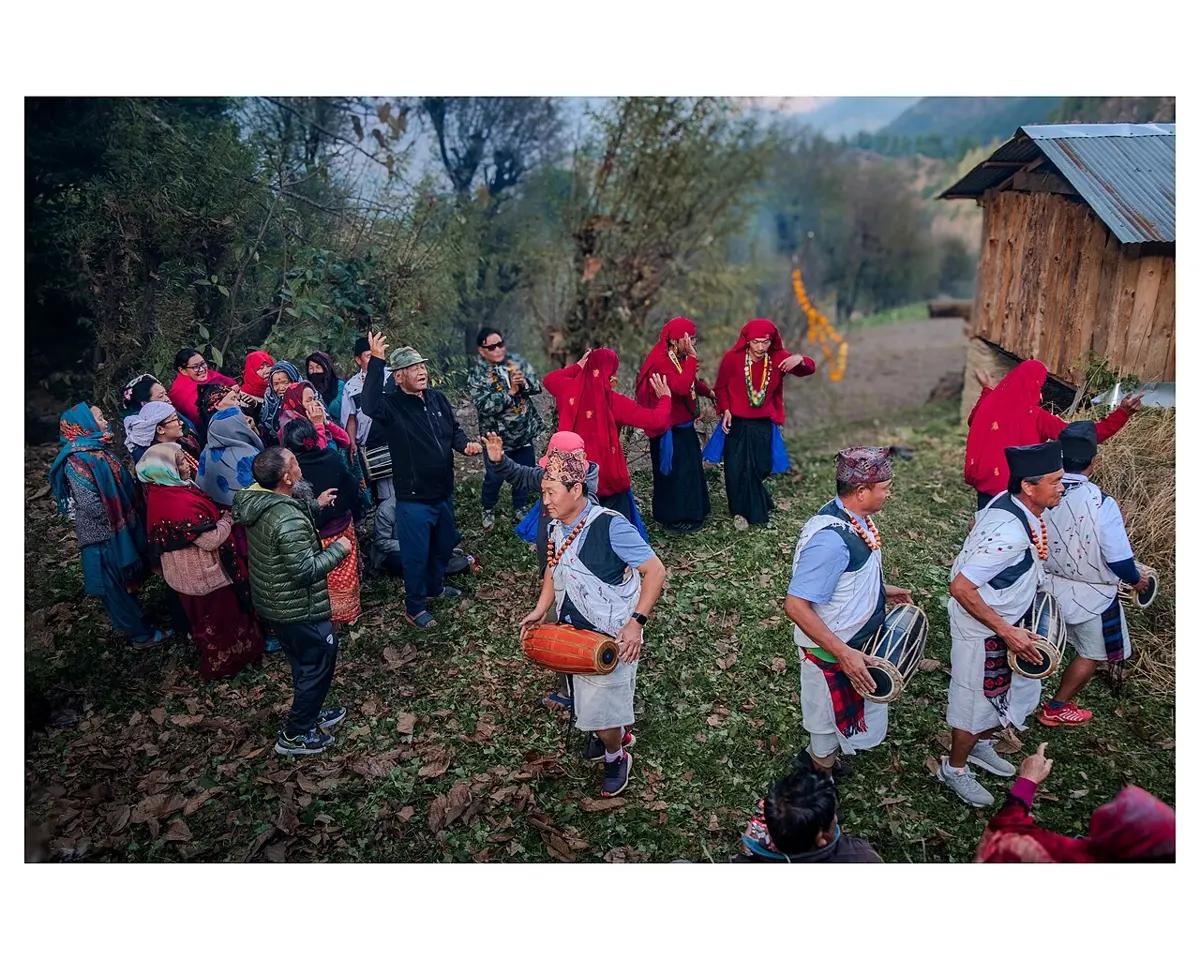
What kind of text it is
Dance is a humorous monologue: one person talking, as if to an audience, telling a story from his own life to make people laugh. The speaker talks straight to us (Do you remember the Star Disco in Thamel?, you know), corrects himself, and keeps the best joke for the very last line. It is the kind of piece a comedian might perform on stage.
It is also about this unit’s grammar: four young men ask a girl for a dance, each with a polite request, and each is turned down. Watch the requests.
The story, part by part
1. A shy young man at a disco
The speaker remembers the first time he went to a disco (a place where people dance to recorded music), when he was very young and shy. He reminds us of a disco in Thamel that was always full of beautiful girls, and adds a joke: most of them are grandmothers now. (So the story happened long ago, and the speaker is no longer young.) Too shy to ask anyone to dance, he sits and watches how the other lads (young men) do it.
2. The first man
A man walks up to a lovely girl in a blue dress and asks, in a grand, old-fashioned way, if he may have the pleasure of the next dance. She doesn’t hear him (Eh? What did you say?, it’s a noisy disco), so he tries again, even more politely and nervously: he wonders if she would be kind enough to dance with him… if she doesn’t mind. She says no, thank you very much.
3. The second man
A few minutes later another chap (man) arrives, with a big smile: would she be so kind as to have the next dance with him? Pardon? (“What did you say?”) says the girl. He asks again, more nervously: would she mind having the next dance with him? No thanks.
4. The third man
The third fellow is very good-looking, the speaker says: “black teeth, white hair”. Then he corrects himself: he means white teeth, black hair. This man is extremely polite, and climbs up the ladder of politeness as he speaks: Can I… could I… no, might I have the next dance? Sorry, she says: her feet are aching (hurting).
5. The fourth man
By now the speaker is terrified (very frightened): she has said no to everyone. A fourth character (person) tries the simplest polite question, Would you like to dance? She looks straight at him: No.
6. The surprise
The speaker gives up and decides to go home, in his old jacket and trousers, not at all good-looking. As he walks past the girl, she smiles. He can only manage two words, Er… dance?, and she says, Thank you very much. The last line is the punchline: it’s their twentieth wedding anniversary next week. The girl who refused everyone became his wife.
Why it is funny. The humor comes from surprise: we expect the most polite request to win, and the shortest, clumsiest one wins instead. There are smaller jokes too: the girls of the old disco being grandmothers now, the slip “black teeth, white hair”, the third man stumbling up from can to could to might, and the excuse about her aching feet. And under the jokes is a true point: polite words matter, but they are not everything. The girl answered the person, not the grammar.
Why did the girl say “Eh? What did you say?” and “Pardon?”
Pick an answer to see why.
Words from the story
| Word | Meaning here |
|---|---|
| disco | a club or party where people dance to recorded pop music |
| lad | (informal) a boy or young man |
| chap | (informal, British) a man |
| fellow | (informal) a man or a boy |
| character | (informal) a person, often an unusual one |
| pleasure | happiness; May I have the pleasure of…? is a very formal, old way to ask |
| pardon | Pardon?: “What did you say? Please say it again.” |
| ache | to hurt with a dull, steady pain |
| terrified | very frightened |
| anniversary | the same date as an important event in an earlier year: our twentieth wedding anniversary |
A. Find similar words
Find words from the story which are similar in meaning to the words given below.
- a.man (four words)
- b.came (two words)
- c.clothes (two words)
Answer
B. Choose the correct answers
The storyteller is probably …
Pick an answer to see why.
When he arrived at the disco, he first …
Pick an answer to see why.
Now his age may be about …
Pick an answer to see why.
The lovely girl …
Pick an answer to see why.
The story can be best described as …
Pick an answer to see why.
C. Your first dance
Recall the time that you first danced. Share your experience with your friends.
A model answer
Listening: in a souvenir shop
A souvenir is something you buy to remember a place or a visit, or as a gift: a singing bowl, a khukuri, a pashmina shawl, a carved wooden window. In the listening task, a man in a gift shop is looking for a present, and a salesperson suggests one thing after another. CDC’s own recording is below: read the questions in B and C first, then listen, as many times as you need.
A. Before you listen
Look at the picture and answer these questions.
- a.Where do you think the people in the picture are?
- b.What are some popular souvenirs that you can generally buy?
- c.How much do they cost?
Model answers
B. The textbook’s audio: answers
Listen to the audio and answer the following questions.
- a.Whom does the man want to present a gift to?
- b.What does the salesperson try to sell the man first?
- c.Why is he not interested in that item?
- d.Why does he not want to purchase the watch?
- e.Why can’t he go to another gift shop?
Answer
C. True or false?
The pearl necklace costs 120 dollars.
Pick an answer to see why.
The salesperson wanted to sell a shirt with a modern design.
Pick an answer to see why.
The man’s wife does not like chocolates.
Pick an answer to see why.
The salesperson explains that the boxes of chocolates were imported from Belgium.
Pick an answer to see why.
These answers follow CDC’s teachers’ guide, which gives the answers but not the words of the recording.
D. In a souvenir shop
You are in a souvenir shop. Prepare a short conversation with the salesperson asking for a beautiful gift to present to your friend on his or her birthday.
A model conversation
Practice listening alone
Grammar II: More ways to ask and offer
Grammar II adds some more ways to make a request or an offer, a little more formal than Can you…?:
| Expression | Use | Example |
|---|---|---|
| I’d like (to) + … | say politely what you want | I’d like to rent an apartment. I’d like a cup of tea, please. |
| Would it be possible to + base form? | a polite request, often for permission | Would it be possible to invite my cousin? |
| Would you be able to + base form? | ask if someone can do something for you | Would you be able to get me a ticket for the concert? |
| Could you recommend + … ? | ask for advice on choosing | Could you recommend a good dentist? |
| Can I book + … ? | a request in a shop, hotel or restaurant | Can I book a table for six? |
| Would you like me to + base form? | an offer | Would you like me to call a taxi? |
| Could you possibly + base form? | a very polite request | Could you possibly lend me your bicycle? |
| Would you mind + -ing? | a polite request | Would you mind turning the music down? |
A. Match the halves
Match the sentence halves to make full sentences.
- a.I’d — i. a good dentist?
- b.Would it be — ii. a table for six?
- c.Would you be able to — iii. possible to invite my cousin?
- d.Could you recommend — iv. you like me to call a taxi?
- e.Can I book a — v. get me a ticket for the concert?
- f.Would — vi. like to rent an apartment.
Answer
B. Make your own
Complete the sentences below in any way you like to make requests or offers.
- a.Would you like me ………?
- b.Can I ………?
- c.Could you ………?
- d.Would it be possible to ………?
- e.Would you mind ………?
- f.Could you possibly ………?
- g.Would you ………?
Model answers
Which sentence is an offer, not a request?
Pick an answer to see why.
Writing II: A dance tradition
Nepal has a dance for nearly every community and every season. The task names two. Rodhi is a custom of the Gurung people: in the evenings, after the day’s work, young men and women of a village used to gather in a Rodhi ghar (a Rodhi house) to sing, dance and talk, and it is still kept alive in some villages and in Gurung cultural programs. Chandi Naach is the dance of Sakela (Sakewa in Bantawa), the great festival of the Kirat Rai people.
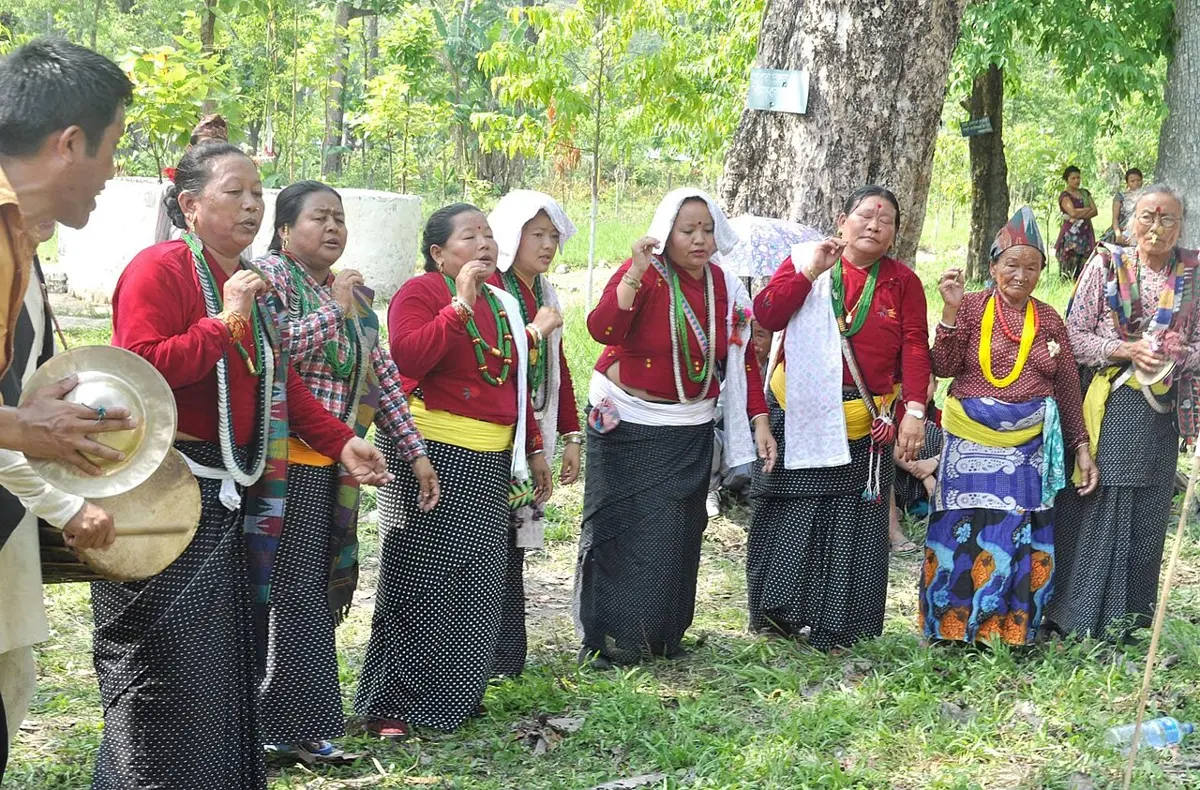
In Nepali culture, there are many occasions when people dance. The Gurung community has Rodhighars, the Rai community celebrates Chandi Naach, etc. Write a couple of paragraphs about any one of the dancing cultures or traditions in your community.
Hint
Model paragraphs
How to write paragraphs about a tradition
- Begin with the topic sentence: the name of the dance or custom and who keeps it.
- Answer the reader’s questions in order: when and why it is done, then how (the people, the steps, the clothes, the music), then what it means.
- Use the present simple for a tradition, since it happens again and again: The dancers move…, It is celebrated…. Use the past only for your own memory of it: Last year I joined….
- Explain local words the first time you use them: the jhyamta (cymbals).
- End with your own view: what it means to you, or why it should be kept alive.
In your final exam, paragraphs like these can be asked in Free writing I (about 150 words, 6 marks, an experience or a view) or, from given clues, in Guided writing I (about 100 words, 5 marks).
Project work
Gender of nouns
Many nouns tell us whether a person or an animal is male or female; others don’t, and some are things, with no sex at all. English grammar calls this the gender of a noun, and gives it four kinds:
| Gender | What it names | Examples | Pronoun |
|---|---|---|---|
| masculine | a male person or animal | king, man, boy, father, uncle, cock, bull, monk | he |
| feminine | a female person or animal | queen, woman, girl, mother, aunt, hen, cow, nun, vixen | she |
| neuter | a thing, with no sex | table, hair, city, river, book | it |
| common | a person or animal that can be either | teacher, student, cousin, parent, friend, baby, doctor | he or she, they |
Many masculine nouns have a feminine partner, made in one of three ways:
| By a different word | By adding -ess (and other endings) | By changing one part of the word |
|---|---|---|
| king – queen | host – hostess | landlord – landlady |
| husband – wife | lion – lioness | grandfather – grandmother |
| nephew – niece | prince – princess | he-goat – she-goat |
| bull – cow | god – goddess | salesman – saleswoman |
| cock – hen | hero – heroine | milkman – milkmaid |
| stallion (horse) – mare | widower – widow (the feminine is the shorter one) | stepson – stepdaughter |
| fox – vixen |
Which noun is of common gender?
Pick an answer to see why.
Give the other gender of each noun.
a. uncle b. bride c. emperor d. duck e. heir f. mare
Answer
Exercise
Practice on this unit in the style of the final exam (Grade 9’s exam follows the SEE’s kind of chart). Try each one as in the exam, then open the answer.
Write True or False after each statement about Reading I.
- a.Thomas had moved away from the house his letters used to come from.
- b.The receptionist refused to call Thomas.
- c.Jerry stayed with Thomas for a few days.
- d.Thomas found his parents living in a new, comfortable house.
- e.Jerry asked Thomas for nothing but some of his time.
Answer
Change these sentences as instructed in brackets.
- a.Open the door. (Make a polite request with Could.)
- b.Can I use your phone? (Make it more polite with Would you mind if….)
- c.Lend me your notes. (Make a polite request with Would you mind.)
- d.I will carry your bag. (Change into an offer with Would you like me….)
- e.Come to my birthday party. (Change into an invitation with Would you like….)
- f.Can you show me the way to Ratnapark? (Begin with I wonder.)
Answer
Choose the correct answer for each numbered blank.
Our class visited the old palace in Gorkha last week. At the gate, our teacher said to the guard, “(a) ……… (Could / Must / Should / Ought) you tell us where to buy the tickets, please?” He smiled and said, “Of course. (b) ……… (Will / Would / Shall / Do) you like me to show you round?” Inside, Rizwan asked, “Would you mind (c) ……… (take / to take / taking / taken) our photo?” The guard answered, “(d) ……… (Yes, I do. / Yes, of course I mind. / Not at all. / No, I mind.)” and took one of the whole class. Later, Salina asked, “Would it be possible (e) ……… (visit / to visit / visiting / visited) the temple at the top?”
Answer
Read the notice and answer the questions.
Notice: visiting the museum. Welcome to the Town Museum. The museum is open from 10:30 a.m. to 3:30 p.m., every day except Tuesday. Visitors are kindly requested to leave their bags at the counter and to keep their phones on silent. Photographs may be taken in the garden, but not inside the galleries. Please do not touch the paintings. Students in school uniform enter free with their teacher. For a guided tour, please ask at the reception.
- a.On which day is the museum closed?
- b.What should visitors do with their bags?
- c.Where can photographs be taken?
- d.Who can enter free?
- e.Where should visitors ask for a guided tour?
Answer
Write a dialogue of about 150 words between a customer and a shopkeeper in a clothes shop. The customer wants a warm jacket for winter, asks to try one on, asks for a different color and size, and asks for a discount.
A model answer
Practice every question in the book, and keep track of the ones you miss →
A companion to your textbook, not a replacement for it: study from the book your school uses, and where the two differ, follow your teacher. Found a mistake? Please tell us.