
Walk round a pond near your home. Frogs sit at the edge. Small fish dart in the water. Dragonflies hover over it, and green scum floats on top. A heron waits, still as a stick, for a fish. In the mud there are worms you can’t see. And all of them need the same water, the same air, the same sunlight.
No two kinds of living things are the same. They differ in what they eat, where they live and how their bodies are built. This variety of living things is called biodiversity (bio means life). Around us there are non-living things too: air, water, soil, rocks and sunlight. All the living and non-living things around us, taken together, make our environment.
In this unit you will see what makes up the environment, how to live without harming it, and how plants, animals and tiny living things depend on one another in an ecosystem.
4.1 Environment
Look at the picture and talk about it with your friends.
All the animals, plants, microorganisms and non-living things on Earth are linked to one another. The environment of a place is made by the links between its living (biotic) and non-living (abiotic) parts.
So, the air, water, land, sunlight, plants, animals and other living things around us together make up the environment.
Living things live in the environment and affect one another. Every living thing, people included, gets the water, food, energy and nutrients it needs from the environment. So when we take what we need from it, we must look after it too. Taking care of the environment while using it is called environmental conservation.
The air, water, soil, energy, plants and animals of a place are its environmental factors (or parts of its environment). Let’s look at each one.
Air
Air is all around the Earth. This blanket of air is called the atmosphere. Air is a mixture of gases: mostly nitrogen (about 78 parts in 100) and oxygen (about 21 parts in 100), with a little carbon dioxide and some other gases.
Oxygen is often called the life gas: plants and animals all need it to respire (to get energy from their food). When living things respire, they take in oxygen and give out carbon dioxide. Green plants do one more thing: when they make their food in sunlight (photosynthesis), they take in carbon dioxide and give out oxygen. In this way, the amounts of oxygen and carbon dioxide in the air stay balanced.
Which gas do animals give out when they breathe?
Pick an answer to see why.
Water
About 71 parts in 100 of the Earth’s surface is covered with water, and only 29 parts in 100 with land. Rivers, streams, lakes, ponds, wells, springs and the seas are sources of water. Every living thing needs water to stay alive: there is no life without it.
Land
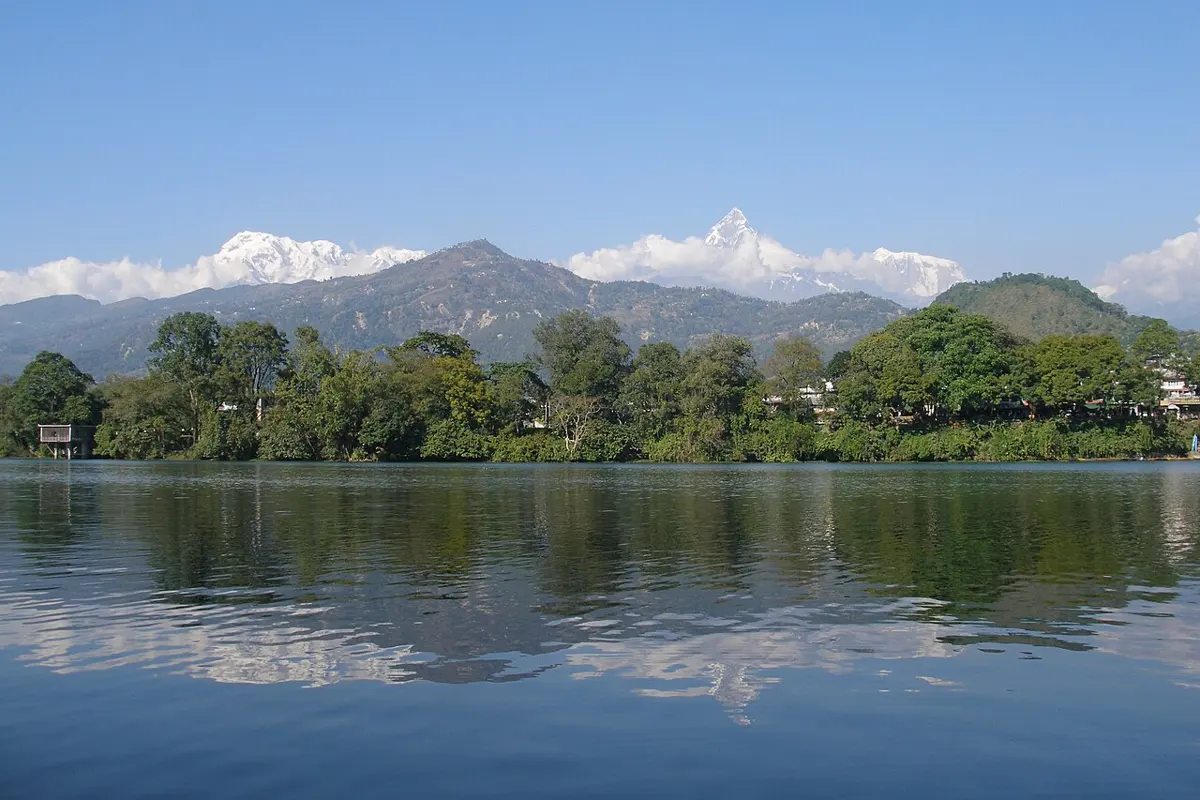
Land is the surface of the Earth. Soil and rocks are found on it. Land has many forms: flat land, high land, sloping land and low land. Think of the flat Terai, the sloping hills and the high Himalaya.
Land gives plants a place to sprout and grow. Plants take the water and minerals they need from the soil. People grow grains, fruits, vegetables and medicinal herbs in the soil. And the soil is the home of many animals: earthworms, ants, moles, rats and countless tiny living things.
Energy
The Sun is the main source of energy on Earth. It gives us heat and light. Its heat keeps the Earth warm. Plants make their food using sunlight; they can’t make food without it. Animals live by eating those plants, or by eating animals that ate plants.
Even the energy in firewood came from the Sun. A tree stored the Sun’s energy as it grew. When we burn wood, we get that energy back as heat and light.
The Sun also moves water round the Earth. Its heat turns the water of seas, rivers and wet ground into water vapor, which rises into the sky. There the vapor cools and forms clouds. The clouds fall back as rain, hail or snow, and that water fills our rivers and streams.
What is the main source of energy on Earth?
Pick an answer to see why.
Plants
Plants, from tiny grasses to huge trees, are found all around us. They do many jobs in the environment:
- Plants are the main source of food for living things.
- They give us timber to build houses, firewood, and medicinal herbs.
- They give out the oxygen we breathe.
- Forests are the homes of wild animals and birds.
- Plant roots hold the soil together, so rain doesn’t wash it away (soil erosion).
Because they clean the air, protect the soil, and give animals food and a home, plants keep the environment in balance.
Animals
The environment has animals of every size, from one-celled living things to elephants. They take in oxygen and give out carbon dioxide. They depend on plants, or on other animals, for their food. When they die, tiny living things rot their bodies, and the nitrogen and other minerals in them go back into the soil. Plants use these again to make food.
Grass, a deer and a tiger show how animals depend on one another: the deer eats the grass, and the tiger eats the deer. If the deer disappeared, the tiger would go hungry; if the tigers disappeared, too many deer would eat up the grass.
People keep animals for many jobs: cows and buffaloes for milk, goats for meat, and mules, donkeys and horses to carry loads. If any one of these animals were lost, it would affect others too and upset the environment. So animals too have an important place in the environment.
All living things together are the biotic factors (living parts) of the environment. The homes, food and life cycles of all living things are tied to their environment.
Biodiversity
You read at the start of this unit that the variety of living things is biodiversity. There is variety at three levels:
- Variety within one kind. No two people look exactly alike. Rice plants differ too: farmers in Nepal grow hundreds of different kinds of rice, such as jumli marsi, which grows high up in cold Jumla, where most rice can’t.
- Variety of kinds (species). Tigers, rhinos, frogs, rhododendrons, mosses, mushrooms: each is a different kind of living thing.
- Variety of homes (habitats). Forests, grasslands, rivers, lakes, snowy mountains: each has its own living things.
Which of these is a biotic (living) factor of the environment?
Pick an answer to see why.
4.2 Environment friendly behavior
Read this story, then talk about it.
People meet their needs for food, clothes and shelter from the environment. To meet them, we use more and more natural resources: for farming, keeping animals, firewood, collecting herbs (for Ayurvedic medicine, for example), and in industries and factories. When people use natural resources too much, the balance of the environment is upset. So we must protect natural resources from being destroyed.
Using natural resources without harming the environment and without spoiling their quality is called environment friendly behavior. Clean air, water, land and food are things we simply can’t live without. Environment friendly behavior helps to keep air, water, soil and other resources in their natural, clean state. Stopping pollution, not wasting resources and conserving the environment are all examples.
Here are four more kinds of environment friendly behavior.
A. Proper disposal of garbage
Throw garbage only in the place set aside for it. Sort the garbage from your house into two containers, waste that rots and waste that doesn’t rot, and give it to the waste collector.
Garbage thrown anywhere smells bad and spreads disease: flies, rats and mosquitoes breed in it. Garbage thrown on soil makes the soil less fertile, and it can kill the living things that live in the soil.
B. Sorting solid waste and managing it
Solid waste can be sorted into two kinds:
- Biodegradable waste rots away: tiny living things in the soil break it down. Examples: vegetable peels, leftover food, leaves, dung, paper. It can be made into compost (manure).
- Non-biodegradable waste doesn’t rot. Examples: plastic, glass, tins, metal. It can be reused or sent to be recycled.
Reuse means using the same thing again and again. Keeping things in old newspapers, pamphlets or books; filling an empty milk pouch with soil to grow a flower; cutting a soft-drink bottle to make a pot for a plant: all these are reuse.
Recycling means using old, used things as raw materials to make new things. Melting old pieces of metal to make new pots is recycling. So is pulping old paper to make new paper.
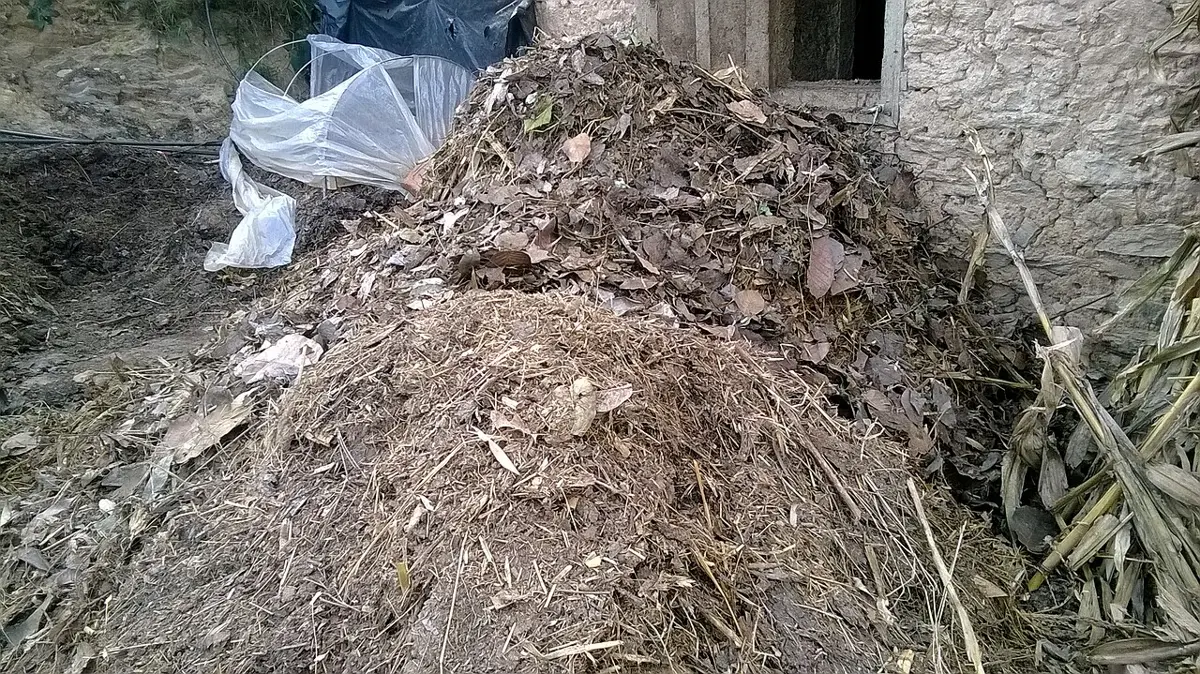
Which of these is recycling?
Pick an answer to see why.
Which waste is biodegradable?
Pick an answer to see why.
C. Conservation of trees and plants
Trees and plants clean the air and keep the environment fresh. Planting trees, helping them grow, caring for them (watering, weeding, fencing young plants from goats) and preventing forest fires are all ways of conserving trees and plants.
D. Using less of what pollutes
Use as little plastic, chemical fertilizer and insecticide (insect poison) as you can. This helps to conserve the environment. On farms, too much chemical fertilizer and insecticide harms the soil and the water. Instead, farmers can use compost and bio-insecticides, made from living things or from plants such as neem (nim) and mugwort (titepati).
Exercise (4.1 Environment and 4.2 Environment friendly behavior)
1. Fill in the blanks with the right word
Sun, reuse, atmosphere, environment, carbon dioxide
All the living and non-living things found in a place, taken together, are called the ______.
Answer
All the living and non-living things found in a place, taken together, are called the environment.
Living things take in oxygen and give out ______ when they respire.
Answer
Living things take in oxygen and give out carbon dioxide when they respire.
The main source of energy on Earth is the ______.
Answer
The main source of energy on Earth is the Sun.
Using the same thing again and again is called ______.
Answer
Using the same thing again and again is called reuse. (The word “atmosphere” is not needed.)
2. Write short notes on
Air
Answer
Air is the mixture of gases all around the Earth; this layer of air is the atmosphere. It is mostly nitrogen (about 78 %) and oxygen (about 21 %), with a little carbon dioxide and other gases. Living things need its oxygen to respire, and green plants need its carbon dioxide to make food. Respiration and photosynthesis keep the oxygen and carbon dioxide in the air balanced.
Water
Answer
About 71 % of the Earth’s surface is covered with water. Rivers, streams, lakes, ponds, wells, springs and seas are sources of water. Every living thing needs water to live; plants also need it to make their food. Most of the Earth’s water is salty sea water, and very little is fresh water we can use, so we must not waste or pollute it.
Soil
Answer
Soil covers the land. It is made of tiny pieces of rock, minerals, and the dead, rotting parts of plants and animals. Plants grow in soil and take water and minerals from it. People grow grains, fruits and vegetables in it. It is also the home of earthworms, ants, rats and countless tiny living things. Plant roots hold soil in place; where trees are cut, rain washes it away.
Sunlight (solar energy)
Answer
The Sun is the main source of energy on Earth. It gives us heat, which keeps the Earth warm, and light. Plants use sunlight to make their food, and animals eat plants, so all our food gets its energy from the Sun. The Sun’s heat also turns water into vapor, which forms clouds and falls as rain and snow. We use solar energy directly too, with solar panels and solar water heaters.
3. Write the differences
Biotic and abiotic factors
Answer
| Biotic factors | Abiotic factors |
|---|---|
| the living parts of the environment | the non-living parts of the environment |
| they grow, eat, breathe and reproduce | they don’t grow, eat or reproduce |
| examples: plants, animals, bacteria, fungi | examples: air, water, soil, sunlight, heat |
Reuse and recycle
Answer
| Reuse | Recycle |
|---|---|
| using the same thing again, as it is | using an old thing as raw material to make a new thing |
| the thing is not changed (or only cut or cleaned) | the thing is melted, pulped or broken down in a factory |
| can be done at home | usually done in a factory |
| example: a jam jar used to keep salt | example: old metal melted to make new pots |
4. Answer these questions
What are environmental factors? Write in short.
Answer
The parts that make up the environment of a place are its environmental factors: air, water, soil (land), energy (sunlight), plants and animals. They are of two kinds: abiotic (non-living: air, water, soil, light, heat) and biotic (living: plants, animals, microorganisms). They are all linked: plants use sunlight, air, water and soil to make food; animals eat plants and breathe the air; decomposers return dead bodies to the soil.
What is environment friendly behavior? Explain.
Answer
Using natural resources to meet our needs without harming the environment and without spoiling the quality of the resources is environment friendly behavior. It keeps air, water and soil clean and natural, so that they last for us and for those who come after us. For example: throwing garbage only in its place, sorted into waste that rots and waste that doesn’t; making compost; reusing and recycling things; planting and caring for trees; preventing forest fires; and using less plastic, chemical fertilizer and insecticide.
What things can you reuse, at home or at school? Write them down and present them in your class.
Answer
For example: old notebooks (the blank pages, for rough work); one side of used paper; empty jars and bottles (to store salt, spices, pencils or water); old tins, milk pouches and cut plastic bottles (as flower pots); old newspapers (to wrap things or cover books); cloth bags; old clothes (for younger children, or as dusters); cardboard boxes (to store things).
Which things in your village or town are collected for recycling? Write them down.
Answer
For example: old newspapers, books and cardboard (made into new paper and cardboard); plastic bottles and buckets (melted into new plastic goods); metal: old iron, tins, broken aluminium pots and copper wire (melted to make new things); glass bottles. In many places, scrap dealers (kabadi) go from house to house to buy them.
Describe how oxygen and carbon dioxide are kept balanced in the atmosphere.
Answer
All living things, plants and animals alike, respire: they take in oxygen from the air and give out carbon dioxide. Burning wood and fuel also uses oxygen and gives out carbon dioxide. Green plants, in sunlight, make their food by photosynthesis: they take in carbon dioxide and give out oxygen. So respiration uses up oxygen and adds carbon dioxide, while photosynthesis uses up carbon dioxide and adds oxygen. The two together keep the amounts of the two gases in the air balanced (see Figure 4.2). That is why cutting forests upsets this balance.
What can you do, yourself, to reduce pollution? Explain.
Answer
- Throw garbage only in a bin, and sort it into waste that rots and waste that doesn’t.
- Never burn plastic or rubbish: the smoke is poisonous.
- Carry a cloth bag, and use fewer plastic bags, wrappers and bottles.
- Don’t throw waste into rivers, ponds or wells.
- Walk or cycle for short trips instead of riding a motorbike or car.
- Turn off lights, fans and taps when not needed.
- Plant trees and look after them.
- Tell your family and friends about these habits too.
Plastic is said to be a main cause of environmental pollution. How can it be managed to reduce its harm? Give your views.
Answer
Plastic doesn’t rot, so it stays in the soil and water for hundreds of years. It blocks drains, harms the soil, and kills animals that swallow it, and burning it gives poisonous smoke. It can be managed in these ways:
- Reduce: use less of it. Carry a cloth or jute bag to the market; refuse plastic bags and straws you don’t need; buy things loose rather than in small packets.
- Reuse: use plastic bottles, jars and buckets again, for example as flower pots or to store things.
- Recycle: keep plastic separate from waste that rots, and give it to the waste collector or a scrap dealer, so it can be made into new things.
- Never burn it or throw it into rivers, fields or forests.
- Rules and awareness: towns can ban thin plastic bags, and schools and families can teach everyone these habits.
4.3 Ecosystem
On the surface of the Earth there are stones, soil, rocks, rivers, streams, ponds, lakes and seas, with air all around them. Together these make the physical (non-living) part of the Earth. They affect the lives of all plants and animals: plants and animals take the air, water, food and minerals they need from this physical environment. So living and non-living things are always linked.
The air, water and soil (non-living things) and the plants and animals (living things) of a place, working together as one system that runs by itself, make an ecosystem. A pond is an ecosystem. So is a forest, a field or a grassland.
The parts of an ecosystem are of two main kinds.
A. Abiotic factors
Air, water, soil, heat and light are the non-living or abiotic factors of an ecosystem.
- The air around the Earth contains nitrogen, oxygen, carbon dioxide and water vapor.
- Water is the thing plants and animals most need. Plants make their food with the water they take from the soil.
- Soil is a home for many living things. Plants take water and minerals from it. Soil is made of tiny pieces of rock, minerals, and the dead, rotting parts of plants and animals.
- The Sun gives living things heat and light.
So, the biotic and abiotic factors of an ecosystem are closely linked.
B. Biotic factors
Animals, plants and microorganisms are the living or biotic factors of an ecosystem. By the way they get their food, they are sorted into three groups: producers, consumers and decomposers.
Producers
Green plants make their own food. So all green plants are called producers. Rice (paddy), wheat, maize, millet, mustard and buckwheat (phapar) are producers. So are mango, banana, orange, apple and pear trees, and tomato, rose and spinach plants: they are all green plants.
Green plants make their food from the carbon dioxide in the air and water, in the presence of sunlight. Because they make their own food, they are also called autotrophs (“self-feeders”). You will see how they do it in Unit 5.
Consumers
We eat plants and the grains and fruits from them, so we are consumers. Cows, buffaloes, goats and sheep are consumers too. Living things that depend on other living things for their food are called consumers. All animals are consumers.
Consumers can be herbivores (they eat plants), carnivores (they eat animals) or omnivores (they eat both), as you saw in Unit 3. By what they eat, they are sorted into three groups.
Primary consumers eat producers, so they are herbivores. Cows, buffaloes, sheep, goats, deer and grasshoppers eat plants to live and grow: they are primary consumers.
Secondary consumers eat primary consumers. Insects that eat plants are primary consumers; the frog that eats those insects is a secondary consumer. Jackals, foxes and wolves, which eat primary consumers such as rabbits, rats and young deer, are secondary consumers too. Some secondary consumers are carnivores; others, such as the jackal, are omnivores.
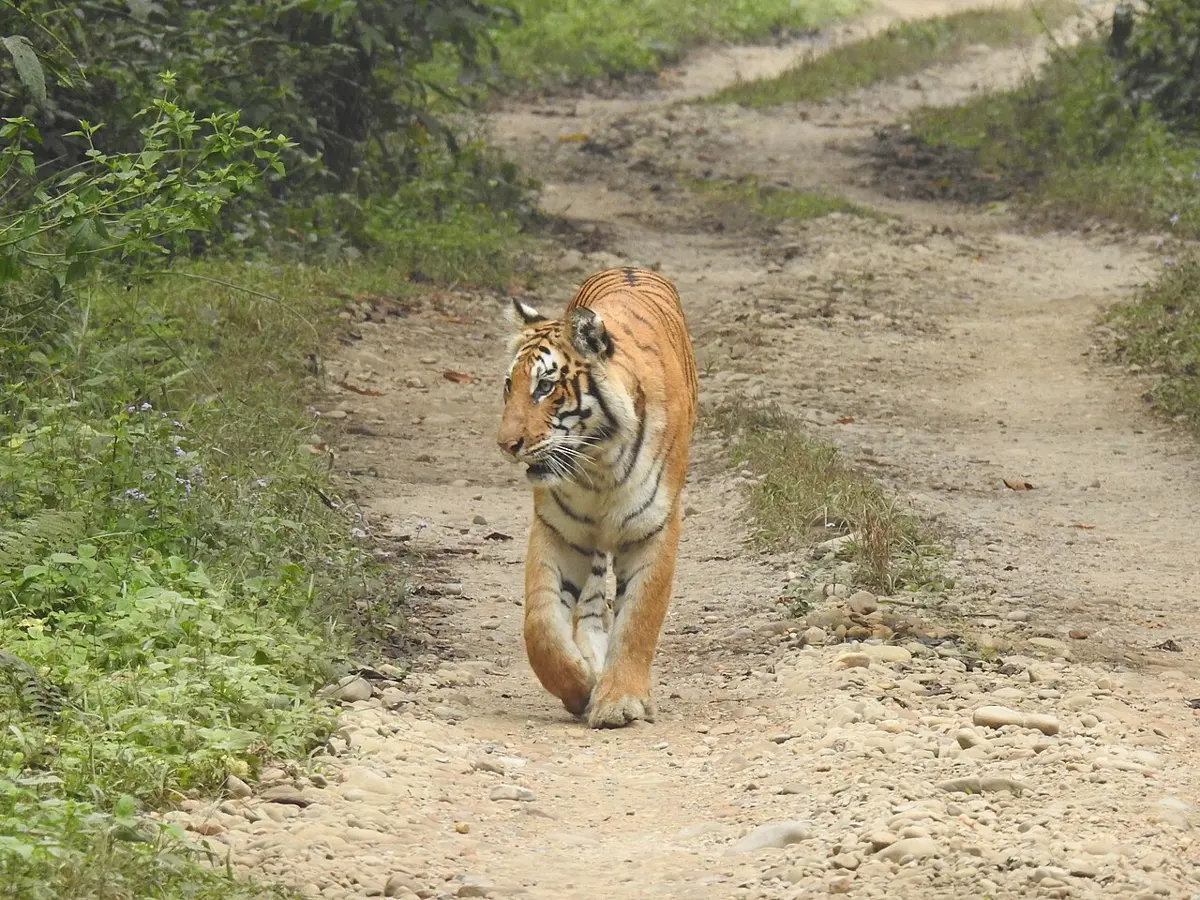
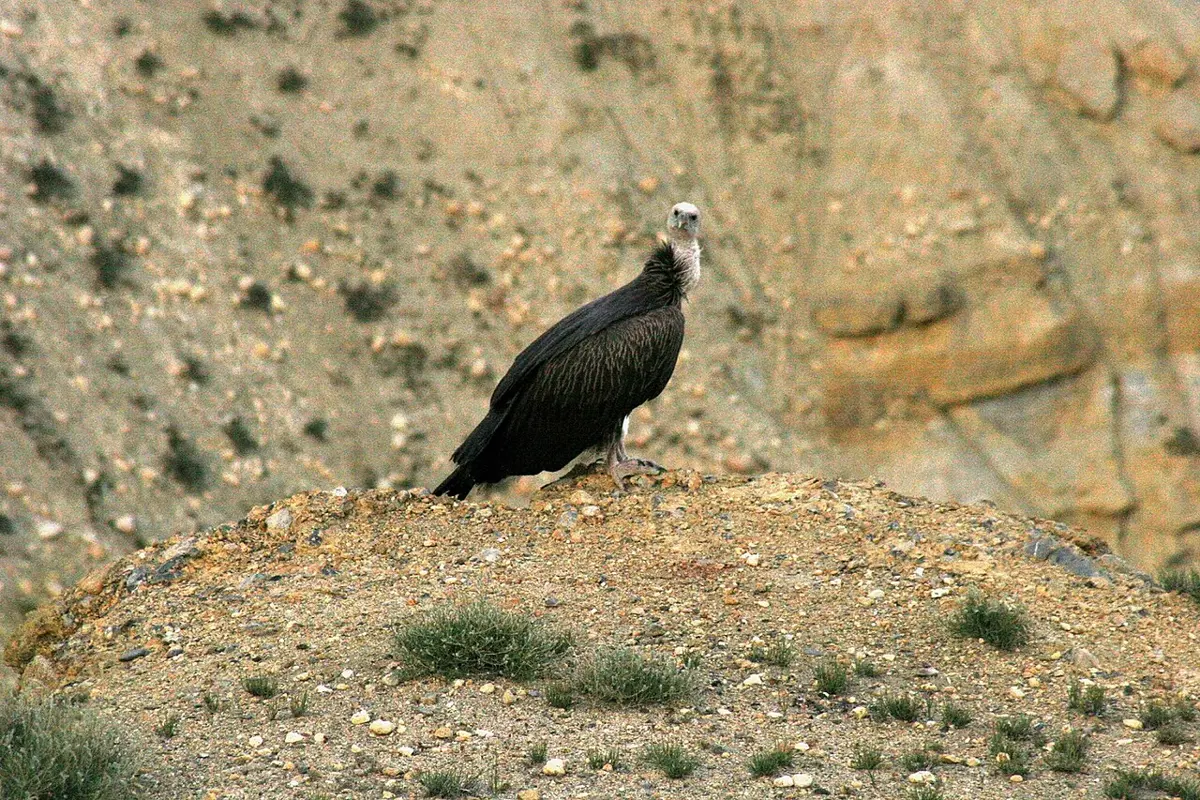
Tertiary consumers eat secondary consumers (and often primary consumers too). The leopard, tiger, python and eagle are tertiary consumers. They are carnivores. An eagle eats other birds and small animals; a tiger eats deer, wild pigs and other animals. From this food they get the energy to live and grow.
Decomposers
Living things that break down the dead bodies of plants and animals and mix them into the soil are called decomposers. Bacteria and fungi are decomposers. They give out chemicals called enzymes, which break the dead matter down. They use some of it as their own food, and the minerals that were locked in it go back into the soil. Plants take up these minerals to make their food. In this way producers, consumers and decomposers are all linked.
Which is a producer?
Pick an answer to see why.
A frog eats grasshoppers, and grasshoppers eat grass. What is the frog?
Pick an answer to see why.
4.4 Interrelationship among plants, animals and microorganisms
Now put it all together. Green plants make their own food, so they are producers (autotrophs). Animals get their food from plants, or from other animals, so they are consumers:
- Herbivores such as cows, goats, sheep, rabbits and deer are primary consumers.
- Dogs, cats, jackals and frogs get food from primary consumers: they are secondary consumers.
- Tigers, leopards, lions, eagles and pythons get food from primary and secondary consumers: they are tertiary consumers. They are carnivores.
Microorganisms such as bacteria rot the dead bodies of plants and animals: they are decomposers. The materials from the dead bodies mix into the soil, and plants use them to grow.
Plants and animals also exchange gases all the time: animals give out the carbon dioxide that plants use, and plants give out the oxygen that animals use. Microorganisms, too, take in oxygen and give out carbon dioxide when they respire. In this way, producers, consumers and decomposers are deeply linked in the environment.
Types of ecosystem
Ecosystems differ from place to place. They are sorted into two main types: aquatic and terrestrial.
A. Aquatic ecosystem. An ecosystem in water is an aquatic ecosystem (aqua means water). Aquatic ecosystems differ too, by the kind of water: a pond, a lake, a river, the sea.
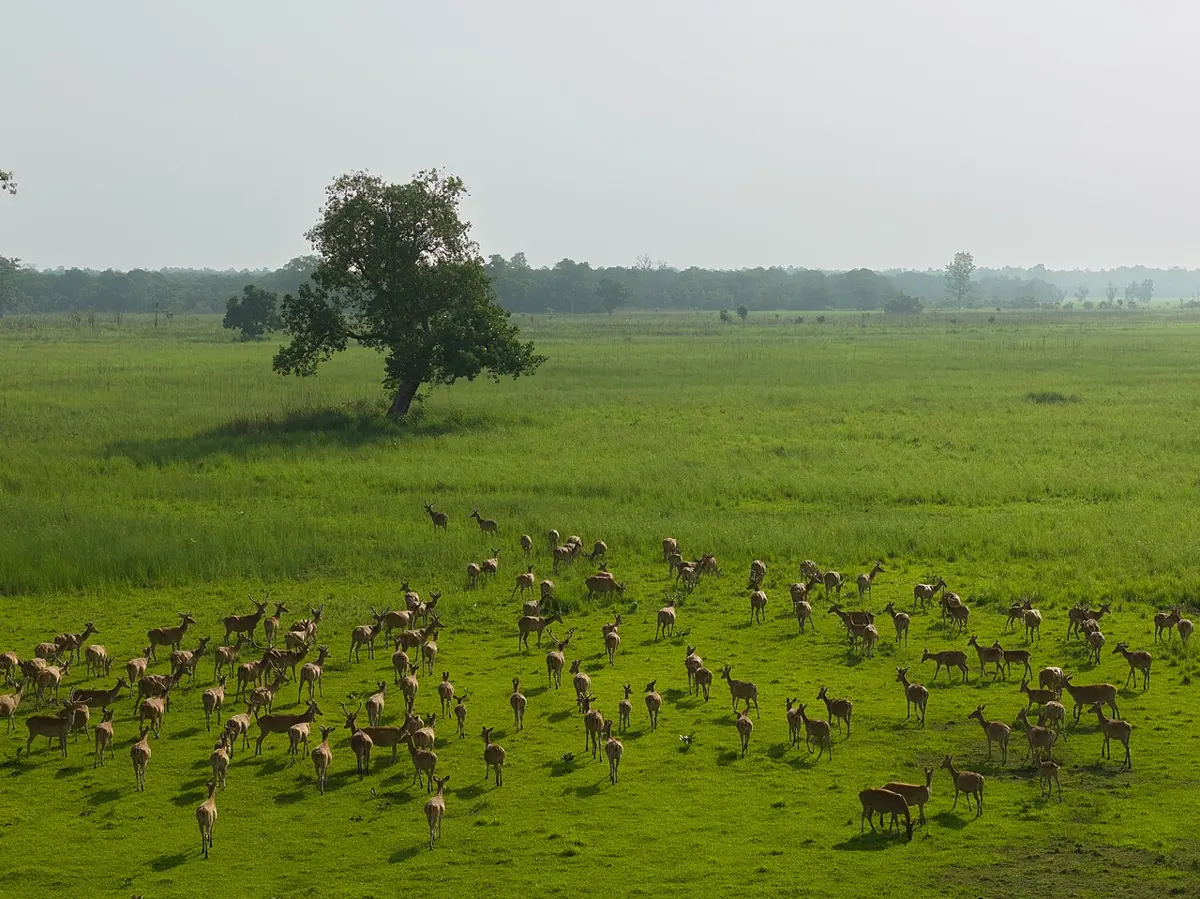
B. Terrestrial ecosystem. An ecosystem on land is a terrestrial ecosystem (terra means land). Land isn’t the same everywhere, so its living and non-living parts differ from place to place: a desert, a grassland, a forest, a field. In every one of them, the living and non-living parts are linked. Grassland and forest ecosystems are good examples.
Forest ecosystem
The ecosystem made by the links between the living and non-living parts of a forest is a forest ecosystem.
Abiotic factors of a forest: air, water, soil, rocks, minerals, light, heat and moisture. The slope of the land, how wet it is and what the soil is like also affect the ecosystem.
Biotic factors of a forest: its plants and animals.
- Grasses, herbs, shrubs and big trees are all producers. They take carbon dioxide from the air to make their food, and give out oxygen. So they feed the animals on one side, and keep the air in balance on the other.
- Many herbivores live in the forest too, from insects to deer, rabbits, elephants and rhinoceroses. They are primary consumers.
- Jackals, foxes and wolves, which eat primary consumers, are secondary consumers.
- Leopards and tigers, which eat primary and secondary consumers, are tertiary consumers.
Producers, primary, secondary and tertiary consumers stay in balance in the forest. When any of them die, the decomposers (bacteria, fungi) break their bodies down. The plants take up the materials mixed into the soil and make food again. In this way the forest ecosystem stays balanced.
Ecosystems keep the living things of the Earth in balance. They give plants and animals what they need to live, and give people oxygen and medicinal herbs. They are very important for the balance of the environment.
Which of these is an aquatic ecosystem?
Pick an answer to see why.
Exercise (4.3 Ecosystem and 4.4 Interrelationship)
1. Fill in the blanks with the right word
producer, Sun, secondary, consumer, decomposer, tertiary
Living things that depend on others for their food are called ______.
Answer
Living things that depend on others for their food are called consumers.
Living things that rot and break down the dead bodies of living things are called ______.
Answer
Living things that rot and break down the dead bodies of living things are called decomposers.
The main source of light is the ______.
Answer
The main source of light is the Sun.
A frog, which lives by eating insects, is a ______ consumer.
Answer
A frog, which lives by eating insects, is a secondary consumer. (“Producer” and “tertiary” are not needed.)
2. Match the columns
Match each living thing in column A with its group in column B.
| A | B |
|---|---|
| algae | primary consumer |
| tiger | secondary consumer |
| frog | tertiary consumer |
| cow | producer |
| decomposer |
Answer
| A | B |
|---|---|
| algae | producer (green: makes its own food) |
| tiger | tertiary consumer |
| frog | secondary consumer (eats insects) |
| cow | primary consumer (eats grass) |
“Decomposer” is left over.
3. Answer these questions
What is an abiotic factor? Write with examples.
Answer
The non-living parts of an ecosystem are its abiotic factors. Examples: air (oxygen, carbon dioxide, nitrogen), water, soil (with its minerals and rocks), heat and light from the Sun. Living things depend on them: plants need light, water, air and soil to make food, and animals need air and water to live.
Which living things are called producers? Explain with examples.
Answer
Green plants are called producers, because they make (produce) their own food. They use carbon dioxide from the air and water from the soil, in sunlight, with the help of their green chlorophyll. Every other living thing depends on the food they make. Examples: rice, wheat, maize, mustard, grass, mango and banana trees, spinach, and algae in a pond.
How do bacteria help to keep an ecosystem balanced? Write.
Answer
Bacteria are decomposers. They break down the dead bodies and wastes of plants and animals with their enzymes, and mix them into the soil as minerals. Plants take up these minerals to make their food again. In this way bacteria:
- clean the ecosystem, so dead bodies and waste don’t pile up;
- return minerals to the soil, so it stays fertile and plants can keep growing;
- complete the cycle that links producers, consumers and decomposers.
Explain the biotic and abiotic factors of a forest ecosystem.
Answer
Abiotic factors: air, water, soil, rocks, minerals, light, heat and moisture. The slope of the land, its moisture and its soil decide which plants and animals can live there.
Biotic factors:
- Producers: grasses, herbs, shrubs and trees, which make food and give out oxygen.
- Primary consumers: herbivores such as insects, deer, rabbits, elephants and rhinoceroses.
- Secondary consumers: jackals, foxes and wolves, which eat the herbivores.
- Tertiary consumers: leopards and tigers, which eat primary and secondary consumers.
- Decomposers: bacteria and fungi, which rot dead bodies and return minerals to the soil.
They are all linked, so the forest stays in balance.
A hunter kills all the deer in a forest. What will happen to the forest ecosystem? Explain.
Answer
The balance of the forest will be upset:
- The tigers and leopards that ate the deer will have too little food. Some will starve; others will leave the forest, or come to villages and kill goats and cattle.
- With no deer eating them, the grass and young plants will grow more for a while.
- Other animals that share food with the deer, or that ate the remains of deer killed by tigers (jackals, vultures), will also be affected.
One missing animal changes the whole ecosystem.
4. Write the differences
Aquatic and terrestrial ecosystems
Answer
| Aquatic ecosystem | Terrestrial ecosystem |
|---|---|
| an ecosystem in water | an ecosystem on land |
| producers are mostly algae and water plants | producers are grasses, shrubs and trees |
| animals such as fish, frogs and snails, adapted to water | animals such as deer, tigers and birds, adapted to land |
| examples: pond, lake, river, sea | examples: forest, grassland, desert |
Producers and consumers
Answer
| Producers | Consumers |
|---|---|
| make their own food | can’t make their own food |
| green plants, with chlorophyll | animals, without chlorophyll |
| use sunlight, carbon dioxide and water | eat plants or other animals |
| give out oxygen in sunlight | take in oxygen (and give out carbon dioxide) |
| examples: rice, grass, mango tree | examples: cow, frog, tiger |
Biotic and abiotic factors
Answer
| Biotic factors | Abiotic factors |
|---|---|
| the living parts of an ecosystem | the non-living parts of an ecosystem |
| they eat, grow, respire and reproduce | they don’t grow or reproduce |
| producers, consumers and decomposers | air, water, soil, heat and light |
| examples: grass, deer, tiger, bacteria | examples: sunlight, rain, rocks |
Practice every question in the book, and keep track of the ones you miss →