
Can you boil water without heating it? A physicist says yes, and shows how with a syringe and a little warm water. A poet asks the rain who it is, and the rain answers that it is the poem of the Earth. One explains nature with experiments, the other with wonder, and both describe the same journey of water.
This unit reads both. Along the way you will learn the grammar of cause and result, the conditional sentences (If you heat ice, it melts; If I were a bird, I would…; Had I known, I would have…), the words that sound the same but aren’t spelled the same, and three kinds of writing: step-by-step instructions, a letter to the editor and a letter of complaint.
Getting started
The unit opens with two pictures. In the first, a schoolgirl in a laboratory looks through a microscope, with another microscope beside her and a model of the human body and a picture of leaves on the wall behind. The second shows four pieces of glassware holding colored liquids: a round-bottomed flask, a conical flask, a beaker with a lip for pouring, and a tall, thin measuring cylinder.
Reading I: Yes, You Can Boil Water at Room Temperature
Before you read
The picture shows a glass pot of water boiling on a gas stove, its bubbles rising to the top.
What kind of text it is
The text is a popular science article by Rhett Allain, a physics professor in the United States, from his column in the magazine Wired. Popular science explains science to ordinary readers, so it is written in a chatty, friendly voice: Allain talks to you (Picture a glass of water), jokes (No one cooks rice at the top of Everest), uses comparisons from daily life, and keeps saying But wait! before a new idea. Its American measures are in °F and feet; the explanations below give them in °C and meters too.
The article, part by part
1. Why rice packets have high-altitude instructions
Some packets of rice in the United States give a second set of cooking instructions for high altitude: in a city like Denver, which is about 1,600 meters above sea level, the rice must cook a bit longer. Why should it matter where you cook? The answer, says Allain, has to do with boiling water.
2. Water doesn’t always boil at 100 °C
Ask people when water boils and they will say 212 °F, or 100 °C. That is true only at sea level. As you go higher, the boiling point falls, by about 1 °F for every 500 feet (roughly 1 °C for every 300 meters). In Denver, water boils at about 203 °F, about 95 °C, and food in water at 95 °C cooks more slowly.
3. Water vapor without boiling
Water is special: on the Earth’s surface it is found in all three phases, as solid (ice), liquid and gas. The gas is water vapor. You don’t have to boil water to make vapor: a glass of water on a table is enough.
Imagine zooming in on the water until you see its molecules (each is two hydrogen atoms and one oxygen atom, but think of them as tiny balls). The balls are always jiggling about and bumping their neighbors. This is thermal motion: the hotter the water, the faster they move. Not all of them move at the same speed. There is an average speed, but some are faster and some slower, just as a group of adults has an average height, with a few who are very tall.
The fastest balls near the surface have enough energy to break free of the liquid: they become vapor. And it works the other way too: some vapor balls hit the water and join the liquid again.
4. Vapor pressure
In a closed container, the water soon reaches equilibrium, a balance: as many balls leave the liquid each second as come back into it. The pressure of the vapor above the water at that balance is the vapor pressure. You can see the vapor in a closed bottle: it condenses into drops on the inside of the walls. The hotter the water, the higher its vapor pressure.
5. What the bubbles are made of
When water boils, what is inside the bubbles? Not air (where would it come from?), and not hydrogen and oxygen (the water isn’t being split up). The bubbles are pockets of water vapor.
To make a bubble, molecules must have enough energy to push the surrounding water aside. But a bubble also needs pressure inside it to stay open: the vapor pressure inside must be at least equal to the pressure of the water outside, or the bubble is crushed. So:
Water boils when its vapor pressure rises to equal the pressure outside, on its surface.
6. The pressure outside
The pressure on the water comes from two things:
- the water itself: deeper water is pressed by the water above it, so the pressure depends on the depth, the density of water and gravity. In a glass this is tiny: 2 cm below the surface the pressure is only about 0.2 percent more than at the top;
- the atmosphere: the air presses down on the surface of the water, and this is by far the bigger part.
7. Lower the pressure, and water boils without heat
So what if you lower the air pressure on the water? Bring it down to the water’s vapor pressure, and the water boils, without getting any hotter. With a vacuum pump and a strong flask, you can make water boil at room temperature, and hold the boiling flask in your hand, because it isn’t hot.
You can try it with a large plastic syringe: draw in some water with as little air as possible, seal the tip, and warm the water a little. Allain sealed his with hot glue, a rubber stopper and a Lego piece, and warmed the water to about 42 °C. Then he pulled the plunger back hard. That lowers the pressure inside and induces (causes) boiling. It is hard work, and you can’t pull a perfect vacuum, which is why the water was warmed a little first: at 42 °C the vapor pressure is higher, so less pulling is needed.
8. Back to the rice
This is what happens to rice at high altitude, Allain ends, except that there is no giant plunger: gravity holds the atmosphere down on the Earth, and higher up there is less air above you pressing down, so water boils at a lower temperature.
Words from the article
| Word | Meaning here |
|---|---|
| altitude | height above sea level |
| molecule | the smallest particle of a substance, a group of atoms joined together (H₂O) |
| factoid | a small, interesting fact (in American use, as here); it can also mean something untrue that people repeat until it is believed |
| phase | a state of matter: solid, liquid or gas |
| thermal motion | the constant random movement of particles, faster when hotter |
| equilibrium | a state of balance between two opposite changes |
| vapor pressure | the pressure of a liquid’s vapor in balance with the liquid (British vapour) |
| condense | to change from gas to liquid |
| vacuum | a space with all, or almost all, the air taken out |
| plunger | the part of a syringe (or a pump) that slides in and out of the tube |
| induce | to cause something to happen |
| jiggle | to move quickly up and down or from side to side |
A. Find the words
Find words in the text with these meanings.
- a.the height of an object or point above sea level or ground level
- b.a group of atoms bonded together
- c.a state in which opposing forces or changes are balanced
- d.to change from gas or vapor to liquid
- e.a piece of information that is repeated so often that it is accepted as a fact, though it may not be true
- f.a space or container from which the air has been removed
- g.the part of a syringe that is pushed in or pulled out
Answer
B. Complete the sentences
Complete the sentences with words or phrases from the text.
- a.A bubble in boiling water can form and last only if the vapor ……… inside it is equal to the pressure outside.
- b.As the altitude goes up, the boiling point of water ……… .
- c.The random motion of molecules or particles caused by heat is called ……… .
- d.If the door does not open, try ……… the key in the lock.
- e.Certain chemicals can ……… harmful changes in the nervous system.
Answer
C. Answer the questions
What is the speed of water particles compared with?
Answer
How are bubbles formed in boiling water?
Answer
Mention two things on which the external pressure depends.
Answer
How is the atmosphere related to the pressure of water?
Answer
What would happen if the atmospheric pressure on liquid water were decreased?
Answer
What would the experimenter gain by pulling the plunger out?
Answer
D. A world without gravity
Pronunciation: same or different?
Many English words sound the same but are spelled differently and mean different things (homophones: sale and sail). Others are spelled almost alike but sound different (sale and sell). Listening for the vowel sound is the key.
Write S if the two words are pronounced the same, and D if they are different: so–sow, sale–sell, get–gate, hair–heir, just–jest, sale–sail, said–sad, beer–bear, maid–made, mail–male, tail–tale, tell–tail, rear–rare, sheer–share, here–hare, met–mate.
Answer
Speaking: predicting what will happen
A. Conversations of cause and result
In the first conversation, three friends talk about a race: Deshika asks who will win, Saloni thinks Punam will, and Shristi agrees: if Punam runs faster, she will beat them all. In the second, Sirjana asks why she has to study hard; Kritika says that if she studies hard she will get better results, and Manoj adds that with good results she can get a scholarship.
Each reply builds on the last with an if-sentence about a real possibility in the future: If you study hard, you will get better results. If you get good results, you can get a scholarship. This is a chain of the first conditional, which Grammar I explains.
B. Make a chain
Make conversations like those above for: a. eat too much / gain weight / get lazy b. rain this evening / stay at home / keep in touch with parents c. keep on heating / water changes into vapor / dries up d. not stop smoking / get cancer / die early
Model conversations
C. If you were…
The second set imagines things that are not true: If you were a food item, what would you be? If I were a food item, I would be an apple, because if people ate an apple a day, they would stay healthy. This is the second conditional: if + past, would + verb.
Answer these with your own reasons: a. What laws would you abolish if you could? b. Which planet would you like to go to if you were given the chance? c. Why wouldn’t you open the windows? d. Why would you water plants? e. Why would you study law?
Model answers
Grammar I: Conditional sentences
A conditional sentence has two parts: an if-clause (the condition) and a main clause (the result). Either can come first; when the if-clause comes first, put a comma after it. Which tenses you use depends on when it is about and how likely it is.
| Type | Used for | if-clause | main clause | Example |
|---|---|---|---|---|
| Zero | facts, things that always happen | present | present | If you heat ice, it melts. |
| First | a real possibility in the future | present | will / can / may + base verb | If it rains, we will stay at home. |
| Second | something imagined, unlikely or untrue now | past (were for be) | would / could / might + base verb | If I were a bird, I would fly over the hills. |
| Third | something imagined in the past, which didn’t happen | had + past participle | would have + past participle | If I had known, I would have called you. |
The third type is the subject of Grammar II, with sentences that leave out if.
Other words that work like if:
- unless = if … not: The horse won’t kick you unless you go behind it (= if you don’t go behind it). Its verb is positive: ✗ unless you don’t go.
- provided (that) and as long as = only if, on condition that: You can borrow my bike as long as you bring it back by six.
- in case = because it might happen: Take an umbrella in case it rains.
If you ……… the syringe’s plunger back hard, the warm water inside will boil.
Pick an answer to see why.
……… you water the seedlings, they will dry up in this heat.
Pick an answer to see why.
If I ……… a scientist, I would find a way to clean the Bagmati.
Pick an answer to see why.
A. Match the halves
Match the clauses in column A with their continuations in column B.
- a.If you go to Taplejung, b. You will get well soon c. The horse won’t kick you d. If I were you, e. What happens f. I would miss the bus g. Provided that they discussed properly, h. As long as they communicate well,
- i.if you follow the doctor’s advice. ii. unless you go behind it. iii. you can see the Pathibhara temple. iv. if you heat water? v. if I did not reach the bus stop on time. vi. I would see a doctor. vii. they won’t have any misunderstanding. viii. the problem might be solved.
Answer
B. Put the verbs in the right form
Complete the sentences using the correct form of the verbs in brackets.
- a.If it is cold, I ……… (wear) a coat.
- b.If Purna helps with the housework, his mother ……… (have) more time for him.
- c.If I were a bird, I ……… (make) a good observation of the land below.
- d.If I ……… (go) to Mustang, I would visit Muktinath.
- e.If I ……… (be) a billionaire, I would buy a castle.
- f.You’d save petrol if you ……… (drive) more carefully.
- g.Say “hello” if you ……… (see) her.
- h.Provided that you ……… (consent), I will take a few days’ leave next week.
- i.Take care of the pence, and the pounds ……… (take) care of themselves.
Answer
Writing I: Instructions to draw a jellyfish
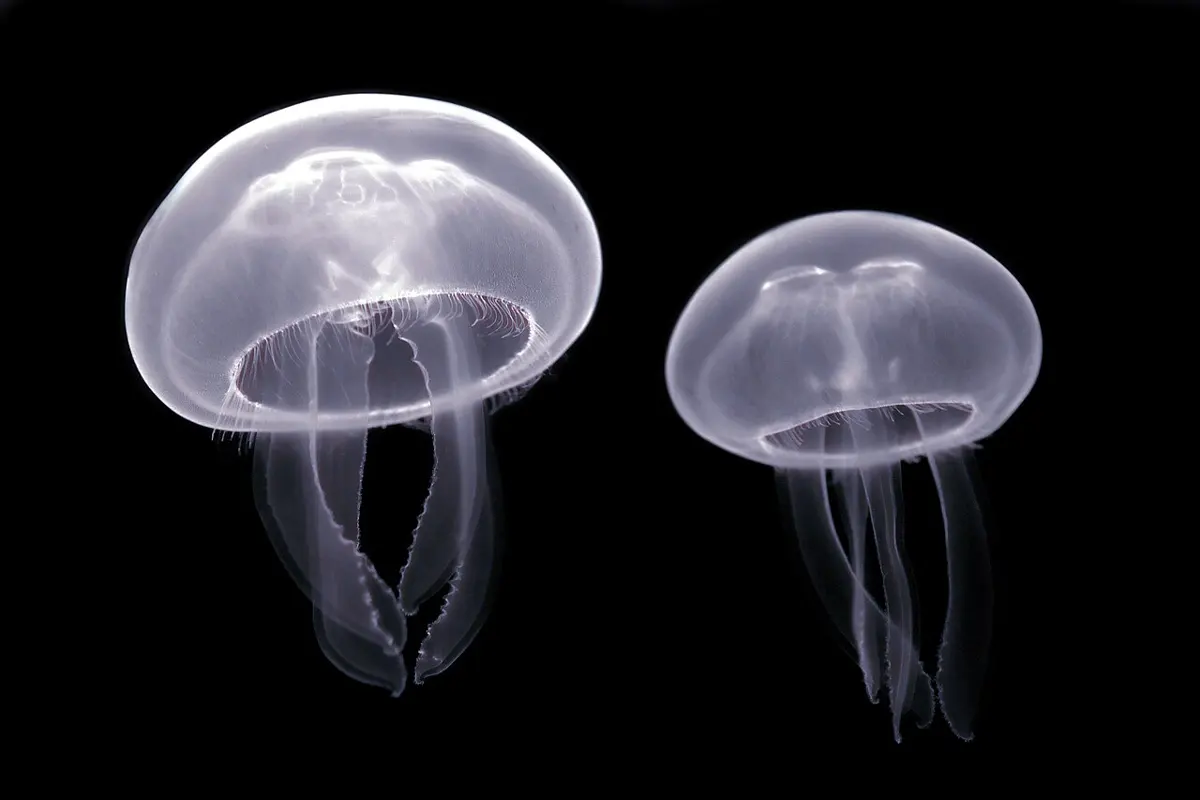
The task shows a cartoon jellyfish drawn in six steps, and asks you to write the steps as instructions, using the words circle, lines, semi-straight, creaky (here: wavy, bent), on top of, above, below.
Write step-by-step instructions to draw the jellyfish in Figure 5.1.
A model
How to write instructions
Instructions tell someone how to do something, step by step: a recipe, a game’s rules, how to use a machine, how to draw.
- Give a title that says what the instructions are for, and list what is needed.
- Number the steps, in the order they are done, one action in each.
- Begin each step with an imperative verb: Draw…, Add…, Fold…, Pour…
- Use sequence words: first, next, then, after that, now, finally.
- Use position words to say exactly where: above, below, on top of, beside, in the middle of, at the end of.
- Keep sentences short; add a tip or a warning where it helps (Press lightly, so you can rub it out).
Reading II: The Voice of the Rain
Before you read
The picture before the poem shows a man standing outside in the rain, face turned up and eyes closed, enjoying it.
The poet and the poem
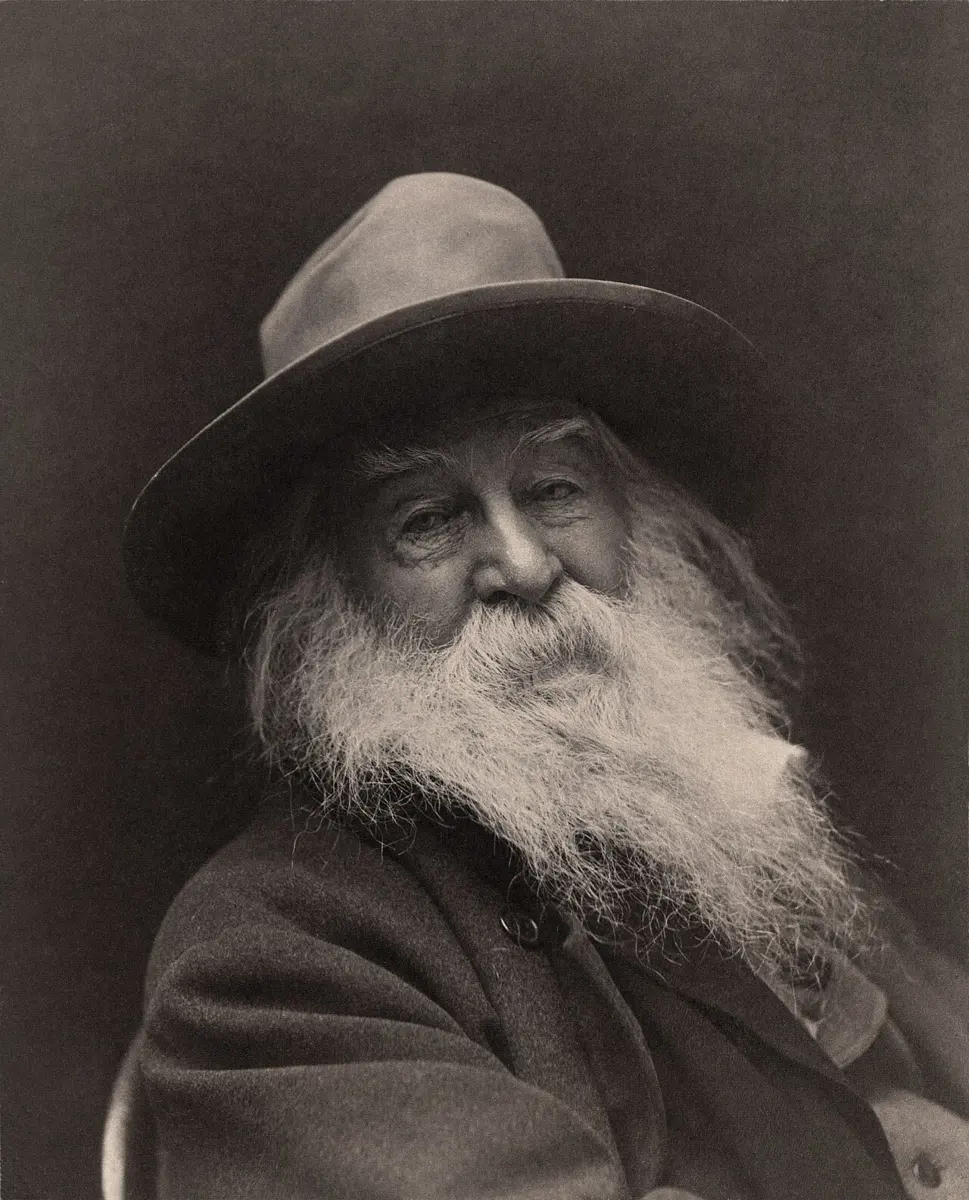
Walt Whitman (1819–1892) was an American poet, famous for Leaves of Grass, a book he kept adding to all his life. He wrote in free verse, long lines without rhyme or a regular beat, which was new in his time. The Voice of the Rain is a short poem from his old age, first printed in 1885.
The poem, part by part
The poem is a conversation between the poet and the rain. Its old-fashioned words: art thou (are you), whence (from where), form’d (formed), lave (wash), reck’d or unreck’d (noticed or unnoticed, cared about or not).
Lines 1–2: The question
The poet asks the gently falling shower who it is. To his surprise, it answers, and he gives its answer in English, “as here translated”.
Lines 3–5: The rain rises
The rain says that it is the Poem of the Earth. It rises forever, impalpable (too fine to be touched or felt: invisible vapor), out of the land and the bottomless sea, up into the sky, where it takes shape vaguely as clouds, completely changed, and yet the same water.
Lines 6–8: The rain comes down
It comes down to wash the dry places, the tiny specks (atomies) and layers of dust on the globe. Without it, all the seeds in the soil would stay only seeds, latent (hidden, waiting) and unborn. By day and night it gives life back to the Earth it came from, and makes it pure and beautiful.
Lines 9–10: Rain is like a song
The last two lines, in brackets, compare the rain to a song: a song comes from the poet’s heart (its birthplace), goes out into the world, wanders, and does its work, whether anyone notices it or not; then it comes back with love, in the response of the listeners. The rain does the same: from the Earth to the sky and back to the Earth.
The poet’s devices:
- Personification: the rain speaks and calls itself a poem.
- Metaphor: I am the Poem of Earth. A poem gives beauty and meaning; so does the rain.
- A cycle: rise → change → descend → return, the water cycle, told as a story.
- Contrast (opposites): rise / descend, day / night, changed / the same, heaven / earth, reck’d / unreck’d.
- Comparison in the last two lines: the rain’s journey is set beside a song’s, which also goes out and returns.
Words from the poem
| Word | Meaning here |
|---|---|
| eternal | lasting forever, without end |
| impalpable | that cannot be touched or felt |
| vaguely | not clearly |
| descend | to come down |
| lave | (old) to wash |
| atomies | (old) tiny particles, specks |
| reck | (old) to care about, take notice of |
| latent | present but hidden, not yet grown or shown |
| globe | the Earth |
| drought | a long time without rain |
| beautify | to make beautiful |
| origin | the place something comes from |
A. Match the words with their meanings
Match the words with their meanings: a. eternal b. impalpable c. vaguely d. descend e. lave f. atomies g. reck
i. come down ii. unclearly iii. tiny particles iv. care about, take notice of v. that cannot be touched or felt vi. wash vii. never-ending
Answer
B. Fill in the blanks
Fill in the blanks with: impalpable, recks, globe, drought, beautify, latent.
- a.The river ran dry during the ……… .
- b.The morning mist was ……… : you could see it, but you could not hold it.
- c.The company makes skin-care products designed to gently ……… the skin.
- d.His greatest ambition is to sail around the ……… .
- e.Without training, his musical talent remained ……… .
- f.What ……… it whether they win or lose?
Answer
C. Complete the summary
Complete the summary of the poem with: quenches, rhythm, mysterious, heal, atomies, condensation, ascends, showers, originality.
The poem is a conversation between the poet and the rain. When the poet asks the drizzle who it is, she replies that she is the poem of the Earth, and says that she gives happiness to Mother Earth.
The rain is an eternal process which takes different forms at different times. It rises from the land as water vapor and (1) ……… high up into the sky, where it takes the form of clouds. Though it changes its form, its (2) ……… remains unchanged. This shows that nature is not fully understood: some parts of it always remain (3) ……… .
The raindrops pour down to wash away (4) ……… and layers of dust. The rain (5) ……… the thirst of the dry Earth and heals everything that is becoming lifeless. In other words, the (6) ……… make the Earth pure and beautiful.
Finally, the poet observes that the life of the rain is like that of a song. A song has the power to calm, (7) ……… , transform and thrill. In the same way, repeated evaporation and (8) ……… purify the rain. It beautifies the whole Earth as (9) ……… does a poem or a piece of music.
Answer
D. Answer the questions
What are the two voices in the poem? Who do they belong to?
Answer
How is the cyclic movement of the rain shown in the poem?
Answer
Why are showers necessary for the Earth?
Answer
How are the rain and music similar?
Answer
How are clouds formed?
Answer
List the pairs of opposite words in the poem.
Answer
E. If it doesn’t rain
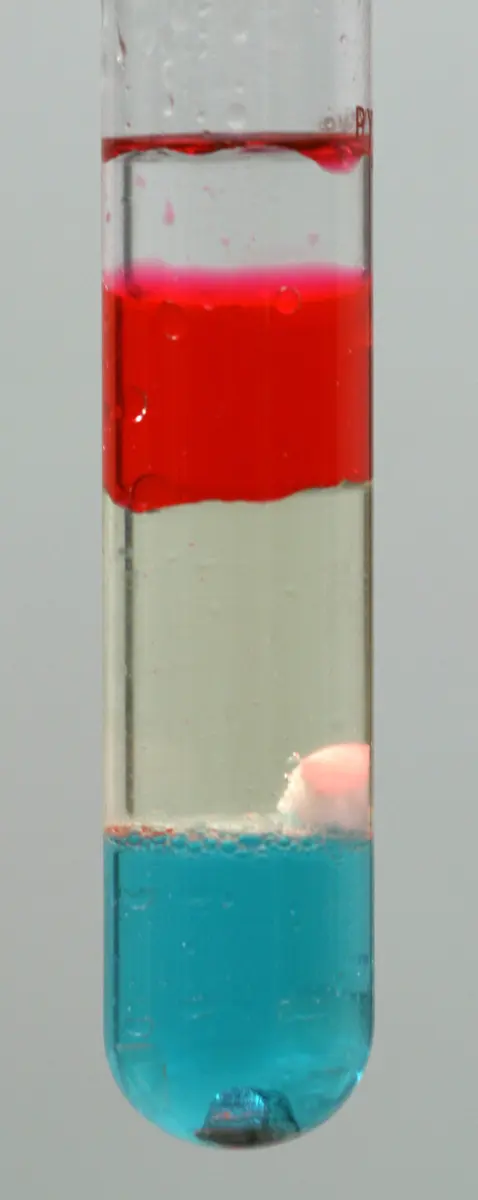
Listening: a density column
The textbook’s listening task describes a simple experiment with liquids in a glass. CDC’s own recording is below: read the questions in B and C first, then listen, as many times as you need. After the answers, practice with a talk of our own that your browser reads aloud.
A. Before you listen
The picture shows a glass with three layers of colored liquid, one on top of another, and small objects resting at different levels.
B and C. The textbook’s audio: answers
Answer these questions.
- a.What is the narrator experimenting about?
- b.Which liquids is the experimenter using?
- c.In what order do the liquids settle in the glass?
- d.What happens when we drop a plastic bottle top into the glass?
- e.Why do the liquids not mix?
Answer
Complete the sentences with the words you hear.
- a.The sponge sits on the ……… .
- b.Objects with ……… density sit on the bottom.
- c.After filling the oil, the mixture is left to settle for about ……… minutes.
- d.The density of ……… is less than that of syrup and more than that of oil.
Answer
Practice listening alone
Grammar II: The third conditional, and conditionals without if
The third conditional
The third conditional imagines a different past: something that did not happen, and what its result would have been.
If + had + past participle, would / could / might + have + past participle
If we had harvested rainwater, the crisis would have been less serious. (We didn’t, and it was serious.)
If he hadn’t come to Nepal, he wouldn’t have seen Everest. (He came, and saw it.)
A mixed conditional joins a past condition to a present result: If I had studied harder, I would be at the university now.
Without if: inversion
In formal English, if can be left out and the verb put before the subject. The meaning stays the same:
| With if | Without if | Type |
|---|---|---|
| If you should need help, call me. | Should you need help, call me. | first (a little more polite and less likely) |
| If Rijisa were in the USA, she would be working there. | Were Rijisa in the USA, she would be working there. | second |
| If he were to see me, he would know me. | Were he to see me, he would know me. | second (an unlikely future) |
| If I had known, I would have called you. | Had I known, I would have called you. | third |
Only these three verbs, should, were and had, can be turned round like this. A negative keeps not after the subject: Had I not seen the sign… (not ✗ Hadn’t I seen…).
If … were to + verb puts an imagined, unlikely event in the future: If the Bagmati were to flood tomorrow, the low houses would be underwater.
……… I known you were in Nepal, I would have called you.
Pick an answer to see why.
If the residents ……… rainwater, the tank would not have run dry.
Pick an answer to see why.
A. Put the verbs in the right form
Complete the sentences using the correct form of the verbs in brackets.
- a.If Gaurab were the captain, the team ……… (play) better.
- b.I ……… (call) you had I known you were in Nepal.
- c.If he ……… (not/come) to Nepal, he would not have seen Mt. Everest.
- d.Had you arrived a bit earlier, you ……… (see) Manashi.
- e.We could slow down global warming if we ……… (reduce) energy consumption.
- f.If he were to see me, he ……… (know) me at once.
- g.Were Rijisa in the USA, she ……… (be) working for a company.
- h.How would you feel if someone ……… (ask) you for an autograph?
- i.What ……… (you/do) if Keshab had proposed to you?
- j.If I ……… (have) a life jacket, I could certainly swim across the river.
Answer
B. Complete the sentences
Complete the sentences with suitable clauses.
- a.If you don’t leave soon, ……… .
- b.If it rains in winter, ……… .
- c.……… as long as you tell the truth.
- d.A country cannot develop unless ……… .
- e.……… if they insult you?
Model answers
Writing II: A letter to the editor
A. Rujuna’s letter about water
The textbook’s model is a letter to the editor of The Rising Nepal, a national daily, written on 19 May 2022 by Rujuna Manandhar of Koteshwor, Kathmandu, about the shortage of water in her area. Its parts:
| Part | What Rujuna does |
|---|---|
| Opening | She draws the authorities’ attention to the problem: water has been scarce for a long time, and if nothing is done, neighbors may end up fighting over a few drops. |
| The causes | The local water tank is too small for everyone’s needs, and yet residents waste water while bathing, washing clothes and dishes, and gardening. |
| Suggestions | A meeting of all residents; messages on local cable TV and community radio; a door-to-door campaign; experts to show ways to save water; reusing water. Had they started harvesting rainwater, she adds, the crisis would already be smaller. |
| Closing | She hopes quick action will be taken, thanks the editor and signs off Yours truly. |
It uses conditionals to argue: If this goes on unchecked, people are likely to fight…; If we organize a door-to-door campaign, it is sure to…; Had we gone for rainwater harvesting…, it would certainly have lessened the crisis.
How to write a letter to the editor or a letter of complaint
A letter to the editor is written to a newspaper, to be printed for the public: it raises a problem everyone should know about. A letter of complaint goes straight to the person or office that can fix the problem (a ward office, a municipality, a company). Both are formal letters.
- Your address and the date.
- The recipient: The Editor, The Rising Nepal, Dharmapath, Kathmandu, or The Mayor / The Ward Chairperson, …
- Subject (in a complaint): Complaint about unmanaged garbage in Ward No. 7.
- Salutation: Dear Sir/Madam, (or Dear Editor,)
- Paragraph 1: the problem, and where; why you are writing.
- Paragraph 2: details and effects, with an example; who is affected.
- Paragraph 3: your suggestions, specific and possible.
- Closing: a hope for action, thanks; Yours faithfully (or Yours truly), your name.
Keep it polite even when you are angry: facts persuade, insults don’t.
B. A letter of complaint about garbage
Write a letter of complaint to the concerned authority about the unmanaged garbage in your locality. Mention the hazards of unmanaged garbage to public health and suggest some measures to solve the problem.
A model letter
Project work
Words often confused
These pairs (and one group of three) look or sound alike, so they are easily mixed up in writing.
| Word | Part of speech and meaning | Example |
|---|---|---|
| accept | verb: to receive, or to agree to | I accepted all my birthday gifts with thanks. |
| except | preposition: apart from, not including | Everyone came except Hari. |
| expect | verb: to think something will happen; to wait for | I expect that they will win the match. |
| affect | verb: to have an effect on, to change; to move someone’s feelings | The dog’s death affected its owners deeply. |
| effect | noun: a result, a change caused by something | The new principal’s rules had a good effect on the students. (effect as a verb, formal, means to bring about: to effect a change) |
| borrow | verb: to take something for a time, to give it back later | May I borrow a pencil, please? |
| lend | verb: to give something for a time, to get it back later | Would you please lend me a pencil? |
| breath /breθ/ | noun: the air you take in and let out | Take a deep breath. |
| breathe /briːð/ | verb: to take air in and let it out | Just calm down and breathe. |
| complement | noun: something that completes or goes well with something; verb: to complete, go well with | Achar is a nice complement to dal bhat. |
| compliment | noun: words of praise; verb: to praise | She paid me a compliment on my speech. |
| lose /luːz/ | verb: to be unable to find; to fail to win | Did you lose your glasses again? |
| loose /luːs/ | adjective: not tight; not fixed | These trousers are loose since I lost weight. |
| principal | noun: the head of a school; adjective: main, most important | The principal reason for the meeting is the budget. |
| principle | noun: a basic rule or belief; a scientific law | Her parents taught her strong moral principles. |
| stationary | adjective: not moving | The truck was stationary at the red light. |
| stationery | noun: paper, envelopes, pens | The school buys stationery every April. |
The heat of the sun ……… how fast the water evaporates.
Pick an answer to see why.
Can you ……… me your notes for the weekend?
Pick an answer to see why.
Exercise
SEE-style practice on this unit. Try each one as in the exam, then open the answer.
Read the text and answer the questions.
In Pokhara, Sushma heated water in an open pan and measured its temperature every minute. It stopped rising at 97 °C, even though the burner was still on. Her cousin in Biratnagar did the same and found that his water stopped at 100 °C. Then Sushma put a lid on her pressure cooker and found that the dal was ready in half the time.
- a.At what temperature did the water boil in Pokhara?
- b.Why did the temperature stop rising?
- c.Why did the water boil at a higher temperature in Biratnagar?
- d.Why did the dal cook faster in the pressure cooker?
- e.Make a conditional sentence about Sushma’s experiment.
Answer
Choose the correct answer for each numbered blank.
If you (a) ……… (go, will go, went, had gone) up a mountain, the air gets thinner. Water (b) ……… (boil, boils, boiled, will have boiled) at a lower temperature there. If climbers on Everest (c) ……… (try, will try, tried, had tried) to cook rice in an open pot, it would never cook properly. Had they not (d) ……… (carry, carried, carrying, to carry) pressure cookers, the early expeditions (e) ……… (would eat, would have eaten, will eat, eat) half-cooked food. Even today, a trek can be dangerous (f) ……… (if, unless, provided, as long as) climbers drink enough water.
Answer
Rewrite the sentences as instructed.
- a.If I had known about the test, I would have studied. (Begin with Had.)
- b.If she were here, she would help us. (Begin with Were.)
- c.If you need any help, please call me. (Begin with Should.)
- d.If you don’t water the plants, they will die. (Use unless.)
- e.He came late, so he missed the bus. (Make a third conditional.)
Answer
Choose the right word in each sentence: a. Please (accept/except) my apology. b. The bus was (stationary/stationery) for an hour. c. Don’t (lose/loose) your ticket. d. She is the (principal/principle) of our school. e. The new rule had a good (affect/effect).
Answer
Write a letter to the editor of a national daily, in about 200 words, about the shortage of drinking water in your town.
A plan
Practice every question in the book, and keep track of the ones you miss →
A companion to your textbook, not a replacement for it: study from the book your school uses, and where the two differ, follow your teacher. Found a mistake? Please tell us.