
“Wash your hands. Sit down. Don’t touch the stove!” Every day, people tell us what to do. And when we are lost, we ask, “How do I get to the bus park?”
This unit is about instructions (telling someone how to do something) and directions (telling someone how to get to a place). You will read a recipe for pancakes and find your way on a map. You will learn the imperative, the form of a verb that tells people what to do (stir, don’t touch), and small words for movement like across, past and through.
Getting started
A. Symbols and pictures
The unit opens with four signs.
- A blue arrow pointing straight up.
- A blue arrow that goes up and then bends to the right.
- A zebra crossing (white stripes across a road), with an arrow pointing across it.
- A door standing open.
Look at the symbols and pictures. What do they mean?
Model answers
Each of these meanings starts with a verb: go, turn, cross, open. Signs and instructions tell people what to do, so they start with the verb.
B. Listen and sing
The song Cook it! is a list of things you do in a kitchen. Every line is made of short commands: open it, weigh it, shake it out. The song never says what is being cooked: “it” could be anything.
Most lines have two verbs, with a quick, bouncy beat, like a cook working fast. The ends of the lines rhyme: out with about, and through with few.
Act out all the verbs from the song above. Do this with a friend using gestures.
The verbs and how to act them
Which verb from the song means to press dough again and again with your hands?
Pick an answer to see why.
Reading I: How to Make Pancakes
Before you read
Who cooks food at your home?
A model answer
Where did they learn to cook?
A model answer
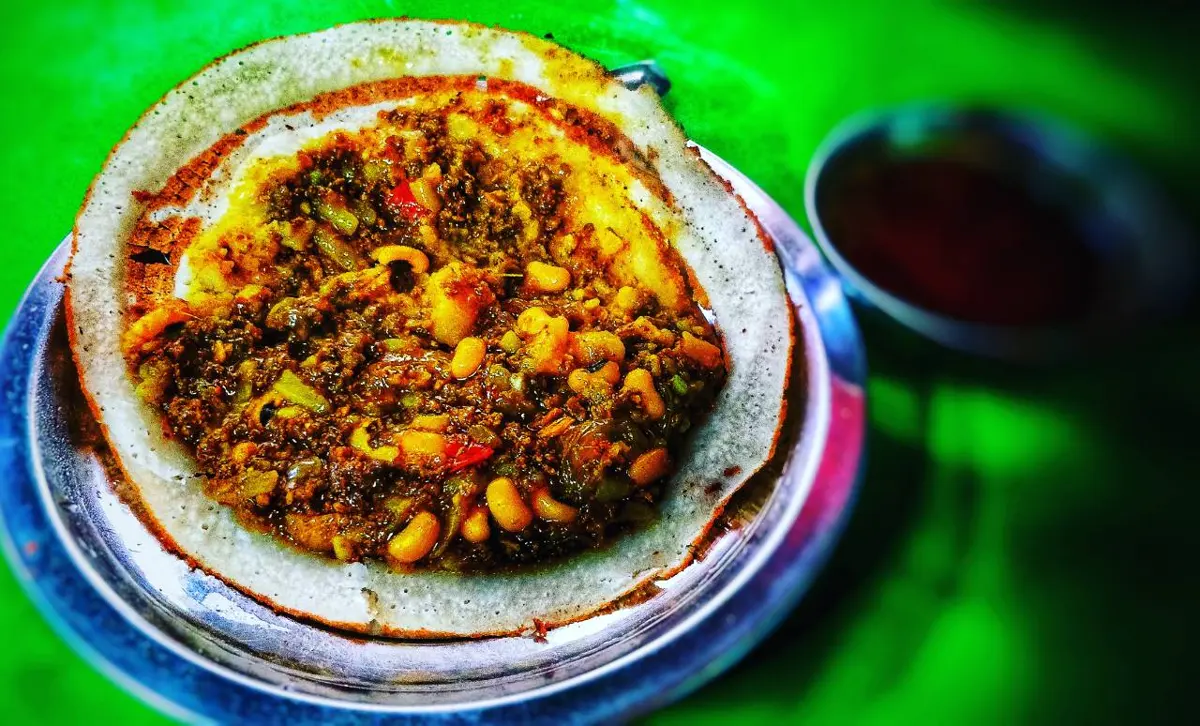
Which food do you think is shown in the picture?
A model answer
The recipe, part by part
A recipe tells you how to cook something. It has two parts.
Ingredients are the things you need. For these pancakes, you need 100 grams of flour, two eggs, 300 milliliters of milk, a lemon and some sugar.
Procedure means the steps, in order. Each step is a short instruction that starts with a verb. Here is what the recipe tells you to do, in our words.
- Crack the two eggs into a bowl, then pour in the milk.
- Shake the flour through a sieve into the bowl, and stir everything until it is smooth. This is your mixture.
- Pour a spoonful of the mixture into a hot frying pan, and let it cook for one minute.
- Flip the pancake (turn it over) and cook the other side for one more minute.
- Squeeze lemon juice over it, sprinkle sugar on top, and eat it!
Words like first, next, then and now show the order. The recipe starts with First and ends with Now, enjoy.
Here are the recipe’s steps, mixed up. Put them back in order.
Words from the recipe
Words linked here open in English Vocabulary, where you can practice them in a game.
| Word | Meaning |
|---|---|
| ingredients | the things you need to cook a dish |
| procedure | the steps to follow, in order |
| sieve | a net or a pan full of small holes, for separating fine things (like flour) from lumps; also, to sieve is to pass something through it |
| stir | to turn a spoon round and round in something, to mix it |
| mixture | different things mixed together |
| squeeze | to press something hard, to get juice out |
| pancake | a thin, flat, round cake, cooked in a pan |
| flip | to turn something over quickly |
| sprinkle | to scatter small drops or bits over something |
A. Complete the sentences
Learn these words first and then complete the sentences with them: sieve, stir, mixture, squeeze, pancake.
- a.This bread is as flat as a ……… .
- b.A ……… is a combination of different things.
- c.Heat the soup and ……… until it thickens.
- d.Just take hold of the tube of toothpaste and ……… .
- e.When the tea is ready, ……… into a glass.
Answer
B. Answer the questions
Answer these questions.
- a.What ingredients do you need to make a pancake?
- b.How many eggs do you need?
- c.What do you do first?
- d.What do you do to the flour?
- e.What do you do with the mixture?
- f.How long do you cook the pancake?
- g.What do you put on the cooked pancake?
Answer
C. Explain the recipe
Work in pairs. Take turns to explain the recipe to your friend. Use gestures too.
A model answer
Pronunciation
These are verbs from the song and the recipe. Some of them have letters you don’t say.
Listen and say these words: weigh, flip, chop, stir, squeeze, pinch, sieve, mix, knead, add.
How to say them
Which word sounds the same as need?
Pick an answer to see why.
Grammar I: the imperative
Telling people what to do
An imperative sentence tells someone to do something, or not to do it. It starts with the plain verb, with no you before it. To tell someone not to do something, put Don’t (do not) before the verb.
| To do it | Not to do it |
|---|---|
| Open your book. | Don’t open your book. |
| Stand up. | Don’t stand up. |
| Be quiet. | Don’t be noisy. |
| Turn left. | Don’t turn left. |
We use imperatives for instructions (Stir the mixture), directions (Turn right), rules (Don’t cheat), warnings (Don’t touch!) and kind offers (Have a cup of tea). To make one sound polite, add please: Please sit down.
Which sentence is an instruction?
Pick an answer to see why.
A. Do you do it?
Two examples: Run to the board. (I do.) Don’t do your homework. (I don’t.) So answer I do if you do the thing, and I don’t if you don’t do it.
Read the following sentences. If anybody tells you to do these things (a to f below), do you do or don’t do them?
- a.Open your book.
- b.Don’t close the door.
- c.Stand up.
- d.Don’t make a noise.
- e.Turn off the radio.
- f.Stop talking.
Answer
B. School rules
Complete the following sentences. Use the verbs: fall, bully, cheat, follow, sit, listen, eat, be, stand, pay. Use negative forms where appropriate. You may use the verbs more than once.
- a.Don’t eat too much spicy food.
- b.Always ……… in a queue when you are at a bus stop.
- c.……… noisy during lessons.
- d.……… to your teacher and ……… their instructions.
- e.……… on tests.
- f.……… on your desk.
- g.……… late for school.
- h.……… your younger or less able classmates.
- i.……… attention all the time.
- j.……… asleep at school.
- k.……… polite to others.
Hint
Answer
C. Start with the verb
For example: You must go to bed early today, Chetan. becomes Go to bed early today, Chetan. Drop you and the helping verb (must, should, can), and start with the main verb. If the sentence says not (mustn’t, can’t, needn’t), start with Don’t.
Rewrite these sentences. Start with the verbs to keep the same meaning. Use negatives too.
- a.You should get up at six tomorrow morning.
- b.You mustn’t stand in the middle of the road.
- c.You can have a drink with us.
- d.You must clean the carpet in the living-room.
- e.You needn’t wait for others any longer.
- f.You can’t park your car in this street.
Answer
Writing I: frying an egg
The five photos show how to fry an egg:
- an empty frying pan on the stove;
- oil being poured into the pan;
- an egg being broken into the hot oil;
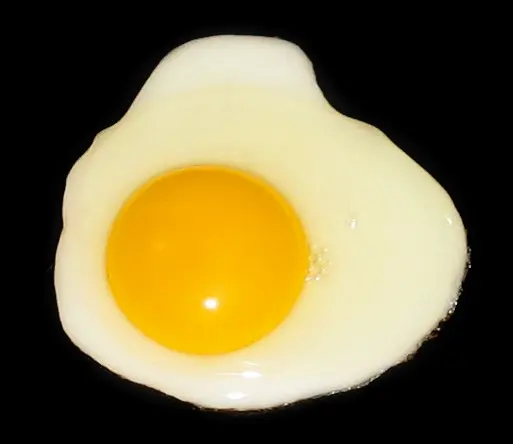
- the cooked egg, its white set and its yolk still yellow and round;
- the egg on a plate, slid out of the pan.
The egg is broken whole into the pan, and its yellow yolk stays round in the middle: a fried egg. For an omelette, you beat the egg first, then cook it flat and often fold it.
The pictures show how to fry an egg. Complete the sentences below to write a set of instructions.
- a.First, heat a frying ……… .
- b.Next, add ……… into the ……… .
- c.Then, break an ……… and add to the pan.
- d.……… until the white is just set.
- e.Finally, slide the ……… onto your ……… .
Answer
Reading II: Reading a Map
Words for directions
Before you read a map, learn the words for directions. Match each phrase with its picture.
Connect the words/phrases to the correct picture.
a. go straight b. turn right c. turn left d. on the right e. on the left f. train station g. post office h. bank
The pictures, from the top: 1. a line with a dot on its right; 2. an arrow bending to the left; 3. a building with columns marked BANK; 4. an arrow pointing straight up; 5. an arrow bending to the right; 6. a train at a station; 7. a line with a dot on its left; 8. a red building with a letter on its sign.
Answer
The map
The map shows a small town. Three streets run across: Araniko Street at the top, Janak Street in the middle and Balbhadra Street at the bottom. Two streets run up and down: Bhrikuti Street on the left and Phalgunanda Street on the right. Between the streets are six blocks of buildings:
- top left: a stadium and a petrol station;
- top middle: a greengrocer (a vegetable shop), a car park and an amusement park, with a hospital, a post office and a restaurant below them;
- top right: an airport and a hotel;
- bottom left: a park and a train station;
- bottom middle: a book shop and a café, with a supermarket, a cyber cafe and a bus stop below them;
- bottom right: a cinema and a bank.
Each set of directions starts at the corner of Bhrikuti Street and Balbhadra Street, at the bottom left of the middle blocks. “Walk along Bhrikuti Street” means walk up it; “walk along Balbhadra Street” means walk to the right along it.
Study the map above. Read the directions below. Where do you reach when you follow the directions? Write the name of the places.
- a.Walk along Bhrikuti Street. Take the first turning on the right. Go straight on. It’s on your left between the restaurant and the hospital.
- b.Walk along Balbhadra Street. Turn left into Phalgunanda Street. Go straight on. Take the second turning on the left. It’s on your left between the amusement park and the greengrocer.
- c.Walk along Bhrikuti Street. Take the first turning on the left. It’s on your right opposite the park.
- d.Walk along Balbhadra Street. Take the first turning on the left. It’s on your right next to the bank.
- e.Walk along Bhrikuti Street. Take the second turning on the left. It’s on your left.
Answer
You walk up a street. A temple is on your right. You turn round and walk back. Where is the temple now?
Pick an answer to see why.
Grammar II: prepositions of direction
Which way?
In Unit 8, you learned prepositions of place: where something is (in the box, next to the box). Prepositions of direction tell which way something moves.
| Preposition | It means | Example |
|---|---|---|
| across | from one side to the other | Walk across the road. |
| along | from one end towards the other, following it | Walk along the river bank. |
| through | in at one side and out at the other | The train went through a tunnel. |
| past | by something, and on beyond it | Go past the temple. |
| around | in a circle about something | Run around the field. |
| over | up and down on the other side | The cat jumped over the wall. |
| into | from outside to inside | Put the book into your bag. |
| out of | from inside to outside | A mouse ran out of the box. |
Tap a word and watch the ball go.
We crossed the river ___ a bridge.
Pick an answer to see why.
A. Phrases for the pictures
There are eight small pictures:
- a mouse running out of an open box (done for you);
- a cat sitting in front of a box;
- an arrow going across a road, from one side to the other;
- a black cat walking through tall grass;
- an apple between two boxes;
- an arrow pointing straight up;
- an arrow going past a sign with an A on it;
- a cat sitting next to a box.
Write correct phrases from the box under each picture: across the road, next to the box, past, straight, through the grass, in front of the box, between the boxes, out of the box.
Answer
B. On New Road
The map shows New Road running across the middle. Four buildings stand on each side of it.
| Above the road | Bakery | Police Station | Museum | Bank |
|---|---|---|---|---|
| Below the road | School | Park | Temple | Library |
Two buildings in the same column face each other across the road: they are opposite each other.
Study the map. Choose the correct answers: between, opposite or next to.
- a.The temple is ……… the library.
- b.The bank is ……… the library.
- c.The park is ……… the school and the temple.
- d.The police station is ……… the park.
Answer
C. Directions to the information office
Complete the sentences below with one of the words from the box: in front of, along, under, out of, of, at, straight, on, past, across.
- a.Go ……… the building and turn left.
- b.At the end ……… the street, turn right.
- c.……… the traffic lights, turn right again.
- d.Go ……… ahead until you come to a petrol station.
- e.Next, take the third turning ……… your right.
- f.Go ……… the stationery shop and carry on until you come to a bridge.
- g.Go ……… the bridge and on the other side you will see a park.
- h.Keep going. After about 300 meters, you go ……… a railway bridge.
- i.Keep going ……… for another 100 meters.
- j.You’ll see the tourist information office ……… you. You can’t miss it.
Answer
Listening
A. Where do you live?
Where do you live? Answer these questions to your friend.
- a.Where is your house located?
- b.Where is the post office/health post/clinic located?
Model answers
B. Listen and match
Sarah talks about the area where her new apartment (a flat) is. She uses American words: a grocery store is a food shop, a movie theater is a cinema, and the subway is a train that runs under the ground. One block is the distance from one street corner to the next.
Listen to Sarah talking about the area where she lives. Where are these places (a–e) located? Listen and match.
- a.her apartment — i. one block down the street.
- b.the grocery store — ii. between a bank and a coffee shop.
- c.the movie theater — iii. a block past the subway.
- d.the subway — iv. across from the coffee shop.
- e.her favorite restaurant — v. next to the grocery store.
Answer
C. Sarah’s directions
Try remembering some of the directions Sarah was saying. Write two or three sentences she said while giving directions.
From the recording
Speaking: asking for and giving directions
Ways to ask and answer
| To ask | To answer |
|---|---|
| Excuse me, where is the …? | Go straight on. |
| How do I get to the …? | Turn left / right at the junction. |
| What are the directions to the …? | Walk along the road until … |
| The … is on your left / right. | |
| It’s opposite / next to the … | |
| It’s between the … and the … |
Start with Excuse me when you ask a stranger, and say Thank you at the end.
The map
The map shows a town center. You are here, at the bottom of a main road, facing up the map.
- On your left as you walk up, there are a book shop, a side road, the Children Park, and then a crossroads. Past the crossroads, on the left, are a cafe and a shoe shop.
- On your right, there is a market, then a road to the right (it leads to the bus station, the cinema and the coffee shop), then a park and a supermarket in a long block, and then the crossroads.
- At the crossroads, the road to the right passes a playground, a pharmacy and the hospital on its left, then turns up the map. The bank is on the right of that road.
Work in pairs. Study the map. Take turns to ask for and give directions to reach the places: a. market b. bus station c. coffee shop d. bank.
Model conversations
Writing II: directions on the map
Look at the map above and write directions on how to get to the following places: a. shoe shop b. cafe c. hospital
Hint
Model answers
Do it yourself
Exercise
Practice the whole unit. Try each one, then open the answer.
Turn these into instructions.
- a.You must wash your hands before eating.
- b.You mustn’t run in the corridor.
- c.You can sit here.
Answer
Put the steps for making tea in order: Pour the tea into cups. Boil water in a pan. Strain out the tea leaves. Add tea leaves, milk and sugar.
Answer
Choose the right preposition.
- a.The children ran ……… (across / on) the playground.
- b.Walk ……… (along / into) the river bank.
- c.The bus went ……… (through / at) a long tunnel.
- d.A bird flew ……… (out of / under) its nest.
- e.Go ……… (past / between) the temple, then turn left.
Answer
Which word in each pair has a silent letter? a. weigh / chop b. peel / knead c. mix / sieve
Answer
Write directions from your classroom to the school gate, in three or four sentences.
A model answer
Printable PDFs
- Study notes 2 pages
- Harder practice questions 2 pages Answer key
Practice every question in the book, and keep track of the ones you miss →
A companion to your textbook, not a replacement for it: study from the book your school uses, and where the two differ, follow your teacher. Found a mistake? Please tell us.