
The Sun rises in the east. Water flows downhill. Red pandas eat bamboo. These sentences are facts: they are true today, they were true yesterday, and they will be true tomorrow.
This unit is about facts and truths. You will read about a shy animal of Nepal’s forests, the red panda, and a funny poem that asks why we can’t feel the Earth spinning. You will learn the present simple (she lives, they eat, it doesn’t look), the tense we use for facts and for things that happen again and again.
Getting started
A. Talk about the pictures
The unit opens with four pictures, each with a clue under it.
- The Earth in space, with the Moon beside it. Clue: Moon / move / around the earth.
- A spotted big cat, a leopard. Clue: Leopard / fastest animal / in the world.
- Water being poured into a glass. Clue: Water / liquid.
- A snowy mountain. Clue: Mt. Everest / the highest mountain.
Look at the pictures. Talk about them using the clues given.
Hint
Model answers
All four sentences are facts. Each one uses the present simple: moves, is. You will learn more about it in Grammar I.
B. Listen and sing
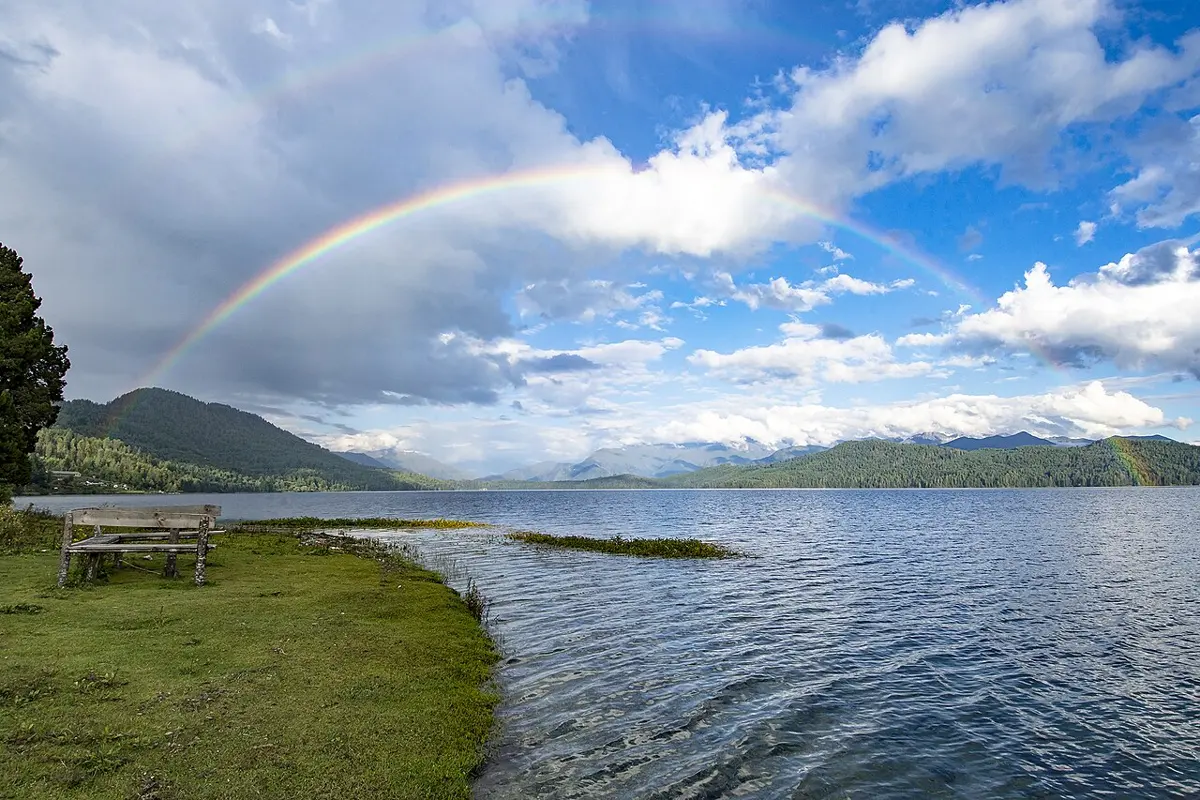
The song is a short poem called The Rainbow, by the English poet Christina Rossetti (1830–1894). She wrote many poems for children.
The poem compares things that sail and things that make bridges.
- The first verse is about things that move over water and things that move through the air. Rossetti likes the boats on the water, but she likes the clouds drifting overhead even more: to her, they are the prettier sailors.
- The second verse turns to bridges. A bridge over a river is lovely, she says, but there is a lovelier one: a curved bow of color that stretches over the treetops and seems to join the ground to the sky, like a road you could walk up. That bow is the rainbow. (Rossetti’s full poem ends with one more line that says so.)
The poem is gentle and slow. Each verse has a short, swinging beat, and its second and fourth lines rhyme. Rossetti never says the word rainbow inside the poem: she lets the title tell you.
Underline and say the rhyming words from the poem.
Answer
Which word rhymes with trees?
Pick an answer to see why.
Reading I: Red Pandas
Before you read
The pictures show a small furry animal with a round white face, red-brown fur, and a long bushy tail with rings on it. It is sitting on a tree branch.
What do you think the animal is?
A model answer
Where do you think this animal is found?
A model answer
The text, part by part
The text is a fact file: every sentence tells a fact about red pandas. Read it first. Here is what each part says.
Its names. Red pandas have two other names: lesser pandas and firefoxes. Lesser means smaller. Red pandas are mammals, but they are not close relatives of the giant panda. Giant pandas are much larger, and they are bears. A red panda is no bear at all: it sits in a family of its own, and no other animal living today shares it.
What it looks like. Look for a round face, a coat of red and black fur, and a thick, bushy tail with rings. It is about as big as a house cat. Its body grows to about 60 cm long, and its tail to nearly 50 cm, so the tail is almost as long as the body.
Where it lives and what it eats. Their home is the cool, damp forests high in the mountains, where bamboo grows. Bamboo is their main food, but they eat only its soft young leaves and shoots. Their bodies can digest (break down) only a little at a time, so they must eat a lot every day: 2 to 4 pounds (about 1 to 2 kg). That is a lot for an animal that weighs only 6 to 14 pounds (about 3 to 6 kg)! When the weather warms up, fruit and insects join the menu, and now and then an egg or a small animal.
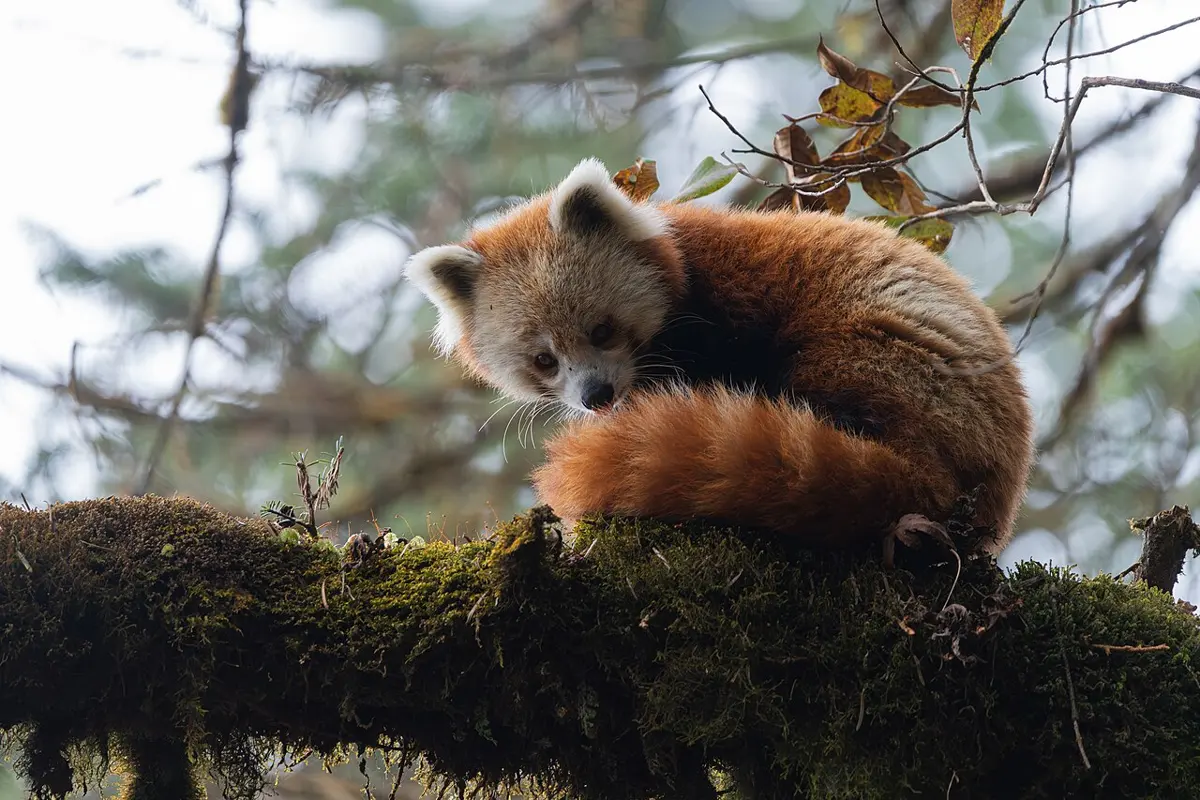
Life in the trees. A red panda lives mostly up in the trees. Their claws hold on to branches, and their long tails help them balance. If an enemy comes, they fight with their claws, or they release (let out) a bad smell.
Keeping warm. Their forests are cold, so they wrap their bushy tails round themselves like blankets. Thick fur, even on their feet, keeps them warm, and the furry pads under their paws give them a good grip on slippery branches and on snow. They also see, hear and smell very well.
Babies. A mother gives birth to one to four cubs at a time. The cubs stay with her for about a year, or until her next litter (group of babies) is born.
In danger. Red pandas are endangered: so few are left that they could die out. Farms are taking the place of their forests. People kill them illegally (poaching) or catch them to sell as pets. But there is hope, because people are working to save them.
Why does a red panda have to eat so much bamboo?
Pick an answer to see why.
Words from the text
Words linked here open in English Vocabulary, where you can practice them in a game.
| Word | Meaning |
|---|---|
| unique | the only one of its kind; unlike anything else |
| mammal | an animal that has hair or fur and feeds its babies on milk. Cows, dogs and people are mammals. |
| fur | the thick, soft hair on an animal’s body |
| furry | covered with fur |
| damp | a little wet |
| bamboo | a tall plant with hard, hollow stems, like a giant grass (bans in Nepali) |
| grip | to hold something tightly |
| release | to let something go, or let it out |
| provide | to give something that is needed |
| cub | a baby of some wild animals: a bear, a lion, a fox, a panda |
| litter | all the babies an animal has at one time |
| endangered | in danger of dying out: so few are left that there may soon be none |
| poaching | hunting or killing wild animals when it is against the law |
| illegal | against the law |
A. Solve the crossword
The crossword uses the words printed in red in the text. Tap a clue, type the word, and press Check. The first letter of each word is given.
Solve the crossword puzzle based on the clues given below and the words in red above.
Across: 1. illegal killing of wild animals 5. unlike anything else 6. slightly wet 7. covered with fur
Down: 2. against the law 3. a number of young animals born to an animal at a time 4. take and keep a firm hold of
Answer
B. Fast facts
A fast facts table gives the main facts in a few words each. Fill it in from the text.
Complete the following table about red pandas: animal type, body size (length), food, weight, habitat, protection status (endangered animal) and major threats.
Answer
C. Answer the questions
Answer the following questions.
- a.What are the other names of the red panda?
- b.What is the main difference between red pandas and giant pandas?
- c.Why do red pandas eat a small amount of food at a time?
- d.What helps red pandas to grip onto branches?
- e.What do red pandas use their bushy tail for?
- f.How many cubs can a mother panda give birth to?
Answer
D. Animals in danger
Have you ever heard of or read about any other animals that are in danger? Share with your friends.
A model answer
Pronunciation: long oo and short oo
The letters oo and u can make two different sounds.
- A long sound, /uː/, as in moon. Your lips are round and pushed forward, and the sound goes on: mooo-n.
- A short sound, /ʊ/, as in book. Your lips are only a little round, and the sound is quick: b-ŏŏ-k.
The spelling doesn’t always tell you which one it is. Food and good are both spelled with oo, but food is long and good is short. So learn each word by its sound.
Pronounce the following words correctly: bamboo, food, shoots, put, book, good, cool, full, fool, pool, school, rule, wood, pull, moon, soon, too.
Answer
Which word has the short sound, as in book?
Pick an answer to see why.
Writing I: an animal in danger
Before you write about an animal, collect facts and put them in a mind map. A mind map has the animal’s name in the middle and boxes round it: Type, Shape and size, Habitat, Major threats. Write notes in each box: a few words, not sentences. Then turn the notes into a paragraph.
Collect information about an endangered animal, e.g. tiger, rhino or snow leopard. Make notes in the mind map (type, shape and size, habitat, major threats) and then write a short paragraph about it.
Hint
Model notes: the one-horned rhino
A model paragraph
Grammar I: the present simple
Facts and habits
We use the present simple for two things:
- facts, which are always true: Red pandas live in the forest. The Sun rises in the east.
- habits, things that happen again and again: I help my parents on Saturdays. My sister plays tennis.
The verb is in its plain form, but with he, she, it or one person or thing, it takes an -s:
| Who | The verb | Example |
|---|---|---|
| I, you, we, they | plain | They eat bamboo. |
| he, she, it | plain + s | She eats bamboo. |
| plural nouns | plain | Red pandas live in trees. |
| one person or thing | plain + s | A red panda lives in trees. |
A red panda ___ in the trees.
Pick an answer to see why.
My father ___ the news every morning.
Pick an answer to see why.
A. Sentences from Reading I
These sentences are from Reading I. Complete them with the missing words.
- a.Red pandas ……… in cool, damp mountain forests.
- b.But, sometimes they ……… eggs or even small animals.
- c.They ……… claws to grip branches.
- d.Furry paw pads ……… them from slipping.
- e.Mother pandas ……… birth to one to four cubs.
Answer
B. The right form of the verb
Fill in the spaces with the present simple forms of the given verbs.
- a.My sister ……… (play) tennis.
- b.They ……… (eat) lunch at 12:00.
- c.It ……… (snow) here in December.
- d.Mr. Rai ……… (teach) English at the secondary level.
- e.Ruby and Dil ……… (watch) television after school.
- f.We ……… (eat) pasta once a week.
- g.Bob ……… (go) to French classes on Saturdays.
- h.You ……… (need) more practice at football.
- i.I ……… (help) my parents on Saturdays.
- j.Reetu and Bijaya ……… (be) too late for school.
Answer
Speaking: stating facts
A. The red panda’s fast facts
Turn each fast fact into a full sentence, in the present simple. For example: The red panda is a mammal.
Work in pairs. Look at the exercise ‘Fast Facts about the Red Panda’. State the ‘fast facts’ in full sentences as in the example.
Model sentences
B. Facts from clues
Make a sentence from each clue. For example: Water / not freeze / in hot places becomes Water does not freeze in hot places.
Read the following clues. Take turns and state these facts to your friends.
- a.The Sun / rise / in the east
- b.Water / boil / at 100 °C
- c.The Earth / be / a planet
- d.Two and two / make / four
- e.Nepal / lie / between India and China
- f.The Sun / be / a star
- g.Snow / be / white
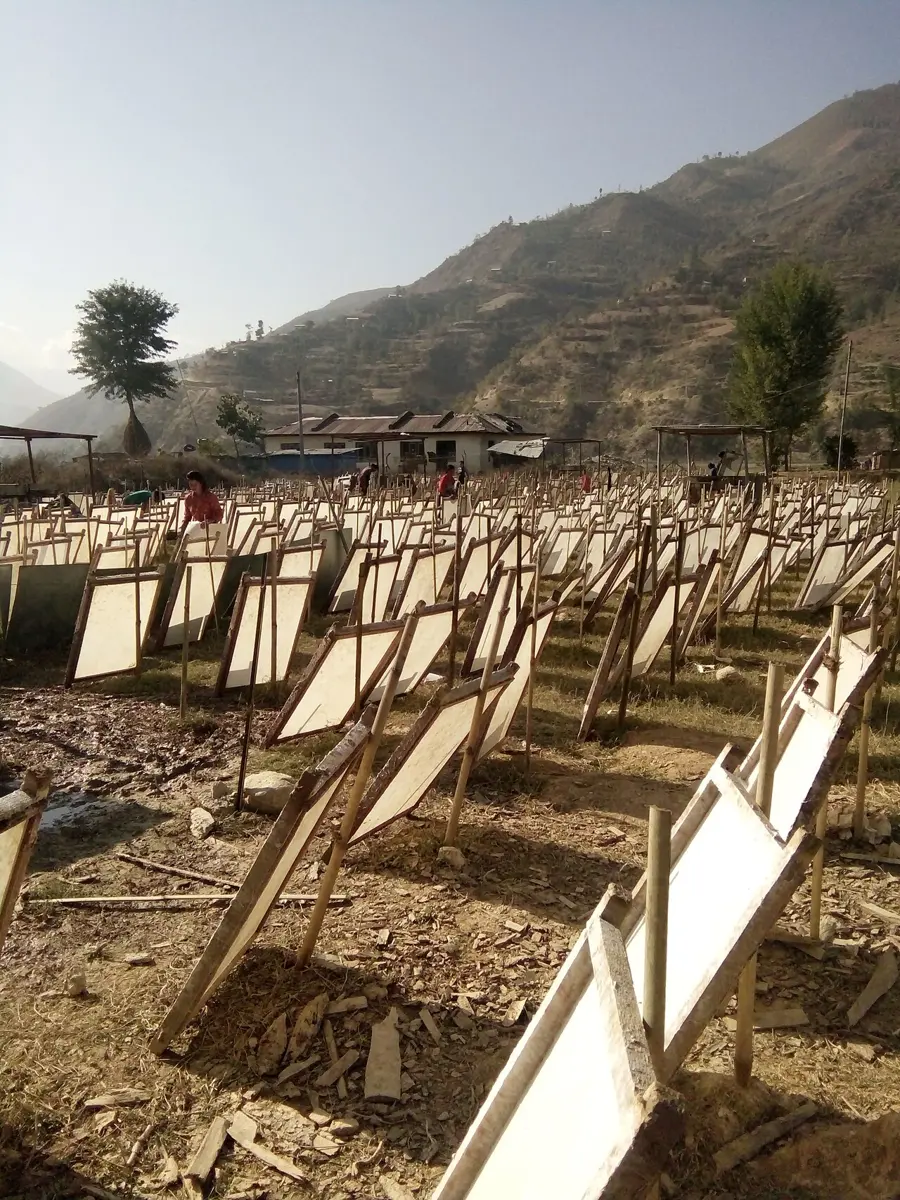
- h.Paper / made from wood and straw
Answer
C. Your own facts
Work in pairs. Think of any five facts and share with the class.
Model answers
Listening
A. Before you listen
The pictures show three animals: a big hairy spider (a tarantula), a dolphin jumping out of the sea, and a giraffe.
Look at the pictures. What animals are they? Share one fact about each of them.
Model answers
B. Listen and match
Listen to the recording. It tells you one fact about each of five animals. Each fact uses a word for how often: always, usually, often, sometimes, never. You met these words in Unit 3.
Listen to the audio and match the animals in column A with their habits in column B.
- a.Dolphins — i. sometimes clean their ears with their tongues.
- b.Tarantulas — ii. never blink.
- c.Bears — iii. always live in groups.
- d.Giraffes — iv. often eat fish.
- e.Snakes — v. usually live in a hole in the ground.
Answer
C. Animals near you
Make a list of five animals found in your locality. Share one interesting fact about each of them.
Model answers
Reading II: The Spinning Earth
Before you read
The picture shows the Earth from space: a round blue planet with white clouds and brown land.
What do you think it is?
A model answer
What facts do you know about it?
Model answers
The poem, verse by verse
The Spinning Earth is a funny poem by the American poet Aileen Fisher (1906–2002), who wrote many poems for children about nature. The poet has heard that the Earth spins (turns round and round), but nothing around her seems to be spinning. So she imagines what would happen if we could feel it.
The first verse. The poet has been told that the Earth is spinning. She looks around and listens: nothing seems to move, and she can’t hear a thing. So how can it be true?
The second verse. She pictures what a spinning Earth ought to do. The seas should slop over their edges, the fish inside should be dizzy, and everything in the kitchen should go flying. None of that happens.
The third verse. More funny pictures: houses rushing by, puppies tumbling through the air, little birds (robins) twirling instead of flying straight. Again, she sees none of it.
The last verse. She agrees that the grown-ups may be right, and the Earth may really spin all the time. Still, she can’t quite believe it, and she goes on wondering.
Listen to how the poem sounds. Its lines are short, and many of them rhyme with the same sound: round, ground, sound; swishes, fishes, dishes; by, sky, fly. The words swirl, swish and whirl sound like the things they describe. And the ending is a little joke: after all those reasons, she still isn’t sure.
Why does the poet keep wondering?
Pick an answer to see why.
Words from the poem
| Word | Meaning |
|---|---|
| spin | to turn round and round quickly |
| swirl | to move round and round in circles, like water going down a drain |
| swish | to move quickly through the air or water with a soft sound, like a tail swishing |
| dizzy | feeling that everything is turning round you |
| whirl | to move round and round very fast |
| wonder | to think about something and want to know more about it |
| robin | a small bird with a red-orange chest |
A. Complete the sentences
Complete the sentences with the correct words given below: spin, sound, oceans, wondering, swirls.
- a.Ships sail in ……… .
- b.I am ……… how that happened.
- c.The wheels of a car ……… round and round.
- d.When it rains heavily, the water ……… down the drain.
- e.The door opened without a ……… .
Answer
B. A summary of the poem
Complete the following summary of the poem with the words given in the box: true, spinning, sound, earth, Aileen Fisher, shelves.
This poem is written by ……… . The poet wonders how the ……… could be traveling so fast, yet everything around us appears calm. The earth doesn’t seem that it is ……… because it never makes a ……… . The water doesn’t go up and dishes don’t fall from the ……… . Houses and puppies don’t move round and round. It may be ……… that the earth moves but it really keeps the poet wondering.
Answer
C. What do you wonder?
Think of any two things that you wonder about the earth and its movement. Share them with your friends.
Model answers
Grammar II: the present simple: not and questions
A. Sentences from the poem
These sentences are from the poem. Complete the sentences with the missing words.
- a.The Earth, they say, ……… round and round.
- b.It ……… it from the ground.
- c.Water never swirls and ……… from the oceans.
- d.Shelves ……… their pans.
- e.Robins ……… instead of fly.
Answer
B. Not and questions with do and does
To say not or to ask a question in the present simple, we use a helper: do or does.
| Statement | Not | Question |
|---|---|---|
| I like tea. | I don’t like tea. | Do you like tea? What do you like? |
| She comes from Spain. | She doesn’t come from Spain. | Does she come from Spain? Where does she come from? |
| They get up at eight o’clock. | They don’t get up at eight o’clock. | Do they get up at eight o’clock? When do they get up? |
| She drinks tea every afternoon. | She doesn’t drink tea every afternoon. | Does she drink tea every afternoon? What does she drink every afternoon? |
| They are friends. | They aren’t friends. | Are they friends? Who are they? |
Look at three things in the table.
- Does goes with he, she, it and one thing; do with I, you, we, they and plurals.
- After does or doesn’t, the verb loses its -s: She comes → She doesn’t come. The -s has moved to does.
- Be is different: it needs no helper. They are → They aren’t → Are they?
___ your mother work in a hospital?
Pick an answer to see why.
Snakes ___ blink.
Pick an answer to see why.
C. Match the opposites
Match the affirmative statements in column A with their negative statements in column B.
- a.My brother has a job. — i. Pilots don’t fly planes.
- b.I drive to school. — ii. We don’t do our homework.
- c.Pilots fly planes. — iii. I don’t drive to school.
- d.We do our homework. — iv. We don’t have any exam on Sunday night.
- e.I go to the gym in the morning. — v. We don’t have any class on Saturday.
- f.We have class on Saturday. — vi. My brother doesn’t have a job.
- g.We have an exam on Sunday night. — vii. I don’t go to the gym in the morning.
Answer
D. Make the questions
Put the words in order to make a question. Start with Do or Does.
Write the correct questions and finish the short answers.
- a.live / at / you / Do / school / ? — No, ………
- b.in / students / Do / the canteen / ? / eat — Yes, ………
- c.to school / your brother / on Saturday / ? / Does / go — No, ………
- d.live / near / Do / your friends / you / ? — Yes, ………
- e.at / school / finish / Does / three o’clock / ? — No, ………
Answer
Writing II: punctuation and a paragraph
A. Punctuate the paragraph
This paragraph has lost its capital letters, full stops, commas and question mark. Put them back.
- A capital letter starts every sentence, and every name: Earth, Venus, Jupiter.
- A full stop ends a statement.
- Commas separate the things in a list, with and before the last one.
- A question mark ends a question.
Punctuate the following paragraph. Use capital letters, full stops, commas, and question marks where necessary.
the earth is a planet in the solar system the other planets are mercury venus mars jupiter uranus saturn and neptune all these planets travel around the sun the moon is not a planet do you know anything about the moon
Answer
B. A paragraph about the Earth
Write a paragraph about the Earth. Use the clues given: one of the eight planets; third planet from the Sun; moves around the Sun at an average distance of about 93 million miles (150 million kilometers); bright and bluish when seen from outer space; the only planet in the solar system that can support life; the perfect range of temperatures for life.
A model paragraph
Do it yourself
Exercise
Practice the whole unit. Try each one, then open the answer.
Write the verb in the present simple.
- a.Red pandas ……… (eat) bamboo.
- b.The Moon ……… (go) round the Earth.
- c.My uncle ……… (teach) at a school in Ilam.
- d.A spider ……… (have) eight legs.
- e.Water ……… (freeze) at 0 °C.
Answer
Make these sentences negative.
- a.Snakes blink.
- b.The Earth makes a sound.
- c.I like cold tea.
Answer
Make questions, and give short answers.
- a.red pandas / eat / bamboo? (yes)
- b.the Sun / go / round the Earth? (no)
Answer
Answer about red pandas.
- a.Are red pandas bears?
- b.What is their main food?
- c.Why are they endangered?
Answer
Long or short? Sort the words: moon, good, pool, pull, school, book.
Answer
Printable PDFs
- Study notes 2 pages
- Harder practice questions 2 pages Answer key
Practice every question in the book, and keep track of the ones you miss →
A companion to your textbook, not a replacement for it: study from the book your school uses, and where the two differ, follow your teacher. Found a mistake? Please tell us.