
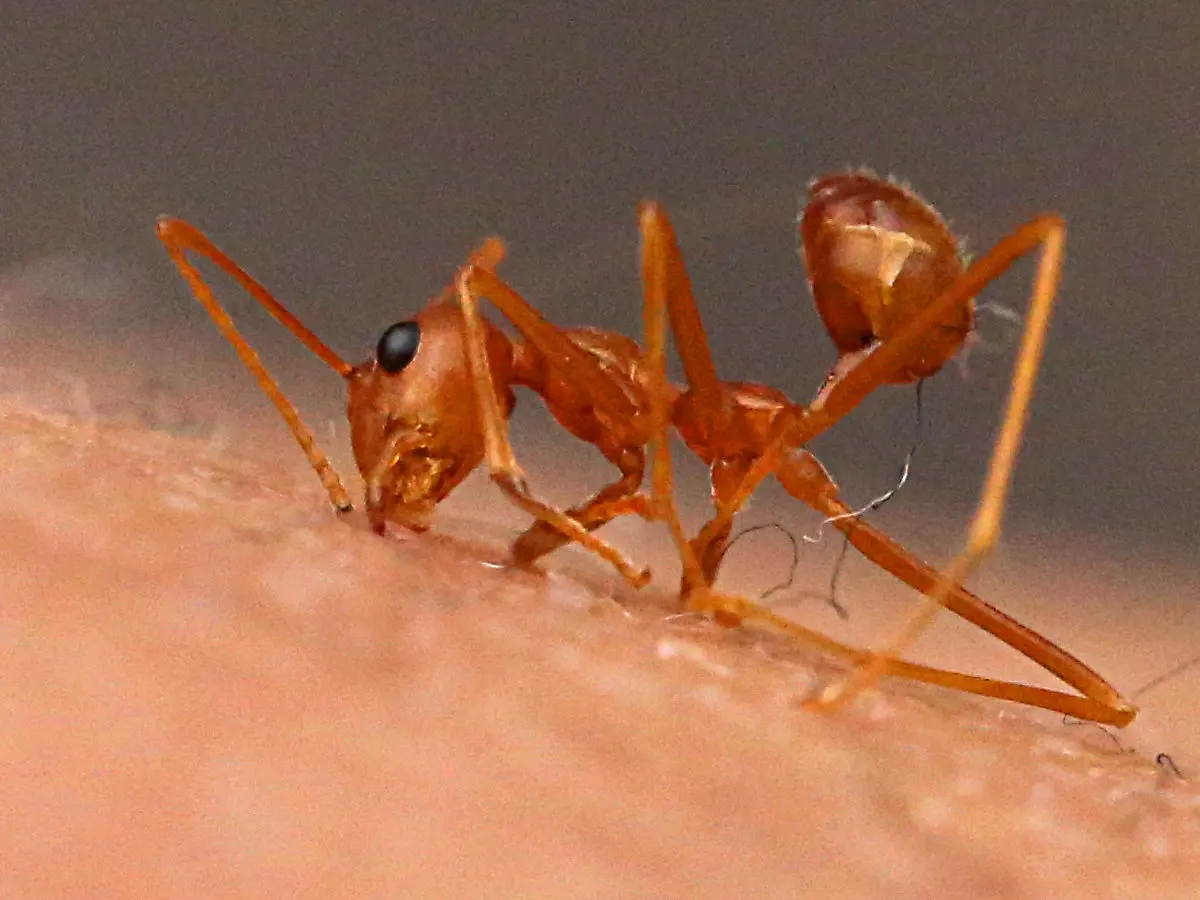
Brush against a nest of red weaver ants on a mango tree in the Tarai and you will feel a sharp sting: the ants bite, then spray formic acid into the wound. Pour vinegar on your chatpate and you taste acetic acid. Squeeze a lemon into your water and you drink citric acid; let dahi stand a day and it turns sour with lactic acid; leave ghee too long and it smells of butyric acid. All of these are carboxylic acids, the acids of living things, and every one of them carries the same small group of atoms, –COOH.
Join that group to an alcohol and the sour acid becomes a sweet-smelling ester, the smell of ripe banana and pineapple. Ghee, mustard oil and every fat are esters too; boil one with lye and you get soap. Swap its OH for other groups and you get the acid’s family, its derivatives: acid chlorides, anhydrides, esters and amides, from which aspirin, nylon and paracetamol are made. This unit is about the –COOH group: how it is named and made, why it is acidic when an alcohol’s OH is not, and how its family turns into one another.
14.1 Nomenclature and isomerism of aliphatic and aromatic carboxylic acids
Acids we eat
Most acids you know from the laboratory, hydrochloric acid and sulphuric acid, would burn your mouth. But some acids are safe to eat, and you eat them every day. They are weak acids, and they are organic: their molecules are built on carbon.
| Acid | Where you meet it | Its formula |
|---|---|---|
| formic acid (methanoic acid) | ant bites and stinging nettle (sisnu) hairs | HCOOH |
| acetic acid (ethanoic acid) | vinegar, about 4–5 % of it | CH₃COOH |
| butyric acid (butanoic acid) | rancid butter and ghee | CH₃CH₂CH₂COOH |
| lactic acid | dahi, sour milk, tired muscles | CH₃CH(OH)COOH |
| citric acid | lemons, oranges, amla | C₆H₈O₇ |
| benzoic acid | cranberries, and food preservative (E210, or as sodium benzoate, E211) | C₆H₅COOH |
So a carboxylic acid is a carbonyl compound with an –OH on the carbonyl carbon: a hydroxy derivative of a carbonyl compound. The name says so: carbonyl + hydroxyl = carboxyl. The carboxyl group, –COOH (written in full, –C(=O)–OH), is the functional group of the carboxylic acids.
Their general formula is R–COOH, where R is H, an alkyl group (aliphatic acids) or an aryl group (aromatic acids, such as benzoic acid, C₆H₅COOH). The open-chain acids with one –COOH group, the monocarboxylic acids, form a homologous series with the general formula CₙH₂ₙ₊₁COOH (or CₙH₂ₙO₂, counting every carbon). Acids with two –COOH groups are dicarboxylic acids, like oxalic acid, HOOC–COOH. Because the long-chain monocarboxylic acids were first got from fats, they are also called fatty acids.
Carboxylic acids are functional isomers of esters: ethanoic acid, CH₃COOH, and methyl methanoate, HCOOCH₃, are both C₂H₄O₂ (below).
Common names
The first acids were named after where they were found, long before anyone knew their structures:
| Formula | Common name | From the Latin or Greek for |
|---|---|---|
| HCOOH | formic acid | formica, ant |
| CH₃COOH | acetic acid | acetum, vinegar |
| CH₃CH₂COOH | propionic acid | protos pion, “first fat” |
| CH₃CH₂CH₂COOH | butyric acid | butyrum, butter |
| C₆H₅COOH | benzoic acid | gum benzoin, a tree resin |
In common names, the carbons of the chain are lettered with Greek letters from the carbon next to the –COOH: that carbon is α (alpha), the next β (beta), then γ (gamma), δ (delta). The carboxyl carbon itself gets no letter. So ClCH₂COOH is α-chloroacetic acid, and ClCH₂CH₂COOH is β-chloropropionic acid. On a benzene ring, the positions are named ortho, meta and para from the –COOH, as in m-nitrobenzoic acid.
IUPAC names
In the IUPAC system the name is built like this:
- Find the longest chain that includes the carboxyl carbon. The carboxyl carbon is part of the chain and is always carbon 1.
- Take the alkane with that many carbons, drop its final -e and add -oic acid: ethane → ethanoic acid.
- Number the substituents from the carboxyl carbon and put them in front in alphabetical order, as for any other compound.
Because the –COOH is always carbon 1, its number is never written: “butanoic acid”, not “1-butanoic acid”. The Greek letters and the numbers are one place apart: α is carbon 2, β is carbon 3 (Figure 14.4).
| No. | Formula | IUPAC name | Common name |
|---|---|---|---|
| 1 | HCOOH | methanoic acid | formic acid |
| 2 | CH₃COOH | ethanoic acid | acetic acid |
| 3 | CH₃CH₂COOH | propanoic acid | propionic acid |
| 4 | CH₃CH₂CH₂COOH | butanoic acid | butyric acid |
| 5 | CH₃CH₂CH(Cl)COOH | 2-chlorobutanoic acid | α-chlorobutyric acid |
| 6 | CH₃CH(Cl)CH₂COOH | 3-chlorobutanoic acid | β-chlorobutyric acid |
| 7 | (CH₃)₂CHCOOH | 2-methylpropanoic acid | isobutyric acid |
| 8 | C₆H₅COOH | benzoic acid (benzenecarboxylic acid) | benzoic acid |
Benzoic acid keeps its name in IUPAC’s system; a substituted benzoic acid is numbered from the carbon holding the –COOH, so m-nitrobenzoic acid is 3-nitrobenzoic acid.
What is the IUPAC name of CH₃CH(CH₃)CH₂COOH?
Pick an answer to see why.
The structure of the carboxyl group
The carboxyl carbon is sp² hybridized. Its three sp² orbitals make σ bonds to R, to one oxygen and to the other, all in one plane, at about 120° to each other. Its fourth orbital, an unhybridized p orbital, stands at right angles to that plane and overlaps sideways with a p orbital of the carbonyl oxygen: the π bond of C=O.
The –OH oxygen has a lone pair in a p orbital next to that π bond, and it can spread a little into it. So the π electrons are partly delocalized over O–C–O. In the acid this sharing is small, because it would separate charge (O⁺ and O⁻), and the two carbon–oxygen bonds stay different: in methanoic acid C=O is 123 pm and C–O is 136 pm. Once the acid has lost its H⁺, though, the two oxygens are the same, and the π electrons spread evenly over both: in the methanoate ion both C–O bonds are 127 pm (Figure 14.5). This is the key to why carboxylic acids are acids (Section 14.1.5).
Isomerism of carboxylic acids
Isomerism is the existence of two or more compounds with the same molecular formula but different arrangements of their atoms, and so different physical and chemical properties. It has two main kinds, structural isomerism (the atoms joined differently) and stereoisomerism (the same joins, arranged differently in space). Here we need two kinds of structural isomerism:
- Chain isomerism: the same molecular formula and functional group, different carbon chains (straight or branched). It starts with four carbons: butanoic acid and 2-methylpropanoic acid.
- Functional isomerism: the same molecular formula, different functional groups. Every carboxylic acid CₙH₂ₙO₂ (from n = 2) has esters as functional isomers.
There is no position isomerism of the –COOH group itself: it is always at the end of a chain. But a substituent on the chain can move (2- and 3-chlorobutanoic acid are position isomers), and so can a group on benzoic acid’s ring (2-, 3- and 4-nitrobenzoic acid).
Which of these is a functional isomer of propanoic acid?
Pick an answer to see why.
14.1.2 Preparation of monocarboxylic acids
a. From primary alcohols and aldehydes, by oxidation
A primary alcohol is oxidized first to an aldehyde, and the aldehyde on to a carboxylic acid. The usual oxidizing agent is acidified potassium dichromate (K₂Cr₂O₇ and dilute H₂SO₄), or potassium permanganate; [O] stands for the oxygen it supplies.
To stop at the aldehyde, it is distilled off as it forms; to get the acid, the mixture is heated under reflux with plenty of oxidizing agent. The orange dichromate turns green (Cr³⁺) as it works. Vinegar is made the same way by living things: bacteria (Acetobacter) oxidize the ethanol of a fermented drink with the oxygen of the air.
b. From nitriles, by hydrolysis
A nitrile (alkyl cyanide), R–C≡N, boiled with dilute acid (or alkali) takes up water in two steps: first to an amide, then to the acid and ammonia. In acid the ammonia ends up as an ammonium salt; in alkali the acid ends up as its salt and is set free by adding acid.
The same works for aromatic nitriles and amides: benzonitrile (phenyl cyanide) and benzamide both give benzoic acid.
This is a useful way to make a chain one carbon longer: a haloalkane with KCN gives a nitrile Grade 12: Unit 8, and the nitrile’s carbon becomes the –COOH carbon. CH₃Br → CH₃CN → CH₃COOH: from one carbon to two.
c. From dicarboxylic acids, by heating
A dicarboxylic acid with its two –COOH groups on the same carbon, or joined to each other, loses one of them as carbon dioxide when heated. This loss of CO₂ is decarboxylation.
Oxalic acid (ethanedioic acid), heated (best with glycerol), gives methanoic acid:
Malonic acid (propanedioic acid), HOOC–CH₂–COOH, heated just above its melting point (135 °C), gives ethanoic acid:
Succinic acid (butanedioic acid), HOOC–CH₂–CH₂–COOH, behaves differently: its two –COOH groups are far enough apart to reach round and meet each other, and on heating it loses water, not CO₂, closing into a five-membered ring, succinic anhydride.
d. From sodium alkoxides and carbon monoxide
Carbon monoxide, heated under pressure with a sodium alkoxide, puts itself between the alkyl group and the oxygen: R–O–Na becomes R–CO–O–Na, the sodium salt of an acid with one carbon more. Dilute hydrochloric acid then sets the acid free.
From sodium methoxide, for example:
So in the first step CO is inserted into the R–O bond, giving the salt RCOONa; in the second, acid hydrolysis replaces Na⁺ by H⁺, and sodium chloride is the by-product.
e. From trihaloalkanes, by hydrolysis
A carbon carrying three halogen atoms, hydrolyzed by aqueous alkali, gets three –OH groups. One carbon cannot hold three –OH groups: it loses water at once, and a carboxylic acid forms.
From chloroform, trichloromethane, the acid is methanoic acid:
With more alkali than this, the acid is turned into its salt, potassium methanoate, and is set free by adding acid. Compare: a carbon with two halogens gives an unstable gem-diol that loses water to give a carbonyl compound (an aldehyde or ketone); with three, the carbon ends at the next oxidation level, a carboxylic acid.
Which of these, heated, gives ethanoic acid?
Pick an answer to see why.
14.1.3 Preparation of benzoic acid from alkylbenzenes
A benzene ring itself resists oxidation, but a carbon chain on it does not. Toluene (methylbenzene) boiled with alkaline potassium permanganate is oxidized at its methyl group to potassium benzoate; acid then frees benzoic acid, which crystallizes out on cooling.
The purple permanganate becomes a brown sludge of manganese dioxide as it works. Any alkyl group with a hydrogen on the carbon next to the ring is cut back in the same way to a single –COOH: ethylbenzene and propylbenzene also give benzoic acid. Acidified potassium dichromate does the same job.
In industry, benzoic acid is made by oxidizing toluene with the oxygen of air, at about 150 °C, with a cobalt salt as catalyst:
The by-products: in the air route, water; in the permanganate route, manganese dioxide, water and potassium hydroxide, then potassium chloride when acid frees the benzoic acid.
14.1.4 Physical properties of monocarboxylic acids
- Physical state and smell. The first three acids (C₁–C₃: methanoic, ethanoic, propanoic) are colorless liquids with a sharp, pungent smell; the next three (C₄–C₆) are oily liquids smelling of rancid butter (butanoic acid is part of the smell of sweat and old cheese, too). From about C₁₀ on, they are colorless, odorless, waxy solids, because they hardly evaporate. Ethanoic acid freezes at 17 °C, so in a cold laboratory pure ethanoic acid becomes ice-like crystals; that is why it is called glacial acetic acid.
- Boiling points. Carboxylic acids boil much higher than hydrocarbons, and even higher than alcohols of about the same molar mass (Figure 14.18). Ethanoic acid (60 g/mol) boils at 118 °C, propan-1-ol (60 g/mol) at 97 °C. The reason is hydrogen bonding: a carboxylic acid has both an O–H to give and a C=O oxygen to take a hydrogen bond, and two acid molecules hold each other by two hydrogen bonds at once, as a dimer (Figure 14.19). This intermolecular hydrogen bonding (between molecules) must be broken before the liquid boils. The dimers are so stable that many survive even in the vapor, so the molar mass measured for ethanoic acid vapor near its boiling point comes out well above 60 g/mol.
- Solubility. The first four acids mix with water in any proportion, because their –COOH groups form hydrogen bonds with water molecules. As the carbon chain grows, the nonpolar, water-hating (hydrophobic) part of the molecule grows while the –COOH stays the same, and solubility falls: hexanoic acid is only slightly soluble, and the waxy higher acids are insoluble. All are soluble in ethanol and ether. Benzoic acid is only slightly soluble in cold water but much more in hot water, which is how it is purified by crystallization.
- Melting point. They also melt higher than the hydrocarbons of the same chain. The melting points don’t climb steadily, though: an acid with an even number of carbons melts higher than the odd ones on either side of it, because its molecules pack better in the crystal (compare ethanoic acid, 17 °C, with propanoic acid, −21 °C, in the table).
Each acid molecule can also hydrogen-bond to water molecules: its O–H hydrogen to a water oxygen, and its C=O and O–H oxygens to water’s hydrogens. That is why the small acids dissolve.
| Name | Formula | Melting point (°C) | Boiling point (°C) |
|---|---|---|---|
| methanoic acid | HCOOH | 8 | 101 |
| ethanoic acid | CH₃COOH | 17 | 118 |
| propanoic acid | C₂H₅COOH | −21 | 141 |
| butanoic acid | C₃H₇COOH | −5 | 164 |
Values from the CRC Handbook of Chemistry and Physics, rounded.
Why does ethanoic acid (60 g/mol) boil higher than propan-1-ol (60 g/mol)?
Pick an answer to see why.
Why is butanoic acid soluble in water while decanoic acid, CH₃(CH₂)₈COOH, is not?
Pick an answer to see why.
14.1.5 Chemical properties of carboxylic acids
Why carboxylic acids are acids
A carboxylic acid gives up the hydrogen of its –OH as H⁺ in water:
An alcohol’s –OH hardly does this at all (ethanol’s pKₐ is 15.9); ethanoic acid’s pKₐ is 4.76, a hundred billion times stronger. The difference is in the ion left behind. In the carboxylate ion, RCOO⁻, the negative charge is not stuck on one oxygen: by resonance it is shared equally by two oxygen atoms (Figure 14.20), and the ion is stabilized. An alkoxide ion, RO⁻, has its charge on one oxygen with nowhere to spread. A phenoxide ion Grade 12: Unit 11 spreads its charge into the ring, but onto carbons, which hold it less well than oxygen. So the order of stability of the ions, and of strength of the acids, is
Still, carboxylic acids are weak acids: in 0.1 M ethanoic acid only about one molecule in 75 has ionized. They are strong enough to turn blue litmus red, to react with metals, bases, metal oxides, carbonates and hydrogencarbonates, and to taste sour.
Which ion is the most stable, so that its acid is the strongest?
Pick an answer to see why.
a. Action with alkalis
Carboxylic acids are neutralized by alkalis, giving a salt and water:
The salts are sodium ethanoate (sodium acetate), sodium propanoate and ammonium ethanoate. Carboxylic acids are acidic; sodium hydroxide and ammonium hydroxide are basic; the reaction is a neutralization like any other, acid + base → salt + water. Sodium and potassium salts of the long-chain acids are soaps (Section 14.8).
b. Action with metal oxides
Basic metal oxides react the same way: acid + base → salt + water.
The second gives calcium ethanoate from quicklime.
c. Action with metal carbonates
Carbonates are bases too; with a carboxylic acid they give a salt, water and carbon dioxide, which fizzes off:
d. Action with metal hydrogencarbonates (bicarbonates)
This is the standard test for a carboxylic acid: add a little sodium hydrogencarbonate solution, and a brisk effervescence of CO₂ (which turns limewater milky) shows the –COOH group. Phenols are too weak to do it, and alcohols far too weak, so the test tells an acid from both.
e. Action with PCl₃, PCl₅ and SOCl₂
Phosphorus trichloride, phosphorus pentachloride and thionyl chloride all replace the –OH of the acid by –Cl, giving an acid chloride (acyl chloride). They differ only in their by-products:
Thionyl chloride is the most convenient: its by-products are both gases, which escape, and the acid chloride is left pure.
f. Action with LiAlH₄ (reduction)
Lithium aluminium hydride, LiAlH₄, in dry ether, reduces a carboxylic acid all the way to a primary alcohol; dilute acid is added afterwards (H₃O⁺) to free the alcohol from its aluminium salt. [H] stands for the hydrogen it supplies.
The aldehyde formed on the way is reduced faster than the acid, so it can’t be stopped there. The same reagent reduces the acid’s derivatives: an ester to two alcohols, an acid chloride to a primary alcohol (Section 14.8). Milder reducing agents, such as NaBH₄ or H₂ over nickel, leave a –COOH group alone.
g. Dehydration: acid anhydrides
Two molecules of a carboxylic acid, heated with phosphorus pentoxide, P₄O₁₀ (written P₂O₅), lose one molecule of water between them and join into an acid anhydride. P₂O₅ takes up the water (as phosphoric acids), which pulls the reaction along.
The water comes from the –OH of one acid and the H of the other’s –OH; the two acyl groups, CH₃CO–, are left joined through one oxygen: CH₃CO–O–COCH₃, ethanoic anhydride (acetic anhydride). “Anhydride” means “without water”: add water, and it turns back into the acid.
h. Decarboxylation with soda lime
The sodium salt of a carboxylic acid, heated strongly with soda lime (sodium hydroxide mixed with calcium oxide, NaOH/CaO), loses its –COO⁻ group as sodium carbonate, and a hydrocarbon with one carbon fewer is left. The loss of CO₂ is decarboxylation again; the calcium oxide only keeps the sodium hydroxide dry and stops it attacking the glass.
Sodium ethanoate gives methane, the laboratory way of making it (Grade 11, Unit 14); sodium benzoate gives benzene.
Which reagent would you use to tell ethanoic acid from ethanol and from phenol?
Pick an answer to see why.
14.1.6 Hell–Volhard–Zelinsky (HVZ) reaction
The carbon next to a functional group is the α-carbon, and its hydrogens are α-hydrogens. In propanoic acid, CH₃–CH₂–COOH, the CH₂ is the α-carbon, with two α-hydrogens.
A carboxylic acid with at least one α-hydrogen, treated with chlorine or bromine in the presence of a little red phosphorus, has one α-hydrogen replaced by the halogen. This is the Hell–Volhard–Zelinsky reaction. Water added at the end frees the α-halo acid. Only the α-hydrogens are replaced; the other hydrogens of the chain are left alone.
How the phosphorus helps. Red phosphorus and the halogen form PCl₃ (or PBr₃), which turns a little of the acid into its acid chloride (Section 14.1.5 e). The acid chloride, unlike the acid, readily forms its enol, which halogen attacks at the α-carbon. The α-halo acid chloride then swaps its Cl with more acid, giving the α-halo acid and fresh acid chloride, so only a little phosphorus is needed.
With more halogen, each α-hydrogen is replaced in turn. Ethanoic acid gives three chloro acids, one after another:
An acid with no α-hydrogen, such as 2,2-dimethylpropanoic acid, (CH₃)₃C–COOH, or benzoic acid, does not give the reaction. The α-halo acids are useful because the halogen can be swapped for other groups (–OH, –NH₂, –CN): ammonia on an α-chloro acid gives an α-amino acid, the building block of proteins.
Which acid will not undergo the HVZ reaction?
Pick an answer to see why.
14.1.7 Electrophilic substitution reactions of benzoic acid
Benzoic acid’s ring undergoes the electrophilic substitutions of benzene (Grade 11, Unit 15), but more slowly, and the new group goes to the meta position. Why?
The –COOH group pulls electrons out of the ring. It does so by its electronegative oxygens (−I) and, more strongly, by resonance (−M or −R): the ring’s π electrons can move towards the C=O oxygen, as the resonance structures show (Figure 14.26). In structures II, III and IV a positive charge sits on carbon 2, 4 or 6: the ortho and para positions. The meta carbons (3 and 5) never carry it.
So the whole ring is poorer in electrons than benzene, and deactivated: an electrophile, which seeks electrons, attacks it more slowly. And the ortho and para carbons are the poorest of all, so the meta carbons, though poorer than benzene’s, are the least electron-poor: the electrophile goes there. –COOH is a deactivating, meta-directing group, like –NO₂, –CHO and –SO₃H.
a. Nitration
With a mixture of concentrated nitric and sulphuric acids, which supplies the nitronium ion, NO₂⁺, benzoic acid gives 3-nitrobenzoic acid (m-nitrobenzoic acid):
b. Sulphonation
With fuming sulphuric acid (SO₃ in concentrated H₂SO₄), heated, it gives 3-sulphobenzoic acid (m-sulphobenzoic acid). SO₃ is the electrophile.
c. Bromination
With bromine and iron(III) bromide (FeBr₃) as the halogen carrier, it gives 3-bromobenzoic acid (m-bromobenzoic acid) and hydrogen bromide. FeBr₃ pulls Br⁻ off Br₂, leaving the electrophile Br⁺.
Benzoic acid does not undergo Friedel–Crafts alkylation or acylation: its ring is too deactivated, and the –COOH group ties up the AlCl₃ catalyst.
Why is the –COOH group a meta director?
Pick an answer to see why.
14.1.8 Effect of substituents on the acid strength of carboxylic acids
An acid is strong when the ion it leaves behind is stable. So anything that spreads out or reduces the negative charge of the carboxylate ion, RCOO⁻, makes the acid stronger; anything that piles more electron density onto it makes the acid weaker. We measure acid strength by pKₐ: the smaller the pKₐ, the stronger the acid (pKₐ = −log Kₐ; Unit 2).
1. Electron-withdrawing groups (EWG) make the acid stronger
A group more electronegative than hydrogen pulls electrons along the σ bonds towards itself: the negative inductive effect, −I. Next to a –COO⁻ group, it draws some of the negative charge away and spreads it over more atoms. The ion is stabilized, so the acid gives up its H⁺ more readily.
Examples of electron-withdrawing groups: –NO₂ (nitro), –CN (cyano), –F, –Cl, –Br, –I (halogens), –CF₃ (trifluoromethyl), and, on a chain, –OH and –OCH₃ too (their oxygen is electronegative).
Chloroethanoic acid, ClCH₂COOH (pKₐ 2.87), is about 80 times stronger than ethanoic acid (4.76).
2. Electron-donating groups (EDG) make the acid weaker
An alkyl group pushes electrons along the σ bonds a little more than hydrogen does: the positive inductive effect, +I. It adds electron density to the –COO⁻ and destabilizes it, so the acid is weaker. Methanoic acid, HCOOH (3.75), with no alkyl group, is the strongest of the series; ethanoic acid (4.76) is weaker; propanoic acid (4.87) weaker still.
Examples of electron-donating groups: –CH₃, –C₂H₅ and other alkyl groups by induction; and on a benzene ring, –OH, –OCH₃ and –NH₂, which push their lone pairs into the ring by resonance (+M).
3. More groups, a stronger effect
Each extra chlorine pulls more, so the chloroethanoic acids grow stronger with every chlorine:
Trichloroethanoic acid is about ten thousand times stronger than ethanoic acid, nearly as strong as a mineral acid.
4. A more electronegative group, a stronger effect
Among the halogens, the more electronegative, the stronger the acid:
5. A closer group, a stronger effect
The inductive effect fades quickly along the chain, and is almost gone after three bonds. So a group has its biggest effect on the α-carbon, next to the –COOH:
That is, 2-chloropropanoic (α-chloropropionic) acid > 3-chloropropanoic (β-chloropropionic) acid > propanoic acid.
6. Resonance effects in aromatic acids
On a benzene ring, a group can also act through the ring’s π electrons. –NO₂, –CN, –CHO and –COOH pull electrons out of the ring by resonance (−M) and strengthen the acid: 4-nitrobenzoic acid (pKₐ 3.44) is stronger than benzoic acid (4.20). –OCH₃, –OH and –NH₂ at the para position push their lone pair in by resonance (+M), more than their electronegativity pulls, and weaken it: 4-methoxybenzoic acid, 4.47; 4-aminobenzoic acid, 4.85. (At the meta position, where resonance can’t reach the –COOH carbon, –OCH₃ only pulls, and 3-methoxybenzoic acid, 4.09, is slightly stronger than benzoic acid.)
| Substituent | Examples | Effect on acid strength |
|---|---|---|
| electron-withdrawing (−I, −M) | –NO₂, –CN, –F, –Cl, –Br, –I, –CF₃ | increases it |
| electron-donating (+I) | –CH₃, –C₂H₅ | decreases it |
| electron-donating by resonance (+M), on a ring at ortho or para | –OH, –OCH₃, –NH₂ | decreases it |
| more groups, more electronegative, closer to –COOH | Cl₃C– > Cl₂CH– > ClCH₂–; F > Cl > Br > I; α > β > γ | a stronger effect |
Arrange these in order of increasing acid strength: ethanoic acid, chloroethanoic acid, propanoic acid, trichloroethanoic acid.
Pick an answer to see why.
Which is the strongest acid?
Pick an answer to see why.
14.1.9 Anomalous behavior of methanoic acid
Methanoic acid, H–COOH, is the first member of its series, and it is unusual: its –COOH group is joined to a hydrogen atom, not to a carbon. Look at it the other way round, and the same molecule is an aldehyde, an H–C=O group with an OH on it:
So methanoic acid has an aldehyde’s reducing power, which no other carboxylic acid has. It is easily oxidized, to carbon dioxide and water, and reduces the reagents that test for aldehydes. These extra properties are called its anomalous (abnormal) properties.
Action with Tollens’ reagent
Tollens’ reagent is ammoniacal silver nitrate: aqueous ammonia added to silver nitrate solution first gives a brown precipitate of silver oxide, which dissolves in more ammonia to give the diamminesilver(I) ion.
Methanoic acid warmed with it reduces the silver ion to silver metal, which coats the inside of a clean test tube as a shining silver mirror:
Ethanoic acid and the other carboxylic acids give no mirror.
Action with Fehling’s solution
Fehling’s solution (deep blue copper(II) in alkaline tartrate), boiled with methanoic acid, gives a red precipitate of copper(I) oxide, Cu₂O:
Ethanoic acid gives no red precipitate.
Action with acidified potassium permanganate
Methanoic acid decolorizes purple acidified potassium permanganate, being oxidized to carbon dioxide:
Action with mercury(II) chloride
Methanoic acid reduces mercury(II) chloride (mercuric chloride), first to a white precipitate of mercury(I) chloride (calomel), and with more methanoic acid on to black metallic mercury:
Methanoic acid has other properties no other acid shares: with concentrated sulphuric acid it loses water and gives carbon monoxide:
It is also the strongest acid of its series (pKₐ 3.75), because it has no alkyl group pushing electrons in.
Which test tells methanoic acid from ethanoic acid?
Pick an answer to see why.
14.8 Derivatives of carboxylic acids
Replace the –OH of a carboxylic acid by another group and you get one of its derivatives. Each still has the acyl group, R–CO–, and each turns back into the acid when it is hydrolyzed; but each has properties of its own. The four main ones are:
| Derivative | General formula | –OH replaced by | Example (from ethanoic acid) |
|---|---|---|---|
| acid chloride (acyl chloride) | RCOCl | –Cl | ethanoyl chloride (acetyl chloride), CH₃COCl |
| amide | RCONH₂ | –NH₂ | ethanamide (acetamide), CH₃CONH₂ |
| ester | RCOOR′ | –OR′ | ethyl ethanoate (ethyl acetate), CH₃COOC₂H₅ |
| acid anhydride | (RCO)₂O | –OCOR | ethanoic anhydride (acetic anhydride), (CH₃CO)₂O |
Their names follow the acid’s: -oic acid becomes -oyl chloride (ethanoyl chloride) or -amide (ethanamide); an ester is named like a salt, the alcohol’s alkyl group first and the acid’s -oate second (ethyl ethanoate, from ethanol and ethanoic acid); and an anhydride takes the acid’s name with anhydride for acid (ethanoic anhydride). Benzoic acid gives benzoyl chloride, benzamide, methyl benzoate and benzoic anhydride.
General methods of preparation of acid chlorides
An acid chloride is made from the acid with PCl₃, PCl₅ or SOCl₂ (Section 14.1.5 e). The acid chloride is the same each time; only the by-products differ:
Acid chlorides fume in moist air, because they react with its water at once and give off HCl. They are stored dry, and made with dry apparatus.
General methods of preparation of amides
An acid and ammonia first give the ammonium salt; heated strongly, the salt loses a molecule of water and gives the amide:
With a primary amine, R′NH₂, in place of ammonia, the same loss of water gives an N-substituted amide, RCONHR′, whose nitrogen carries the amine’s group:
Ethanoic acid and methanamine give N-methylethanamide. This is the bond, –CO–NH–, that joins amino acids in proteins and the units of nylon.
A better way, quick and at room temperature, is from the acid chloride (or anhydride) and ammonia or an amine (below).
General methods of preparation of acid anhydrides
An anhydride is made by taking water out of two molecules of acid with P₂O₅ (Section 14.1.5 g):
In the laboratory it is also made from an acid chloride and the sodium salt of an acid:
General methods of preparation of esters
A carboxylic acid heated with an alcohol and a few drops of concentrated sulphuric acid gives an ester and water. This is esterification (Fischer esterification):
The concentrated sulphuric acid does two jobs: its H⁺ catalyzes the reaction, and it takes up water, which pulls the equilibrium towards the ester.
The reaction is reversible and slow: it stops at an equilibrium. In 1862 the French chemists Marcellin Berthelot and Léon Péan de Saint-Gilles heated equal amounts of ethanoic acid and ethanol for days and found that it always stopped when two-thirds of the acid had become ester (the equilibrium constant is about 4). To get more ester, use an excess of one reactant (usually the cheaper alcohol), or remove the water or the ester as they form.
How it happens. The H⁺ attaches to the C=O oxygen of the acid, making its carbon more positive; the alcohol’s oxygen attacks that carbon; a proton moves across; water leaves; and the H⁺ is given back (Figure 14.34, Figure 14.35).
So the oxygen that leaves in the water comes from the acid, and the alcohol keeps its own oxygen. This was proved in 1938 by Irving Roberts and Harold Urey: they made methanol with the rare heavy isotope oxygen-18, esterified it with benzoic acid, and found all the ¹⁸O in the ester, none in the water.
Comparative physical properties of the derivatives
| Property | Acid chlorides | Amides | Acid anhydrides | Esters |
|---|---|---|---|---|
| physical state | colorless, fuming liquids (CH₃COCl boils at 51 °C); higher ones solids | solids (CH₃CONH₂ melts at 81 °C), except methanamide, a liquid | lower ones colorless liquids ((CH₃CO)₂O boils at 140 °C), higher ones solids | lower ones colorless liquids with fruity smells (CH₃COOC₂H₅ boils at 77 °C); higher ones (fats, waxes) odorless solids |
| solubility in water | don’t dissolve: they react with it (hydrolysis) | lower ones (C₁–C₅) soluble, by hydrogen bonding; less soluble as the chain grows | react slowly with water; not soluble | lower ones slightly soluble; less soluble as the chain grows |
| boiling point compared with the parent acid | lower: no O–H, so no intermolecular hydrogen bonding (CH₃COCl 51 °C, CH₃COOH 118 °C) | higher: their N–H bonds form strong intermolecular hydrogen bonds (CH₃CONH₂ 221 °C) | higher, only because the molecule is twice as heavy | lower: no O–H, so no intermolecular hydrogen bonding |
Amides boil highest of all: each –NH₂ has two hydrogens to give, and the C=O oxygen, made more negative by the nitrogen’s lone pair, takes them strongly.
Why does ethyl ethanoate (88 g/mol) boil at 77 °C, lower than ethanoic acid (60 g/mol) at 118 °C?
Pick an answer to see why.
How the derivatives react: nucleophilic acyl substitution
Nearly every reaction of the acid derivatives follows one pattern. A nucleophile (water, an alcohol, ammonia) attacks the positive carbonyl carbon; the C=O opens, giving a tetrahedral intermediate; then the C=O forms again, and a group is pushed out, the leaving group (Cl⁻ from an acid chloride). Overall, one group on the acyl carbon is swapped for another. This is nucleophilic acyl substitution, by addition then elimination.
With water this is hydrolysis (the derivative gives the acid); with an alcohol, alcoholysis (it gives an ester); with ammonia, ammonolysis (an amide).
Chemical properties of acid chlorides
a. Hydrolysis
Acid chlorides react with water, quickly and with heat, giving the carboxylic acid and hydrogen chloride:
b. Alcoholysis
With an alcohol, an acid chloride gives an ester and hydrogen chloride. Unlike esterification from the acid, this goes quickly and to completion, at room temperature:
Ethanoyl chloride and ethanol give ethyl ethanoate. A base such as pyridine is often added to take up the HCl.
c. Ammonolysis
With ammonia, an acid chloride gives an amide. The HCl formed meets more ammonia, so two molecules of ammonia are used:
A primary amine reacts the same way and gives an N-substituted amide:
d. Reduction (Rosenmund reduction)
Hydrogen over palladium on barium sulphate reduces an acid chloride to an aldehyde:
The barium sulphate poisons the palladium: it weakens the catalyst so that the aldehyde isn’t reduced on to an alcohol. (Formaldehyde, methanal, can’t be made this way, since methanoyl chloride, HCOCl, is too unstable to exist.) With a strong reducing agent such as LiAlH₄, an acid chloride goes all the way to the primary alcohol, RCH₂OH.
Summary of the reactions of acid chlorides
Since an acid chloride gives every other derivative, it is the usual starting point for making them.
Which reagent turns ethanoyl chloride into ethanal?
Pick an answer to see why.
Chemical properties of amides
a. Hydrolysis
Amides are hydrolyzed only slowly, on boiling with acid or alkali. With acid, the products are the carboxylic acid and an ammonium salt; with alkali, the salt of the acid and ammonia, which can be smelled:
The smell of ammonia on boiling with sodium hydroxide is a simple test for an amide.
b. Alcoholysis
Heated with an alcohol and an acid catalyst, an amide slowly gives an ester and ammonia (taken up by the acid as its ammonium salt):
c. Reduction
Lithium aluminium hydride in dry ether reduces an amide to a primary amine, with the same number of carbons: its C=O becomes CH₂.
Ethanamide gives ethanamine (ethylamine); compare the Hofmann reaction below, which gives methanamine, with one carbon fewer.
Chemical properties of acid anhydrides
An anhydride reacts like an acid chloride, more gently. Its leaving group is a carboxylate, so each reaction gives a molecule of carboxylic acid as a by-product.
a. Hydrolysis
b. Ammonolysis
With one molecule of ammonia the by-product is ethanoic acid; with excess ammonia, the acid takes a second molecule and becomes ammonium ethanoate. A primary amine gives an N-substituted amide in the same way:
c. Alcoholysis
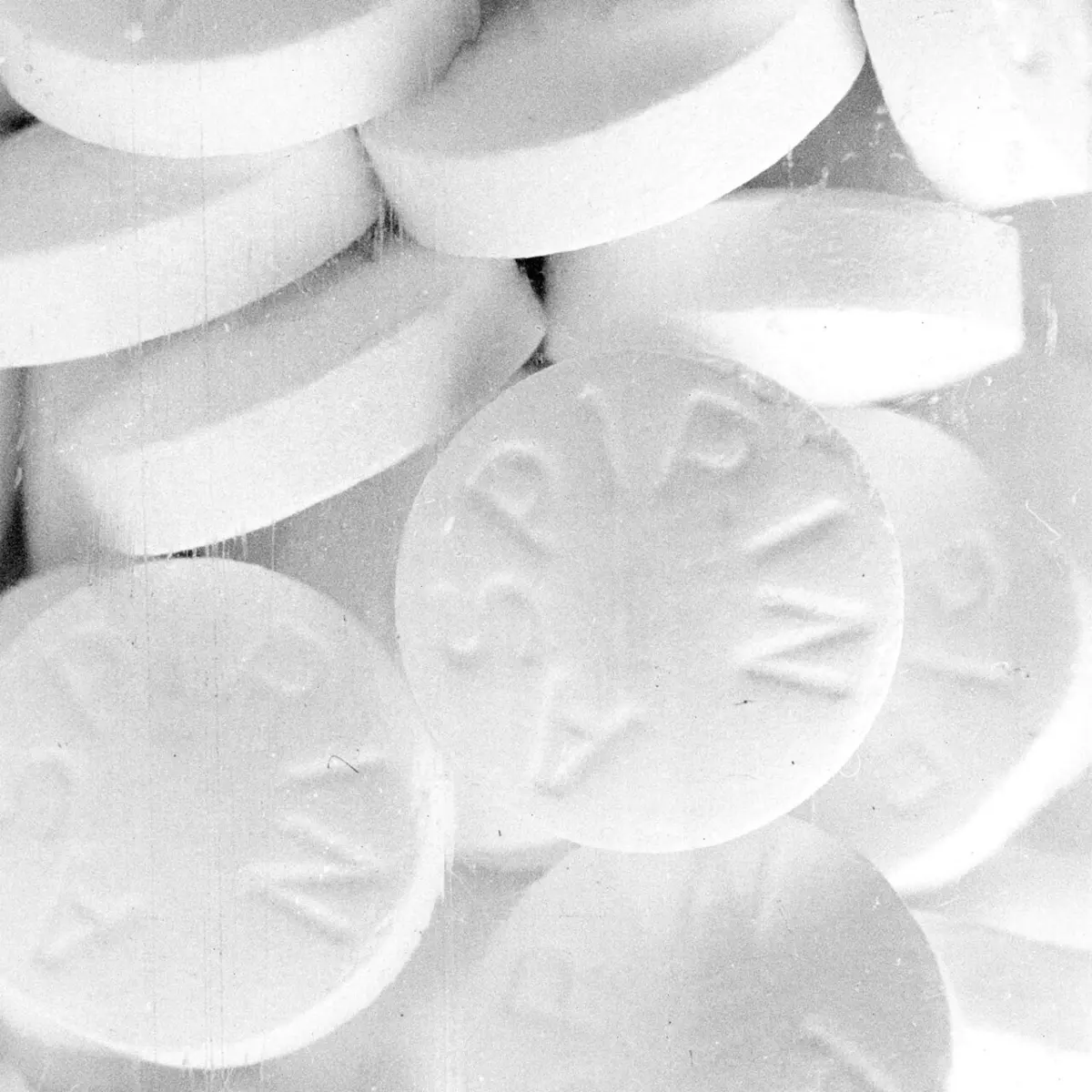
This is how aspirin is made: the –OH of salicylic acid is acylated by ethanoic anhydride (Figure 14.39).
d. Reduction
LiAlH₄ reduces an anhydride to two molecules of primary alcohol:
Chemical properties of esters
a. Hydrolysis
Heated with water and a little acid, an ester is hydrolyzed back to the carboxylic acid and the alcohol. This is esterification run backwards, and like it, it is reversible: a large excess of water pushes it towards the acid.
With an alkali, hydrolysis goes to completion: the acid formed is turned at once into its salt, which can’t react with the alcohol. Alkaline hydrolysis of an ester is called saponification, “soap-making”, because that is how soap is made from fats.
Fats and oils, such as ghee and mustard oil, are esters of glycerol (propane-1,2,3-triol) with three long-chain fatty acids, triglycerides. Boiled with sodium hydroxide, a fat gives glycerol and the sodium salts of its fatty acids, which are soap:
b. Ammonolysis
With ammonia, an ester gives an amide and the alcohol, more slowly than an acid chloride does:
In practice it goes one way: an amide is the least reactive derivative, and an alcohol hardly attacks it without an acid catalyst.
c. Alcoholysis (transesterification)
Heated with a different alcohol and a little acid (or base), an ester swaps its alkoxy group for the new alcohol’s. The products are again an ester and an alcohol, so this is called transesterification:
Ethyl ethanoate and methanol give methyl ethanoate and ethanol. The reaction is reversible; an excess of methanol pushes it to the right.
d. Reduction
LiAlH₄ (or sodium in ethanol) reduces an ester to two alcohols: the acid part becomes a primary alcohol, and the alcohol part is set free.
Ethyl ethanoate gives two molecules of ethanol.
Claisen condensation
An ester with α-hydrogens, heated with sodium ethoxide, joins with a second molecule of itself, losing a molecule of ethanol, to give a β-keto ester: an ester with a C=O on its β-carbon. This is the Claisen condensation, found by Ludwig Claisen in 1887.
How it happens. The ethoxide ion takes an α-hydrogen from one ester, leaving a carbanion (an enolate ion). This carbanion attacks the C=O carbon of a second ester, and an ethoxide ion leaves: nucleophilic acyl substitution, with a carbon nucleophile. The product, ethyl 3-oxobutanoate (ethyl acetoacetate), has its C=O groups on either side of one CH₂; acid is added at the end, because the ethoxide takes a hydrogen from that CH₂.
Two different esters can be joined if only one of them has α-hydrogens; otherwise four products form. Ethyl benzoate has none, so with ethyl ethanoate it gives one β-keto ester:
Hofmann bromamide reaction
A primary amide, warmed with bromine and aqueous sodium hydroxide (or potassium hydroxide), gives a primary amine with one carbon fewer. The carbonyl carbon is lost as carbonate. This is the Hofmann bromamide reaction (or Hofmann degradation), found by August Wilhelm von Hofmann in 1881 (more on amines in Unit 16):
An aromatic amide does the same: benzamide gives aniline (phenylamine), and propanamide gives ethanamine.
Here R–CONH₂ is the primary amide, Br₂ and NaOH the reagents, and R–NH₂ the primary amine. On the way, the bromine replaces a hydrogen on the nitrogen (giving RCONHBr, an N-bromoamide), the alkali takes off the other, and the R group moves from carbon to nitrogen as Br⁻ leaves, giving an isocyanate, R–N=C=O; the alkali hydrolyzes that to the amine and carbonate. The R group moves with its own electrons, so it keeps its shape. It is a good way to shorten a chain by one carbon: ethanoic acid → ethanamide → methanamine.
Propanamide, CH₃CH₂CONH₂, is warmed with Br₂ and aqueous KOH. What is the product?
Pick an answer to see why.
Amphoteric nature of amides
Amides are very weakly basic and very weakly acidic: weakly amphoteric.
Weakly basic. An amine’s nitrogen takes H⁺ readily, but an amide’s lone pair on nitrogen is shared with the C=O by resonance (Figure 14.44), so it is much less available. Amides are about as weak bases as water: their solutions are neutral to litmus. They do form salts with strong acids, in the absence of water; and the H⁺ attaches to the oxygen, which carries the negative charge in the second resonance structure, not to the nitrogen.
This resonance also makes the C–N bond partly double: amides are flat around their C–N bond, and it is very hard to turn. That flat, rigid amide link holds the shape of every protein, where it is called the peptide bond.
Weakly acidic. The same resonance pulls electrons away from nitrogen and makes its N–H hydrogens slightly acidic (pKₐ of ethanamide about 15, like water’s). So amides react with reactive metals and with mercury(II) oxide, giving salts:
The anion, CH₃CONH⁻, is stabilized by spreading its charge onto the oxygen.
Why is ethanamide a much weaker base than ethanamine?
Pick an answer to see why.
Relative reactivity of derivatives of carboxylic acids
How readily a derivative undergoes nucleophilic acyl substitution follows a clear order:
Two things decide it.
- How easily the leaving group leaves. A group leaves easily if it is stable on its own, that is, if it is a weak base. Cl⁻ is the conjugate base of HCl, a strong acid: a very weak base, the best leaving group. RCOO⁻ (from a weak acid, pKₐ about 5) is next; RO⁻ (from an alcohol, pKₐ about 16) is a strong base and leaves reluctantly; NH₂⁻ (from ammonia, pKₐ about 38) hardly leaves at all.
- How much the group shares its lone pair with the C=O. Chlorine shares its lone pair poorly (its 3p orbital overlaps badly with carbon’s 2p), so the carbonyl carbon stays very positive. Oxygen shares better, and nitrogen, the least electronegative, best of all: an amide’s carbonyl carbon is the least positive and its molecule the most stabilized.
| Derivative | Structure | Leaving group | Its lone pair shared with C=O | Reactivity |
|---|---|---|---|---|
| acid chloride | RCOCl | Cl⁻, very good | poorly | very high: reacts with water, alcohols and ammonia at room temperature |
| acid anhydride | (RCO)₂O | RCOO⁻, good | moderately (split between two C=O) | high |
| ester | RCOOR′ | R′O⁻, poor | well | moderate: needs heat and a catalyst |
| amide | RCONH₂ | NH₂⁻, very poor | very well | low: needs long boiling with acid or alkali |
A more reactive derivative can be turned into a less reactive one directly, but not the other way round: an acid chloride gives an anhydride, ester or amide; an amide gives none of them easily. The carboxylic acid itself sits about with the esters; with its –OH a poor leaving group, it needs an acid catalyst to react with alcohols, and with bases it simply forms a salt, whose –COO⁻ is not attacked at all.
Nitriles, R–C≡N, which hydrolyze to acids (Section 14.1.2 b), are sometimes added at the bottom of the list: they have no leaving group, and react by adding water across the C≡N, which needs long heating with acid or alkali.
Which of these reacts fastest with water at room temperature?
Pick an answer to see why.
Exercise
Exercise 14.1: Multiple choice questions
- Which reagent is suitable to test for a carboxylic acid?
Pick an answer to see why.
- Which is the functional isomer of CH₃COOH?
Pick an answer to see why.
- What is the compound Z?
Pick an answer to see why.
- Which one of the following is the strongest acid?
Pick an answer to see why.
- Which chemicals are used for esterification?
Pick an answer to see why.
- What is formed when ethanoic acid is heated with phosphorus pentoxide?
Pick an answer to see why.
- What is the product when ethanal is oxidized?
Pick an answer to see why.
Match each set of reactants with its major product.
| Reactants | Major product |
|---|---|
| 1.CH₃COOH + CH₃CH₂OH + conc. H₂SO₄ | a.chloroethanoic acid |
| 2.CH₃COOH + Cl₂ + red P | b.3-nitrobenzoic acid |
| 3.C₆H₅COOH + conc. HNO₃ + conc. H₂SO₄ | c.ethyl ethanoate |
- Choose the correct matching from the table above.
Pick an answer to see why.
- What is the product P?
Pick an answer to see why.
- What is the product when an acid chloride undergoes alcoholysis?
Pick an answer to see why.
- Phenol is treated with sodium hydroxide, then heated with carbon dioxide under pressure, and the product is acidified. Compound P is obtained. What is P?
Pick an answer to see why.
- The pleasant smell of fruits is generally due to which compounds?
Pick an answer to see why.
- Which compound gives the Claisen condensation?
Pick an answer to see why.
- Choose the right set of compounds for this sequence:
Pick an answer to see why.
A carboxylic acid, RCOOH, is treated with: SOCl₂ (in CHCl₃) to give P; 1. NaOH, 2. R′X to give Q; R′OH with an acid catalyst to give R; R′NH₂ with DCC (a reagent that takes up water) to give S; and LiAlH₄ to give T.
- Which are suitable products?
Pick an answer to see why.
- Which compounds undergo transesterification?
Pick an answer to see why.
- What is the conversion of an ester into a β-keto ester called?
Pick an answer to see why.
- How do nitriles give carboxylic acids?
Pick an answer to see why.
- What is formed when ethyl ethanoate is heated with sodium ethoxide in ethanol?
Pick an answer to see why.
- What is formed when ethanoic acid is treated with chlorine in the presence of red phosphorus?
Pick an answer to see why.
- Which of these is different from the others?
Pick an answer to see why.
- Which of the four structures above is aspirin?
Pick an answer to see why.
- Why does the solubility of carboxylic acids in water fall as the number of carbons grows?
Pick an answer to see why.
Exercise 14.2: Short questions
What are the functional isomers of C₃H₆O₂? Give an example of an esterification reaction. An organic compound P, C₈H₁₆O₂, was hydrolyzed with dilute acid to give a carboxylic acid Q and an alcohol R. Oxidation of R with chromic acid gave Q. R on dehydration gives but-1-ene. Write the equations for the reactions involved.
Hint
Answer
What happens when:
- a.ethyl ethanoate is heated with sodium ethoxide?
- b.acetic anhydride is treated with ethanol?
- c.ethanoyl chloride is treated with hydrogen in the presence of Pd/BaSO₄?
- d.methanoic acid is treated with ammoniacal silver nitrate solution?
- e.ethanoic acid is heated with phosphorus pentoxide?
Answer
What are the anomalous properties of methanoic acid? Explain with any two examples. Explain the electrophilic substitution reactions of benzoic acid. Identify the compounds A, B, C, D and E formed from CH₃COOH with: A, C₂H₅OH (conc. H₂SO₄, heat); B, NH₃; C, P₂O₅ and heat; D, LiAlH₄ and heat; E, NaHCO₃. [2+1+5]
The textbook gives “CH₃COOH/H⁺” for C, but ethanoic acid warmed with more of itself and acid gives nothing new, so the book’s reagent doesn’t work. P₂O₅ is given here, which gives the anhydride.
Answer
Write one example of each of the following.
- a.Claisen condensation
- b.Hell–Volhard–Zelinsky reaction
- c.Ethanolysis of ethanoyl chloride
- d.Electrophilic substitution reaction of benzoic acid
Answer
What happens when:
- a.ethyl ethanoate is heated with sodium ethoxide?
- b.acetic anhydride is treated with ethanol?
- c.ethanoyl chloride is treated with hydrogen in the presence of Pd/BaSO₄?
- d.methanoic acid is treated with ammoniacal silver nitrate solution?
- e.ethanoic acid is heated with phosphorus pentoxide?
Answer
Exercise 14.3: Long questions
A. An aliphatic compound V reacts with SOCl₂ to give W. W is heated with ammonia to give X. X is heated with Br₂/KOH to give Y. Y gives Z when treated with NaNO₂/HCl at low temperature. Z is a primary alcohol that gives a positive iodoform test. Identify V, W, X, Y and Z.
B. A secondary alcohol P with 3 carbon atoms is oxidized to Q. Q is treated with cold dilute NaOH to give R. Identify the compounds and write the reactions involved.
Hint
Answer
Identify the compounds P, Q, R, S and T in the sequence:
Q can also be obtained by reducing chlorobenzene. [5] Write any three methods of preparation of ethanoic acid. [3]
Hint
Answer
A. An organic compound A, which effervesces with NaHCO₃, is heated with phosphorus pentoxide to give B. Ammonolysis of B gives C along with ethanoic acid. C, warmed with Br₂ and aqueous NaOH, gives D. D gives methanol with NaNO₂ and dilute HCl. Identify A, B, C and D with suitable reactions. [4]
B. Identify P, Q, R and S in the sequence: [4]
Answer
A. An aliphatic compound V reacts with SOCl₂ to give W. W is heated with ammonia to give X. X is heated with Br₂/KOH to give Y. Y gives Z when treated with NaNO₂/HCl at low temperature. Z is a primary alcohol that gives a positive iodoform test. Identify V, W, X, Y and Z.
B. A primary alcohol P with 2 carbon atoms is oxidized to Q. Q is treated with cold dilute NaOH to give R. Identify the compounds and write the reactions involved.
Answer
A. Identify A, B, C, D and E in the sequence below, where C is an aliphatic primary amine of molecular mass 45 u. [1+1+1+1+1]
B. Write one example of each of the following. (3 × 1 = 3)
- i.Claisen condensation
- ii.Hell–Volhard–Zelinsky reaction
- iii.Ethanolysis of ethanoyl chloride
Hint
Answer
Printable PDFs
- Study notes 3 pages
- Worksheet 4 pages Answer key
Quiz yourself: Materials and Chemicals We Use, Grades 5–12 →
Practice every question in the book, and keep track of the ones you miss →
A companion to your textbook, not a replacement for it: study from the book your school uses, and where the two differ, follow your teacher. Found a mistake? Please tell us.