
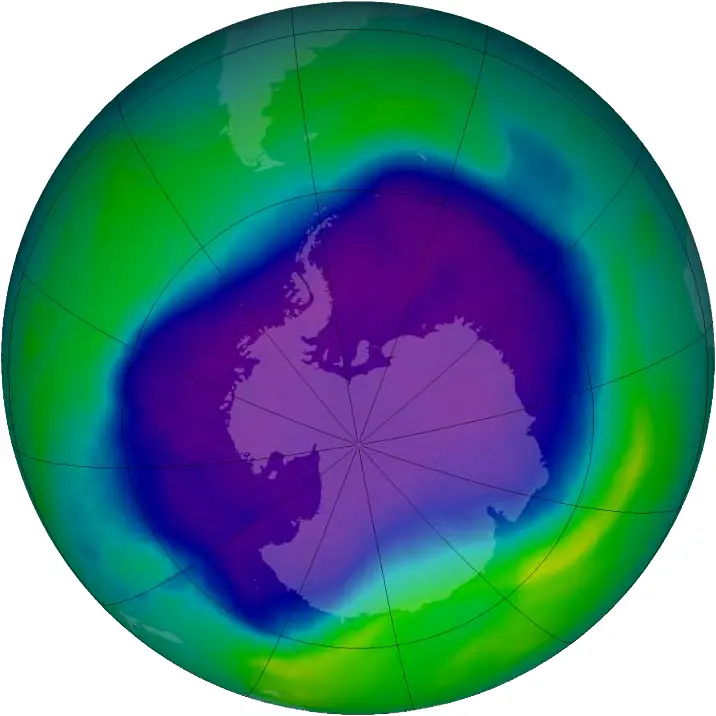
On a cricket ground, when a bowler’s ankle twists, the physio runs on with a small can and sprays it. The spray is often chloroethane, CH₃CH₂Cl, which boils at 12 °C: it evaporates on the skin at once, takes heat with it, and numbs the pain for a minute. The same family of compounds put patients to sleep for surgery in the nineteenth century (chloroform), kept refrigerators cold for fifty years and then thinned the ozone layer (the CFCs), coats the non-stick pan in many Nepali kitchens (Teflon, a fluorine polymer), and fills the laboratory bottle of iodoform, the yellow powder with a smell you never forget.
All of them are halogen derivatives of hydrocarbons: a hydrocarbon in which one or more hydrogen atoms have been replaced by halogen atoms (F, Cl, Br, I). This unit is about the simplest of them, the haloalkanes, where the halogen sits on an alkane’s carbon. They matter in chemistry for one reason above all: the carbon–halogen bond is easy to break in a controlled way, so a haloalkane can be turned into almost anything else, an alcohol, an ether, an amine, a nitrile, a longer alkane, an alkene. Chemists use them as stepping stones, and the two ways in which they react, substitution and elimination, are the first reaction mechanisms in this book that you will follow electron by electron.
8.1 Introduction
Halogen derivatives of hydrocarbons are of two kinds. In a haloalkane (an alkyl halide) the halogen is bonded to an sp³ carbon of an alkyl group, as in CH₃CH₂Br. In a haloarene (an aryl halide) it is bonded to a carbon of a benzene ring, as in C₆H₅Cl; haloarenes are the next unit. Writing R for an alkyl group and X for a halogen, a haloalkane is what you get from an alkane by putting X in place of one H:
The general formula of the monohaloalkanes (one halogen atom) is that of an alkane with one H replaced: CₙH₂ₙ₊₁X, for example CH₃Cl (n = 1), C₂H₅Br (n = 2) and C₃H₇I (n = 3).
The C–X bond
The carbon–halogen bond is a covalent bond, but not an equal one. Every halogen is more electronegative than carbon (Pauling: C 2.55; F 3.98, Cl 3.16, Br 2.96, I 2.66), so it pulls the shared pair towards itself. The carbon is left with a small positive charge, δ+, and the halogen gets a small negative one, δ−: the C–X bond is a polar covalent bond.
That partly positive carbon is the key to the whole unit. It attracts anything rich in electrons, an ion like OH⁻ or CN⁻, or a molecule with a lone pair like NH₃, and those are exactly the reagents that react with haloalkanes. Going down the group, the halogen atom gets bigger, so the bond gets longer and weaker:
| Bond (in CH₃–X) | C–F | C–Cl | C–Br | C–I |
|---|---|---|---|---|
| Bond length (pm) | 139 | 178 | 193 | 214 |
| Bond enthalpy (kJ/mol) | 452 | 351 | 293 | 234 |
| Dipole moment of CH₃X (D) | 1.85 | 1.86 | 1.83 | 1.64 |
The weakest bond, C–I, breaks most easily, so iodoalkanes react fastest and fluoroalkanes hardly at all: the order of reactivity of the haloalkanes is R–I > R–Br > R–Cl > R–F. Notice that the most polar bond is not the most reactive one. Polarity tells you where a reagent attacks; bond strength decides how fast the halogen leaves.
Which of these explains why CH₃I reacts faster than CH₃Cl with hydroxide ions?
Pick an answer to see why.
8.2 Nomenclature, isomerism and classification of monohaloalkanes
8.2.1 Classification
Haloalkanes are classified in two ways: by how many halogen atoms they carry, and by what kind of carbon the halogen is on.
1. By the number of halogen atoms
a. Monohaloalkanes contain one halogen atom in place of a hydrogen: CH₃Cl, C₂H₅Br, C₃H₇I.
b. Dihaloalkanes contain two halogen atoms in place of two hydrogens. Where the two halogens sit gives two kinds:
- Vicinal dihalides (vic-dihalides, from Latin vicinus, neighbor) have the two halogens on neighboring carbons: R–CHX–CHX–R′. Example: 1,2-dibromoethane, BrCH₂–CH₂Br, which forms when ethene decolorizes bromine water Grade 11: Unit 14.
- Geminal dihalides (gem-dihalides, from Latin geminus, twin) have both halogens on the same carbon: R–CX₂–R′. Examples: 1,1-dibromoethane, CH₃CHBr₂; dichloromethane, CH₂Cl₂; 2,2-dichlorobutane, CH₃CH₂CCl₂CH₃.
c. Polyhaloalkanes contain more than two halogen atoms: trichloromethane (chloroform), CHCl₃; triiodomethane (iodoform), CHI₃; tetrachloromethane (carbon tetrachloride), CCl₄.
2. By the carbon the halogen is on
You met primary, secondary and tertiary carbons in Unit 14: a carbon is classed by how many other carbons it is bonded to. A monohaloalkane takes the class of the carbon that carries its halogen.
a. Primary (1°) haloalkanes: the halogen is on a primary carbon, one bonded to only one other carbon: CH₃CH₂Cl, CH₃CH₂CH₂I. Halomethanes such as CH₃Br, whose carbon has no other carbon at all, are strictly methyl halides, but they behave like primary ones and are usually counted with them.
b. Secondary (2°) haloalkanes: the halogen is on a carbon bonded to two other carbons: 2-chloropropane, CH₃CH(Cl)CH₃.
c. Tertiary (3°) haloalkanes: the halogen is on a carbon bonded to three other carbons: 2-chloro-2-methylpropane, (CH₃)₃C–Cl.
This classification is not just bookkeeping. Primary, secondary and tertiary haloalkanes react by different mechanisms and at very different speeds (Section 8.5), so the first question to ask of any haloalkane is: what kind of carbon is the halogen on?
What type of haloalkane is 2-bromo-2-methylbutane, CH₃CH₂C(Br)(CH₃)CH₃?
Pick an answer to see why.
8.2.2 Isomerism
Haloalkanes show both kinds of isomerism you met in Unit 13: structural isomerism and stereoisomerism.
1. Structural isomerism. Compounds with the same molecular formula but different structures (different orders of joining the atoms) are structural isomers. Haloalkanes show two kinds:
- Chain isomers have the same molecular formula but different carbon chains, straight or branched.
- Position isomers have the same chain but the halogen in different positions on it.
Take C₄H₉Cl. Four carbons can make a straight chain or a branched one (Grade 11’s butane and 2-methylpropane), and on each the chlorine can go in two different places. That gives exactly four structural isomers:
1-Chlorobutane and 2-chlorobutane are position isomers (same chain, Cl moved); so are 1-chloro-2-methylpropane and 2-chloro-2-methylpropane. Any straight-chain one and any branched one are chain isomers.
2. Stereoisomerism. Compounds with the same atoms joined in the same order, which differ only in how the atoms are arranged in space, are stereoisomers. Look at carbon 2 of 2-chlorobutane, CH₃CH₂CH(Cl)CH₃: it carries four different groups, H, Cl, CH₃ and CH₂CH₃. A carbon like this is a chiral carbon (a stereocenter), and a molecule with one exists in two forms that are mirror images of each other and can’t be laid exactly on each other, however you turn them, like your left and right hands. The two forms are enantiomers, and this is optical isomerism: the two forms turn plane-polarized light by the same angle in opposite directions Grade 11: Unit 13.
Of the four isomers of C₄H₉Cl, only 2-chlorobutane has a chiral carbon. In 1-chlorobutane every carbon has at least two identical groups (two H’s), and in 1-chloro-2-methylpropane carbon 2 carries two identical CH₃ groups; in 2-chloro-2-methylpropane carbon 2 carries three.
8.2.3 Nomenclature
Haloalkanes have two kinds of name.
1. Common names. Name the alkyl group, then the halogen as a halide, as two words: CH₃Cl is methyl chloride, CH₃CH₂Br ethyl bromide, (CH₃)₂CHCl isopropyl chloride, (CH₃)₃CBr tert-butyl bromide. A few compounds keep their own old names: chloroform (CHCl₃), iodoform (CHI₃), carbon tetrachloride (CCl₄).
2. IUPAC names. The halogen is a prefix (fluoro-, chloro-, bromo-, iodo-) on the name of the parent alkane, all as one word:
- a.Choose the longest carbon chain that carries the halogen.
- b.Number it from the end that gives the lower number to the first point of difference, a halogen or a branch, whichever comes first. (Halogens and alkyl branches count equally; Grade 11 Chemistry, Unit 13 has the full rules.)
- c.List the prefixes in alphabetical order, each with its number: bromo before chloro before methyl.
So CH₃Cl is chloromethane and CH₃CH(CH₃)CH₂Cl is 1-chloro-2-methylpropane: the chain of three carbons is numbered from the CH₂Cl end, where the first substituent (Cl) comes at C-1 rather than C-3, and chloro is listed before methyl.
| Formula | Common name | IUPAC name |
|---|---|---|
| CH₃–Cl | methyl chloride | chloromethane |
| CH₃–CH₂–I | ethyl iodide | iodoethane |
| (CH₃)₂CH–Br | isopropyl bromide | 2-bromopropane |
| CH₃–C(CH₃)₂–Cl | tert-butyl chloride | 2-chloro-2-methylpropane |
| CH₂Cl₂ | methylene chloride | dichloromethane |
| CHCl₃ | chloroform | trichloromethane |
| CCl₄ | carbon tetrachloride | tetrachloromethane |
What is the IUPAC name of (CH₃)₂CHCH₂CH₂Br?
Pick an answer to see why.
8.3 Preparation of monohaloalkanes from alkanes, alkenes and alcohols
a. From alkanes: free-radical halogenation
Alkanes do very little, but in ultraviolet light or sunlight (hν, a photon of light) they react with chlorine or bromine by free-radical substitution, as you saw in Unit 14:
The trouble is that the reaction doesn’t stop there. Chloromethane has hydrogens too, and the chlorine atoms attack it in turn:
methyl chloride, methylene chloride (dichloromethane), chloroform and carbon tetrachloride. So the product is always a mixture, contaminated with polyhaloalkanes, and with longer alkanes there is a mixture of positions too (propane gives both 1- and 2-chloropropane). The amount of polyhalo product is kept down by using a large excess of the alkane: then a chlorine atom nearly always meets an alkane molecule rather than a chloroalkane one. This is why halogenation of alkanes is used in industry, where the mixture can be separated by distillation, more than in the laboratory.
Iodine hardly reacts with alkanes: it is the least reactive halogen, and the reaction is reversible, because the HI formed reduces the iodoalkane back to the alkane (). It can be driven forward by an oxidizing agent such as iodic acid, HIO₃, or mercury(II) oxide, HgO, which destroys the HI as it forms:
b. From alkenes: adding hydrogen halides
Alkenes add hydrogen halides across their double bond, giving haloalkanes:
ethene gives a haloethane. The reactivity of the hydrogen halides is HI > HBr > HCl > HF, the order of their bond strengths (H–I is the weakest, so it gives up its H⁺ most easily).
Markovnikov’s rule. An unsymmetrical alkene such as propene could add HBr two ways, but one product wins:
This is Markovnikov’s rule, stated by the Russian chemist Vladimir Markovnikov in 1869: when a hydrogen halide (or another reagent H–Z) adds to an unsymmetrical alkene, the hydrogen goes to the carbon of the double bond that already has more hydrogen atoms, and the halogen goes to the carbon with fewer hydrogens (more alkyl groups). A reaction that favors one of two possible positions like this is called regioselective.
The reason is the mechanism, electrophilic addition through a carbocation. The π electrons take H⁺ from HBr first; if the H⁺ joins the CH₂ end, the positive charge is left on the middle carbon as a secondary carbocation, which is more stable than the primary one the other way would give. The bromide ion then bonds to that carbon:
The peroxide effect (Kharasch effect): anti-Markovnikov addition. In 1933 Morris Kharasch and Frank Mayo found that when an organic peroxide (R–O–O–R) is present, HBr adds the other way round: the bromine goes to the carbon with more hydrogens, the hydrogen to the carbon with fewer.
The peroxide changes the mechanism: it splits into free radicals that turn HBr into bromine atoms, and it is a bromine atom, not H⁺, that adds to the alkene first. It joins the CH₂ end, leaving the more stable secondary radical, which takes an H atom from another HBr. No carbocation is formed at all.
c. From alcohols
The commonest way of making a haloalkane in the laboratory is to replace the –OH group of an alcohol by a halogen. Four reagents do it.
i. Hydrogen halides; Lucas reagent. Lucas reagent is concentrated hydrochloric acid with anhydrous zinc chloride. Zinc chloride is a Lewis acid: it bonds to a lone pair on the alcohol’s oxygen, which weakens the C–O bond so that it breaks more easily, and chloride takes the carbon’s place:
Tertiary alcohols react with Lucas reagent at once, at room temperature, secondary ones within about five minutes, and primary ones hardly at all without heating. Since the chloroalkane doesn’t dissolve in the reagent, the mixture turns cloudy as it forms: this is the Lucas test that tells the three kinds of alcohol apart Grade 12: Unit 10. HBr and HI react with alcohols without a catalyst; HBr is often made in the flask from sodium bromide and concentrated sulphuric acid:
ii. Phosphorus halides. Phosphorus trihalides (PCl₃, PBr₃; PI₃ is made in the flask from red phosphorus and iodine) give good yields, above 80%, with three molecules of alcohol each:
the by-product being phosphorous acid. Phosphorus pentachloride reacts in the cold, giving phosphorus oxychloride and hydrogen chloride:
isopropyl alcohol (propan-2-ol) gives isopropyl chloride (2-chloropropane).
iii. Thionyl chloride, SOCl₂. When an alcohol is refluxed with thionyl chloride in the presence of pyridine (a base that takes up the HCl), a chloroalkane forms:
This is the best of the methods: both by-products, SO₂ and HCl, are gases that escape from the flask, so the chloroalkane is left nearly pure, with nothing to separate from it.
Which reagent turns ethanol into chloroethane with no by-product left in the flask to separate?
Pick an answer to see why.
8.4 Physical properties of monohaloalkanes
State. The smallest haloalkanes, fluoromethane, chloromethane, bromomethane, fluoroethane and chloroethane, are colorless gases at room temperature. Iodomethane (42 °C), bromoethane and the rest are colorless liquids, and the long-chain ones, from about eighteen carbons, are waxy solids. Many have a sweetish smell.
Boiling points. Haloalkanes boil much higher than the alkanes of similar size. Bromoethane (38 °C) is a liquid while ethane (−89 °C) is a gas. Two forces between the molecules add up: the polar C–X bonds attract each other end to end (dipole–dipole attraction), and the heavy, many-electron halogen atom strengthens the London forces. Three trends follow:
- For the same alkyl group, the boiling point rises with the size of the halogen: RF < RCl < RBr < RI.
- For the same halogen, it rises with the length of the chain: CH₃Cl (−24 °C) < C₂H₅Cl (12 °C) < C₃H₇Cl (47 °C) < C₄H₉Cl (78 °C). Each CH₂ adds surface and electrons.
- Among isomers, branching lowers the boiling point: a branched molecule is more compact and nearly spherical, so it touches its neighbors over less surface, and the London forces are weaker.
| Isomer of C₄H₉Cl | Boiling point |
|---|---|
| 1-chlorobutane | 78 °C |
| 1-chloro-2-methylpropane | 69 °C |
| 2-chlorobutane | 68 °C |
| 2-chloro-2-methylpropane | 51 °C |
Density. Density depends mostly on the halogen. Iodo- and bromoalkanes and the polyhaloalkanes are denser than water (iodomethane 2.28 g/mL, bromoethane 1.46, chloroform 1.48, carbon tetrachloride 1.59), so they sink under it; monochloroalkanes such as 1-chlorobutane (0.89 g/mL) float. Density rises as the halogen gets heavier and as more halogens are added (CH₂Cl₂ 1.33 < CHCl₃ 1.48 < CCl₄ 1.59 g/mL), and for the same halogen it falls slightly as the chain gets longer, because the light hydrocarbon part makes up more of the molecule (bromoethane 1.46, 1-bromopropane 1.35, 1-bromobutane 1.27 g/mL).
8.5 Chemical properties: substitution reactions, SN1 and SN2
8.5.1 Nucleophilic substitution reactions
A nucleophile (“nucleus-lover”) is a species with a lone pair it can give to form a new bond, usually to a carbon with a δ+ charge: OH⁻, CN⁻, RO⁻, NH₃, H₂O. In a haloalkane, the halogen is bonded to a δ+ carbon. When a nucleophile attacks that carbon, a new bond forms to the nucleophile and the C–X bond breaks, both its electrons going off with the halogen as a halide ion, X⁻. The nucleophile has taken the halogen’s place: this is a nucleophilic substitution reaction, and the halide ion that leaves is called the leaving group.
The reaction goes when the nucleophile holds on to the carbon more strongly than the halide does: a stronger nucleophile replaces a weaker one, and halide ions, especially I⁻ and Br⁻, are good leaving groups because they are stable on their own. Two things have to happen, the old bond breaking and the new one forming, and there are two ways of timing them. They are the two mechanisms of nucleophilic substitution, SN1 and SN2 (Substitution, Nucleophilic, with 1 or 2 molecules in the slowest step), named by Edward Hughes and Christopher Ingold at University College London in the 1930s.
SN1: break first, then make
In the SN1 mechanism the reaction happens in two steps.
Step 1 (slow). The C–X bond breaks on its own, heterolytically: both its electrons go with the halogen. This leaves a carbocation, a carbon with only three bonds and a positive charge.
Step 2 (fast). The nucleophile’s lone pair bonds to the positive carbon at once.
Breaking a bond with nothing to help it is slow, and the second step is fast; so the speed of the whole reaction is set by step 1, the rate-determining step. Only one molecule, the haloalkane, takes part in it, so the rate depends on the concentration of the haloalkane alone:
The SN1 reaction is first order Grade 12: Unit 3, and adding more nucleophile doesn’t make it faster: the nucleophile is waiting for the carbocation, not the other way round.
Everything depends on how easily the carbocation forms, that is, on how stable it is. Alkyl groups push electron density towards a positive carbon and spread its charge (their +I effect), so the more alkyl groups round it, the more stable the carbocation:
and the reactivity of haloalkanes by SN1 follows the same order: 3° > 2° > 1° > methyl. Tertiary haloalkanes react by SN1; primary and methyl haloalkanes practically never do, since their carbocations are too unstable to form. SN1 is helped by polar solvents such as water and alcohols, which surround the ions formed in step 1 and steady them.
Racemization. The carbocation is flat (trigonal planar, its carbon sp² hybridized, with an empty p orbital standing above and below the plane). A nucleophile can bond to either face of it, with equal chance. If the carbon was chiral, the two faces give the two enantiomers in equal amounts: the optically active haloalkane becomes a racemic mixture, optically inactive. This is racemization.
In practice the racemization is often not quite complete. For a moment after it leaves, the halide ion stays close to the face it left from and partly shields it, so the nucleophile arrives a little more often from the other side, and a small excess of the inverted product forms.
SN2: make and break together
In the SN2 mechanism the reaction happens in one step. The nucleophile approaches the carbon from the side directly opposite the halogen (backside attack), and as the new bond forms, the old one breaks. Halfway, there is a transition state in which the carbon is partly bonded to both the nucleophile and the halogen, five groups round it: the three others flat in a plane, the nucleophile and the halogen on opposite sides, each with a partial negative charge. It is not a molecule that can be kept, only the highest point on the energy path (Figure 8.24).
Two molecules take part in the one step, the haloalkane and the nucleophile, so the rate depends on both:
The SN2 reaction is second order: double either concentration and the rate doubles.
Steric hindrance. The nucleophile has to reach the back of the carbon, and alkyl groups on that carbon are in the way. A methyl halide has only three small hydrogens there; a tertiary halide has three bulky methyl groups that completely block the way. So the reactivity by SN2 is the opposite of SN1:
Measured with the same nucleophile, CH₃Br reacts about 30 times faster than CH₃CH₂Br, (CH₃)₂CHBr about 40 times slower than CH₃CH₂Br, and (CH₃)₃CBr too slowly to measure.
Inversion of configuration (Walden inversion). Because the nucleophile comes in from the back, the three other groups are pushed through the plane like an umbrella turned inside out by the wind. If the carbon is chiral, the product has the opposite arrangement in space (configuration) to the reactant. This inversion of configuration is the mark of an SN2 reaction. It was discovered by the Latvian chemist Paul Walden in 1896, long before anyone knew why, and is called Walden inversion.
Here the letter changes from R to S because OH ranks first, as Br did, so swapping the arrangement swaps the letter. The letter is only a name, though: when the new group ranks differently from the old one, an inverted product can keep the same letter. What really shows the inversion is that the three groups now point the other way.
Doubling the concentration of hydroxide ions doubles the rate of a substitution of a haloalkane. What does this tell you?
Pick an answer to see why.
Which bromide reacts fastest by SN1?
Pick an answer to see why.
8.6 Formation of alcohols, nitriles, amines, ethers, thioethers, carbylamines, nitrites and nitroalkanes
Every reaction in this section is a nucleophilic substitution: a different nucleophile takes the halogen’s place each time. Change the nucleophile and you change the product. That is why haloalkanes are so useful.
8.6.1 Formation of alcohols
When a haloalkane is boiled with aqueous KOH or NaOH, the hydroxide ion replaces the halogen, giving an alcohol:
chloroethane gives ethanol, and 2-chloropropane gives propan-2-ol. The same happens when a haloalkane is boiled with moist silver oxide, which acts as “silver hydroxide”, AgOH; the silver halide falls out as a precipitate:
8.6.2 Formation of nitriles and isocyanides
With alcoholic potassium cyanide, a haloalkane gives an alkyl cyanide, called a nitrile in IUPAC names:
The product is propanenitrile (ethyl cyanide): note that it has one carbon more than the haloalkane. The cyanide’s carbon joins the chain, so this is a way of making a carbon chain longer by one.
With silver cyanide, AgCN, the main product is different, an alkyl isocyanide (an isonitrile or carbylamine), R–N≡C, in which the alkyl group is bonded to nitrogen:
ethyl isocyanide. Why the difference? The cyanide ion has a lone pair on both its carbon and its nitrogen, so it can bond through either: it is an ambident nucleophile (“two-toothed”).
- KCN is ionic: in solution it gives free CN⁻ ions, and the free ion bonds through its carbon, giving the stronger C–C bond: the nitrile, R–C≡N.
- In AgCN the Ag–C bond is largely covalent, so the carbon end is tied up and no free CN⁻ is released. The only lone pair free to attack is the one on nitrogen, giving the isocyanide, R–N≡C.
Nitriles are useful because the –C≡N group can be turned into other groups:
a. Partial hydrolysis (with concentrated HCl, or alkaline hydrogen peroxide) gives an amide:
b. Complete hydrolysis (boiling with dilute acid) gives a carboxylic acid and ammonia, which in the acid is an ammonium salt:
c. Reduction (with LiAlH₄, or sodium and ethanol, or hydrogen over nickel) gives a primary amine:
propanenitrile gives propan-1-amine.
8.6.3 Formation of amines
When a haloalkane is heated with an alcoholic solution of ammonia in a sealed tube (so the ammonia can’t escape), ammonia’s lone pair attacks the carbon, giving a primary amine (as its salt, from which a base frees it):
ethanamine (ethylamine). But the amine also has a lone pair on nitrogen, and it is a better nucleophile than ammonia, so if haloalkane is left over it attacks that too, and again, until the nitrogen carries four alkyl groups:
N-ethylethanamine (diethylamine, a secondary amine), N,N-diethylethanamine (triethylamine, a tertiary amine) and tetraethylammonium bromide (a quaternary ammonium salt).
So the product is a mixture. Using a large excess of ammonia makes the primary amine the main product, since a haloalkane molecule then nearly always meets an ammonia molecule; using excess haloalkane gives mostly the quaternary salt.
8.6.4 Formation of ethers: Williamson’s synthesis
When a haloalkane is heated with a sodium alkoxide (R′–O⁻Na⁺, made by dissolving sodium in an alcohol), the alkoxide ion replaces the halogen and an ether, R–O–R′, forms. This is Williamson’s ether synthesis (Alexander Williamson, London, 1850), and it makes both symmetrical and unsymmetrical ethers:
sodium methoxide gives methoxyethane (ethyl methyl ether), and sodium ethoxide gives ethoxyethane (diethyl ether), the “ether” of the old operating theater.
8.6.5 Formation of thioethers
Sulphur sits below oxygen in the periodic table, and the sulphide ion, S²⁻, does to two haloalkane molecules what an alkoxide does to one. Heated with sodium or potassium sulphide in aqueous ethanol, a haloalkane gives a thioether (a dialkyl sulphide), R–S–R:
bromoethane gives diethyl sulphide (ethylthioethane). Sulphur compounds of this family have strong smells: garlic’s comes from a disulphide (diallyl disulphide), and the gas added to LPG to warn of leaks is ethanethiol, C₂H₅SH.
8.6.6 Formation of carbylamines (isocyanides)
Chloroform, a trihaloalkane, warmed with a primary amine and alcoholic KOH, gives an isocyanide (carbylamine):
methylamine gives methyl isocyanide. Isocyanides have a powerful, revolting smell, so this carbylamine reaction is used as a test for primary amines (and for chloroform): Section 8.9.
8.6.7 Formation of nitroalkanes and alkyl nitrites
The nitrite ion, NO₂⁻, is another ambident nucleophile: it has lone pairs on its nitrogen and on its oxygens (Figure 8.25).
With silver nitrite. In AgNO₂ the Ag–O bond is largely covalent, so the oxygen ends are tied up, and the lone pair on nitrogen (less electronegative than oxygen, so it holds its pair less tightly) attacks the carbon. The product is a nitroalkane, R–NO₂, with the alkyl group on nitrogen:
nitroethane.
With potassium (or sodium) nitrite. KNO₂ is ionic, and the negative charge of the free nitrite ion sits mostly on its oxygens, which attack: the product is an alkyl nitrite, R–O–N=O, with the alkyl group on oxygen:
ethyl nitrite. Nitroethane and ethyl nitrite are isomers, the same atoms bonded differently:
Bromoethane is warmed with alcoholic KCN. The product is
Pick an answer to see why.
8.7 Elimination reaction, reduction reactions and Wurtz reaction
8.7.1 Elimination reaction (dehydrohalogenation)
Boil a haloalkane with aqueous KOH and you get an alcohol. Boil it with alcoholic KOH (KOH dissolved in ethanol) and you get an alkene instead: a hydrogen atom and the halogen atom are removed from two neighboring carbons, and a double bond forms between them.
chloroethane gives ethene, 1-bromopropane gives propene. Taking HX out of a molecule is dehydrohalogenation. The carbon carrying the halogen is called the α (alpha) carbon, and the carbon next to it the β (beta) carbon; the halogen leaves from α and the hydrogen from β, so the reaction is also called α,β-elimination or β-elimination.
Why does the solvent matter? In alcoholic KOH there is little water, the ethoxide ion (C₂H₅O⁻) forms, and the base is strong and hot: it pulls off a β-hydrogen as H⁺ rather than attacking carbon. In water, OH⁻ is surrounded by water molecules and acts mainly as a nucleophile. So the same reagent, KOH, gives substitution in water and elimination in alcohol. In real reactions the two compete, and tertiary haloalkanes, with a crowded α carbon, eliminate more easily than primary ones.
Like substitution, elimination has two mechanisms.
E2 (one step). The base pulls a β-hydrogen off as the halogen leaves from the α carbon, and the C–H bond’s electrons become the new π bond, all at once. The rate depends on both the haloalkane and the base: rate = k[R–X][base]. A strong base (alcoholic KOH) at a high concentration favors E2, with haloalkanes of every class; with tertiary ones it is the main route.
E1 (two steps). With a weak base or none (water, ethanol), a tertiary haloalkane first ionizes to a carbocation, exactly as in step 1 of SN1 (Figure 8.19); then a base (even water) takes a hydrogen from a carbon next to the positive one, and the C–H electrons form the double bond. The rate depends on the haloalkane only: rate = k[R–X]. E1 and SN1 share their first step, so they always compete.
8.7.2 Saytzeff’s rule
When the halogen is on a carbon with two different β carbons, both carrying hydrogens, elimination can give two different alkenes. 2-Bromobutane can lose the H from C-1 or from C-3:
The major product is but-2-ene, whose double bond carries two alkyl groups, rather than but-1-ene, whose double bond carries only one. This is Saytzeff’s rule (also spelled Zaitsev, after the Russian chemist Alexander Zaitsev, who stated it at Kazan in 1875): in dehydrohalogenation, the hydrogen is removed mainly from the β carbon that has fewer hydrogens (the more substituted one), so the major product is the more substituted alkene, the one with more alkyl groups on its double-bond carbons. The more alkyl groups round a C=C bond, the more stable it is, and the more stable alkene forms faster.
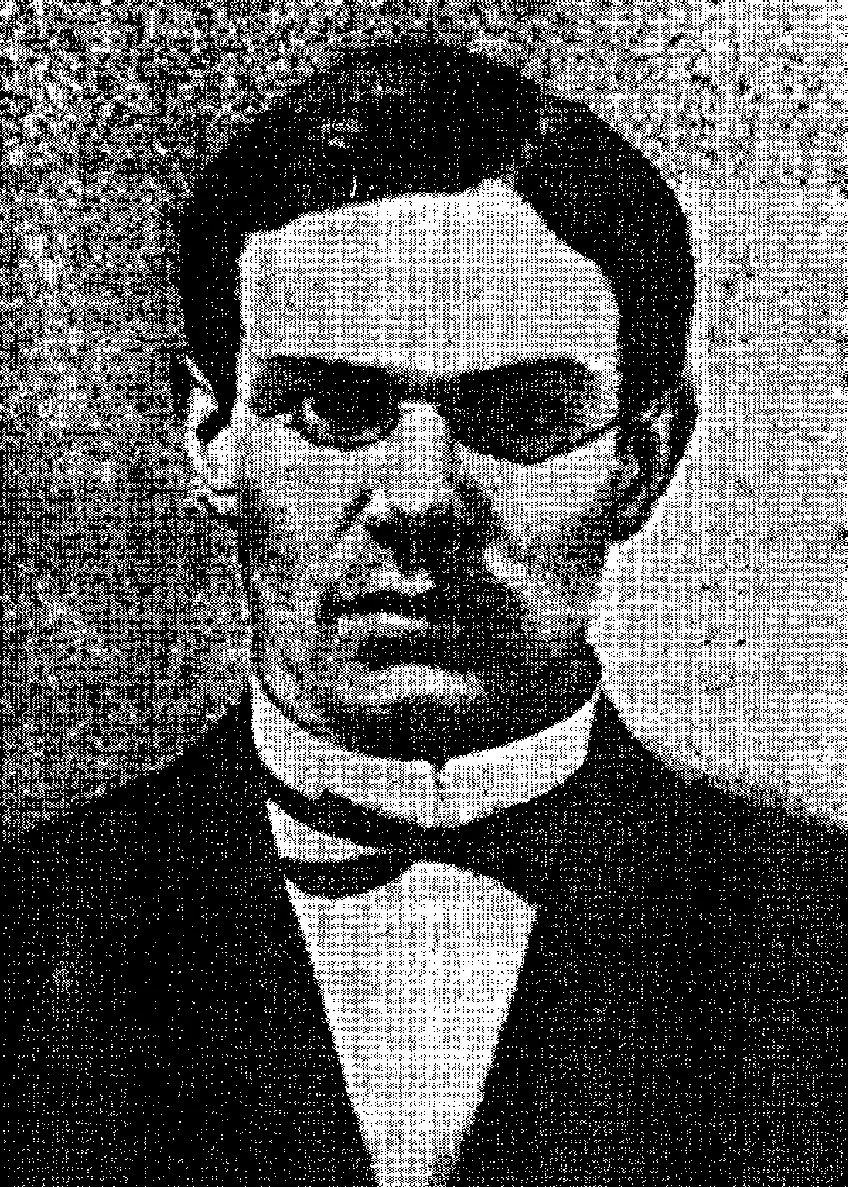
Saytzeff’s rule is the elimination partner of Markovnikov’s rule, and both come from the same laboratory: Zaitsev was a student of Markovnikov’s teacher, Alexander Butlerov, at Kazan University. Markovnikov tells you where things go when they add to a double bond; Saytzeff tells you where the double bond goes when things are taken away.
Which alkene is the major product when 2-bromo-2-methylbutane, CH₃CH₂C(Br)(CH₃)₂, is heated with alcoholic KOH?
Pick an answer to see why.
Reduction reactions
Haloalkanes are reduced to alkanes with the same number of carbons by nascent hydrogen, [H], from zinc and hydrochloric acid, or sodium and ethanol, or by lithium aluminium hydride, LiAlH₄, or by hydrogen over nickel; heating with hydriodic acid and red phosphorus does the same. The halogen is replaced by hydrogen:
bromoethane and chloroethane both give ethane.
8.7.3 Wurtz reaction
When a haloalkane is warmed with sodium metal in dry ether, two alkyl groups join, giving an alkane with twice as many carbon atoms. This is the Wurtz reaction (Charles-Adolphe Wurtz, Paris, 1855):
bromomethane gives ethane and iodoethane gives butane. The ether must be dry because sodium reacts with water (and the reaction would then just make hydrogen). The products are symmetrical alkanes, R–R, with an even number of carbons when R is a straight chain. Two different haloalkanes together give a mixture of three alkanes (R–R, R–R′, R′–R′), so the reaction isn’t used to make unsymmetrical ones (Unit 14 has the details).
8.7.4 Reaction with magnesium: Grignard reagents
When a haloalkane (or a haloarene) is warmed with magnesium turnings in dry ether, the magnesium atom slips in between the carbon and the halogen. The product, an alkylmagnesium halide, R–Mg–X, is a Grignard reagent:
methylmagnesium bromide. Something remarkable has happened to the carbon. In CH₃Br it was δ+, bonded to a more electronegative atom. In CH₃–MgBr it is bonded to magnesium, which is much less electronegative (Mg 1.31, C 2.55), so the carbon is now δ−, rich in electrons: it behaves almost like a carbanion, CH₃⁻, a carbon nucleophile. Chemists call this reversal of polarity umpolung. The ether must be dry because water destroys the reagent at once, giving the alkane ().
The carbon of a Grignard reagent attacks the δ+ carbon of a C=O group (an aldehyde or ketone), making a new carbon–carbon bond; water then turns the product into an alcohol:
- with methanal (formaldehyde, HCHO), a primary alcohol, RCH₂OH;
- with other aldehydes (R′CHO), a secondary alcohol, R′CH(OH)R;
- with ketones (R′COR″), a tertiary alcohol, R′R″C(OH)R.
Joining carbon to carbon is the hardest and most valuable thing in organic synthesis, and Grignard reagents made it easy. Unit 10 uses them to make alcohols, Unit 14 to make acids, and Unit 17 has all their reactions.
8.7.5 Reaction with lithium
With lithium metal, a haloalkane gives an alkyllithium and lithium halide:
methyllithium. Like Grignard reagents, alkyllithiums have a δ− carbon and are strong carbon nucleophiles and bases; they are even more reactive, and can catch fire in air.
8.8 Trichloromethane (chloroform), CHCl₃
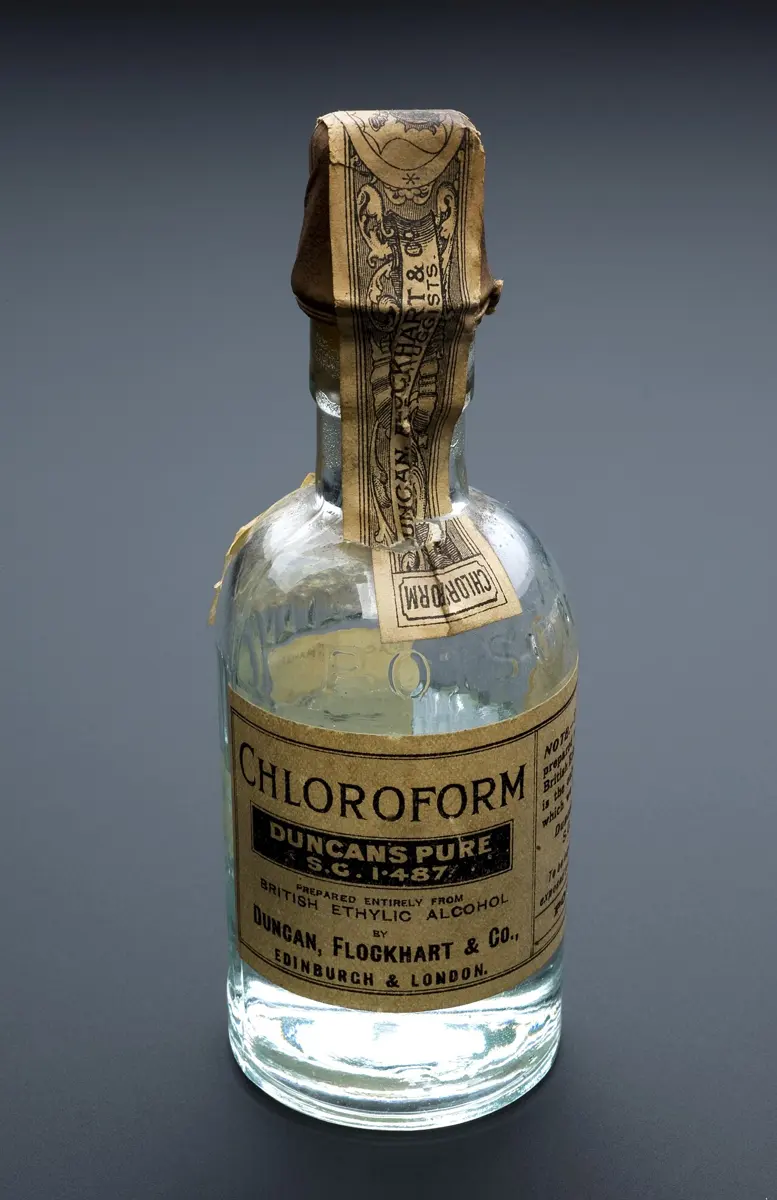
Chloroform, CHCl₃, is methane with three of its hydrogens replaced by chlorine atoms, each joined to the carbon by a covalent bond. Its IUPAC name is trichloromethane.
8.8.1 Preparation
In the laboratory chloroform is made by warming ethanol (or acetone) with a paste of bleaching powder in water, and distilling. Bleaching powder does three jobs, through the chlorine and the calcium hydroxide it gives with water:
i. From ethanol, in three steps:
Step 1, oxidation. Chlorine oxidizes ethanol to ethanal (acetaldehyde):
Step 2, chlorination. Chlorine replaces the three hydrogens of ethanal’s CH₃ group, giving trichloroethanal (chloral):
Step 3, hydrolysis. Calcium hydroxide splits chloral into chloroform and calcium methanoate (calcium formate):
ii. From acetone (propanone), in two steps:
Step 1, chlorination. Chlorine replaces the hydrogens of one CH₃ group, giving 1,1,1-trichloropropanone (trichloroacetone):
Step 2, hydrolysis. Calcium hydroxide splits it into chloroform and calcium ethanoate (calcium acetate):
Acetone gives a better yield and is cheaper, so it is the usual starting material. In both, the step that makes chloroform is the same: a carbon carrying three chlorines (CCl₃–C=O) is cut off by hydroxide, and the CCl₃ part picks up a hydrogen to become CHCl₃. This is the haloform reaction.
Purification. The chloroform collected in the receiver is impure: it carries water, a little chlorine and HCl, and some ethanol or acetone. It is separated from the water layer in a separating funnel, washed with dilute sodium hydroxide solution (to remove chlorine and acid), then with water, dried over anhydrous calcium chloride, and redistilled, the fraction boiling at 60–62 °C being collected.
8.9 Properties of chloroform
8.9.1 Physical properties
- i.Chloroform is a colorless, volatile liquid with a sweetish smell.
- ii.It boils at 61 °C and freezes at −63.5 °C.
- iii.It is heavier than water (density 1.48 g/mL) and sinks under it.
- iv.It dissolves only slightly in water but mixes well with organic solvents, and it is itself a good solvent for fats, oils, waxes and rubber.
- v.Its vapor makes people unconscious, so it was once used as an anesthetic in surgery. It is no longer used, because it damages the liver and can stop the heart.
Chemical properties
8.9.2 Oxidation in air and light
Exposed to air and sunlight, chloroform is slowly oxidized to phosgene (carbonyl chloride), COCl₂, a very poisonous gas:
To stop this, chloroform is stored in dark brown bottles (which keep out the light that drives the reaction), filled to the brim (so there is no air above it), with about 1% ethanol added, which turns any phosgene that does form into harmless diethyl carbonate:
8.9.3 Reduction
Reduced in acidic medium by zinc and hydrochloric acid, chloroform loses one chlorine, giving dichloromethane (methylene chloride); with zinc and water, all three chlorines are replaced, giving methane:
8.9.4 Action of silver powder
Heated with silver powder, chloroform loses all its chlorine to the silver, and two CH units join with a triple bond, giving ethyne (acetylene):
8.9.5 Reaction with concentrated nitric acid
Heated with concentrated nitric acid, chloroform’s hydrogen is replaced by a nitro group, giving chloropicrin, trichloro(nitro)methane, CCl₃NO₂:
Chloropicrin is a poisonous liquid whose vapor makes the eyes stream (a tear gas); it was used as a poison gas in the First World War, and later to fumigate soil.
8.9.6 Reaction with propanone (acetone)
With propanone in the presence of an alkali (KOH), chloroform adds across the C=O bond, giving chloretone, 1,1,1-trichloro-2-methylpropan-2-ol, a drug once used to make people sleep (a hypnotic) and still used as a preservative in some injections and eye drops:
8.9.7 Reaction with aqueous alkali
Boiled with aqueous KOH, chloroform is hydrolyzed: the three chlorines are replaced by OH groups, the unstable HC(OH)₃ loses water to give methanoic (formic) acid, which the alkali turns into potassium methanoate (potassium formate). Acid then gives formic acid back:
Overall:
8.9.8 Reaction with primary amines: the carbylamine reaction
Warmed with a primary amine and alcoholic KOH (or NaOH), chloroform gives an isocyanide (carbylamine), recognized at once by its dreadful smell:
ethanamine gives ethyl isocyanide; aniline gives phenyl isocyanide:
Only primary amines (R–NH₂) do this: secondary and tertiary amines don’t, so the carbylamine test tells a primary amine from the others. It is also a test for chloroform.
8.9.9 Reaction with phenol: the Reimer–Tiemann reaction
When phenol is warmed with chloroform and sodium hydroxide at about 70 °C, a –CHO group is put on the ring next to the –OH, giving the sodium salt of salicylaldehyde (2-hydroxybenzaldehyde), from which acid frees the aldehyde. This is the Reimer–Tiemann reaction (Karl Reimer and Ferdinand Tiemann, 1876; Unit 11):
Iodoform, CHI₃, and the iodoform test
Iodoform (triiodomethane), CHI₃, is the iodine relative of chloroform: a yellow crystalline solid (melting point 119 °C) with a strong, “hospital” smell. It was once used as an antiseptic dusting powder on wounds, and is still used in some dental pastes.
It is made by the haloform reaction, with iodine and alkali in place of bleaching powder. Any compound with a CH₃–C=O group (methyl ketones such as propanone, and ethanal) gives it, and so does any alcohol with a CH₃–CH(OH)– group (such as ethanol and propan-2-ol), which the iodine first oxidizes to the carbonyl compound:
Warm the compound gently with iodine solution and sodium hydroxide: a yellow precipitate of iodoform shows the CH₃CO– group (or CH₃CH(OH)–). This is the iodoform test. Ethanol gives it and methanol doesn’t; propanone gives it and propanal doesn’t.
Exercise
A. Multiple choice questions
- The general molecular formula of a monohaloalkane is
Pick an answer to see why.
- The bond between carbon and halogen in haloalkanes is
Pick an answer to see why.
- The IUPAC name of CH₃C(CH₃)₂CH₂I is
The textbook prints options that all name chloro compounds, so none of them is this iodide and the question doesn’t work as printed. The options below are for the compound asked about.
Pick an answer to see why.
- The total number of structural isomers of C₄H₉Cl is
Pick an answer to see why.
- Among the isomers of C₄H₉Cl, which one has a chiral carbon atom?
Pick an answer to see why.
- Haloalkanes have higher boiling points than alkanes of similar molecular mass because of
Pick an answer to see why.
- Which reagent is commonly used to convert alkanes into haloalkanes?
Pick an answer to see why.
- Which of these halides is hydrolyzed most rapidly?
Pick an answer to see why.
- Which mechanism does a primary haloalkane follow in nucleophilic substitution?
Pick an answer to see why.
- The expected product of the reaction between ethyl bromide and aqueous KOH is
Pick an answer to see why.
- Which statement correctly distinguishes SN1 and SN2 reactions?
Pick an answer to see why.
- A compound C₃H₇Cl reacts with alcoholic KOH and the major product is propene. What type of reaction is this?
Pick an answer to see why.
- What is the major product when 2-bromobutane undergoes elimination?
Pick an answer to see why.
- Which statement about Saytzeff’s rule is true?
Pick an answer to see why.
- The correct order of increasing reactivity of CH₃Cl, CH₃Br and CH₃I in SN2 reactions is
Pick an answer to see why.
- tert-Butyl bromide is hydrolyzed by water to give tert-butyl alcohol. Which is true?
The textbook prints “tertiary butyl alcohol” as the compound hydrolyzed; an alcohol isn’t hydrolyzed to itself, so the question doesn’t work as printed. It works for the bromide, as here.
Pick an answer to see why.
- Which reagent reduces haloalkanes to alkanes?
Pick an answer to see why.
- A mixture of ethyl bromide and sodium in dry ether gives butane. The reaction is called
Pick an answer to see why.
- Which statement about the Wurtz reaction is true?
Pick an answer to see why.
- Chloroform heated with silver powder gives the hydrocarbon
Pick an answer to see why.
B. Short answer questions
Haloalkanes are halogen derivatives of hydrocarbons. The bond between carbon and halogen is covalent, but because of the electronegativity difference it is polar.
- a.Why do haloalkanes have higher boiling points than their parent hydrocarbons?
- b.Arrange these in order of decreasing boiling point: CH₃CH₂CH₂CH₂Cl, CH₃CH(CH₃)CH₂Cl, CH₃C(CH₃)₂Cl.
Answer
Compounds with the same molecular formula but different structural arrangements are called isomers.
- a.Write the possible isomers of the compound with molecular formula C₄H₉Cl.
- b.Write the IUPAC names of all the isomers and identify their types.
- c.Identify the chiral carbons in the isomers.
Answer
Haloalkanes, like alcohols, are classified by the kind of carbon the functional group is attached to. Write the structural formula of each of these haloalkanes and classify it as primary, secondary or tertiary.
- a.1-chloropropane
- b.2-chloropropane
- c.1-chlorobutane
- d.2-chloro-2-methylpropane
Answer
Complete these reactions, naming the reagent in each:
- a.
- b.
- c.
- d.
The textbook prints d. as CH₂=CH₂ + HCl → ? + KCl + ?, which doesn’t work: ethene and HCl simply add to give chloroethane, and KCl comes only from the next step, alcoholic KOH turning chloroethane back into ethene. Part d. here is that step.
Answer
The boiling point of haloalkanes is affected by several factors. Explain the effect of each:
- a.molecular mass
- b.strength of the C–X bond
- c.intermolecular forces
- d.branching
Answer
In nucleophilic substitution, a stronger nucleophile replaces a weaker one in a compound. The reaction can go by two mechanisms, unimolecular (SN1) or bimolecular (SN2). Identify the mechanism in each case and explain:
- a.
- b.
Answer
Arrange these compounds in decreasing order of reactivity towards SN2 reaction: CH₃Cl, CH₃CH₂Cl, (CH₃)₂CHCl.
Answer
Chloroethane is a primary haloalkane and can show nucleophilic substitution. Write its reactions with:
- a.aqueous KOH
- b.alcoholic KCN
- c.NH₃
- d.AgCN
Answer
Complete these reactions:
- a.
- b.
- c.
- d.
- e.
Answer
In an elimination reaction a group of atoms is removed from a compound by a reagent, and the major product is decided by Saytzeff’s rule.
- a.State Saytzeff’s rule.
- b.Explain α,β-elimination with an example.
- c.Identify the major product of the reaction between CH₃C(CH₃)₂CCl(CH₃)CH₃ and alcoholic KOH.
Answer
When propene reacts with HCl, it gives 2-chloropropane rather than 1-chloropropane as the major product.
- a.Name and state the rule that predicts this, with an example.
- b.When HCl is replaced by HBr and an organic peroxide is present, the opposite product forms. Explain.
Answer
When a haloalkane is treated with sodium metal, dry ether is used as the solvent because sodium reacts with air and moisture. The reaction joins the carbons of two haloalkane molecules by removing their halogens.
- a.Name this reaction and state it, with an example.
- b.What is the major product when 2-chloropropane is treated with Na in dry ether?
Answer
Chloroform, a trihalogen compound, was once used as an anesthetic, but its use was given up because of its toxic effects.
- i.Explain the principle of the laboratory preparation of chloroform from a. ethanol and b. acetone. How is it purified?
- ii.Chloroform is stored in a dark bottle filled to the brim, with a little ethanol added. Explain why.
- iii.How could you confirm the presence of phosgene in a sample of chloroform?
Answer
Chloroform takes part in several kinds of reactions. Show its reaction with each of these reagents:
- i.concentrated HNO₃
- ii.aqueous KOH
- iii.silver powder
- iv.acetone
- v.phenol and KOH
- vi.aniline and KOH
Answer
A little bromoethane in a test tube is warmed with aqueous NaOH. On the basis of what happens:
- i.What type of reaction occurs?
- ii.Write a balanced equation for the reaction.
- iii.What functional group is present in the product?
Answer
C. Comprehensive questions
An alcohol X reacts with HCl in the presence of anhydrous ZnCl₂ to form Y. Y undergoes dehydrohalogenation with alcoholic KOH to form Z. On ozonolysis, Z gives only acetaldehyde. Identify X, Y and Z.
Hint
Answer
2-Bromopropane is placed in two test tubes. Aqueous KOH is added to one and alcoholic KOH to the other, and both are heated. Baeyer’s reagent (cold, dilute alkaline KMnO₄) is then used to test for unsaturation.
- i.What difference in the products do you observe?
- ii.How does Baeyer’s test help identify the type of reaction?
- iii.Write the reactions in both cases.
Answer
Ethanol is warmed gently with bleaching powder (CaOCl₂) paste, and the product is collected and identified.
- i.What is the role of bleaching powder in the reaction?
- ii.Write the balanced equation for the formation of chloroform.
- iii.How can you confirm that the product contains chloroform?
Answer
Convert:
- a.bromoethane to methane
- b.chloroethane to 1-chloropropane
- c.iodoethane to ethoxyethane
- d.1-bromopropane to butanoic acid
- e.chloromethane to acetyl chloride
Hint
Answer
Printable PDFs
- Study notes 3 pages
- Worksheet 4 pages Answer key
- Harder practice questions 3 pages Answer key
Quiz yourself: Materials and Chemicals We Use, Grades 5–12 →
Practice every question in the book, and keep track of the ones you miss →
A companion to your textbook, not a replacement for it: study from the book your school uses, and where the two differ, follow your teacher. Found a mistake? Please tell us.