
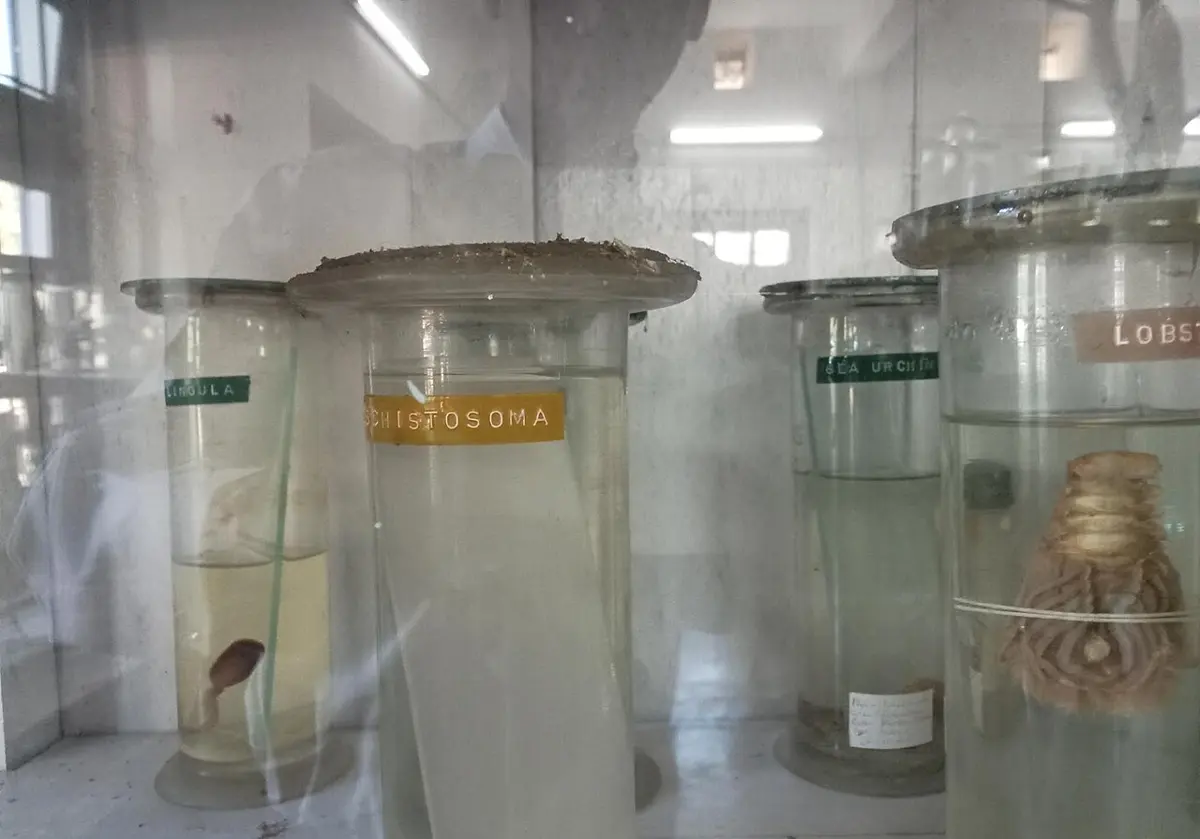
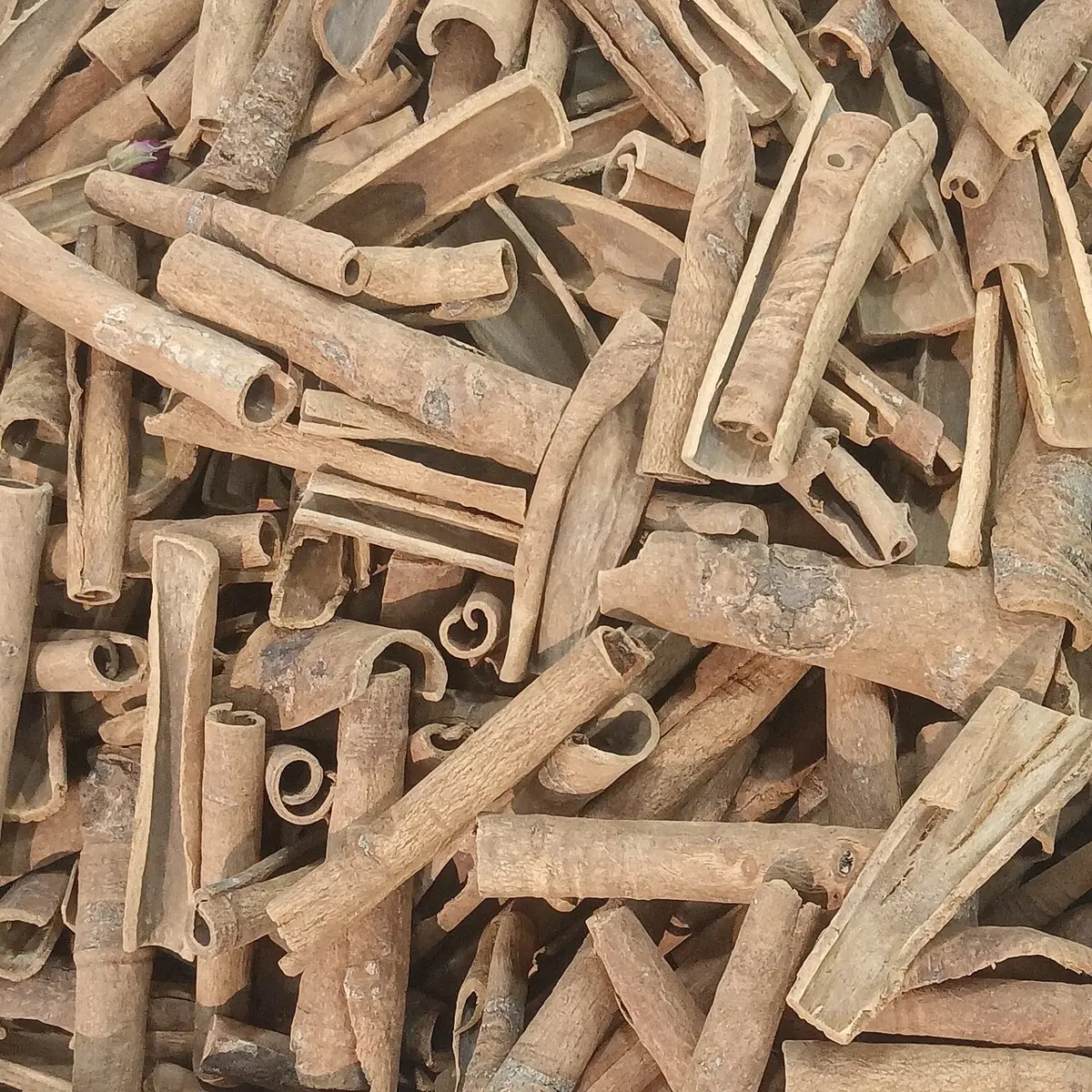
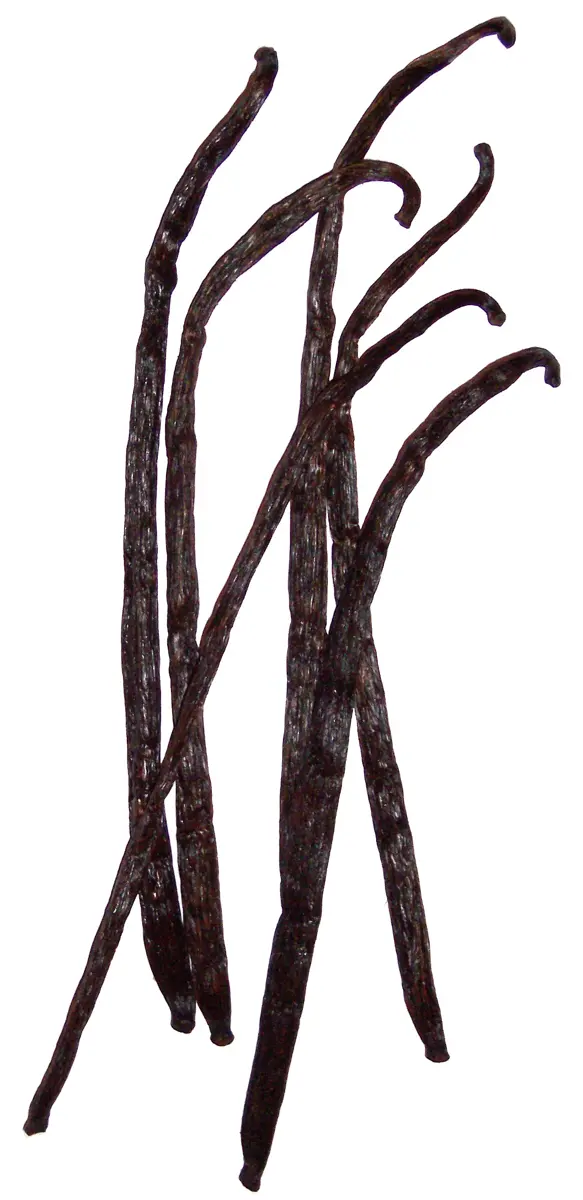
Open a jar of specimens in a school biology lab and a sharp smell catches your nose and makes your eyes water. That smell is methanal, the gas dissolved in the formalin that keeps the frog or the snake from rotting. Scrape a vanilla pod or snap a stick of cinnamon and you smell its gentle cousins, vanillin and cinnamaldehyde. All three carry the same small group of atoms, a carbon joined to an oxygen by a double bond, and that one group explains why some of them preserve, some flavor, and why two of them, joined with phenol, gave the world its first plastic made entirely by people.
This unit is about the aldehydes and ketones, the compounds of that group: how they are named and made, why the C=O group reacts the way it does, the tests that tell them apart in a test tube, and what formalin is and why it must never go near food.
13.1 Introduction
A carbon joined to an oxygen by a double bond, >C=O, is the carbonyl group, and compounds that contain it are carbonyl compounds. Which group sits on the carbonyl carbon decides the family:
- In an aldehyde, the carbonyl carbon carries at least one hydrogen: the group –CHO (the aldehyde or formyl group), always at the end of a chain. General formula R–CHO, where R is an alkyl or aryl group, or H itself in methanal, HCHO.
- In a ketone, the carbonyl carbon carries two carbon groups: R–CO–R′, the C=O always inside the chain. R and R′ may be the same or different.
Aldehydes and ketones of open chains, saturated, have the general formula CₙH₂ₙO: one fewer pair of H atoms than the alcohols CₙH₂ₙ₊₂O they are made from.
Which of these is a ketone?
Pick an answer to see why.
13.1.1 Nomenclature, isomerism and classification of aliphatic aldehydes and ketones
Common names
The common names of aldehydes come from the common names of the carboxylic acids they are oxidized to: formic acid → formaldehyde, acetic acid → acetaldehyde, propionic acid → propionaldehyde, butyric acid → butyraldehyde. The common name of a ketone names the two groups on the carbonyl carbon, in alphabetical order, then the word ketone: CH₃COCH₂CH₃ is ethyl methyl ketone; CH₃COCH₃, dimethyl ketone, is better known as acetone.
IUPAC names of aldehydes
An aldehyde is an alkanal: take the alkane with the same number of carbons and change its final -e to -al. The rules:
- Choose the longest chain that contains the –CHO carbon, and count that carbon in it.
- Number the chain from the –CHO carbon, which is always carbon 1, so its number is never written: propanal, not propan-1-al.
- Name and number any substituents as prefixes, in alphabetical order.
So a name is built as substituent + word root + an + al. For Cl–CH₂–CH₂–CHO (Figure 13.4): the chain has three carbons including the CHO carbon (word root prop), all single bonds (primary suffix -ane, its -e dropped), the aldehyde group (secondary suffix -al), and a chlorine on carbon 3:
| Substituent | Prefix | Word root | Primary suffix | Secondary suffix |
|---|---|---|---|---|
| 3-chloro | – | prop | -an(e) | -al |
The name is 3-chloropropanal. (Numbered from the other end, the chlorine would seem to be on carbon 1; but the CHO carbon must be carbon 1.)
| Formula | IUPAC name | Common name |
|---|---|---|
| HCHO | methanal | formaldehyde |
| CH₃CHO | ethanal | acetaldehyde |
| CH₃CH₂CHO | propanal | propionaldehyde |
| CH₃CH₂CH₂CHO | butanal | butyraldehyde |
| CH₃CH₂CH(CH₃)CHO | 2-methylbutanal | α-methylbutyraldehyde |
| CH₃CH₂CHClCHO | 2-chlorobutanal | α-chlorobutyraldehyde |
In common names, the carbons after the CHO group are lettered α, β, γ… instead of numbered: the carbon next to the carbonyl carbon is the α-carbon, and its hydrogens the α-hydrogens, which matter later in the unit.
IUPAC names of ketones
A ketone is an alkanone: the alkane’s -e becomes -one, with the number of the carbonyl carbon before it. Choose the longest chain that contains the C=O carbon and number it from the end nearer the C=O, so that carbon gets the lowest number.
| Substituent | Prefix | Word root | Primary suffix | Secondary suffix |
|---|---|---|---|---|
| – | – | prop | -an(e) | -2-one |
The name is propan-2-one. Since a three-carbon ketone can only have its C=O on carbon 2, IUPAC also accepts plain propanone, and so does this book.
The primary suffix (-an) says all the chain’s carbon–carbon bonds are single; the secondary suffix (-one) says the compound is a ketone, and its number where the C=O is.
| Formula | IUPAC name | Common name |
|---|---|---|
| CH₃COCH₃ | propanone (propan-2-one) | acetone, dimethyl ketone |
| CH₃CH₂COCH₃ | butan-2-one | ethyl methyl ketone |
| CH₃CH₂COCH₂CH₃ | pentan-3-one | diethyl ketone |
Isomerism
Carbonyl compounds show four kinds of structural isomerism. Study the pairs in Table 1 and say what each pair has in common and how its members differ.
| No. | Pair | Same | Different |
|---|---|---|---|
| 1 | a.CH₃CH₂CH₂COCH₃, b. (CH₃)₂CHCOCH₃ | C₅H₁₀O, both ketones | a straight chain, a branched chain |
| 1 | a.CH₃CH₂CH₂CH₂CHO, b. CH₃CH₂CH(CH₃)CHO | C₅H₁₀O, both aldehydes | a straight chain, a branched chain |
| 2 | a.CH₃CH₂CH₂COCH₃, b. CH₃CH₂COCH₂CH₃ | C₅H₁₀O, same chain, both ketones | C=O on carbon 2 or carbon 3 |
| 3 | a.CH₃CH₂CH₂COCH₃, b. CH₃CH₂CH₂CH₂CHO | C₅H₁₀O | a ketone, an aldehyde |
| 4 | a.CH₃COCH₃ ⇌ CH₂=C(OH)CH₃; b. CH₃CHO ⇌ CH₂=CHOH | the same compound | two forms that turn into each other: an H moves from the α-carbon to the oxygen |
So the four kinds, the pairs of Table 1 that show them, and their definitions:
| Isomerism | What stays the same, what changes | Pair in Table 1 |
|---|---|---|
| Chain isomerism | the same molecular formula, a different carbon chain | 1 |
| Position isomerism | the same formula and chain, the functional group at a different place | 2 |
| Functional isomerism | the same formula, a different functional group | 3 |
| Tautomerism | one compound that exists as two forms that turn into each other, tautomers, by an H atom moving | 4 |
Tautomerism is special: the two forms are not two compounds that can be put in separate bottles, but one compound whose molecules keep changing between the two. In acetone the keto form (with C=O) and the enol form (with C=C and –OH: ene + ol) are in equilibrium, almost all of it keto. This keto–enol tautomerism needs an α-hydrogen: the H that moves to the oxygen comes from the carbon next to the C=O. More on it in Grade 11, Unit 13.
Classification
- By the groups on the carbonyl carbon: aliphatic aldehydes and ketones have only alkyl groups (or H) there, such as ethanal and propanone; aromatic ones have a benzene ring joined directly to it, such as benzaldehyde, C₆H₅CHO, and acetophenone, C₆H₅COCH₃ (section 13.2).
- Ketones are simple (symmetrical), with the same group on both sides, such as propanone and pentan-3-one, or mixed (unsymmetrical), with two different groups, such as butan-2-one and acetophenone.
Which pair are position isomers?
Pick an answer to see why.
13.1.2 Preparation of aldehydes and ketones
a. Dehydrogenation of alcohols
Pass the vapor of an alcohol over hot copper at about 573 K (300 °C). A molecule of hydrogen comes off: one H from the –OH group and one from the carbon that carries it. Taking hydrogen away is dehydrogenation.
The simplest primary alcohol, methanol, gives methanal (formaldehyde) this way:
Industry makes some of its acetone this way, from propan-2-ol. A tertiary alcohol has no H on the carbon holding its –OH, so it can’t lose hydrogen this way; over hot copper it loses water instead and gives an alkene.
b. Oxidation of alcohols
An oxidizing agent such as acidified potassium dichromate, K₂Cr₂O₇/H⁺, takes the same two H atoms away, as water:
There is a catch. An aldehyde is itself easily oxidized, further, to a carboxylic acid: left in the hot dichromate, ethanal becomes ethanoic acid (the way to make acids, in Unit 14). Two ways round it:
- Distill the aldehyde off as it forms. Ethanal boils at 20 °C, far below ethanol (78 °C), so gentle warming drives it out of the flask before it can be oxidized again.
- Use a mild oxidizing agent that stops at the aldehyde: pyridinium chlorochromate, PCC, C₅H₅NH⁺ClCrO₃⁻, in dichloromethane, with no water present. (A related reagent, Collins reagent, is chromium(VI) oxide with two pyridines, CrO₃·2C₅H₅N, also in dichloromethane; PCC was made in 1975 as an easier-to-handle replacement.)
A secondary alcohol gives a ketone, and the ketone resists further oxidation, so no care is needed:
You met this in Unit 10, where it tells primary, secondary and tertiary alcohols apart.
c. Ozonolysis of alkenes
Bubble ozone through an alkene dissolved in a cold solvent (dichloromethane at about −75 °C, 196–200 K). Ozone adds across the C=C; both bonds of the double bond break, and the two carbons and three oxygen atoms close into a five-membered ring, the ozonide. Zinc dust and water then split the ozonide into two carbonyl compounds; the zinc takes up the spare oxygen, so no hydrogen peroxide forms to oxidize an aldehyde further. Where the C=C was, each carbon now carries a =O.
The rule: cut the double bond and put =O on each end. A carbon of the C=C with an H on it becomes an aldehyde carbon; one with two carbon groups becomes a ketone carbon. The solvent is only a solvent; dichloromethane is commonly used, but others work too.
| Alkene | Intermediate | Products | |
|---|---|---|---|
| a. | ethene | ethene ozonide | 2 methanal |
| b. | propene | propene ozonide | ethanal + methanal |
| c. | 2-methylpropene | 2-methylpropene ozonide | propanone + methanal |
| d. | but-2-ene | but-2-ene ozonide | 2 ethanal |
| e. | 2-methylbut-2-ene | 2-methylbut-2-ene ozonide | propanone + ethanal |
| f. | 2,3-dimethylbut-2-ene | 2,3-dimethylbut-2-ene ozonide | 2 propanone |
Ozonolysis works backwards too: from the carbonyl compounds found, chemists work out where the double bond was. Several exercise questions at the end use it this way.
d. From acid chlorides: Rosenmund reduction
Hydrogen passed through a boiling solution of an acid chloride (an acyl chloride, R–COCl) in xylene, over palladium on barium sulphate, replaces the chlorine with hydrogen:
The catalyst is deliberately poisoned, with sulphur or quinoline, and spread thin on BaSO₄: plain palladium would go on to reduce the aldehyde to an alcohol. This is the Rosenmund reduction (Karl Rosenmund, 1918). It gives aldehydes only: a ketone would need a second carbon group on the carbonyl carbon, and here that place goes to H.
e. From gem dihalides
In a gem dihalide (geminal, from the Latin for twins) both halogens are on one carbon; in a vic dihalide (vicinal, neighbors) they are on two neighboring carbons. Both are C₃H₆Cl₂ here; they are position isomers.
Warm a gem dihalide with an aqueous alkali: each halogen is replaced by –OH, as in the haloalkanes. But a carbon holding two –OH groups is unstable: it loses a molecule of water at once, and leaves a C=O.
f. Catalytic hydration of alkynes
Bubble an alkyne through dilute sulphuric acid containing mercury(II) sulphate as catalyst, at about 333 K. Water adds across the triple bond and gives an enol, which at once rearranges into its keto form (the tautomerism of 13.1.1): an aldehyde from ethyne, ketones from every other alkyne.
Which method can give a ketone?
Pick an answer to see why.
13.1.3 Physical properties
- Physical state: methanal is a gas with a sharp, choking smell at room temperature (bp −19 °C); ethanal is a very volatile liquid (bp 20 °C), and the other lower aldehydes and ketones are liquids. The higher ones are solids.
- Density: most aldehydes and ketones are less dense than water (ethanal 0.78, propanone 0.79 g/cm³). Aromatic ones are denser: benzaldehyde is 1.04 g/cm³.
- Smell: the lower aldehydes smell sharp and unpleasant; the higher aldehydes and the ketones mostly smell pleasant, and many are used in perfumes and flavors (vanilla, cinnamon, almond, lemongrass).
- Solubility: the lowest members (methanal, ethanal, propanone) mix with water in all proportions, and the others up to about four carbons dissolve fairly well, because water’s H atoms hydrogen-bond to the carbonyl oxygen (Figure 13.35). As the alkyl groups grow, the water-repelling part of the molecule wins: pentan-3-one dissolves only about 5 g in 100 g of water, and the higher members hardly at all. All dissolve in organic solvents, and acetone is itself one of the best solvents.
- Boiling points: aldehydes and ketones boil higher than alkanes of about the same molar mass, but lower than alcohols and carboxylic acids (Figure 13.36). The C=O bond is strongly polar, so the molecules attract each other end to end (dipole–dipole attraction), which non-polar alkanes can’t. But a carbonyl compound has no H on its oxygen, so its molecules can’t hydrogen-bond to each other, as alcohols and acids do.
Why does propanone (bp 56 °C) boil lower than propan-1-ol (bp 97 °C), though their molar masses are almost equal?
Pick an answer to see why.
13.1.4 Structure and nature of the carbonyl group
Both atoms of the carbonyl group are sp² hybridized. The carbon’s three sp² orbitals lie in one flat plane, 120° apart: one overlaps an sp² orbital of the oxygen, making the C–O σ bond, and the other two make σ bonds to the two groups on the carbon. The oxygen’s two other sp² orbitals hold its two lone pairs, in the same plane. The unhybridized p orbitals of carbon and oxygen stand up from the plane and overlap sideways, making the π bond above and below it (Figure 13.37). So the carbonyl carbon and the three atoms joined to it lie in one plane, with bond angles of about 120°: the group is trigonal planar.
Oxygen is far more electronegative than carbon, so it pulls the bonding electrons towards itself, the π electrons most of all, since they are held further from the nuclei and move more easily. The C=O bond is polar: the carbon carries a partial positive charge, δ+, and the oxygen a partial negative charge, δ−. This is shown by two resonance structures, the real molecule lying between them:
This one fact explains most of the chemistry of the unit:
- The δ+ carbon is attacked by nucleophiles (electron-pair donors, Grade 11, Unit 13). The typical reaction of the carbonyl group is therefore nucleophilic addition, unlike the C=C of alkenes, which electron-poor electrophiles attack.
- The δ− oxygen, with its lone pairs, can take a proton, H⁺; acid helps many of these reactions by making the carbon still more positive.
- The C=O pulls electrons from the next carbon too, so the α-hydrogens are slightly acidic; this gives the aldol reaction and the iodoform test.
Aldehydes are more reactive than ketones. In a ketone, two alkyl groups push electrons towards the carbonyl carbon (+I effect), making it less positive; and two bulky groups crowd the carbon, leaving less room for a nucleophile to get in. An aldehyde has one group and a small H; methanal, with two H’s, is the most reactive of all.
Arrange in decreasing reactivity towards nucleophilic addition: ethanal, methanal, propanone.
Pick an answer to see why.
13.1.5 Distinguishing aldehydes and ketones: the tests
These tests are shown in the laboratory with small amounts, in test tubes, by the teacher or under the teacher’s eye. Four are used: one tells whether there is a C=O group, two tell an aldehyde from a ketone, and one finds a CH₃CO– group.
a. With 2,4-DNP (2,4-dinitrophenylhydrazine)
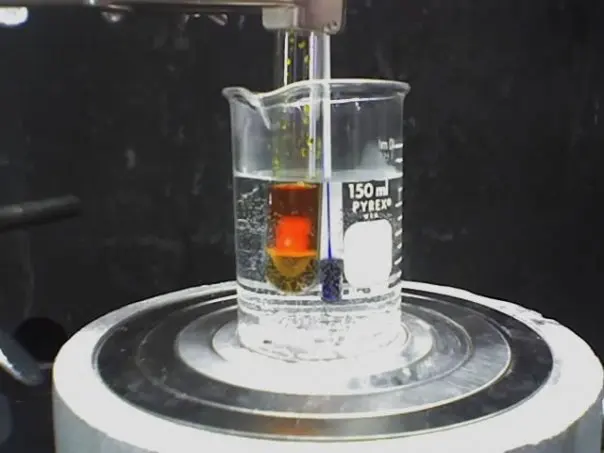
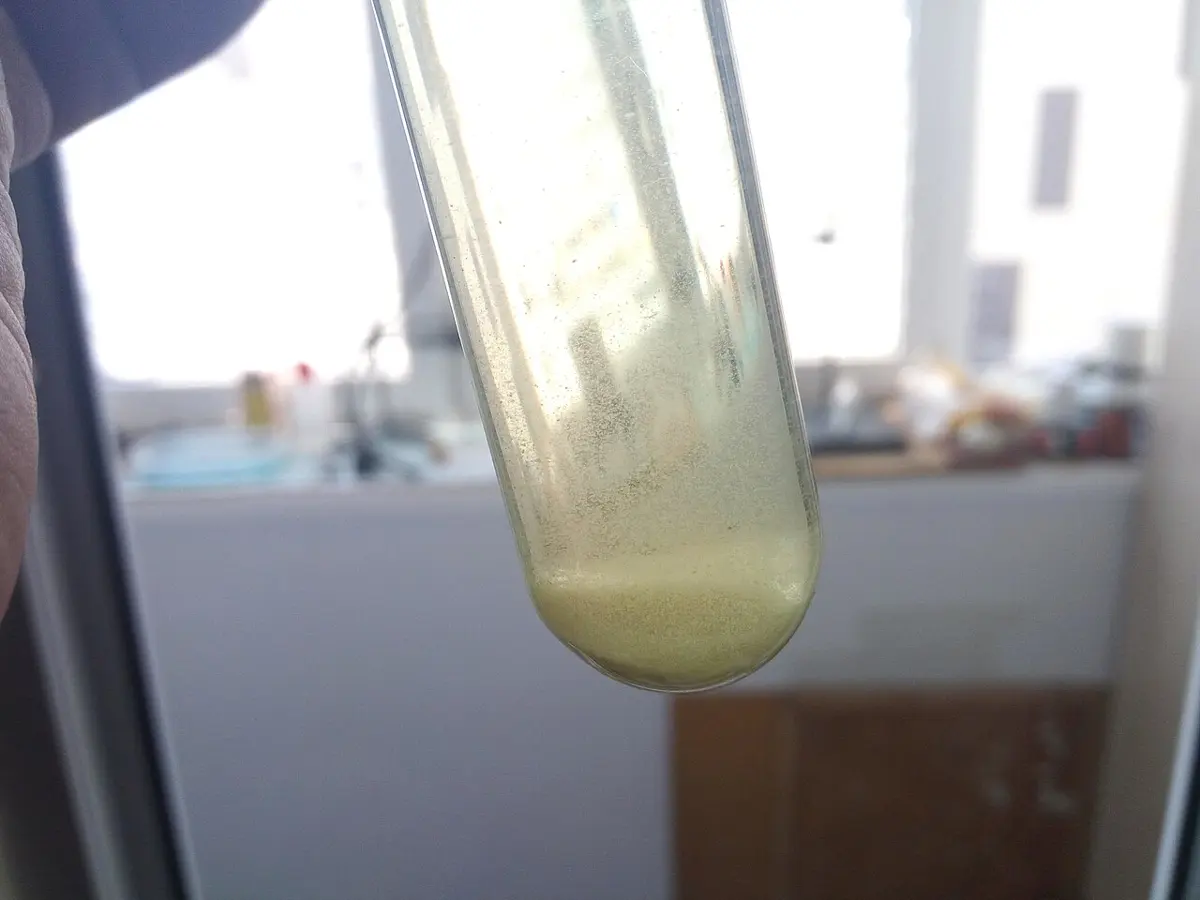
A few drops of the compound are added to an orange-red solution of 2,4-dinitrophenylhydrazine in acid (Brady’s reagent). In test tube A, holding an aldehyde or a ketone, a bright orange-yellow precipitate forms at once; in test tube B, holding a compound without C=O (an alcohol, say), nothing comes out.
| Test tube | What is seen | Remark |
|---|---|---|
| A | orange-yellow precipitate | a carbonyl compound is present |
| B | no precipitate | no carbonyl group |
The –NH₂ of the reagent joins the carbonyl carbon and the carbonyl oxygen leaves with two H atoms as water: the product, a 2,4-dinitrophenylhydrazone, has a C=N bond where the C=O was.
Each carbonyl compound’s 2,4-dinitrophenylhydrazone melts at its own temperature, so before spectroscopy, chemists identified an unknown aldehyde or ketone by making this solid, purifying it and taking its melting point.
b. With Tollens’ reagent
Tollens’ reagent is made fresh, just before the test: a little silver nitrate solution, a drop of sodium hydroxide (a brown precipitate of silver oxide forms), then dilute ammonia drop by drop until it just dissolves again, giving the diamminesilver(I) ion:
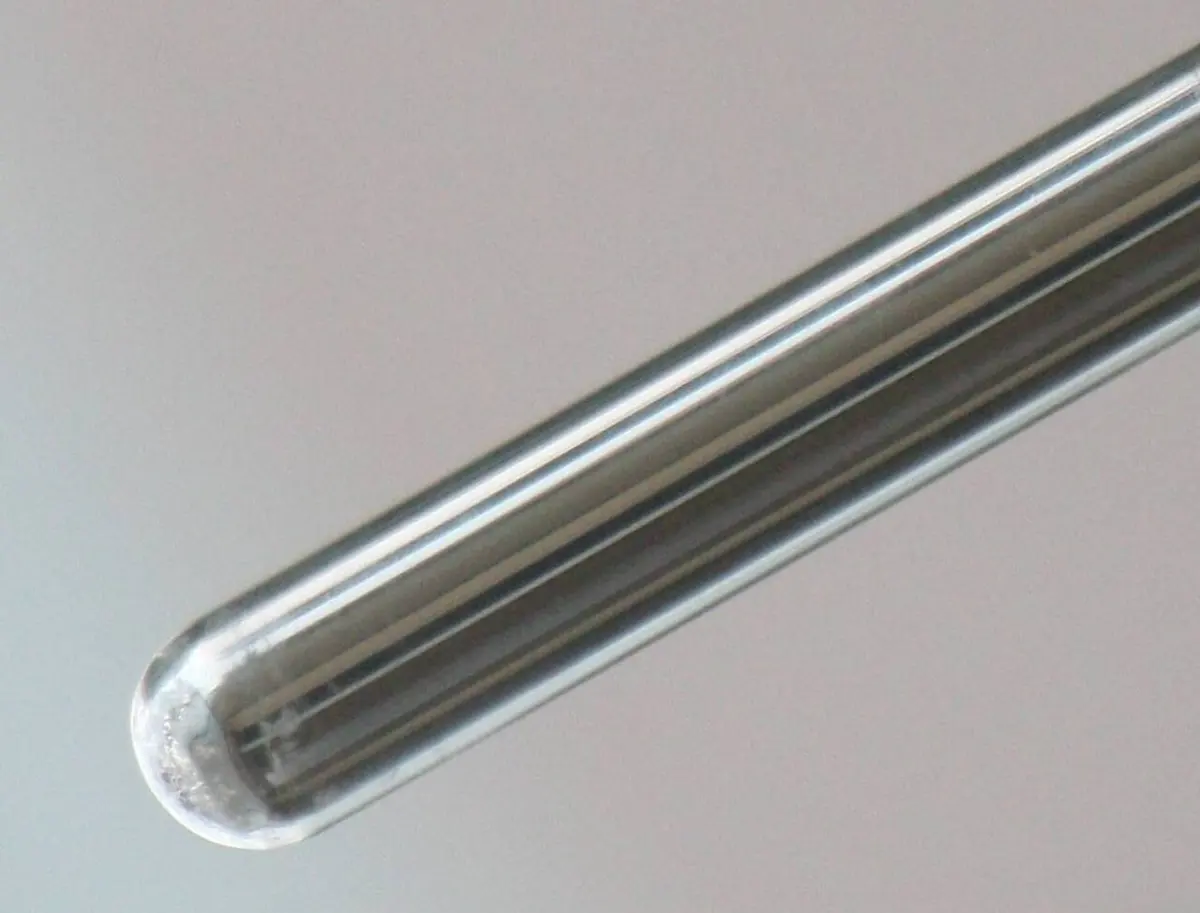
(The silver hydroxide some books write, AgOH, isn’t a stable compound: what forms is silver oxide.) Warm the compound with the reagent in a clean tube in a beaker of hot water. With an aldehyde (test tube A), metallic silver comes out on the inside of the tube as a shining silver mirror; with a ketone (test tube B), nothing changes. This is the silver mirror test.
| Test tube | What is seen | Remark |
|---|---|---|
| A | silver mirror | an aldehyde, oxidized to its acid’s anion |
| B | no change | a ketone |
The aldehyde is oxidized (to the acid, as its salt in the alkaline mixture) and silver(I) is reduced to silver: Tollens’ reagent is the oxidizing agent, the aldehyde the reducing agent. Aliphatic and aromatic aldehydes both give the test. With benzaldehyde, written with the reagent as its hydroxide:
c. With Fehling’s solution
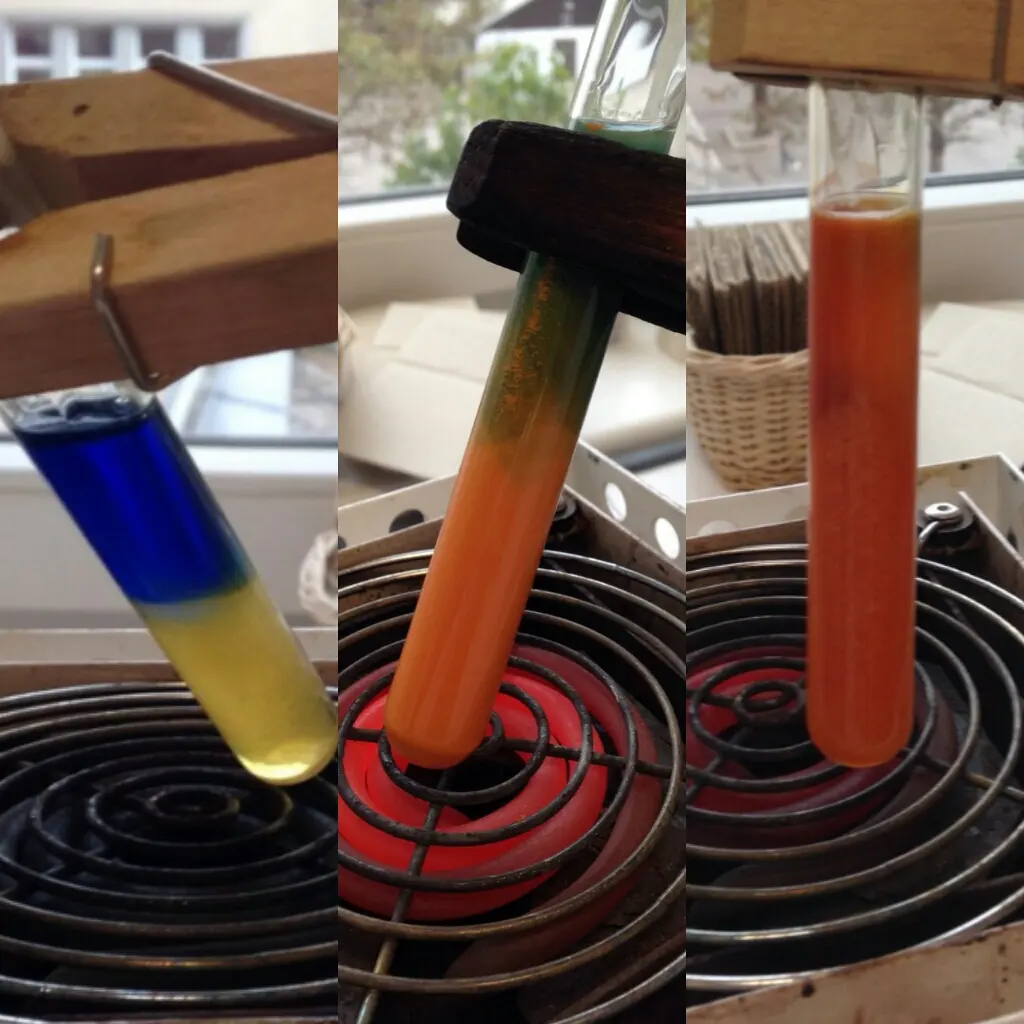
Fehling’s solution is two solutions mixed in equal volumes just before use: Fehling’s A, blue copper(II) sulphate solution, and Fehling’s B, sodium potassium tartrate (Rochelle salt) in sodium hydroxide. The tartrate holds the copper(II) ions in solution as a deep blue complex, which stops them coming out as copper(II) hydroxide in the alkali. Boil the compound with it for a few minutes. With an aliphatic aldehyde (first tube) the blue fades and a brick-red precipitate of copper(I) oxide, Cu₂O, forms; with a ketone (second tube) it stays blue.
| Test tube | What is seen | Remark |
|---|---|---|
| first | brick-red precipitate | an aliphatic aldehyde |
| second | stays deep blue | a ketone (or an aromatic aldehyde) |
Count it: the aldehyde loses two electrons (C goes from +1 to +3), and two Cu²⁺ ions each gain one (copper(II) to copper(I)). So for ethanal:
Methanal reduces Fehling’s solution in the same way, to methanoate; glucose, whose open chain ends in a CHO group, gives the brick-red precipitate too, and is oxidized to gluconate:
Fehling’s solution is a weaker oxidizing agent than Tollens’ reagent: aromatic aldehydes, such as benzaldehyde, don’t reduce it. So Fehling’s tells an aliphatic aldehyde from an aromatic one, which Tollens’ can’t. (Benedict’s solution, with citrate in place of tartrate and sodium carbonate in place of sodium hydroxide, works the same way, and was long used to test urine for sugar.)
d. The iodoform test
Warm the compound with iodine in sodium hydroxide solution. A compound with a CH₃CO– group (a methyl group on the carbonyl carbon) gives a pale yellow precipitate of iodoform, triiodomethane, CHI₃, with a peculiar antiseptic smell:
The three α-hydrogens of the CH₃ are replaced by iodine one by one (they are slightly acidic, 13.1.4); the CI₃ group then breaks off as CHI₃. So the test is given by ethanal (the only aldehyde), by methyl ketones (propanone, butan-2-one, acetophenone) and by alcohols with a CH₃CH(OH)– group (ethanol, propan-2-ol), which the iodine first oxidizes to CH₃CO– compounds. Methanal, propanal and pentan-3-one don’t give it.
A compound gives an orange precipitate with 2,4-DNP and a silver mirror with Tollens’ reagent, but no red precipitate with Fehling’s solution. It is probably:
Pick an answer to see why.
13.1.6 Chemical properties
Nucleophilic addition
A nucleophile, Nu⁻, uses its lone pair to bond to the δ+ carbonyl carbon. As it does, the π electrons of C=O move onto the oxygen, which becomes an alkoxide ion, O⁻. The alkoxide then takes a proton, H⁺. The flat carbon (sp²) has become a tetrahedral one (sp³), with the nucleophile on it and an –OH: two groups have been added across the C=O.
a. Addition of hydrogen (reduction)
With hydrogen over nickel, platinum or palladium, H adds to the carbon and to the oxygen:
b. Addition of HCN
Hydrogen cyanide adds to aldehydes and to most ketones, giving cyanohydrins (hydroxynitriles). In practice HCN is made in the flask from sodium cyanide and acid, kept slightly alkaline, because the reacting nucleophile is the cyanide ion, CN⁻ (Figure 13.47).
Boiling a cyanohydrin with dilute acid hydrolyzes its –C≡N group to –COOH, giving an α-hydroxy acid: the –OH is on the α-carbon, next to the COOH. From ethanal comes 2-hydroxypropanoic acid, lactic acid, the acid of sour milk and of tired muscles. The reaction adds one carbon to the chain, which is why chemists value it.
c. Addition of sodium hydrogen sulphite
Shake an aldehyde (or a small methyl ketone) with a saturated solution of sodium hydrogen sulphite, NaHSO₃ (sodium bisulphite). Colorless crystals of the bisulphite addition compound separate. The sulphur atom of the sulphite, with its lone pair, is the nucleophile and bonds to the carbonyl carbon; its H ends up on the oxygen. Everything adds; nothing is given off, so there is no by-product.
The addition is reversible: warming the crystals with dilute acid or with sodium carbonate gives the carbonyl compound back. So chemists use it to separate and purify aldehydes and methyl ketones from mixtures with compounds that don’t react. Bulky ketones (pentan-3-one, acetophenone) react hardly at all.
Reactions with ammonia derivatives
Compounds of the form H₂N–Z (ammonia with one H replaced) add to the C=O in the same way, through the lone pair on their nitrogen; then the addition product loses a molecule of water, made from the carbonyl oxygen and two H atoms of the –NH₂. The result has a C=N bond. Because a small molecule is lost after the addition, this is called addition–elimination, or a condensation:
| Reagent, H₂N–Z | Product, >C=N–Z |
|---|---|
| hydroxylamine, H₂N–OH | oxime |
| hydrazine, H₂N–NH₂ | hydrazone |
| phenylhydrazine, H₂N–NHC₆H₅ | phenylhydrazone |
| 2,4-dinitrophenylhydrazine | 2,4-dinitrophenylhydrazone (the test, 13.1.5) |
| semicarbazide, H₂N–NHCONH₂ | semicarbazone |
The reactions work best in a weakly acidic solution (about pH 4–5): enough acid to help the water leave, not so much that it ties up the nitrogen’s lone pair.
a. With hydroxylamine (NH₂OH):
b. With hydrazine (NH₂NH₂):
c. With phenylhydrazine (C₆H₅NHNH₂):
Phenylhydrazine’s two H atoms on its –NH₂ and the carbonyl’s oxygen make the water; what remains is the phenylhydrazone. Emil Fischer, the chemist who discovered phenylhydrazine in 1875, used it to tell sugars apart, work that led to his Nobel Prize in 1902.
d. With semicarbazide (NH₂NHCONH₂):
| Carbonyl compound and semicarbazide | Products | |
|---|---|---|
| 1. | ethanal + semicarbazide | ethanal semicarbazone + water |
| 2. | propanone + semicarbazide | propanone semicarbazone + water |
| 3. | any aldehyde or ketone + semicarbazide | its semicarbazone + water |
Only the –NH₂ at the end next to the other N reacts: the NH₂ of the CONH₂ end has its lone pair drawn into the C=O beside it.
Aldol condensation
Shake ethanal with cold, dilute sodium hydroxide. Two molecules join into one, 3-hydroxybutanal, which has both an aldehyde group and an alcohol group, hence its name, aldol (aldehyde + alcohol), given by Charles-Adolphe Wurtz in 1872.
How does it happen? The hydroxide ion takes an α-hydrogen (made slightly acidic by the C=O) and leaves a carbanion, an enolate ion:
The carbanion is a nucleophile: it attacks the δ+ carbonyl carbon of a second ethanal molecule, joining the two by a new C–C bond.
Finally, the alkoxide ion takes a proton from water, giving aldol and the hydroxide back (the hydroxide is a catalyst). The product is a β-hydroxy aldehyde: the –OH is on the β-carbon, two along from the CHO.
Ketones with α-hydrogens do the same, more slowly. Two molecules of propanone give 4-hydroxy-4-methylpentan-2-one (diacetone alcohol), a β-hydroxy ketone:
Warmed, especially with acid, an aldol loses water between the –OH on the β-carbon and an H on the α-carbon, giving a C=C next to the C=O: an α,β-unsaturated aldehyde. That loss of water is why the whole reaction is called a condensation. From ethanal’s aldol comes but-2-enal (crotonaldehyde):
Cannizzaro reaction
An aldehyde with no α-hydrogen can’t make a carbanion, so it can’t give the aldol reaction. Heated with concentrated sodium hydroxide, it does something else: of every two molecules, one is oxidized to the salt of a carboxylic acid and one is reduced to an alcohol. This is the Cannizzaro reaction (Stanislao Cannizzaro, 1853), a disproportionation:
Hydroxide adds to one aldehyde molecule’s carbonyl carbon; that ion then pushes a hydrogen, with its pair of electrons (a hydride ion, H⁻), onto the carbonyl carbon of a second molecule. The first becomes the acid, the second an alkoxide, which takes a proton.
Clemmensen reduction
Heat an aldehyde or ketone with zinc amalgam (zinc coated with mercury) and concentrated hydrochloric acid. The C=O becomes CH₂: the oxygen leaves as water, and two H atoms take its place.
The by-product of every one is water, and every product is a saturated hydrocarbon. (Erik Clemmensen, 1913.) The strong acid means it can’t be used on molecules that acid would damage.
Wolff–Kishner reduction
Heat the aldehyde or ketone with hydrazine to make its hydrazone, then heat the hydrazone with potassium hydroxide in a high-boiling solvent, usually ethane-1,2-diol (ethylene glycol), at about 470 K. Nitrogen gas bubbles off and the C=O has become CH₂, as in the Clemmensen reduction, but in base instead of acid. (Ludwig Wolff and Nikolai Kishner found it separately, in 1911–12.)
So a chemist chooses Clemmensen for a molecule that can stand strong acid, and Wolff–Kishner for one that can stand strong base.
Action with PCl₅
Phosphorus pentachloride replaces the carbonyl oxygen with two chlorine atoms: the double bond to oxygen becomes two single bonds to chlorine, giving a gem dihalide, and the oxygen goes to the phosphorus as phosphoryl chloride, POCl₃.
It is the reverse, in a sense, of the preparation from gem dihalides (13.1.2e).
Reduction by LiAlH₄
Lithium aluminium hydride, LiAlH₄, in dry ether, followed by dilute acid, reduces aldehydes to primary alcohols and ketones to secondary alcohols, as hydrogen and nickel do. Its AlH₄⁻ ion delivers a hydride ion, H⁻, as a nucleophile to the carbonyl carbon; the acid then puts H⁺ on the oxygen. Sodium borohydride, NaBH₄, does the same more gently, even in water or ethanol.
Action of methanal with ammonia
Methanal and ammonia, mixed and evaporated, give white crystals of hexamethylenetetramine, (CH₂)₆N₄, commonly called urotropine or methenamine: six CH₂ groups and four nitrogen atoms in a cage like a diamond’s piece:
Urotropine is a urinary antiseptic: in acidic urine it slowly gives back methanal, which kills bacteria in the bladder and kidneys. It is also burned as solid fuel tablets for camping stoves, and nitrated it gives the explosive RDX.
Action of methanal with phenol: Bakelite
Phenol and methanal, warmed with an acid or alkali catalyst, first give 2-hydroxybenzyl alcohol and 4-hydroxybenzyl alcohol: methanal’s carbon joins the ring at the places next to and opposite the –OH (ortho and para, which the OH activates, Unit 11).
These join to more phenol rings by –CH₂– bridges, losing water each time. With enough methanal, each ring is bridged at up to three places (both ortho and the para), so the chains are tied to each other into a three-dimensional network: Bakelite, a thermosetting plastic that, once set, doesn’t soften again on heating.

13.1.7 Formalin and its uses
Formalin is a 37–40% solution of methanal (formaldehyde) in water, usually with some methanol (about 10%) added to stop the methanal slowly polymerizing into a white solid, paraformaldehyde. Methanal kills germs and fixes tissue: it forms –CH₂– links between the proteins’ amino groups, so the tissue stiffens and doesn’t decay. Its uses:
- a.Preservation: biological specimens, tissue samples for study under the microscope (histology), and human bodies (embalming fluid, and the bodies medical students study).
- b.Disinfectant: a dilute solution (about 5%) disinfects instruments and surfaces in hospitals, farms and industry.
- c.Resins and plastics: most of the world’s methanal goes into making resins: urea–formaldehyde and phenol–formaldehyde glues for plywood and particle board, and Bakelite.
- d.Industry: car parts, paints and primers, adhesives for tyre cords, and brake linings are made with methanal resins.
- e.Cosmetics: some shampoos and creams contain preservatives that slowly release a little methanal to stop germs growing (their amount is limited by law).
- f.Medicine: to dry the skin, for example around warts before they are removed.
- g.Disinfection of rooms: solid paraformaldehyde, heated, gives methanal vapor to disinfect closed rooms.
13.2 Aromatic aldehydes and ketones
In aromatic aldehydes and ketones the carbonyl group is joined directly to a benzene ring. The simplest are benzaldehyde, C₆H₅CHO (benzenecarbaldehyde), and acetophenone, C₆H₅COCH₃ (1-phenylethan-1-one, often shortened to 1-phenylethanone).
13.2.1 Preparation of benzaldehyde from toluene
a. With chromium trioxide in ethanoic anhydride
Toluene, C₆H₅CH₃, is oxidized by chromium(VI) oxide, CrO₃, in ethanoic anhydride. The CH₃ group becomes –CH(OCOCH₃)₂, benzylidene diacetate, a gem diacetate; the anhydride traps the aldehyde as it forms, so it can’t be oxidized on to benzoic acid. Hydrolyzing the diacetate with water (and acid or alkali) then gives benzaldehyde and two molecules of ethanoic acid.
b. Étard reaction
Chromyl chloride, CrO₂Cl₂, in carbon disulphide, oxidizes toluene’s methyl group directly. A brown solid complex forms, and water then breaks it up, giving benzaldehyde. This is the Étard reaction (Alexandre Étard, 1881).
c. From benzal chloride
Chlorine bubbled through boiling toluene in light (and no catalyst) replaces the H atoms of the side chain, one by one, by free radicals. Stopped after two, it gives benzal chloride, C₆H₅CHCl₂ (dichloromethylbenzene), a gem dihalide; hot water (at 373 K) hydrolyzes it, through the unstable gem diol C₆H₅CH(OH)₂, to benzaldehyde.
| Step I | Step II | Step III |
|---|---|---|
| toluene + 2Cl₂ in light → benzal chloride + 2HCl: substitution in the side chain | benzal chloride + 2H₂O → C₆H₅CH(OH)₂ + 2HCl: hydrolysis | the gem diol loses water → benzaldehyde |
This is one of the two main ways benzaldehyde is made in industry; the other is the oxidation of toluene by air over a catalyst.
d. Oxidation with a cerium(IV) reagent
A cerium(IV) oxidizing agent in acid, often written CeO₂/H⁺ (in practice a cerium(IV) salt such as ceric ammonium nitrate), oxidizes toluene’s methyl group to the aldehyde. Two oxygen atoms are needed: one ends up in the C=O, the other takes two H’s away as water.
13.2.2 Preparation of acetophenone from benzene
I. Benzene and ethanoyl chloride (acetyl chloride), with anhydrous aluminium chloride, give acetophenone: the Friedel–Crafts acylation. AlCl₃ takes the chlorine and makes the acylium ion, CH₃CO⁺, an electrophile that substitutes an H of the ring.
II. Ethanoic anhydride (acetic anhydride) works the same way with anhydrous AlCl₃, giving acetophenone and ethanoic acid.
13.2.3 Reactions of aromatic aldehydes
Benzaldehyde gives the reactions of the carbonyl group: it adds HCN and NaHSO₃, gives oximes, hydrazones and the 2,4-DNP test, reduces Tollens’ reagent (but not Fehling’s), and is reduced by Clemmensen and Wolff–Kishner. It has no α-hydrogen, so it gives no aldol reaction and no iodoform test. It has some reactions of its own.
a. Perkin condensation
Heat benzaldehyde with ethanoic anhydride and sodium ethanoate (the base) at about 450 K. The anhydride’s CH₃ group, made reactive by the base, joins the aldehyde’s carbon as in an aldol reaction; water is lost and the anhydride splits, giving cinnamic acid, 3-phenylprop-2-enoic acid, and ethanoic acid. (William Perkin, 1868; at 18 he had already made the first synthetic dye, mauveine.)
The sodium ethanoate is the catalyst; the ethanoic anhydride is a reactant, and without it there is no reaction.
b. Benzoin condensation
Heat benzaldehyde with potassium cyanide in ethanol (alcoholic KCN). Two molecules join into benzoin, 2-hydroxy-1,2-diphenylethan-1-one: a C–C bond forms between the two former carbonyl carbons; one stays C=O and the other becomes CH(OH). The cyanide ion is a catalyst: it adds to one molecule and lets that carbon act, for a moment, as a nucleophile.
c. Cannizzaro reaction
Benzaldehyde has no α-hydrogen. Heated with concentrated sodium hydroxide, two molecules give benzyl alcohol (reduced) and sodium benzoate (oxidized).
d. Electrophilic substitution in the ring
The –CHO group pulls electrons out of the ring, both through the σ bond (−I) and by resonance (−M): the ring’s π electrons are drawn towards the carbonyl oxygen. The resonance structures (Figure 13.99) put a positive charge on ring carbons 2, 4 and 6, the ortho and para positions, and never on carbons 3 and 5, the meta positions.
So the whole ring is poorer in electrons than benzene’s, and benzaldehyde reacts more slowly with electrophiles (–CHO is a deactivating group). And since the ortho and para carbons are the most electron-poor, an electrophile, which seeks electrons, goes to the meta carbons, which are less poor: –CHO is a meta director. The products of nitration, sulphonation and bromination are 3-nitrobenzaldehyde, 3-formylbenzenesulphonic acid (m-benzaldehydesulphonic acid) and 3-bromobenzaldehyde.
Why does nitration of benzaldehyde give mainly 3-nitrobenzaldehyde?
Pick an answer to see why.
Exercise
A. Multiple choice questions
- Which one could be true about the information given in the table?
| Compound | Possible reaction or product | |
|---|---|---|
| 1. | A | gives Tollens’ test but not Fehling’s test |
| 2. | B | gives the Cannizzaro reaction |
| 3. | C | gives 2-hydroxy-2-methylpropanoic acid with HCN followed by hydrolysis |
Pick an answer to see why.
- Which of the following is true about carbonyl compounds?
Pick an answer to see why.
- What would be the products when 2-methylbut-2-ene is ozonolyzed?
Pick an answer to see why.
- Choose the best alternative from the following table.
| Reactant | Condition | Product |
|---|---|---|
| X | Cu(OH)₂, boil | ethanoic acid |
| CH₃CHO | dil. NaOH | Y |
| CH₃COCH₃ | Z | cyanohydrin |
Pick an answer to see why.
- Which of the following is correct for Z?
Pick an answer to see why.
- Which reaction does this equation represent?
The textbook prints “catalytic reduction” as its last option, but the Rosenmund reduction is itself a catalytic reduction, so two options would be right and the book’s options don’t work; that option is made “catalytic reduction of an aldehyde” here. (The book also letters its options “B. C.” and “D. D.”.)
Pick an answer to see why.
- How are ketones prepared?
Pick an answer to see why.
- Which of the following compounds gives the Cannizzaro reaction?
Pick an answer to see why.
- Which of the following combinations is correct for the preparation of Bakelite?
Pick an answer to see why.
- Which of the following compounds gives both the iodoform and Fehling’s tests?
Pick an answer to see why.
- What would be the product when acetone reacts with chloroform in the presence of KOH?
Pick an answer to see why.
- Which of the following can be used to distinguish pentan-2-one and pentan-3-one?
Pick an answer to see why.
- Which of the following is correct about the information given in the table?
| Reaction | Product |
|---|---|
| A. Perkin condensation | 1.benzoin |
| B. aldol condensation | 2.β-hydroxybutanal |
| C. Claisen condensation | 3.cinnamic acid |
| D. benzoin condensation | 4.β-keto ester |
Pick an answer to see why.
- An aromatic compound Z does not give Fehling’s test but gives Tollens’ test. What could Z be?
Pick an answer to see why.
- What would be the product when propyne is catalytically hydrated with dil. H₂SO₄ and 1% HgSO₄?
Pick an answer to see why.
- Which of the following conditions is correct for the Cannizzaro reaction?
Pick an answer to see why.
- Which of the following is correct about butan-2-one?
Pick an answer to see why.
- The bar chart above shows four compounds W, X, Y and Z, each made of hydrogen, carbon and oxygen: the mass of each element in one molecule. Identify them.
Pick an answer to see why.
- What is formalin?
Pick an answer to see why.
- Which of the following is correct about the table?
| Compound | Product |
|---|---|
| a.CH₃CHO | 1.cinnamic acid |
| b.CH₃COCH₃ | 2.4-hydroxy-4-methylpentan-2-one |
| c.C₆H₅CHO | 3.formalin |
| d.HCHO | 4.ethane |
Pick an answer to see why.
- Which of the following is true about benzaldehyde?
Pick an answer to see why.
- In the sequence , what could Y be?
Pick an answer to see why.
- Which organ of the body is (CH₂)₆N₄ used to protect?
The textbook prints “Which of the following is related with (CH₂)₆N₄” over four pictures, a heart, a liver, a brain and kidneys, which don’t fit on this page; the organs are named here, in the same order.
Pick an answer to see why.
- Choose the best alternative.
| Reaction condition | Name of the reaction |
|---|---|
| a.dil. NaOH | 1.Tollens’ test |
| b.Zn–Hg/HCl | 2.aldol condensation |
| c.hydrazine, glycol, KOH | 3.Clemmensen reduction |
| d.ammoniacal AgNO₃ | 4.Wolff–Kishner reduction |
Pick an answer to see why.
- What would be the products A and B?
The textbook prints O₂ over the first arrow, but oxygen gas doesn’t cut a C=C into two carbonyl compounds, so the book’s reagent doesn’t work; ozonolysis uses ozone, O₃.
Pick an answer to see why.
- In the reaction , what is A?
Pick an answer to see why.
- What would be the major product when propan-2-one is treated with dil. NaOH?
Pick an answer to see why.
- Which of the following compounds gives the iodoform test?
Pick an answer to see why.
- What could W, X, Y and Z be?
- W gives a positive test with 2,4-DNP.
- X gives Tollens’ test.
- Y gives Fehling’s test.
- Z is a carboxylic acid.
Options:
Pick an answer to see why.
B. Short answer questions
How do you tell CH₃CHO from CH₃COCH₃ by a chemical test? Write the structures of butan-2-one and 3-hydroxybutanal.
Hint
Answer
Complete the cycle of reactions A → B → C → D → E → A with suitable compounds, with their names, where A is an aromatic aldehyde of molecular mass 106 u.
Hint
Answer
An organic compound A, C₅H₁₀O, gives a positive 2,4-DNP test but a negative Tollens’ (silver nitrate) test. Oxidized by alkaline KMnO₄ under vigorous conditions, it gives a carboxylic acid B, C₃H₆O₂. The sodium salt of B gives a hydrocarbon C by Kolbe’s electrolysis. Identify A, B and C, with the reactions.
The textbook prints “Kolbe’s electrolytic reduction”, but in Kolbe’s electrolysis the carboxylate ion is oxidized at the anode, so that word doesn’t fit; it is called Kolbe’s electrolysis here. The data also fit two ketones; the answer says which test decides.
Hint
Answer
Identify the compounds in the sequence and complete the reactions:
X is an aromatic hydrocarbon of molecular mass 78 u.
Answer
What happens when:
- a.formaldehyde is treated with 2,4-DNP?
- b.methanal is heated with ammonia?
- c.acetone reacts with hydroxylamine?
- d.ethanal is treated with HCN followed by acid hydrolysis?
- e.benzaldehyde is heated with alcoholic KCN?
Answer
Give an example of each: a. Tollens’ test; b. Fehling’s test; c. aldol condensation; d. Cannizzaro reaction; e. Clemmensen reduction.
Answer
The table gives five compounds and their molecular formulas. How would you convert A to B? How is A obtained from E, a primary alcohol? Write the reactions that convert A to C and to D.
| Compound | Molecular formula |
|---|---|
| A | C₂H₅Cl |
| B | C₄H₁₀ |
| C | CH₂O |
| D | C₂H₄O |
| E | C₂H₆O |
Answer
Compound A (C₄H₁₀O) does not react with phenylhydrazine, but oxidized with acidified potassium dichromate it gives B (C₄H₈O). B reacts with 2,4-DNP but doesn’t give Tollens’ test. Dehydrated with conc. sulphuric acid, A gives C (C₄H₈), whose ozonolysis gives two identical molecules. Identify A, B and C with the reactions. What is formed when acetone is treated with HCN followed by acid hydrolysis?
Hint
Answer
An alkene A, C₆H₁₂, on ozonolysis gives only one carbonyl compound B. B doesn’t give a red precipitate with Fehling’s solution but gives a yellow precipitate C with iodine in sodium hydroxide. C heated with silver powder gives a gas D. D, with dilute sulphuric acid and 1% HgSO₄, gives E, and E is oxidized to ethanoic acid. Identify A, B, C, D and E, with the reactions.
Hint
Answer
C. Long answer questions
Look again at the bar chart of question 18 (four compounds W, X, Y and Z of hydrogen, carbon and oxygen; the mass of each element in one molecule).
- a.Identify W, X, Y and Z.
- b.What happens when W is heated with ammonia?
- c.Write the isomers of Z.
- d.Write the difference between X and Y, with a chemical test for each.
Answer
A. Identify V, W, X, Y and Z in the sequence:
W is also obtained by passing ethyne through a red-hot iron or copper tube.
The textbook prints only “CH₃COONa/heat” over the last arrow, but benzaldehyde and sodium ethanoate alone don’t give an unsaturated acid, so the book’s reagents don’t work; the Perkin condensation needs ethanoic anhydride too, added here. In B the book asks for “A, B and C”, which don’t fit its compounds; they are M, N and O. Its data also fit three alkenes, as the answer shows.
B. Compound M, C₆H₁₂, decolorizes bromine but doesn’t react with sodium metal or phenylhydrazine. Ozonolysis of M gives two compounds N and O, both of which react with phenylhydrazine. N gives positive Tollens’ and iodoform tests; O has a molecular mass of 72 u. Suggest structures for M, N and O, with equations.
Answer
A. Identify P, Q, R, S and T:
- P has the same functional group as ethanol.
- Q gives the Cannizzaro reaction but is not aliphatic.
- R is obtained when Q is oxidized.
- S is a compound of ammonia.
- T is obtained by nitration of the fundamental aromatic compound.
B. In , W gives a positive iodoform test and is a primary alcohol. Identify W, X and Y.
The textbook prints “S is a compound of ammonia”, which fits too many compounds to pick one, so that clue doesn’t work on its own; the answer takes an ammonia derivative that reacts with Q and names the others the clue allows.
Answer
A. Identify A, B and C:
The textbook prints only “CH₃COONa/heat” over the last arrow, but benzaldehyde and sodium ethanoate alone don’t give C, so the book’s reagents don’t work; the Perkin condensation needs ethanoic anhydride too, added here.
B. Compound P, C₆H₁₂O:
- i. does not react with Tollens’ reagent;
- ii. on catalytic hydrogenation gives Q, C₆H₁₄O;
- iii. Q with conc. H₂SO₄ gives R, C₆H₁₂;
- iv. R on ozonolysis gives two compounds, S (C₃H₆O) and T (C₃H₆O);
- v. S gives a positive iodoform test and a negative Tollens’ test;
- vi. T gives a positive Tollens’ test and a negative iodoform test.
Identify P, Q, R, S and T, with the reactions.
Hint
Answer
a. The table gives three compounds and their molecular masses: A, 44 u; B, 58 u; C, 106 u. B reacts with dil. NaOH and gives 4-hydroxy-4-methylpentan-2-one. A reacts with Cu(OH)₂ to give a carboxylic acid, and reduction of A gives an antiseptic. C reacts with ammoniacal silver nitrate solution but not with Cu(OH)₂; with acetic anhydride it gives an aromatic unsaturated carboxylic acid. Identify A, B and C, with all the reactions.
b. An aliphatic aldehyde treated with hydrogen cyanide gives 2-hydroxypropanoic acid after hydrolysis. Identify the aldehyde and write the reactions. Also write a reaction to prepare the aldehyde.
Answer
Printable PDFs
- Study notes 3 pages
- Worksheet 4 pages Answer key
Quiz yourself: Materials and Chemicals We Use, Grades 5–12 →
Practice every question in the book, and keep track of the ones you miss →
A companion to your textbook, not a replacement for it: study from the book your school uses, and where the two differ, follow your teacher. Found a mistake? Please tell us.