
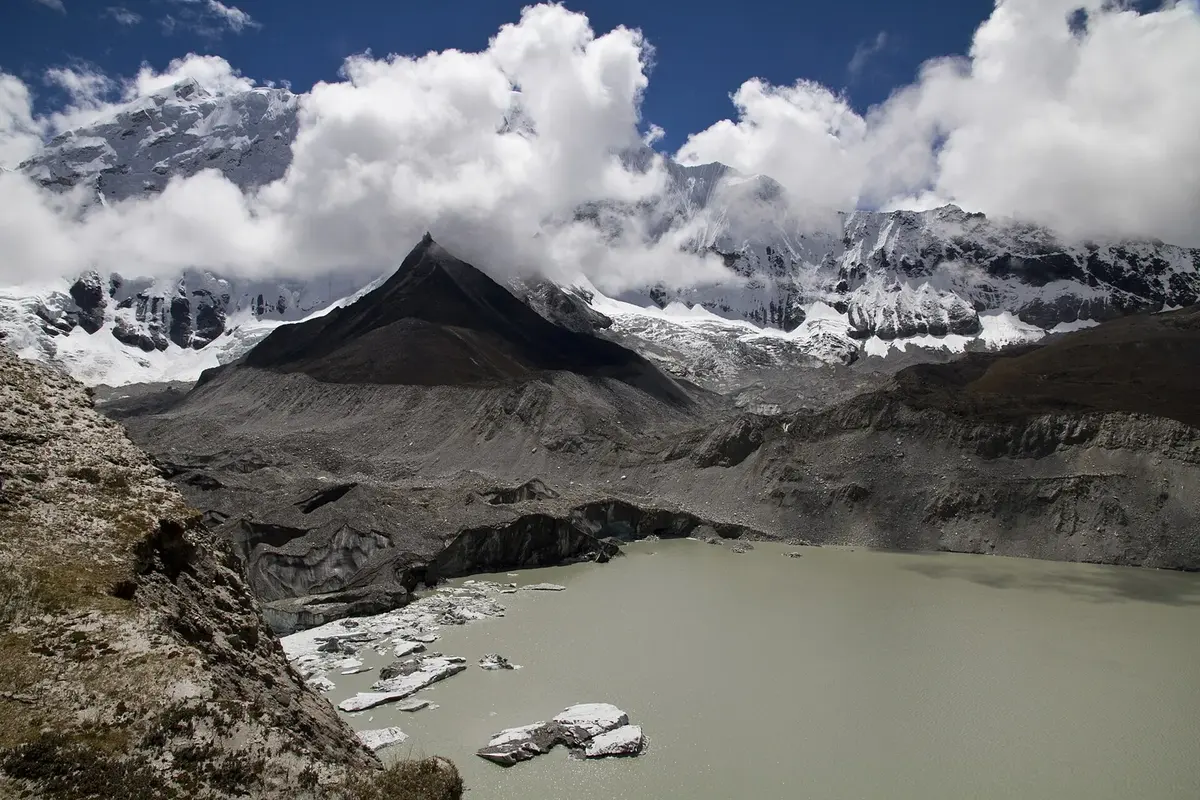
On the afternoon of 16 August 2024, the people of Thame, a Sherpa village near Everest, heard a roar from the mountains. High above them, near the Tashi Lapcha pass, a small lake of glacier meltwater had burst. Within minutes, a flood of water, mud and boulders swept through the village, carrying away homes, lodges, the health post and the village school. Luckily the children had gone home early that day, and no one died. Lakes like that one form and grow as the ice above them melts.
Nepal adds almost nothing to the gases that are warming the world, yet it is one of the countries most at risk from it. In this unit you’ll find out how the climate is changing and why, what is happening to Nepal’s rare plants and animals and how we protect them (with some real success stories: Nepal’s tigers and rhinos are coming back), and which plants around your home have been used as medicine for centuries.
There are many kinds of plants and animals around us. They can only survive if their environment and habitats stay in good condition. But human activity, in the name of modernization and industrialization, is changing the Earth’s atmosphere, and with it the climate. Climate change affects the homes and survival of living things directly and indirectly. Because of natural causes and human activity, many plants and animals are getting fewer, and some have died out (become extinct). Living things that have become few are called rare, and Nepal has many of them. It is our duty to protect them, so that the people who come after us can also know and use them.
Some plants have medicinal properties: since ancient times people have used them to treat illnesses. These are medicinal plants.
6.1 Climate change
Weather and climate
Weather is what the air is like at one place at one time: hot or cold, wet or dry, windy or calm, today or this week. Climate is the average weather pattern of a place over a long time, usually about 30 years. “It is raining in Bhaktapur today” is weather. “Bhaktapur has warm, wet summers and cool, dry winters” is climate.
The climate of a place normally stays much the same. But because of the greenhouse gases released by human activity, the climate of the whole world has been changing, and so have the weather patterns of many regions.
| Weather | Climate |
|---|---|
| the state of the air at one time | the average weather over many years (about 30) |
| changes from hour to hour and day to day | changes slowly, over decades |
| for a small area and a short time | for a large region and a long time |
| e.g. a cold, foggy morning in the Terai | e.g. the Terai’s hot, humid summers |
What climate change is
Climate change is a long-term change in the climate of a place or of the whole Earth: a change in its average temperature, rainfall, winds and seasons over decades. It can happen naturally, but the change we see today comes mostly from human activities that change the make-up of the atmosphere. When the climate changes, the regular cycle of a place’s weather is disturbed.
Scientists all over the world study climate change using weather records, satellite pictures, ice cores and research in the places affected. Their conclusion, after checking it every way they could, is clear: the Earth is warming, and humans are the main cause. In 2024, the world’s average temperature was about 1.55 °C above what it was before factories began (1850–1900): the hottest year ever recorded.
Climate change is a problem for the whole world, and poorer countries suffer more than rich ones: they have less money to protect themselves and more people who depend directly on farming, forests and rivers. Nepal’s share of the world’s greenhouse gases is tiny (about a tenth of one per cent, or less), but it is among the countries at highest risk.
Climate change is already felt in Nepal:
- The temperature has been rising by about 0.06 °C a year (records since the 1970s), faster in the mountains than in the Terai.
- Many springs, streams and ponds are drying up, and many rivers carry less water in the dry season.
- As glaciers melt, glacial lakes grow, and the risk of glacial lake outburst floods rises.
- Snow and ice on the mountains are shrinking, and many peaks that were white all year now show bare rock.
Causes of climate change
Poverty, lack of education and inequality make communities that live directly from nature (farming, herding, forests) more vulnerable to climate change. But the causes of climate change are of two kinds: natural and human-induced.
Natural causes
- a.Changes in the Sun. The Sun makes its energy by nuclear fusion. Its output varies a little, for example in an 11-year cycle of sunspots, and this changes slightly how much energy reaches the Earth, and so the weather. Over long periods, such changes have played a part in the climate. (Satellites have measured the Sun since 1978: it has not got brighter, so it can’t explain today’s warming.)
- b.Changes in how much sunlight the Earth reflects. About 30 % of the sunlight that reaches the Earth is reflected back to space, mostly by clouds, snow and ice; the other 70 % is absorbed and warms the Earth. How much is reflected depends on the surface and the air. White snow and ice reflect most sunlight; dark sea, rock and forest absorb most. So when ice melts, the darker ground beneath absorbs more sunlight, which warms it more and melts more ice. Changes in the sunlight reaching the surface also change how much water evaporates, and water vapor is itself a greenhouse gas.
- c.Volcanic eruptions. A big eruption throws gases, including carbon dioxide, and tiny droplets and dust (aerosols) high into the atmosphere. The aerosols spread round the Earth and block some sunlight, cooling the surface for a year or two. The carbon dioxide stays much longer and warms it, but today’s volcanoes release less than 1 % as much CO₂ as humans do.
Human-induced causes
Human activities release huge amounts of greenhouse gases. These gases trap the heat given off by the Earth, so the temperature rises. The main ones are carbon dioxide (CO₂), methane (CH₄, from rice paddies, cattle, rotting waste and gas leaks) and nitrous oxide (from fertilizers).
- a.Making greenhouse gases for energy. Coal, oil and natural gas (fossil fuels) are burned to make heat and electricity. They release vast amounts of carbon dioxide and other harmful gases.
- b.Industrialization. Factories that make cement, steel, plastics, cloth and electrical goods burn fossil fuels for their energy, and their gases pollute the air and change the climate. (Making cement also releases CO₂ from the limestone itself.)
- c.Deforestation. Forests are cut down for roads, settlements and farming. Trees take in carbon dioxide to make their food, and store the carbon in their wood: forests are the land’s main store of carbon. With fewer trees, less CO₂ is taken up, and burning or rotting the cut trees releases what they had stored. So the amount of greenhouse gas rises, and so does global warming.
- d.Burning fuel in vehicles. Cars, buses, trucks, motorbikes, planes and ships burn petrol, diesel and other fuels, which release harmful gases, mainly carbon dioxide.
The greenhouse effect
Greenhouse gases trap heat, but how?
- Sunlight passes through the air easily, and warms the ground and the sea.
- The warm Earth gives off energy too, not as visible light but as invisible infrared rays (heat). You feel these from a warm stove or a sunny wall in the evening.
- Gases such as carbon dioxide, methane and water vapor let sunlight through but absorb infrared. They absorb much of the heat leaving the Earth and give it out again in all directions, so part of it comes back down and warms the ground more.
- So the Earth stays warmer than it would without them. This is the greenhouse effect, named after glass greenhouses (and plastic tunnels for growing tomatoes), which also let sunlight in and keep warmth from getting out.
The greenhouse effect itself is good: without any greenhouse gases, the Earth’s average temperature would be about −18 °C, frozen solid. With them, it is about 15 °C. The problem is that we are adding more, so the effect is getting stronger and the Earth is getting warmer. This overall rise in the Earth’s temperature is global warming.
Which of these does not add to global warming?
Pick an answer to see why.
Without any greenhouse effect, the Earth would be
Pick an answer to see why.
Effects of climate change
Over the past few decades, rising temperatures and extreme weather (very heavy rain, or no rain and drought) have harmed Nepal’s Himalaya, its glaciers and the ecosystems that depend on them. As snow melts faster, glacial lakes grow, and so does the risk that they burst. Climate change already harms livelihoods, forests and biodiversity, energy, health, tourism, housing and roads. Climate-related disasters (floods, landslides and forest fires) destroy a great deal of property every year.
- a.Drought and floods. Climate change shifts when and where rain falls: some places get drought, others floods from too much rain. Both hurt farming, and raise the risk of food shortages.
- b.Rising sea level. As the Earth warms, seawater expands (warm water takes up more space), and the ice on land melts into the sea (glaciers, and the great ice sheets of Greenland and Antarctica). The sea has risen about 20 cm since 1900, and the rise is speeding up. It floods coasts and low islands, destroys plants, animals and their habitats, and drives people from their homes. (Nepal has no coast, but the Himalayan meltwater ends up in the sea too.)
- c.Effects on biodiversity. A warmer Earth changes the life processes of plants and animals on land and in the sea: their growth, development and body functions. Many can’t adapt fast enough. Some move: in Nepal, many plants and animals are being found higher up the mountains than before. Those already living near the top have nowhere to go, and their risk of extinction grows.
- d.Effects on human health. Climate change harms health through heat waves, floods, polluted water, skin diseases, mental stress and poorer nutrition when crops fail. In Nepal, dengue and malaria mosquitoes can now live in warmer hill towns: dengue was almost unknown in Kathmandu twenty years ago, and has caused large outbreaks there since 2019.
- e.Changes in the weather. Heavy rain falls outside the rainy season, and dry spells come in the middle of the monsoon. Farmers can’t trust the seasons: rain comes when it isn’t needed and not when it is, and crops that need little water get too much.
Glacial lake outburst floods (GLOFs)
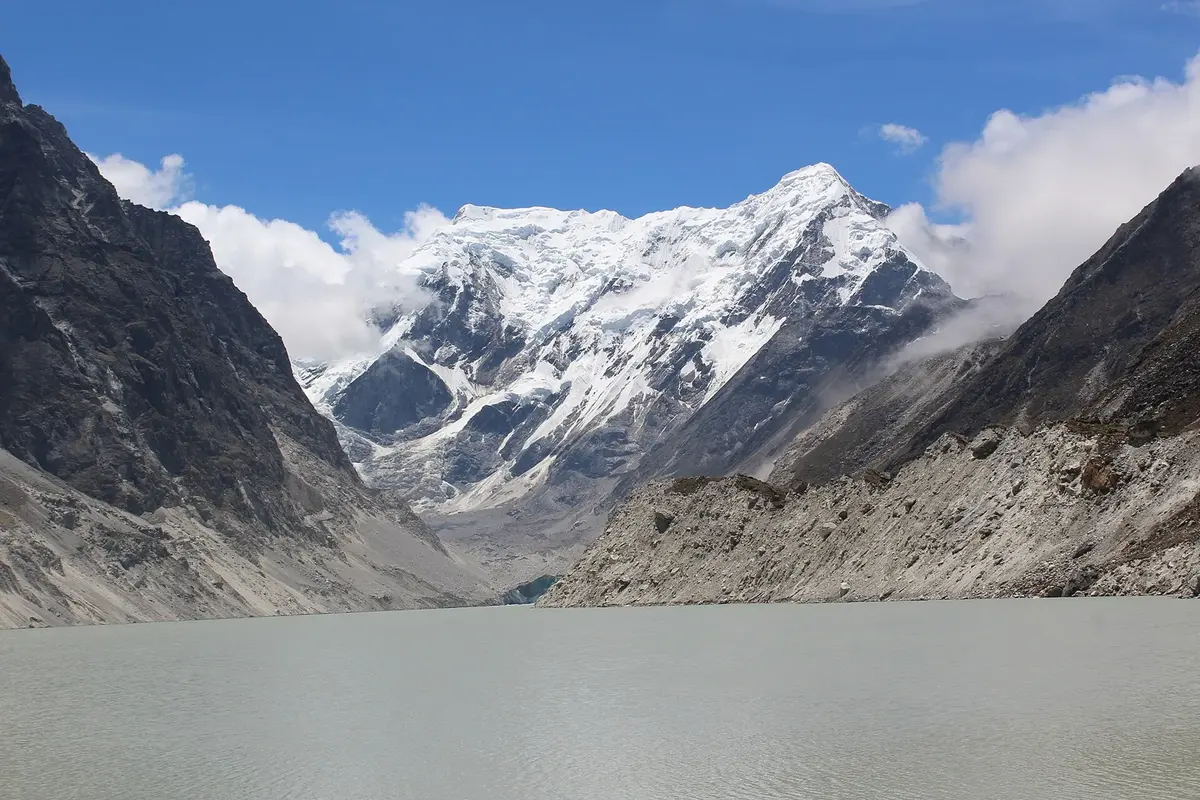
As a glacier melts back, its meltwater collects in a lake behind the moraine, a ridge of loose rock and buried ice that the glacier pushed up long ago. This natural dam is weak. An avalanche falling into the lake can send a wave over it, or the buried ice can melt, and the dam suddenly gives way. The lake empties in hours, sending a wall of water, mud and boulders down the valley: a glacial lake outburst flood (GLOF).
Nepal has about 2,000 glacial lakes, and scientists list about twenty in Nepal (and more in Tibet that drain into Nepal) as potentially dangerous. In 1985, Dig Tsho in the Everest region burst and destroyed a nearly finished hydropower plant, 14 bridges and many homes. Since then Nepal has made two of the most dangerous lakes safer by cutting channels to lower them: Tsho Rolpa in Dolakha by 3 m in 2000, and Imja Tsho by 3.4 m in 2016, a job done by the Nepal Army at about 5,000 m. Early-warning sirens were set up in the valleys below.
Measures to control climate change
The Government of Nepal has made policies and programs to reduce the harm and risk from climate change. Under the Environment Protection Act, 2076 (2019), the federal, provincial and local governments and other public bodies can issue orders, published in the Nepal Gazette, on what must be done to reduce the effects and risks of climate change. Nepal has also promised to reach net-zero emissions by 2045: by then it will take as much carbon out of the air (in its forests) as it puts in.
To control climate change, we must reduce it at its source:
- a.Reducing carbon emissions. Use energy efficiently (LED bulbs, switching off, good insulation), and use renewable energy instead of fossil fuels: hydropower, solar and wind. Use electric vehicles and public transport. Nepal is lucky: almost all its electricity comes from hydropower, so an electric bus or cooker in Nepal releases far less carbon than one running on petrol or LPG.
- b.Storing more carbon. Green plants take in carbon dioxide to make food and give out oxygen. So conserve forests, plant trees and protect them; more carbon is then stored in plants and soil.
- c.Public awareness and a change in behavior. If we make our own habits more environmentally friendly, and help others understand the problem, together we can reduce climate change.
6.2 Endangered plants and animals of Nepal
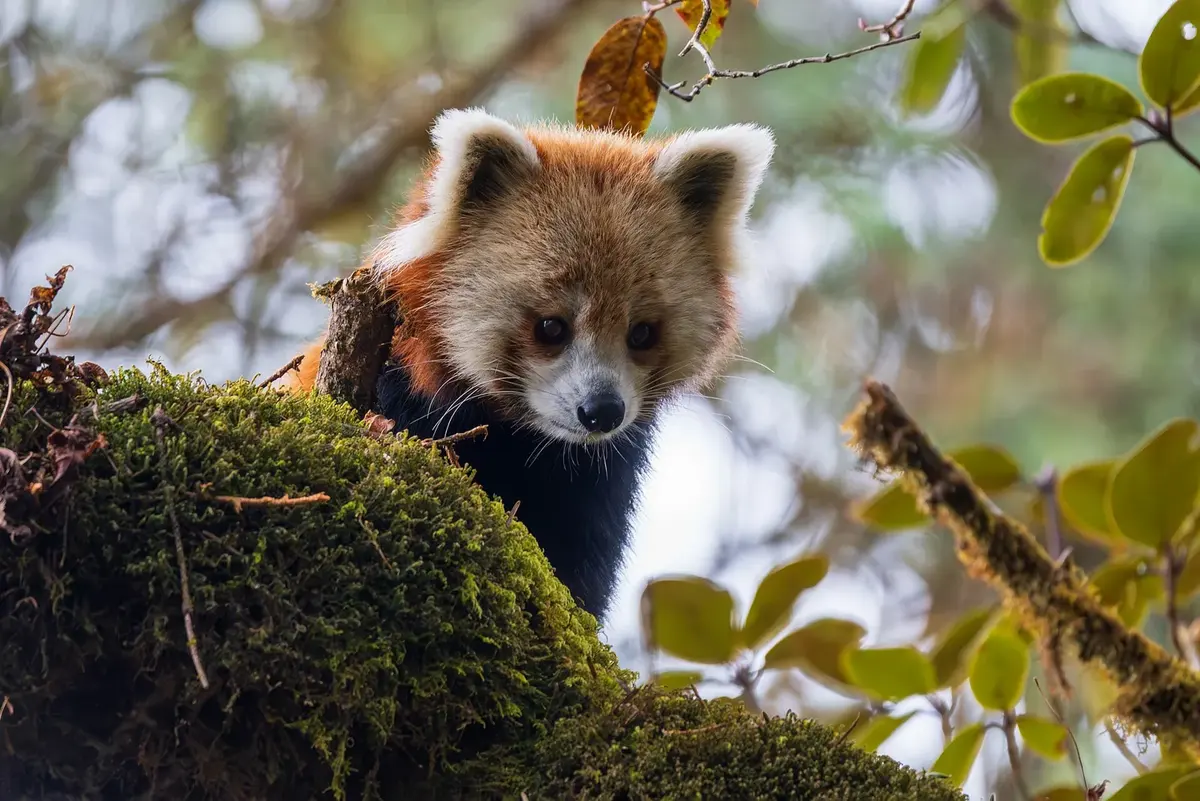
Because of climate change and other reasons, many kinds of living things are disappearing from the Earth. Many animals and plants are getting fewer, and some have become extinct. Plants and animals that are few in number and at risk of dying out are called rare or endangered; many of them live in Nepal. The survival of every plant and animal depends on biodiversity, the variety of life around it.
Scientists sort species by their risk. The IUCN Red List (IUCN: the International Union for Conservation of Nature) uses these words, from least to most at risk:
| Category | Meaning | Examples in Nepal |
|---|---|---|
| Least concern | widespread and common | rhesus monkey, house sparrow |
| Near threatened | could become threatened soon | striped hyena, Himalayan griffon vulture |
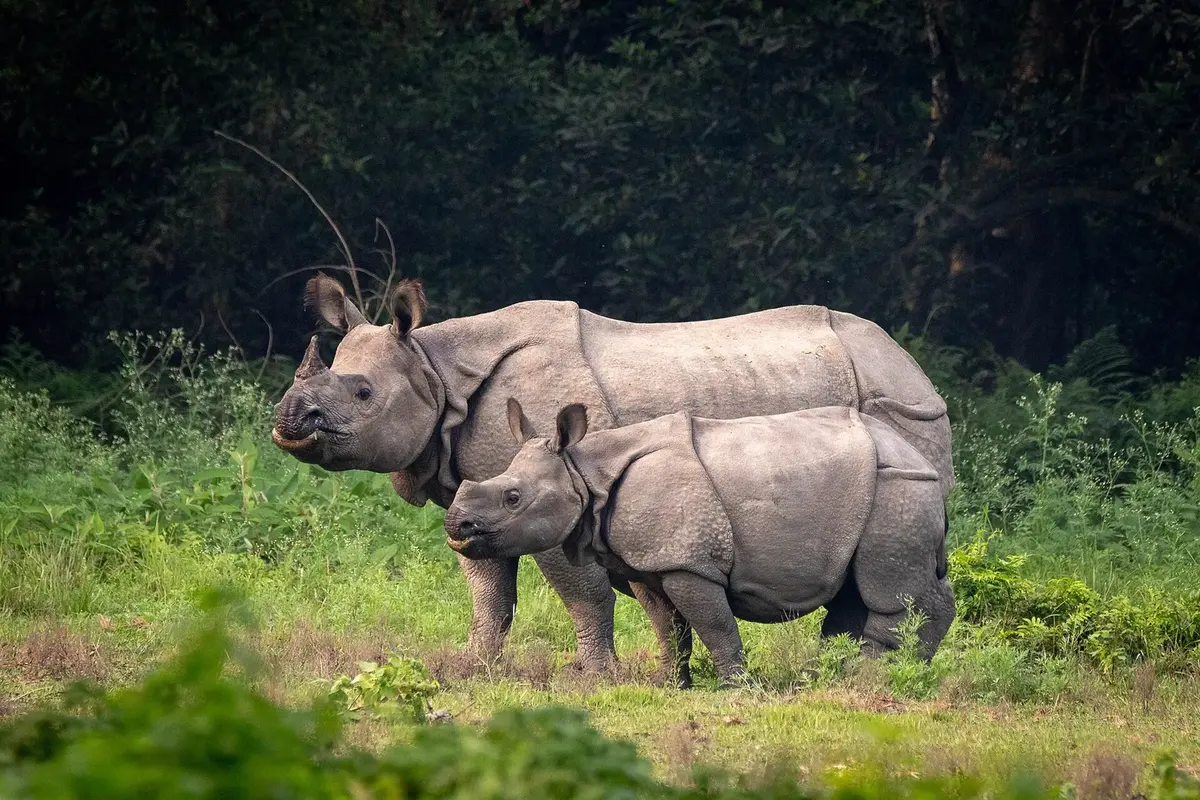
| Vulnerable | high risk of extinction in the wild | one-horned rhino, snow leopard |
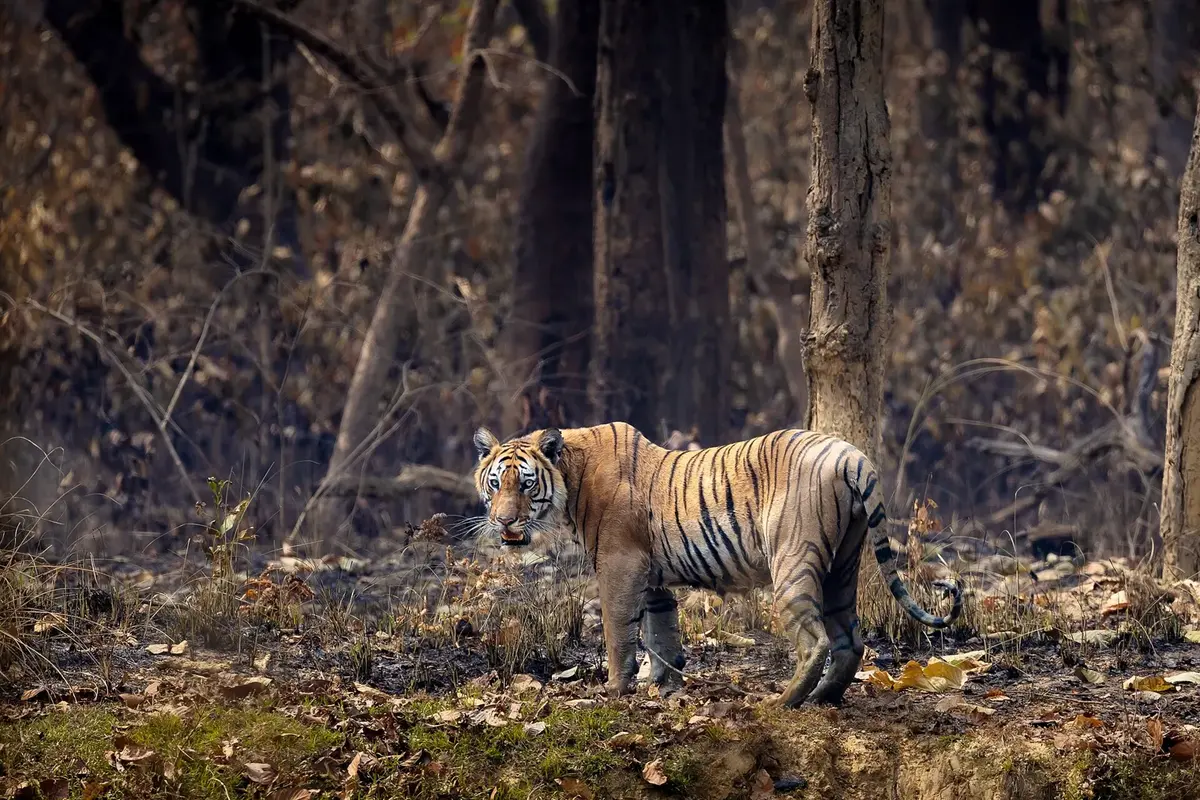
| Endangered | very high risk | Bengal tiger, red panda |
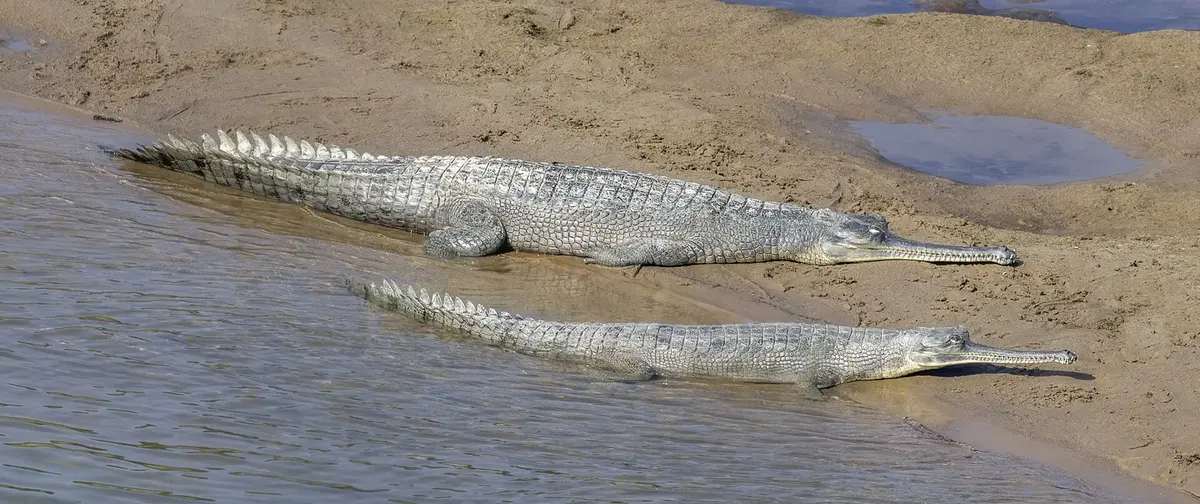
| Critically endangered | extremely high risk | gharial, white-rumped vulture |
| Extinct in the wild | only in zoos or gardens | |
| Extinct | none left anywhere |
Because of human activity and changes in nature during modern development, many animals and plants have become fewer, and many could die out. The main reasons:
- Weather and climate change shift where plants and animals can live.
- Overuse: taking too many plants and animals from the wild, faster than they can grow back.
- New plants grown without research crowd out the native plants. (In Nepal, invasive weeds like banmara and mikania have taken over many forests and grasslands, including in Chitwan.)
- New animals reared without research push out the native animals of the area, or bring them diseases.
- Pollution of the air, water and soil keeps increasing.
Add to these the biggest cause of all: the loss of habitat, as forests, grasslands and wetlands are cleared for farms, roads and towns.
6.3 Conservation of endangered and rare plants
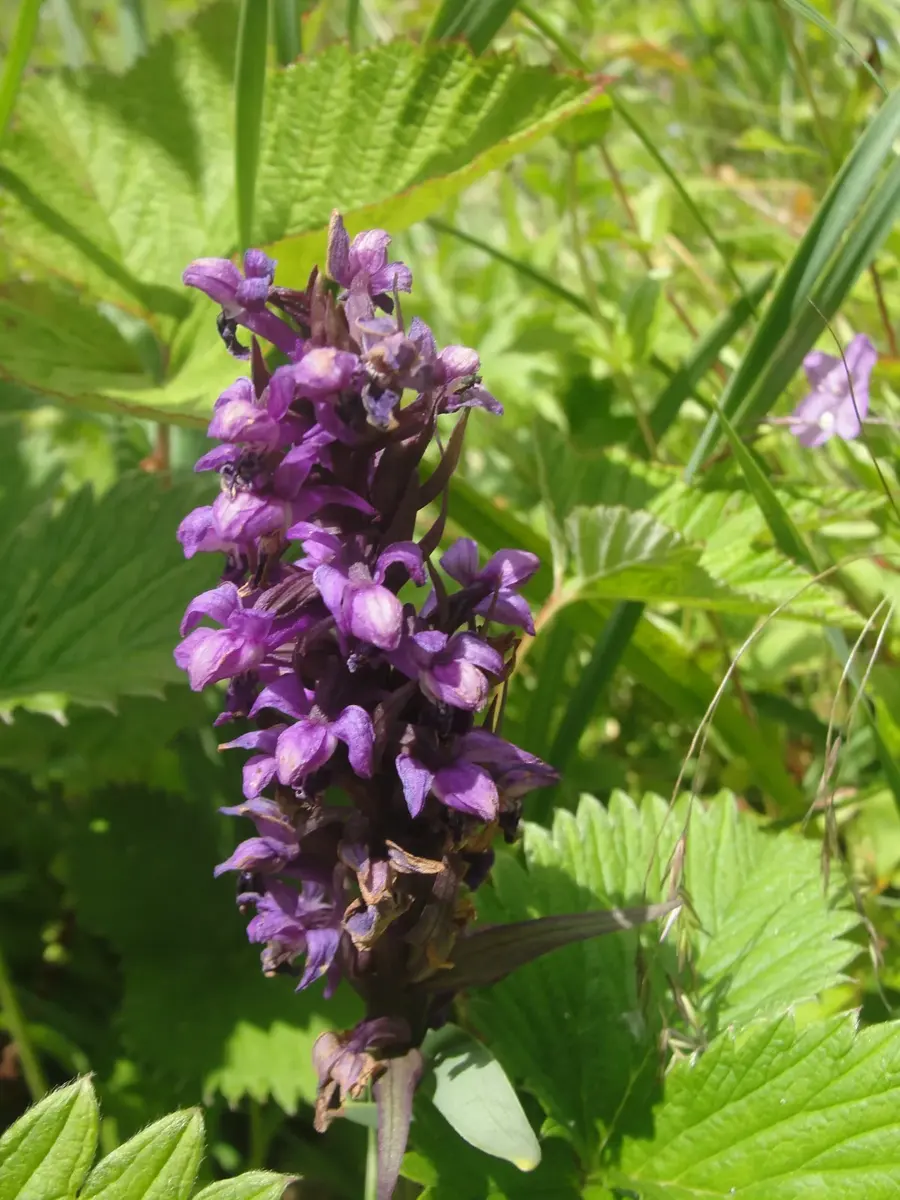
Nepal has a great variety of plants. Some valuable ones are getting fewer, for example:
| Plant | What it is | Why it is collected |
|---|---|---|
| Jatamasi (spikenard) | a small high-mountain herb with a fragrant root | its root oil, for perfume and medicine |
| Champ | a tree with sweet-smelling yellow-orange flowers | timber, flowers |
| Sarpagandha | a small shrub of the Terai | its root gives reserpine, once a major medicine for high blood pressure |
| Panch aunle | an orchid of high pastures with a hand-shaped root | its root, as a tonic |
| Lauth salla (Himalayan yew) | an evergreen tree | its leaves and bark give taxol, a cancer medicine |
People use these plants for many things, but because they are collected without thinking of how many are left, they may soon become extinct.
So these plants must be protected, and many efforts are being made. The Government of Nepal has brought in the Endangered Wild Fauna and Flora International Trade Control Act, 2073 (2017), Nepal’s law for the world agreement on trade in endangered species (CITES). It has rules on breeding and growing rare wild animals and plants, on research, and on selling and trading them. Some ways to protect rare plants:
- a.Protect their natural habitat. Collecting firewood, fodder and grass from forests, forest fires, and turning forest into pasture all destroy the habitats of wild plants. These should be controlled, and uncontrolled grazing of cattle in forests should be stopped. The places where rare plants grow should be identified and protected.
- b.Protect rare and endangered plants when using them. Many industries get their raw materials from plants. When collecting them, keep the plant’s survival in mind: never take so much that it can’t grow back (for a herb, leave some plants to make seed; for bark, never strip the whole trunk). Stop theft and smuggling.
- c.Grow more saplings by modern methods. Collect the seeds of rare plants and raise them in nurseries. Use tissue culture: a tiny piece of a plant is grown on a jelly of nutrients in a clean glass jar, where it multiplies into hundreds of identical small plants. Then plant rare and useful plants widely.
- d.Make suitable laws and enforce them. Make laws to protect plants that are close to extinction or likely to become so. Tell the public about the laws, and enforce them.
- e.Use rare plants wisely, and make people aware. Make people aware that many rare plants are valuable medicines, and are worth more alive and growing than dug up and sold all at once. Hold awareness programs at the local level, and get local people, communities and organizations involved in protecting rare plants.
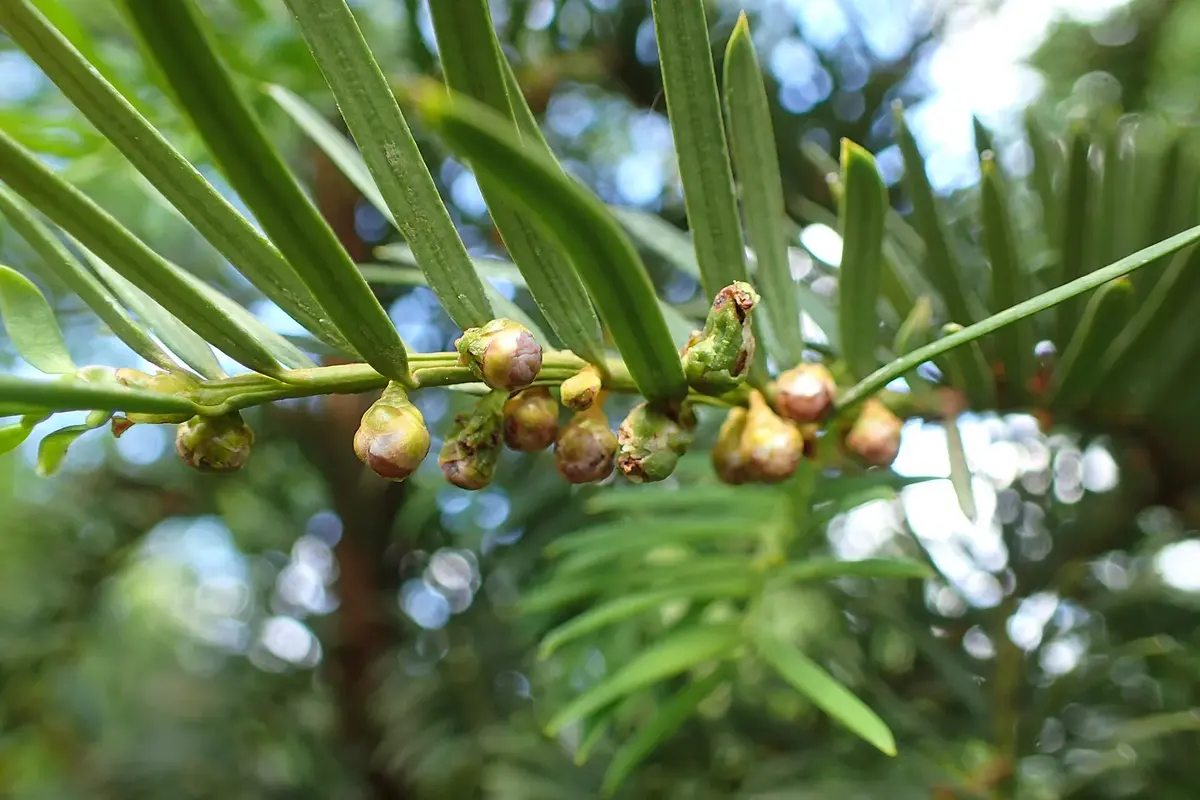
Which way of conserving a rare plant can produce hundreds of new plants from one small piece of it?
Pick an answer to see why.
6.4 Conservation of wildlife
Because of human and natural causes, many animals have become rare, endangered or extinct. Changes in ecosystems, destruction of habitat, pollution, poaching (illegal hunting) and illegal trade put many species in danger. To control illegal hunting and trade, the government has brought in the Endangered Wild Fauna and Flora International Trade Control Act, 2073. Ways to conserve rare animals:
- a.Study and research. Find out the real state of each species and of its ecosystem: how many are left, where, and what threatens them. (Nepal counts its tigers about every four years, with hundreds of camera traps, and its rhinos about every five.)
- b.Protect natural habitats. Animals and birds thrive in their own natural homes, so forests, streams, watersheds and grasslands must be protected. This is in-situ conservation (conservation in the natural place). Almost a quarter of Nepal’s land is protected: 12 national parks, a wildlife reserve, a hunting reserve, 6 conservation areas and buffer zones around the parks.
- c.Stop the poaching of protected wildlife. Illegal hunting and trade are the main reasons many animals have died out. The rules against hunting endangered animals and birds must be strictly enforced.
- d.Ex-situ conservation. Some rare animals and plants can be bred and grown away from their natural home, in zoos, breeding centers, aquariums and botanical gardens, and later returned to the wild. Nepal breeds gharials at Kasara in Chitwan and releases the young into its rivers; the Central Zoo in Jawalakhel and the National Botanical Garden in Godawari also help.
- e.Make laws and enforce them. Suitable laws to protect rare wild animals and birds must be enforced, so that illegal activities are controlled.
- f.Raise public awareness. Run programs so people understand why rare animals and birds matter, why they are getting fewer, what can be done and what we gain by protecting them, and involve local people. Conservation works best when the people living beside the wildlife benefit from it: in Nepal, 30 to 50 % of each national park’s income goes to the communities in its buffer zone.
Nepal’s success stories
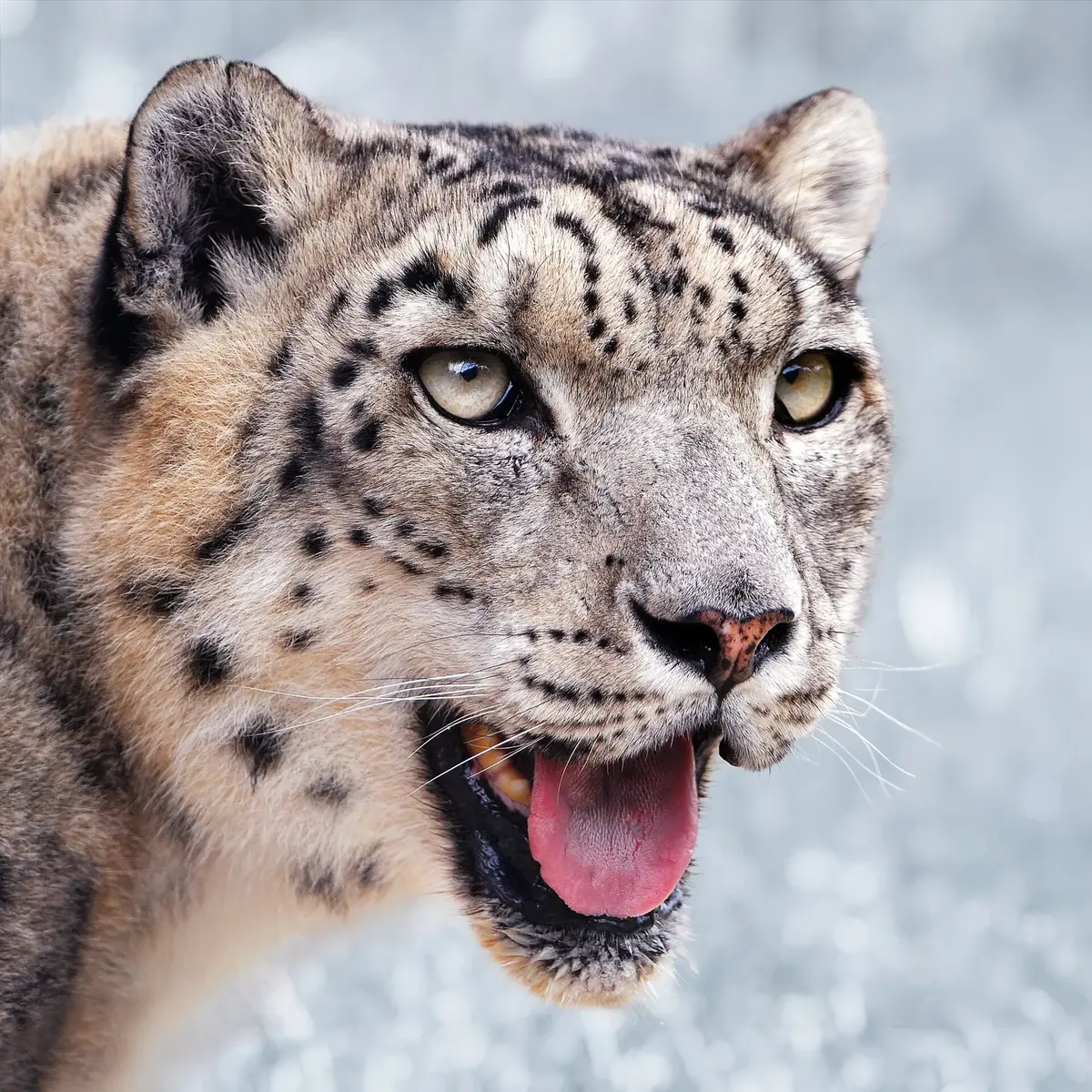
Protected animals and birds
Under the National Parks and Wildlife Conservation Act, 2029 (1973), Nepal fully protects 27 mammals, 9 birds and 3 reptiles. Hunting, killing or trading them is a serious crime.
| Mammals | Birds | |
|---|---|---|
| 1.Pygmy hog | 15.Chinese pangolin | 1.Great hornbill |
| 2.Red panda | 16.Himalayan musk deer | 2.Cheer pheasant |
| 3.Blackbuck | 17.Clouded leopard | 3.White stork |
| 4.Gaur (bison) | 18.Great Tibetan sheep (nayan) | 4.Black stork |
| 5.Wild yak | 19.Bengal tiger | 5.Sarus crane |
| 6.Wild water buffalo | 20.Snow leopard | 6.Bengal florican |
| 7.Gray wolf | 21.Tibetan antelope | 7.Impeyan pheasant (danphe) |
| 8.Hispid hare | 22.Gangetic dolphin | 8.Lesser florican |
| 9.Swamp deer | 23.Leopard cat | 9.Crimson horned pheasant |
| 10.Asian elephant | 24.Spotted linsang | Reptiles |
| 11.Lynx | 25.One-horned rhinoceros | 1.Gharial |
| 12.Striped hyena | 26.Four-horned antelope | 2.Asian rock python |
| 13.Assamese monkey | 27.Brown bear | 3.Golden monitor lizard |
| 14.Indian pangolin |

Raising gharials in a breeding center and releasing them into rivers is an example of
Pick an answer to see why.
Which of these groups contains only animals protected by Nepal’s law?
Pick an answer to see why.
6.5 Medicinal plants traditionally used in Nepal
Many plants are used at home as remedies for common ailments, and different parts of them are raw materials for medicines. That is why they are called medicinal plants (jadibuti). Some common ones in Nepal are Malabar nut (asuro), Asiatic pennywort (ghod tapre), aloe vera (ghiu kumari), holy basil (tulsi) and neem.
Nepal has about 7,000 kinds of flowering plants, and according to the Department of Plant Resources, more than 700 of them are used as medicine. The Karnali region has the most. More study and research are needed on how to use these plants correctly, how to market them fairly, how to use them sustainably, and how to make use of our own traditional knowledge and skills.
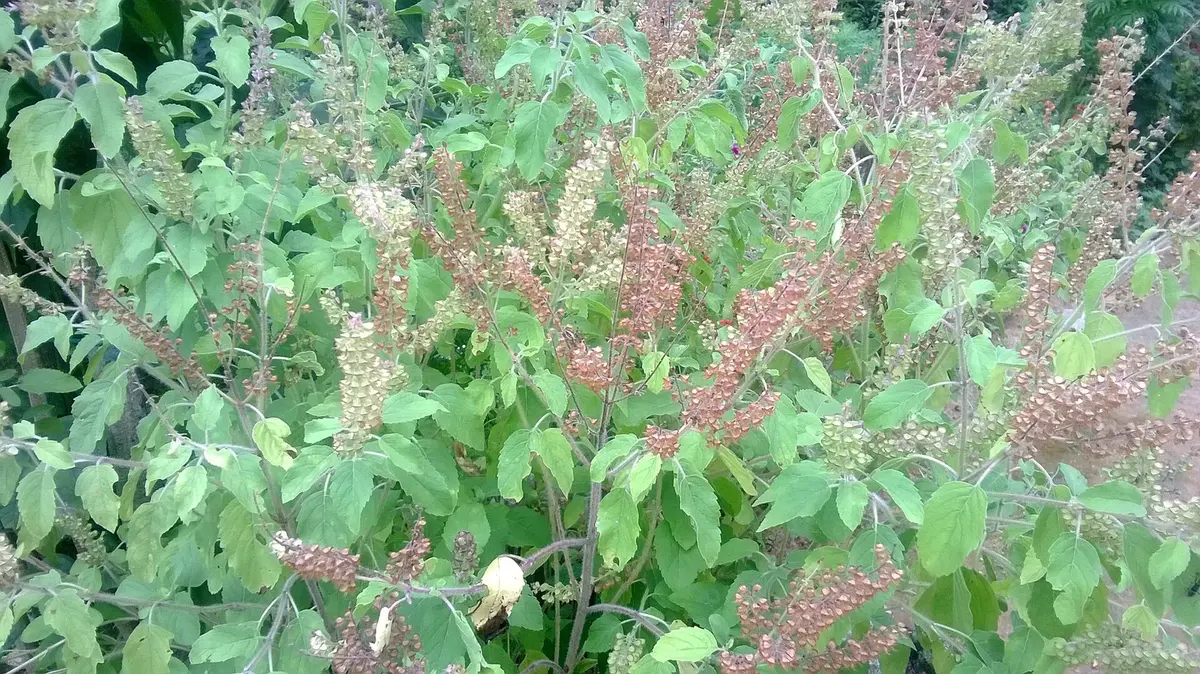
Holy basil (Tulsi)
Scientific name: Ocimum tenuiflorum (also O. sanctum). A small, fragrant shrub grown in many Nepali homes, often on a raised platform (tulsi math) in the courtyard, where it is worshipped.
- All its parts are used: leaves, shoots, flowers, roots and seeds. It is added to tea and to some dishes.
- It is said to improve appetite and digestion.
- It has antimicrobial properties (it kills some bacteria and fungi), and is used for disinfecting, for purifying water, and as a gargle.
- In villages, its leaves are boiled in water and the drink taken for sore throats, colds and coughs.
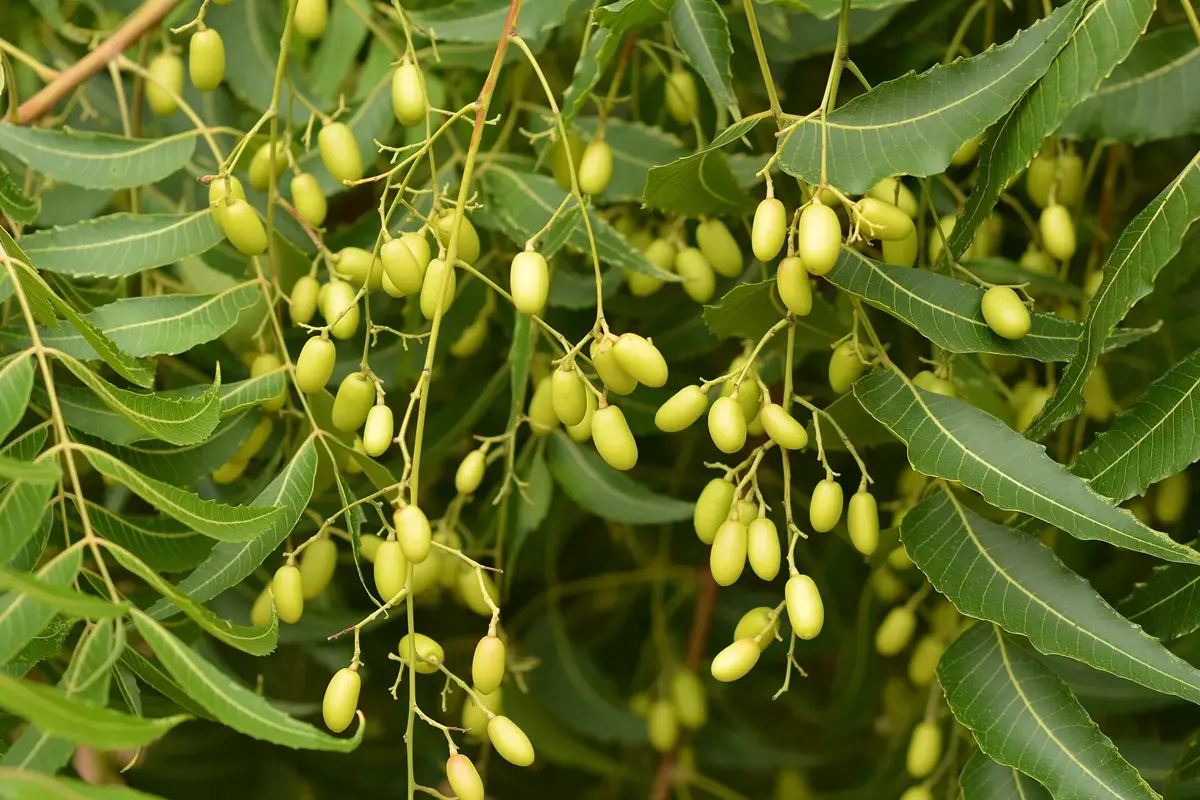
Neem
Scientific name: Azadirachta indica. A tall tree of the Terai and warm valleys, with very bitter leaves.
- All its parts (leaves, root, bark, flowers and fruit) are used in Ayurvedic medicines.
- Neem juice and paste are used for skin problems, and neem twigs as toothbrushes (datiun).
- It has antimicrobial properties; neem leaves are kept with stored grain and clothes to keep insects away, and neem oil is used as a natural pesticide.
- It is traditionally taken to “purify the blood”, lower cholesterol and lower blood pressure; these uses haven’t been proven in good trials. Too much can lower the blood pressure dangerously, and neem oil is poisonous to small children.
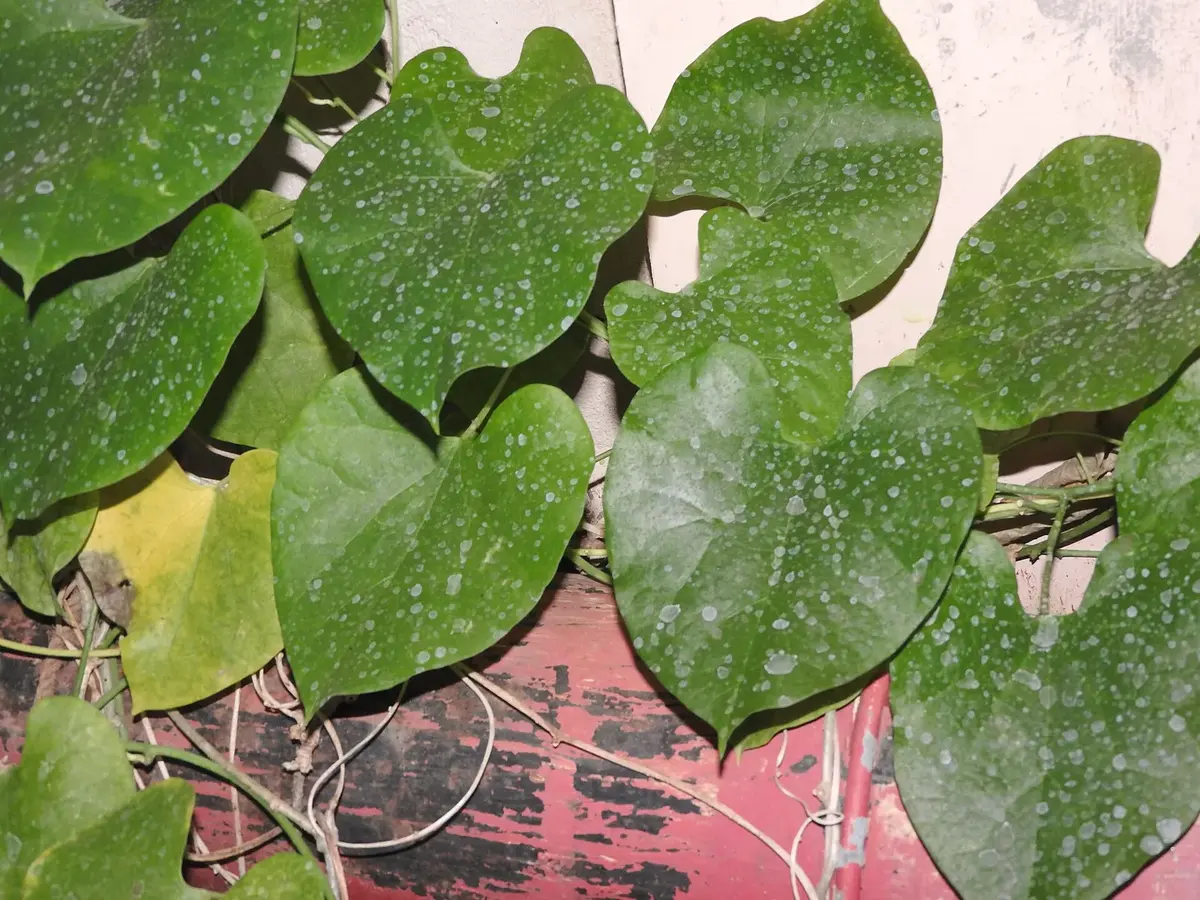
Heart-leaved moonseed (Gurjo)
Scientific name: Tinospora cordifolia. A climbing shrub with heart-shaped leaves, found from the Terai to the mountains, and in most nurseries. It climbs by twining round other plants, and grows easily from a piece of its stem.
- It is traditionally used to boost immunity and prevent infections, and for fevers.
- It contains antioxidants.
- A sensible amount is thought safe, but too much can lower the blood sugar too far (dangerous for people taking diabetes medicines), and in recent years doctors have reported liver damage in some people who took gurjo for long periods.
Asiatic pennywort (Ghod tapre)
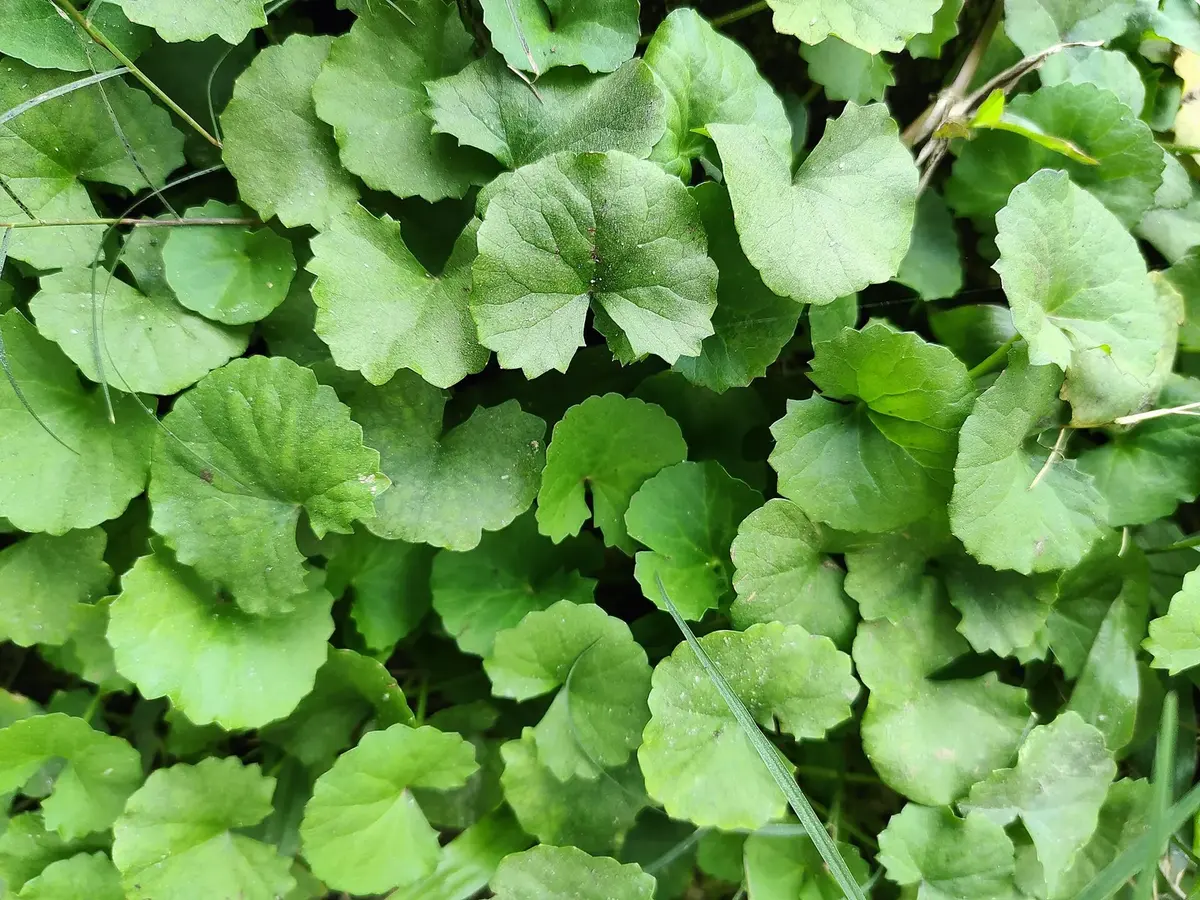
Scientific name: Centella asiatica. A small, slightly fragrant herb of warm, damp places. It is perennial (it lives for more than two years) and creeps along the ground, spreading like a green carpet in shady, wet places: paddy-field edges and stream banks. Its round leaves look like a horse’s hoof, which is where its Nepali name comes from (ghoda: horse; tap: hoof).
- All its parts are used.
- It has antimicrobial and antioxidant properties.
- It is traditionally eaten to improve memory and to reduce stress and anxiety; small studies suggest it may help, but this isn’t proven.
- It has long been used for colds, and its crushed paste is put on burns and wounds, where it does seem to help healing.
- It is used to make medicines and cosmetics (skin creams and toners).
Turmeric (Besar)
Scientific name: Curcuma longa. A perennial herb whose stem grows underground as a thick, fleshy rhizome. Nepal has grown it since ancient times.
- Its yellow color comes from a chemical called curcumin, which is also what makes it a medicine.
- It contains minerals such as iron, manganese, potassium, calcium and phosphorus, and small amounts of vitamins (B and C).
- It is antimicrobial: it colors and spices our food, and helps keep it from spoiling. It is put on cuts and wounds.
- Traditionally it is used to strengthen immunity, to treat skin diseases (even scabies and leprosy, in the past), and for breathing problems.
- It is used in cosmetics, and as a natural dye.
(Curcumin has been studied a great deal; it reduces inflammation in the laboratory, but very little of it is absorbed from food, so most claims that it cures diseases are not yet proven.)

Malabar nut (Asuro)
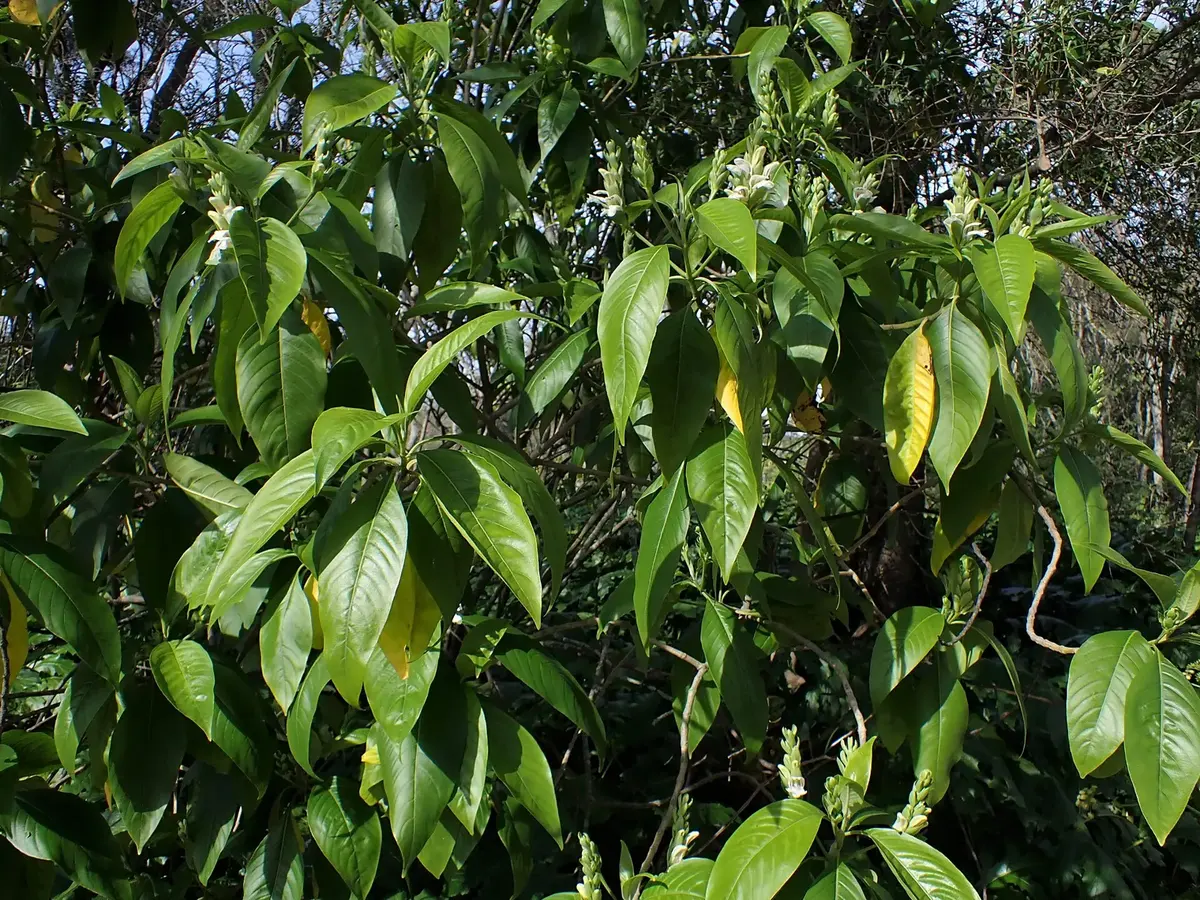
Scientific name: Justicia adhatoda (older name Adhatoda vasica). A medium-sized shrub with white flowers, common from the Chure hills up to the Mahabharat range.
- It contains chemicals called vasicine and vasicinone, which widen the airways and loosen mucus; so it is used for coughs, colds, asthma and other breathing problems. Two common modern cough medicines, bromhexine and ambroxol, were developed from vasicine.
- Water in which its leaves have been boiled is used as a gargle for tooth and gum problems.
- Its antimicrobial properties help prevent infections.
- Its flowers are used for a burning feeling when urinating, and its leaves in tea for colds.
- Farmers also cut it as green manure for their fields.
Calamus or sweet flag (Bojho)
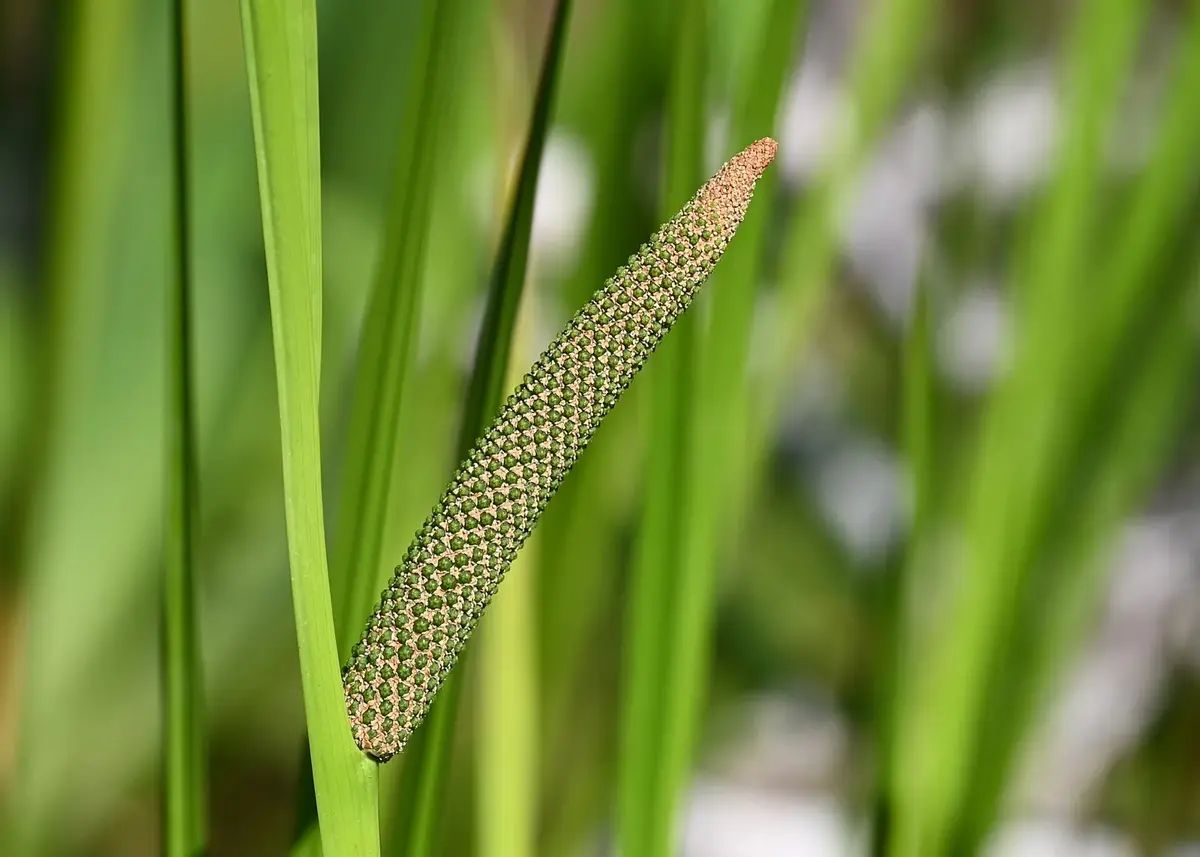
Scientific name: Acorus calamus. An upright, fragrant herb with sword-shaped leaves, growing in marshes and on the banks of ponds and ditches without any care. Its thick underground stem, the rhizome, is the part used.
- It is used for throat problems (hoarseness, coughs), to relieve pain, and for an upset stomach.
- Too much can cause nosebleeds and other harm. Its oil contains a chemical (β-asarone) that is banned from food in several countries because it may damage the liver and cause cancer; so it should only be used in small amounts, as advised.
Caterpillar fungus (Yarsagumba)
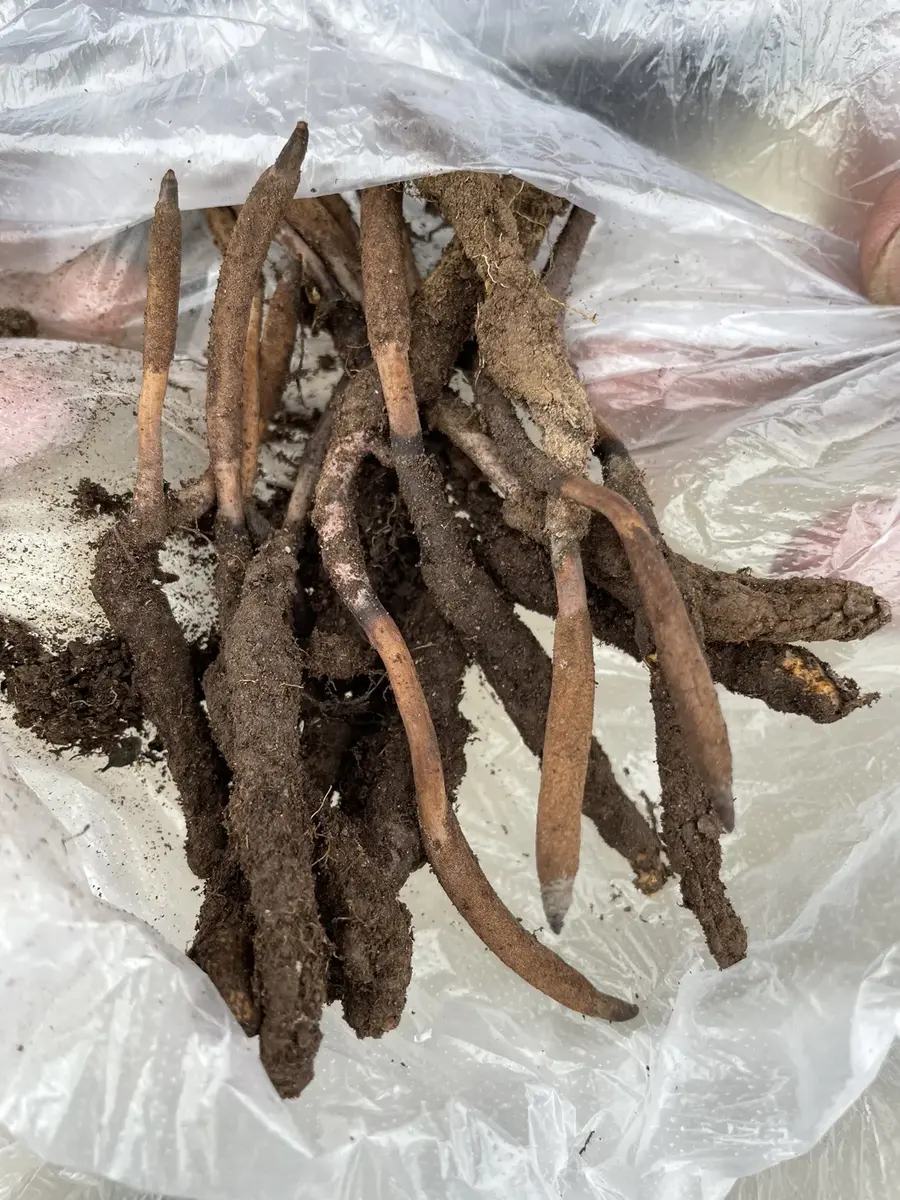
Scientific name: Ophiocordyceps sinensis (older name Cordyceps sinensis). Yarsagumba is not a plant at all: it is a fungus growing out of a dead caterpillar. It is found in the high grasslands at 3,000–5,000 m, after the snow melts.
How it forms:
- Old yarsagumba release spores into the air.
- The spores stick to the body of a caterpillar living in the soil. (It is the larva of a ghost moth.)
- The spores germinate, and the fungus’s threads (hyphae) spread inside the caterpillar, feeding on it. The caterpillar moves for a while, then goes still and dies underground, head up.
- The fungus fills the whole body, turning it into a mummy, and gets its food from it. In spring, a brown stalk, about 5–8 cm long, grows from the caterpillar’s head up above the ground, and releases new spores.
So yarsagumba has two parts: the fungus above and the caterpillar below. Its Tibetan name means “summer grass, winter worm”. It has no root, stem, leaf, flower or fruit, and it reproduces by spores.
Yarsagumba: Antwerp Edgar Pratt, public domain, via Wikimedia Commons
It is used in traditional Tibetan and Chinese medicine as a tonic that is believed to give energy and strength, often taken with honey or milk; scientists are still testing these claims. It is one of the most expensive natural products in the world: a kilogram of the best yarsagumba can sell for many lakhs of rupees. Every May and June, thousands of people from Dolpa, Darchula, Mugu and other mountain districts camp in the high pastures to collect it, and for many families it is the biggest income of the year.
Since 2001, collecting and trading yarsagumba has been allowed with a permit, and the collectors pay a royalty (a fee) to the government. Because so much is collected, the fungus is now listed as vulnerable by the IUCN, and some places limit the season or the number of collectors.
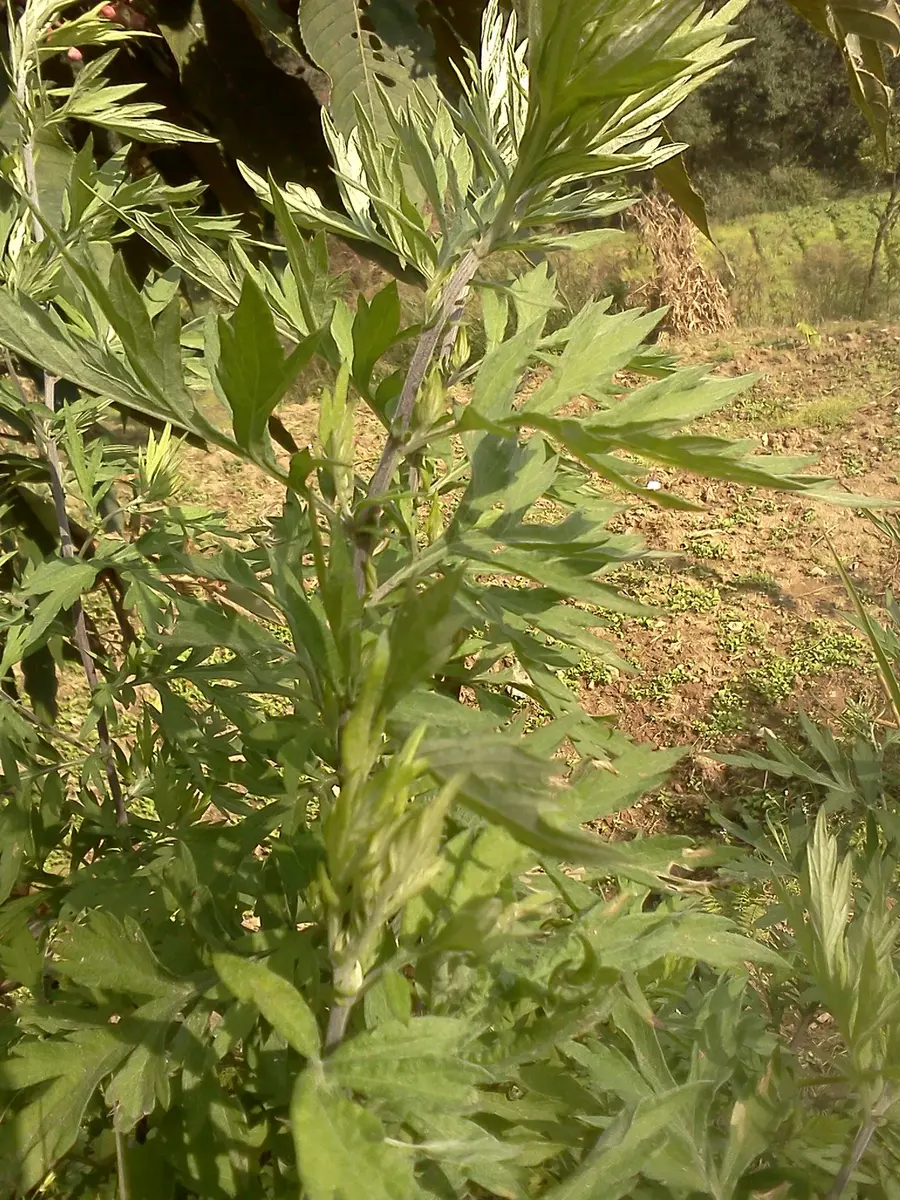
Mugwort (Titepati)
Scientific name: Artemisia vulgaris. A strong-smelling herb of the mid-hills that grows almost everywhere, by paths and field edges.
- It is used to make cosmetics, perfumes and organic pesticides; scented oil is extracted from it.
- Its leaves are squeezed and pressed on small cuts to stop bleeding, and burned to keep mosquitoes away.
- Farmers dry it as bedding (sotar) for cattle, and it is used in worship and festivals.
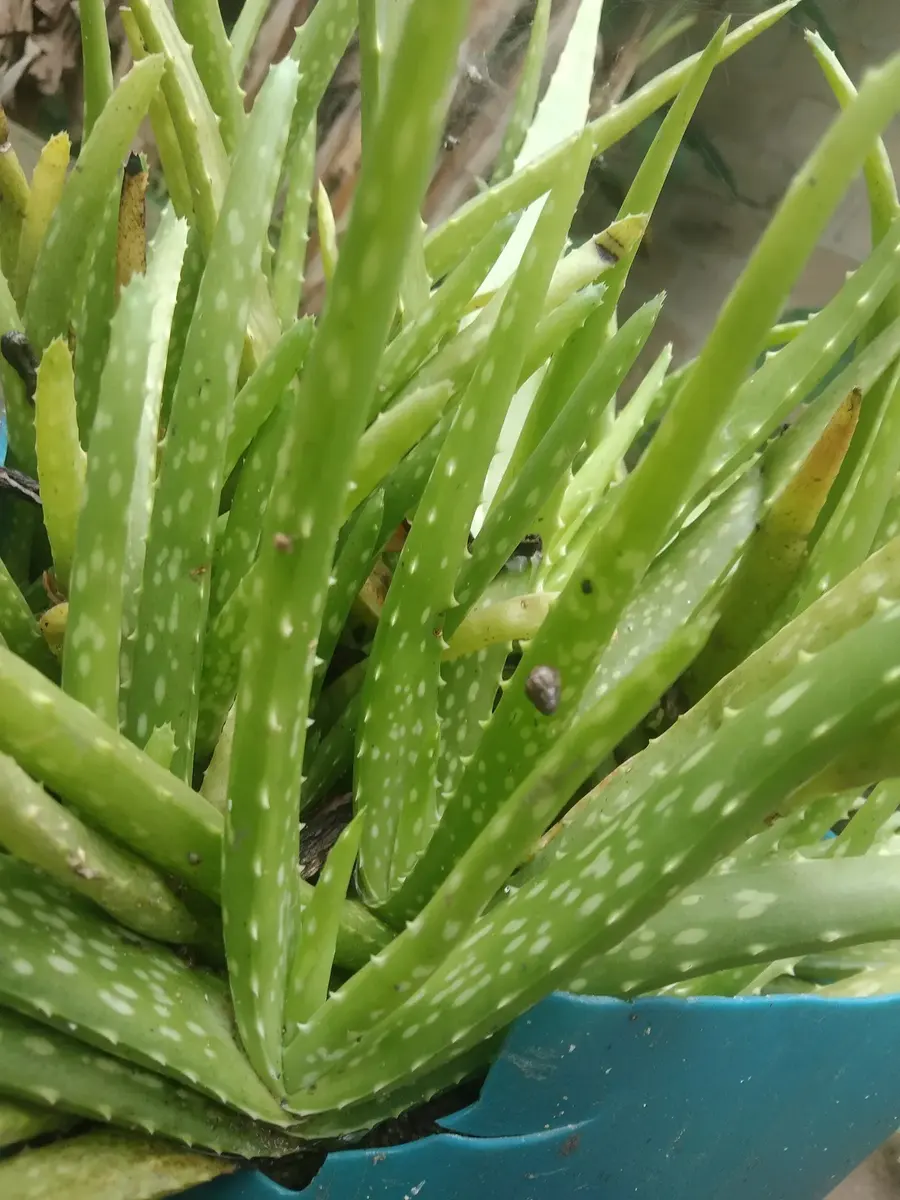
Aloe vera (Ghiu kumari)
Scientific name: Aloe vera. A plant of dry places, with thick, fleshy leaves with small teeth on their edges. It stores water and food in its leaves, as a clear, slippery gel. In Ayurveda it is thought so valuable it is called sanjivani.
- Its gel contains small amounts of vitamins A, C and E.
- Applied to the skin, the gel soothes sunburn and small burns and keeps the skin moist; this is its best-tested use. It is used for cracked skin, pimples and dandruff, and on hair.
- Its juice is traditionally drunk for stomach, joint and skin problems. But the yellow sap just under the leaf’s skin (aloe latex) is a strong laxative, and drinking it regularly can be harmful.
Which part of each plant is used as medicine? Pick the pair that is wrong.
Pick an answer to see why.
Exercise
1. Choose the correct option
a. Nowadays there is sometimes too little rain and sometimes very heavy rain, which has hurt farming. What may be the reason?
Pick an answer to see why.
b. What is the reason for the rise in sea level?
Pick an answer to see why.
c. Which of these is a group of endangered (protected) animals?
Pick an answer to see why.
d. To which group of plants does tulsi belong?
Pick an answer to see why.
e. Yarsagumba forms when a fungus grows in a kind of caterpillar. What is the relation between the caterpillar and the fungus?
Pick an answer to see why.
f. In chickenpox, neem paste is put on the spots and neem leaves are spread on the bed. Which property of neem helps?
Pick an answer to see why.
g. Which part of bojho is used as medicine?
Pick an answer to see why.
h. Rama has been coughing for a long time. Which remedy helps relieve a cough?
Pick an answer to see why.
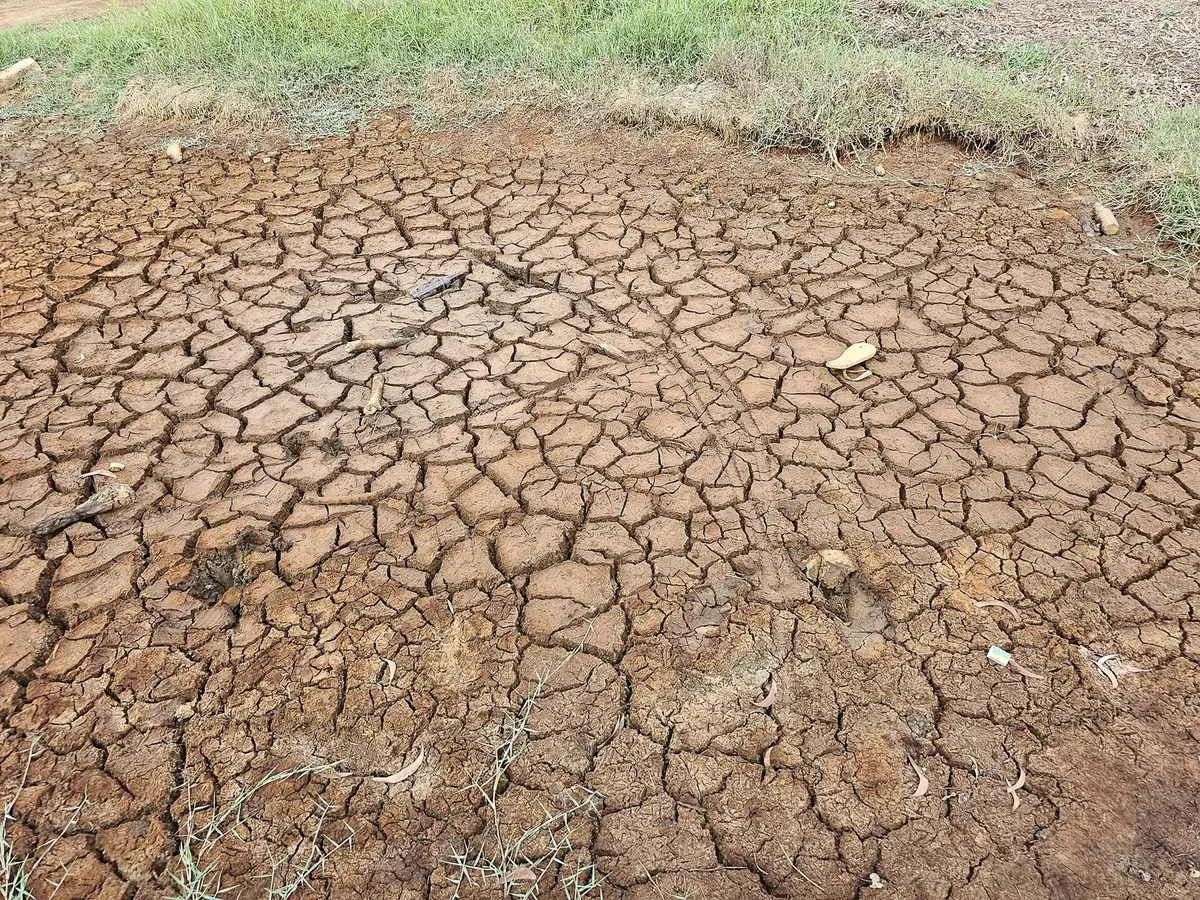
i. In one place the ground has dried and cracked, and the trees have died. What is the main reason for this disaster?
Pick an answer to see why.
2. Write the differences
Weather change and climate change
Answer
Endangered plants and medicinal plants
Answer
Greenhouse effect and climate change
Answer
3. Give reasons
Climate change is the main cause of unseasonal rainfall.
Answer
Sea level rises because of climate change.
Answer
Climate change also causes the extinction of animals.
Answer
Endangered animals can be protected by conserving their natural habitat.
Answer
Using medicinal plants is good for human health.
Answer
Tulsi is called a life-giving plant.
Answer
Neem is a multipurpose medicinal plant.
Answer
Yarsagumba is used as an energy-boosting herbal medicine.
Answer
4. Answer the following questions
What is climate change?
Answer
Write the main reasons for climate change.
Answer
Describe the effects of climate change.
Answer
What kinds of animals are called rare animals?
Answer
What measures can be adopted to protect rare animals?
Answer
Many plants are dying out in Nepal because of climate change. What role can you play to protect them? Describe briefly.
Answer
To protect and promote Nepal’s medicinal herbs, local people must be trained to process herbs and use them. Give your opinion.
Answer
By protecting yarsagumba and increasing its production, the country’s economy can also improve. Explain.
Answer
Study the concept map and complete it.
Answer
A picture shows two hands holding the Earth: in part A, the Earth is green and blue, with clear skies and fresh grass; in part B, it is dry, brown and burning, with smoke and dead land. Analyze the differences between A and B.
Answer
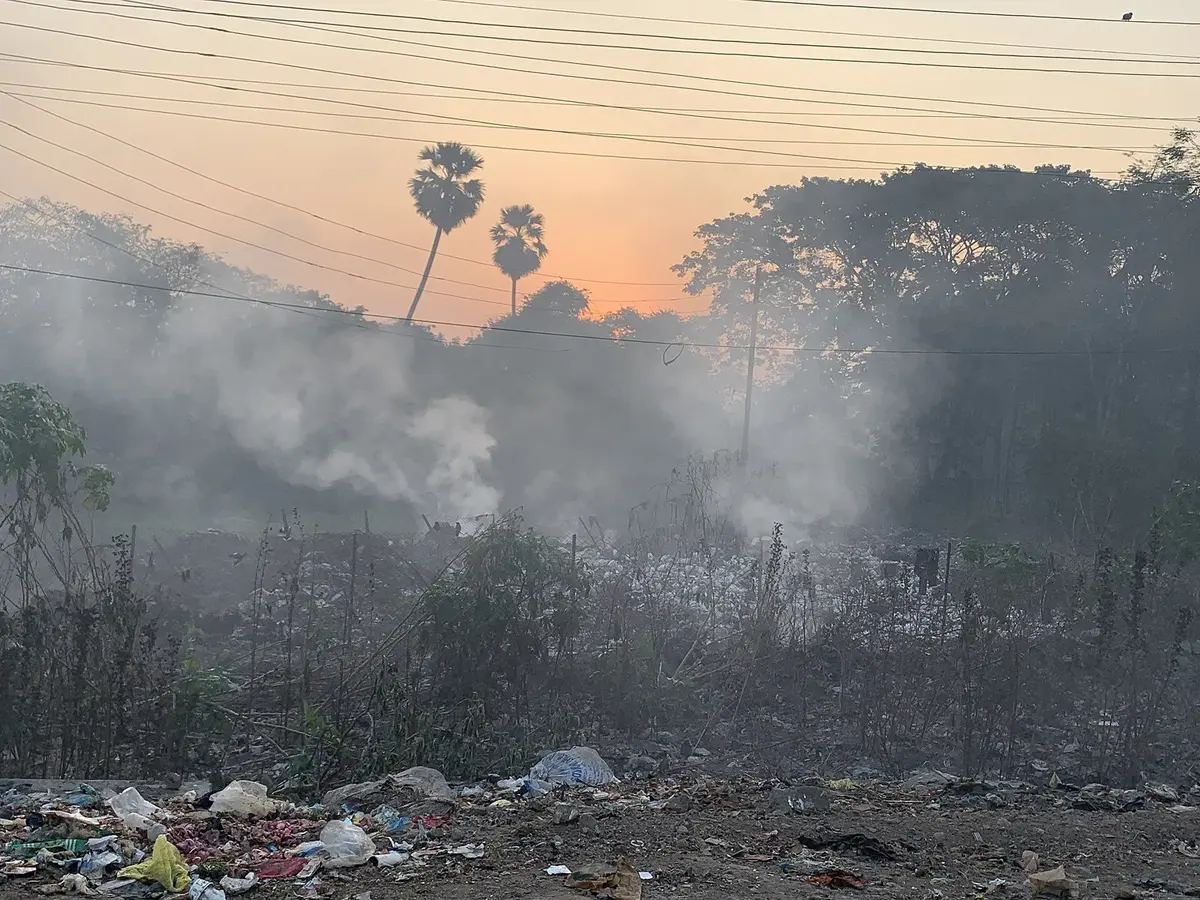
A picture shows a person carrying a sack across a huge, smoking rubbish dump. Explain its role in climate change.
Answer
The one-horned rhinoceros is on the verge of extinction. What can be done to protect it? Write briefly.
Answer
There are many medicinal herbs in our area, but we depend on others to treat common ailments. What is the main reason, and what can be done to make the best use of local herbs?
Answer
Quiz yourself: Environment and Biodiversity, Grades 5–10 →
Practice every question in the book, and keep track of the ones you miss →
A companion to your textbook, not a replacement for it: study from the book your school uses, and where the two differ, follow your teacher. Found a mistake? Please tell us.