
In a single day’s drive in Nepal you can go from a hot sal forest where rhinos graze, through cool hills of oak and rhododendron, up to meadows where yaks feed below the snow. Few countries anywhere have so many kinds of living things packed into so small a space.
Every one of those living things is different from the others, and yet each depends on many others: for food, for shelter, to carry its pollen, to clean up after it. This variety of life, and the way it holds together, is called biodiversity. In this unit you will see what biodiversity is, why Nepal is so rich in it, what is destroying it and how we can protect it; and then how to build roads, dams and towns that last, without ruining the land that our grandchildren will need: sustainable development.
There are many kinds of living things on Earth, and each has its own features. But none lives alone: every organism depends on others to survive. The differences between living things, in their appearance, their habitat and the way their bodies work, make up the natural biodiversity.
Living things take everything they need from the environment around them. All the goods and services that people and other organisms get from nature are called ecosystem services. From a forest, for example, people get fodder and firewood, fruits and medicines, timber and clean water; and the forest also holds the soil, stores water and cleans the air.
But if we use these services too much, we damage their sources, and they won’t last. So we must use them wisely and conserve them in every social, economic, cultural and development project we carry out. That keeps them sustainable and keeps the environment in balance.
4.1 Biodiversity
There are many kinds of organisms on Earth, with different habits, living in different habitats. Animals and plants of water, desert, cold mountains and hot, wet forests have very different body structures and abilities. And even individuals of the same species differ from each other: in one field of maize, the plants differ in height, the thickness of the stem, the number and length of the leaves, and the position and number of the cobs.
The variety of living things, with their different structures and abilities, living in different environments, is called biodiversity (biological diversity). It tells us how rich the Earth is in kinds of living things: its species richness.
At the Earth Summit held in Rio de Janeiro, Brazil, in 1992, the world’s countries signed the Convention on Biological Diversity (CBD). It defines biodiversity as the variety among living organisms from all sources, on land, in the sea and in other waters, and the ecosystems they are part of; this includes diversity within species, between species and of ecosystems. In short: the variety of life at every level, from genes to species to whole ecosystems.
Which of these is an example of variety within one species?
Pick an answer to see why.
No grassland nearby? Try it on the screen first.
Types of biodiversity
Living things are plants and animals (and microorganisms), so biodiversity is often described simply as the diversity of plants, called floral diversity (flora), and the diversity of animals, called faunal diversity (fauna). All the plants growing in and around a pond are its flora; the fish, frogs, insects and birds in and near the water are its fauna.
Scientists also divide biodiversity into three levels:
- genetic diversity
- species diversity
- ecosystem diversity
(a) Genetic diversity
Genetic diversity is the variety among individuals of the same species, caused by differences in their genes. Different species obviously differ (crows from cuckoos, tigers from lions). But even within one species there are many differences. All humans today belong to one species, Homo sapiens, yet we differ in the color and type of our hair, skin and eyes, our height, the shape of our eyelids, eyebrows and nose, and how much body hair we have.
Nepal’s farmers have grown thousands of varieties of rice, each suited to its own altitude, soil and climate; that is genetic diversity too. It matters: if a new disease attacks one variety, others may resist it.
(b) Species diversity
Species diversity is the number and kinds of species living in a particular place. An ecosystem has producers, herbivores, omnivores, carnivores and decomposers, and each of these groups has many species. Nepal alone has dozens of species of frogs and toads, each with its own features, and hundreds of kinds of fish in its rivers.
(c) Ecosystem diversity
Ecosystems are of two main types, aquatic (water) and terrestrial (land), with many sub-types depending on the climate: the land ecosystem of a tropical forest is very different from that of an alpine meadow, and so are their producers, herbivores, omnivores, carnivores and decomposers. Where two ecosystems meet, such as a forest beside a river, their organisms mix and interact, which makes the whole even more complex.
The variety of ecosystems, which differ in their physical conditions (air, water, minerals, temperature, light) and in the local and migrating organisms that live in them, is called ecosystem diversity.
The number of different kinds of trees in Chitwan’s forest is an example of:
Pick an answer to see why.
Importance of biodiversity
The physical and living environment of a place stays in balance only if it is rich in biodiversity. In a balanced, species-rich environment, organisms can more easily find habitat, food and partners to breed with. That is why biodiversity matters to every one of us:
- a.It provides the food and livelihood of every organism, including us.
- b.It keeps the environment in balance and increases the productivity of ecosystems.
- c.It allows the sustainable use of biological resources: food, timber, fiber, medicine.
- d.It helps conserve the environment and supports sustainable development.
- e.It attracts ecotourism and strengthens the nation’s economy.
- f.It helps living things adapt to hard conditions, such as the effects of climate change: the more varied the life, the more likely some of it survives a change.
Present status of biodiversity in Nepal
Nepal covers only about 0.1 % of the world’s land, yet it is extremely rich in biodiversity. The main reason is its huge range of altitude: from about 59 m above sea level at Kechana Kalan in Jhapa to 8,849 m at the top of Sagarmatha (Mount Everest), within about 200 km from south to north. That gives Nepal every climate from tropical to arctic-like. Add fertile soils and plenty of rain from the summer monsoon (and some winter rain), and you get a great many kinds of microbes, fungi, plants, worms, insects, fish, amphibians, reptiles, birds and mammals.
Nepal is often ranked about 25th–27th in the world, about 10th–11th in Asia, and 2nd in South Asia for biodiversity. It has about 3.2 % of the world’s known plant species and 1.1 % of its animal species. It has 118 types of ecosystem and 35 types of forest.
Some rare plants and animals are found only in Nepal, or are among Nepal’s great treasures:
- The spiny babbler (Turdoides nipalensis), a brown bird of the scrub of the middle hills, is found nowhere else in the world: Nepal’s only endemic bird.
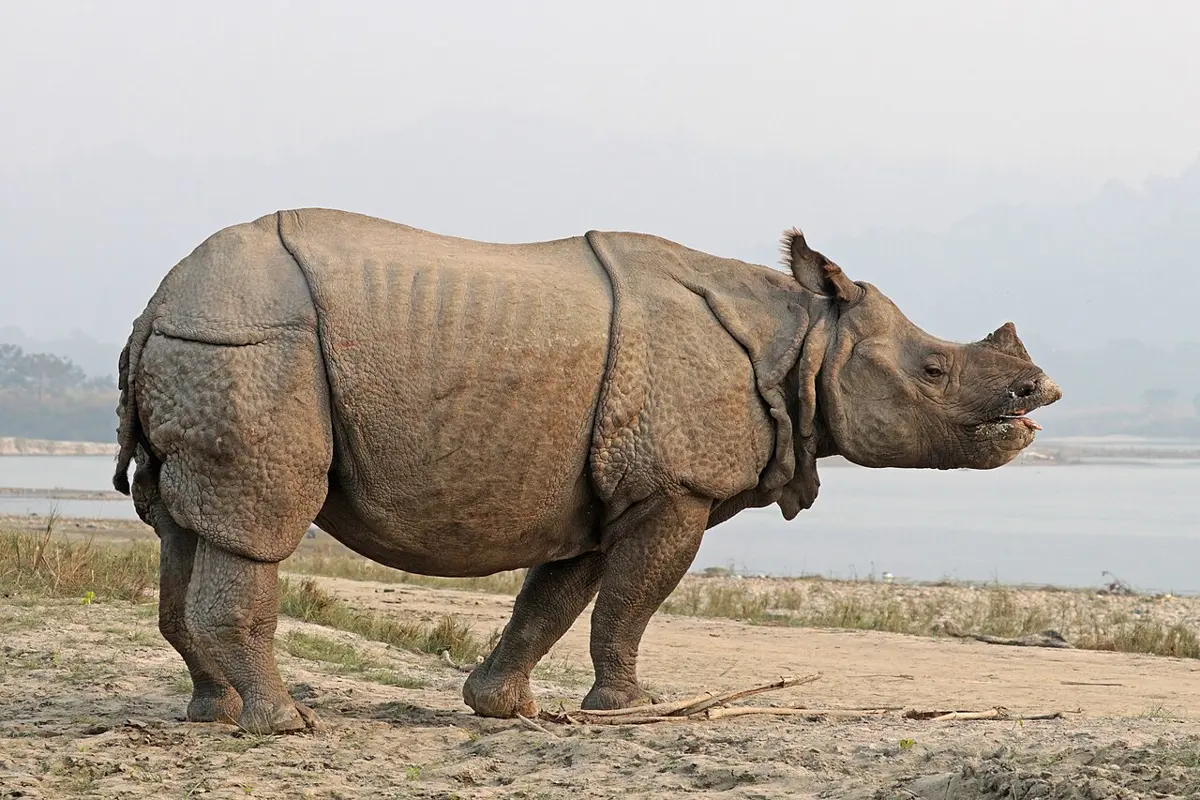
- The one-horned rhinoceros and the Bengal tiger of the Terai, and the very rare wild yak of the high Himalaya.
- About 32 species of rhododendron (gurans), including the national flower, lali gurans.
- Marsi rice of Jumla, a native red rice that grows at about 3,000 m (Chhumchaur, about 3,050 m), among the highest places in the world where rice is grown.
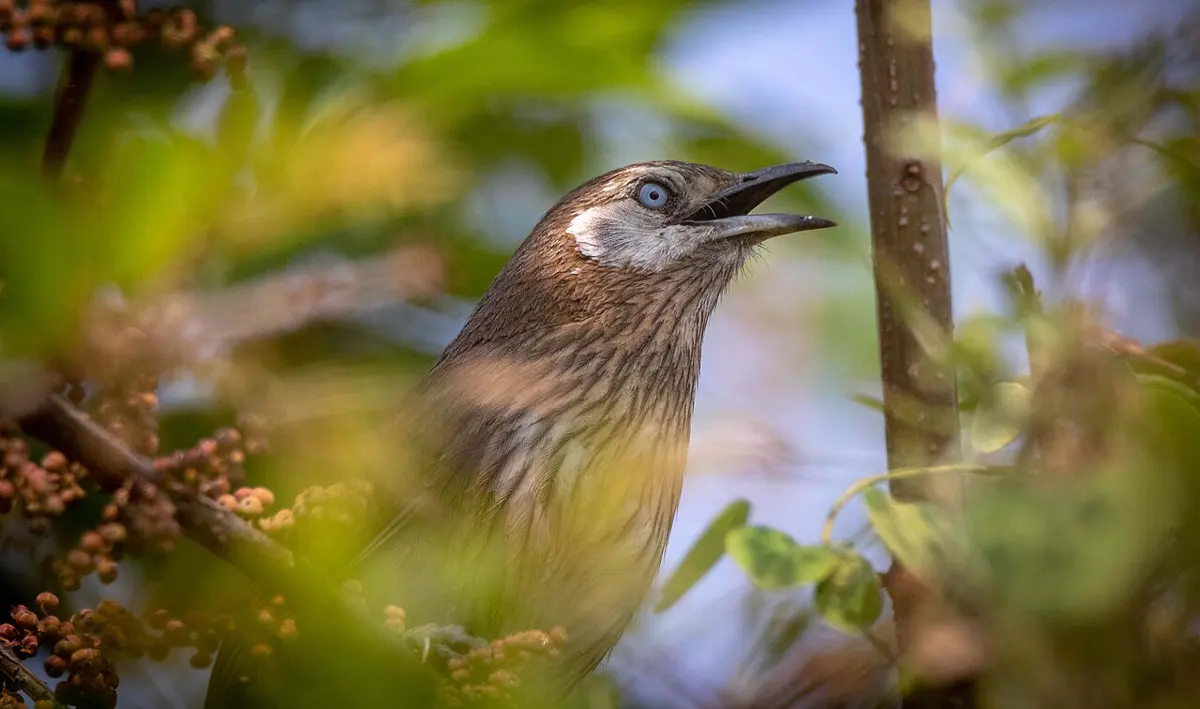
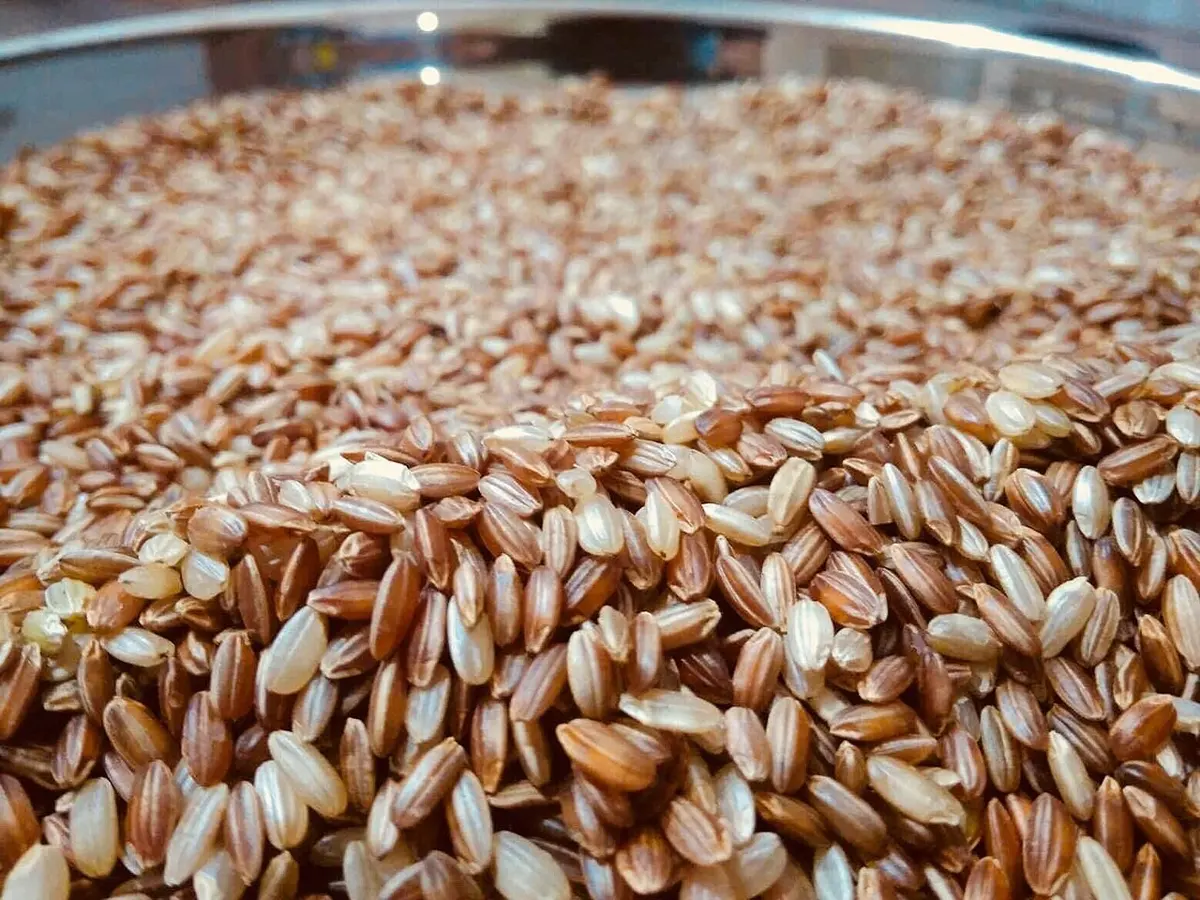
Table 4.1 Some important flora of Nepal
| Plant group | Species in the world | In Nepal | Nepal’s share |
|---|---|---|---|
| Lichens | more than 17,000 | 850 | 5 % |
| Algae | 56,579 | 1,001 | 1.77 % |
| Fungi | 98,998 | 2,467 | 2.49 % |
| Bryophytes (mosses and liverworts) | 16,236 | 1,213 | 7.47 % |
| Pteridophytes (ferns and their relatives) | 12,000 | 580 | 4.83 % |
| Gymnosperms (pines and other conifers) | 1,021 | 41 | 4.02 % |
| Angiosperms (flowering plants) | 369,400 | 6,973 | 1.89 % |
Table 4.2 Some important fauna of Nepal
| Animal group | Species in the world | In Nepal | Nepal’s share |
|---|---|---|---|
| Mammals | more than 4,765 | 185 | 3.88 % |
| Birds | 9,799 | 886 | 9.04 % |
| Reptiles | more than 7,870 | 78 | 0.99 % |
| Amphibians | more than 4,780 | 118 | 2.47 % |
| Freshwater fish | about 18,000 | 187 | 1.04 % |
| Butterflies | 17,500 | 651 | 3.72 % |
| Spiders | 39,490 | 175 | 0.44 % |
Causes of biodiversity degradation
All over the world, ecosystems and biodiversity are being damaged by natural disasters and, much more, by careless human activities. Unplanned growth of towns, industries, mining of rock and minerals, construction and farming are causing forests to be cut (deforestation), soil to be washed away (erosion) and land to dry out into desert (desertification), which affects the climate and all wildlife. Because of this, many wild species are close to extinction, and some are already gone. In Nepal the snow leopard is threatened, and the pygmy hog, the world’s smallest wild pig, has not been seen in Nepal’s wild for decades: it survives only in a few grasslands of Assam, India.
The decline in the number and kinds of plants and wild animals, because natural disasters and human activities disturb their lives, is called biodiversity degradation (loss of biodiversity). Its main causes:
- a.Overgrazing in natural forests damages seeds and seedlings, slows the growth of new plants, and in the end the forest declines.
- b.Chemical pollution from industries harms the biodiversity around them.
- c.Careless mining and blasting of rock and minerals cause noise, landslides and soil erosion, which harm plants and wildlife.
- d.Building roads, houses, dams and bridges without proper planning destroys the habitats of many wild animals.
- e.Collecting too much fodder and firewood leads to deforestation and dries up sources of water.
- f.Clearing forest for farmland and houses for a growing population reduces the forest area and its valuable species.
- g.Forest fires kill many wild animals and plants.
- h.Floods and landslides destroy many plants and animals.
- i.Global warming, from climate change, is changing the homes and lives of many plants and animals.
- j.Poaching (illegal hunting) and illegal trade in wild animals and their body parts reduce their numbers.
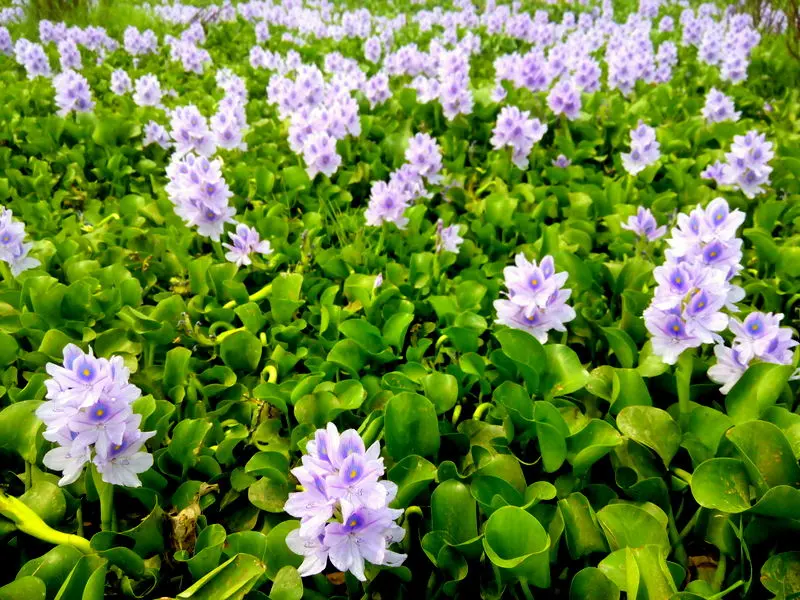
- k.Invasive plants, brought in from other countries, spread fast and push out the native plants. In Nepal, banmara (several weeds from the Americas, such as Ageratina and the climbing Mikania, which smothers trees in Chitwan) crowds out plants on land, and water hyacinth (jalkumbhi) covers ponds and lakes and chokes the plants and fish below.
- l.Digging sand, gravel and stones from rivers illegally and carelessly causes the banks to collapse, makes nearby farmland dry out, and destroys river life.
Which of these is a cause of biodiversity degradation that comes from nature, not from people?
Pick an answer to see why.
Conservation of biodiversity
Protecting plants and wild animals is the conservation of biodiversity. It keeps the natural environment in balance: when the numbers of plants and animals fall, the whole ecosystem suffers. Biodiversity must be conserved. There are two methods: in-situ and ex-situ conservation.
Table 4.3 Methods of conserving biodiversity
| In-situ conservation (in the natural home) | Ex-situ conservation (outside the natural home) |
|---|---|
| national parks | botanical gardens |
| wildlife reserves | zoos |
| hunting reserves | nurseries |
| conservation areas | safari parks |
| protected natural sites and landscapes | aquariums |
| seed banks, gene banks, embryo banks and sperm banks |
In-situ conservation
Conserving wild plants and animals in their own natural habitat is called in-situ conservation (in situ is Latin for “in its place”). It is the easiest and best method, because the animals and plants live naturally, interacting freely with the soil, water, climate and other living things around them, and all species of the area are protected together, whether endangered or not.
Its challenges are forest fires, diseases and, above all, poaching for profit. Because the protected areas are large, these are hard to control.
Nepal has protected about a quarter of its land in this way. As of 2026, it has 13 national parks, 1 wildlife reserve, 1 hunting reserve and 6 conservation areas, plus buffer zones around the parks where local people live and share in the parks’ income.
Table 4.4 Nepal’s protected areas (in-situ conservation), as of 2026
| National parks | Wildlife reserve | Hunting reserve | Conservation areas |
|---|---|---|---|
| 1.Chitwan | 1.Koshi Tappu | 1.Dhorpatan | 1.Annapurna |
| 2.Sagarmatha | 2.Kanchenjunga | ||
| 3.Bardiya | 3.Manaslu | ||
| 4.Rara | 4.Krishnasar | ||
| 5.Khaptad | 5.Gaurishankar | ||
| 6.Langtang | 6.Api Nampa | ||
| 7.Makalu Barun | |||
| 8.Shey Phoksundo | |||
| 9.Shivapuri Nagarjun | |||
| 10.Parsa | |||
| 11.Banke | |||
| 12.Shuklaphanta | |||
| 13.Chhayanath (Mugu, declared 2025) |
Ex-situ conservation
Conserving plants and animals outside their natural habitat, in a small, protected space made as much like their natural home as possible, is called ex-situ conservation (“out of its place”). It works especially well for species that are endangered: in a small area it is easier to look after them, treat them when they are ill, breed them and study them. But it is laborious and costly: their food and surroundings must be managed every day, and wild animals dislike a prison-like life in a cage.
Examples in Nepal: the Central Zoo in Jawalakhel, the National Botanical Garden in Godawari, the gharial and vulture breeding centers at Kasara in Chitwan (whose young are released into the wild), and the national gene bank at Khumaltar, Lalitpur, which stores the seeds of thousands of varieties of Nepal’s crops.
A rare orchid is dug up from a forest that is about to be cleared for a road, and planted in the National Botanical Garden. This is:
Pick an answer to see why.
Other measures to conserve plants and animals:
- a.control poaching and the illegal trade in wild animals, plants and their body parts;
- b.set up more protected areas;
- c.control overgrazing, forest fires, pollution, and unplanned growth of towns and industries;
- d.make strong laws against poaching and illegal trade in wildlife, and enforce them;
- e.educate people about why biodiversity matters to everyone, and about every citizen’s duty to protect it.
Exercise (4.1 Biodiversity)
1. Choose the best answer
a. Where was the Earth Summit on biodiversity held in 1992?
Pick an answer to see why.
b. Faunal diversity is the diversity of:
Pick an answer to see why.
c. Riya wants to conserve an endangered plant. Which of her actions is ex-situ conservation?
Pick an answer to see why.
d. Which of these shows the importance of biodiversity?
Pick an answer to see why.
e. What percentage of the world’s plant species is found in Nepal?
Pick an answer to see why.
2. Differentiate between
In-situ conservation and ex-situ conservation
Answer
| In-situ conservation | Ex-situ conservation |
|---|---|
| conserves organisms in their natural habitat | conserves organisms outside their natural habitat |
| covers large areas | uses small areas, cages or enclosures |
| all species of the area are protected together | only selected (usually endangered) species are protected |
| organisms live naturally, interacting with their surroundings | organisms live in artificial conditions |
| cheaper to run, but poaching and fires are hard to control | easier to care for, treat and breed them, but costly and laborious |
| e.g. national parks, conservation areas | e.g. zoos, botanical gardens, seed banks |
Genetic diversity and species diversity
Answer
| Genetic diversity | Species diversity |
|---|---|
| variety among individuals of the same species | variety of different species in one place |
| caused by differences in genes | measured by the number and kinds of species |
| e.g. different varieties of rice; humans with different skin, hair and eye color | e.g. the many species of trees, birds and insects in Chitwan’s forest |
3. Give reasons
There is some variation among individuals of the same species.
Answer
Individuals of a species have slightly different genes: in sexual reproduction, each offspring gets a new mix of genes from its two parents, and genes sometimes change (mutate). Their surroundings (food, light, soil, climate) also affect how they grow. So no two individuals are exactly alike, as the maize plants of one field show.
It is difficult to conserve a native species by the ex-situ method.
Answer
In ex-situ conservation, the organism lives outside its natural home, so its natural food, climate and surroundings must be recreated and managed every day, which is costly and laborious. Wild animals become stressed in captivity and often don’t breed well, and only a few individuals can be kept, so the species can’t live its natural life or keep its full variety.
Forest fires devastate biodiversity.
Answer
A forest fire burns trees, seedlings and seeds, and kills or drives away animals, especially slow ones and the young, eggs and nests. It destroys their food and shelter all at once. Afterwards the bare soil is washed away by rain, so the forest takes many years to recover, and some species may be lost from that place altogether.
Nepal is rich in biodiversity.
Answer
Within about 200 km from south to north, Nepal’s land rises from about 59 m to 8,849 m above sea level. So it has every climate from tropical to arctic-like, with many different ecosystems (118 types), plenty of monsoon rain and varied soils. Each climate and ecosystem has its own plants and animals, so this small country holds about 3.2 % of the world’s plant species and 1.1 % of its animal species, on only 0.1 % of the world’s land.
4. Answer these questions
What is biodiversity? Give examples.
Answer
The variety of living things, plants, animals and microorganisms, with their different structures and abilities, in different environments, at every level from genes to species to ecosystems, is called biodiversity.
Examples: the many varieties of rice grown in Nepal (genetic diversity); the tigers, rhinos, deer, birds and trees of Chitwan (species diversity); Nepal’s tropical forests, hill forests, alpine meadows, lakes and rivers (ecosystem diversity).
What are the methods of conserving biodiversity? Explain any one of them in brief. What other measures help conserve biodiversity?
Answer
The two methods are in-situ and ex-situ conservation.
In-situ conservation protects plants and animals in their own natural habitat, in national parks, wildlife reserves, hunting reserves and conservation areas. The organisms live naturally, all the species of the area are protected together, and it is the cheapest way to protect large numbers. Its challenges are poaching, forest fires and diseases. Nepal has 13 national parks (as of 2026), a wildlife reserve, a hunting reserve and 6 conservation areas.
Other measures: controlling poaching and the illegal wildlife trade; making more protected areas; controlling overgrazing, forest fires, pollution and unplanned urbanization; making and enforcing strong laws; and making people aware of the importance of biodiversity.
What are the common impacts of human activities on biodiversity? Explain.
Answer
- Deforestation: clearing forests for farms, houses and roads, and taking too much firewood and fodder, destroys habitats.
- Overgrazing: livestock eat and trample seedlings, so forests can’t regrow.
- Pollution: chemicals from industries, farms and towns poison soil, water and the life in them.
- Unplanned construction and mining: roads, dams and quarries without planning cause landslides and erosion and cut wildlife habitats apart.
- Poaching and illegal trade: reduce the numbers of animals such as rhinos, tigers and pangolins.
- Invasive species: plants such as banmara and water hyacinth, spread by people, push out native plants.
- Climate change: caused mainly by burning fuels, it changes the homes and seasons that many species depend on.
Explain the present status of the biodiversity of Nepal.
Answer
Nepal covers only 0.1 % of the world’s land but is very rich in biodiversity, because its altitude ranges from about 59 m to 8,849 m, giving climates from tropical to arctic-like, with good rainfall and fertile soils. It is often ranked about 25th–27th in the world and 2nd in South Asia. It has about 3.2 % of the world’s plant species and 1.1 % of its animal species, 118 types of ecosystem and 35 types of forest; for example, about 6,973 kinds of flowering plants, 886 birds and 185 mammals. Some species are found only in Nepal, such as the spiny babbler; rare animals such as the one-horned rhino, the Bengal tiger, the snow leopard and the wild yak live here, along with about 32 species of rhododendron and native crops such as Jumla’s Marsi rice. About a quarter of the country is protected. But habitat loss, overgrazing, invasive plants, poaching and climate change still threaten many species.
Explain the causes of biodiversity degradation, in points.
Answer
- Overgrazing in forests, which stops new trees growing.
- Chemical pollution from industries.
- Careless mining and blasting, causing landslides and erosion.
- Unplanned construction of roads, buildings, dams and bridges, destroying habitats.
- Collecting too much fodder and firewood, causing deforestation.
- Clearing forests for farmland and houses.
- Forest fires.
- Floods and landslides.
- Global warming and climate change.
- Poaching and illegal trade in wildlife.
- Invasive plants, such as banmara and water hyacinth, pushing out native plants.
- Illegal and careless mining of sand, gravel and stones from rivers.
What is the role of species richness in biodiversity?
Answer
Species richness is the number of different species in a place. It is the most common measure of biodiversity: the more species an area has, the richer its biodiversity. A species-rich ecosystem has many food chains linked into a web, so if one species declines, others can take its place; it is more stable, more productive, and recovers better from droughts, diseases and other changes. Species richness also gives people more resources: food, medicines, timber and tourism.
Mention the types of biodiversity.
Answer
By kind of organism: floral diversity (plants) and faunal diversity (animals).
By level: genetic diversity (variety within a species), species diversity (variety of species in a place) and ecosystem diversity (variety of ecosystems).
A photograph shows a signboard at the entrance to a forest: “Chitwan National Park”.
- i.Which method of conserving biodiversity is shown?
- ii.State the advantages of this method, and how it conserves biodiversity.
Answer
- i.In-situ conservation: a national park protects wildlife in its natural habitat.
- ii.Advantages: the animals and plants live naturally, in their own habitat, with their natural food and climate; every species in the area, endangered or not, is protected together, with their food chains and the whole ecosystem; large populations can be protected cheaply; the animals breed naturally and keep their full genetic variety; and the park brings income from tourism, which is shared with local people in the buffer zone.
How it works: hunting, grazing, tree cutting and settlement are controlled inside the park; the army and park staff patrol against poachers; the animals are counted and studied; and local people are involved through buffer zone user groups. In Chitwan, this has brought the one-horned rhino and the Bengal tiger back from near extinction.
4.2 Sustainable development
People get most of what they need from nature and its ecosystem services. To use them, we build infrastructure: roads, bridges, dams, canals, buildings. When we build, we must think about whether it will last, so that people benefit from it for a long time. For that, we must think about the economic, social, cultural and environmental sides of every project.
Taking care of the economic, social, cultural and environmental aspects while building and running any project for people is called sustainable development. The most famous definition comes from the report Our Common Future of the Brundtland Commission (1987):
Sustainable development is development that meets the needs of the present without compromising the ability of future generations to meet their own needs.
Sustainable development keeps the future in view, and builds a base for lasting progress. For example, if a bridge is built at a place where landslides are likely, and good measures against landslides are taken while building it, the bridge will last, and many generations will use it. If they are not, it may be swept away in the first big monsoon.
Aspects of sustainable development
Sustainable development tries to solve many problems of human society together: poverty, the infrastructure of development projects, social inequality, climate change, pollution and imbalance in the environment, biodiversity, the management of forests, and peace and justice. These different sides are called the aspects of sustainable development. There are three main aspects, also called the three pillars of sustainable development. Without all three, development lasts only a short time, and may even destroy the chance of doing better later:
- the economic aspect
- the social aspect
- the environmental aspect
(a) Economic aspect
The economic aspect is about steady, balanced economic growth for people and nations: a strong and growing economy, with resources shared and used sensibly, without discrimination. It aims to meet the present generation’s needs in producing, distributing and using goods and services, but without exploiting (overusing and exhausting) resources.
(b) Social aspect
People of different backgrounds, beliefs and status live in every society. Development is sustainable only if the whole community progresses fairly together. That needs ending poverty, fair access to resources for all, empowering women and marginalized groups, people’s participation, protecting cultural identity, and peace and social justice. This is the social aspect. A prosperous society must look after all of these.
(c) Environmental aspect
For a prosperous society, the environment around it must stay productive and reliable. The fertility of the land, water, air, minerals, climate, and the biodiversity of plants and animals must be conserved. Using natural resources properly while keeping the ecosystem in balance is the environmental aspect. People need a steady supply of ecosystem services, so development projects must not destroy natural resources: roads, bridges and dams must be built with care for the environment, river banks and construction sites must be protected from erosion and landslides, and the natural homes of plants and animals must not be destroyed.
A new road brings jobs and markets to a village, but its builders tip all the dug-out soil down the hillside into the river. Which pillar of sustainable development has been forgotten?
Pick an answer to see why.
Principles of sustainable development
The principles of sustainable development are the guidelines to follow in every kind of development work, so that it lasts:
(a) Principle of ecosystem and biodiversity conservation
Keeping in mind how much the Earth can bear (its carrying capacity), development projects must conserve natural resources, ecosystems and biodiversity. This is the principle of ecosystem and biodiversity conservation. It stresses conserving natural resources, using renewable energy (sun, water, wind) and searching for new alternatives, controlling pollution, and conserving biodiversity.
(b) Principle of population control and human resource management
People use and consume far more natural resources than any other living thing. To keep natural resources available and reach sustainable development through people’s knowledge and skills, the human population must be kept within limits. Keeping the population within limits, so that the use of natural resources stays sustainable, is the principle of population control and human resource management. It says that responsible people should keep their families small, and that everyone’s knowledge and skills should be developed through education, training and awareness programs, so that people become a resource rather than a burden.
(c) Principle of cultural conservation and public participation
One person alone can do little, but when the public takes part, great things can be done. People take part in development only when their traditions and culture are respected and the work brings them prosperity and happiness. Conserving cultural heritage and building a positive attitude towards sustainable development in the community is the principle of cultural conservation and public participation. It stresses social justice and peace. For example, if the villagers themselves build an irrigation canal, they all feel it is theirs, they look after it, and the canal lasts a long time. Nepal’s community forests and farmer-managed irrigation systems work this way.
Importance of sustainable development
Development that cares for every aspect of society and the environment is sustainable development. It conserves and uses natural resources sensibly, protects the homes of plants and animals, keeps social justice, conserves traditions and culture, and brings happiness and prosperity to society. So it matters greatly today:
- a.It keeps the environment in balance and controls pollution.
- b.It conserves natural resources and makes people aware of using them sensibly.
- c.Big infrastructure projects (megaprojects) are built to its standards, so they last.
- d.It gradually ends social inequality and brings social justice, peace and harmony among people.
- e.It gives every person in society a fair share of economic opportunity.
Sustainable Development Goals and Nepal’s efforts
In 2015, at the 70th General Assembly of the United Nations, all 193 member countries agreed on the Sustainable Development Goals (SDGs), a shared plan for the whole world for 2016 to 2030. There are 17 goals and 169 targets, and progress is measured with about 230 indicators. The goals cover the economic, social and environmental aspects of development, each with a deadline. Nepal has made its own roadmap for the SDGs, with some extra indicators suited to Nepal, carried out through its periodic plans and yearly budgets.
All the goals are linked, directly or indirectly, to a better environment, but Goal 15 (Life on land) is the one about the environment and biodiversity: using land ecosystems sustainably, restoring and conserving them, managing forests well, stopping land from turning into desert, and halting the loss of biodiversity. Other goals include ending hunger (food security), fair and good-quality education for all, lifelong learning, clean drinking water and sanitation, strong infrastructure, decent jobs, action on climate change (Goal 13), and conserving the seas and oceans (Goal 14).
Which Sustainable Development Goal is about biodiversity on land?
Pick an answer to see why.
For food security, the main task is to protect farmland and native crops. For safe drinking water, sources and watersheds must be found and protected, which also needs sustainable infrastructure.
Biodiversity is directly harmed by climate change. It changes the life cycles of sea creatures, and on land it brings more floods, landslides, forest fires, very heavy rain, droughts, uneven rainfall and land drying into desert, all of which upset the balance of nature and the homes of plants and animals.
The air and the oceans are shared by the whole world, so, as global climate models show, damage to the environment in one place affects the whole Earth. Controlling pollution, cutting carbon dioxide emissions, planning industries and cities well, and using natural resources fairly and sensibly can only be achieved with the full support of every country.
Nepal is working towards these goals: reducing poverty, adapting to climate change, conserving biodiversity, spending more on quality education, and developing communities. Nepal was due to graduate from the group of Least Developed Countries (LDCs) on 24 November 2026; in 2026 it asked the United Nations for three more years, to 2029, to prepare (as of October 2026, the UN General Assembly was still to decide). Some of its efforts towards the goals:
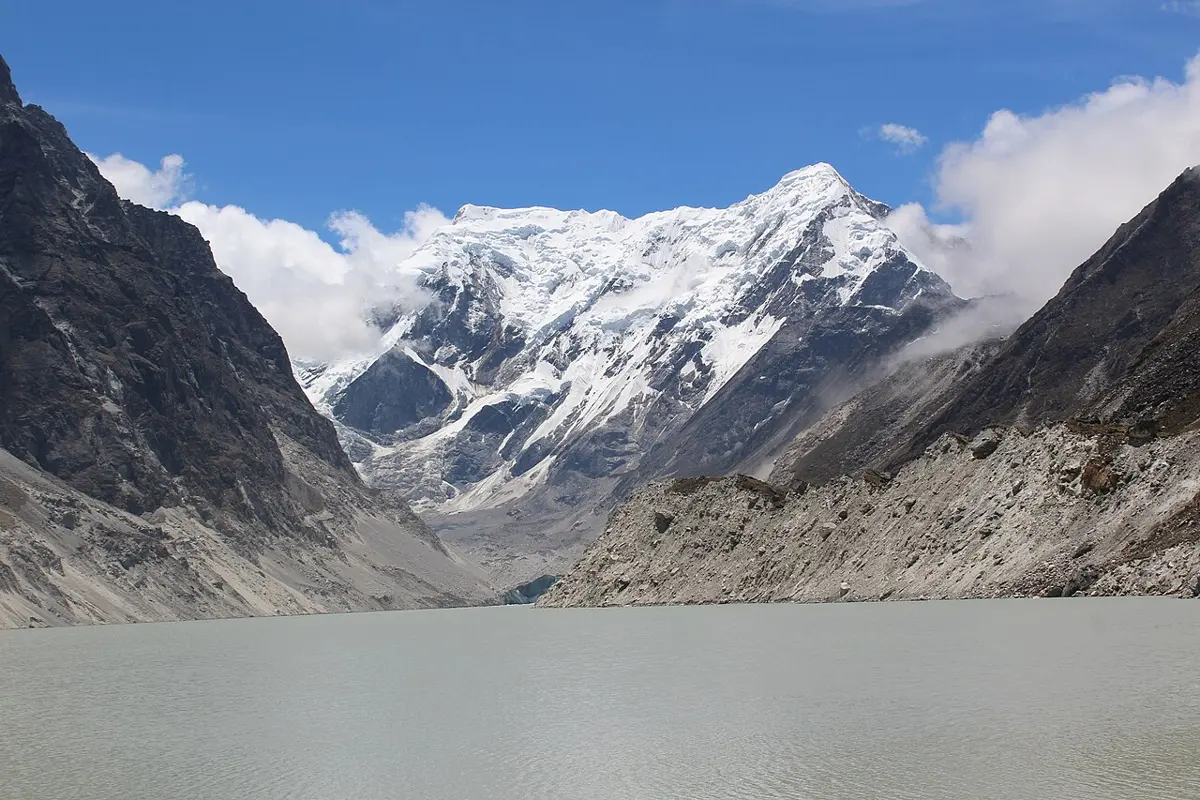
- a.Since 2009, a Climate Change Council has guided programs to conserve water resources, watersheds and biodiversity at the local level, to reduce and adapt to the effects of climate change. To draw the world’s attention to climate change, Nepal’s government held a cabinet meeting at Kala Patthar, near Everest Base Camp, at about 5,250 m, on 4 December 2009, just before the world climate talks in Copenhagen. In 2018, the cabinet of Karnali Province met on the shore of Rara, Nepal’s largest lake (2,990 m). At Tsho Rolpa, a glacial lake at 4,580 m in the Rolwaling valley of Dolakha, which grows as the glacier above it melts, a channel with gates was built, and in 2000 the lake was lowered by 3 m to reduce the danger of it bursting; Imja Tsho near Everest was lowered by 3.4 m in 2016, and more lakes are planned.
- b.To conserve forests, Nepal began community forestry in the late 1970s. Since the Forest Act of 1993 handed forests over to local user groups, more than 22,000 groups now manage about a third of Nepal’s forests, and both the area and the density of forests have increased: forest and shrubland covered about 40 % of Nepal in the mid-1990s and about 45 % by 2015.
- c.Under the Fourteenth Plan (2016/17–2018/19), Nepal ran programs to reduce poverty, with vocational and technical education, skills for earning income, job creation, biodiversity awareness, and campaigns for education, sanitation and health for all.
- d.With the idea of a “clean, green and healthy environment”, the Fifteenth Plan (2019/20–2023/24) promised people the right to live in a healthy environment, by controlling pollution, managing solid waste and keeping homes and workplaces green. (The Sixteenth Plan, 2024/25–2028/29, carries this on.)
- e.The National Environment Policy, 2076 BS (2019) aims to secure people’s right to a clean environment by managing household and industrial waste, keeping cities green, and providing drains and public toilets.
- f.The Environment Protection Act, 2076 BS (2019) protects people’s right to live in a clean environment: polluters must pay compensation for the damage they cause; it seeks a balance between environment and development, and to reduce the effects of climate change on nature, the environment and biodiversity, and to face the challenges of global warming.
Exercise (4.2 Sustainable development)
1. Choose the best answer
a. Which commission’s report gave the best-known definition of sustainable development?
Pick an answer to see why.
b. Which aspect of sustainable development stresses social justice?
Pick an answer to see why.
c. Which of these shows the importance of sustainable development for biodiversity?
Pick an answer to see why.
d. Which of the Sustainable Development Goals is about biodiversity?
Pick an answer to see why.
e. As snowfall on the Himalaya declines, which is the main challenge to sustainable farming in the region?
Pick an answer to see why.
f. According to the principle of social justice in sustainable development, which community development strategy best suits Nepal, giving every citizen a fair share of natural resources?
Pick an answer to see why.
2. Differentiate between
Development and sustainable development
Answer
| Development | Sustainable development |
|---|---|
| progress that meets present needs | progress that meets present needs without harming the ability of future generations to meet theirs |
| may look only at economic gain | balances economic, social and environmental aspects |
| may overuse and destroy natural resources | uses natural resources sensibly and conserves them |
| benefits may be short-lived | benefits last for many generations |
| e.g. a road cut quickly without drains, which slides away in the monsoon | e.g. a road built with drains, gentle slopes and planting, which lasts |
The social and environmental aspects of sustainable development
Answer
| Social aspect | Environmental aspect |
|---|---|
| concerns people and society | concerns nature and natural resources |
| aims at social justice, equality, peace and cultural identity | aims at conserving land, water, air, climate and biodiversity |
| stresses ending poverty, empowering women and marginalized groups, people’s participation | stresses controlling pollution, preventing erosion and landslides, protecting habitats |
| e.g. a fair share of a community forest’s income for every household | e.g. a road built without dumping soil into the river |
3. Give reasons
The environment must be considered when carrying out development work.
Answer
Development depends on natural resources: land, water, forests and a stable climate. If a project ignores the environment, it may cause landslides, floods, pollution and loss of biodiversity, which harm people and can destroy the project itself (a road swept away by landslides, a dam filled with silt). Only development that conserves the environment lasts and benefits future generations.
Sustainable development helps to establish social harmony.
Answer
Sustainable development shares resources and opportunities fairly, ends poverty and discrimination, empowers women and marginalized groups, respects people’s culture and lets them take part in decisions. When everyone gets a fair share and a voice, there is less conflict, and people live together in harmony.
The degradation of biodiversity affects sustainable development.
Answer
Biodiversity provides the ecosystem services that development depends on: food, water, fertile soil, timber, medicines, pollination, protection from landslides and floods, and income from tourism. When biodiversity is lost, these services decline, ecosystems become unstable, and people, especially the poor who depend directly on nature, suffer. So development can’t last without conserving biodiversity.
4. Answer these questions
What is sustainable development? Give an example.
Answer
Development that meets the needs of the present generation without compromising the ability of future generations to meet their own needs, by balancing economic, social and environmental aspects, is called sustainable development (Brundtland Commission, 1987).
Example: community forestry in Nepal. Local user groups protect the forest, take only as much firewood, fodder and timber as grows back, and use the income for schools and roads. The forest, the community and its income all keep growing. Another example: a road built with drains, gentle slopes and planted grass, so it lasts for many years.
What are the principles of sustainable development? Describe any one of them briefly.
Answer
The principles are:
- the principle of ecosystem and biodiversity conservation;
- the principle of population control and human resource management;
- the principle of cultural conservation and public participation.
Cultural conservation and public participation: development lasts only when the people it serves take part in it and their traditions and culture are respected. When villagers plan, build and look after a project, such as an irrigation canal or a community forest, they feel it is theirs and protect it, so it lasts. This principle also stresses conserving cultural heritage, and social justice and peace.
“Skilled human resources are both the foundation and the destroyer of sustainable development.” Explain this statement in your own words.
Answer
Foundation: skilled, educated people are what development is built with. Engineers design safe roads and bridges, scientists find renewable energy and better crops, doctors and teachers improve health and education, and aware citizens conserve forests and use resources wisely.
Destroyer: the same skills can be used carelessly or greedily: to cut forests faster, build badly planned roads that cause landslides, run polluting factories, poach wildlife with modern weapons, or overuse resources for quick profit.
So it depends on how skills are used. Education must teach not only skills but also responsibility towards the environment and future generations.
Describe the importance of, and the need for, sustainable development for a balanced environment.
Answer
Natural resources are limited, the population is growing, and careless development is causing deforestation, pollution, landslides, loss of biodiversity and climate change. Sustainable development is needed to stop this.
Importance: it keeps the environment in balance and controls pollution; it conserves natural resources and teaches people to use them sensibly; it makes big projects safe and long-lasting; it reduces inequality and brings social justice and peace; and it gives everyone a fair economic opportunity, so that future generations inherit a healthy environment as well as development.
What are the Sustainable Development Goals? Describe Nepal’s efforts to achieve them.
Answer
The Sustainable Development Goals (SDGs) are 17 goals, with 169 targets, agreed by all 193 members of the United Nations in 2015, for the whole world to achieve between 2016 and 2030: ending poverty and hunger, health, education, clean water, clean energy, decent work, climate action, and life on land and in water, among others.
Nepal’s efforts:
- Nepal has made its own SDG roadmap and carries it out through its periodic plans and budgets.
- A Climate Change Council (since 2009) guides programs on water, watersheds and biodiversity; the 2009 cabinet meeting at Kala Patthar drew the world’s attention to climate change; Tsho Rolpa and Imja glacial lakes were lowered to reduce the risk of floods.
- Community forestry (since the late 1970s, and the Forest Act of 1993) has increased forest cover.
- The Fourteenth, Fifteenth and Sixteenth Plans have focused on reducing poverty, vocational education, jobs, sanitation, health, pollution control and a clean, green environment.
- The National Environment Policy, 2076 and the Environment Protection Act, 2076 protect people’s right to a clean environment and make polluters pay.
- Protected areas cover about a quarter of the country, and tigers and rhinos have increased.
Nepal is working to graduate from the group of Least Developed Countries; it was due to in November 2026 and has asked the UN to put it off to 2029 (as of October 2026).
A road is being built in your town or village. Give three suggestions to the construction company for making the road sustainable.
Answer
- Build drains along the road and across it, so that rainwater doesn’t soak into the slope or run over the road.
- Cut slopes gently or in steps, protect them with retaining or gabion walls, and plant grass, shrubs and trees (bioengineering) on them.
- Don’t tip the dug-out soil down the hillside or into rivers; dispose of it safely, and avoid unnecessary blasting and tree cutting. (Also: study the land before building, avoid landslide-prone slopes, and involve local people in planning and maintenance.)
What are the aspects of sustainable development? Describe the relationship between them briefly, with a suitable Venn diagram.
Answer
The three aspects (pillars) are the economic, social and environmental aspects.
Draw three overlapping circles, labeled Environmental, Social and Economic, as in Figure 4.7. Where environment and society overlap, development is bearable; where society and economy overlap, it is equitable (fair); where environment and economy overlap, it is viable; and only in the center, where all three overlap, is it sustainable.
They depend on one another: the economy depends on natural resources (environment) and on healthy, educated people (society); society needs income (economy) and a healthy environment; and the environment is conserved only when people are not forced by poverty to overuse it and when the economy doesn’t exploit it. If any one is ignored, development doesn’t last.
Suggest what your local government should do to achieve the Sustainable Development Goals related to biodiversity.
Answer
- Protect local forests, wetlands, rivers and grasslands, and support community forests.
- Run tree-planting and bioengineering programs on bare and landslide-prone slopes.
- Control overgrazing, forest fires and illegal mining of sand, gravel and stones from rivers.
- Remove invasive plants such as banmara and water hyacinth, and promote native species.
- Conserve native crops and seeds (community seed banks) and promote organic farming with less pesticide.
- Make and enforce local rules against poaching and the illegal wildlife trade.
- Manage waste and sewage so that they don’t pollute rivers and ponds.
- Run awareness programs in schools and communities, and involve local people, especially women and indigenous communities, in decisions.
Practice every question in the book, and keep track of the ones you miss →