
Sit quietly by a village pond for ten minutes. A dragonfly hovers and darts. A frog plops into the water. Tiny green specks drift in the sunlit water, a snail creeps over the mud, a white egret stands perfectly still, waiting. It looks peaceful, but every one of them is busy: making food, hunting, hiding, breathing, rotting away. And none of them could live for long without the others, or without the sunlight, water, air and mud around them.
Living things and their non-living surroundings, linked together into one working whole, make an ecosystem. In this unit you’ll find out what an ecosystem is made of, how energy flows through it from the sun along food chains and food webs, and the different ways living things live together: helping each other, using each other, competing, and eating each other.
6.1 Ecosystem
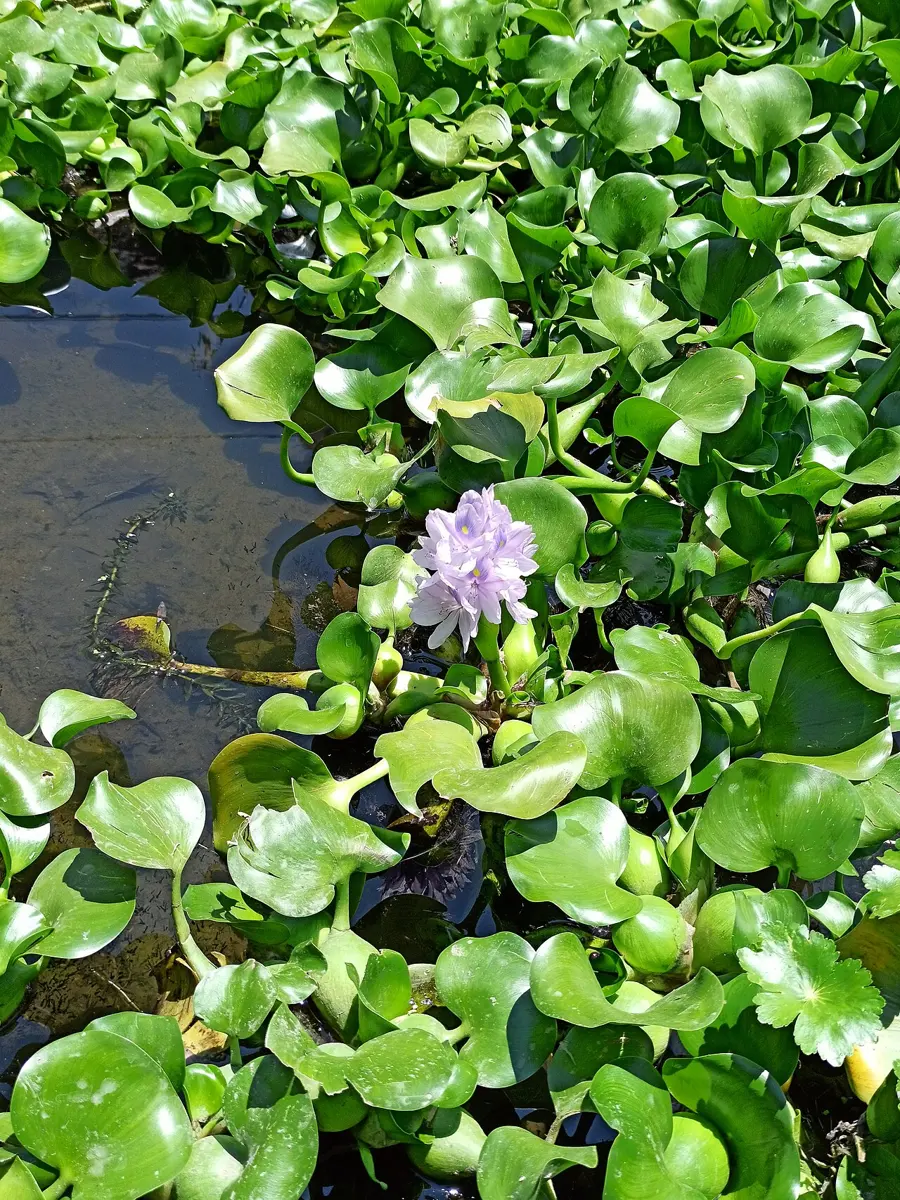
Green plants make their own food in their leaves, using water and minerals from the soil, carbon dioxide from the air and the energy of sunlight. Animals eat food made by plants. Living things take in oxygen for respiration and give out carbon dioxide, which plants use again for photosynthesis. In a pond, plants such as water hyacinth (Eichhornia) take up water and minerals from the water and mud. When any living thing dies, decomposers break its body down into simple substances, which plants take up again. So materials go round and round, and plants, animals and their surroundings are all linked.
A group of different living things (populations of different species) that live together in the same place and depend on each other is called a community. A community and its non-living surroundings act on each other all the time. The whole system formed by a community of living things and their physical environment (light, heat, water, soil, air), all working together, is called an ecosystem. The branch of science that studies ecosystems, and how living things relate to each other and to their surroundings, is ecology.
The word ecosystem was first used by the English botanist Arthur George Tansley in 1935.
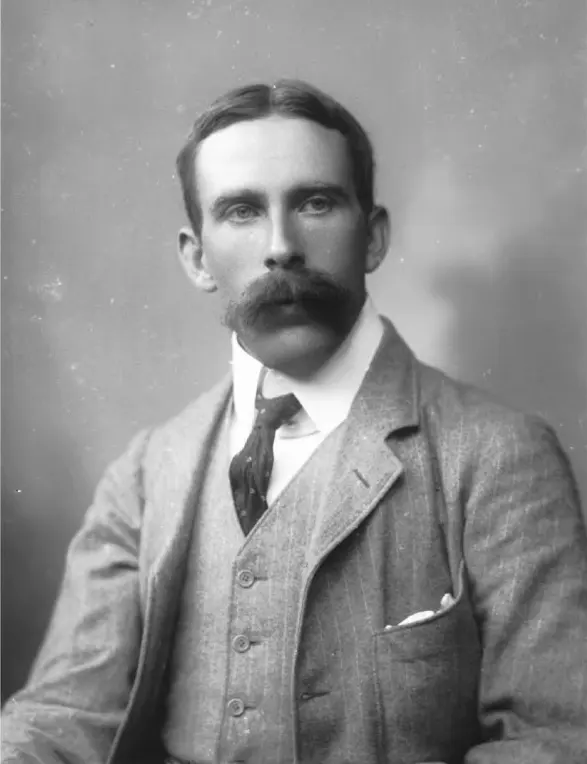
An ecosystem has two main parts:
- the biotic (living) part: plants, animals (people included), fungi and bacteria, which together form a community;
- the abiotic (non-living) part: soil, light, air, water, humidity, temperature and minerals.
Energy and materials pass between the biotic and abiotic parts all the time. This flow of energy, and the way living things interact, keep the ecosystem balanced.
Buckwheat: J. Sturm, Deutschlands Flora (1796), public domain
Mushroom: Jan Kops, Flora Batava vol. 10 (1849), public domain
Which of these is an ecosystem, and not only a community?
Pick an answer to see why.
Components of an ecosystem
1. Abiotic components
The non-living things that affect the living things of a place are its abiotic components: air, solar energy, temperature, soil, water, humidity and minerals. They are closely linked with the living parts.
(a) Air
The atmosphere is a mixture of gases: mostly nitrogen (about 78 %) and oxygen (about 21 %), with small amounts of carbon dioxide, water vapor and others. Green plants take in carbon dioxide for photosynthesis and give out oxygen, which plants, animals and people use for respiration; respiration gives carbon dioxide back. So the air links plants and animals.
Plants need nitrogen to make proteins and chlorophyll, the green pigment they make food with. They can’t use the nitrogen gas of the air directly: it must first be turned into soluble nitrates (by lightning, and by bacteria in the soil and in root nodules), which the roots absorb. Water vapor in the air makes it humid and is part of the water cycle.
(b) Solar energy
Sunlight is the source of energy for almost all life. Plants use its light to make food; its heat warms the Earth, sets the temperature, and drives the water cycle by evaporating water. The sun’s energy does not reach all parts of the Earth equally, so climate, rainfall and the kinds of food crops differ from place to place, and different plants and animals live in different places: rhododendron forests in the cool hills, sal forests in the warm Terai.
(c) Water
All living things need water. Plants use it in photosynthesis, and both plants and animals are mostly water (your body is about 60 % water). The chemical reactions of life take place in water, and water carries materials in the body. People and animals get water from ponds, lakes, wells, springs, rivers and from food. Where water is scarce, as in a desert, few plants and animals can live.
(d) Soil
Soil holds minerals and chemicals such as nitrogen, phosphorus and potassium that plants need, along with water, air, humus (rotted organic matter) and countless tiny living things. Plants take water and minerals from the soil to grow; people and animals eat the grain, vegetables, fruits and leaves of plants; and many animals make their homes in the soil.
2. Biotic components
The living part of an ecosystem, its biotic community, is made of plants, animals, fungi, bacteria and other microbes. They are linked to each other for food, for shelter and for moving about (a bird carries seeds, a bee carries pollen), and they affect their environment and are affected by it. By the part they play in passing energy along, they are of three kinds: producers, consumers and decomposers.
(A) Producers
Living things that make their own food are called producers (or autotrophs). Most are green plants and algae, which use the energy of sunlight to turn simple inorganic substances (carbon dioxide and water) into organic food (sugar) by photosynthesis. In water, the main producers are phytoplankton: microscopic plant-like living things that drift in the water, such as cyanobacteria and diatoms. A few bacteria make food using the energy of chemicals instead of light. All other living things depend on the food the producers make.
(B) Consumers
Living things that can’t make their own food and depend, directly or indirectly, on producers are called consumers (or heterotrophs). By what they eat, they are grouped as:
- Primary consumers eat only plants: they are herbivores. Examples: zooplankton (tiny floating animals), insects such as grasshoppers, rabbits, cows, buffaloes, goats and deer.
- Secondary consumers eat the primary consumers: frogs, small fish, birds that eat insects, jackals.
- Tertiary consumers eat the secondary consumers: large carnivores such as tigers, leopards, lions, crocodiles, large fish, eagles and killer whales.
Some animals, like bears, crows and people, eat both plants and animals: they are omnivores, and can be at more than one level.
In fact any animal’s level depends on what it is eating at the time. A tiger that eats a deer (a herbivore) is a secondary consumer in that chain; when it kills a jackal (which eats rats and birds), it is a tertiary consumer. Books list the big hunters as tertiary (top) consumers because nothing hunts them.
(C) Decomposers
Decomposers are the bacteria and fungi (such as mushrooms and molds) that break down the dead bodies and wastes of plants and animals into simple substances, which mix into the soil and are taken up again by plants. In this way they recycle nutrients and clean the environment, so they are called nature’s scavengers. Without them, the world would be piled high with dead leaves and bodies, and the soil would run out of minerals.
Which of these is a producer?
Pick an answer to see why.
Types of ecosystem
Ecosystems are of two main types: terrestrial (on land) and aquatic (in water).
1. Terrestrial ecosystem
Land covers a little less than a third of the Earth’s surface (about 29 %). Because climate and landscape (topography) differ so much from place to place, there are many kinds of land ecosystem. An ecosystem on land, made by the links between its living and non-living parts, is a terrestrial ecosystem. Grassland, forest and desert ecosystems are examples.
Grassland ecosystem
A grassland ecosystem is the ecosystem of open land covered mostly with grasses, such as the phantas of Shuklaphanta and Bardiya, or the high pastures of the Himalaya.
a. Abiotic factors: air, soil, minerals, sunlight, humidity and water. Water is the most important for the plants: with water, carbon dioxide and sunlight they make food. All the living things here take oxygen from the air and give out carbon dioxide. The soil is home to many of them, and its minerals and water are taken up by the plants. These links keep the grassland in balance.
b. Biotic factors:
- Producers: grasses and other green plants (all the autotrophs of the grassland).
- Consumers:
- primary consumers, which eat grass: insects such as grasshoppers, rabbits, deer, cattle;
- secondary consumers, which eat the primary consumers: frogs, insect-eating birds, jackals, foxes, wolves (some of these are omnivores);
- tertiary consumers, strong carnivores at the top: snakes, hawks and eagles, leopards, tigers.
- Decomposers: bacteria and fungi in the soil, which break down dead bodies and wastes into simple substances that the roots take up.
2. Aquatic ecosystem
An ecosystem in water, made by the links between its living and non-living parts, is an aquatic ecosystem. Water bodies differ (still or flowing, fresh or salty, shallow or deep), so different plants and animals live in each. Ponds, rivers, lakes, wetlands and the oceans are aquatic ecosystems.
Pond ecosystem
The links between the living and non-living parts of a pond make a pond ecosystem.
a. Abiotic components: water, minerals, the mud (soil) at the bottom, light, heat, and gases dissolved in the water: oxygen, carbon dioxide and nitrogen. Fish and other water animals breathe the dissolved oxygen. Sunlight reaches down through the water (in a shallow pond, all the way to the bottom), and the plants use it with the dissolved carbon dioxide and water to make food; they also absorb nitrates and other minerals from the water and mud. The living things of the pond depend on these for food and shelter, and on each other.
b. Biotic components:
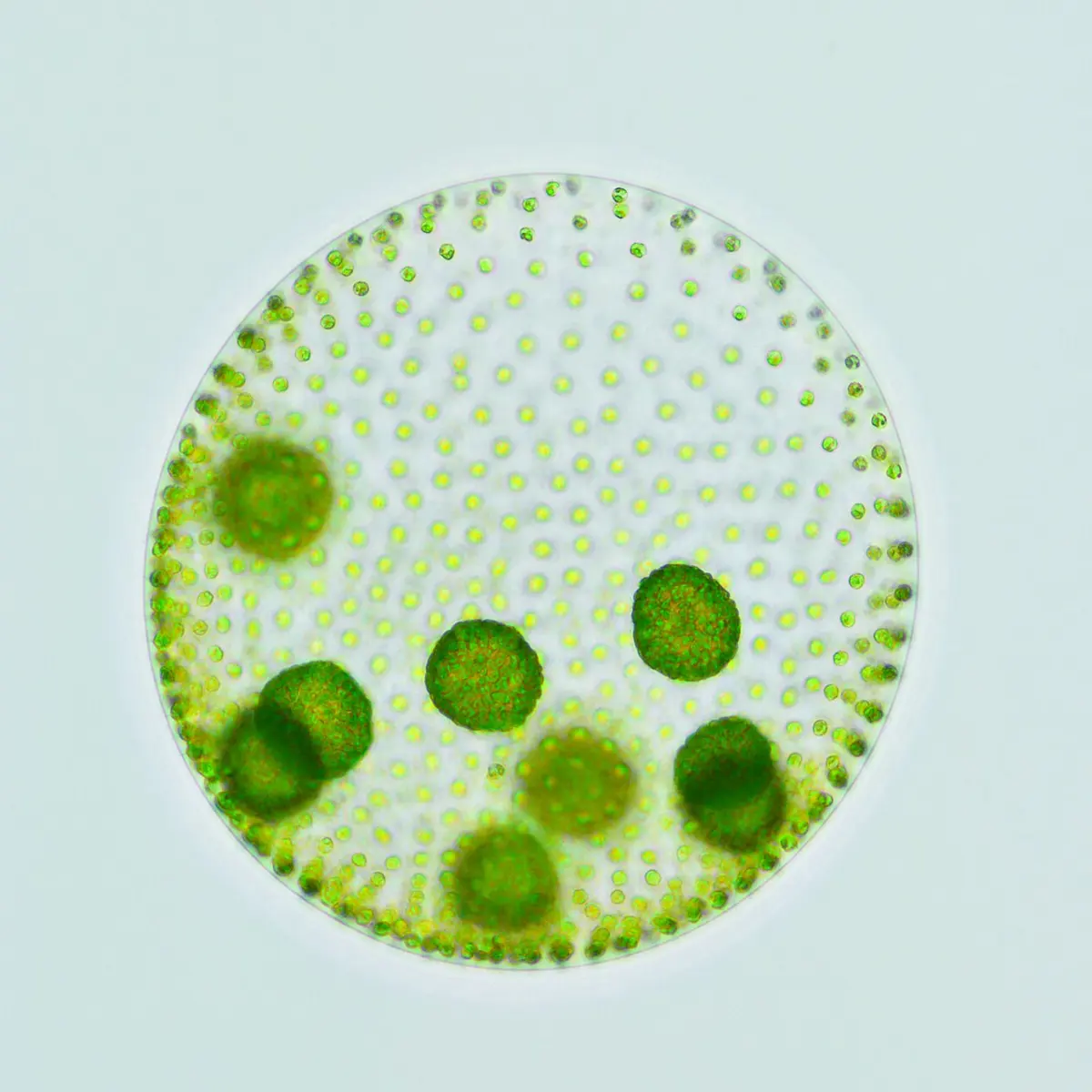
- Producers: algae such as Volvox, Chlamydomonas and Spirogyra; the microscopic phytoplankton that drift in the water; and water plants: floating ones such as Pistia (water lettuce) and water hyacinth, rooted ones with floating leaves such as lotus, and submerged ones such as Hydrilla. They make food from sunlight.
- Consumers, which depend on the producers for food (heterotrophs):
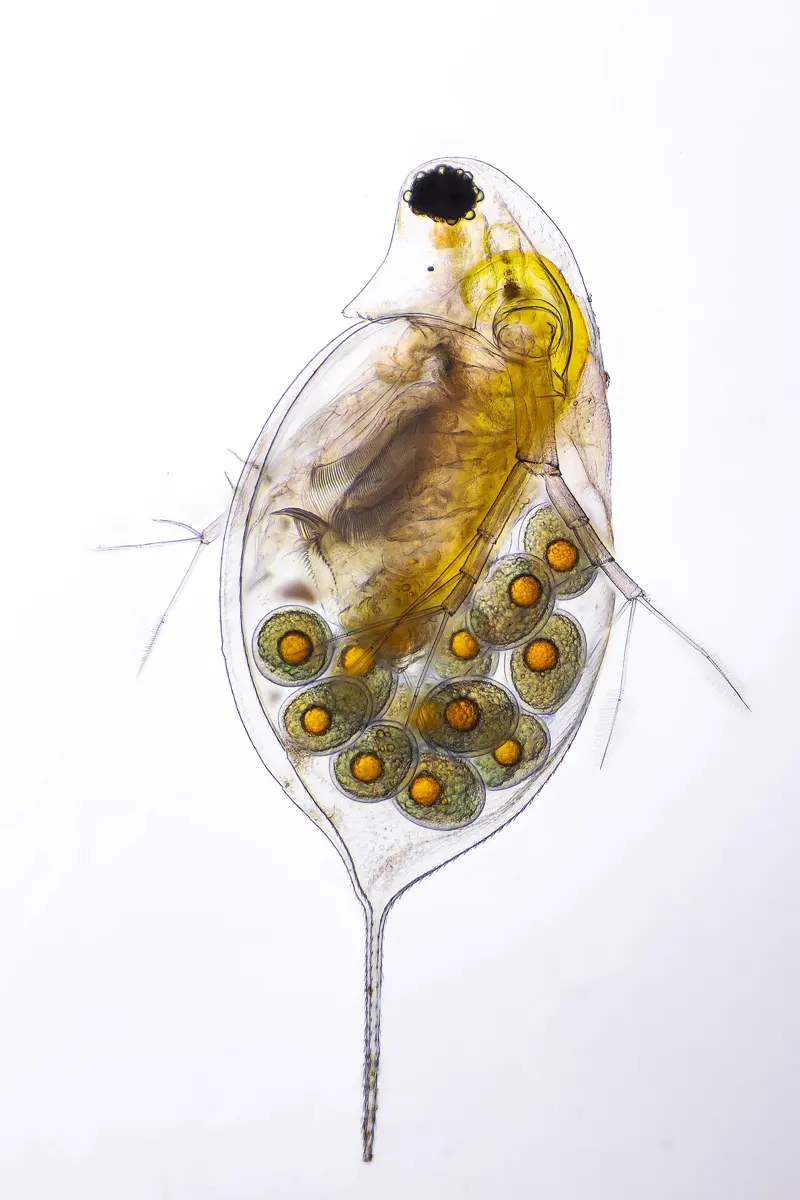
- primary consumers: tiny floating animals called zooplankton, such as Daphnia (water flea) and Cyclops, which eat phytoplankton; and tadpoles, snails, and small fish that eat algae and plants;
- secondary consumers: animals that eat the primary consumers: frogs, water beetles, crabs, and larger fish that eat small fish;
- tertiary consumers: a snake, a heron or a kingfisher that eats frogs and fish.
- Decomposers: bacteria and fungi in the water and mud break down the dead plants and animals into simple substances, which mix with the mud and water and are taken up by the plants again, round and round.
Food chain
Every living thing needs energy for its life processes, and gets it from food. Green plants make food by photosynthesis. Animals have no chlorophyll, so they can’t make food; they take it, directly or indirectly, from the producers. Insects eat grass and phytoplankton; birds and frogs eat insects; fish eat the small animals of the pond, and snakes and herons eat the fish. Each time one living thing is eaten by another, energy passes on.
The series of living things through which energy passes, each one eaten by the next, from the producer to the top consumer, is called a food chain.
Each step in a food chain is a trophic level (feeding level):
- the producers (green plants, which take their energy from the sun) are the first trophic level;
- the primary consumers, which eat them, are the second trophic level;
- the secondary consumers are the third, and so on upwards.
For example, on land:
- maize → rat → owl (a three-link chain);
- rice plant → rat → snake → eagle (four links);
- grass → grasshopper → frog → snake → eagle (five links).
At the end, when the producers and consumers die, the decomposers break their bodies down into minerals in the soil, and the plants take them up and use them again.
In the chain grass → grasshopper → frog → snake → eagle, which trophic level is the frog?
Pick an answer to see why.
The energy that passes along a food chain gets smaller at each step. Only about 10 % of the energy at one level reaches the next; the rest is used by the living things for their own life (moving, breathing, keeping warm) and is lost as heat, or is in parts never eaten or digested. That is why food chains are short, usually three to five links, and why there are many more blades of grass than grasshoppers, and many more deer than tigers.
Food web
In a real ecosystem, an animal seldom eats just one kind of food, and seldom has just one enemy. A frog eats grasshoppers, flies and beetles; a mouse is eaten by snakes, owls, hawks and foxes. So the food chains of an ecosystem are not separate: they cross and join, forming a net. The network of many food chains linked together in an ecosystem is called a food web.
A food web is more stable than a single chain: each consumer has several sources of food, so if one becomes scarce it can eat another. In the web below, for example, grass → small bird → hawk is a three-level chain, and grass → grasshopper → frog → snake → hawk is a five-level chain; the grass feeds grasshoppers, birds, mice and rabbits, and the hawk eats from many lower levels. The flow of energy from producers to top consumers in many directions, by eating and being eaten, is a food web.
Copepod: Pablo Amador; small fish (bleak): Carlos Cano-Barbacil; egret: Caleb M. Gordon; all CC0, via PhyloPic
Pike: PhyloPic, public domain
6.2 Interaction between living beings
All the living things around us depend on each other, directly or indirectly. Could people survive without any other living things? No: we need plants for food and oxygen, animals for food and work, bacteria in our gut, and decomposers to clean up.
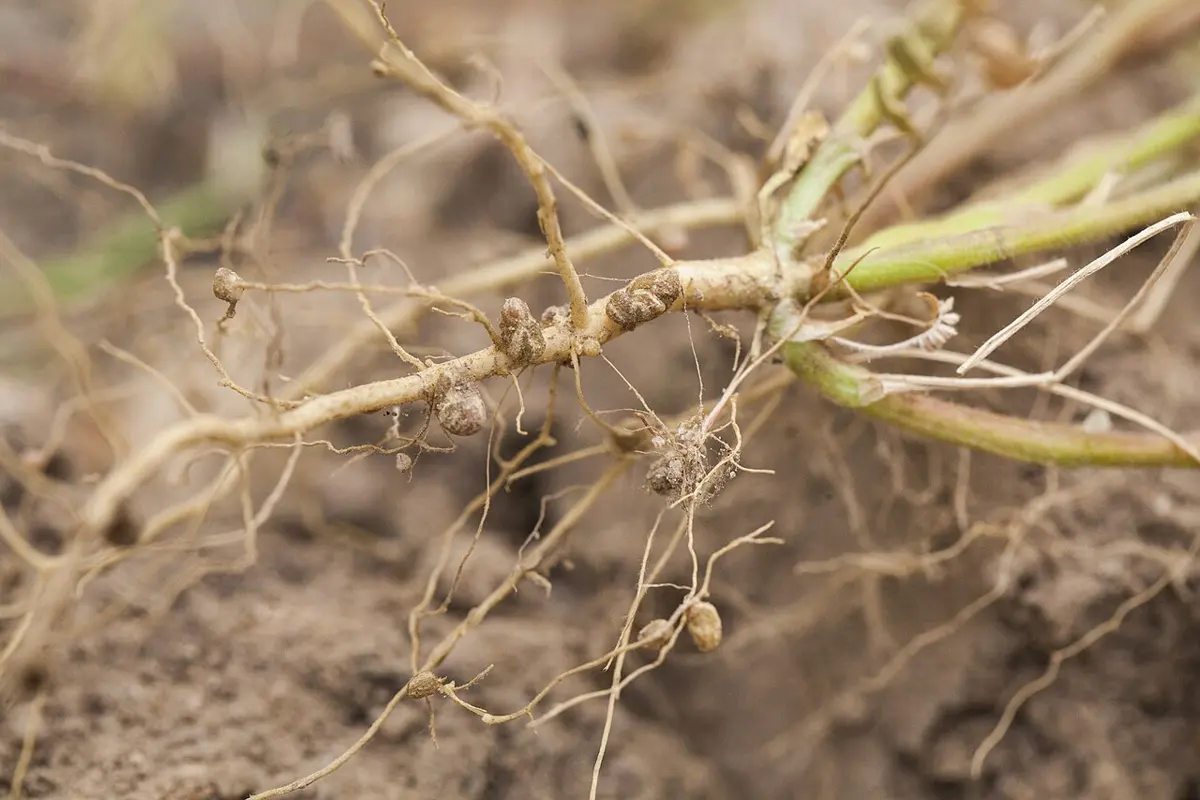
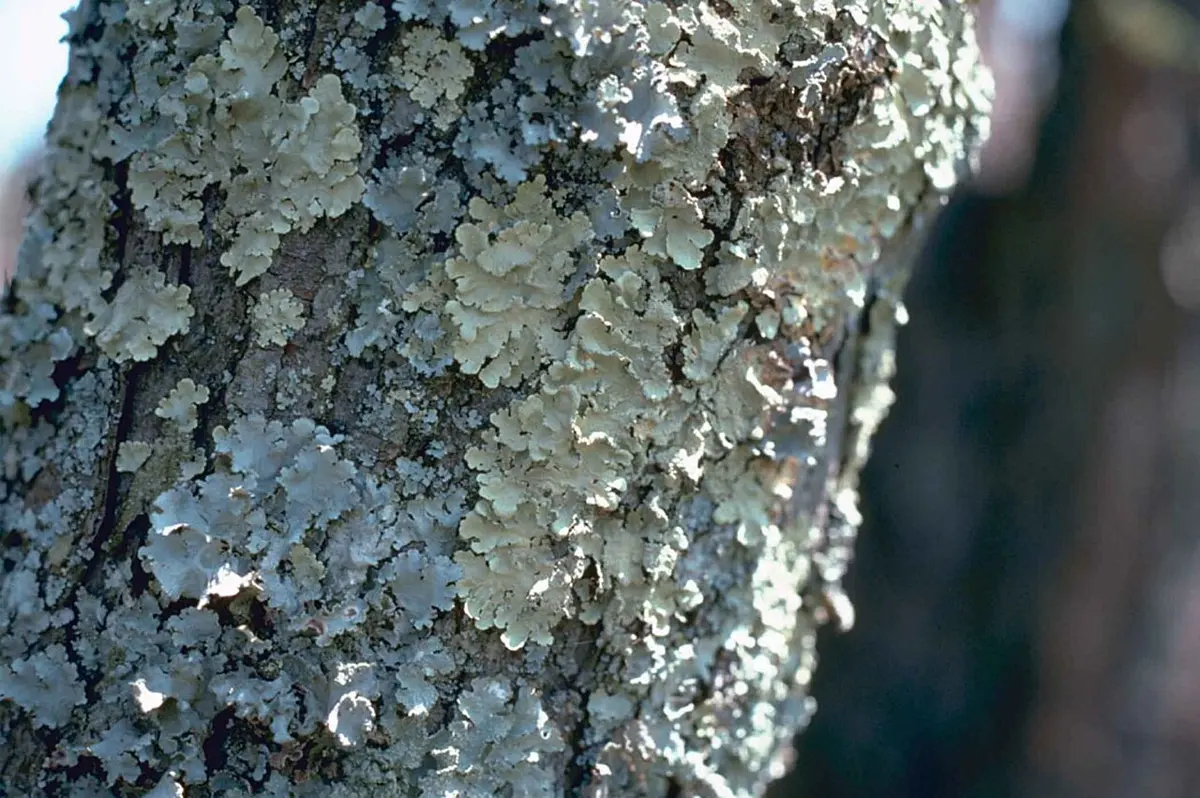
You may have seen birds riding on grazing cattle, lichens on a big tree, or tapeworms and roundworms living inside animals. You may have dug up a pea or bean plant and seen little lumps (nodules) on its roots. These are all interactions between living things. In a lichen, the alga makes food, which it shares with the fungus, while the fungus gives the alga water and shelter. Living things interact in many ways; the main ones are described below.
i) Symbiosis (mutualism)
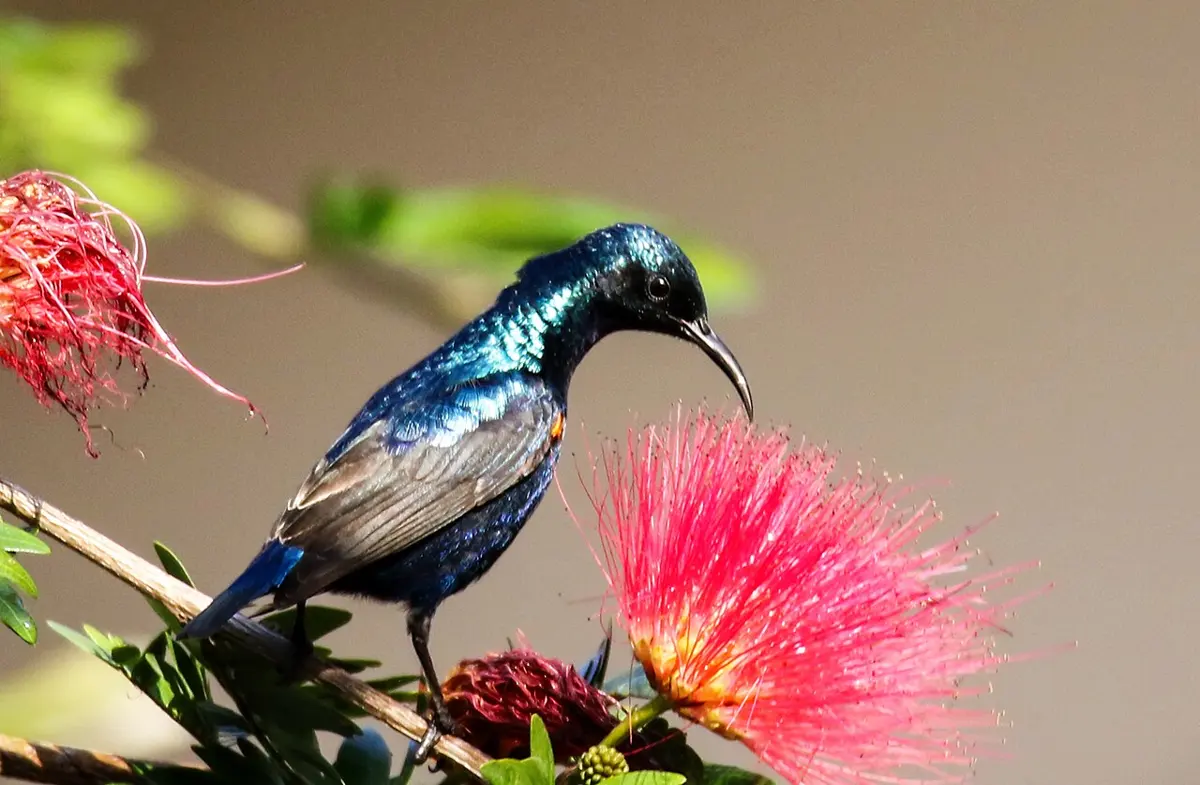
A sunbird pokes its curved beak into a flower to drink its nectar; pollen sticks to its head, and it carries the pollen to the next flower, which helps the plant make seeds. Both gain. A close, long-lasting relationship in which both living things benefit is called mutualism (often called symbiosis). Often the partners come to depend on each other.
(Biologists use symbiosis for any close living-together, parasitism included; in school exams, symbiosis means mutualism, as here.)
More examples:
- Bacteria in our intestine: they get food and a warm home, and help us digest some foods and make some vitamins.
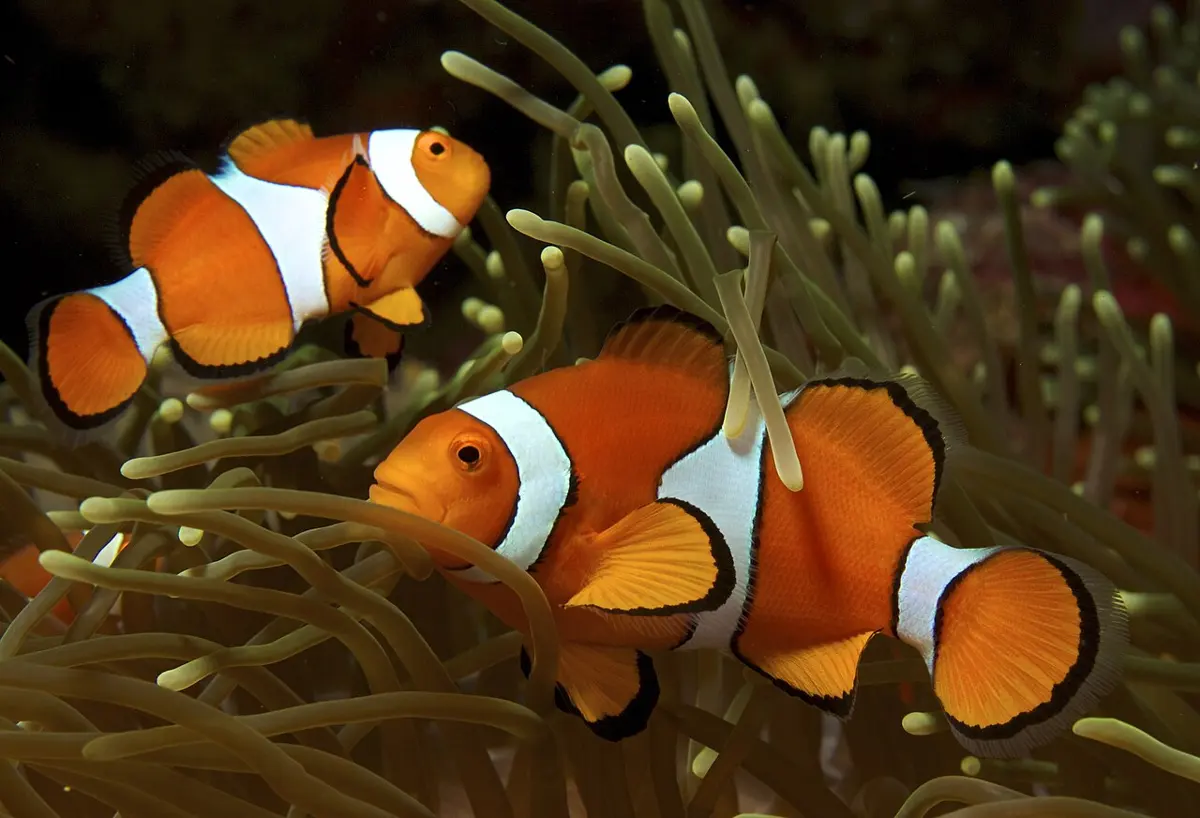
- Clownfish and sea anemone: the clownfish shelters safely among the anemone’s stinging tentacles (its slimy coat protects it); in return it chases away fish that eat anemones, and its leftovers feed the anemone.
- Lichens: an alga and a fungus living together.
- Root nodules: bacteria in the nodules of peas and beans get food and shelter, and turn nitrogen from the air into compounds the plant can use.
ii) Commensalism
A buffalo grazes in a field, and a white cattle egret walks beside it, snapping up the insects that the buffalo’s feet and mouth stir up from the grass. The egret gets an easy meal; the buffalo neither gains nor loses. An interaction in which one living thing benefits and the other (the host) is neither helped nor harmed is called commensalism.
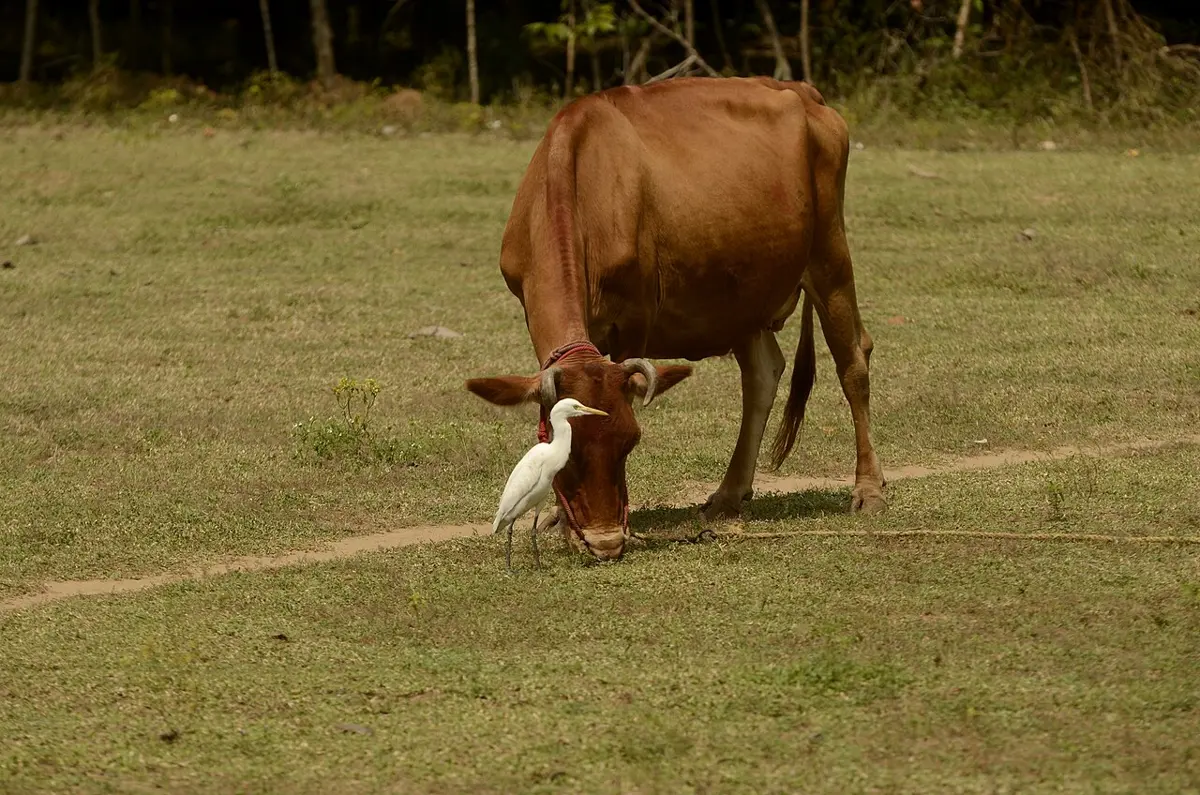
More examples:
- A spider spins its web in a tree; the tree is not harmed.
- Burrs, spiky seeds, stick to an animal’s fur and fall off somewhere else; the plant’s seeds are spread, and the animal is not harmed.
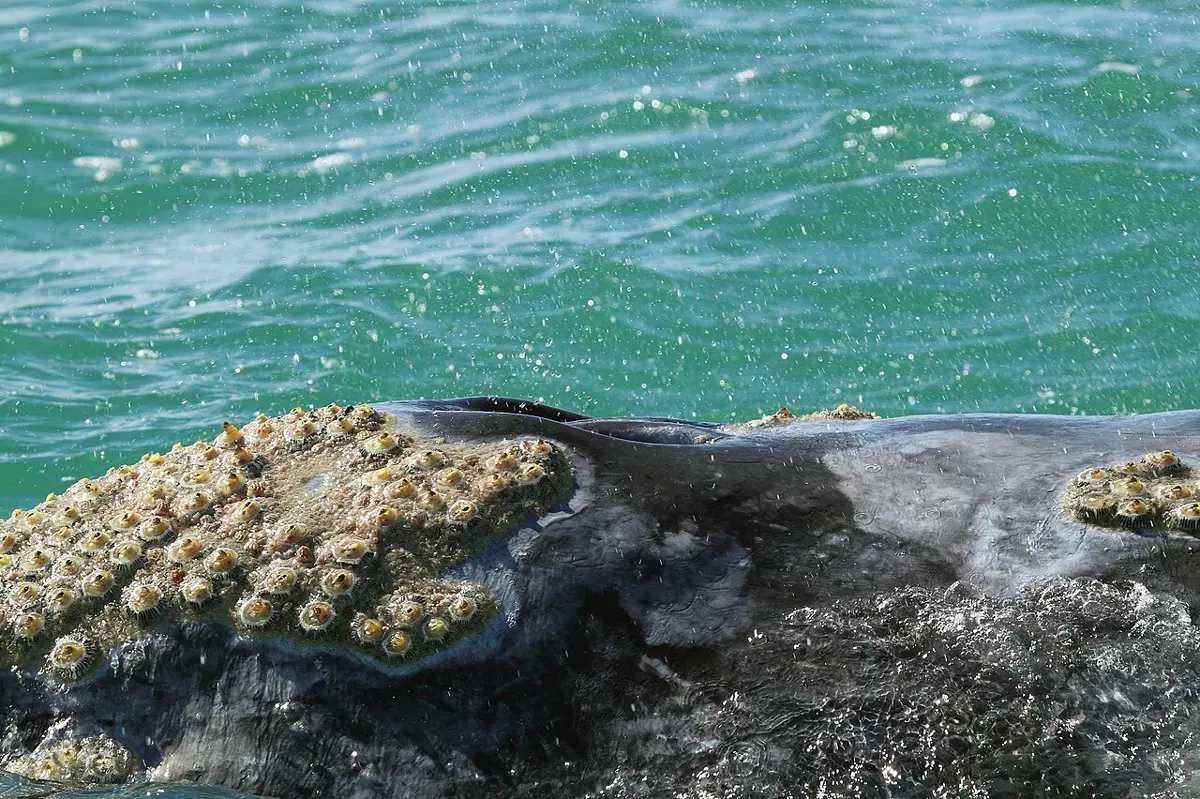
- Barnacles stuck on a whale travel far and find food with the whale’s movement, without harming it.
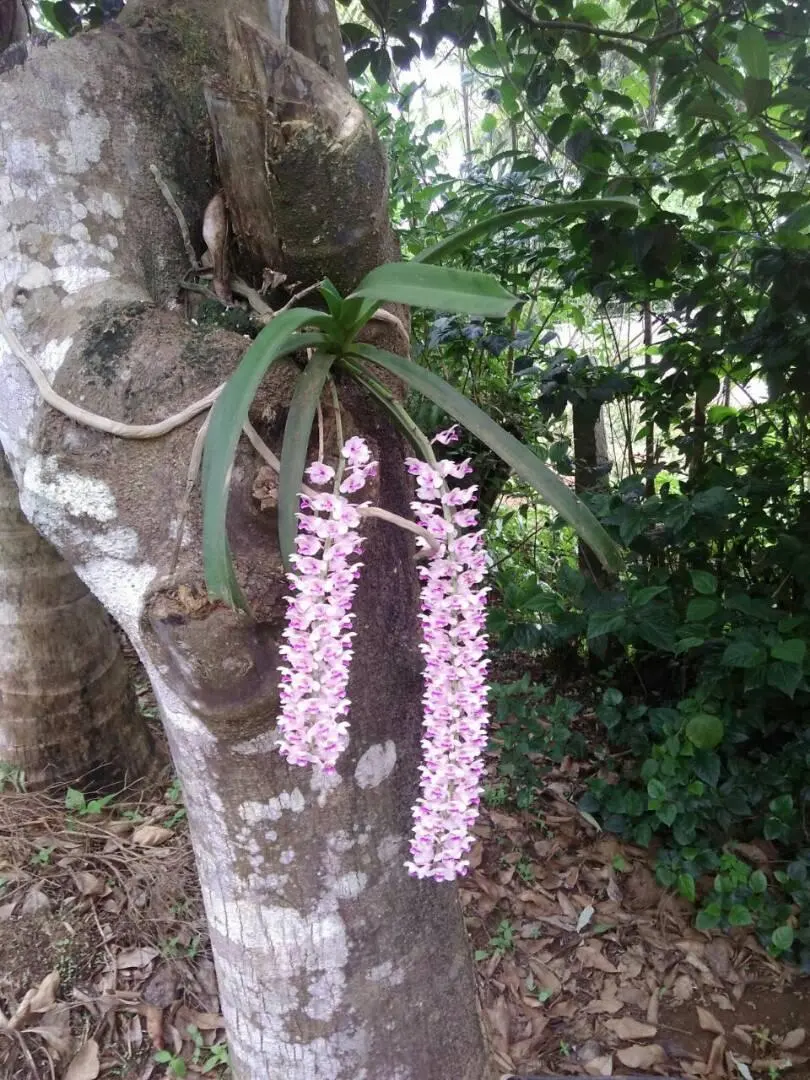
- An orchid grows on a tree branch, reaching the light; it makes its own food and takes nothing from the tree.
iii) Parasitism
In parasitism, one living thing, the parasite, lives on or in another, the host, and takes its food from it. The parasite benefits; the host is harmed (but usually not killed, at least not quickly).
- Fleas, mosquitoes, bed bugs and lice suck blood from the outside of animals and people: they are external parasites (ectoparasites).
- Tapeworms and roundworms (Ascaris) live inside the intestine of animals and people and steal their digested food: they are internal parasites (endoparasites).
- Plants can be parasites too: aijeru (mistletoe, Loranthus) grows on trees and pushes its roots into the branch to take water and minerals; akashbeli (dodder, Cuscuta), the yellow leafless creeper you see draped over hedges, takes all its food from its host.
iv) Competition
In an ecosystem, living things often need the same thing, such as food, water, light, space or shelter, and there isn’t enough for all. When two living things struggle for the same limited resource, it is competition, and both lose something. Competition keeps the numbers of living things in balance; if one kind grows too many, the ecosystem is disturbed.
- Sponges and corals on a reef compete for space and food in the ocean.
- Wolves and bears compete for the same prey; in the Himalaya of Mustang, snow leopards and wolves both hunt blue sheep.
- Weeds in a rice field compete with the rice for light, water and soil nutrients, which is why farmers weed their fields.
v) Predation
Predation is when one animal, the predator, kills and eats another, the prey. It is the way carnivores get their food. The predator benefits; the prey is killed.
- A leopard kills a deer.
- An owl hunts a mouse.
- A tiger hunts deer, wild boar and other animals.
| Interaction | First | Second | Example |
|---|---|---|---|
| Mutualism | + gains | + gains | sunbird and flower; lichen |
| Commensalism | + gains | 0 neither | cattle egret and buffalo |
| Parasitism | + gains (parasite) | − harmed (host) | tapeworm in a pig |
| Competition | − loses | − loses | weeds and rice |
| Predation | + gains (predator) | − killed (prey) | owl and mouse |
Akashbeli, a yellow creeper with no leaves, twists around a hedge and takes all its food from it. What kind of interaction is this?
Pick an answer to see why.
Exercise
1. Choose the correct answer
a. Which of these is a decomposer?
Pick an answer to see why.
b. What is the feeding relationship from producer to consumers, in a line, called?
Pick an answer to see why.
c. What kind of interaction is found in a lichen on tree bark?
Pick an answer to see why.
d. In parasitism, a parasite takes its food from its host. What happens in this interaction?
Pick an answer to see why.
e. Which is the first trophic (feeding) level?
Pick an answer to see why.
2. Give reasons
An ecosystem is disturbed if there are no decomposers.
Answer
A grassland ecosystem becomes unbalanced if the number of insects (primary consumers) increases too much.
Answer
In a food chain, there are usually more producers than consumers.
Answer
In mutualism, both living things benefit.
Answer
The environment stays fresh and healthy where the ecosystem is balanced.
Answer
3. Write the differences
Producer and decomposer
Answer
Producer and consumer
Answer
Grassland ecosystem and pond ecosystem
Answer
Food chain and food web
Answer
Biotic and abiotic components
Answer
Mutualism and commensalism
Answer
Parasitism and mutualism
Answer
4. Answer these questions
List the abiotic factors of an ecosystem and describe each briefly.
Answer
Describe the role of decomposers in an ecosystem.
Answer
Describe the grassland ecosystem briefly, with a diagram.
Answer
What happens if the number of frogs increases in a pond ecosystem? Explain.
Answer
A farmer killed all the mice that ate his rice, but then his rice harvest became much smaller. Why? Explain with an example.
Answer
Describe a food chain in a pond, with a figure.
Answer
In an ecosystem, a balanced cycle runs among producers, consumers, decomposers and the environment, and if any one part is out of balance, the ecosystem is disturbed. Prove this with reasons.
Answer
Name the kinds of ecological interaction and explain each with examples.
Answer
Name the kind of interaction in each example.
- i.A bee and a bumblebee take nectar from flowers.
- ii.A spider makes its web in a tree.
- iii.A barn swallow makes its nest in a house.
- iv.Bed bugs, fleas and mosquitoes live by sucking the blood of animals.
- v.Tapeworms and roundworms live inside the bodies of animals.
Answer
Study the ecosystem in the picture and answer the questions.
- i.Name the producer and the consumers.
- ii.How do producers make food?
- iii.Why are there more producers than any other living things in this ecosystem?
- iv.Explain the role of decomposers in this ecosystem.
- v.Write the benefits of a balanced ecosystem.
Answer
Project work
Quiz yourself: Environment and Biodiversity, Grades 5–10 →
Practice every question in the book, and keep track of the ones you miss →
A companion to your textbook, not a replacement for it: study from the book your school uses, and where the two differ, follow your teacher. Found a mistake? Please tell us.