
North of Kathmandu, the forested hills of Shivapuri rise more than 1,000 m above the city. The Bagmati and the Bishnumati begin there, and every day about 30 million liters of water are taken from their streams for the people of the Kathmandu Valley. In 1976, long before Shivapuri became a national park, the government protected these hills. Not for tigers or rare birds, but for water: the forest keeps the streams below it clean, and keeps them flowing after the monsoon has ended.
So what is a forest like that worth? You could count its trees and add up the price of the timber. But that misses most of what it does. It cleans water, holds the soil on the slopes, feeds the bees that pollinate the crops in the fields below, and turns fallen leaves back into food for plants. No one sends a bill for any of this, so it is easy to forget, until it is gone and someone has to pay to replace it. In this topic you will see what a forest does, how people put numbers on it, and how to compare different ways of protecting it, the way an engineer compares designs.
What a forest does for you
In Grade 8 you met a list of reasons why biodiversity matters: food, medicine, balance in nature, ecotourism Grade 8: Importance of biodiversity. Ecologists have a name for all the ways that nature helps people: ecosystem services, the benefits people get from ecosystems, free.
In 2005, more than 1,300 scientists from around the world finished a study of the state of the planet’s ecosystems, the Millennium Ecosystem Assessment. They sorted ecosystem services into four kinds:
| Kind | What it means | From a forest in Nepal’s hills |
|---|---|---|
| provisioning | things we take from it | timber, firewood, fodder for animals, wild fruit and mushrooms, medicinal plants |
| regulating | keeping things steady | cleaning water, keeping springs flowing, holding soil on slopes, pollinating crops, storing carbon |
| supporting | the work the others depend on | recycling nutrients, making soil, homes for living things |
| cultural | what it means to people | sacred groves and temple forests, walks and picnics, beauty, learning |
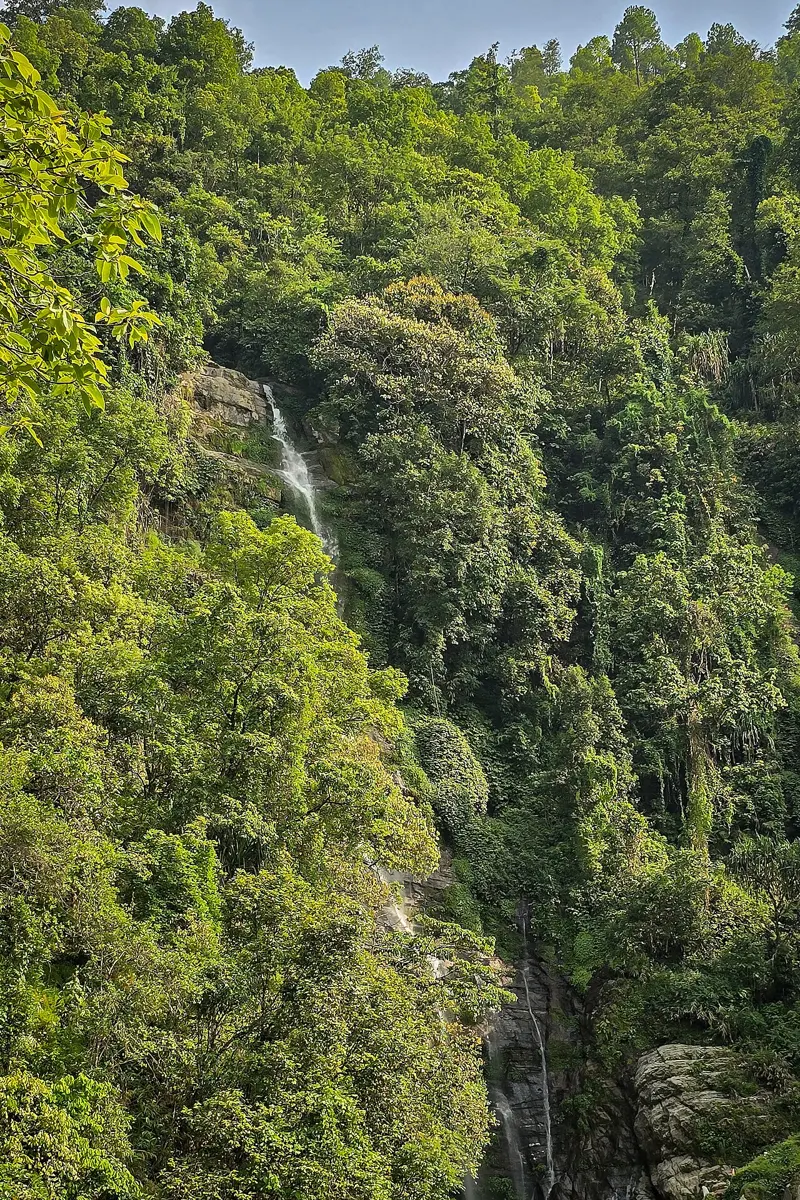
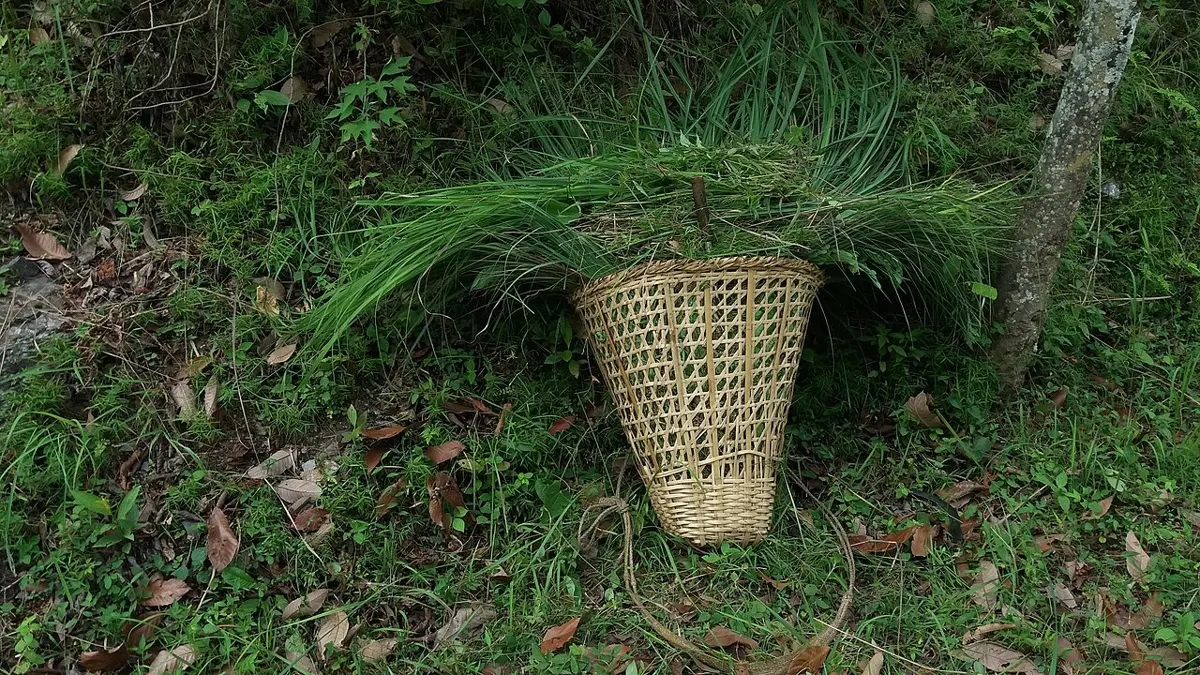
The first kind is easy to see, because you can carry it home in a doko. The others are easy to miss, because they happen quietly: in the soil, in the water, in the flowers. The picture shows several of them on one hillside.
Which of these is a regulating service of a forest?
Pick an answer to see why.
Clean water: a filter and a sponge
Watch what happens when heavy monsoon rain falls on a forest.
- The leaves and branches catch the drops first, and break their force. Much of the water drips or trickles down the trunks gently.
- On the ground is a thick layer of fallen leaves, the leaf litter, and under it dark, crumbly soil full of rotting leaves (humus), roots, worm burrows and the holes left by dead roots. This soaks up water like a sponge.
- The water seeps down through the soil slowly, over days and weeks. On the way, the soil strains out mud and many germs, and soil microbes break down some of the dirt.
- Lower down the slope, it comes out as a spring (a mul), or seeps into a stream, clean, and still flowing long after the rain has stopped.
Now picture the same rain on a hillside where the trees have been cut, the leaf litter raked away and the ground trampled hard by cattle. The drops hit bare soil and splash it loose. The hard ground can’t soak up the water fast enough, so it runs off over the surface, carrying mud with it. The stream below turns brown and floods within hours, and a few weeks after the monsoon the spring dries up, because little water went into the ground to feed it.
Scientists have measured this in Nepal’s middle hills, near Dhulikhel. In a natural broad-leaved forest, water soaked into the surface soil more than ten times faster than on a degraded, heavily grazed pasture nearby (typically 232 mm an hour against 18 mm). From these and their rain records, they estimated that over a monsoon about 21 % of the rain ran off the surface of the pasture, but only about 2.5 % of the rain that fell on the forest (Ghimire and others, 2014 and 2016).
Holding the soil
Every year, the monsoon tries to wash Nepal’s hills down into the rivers. What stops it is mostly what covers the ground.
To measure how much soil a slope loses, scientists mark out an erosion plot: a strip of hillside with a low wall around it and a gutter at its bottom end. Everything that washes off the plot runs into the gutter and down into a tank. After each storm they measure the water in the tank, dry out the mud, and weigh it.
In 1992 and 1993, two scientists, Rita Gardner and John Gerrard, ran 15 erosion plots in the Likhu Khola valley, north of Kathmandu, through 912 rainstorms (Gardner and Gerrard, 2001). Their results:
| What covered the ground | Soil lost in a year (tonnes per hectare) |
|---|---|
| natural forest, its floor covered | less than 0.1 |
| grassland, not grazed bare | less than 0.1 |
| sal forest, degraded (litter raked, grazed, cut) | 3 to 10 |
| bare ground | more than 15 |
(A hectare is 100 m × 100 m, 10,000 m², about the size of a football pitch and a half.)
Look at the two kinds of forest. Both had trees. The difference was the ground. In the degraded forest, people had raked up the leaf litter, animals had grazed the plants under the trees and trampled the soil, and the rain fell on bare earth between the trunks. Their results show that what covered the ground, the leaf litter and the low plants, protected the soil more than the trees above it. A forest whose floor has been stripped loses soil almost like bare ground.
A village forest has tall trees, but every year the villagers rake up all the fallen leaves for their animals’ bedding, and goats graze under the trees. What happens to the soil on its slopes?
Pick an answer to see why.
How bad is losing 10 tonnes of soil from a hectare? It is easier to picture as a depth. Topsoil has a density of about 1.3 tonnes per cubic meter (a cubic meter of it weighs about 1.3 tonnes).
The soil that leaves the hills doesn’t vanish. It goes into the rivers, and some of it ends up where people don’t want it.
Feeding the bees
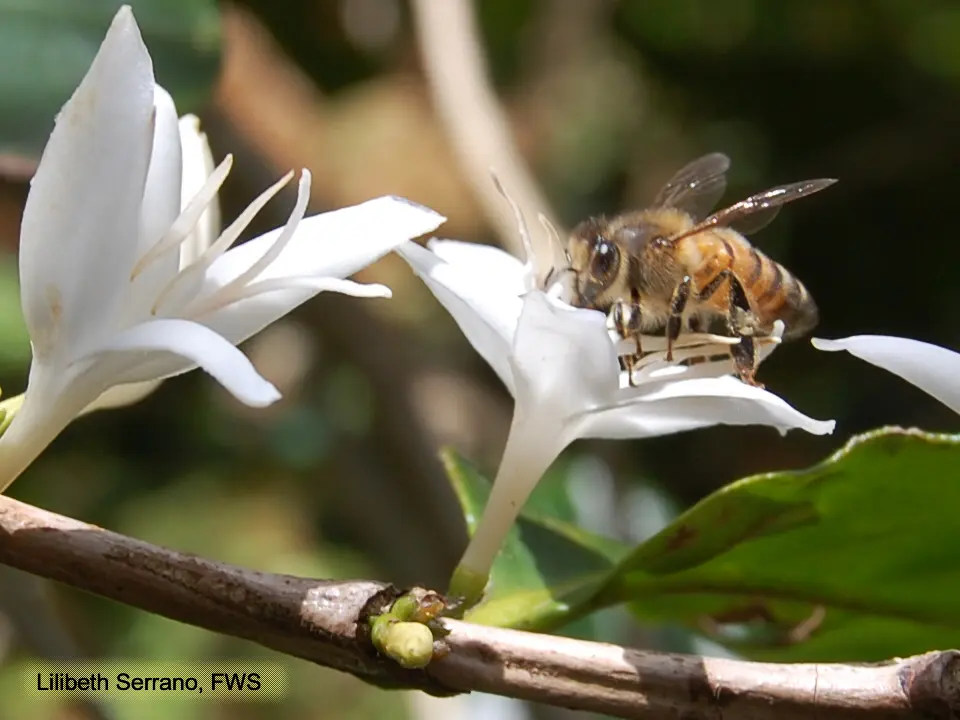
About three in four kinds of food crops grown in the world (mustard, buckwheat, apples, cucumbers, pumpkins, coffee, many beans) give more or better food when animals carry pollen between their flowers (IPBES, 2016). Most of those animals are bees, and many are wild bees that nest in forests, hedges and old walls: in hollow trees and stems, in banks of bare soil, in holes in dead wood. Many of them don’t fly far from home, often only a few hundred meters. So a field next to a forest gets more visitors than a field far from one.

Why many kinds are better than one
A forest with many kinds of plants and animals usually gives more services, and more reliably, than one with only a few. In Grade 8 you met the three kinds of biodiversity: genetic, species and ecosystem Grade 8: Types of biodiversity. Here is why they matter for services.
Think of the bees. If a field is pollinated by only one kind of bee, a disease that kills that bee, or a cold spring when it stays at home, means a poor harvest. If it is visited by twenty kinds, flying at different times, in different weather, to different parts of the flower, losing one kind matters much less. Ecologists call this the insurance that biodiversity gives. In 41 crops around the world, fields visited by more wild insects set more fruit, even where there were plenty of honey bees; an extra visit by a wild insect raised the harvest about twice as much as an extra visit by a honey bee (Garibaldi and others, 2013).
The same goes for the forest itself. A forest of many kinds of trees, with shrubs, herbs and litter under them, covers the ground at every level, and its fallen leaves rot at different speeds, feeding the soil all year. Many kinds of trees also mean that a pest or a disease that kills one kind leaves the rest standing.
Not every forest is like this. In the 1970s and 80s, many bare hillsides in Nepal, in Sindhupalchok and Kabhrepalanchok and around Kathmandu, were planted with pines, which grow fast on poor soil. They brought back tree cover quickly. But on the hills near Dhulikhel, about 15 % of the monsoon rain still ran off the surface under a pine plantation, against 2.5 % under natural forest (Ghimire and others, 2014), and the pines drank more water than either. A young pine plantation of one kind of tree has few other plants under it, its fallen needles rot slowly and catch fire easily, and few kinds of birds and insects live in it. Where the plantations have been protected for decades, broad-leaved trees have been coming back under the pines.
Why does a field visited by many kinds of wild bees usually give a more reliable harvest than one visited by only one kind?
Pick an answer to see why.
The forest also recycles. A tree takes nutrients from the soil into its leaves; when the leaves fall and rot, fungi, bacteria and small animals return those nutrients to the soil, for the next plants to use (you can follow this further in Where does a fallen leaf go?). On a hill farm in Nepal, the forest’s nutrients go further: leaves cut for fodder, and fallen leaves raked up as bedding for animals, end up as manure on the fields. That is a real service to the farms. But, as you saw, a forest floor raked bare every year loses its soil, and with the leaves, the nutrients the forest itself would have recycled. Taking a little is a service; taking everything wears the forest out.
Putting a price on it
Ecosystem services have no price tag, so people often treat them as worth nothing. One way to change that is to work out what they would cost to replace, or what they add to someone’s income, as in the New York and coffee stories. Another is to pay people to keep giving the services: payment for ecosystem services.
- In Kulekhani, from about 2006, part of the royalty paid by the hydropower plant went to a district fund for the villages in the hills above the reservoir, to look after the watershed. Studies found that the villages spent much of the money on roads and electricity rather than on the forest: a reminder that a payment has to be tied to what it is paying for.
- In November 2025, Nepal received 9.4 million US dollars from the World Bank’s Forest Carbon Partnership Facility, for cutting about 1.88 million tonnes of carbon dioxide emissions by protecting and restoring forests in the Terai Arc, the lowland forests of central and western Nepal. The money is shared with community forest user groups and Indigenous peoples there.
Comparing ways to protect a forest
Here is a real kind of problem, with made-up names. The town of Deurali gets its drinking water from springs below a hillside forest. For years, the forest has been used hard: trees cut for firewood, the litter raked up, goats and cattle grazed under the trees. Now the springs run brown after every storm and dry up by March. The town council has four ideas:
- A. Fence and guard. Make it a strictly protected forest, with a fence and paid guards. No one may cut, graze or collect anything.
- B. Community forest. Hand the forest to a user group of the families who use it. They make the rules: no grazing in the young forest, fodder and firewood cut in turns, litter raked only from some patches each year, and a forest watcher paid from the group’s own fees.
- C. Pine plantation. Plant fast-growing pines on the bare patches and fence them while they are young.
- D. Filter plant. Leave the forest as it is and build a water treatment plant in the town.
This is an engineering design problem: several possible solutions, none perfect, and you have to choose. Engineers compare solutions using criteria, the things a good solution should do well, and constraints, the limits any solution must stay within. For protecting an ecosystem, the criteria and constraints are of three kinds:
- scientific: will it work? Will it clean the water, hold the soil, keep the living things?
- economic: what will it cost, and who pays?
- social: is it fair? Will the people who live there accept it, or break the rules?
A constraint is a must: if the town can spend at most Rs 50 lakh, any idea that costs more is out, however good it is. A criterion is a “the more the better”, and the ideas are compared by how well they meet each one.
One way to compare is a decision matrix. Give each idea a score from 1 (poor) to 5 (very good) on each criterion, with a reason. Then decide how much each criterion matters to you, its weight, multiply each score by its weight, and add up.
| Criterion | A. Fence and guard | B. Community forest | C. Pine plantation | D. Filter plant |
|---|---|---|---|---|
| clean water, springs that keep flowing | 5 | 4 | 3 | 2 |
| soil held on the slope | 5 | 4 | 3 | 1 |
| kinds of plants and animals kept | 4 | 4 | 1 | 1 |
| low cost to the town | 2 | 4 | 3 | 1 |
| fair to the families who use the forest | 1 | 4 | 2 | 3 |
The reasons, in short: A protects the forest best, if the guards can keep everyone out, but guards and fences cost money every year, and the families lose their fodder and firewood overnight, which is unfair and often leads to people breaking the rules. B protects a little less, because people still use the forest, but the users pay for it themselves, and they keep it because it is theirs. C covers bare ground fast, but a pine plantation holds few kinds of living things. D cleans the water, but it is costly to build and run, it doesn’t keep the springs flowing in the dry season or hold the soil, and the forest keeps getting worse.
These are one group’s scores. Yours might be different, and that is fine, as long as you can give a reason for each.
However you set the weights, C and D never come first. Look at the table: B scores at least as well as C and D on every criterion. An idea that another equals or beats on every criterion, and beats on at least one, is dominated: no choice of weights can make it the winner, so it can be dropped before anyone argues about weights. That leaves the real choice between A and B, which each win on different criteria: A on water and soil, B on cost and fairness. That is a trade-off, and the weights decide it.
What happened when Nepal tried them
Nepal has tried each of these ideas, at large scale, so we don’t have to rely only on scores.
Fence and guard. Nepal’s first national parks, from the 1970s, were guarded by the army, and kept local people out. They saved the rhinos and tigers of Chitwan, but people living around the parks lost grazing, firewood and thatch grass, and wild animals raided their crops. There was a lot of anger. Since the 1990s, the land around each park has been made a buffer zone, where a share of the park’s income (30 to 50 % of it under the 1996 rules) goes to the local people, for their own projects, and many buffer-zone forests are run as community forests.
Community forest. From the late 1970s, and especially after the Forest Act of 1993, the government handed forests to their users (Nepal’s efforts in Grade 8). As of 2026, more than 22,000 community forest user groups manage about a third of Nepal’s forest, and the forests have come back across the hills. A study of more than 18,000 of them found they reduced forest loss, and poverty a little too (Oldekop and others, 2019). But they are not perfect: in some groups, the better-off families make the rules, and the poorest, who needed the forest most for grazing and firewood, lose out. (Can a forest come back? looks at the evidence in detail.)
Pine plantations brought tree cover back quickly to bare hills in the 1970s and 80s, and many of them are now turning into mixed forests as broad-leaved trees grow up under them.
Engineering instead of forest. Kathmandu does treat its water, as every city must. But a cleaner catchment means less mud to remove, cheaper treatment and longer-lasting reservoirs. Forests and filters work best together, not as rivals.
Real solutions are often combinations: a community forest, with the most important spring area fenced and planted with broad-leaved trees, and a small filter in the town. Designing like this, taking the best parts of several ideas, is what engineers do after they compare.
A plan to protect a forest scores very well on water and soil, but the families nearby lose all their fodder and firewood, and get nothing in return. What is the most likely problem?
Pick an answer to see why.
Questions
Which pair is a supporting service and a provisioning service, in that order?
Pick an answer to see why.
After a forest above a village is cleared, the village’s spring flows strongly in the monsoon but dries up soon after it. Why?
Pick an answer to see why.
In a decision matrix, which of these is a constraint rather than a criterion?
Pick an answer to see why.
Name the four kinds of ecosystem services, and give one example of each from a forest near you or a forest you know.
Answer
- Provisioning, things we take: firewood, fodder, timber, wild fruit, mushrooms, medicinal plants such as timur or chiraito.
- Regulating, keeping things steady: cleaning water and keeping springs flowing, holding soil on slopes, pollinating crops, storing carbon, cooling the air.
- Supporting, the work the others rest on: recycling nutrients from fallen leaves, making soil, giving living things a home.
- Cultural, what it means to people: a temple forest or sacred grove, walks, picnics, the beauty of rhododendrons in spring, learning about nature.
Use the numbers measured in the Likhu Khola valley to explain why a forest with tall trees can still lose a lot of soil. What could the villagers change to stop it?
Answer
Gardner and Gerrard measured less than 0.1 tonnes of soil per hectare a year from a forest whose floor was covered, but 3 to 10 tonnes from sal forest that was degraded (its litter raked, grazed and cut), although both had trees. Bare ground lost more than 15. So it is the ground cover, the leaf litter and low plants, that protects the soil most: with the floor stripped, the rain falls between the trees onto bare soil, splashes it loose and washes it away. The villagers could leave the litter on the ground in some areas, rake only some patches each year in turn, keep goats and cattle out (or grow fodder on their own land and stall-feed the animals), and let shrubs and young trees grow back under the big trees.
A hillside farm loses 6.5 tonnes of soil per hectare each year. Taking topsoil’s density as 1.3 t/m³:
- a.How many cubic meters of soil does one hectare lose in a year?
- b.How deep a layer is that, in millimeters?
- c.How many years would it take to lose 20 cm of topsoil at this rate?
Answer
- a.Volume = mass ÷ density = 6.5 ÷ 1.3 = 5 m³.
- b.Depth = volume ÷ area = 5 m³ ÷ 10,000 m² = 0.0005 m = 0.5 mm a year.
- c.20 cm = 200 mm. 200 ÷ 0.5 = 400 years. That sounds long, but soil forms far more slowly: at up to 1,000 years for each centimeter, the 20 cm would take thousands of years to make again.
Explain why a field near a forest may give a bigger harvest of mustard than the same kind of field far from any forest. What would you measure to test this?
Answer
Mustard gives more seed when insects carry pollen between its flowers. Many wild bees nest in forests and their edges (in dead wood, hollow stems, banks of soil) and often fly only a few hundred meters from home, so a field near the forest gets more visits from more kinds of bees, and its flowers are better pollinated. To test it: choose several mustard fields at different distances from a forest, with the same seed, soil and care; count the bees visiting a set number of flowers for the same time each day; and at harvest, count the pods per plant and weigh the seed per square meter. If the claim is right, both the visits and the harvest should fall with distance from the forest. A further check: cover some flowers with fine net bags so no insects can reach them, and compare them with open flowers in the same field.
The town of Deurali (from the topic) has just Rs 50 lakh, and the filter plant would cost Rs 3 crore to build. The fence and guards would cost Rs 40 lakh in the first year and Rs 20 lakh each year after. The community forest would cost the town Rs 5 lakh for training and a few signs. The pine plantation would cost Rs 30 lakh. (1 crore = 100 lakh.)
- a.Which ideas does the money constraint rule out at once?
- b.Which ideas are left? Using the table’s scores, with all weights equal, which would you choose, and why?
- c.Suggest a combination of ideas that might be better than any one of them.
Answer
- a.The filter plant (Rs 3 crore = Rs 300 lakh, far more than 50 lakh) is ruled out at once. The fence and guards fit in the first year (40 lakh), but cost 20 lakh every year after; the town would have to find that money every year, so it is risky.
- b.Left: A (if the town can pay each year), B and C. With equal weights, the totals are A = 5 + 5 + 4 + 2 + 1 = 17, B = 4 + 4 + 4 + 4 + 4 = 20, C = 3 + 3 + 1 + 3 + 2 = 12. B, the community forest, scores best and is by far the cheapest. It keeps most of the water and soil benefits, keeps the forest’s many kinds of living things, and is fair to the families, so they have a reason to keep the rules.
- c.For example: a community forest over the whole hillside, with the small area right around the springs fenced off and planted with native broad-leaved trees (not pines), paid for by the town’s remaining money; the user group agrees to keep animals out of that area and to rake litter only in turns elsewhere; and the town helps families grow fodder trees on their own land, so they need less from the forest. That combines the strong protection of A where it matters most with the fairness and low cost of B.
A newspaper writes: “Forests are worth nothing until they are cut, because only timber can be sold.” Write a short argument against this, using at least two pieces of evidence from this topic.
Answer
Claim: standing forests give services worth a lot of money, often more than their timber. Evidence: New York City kept the forests of its Catskill watershed for about 1.5 billion dollars instead of building a filtration plant estimated at up to 6 billion to build and 0.3 billion a year to run; the forest was doing the plant’s job. In Costa Rica, bees from two forest patches raised a coffee farm’s harvest by 20 %, worth about 60,000 dollars a year, about as much as clearing the forest for cattle or sugar cane would have earned. Nepal itself was paid 9.4 million dollars in 2025 for the carbon its forests kept out of the air. And in the Likhu Khola valley, slopes with intact forest floor lost less than 0.1 tonnes of soil per hectare a year, against more than 15 from bare ground. Reasoning: these services (clean water, pollination, carbon storage, soil kept on the hills) are only given by a standing forest. Cutting it sells the timber once, but loses the services every year after, and someone then has to pay to replace them, or go without.
Where to go next
- Why do animal numbers rise and fall? What happens to a population when its food, water or home changes, and how to read the graphs that show it.
- Why are there so few tigers? A forest can feed thousands of deer but only a few tigers: following energy and matter through who eats whom.
- Can a forest come back? (Going Further, Grades 9–12) How bare land turns back into forest, and the evidence for and against the story of Nepal’s forests coming back.