
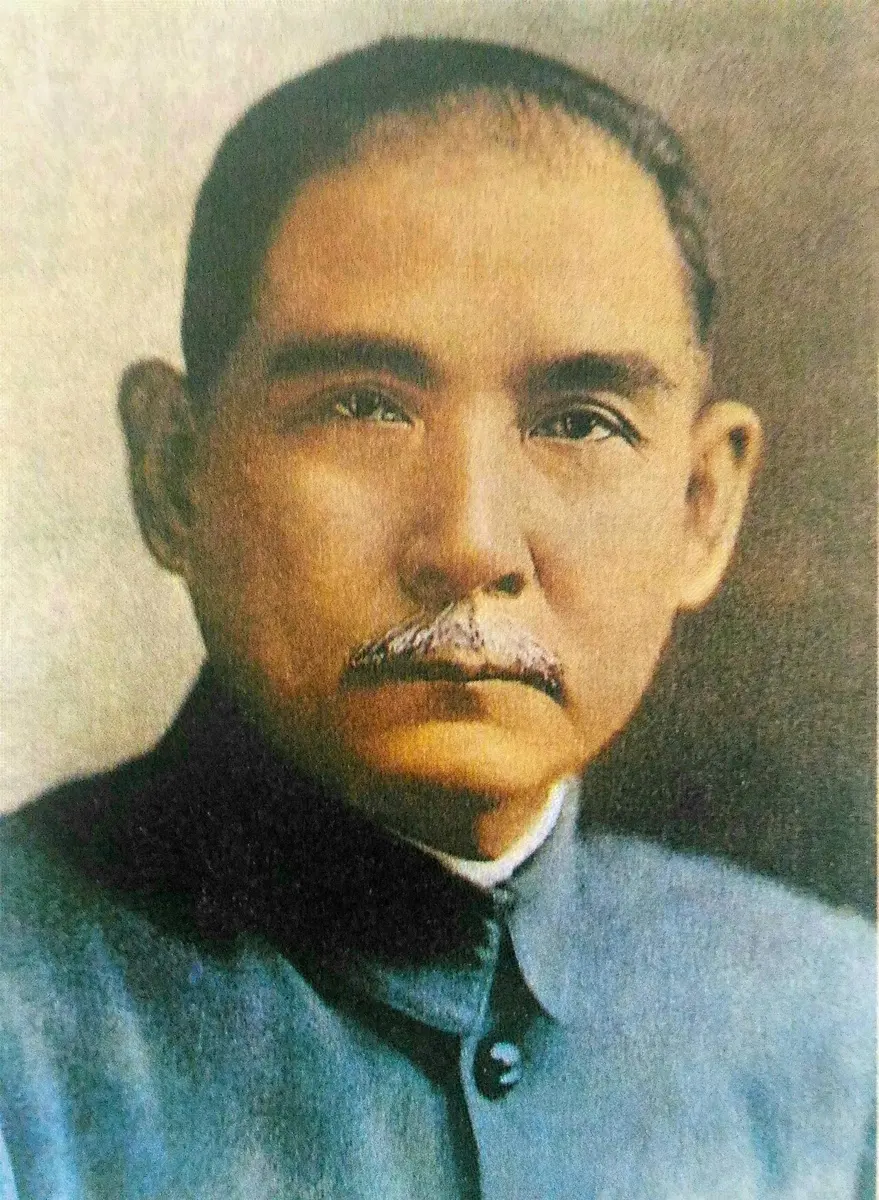
In October 1911 a Chinese doctor turned revolutionary was in Denver, in the United States, raising money for a rising against China’s emperor. He learned from a newspaper that it had already begun without him. On 10 October soldiers of a modern army unit in Wuchang, on the Yangtze, had mutinied against their own commanders. Province after province followed them. The man in Denver was Sun Yat-sen. By the time he got home, China’s revolution was under way. Four months later a six-year-old boy, the last emperor of the Qing dynasty, gave up the throne. China had had emperors since 221 BCE.
What came after took most of the century. The republic that replaced the emperor fell apart into regions ruled by generals. Two parties set out to unite the country: the Nationalists, led by Chiang Kai-shek, and the Communists, led in the end by Mao Zedong. They were allies, then enemies, then allies again against Japan, then enemies once more, until the Communists won a civil war in 1949 and Chiang’s government withdrew to the island of Taiwan. Mao then ruled China until he died in 1976. Under him land went to the peasants, women won new rights, and people began to live far longer. Under him too, a plan to leap ahead ended in one of the worst famines in history, and a campaign he launched against his own party threw the country into ten years of violence. In those same years Tibet came under the rule of Beijing, and the Dalai Lama left for India. Each part of that story is told differently by the people it happened to.
An empire ends
By 1900 the Qing had been losing for sixty years. Britain had beaten China in the Opium Wars (Empire tells how), foreign powers ran their own corners of its ports, and Japan had beaten it in 1895 and taken Taiwan. Young Chinese who studied abroad came home sure that the old empire couldn’t save the country. Sun was one of them. His aims, which he called the Three Principles of the People, were nationalism, democracy and a decent livelihood for the people.
The provinces chose Sun as the first president of a Republic of China, and he took office on 1 January 1912. But the army belonged to Yuan Shikai, the empire’s strongest general. Sun stepped aside for him, on condition that Yuan got the emperor to abdicate. Yuan did, then ruled as a dictator, and in December 1915 made himself emperor. Opposition was so wide that he gave the title up after 83 days, and he died soon after. China split into lands held by rival generals, the warlords.
Then the peace after the First World War gave a fresh insult. Some 140,000 Chinese laborers had worked behind the Western Front for Britain and France, yet the Treaty of Versailles handed Germany’s rights in Shandong, a Chinese province, to Japan. On 4 May 1919 more than 4,000 students marched in Beijing to protest. The May Fourth Movement, as it came to be called, went far beyond Shandong. Its young writers wanted China to throw off Confucian obedience and take up what they called “Mr. Science” and “Mr. Democracy”. Some of them looked to Russia, where the revolution of 1917 was two years old (The Russian Revolution tells its story).
In July 1921 thirteen delegates met in Shanghai to found the Chinese Communist Party. When the police of the French part of the city searched the meeting place, they finished their meeting on a hired pleasure boat on a lake outside the city. One of the thirteen was a young man from a farming family in Hunan, Mao Zedong.
Sun asked the West for money and arms, got none, and took help from the Soviet Union instead. From 1923 the Communists joined his Nationalist Party, the Kuomintang, as members, and Soviet advisers helped him found a military academy, run by an officer called Chiang Kai-shek. Sun died in 1925. The next year Chiang led the army north to beat the warlords. In April 1927, halfway through the campaign, he turned on his Communist allies. In Shanghai his troops and the city’s gangs attacked the workers’ unions and shot and arrested Communists, and thousands were killed in the weeks that followed. Chiang went on to rule from Nanjing.
Two parties and a long war
The Communists who survived went to the countryside. In the hills of Jiangxi they set up their own small state, gave land to poor peasants, and built an army. Mao was a leader there, and in 1930 he hunted, with torture, for supposed spies among his own comrades.
In 1934 Chiang’s armies closed in, and the Communists broke out. About 86,000 soldiers marched west and north, a year’s journey through mountains, swamps and snow, while the Nationalists pursued them. On the way, at a meeting in the town of Zunyi, Mao came to the front of the party’s leadership. In October 1935 about 8,000 of them reached the north, in Shaanxi. The rest had died, deserted or been left behind. This was the Long March. Mao gave its length as 25,000 li, about 12,500 km. Two British researchers who walked the route in 2003 made it about 6,000. Party histories made some of its battles into legends, and the most famous, the crossing of a chain bridge at Luding, may have been much smaller than it was told. But the march was real, and it made the survivors, and Mao above all, the heart of the party.
Japan forced the next turn. It had taken Manchuria, in the northeast, in 1931 (The Causes of the Second World War begins there), and Chiang went on fighting the Communists first. In December 1936 two of his own generals seized him in Xi’an and held him until he agreed to make common cause with the Communists against Japan. From 1937 Japan made war on all of China, a war of eight years. It drained Chiang’s armies and his treasury. The Communists, fighting mostly behind Japan’s lines, came out of it far larger.
When Japan surrendered in 1945, the two Chinese armies went back to fighting each other, and from 1946 it was full civil war. Prices rose so fast under the Nationalists that a soldier’s pay lost its worth, and corruption and hunger cost them the cities’ trust. In the villages the Communists took land from landlords and gave it to the poor, and the poor gave them recruits, porters and food. In three great campaigns, from September 1948 to January 1949, the Communists destroyed the Nationalists’ main armies.
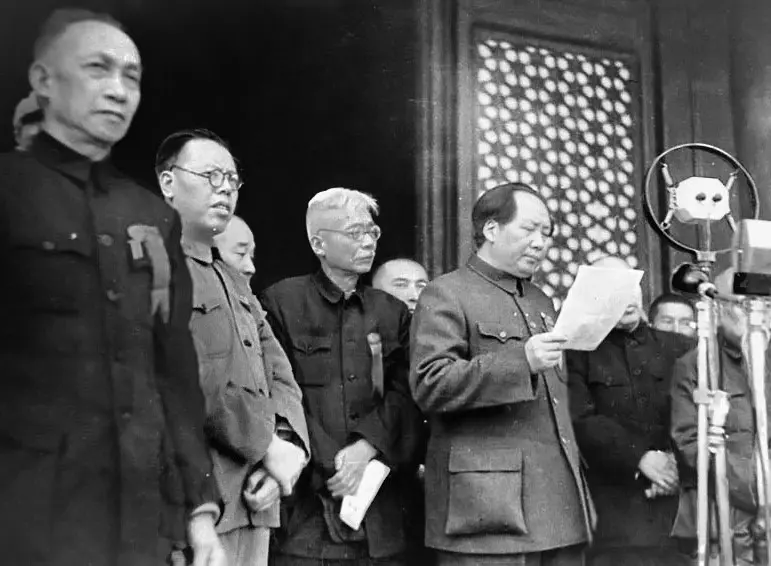
On 1 October 1949 Mao proclaimed the People’s Republic of China from the gate of Tiananmen in Beijing. In December Chiang’s government moved to Taiwan, and about a million soldiers and civilians crossed with it or after it. Taiwanese remember that time too. In 1947, two years earlier, Nationalist troops had put down a rising on the island, and between 18,000 and 28,000 people were killed. Martial law began in 1949 and lasted until 1987. The government of the Republic of China still governs Taiwan today, and the People’s Republic counts Taiwan as part of China.
Mao’s China
The new state changed the countryside first. Land reform took the landlords’ fields and gave them to hundreds of millions of peasants. Landlords were made to face their tenants at village meetings, and many were killed there; the dead are counted from hundreds of thousands to millions. A marriage law of 1950 ended marriages arranged by sale and gave women the right to divorce. In 1949 only one child in five went to primary school; by 1975 almost all did. Health campaigns reached the villages too, and between 1950 and 1980 Chinese life expectancy rose from under 40 years to about 65, one of the fastest rises ever recorded anywhere. In 1956 and 1957 Mao invited open criticism, “let a hundred flowers bloom”, and when it came, more than half a million people were punished as “rightists”.
Then, in 1958, Mao launched the Great Leap Forward, to catch up with Britain’s industry within fifteen years. Villages were merged into huge communes, where people ate in shared canteens and worked under orders. Millions of peasants were sent to make steel in small backyard furnaces, much of it useless, while the harvest went uncollected. Officials, afraid to report failure, reported record harvests that didn’t exist, and the state took grain by those numbers. When the defense minister wrote to Mao in 1959 to say what was going wrong, Mao had him dismissed, and the hunt for “rightists” grew fiercer. China went on sending grain abroad.
Between 1959 and 1961 tens of millions of people starved. How many, nobody can say exactly, because the records of those years are themselves unreliable. Most estimates run from about 17 million to at least 45 million. Demographers who rebuild the population from the censuses find between about 17 and 30 million deaths beyond the normal. Historians who read the Party’s local archives have found more. One of them was Yang Jisheng, a journalist with China’s official news agency. In 1959, as a teenager, he had brought rice home to the uncle who raised him as a father, and found him too weak to eat; he died three days later. Yang spent years in the provincial records and put the toll at 36 million. He called his book Tombstone. It was published in Hong Kong and is banned in mainland China.
China’s government at first called those years the Three Years of Natural Disasters. In 1981 the Communist Party officially changed the name to the Three Years of Difficulty. It said that the economy’s “serious difficulties between 1959 and 1961” were “mainly due to the errors of the Great Leap Forward” and of the campaign against Mao’s critics, together with natural disasters and the Soviet Union’s withdrawal of its aid.
After the famine Mao stepped back from running the economy, which passed to more cautious leaders, among them the head of state, Liu Shaoqi, and Deng Xiaoping. In 1966 Mao struck back. He called on the young to rise against the “capitalist roaders” he said had taken over the party, and wrote that they should “bombard the headquarters”. School and university students formed Red Guards. In August more than a million of them filled Tiananmen Square to see him. They set out to destroy the “Four Olds”, old ideas, customs, culture and habits, by smashing temples, burning books and humiliating anyone suspected. In Beijing alone, in August 1966, Red Guards killed at least 1,772 people, many of them teachers beaten to death by their own pupils. Liu Shaoqi was thrown out of the party and died in prison in 1969. From late 1968 about 17 million young city people were sent to the villages to learn from the peasants, many for years.
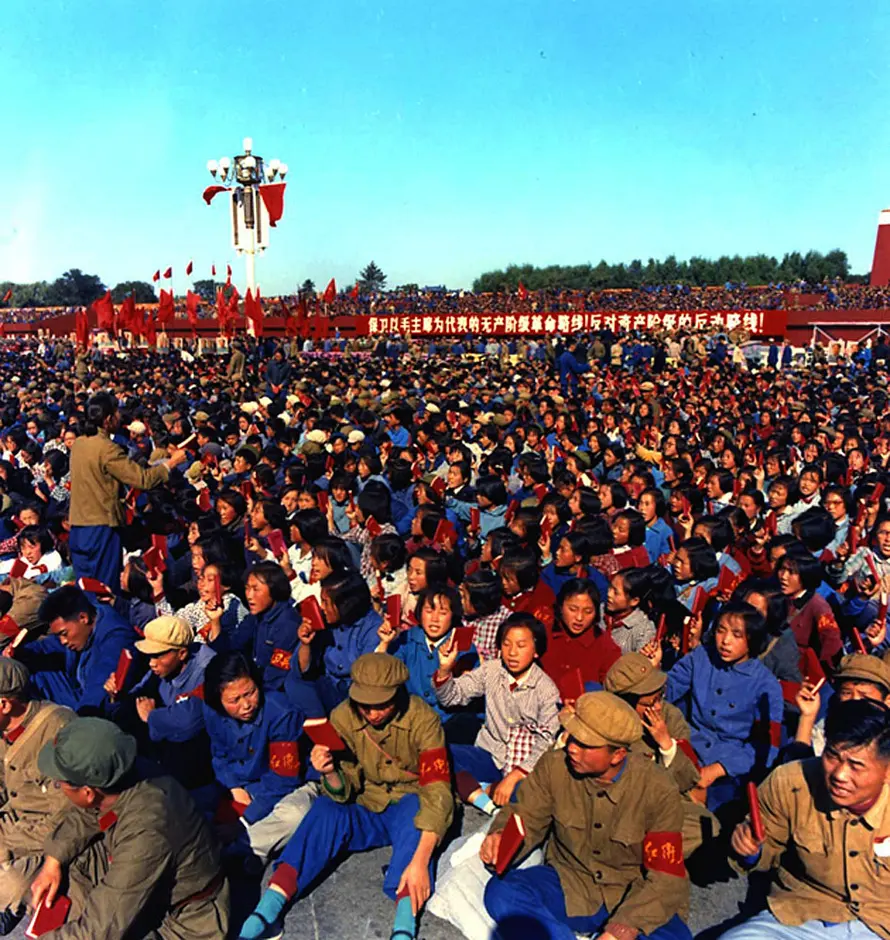
In the countryside most of the killing came later, between 1968 and 1971. Counting from the county histories that China published in the 1980s and 1990s, one study put the dead in the countryside alone at between 750,000 and 1.5 million, with as many crippled and some 36 million persecuted. The movement went on until Mao died, on 9 September 1976. A month later the leaders closest to the Cultural Revolution, among them Mao’s widow, were arrested.
In 1981 the party judged its own past. Its resolution calls the Cultural Revolution “responsible for the most severe setback and the heaviest losses suffered by the Party, the state and the people since the founding of the People’s Republic”, and says plainly: “It was initiated and led by Comrade Mao Zedong.” It judged Mao himself in one line: “His merits are primary and his errors secondary.” By then Deng Xiaoping led China. From 1978 he let peasants farm their own plots and sell at markets and opened the country to foreign trade and money. In the next forty years the number of Chinese living in extreme poverty fell by close to 800 million.
Tibet
When the Qing fell, the Thirteenth Dalai Lama, Tibet’s ruler, expelled China’s officials and troops, and in 1913 he declared that Tibet and China had been tied only as patron and priest, not as ruler and subject. For almost forty years Lhasa ran its own affairs. Almost no country formally recognized it as independent, and every Chinese government, Chiang’s included, claimed Tibet as part of China.
In October 1950 the People’s Liberation Army crossed the upper Yangtze and defeated Tibet’s small army at Chamdo, in the east. The Tibetan government gave the fifteen-year-old Fourteenth Dalai Lama full powers. In May 1951 its delegates in Beijing signed an agreement in seventeen points. Its first says that “the Tibetan people shall return to the big family of the motherland – the People’s Republic of China”. Its fourth promises that “the Central Authorities will not alter the existing political system in Tibet” nor the Dalai Lama’s status and powers. Its eleventh says that in reforms “there will be no compulsion”. The Dalai Lama accepted it in October 1951, and the army entered Lhasa.
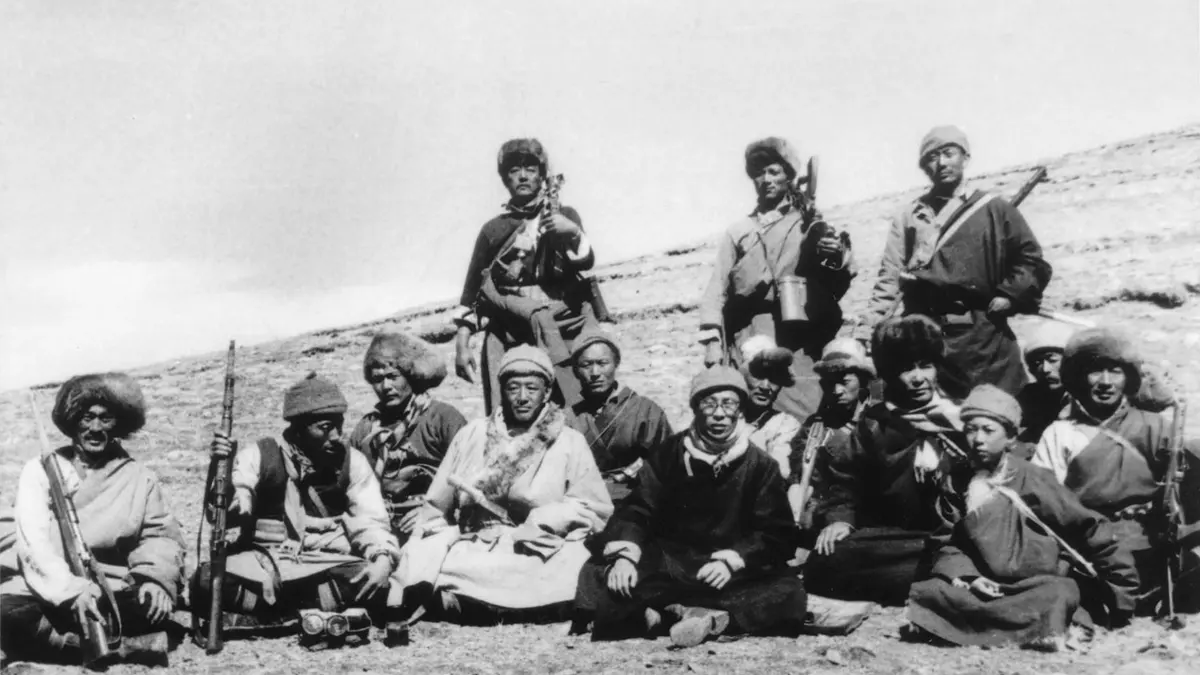
In central Tibet the old order was left in place for a time. In the eastern lands of Kham and Amdo, outside the Lhasa government’s rule, Chinese reforms took land and herds, and from 1956 the people there rose in arms. Refugees and fighters crowded toward Lhasa. On 10 March 1959 a rumor spread that the Chinese meant to seize the Dalai Lama when he went to a performance at their army’s headquarters, and thousands of people surrounded his summer palace to stop him leaving. Over the next days the protests turned to demands for independence, and then to fighting. On the night of 17 March the Dalai Lama, now 23, slipped out of Lhasa in disguise, and at the end of the month he crossed into India. About 80,000 Tibetans followed him into exile. In Lhasa the army shelled the palace and crushed the rising. How many died is disputed; it was thousands at least.
The two sides tell all of this differently. China’s government says that Tibet “has been an inseparable part of China since ancient times”, that 1951 was its “peaceful liberation”, and that in 1959 a ruling class “staged an all-out armed rebellion” to keep “feudal serfdom”, after which reform freed “a million serfs and slaves” and gave them land. The Tibetan government in exile, which the Dalai Lama founded in India in April 1959 and which now sits in Dharamshala, calls itself “the continuation of the government of independent Tibet”. It says the agreement of 1951 “was forced upon the Tibetan government and people” and that the army “crushed the Tibetan national uprising”, and the Dalai Lama said in June 1959 that the agreement’s consent “was secured under duress and at the point of bayonet”.
Historians who have spent their lives on modern Tibet stand between them. Some show a Tibet that ruled itself in fact for forty years after 1911, though almost no one recognized it, and look as closely at the Lhasa government’s own politics as at the outside powers. Others show that in the 1950s the Communists set out first to win over Tibet’s nobles and monasteries, and that the Lhasa crowd of 1959 was made up of ordinary people angry with their own leaders, whom they thought had failed the Dalai Lama, as well as with the Chinese.
What followed is less argued. In 1962 the Panchen Lama, Tibet’s second great lama, who had stayed, wrote a long petition to Beijing about the suffering he had seen; Mao called it a poisoned arrow, and he spent much of the next fifteen years in prison. In 1965 Tibet became an autonomous region of China. In the Cultural Revolution its temples and monasteries were wrecked as China’s were. Since the 1970s the Dalai Lama has asked not for independence but for real autonomy for Tibetans within China, which he calls the Middle Way. China’s government still calls him a separatist, and the two have not agreed. This book doesn’t judge who should rule Tibet. It sets out what happened and what each side says.
So what should a reader carry away? An empire that couldn’t defend itself fell in 1911, and the republic after it couldn’t hold the country together. Two parties fought for nearly thirty years to rule it, and the one that won the peasants won the war. Mao’s China gave land to the poor, rights to women and longer lives to almost everyone, and through the Great Leap and the Cultural Revolution it also caused the deaths of tens of millions of its own people, as the Communist Party itself has admitted in part. Tibet came under Beijing’s rule in those same years, and China and the Tibetans in exile still tell that story in opposite ways. All of it happened.
Meanwhile, in Nepal: in 1956 Nepal signed a treaty with China that ended the old Thapathali treaty of 1856, with its rights in Tibet, and accepted Tibet as part of China, and in 1960 the two countries agreed their border. In the years after 1959 the Valley’s merchants, whose houses had traded in Lhasa for centuries, came home for good, and Tibetans who fled settled in Nepal too, at Jawalakhel in Patan and near Pokhara. Nepal’s foreign ministry says today that Nepal “is firmly committed to One China Principle” and won’t let its soil be used against China. Nepal’s side of those years is told in A decade of democracy and the first elected government, in Nepal’s History, for the Curious, and Nepal’s own Maoists in The conflict, 2052 to 2062.
Found a mistake? Please tell us.