
On 8 July 1947 an English lawyer named Cyril Radcliffe arrived in India for the first time in his life. He had come to draw two borders, one through Punjab in the west and one through Bengal in the east, cutting each province between two countries that did not yet exist, India and Pakistan. He chaired two commissions of four Indian judges each, two chosen by the Congress party and two by the Muslim League, and when the judges could not agree, the choice fell to him. Soon after he arrived he learned that the lines had to be finished by 15 August, the day the British would hand over power. So he had about five weeks, and the census figures of who lived where.
He handed in his lines on 12 August. They were kept secret until 17 August, two days after independence, so on the day India and Pakistan were born, millions of people in Punjab and Bengal did not know which country they were in. Radcliffe destroyed his papers before he left, so why each village went where it did can never be fully known.
How had it come to this? The short answer first. Britain had ruled India for almost two hundred years, first through the East India Company and then, after the rising of 1857, directly (Empire tells how). In 1885 educated Indians founded the Indian National Congress to ask for a greater say in running their own country. Over sixty years, above all under Mohandas Gandhi, it grew into a movement of millions who broke British laws on purpose, without violence. Many of India’s Muslims, about one person in four, came to fear that in a free India they would always be outvoted by the Hindu majority, and their party, the Muslim League, led by Muhammad Ali Jinnah, came to demand a country of their own, Pakistan. The people treated as untouchable, led by B. R. Ambedkar, fought for their rights against other Indians as much as against the British. By the end of the Second World War, Britain no longer had the officials, or the authority, to hold India. In August 1947 it left two countries: Pakistan, in two pieces far apart, and India between them. In the killing and flight that followed, somewhere between 200,000 and two million people died, and ten to fifteen million left their homes. India, Pakistan and Bangladesh, which was then Pakistan’s eastern half, still remember it differently.
From asking to refusing
The Congress began very politely. Its first meeting, in Bombay in December 1885, had 72 delegates, most of them lawyers, and its chief organizer was a retired British official; had an Indian started it, an early Congress leader said later, the officials would “at once” have crushed it. They asked for mild things, such as more Indians in the government’s service, but they also argued that Britain was draining India’s wealth.
In 1905 the viceroy, Britain’s governor of India, split the great province of Bengal in two, with a new eastern province where Muslims were the majority, its capital at Dhaka. Bengali Hindus saw a plan to divide them, and boycotted British cloth for Indian goods, the स्वदेशी (swadeshi), “our own country’s”, movement. Many Muslims saw the same split as a chance for the poor Muslim east. In 1906, at Dhaka, Muslim leaders founded the All-India Muslim League to speak for Muslims as a minority, and in 1909 Britain gave Muslims separate electorates, seats that only Muslims voted for. The Congress called this divide and rule. The League called it protection. Both ideas would last. The young Jinnah, a Bombay lawyer, then belonged to both parties, and in 1916 he helped them agree on how many seats each community should have.
Gandhi’s way
Gandhi had spent twenty years as a lawyer in South Africa, leading Indians there against laws that treated them as lesser people. In 1909 he wrote a small book in Gujarati, Hind Swaraj, “Indian Home Rule”, with a startling argument: “The English have not taken India; we have given it to them.” They stayed, he wrote, because Indians kept them, so if Indians stopped cooperating, British rule would end. His method was सत्याग्रह (satyagraha), protest by peaceful disobedience: break an unjust law openly, harm nobody, and accept the punishment.
He came home in 1915. His first campaign in India was in Champaran, the district of Bihar along Nepal’s border, where British planters made farmers grow indigo on part of their land. In 1917 the officials ordered him to leave; he refused, the government backed down, and he and his helpers wrote down the statements of 8,000 farmers. The forced indigo growing was ended.
Then came 1919. The government passed a law letting it jail Indians without trial, and Gandhi called on the country to stop work in protest. In Amritsar, in Punjab, the arrest of two local leaders set off riots and shooting in which Europeans and Indians died, and General Reginald Dyer, put in charge of the city, banned all gatherings. On 13 April, the spring festival of Baisakhi, local people held a meeting anyway in the Jallianwala Bagh, an open ground closed in by walls. Thousands came, many of them villagers in town for the fair who had not heard of the ban. Dyer marched in with fifty riflemen, half of them Gurkhas, and without a word of warning ordered them to fire. They fired for about ten minutes, into a crowd with almost nowhere to run. The government’s count was 379 dead. The Congress’s own inquiry put it at about a thousand. The House of Commons condemned Dyer, but a London newspaper raised a fund for him. For many Indians who had still trusted British justice, that was the end of it.
The next year Gandhi led the whole Congress into non-cooperation: give up British titles and jobs, leave government schools and courts, burn foreign cloth, spin your own. Muslims joined in great numbers, angry that Britain was carving up the Ottoman empire, whose sultan many honored as the Caliph. Over 30,000 people went to jail. Then, in February 1922, at Chauri Chaura in the north, a crowd set fire to a police station and 22 policemen died. Gandhi called the whole movement off. Jinnah had already left the Congress, unwilling to follow Gandhi into mass law-breaking.
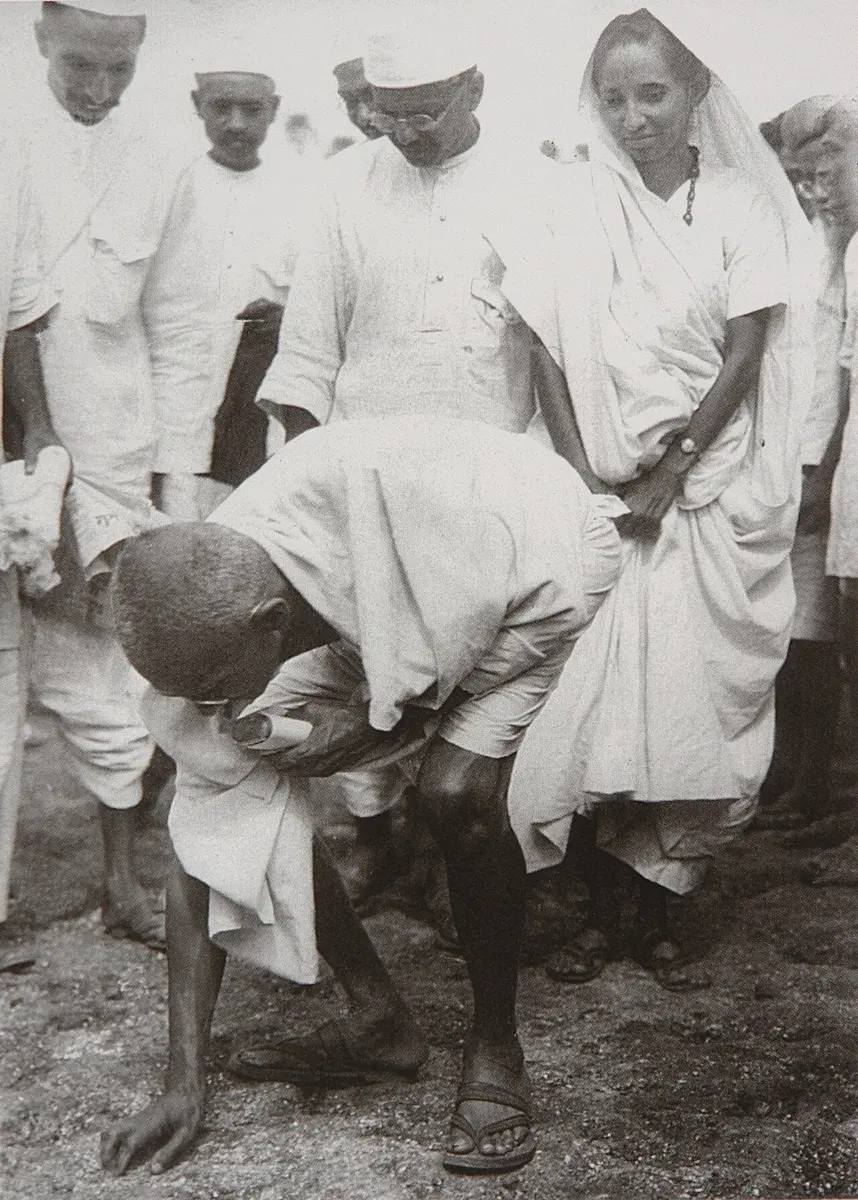
His most famous campaign was about salt. Everyone needs it, and the British taxed it, so the tax fell hardest on the poor. In March 1930 Gandhi set out with 78 followers to walk about 385 kilometers to the sea at Dandi, and on 6 April he picked up a handful of salt from the beach, and with it broke the law. At the Dharasana salt works, marchers walked up to the police column after column and were beaten down without lifting a hand. More than 90,000 people went to jail.
The other questions
Freedom from Britain was one question. Who would hold power in a free India was another, and two men pressed it hard.
Ambedkar, born in 1891 into the Mahar caste, one of those called untouchable, earned doctorates in New York and London and came home to fight. In 1927, at Mahad, he led untouchables to drink from the town’s public water tank, and later burned a copy of the Manusmriti, the old lawbook that set out caste rules.
In 1932 the British gave untouchables separate electorates of their own, as Muslims had, and a second vote in the general seats as well. Gandhi, then in jail at Poona, began a fast to the death against it. Separate seats, he believed, would keep untouchables “untouchables in perpetuity”; the cure was to end untouchability among Hindus. Only Ambedkar could save Gandhi’s life, by giving up what the British had given. After five days he agreed to the Poona Pact: about twice as many seats reserved for untouchables, but chosen by all voters together. “I responded to the call of humanity,” he wrote later, “and saved the life of Mr. Gandhi.” He always held that the lost second vote had been worth far more than the extra seats. In 1936 he printed a speech that a Hindu reform society had canceled, Annihilation of Caste: “Caste is a notion, it is a state of the mind.” Gandhi answered him in print, and many Dalits, as untouchable communities call themselves today, still read the two men’s quarrel from Ambedkar’s side.
Jinnah’s question was about Muslims. In the provincial elections of 1937 the Congress won most provinces, while the League won only 109 of the 482 seats kept for Muslims. Many Muslims felt the Congress governments that followed as Hindu rule, with the Congress flag on public buildings and Vande Mataram, a Bengali hymn to the motherland, sung at meetings. How fair the complaints were is argued, but they won the League followers. On 23 March 1940, at Lahore, the League asked that the Muslim-majority areas of the north-west and east become “independent states”. The demand soon took the name Pakistan, and behind it lay what came to be called the two-nation theory: that Hindus and Muslims were two nations, not one.
Did Jinnah really want a separate country? Historians disagree. Some argue that the Lahore demand was “a bargaining counter”, meant to win Muslims an equal share of power in a loose, united India, and that Jinnah ended up with the smaller Pakistan he had once called “maimed, mutilated and moth-eaten”. Others take him at his word: in 1940 he said Pakistan was “not a counter for bargaining”.
War, and the end
In 1939 Britain declared war for India without asking a single Indian, and the Congress governments resigned in protest. Subhas Chandra Bose, a Bengali twice elected president of the Congress, the second time against Gandhi’s wishes, wanted to use Britain’s war to throw the British out. Pushed out of the leadership, he escaped from house arrest in 1941, went over to Germany and then Japan, and in Southeast Asia led the Indian National Army (The Second World War in Asia tells of his army, and of the trials of its officers that made them heroes across India in 1945).
Gandhi chose the opposite road. On 8 August 1942 the Congress told Britain to “Quit India”, and Gandhi gave the country “a mantra, a short one”: “Do or Die.” The next morning he and every Congress leader were in jail, and they stayed there for most of the war. Risings broke out, railway lines were torn up, and the police and army fired on crowds hundreds of times. Jinnah kept the League out of it, and with the Congress leaders behind bars, the League grew.
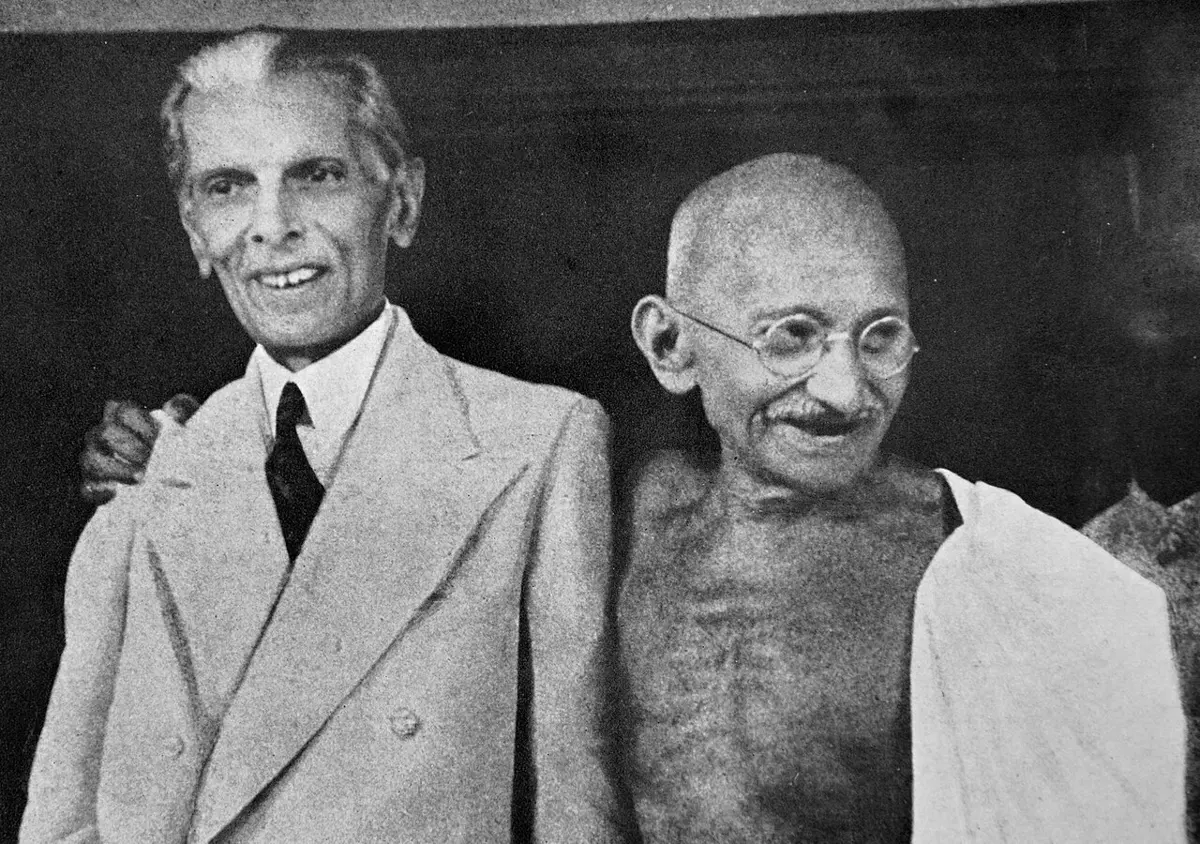
When the war ended, Britain had a new Labour government that meant to leave, and a Raj that could hardly stay: its British officials were too few and tired by the war, and its viceroy reported that the government’s authority was slipping away for good. How much Bose’s army had to do with that is argued. Many Indians believe it was what finally drove the British out: the trials of its officers, and the rising of India’s navy sailors in 1946, showed that Britain could no longer trust the Indian soldiers and sailors the Raj rested on. Others answer that the army stayed steady, as the same viceroy wrote days after the sailors’ rising, that Britain had decided to send its last mission to negotiate before that rising, and that Bose’s army lost its war.
In the elections of 1945–46 the Congress swept the general seats and the League about nine in ten of the Muslim seats. The mission, three British ministers, came in 1946 with a plan for one loose India, its Muslim-majority provinces grouped to govern themselves under a weak center. The League accepted it. Then Jawaharlal Nehru, about to lead the Congress, said his party was bound by nothing except to enter the assembly that would write the constitution. Jinnah took that as proof the plan would be changed once the British left, withdrew the League’s acceptance, and called on Muslims to show their strength on 16 August 1946, Direct Action Day. In Calcutta more than 4,000 people, Hindus and Muslims, were killed in three days, and who was most to blame is argued still. The killing spread to Noakhali in Bengal, where Hindus were attacked, to Bihar, where Muslims were, and in March 1947 to Sikh and Hindu villages around Rawalpindi in Punjab.
In February 1947 Britain announced it would leave by June 1948 at the latest. Its last viceroy, Lord Mountbatten, decided that India must be divided, and brought the date forward to 15 August 1947. The Congress leaders accepted partition as the only way left. Then Radcliffe drew the lines.
Partition
Punjab and Bengal were cut in two. Pakistan was born on 14 August, in two halves more than 1,500 kilometers apart, and India at midnight that night, when Nehru, its first prime minister, spoke of India waking “to life and freedom” at “the stroke of the midnight hour”. Gandhi was in Calcutta, fasting and praying for the killing to stop. Three days before, in Karachi, Jinnah had told Pakistan’s new assembly: “You are free; you are free to go to your temples, you are free to go to your mosques or to any other place of worship in this State of Pakistan.”
In Punjab, though, nobody felt safe on the wrong side of the line. Muslims fled west, Hindus and Sikhs east, in columns many miles long and on trains so crowded that people rode on the roofs. Armed bands of every faith attacked the columns and the trains, and whole trains arrived full of the dead. Nobody counted the dead. The British at the time said 200,000 and a later Indian estimate two million; about a million is the figure most often accepted. When India and Pakistan held their censuses in 1951, each counted more than seven million people who had come from the other side. About 75,000 women were carried off by men of other religions; tens of thousands were later brought back, and many refused to go home, afraid their families would not take them back.
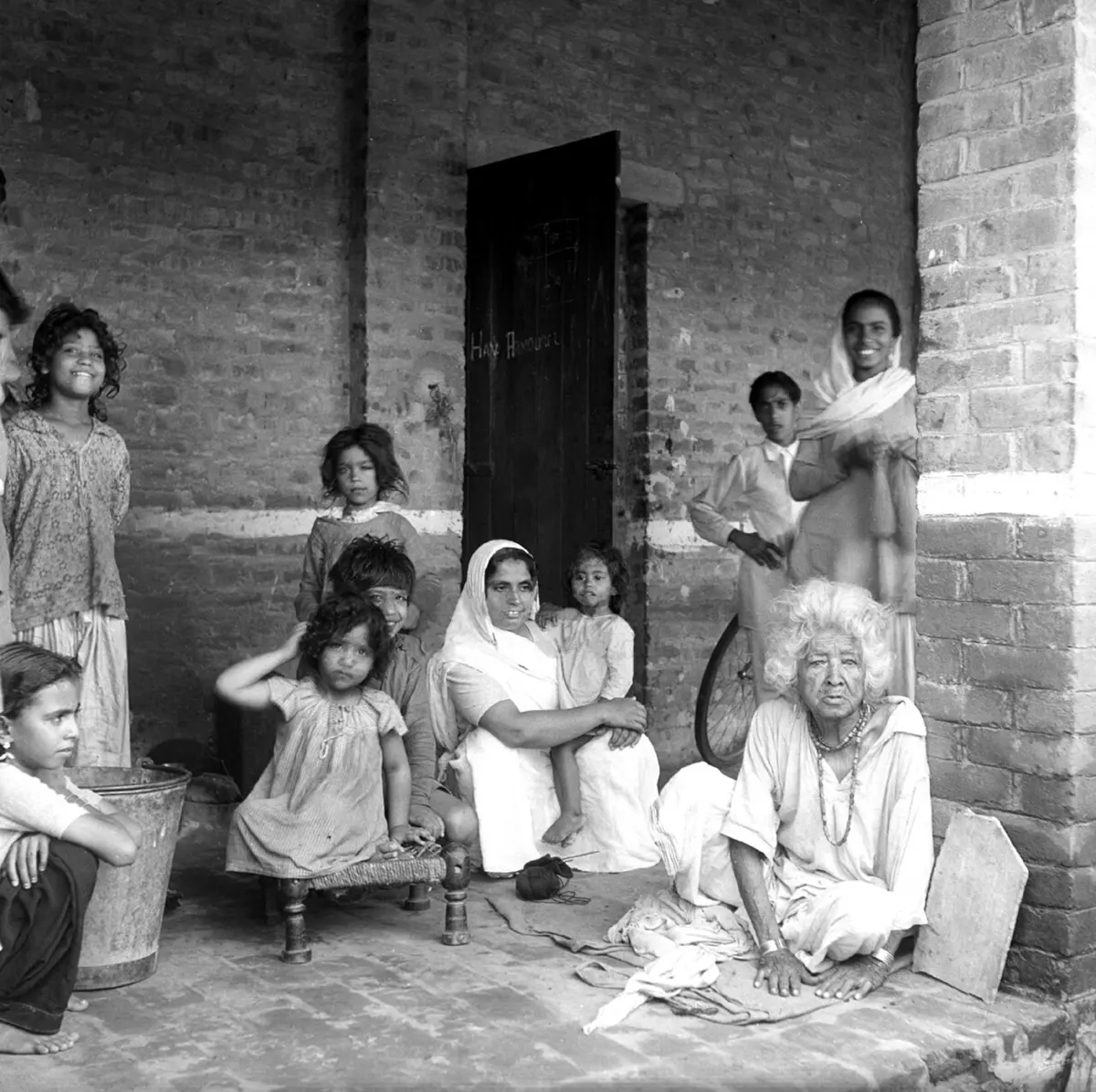
Families made terrible choices. In March 1947, in the village of Thoa Khalsa near Rawalpindi, Sikh women jumped into a well rather than be taken by attackers. One of them, Basant Kaur, lived because the well was too full to drown them all. Decades later she told how her parents were burned alive, and how a Muslim hid her brother and sister in his house: “there were some good ones, and they helped them.” On a crowded train to Pakistan that year, six-year-old Jamshed Jahan Ara heard her father tell her brother that if armed Sikhs attacked, he must kill her, her mother and her aunt: “A bullet is better.” She lived, and told the story in Karachi seventy years later.
Kashmir, a princely state whose Hindu king ruled a mostly Muslim people, was invaded by raiders from Pakistan in October 1947, and its king joined India. Pakistan has never accepted it, the two countries went to war, and Kashmir has been divided ever since. On 30 January 1948 Gandhi was shot dead on his way to evening prayers in Delhi by a Hindu nationalist who blamed him for being too kind to Muslims and to Pakistan. Jinnah, already ill, died that September.
Remembering it
India remembers a long, mostly peaceful struggle that freed a nation, with Gandhi as its father, and Partition as a wound blamed mostly on the League and the British. Pakistan remembers a homeland won against the odds by the Quaid-i-Azam, the “Great Leader”, as it calls Jinnah, for a people who were a nation of their own: the Muslims who crossed to it came by choice, to a country they had struggled for. Each country’s schoolbooks have long told mostly their own side’s suffering, and blamed the other side for the killing.
Sikhs remember 1947 as the year they lost the most: their Punjab cut in two, the canal lands their families had turned from waste into the best farmland in India left in Pakistan, and with them Nankana Sahib, where their faith’s founder was born. Bangladesh remembers it least: for Bangladeshis, 1971 comes first. Many Bangladeshis see their grandparents’ vote for the League in 1946 as a vote for a life free of the zamindars, landlords who were mostly Hindu, more than for Pakistan itself, and within a year Pakistan’s rulers were telling Bengalis that Urdu would be the only state language (The Cold War tells where that led). In Britain the end was long told as a calm handing over of power; historians now dwell on the haste.
And Dalits remember Ambedkar. Two weeks after independence he was made chairman of the committee that drafted India’s constitution, which outlawed untouchability. When it was finished, in November 1949, he warned that India was about to “enter into a life of contradictions”: “In politics we will have equality and in social and economic life we will have inequality.”
From Kathmandu, 1947 changed the whole view south: for a hundred and thirty years Nepal’s great neighbor had been the British empire, and now it was a free India. The Gurkha regiments were shared out between the British and Indian armies, and two years later there would be a new neighbor to the north as well.
So what should a reader take from all this? India won its freedom through decades of mass, mostly non-violent protest led by the Congress and Gandhi, with Bose’s war and a Raj short of men and authority pushing too; how much each counted is argued. It did not win it as one country, because many Muslims, led by Jinnah, would not be a permanent minority in a Congress-ruled India, and the British left in a hurry. Inside the freedom struggle ran another, Ambedkar’s, over whether a free India would free all its people. And the line drawn in five weeks cost about a million lives and moved ten to fifteen million people. Each of the leaders did what he believed was right, and three countries still argue over who was.
Meanwhile, in Nepal: in 1947 Nepalis held their own satyagraha against the Ranas, and within four years, with India’s help, the Ranas fell. That story is told in The campaign against the Ranas, and their fall and The revolution of 2007, in Nepal’s History, for the Curious.
Found a mistake? Please tell us.