
On 4 February 1996, a letter was delivered to the prime minister’s office at Singha Durbar. It was signed by Baburam Bhattarai, the chairman of the United People’s Front, a small left party that had won nine seats in the first election five years before. It set out forty demands. The treaty of 1950 with India, and the new treaty on the Mahakali’s water, should be scrapped. The open border should be controlled, and the offices that recruited young Nepalis into the Gurkha regiments closed. A new constitution should be written by elected representatives, the king and the royal family should lose their special privileges, and Nepal should be a secular state. Daughters should inherit their parents’ property. Untouchability should end, every language should have the same chance to grow, and peoples who were a majority in their own areas should be allowed to govern themselves. Land should belong to those who farmed it, and every village should have drinking water, a road and electricity. If the government gave no sign of meeting these demands by 17 February, the letter ended, its writers would take “the path of armed struggle”.
They didn’t wait for the deadline. On the night of 13 February (Phagun 1, 2052), four days early, groups from the Communist Party of Nepal (Maoist) attacked police posts in Rolpa, Rukum and Sindhuli. In Gorkha they burned the loan papers of a government bank for small farmers, and in Kathmandu they attacked a soft-drinks factory. The fighters had homemade guns and khukuris.
What followed was a war of more than ten years between the Maoists and the state of Nepal: at first its police, and from 2001 its army as well. The Maoists called it जनयुद्ध (janayuddha), the People’s War, a revolution to overthrow a state they called feudal and to build what they called a new democracy. The government at first called it a problem of law and order, and from 2001 called the Maoists terrorists. The peace agreement that ended it in 2006 calls it simply the armed conflict, and that is what this chapter calls it, or the war. Over those years at least 13,000 people were killed, and more than 1,300 who disappeared have never been found. Both sides killed, tortured and took people away, and both sides’ acts were recorded, case by case, by Nepali and international human rights groups and later by the United Nations. Many families in Nepal lost someone, on one side or the other, or caught between them.
Where it began
The Maoists were not new. In November 1990 several small left parties joined as the Communist Party of Nepal (Unity Centre), led by Pushpa Kamal Dahal, who later took the name Prachanda, and the United People’s Front was its party for elections. After its nine seats of 1991, it stopped taking part in elections. In March 1995 the Unity Centre renamed itself the Communist Party of Nepal (Maoist), after Mao Zedong, whose guerrilla war had brought the communists to power in China, and its leaders decided to start a war of their own. They spent the rest of the year getting ready, and from the start they planned it in stages: small bands in the hills, then larger units, then areas of their own.
They chose the hills of the mid-west, above all Rolpa and Rukum, poor districts far from the capital. Many of the people were Magar, and others were of the castes the old order placed lowest. In a report of 1997, Amnesty International recorded what villagers in Rukum and Sindhuli said: that six years of democracy had done nothing about their poverty, that officials were corrupt, and that people of the low castes and peoples such as the Magar were passed over in government jobs, the courts, and even on the radio.
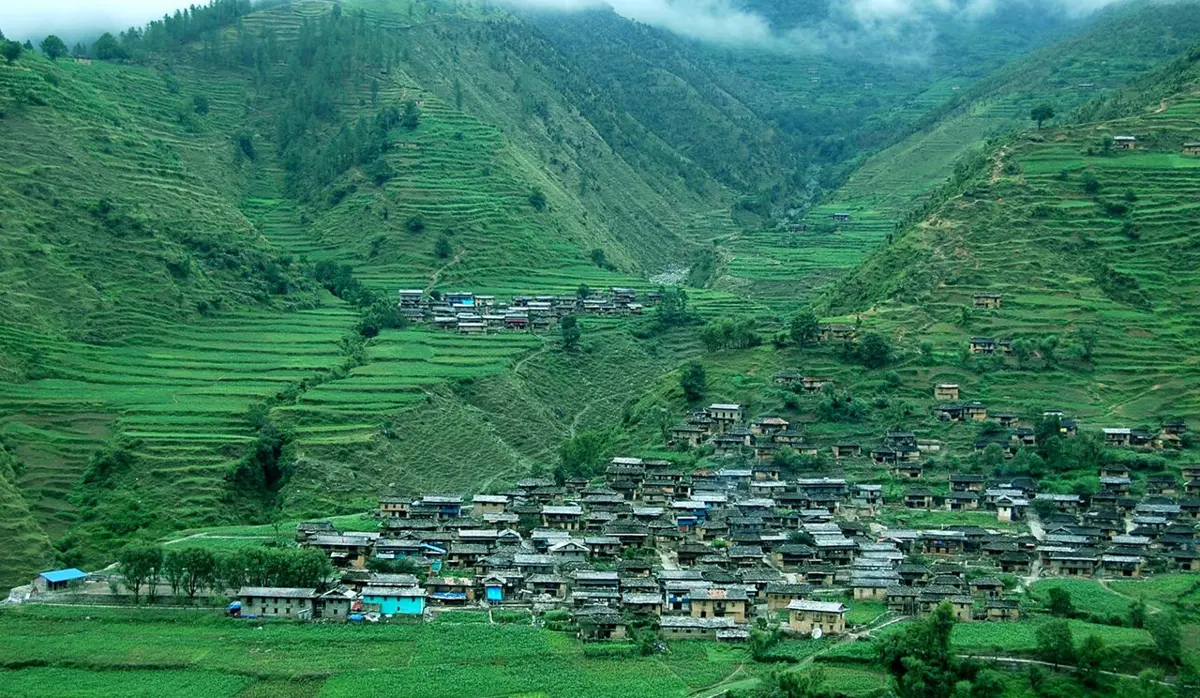
The police had been there first. In November 1995, before the war began, they started an operation in Rolpa called Operation Romeo. The police said its aim was to win people’s hearts and minds and to cut the Maoists off from their support, with new police posts and development work. Human rights groups recorded something else: arbitrary arrests, torture in police custody, and killings where force wasn’t needed. The senior police officer for the mid-west was reported to have said that “terror must be created to control terrorism”. In May 1998 a bigger operation, Kilo Sierra II, sent police into the districts where the Maoists were strongest, and in the year it ran, by the counts of human rights groups, about 500 people were killed by the police. Observers at the time, and many since, have said that what the police did in those years drove people toward the Maoists.
Why the war took hold, and why there, is argued. One study of where the dead were found that the poorer a district was, the more people died in it, and that hills and forests, where fighters could hide, made the fighting worse once it had begun; in its figures, differences of caste and ethnic group mattered less than poverty. Others answer that many districts were poorer than Rolpa. Some put more weight on the old grievances of peoples left out, and the Maoists did promise Magar and other peoples regions of their own. Still others point to fear: in a village where both sides could come by night, many people did what the side they feared most told them. The Maoists’ own account is simpler. They had chosen a revolution, and the poor of the hills had answered it.
From police posts to the army
For its first five years, the war was the Maoists against the police. The government kept the army out, and the army answered to the king. The Maoists ambushed police patrols and raided isolated posts for their rifles, in attacks that grew larger year by year. They also killed people they called class enemies and spies, and attacked workers of other parties, above all the Nepali Congress, then in government. In September 2000 they took Dunai, the headquarters of Dolpa district, for a few hours, killed 14 policemen, freed the prisoners and carried off guns and cash. By July 2001 Rolpa, which had had 39 police posts, had two, and Rukum, which had had 23, had two as well. In much of the country the state was left in the district towns. In 22 districts the Maoists announced “people’s governments” of their own, which collected taxes of their own, held “people’s courts”, and kept a strict and sometimes violent control over how people behaved.
Then, on the night of 1 June 2001 (Jestha 19, 2058), King Birendra, Queen Aishwarya and seven more of the royal family were shot dead at a family gathering in the Narayanhiti palace. A committee led by the chief justice, with the speaker of parliament, found that the crown prince, Dipendra, had done it and then shot himself; the leader of the opposition, who had been named to the committee, refused to take part. Dipendra, found badly wounded, was declared king the next day, and died two days after that. The old king’s brother, Gyanendra, became king. Many Nepalis never accepted the committee’s account. It recorded what witnesses said, but no post-mortems were done on the dead, and Nepal’s Grade 10 history book still calls its report incomplete.
For the war, the killings mattered in two ways. The Maoists rejected the new king and called louder for a republic. When the newspaper Kantipur printed an article by Baburam Bhattarai asking Nepalis not to accept the new king, its editor and two of its directors were arrested; they were let go nine days later, and the charges against them were later dropped. The parties in parliament stood by the constitution and its king. And the army now had a new king at its head. A month later, after a large Maoist attack in Rolpa, the government sent soldiers there, but they came back without fighting. The prime minister, Girija Prasad Koirala, resigned, in what many saw as a quarrel over who really commanded the army.
The next prime minister, Sher Bahadur Deuba, called a ceasefire, and the Maoists agreed. In talks that autumn they asked for a new constitution, a government of all parties until then, and a republic, and they set the republic aside to be decided by an elected assembly. The talks broke on that assembly. On 23 November 2001 the Maoists ended the ceasefire and attacked the army for the first time, at its barracks in Ghorahi, in Dang, carrying away its automatic rifles and machine guns. Three days later the government declared a state of emergency, sent in the army, and named the Maoists terrorists in a new law against “terrorist and disruptive activities”. The government said it had talked in good faith and had no choice once the Maoists attacked, and the countries that gave Nepal aid agreed. Neither side had held its fire completely during the talks: the government had gone on arresting people it took for Maoist supporters, and the Maoists had gone on attacking members of other parties. The newspapers were told what they could print: “the criminal activities of Maoist terrorists” and “the bravery and victories” of the army, the police and civil servants, but nothing that would “aid” the Maoists or “demoralise” those fighting them.
The year that followed, 2002, was the bloodiest in modern Nepal’s history, and the chart shows how sharply the killing rose. In May the prime minister dissolved parliament, and in October the king dismissed him and chose prime ministers himself. A second ceasefire in January 2003 led to talks. The government offered a round table and an all-party government, but not the elected assembly: changes, it said, should come through the constitution it already had. On 17 August 2003, while the talks were still going on, soldiers at Doramba, in Ramechhap, took 19 people prisoner, most of them Maoists, marched them to a hillside and shot them. The National Human Rights Commission found that they had been executed, and the army later admitted “some illegal killings”. Ten days later the Maoists ended the ceasefire. In March 2004 they attacked Beni, the headquarters of Myagdi district, in one of the war’s largest battles. Civilians were drawn in too: the Maoists had village militias, and in some districts the security forces were reported to have trained and armed village “retaliation committees”, प्रतिकार समिति (pratikar samiti), which were accused of serious abuses. On 1 February 2005 King Gyanendra dismissed the government and took power himself, and that is the next chapter’s story. The war went on for more than a year after it.
Between two armies
For people in the villages, the war came from both sides. Many families gave the Maoists food or shelter, often because they couldn’t refuse armed men, and such people were among those the security forces arrested. A family that refused the Maoists could be punished by them. Human Rights Watch called its report on these years “Between a Rock and a Hard Place”.
The Maoists collected what they called donations, often whether people wanted to give or not. They called general strikes, बन्द (banda), and punished those who didn’t obey. People were beaten or worse for refusing to give money, food or land, for refusing to join, or for having someone in the family in the army or police. Above all the Maoists took away, beat and killed people they suspected of spying or informing for the security forces, and teachers and members of other parties were often among them. In June 2003, during the second ceasefire, men who said they were Maoists rounded up about fourteen people of a village in Banke, tied them up in front of their families and accused them of helping the army find and kill three Maoists. Three of them were later found beaten and shot dead, as the United Nations’ report records.
The security forces came at night, often in large numbers, with lists of people suspected of feeding, sheltering or helping the Maoists. Many of those taken were held in army barracks, where, the United Nations later found, torture during questioning may have been systematic, and their families were told nothing. Some were found later, some released, and some never seen again. In 2002, and again in 2003 and 2005, more new cases of people made to disappear were reported to the United Nations from Nepal than from any other country. Some of those killed in what the army or police reported as clashes had, the human rights groups found, been killed after they were caught.
Each side killed teachers and students. By INSEC’s count to 2006, the Maoists killed 84 teachers and the state 57; the Maoists killed 136 students, and the state 195.
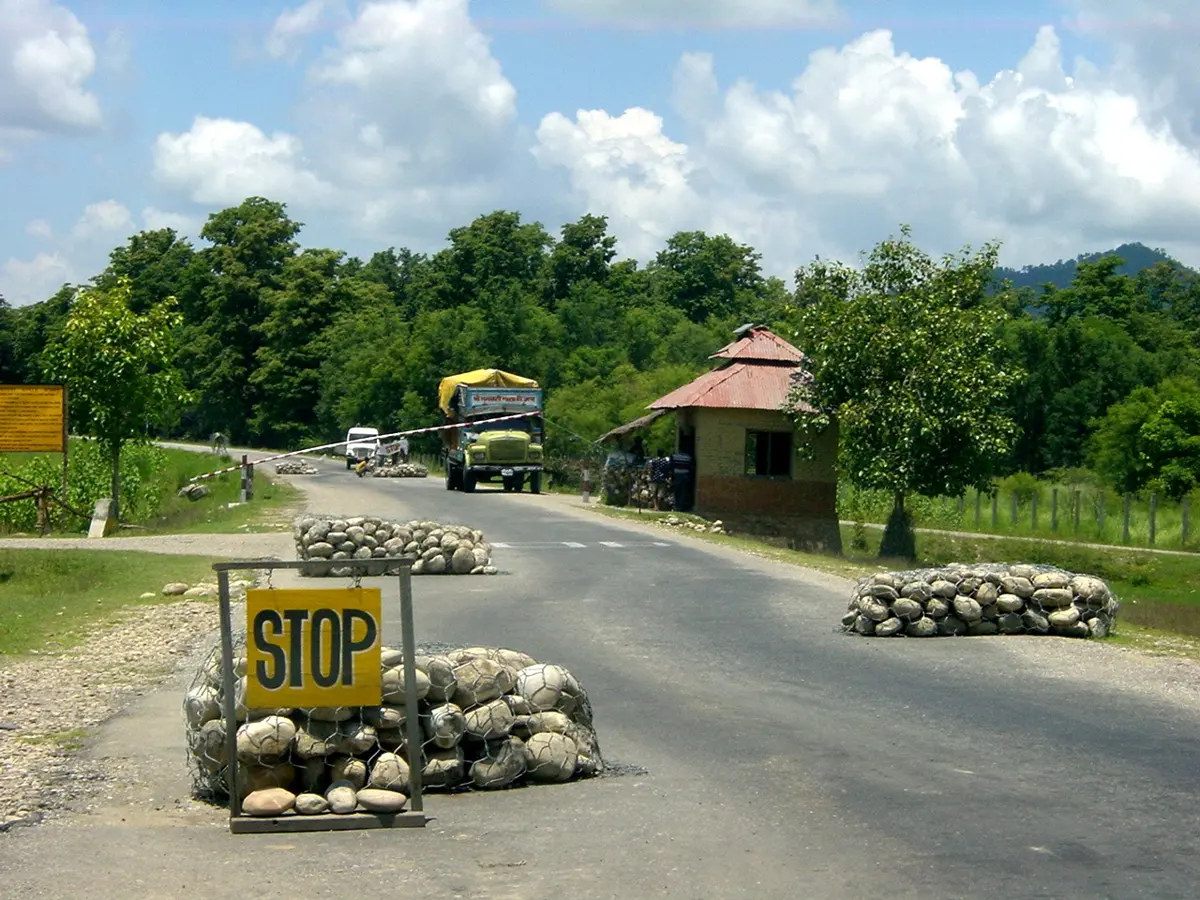
Many people left. Some went to the district towns or to Kathmandu, and very many went over the open border to India. Nobody counted them as they went. A monitoring center in Geneva thought the most likely number for those who fled inside Nepal was between 100,000 and 200,000, not counting those in India; the government, which at first counted only people driven out by the Maoists, later listed nearly 80,000.
Counting the dead and the missing
How many died, and at whose hands? INSEC, a Nepali human rights group, kept a list of the dead through the war; by 2010 it had counted 13,236, and by its count to the end of 2005 the state’s forces killed about two in every three, and the Maoists one in three. Those are counts of who killed, and they include fighters on both sides killed in battle. The government’s own lists, drawn up after the war to pay relief to families, have given totals from about 12,700 to about 18,000 at different times, and in 2012 its ministry admitted that its list held some people who were still alive and some names twice. The figure heard most often is 17,000, and Nepal’s Grade 10 book says that over 17,000 are claimed to have died. In 2020 Pushpa Kamal Dahal said that 17,000 had been killed, of whom the state had killed 12,000, and that he would take responsibility for only 5,000.
Some numbers were claimed in the heat of the war and never counted at all. After the battle at Beni, the Maoists said they had killed 125 soldiers and 26 policemen; the army and the district office together counted 33 soldiers and policemen killed, with three more missing. The ministry of defense said it had killed 500 Maoists, and an officer said his men had found 202 bodies; the Red Cross, which buried the dead, counted 67 around the town, and the Maoists said 78 of their people had died. Nineteen civilians were killed in and around Beni, by the district office’s list: three boys by grenades the Maoists left behind, and eight in bombing from a helicopter after the battle.
The United Nations, which had a human rights office in Nepal from 2005, gathered about 30,000 documents and cases from Nepali groups, the National Human Rights Commission and its own work. In its report of 2012 it found that up to 9,000 serious violations of the laws of war and of human rights may have been committed. Of more than 2,000 incidents that raised suspicion of unlawful killing, more were alleged against the Maoists, with the security forces close behind. It found that at the time, no one had been tried in a civilian court for any serious crime of the war.
The disappeared are the hardest number of all, since a family can’t mourn someone who may still be alive. By 2010 the Red Cross had about 1,350 people still missing. The security forces were blamed for most of the disappearances, and the Maoists for a large number of people they took away. A list the National Human Rights Commission made in 2008 had 970 cases still unsolved, 299 of them blamed on the Maoists. The peace agreement promised to find the truth about them, and in 2015 Nepal set up two commissions, one on the disappeared and one on truth and reconciliation. The truth commission received more than 63,000 complaints, and the disappearances commission more than 3,200. By 2025, after years of quarrels over the law the commissions worked under, not one had been resolved. A few cases reached ordinary courts. In 2014 five former Maoists were jailed for killing a journalist, and in 2017 a district court convicted three former army officers, in their absence, of killing a fifteen-year-old girl in their custody in 2004.
Ten years left Nepal with thousands of dead and missing, and with families on both sides who are still waiting to be told what happened. It began in the poor hills of the mid-west, with forty demands and homemade guns, and spread until there was hardly a district it didn’t reach. The Maoists called it a People’s War against a feudal state; the state called it a problem of law and order and then terrorism, and fought it first with police and then with the army. Both sides killed people who weren’t fighting, and the people of the villages lived between them. What the war cost, and who should answer for which part of it, is still being argued, and many of its families are still waiting to know.
Found a mistake? Please tell us.