
A pair of worn shoes lies on a path at sunset, and their owner is out of sight in the field. A boy sees a chance for a joke. His father sees a chance for something else. What they do next costs only a few coins, and it changes what the boy thinks of as fun. We know this because someone told the story, and to tell it they needed the past tenses.
This unit is about talking about the past. You will read a story, Having Fun, and an article on the great inventions. You will learn to choose between the past simple, past continuous and past perfect, to say what people used to do, to hear the three sounds of -ed, to complete a story and to write one from clues, and to write a narrative essay. The Extra bit is twelve idioms, phrases like a piece of cake that have nothing to do with cake.
Getting started: what Rima used to do
Think of something you did all the time when you were small and don’t do now. Perhaps you slept in your grandmother’s bed, or collected bottle tops. English has a short way of saying that: used to. It means this happened again and again then, and it doesn’t now.
Four pictures show Rima as a child. In the first, she climbs a rope net on a playground frame with a friend. In the second, she lies on her front, hugging a teddy bear. In the third, she holds a bunch of bananas and eats one. In the fourth, she dances on one foot.
These pictures show what Rima used to do when she was a child. Say what she used to do.
Model answers
Reading I: Having Fun
Before you read
The picture in the text shows a man in a topi and waistcoat, bending over dry ground and digging with a hoe.
What do you think the man’s profession is?
A model answer
Why is the man’s profession important?
A model answer
What kind of text it is
This is a short moral story: a story told to teach one lesson. It has few characters, one small event and a clear ending. Notice the title. Having Fun is what the boy wants, but by the end the words mean something quite different.
The story, part by part
Part 1: the shoes on the path. One evening a father and his son go for a walk. In a field, they find a pair of shoes on the path. The shoes clearly belong to a poor farmer working somewhere close by.
Part 2: the son’s idea. The son wants to make the evening memorable (worth remembering) with a little mischief (naughty behavior that annoys people but isn’t very serious). He says they should hide the shoes, stay behind the bushes, and watch the farmer look for them. To him it would be funny.
Part 3: the father’s answer. The father grows serious. Never, he says, make fun of a poor and weak person by using the things they need. Those shoes mean nothing to the boy but are precious (of great value) to their owner. Then he offers something better: let’s put some coins in the shoes, and see what happens. The two of them hide in the bushes and wait.
Part 4: the farmer finds the coins. The farmer comes back and puts on his shoes, and feels something hard. He takes them off and finds the coins. He looks around for the person who put them there, but in vain (without success). There is no one to be seen.
Part 5: the farmer’s prayer. Full of joy, he kneels on the ground with folded hands, looks up at the sky and cries out his thanks to God. Now, he says, he can buy medicine for his sick wife and feed his starving (very hungry) children. Then he goes home.
Part 6: the lesson. The father looks satisfied, but the son’s eyes are full of tears. The father hugs him (holds him tightly in his arms) and asks what the farmer would have done if the shoes had been hidden. The son is sorry. He has learned that real joy lies in giving, not in taking things away.
Why does the farmer thank God and not the father and son?
Pick an answer to see why.
What does crying mean when the farmer “started crying” to God?
Pick an answer to see why.
Words from the text
Words linked here open in English Vocabulary, where you can see an example and practice them in the word game. The meanings below are the ones the words have in this text.
| Word | Meaning here |
|---|---|
| memorable | worth remembering; hard to forget |
| mischief | naughty behavior that annoys people but isn’t very serious |
| confused | not sure what someone means |
| troubled | worried and unhappy |
| precious | of great value |
| curious | wanting to know something |
| effect | what happens because of something; a result |
| in vain | without success |
| starving | very hungry; suffering from having no food |
| satisfied | pleased, because something has gone well |
| hugged | held someone tightly in your arms, to show love |
A. Words with similar meanings
Underline the words in column B which are similar in meaning to the words in column A.
- a.mischief: misconduct, mishap, misbehavior
- b.precious: common, valuable, expensive
- c.vain: useless, impossible, sufficient
- d.happy: lively, depressed, cheerful
- e.hugged: rejected, embraced, cuddled
Answer
B. Complete the sentences
Use appropriate words from column A above to complete the sentences below.
- a.Everyone likes her. She is ……… and outgoing.
- b.These guys are best known for causing ……… and making fun.
- c.That old man tried in ……… to escape from prison.
- d.After they won the match, the players ……… their coach.
- e.The Mountain Museum is full of rare and ……… treasures.
Answer
C. Put the events in order
Put these sentences in the correct order.
- a.The farmer was very happy to get the money.
- b.The farmer found some coins inside his shoes.
- c.The father and son hid behind the bush.
- d.A pair of old shoes was lying on the path.
- e.The old farmer thanked God for everything he had got.
- f.The son learned a good lesson that day.
Answer
D. Answer the questions
What did the son want to do with the shoes?
Answer
How did the father react to his son’s proposal about hiding the shoes?
Answer
What was the farmer going to do with the money?
Answer
What would have been the farmer’s reaction if his shoes had been hidden?
Hint
Answer
What lesson did the son learn from the incident?
Answer
E. Tell it as the boy
To retell a story as one of its people, change the son to I and the father and the son to we, keep the past tense, and leave out what the boy couldn’t have known.
Imagine you are the boy in the story. Retell the story in your own words.
A model answer
Pronunciation: the three sounds of -ed
You sorted -ed words in Unit 2. This is the same rule, for the verbs of this story. The spelling is always -ed, but what you say depends on the last sound of the base verb:
| The base verb ends in | -ed sounds like | Examples |
|---|---|---|
| /t/ or /d/ | /ɪd/, a new syllable | wanted, needed |
| a voiceless sound (just air): /p/, /k/, /f/, /s/, /ʃ/, /tʃ/ | /t/ | stopped, washed, watched |
| any other sound, and every vowel: your throat hums | /d/ | played, called, opened |
To test a sound, put your fingers on your throat and say it. If your throat hums, it is voiced.
Learn to pronounce these words. Take turns to pronounce these words in pairs. Do they have the same sound at the end?
looked, belonged, waited, finished, surprised, folded, remembered, believed, halted, laughed
Answer
Which word has an extra syllable when you add -ed?
Pick an answer to see why.
Which word ends in the sound /t/?
Pick an answer to see why.
Grammar I: three past tenses
Every story has three layers of time: what happened, what was going on around it, and what had already happened before. English has a tense for each.
| Tense | Form | What it says | Example |
|---|---|---|---|
| Past simple | verb + -ed, or the irregular past form | a finished action or state | Pemba walked to Namche last week. |
| Past continuous | was/were + -ing | in the middle of doing something at a past moment | At six this morning, Yasmin was feeding the hens. |
| Past perfect | had + past participle | the earlier of two past actions | When we reached the bus park, the bus had left. |
How to choose
Look at the words around the blank. They usually tell you which tense to use.
| The sentence has | Use | Example |
|---|---|---|
| a finished time: yesterday, last year, in 2019, two days ago | past simple | We moved to Dang in 2019. |
| a moment, or a length of time in progress: at this time yesterday, at 8 last night, all morning | past continuous | At 8 last night, we were watching the news. |
| while + a longer action | past continuous | While Tashi was cooking, the lights went out. |
| when + a short action that cuts in | past simple for the short action | Tashi was cooking when the lights went out. |
| before, after, by the time, already, and two past actions | past perfect for the earlier one | By the time the rain stopped, the river had risen. |
The word when can go with all three, and the tense then changes the story. In the widget, watch the two actions on the line of time as you change the tense.
“I ……… my keys, so I couldn’t open the door.” Which fits?
Pick an answer to see why.
“We ……… football when it started to rain.” Which fits?
Pick an answer to see why.
“Rachana ……… her first bicycle in 2022.” Which fits?
Pick an answer to see why.
A. Choose the correct alternatives
Choose the correct alternatives to complete the sentences.
- a.The climate of the city ……… pleasant most of the time last year. (i. is remaining ii. remained iii. has remained)
- b.While they ……… lunch, some guests arrived. (i. were having ii. was having iii. had)
- c.Manita and Pasang ……… hide and seek at this time yesterday. (i. played ii. were playing iii. have played)
- d.Sonali ……… her house before she sold it. (i. had painted ii. painted iii. paint)
- e.Susan ……… all day yesterday. She is not working today. (i. was working ii. had worked iii. worked)
- f.All the students ……… for lunch when I reached there. (i. was queuing ii. had queued iii. were queuing)
- g.Last year, we ……… any festival. (i. hadn’t celebrated ii. didn’t celebrate iii. celebrated)
Answer
B. Use the correct form
Use past simple, past continuous or past perfect forms of the verbs from the brackets to complete the sentences.
- a.When the burglars broke into the house, I ……… a sound sleep. (have)
- b.They were watching TV when they ……… a loud bang on the door. (hear)
- c.Namrata ……… her parents before she left for her office. (call)
- d.……… to call your mother last night? (you/remember)
- e.Sami ……… me twice yesterday but I didn’t reply to him. (call)
- f.Their team scored 150 runs after they ……… the lunch break. (have)
- g.The bus ……… already ……… there at the stop before we arrived. (be)
- h.Bipana was mending the roof when she ……… . (fall off)
- i.After Alina ……… a novel, she wrote its summary. (read)
Hint
Answer
Writing I: completing and writing a story
A. Fill the gaps in a story
Each gap gives you clues. Before you choose, look at these things:
- The capital letter. A phrase that starts with a capital begins a sentence. It can only fill a gap at a sentence’s start.
- The word just before the gap. After while, you need a subject and a verb. After a widow, you need something that tells you about her, beginning with who.
- The word just after the gap. …, in America must follow a place.
- The order of events. The husband has to make his mistake before the wrong person reads the email.
Words to know: couple (a husband and wife), schedule (a plan of what you have to do and when), funeral (the ceremony held after someone has died), widow (a woman whose husband has died), fainted (fell down, suddenly unconscious), left out (didn’t include).
Choose the correct phrases/sentences from the box to complete the following story.
- a.who had just returned home from her husband’s funeral
- b.she screamed and fainted
- c.his wife was planning to meet him there
- d.A busy couple used to live in Chicago
- e.They booked a hotel room
- f.he accidentally left out one letter from her email address
………, in America. They decided to go to Florida during a particularly icy winter. ……… there. Because of their busy schedules, the couple could not go together. So the husband left earlier, while ……… the next day.
The husband checked into the hotel. There was a computer in his room, so he decided to send a quick email to his wife. However, ………, and sent the email without realizing his error. The email was headed to a widow ……… When the woman checked the email, ……… At the sound, the family rushed into the room, found their mother on the floor, and saw the email:
Dearest wife, I just checked in. Everything is prepared for your arrival tomorrow. Looking forward to seeing you then! …
Answer
Notice how many tenses the story uses, and how each one does its job: used to live (a past state), was planning (something in progress), had just returned (earlier than the email), and the past simple for every step of the action.
B. A story from clues
A clue story gives you the bones, and you add the flesh. You did this in Unit 2. Here are the steps:
- Turn each clue into a full sentence in the past tense: a man walking along a beach becomes A man was walking along a beach.
- Add a small detail to some sentences: when, where, how someone felt.
- Keep the speech exactly where the clue gives it.
- Give it a title that makes the reader curious, and doesn’t give away the ending.
Write a story with the help of the given clues. Give it a suitable title.
a man walking along a beach ………. sees a girl moving back and forth ………. finds thousands of starfish on sand ………. picking them up one by one and throwing into the sea ………. man asks her to stop the work as she can’t make a difference to many of them ………. she throws one more saying, “It surely made a difference to that one.”
A model answer
Listening: the activity week
Tony has just come back from an activity week: a week away with friends, trying sports. He tells a girl who couldn’t go what everybody did. Read the tasks in B and C first, then listen, as many times as you need. The recording is CDC’s; the answers are hidden under the questions.
Words to know: boxing (fighting with the fists, in gloves), kickboxing (a sport like boxing, with kicks too), ice skating (moving on ice in boots with blades), water polo (a ball game played by two teams in a swimming pool), mountain biking (riding a strong bicycle on rough hills), climbing (going up rock faces or walls, with ropes).
A. Before you listen
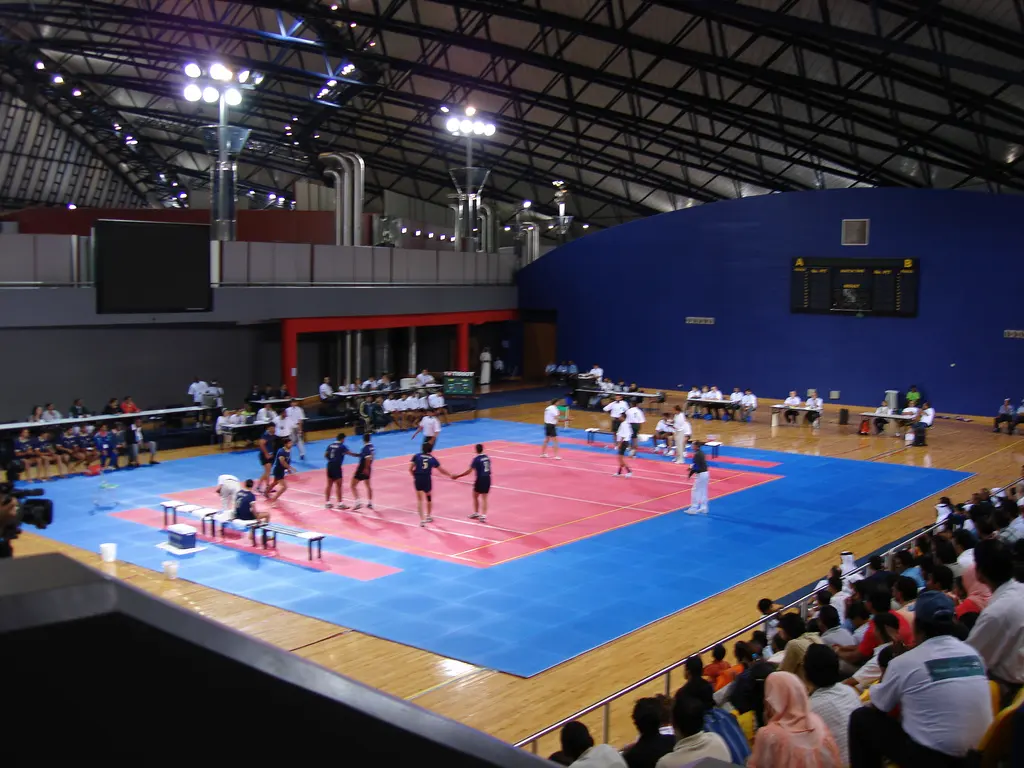
Look at the picture and answer the questions.
- a.What is the name of the sport?
- b.Where is it mostly played?
Model answers
B. Who did what?
What did these people do during the activity week? Listen to the audio and complete the table.
Tony: boxing
Lucy: ………
Will: ………
Catherine: ………
Paul: ………
Answer
C. Listen again
Listen to the audio again and answer these questions.
- a.How was Tony’s activity week?
- b.What would Tony play if he went there again?
- c.Why could Will not play water polo?
- d.What would the woman do if she went for the activity week?
- e.Who was scared to try climbing?
Answer
D. Your own activity week
What would you like to do for your next activity week? Choose one activity and share it with your friends. Give reasons why you would like to do that.
A model answer
Reading II: Historical Inventions
Before you read
The book’s picture is a wheel of major inventions, each with a date: paper (2nd century), the printing press (1439), the steam engine (1712), the telephone (1876), the phonograph, an early record player (1877), the light bulb (1878), airplanes (1903), the computer (1941) and the World Wide Web (1990), with the compass among them too.
Name some of the popular inventions in the world.
A model answer
What impacts do they have on our lives? Discuss.
A model answer
What kind of text it is
This is a short informative article. It opens with how people lived long ago, then gives one lettered paragraph, A to G, to each invention. Each paragraph answers three questions: what it is, who made it and when, and how it helps us. That plan makes it easy to find an answer quickly.
The text, part by part
The opening: life before. Imagine the distant past. Pigeons carried letters. People had no printers, and paper wasn’t everywhere as it is today. They walked, rode horses and loaded their goods on animals. There was no electricity and no phone, and the main fuel was firewood. Advancement (progress) in science and technology changed all of this.
A. The steam engine. A story says that James Watt, as a boy, saw the steam from boiling water lift the lid of a kettle, and realized (understood) that steam had power. In 1765 he had his great idea for an engine. Then came the railway: Stephenson’s engine of 1829 pulled a train, and the article names him the father of the locomotive (the engine that pulls a train). Trains carry people and goods over long distances.
B. The motor car. In 1885 the German engineer Daimler made a motor vehicle. A car is swift (fast) and cheap to use. For carrying goods over short distances, it has expelled the train (pushed it out), because roads cost less to build and use than railway tracks.
C. Electricity. We can hardly imagine life without it. It gives us light and heat, moves trains and vehicles, runs factories and mills, and lets us send email. Because water can be used to make it, electricity is sometimes called white coal. Michael Faraday is called the father of electricity.
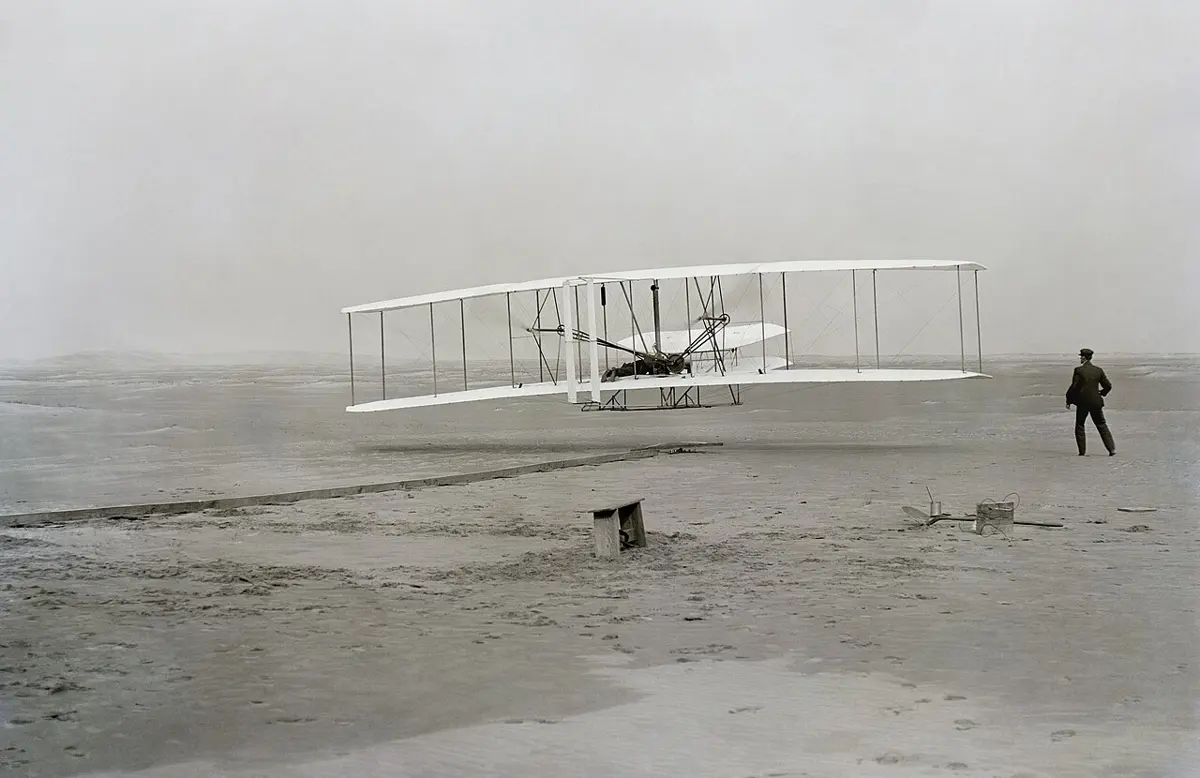
D. The airplane. It is one of the fastest ways to travel. Journeys that once took months now take hours, and the countries of the world seem closer. Two American brothers, Orville and Wilbur Wright, flew the first one in 1903.
E. The spaceship. The article calls it the latest wonder (something that fills you with surprise and admiration) of science. Rockets carry it up, beyond the atmosphere, into orbit, and spaceships took humans to the Moon. It is a kind of artificial satellite: a thing made by people that travels around the Earth. No one person invented it. A very large team did. The first, Sputnik 1 of the Soviet Union, was launched on October 4, 1957, and weighed 83.6 kg.
F. Radio and television. The Italian Marconi developed the radio from wireless telegraphy (sending signals without wires). Mobiles have now taken over from radio sets in many homes. John Logie Baird is the name linked with television, which shows you the face of someone speaking far away.
G. The mobile phone. The story of the mobile starts more than a century ago. Alexander Graham Bell invented the telephone in 1876. On December 23, 1900, Reginald Fessenden had a remarkable (surprising, and worth noticing) success: he sent speech without wires. His work paved the way for radio broadcasts (made them possible) and laid the foundation (the base something is built on) for mobile phones. Later, Martin Cooper led the team that made the first practical mobile phone.
Who really did what
Stories of invention get shorter as they are retold, and one famous name takes the place of many people. Here is what really happened.
Who made the first spacecraft?
Pick an answer to see why.
Which is true of Fessenden’s work?
Pick an answer to see why.
Words from the text
| Word | Meaning here |
|---|---|
| advancement | progress; moving forward |
| innovation | a new idea or thing |
| invent | to make something that didn’t exist before |
| steam | the hot gas that water turns into when it boils |
| realize | to understand something; realised is the British spelling |
| locomotive | the engine that pulls a train |
| swift | fast |
| expelled | forced out |
| white coal | water as a source of power; electricity made from it |
| wonder | something that fills you with surprise and admiration |
| spaceship | a vehicle that travels in space |
| artificial | made by people; not natural |
| satellite | an object that travels around a planet |
| telegraphy | sending messages as electric signals, by wires or radio waves |
| remarkable | unusual or surprising, and worth noticing |
| pave the way | to make something possible later |
| foundation | the idea or fact that something is based on |
A. The crossword
Complete the crossword puzzle with the words in red from the text. Take help from the meanings given.
Across: 2. an object that causes a feeling of great surprise and admiration 6. made by people, often as a copy of something natural 7. understood a situation
Down: 1. an idea or fact that something is based on 3. unusual or surprising in a way that causes people to take notice 4. the use of a communication system that works by sending electric signals through wires or by radio waves 5. forced someone to leave a place/state
Answer
B. Match
Match the inventions with their inventors.
- a.Application of steam engine b. Motor car c. Electricity d. Spaceship e. Mobile phone
- i.Michael Faraday ii. Reginald Fessenden iii. A group of scientists iv. James Watt v. Daimler vi. Stephenson
Answer
C. Answer the questions
What incident inspired James Watt to invent the steam engine?
Answer
Mention a benefit of motor car compared to train.
Answer
Why is electricity called ‘white coal’?
Answer
Why is a spaceship thought to be a wonder?
Answer
When was the first spacecraft launched to the moon?
Answer
How old are mobile phones?
Answer
D. Your own gadgets
What modern appliances or gadgets do you use? Make a list of them and discuss how they have aided in your life.
A model answer
Grammar II: used to
Used to + base verb talks about something that was true regularly in the past and isn’t any more. So it says two things at once: then and not now.
| Form | Example | |
|---|---|---|
| Positive | used to + base verb | Karma used to walk to school. |
| Negative | didn’t use to + base verb | Karma didn’t use to take the bus. |
| Question | Did + subject + use to + base verb? | Did you use to swim in the river? |
| Wh-question | Wh-word + did + subject + use to…? | Where did you use to play? |
It works for two kinds of thing:
- a habit: an action done again and again. My sister used to sing every morning.
- a state: something that was so for a long time. There used to be a pond here. (am, is, are, was, were all become be after used to.)
And it does not work for a thing that happened once, a thing that happened a certain number of times, or a thing that is still going on.
“When I was in Grade 3, I ……… afraid of dogs.” Which fits?
Pick an answer to see why.
“Did your grandparents ……… in Gorkha?” Which fits?
Pick an answer to see why.
Which sentence is right?
Pick an answer to see why.
A. Find the habits
Read the given passage and underline the verb forms that refer to habitual past actions. One example is given.
When I was 10 years old, I used to stay with my uncle. At my uncle’s house, I used to start my tasks early in the morning. I used to go to the tap with my aunt to fetch water. After returning from the tap, I used to do my homework. I was free to study but whenever I had free time, I used to work on the farm, too. Despite my daily chores at home, I used to work hard to be in the first position in my studies. We used to create a lot of resources for ourselves. Therefore, we did not use to go on any excursions. All the teachers used to engage us in different practical activities. All those activities helped me a lot to become successful.
Answer
B. Rewrite with used to
Rewrite the given sentences using used to. Use negation where necessary.
- a.She lived in Italy when she was five.
- b.We grew a lot of crops.
- c.Did you spend much money?
- d.There were a lot of trees in that jungle.
- e.William and Fiona went to school together.
- f.The Smiths did not work much.
- g.What did you do in the evenings?
- h.Suhana did not help her parents.
- i.People were helpful in the past.
Hint
Answer
Speaking: then and now
A. Then and now
There are four pictures. A woman sits at a dhiki, the wooden beam that pounds grain. A woman in a long skirt bends under a basket carrying a water pot on her back. An older woman tells a story to children under a tree. A line of people walks through the mountains.
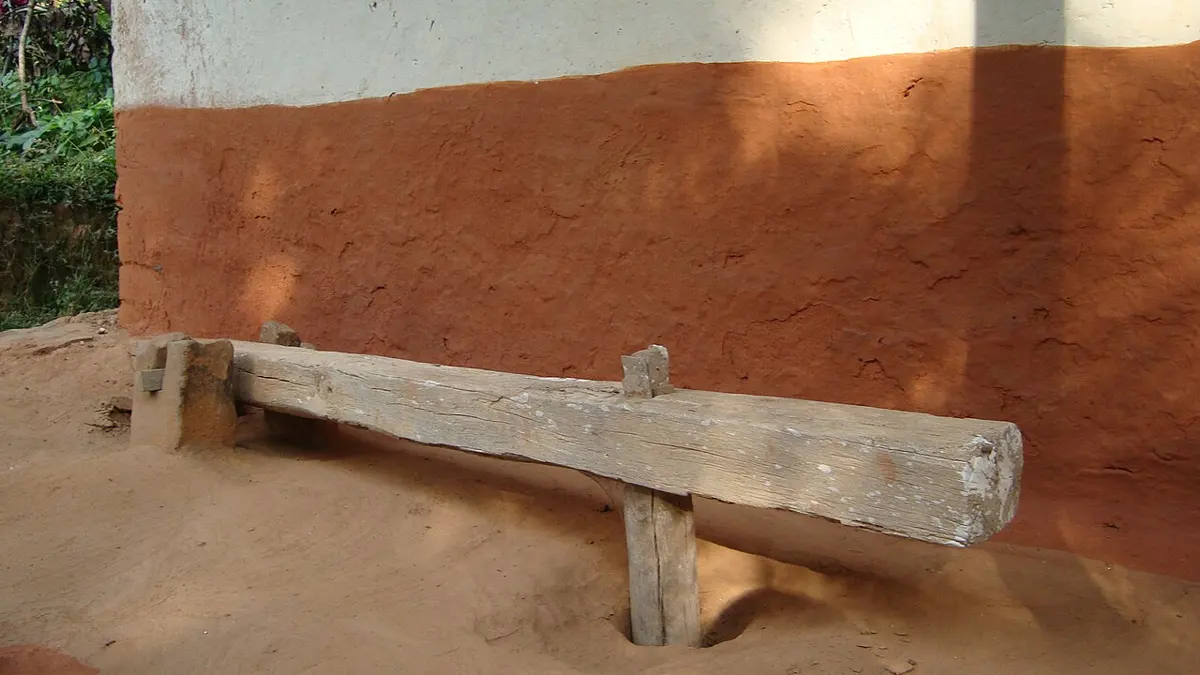
To compare, put the old habit in used to and the new one in the present simple, joined with but now.
Look at the pictures and say what people used to do in the past and what they do now.
Model answers
B. When you were in Grade 5 or 6
Work in pairs. Recall the time when you were in Grade 5 or 6. Talk about any five things you used to and didn’t use to do.
A model conversation
Writing II: a narrative essay
A narrative essay tells a true story from your own life, in order, and says what it meant to you. It has three parts, and it is written with I and in the past tense.
| Part | What it does | It answers |
|---|---|---|
| Beginning | sets the scene in a sentence or two | What was the event? When? Where? |
| Middle | tells what happened, step by step | What happened? |
| End | says how you felt, or what stayed with you | How did you feel? |
Link the steps with time words: first, then, after that, while, when, before, at last, finally. Use all three past tenses: the past simple for the steps, the past continuous for the background, and the past perfect for what came before. And choose one or two small details that only you noticed: they make a story come alive.
You might have attended a ceremony, e.g. birthday, picnic, etc. recently. Write a short narrative essay about it. Include the following details about the event:
- a.What was the event?
- b.When did you attend it?
- c.Where did it happen?
- d.What happened in the ceremony?
- e.How did you feel?
A model answer
Which is the best first sentence for a narrative essay?
Pick an answer to see why.
Project work
Extra bit: idioms
An idiom is a common phrase whose figurative meaning is different from what its words say. It isn’t a picture of the world: nobody in on cloud nine has left the ground. So you can’t work out an idiom from its words: you learn it whole, as you do with Nepali टुक्का.
| Idiom | Meaning | Example |
|---|---|---|
| a piece of cake | something very easy | After all that practice, the test was a piece of cake. |
| add fuel to the fire | to make a bad situation worse | Shouting back only added fuel to the fire. |
| call it a day | to stop working for now | We have planted two rows. Let’s call it a day. |
| see eye to eye | to agree with someone | My brother and I don’t see eye to eye about football. |
| burn the midnight oil | to work late into the night | Before the exams, Anisha burned the midnight oil. |
| on cloud nine | very happy | Bibek was on cloud nine after his team won. |
| cost an arm and a leg | to be very expensive | A new phone costs an arm and a leg. |
| out of the blue | suddenly, with no warning | Out of the blue, my old friend phoned me from Doha. |
| rain cats and dogs | to rain very heavily | We stayed in. It was raining cats and dogs. |
| teacher’s pet | a teacher’s favorite student | They call Roshan the teacher’s pet, but he just works hard. |
| when pigs fly | never; it’s impossible | “He’ll pay you back.” “Yes, when pigs fly.” |
| once in a blue moon | very rarely | My uncle visits us once in a blue moon. |
“Learning the bicycle was a piece of cake.” What does this mean?
Pick an answer to see why.
“I’ll tidy my room when pigs fly.” What does the speaker mean?
Pick an answer to see why.
Your friend’s team won and she can’t stop smiling. She is:
Pick an answer to see why.
Exercise
Practice on this unit in the style of the final exam. Try each one as in the exam, then open the answer.
Read “Having Fun” again and write whether the following statements are True or False.
- a.The father and son found the shoes in the morning.
- b.The son wanted to play a trick on the farmer.
- c.The father agreed with his son’s plan at once.
- d.The farmer found out who had put the coins in his shoes.
- e.The son cried at the end of the story.
Answer
Read “Historical Inventions” again and complete the sentences with the correct words.
- a.Before there was electricity, the main fuel was ……… .
- b.The airplane was invented by two American brothers in ……… .
- c.The first spacecraft weighed ……… kg.
- d.Alexander Graham Bell invented the ……… in 1876.
- e.……… led the team that made the first practical mobile phone.
Answer
Read the story and write whether the following statements are True or False.
When Apekshya’s grandfather was young, there was no road to his village in Ramechhap. He used to walk for two days to reach the nearest market. One winter, he sold three goats and bought a small radio. After that, the neighbors came to his yard every evening. They used to listen to the news while he was cooking. One night, the battery died in the middle of a song. By then, everybody had learned the words, so they sang the rest themselves. The radio doesn’t work now, but he still keeps it on a shelf.
- a.There was a road to the village when he was young.
- b.He bought the radio with the money from his goats.
- c.The neighbors used to come in the morning.
- d.The neighbors knew the song when the battery died.
- e.He has thrown the radio away.
Answer
Do as indicated.
- a.Kamal ate his dinner. (Change into the past perfect, using before the guests came.)
- b.Sapana was reading a letter. (Change into the negative.)
- c.They had reached Ilam. (Change into a question.)
- d.Anil fixed the pump. (Change into the past continuous, using at this time yesterday.)
- e.Selina visited Lumbini. (Change into a question.)
Answer
Choose and copy the best answer for the blanks.
- a.Dawa ……… live in Solukhumbu. (used to, use to, using to)
- b.……… you use to walk to school? (Were, Did, Had)
- c.Riya didn’t ……… eat fish. (used to, using to, use to)
- d.There ……… be a big pipal tree here. (use to, was used to, used to)
- e.We ……… go there much. (didn’t use to, didn’t used to, weren’t use to)
Answer
Identify ten errors in the given paragraph. Rewrite the paragraph by correcting the errors.
last saturday prakriti went to bhaktapur with her uncle they ate juju dhau it was crowded but she wasnt tired
Answer
Write a story with the help of the given clues. Give it a suitable title.
a boy finds a purse on a bus ………. money and a photo inside ………. his friend says keep it ………. he finds the owner, an old woman ………. she was going to buy medicine ………. she gives him her blessing
A plan
Write an account of a day when you helped someone, in about 150 words. Say what happened, when and where, who was there, and how you felt.
A plan
Printable PDFs
- Study notes 2 pages
- Harder practice questions 3 pages Answer key
Practice every question in the book, and keep track of the ones you miss →
A companion to your textbook, not a replacement for it: study from the book your school uses, and where the two differ, follow your teacher. Found a mistake? Please tell us.