
Which is higher, Kanchenjunga or Dhaulagiri? Is a mango sweeter than a melon? Who gets to school sooner, you or your best friend? You compare things all day without noticing. But English asks for care: why is it faster but more slowly? Why better, and never gooder? And how can a whole essay be built out of one small word, than?
This unit is about comparison and contrast: saying how two things are alike, and how they differ. You will read an essay on the leap from school to college, and another on how smartphones have changed us. You will learn the comparative and superlative forms of adjectives and adverbs, the pattern as … as, the words of college life, how to compare two villages from notes, how to plan a compare-and-contrast essay, and how to show a class survey as a chart.
Getting started: comparing pairs
The unit opens with four pairs of pictures: an elephant and a one-horned rhino; a bar of silver and a bar of gold; a rabbit and a tortoise; a giraffe and a dog. In each pair, choose one quality (size, price, speed, height) and put the two things side by side.
Study the pairs of pictures and make comparisons between them.
Model answers
Look at the two ways of doing it. Short words take -er (bigger, faster), and long words take more (more expensive). Both are followed by than. That is nearly the whole of this unit’s grammar, and the rest is details.
Reading I: The Leap between High School and College
Before you read
Look at the picture with the text. What do you see in the picture?
A model answer
What are people doing?
A model answer
What kind of text it is
This is a compare-and-contrast essay. To compare is to show how things are alike, and to contrast is to show how they differ. This writer is mostly contrasting: everything in the essay supports one idea, that college is more than school in three ways.
Its plan is worth learning, because you will use it yourself in Writing II. There are two ways to build such an essay, and this writer uses the first: point by point. Each paragraph takes one point (cost, then workload, then activities), and says something about college and something about high school in the same paragraph.
The text, paragraph by paragraph
Paragraph 1: the leap. A leap is a big jump, and a transition is a change from one stage to another. Many students go on to post-secondary education (study after school) and expect it to be just like school. That assumption (something you believe without checking) is wrong, and they soon find out. The paragraph ends with the essay’s main sentence, which names its three points: college costs more, brings harder study, and gives more freedom.
Paragraph 2: cost. College is more expensive. Besides tuition (the fee for being taught), college students have to pay for a residence or a rented room near the college, whereas most high school students live at home and have no such expenses (money that must be spent). Books cost more too, because a college student must buy textbooks for each course.
Paragraph 3: workload. College students have more assignments (tasks given to be done), and the tasks are harder and take hours. High school students don’t have to give them so much time and effort. There is pressure too: in college, the final grade depends on each assignment.
Paragraph 4: activities. College offers more. Students take a bigger part in sports and clubs. They can join college teams and use its athletic facilities, while only a few high schools boast such facilities (have something to be proud of). High schools may have clubs, but they are smaller and have fewer students, so the choice is limited. So college is a more social place.
Paragraph 5: the conclusion. The last paragraph repeats the three points in one sentence: college is more costly, more challenging, and more socially stimulating (exciting and full of new ideas). New students should take these differences into account (think about them when deciding). If they know what is coming, they will be more adequately (well enough) prepared.
Notice the signposts, the small words that tell you where you are in the essay. First, Second, Third open the points. In addition, also, furthermore add one more thing on the same side. In contrast turns the reader to the other side, and it appears in all three body paragraphs. Overall begins the conclusion.
Why does the writer use “in contrast” in paragraph 2?
Pick an answer to see why.
Which is the writer’s main idea?
Pick an answer to see why.
Words from the text
Words linked here open in English Vocabulary, where you can see an example and practice them in the word game. The meanings below are the ones the words have in this text.
| Word | Meaning here |
|---|---|
| leap | a big jump; a big, sudden change |
| transition | a change from one stage to another |
| assumption | a thing that is accepted as true, without proof |
| residence | the place where someone lives |
| expense | the money that something costs you |
| assignment | a task given as part of a course of study |
| challenging | hard in a way that tests your ability |
| boast | to have something to be proud of |
| stimulating | exciting; arousing interest |
| take into account | to think about something when you decide |
| adequately | in a way that is enough |
A. Match the words
Read the meanings given on the left and match them with the words on the right.
| Meaning | Word | ||
|---|---|---|---|
| a. | a thing that is accepted as true | i. | assignment |
| b. | the cost required for something | ii. | adequately |
| c. | the place where someone lives | iii. | expense |
| d. | a task assigned as a course of study | iv. | residence |
| e. | arousing interest | v. | assumption |
| f. | testing one’s ability | vi. | challenging |
| g. | in a way that is enough in quantity | vii. | stimulating |
| viii. | boast |
Answer
B. Answer the questions
What do the students expect when they enter post-secondary education?
Answer
How is college more expensive?
Answer
Write three reasons why college workload is more challenging.
Answer
What athletic challenges do college students face?
Answer
What should the students consider while entering the college?
Answer
C. Harder in school?
In some aspects, high school education might be more challenging than college education. Think of some of the challenges and share them in class.
A model answer
Pronunciation: college words
Long words usually have one beat that is stronger than the others. That is the stress, and in this table it is in capitals. Say each word aloud, tapping the table on the strong beat. If you have a phone, look the word up in an online dictionary and press its sound button.
| Word | Sounds like | Dictionary | Meaning |
|---|---|---|---|
| academy | uh-KAD-uh-mee | /əˈkædəmi/ | a school for a special skill |
| campus | KAM-pus | /ˈkæmpəs/ | the grounds and buildings of a college |
| faculty | FAK-ul-tee | /ˈfæklti/ | the teachers of a college; one branch of it |
| lecture | LEK-chuhr | /ˈlektʃə(r)/ | a long talk given to teach |
| library | LY-bruh-ree | /ˈlaɪbrəri/ | a place of books to read or borrow |
| graduation | graj-oo-AY-shun | /ˌɡrædʒuˈeɪʃn/ | finishing a degree; the ceremony for it |
| alumni | uh-LUM-nye | /əˈlʌmnaɪ/ | the former students of a school or college |
| scholarship | SKOL-uhr-ship | /ˈskɒləʃɪp/ | money given to a student to pay for study |
| dormitory | DOR-muh-tree | /ˈdɔːmətri/ | a large room or building where students sleep |
| semester | suh-MES-tuhr | /sɪˈmestə(r)/ | half of a college year |
| freshman | FRESH-mun | /ˈfreʃmən/ | a student in the first year |
| tuition | too-ISH-un or tyoo-ISH-un | /tjuˈɪʃn/ | teaching; the fee paid for it |
Where is the stress in semester?
Pick an answer to see why.
Grammar I: comparing with adjectives
An adjective has three forms, or degrees.
| Degree | What it does | Example |
|---|---|---|
| positive | describes one thing | Tashi is tall. |
| comparative | compares two things, with than | Tashi is taller than Kushal. |
| superlative | puts one at the top of three or more, with the | Tashi is the tallest in the class. |
Nepali does this with whole words: म तिमीभन्दा अग्लो छु (“I am taller than you”), where भन्दा is than, and the adjective stays the same. English changes the adjective itself. How it changes depends on the word.
| The word | What to do | Examples |
|---|---|---|
| one syllable | add -er, -est | tall, taller, tallest |
| one syllable ending in -e | add -r, -st | nice, nicer, nicest |
| one syllable, one vowel + one consonant | double the last letter, then add -er, -est | hot, hotter, hottest (but w never doubles: new, newer, newest) |
| two syllables ending in -y | y → i, then add -er, -est | easy, easier, easiest |
| two syllables or more (the rest) | more, most before the word | useful, more useful, most useful |
| a few common words | learn them: they are irregular | good, better, best |
A few two-syllable words can go either way: quieter or more quiet, narrower or more narrow, simpler or more simple. Both forms are correct.
Two useful patterns. Getting + a comparative shows a change going on: The days are getting shorter. And the superlative often goes with ever: This is the nicest tea I have ever tasted.
“The Karnali is ……… river in Nepal.” Which fits?
Pick an answer to see why.
“Math is ……… than history for me.” Which fits?
Pick an answer to see why.
A. From the text
Find the adjectives in the reading text and write their comparative and superlative forms in a table. One example is given: large, larger, largest.
Hint
Model answers
B. The right form
Complete the following sentences with the comparative or superlative forms of the adjectives given in the box.
crowded, high, heavy, slim, expensive, hard, bad, important, exciting, challenging
- a.I think health is ……… than money.
- b.I cannot carry my bag. It’s ……… than yours.
- c.I can afford to buy the ……… car in town.
- d.You look ……… than the last time I saw you. Have you lost weight?
- e.I could not get a table in the restaurant. It was ……… than it usually is.
- f.Which is the ……… peak in the world?
- g.This is the ……… movie I have ever watched. I really enjoyed it.
- h.Your health is getting ……… day by day. You should see a doctor.
- i.I don’t understand this lesson. It is ……… than the last one we did.
- j.This is the ……… task that I have ever done.
Hint
Answer
Speaking: which is bigger?
So far, one thing has always beaten the other. But two things can be equal, and for that English has as … as, with the plain form of the adjective between the two as’s.
| What you mean | Pattern | Example |
|---|---|---|
| the two are equal | as + adjective + as | Pema is as tall as her mother. |
| the first is lower | not as + adjective + as | Pema is not as tall as her father. |
| the first is higher | comparative + than | Her father is taller than Pema. |
So Pema is not as tall as her father means the same as Her father is taller than Pema. A good way to answer a question is to use the same pattern that it uses:
Is a bicycle as expensive as a motorcycle? → No, a bicycle isn’t as expensive as a motorcycle.
Which animal is bigger, an elephant or a tiger? → An elephant is bigger than a tiger.
A. Ask and answer
Work in pairs. Take turns to ask and answer questions using the given clues.
Example: Phurba: Which animal is bigger, an elephant or a tiger? Lhamu: An elephant is bigger than a tiger.
Harka: Is a bicycle as expensive as a motorcycle? Gopi: No. A bicycle isn’t as expensive as a motorcycle.
- a.Who gets up earlier, your parents or you?
- b.Which animal do you think is scarier, a snake or a spider?
- c.Are you as slim as your mother?
- d.Is today’s weather windier than yesterday’s?
- e.Which is more expensive, a radio or a television?
- f.Is a crocodile as slow as a snail?
- g.Which is juicier, an apple or an orange?
- h.Is a melon as sweet as a mango?
Model answers
B. Your own comparisons
Use the clues below to make your own comparisons, as in the example.
Example: my shirt/your shirt → My shirt is tidier than your shirt. My shirt isn’t as new as your shirt.
- a.train/airplane
- b.lemon/orange
- c.our neighbors/yours
- d.tiger/lion
- e.house/skyscraper
- f.cold drink/fruit juice
- g.big cities/small towns
- h.hotels/homestay
Model answers
Listening: frogs and toads
A short talk explains how frogs and toads are alike and how they differ. Read the questions in B and C first. CDC hasn’t put this recording online, so listen to it in class, and use the photos and the questions here to get ready.
Words to know: hatch (to come out of an egg), tadpole (a baby frog or toad, which lives in water and has a tail), bumpy (covered in small lumps), plump (round and a little fat), croak (the deep, rough sound that frogs make), inflate (to fill with air), sac (a small bag in an animal’s body).
A. Before you listen
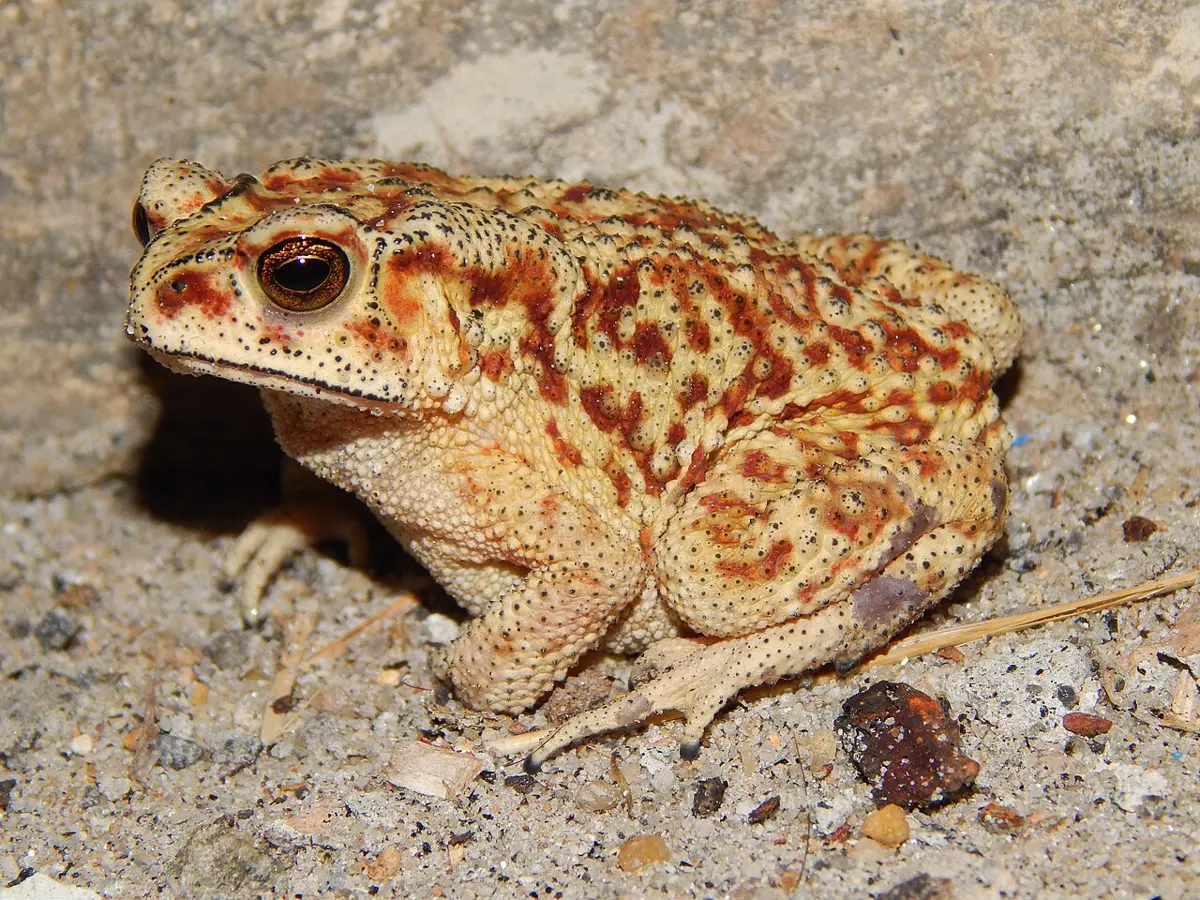
Both of these animals live in Nepal. Look first at the skin: which looks dry and which looks wet? Then look at the back legs, the ones an animal jumps with.
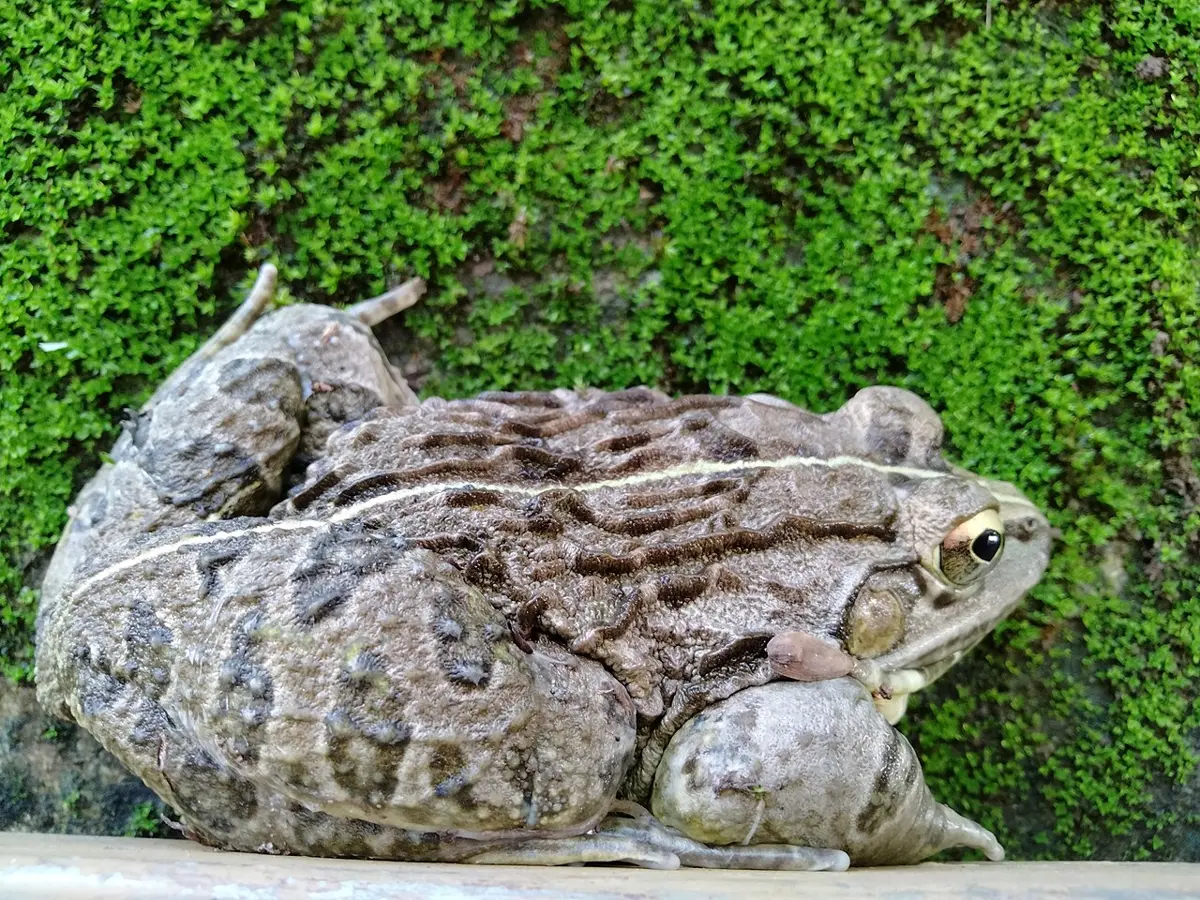
A good comparison starts by looking, and it looks for two things: what is the same, and what is different. Keep both in mind as you answer.
Look at the picture and answer the questions.
- a.What do you see in the pictures?
- b.How are they similar to, and different from, each other?
Model answers
B. Similar or different?
Listen to the audio. Tick (✓) if the information about frogs and toads is similar and cross (✗) if it is different.
| Information | Similar | Different |
|---|---|---|
| Place for babies to live | ||
| Place for adults to live | ||
| Type of skin | ||
| Shape |
Answer
C. Listen again
Where do toads and frogs hatch their eggs?
Answer
Which of the two continue to live in water?
Answer
How is the skin of the toads?
Answer
When do the two make their croaking sound?
Answer
D. What you remember
Recall as many similarities and differences of toads and frogs as you can. Then, share them in class.
Model answers
Now turn the table into sentences. Two small words do the work: both for what is the same, and whereas for what is different.
Writing I: comparing two villages
The task gives you notes on two villages, and asks you to turn them into one description. The easy way is to write about one village, and then the other. The better way is to go point by point, as the essay did, and to put the two side by side: where they are, how big they are, who lives there, what visitors come for.
| To say | Use | Example |
|---|---|---|
| the same | both, also, similarly, like | Both villages are… |
| different | whereas, while, but, on the other hand, in contrast | One is…, whereas the other is… |
| more of something | a comparative | …is bigger than… |
Write a description of the two villages making comparison, based on the information given below.
| Bhujung Village | Bhada Village | |
|---|---|---|
| What it is | a typical Gurung village | a Tharu homestay; a typical Tharu settlement |
| Where | in Lamjung, at an altitude of nearly 1,700 m | in Kailali, about 12 kilometers from the district headquarters |
| Size | around 500 households, most of the people Gurung | around 200 houses |
| Tourism | one of the popular tourist destinations | one of the tourist destinations; the best time to visit is mid-September to mid-December |
| Attractions | Gurung culture; warm hospitality and friendliness; cleanliness; the typical and authentic look of mud and stone houses with tile roofs; beautiful landscape (stunning mountain views, beautiful terraced farmlands, lush green forests); homestay services | the lifestyle and culture of the Tharu community; Tharu food (including dhikri, kheriya, bariya, panjra, crab, ghonghi, pork and local liquor); dances such as the lathwa, jhumra, maghauta and sakhiya; the homestay; Joginya and Sahadeva Lakes; Rameshwar Temple |
Hint
A model description
Reading II: Smartphones in our Life
Before you read
What is a smartphone?
A model answer
What different things can you do with it?
A model answer
What kind of text it is
This is a short essay written in a friendly voice. It says “we” and “us”, and asks the reader questions. It compares life now with life before, and it gives the writer’s own view: phones are useful, but they have changed us, and not always for the better.
The text, paragraph by paragraph
Paragraph 1: without your phone. The writer asks how you feel when you leave your phone at home. Some of us feel scared (afraid), and others feel completely lost. Phones have become a vital (very important) part of life, and without one we feel incomplete.
Paragraph 2: one device, many jobs. We use them to surf (look around on) the internet and social media, check email, listen to music, play, watch videos, take photos, read news and send messages, and, most importantly, to make calls. All this is done with one device (a piece of equipment). Some of it wasn’t even possible 25 years ago. Phones have changed our lives drastically (in a very big way).
Paragraph 3: finding things out. We now retrieve information (get it back) from the web, anytime and anywhere. It is the same with keeping in touch: calls, messages, email and social media.
Paragraph 4: the cost to memory. This has an impact (a strong effect) on how we live. Studies have found that we are likely to forget what we know we can find again. When someone asks a question, we tend to (usually do) think about how to look it up, not about the answer. The writer says that we are getting lazier.
Paragraph 5: always on. Our feelings and behavior have changed too. The day begins with reaching for the phone to turn off the alarm, and it stays with us at work, at meals, and even in bed. We are constantly (all the time) connected, and people expect us to be. That is convenient (easy and useful), but being available all the time is tiring.
Paragraph 6: what it replaced. We choose whatever makes life easier. Fewer people buy landline phones, desktop computers and digital cameras, because the phone has taken their place.
Paragraph 7: the assistant. The phone is like a personal assistant (a helper), which helps us master (manage well) our daily lives. The writer says that we can’t imagine life without it.
What does the writer think is the bad side of being connected all the time?
Pick an answer to see why.
Which machine does the writer say smartphones have replaced as the most important one in our lives?
Pick an answer to see why.
Words from the text
| Word | Meaning here |
|---|---|
| smartphone | a mobile phone with a touch screen and internet access |
| scared | afraid |
| vital | very important |
| surf | to look around on the internet |
| device | a piece of equipment made for a purpose |
| drastically | in a very big, extreme way |
| retrieve | to get something back |
| web | the pages of the internet |
| impact | a strong effect |
| tend to | to usually do something |
| constantly | all the time |
| convenient | useful and easy; causing no trouble |
| digital | using computers and numbers, not film or tape |
| assistant | a person, or a thing, that helps you |
| master | to manage something well |
A. Find the words
Find the words from the text that mean the following. The first letter has been given.
- a.s……… a mobile phone which has a touch screen, internet access, etc.
- b.c……… repeatedly; all the time
- c.d……… a piece of equipment such as a smartphone
- d.s……… afraid that something might happen
- e.r……… bring back something from somewhere
- f.s……… to use the internet
- g.c……… useful, easy or quick to do; not causing problems
- h.i……… effect
- i.v……… very important
- j.d……… in an extreme way
Answer
B. Answer the questions
How do people feel when they miss their mobile phones?
Answer
Write any three ways of using smartphones.
Answer
Why are we getting lazier?
Answer
What is the impact of getting connected with mobile phones all the time?
Answer
Why is a smartphone called a personal assistant?
Answer
C. The best use
How can you make the best use of mobile phones? Discuss.
A model answer
Grammar II: comparing with adverbs
An adjective describes a noun: a quiet room. An adverb describes a verb, an adjective or another adverb. It tells us how, when, where or how much: She spoke quietly. It was really cold. Many adverbs are an adjective + -ly, but not all of them.
Adverbs compare too, and in the same two ways as adjectives.
| The adverb | What to do | Examples |
|---|---|---|
| one syllable | add -er, -est | soon, sooner, soonest; fast, faster, fastest |
| ending in -ly | more, most before it | politely, more politely, most politely |
| a few common words | learn them: they are irregular | badly, worse, worst; far, farther, farthest |
Rabina reads more slowly than Bibek. Of the three, Sheetal finished soonest. With an adverb, the is often left out of the superlative: Who sang loudest? and Who sang the loudest? are both right.
“Please speak ……… . The baby is sleeping.” Which fits?
Pick an answer to see why.
“Of all the students, Aayush finished his paper ……… .” Which fits?
Pick an answer to see why.
A. What kind of word?
Study the sentences and identify the word class of the words in color.
- a.Others are completely lost.
- b.Most importantly, we use them for their original purpose.
- c.Smartphones have drastically changed our lives.
- d.We are constantly connected.
Answer
B. The right form
Complete the following sentences with the correct forms of the adverbs given in the brackets.
- a.My mother drives ……… (carefully) than me.
- b.Angela works ……… (hard) than me, but Linda works ……… (hard) of all of us.
- c.Minu sings ……… (beautifully) of all the people in the choir.
- d.Our teacher explains the lessons ……… (clearly) than your teacher.
- e.Mingma arrived at the meeting ……… (early) than Nita.
- f.Jeena picked the mangoes ……… (fast) of all.
- g.My mother cooks ……… (well) than I do, but my father does ……… (well) of all of us.
- h.I speak English ……… (fluently) than my younger sister.
- i.The teacher arrived ……… (late) than the students.
- j.The driver was ……… (seriously) injured than the helper.
Hint
Answer
Writing II: a compare-and-contrast essay
You have read such an essay, so now you can build one. Use the point-by-point plan of Figure 9.1. For this topic, the two sides are before the internet and after it.
| Part | What to do | Useful words |
|---|---|---|
| Title | say what is compared | Life Before and After the Internet |
| Introduction | say what changed, and name your two or three points | …has changed the way we… |
| Point 1 | before, then after | First, … In the past, … Today, … |
| Point 2 | before, then after | Second, … In contrast, … |
| Point 3 | before, then after | Third, … whereas … |
| Conclusion | repeat your points in one sentence; give your view | Overall, … In my view, … |
Good points are keeping in touch, finding information, learning, shopping and paying, and fun. Choose three, and find a real example of each. An older person in your family can tell you what things were really like.
The internet has significantly changed the way we live. Write an essay comparing and contrasting the ways of people’s living before and after the invention of the internet.
Hint
A model essay
Project work
A survey asks many people the same question. When you have the numbers, a chart shows the pattern at a glance. A bar graph is best for comparing the counts, since the tallest bar stands out. A pie chart is best for showing shares of the whole, since each slice is a part of one circle.
Extra bit: irregular adjectives and adverbs
The most common words in a language are often the ones that break its rules. Here is the list to learn.
| Adjective or adverb | Comparative | Superlative |
|---|---|---|
| good, well | better | best |
| bad, badly | worse | worst |
| far | farther, further | farthest, furthest |
| little | less | least |
| many, much | more | most |
| old | older | oldest |
| late | later | latest |
| near | nearer | nearest |
The last three are regular in form, but each has a second form that means something a little different.
| Word | The usual forms | The other form |
|---|---|---|
| old | older, oldest | elder, eldest, only for people in a family: my elder sister |
| late | later, latest (the newest): the latest news | last (the final one): the last bus |
| near | nearer, nearest (in distance): the nearest shop | next (the one after): the next shop along the road |
“My ……… brother lives in Dharan.” Which fits?
Pick an answer to see why.
“There is ……… sugar in this tea than in that one.” Which fits?
Pick an answer to see why.
Exercise
Practice on this unit in the style of the final exam. Try each one as in the exam, then open the answer.
Read “The Leap between High School and College” again and write True or False.
- a.Many students expect college to be just like school.
- b.Most high school students pay for a room near their school.
- c.College students must buy textbooks for each course.
- d.Only a few high schools have athletic facilities like a college’s.
- e.High schools have a bigger variety of clubs than colleges.
Answer
Read “Smartphones in our Life” again and complete the sentences with the correct words.
- a.Smartphones have become a ……… part of modern life.
- b.All these activities can be done using a single ……… .
- c.We are likely to forget information which we can easily ……… again.
- d.The first thing we do in the morning is turn off the ……… .
- e.Sales dropped for landline phones, desktop computers and digital ……… .
Answer
Read the short essay and answer the questions.
Two schools stand on the same road in Dolakha. Shree Janata School is older and bigger than Deurali Academy. It has 600 students, whereas the academy has only 180. The academy’s classrooms are newer and brighter, but its playground is not as large. Both schools teach in Nepali and English. Janata’s fees are lower, so more families can pay them. In last year’s exams, the academy’s students did slightly better, though the school with the happiest students, the head teachers agree, is the one with the most trees. — A made-up text, for practice
- a.Which school has more students?
- b.How many students does the academy have?
- c.Whose playground is larger?
- d.What is the same in the two schools?
- e.Why can more families pay Janata’s fees?
Answer
Choose and copy the best answer for each numbered blank.
Sagarmatha is (a) ……… (high, higher, the highest) mountain in the world. Kanchenjunga isn’t as (b) ……… (high, higher, highest) as Sagarmatha, but it is (c) ……… (more, most, much) difficult to climb than many people think. Climbers move (d) ……… (slow, more slowly, most slowly) near the top than at the bottom. The air up there is much (e) ……… (thin, thinner, thinnest) than in Kathmandu.
Answer
Identify ten errors in the given paragraph. Rewrite the paragraph by correcting the errors.
which is faster a frog or a toad. yangchen said a frog is faster than a toad isnt it
Answer
Write a description of about 100 words comparing two places, using the notes.
Nagarkot: a hill town; cool; sunrise views; many hotels. Sauraha: a town in the plains of Chitwan; hot; elephants, rhinos and jungle walks; many hotels.
A plan
Write a short essay comparing life in a village with life in a town.
Hint
A plan
Printable PDFs
- Study notes 2 pages
- Harder practice questions 3 pages Answer key
Practice every question in the book, and keep track of the ones you miss →
A companion to your textbook, not a replacement for it: study from the book your school uses, and where the two differ, follow your teacher. Found a mistake? Please tell us.