
Two brown birds hatch in the same nest. Later, one calls out to robbers that a rich man is sitting under its tree. The other invites the same man to rest and drink cold water. They look exactly alike. So why do they talk so differently?
This unit is about reporting: passing on what someone said, asked or ordered, in your own sentence. You will read the tale A Tale of Two Birds and a real news report on the opening of Pokhara’s new airport. You will put all four kinds of sentence into reported speech, say consonant clusters such as str and spl, write a story from a first line and a news report from clues, hear a reporter tell of a 13-year-old who chased a robber, and design the front page of a newspaper.
Getting started: what did they say?
The unit opens with four pictures, each with a speech bubble. A health worker in a mask is giving a man an injection: This will sting a little bit. A schoolboy with a bag says: I will not come to school tomorrow. Two men in suits are shaking hands, and one says: My name is Nirman. What’s your name? A girl says: There will be no English class tomorrow.
To report is to tell someone else what was said. You do it every day: My mother said that dinner was ready.
Look at the pictures and report what these people are saying.
Model answers
Compare each bubble with its report. Will has become would, I has become he, and tomorrow has become the next day. You will see why in Grammar I.
Reading I: A Tale of Two Birds
Before you read
Where do birds make their nests?
A model answer
Do you think our surroundings play a role in shaping who we are?
A model answer
What kind of text it is
This is a moral tale: a short, simple story that teaches a lesson. It starts with once upon a time, nobody in it has a name, and two birds can talk. Nobody asks how, because the talking is the point. Read it for what each bird says.
The idea is very old. In the Sattigumba Jataka, one of the Buddhist Jataka tales, two parrot brothers are blown apart: one grows up among robbers and the other among hermits, and a king lost while hunting meets them both.
The story, part by part
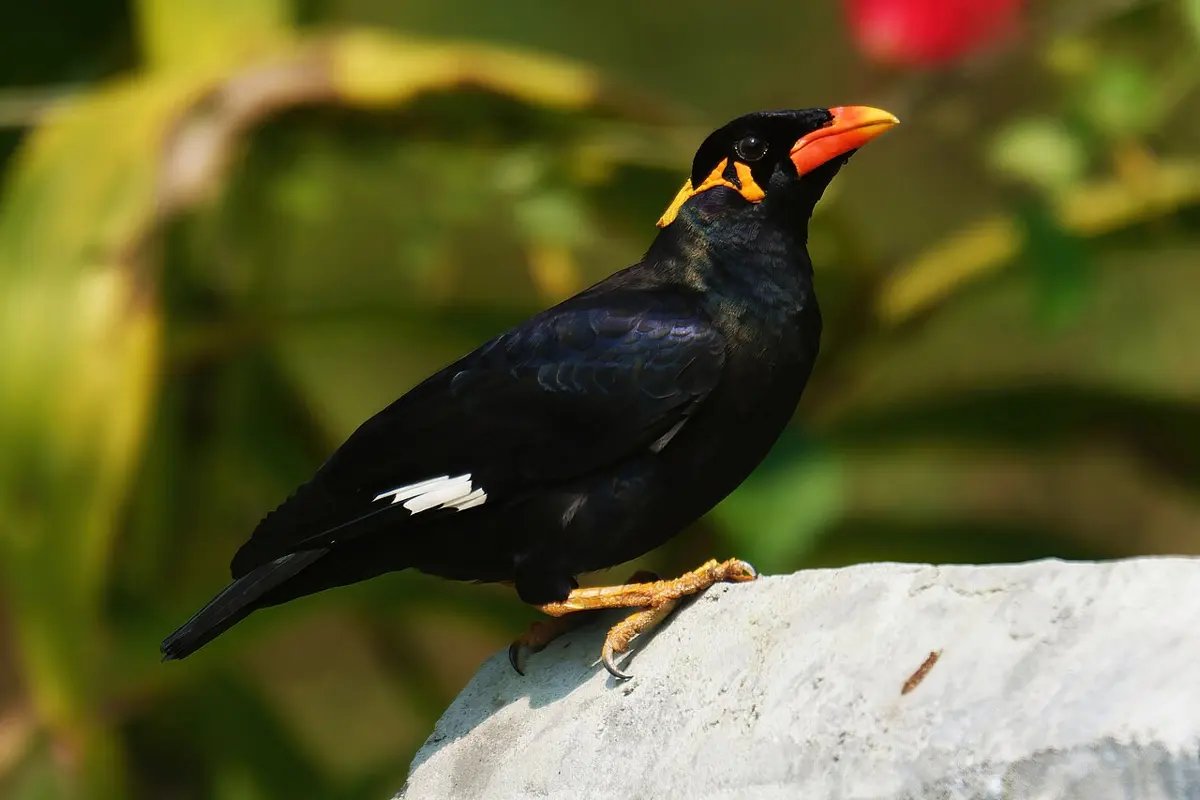
The storm. A mother bird lives with her two nestlings in a tall tree. A great storm brings thunder, lightning and rain. The tree falls, and a heavy branch kills the mother. The wind carries the two young birds off to the far side of the forest. One lands by a cave, the home of a gang of robbers. The other lands by a hermitage, where a wise old hermit lives. The two places are close to each other.
The king gets lost. Days pass, and the nestlings grow into big birds. A king comes to the forest to hunt, chases a deer deep among the trees and loses his way. Tired out, he sits down under a tree near the cave.
The bird at the cave. A voice calls out above him. It tells someone to hurry and take his jewels and his horse before he can slip away (leave without being noticed). The speaker is a big brown bird. It is shouting to the robbers, and it asks the king where he is going. Faint noises come issuing from the cave (coming out of it).
The robber. The king gets on his horse and rides off, but a robber shouts that he will kill him if he doesn’t stop. The king is brave: he stops, aims an arrow and dares the man to fight. The robber goes to call his gang. There are too many of them, so the king decides not to mess with them (get into trouble with them), and he rides away.
The bird at the hermitage. He reaches a tranquil place and sits down in the shade. A gentle voice welcomes him, tells him that the hermit will soon be back and offers him cold water. It is another big brown bird. The king says aloud that it looks like the bird at the cave, and the bird agrees. That one is its brother, but he has made friends with robbers and talks as they do.
The hermit explains. The hermit returns and welcomes the king, who tells him about the two birds. The hermit smiles and gives the story’s lesson: one is known by the company one keeps. Each bird only repeats what it has always heard.
Put the two side by side, and the whole tale is in one table.
| The bird at the cave | The bird at the hermitage | |
|---|---|---|
| Who it lived near | robbers | a hermit |
| What it heard | talk of robbing people | words of welcome |
| What it says when a stranger comes | Quick! Hurry up! | Please go inside and rest. |
| What it is called | wicked | kind |
What does the hermit mean by company in “one is known by the company one keeps”?
Pick an answer to see why.
Why do the two birds talk so differently?
Pick an answer to see why.
Words from the text
| Word | Meaning here |
|---|---|
| nestling | a young bird that hasn’t yet learned to fly |
| thunder | the loud noise after lightning in a storm |
| robber | someone who steals money or property, often by force |
| hermitage | the home of a hermit |
| hermit | someone who lives alone, often for religious reasons |
| cultured | well educated, with good manners |
| reside | to live in a place (the hermit resided there) |
| wicked | evil; morally wrong |
| issue from | to come out of a place |
| swiftly | quickly |
| tranquil | calm and peaceful |
| company | the people you spend time with |
| imitate | to copy the way a person speaks or behaves |
A. Find the words
Find the words from the text that have the following meanings.
- a.young birds that have not yet learned to fly
- b.evil or morally wrong
- c.peaceful
- d.the dwelling of a hermit
- e.a person living in solitude as a religious disciple
- f.someone who steals money or property
- g.copy the way a person speaks or behaves
Answer
B. Put the events in order
Put the following events of the story in the correct order.
- a.The tall tree in which the birds had their nest fell down.
- b.The mother bird was killed; however, the nestlings survived.
- c.A bird and its two nestlings lived in a forest.
- d.The other nestling lived near a hermitage.
- e.The bird welcomed the king and requested him to be comfortable at the hermitage.
- f.The hermit told the king that one was known by the company one kept.
- g.The robbers were informed by a brown bird about the arrival of the king.
Answer
C. Answer the questions
What caused the tall tree to fall down?
Answer
Where were the nestlings blown to?
Answer
Was the king able to catch the deer? How do you know?
Answer
Why do you think the brown bird informed the robbers about the arrival of the king?
Answer
Why did the king not fight with the robbers’ gang?
Answer
D. The company one keeps
One is known by the company one keeps. Do you agree with the statement? Discuss.
A model answer
Pronunciation: consonant clusters
A consonant cluster is two or more consonant sounds in a row with no vowel between them: the /st/ of storm, the /spl/ of splash. At the start of an English word there can be up to three.
These are the unit’s ten words. The bold letters are the clusters to practice. A dictionary shows you the sounds between slashes, and the mark ˈ comes before the syllable that is stressed.
| Word | Sounds | Say carefully |
|---|---|---|
| storm | /stɔːm/ | /st/ |
| splash | /splæʃ/ | /spl/, three in a row |
| nestling | /ˈneslɪŋ/ | many people drop the t, as in castle: /sl/ |
| hermit | /ˈhɜːmɪt/ | American English sounds the r: /rm/ |
| cruel | /ˈkruːəl/ | /kr/, and two syllables |
| trustworthy | /ˈtrʌstwɜːði/ | /tr/ and /stw/, where trust meets worthy |
| surrounding | /səˈraʊndɪŋ/ | /nd/ |
| struggle | /ˈstrʌɡl/ | /str/, three in a row, and /ɡl/ |
| treasure | /ˈtreʒə(r)/ | /tr/ |
| crayons | /ˈkreɪɒnz/ | /kr/ and /nz/ |
Which word has three consonant sounds in a row at the start?
Pick an answer to see why.
Speaking: reporting what two people said
A. Three people in every report
Two pictures show three people each. In the first, Neha asks Shyam if he has brought her a gift from Palpa. He says that he has brought her a beautiful shawl. A third person tells us about it: Neha asked Shyam if he had brought her a gift and Shyam said that he had brought her a beautiful shawl. In the second, Dan asks Sarah when she will go to Nepal, and she says that she will go next year. The third person says: Dan asked Sarah when she would go to Nepal and Sarah told him that she would go to Nepal the following year.
Look at how much the third person has to change.
| What was said | What the third person says |
|---|---|
| Have you brought me a gift? | if he had brought her a gift |
| I have brought you a beautiful shawl. | he had brought her a beautiful shawl |
| When will you go to Nepal? | when she would go to Nepal |
| I will go to Nepal next year. | she would go to Nepal the following year |
To report two speakers, join their lines with and: X asked Y … and Y said that …. Instead of said, you can use replied or answered for the second one.
Read what the people in the pictures are saying. Act out in a group of three.
How to do it
B. Your turn: be student C
Work in a group of three. Act out the following conversations like you did in task A above. Student C will report what students A and B said earlier. Then, switch your role, so everyone does the role of C.
- a.A: Why did you come here? B: I came here to meet my relatives.
- b.A: Do you like ice cream? B: Yes, I am fond of ice cream.
- c.A: Can you give me your pen for a while? B: It’s okay. You can take it.
- d.A: Why are you sad today? B: My brother is sick.
- e.A: We have planned a picnic next week. B: I will join.
What C says
Grammar I: reporting four kinds of sentence
There are two ways to pass on someone’s words. Direct speech gives the exact words, inside quotation marks. Indirect speech, or reported speech, puts them into your own sentence, with no quotation marks. The verb that does the telling (said, told, asked) is the reporting verb.
You have met the pieces already: statements in Grade 7, yes/no questions in Unit 3 and commands in Unit 5. Now they come all together, with one new kind, the wh-question.
Step 1: what kind of sentence is it?
| Kind | Direct speech | Frame | Reported speech |
|---|---|---|---|
| Statement | “I am packing the tent,” said Nima. | said that | Nima said that he was packing the tent. |
| Yes/no question | “Is the bridge open?” Dolma asked me. | asked if or whether | Dolma asked me if the bridge was open. |
| Wh-question | “When does the bus leave?” Sagar asked me. | asked + the wh-word | Sagar asked me when the bus left. |
| Command or request | “Close the gate,” Ritu told Bibek. | told or asked + listener + to | Ritu told Bibek to close the gate. |
The new one: wh-questions
A wh-question starts with a question word: what, who, where, when, why, which, how. Report it in three moves.
- Keep the question word. It does the joining, so there is no if.
- Make it a statement. The subject goes before the verb, and do, does and did disappear.
- End with a full stop.
| Direct speech | Reported speech |
|---|---|
| “Where is the temple?” | She asked me where the temple was. |
| “What does he sell?” | She asked me what he sold. |
| “How did they cross the river?” | She asked me how they had crossed the river. |
Step 2: move the tense back
After a past reporting verb, the verb in the report moves one step towards the past. Commands are different: to + base verb never changes.
Step 3: change the person, time and place words
I, you, my, your change to fit the one who is reporting: “I lost my hat” → He said that he had lost his hat. Time and place words change when the talk was on another day or in another place: today → that day, here → there. The full list is in the Extra bit.
The important thing is that none of this is magic. These words change because the one reporting is standing somewhere else.
“Where do you live?” Pooja asked me. Which report is right?
Pick an answer to see why.
“Don’t feed the monkeys,” the guard told us. Which report is right?
Pick an answer to see why.
“I have finished my work,” said Anil. Which report is right?
Pick an answer to see why.
A. Match direct and indirect
Match the sentences in the left column with their indirect speech in the right column.
- a.The teacher said to the boys, “Have you done your homework?”
- b.The little girl said to the man, “Will you help me?”
- c.Ridish said, “I have been reading this book.”
- d.My mother said to me, “Go and change your dress.”
- e.Rita said, “I had read this book before I gave it to you.”
- f.Alish said, “I will bring my guitar.”
- g.The boss told the clerk, “Bring me that file.”
- h.Prima asked, “Have you read that book?”
- i.Rabina said to Shambhu, “Where is your watch?”
- j.Sophia said, “What do you want?”
- i.My mother told me to go and change my dress.
- ii.Rita said that she had read that book before she had given it to me.
- iii.Alish said that he would bring his guitar.
- iv.The teacher asked the boys if they had done their homework.
- v.Rabina asked Shambhu where his watch was.
- vi.Ridish said that he had been reading that book.
- vii.Sophia asked me what I wanted.
- viii.The little girl asked the man to help her.
- ix.Prima asked if I had read that book.
- x.The boss ordered the clerk to bring her that file.
Answer
B. Change into indirect speech
Change the following sentences into indirect speech. Use the reporting clauses given.
- a.I’m coming now. She told me ……
- b.Please, help me get to the hospital. He requested ……
- c.Can you give me your phone number? She asked me ……
- d.Reshma does not work. He said ……
- e.Where is he? She asked me ……
- f.Come here at once. She commanded me ……
- g.What are you doing? She asked me ……
- h.Do you work in a factory? She asked him ……
- i.Why did you go out last night? She asked me ……
- j.Water boils at 100 degrees Celsius. She told me ……
Answer
Writing I: a story from a first line
A good short story has four parts, and A Tale of Two Birds has all of them.
| Part | What it does | In A Tale of Two Birds |
|---|---|---|
| Opening | says who, where and when | the bird and her nestlings in the forest |
| Problem | something goes wrong | the storm; later, the lost king |
| Turning point | someone acts or learns something | the king meets the second bird |
| Ending | shows how it comes out, often with a lesson | the hermit explains |
Tell the story in the past tense. Use suddenly, then, soon and at last to move it along. Let your people speak in direct speech at the exciting moments, because it brings a story alive. Give it a title, and don’t forget that a story needs a problem: two friends walked and went home isn’t a story.
Write a story beginning with “Two friends were walking along the forest…”.
A model story
Reading II: Pokhara International Airport Inaugurated
Before you read
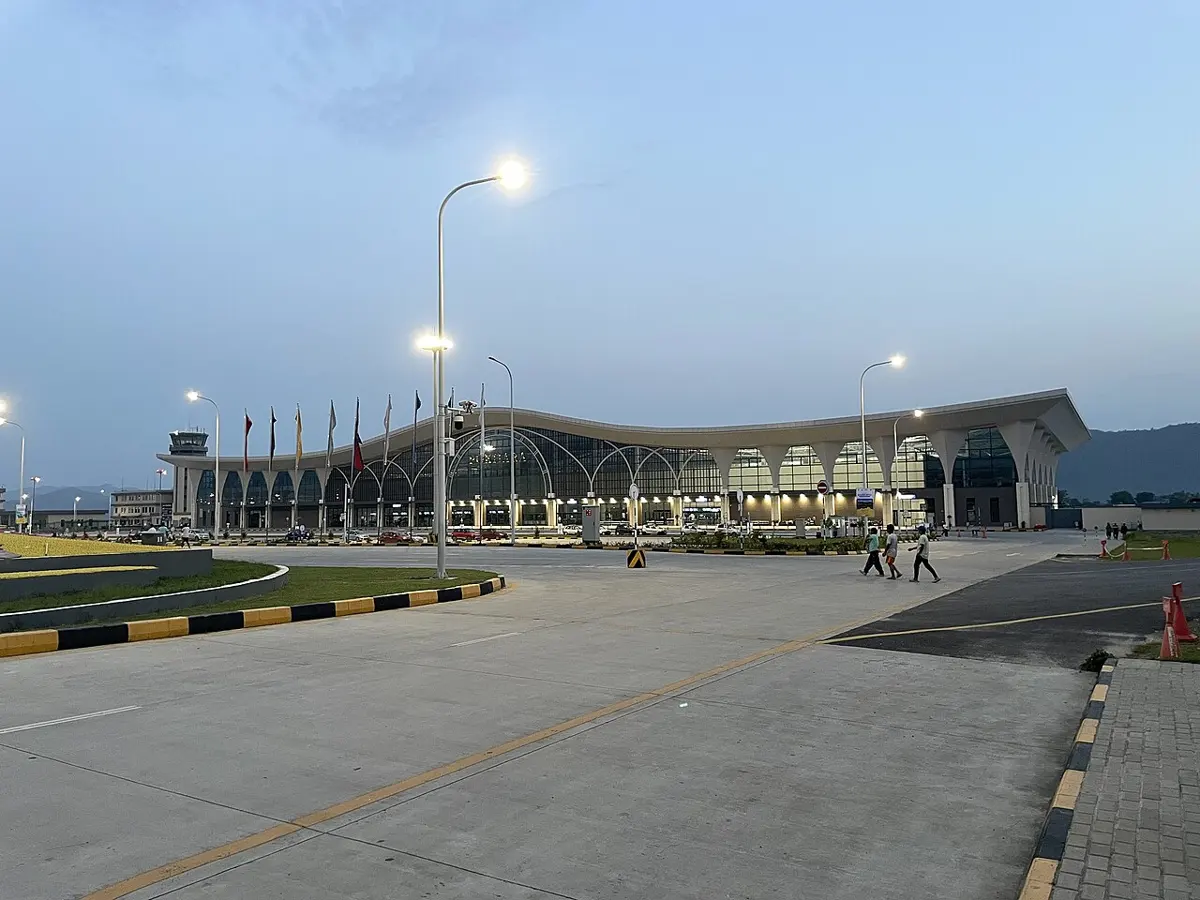
The report comes with a photo of a long, low building with a curved roof of white arches. Behind it, snow mountains rise against a blue sky.
What do you think the place is?
Answer
Have you ever visited any airport?
A model answer
What kind of text it is
This is a real news report, from The Himalayan Times. You met the parts of a news story in Unit 14, and they are all here: the headline (Pokhara international airport inaugurated), the byline (By Himalayan News Service, with the time it was published), the dateline (POKHARA, JANUARY 1), the lead and the body.
The report, part by part
The lead. The newly built Pokhara Regional International Airport, Nepal’s third international airport, was inaugurated by Prime Minister Pushpa Kamal Dahal at a special ceremony. All the main facts are in one sentence: what, who and where. The date is in the dateline, and today means 1 January.
The Prime Minister. He unveiled a plaque (took a cover off a metal or stone sign) to mark the opening. He arrived with Bishnu Paudel, the Deputy Prime Minister and Minister for Finance. Dahal thanked everyone who had helped to plan and finish the project, and said that the people of Pokhara had waited a long time for this moment. Connectivity, he said, is a key part of development, and the airport will help the economy of the whole country as well as Pokhara.
The Deputy Prime Minister. Paudel commended the people of Pokhara for their sacrifices and their patience. Then he asked what comes next: how can the airport be used in the best way? He urged the authorities to finish the steps needed for international flights. Pokhara must also be linked to other parts of Nepal, and the government is working on the maintenance of its roads. It will build the infrastructure the country needs in order to reach its milestones (important stages) in other sectors.
The visitor from ICAO. Tao Ma, the regional director of the Asia and Pacific Office of the International Civil Aviation Organization, thanked the government for inviting him. Airports and air services, he said, are vital for landlocked countries: they bring connectivity, social and economic development, and help after disasters. He congratulated Nepal on the national pride project. He was glad that CAAN had certified the airport to ICAO’s standards. As the world moved on from COVID-19, this airport and Gautam Buddha International Airport would help to handle more air traffic and ease congestion.
The end. Buddha Air, Shree Airlines, Yeti Airlines and Guna Air have started daily flights. Himalaya Airlines made a demonstration flight, the first time that an airline had landed an Airbus A320-214 in Pokhara. This is the least important part, so it comes last, as the inverted pyramid says it should.
How a reporter uses speech
Now you can see why this unit puts grammar and news together. A news report is mostly what people said, and a reporter passes it on in two ways.
| From the report | Why | |
|---|---|---|
| Direct speech | He said, “The newly-built airport will contribute to…” | the speaker’s exact words matter |
| Reported speech | Dahal said the long-awaited moment … had finally come. | shorter, in the reporter’s own sentence |
Notice had finally come: the reporter has moved the tense back. Look too at how many reporting verbs the report uses, so that it doesn’t say said again and again: expressed his gratitude, commended, urged, congratulated. Each one says what kind of saying it was.
A reporter writes: The minister urged the people to wear helmets. What does urged tell you that said doesn’t?
Pick an answer to see why.
Words from the report
| Word | Meaning here |
|---|---|
| inaugurate | to open something new with a formal ceremony |
| ceremony | a formal religious or public occasion |
| unveil | to take the cover off something, to show it for the first time |
| gratitude | the feeling of being thankful |
| connectivity | how well places are linked to each other |
| commend | to praise formally or officially |
| maintenance | keeping something in good condition |
| milestone | an important stage in the progress of something |
| infrastructure | the basic things a country needs, such as roads, airports and power lines |
| transition | a change from one state to another |
| harness | to control something and use it well |
| congestion | a place being so crowded that things can’t move freely |
A. Find the words
The meanings of some of the highlighted words are given below. Find the words and write them down.
- a.praised formally or officially
- b.extremely crowded and blocked with traffic or people
- c.made a formal beginning of; initiated
- d.the process or a period of changing from one state or condition to another
- e.a formal religious or public occasion
- f.the act of keeping something in good condition
Answer
B. Answer the questions
Who inaugurated the newly built Pokhara Regional International Airport and when?
Answer
How is the airport useful according to the Prime Minister?
Answer
What was the first airline to land on the newly built airport?
Answer
Why were the locals commended by the Deputy Prime Minister?
Answer
Why is ICAO grateful to the Government of Nepal and CAAN?
Answer
How are airport infrastructure and air services vital according to Mr. Tao Ma?
Answer
C. Your view
Why do you think the operation of an international airport is helpful in the economic development of a country? Discuss.
A model answer
Writing II: a news report from clues
Clues give you the facts, but not the order or the sentences. Do it in four steps.
- Headline: it is given, so copy it.
- Byline and dateline: add a name, a place and a date.
- Lead: one sentence with the biggest news: who did what, and where.
- Body: the details in order of importance, and then how people felt. Write the action in the past tense, and use the passive when the action matters more than the doer (was inaugurated, was built).
Write a news report using the following clues.
Hospital inaugurated in Doti
A hospital … inaugurated among a big mass by Minister of Health … built from the financial support of the Government of Nepal … work started in 2019 … ended in 2021 … has the capacity of 60 beds … people look happy and hopeful about the future … .
A model news report
Look at the last line of the model: they said that they were hopeful. Even a report made from clues ends up using reported speech.
Grammar II: what stays, and what trips you up
Most of the changes you know already. Here are the cases where the usual steps don’t work.
| Case | Direct speech | Reported speech |
|---|---|---|
| A fact that is always true: the tense stays | “Ice floats on water,” the teacher said. | The teacher said that ice floats on water. |
| A present reporting verb: the tense and time words stay | Nima says, “I am hungry today.” | Nima says that he is hungry today. |
| Already at the bottom: had + verb, would, could, should, might stay | “We might go,” she said. | She said that they might go. |
| Must: usually becomes had to | “You must wear a helmet,” he said to me. | He told me that I had to wear a helmet. |
| Said to: becomes told or asked | She said to me, “Where is your bag?” | She asked me where my bag was. |
| Let me: a request | The old man said to her, “Let me sit here.” | The old man asked her to let him sit there. |
A. Choose the correct report
Read each sentence, then tap the report that is right.
a. The teacher said to us, “What do you want?”
Pick an answer to see why.
b. She said to me, “Will you please help me?”
Pick an answer to see why.
c. He said to me, “Don’t sit on my bed.”
Pick an answer to see why.
d. My sister said to him, “The Earth moves round the Sun.”
Pick an answer to see why.
e. She said to me, “I don’t believe you.”
Pick an answer to see why.
f. She said, “Can you run?”
Pick an answer to see why.
g. They said, “They have seen a lion.”
Pick an answer to see why.
h. She said, “I am waiting for Sarita.”
Pick an answer to see why.
i. Nancy said, “I may leave tomorrow.”
Pick an answer to see why.
j. Manisha said to me, “When did you come to Nepal?”
Pick an answer to see why.
B. Change into indirect speech
Change the following sentences into indirect speech.
- a.He said, “I’ll send a postcard.”
- b.“We’ve bought a new car,” they said to me.
- c.Aruna said, “I don’t speak German.”
- d.Hem says, “Don’t play on the grass, boys.”
- e.My mum said, “Are you feeling well?”
- f.Nishan said, “Where did you meet him last week?”
- g.The doctor said to my father, “You must stay in bed.”
- h.The boy said, “Let me go.”
- i.Arpan said, “How often do you play cricket?”
Answer
Listening: a teenage hero
A. Before you listen
The picture shows a man with a covered face and a sack over his shoulder, running away from a house.
Who do you think the man is?
Answer
Do you think that the man is doing something bad?
Answer
Words to know: a crime (something that is against the law), to arrest (when the police take someone away because of a crime), to insist (to say something firmly, again and again), a fine (money paid as a punishment).
B. Fill in the blanks
Listen to the audio and fill in the blanks.
- a.The two ……… stopped very different crimes.
- b.The first story took place in ……… .
- c.Ralph Black was ……… years old.
- d.He found a ……… in the living room.
Answer
C. Answer the questions
Was Ralph scared when he saw the robber?
Answer
Where was the robber standing?
Answer
How did Ralph help arrest the robber?
Answer
Did the family get their property back?
Answer
What did the robber receive?
Answer
Listen again to the way the reporter talks. Tracy uses this unit’s grammar herself: she says that she asked Ralph if he’d been scared, and that he admitted that he’d been a little scared. That is what a reporter’s work sounds like.
D. Your turn to talk
Do you think that robbery is a bad deed? Discuss with your friends.
A model answer
Project work: a newspaper front page
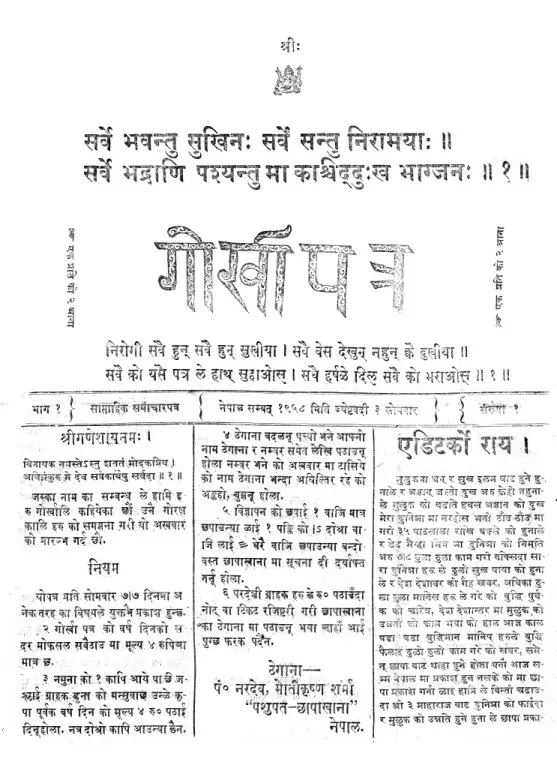
The front page is a newspaper’s shop window: it has to show the day’s biggest news and make you want to read on. Every front page is built from the same parts.
| Part | What it is |
|---|---|
| Nameplate | the newspaper’s name, in big letters across the top |
| Date and issue | the date and the number of this issue, and often the price |
| Headline | the title of a story; the biggest one is the main news |
| Byline and dateline | who wrote it, and where and when |
| Lead story | the most important story of the day |
| Photo and caption | a picture, and a line saying what it shows |
| What’s inside | a short list of what is on the other pages |
Extra bit: near words and distant words
Words like today, here and this point to something near the speaker. When you report them on another day or in another place, that thing isn’t near any more, so they turn into words for what is distant.
| Direct speech | Indirect speech |
|---|---|
| today | that day |
| yesterday | the day before / the previous day |
| the day before yesterday | two days before |
| tomorrow | the next day / the following day |
| the day after tomorrow | in two days’ time |
| next week / next month | the following week / month |
| last week / month | the previous week / month |
| a year ago | a year before / the previous year |
| now | then |
| here | there |
| this | that |
| these | those |
“I saw the dentist yesterday,” said Sapana. Which report is right?
Pick an answer to see why.
“These mangoes came here last week,” the shopkeeper told Roshan. Which report is right?
Pick an answer to see why.
Exercise
Practice on this unit in the style of the final exam. Try each one as in the exam, then open the answer.
Read A Tale of Two Birds again and write True or False.
- a.The mother bird and her nestlings lived in a cave.
- b.The storm blew the two nestlings to the same place.
- c.The cave and the hermitage were close to each other.
- d.The king fought the whole gang of robbers.
- e.The bird at the hermitage knew about its brother.
Answer
Read Pokhara international airport inaugurated again and answer the questions.
- a.Which international airport of Nepal is this?
- b.What did the Prime Minister unveil?
- c.Who was thanked for inviting Tao Ma?
- d.Name the other airport that will help to ease congestion.
- e.Name two airlines that started daily flights.
Answer
Read the news report and answer the questions.
School Library Opens in Rasuwa
By Our Reporter
Dhunche, 12 Baisakh
A new library was opened at Dhunche Secondary School by the mayor of the municipality today.
The library, which has more than 2,000 books, was built with money raised by former students. Work on it began two years ago after the old building was damaged by an earthquake.
“Many of our students have never owned a book,” said Head Teacher Karma Tamang. He added that the library would stay open on Saturdays for people from the village.
Students will be able to borrow two books at a time from next week.
- a.Where is the school?
- b.Who opened the library?
- c.Who paid for it?
- d.Why was a new building needed?
- e.Find a word in the report that means “collected”.
Answer
Change into indirect speech.
- a.Sharmila said, “I have lost my ticket.”
- b.Bedant said to me, “Do you know the way to the airport?”
- c.The pilot said to the passengers, “Fasten your seat belts.”
- d.Rachana said to Abdul, “Why were you late yesterday?”
- e.Nirajan says, “My sister is working here.”
Answer
Identify ten errors in the given paragraph. Rewrite the paragraph by correcting the errors.
my friend menuka asked me where we were going i said that we were going to pokhara to see the new airport she asked if we could go by bus i told her that we could
Answer
Write a news report using the following clues.
Bridge opened in Bajhang
suspension bridge … opened by the chairperson of the rural municipality … built by the villagers with government support … 120 meters long … work took two years … children no longer need to cross the river by boat to reach school … villagers very happy
A model news report
Write a story beginning with “One rainy evening, a stranger knocked at our door…”. Give it a title and a lesson.
A plan
Printable PDFs
- Study notes 2 pages
- Harder practice questions 2 pages Answer key
Practice every question in the book, and keep track of the ones you miss →
A companion to your textbook, not a replacement for it: study from the book your school uses, and where the two differ, follow your teacher. Found a mistake? Please tell us.