
A king announces that he will marry, and nobody dares to come forward. All that stands between a young woman and the throne is one mirror. It isn’t guarded, and it isn’t dangerous. It only comes with a small word: if.
This unit is about conditions: what happens if something else happens. You will read The Magic Mirror, a story about a cunning barber, and a poem by Sally Gray on what she would do as a superhero. You will hear why schedule and leisure change as they cross the Atlantic Ocean. You will meet all four kinds of conditional sentence side by side, including the one that talks about a past that never happened. You will finish a story about a clever lamb, listen to a hospital technician, and write a news story, part by part.
Getting started: what would you do?
Every day you make small plans that depend on something: If the bus is full, I’ll walk. You can also imagine yourself in a place where you aren’t: If I saw a thief, I would shout. The word would shows that you are imagining.
Four pictures start this unit. A police officer runs after a thief who is carrying a heavy bag and dropping money. A doctor bends over a sick person in a bed. A boy counts coins and notes from a box. A girl leads a blind old man with a stick across a busy road.
Look at the pictures and say what you would do in the given situations.
Model answers
Look at the pattern in every answer: If I + past verb, I would + verb. You will learn its name in Grammar I.
Reading I: The Magic Mirror
Before you read
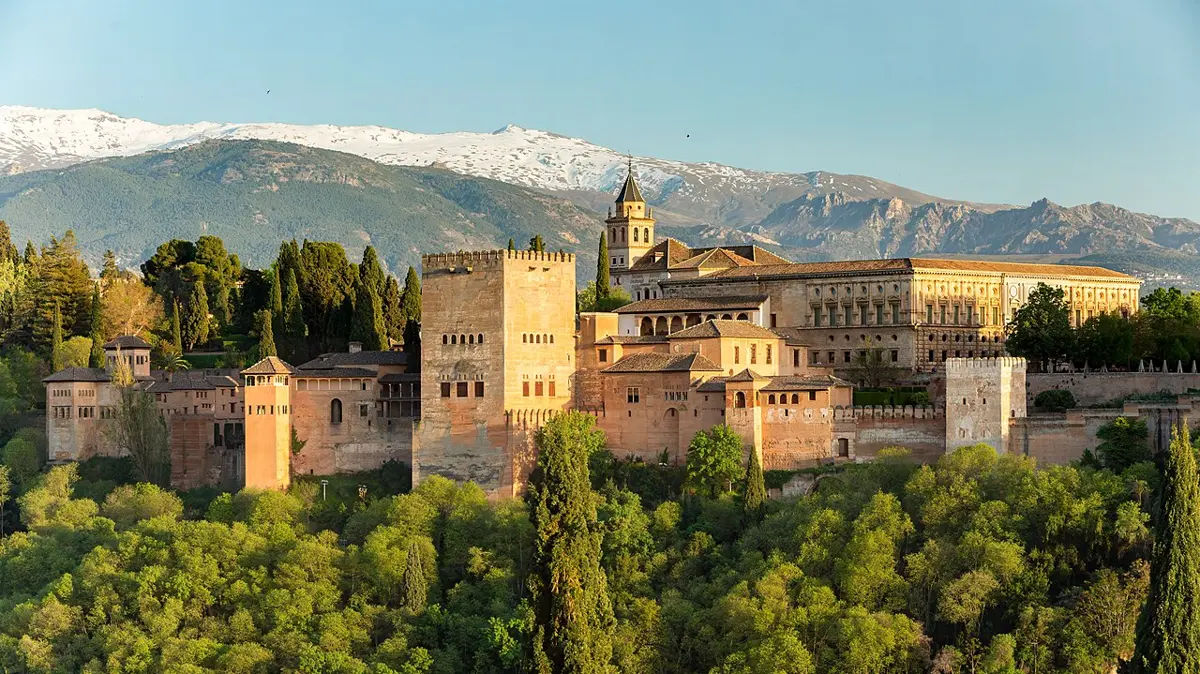
The story comes with a picture of a girl with a long plait, in a simple patterned dress. She is standing in front of a large mirror in a wooden frame, with a table beside her.
What is the girl in the picture doing?
Answer
Where do you think she is?
A model answer
What kind of text it is
This is a story of the fairy-tale kind: it has a king, a clever servant, a poor girl and a magic object. Stories like this are told to teach something. So as you read, ask two questions: what does each person believe, and what is really true?
The story, part by part
Paragraphs 1–2: the news. All over the kingdom of Granada, people hear that the king is ready to marry, and that he wants the most worthy girl of the land, the one who deserves it most. The news goes first to the court barber, then to the night watchmen (the guards who walk the streets at night), and then to the old women who sell fruit and cloth in the market. The king also promises a good sum of money to anyone who finds him a bride. The watchmen shout so loudly that the young ladies wake up, and the old women keep telling them about it.
Paragraphs 3–4: the barber’s claim. Everyone wonders how the king will choose. The barber says, rather grandly, that he will have a lot of trouble finding a good enough lady. People are surprised: what has a barber got to do with it? He answers that nobody is closer to the king, and that he owns a magic mirror. If a dishonest girl looks into it, he says, spots of her dishonesty will show in her reflection (the picture you see in a mirror).
Paragraphs 5–6: the condition. Is that a condition for marrying the king? It is the only one, says the cunning barber (clever at tricking people). Any lady above 20 is eligible (allowed to take part). But each one must gaze at the mirror (look at it for a long time) with the barber at her side. Many ladies would love to be queen, but not one dares.
Paragraphs 7–8: nobody comes. Days and weeks pass. Ladies try to convince their friends to go first, but nobody is brave enough. Every morning the king asks the barber if anyone has come, and the answer is always no. People watch the barbershop to see who will go in.
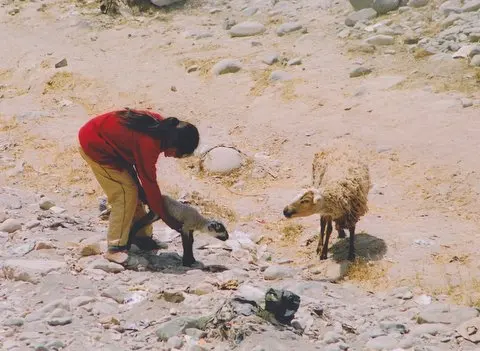
Paragraphs 9–11: the shepherd girl. The king is unhappy. Is there no maiden (an old word for a young unmarried woman) who wants to be his bride? Kings in other lands have no such trouble. The barber says there is one chance: a lonely shepherd girl who lives alone, far up on the mountainside. She may be brave enough, but would the king marry a girl of such “low birth” (from a poor family)? The king tells him to call her, and to warn her first of what may happen.
Paragraphs 12–13: in the hall. The barber brings her to court, and the whole kingdom fills the royal hall to watch. She feels very shy. The king is pleased with how she looks and receives her kindly. He reminds her of the condition: if she has done anything wrong in her life, dark spots will appear.
Paragraphs 14–15: the test. Her answer is the heart of the story. Everyone makes mistakes, she says, and she is no exception (not different from the rest). She doesn’t badly want to be queen. But she isn’t afraid to look. Then she walks up and gazes at the mirror. The women crowd round her and see no stains (dirty marks) at all. They snatch the mirror (grab it quickly) and pass it from hand to hand, and they shout that it has no magic: they have been tricked!
Paragraph 16: the king’s answer. The king disagrees with them. They have only themselves to thank, he says. One of them could have been queen, if she had trusted herself as this girl did.
Why did nobody look into the mirror for so long?
Pick an answer to see why.
The story’s last sentence is a kind of if you may not have used yet. The king is talking about something that is already over: the ladies were not confident, so they did not get the chance. He is imagining a past that never happened.
Words from the story
| Word | Meaning here |
|---|---|
| worthy | deserving respect, or deserving to be chosen |
| constantly | all the time, again and again |
| reflection | the picture of yourself that you see in a mirror |
| cunning | clever at getting what you want, often by tricking people |
| eligible | allowed to do something, because you meet the rules |
| gaze | to look at something steadily for a long time |
| maiden | (old word) a young woman who isn’t married |
| mountainside | the sloping side of a mountain |
| reminded | made someone remember something |
| exception | a person or thing that a general rule doesn’t cover |
| stains | dirty marks that are hard to remove |
| snatched | took something quickly and roughly |
A. Match the words
This task also asks about merchant, a word worth knowing even though it doesn’t appear in this story.
Match the given words with their meanings.
- a.kingdom
- b.merchant
- c.surround
- d.convince
- e.pleased
- i.happy or satisfied
- ii.to cause someone to believe something or to do something
- iii.to be everywhere around something
- iv.a person whose job is to buy and sell products
- v.a country ruled by a king or queen
Answer
B. Put the events in order
Put these sentences in the order they appear in the story.
- a.The barber would have to tackle a lot of problems finding a bride for the king.
- b.Many girls wanted to be the queen, but none dared to look into the mirror.
- c.The king promised to give a good amount of money to those who would find him a bride.
- d.The barber suggested a shepherd girl to the king.
- e.The women present in the court knew that they were cheated.
- f.Every day, the king asked about the progress.
- g.The shepherd girl was present in the hall.
Answer
C. True, False or Not Given
The story has 16 paragraphs. A Not Given answer means that the text doesn’t say either way, so don’t use your own guess.
Read paragraphs 1–10. Write whether these sentences are True or False. If the information is not given in the text, write NG.
- a.A watchman conveyed the message of the king early in the evening.
- b.The woman’s dishonest character would be reflected in the mirror.
- c.A girl interested in marrying the king must be in her twenties.
- d.Many wanted to be queen but none wanted to look into the mirror.
- e.The king found the suitable candidate at once.
- f.Kings in other states were also facing the same problem as that of the king of Granada.
Answer
D. Answer the questions
Read paragraphs 11–16 and answer these questions.
What happened as soon as the shepherd girl was brought into the palace?
Answer
How do you know the king was happy at the first sight of the girl?
Answer
Was the shepherd girl really shy? How can you say so?
Answer
What was the secret about the mirror?
Answer
What did the other ladies realize at the end?
Answer
E. Who said it?
Read these lines from the story and answer the questions.
- a.“I am afraid I will have great trouble finding a worthy lady for the king.”
- i.Who is the speaker?
- ii.Who is he or she speaking to?
- b.“What have you got to do with helping the king find a wife?”
- i.Who is the speaker here?
- ii.Whom does “you” refer to?
- c.“No ladies, you have only yourselves to thank.”
- i.Who said this?
- ii.To whom did he or she say so?
Answer
F. Tell a magic story
A good magic story needs three things: an ordinary person, a magic object with a rule, and a surprise about what the magic really means. Tell it in the past tense, and use first, then, after that, in the end.
Recall a magic story you have read or heard. Tell it to your friends.
A model answer
Pronunciation: British and American English
English has two big standard forms. British English and American English use almost all the same words, but some of those words are said differently. Neither form is wrong. You will meet both in Nepal: in films, in exams, on the internet and in dictionaries.
These are the twelve words of this unit. Capital letters show the stressed part. The widget after them, “Hear both”, gives each word in dictionary symbols too.
| Word | British | American |
|---|---|---|
| either | EYE-thuh or EE-thuh | EE-thur or EYE-thur |
| neither | NY-thuh or NEE-thuh | NY-thur or NEE-thur |
| schedule | SHEJ-ool | SKEJ-ool |
| leisure | LEZH-uh | LEE-zhur |
| mobile | MOH-byle | MOH-bul |
| vitamin | VIT-uh-min | VY-tuh-min |
| multi- | MUL-tee | MUL-tee or MUL-tye |
| dynasty | DIN-uh-stee | DY-nuh-stee |
| evolution | EE-vuh-LOO-shun or EV-uh-LOO-shun | EV-uh-LOO-shun |
| advertisement | ad-VER-tis-ment | AD-ver-TYZE-ment |
| missile | MIS-yle | MIS-ul |
| privacy | PRIV-uh-see | PRY-vuh-see |
Look for three patterns. British -ile rhymes with smile, and American -ile shrinks to -ul (mobile, missile). The short i of sit in British English is often the long i of bite in American English (vitamin, dynasty, privacy). And American speakers say the r at the end of a word, which is why the table has -uh on one side and -ur on the other.
Which word changes where its main stress falls, not just one sound?
Pick an answer to see why.
An American visitor says “SKEJ-ool”. What does a British speaker say for the same word?
Pick an answer to see why.
Grammar I: conditional sentences
A conditional sentence says that one thing depends on another. It has two parts.
| Part | Its job | Example |
|---|---|---|
| the if-clause | gives the condition | If the rain stops, |
| the main clause | gives the result | we will go out. |
The two parts can change places, and the meaning stays the same. Only the comma changes: put a comma when the if-clause comes first, and none when it comes second.
- If the rain stops, we will go out.
- We will go out if the rain stops.
The four kinds
You met the first three in earlier grades, one at a time. The fourth, the third conditional, is new. Here they are side by side. Teachers also call the last three Type 1, Type 2 and Type 3.
| Kind | If-clause | Main clause | When we use it | Example |
|---|---|---|---|---|
| zero | present | present | a fact, or something that always happens | If you mix blue and yellow, you get green. |
| first (Type 1) | present | will + verb | a real possibility in the future | If the bus comes late, I will walk. |
| second (Type 2) | past | would + verb | something imagined, now or in the future: untrue or unlikely | If I had wings, I would fly to Mustang. |
| third (Type 3) | had + past participle | would have + past participle | something imagined about the past: it did not happen | If Karma had left earlier, he would have caught the bus. |
Read the second and third rows again. The verbs look past, but the second conditional isn’t about the past at all. If I had wings means that I don’t have wings, now. Stepping one tense back is how English says “this isn’t real”.
What really happened?
To understand a second or third conditional, turn it round and ask what is true.
| Sentence | What is really true |
|---|---|
| If Rojina lived near the school, she would walk. | She doesn’t live near the school. She doesn’t walk. |
| If Salim had set an alarm, he wouldn’t have overslept. | He didn’t set an alarm. He overslept. |
| If you had been as confident as this young lady, you might have been the queen. | They weren’t confident. They didn’t become queen. |
“If Dawa had brought his umbrella, he wouldn’t have got wet.” What really happened?
Pick an answer to see why.
Which sentence is about something that is possible and may really happen?
Pick an answer to see why.
Three rules that save marks
- Will and would stay out of the if-clause. They belong in the main clause.
- ✗ If it will rain, we will stay in.
- ✓ If it rains, we will stay in.
- ✗ If I would know, I would tell you.
- ✓ If I knew, I would tell you.
- Were with every person in the second conditional. Careful writers say if I were, if she were, if it were. And the piece of advice is always If I were you.
- Other helping verbs can take the place of will and would. May, might, can and could make the result less certain, or talk about being able.
- If you touch that dog, it may bite you. (perhaps)
- If you finish early, you can go. (you are allowed)
- If she practiced, she could win. (she would be able to)
- If you had asked, I might have helped. (perhaps I would have)
A. Match the halves
Look at the verb forms first. They tell you which halves belong together.
Match the sentence halves to make sensible sentences.
- a.If Anjali won the lottery,
- b.What would you do
- c.I will buy you some chocolates
- d.If they had won the race,
- e.If they don’t stop making noise,
- f.If you drop an egg,
- i.we would have been very happy.
- ii.it breaks.
- iii.I will call the police.
- iv.if you were in my place?
- v.if I find a grocery shop.
- vi.she would go for a long trip.
Answer
B. Make sentences
Make sensible sentences using the words given.
Example: wet/we/will get/if/rains/it. → If it rains, we will get wet.
- a.study hard/will pass/you/the exam/if you.
- b.ice/if/melts/you/it/heat.
- c.succeed/you/will/if/work hard/you.
- d.she/would help/her/if/asked/me/I.
- e.they/if/had invited/you/would have come/them.
- f.doesn’t know/if/the answer/she/will be unhappy/the teacher.
- g.if/hadn’t studied hard/she/her exams/could have failed/she.
- h.would/me/if/I/help/asked/you?
Answer
Speaking: saying what depends on what
A. What do they mean?
To explain an if-sentence, say what the speaker means to do, or what the speaker wants the listener to do. Here are four small scenes.
Study what the people in the pictures are saying. Explain what those sentences mean.
- a.Two friends look at the sky: “If it stops raining, we will play football.”
- b.A woman helps a boy with his work: “Tell me if you have any problem.”
- c.A man stands near a snake: “If you tease a snake, it will bite you.”
- d.A father speaks to a girl at a door: “Daughter, if you don’t go out, I will bring you some chocolates.”
Model answers
Each of these is one job an if-sentence can do. Look at the list again: a plan, an offer, a warning and a promise.
B. A chain of events
In this game, each result becomes the next condition.
| Speaker | Says |
|---|---|
| Sanam | If I drink coffee, … |
| Anita | … I will stay awake tonight. |
| Chandra | If I stay awake tonight, … |
| Deepak | … I will feel sleepy in the class tomorrow. |
Watch what happens to the verb. I will stay awake turns into If I stay awake: the will drops out when the words move into the if-clause.
Work in groups and take turns to make a chain of events as in the example. Use the given clues.
- a.rain heavily/stay inside/mother happy/provide delicious food
- b.touch snow/get frostbitten/go to the doctor/need to spend money
- c.join language class/improve English/get good grades/parents happy
- d.eat chocolates too much/teeth decay/see a doctor/take the teeth out
- e.don’t study hard/fail the exam/can’t go to a college/can’t get better job
Model chains
C. Ask and answer
The question and the answer share the same kind of conditional. A clue with were or found takes would. A clue with a present verb, such as touch or exercises, takes will.
Ask and answer the questions on the given situations as in the example.
Example: what/if tomorrow were a holiday/go swimming. → What would you do if tomorrow were a holiday? If tomorrow were a holiday, I’d go swimming with my friends.
- a.what/if you found a purse/submit it to a police station
- b.what/if weather is not good/won’t go out
- c.what/if I touch a live wire/get electric shock
- d.what/if one exercises regularly/become healthy
- e.what/if everyone is sincere/the world would be a better place
Model conversations
Writing I: completing a story
Stories are told in the past tense, so most gaps here need a past verb. But there are two traps. An action that was going on when something else happened takes the past continuous (was eating). And the words inside quotation marks are what a character said at that moment, so they take the tense the character would use: present or future.
Complete the story with the suitable forms of the verbs given in the brackets.
One day, a lamb ……… (eat) sweet grass away from her flock of sheep. She ……… (not notice) a wolf walking nearer to her. When she ……… (see) the wolf, she ……… (start) pleading, “Please, don’t eat me. My stomach ……… (be) full of grass. You can wait a while to make my meat taste much better. The grass in my stomach will be digested quickly if you let me dance.” The wolf ……… (agree).
While the lamb ……… (dance), she ……… (have) a new idea. She said, “I can dance faster if you ……… (take) my bell and ring it so hard.” The wolf ……… (take) the bell and ……… (start) to ring it so hard. The shepherd ……… (hear) the sound and ran quickly to see what had ……… (happen). And the lamb was saved.
Hint
Answer
Listening: a technician’s working day
A woman describes her working day. Before you listen, read the questions in B and C, and notice how many ask for a time. In C, you will have to keep three times apart.
Words to know: a technician (a person whose job is to keep machines or equipment working), receptionist (the person who meets visitors at the front desk), cabin (here, a small room in an office).
A. Before you listen
The picture for this task is of a woman holding a spanner, working on the inside of a computer’s case.
Who do you think the woman is?
A model answer
What does a technician do?
Answer
B. Choose the correct answers
a. The speaker works as
Pick an answer to see why.
b. The first thing she does when she arrives at the office is to
Pick an answer to see why.
c. Every day, the speaker reaches her office on time because
Pick an answer to see why.
d. People cycle to work because
Pick an answer to see why.
e. Altogether ……… people share the same cabin.
Pick an answer to see why.
C. Answer the questions
Listen to the audio again and answer these questions.
- a.What time does the speaker reach the office?
- b.What time do the workers go home?
- c.What time does she leave her office?
- d.How does she get back home?
- e.How much is the pay?
Answer
D. Your turn to talk
If you were the speaker, would you continue that job? Why? Talk to your friends.
A model answer
Reading II: If I Was a Superhero
Before you read
The poem comes with a picture of a man flying through the air, one arm stretched out in front of him, in a blue suit with a red cape.
Who is the person in the picture?
Answer
How is the person different from common people? Discuss.
A model answer
What kind of text it is
This is a short poem by Sally Gray, and each of its six verses (groups of lines) begins with the same words. The speaker imagines things that aren’t true now, so you can guess the grammar before you read: it is the second conditional from start to finish. Each I’d is short for I would.
The poem, part by part
Verse 1: flying. The first wish is the one everybody has. The speaker would definitely fly, with arms outstretched (reaching out as far as they will go), racing the birds.
Verse 2: strength. Next come special powers, such as very strong legs for leaping right over towers.
Verse 3: the oceans. Now the poem turns. The powers are no longer for fun. The speaker would save the oceans, using a secret magical potion (a magic liquid) that cleans them.
Verse 4: the land. The speaker would also save the trees, the mountains, the rivers, and the birds and the bees.
Verse 5: people. The poor come next: they would be given food, so that they would never be hungry again.
Verse 6: the result. The poem ends with a small joke. The speaker is sure that you’ll agree: the world would be better, all thanks to “me”.
How do the speaker’s wishes change as the poem goes on?
Pick an answer to see why.
How the poem works
| Device | What it means | In this poem |
|---|---|---|
| repetition | the same words again and again | every verse opens with the title’s words |
| rhyme | line endings that sound alike | fly/sky, powers/towers, oceans/potions, trees/bees, poor/more, agree/me: the second and fourth lines of each verse |
| imagery | words that make a picture in the mind | the arms stretched out, racing birds |
“If I ……… a superhero, I would clean every river in Nepal.” Which is best in an exam?
Pick an answer to see why.
A. The crossword
B. Fill in the blanks
Fill in the blanks. Use information from the poem.
- a.The speaker wants to fly stretching the ……… .
- b.The strong legs would be used to ……… over the towers.
- c.The oceans would be saved with ……… .
- d.The speaker would save all the trees, ……… and rivers.
- e.The poor would be helped with ……… .
- f.The ……… would be a better place because of the speaker.
Answer
C. If you were a superhero
If you were a superhero, what would you do? List down at least five things you want to do.
A model answer
Writing II: a news story
A news story tells readers about something that has just happened. It gives facts, not the writer’s feelings. Its order is unusual: most stories save the best for last, but a news story puts the most important thing first.
Historians disagree about where this shape came from. Many link it to the telegraph, when sending news down a wire cost money and the line could fail, so reporters put the main facts first.
A. Read a news story
The text is a real news report from Onlinekhabar, Nepal begins exporting cement to India. It says that a Nepali factory has started selling cement to India, gives the numbers, and ends with the background: Nepal has made enough cement for its own use for a few years, but hadn’t sold any abroad.
Export means to sell goods to another country. Self-reliant means able to do something without help from others: here, making all the cement the country needs. A grant is money given for a purpose, which doesn’t have to be paid back. Look at the way the report says where its facts come from: the company says…, according to the company’s Public Relations Manager…. A good reporter always names the source.
Read the news story and discuss the given questions.
- a.What is the headline of the news story?
- b.What is the by-line of the news story?
- c.When is it written?
- d.Identify the lead paragraph.
Answer
Which part of this report could an editor cut first without losing the news?
Pick an answer to see why.
How news English works
| Feature | Example |
|---|---|
| the headline drops small words and uses the present tense | Nepal Begins Exporting Cement (not Nepal has begun the export of…) |
| the lead often uses the present perfect for fresh news | Nepal has begun exporting… |
| the body uses the past tense for what happened | the company announced… |
| the passive is used when the action matters more than the doer | He was awarded the prize. |
| reporting words name the source | says, said, according to |
B. Write a news story
Use only the facts in the notes. A reporter never makes up a quotation, a number or a date. If you need a date for the dateline and the notes have none, use the one your teacher gives, or today’s.
How to do it, in five steps.
- Headline: use the words in the notes.
- Byline: By + your name.
- Dateline: the place and the date.
- Lead: who, what, where and who gave it, in one or two sentences.
- Body: why he got it, then his background.
Write a news story with the help of the guidelines below.
Nepali youth awarded in Delhi
- Mohammad Irfan from Banke
- National Youth Icon Award 2022
- a ceremony held in Delhi
- awarded by Chief Minister of Delhi
- for his excellent contribution to the field of development
- started career with USAID in Jumla
- is a very active social and political activist for disability awareness
A model answer
Grammar II: choosing the right form
In the exam, conditionals come as a blank with options. You can settle most of them in three steps.
- Find the verb you are given. It may be in either half.
- Name its row. Will means first. Would + verb means second. Would have means third. Had + past participle after if means third. A plain past after if means second.
- Give the other half the same row.
A. Choose the correct options
Complete the sentences by choosing the correct options.
a. If you ……… hungry, I will give you something to eat.
Pick an answer to see why.
b. What ……… if you were alone at your home?
Pick an answer to see why.
c. If they had gone to bed early, they ……… been late for the bus.
Pick an answer to see why.
d. A snake ……… you if you touch it.
Pick an answer to see why.
e. If it rains this evening, I ……… at home.
Pick an answer to see why.
f. Would you walk more if you ……… a pair of shoes?
Pick an answer to see why.
g. Maria would have bought a watch if she ……… enough money.
Pick an answer to see why.
h. If I hadn’t climbed up the tree, I ………
Pick an answer to see why.
i. What ……… if the doors are closed?
Pick an answer to see why.
B. Finish the sentences
Your own answers will differ. What must be right is the pair of verb forms.
Complete the given sentence in any way you like.
- a.If I were you, ………
- b.If you call him, ………
- c.I would have called your mother ………
- d.If you don’t brush your teeth regularly, ………
- e.If they didn’t hurry, ………
- f.………, we will play golf.
- g.I can help you ………
Model answers
Project work: a speech
A speech is writing that is meant to be heard. Keep the sentences short, speak to the audience, and repeat your main idea. Plan it in three parts.
| Part | What it does |
|---|---|
| opening | greets the audience and says the big idea: If I were the Prime Minister… |
| body | gives two or three promises, each with a reason: first, second, finally |
| closing | ends with one line people will remember, and says thank you |
Because you are imagining, every promise is in the second conditional. Don’t slip into will.
Extra bit: the parts of a news story
| Part | What it is | What to remember |
|---|---|---|
| headline | the short phrase at the top | It sums up the story and makes people want to read. Busy people often read only the headlines. |
| byline | the name of the reporter or writer | By Satish Mishra |
| dateline | where and when the story was written | Kathmandu, 10th July 2021 |
| lead | the first paragraph | It gives the most important information and answers the 5W1H: what, when, why, where, who and how. |
| body paragraphs | the paragraphs after the lead | They add examples, data and quotations, and lead gradually to the end. |
A lead should answer which questions?
Pick an answer to see why.
Exercise
Practice on this unit in the style of the final exam. Try each one as in the exam, then open the answer.
Read The Magic Mirror again and write True or False.
- a.The king offered a reward for finding a bride.
- b.The barber said that any lady above 20 could come.
- c.The ladies went to the barbershop in large numbers.
- d.The shepherd girl lived with her large family.
- e.The mirror showed no stains on its surface.
Answer
Read If I Was a Superhero again and answer the questions.
- a.What would the speaker race in the sky?
- b.What would the extra strong legs be for?
- c.How would the oceans be cleaned?
- d.What would the poor be given?
- e.Why does the speaker say that the world would be better?
Answer
Read the news story and answer the questions.
Dhulikhel Students Build Rain Tank
By Our Correspondent
Dhulikhel, 3 May
Students of a community school in Dhulikhel have built a tank that collects rainwater from the school’s roof. The tank was opened on Sunday by the head teacher, Parbati Thapa.
The tank holds 5,000 liters. The school’s tap ran dry for two months last spring, the head teacher said.
Grade 8 students raised the money by selling vegetables from the school garden.
- a.Who built the tank?
- b.Who opened it?
- c.How much water does it hold?
- d.Which paragraph is the lead?
- e.How did the students get the money?
Answer
Choose the correct options to complete the text.
Everyone in the village said that Selina’s mirror was special. “If you ……… (a. look / b. will look / c. looked) into it tomorrow, you will see your future,” she told her neighbor Rohit. He laughed. “If I ……… (a. can / b. could / c. will) see the future, I would be rich!” Later he went to look. If he had looked more carefully, he ……… (a. will see / b. would see / c. would have seen) that it was only a piece of glass. “If you heat glass, it ……… (a. melts / b. melted / c. would have melted),” said Selina, laughing, “but it never tells the future.” “If I were you, I ……… (a. will / b. would / c. had) sell it,” said Rohit.
Answer
Identify ten errors in the given paragraph. Rewrite the paragraph by correcting the errors.
the king of granada was sad no girl came to the barbers shop so the barber called a shepherd girl didnt she look brave
Answer
Write a news story from these notes. Give it a headline, a byline, a dateline, a lead and a body.
Bhaktapur school wins quiz
- Kopila Secondary School, Bhaktapur
- first in the district science quiz
- held at the town hall on Saturday
- team of three Grade 8 students
- 12 schools took part
- prize: a telescope for the school
A plan
Write a short essay of about 100 words on “If I Were the Head Teacher of My School”.
A plan
Printable PDFs
- Study notes 2 pages
- Harder practice questions 2 pages Answer key
Practice every question in the book, and keep track of the ones you miss →
A companion to your textbook, not a replacement for it: study from the book your school uses, and where the two differ, follow your teacher. Found a mistake? Please tell us.