
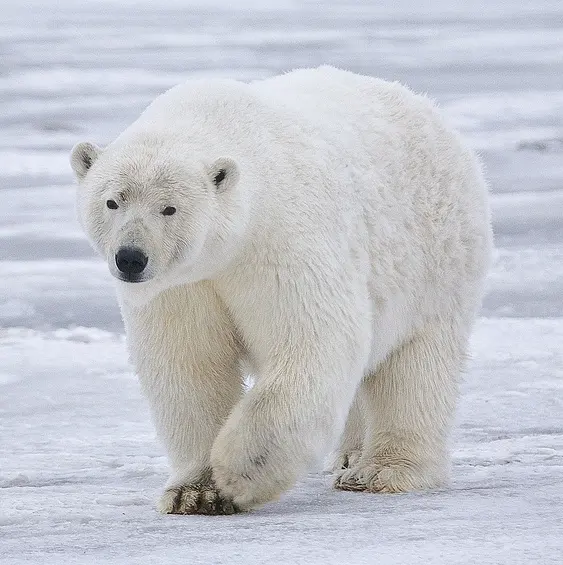
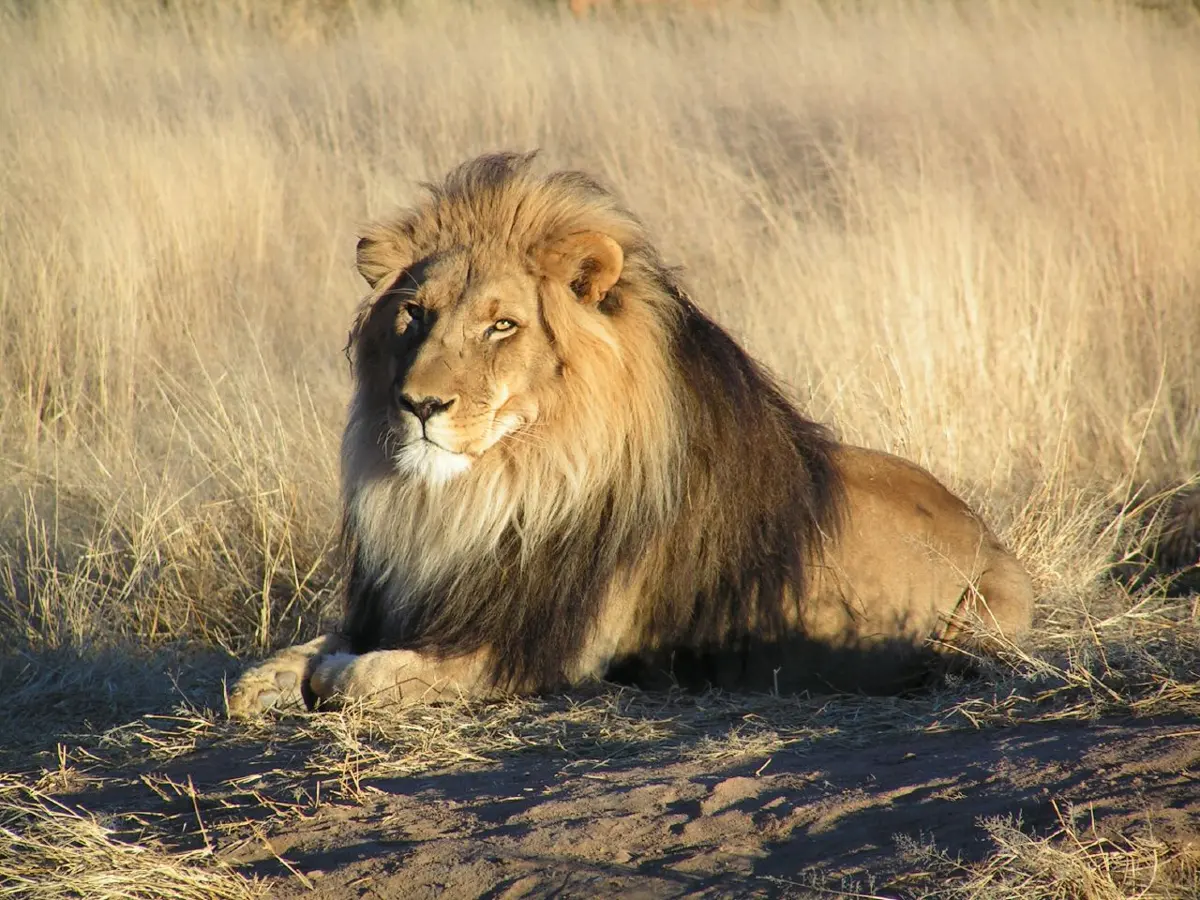
A polar bear can’t live in a lion’s grassland, because its thick fat would make it far too hot. A lion can’t live on the Arctic ice, because its thin coat can’t keep out the cold. And saving a bear from hunters is no use if its home melts away. Those are three explanations, and each one hangs on a small word.
This unit is about giving explanations: saying why, what for and in spite of what. You will read Conservation of Earth, on why every creature needs its home, and a government notice that closed Nepal’s schools. You will learn the connectives that join ideas (because, because of, so that, in order to, therefore, although, in spite of, however), find all 24 consonant sounds of English, write an opinion essay on radio and television and a notice of your own, and hear a speaker argue against zoos.
Getting started: why does it matter?
An explanation answers the question why? Four pictures start this unit: a bicycle, a brown and white cow grazing on grass, a mobile phone, and a hillside covered with forest. For each one, say what it gives us. Then say why that matters.
Look at the pictures and discuss why the object, animal or place is important.
Model answers
Look at the words that did the work: because gives a reason, and in order to and to say what something is for. You will meet them properly in Grammar I.
Reading I: Conservation of Earth
Before you read
The text comes with a picture of a pond with a forest around it, under a blue sky with small clouds. A bear and a large deer with wide antlers stand on the bank, a fox sits on a rock, a beaver sits by the water, and birds fly above. In the water there are a duck, a frog, a fish and a newt, with water lilies and reeds. A small animal has a burrow under the ground.
What plants and animals can you see in the picture?
A model answer
Do you think they are necessary for our lives? Why?
A model answer
What kind of text it is
This is an informative essay that also wants to persuade you. It explains the problem step by step, then says what we must do. It talks to the reader as you and we, and it asks questions that it doesn’t always answer, such as Why might this be? and What if we cannot achieve this? A question like that is called a rhetorical question: the writer asks it to make you think.
The text, part by part
Paragraph 1: every creature has a home. Each living creature has a place where it feels at home, that is, comfortable and safe. Polar bears live in the Arctic, and thick layers of fat protect them from the cold. Lions have thinner coats and live in the African grasslands, where it can be scorching (very) hot. The place where a creature feels at home is its natural habitat. The writer compares it to your own house: you know the people around you, and you know where your food comes from. A creature’s ancestors have lived in its habitat for perhaps millions of years. Habitats differ in their temperature and their vegetation (the plants that grow there), and wild creatures are used to (familiar with) their own. They can’t last long in a different one.
Paragraph 2: saving a species. Conservationists (people who work to protect nature) saw these problems several decades ago. They began by saving particular species that were in danger. Their tools were bans: on some hunting, on poaching (hunting illegally) and on overfishing.
Paragraph 3: saving a home. That was a good start, but it wasn’t enough. A creature can’t survive without its home and its surroundings, and habitats are in danger everywhere. People cut forests for firewood and timber (wood for building), and the creatures there may have nowhere else to go. Global warming is melting the ice caps, which makes life hard for some species.
Paragraph 4: gone for good. We have to protect species from becoming extinct, because thousands are in danger and an extinct species never comes back. There are probably many more species in existence that nobody has found yet, in places that are hard to reach: isolated rainforests, deep oceans, the Arctic and the Antarctic.
Paragraph 5: we need the biosphere too. The biosphere is the part of the Earth where life exists. Other creatures give us food, building materials, fuel and medicine, so we must use these things with care. If we destroy the biosphere out of greed or foolishness, we will die out ourselves. The writer then asks a hard question: are humans more important than animals? There is no direct answer, but the point is clear: looking after the biosphere means looking after ourselves and every other creature on our precious planet (one of great value).
Paragraph 6: looking for another home. Some scientists look far ahead. One day the Earth might not be able to support all its creatures, so they are searching for other planets. The James Webb Space Telescope is looking for planets that might be habitable (fit to live on), with signs of oxygen and water vapor. This will take hundreds of years, so, the writer ends, we must look after the Earth we have today.

Why did conservationists move from saving species to saving habitats?
Pick an answer to see why.
Why does the writer mention the James Webb Space Telescope at the end?
Pick an answer to see why.
Words from the text
| Word | Meaning here |
|---|---|
| feel at home | to feel comfortable and safe in a place |
| scorching | very hot |
| habitat | the natural home of a plant or animal |
| ancestors | people or animals of your family who lived long ago |
| vegetation | the plants of a place, taken together |
| be used to | to know something so well that it no longer seems strange |
| conservationists | people who work to protect the environment |
| decade | a period of ten years |
| species | one kind of living thing |
| poach | to hunt birds or animals illegally |
| timber | wood used for building |
| extinct | no longer existing anywhere |
| existence | the state of being real or alive |
| biosphere | all the parts of the Earth where life is found |
| die out | to disappear completely, one after another |
| precious | of great value; to be looked after carefully |
| habitable | fit to live in or on |
A. Find the words
The meanings of some of the words from the text are given below. Find the words and write them down next to their meanings.
- a.no longer in existence
- b.to hunt birds or animals illegally
- c.a period of ten years
- d.people in your family who lived a long time ago
- e.kind or type
- f.people who take an active part in the protection of the environment
- g.the atmosphere in which plants and animals can live
- h.suitable to live in
Answer
B. True or False
Read the text again and write True or False for these statements.
- a.You feel at home when you live in your usual place.
- b.Conservationists started to work saving animals only recently.
- c.There are thousands of undiscovered species on the Earth.
- d.Humans will also die out if they go on destroying the biosphere.
- e.Scientists have already found another habitable planet.
Answer
C. Answer the questions
How is it possible for polar bears to live in the Arctic?
Answer
Why can’t wild creatures survive for long in a different habitat?
Answer
What have the conservationists done to save some specific species?
Answer
What is the impact of cutting down trees?
Answer
Where are many of the new species of creatures found?
Answer
What is the contribution of other creatures to humans?
Answer
Why do you think scientists are looking for oxygen and water vapor on other planets?
Answer
D. Five things for another planet
Use the words of this unit: because, so that, in order to.
If you got the chance to go to another planet to live, what five things would you take with you? Make a list and talk to your friends. Give reasons why you would want to take those particular items with you.
A model answer
Pronunciation: the consonant sounds of English
English has 21 consonant letters but 24 consonant sounds. Letters and sounds aren’t the same thing, so dictionaries write sounds in slashes: danger has a g, but its sound is /dʒ/. A consonant is a sound in which your lips, teeth, tongue or throat get in the way of the air.
These are the words of this unit, with the letters to listen for in bold.
| Word | Sounds |
|---|---|
| creature | /k/ |
| temperature | /t/ /p/ /r/ |
| layer | /l/ |
| habitat | /h/ /b/ |
| ancestors | /n/ /s/ |
| warming | /w/ /m/ /ŋ/ |
| freezing | /f/ /z/ |
| bush | /ʃ/ |
| treasure | /ʒ/ |
| danger | /dʒ/ |
| living | /v/ |
| great | /ɡ/ |
| thousands | /θ/ |
| another | /ð/ |
| you | /j/ |
| decision | /d/ |
Count the sounds: 23. The last one, /tʃ/ as in cheese, is hiding in the first two words, in the t before -ure: /ˈkriːtʃə(r)/, /ˈtemprətʃə(r)/.
Many sounds come in pairs. Your mouth does the same thing, but one has the voice on and one doesn’t. Put two fingers on your throat and say ssss, then zzzz. You will feel a buzz only on the second.
In which pair do the letters in bold make the same sound?
Pick an answer to see why.
In which word does the letter g sound like the j of jam?
Pick an answer to see why.
Speaking: asking why, and explaining
A. A question and its explanation
Two short conversations show the pattern. In the first, a girl asks a boy why bicycles are popular these days, and he says that it is because they are cheap and eco-friendly. In the second, a man asks another why he went to the bank that afternoon, and he says that he went in order to withdraw some money.
| The question asks | The answer gives | The words |
|---|---|---|
| why something is so | a reason | because + subject + verb |
| why someone does something | a purpose | to or in order to + verb |
Keep the first part of the answer short. In real talk you can even say just the second half: “Why did you go to the bank?” “To withdraw some money.”
Read the dialogues between the people in the pictures. One is asking a question and the other is giving an explanation.
What to notice
B. Your turn: ask why
Four pictures follow: a woman sitting cross-legged on the ground, breathing in and out (pranayama); a boy reading a book on a bench; a young man bowing to touch an elder’s feet while the elder blesses him; and people stretching and exercising.
Now, take turns in pairs to ask questions and provide explanations based on the pictures.
Model conversations
Grammar I: connectives of reason, purpose and contrast
A connective joins two ideas and tells the reader how they are related. Choosing one is a two-step job: first the meaning, then what must follow it.
Step 1: what do you mean?
| You want to give | Words | Example |
|---|---|---|
| a reason (why?) | because, because of | Lions need shade because the grassland is hot. |
| a result (so what happened?) | so, therefore | The forest was cut; therefore, the deer left. |
| a purpose (what for?) | to, in order to, so that | Rangers walk at night to catch poachers. |
| a contrast (a surprise) | but, although, in spite of, however | Although it was cold, the bear was warm. |
Step 2: what must come next?
| Connective | What follows | Example |
|---|---|---|
| because | a clause (subject + verb) | The match stopped because the ground was wet. |
| because of | a noun | The match stopped because of the wet ground. |
| to, in order to | a base verb | She went to the library in order to borrow a book. |
| so that | a clause, often with can or could | She went to the library so that she could borrow a book. |
| although | a clause | Although it was raining, we played. |
| in spite of | a noun or an -ing word | In spite of the rain, we played. |
| but | a clause, after a comma | It was raining, but we played. |
| therefore, however | a new sentence, with a comma after the word | It was raining. However, we played. |
“The road was closed ……… the landslide.”
Pick an answer to see why.
“Dolma saved her pocket money ……… she could buy a bicycle.”
Pick an answer to see why.
A. Back to the text
These sentences are from Reading I. Complete them with the missing words.
- a.They can protect themselves from freezing temperatures ………. they have thick layers of fat.
- b.………. you may not be friends with all of your neighbors, you may know them.
- c.Survival of some species has become difficult ………. global warming is causing ice caps to melt.
- d.This was a great start, ………. people realized that saving a single species was not enough.
- e.We have to make an important decision ………. protect different species from becoming extinct.
- f.They are searching for other planets ………. the human species and other creatures can move there to live.
Answer
B. Fill in the connectives
Complete these sentences with but/because/because of/so that/in order to/therefore/although.
- a.I can’t walk any more ………. I’ve been walking all day.
- b.He could not join the army ………. his visual impairment.
- c.I like dogs a lot ………. they are usually friendly.
- d.………. our class teacher was sick, she still came to school.
- e.I went to the bank ………. I could withdraw some money.
- f.………. the heavy traffic, we could not reach the cinema in time.
- g.………. Sima was tired, she did her homework before she went to bed.
- h.She is talking clearly ………. impress the head teacher.
- i.I work a lot ………. I do not get good grades.
Answer
Writing I: an opinion essay
An opinion essay answers a question on which people disagree. It isn’t a list of everything you know. It shows that you have heard both sides, and then it says what you think, and why.
| Paragraph | What it does | Useful words |
|---|---|---|
| 1.Introduction | says what people disagree about | Some people think … while others believe … |
| 2.One side | gives two or three points, with reasons | First, … because …; also, … |
| 3.The other side | gives the points against | However, …; on the other hand, … |
| 4.Your opinion | says what you think, and why | In my opinion, …; although … |
Keep to one idea in each paragraph, and write I only where you give your opinion. In the exam, about 100 to 150 words is plenty for a short essay.
Some people think that listening to radio and watching television is important for students, while others believe that it impacts them negatively. Write an essay expressing your opinion about it.
A model essay
Which sentence belongs in the other side paragraph of an essay that starts with the good points?
Pick an answer to see why.
Reading II: a notice about school closure
Before you read
The picture shows five students with school bags, seen from behind, reading papers pinned to a noticeboard.
What do you think the students are doing?
Answer
How often do you visit the noticeboards at your school?
A model answer
What kind of text it is
A notice is a short official message that tells a group of people about something they need to know or do. It is written for everybody, not for one person, so it has no Dear …. A real notice usually comes on the office’s own paper, with its name and logo at the top, because that shows that it is genuine.
The notice, part by part
The top. The notice comes from the Government of Nepal, the Ministry of Education, Science and Technology, in Singhadurbar, Kathmandu. It is dated 26th Poush 2078, which was in January 2022. The ministry’s name and the emblem of Nepal say who has the right to give the order.
The heading. Notice about School Closure. A reader knows at once what it is about.
Paragraph 1: what, why and when. All schools will close, and the reason is the rapid spread of COVID-19 infection. The dates are exact: from 27th Poush to 15th Magh, all over the country.
Paragraph 2: what parents must do. During the vacation (the time when school is closed), children between 12 and 17 will be vaccinated at health posts at the local levels. Parents are requested to contact schools and take their children for vaccination on the specified dates (the dates that have been fixed).
Paragraph 3: what schools and universities must do. The closure lasts for about three weeks, so schools have to make arrangements for students to go on learning by alternative methods. Universities can hold exams that were already planned, if they follow public health and safety rules.
Notice how each paragraph answers a different question, and how the language stays cool and exact.
| Notice English | What it does |
|---|---|
| This is to notify … | a set opening, used in official writing |
| has decided to close, will be closed | says what will happen, without feelings |
| are requested to … | a polite order to a whole group |
| because of …, since … | gives the reason in a few words |
| from 27th Poush to 15th Magh | exact dates, so nobody can misread them |
Why does a notice give exact dates and not “soon” or “next month”?
Pick an answer to see why.
Words from the notice
| Word | Meaning here |
|---|---|
| rapid | happening fast |
| infection | getting a disease from germs, or the disease itself |
| vacation | a time when school is closed |
| vaccination | giving someone a vaccine |
| specified | named or fixed exactly |
| arrangement | a plan made to do something |
| alternative | a thing you can choose in place of another |
A. Match the words
Match the words in column A with their meanings in column B.
- a.rapid
- b.infection
- c.vaccination
- d.arrangement
- e.alternative
- i.a plan made to do something
- ii.a thing that can be chosen out of two or more possibilities
- iii.happening quickly or in a short period of time
- iv.the act of giving a person a vaccine
- v.the act or process of causing or getting a disease
Answer
B. Answer the questions
What is the notice about?
Answer
Why did the government decide to close all the schools?
Answer
How long will the schools remain closed?
Answer
What are the parents asked to do?
Answer
What are the universities told about the examinations?
Answer
C. Tell a friend
A message to a friend has the same facts as the notice, but the voice changes. Drop the official words, and write the way you would talk.
Imagine that a friend of yours was absent from the class on that particular day. Now, draft a message in your own words to communicate the notice to him or her.
A model answer
Writing II: a notice of your own
Every notice has the same frame. Fill in the facts, and you have a notice.
Check before you finish: the school’s name, the date, a heading, the day of the closure, the reason, when school opens again, and the name and post of the person who signs.
Write a short notice on behalf of your school about a one-day closure of the school. Give a reason in the notice as to why the school will remain closed.
A model notice
Grammar II: joining two sentences
To join two sentences with a given connective, do three things.
- Find the job. Is the second idea a reason, a purpose, a result or a surprise?
- Change what must change. Because of and in spite of need a noun or an -ing word, so a clause has to shrink: It was raining → the rain. She was tired → being tired, or her tiredness.
- Fix the punctuation. A part that begins with although, because or in spite of takes a comma when it comes first, and none when it comes second.
Join the sentences
Combine the following pairs of sentences using the connectives given in the brackets.
- a.She is very rich. She lives a simple life. (although)
- b.He is ill. He wants to meet me. (in spite of)
- c.She works carefully. She makes many mistakes. (although)
- d.I went to the grocery. I could buy some rice. (so that)
- e.She has got good grades. She has not passed the entrance test. (however)
- f.He ran away. He was afraid. (because)
- g.We did not go out. It was raining heavily. (because of)
- h.It was hot. We went to play football. (although)
- i.She bought a book. She bought a pencil. (and)
- j.He likes dancing. He doesn’t like singing. (but)
Answer
Listening: a speaker against zoos
A. Before you listen
The picture shows visitors at a zoo: a family and an old man with a child walk along a path, and behind a low wall there are a zebra, a lion and a giraffe, with the tall buildings of a city behind them.
What do you see in the picture?
Answer
Do you like to visit the zoo? Why?
A model answer
Words to know: the wild (nature, away from people), endangered (in danger of dying out), extinction (when a species dies out completely), breed (to keep animals so that they have young).
B. Complete the sentences
Listen to the audio and complete these sentences. Use one word only.
- a.The speaker feels ……… for the animals kept in zoos.
- b.According to the speaker, the zoo animals usually look ……… .
- c.Zoo bosses argue that zoos are an ……… way of educating children.
- d.Children can learn about animals with the help of television and ……… .
- e.Most of the animals in zoos are not in danger of ……… .
Answer
C. True or False
Listen to the audio again and write True or False.
- a.The speaker says the animals are happy in zoos.
- b.The speaker is in favor of the freedom of zoo animals.
- c.Most of the animals in zoos are endangered animals.
- d.The speaker says only endangered animals should be kept in zoos.
Answer
Listen to the way the speaker argues. It is a good pattern to borrow: give the other side’s point, agree with it a little, and then answer it. Yes, that may be true. But… This is what the other side paragraph of an opinion essay does.
D. Your turn to talk
What do you think about keeping animals in zoos? Discuss.
A model answer
Project work: a class bulletin board
A bulletin board is a board on the wall where a class shares its notices and news. It doesn’t have to cost anything. A sheet of thick cardboard or plywood will do, covered with old cloth or colored paper, with a border of ribbon or paper cut-outs.
Extra bit: connectives and transition words
These words show how one idea leads to the next. You don’t need all of them at once. Choose two or three from each group, and use them until they feel natural.
| What they do | Words | Example |
|---|---|---|
| Reason | because, because of, as | We left early as the road was bad. |
| Purpose | so that, in order to, to | We left early to catch the bus. |
| Adding | and, also, as well as, moreover, furthermore, besides, in addition | The forest gives us timber. Moreover, it holds the soil. |
| Cause and effect | because, so, therefore, thus, consequently, as a result of | It rained all week; consequently, the river rose. |
| Comparing | equally, in the same way, like, similarly, likewise, as with, as compared with | Tigers hunt alone. Similarly, leopards hunt alone. |
| Contrasting | however, although, even though, whereas, instead of, alternatively, otherwise, unlike, on the other hand, in contrast | Lions live in groups, whereas tigers live alone. |
| Emphasizing | above all, in particular, especially, significantly, indeed, notably, most of all | We need clean water, above all. |
| Illustrating | for example, such as, for instance, as revealed by, in the case of, as shown by | Some birds, such as cranes, fly over the Himalaya. |
| Qualifying | however, although, unless, except, if, as long as, apart from, yet, despite | You may go, as long as you finish first. |
| Sequencing | next, then, first, second, finally, meanwhile, after | First, read the notice. Then tell your friend. |
Some lists put so that, in order to and to with the reasons, and thus and therefore too. They all answer why? in some way, but it helps to keep them apart: so that looks forward to a purpose, and therefore introduces a result.
“Dawa is good at math; ……… , he finds writing hard.”
Pick an answer to see why.
Which word adds one more point of the same kind?
Pick an answer to see why.
Exercise
Practice on this unit in the style of the final exam. Try each one as in the exam, then open the answer.
Read Conservation of Earth again and write True or False.
- a.Lions have thicker coats than polar bears.
- b.A natural habitat is where a creature feels at home.
- c.At first, conservationists tried to save specific species.
- d.Undiscovered species usually live in places that are easy to reach.
- e.The search for other planets will be over in a few years.
Answer
Read the notice about school closure again and answer the questions.
- a.Who gave the notice?
- b.When was it written?
- c.Who will be vaccinated?
- d.Where will they be vaccinated?
- e.What must schools arrange?
Answer
Read the notice and answer the questions.
Chandi Community Forest User Group
Dang
5th Asoj 2083
Notice about Grazing and Firewood
This is to inform all members that the east block of the forest will be closed from 10th Asoj to 30th Asoj so that young sal trees can grow. Nobody may graze cattle or collect firewood there during this time, because the seedlings are easily damaged.
Members who need firewood are requested to use the west block. Anyone who breaks this rule will have to pay a fine.
Sunmaya Chaudhary
Chairperson
- a.Who is the notice for?
- b.For how many days will the east block be closed?
- c.Why is it being closed?
- d.Where can members collect firewood?
- e.Find a word in the notice that means “very young plants”.
Answer
Choose the correct options to complete the text.
The birds left the pond behind our school ……… (a. because / b. because of / c. although) the water had dried up. ……… (a. Because / b. In spite of / c. Although) the long drought, a few frogs stayed. The Grade 8 students carried water every morning ……… (a. so that / b. in order to / c. because of) save them. The rain did not come. ……… (a. Therefore, / b. However, / c. Because) the students did not give up. They asked the ward office for a water tank ……… (a. to / b. so that / c. although) the pond could stay full.
Answer
Identify ten errors in the given paragraph. Rewrite the paragraph by correcting the errors.
do you know why polar bears are in danger the ice is melting and they cant hunt seals in the arctic although they are strong they need the ice
Answer
Write a short notice from these notes.
- Grade 8 Eco Club, Shanti Secondary School, Pokhara
- tree planting on the school ground
- 2nd Saturday of Shrawan, 8 a.m.
- reason: trees for shade, and homes for birds
- bring a spade and a water bottle
- signed by the club’s captain, Prashant Gurung
A model answer
Write a short essay of about 100 words on “Should Students Have Mobile Phones at School?”
A plan
Printable PDFs
- Study notes 2 pages
- Harder practice questions 2 pages Answer key
Practice every question in the book, and keep track of the ones you miss →
A companion to your textbook, not a replacement for it: study from the book your school uses, and where the two differ, follow your teacher. Found a mistake? Please tell us.