
A friend tells you that her grandfather has died. What do you say? Most of us freeze, mumble something, or say nothing at all, because nobody ever taught us the words. And yet comforting someone is one of the kindest things we ever do in any language.
This unit is about life and death, the one journey every living thing makes. You will read a yoga teacher who claims that death is only an idea, and a famous English poem written by a poet near the end of his own life. You will learn to express sympathy, in a conversation and in a published message of condolence, and to write a caring reply to a friend who is hurt. The grammar is about facts and habits (the present simple), how often things happen (always, often, never), and how to make a verb agree with its subject when the sentence tries to trick you.
Getting started: when life is hard
The unit opens with four pictures and a question: how do you respond to people in these situations?
| Picture | What it seems to show | What you might say or do |
|---|---|---|
| a sketch of a few men at the stone steps of a riverbank | a ghat, where many Hindu families in Nepal take the body of someone who has died for cremation (burning the body) | Stand quietly with the family; say I’m so sorry for your loss; help with what needs doing. |
| a man sitting alone by a window, his head down | someone sad, lonely or worried | Sit with him and ask gently, You look sad. What’s the matter?, then listen. |
| monks in orange robes and people in white, kneeling in prayer before an altar with flowers | a prayer for someone who has died: in many places, white is the color of mourning | Join the prayer quietly, or say Please accept my deepest sympathy to the family. |
| a smiling older woman holding a cup | someone happy and well, enjoying her life | Share her happiness: You look so happy today! |
So life brings us both: sorrow and joy, the end of one life and the everyday pleasures of another. When someone is sad, we show sympathy: we tell them we understand and share their sadness, and we offer to help.
Reading I: Death is a Fiction
Before you read
Do you agree with the following statements?
- a.Death is not the opposite of life, but a part of it.
- b.From the day you were born, you are slowly dying.
Model answers
What kind of text it is
Death is a Fiction is an excerpt from Life and Death in One Breath, a book by Sadhguru (Jaggi Vasudev), an Indian yoga teacher born in 1957 who founded the Isha Foundation in 1992. It reads like a talk: he speaks straight to his listeners and keeps asking them isn’t it? and isn’t it so?, as if they were in the room.
It is an opinion, one spiritual teacher’s way of seeing death, written to make us think, not a scientific report. Read it the way you would listen to a speaker you may or may not agree with: what is he saying, and what are his reasons?
The text, part by part
1. Nobody has come back
He begins with a challenge: have you ever seen someone who really died and came back? No. Some people have a near-death experience (they nearly die, and recover), but near is not good enough: being near water is not the same as being in water. So none of us has experienced death or heard about it first-hand (from someone who went through it).
2. “There is only life”
So where did we get the idea that there is a thing called death? He answers boldly: death is a fiction (something imagined), made up by people who live in unawareness (without paying attention to what life really is). For him there is only life, moving from one dimension (one form or level) to another.
3. Living is dying
What we call living, he says, we could just as well call dying. From the day you are born, you are slowly dying, and one day the process will be complete. You may travel to many places, but your body is going straight to the grave, nowhere else.
4. One breath
Is death okay or not? He calls the question silly: whatever you answer, you will die. Every moment we move between life and death, in our breath. In yoga, he says, breathing in is life and breathing out is death: breathe out and never breathe in again, and you are dislodged (forced out) from your body. Life rests on something so fragile (easily broken); death walks beside us all the time.
5. A death sentence for everyone
There is nothing wrong with death: it has to happen, and only because there is death, there is life. The moment you are born, he says, you have a death sentence: you are on death row (like a prisoner waiting to be executed). We don’t know if you will be educated, married, happy or miserable, but we know one thing for certain: you will die. Only when, where and how are unknown.
6. Why we fear it
We fear death, he says, simply because we have no idea what it is. We have ideas about everything, but when we are confronted with (forced to face) the moment of death, we know nothing. Death is the one part of life the human mind hasn’t corrupted (spoiled), as it has twisted love, relationships and God to suit itself.
7. Ideas to comfort ourselves
Many people talk about death as if they were experts. Some are dead sure they will go to heaven. He jokes: if they were so sure of a better place, why wait? Because they are not sure. We create such ideas to solace ourselves (make ourselves feel better), to handle life. The very idea of death, he says, comes from people talking about it without knowing about it. If nobody had spoken of it, we would simply know that our present existence (our life as it is now) is not permanent (lasting forever), and have no other ideas about it.
According to the speaker, why is a near-death experience not good enough to tell us about death?
Pick an answer to see why.
In the speaker’s yoga picture of breathing, what is death?
Pick an answer to see why.
Words from the text
Words linked here open in English Vocabulary, where you can see an example and practice them in the word game. The meanings below are the ones the words have in this text.
| Word | Meaning here |
|---|---|
| fiction | something imagined, not true or real |
| first-hand | from your own experience, or from someone who experienced it |
| dimension | one side, form or level of something; a way of looking at it |
| grave | the place in the ground where a dead person is buried |
| dislodge | to force something or someone out of its place |
| fragile | easily broken or harmed |
| death row | the cells in a prison for people waiting to be put to death |
| confront | to face something difficult that you can’t avoid |
| corrupt | to spoil something good, or make it dishonest |
| solace | (verb) to comfort someone; (noun) comfort in sadness |
| permanent | lasting forever, never changing |
A. Find the words
Find the words from the text that have the following meanings.
- a.a thing that is imagined
- b.a way of looking at something
- c.to force somebody to leave
- d.faced somebody so that you could not avoid
- e.to make somebody feel better
Answer
B. Fill in the blanks
Fill in the blanks with appropriate words from the text.
- a.Death is a ……… created by human beings.
- b.Ultimately, we are moving straight to the ……… .
- c.According to the speaker, death is ……… . It is sure to happen.
- d.Human beings have ……… everything and they have twisted it whichever way they want.
Answer
C. Answer the questions
According to the speaker, there is only life. How?
Answer
How is life defined in the text?
Answer
Why is there nothing wrong with death?
Answer
Do we fear death? Why?
Answer
What idea do people have regarding death?
Answer
D. Your view
What is your view about death? Write a short paragraph.
A model answer
Pronunciation: silent letters
English spelling keeps many letters that are written but not said: they are silent letters. Knee is said “nee”, doubt “dowt”, island “eye-land”. Here are the unit’s words, the silent letters in bold:
| Word | Said | Silent |
|---|---|---|
| autumn | AW-tum | n |
| condemn | con-DEM | n |
| solemn | SOL-um | n |
| limb | LIM | b |
| thumb | THUM | b |
| ascend | a-SEND | c |
| descent | de-SENT | c |
| evening | EEV-ning | the second e |
| design | de-ZINE | g |
| honest | ON-ist | h |
| architect | AR-ki-tect | h |
| knee | NEE | k |
| pneumonia | nyoo-MOH-nee-a | p |
| receipt | re-SEET | p |
| doubt | DOWT | b |
| debt | DET | b |
| subtle | SUT-l | b |
| scissors | SIZ-erz | c |
| interesting | IN-tres-ting | the first e (usually) |
| foreign | FOR-in | g |
| stomach | STUM-uk | h |
| where | WAIR | h |
| whisper | WIS-per | h |
| calm | KAHM | l |
| salmon | SAM-un | l |
| psychiatrist | sy-KY-a-trist | p, h |
| psychology | sy-KOL-o-jee | p, h |
| pseudonym | SOO-do-nim | p |
| island | EYE-land | s |
| castle | KAH-sl | t |
| hustle | HUS-l | t |
| whistle | WIS-l | h, t |
| honor (British honour) | ON-er | h |
In which word is the b said?
Pick an answer to see why.
Speaking: expressing sympathy
Sympathy is the feeling of being sorry for someone’s trouble or sadness, and expressing sympathy is showing it in words. In English, the most common way is with sorry, which here is not an apology: I’m sorry to hear that means “I feel sad for you”, not “It was my fault.”
A. Three conversations
The task’s three short conversations show three troubles, from serious to small, and three ways of answering:
- Conversation I: A notices that B looks sad and asks What’s the matter? B’s father is very ill. A answers Is he? (showing surprise and interest) and I’m really sorry to hear that.
- Conversation II: A has lost a new mobile phone. B answers Have you? and So sad to hear that.
- Conversation III: A has spilt milk over the textbooks. B answers What a pity!
Notice the short echo questions, Is he? and Have you?: they repeat the helping verb of what the other person said, to show you are listening. My father is very ill. → Is he? I lost my phone (past simple) → Did you? (Have you? answers I’ve lost my new mobile phone, which means the same here.)
B. Expressions of sympathy
Match the strength of your words to the trouble. Kind but light words for small things; deeper, more formal words for serious illness and death:
| For | Expressions |
|---|---|
| small troubles (a lost match, spilt milk, bad luck) | What a pity! That’s too bad. What bad luck! Oh no! My goodness! |
| bigger troubles (a failed exam, a lost job, an accident) | I’m sorry to hear that. That’s so sad. Oh, that’s terrible. You must be very upset about it. I know how it feels. I know how you must be feeling. |
| illness | I hope you feel better soon. I hope things get better soon. |
| a death (formal) | Please accept my deepest sympathy. I’m so sorry for your loss. |
Your classmate tells you her grandmother died last night. Which answer is the most fitting?
Pick an answer to see why.
C. Sympathy from clues
Work in pairs using the given clues and express your sympathy.
- a.failed the exam / that’s too bad
- b.sister had an accident / so sad to hear that
- c.lost football match / what a pity
- d.lost job / sorry to hear that
- e.friend’s mother fell ill / hope she feels better soon
- f.lost bicycle / that must be an inconvenience
Model conversations
Grammar I: the present simple
We use the present simple for things that are true in general or happen again and again:
| Use | Example |
|---|---|
| facts that are always true, including science | Water boils at 100 °C at sea level. Plants need sunlight. |
| habits and routines | He earns a salary every month. I brush my teeth twice a day. |
| things that are true now and for a long time | Arati and her husband live in Singapore. |
| feelings, likes and states | My grandfather adores his dog. Do you like chocolate milk? |
| timetables | The bus leaves at seven. |
The form. The verb is the base form (live, need), except after he, she, it or one person or thing, where it takes -s:
| Ending of the verb | Add | Examples |
|---|---|---|
| most verbs | -s | earns, makes, follows, consists |
| -s, -sh, -ch, -x, -o | -es | misses, washes, watches, fixes, goes, does |
| consonant + y | -y → -ies | studies, carries (but play → plays) |
| have | has | He has a big apartment. |
Negatives and questions use do or does with the base form: the -s moves to does, so the main verb loses it.
| I / you / we / they | he / she / it | |
|---|---|---|
| positive | I live in Bhaktapur. | She lives in Bhaktapur. |
| negative | I don’t (do not) live there. | She doesn’t (does not) live there. |
| yes/no question | Do you live there? | Does she live there? |
| wh- question | Where do you live? | Where does she live? |
Which sentence is correct?
Pick an answer to see why.
A. The correct form
Rewrite the following sentences using the correct form of the verbs given in the brackets.
- a.Winter ……… (follow) autumn.
- b.The human body ……… (consist) of some 30 trillion cells.
- c.Cows ……… (feed) on grass.
- d.He ……… (earn) a handsome salary every month.
- e.Akila ……… (make) delicious cookies.
- f.Arati and her husband ……… (live) in Singapore.
- g.……… you ……… (like) chocolate milk?
- h.He ……… (not want) to go to the movies.
- i.My grandfather ……… (adore) his pet dog.
- j.Plants ……… (need) water and sunlight for photosynthesis.
- k.He ……… (have) a big apartment in Venice.
Answer
B. Statements and questions from prompts
Make a statement or a question using these prompts. Use the present simple.
- a.I / not / check / my emails when I get to school.
- b.you / watch / the news on TV every day?
- c.she / wear / a red dress.
- d.you / have / a school bus?
- e.what / you / want to drink?
- f.you / not / need more reading practice.
- g.your friend / not / like computer games.
- h.mum / wash / car once a week.
Answer
C. Negatives and questions
Change the following sentences into negative and question.
- a.The swimming pool opens every day at 9:30 a.m.
- b.I use my car very often.
- c.John comes from Mexico.
- d.I play the piano very well.
- e.Ann watches television a lot.
- f.I write to my parents every month.
- g.This car breaks down every five hours.
Answer
Writing I: a message of condolence
Condolence is sympathy for someone whose relative or friend has died. A message of condolence is a short, formal message to the bereaved family (the family who have lost someone). In Nepal such messages are often printed in newspapers, with the person’s photo, by an office, a school, a club or a family.
A. Key expressions
The model message is from the Nepal Mountain Academy, Kathmandu, for one of its members, Namgyal Sherpa, a ten-time Everest summiteer who died on 16 May 2013 while coming down from the summit to Base Camp. It has a heading, his photo, his dates of birth and death, and one paragraph.
Study the newspaper message of condolence and underline the key expressions that are used when writing.
Answer
Every message of condolence has the same parts, in the same order. Try them on a message of our own:
B. Subhadra Adhikari
Subhadra Adhikari (1946–2019) was a veteran actress of Nepali films. The task gives the clues; the model below uses only them.
Look at the picture of a veteran actress, who passed away in 2019 A.D. Write a message of condolence to her family on behalf of your school. It will be published in a local newspaper. Use the clues given below.
Subhadra Adhikari (1946 – 2019) … passed away at her residence, Kathmandu, due to respiratory problems … famous and well known senior actress … contributed a lot to the Nepali film industry … Basanti, Basudev, Muna Madan, Chino among superhits … heartfelt condolences
Hint
A model message
How to write a message of condolence
- Heading: Heartfelt Condolences, Deepest Condolences or Heartfelt Tribute.
- The name with Late and the dates of birth and death (a photo in a newspaper).
- The news: who has died, where and when, sometimes how. We are deeply saddened by the news of the passing of…
- Who they were: their work and their good qualities. He was well known for his kindness and hard work.
- Condolences to the bereaved family: At this time of grief, we express our sincere condolences to…
- A promise to remember: We will always cherish his memory.
- A prayer: May the departed soul rest in eternal peace. (Use words that suit the person’s faith or the family’s wishes, or a simple We share your sorrow.)
- Who sends it: the name and address of the person, family or organization.
Keep it short (about 100 words), formal and kind: no jokes, no long life story, no details of the illness beyond a word.
In your final exam, a message of condolence (or of congratulations) is a Guided writing II task: about 100 words from given clues, 5 marks.
Reading II: Crossing the Bar
Before you read
- a.What does the picture show?
- b.Where is the pilot leading the voyagers?
Model answers
What kind of text it is
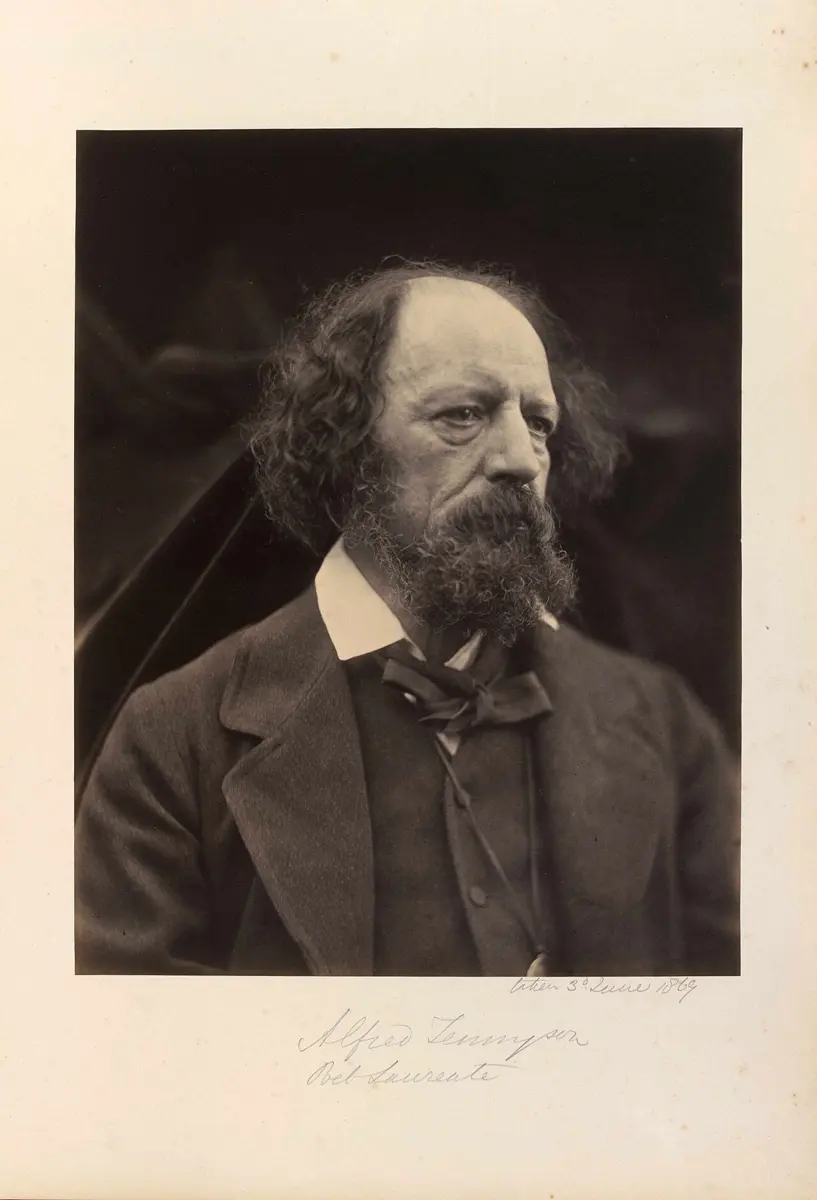
Crossing the Bar is a short poem by Alfred, Lord Tennyson (1809–1892), one of the best-known English poets. He wrote it in 1889, when he was eighty and had just recovered from a serious illness, and before he died he asked his son to put it at the end of every collection of his poems. So it is the poet’s farewell to life.
The whole poem is one extended metaphor: death is described as a ship leaving its harbor at evening and sailing out over the bar into the open sea.
What is “the bar”?
At the mouth of many harbors and rivers, the sea piles up a long ridge of sand under the water: a sandbar, or bar for short. A ship leaving the safe, calm harbor has to cross it to reach the open sea. At low tide it can run aground there, and when the sea is rough, the waves break over the bar with a loud, low roar, which the poet calls the moaning of the bar. At a full, high tide, though, the water covers the bar so deeply that a ship glides over it in silence. In the poem:
| In the poem | What it means |
|---|---|
| the harbor, “our bourne of Time and Place” | our life on earth, with its limits of time and place |
| the bar | the line between life and death |
| putting out to sea, embarking | dying, setting out on the last journey |
| the boundless deep | the endless unknown, after death, where the soul came from |
| sunset, evening star, twilight, evening bell, the dark | the end of the day: the end of life |
| the full, quiet tide | a calm, peaceful death |
| the Pilot | God, who guides the voyager |

The poem, stanza by stanza
The poem has four stanzas of four lines each (quatrains). In each, the second and fourth lines are short and set in, while the first and third are mostly longer, so the lines rise and fall like waves coming in and going out; and they rhyme ABAB (star–me–bar–sea).
Stanza 1: the call
It is sunset, and the evening star is out. The speaker hears one clear call for him: it is time to go. He hopes there will be no moaning of the bar when he sets out to sea: no roaring waves, and no crying and complaining by the people he leaves.
Stanza 2: the quiet tide
Instead he wants a tide so full that, though it moves, it seems asleep: too full to make any sound or foam. On such a tide he will return to the boundless deep he came from: the soul that came out of the endless unknown at birth now turns again home.
Stanza 3: no sad goodbyes
Twilight (the dim light after sunset) and the evening bell, and after them the dark: the end of the day, of life. He hopes there will be no sadness of farewell when he embarks (goes on board).
Stanza 4: the Pilot
Though the flood (the high tide) may carry him far beyond our bourne (boundary) of Time and Place, he hopes to see his Pilot face to face when he has crost (crossed) the bar. A real pilot comes on board only to steer a ship over the bar, and then leaves it; Tennyson’s Pilot has been guiding him unseen all along, and he hopes to see Him at last, face to face, once the bar is crossed. Tennyson himself explained that the Pilot is “that Divine and Unseen Who is always guiding us”: God.
Its mood is calm, gentle and hopeful. The poet doesn’t fear death: he sees it as going home, and asks those he leaves not to mourn.
Why does the speaker want a tide “too full for sound and foam”?
Pick an answer to see why.
What do “sunset”, “twilight” and “the dark” stand for in the poem?
Pick an answer to see why.
Words from the poem
| Word | Meaning here |
|---|---|
| moaning | a long, low sound of pain or complaint; here, the roar of waves on the bar |
| foam | the white bubbles on breaking waves |
| boundless | with no limit; endless |
| the deep | the sea (in poems) |
| twilight | the dim light just after the sun sets; dusk |
| farewell | goodbye |
| embark | to go on board a ship; to start a journey |
| tho’ | though (shortened for the poem’s rhythm) |
| bourne | (old word) a boundary or limit |
| flood | here, the tide coming in and rising high |
| crost | (old spelling) crossed |
| pilot | a sailor who guides ships in and out of a harbor |
A. Match the words
Match the words in column A with their meanings in column B.
- a.moaning — i. a boundary; a limit
- b.boundless — ii. though
- c.twilight — iii. go on board
- d.embark — iv. never-ending; infinite
- e.tho’ — v. complaining
- f.bourne — vi. crossed
- g.crost — vii. dusk
Answer
B. Complete the paraphrase
A paraphrase says the same thing in plain words.
Fill in the gaps with the words/phrases given below to complete the paraphrase of the poem.
the sandbar, return, the evening bell, floating, the sunset and evening star, on a tide, sad goodbyes, God
I notice ……… in the sky, and hear a sound calling for me loud and clear. I hope that ……… will not be disturbed when I go out to sea.
Instead, I want to be carried out ……… moving so slowly it seems almost asleep, and which is too swollen to make a sound. That’s what I want when I ……… home to the depths of the great unknown.
Twilight comes with ………, which will be followed by darkness. There don’t need to be any ……… when I go.
Even though I’ll be going far from this time and place, ……… on the tide of death, I hope to meet ………, who has been like my pilot in this journey, when I’ve made it across the bar.
Answer
C. Answer the questions
Where does the speaker have to go crossing the sandbar?
Answer
Why can’t the tide make a huge sound or create a lather?
Answer
What do the twilight and the evening bell suggest in the poem?
Answer
Where is the speaker going without accepting sad goodbyes?
Answer
Who is the only agent that helps the speaker to go far on his journey?
Answer
Does the speaker fear death? Why/Why not?
Answer
What does the pilot symbolize?
Answer
D. Life after death
The speaker tries to convey that finally good things remain with him before he sets off on his ultimate journey to the sea. ‘Sea’ is taken as something blank, unknown and as an unpredictable world after death. Do you believe in life after death? Discuss.
A model answer
Listening: a phone call about a funeral
In the listening, Tim phones his friend Heather to tell her that his father has died, and to talk about the funeral. CDC’s own recording is below (on CDC’s YouTube channel it is labelled Unit 5): read the words in A and the questions in B and C first, then listen, as many times as you need.
A. Before you listen
Guess the meanings of the words in bold in the sentences below before you listen.
- a.My mother took a half-day leave to attend the funeral of her close friend.
- b.Only the immediate family is invited to attend the viewing.
- c.At the funeral, the minister offered the eulogy on behalf of the family.
Answer
B. The textbook’s audio: answers
Tim’s father probably died ……… .
Pick an answer to see why.
Tim’s mother will manage by herself economically by ……… .
Pick an answer to see why.
Tim’s mother ……… .
Pick an answer to see why.
The private memorial service is on ……… .
Pick an answer to see why.
Tim asks Heather to ……… at the funeral.
Pick an answer to see why.
C. Short answers
Listen to the audio again and answer these questions in no more than four words.
- a.Why does Tim phone Heather?
- b.When will the viewing take place?
- c.Who will be giving the eulogy?
- d.What had Tim’s father wanted Heather to do just before he died?
Answer
These answers follow CDC’s teachers’ guide; those in B have been checked against the recording.
D. Extending condolences
How would you extend condolences after someone’s death?
A model answer
Practice listening alone
Grammar II: adverbs of frequency; subject–verb agreement
Adverbs of frequency
Adverbs of frequency say how often something happens. They go with the present simple, because it is the tense of habits:
always → usually → often → sometimes → occasionally → rarely / seldom → never
They are not exact numbers: often can mean six or eight times in ten. But their order never changes.
Where they go:
- before the main verb: Maria always eats cereal. They usually go fishing.
- after am, is, are, was, were: She is never late.
- after the first helping verb: I have never seen snow. You can always call me.
- Sometimes, usually and often can also start a sentence: Sometimes we walk home.
A. Choose the adverb
Complete the following sentences with the correct adverbs from the brackets.
- a.I see one or two movies every week. I ……… (often/never) go to the movies.
- b.I let my roommate borrow my car just once. I ……… (sometimes/rarely) let my roommate borrow my car.
- c.Maria eats cereal for breakfast seven days a week. Maria ……… (usually/always) eats cereal for breakfast.
- d.Four out of five visitors to the museum stay for three hours or longer. Museum visitors ……… (usually/seldom) stay for at least three hours.
- e.We occasionally have quizzes in history class. The teacher ……… (always/sometimes) gives quizzes in history class.
- f.Subina always misses the morning assembly. She ……… (rarely/never) arrives at school on time.
- g.In the desert, it rains only two days between May and September every year. It ……… (rarely/often) rains there in the summer.
- h.Rohit asks me to go to the winter camp, but I don’t accept his invitation. I ……… (seldom/often) go to the winter camp.
- i.Lisa and Samrat go out to dinner together at least three times a week. They ……… (usually/seldom) go out to dinner with each other.
Answer
Subject–verb agreement
A verb in the present (and was/were) must agree with its subject: a singular subject takes a singular verb (is, has, was, offers), a plural subject a plural verb (are, have, were, offer). That is easy when the subject sits right before the verb. These cases trick people:
| Case | Rule | Example |
|---|---|---|
| words between subject and verb | find the head noun; ignore phrases with of, with, in, a shelter for… | The list of names is on the door. Hamilton Family Center, a shelter for teenage runaways, offers many services. |
| one of + plural | the subject is one | One of my friends is a doctor. |
| two subjects joined by and | plural | Your friendship and your support have meant a lot. |
| either… or, neither… nor, or | the verb agrees with the nearer subject | Neither the professor nor his assistants were there. Neither the assistants nor the professor was there. |
| there is / there are | agrees with the noun after it | There was a card on the fridge. There were two cards. |
| the subject after the verb | find it, then agree | Discovered in the soil was a button. On the hill stand two temples. |
| each, every, everyone, nobody | singular | Each of the students has a book. |
| an amount taken as one whole | singular | Five hundred rupees is too much for a pen. |
Choose the correct verb: The box of old letters ……… under my grandmother’s bed.
Pick an answer to see why.
Choose the correct verb: Neither my brother nor my cousins ……… coming to the wedding.
Pick an answer to see why.
B. The correct alternative
Rewrite the following sentences with the correct alternatives from the brackets.
- a.Your friendship over the years and your support ……… (has/have) meant a great deal to us.
- b.Hamilton Family Center, a shelter for teenage runaways in San Francisco, ……… (offers/offer) a wide variety of services.
- c.One of the major sources of income of Trinidad ……… (is/are) tourism.
- d.The chances of your being promoted ……… (is/are) excellent.
- e.There ……… (was/were) a Pokémon card stuck to the refrigerator.
- f.Neither the professor nor his assistants ……… (was/were) able to attend the conference.
- g.Many hours at the driving range ……… (has/have) led us to design golf balls with GPS locators in them.
- h.Discovered in the soil of our city garden ……… (was/were) a button dating from the turn of the century.
Answer
Writing II: a reply with sympathy
In the email, Asmita Praja writes to her classmate Salina. She has had an accident and hurt her back, so she can’t come to class for two weeks and will miss the unit tests. She has told the principal and the class teacher. She has medicine for the pain, but must stay in bed, which makes reading hard; after a week she may be able to read and write a little in bed. She asks Salina a favor: could she record the lectures and class notes so that Asmita can listen at home? The principal has given permission. She will miss her friends and teachers, but sees it as a short setback (a problem that delays you for a while), and thanks Salina for understanding.
Read the email and write a reply to Asmita Praja. Express your sympathy and wish that she gets well soon.
Hint
A model reply
How to write a reply with sympathy
- To and Subject lines (the subject short and clear: Re: Can’t attend class or Get well soon!).
- Greeting: Dear Asmita,
- Sympathy first: I was so sorry to hear about…, It must be very painful…
- Answer every request in her email, clearly: what you will do and when.
- Encourage: Please don’t worry about…, It’s only a short setback.
- A wish: I hope you feel better soon. Get well soon!
- Closing: With love, / Best wishes, / Regards, and your name.
In your final exam, an email is a Free writing II task (about 200 words, 8 marks), marked on its content, organization, language and layout.
Project work
Types of sentence
Every sentence does one of four jobs, and its end mark usually shows which:
| Type | What it does | Ends with | Examples |
|---|---|---|---|
| declarative | makes a statement or gives an opinion | full stop . | My mother’s name is Laxmi. I’m not watching a football match now. |
| interrogative | asks a question; often begins with a wh- word or a helping verb | question mark ? | Why are you late today? Have you booked the hall for tomorrow’s program? |
| imperative | gives a command or makes a request; no subject (the subject is you, understood) | usually a full stop . | Complete the homework by tomorrow. Be polite to the customers. Don’t make a noise. |
| exclamatory | shows strong feeling: excitement, surprise, joy, anger | exclamation mark ! | Oh! I forgot about the meeting. Wow! I can’t believe it. |
What type of sentence is Please close the gate behind you.?
Pick an answer to see why.
What type of sentence is What a beautiful view of the Himalaya!?
Pick an answer to see why.
Name the type of each sentence, then change it as told.
- a.You water the plants every evening. (Make it imperative.)
- b.The poem is very beautiful. (Make it exclamatory with How.)
- c.Tennyson wrote it in 1889. (Make it interrogative with When.)
- d.Is the library open on Saturday? (Make it declarative.)
Answer
Exercise
Practice on this unit in the style of the final exam (Grade 9’s exam follows the SEE’s kind of chart). Try each one as in the exam, then open the answer.
Write True or False after each statement about the two readings.
- a.According to Sadhguru, some people have experienced death and come back to tell us about it.
- b.In his view, we fear death because we know too much about it.
- c.In Crossing the Bar, the speaker wants his friends to weep loudly when he dies.
- d.The speaker hopes for a quiet, full tide when he crosses the bar.
- e.The Pilot in the poem stands for God.
Answer
Change these sentences as instructed in brackets.
- a.Nirmala reads the newspaper every morning. (Make it negative.)
- b.The bus leaves at six. (Make a yes/no question.)
- c.They live in Janakpur. (Ask a question with Where.)
- d.My uncle has a shop in Butwal. (Make it negative.)
- e.Kushal always helps his mother in the kitchen. (Make it a question.)
- f.Tigers hunt at night. (Ask a question with When.)
Answer
Choose the correct answer for each numbered blank.
Every year, one of the biggest festivals in our town (a) ……… (is / are / be / were) Bisket Jatra. Thousands of people from all over the valley (b) ……… (comes / come / coming / has come) to watch. My grandfather (c) ……… (never / ever / not / no) misses it, though he is eighty. Neither my parents nor my sister (d) ……… (want / wants / wanting / were wanting) to stay at home on that day. There (e) ……… (is / are / was / be) always crowds of children near the chariot.
Answer
Write a message of condolence of about 100 words for a newspaper, from your school, using these clues.
Late Mr. Gopal Prasad Koirala (1952 – 2026) … retired science teacher of your school … passed away at Bir Hospital, Kathmandu … after a short illness … taught for 35 years … loved by students … started the school’s science club … heartfelt condolences
A model answer
Your friend Rabina has written to tell you that her family’s house was damaged in a flood, and that she is staying with relatives for a month. Write an email of about 200 words to her, expressing your sympathy and offering help.
A model answer
Practice every question in the book, and keep track of the ones you miss →
A companion to your textbook, not a replacement for it: study from the book your school uses, and where the two differ, follow your teacher. Found a mistake? Please tell us.