
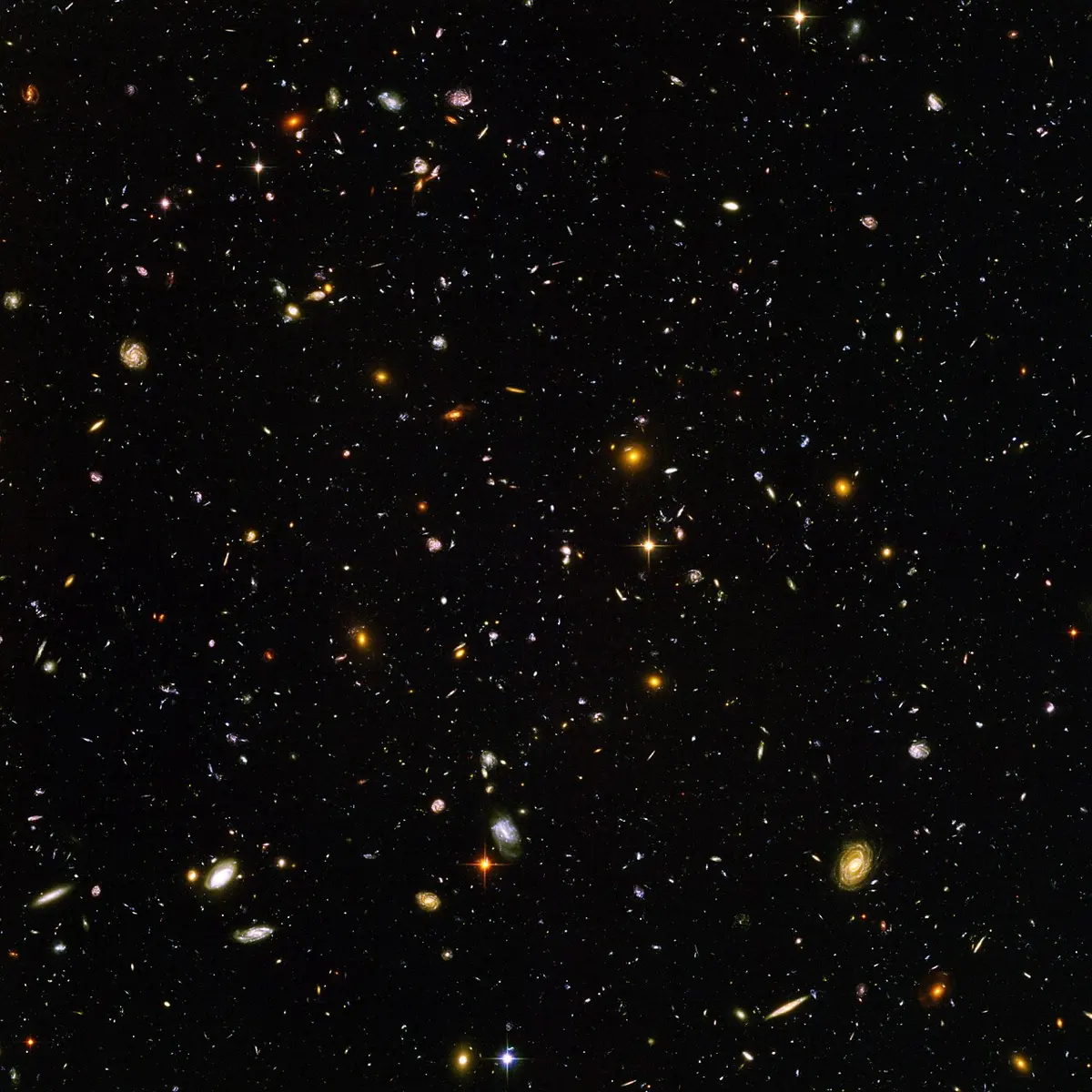
Pick up a pebble from the bed of the Bagmati. It may have been sand on a sea floor, squeezed under kilometers of mud, pushed up into the Himalaya, and washed down again by the monsoon. Now look up on a clear night. The Moon there is a ball of rock 384,400 km away, and the bright “star” low in the west after sunset may be Venus, a planet hotter than any oven.
This unit goes from the ground under your feet to the sky over your head. You will learn how rocks form and how we use them; meet the eight planets of the solar system; find out why the Moon changes shape every night, and how our calendar keeps the months of the Moon and the Sun together; and see what really happens in an eclipse.
Heavenly bodies
The Sun, the Moon, the Earth and the stars are all heavenly bodies (also called celestial bodies): natural objects in space. They are sorted into kinds such as stars (which make their own light, like the Sun), planets (which go round a star, like the Earth) and satellites (which go round a planet, like the Moon).
The Sun, together with the planets, their satellites, the asteroids and the comets that go round it, is called the solar system. The Earth is one of its planets, and the only place we know where anything lives. The outside of the Earth, and most of the inside too, is made of rock, with a thin layer of soil on top.
Scientists are still finding out how big the universe is, what it is made of, how it began, and how the solar system formed.
11.1 Rock
Look at the pebbles in a river bed, the stones of a temple’s steps, or a hillside where a road has been cut. These hard, solid materials of the Earth are rocks. Rocks are found both on the Earth’s surface and deep inside it.
A rock is a hard, natural solid made of one or more minerals. The minerals give each rock its own texture (how it feels), color and density (how heavy it is for its size). Granite, for example, is a mix of three minerals: gray glassy quartz, pink or white feldspar, and black shiny mica.
Soil is made from rock. Over thousands of years, rain, heat, cold and plant roots break rocks into smaller and smaller pieces, which mix with the remains of dead plants and animals. That is why soil always has bits of rock in it: rub some between your fingers and feel the sand.
Which of these is true of soil?
Pick an answer to see why.
Formation of rocks
How do rocks form in nature? Could a factory make one? (A factory can make something rock-like, such as concrete or a brick, but nature’s rocks form over thousands to millions of years, often deep underground, under heat and pressure no factory uses.)
Here is one way rocks form, and it is happening right now in every river. Rivers and waterfalls carry soil, sand, pebbles, and the dead bodies and parts of plants and animals. Where the water slows down, at the bottom of a lake or the sea, these materials settle as a layer of sediment. Every year a new layer settles on top. The layers below are pressed by the weight above them, the water is squeezed out, and minerals dissolved in the water glue the grains together. After a very long time, the lowest layers have hardened into rock.
Rocks are not all alike:
- some are hard, some soft;
- they come in many colors;
- some have fine (tiny) grains, some coarse (large) grains;
- some have a rough surface, some a smooth one;
- some break into thin flakes or sheets when hit with a hammer, and some break into lumps.
Three types of rock
By how they formed, together with their hardness, color, layers (strata) and texture, rocks are divided into three main types:
- Igneous rock, formed when hot molten rock cools and hardens;
- Sedimentary rock, formed from layers of sediment pressed together;
- Metamorphic rock, formed when a rock is changed by heat and pressure deep underground.
1. Igneous rock
Deep inside the Earth it is so hot that rock can melt. Molten rock, with gases dissolved in it, is called magma. When magma reaches the surface, in a volcano, it is called lava. When magma or lava cools, it hardens into igneous rock (from the Latin ignis, fire).
Magma can cool in two places:
- inside the Earth, deep underground, very slowly, over thousands of years. Its minerals have time to grow into large crystals you can see. Granite forms this way.
- on the surface, as lava from a volcano, quickly, in days or even minutes. Its crystals have no time to grow, so they are tiny, or there are none at all. Pumice and obsidian form this way.
When the Earth was young, its whole surface was molten. As it cooled, the first solid crust was igneous rock. So igneous rocks are the oldest type of rock, the first to form, and the other types were later made from them. That is why they are also called primary rocks. But they are still forming today, wherever a volcano erupts.
Some important igneous rocks
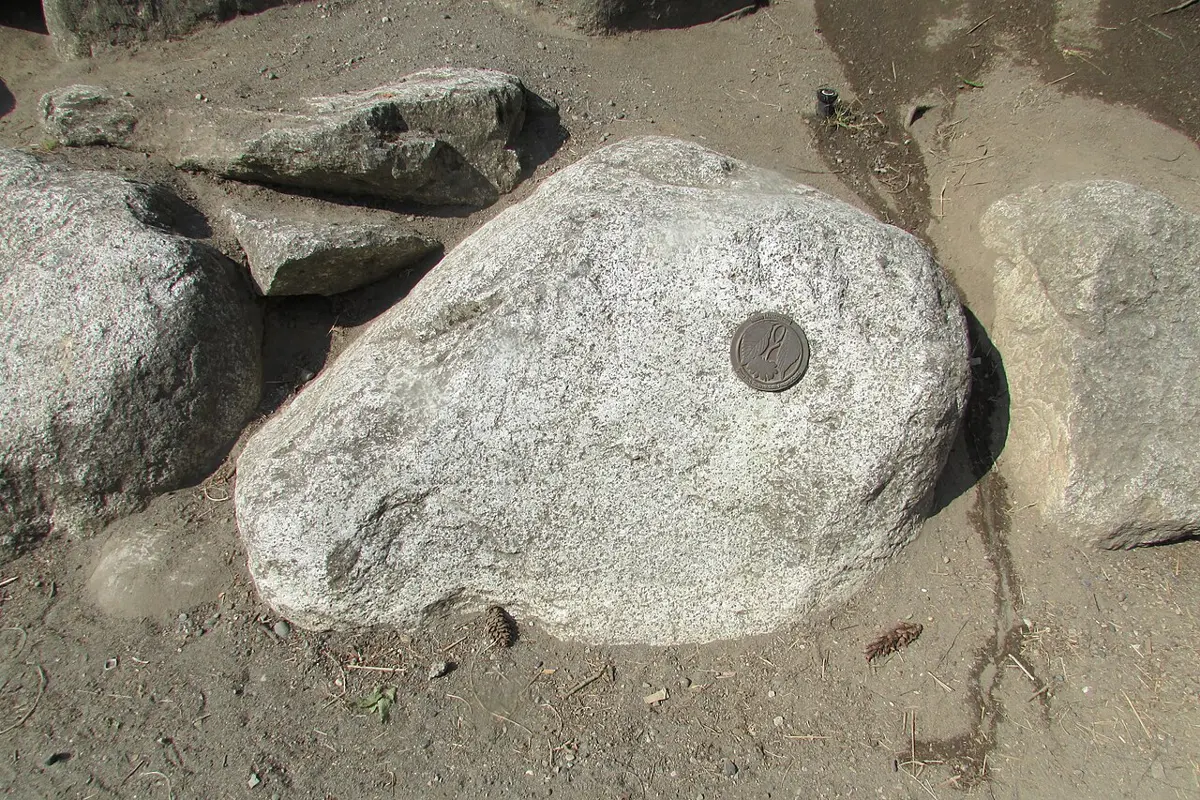
a. Granite. A hard, strong rock with a speckled look: mostly white, gray or pink, with black specks. Its grains are large crystals you can see (quartz, feldspar and mica), because it cooled slowly deep underground. Polished, it is smooth and beautiful, so it is used for the floors of rooms and passages, staircases, kitchen tops, roads, and monuments and historic buildings.
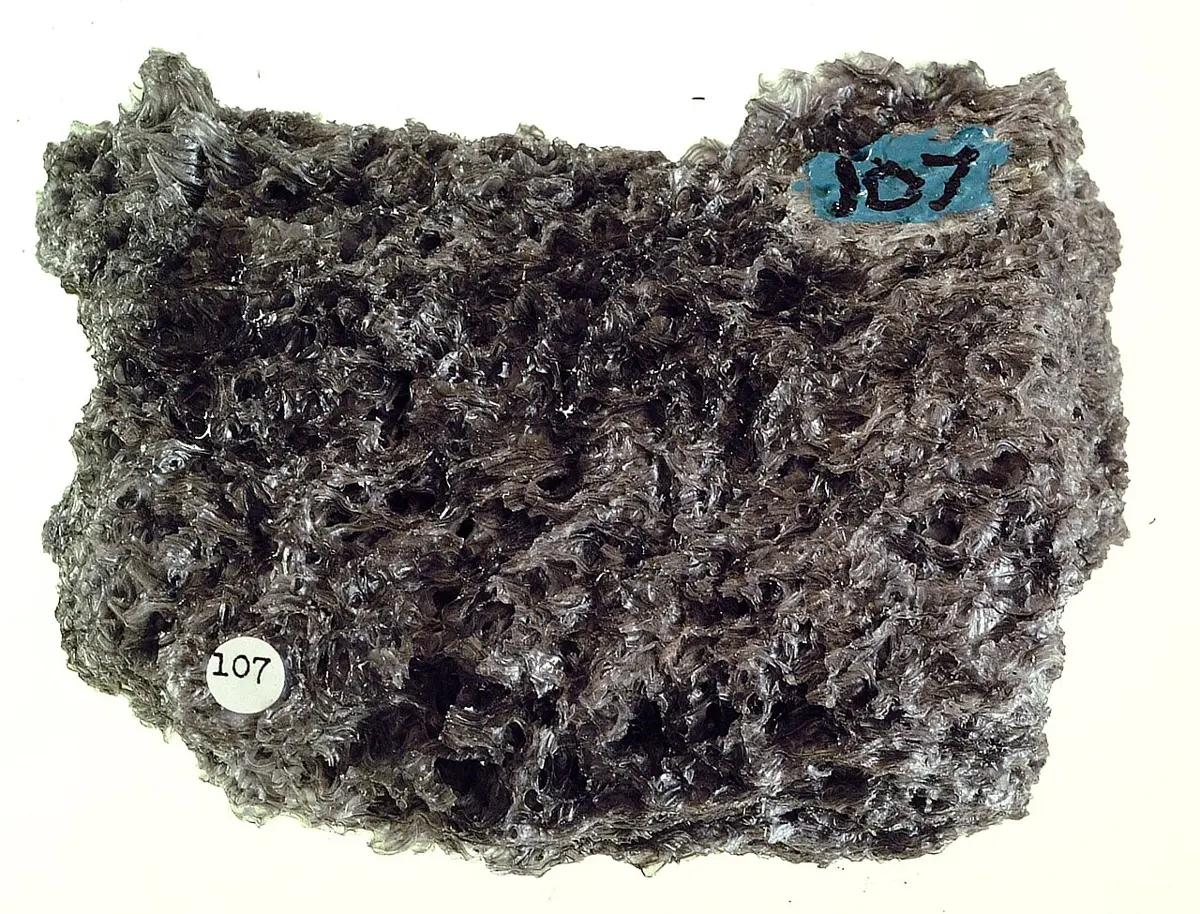
b. Pumice. A light rock full of holes, like a sponge. When gassy lava is thrown out of a volcano, the gas makes bubbles in it (like the bubbles in a fizzy drink when you open the bottle), and the lava hardens before they can escape. Pumice is so full of air that many pieces float on water. It is used to scrub hard skin off the feet.
c. Obsidian. Also a volcanic igneous rock, formed on the Earth’s surface during an eruption. Its lava cooled so quickly that crystals had no time to grow, so obsidian is a natural glass: smooth, shiny, and usually black. It breaks with curved, razor-sharp edges, and Stone Age people made knives and arrowheads from it.
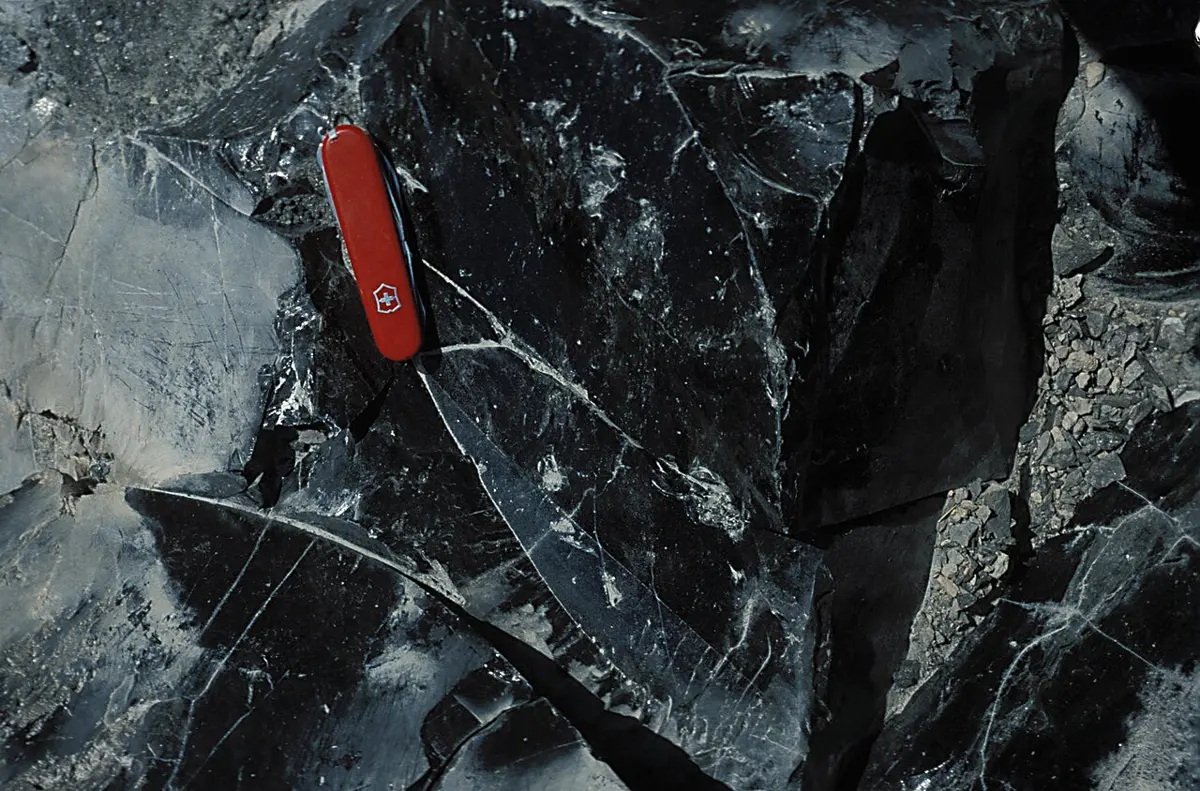
Granite has large crystals, but obsidian has almost none. Why?
Pick an answer to see why.
2. Sedimentary rock
Rocks on the Earth’s surface are slowly broken up by water, air and the Sun. Heat by day and cold by night crack them; water freezes in the cracks and pushes them apart; rain dissolves some minerals. This breaking up is called weathering. Then flowing water and wind carry the pieces away, which is called erosion. The pieces are dropped at the bottom of rivers, lakes and seas, where they settle as sediment. Every year more settles on top, and the weight of the layers above presses the grains together, while dissolved minerals cement them. The rock formed this way is called sedimentary rock.
Because it forms in layers, a sedimentary rock usually shows layers (strata), like the pages of a closed book. And the dead plants and animals buried in the sediment can be preserved as fossils. That makes sedimentary rocks the record of the Earth’s history: by reading their layers and fossils, scientists learn how the Earth and its living things have changed.
Some important sedimentary rocks
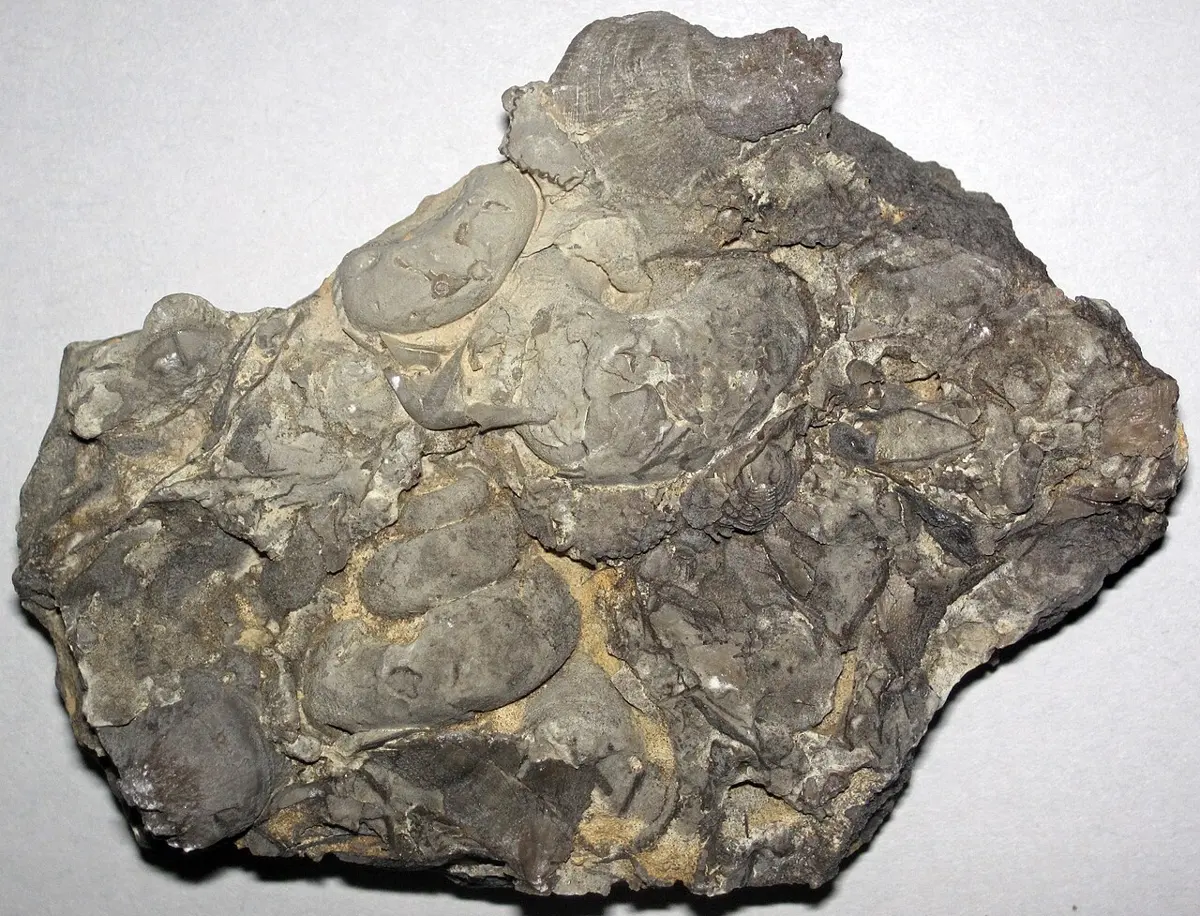
a. Limestone. Sea animals such as shellfish and corals build hard shells and skeletons. When they die, these settle on the sea floor and pile up in layers; pressed by the layers above, they become limestone. It has fine grains and comes in many colors, white, gray, cream, brown, red and even black. Limestone is mostly calcium carbonate, the same substance as chalk and sea shells, so it fizzes when a drop of acid falls on it. It is the main raw material for cement and lime.
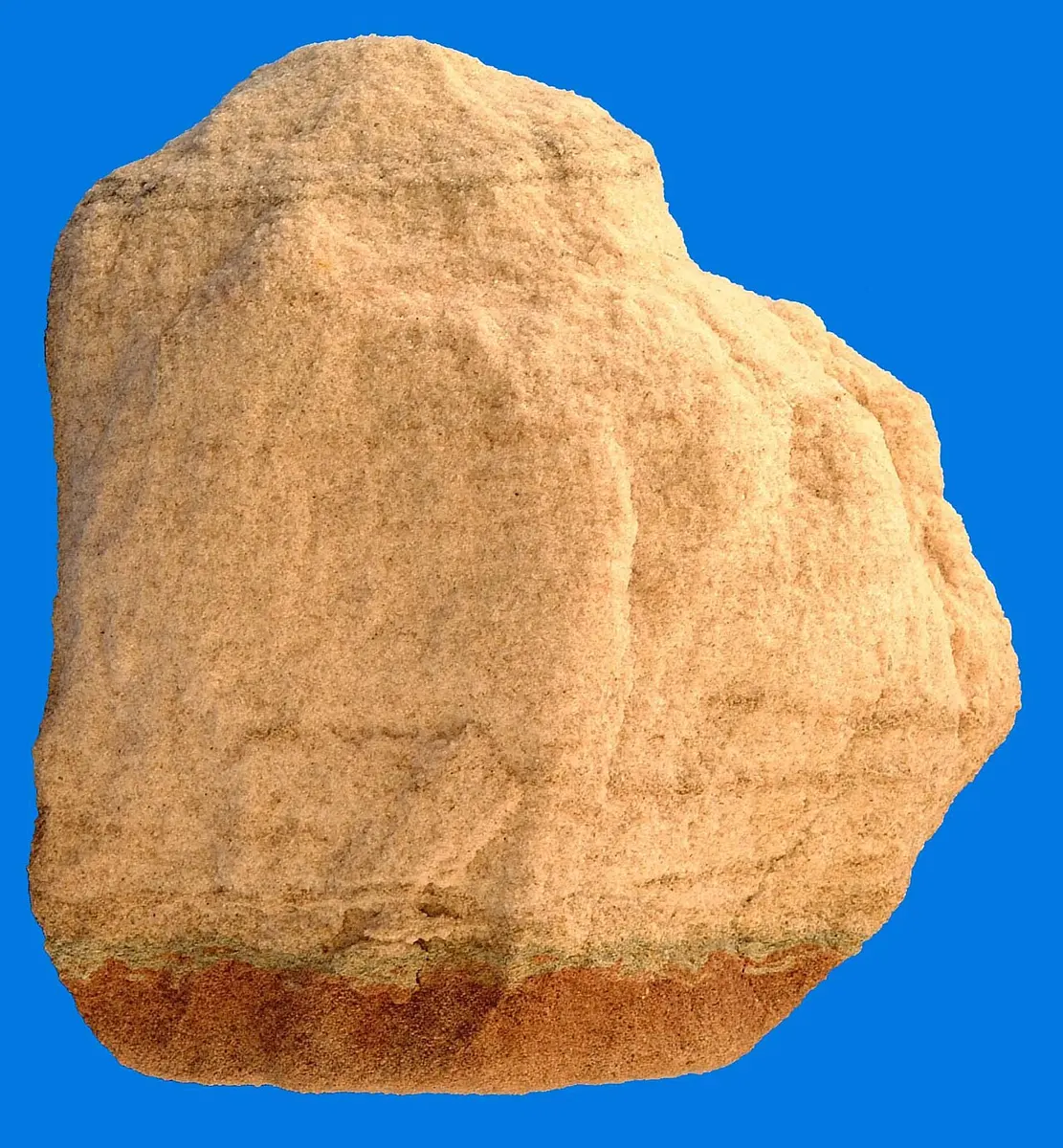
b. Sandstone. Grains of sand (mostly of the minerals quartz and feldspar) cemented together by natural glues such as silica, clay or calcite form sandstone. You can feel the sand grains when you rub it, and a few may rub off on your hand.
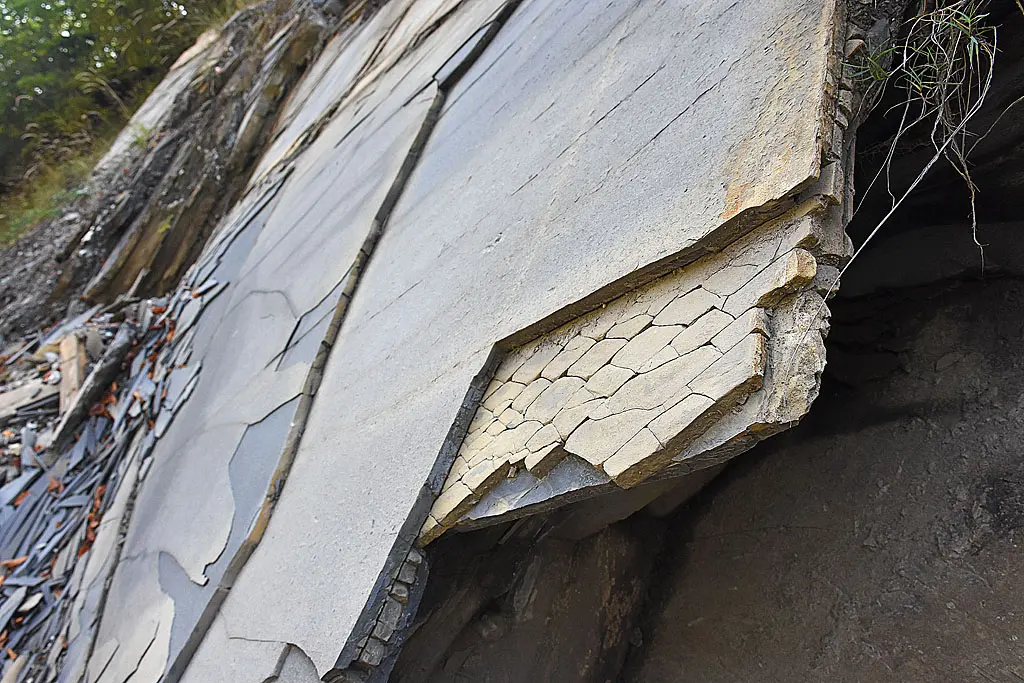
c. Shale. Grains smaller than sand are called silt, and grains even smaller than silt make clay. The rock made of fine silt and clay is shale. It is usually dark gray or black, softer than most rocks, and splits easily into thin sheets.
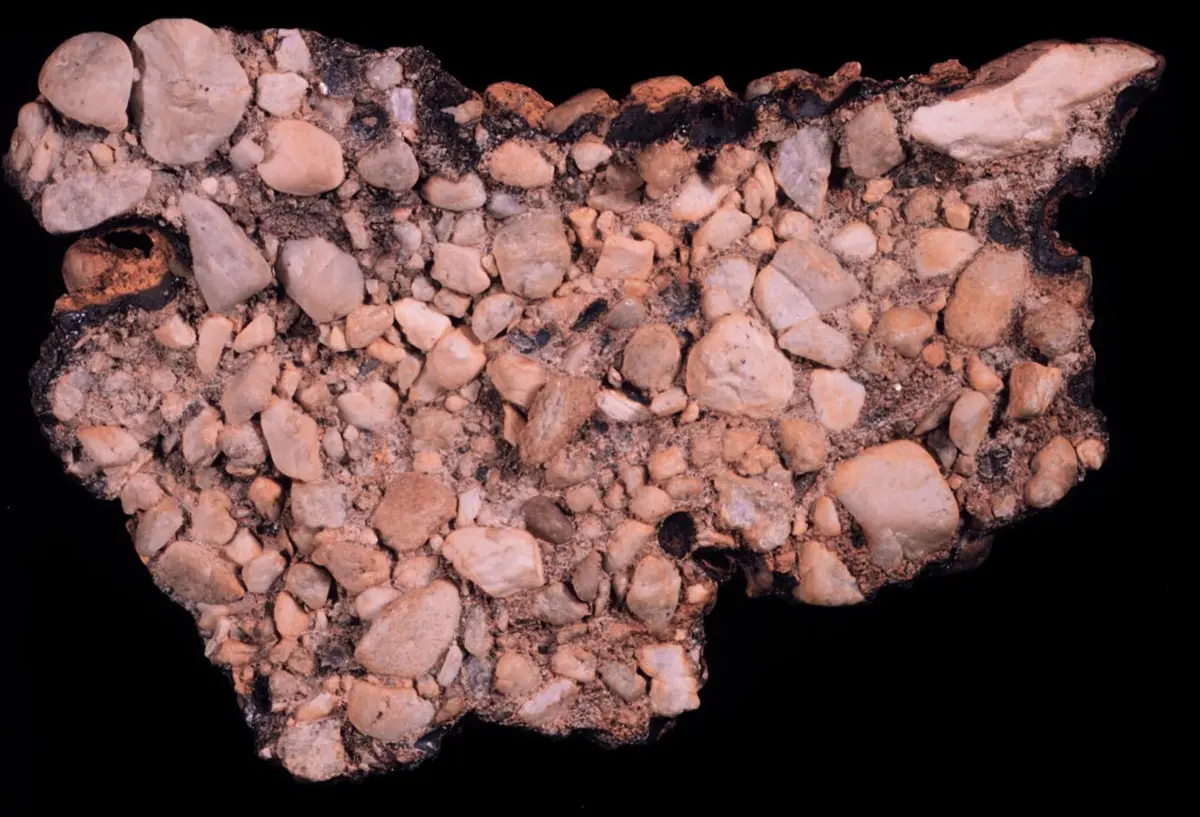
d. Conglomerate. Rounded pebbles, gravel and sand stuck together by natural cement make conglomerate. It looks like a concrete wall full of pebbles. In Nepali it is called sangutika (सङ्गुटिका), or kankad (कङ्कड) rock.
Rajan finds a stone with a fossil shell in it, on a hillside in Mustang. What type of rock is it most likely to be?
Pick an answer to see why.
3. Metamorphic rock
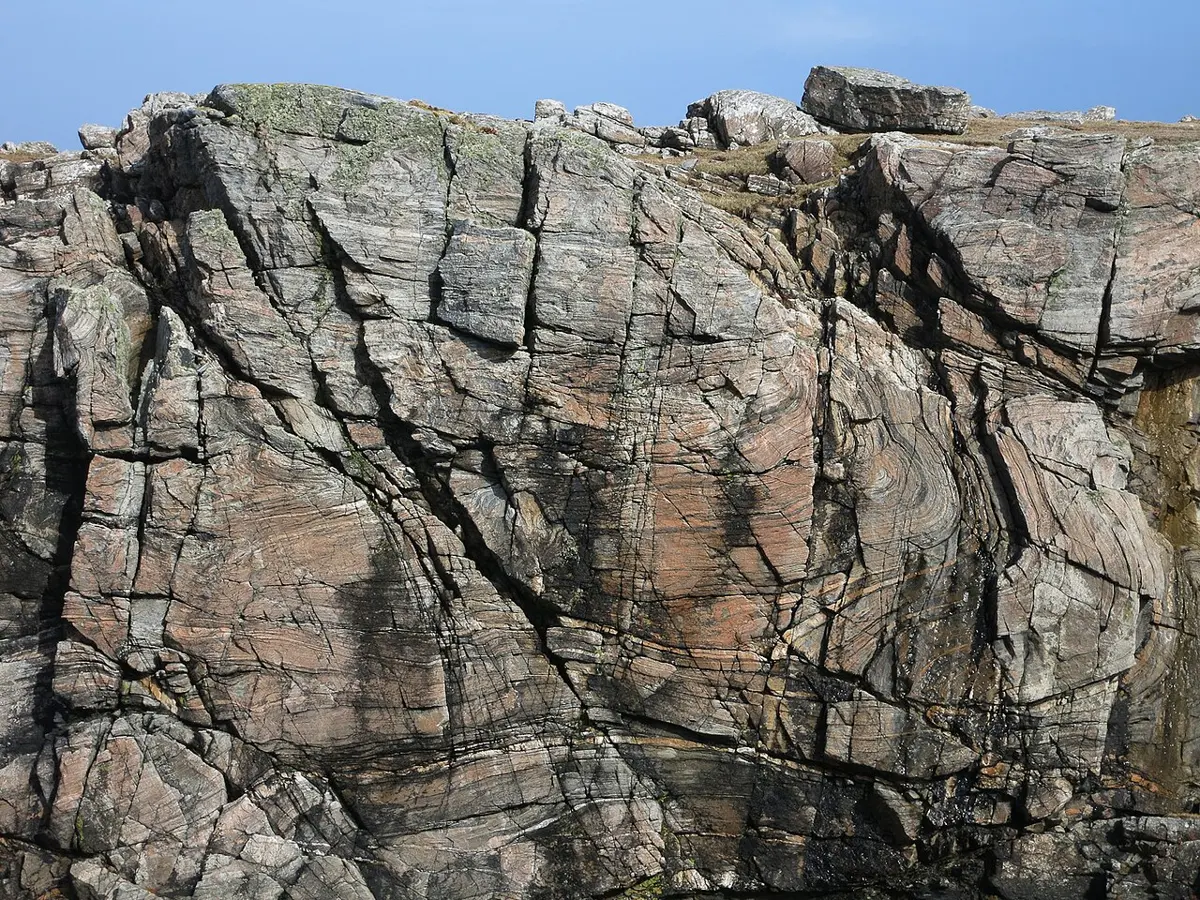
Rocks that get buried deep inside the Earth, as mountains are pushed up or as layer upon layer piles on top, are put under great pressure and heat for a long time. They don’t melt, but they change: their minerals rearrange and new minerals grow, partly or completely. The rock’s physical form, and often its chemical make-up, changes. A rock formed by changing one kind of rock into another, in this way, is a metamorphic rock (Greek meta, change, and morphe, form). Igneous, sedimentary and even other metamorphic rocks can all be changed. Metamorphic rocks form only inside the Earth.
Each metamorphic rock comes from a parent rock:
| Parent rock | Metamorphic rock |
|---|---|
| sandstone | quartzite |
| limestone | marble |
| coal | graphite |
| mudstone or shale | slate, then schist with more heat and pressure |
| graphite | diamond |
| granite, diorite | gneiss |
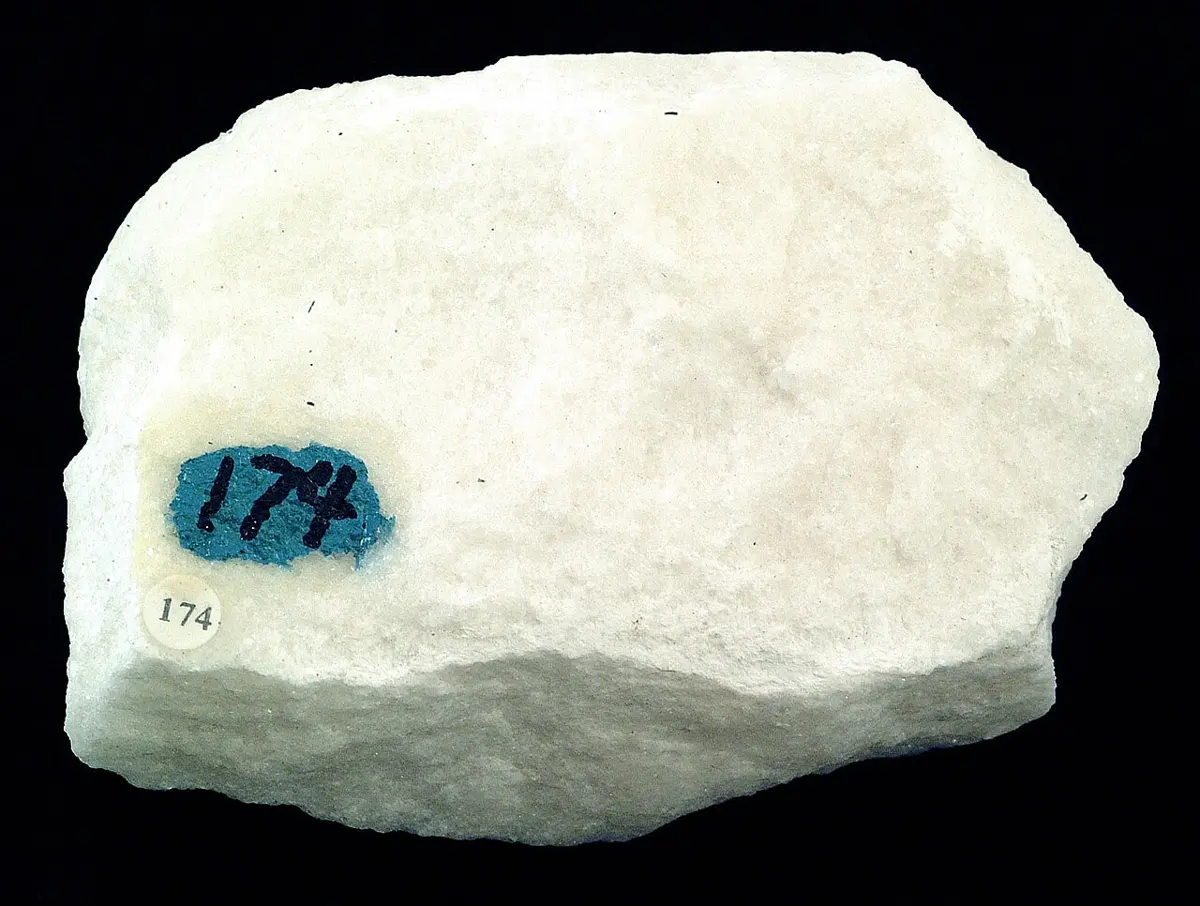
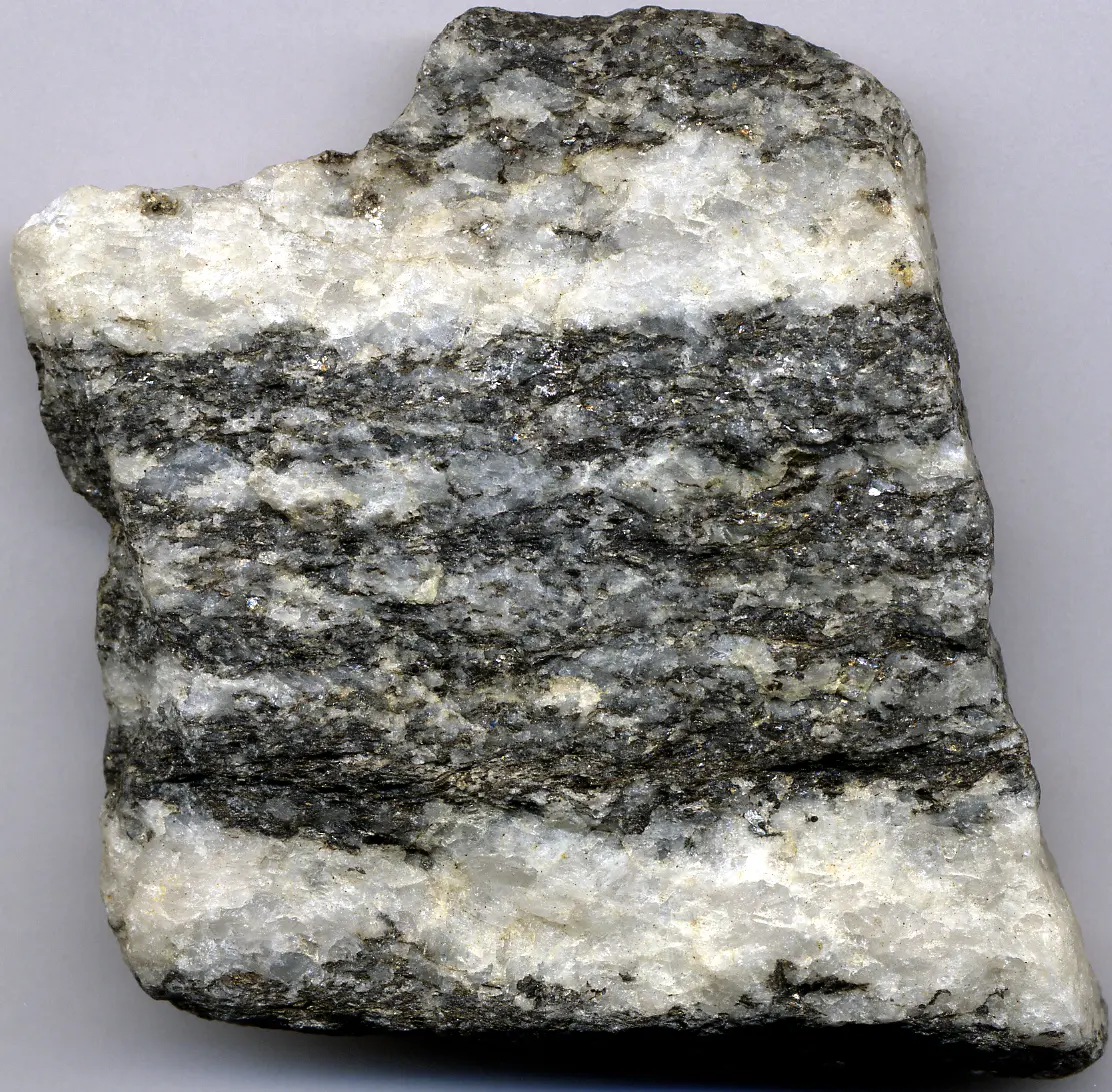
Which pair shows a parent rock and the metamorphic rock it becomes?
Pick an answer to see why.
Importance of rocks
Rocks are found everywhere, on the Earth’s surface and inside it, and we use them for many purposes:
- a.To build houses and other buildings, walls and roads.
- b.To carve monuments and statues: Patan’s Krishna Mandir is built entirely of stone.
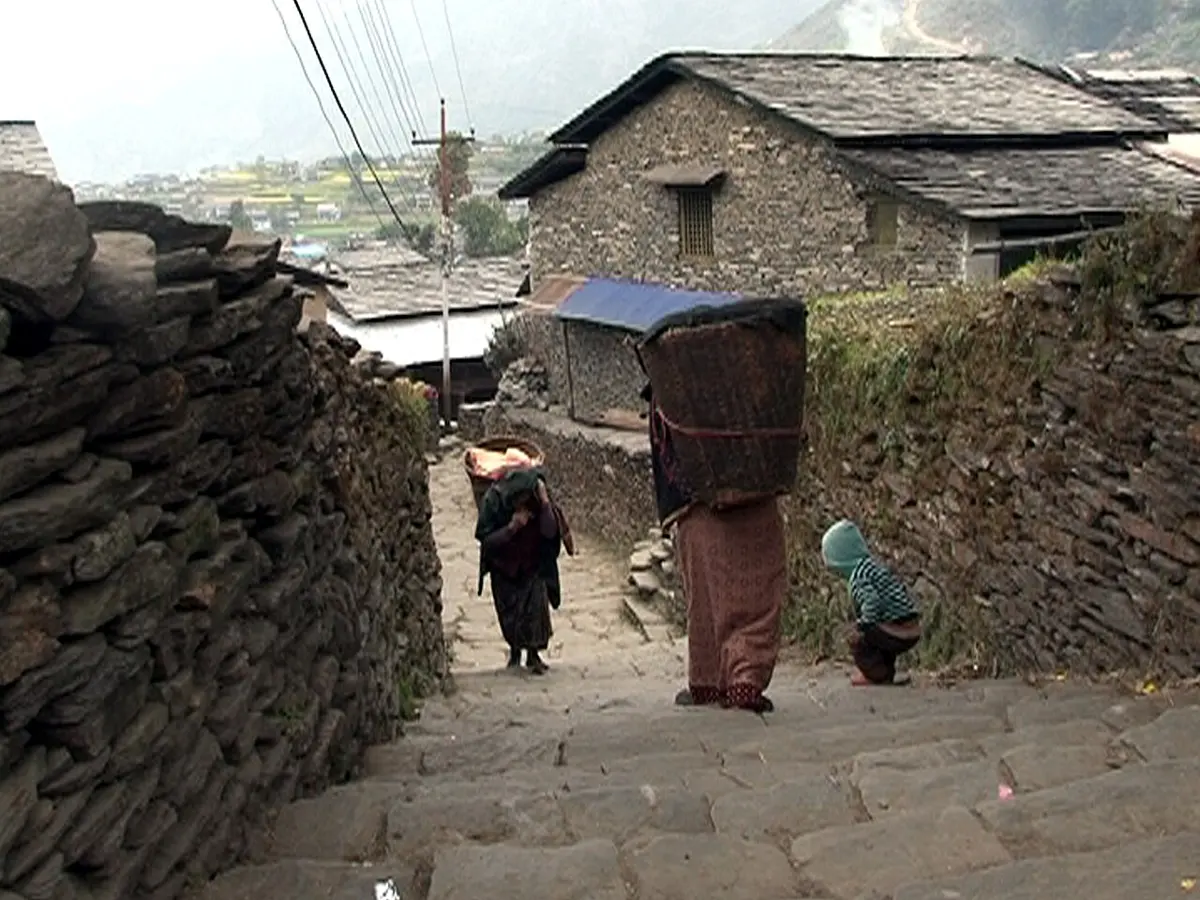
- c.To roof houses and temples: slate roofs are common in the hills.
- d.To decorate buildings and temples: many kinds of marble.
- e.In traditional tools at home: the jaanto (जाँतो, a hand mill for grinding grain), okhal (ओखल, a mortar), and the silauto and lohoro (सिलौटो र लोहोरो, a grinding slab and stone for spices).
- f.As gems: precious stones are cut from minerals found in rocks.
- g.To make cement and lime, from limestone.
- h.To study the origin and history of the Earth, from the layers and fossils in them.
Some main rocks of Nepal
| Rock | Where it is found | Uses |
|---|---|---|
| conglomerate (sangutika) | rivers and river banks | building houses |
| sandstone | rivers and river banks | building and decoration |
| quartzite and other hard silica-rich stones | rivers and river banks | jaanto, lohoro, silauto, millstones |
| limestone | Godawari, Bhainse, Chobhar, Udayapur, Jogimara | making lime and cement |
| marble | Godawari | floors of houses, buildings and temples |
| slate | Bandipur (Tanahun), Lalitpur | roofing houses, and writing slates |
Exercise (11.1 Rock)
1. Fill in the blanks
Use these words: staircase, roof, igneous, sedimentary, remnant, limestone.
Sedimentary, …… and metamorphic are the three types of rock.
Answer
Sedimentary rocks may have …… of living beings.
Answer
We use …… to make cement.
Answer
Layers of material broken from other rocks form …… rocks.
Answer
Granite is used mainly in building a ……
Answer
2. Choose the correct answer
a. Which of these is a metamorphic rock?
Pick an answer to see why.
b. Which rock is used to roof houses?
Pick an answer to see why.
c. What type of rock is marble?
Pick an answer to see why.
d. What is the parent rock of quartzite?
Pick an answer to see why.
e. Which rock forms from lava?
Pick an answer to see why.
f. Read the statement and the two arguments, and choose the right option.
Statement: Igneous rock is formed when magma cools, inside the Earth or at its surface.
Argument 1: Shale, a rock made of silt and clay, is an igneous rock.
Argument 2: Igneous rock is the oldest type of rock.
Pick an answer to see why.
g. Which list gives an igneous, a metamorphic and a sedimentary rock, in that order?
Pick an answer to see why.
h. Which list gives the metamorphic forms of graphite, limestone and sandstone, in that order?
Pick an answer to see why.
3. Write the differences
Sedimentary rock and igneous rock
Answer
Marble and limestone
Answer
4. Put the rocks in the table
Put these rocks in the right column: granite, sandstone, pumice, diamond, shale, marble, obsidian, conglomerate, schist.
Answer
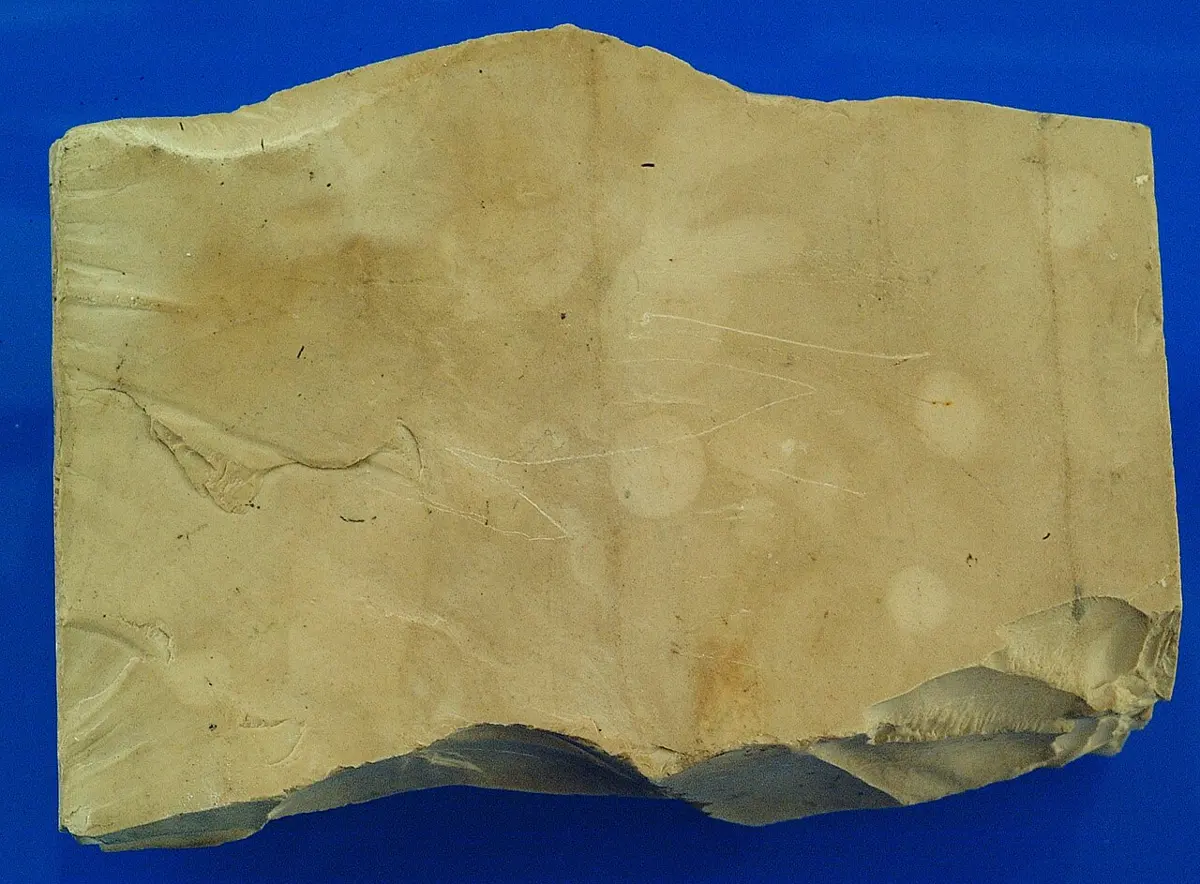
5. Name the rocks in the photos
Name each rock and its type, and write its main characteristic and main use.
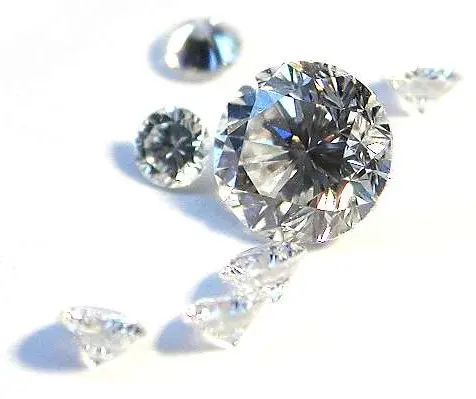
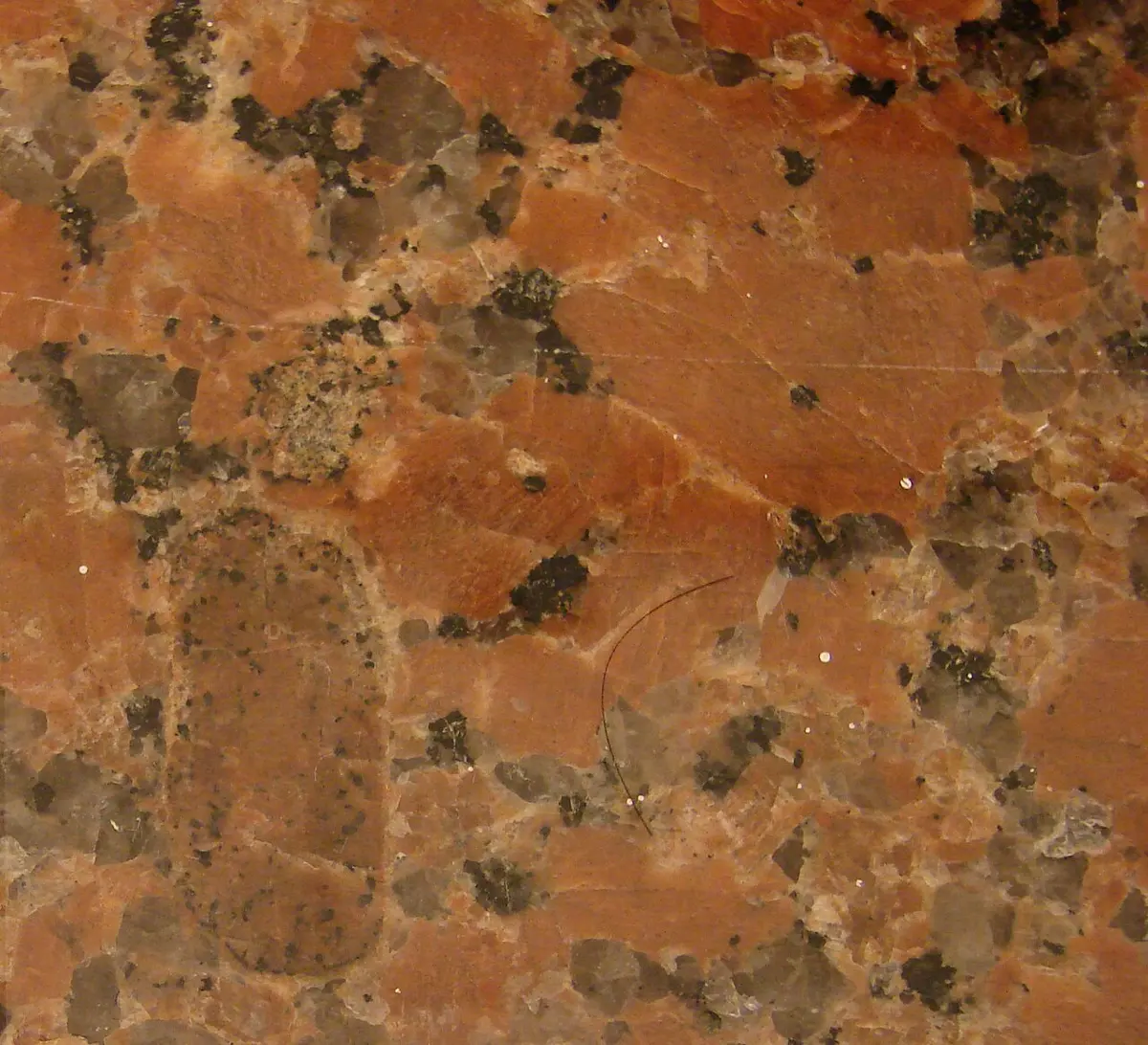
Answer
6. Answer the following questions
What is the Earth made of?
Answer
What is a rock?
Answer
For what purposes are sedimentary rocks used in your area?
Answer
Describe in short how rocks form.
Answer
What type of rocks are granite, pumice and obsidian? For what purposes are they used?
Answer
Name any four rocks found in Nepal. Give each one’s composition, one characteristic and one use.
Answer
Name the rock in the photo, and write one characteristic and one use of it.
Answer
11.2 Planets
The Sun is one star among billions in our galaxy, and our galaxy is one among billions in the universe. It is the star closest to the Earth, 150 million km away. That is why it looks far bigger and brighter than any other star; the next nearest star is about 270,000 times farther away.
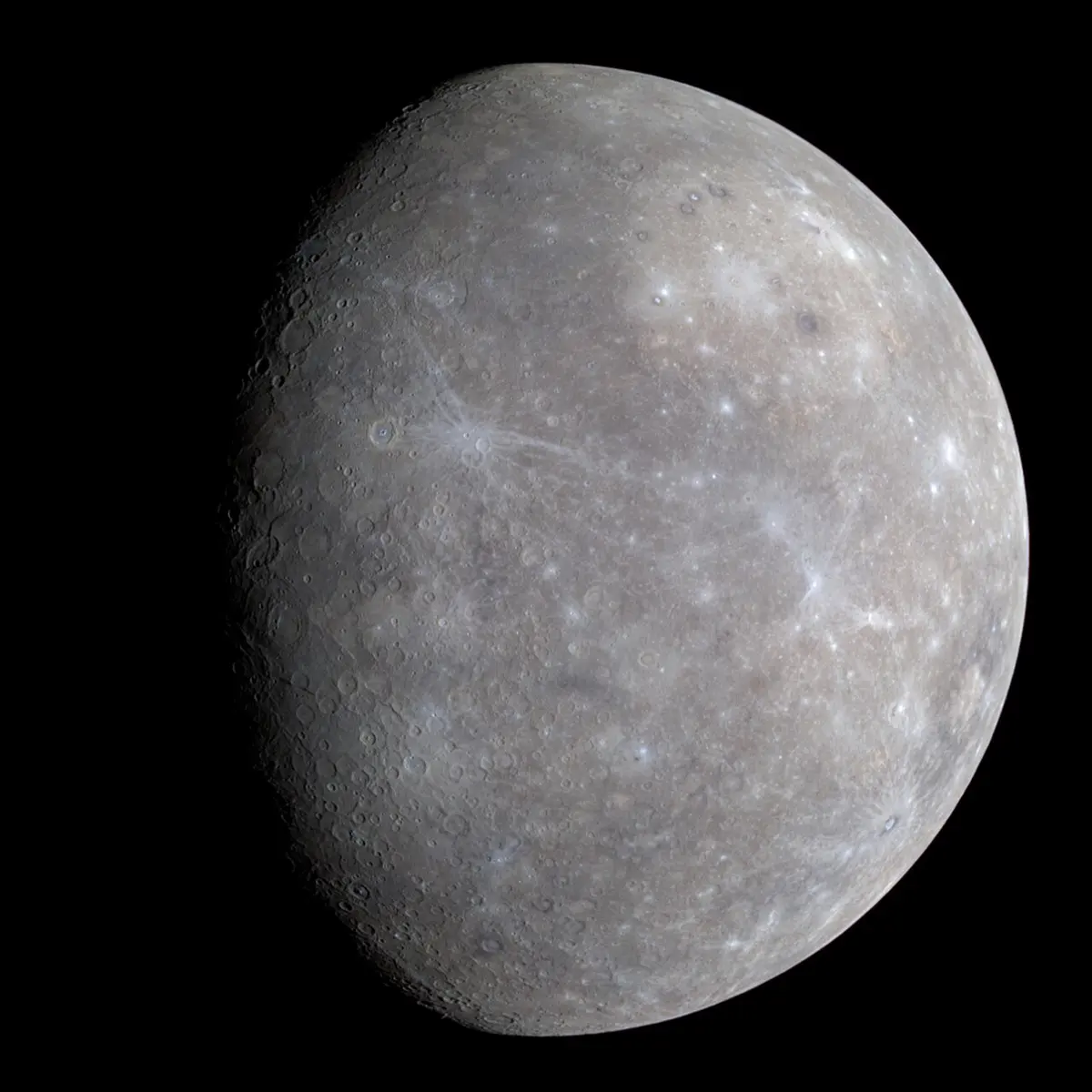
Planets: NASA (Mercury: MESSENGER; Venus: Mariner 10, processed by Ricardo Nunes; Earth: Apollo 17;
Mars: Viking, USGS; Jupiter: Hubble, with ESA and A. Simon; Saturn: Cassini, JPL/Space Science Institute;
Uranus and Neptune: Voyager 2), public domain
The Sun: NASA/SDO and the HMI science team, public domain
Solar system
The solar system is the Sun together with all the heavenly bodies that go round it: the planets and their satellites, the dwarf planets, the asteroids, the comets, and the meteoroids (small bits of rock that, when they burn up in our air, we see as meteors or “shooting stars”, and that, when they reach the ground, are called meteorites).
Planets are the big heavenly bodies of the solar system that go round (revolve round) the Sun. Planets are non-luminous: they make no light of their own, and shine only because they reflect sunlight. There are eight planets in the solar system.
Planets: NASA (Mercury: MESSENGER; Venus: Mariner 10, processed by Ricardo Nunes; Earth: Apollo 17; Mars: Viking, USGS;
Jupiter: Hubble, with ESA and A. Simon; Saturn: Cassini, JPL/Space Science Institute; Uranus and Neptune: Voyager 2), public domain
The Sun: NASA/SDO and the HMI science team, public domain
The eight planets
a. Mercury. The smallest planet, and the closest to the Sun. It is scorching by day, about 430 °C, hot enough to melt lead, but with almost no air to hold the heat, its nights fall to −180 °C. It has no satellite and almost no atmosphere. It is also the fastest planet round the Sun: its year is only 88 days.
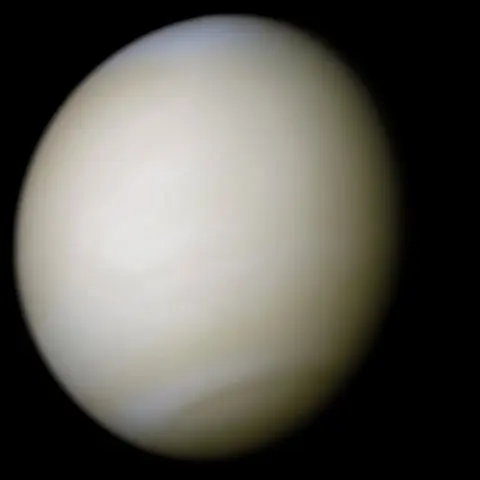
b. Venus. The second planet from the Sun, and the hottest and brightest planet. It is about the same size as the Earth, so it is called the Earth’s twin. Of all the planets, it comes closest to the Earth. It has no satellite. Venus is so bright that it is often the first “star” to appear in the west after sunset, or the last to fade in the east before sunrise: it is called the morning star and the evening star (it is a planet, not a star).
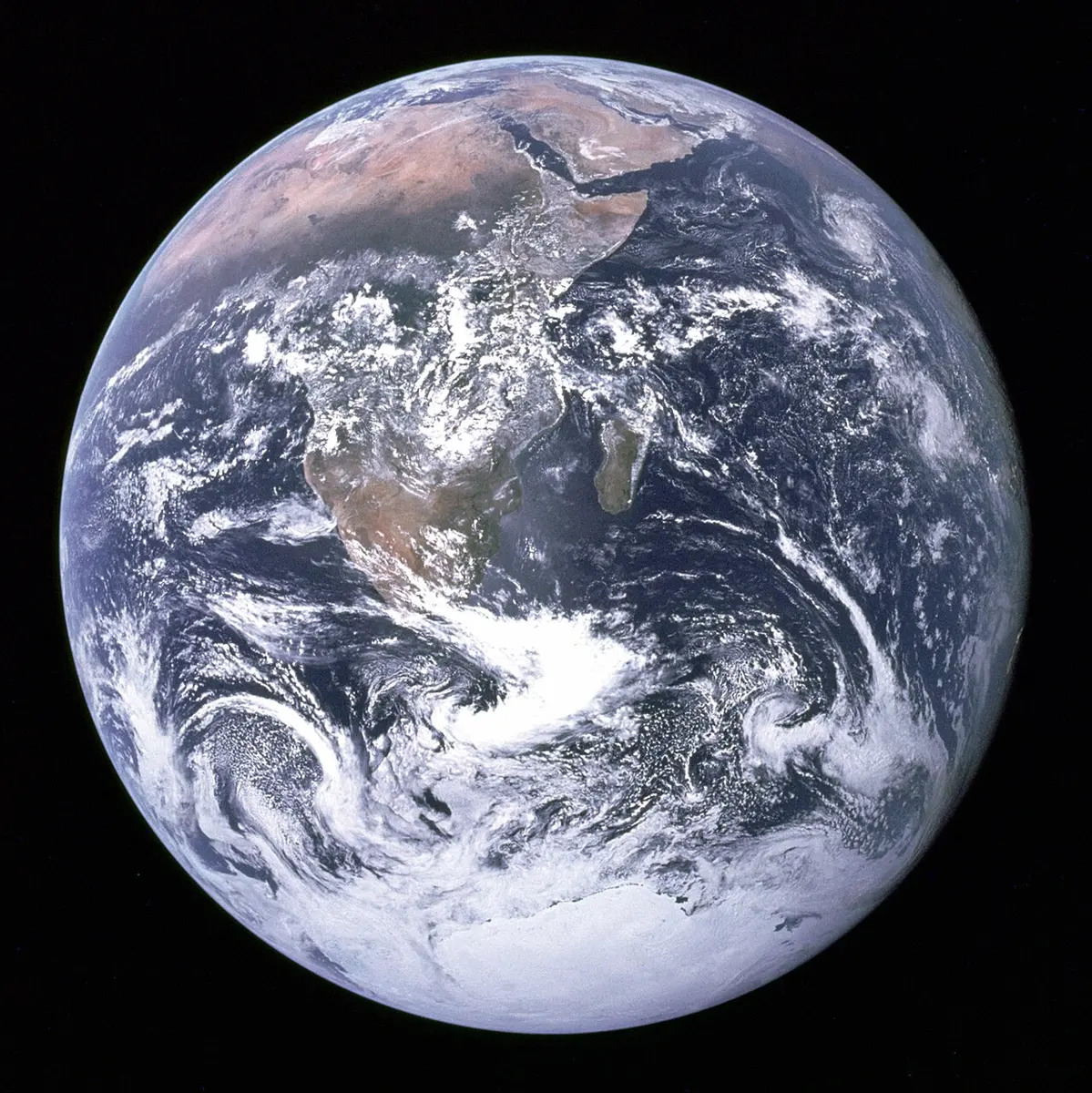
c. Earth. The third planet from the Sun, and the only one known to have all the conditions life needs: liquid water, air with oxygen, and a temperature that is neither too hot nor too cold. It has one natural satellite, the Moon. The planet that comes closest to it is Venus.
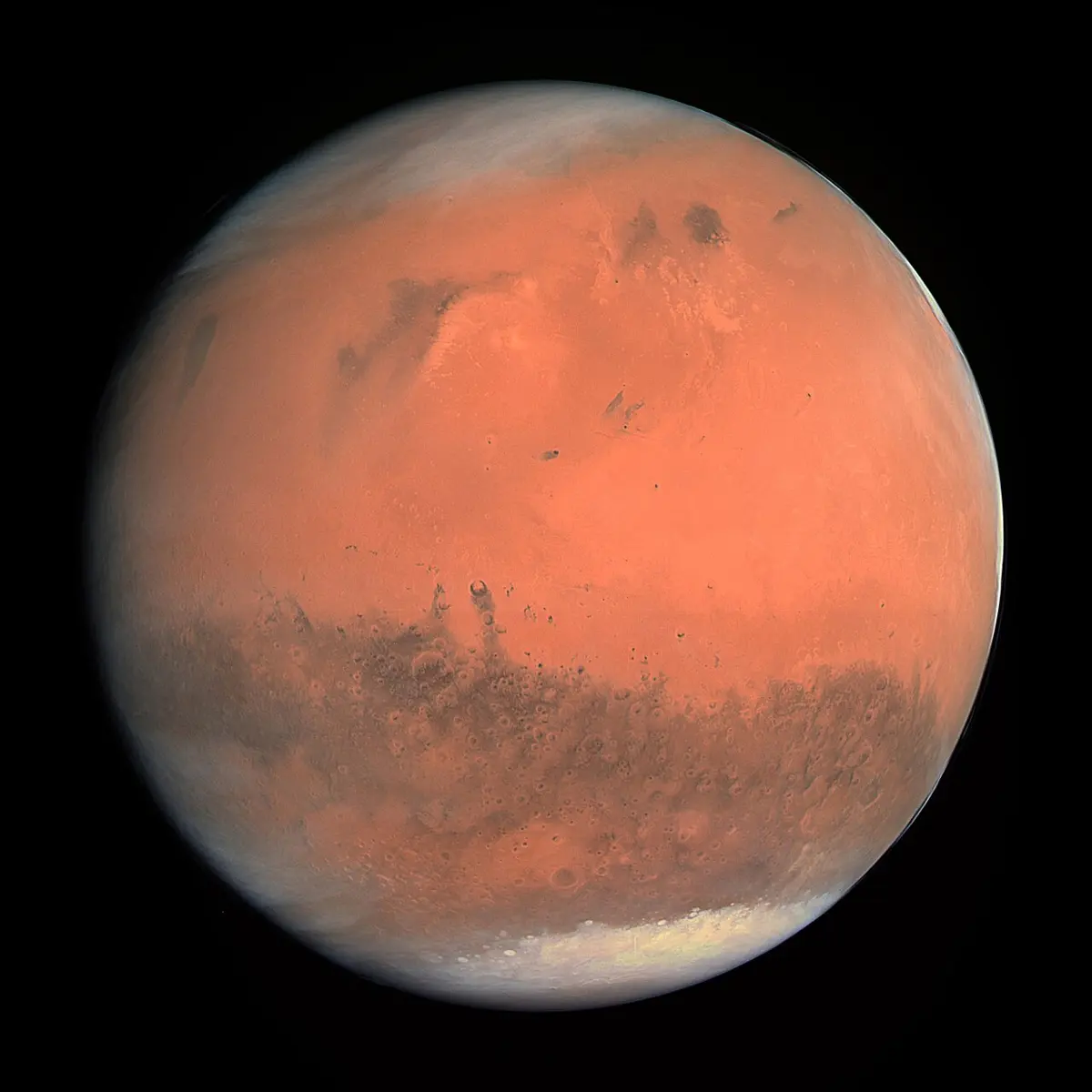
d. Mars. The fourth planet from the Sun, called the red planet: its dust is rich in iron oxide, which is rust. It is a cold desert with a thin air of carbon dioxide, ice at its poles, and Olympus Mons, the biggest volcano in the solar system, two and a half times as high as Everest. It has two small satellites, Phobos and Deimos. Mars is the planet most like the Earth: its day is only about 40 minutes longer than ours, and it has seasons. Robot rovers are exploring it to find out whether simple life ever lived there.
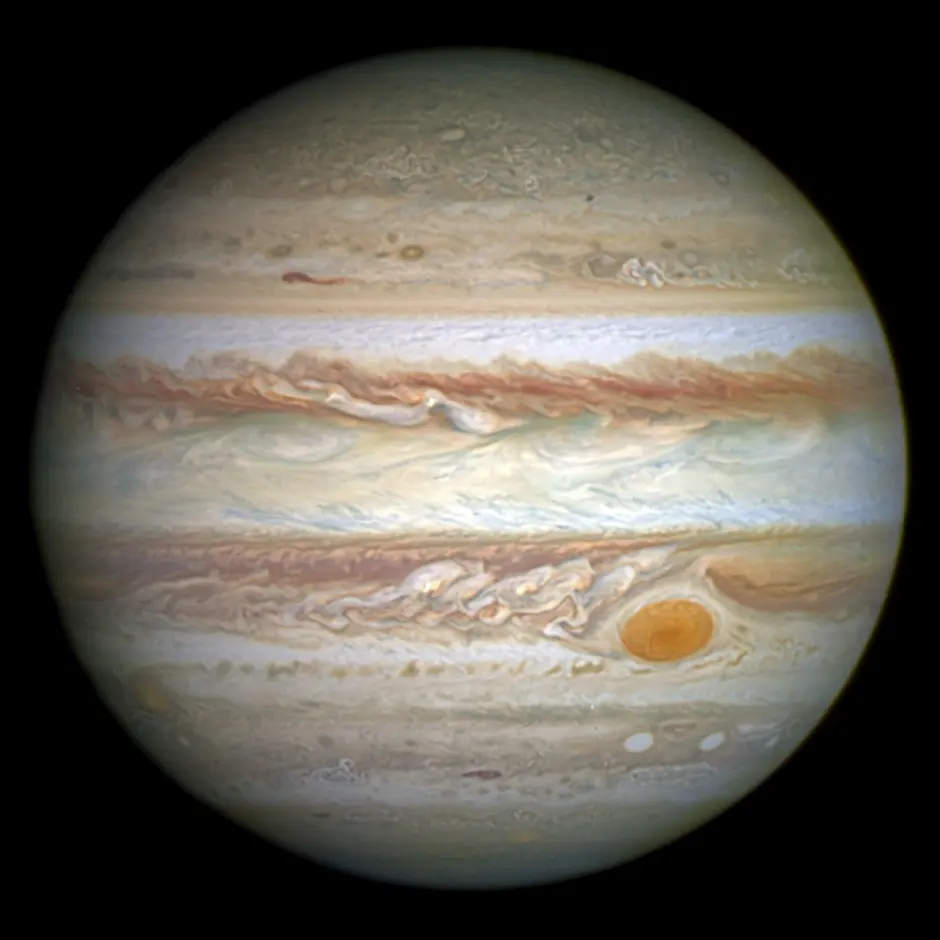
e. Jupiter. The largest planet, the fifth from the Sun, called the king of the planets: more than 1,300 Earths would fit inside it. It is a gas giant, made mostly of hydrogen and helium, and we see only the tops of its clouds, in colored stripes. The Great Red Spot on it is a storm bigger than the Earth that has been raging for at least 190 years. Jupiter spins faster than any other planet: its day is under 10 hours. It has about 100 known satellites (101 as of 2026).
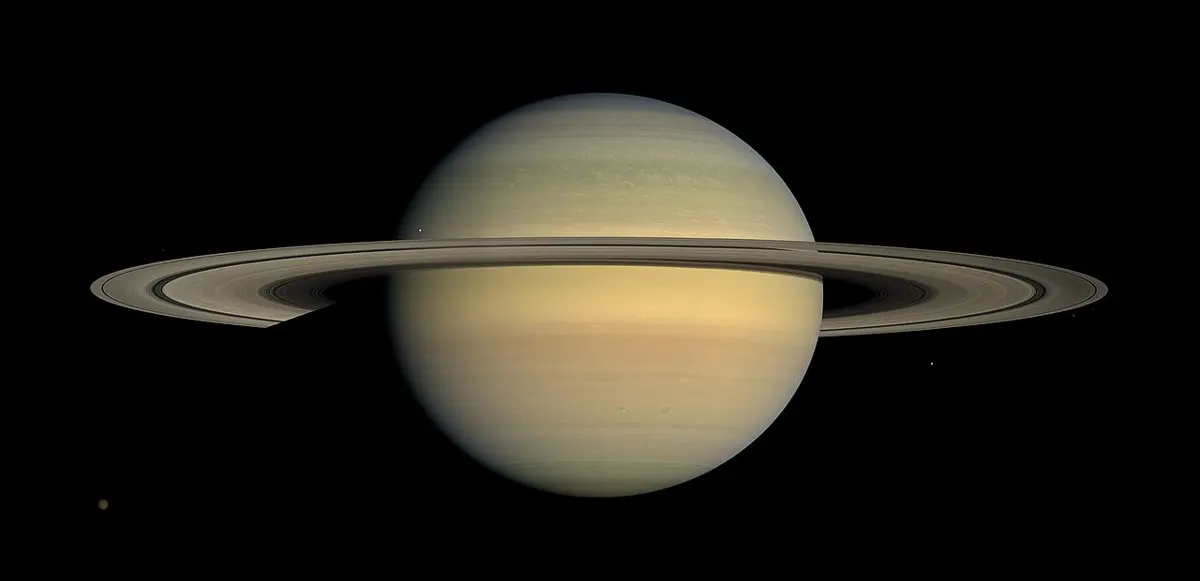
f. Saturn. The second largest planet, the sixth from the Sun. It is famous for its beautiful rings: seven main rings, made of countless pieces of ice and rock, from specks of dust to lumps as big as a house, all going round Saturn. The rings measure about 270,000 km from edge to edge, two-thirds of the way from the Earth to the Moon, but they are very thin, mostly less than a kilometer thick. Saturn is a gas giant like Jupiter, but so light for its size that it would float in a big enough bath of water. It has the most known satellites of any planet: about 285 (as of 2026).
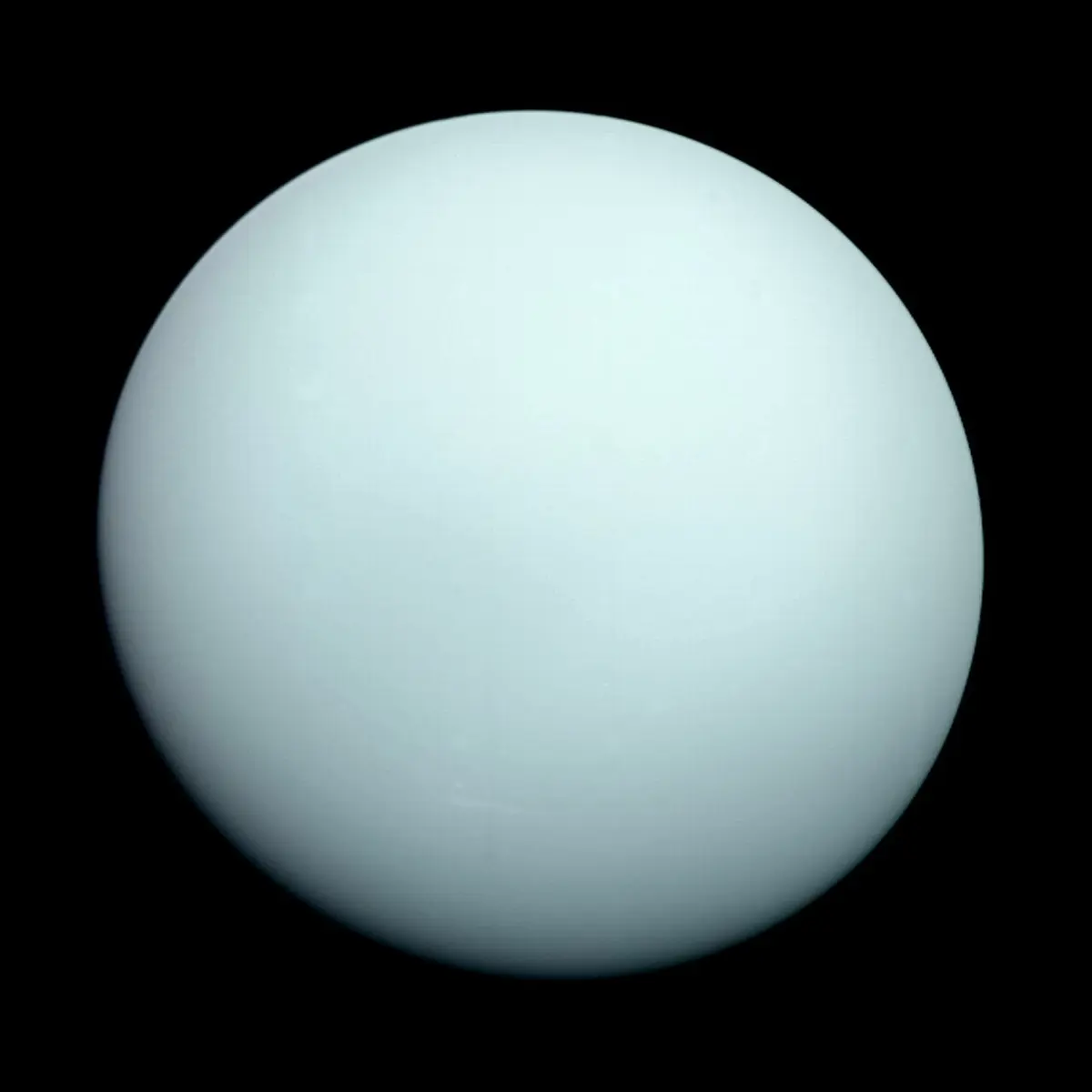
g. Uranus. The seventh planet from the Sun, a pale blue-green ice giant, made mostly of water, ammonia and methane around a rocky center, under air of hydrogen and helium. It too has rings, 13 of them, but they are thin and made of dark material, so they can’t be seen without big telescopes. It has 29 known satellites (as of 2026). Uranus spins lying on its side, like a ball rolling round the Sun.
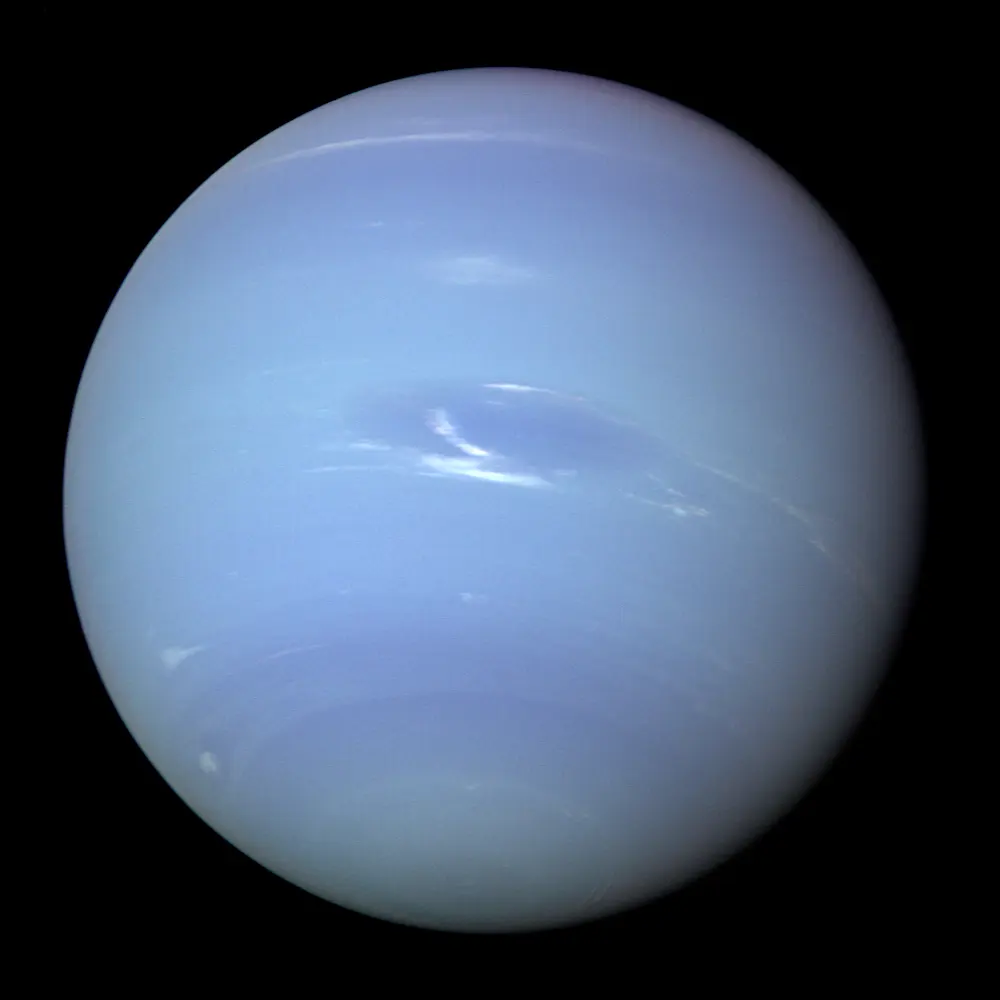
h. Neptune. The eighth planet, farthest from the Sun, 30 times as far as the Earth. It gets so little sunlight that it is one of the coldest planets, about −200 °C at its cloud tops, and it has the fastest winds in the solar system, over 2,000 km/h. It has faint rings and 16 known satellites (as of 2026). A year on Neptune lasts 165 of ours: since it was discovered in 1846, it has gone round the Sun just once.
Which of these is true of the outer planets (Jupiter, Saturn, Uranus and Neptune)?
Pick an answer to see why.
Comparing the planets
| No. | Planet | Average distance from the Sun (km) | Diameter (km) | Rotation period (one spin: its day) | Revolution period (one trip round the Sun: its year) |
|---|---|---|---|---|---|
| 1 | Mercury | 5.79 × 10⁷ | 4,879 | 58.6 days | 88 days |
| 2 | Venus | 1.08 × 10⁸ | 12,104 | 243 days | 225 days |
| 3 | Earth | 1.50 × 10⁸ | 12,756 | 23 h 56 min | 365.25 days |
| 4 | Mars | 2.28 × 10⁸ | 6,792 | 24 h 37 min | 687 days |
| 5 | Jupiter | 7.79 × 10⁸ | 142,984 | 9 h 56 min | 11.9 years |
| 6 | Saturn | 1.43 × 10⁹ | 120,536 | 10 h 34 min | 29.4 years |
| 7 | Uranus | 2.87 × 10⁹ | 51,118 | 17 h 14 min | 84 years |
| 8 | Neptune | 4.50 × 10⁹ | 49,528 | 16 h 6 min | 165 years |
The rotation period is the time a planet takes to spin once on its axis; the revolution period is the time it takes to go once round the Sun. Notice two patterns. The farther a planet is from the Sun, the longer its year. And Venus is strange: it spins so slowly, and backwards, that its day is longer than its year.
On which planet is one day (one spin) longer than one year (one trip round the Sun)?
Pick an answer to see why.
Pluto: a dwarf planet
Until 2006, nine planets were counted, including Pluto. In August 2006, the International Astronomical Union (IAU), the world body of astronomers, decided what a planet is. A planet must:
- go round the Sun;
- be big enough for its own gravity to have pulled it into a round shape;
- be big enough to have cleared its path round the Sun, pulling in or flinging away the other bodies along it.
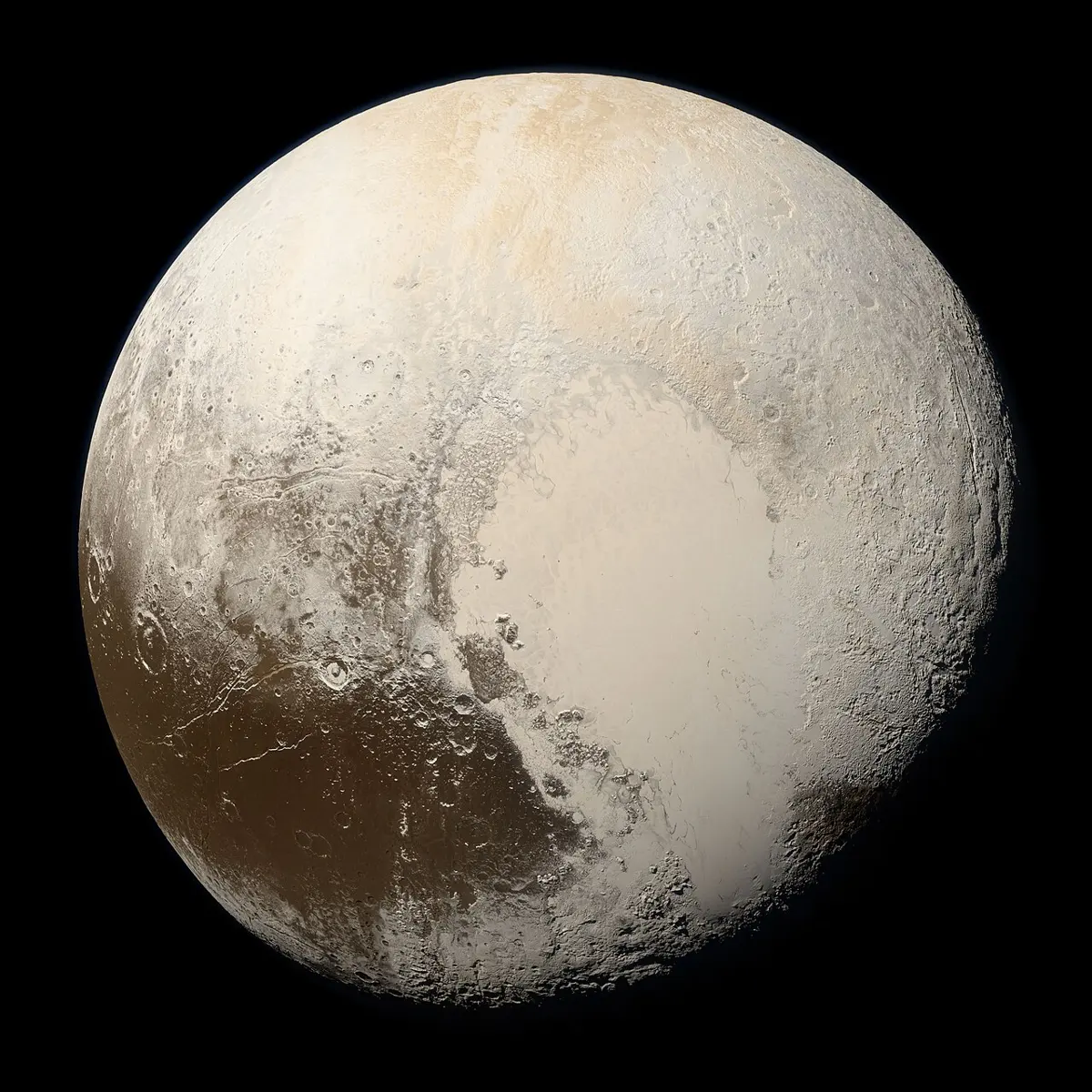
Pluto passes the first two tests but fails the third, so the IAU called it a dwarf planet. Its reasons, as they are usually given:
- a.Pluto’s orbit crosses the orbit of Neptune, and it shares its region of space with thousands of other icy bodies.
- b.Its mass is too small to have cleared its path: it is smaller than our Moon.
Pluto was not the only reason. In 2005 astronomers had found Eris, a body beyond Pluto almost the same size, and more were sure to be found. Either they all had to be planets, or Pluto was one of a new kind. Today there are five recognized dwarf planets, including Pluto, Eris, and Ceres in the asteroid belt.
Satellites
The heavenly bodies that go round the planets are called satellites. They may be natural or artificial (man-made). The Moon is the Earth’s natural satellite. Artificial satellites, launched by rockets, go round the Earth to carry phone calls, television and internet signals, forecast the weather, and guide maps (GPS). Nepal’s own first satellite, NepaliSat-1, a cube 10 cm across built by Nepali scientists in Japan, went into orbit in 2019.
Asteroids
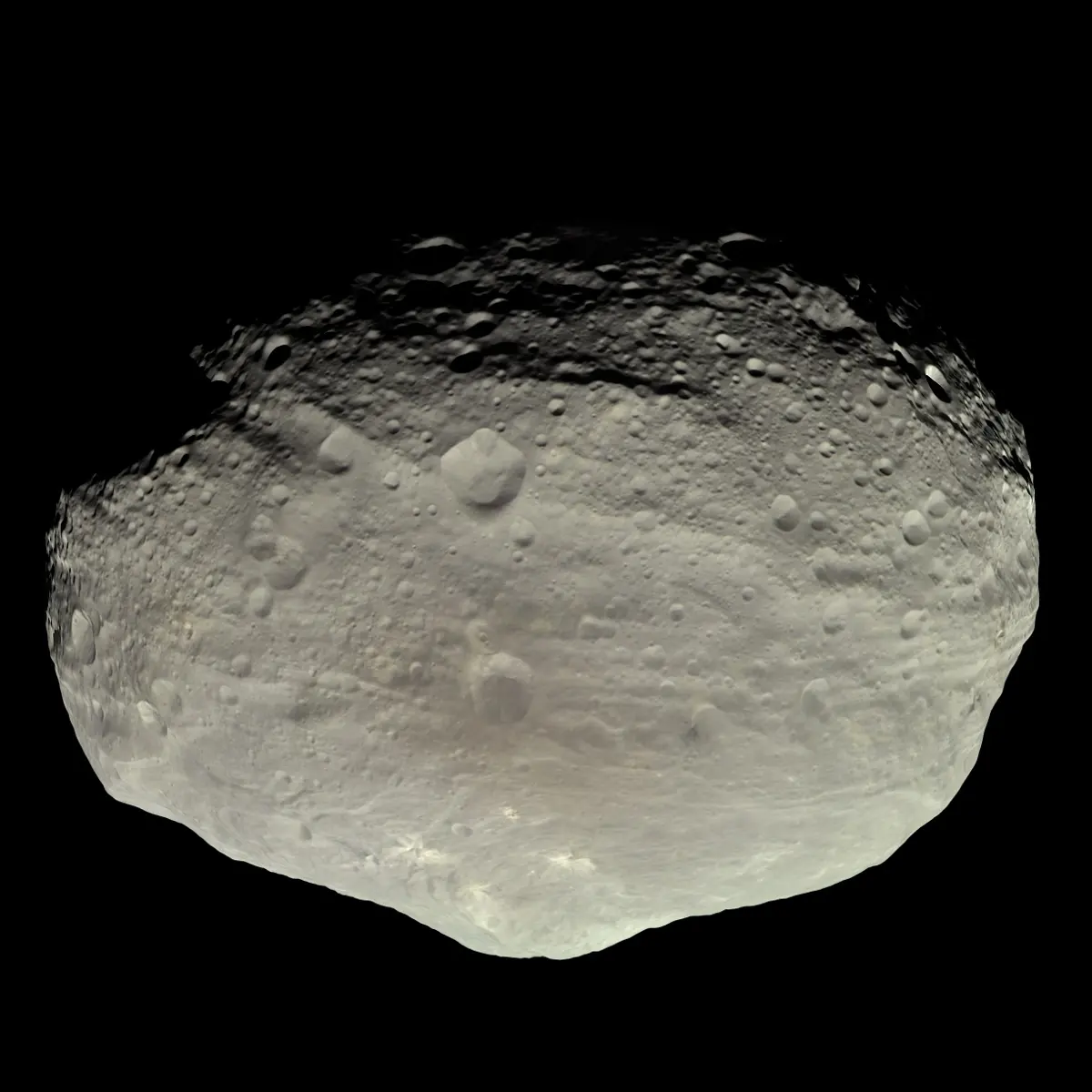
Asteroids are rocky bodies, much smaller than planets, that go round the Sun. Most of them, many thousands, are in the asteroid belt between the orbits of Mars and Jupiter. Each one travels in its own orbit round the Sun. Examples are Ceres (the biggest, now counted as a dwarf planet), Vesta, Pallas and Juno.
Comets
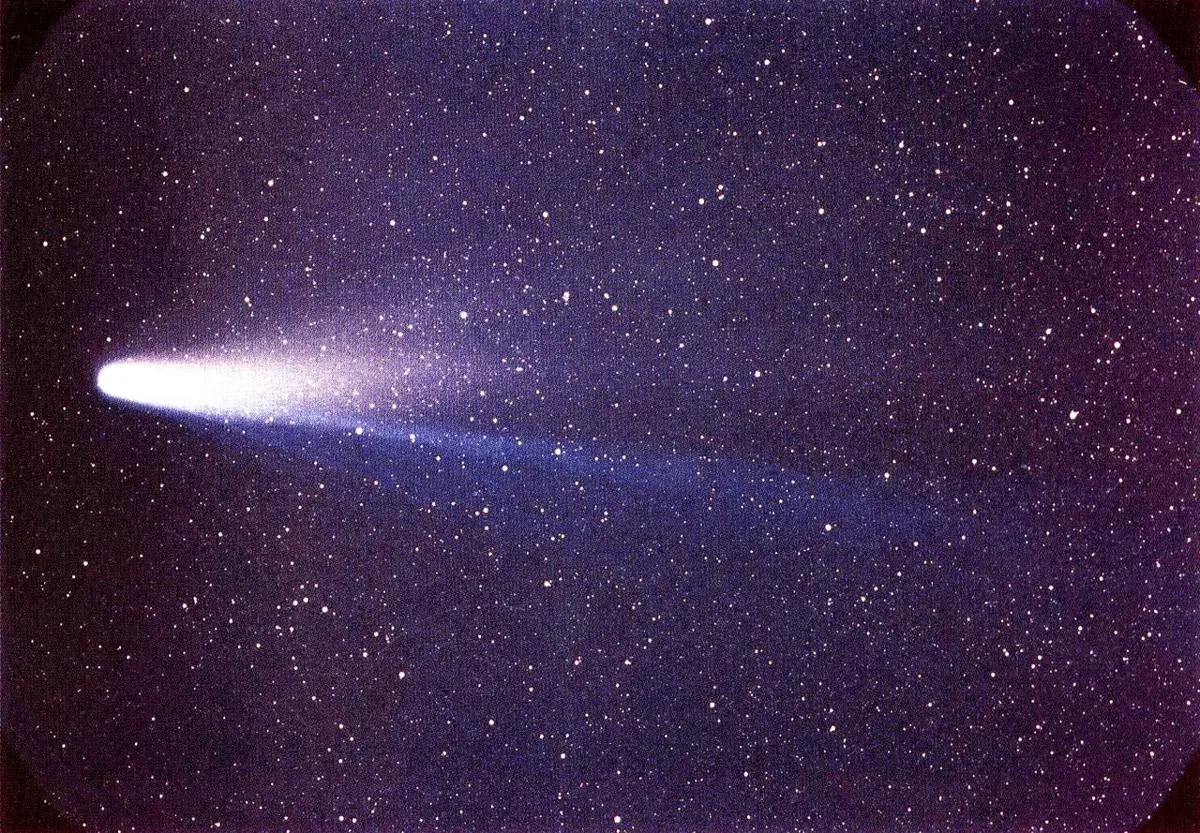
Comets are lumps of ice, dust and rock, a few kilometers across, that go round the Sun in long, stretched (elliptical) orbits. Far from the Sun they are frozen and dark. When a comet comes close to the Sun, its ice turns to gas, and the gas and dust stream away to form a glowing tail millions of kilometers long, which always points away from the Sun. That is why a comet is called a tailed star (in Nepali, पुच्छ्रे तारा), though it isn’t a star. The best known is Halley’s Comet, which returns every 76 years or so: it last came in 1986, and will be back in 2061.
Exercise (11.2 Planets)
1. Fill in the blanks
Use these words: Mercury, Neptune, Mars, Earth, solar system, Pluto, Venus.
The Sun and the heavenly bodies going round it are together called the ……
Answer
The farthest planet from the Sun is ……
Answer
The planet that comes closest to the Earth is ……
Answer
The planet with two satellites is ……
Answer
The Moon is the satellite of the ……
Answer
2. Match the columns
Match each item on the left with one on the right. (One on the right is not needed.)
| twin planet of the Earth | Pluto |
| asteroid | Mars |
| dwarf planet | Mercury |
| red planet | Jupiter |
| the largest planet | Juno |
| Venus |
Answer
3. Choose the correct answer
a. Which list gives the red planet, the brightest planet and the farthest (and one of the coldest) planets, in that order?
Pick an answer to see why.
b. Which planet takes only about 40 minutes longer than the Earth to spin once on its axis?
Pick an answer to see why.
c. Read the statement and the two arguments, and choose the right option.
Statement: Venus is the hottest planet; that is why it is red.
Argument 1: It is also called the morning star and the evening star.
Argument 2: It has two satellites, Deimos and Phobos.
Pick an answer to see why.
d. Which list gives planets in order of distance from the Sun, nearest first?
Pick an answer to see why.
e. Read the statement and the two arguments, and choose the right option.
Statement: Saturn is surrounded by rings, and has a great red spot at its center.
Argument 1: Its rings are made mostly of ice.
Argument 2: It is the second largest planet.
Pick an answer to see why.
4. Complete the table
Name the planet:
- the farthest planet from the Sun
- the closest planet to the Sun
- the biggest planet
- the brightest planet
- the smallest planet
- a planet with no satellite
Answer
5. Write the differences
Star and planet
Answer
Inner planets and outer planets
Answer
6. Answer the following questions
What is the solar system? How many planets are in it? List them.
Answer
Name the planets in the photos, and write any two characteristics of each.
Answer
Write any three characteristics of the Earth.
Answer
Draw a neat, labeled diagram of the solar system showing the sizes of the planets in proportion and their order from the Sun.
Answer
Which planet did the International Astronomical Union (IAU) remove from the list of planets? Give two reasons for the decision.
Answer
Choose any four planets you like. Write two characteristics of each in a table.
Answer
11.3 Moon
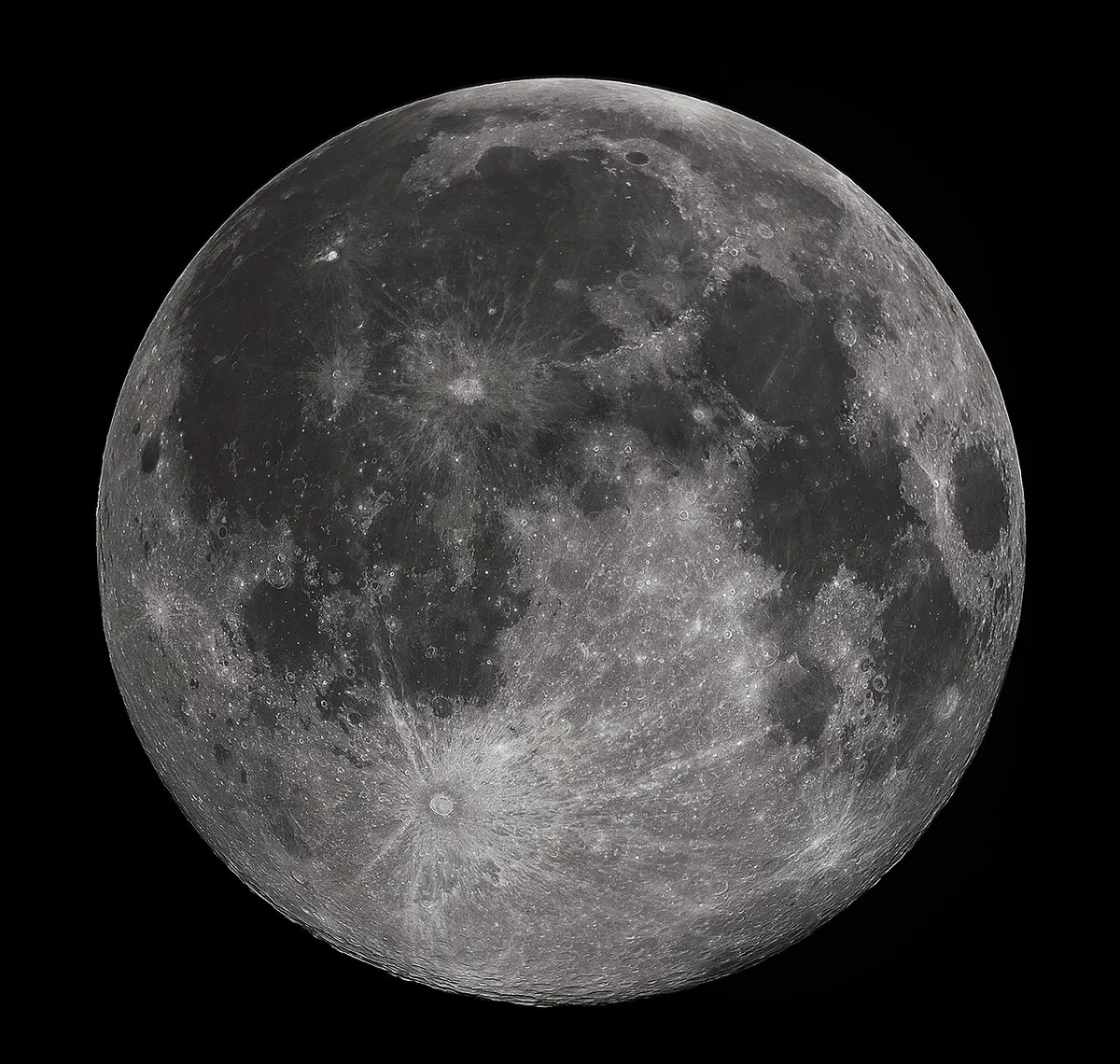
The Moon is the closest heavenly body to the Earth, and the Earth’s only natural satellite. Its gravity is much weaker than the Earth’s, about one-sixth, so on the Moon you could jump six times as high. It has no air and no liquid water (a little ice hides in deep craters near its poles, where the Sun never shines). It has mountains, craters and dark plains, but no living things.
The Moon goes round the Earth in an elliptical (oval) orbit, so its distance changes: from about 363,000 km at its closest (perigee) to about 405,000 km at its farthest (apogee).
| The Moon | |
|---|---|
| average distance from the Earth | 384,400 km |
| diameter | about 3,474 km (a little over a quarter of the Earth’s) |
| surface area | 3.79 × 10⁷ km² |
| time for one trip round the Earth | about 27⅓ days |
| gravity | about ⅙ of the Earth’s |
Phases of the Moon
The Moon doesn’t look the same every night. A day after the new moon, when it can’t be seen at all, it appears as a thin curved sickle low in the west after sunset. Each evening its bright part grows, until it is a full round disc, the full moon. Then the bright part shrinks each night, until the Moon disappears again at the next new moon. And again and again. These changes in the shape of the bright part of the Moon are called the phases of the Moon.
Why does it happen? There are three causes:
- a.The Moon is non-luminous: it shines only by reflecting sunlight. So the Sun always lights one half of it, the half facing the Sun, and the other half is dark.
- b.The Moon revolves round the Earth, once a month.
- c.So, as it goes round, we see different amounts of its lit half: none of it at the new moon, all of it at the full moon, and parts of it in between.
The phases have names:
- new moon (aunsi): the Moon is between the Earth and the Sun. Its lit half faces away from us, and it can’t be seen.
- waxing crescent: a few days after the new moon, a thin bright sickle. (Waxing means growing.)
- first quarter: about a week after the new moon; the right half of the disc is bright.
- waxing gibbous: more than half bright, with only a small part still dark. (Gibbous means bulging.)
- full moon (purnima): the Earth is between the Sun and the Moon. We see the whole lit half: a complete round disc.
- waning gibbous: after the full moon, a small part is dark again. (Waning means shrinking.)
- last quarter: about three weeks after the new moon; the left half is bright.
- waning crescent: just before the next new moon, a thin sickle again, seen in the east before sunrise.
Which part of the Moon does the Sun light?
Pick an answer to see why.
Bright half and dark half
Our lunar calendar counts the days of the Moon’s month as tithis. In one lunar month there are 30 tithis, in two halves of 15:
- The bright half (शुक्ल पक्ष, shukla paksha) runs from the new moon to the full moon. The bright part of the Moon grows every night. It lasts about 15 days.
- The dark half (कृष्ण पक्ष, krishna paksha) runs from the full moon to the new moon. The dark part of the Moon grows every night. It also lasts about 15 days.
Each half has its tithis in order: pratipada (the 1st), dwitiya (2nd), tritiya (3rd), and so on to chaturdashi (14th); the 15th is purnima (the full moon) at the end of the bright half, or aunsi (the new moon) at the end of the dark half.
Sidereal month and synodic month
How long does the Moon take to go round the Earth? It depends on what you measure it against.
- The sidereal month is the time the Moon takes to go once round the Earth, measured against the far-off stars: about 27.3 days (27⅓). (Sidereal means “of the stars”.)
- The synodic month is the time from one new moon to the next: about 29.5 days. This is the month of the phases, the lunar month of our calendar.
Why is the synodic month longer? Because while the Moon goes once round the Earth, the Earth carries it about 27° further round the Sun (about one-thirteenth of its yearly trip; by the next new moon the Earth has moved about 29°, which some books round to 30°). So after one full turn, the Moon is not yet back between the Earth and the Sun; it has to go a little further, about 2 days and 5 hours more, to catch up.
Adhik maas
We use the solar calendar for official work, school and offices, but our festivals and rituals follow the lunar calendar. So we use both together. A lunar month is counted from one new moon to the next, and it takes its name from the solar month in which that new moon falls. Nepal’s calendars then write the names the purnimanta way (पूर्णिमान्त, ending at the full moon): each month begins half a month earlier, on the day after a full moon, and ends at the next full moon, so its dark half comes first. That is why Krishna Janmashtami, in a dark half, is written भाद्र कृष्ण अष्टमी. A solar month and a lunar month don’t usually start on the same day.
The problem is that 12 lunar months are about 11 days shorter than a solar year. Left alone, the festivals would slip 11 days earlier every year, and in about nine years Dashain would fall in the monsoon. The lunar calendar fixes this with an extra month.
Most solar months are a little longer than a lunar month (29.5 days). So sometimes two new moons fall in the same solar month. Then two lunar months begin in that solar month, and both get its name: the month is repeated. The repeated month is called adhik maas (अधिक मास, extra month), also mal maas or purushottam maas. It comes about once every three years, and puts the lunar calendar back in step with the Sun.
For example, in 2077 BS there was a new moon on Asoj 1, so the lunar month that began was Asoj. But there was another new moon on Asoj 30, so the next lunar month was Asoj too: an adhik maas. That is why Dashain came late that year, in Kartik.
Kshay maas
Sometimes the opposite happens. Around Poush, in winter, the Earth is nearest the Sun and moves fastest along its orbit, so the solar months then are the shortest, about 29.4 days, a little shorter than a lunar month. Very rarely, a short solar month starts just after a new moon and ends just before the next, so no new moon falls in it at all. Then no lunar month begins in it, and that month’s name is skipped for the year. This missing month is called kshay maas (क्षय मास, lost month). It happens only between Kartik and Magh, and very rarely: sometimes 19 years apart, sometimes over a century. The last was in 1983 AD (2039 BS), and the next is not expected until 2124 AD. A year with a kshay maas also has two adhik maas, one before it and one after, so it still has the right number of lunar months.
What is an adhik maas?
Pick an answer to see why.
Exercise (11.3 Moon)
1. Choose the correct answer
a. Read the statement and the two arguments, and choose the right option.
Statement: The time from a full moon to a new moon is the dark half, and the time from a new moon to a full moon is the bright half.
Argument 1: In the bright half, the Moon is seen getting smaller every day.
Argument 2: In the dark half, the bright part of the Moon is seen growing every day.
Pick an answer to see why.
b. Which are the first and last days of the bright half?
Pick an answer to see why.
c. Which gives the lengths of the bright half, the dark half, the sidereal month and the synodic month, in that order?
Pick an answer to see why.
d. When the angle between the Sun and the Moon, seen from the Earth, is 135°, how does the Moon look?
Pick an answer to see why.
e. Which list gives the Moon fully bright, half bright, and bright only at the edge, in that order?
Pick an answer to see why.
2. Answer the following questions
Give a short introduction to the Moon.
Answer
What is a lunar month? Write one importance of it.
Answer
Write the differences between the dark half and the bright half.
Answer
What is adhik maas? How does it occur?
Answer
Write the differences between the lunar (synodic) month and the sidereal month.
Answer
What is kshay maas? How does it occur?
Answer
What are the phases of the Moon? Describe the difference between the new moon and the full moon.
Answer
Draw a neat, labeled diagram showing the phases of the Moon.
Answer
The pictures show two phases of the Moon in a synodic month. Name them, and write the differences between them.
Moon: traced from NASA’s Lunar Reconnaissance Orbiter map of the near side (public domain)
Answer
11.4 Eclipse
The Sun is a luminous body: it makes its own light. The Earth and the Moon are non-luminous, and opaque: light can’t pass through them. An opaque body in the path of light casts a shadow behind it.
As the Earth goes round the Sun and the Moon goes round the Earth, sometimes all three come into one straight line. Then either the Earth’s shadow falls on the Moon, or the Moon’s shadow falls on the Earth, and the Moon or the Sun is hidden, partly or completely, from people on the Earth. This is an eclipse.
Shadow
An opaque object casts a shadow because light travels in straight lines and can’t bend round it. Where the object blocks the light from the source completely, the shadow is darkest: this is the umbra. Where it blocks the light only partly, so that some of the source can still be seen, the shadow is paler: this is the penumbra. The umbra is darker than the penumbra. A shadow has a penumbra because the source of light is not a point but has a size (the flame, the bulb, the Sun). The umbra and penumbra are what decide the kind of eclipse we see.
Standing in the umbra of a ball’s shadow and looking back at the lamp, what would you see?
Pick an answer to see why.
How an eclipse happens
The Earth goes round the Sun and the Moon goes round the Earth all the time, and now and then all three lie in a straight line. If the Moon is between the Sun and the Earth, the Moon casts its shadow on the Earth. If the Earth is between the Sun and the Moon, the Earth casts its shadow on the Moon.
An eclipse happens because:
- a.light travels in straight lines (so it can’t bend round the Earth or the Moon);
- b.the Earth revolves round the Sun and the Moon round the Earth;
- c.so sometimes the Sun, the Moon and the Earth come into a straight line;
- d.the Earth and the Moon are opaque, so they cast shadows;
- e.of the three, only the Sun is luminous; the Earth and the Moon make no light of their own.
When one of these heavenly bodies casts its shadow on another, there is an eclipse. Two kinds are seen from the Earth: the lunar eclipse and the solar eclipse.
A. Lunar eclipse
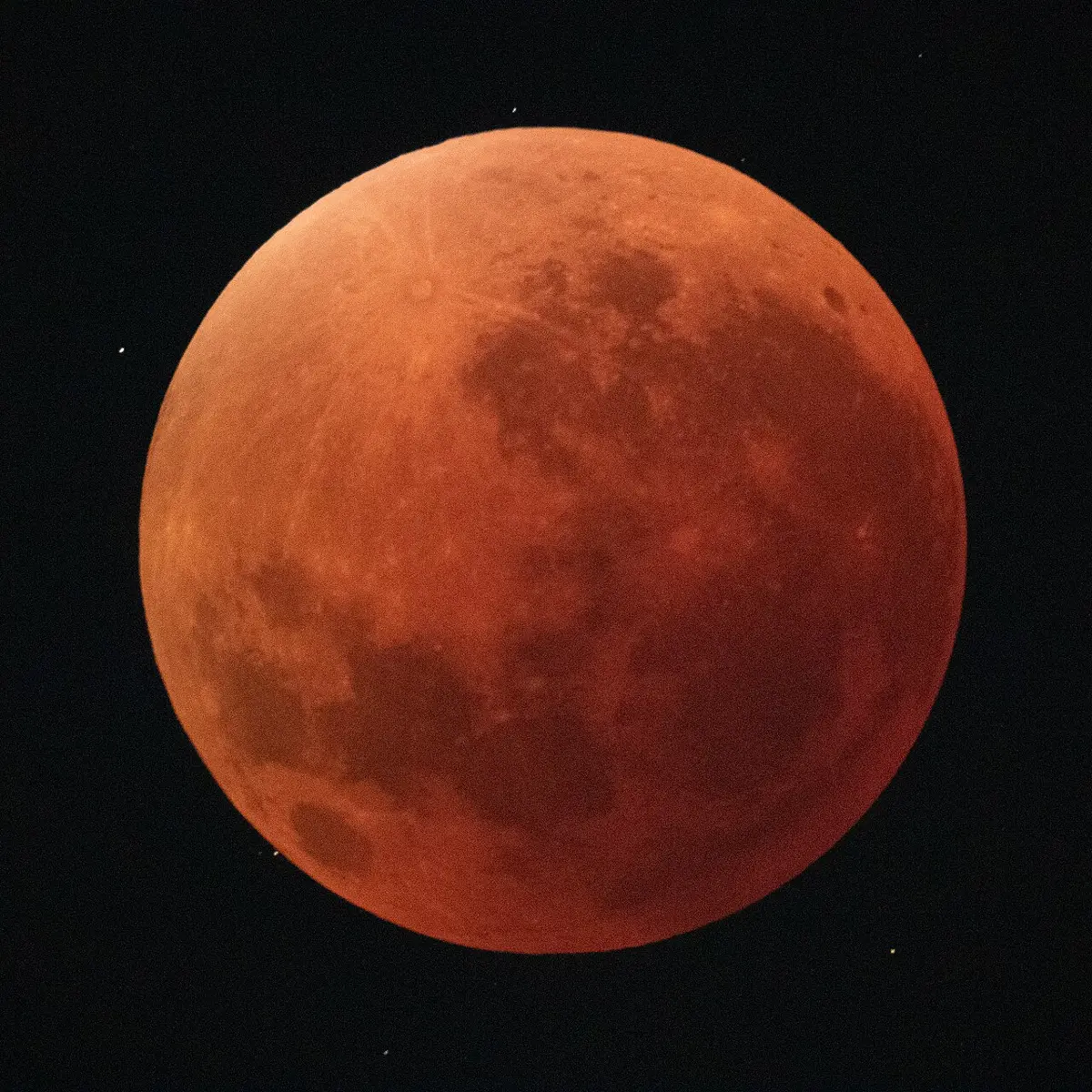
When the Earth comes between the Sun and the Moon, it blocks the sunlight going to the Moon and casts its shadow on the Moon. Then the Moon is hidden, partly or completely, from the Earth. This is a lunar eclipse (an eclipse of the Moon).
The main conditions for a lunar eclipse:
- The Sun, the Earth and the Moon are in a straight line.
- The Earth is between the Sun and the Moon, so its shadow falls on the Moon.
- Light travels in straight lines.
If the whole Moon goes into the umbra of the Earth’s shadow, it is a total lunar eclipse. If only part of the Moon goes into the umbra, it is a partial lunar eclipse: part of the Moon looks dark, as if a bite had been taken out of it. A lunar eclipse happens only on a full moon (purnima), because only then is the Earth between the Sun and the Moon.
A lunar eclipse can be seen from everywhere on the night side of the Earth at once, and it lasts a long time: the Earth’s shadow is so wide that the Moon takes up to about 1 hour 45 minutes to cross the umbra in a total eclipse, and several hours from start to end. It is perfectly safe to watch.
B. Solar eclipse
When the Moon comes between the Sun and the Earth, it blocks the sunlight and casts its shadow on the Earth. From the places in the shadow, the Sun is hidden, partly or completely. This is a solar eclipse (an eclipse of the Sun). A solar eclipse happens only on a new moon (aunsi) day.
From inside the umbra of the Moon’s shadow, the whole Sun is hidden: a total solar eclipse. The sky goes dark in the daytime, stars come out, birds go quiet, and the Sun’s glowing outer atmosphere, the corona, shines round the black Moon. From the penumbra, only part of the Sun is hidden: a partial solar eclipse, and the Sun looks like a bitten biscuit.
The Moon’s umbra on the Earth is small, at most about 270 km across, and the Moon’s motion sweeps it across the Earth at over 1,700 km/h. So a total solar eclipse is seen only along a narrow path, and at any one place it lasts at most about 7½ minutes, usually 2 or 3.
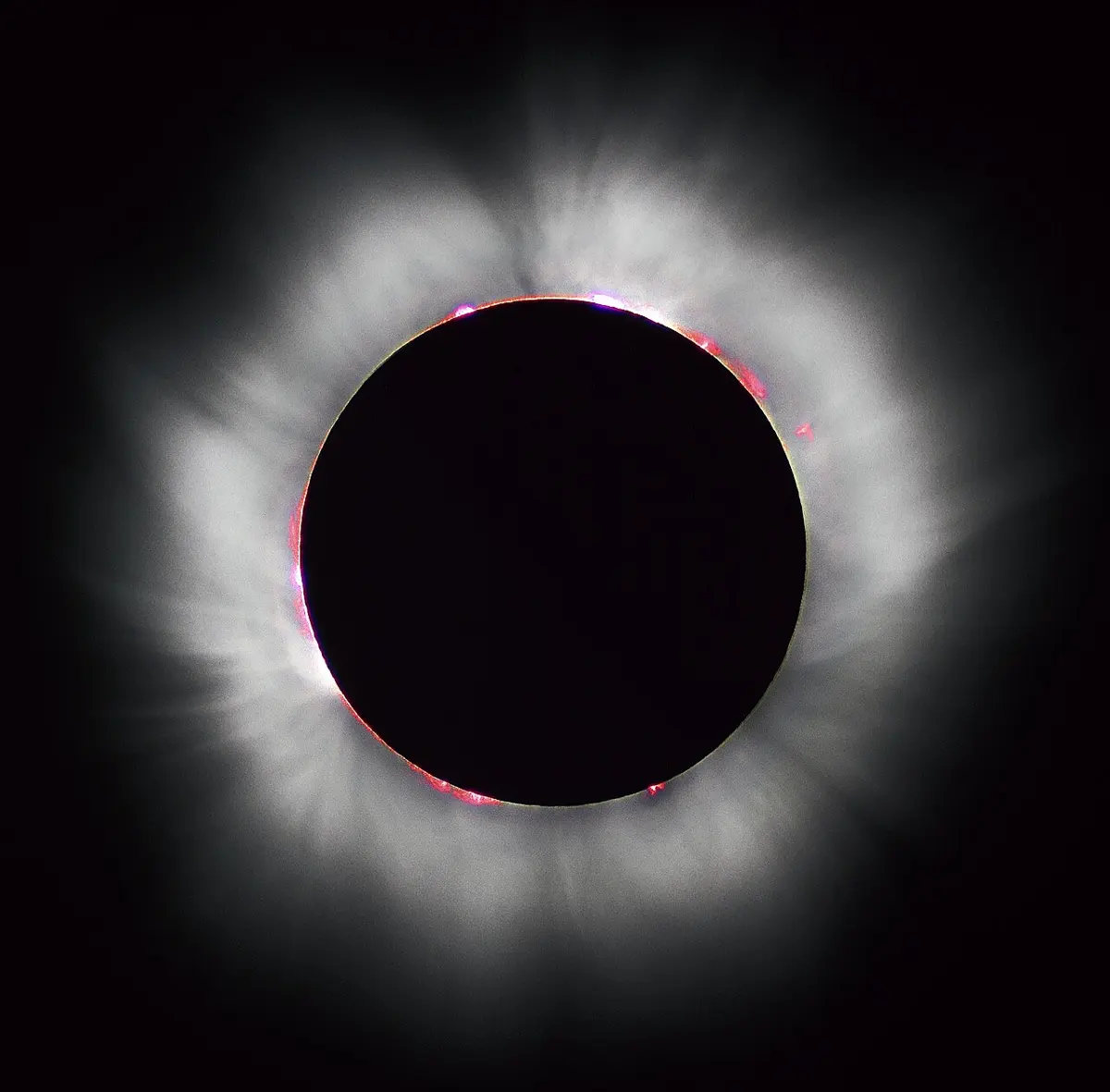
Why can a lunar eclipse be watched by everyone on the night side of the Earth, but a total solar eclipse only along a narrow path?
Pick an answer to see why.
Exercise (11.4 Eclipse)
1. Fill in the blanks
Use these words: eclipse, solar eclipse, lunar eclipse, partial eclipse, total eclipse, straight line.
When the Moon comes between the Earth and the Sun in a straight line, it causes a ……
Answer
When the Earth casts its shadow on the Moon, a …… occurs.
Answer
Watching a …… directly may harm the eyes.
Answer
During an eclipse, the Sun, the Earth and the Moon lie in a ……
Answer
The umbra causes a ……
Answer
2. Choose the correct answer
a. Which order is correct for a lunar eclipse?
Pick an answer to see why.
b. When does a solar eclipse occur?
Pick an answer to see why.
c. Which eclipse occurs when the Earth’s umbra covers the Moon completely?
Pick an answer to see why.
d. Which kind of eclipse is seen from the penumbra?
Pick an answer to see why.
e. In which case does a lunar eclipse NOT occur?
Pick an answer to see why.
f. Which statement about eclipses is wrong?
Pick an answer to see why.
3. Write the differences
Total solar eclipse and partial solar eclipse
Answer
Total lunar eclipse and partial lunar eclipse
Answer
Umbra and penumbra
Answer
4. Give reasons
A lunar eclipse occurs only on a full moon.
Answer
A solar eclipse occurs only on a new moon.
Answer
5. Answer the following questions
What is a shadow? How does it form?
Answer
When the Earth comes between the Sun and the Moon, what kind of eclipse occurs? Describe it with a labeled diagram.
Answer
During which eclipse is the Sun hidden, partly or completely? Draw a neat, labeled diagram of it.
Answer
What are the general causes of an eclipse?
Answer
Study the figure and answer the questions.
- i.Name and define the eclipse shown.
- ii.On which tithi does it occur?
- iii.What kind of eclipse is seen from the region of the umbra?
Answer
Why does a total lunar eclipse last longer than a total solar eclipse? Explain.
Answer
Worksheet: The Earth and Space: rocks and planets (PDF, 4 pages)
Worksheet: The Earth and Space: the Moon and eclipses (PDF, 4 pages)
Quiz yourself: Earth and Space, Grades 5–10 →
Practice every question in the book, and keep track of the ones you miss →
A companion to your textbook, not a replacement for it: study from the book your school uses, and where the two differ, follow your teacher. Found a mistake? Please tell us.