
Walk through any shop in Nepal and count the things chemists made. The bucket and the water pipe, the rope and the raincoat are polymers; the red of a kurta and the yellow of a packet of noodles are dyes; the strip of tablets on the counter is a drug; the spray in the farm shop is a pesticide. None of these existed two hundred years ago, and each began with someone asking how molecules could be joined, colored or aimed at a germ.
This unit visits four of chemistry’s biggest gifts to everyday life: polymers, dyes, drugs and pesticides. For each, it asks what the molecules look like, how they are grouped, and what they do, good and bad.
18.1 Introduction
Chemistry turns raw materials into goods that shape our daily lives. Polymers are the stuff of countless things, from packaging to plastics to clothes. Medicines made by chemists have greatly improved health, lengthening lives and saving millions. Synthetic dyes transformed the textile business and gave bright, lasting colors to cloth, art and food. Pesticides control pests and, with fertilizers, have raised farm yields to feed a growing world. Chemistry also tackles the problems these bring, such as plastic waste and pesticide residues.
18.2 Polymers
Plastic bottles, nylon ropes, woolen sweaters and switchboards look and feel very different, yet all are made of long chains of repeating units. The small molecules that join are monomers; the long chains they form are polymers (Greek poly, many, and meros, parts); and the joining is polymerization. A polymer molecule may contain thousands of monomer units, so its molar mass runs from thousands to millions of grams per mole: these are macromolecules.
For example, ethene molecules join under heat and pressure, with a catalyst, into polyethene (polythene):
18.2.1 Classification of polymers
Polymers can be classified in several ways, by their origin, how they are made, the forces between their chains, and the monomers they are made of.
A. On the basis of origin
i. Natural polymers are found in plants and animals: starch and cellulose (from glucose), proteins (from amino acids), nucleic acids (from nucleotides) and natural rubber. Natural rubber is cis-polyisoprene, from the milky latex of the rubber tree:
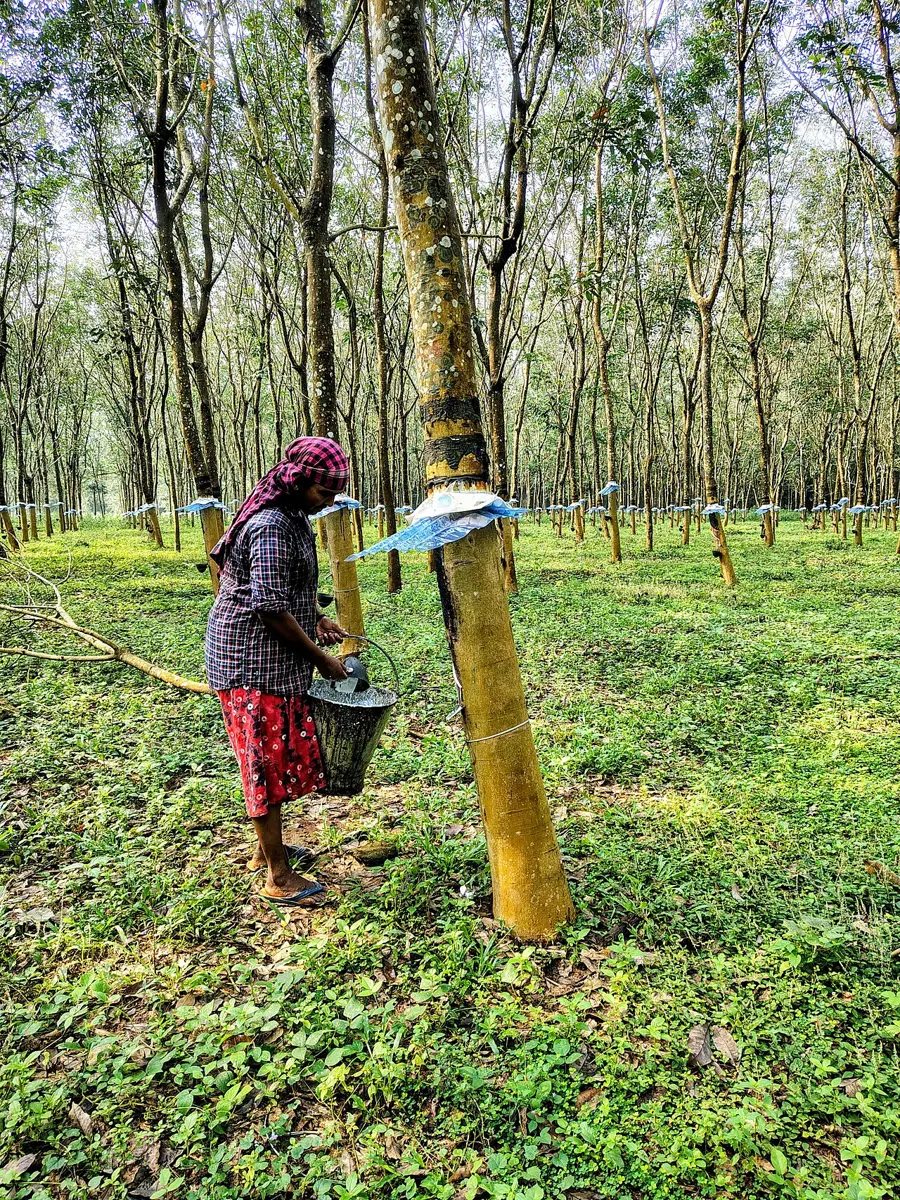
ii. Synthetic polymers are made artificially, in laboratories and factories, from other compounds, and are designed to have particular properties: polyvinyl chloride (PVC), polystyrene, nylon, Teflon and Bakelite. (Between the two are semi-synthetic polymers, natural polymers changed chemically, such as rayon and cellulose acetate, made from cellulose.)
B. On the basis of synthesis
i. Addition polymers form by the repeated addition of a large number of the same or different unsaturated monomers, with nothing given off; the process is addition polymerization. The monomers usually contain a double bond, as alkenes do: the double bond opens and the monomers link through single bonds. Polyethene, PVC, polytetrafluoroethene (Teflon) and polystyrene are addition polymers. Since no atoms are lost, the polymer has the same empirical formula as its monomer.
ii. Condensation polymers form by repeated condensation reactions between two different functional groups of the monomers; each step gives off a small molecule such as water, ammonia, HCl or an alcohol (methanol), and the process is condensation polymerization. Each monomer needs at least two reacting groups so the chain can keep growing at both ends. Nylon-6,6, polyethylene terephthalate (PET, sold as Terylene or Dacron) and Bakelite are condensation polymers.
C. On the basis of the forces between chains (molecular forces)
The forces between polymer chains decide how a polymer behaves.
i. Elastomers stretch easily when pulled and spring back to their shape when let go. Their chains are held by the weakest forces, so they are loosely coiled and slide; a few cross-links pull them back. Natural rubber, neoprene and Buna-S are elastomers. Natural rubber becomes a useful elastomer only after vulcanization: heating with sulphur, which makes cross-links of sulphur atoms between chains (Charles Goodyear, 1839).
ii. Fibers form strong thread-like solids with high tensile strength and little stretch. Their chains are held by the strongest forces between chains, hydrogen bonds (nylon) or strong dipole forces (polyester), so they pack tightly side by side, in a largely crystalline arrangement. Rayon, acrylic, polyester (Terylene) and nylon are fibers.
Between these two lie the thermoplastics (polythene, PVC, polystyrene), with forces in between, which soften when heated and harden on cooling again and again, and the thermosetting polymers (Bakelite), heavily cross-linked, which set hard for good once heated and cannot be remelted.
D. On the basis of monomer units
i. Homopolymers are made from one kind of monomer: polyethene (ethene), PVC (vinyl chloride), Teflon (tetrafluoroethene), polystyrene (styrene), natural rubber (isoprene).
ii. Copolymers are made from two or more different monomers: nylon-6,6 (hexanedioic acid and hexane-1,6-diamine), PET (ethane-1,2-diol and terephthalic acid), Bakelite (phenol and methanal) and Buna-S (buta-1,3-diene and styrene, an addition copolymer, used in tyres).
Which of these is both an addition polymer and a copolymer?
Pick an answer to see why.
18.2.2 Some synthetic polymers
Synthetic polymers are made in factories to have chosen qualities, such as durability, strength, flexibility, and resistance to heat or chemicals. Here are six, with their monomers and uses.
1. Polythene (polyethylene). Monomer: ethene (ethylene), CH₂=CH₂ (Figure 18.1). It is made in two main forms: low-density polythene (LDPE, at high pressure: branched chains, soft and flexible, for bags and films) and high-density polythene (HDPE, with a Ziegler–Natta catalyst at low pressure: straight chains packed tightly, hard and stiff, for buckets, bottles and pipes).
Uses: dustbins, buckets, carpets, carry bags and other packaging, insulation of electric cables, and all kinds of containers.
2. PVC (polyvinyl chloride). Monomer: chloroethene (vinyl chloride), CH₂=CHCl (Figure 18.4).
Uses: plumbing pipes and fittings, cable insulation, window and door frames, flooring, medical equipment such as drip (IV) bags and tubing, raincoats, synthetic leather, packaging, even credit cards: it is strong, durable and resists chemicals. Soft PVC has a plasticizer added.
3. Polytetrafluoroethene (Teflon, PTFE). Monomer: tetrafluoroethene, CF₂=CF₂.
Uses: non-stick coating on cookware, electrical insulation, chemical-resistant clothing, seals and the lining of pipes: it withstands heat and chemicals, and has very low friction. It was found by accident in 1938, when Roy Plunkett, a DuPont chemist, opened a cylinder of tetrafluoroethene gas that gave no gas: it had polymerized inside into a white, slippery powder.
4. Polystyrene. Monomer: styrene (phenylethene), C₆H₅CH=CH₂.
Uses: disposable cutlery and cups, foam packaging (thermocol, expanded polystyrene: polystyrene blown with gas), insulation, lightweight containers, rulers, keyboard keys: it is rigid and insulates heat and electricity.
5. Nylon-6,6. Monomers: hexanedioic acid (adipic acid) and hexane-1,6-diamine (hexamethylenediamine). The “6,6” says that each monomer has six carbon atoms. The –COOH groups of the acid and the –NH₂ groups of the amine join as amide links, –CO–NH–, giving off water:
Uses: textiles, ropes, parachutes, seat belts, carpets, fishing nets and toothbrush bristles, and molded mechanical parts such as gears: it is strong, elastic, and resists wear and heat. Nylon was made in 1935 by Wallace Carothers’s team at DuPont in the USA; its first famous use was women’s stockings, sold from 1940.
6. Bakelite. Monomers: phenol and methanal (formaldehyde). With an acid or a base as catalyst, methanal attaches CH₂OH groups to phenol’s ring at the ortho and para positions; on heating, these join the rings by –CH₂– bridges, giving off water. First a linear polymer forms (novolac); with more methanal and heat, bridges link the chains in three dimensions into Bakelite, a hard, rigid, cross-linked thermosetting solid.
Uses: electrical switches, plugs and switchboards, combs, handles of cooking utensils, telephone casings and other hard, heat-resistant, non-conducting items. It was the first fully synthetic plastic, made by Leo Baekeland in New York in 1907.

A plastic handle on a frying pan must not soften near the flame. Which polymer suits it?
Pick an answer to see why.
18.3 Dyes
Dyes are colored substances that give lasting color to materials such as cloth, paper, leather and food. They can come from plants, animals or minerals, such as cochineal from insects or indigo from plants, or be made artificially in laboratories. For ages, people in every culture have dyed cloth and food with natural dyes; today synthetic dyes are used far more widely, for their bright colors, low cost and durability. Applying a dye to a material is dyeing, important in fashion, art and food production. Cost, brightness and the environment decide the choice between natural and synthetic dyes. A dye differs from a pigment: a dye dissolves or disperses and attaches to the fiber, while a pigment is an insoluble colored powder that sits on the surface, held by a binder (as in paint).
Natural dyes: indigo, turmeric, cochineal, henna, madder.
Synthetic dyes: aniline blue, methyl orange, azo dyes, crystal violet, rhodamine B, Acid Red 1.
18.3.1 Structural features of dyes
A dye molecule has two main parts:
Chromophore: the part of the molecule responsible for its color. It usually contains conjugated double bonds (double bonds alternating with single bonds), or groups such as the azo group, –N=N–; the nitro group, –NO₂; the nitroso group, –N=O; the carbonyl group, >C=O; the alkene group, >C=C<; and the quinoid ring (a ring with two C=O or C=C groups in place of benzene’s pattern). A compound with a chromophore is a chromogen.
Auxochrome: a group that gives no color on its own, but attached to a chromogen deepens the color or shifts it, and usually helps the dye bind to the fiber, often by making it acidic or basic. For example, –OH, –COOH, –SO₃H, –NH₂, –NHR, –NR₂.
Why does a long conjugated chain give color? Its electrons are spread over many atoms, so they can be raised to a higher energy by a smaller packet of energy. Small molecules absorb only ultraviolet; as the conjugation grows longer, the light absorbed moves into the visible region. The dye absorbs some colors of white light, and we see the color left over: methyl orange in alkali absorbs blue light, and looks orange-yellow.
18.3.2 Classification of dyes
Dyes are grouped by their chemical structure, by how they are applied, or by the fibers they suit. A standard classification is by structure and by mode of application.
1. Classification by structure (chemical constitution)
i. Azo dyes: synthetic dyes with one or more azo groups, –N=N–, between aromatic rings; the azo group is the chromophore, and gives bright yellows, oranges, reds and browns. They are the largest group of synthetic dyes, made by diazo coupling, and are used to dye textiles, leather, food and cosmetics. Examples: p-hydroxyazobenzene, p-aminoazobenzene, methyl orange, Congo red.
ii. Nitro dyes: synthetic dyes with one or more nitro groups, –NO₂, as chromophore, usually yellow. They dye wool, silk and paper. Examples: picric acid (2,4,6-trinitrophenol), Martius yellow (2,4-dinitro-1-naphthol), naphthol yellow S.
iii. Nitroso dyes: synthetic dyes with one or more nitroso groups, –N=O, as chromophore. They dye textiles, but are used more in analysis, because they react with metal ions. Examples: Gambine Y (1-nitroso-2-naphthol, called α-nitroso-β-naphthol), naphthol green B, Fast Green O (dinitrosoresorcinol).
iv. Phthalein dyes: synthetic dyes made by condensing phthalic anhydride with phenols. Their chromophore, a conjugated quinoid structure, forms only in basic solution, so they are used as pH indicators, in biological staining, and to trace water flow (fluorescein). Examples: phenolphthalein (colorless in acid, pink in base), fluorescein, thymolphthalein.
v. Anthraquinone dyes: dyes derived from anthraquinone, whose conjugated rings with two carbonyl groups are the chromophore. They are very stable and bright, used in textile dyeing, inks and biological staining. Examples: alizarin (the red of madder root), indanthrene blue, quinizarin.
vi. Indigoid dyes: natural or synthetic dyes like indigo, deep blue, with a conjugated system of double bonds between two five-membered rings. Indigo was once got from the plant Indigofera; today almost all is synthetic. It dyes denim for blue jeans, and is used in textile printing and traditional cloth. Examples: indigo, Tyrian purple (the ancient dye from sea snails, a dibromo-indigo).
2. Classification by mode of application
i. Acid dyes: anionic dyes, usually with sulphonic acid groups (–SO₃H, as their sodium salts) and azo or anthraquinone chromophores, applied from an acidic bath. In acid, the fiber’s amino groups become –NH₃⁺, which hold the dye’s negative ions. They give bright, water-soluble colors with good fastness to protein fibers (wool, silk) and nylon. Examples: metanil yellow, Acid Orange 7, Acid Red 88.
ii. Basic dyes: cationic dyes, whose colored part carries a positive charge, usually on an amino (or ammonium) group, applied from a neutral or weakly acidic bath. They give bright, intense colors to acrylic fibers, and to silk, wool, paper and leather. Examples: malachite green, methylene blue, crystal violet.
iii. Direct dyes: anionic dyes, usually with azo groups, long and flat, which lie along cellulose fibers (cotton, rayon) and stick by hydrogen bonds and other weak forces. They are applied directly from a neutral or slightly alkaline bath with salt, without a mordant; bright, but with moderate fastness to washing. Examples: Congo red, Direct Blue 1, Direct Red 28.
iv. Vat dyes: insoluble dyes, usually with anthraquinone or indigoid chromophores. In a vat they are reduced in an alkaline solution to a soluble (leuco) form, which soaks into the fiber; in air the dye is oxidized back to its insoluble, colored form, trapped inside. They give bright colors that resist washing and light, on cellulose fibers: cotton, denim. Examples: indigo, Vat Blue 1 (indigo), Vat Red 1.
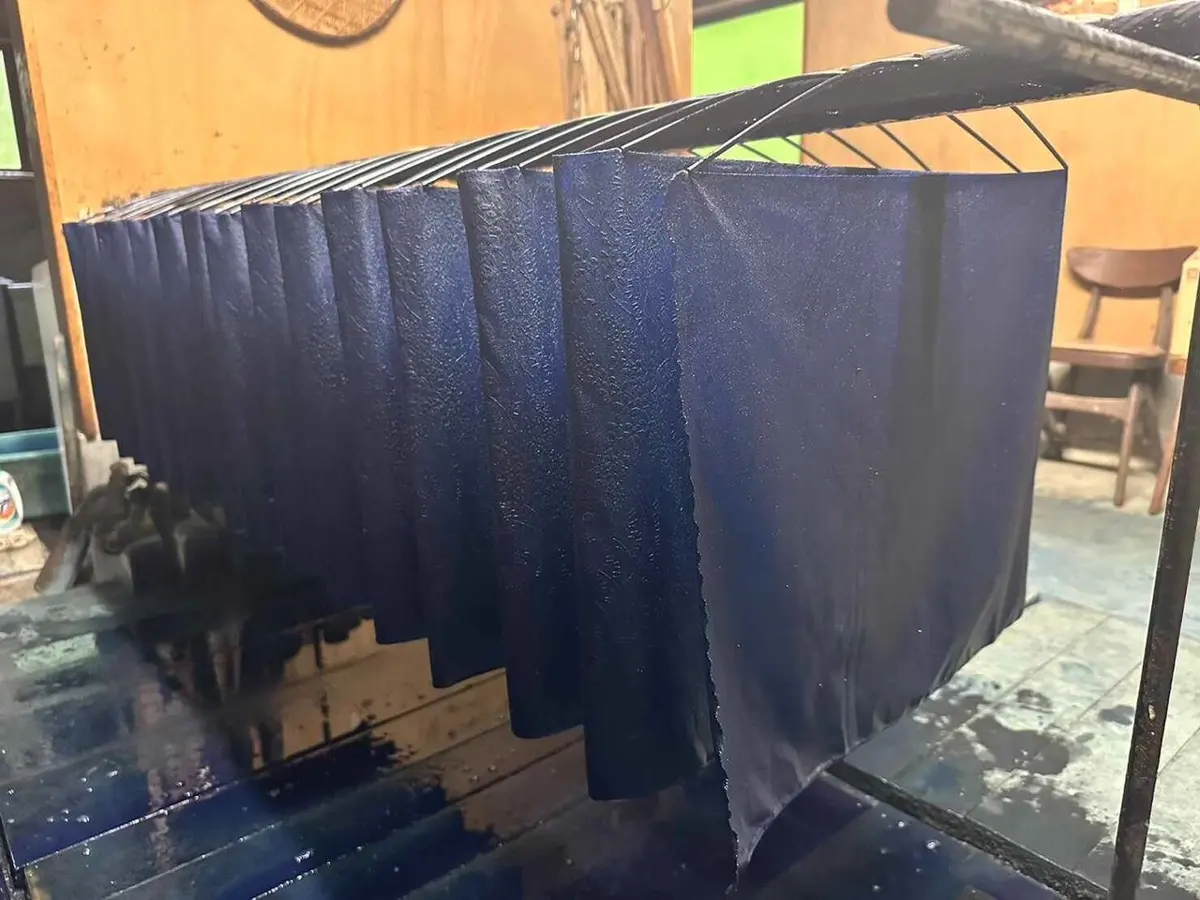
v. Mordant dyes: dyes that need a mordant, a metal salt (of Al, Cr, Fe, Cu or Sn), to fix them to the fiber. The metal ion binds to the fiber and the dye binds to the metal ion as a complex (a lake), so the color is fixed. The same dye can give different colors with different metals: alizarin gives a rose red with aluminium, blue with barium, violet to black with iron and brown with chromium. They dye wool, cotton and nylon. Examples: alizarin, cochineal, madder. (Tannic acid is an acidic mordant used to fix basic dyes on cotton.)
vi. Disperse dyes: water-insoluble, non-ionic dyes, usually with azo or anthraquinone chromophores, applied as a fine dispersion in water to synthetic fibers that dislike water: polyester, nylon and acetate. Heated, the fiber swells a little, the fine particles dissolve into it and are trapped as it cools. Examples: Disperse Blue 1, Disperse Yellow 3, Disperse Orange 25.
Other classes are reactive dyes, which form a covalent bond with the fiber (for cotton, so very fast to washing); azoic dyes, made inside the fiber by a coupling reaction; sulphur dyes; and natural dyes.
Summary: modes of application
| Dye | Fibers | How applied | Examples |
|---|---|---|---|
| Acid | protein (wool, silk), nylon | from an acidic bath | Acid Blue 9, Acid Red 88 |
| Basic | acrylic; also silk, wool, paper | from a neutral or weakly acidic bath | methylene blue, malachite green |
| Direct | cellulose (cotton, rayon) | directly, no mordant | Direct Blue 1, Congo red |
| Vat | cellulose (cotton, denim) | reduced to a soluble form, then oxidized in the fiber | indigo, Vat Blue 1 |
| Mordant | protein and cellulose | fixed by a metal salt (mordant) | alizarin, cochineal, madder |
| Disperse | synthetic (polyester, acetate) | as a fine dispersion in a hot bath | Disperse Yellow 3, Disperse Blue 1 |
| Reactive | cellulose | reacts to form a covalent bond with the fiber | Procion dyes, Reactive Blue 19 |
| Sulphur | cellulose | reduced and oxidized | Sulphur Black 1, Sulphur Brown 6 |
| Natural | various | often with a mordant | alizarin (madder), cochineal |
| Azoic (ingrain) | cellulose | made inside the fiber by coupling in an alkaline bath | Fast Yellow 2G, Orange 2G |
A dyer wants a deep blue on cotton jeans that won’t wash out. Which kind of dye works by being reduced in a vat and oxidized in the air?
Pick an answer to see why.
18.4 Drugs
Imagine you are unwell, with a headache, a cold or an infection. Most likely you take a medicine to feel better. But how does a pill or a syrup inside your body relieve pain or cure an infection? These substances are drugs, chemicals designed to interact with the body in particular ways. So a drug is a substance used to prevent, diagnose or treat disease. In the words of the World Health Organization, a drug is “any substance or product that is used or intended to be used to modify or explore physiological systems or pathological states for the benefit of the recipient.” Every medicine is a drug, but not every drug is a medicine.
Drugs are taken in many ways: tablets, capsules, syrups and injections. Whether the aim is to fight an infection, ease pain or manage a lasting illness such as diabetes, each is designed for one job, and its secret is its active ingredient, chosen and made by chemistry. Painkillers such as paracetamol (called acetaminophen in the USA) act on how the body makes and senses the signals of pain; antibiotics such as penicillin have structures that kill harmful bacteria.
18.4.1 Characteristics of drugs
An ideal drug for medication should:
- i.act where it is needed, locally or through the whole body (systemically), as the illness needs;
- ii.be effective and efficient;
- iii.be non-toxic and non-irritant;
- iv.have no side effects, or very few;
- v.not disturb the normal working (physiology) of the body;
- vi.not let the germs or cells it attacks become resistant to it, even after long use;
- vii.not harm the body’s own tissues; it should act selectively on its target;
- viii.be cheap and easily available.
18.4.2 Natural and synthetic drugs
By their source, drugs are grouped in two main categories.
1. Natural drugs are obtained from plants, animals and minerals. Many are used every day for common illnesses: people use peppermint for indigestion, aloe vera on the skin, turmeric against inflammation and ginger for nausea. Many natural drugs are also the starting point of modern prescription medicines, and they play a big part in health care around the world.
Some plant-based drugs
| Drug | Plant source | Use |
|---|---|---|
| Morphine | Papaver somniferum (opium poppy) | relief of severe pain (analgesic) |
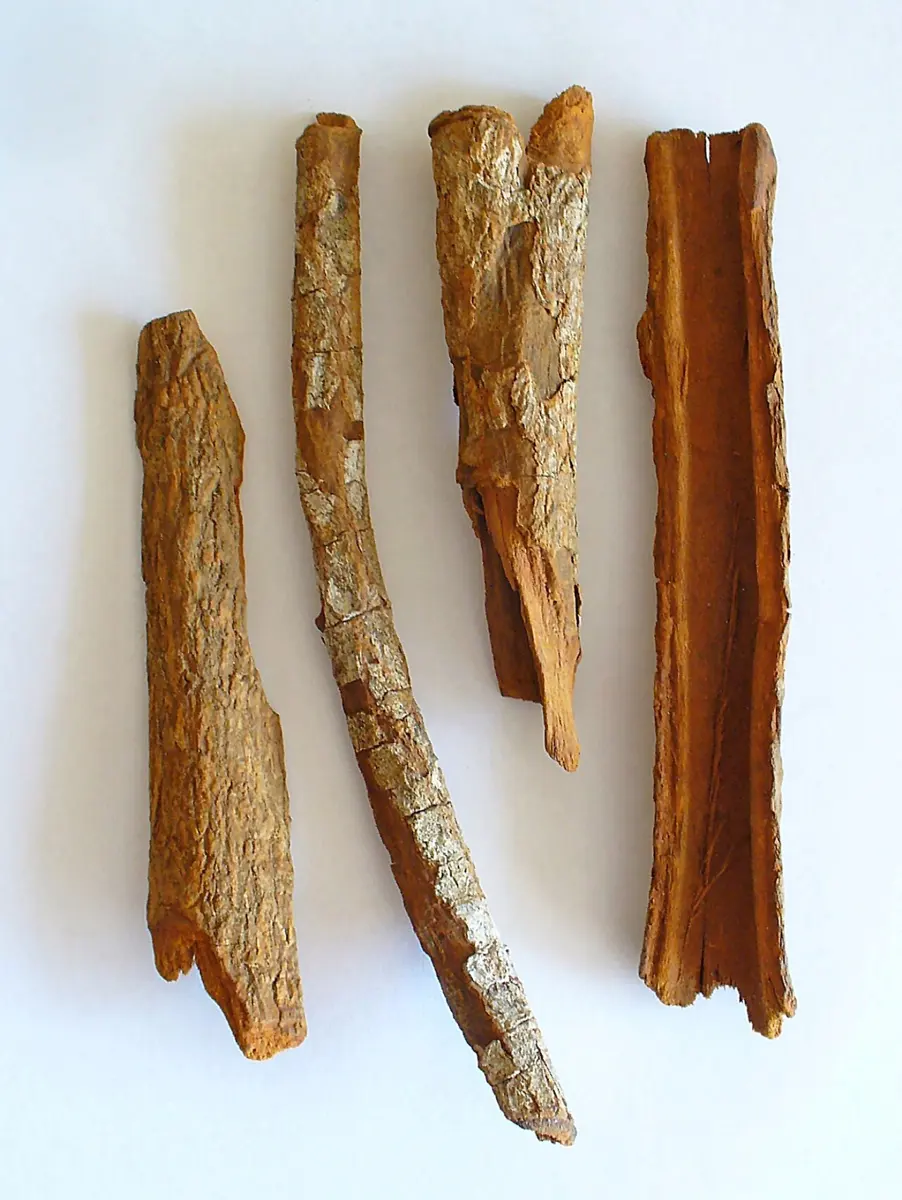
| Quinine | Cinchona officinalis (cinchona bark) | treatment of malaria |
| Atropine | Atropa belladonna (deadly nightshade) | widens the pupils for eye tests; treats a very slow heartbeat; relaxes smooth muscle |
| Caffeine | Coffea arabica (coffee), Camellia sinensis (tea) | stimulant of the central nervous system |
| Castor oil | Ricinus communis (castor bean) | laxative, skin moisturizer |
| Pilocarpine | Pilocarpus jaborandi (jaborandi) | treatment of glaucoma and dry mouth |
Some animal-based drugs
| Drug | Animal source | Use |
|---|---|---|
| Cod liver oil | liver of the cod (Gadus species) | source of vitamins A and D, for bones and eyes |
| Antivenoms | antibodies made in horses or sheep | treatment of venomous snake bites and stings |
| Hirudin | salivary glands of leeches (Hirudo medicinalis) | stops blood clotting (anticoagulant) |
| Lanolin (wool fat) | grease from sheep’s wool | base of skin ointments, creams and cosmetics |
| Honey | honeybees, Apis mellifera, from flowers’ nectar | soothes sore throat and cough, helps wounds heal |
| Gelatin | collagen from animal bones and skin | capsule shells, wound dressings, drug delivery |
| Thyroxine (T₄) | thyroid glands of animals (historically pigs); now made synthetically | treatment of hypothyroidism |
Some mineral-based drugs
| Drug | Mineral source | Use |
|---|---|---|
| Epsom salt | magnesium sulphate, MgSO₄·7H₂O | laxative; soaking sore muscles |
| Sodium chloride | common salt | saline drips and nasal washes |
| Sodium hydrogencarbonate (baking soda) | made from soda ash (sodium carbonate), or the mineral nahcolite | antacid for heartburn; treating acidosis |
| Magnesium hydroxide | the mineral brucite, or made from sea water | antacid for heartburn and indigestion; laxative |
| Alum | potassium alum | astringent (stops bleeding of small cuts); water purification; cosmetics |
2. Synthetic drugs are made in laboratories by chemical methods. They treat particular illnesses, or copy or strengthen the effects of natural compounds. Aspirin, a widely used pain reliever that also stops blood platelets clumping, was developed from salicylic acid, whose relative is the pain-relieving compound of willow bark. Synthetic drugs treat infections, long-term illnesses and mental illness; designed for a target, they are usually purer, more reliable and stronger than natural remedies, and easier to make in quantity.
18.4.3 Classification of some common groups of drugs
Drugs are grouped by their source, their effect on the body, how they act, their chemical structure, or the organ they act on. Some common groups:
1. NSAIDs (non-steroidal anti-inflammatory drugs) are drugs that lower fever, inflammation and pain, and are not steroids (unlike cortisone, they don’t have the four-ring steroid structure). Their three main effects are on:
- Pyrexia (fever): a rise in body temperature above normal (about 37 °C, 98.6 °F).
- Pain: an unpleasant sensory and emotional experience linked with actual or possible damage to tissue.
- Inflammation: the body’s protective response to injury or infection, marked by pain, swelling, redness, heat and loss of function.
i. Antipyretics lower body temperature in fever: paracetamol, aspirin.
ii. Analgesics relieve pain without loss of consciousness: aspirin, ibuprofen, paracetamol. (The strong analgesics, opioids such as morphine, are a separate group, used for severe pain under strict control, because they are addictive.)
iii. Anti-inflammatory drugs lessen inflammation, the body’s reaction to irritation, infection or injury; they treat arthritis, sprains and muscle injuries: ibuprofen, aspirin.
2. Antibiotics treat infections caused by bacteria. They are chemicals produced by microorganisms (fungi, bacteria, actinomycetes), or made from such chemicals, that kill or stop the growth of other microorganisms in small concentrations. Common antibiotics: penicillin, streptomycin, chloramphenicol, tetracycline, vancomycin, amoxicillin. They don’t work against viruses, so they don’t cure colds or flu.
By the range of bacteria they act on (their spectrum), antibiotics are of two types:
a. Narrow-spectrum antibiotics act on a limited range of bacteria, mainly gram-positive or mainly gram-negative: penicillin G, vancomycin.
b. Broad-spectrum antibiotics act on a wide range of bacteria, both gram-positive and gram-negative: chloramphenicol, tetracycline, amoxicillin.
3. Antiseptics and disinfectants kill microorganisms or stop their growth. They act alike, but differ in where they are used.
- Antiseptics are applied to living tissue, such as skin, wounds and cuts, to prevent infection: alcohol (ethanol, isopropyl alcohol), povidone-iodine (Betadine), hydrogen peroxide, dilute potassium permanganate, and phenolic compounds (chloroxylenol, the active part of Dettol, and thymol).
- Disinfectants are applied to non-living objects, such as floors, toilets, instruments and swimming pools: bleach (sodium hypochlorite), formaldehyde, chlorine, bithionol, phenol (1%).
The same chemical can be either, depending on its strength: a 0.2% solution of phenol is an antiseptic, a 1% solution a disinfectant.
4. Other important classes of drugs
i. Sulpha drugs (sulphonamides) are synthetic drugs that treat bacterial infections. They were the first widely used drugs against bacteria, in the 1930s, before penicillin; being made by chemists, not by microbes, they are antibacterials rather than antibiotics in the strict sense. Examples: sulphanilamide, sulphadiazine, sulphaguanidine.
ii. Tranquilizers are drugs that act on the mind, reducing stress and anxiety and treating mental disorders: diazepam, meprobamate (Equanil).
iii. Sedatives and hypnotics: sedatives calm the brain’s activity and cause drowsiness, but not sleep; hypnotics bring on sleep. Examples: barbiturates (such as phenobarbitone) and benzodiazepines (diazepam, alprazolam, lorazepam, nitrazepam). Often the same drug sedates at a low dose and brings sleep at a higher one; diazepam does both.
iv. Antimalarial drugs prevent or treat malaria, caused by the Plasmodium parasite carried by Anopheles mosquitoes: chloroquine, quinine, artemisinin, mefloquine.
v. Antacids are weak bases that neutralize excess acid in the stomach (hyperacidity): sodium hydrogencarbonate (NaHCO₃), magnesium hydroxide (Mg(OH)₂), aluminium hydroxide (Al(OH)₃), calcium carbonate (CaCO₃).
18.4.4 Habit-forming drugs and drug addiction
Repeated use of drugs that cause physical or psychological dependence is called habit-forming or addictive. These include stimulants (cocaine, methamphetamine), sedatives (benzodiazepines), opioids (heroin, and painkillers such as morphine and codeine), nicotine, alcohol and some other prescription medicines. The signs of addiction, called substance use disorder, include compulsive seeking of the drug, tolerance (needing more for the same effect) and withdrawal symptoms when it is stopped.
Addiction comes from a mix of psychological, social and inherited factors: people with a family history of addiction, or with mental health problems, are at greater risk. Its effects are deep, harming not only the person but the family and community. Health effects range from long-lasting diseases of the liver, heart and lungs to anxiety and depression; injecting drugs with shared needles spreads HIV and hepatitis. Treatment usually combines counseling, support groups and medicine, treating both the mind and the body. Prevention works best: education, early help, and community support.
18.4.5 Pesticides (insecticides, herbicides and fungicides)
Many living things, such as insects, weeds, fungi and rodents, harm people, animals and crops. They are pests, and the chemicals used to control them are pesticides: designed to kill, repel or control pests, they play a big part in farming and in public health. Examples: DDT, malathion, BHC (lindane), parathion, zinc phosphide, ANTU.
Pesticides are grouped by the pests they control: insecticides (insects), herbicides (weeds), fungicides (fungi), rodenticides (rats and mice).
- Insecticides kill or control insects. They protect crops, and control insect-borne diseases such as malaria and dengue. Examples: DDT, BHC, malathion, parathion, and today mostly pyrethroids such as permethrin and cypermethrin.
- Herbicides (weedkillers) kill or control unwanted plants that compete with crops for nutrients, sunlight and water; used in fields, gardens and lawns. Examples: glyphosate, 2,4-dichlorophenoxyethanoic acid (2,4-D), 2,4,5-trichlorophenoxyethanoic acid (2,4,5-T).
- Fungicides kill or control fungi. They protect plants from diseases such as mildew, rust and blight, and stored fruits, vegetables and grains from spoiling. Examples: chloropicrin (trichloronitromethane, a soil fumigant), aluminium phosphide (for stored grain), copper sulphate, Bordeaux mixture, sulphur, captan.
- Rodenticides kill rats and mice: zinc phosphide, ANTU (α-naphthylthiourea).
Exercise
A. Multiple choice questions
- Which of the following is an addition polymer?
Pick an answer to see why.
- What type of polymer is nylon-6,6?
Pick an answer to see why.
- Pick out the natural polymer.
Pick an answer to see why.
- Name the monomers of nylon-6,6.
Pick an answer to see why.
- Which of the following properties is used to classify a polymer as a fiber?
Pick an answer to see why.
- Which chromophore is present in azo dyes?
Pick an answer to see why.
- Which dye is applied in an acidic medium to protein fibers such as silk and wool?
Pick an answer to see why.
- Pick out the vat dye.
Pick an answer to see why.
- Which class of dye requires salts of metals to fix it onto fabric?
Pick an answer to see why.
- Which of the following is an example of a basic dye?
Pick an answer to see why.
- Which dye forms a covalent bond with the fabric during application?
Pick an answer to see why.
- Which of the following is true for drugs?
Pick an answer to see why.
- Which of the following is a natural drug?
Pick an answer to see why.
- Which of the following drugs is used to relieve pain and fever?
Pick an answer to see why.
- Which of the following drugs is used to treat bacterial infection?
Pick an answer to see why.
- Which of the following can result from long-term drug abuse?
Pick an answer to see why.
- Which kind of pesticide is used to kill cockroaches?
Pick an answer to see why.
- Which chemical is commonly used as a herbicide?
Pick an answer to see why.
- Which of the following is an example of an insecticide?
Pick an answer to see why.
B. Short answer questions
Give reasons:
- a.Polythene is an addition polymer whereas Bakelite is a condensation polymer.
- b.PVC is a homopolymer whereas nylon is a copolymer.
Answer
Define pest and pesticide, with examples.
Answer
What are elastomers and fibers? Give an example of each.
Answer
Write the monomers of PVC, polythene, Teflon, Bakelite and nylon.
Answer
Differentiate between:
- a.addition polymers and condensation polymers
- b.natural dyes and synthetic dyes
- c.natural drugs and synthetic drugs
Answer
What are insecticides and fungicides? Give an example of each.
Answer
What do you mean by chromophore and auxochrome? Give an example of each.
Answer
Write the uses of:
- a.PVC
- b.mordant dyes
- c.herbicides
- d.nylon-6,6
Answer
Draw the structures of paracetamol and aspirin.
Answer
Define:
- a.antibiotics
- b.analgesics
- c.pesticides
- d.azo dyes
- e.antacids
Answer
What are dyes? Give any two examples of natural dyes.
Answer
What are broad-spectrum and narrow-spectrum antibiotics? Give an example of each.
Answer
How do antiseptics differ from disinfectants?
Answer
What are sulpha drugs? Give an example.
Answer
Write the distinction between direct dyes and mordant dyes.
Answer
C. Long answer questions
What are drugs? Write the characteristics of drugs.
Answer
Write a note on drug addiction and suggest some preventive measures.
Answer
What are dyes? Discuss the various types of dyes by their mode of application.
Answer
What is a polymer? Classify polymers on the basis of monomer units.
Answer
“All medicines are drugs but all drugs are not medicines.” Justify the statement.
Answer
Printable PDFs
- Study notes 3 pages
- Worksheet 4 pages Answer key
Quiz yourself: Materials and Chemicals We Use, Grades 5–12 →
Practice every question in the book, and keep track of the ones you miss →
A companion to your textbook, not a replacement for it: study from the book your school uses, and where the two differ, follow your teacher. Found a mistake? Please tell us.