
Leave an iron rod and a wooden ruler on the same table overnight, and pick them up in the morning. The rod feels cold; the ruler hardly feels cold at all. Put a thermometer against each and it gives the same reading for both. So which is colder, and what is your hand really telling you?
This unit separates three ideas that everyday speech mixes up: thermal energy, what a body holds; heat, energy on the move; and temperature, what decides which way it moves. Then it shows how a thermometer can be trusted at all (the zeroth law of thermodynamics), how one is made and marked, why −273.15 °C is as cold as anything can be, and how to change a reading from one scale to another, faulty thermometers included.
9.1 Introduction
Heat and temperature govern almost everything around us: the warmth of the Sun on your back, the tea that cools on the table, the pressure cooker hissing on the stove, the snow on the Himalaya and the weather that brings it. The two words are closely linked but not the same:
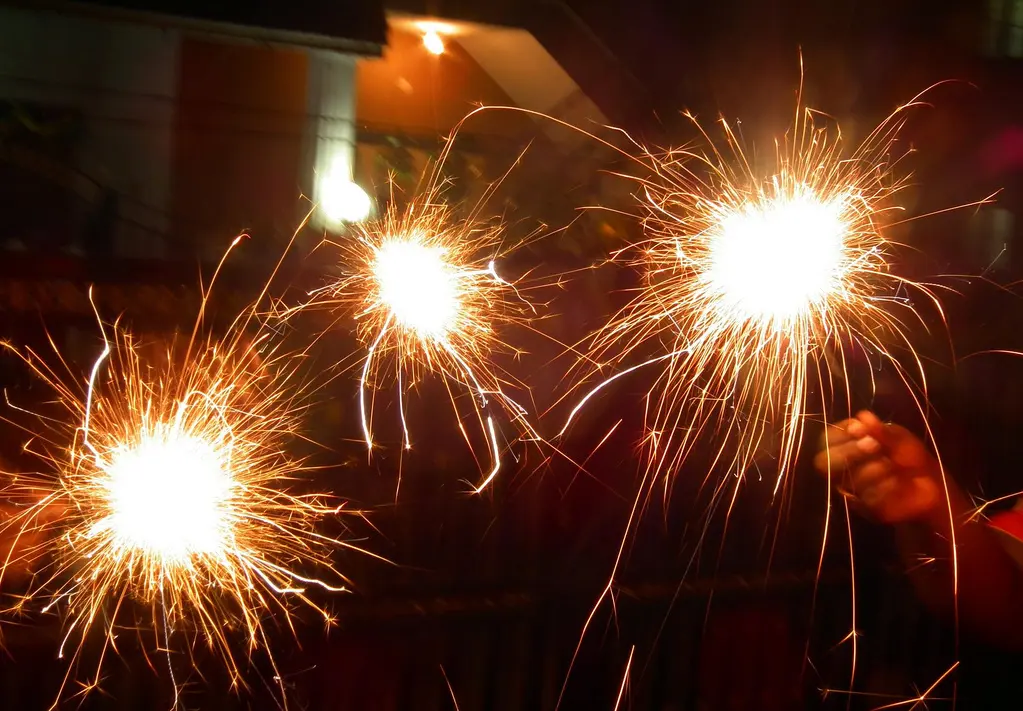
- Temperature is a measure of the average kinetic energy of the random motion of a body’s molecules: how hot it is.
- Heat is energy transferred from one body to another because of a difference in temperature.
- Thermal energy is the energy a body has because of the random motion of its molecules.
The rest of the unit takes them one at a time.
9.2 Thermal energy
Every substance is made of atoms and molecules that never stop moving: in a gas they fly about and collide, in a liquid they jostle and slide past one another, in a solid they vibrate about fixed places. Because they move, they have kinetic energy; because they attract one another, they also have potential energy, stored in the bonds and forces between them.
- The internal energy of a body is the total of the kinetic and potential energies of all its molecules (their random motion, not the motion of the body as a whole: a cricket ball flying through the air doesn’t get hotter because it moves).
- The thermal energy is the part of the internal energy that comes from the random motion of the molecules: their kinetic energy. The faster they move, the more thermal energy the body has, and the higher its temperature.
So when a body warms up, its molecules move faster, and its thermal energy and internal energy increase. A hot body has more thermal energy than the same body when cold.
Thermal energy can be made from other forms of energy:
- Mechanical work: rub your palms together on a cold morning and they warm up. The work you do against friction becomes the random motion of the molecules in your skin.
- Chemical energy: burning wood, LPG, kerosene or the food in your cells.
- Electrical energy: the coil of a heater, a rice cooker or an electric iron.
- Nuclear energy: the Sun (fusion), nuclear power stations (fission), and the radioactive rocks that keep the inside of the Earth hot, the source of geothermal energy and of hot springs such as Tatopani in Myagdi.
- Radiation: sunlight absorbed by a roof, a solar water heater or your skin.
People have used thermal energy for warmth and cooking since fire was first tamed, at least 400,000 years ago; for most of history its only sources were the Sun and fire.
A steel spoon at 20 °C is dropped into a pan of water at 20 °C. Which statement is true?
Pick an answer to see why.
9.3 Heat
Put a hot body in contact with a cold one. The fast molecules of the hot body knock into the slower ones of the cold body at the boundary, and on average pass some of their energy on. Energy flows from the hot body into the cold one, until both reach the same temperature. That energy in transit is heat.
Heat is the energy transferred from one body to another because of a difference in temperature between them. It flows by itself only from the body at the higher temperature to the body at the lower temperature.
- Stand in the sunshine and you feel warm: your body gains energy by radiation from the much hotter Sun.
- Walk towards a snow-covered slope, or touch the snow, and you feel cold: your body loses energy to the colder surroundings and snow.
In each case the energy exchanged is heat, and the temperature difference is what drives it. Heat is not a substance; you can’t see it in an object, only notice its flow when you touch something. The natural flow of heat needs no force or machine to push it: it is a non-mechanical transfer of energy, by conduction, convection or radiation.
Being energy, heat is measured in joules (J), the SI unit. An older unit, still common, is the calorie (cal), the heat that raises the temperature of 1 g of water by 1 °C:
The “Calories” on a food packet are kilocalories: 1 kcal = 1000 cal ≈ 4.2 kJ. Heat is measured with a calorimeter, as Unit 11 shows.
More thermal energy does not mean heat flows out
Does heat flow from the body with more thermal energy to the one with less? No. A full bucket of warm water at 40 °C has far more thermal energy than a red-hot iron nail: it has thousands of times more molecules. Yet drop the nail in, and heat flows from the nail into the water, because the nail is at the higher temperature. Try it below.
Thermal energy and heat compared
| Thermal energy | Heat | |
|---|---|---|
| What it is | the energy a body has because of the random motion of its molecules | energy transferred from one body to another |
| Its cause | the motion of the molecules or atoms of the body | a difference in temperature between two bodies |
| How it changes | grows as the body’s temperature rises (and with more of the substance) | flows from the hotter body to the colder one until their temperatures are equal |
| Where it is | stays in the body, as part of its internal energy | exists only while it is being transferred |
| Where it comes from | friction, burning fuel, electric heating, sunlight, geothermal and nuclear sources | any body at a higher temperature than another in contact with it |
A red-hot iron nail is dropped into a big bucket of warm water. Which way does heat flow?
Pick an answer to see why.
9.4 Temperature
Bring a hot body and a cold body into thermal contact. The cold one warms up, the hot one cools down, and the changes stop when the two reach the same value of something. That something is temperature.
Temperature is the degree of hotness or coldness of a body, the property that decides the direction of heat flow between bodies in thermal contact: heat flows from the body at the higher temperature to the one at the lower temperature, and stops flowing when their temperatures are equal. Bodies placed in thermal contact always end up with the same value of temperature.
So the body that loses heat in thermal contact is, by definition, at the higher temperature; the body that gains heat is at the lower. A body that gains heat usually warms up: its temperature rises because of the heat added. (Not always: ice at 0 °C takes in heat while it melts and stays at 0 °C.)
In the molecular picture, the temperature of a body is a measure of the average kinetic energy of the random motion of its molecules. For a gas, the absolute temperature is directly proportional to it (Unit 13). Because it is an average over a great many molecules, temperature is a macroscopic quantity: it has no meaning for a single molecule, just as one student can’t have a class average.
Temperature is not the same as the amount of energy. A body at a high temperature can burn you even if it holds very little thermal energy, and a body at a lower temperature can hold a great deal without hurting.
The SI unit of temperature is the kelvin (K). In everyday use there are also the degree Celsius (°C) and, in the United States, the degree Fahrenheit (°F). Section 9.11 shows how they are related.
Which of these is a measure of the average kinetic energy of the random motion of a body’s molecules?
Pick an answer to see why.
9.5 Effects of heat
When heat is given to a body, it can bring about many changes:
- Thermoelectric effect. Join two wires of different metals, say copper and iron, into a closed loop, and keep the two junctions at different temperatures. An e.m.f. appears in the loop, and a current flows. This is the Seebeck effect (Thomas Seebeck, 1821), and such a pair of wires is a thermocouple (Figure 9.3). The e.m.f. is small (from a few to a few tens of microvolts for each degree of difference, depending on the pair of metals) but it grows with the temperature difference, so a thermocouple makes a good thermometer, especially for very hot things like furnaces, gas flames and car exhausts.
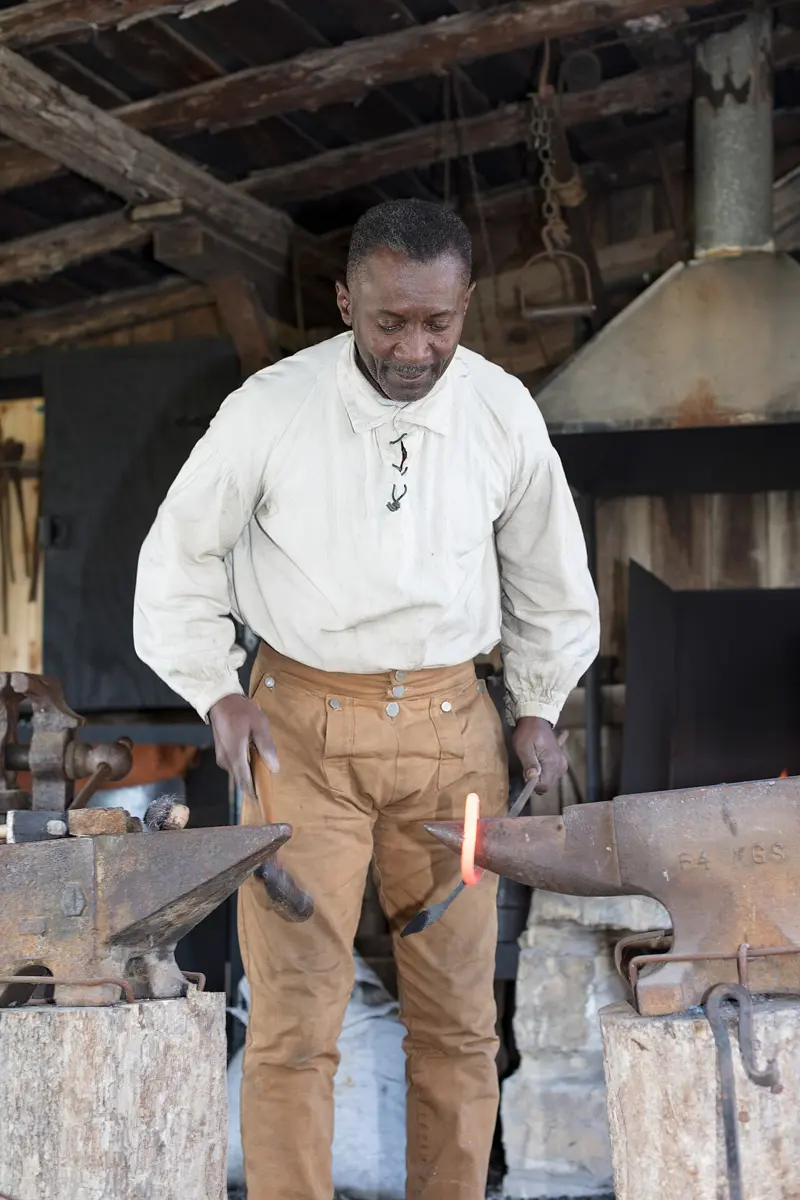
- Emission of light. Heat a substance enough and it begins to glow: iron glows dull red at about 600 °C, bright orange at about 1100 °C, and nearly white at about 1300 °C. A blacksmith judges a piece of iron’s temperature by its color, and an old filament bulb makes its light this way, at about 2500 °C.
- Change in electrical resistance. The resistance of a metal conductor increases as it gets hotter; that of a semiconductor (silicon, germanium, a thermistor) decreases.
- Changes in physical properties: a change in temperature, volume (expansion, Unit 10), state (melting, boiling), color, viscosity (honey flows faster when warm), elasticity, solubility, surface tension, and the rate of chemical reactions.
- Chemical changes: paper catches fire, an egg white sets, rice cooks, bread browns. These make new substances.
A copper wire and a silicon chip are both heated from 20 °C to 80 °C. What happens to their electrical resistances?
Pick an answer to see why.
Questions to think about
9.6 Thermal equilibrium
Pour some hot water into a beaker of cool water. The hot water cools, the cool water warms, and soon the mixture has one temperature in between. Leave a cup of hot tea on the table, and after a while it is at the same temperature as the room.
When two bodies at different temperatures are in thermal contact, heat flows from the hotter to the colder: the temperature of the hot body falls and that of the cold body rises, until the two are equal. Then there is no net flow of heat between them, and they are in thermal equilibrium.
Two bodies are in thermal equilibrium if there is no net flow of heat between them when they are in thermal contact: that is, when they are at the same temperature.
The word “net” matters. At equilibrium the molecules still collide at the boundary and energy still passes both ways; it just passes at the same rate in each direction, so neither body gains or loses on the whole. It is a balance of two equal flows, not a stop.
A hot iron block and a cold iron block are placed in contact inside an insulated box. Which is true when they reach thermal equilibrium?
Pick an answer to see why.
9.7 Thermal equilibrium as the working principle of a thermometer
A thermometer can only ever tell you its own temperature: a mercury thermometer reads how far its own mercury has expanded. So how can it measure the temperature of something else?
- Put the thermometer’s bulb in thermal contact with the body: in a patient’s mouth or armpit, in the water, in the air in the shade.
- Wait. Heat flows between the body and the bulb until they reach thermal equilibrium. Then the bulb is at the same temperature as the body.
- Read the thermometer. It shows the temperature of its own mercury, which now equals the temperature of the body.
So a thermometer works because of thermal equilibrium. It also works best when it is small next to what it measures: then the heat it takes in or gives out barely changes the body’s temperature. A big, cold thermometer dipped into a few drops of hot water would cool the water and read too low.
9.8 Zeroth law of thermodynamics
Zeroth law of thermodynamics: if two bodies A and B are each in thermal equilibrium with a third body C, then A and B are in thermal equilibrium with each other.
It sounds too obvious to need saying, but it is not a matter of logic: it is a fact about nature, found by experiment. Here is the experiment, using two kinds of wall:
- an adiabatic wall lets no heat through (an ideal insulator, like a perfect vacuum flask);
- a diathermic wall lets heat through freely (a thin sheet of copper, say).
- A and B are separated from each other by an adiabatic wall, and each is in contact with C through a diathermic wall. The whole set is enclosed in an adiabatic box. Heat flows between A and C, and between B and C, until each is in thermal equilibrium with C.
- Now the wall between A and B is made diathermic, and they are cut off from C by an adiabatic wall. Nothing happens: no heat flows between A and B, and neither’s temperature changes. So A and B were already in thermal equilibrium with each other, as the law says.
The zeroth law is what makes temperature a meaningful quantity. It says that “being in thermal equilibrium” sorts all bodies into groups, and each group can be given one number, its temperature: bodies with the same number are in equilibrium, and bodies with different numbers are not. And it is what makes a thermometer work: let the thermometer be C. If A and B each give the same reading on it, the zeroth law says A and B are at the same temperature, even if they are never brought together.
A thermometer reads 36 °C when placed in body A and 36 °C when placed in body B. A and B are then put in contact. What happens?
Pick an answer to see why.
Questions to think about
9.9 Thermometry
Thermometry is the science of measuring temperature, and a thermometer is a device that measures it. Every thermometer uses a thermometric property: some measurable property of a substance that changes steadily with temperature. For example:
| Thermometric property | Thermometer |
|---|---|
| i.the length of a solid bar | bimetallic strip thermometer (an oven dial) |
| ii.the volume of a liquid | liquid-in-glass thermometer (mercury or alcohol) |
| iii.the volume of a gas at constant pressure | constant-pressure gas thermometer |
| iv.the pressure of a gas at constant volume | constant-volume gas thermometer, the standard for accurate work |
| v.the magnetic properties of a substance | magnetic thermometer, for temperatures near absolute zero |
| vi.the electrical resistance of a wire | platinum resistance thermometer; a thermistor in a digital thermometer |
| vii.the e.m.f. of a thermocouple | thermocouple, for furnaces and flames |
| viii.the radiation given out | infrared thermometer, which needs no contact |
To measure a temperature, the thermometer’s sensitive part (the bulb) is put in thermal contact with the body and left until they reach thermal equilibrium. Making a good thermometer takes three things: construction, calibration and sensitivity.
Construction
A thermometer must be built so that its thermometric property changes uniformly (by equal amounts for equal steps of temperature) over its range. A liquid-in-glass thermometer is a thin-walled glass bulb full of liquid, joined to a long, very fine tube of uniform bore, the capillary tube, inside a thick glass stem that acts as a magnifying lens, with the scale marked on it; the air is pumped out of the tube before it is sealed. The thermometric substance can be a solid, a liquid or a gas, but it must respond readily and measurably to temperature.
Mercury is a good liquid for it: it expands nearly uniformly, conducts heat well (so it responds quickly), is opaque and shiny (easy to see), doesn’t wet the glass, and stays liquid from −39 °C to 357 °C. Alcohol, dyed red or blue, is used in very cold places, since it freezes only at −114 °C, and is safer if the glass breaks. Mercury is poisonous, so since 2020 the Minamata Convention has been phasing out mercury thermometers in favor of digital ones.
Calibration
To calibrate a thermometer is to mark its scale. First two standard temperatures, the fixed points, are marked; then the interval between them is divided into a chosen number of equal parts, the degrees. Different scales divide it into different numbers of parts.
- Lower fixed point (LFP), or ice point: the temperature at which pure ice melts at standard atmospheric pressure (101.325 kPa).
- Upper fixed point (UFP), or steam point: the temperature at which pure water boils at standard atmospheric pressure. The bulb is held in the steam just above the boiling water, not in the water, because dissolved impurities raise the water’s boiling point but not the steam’s temperature.
Both need standard pressure: in Kathmandu or Bhaktapur, about 1400 m up, water boils at only about 95 °C, so a thermometer marked “100” in a pan there would be 5 degrees out. (Grade 10 Science made a Celsius scale this way: Calibrating a thermometer.)
If a thermometric property has the value at the ice point and at the steam point, the Celsius temperature at which it has the value is
For a liquid-in-glass thermometer, X is the length of the thread above some mark; for a resistance thermometer, the resistance; and so on.
Sensitivity
A thermometer should be as sensitive as possible (the book’s word is sensitiveness), so that:
- it reaches the body’s temperature quickly, and can be read at once;
- it takes in or gives out only a little heat, so it hardly changes the temperature it is measuring, and reads accurately;
- it shows even a very small change in temperature.
A thin-walled, small bulb helps the first two: heat passes through thin glass quickly, and a small bulb needs little heat. A cylindrical bulb helps too: for the same volume of mercury it has more surface than a spherical one, so heat flows in and out faster. A very narrow bore helps the third: the same small expansion of the mercury pushes the thread a long way along a narrow tube. (A larger bulb would also make the thread move further for each degree, but it would respond more slowly and take more heat from the body; a thermometer is a balance of the two.)
The fixed points on the three common scales are:
| Fixed point | Celsius | Fahrenheit | Kelvin |
|---|---|---|---|
| Lower fixed point (ice melts) | 0 °C | 32 °F | 273.15 K (273 K) |
| Upper fixed point (water boils) | 100 °C | 212 °F | 373.15 K (373 K) |
| UFP − LFP | 100 | 180 | 100 |
9.10 Absolute scale and absolute zero
Cool a gas at constant volume and its pressure falls in a straight line with temperature. Carry the line on, and it reaches zero pressure at −273.15 °C, and the same is true of every gas. That temperature is absolute zero: the lowest temperature possible. Nothing can be cooled below it, because at absolute zero the molecules already have the least energy they can possibly have.
The Kelvin scale, or absolute scale, starts there: absolute zero is 0 K, and its degree, the kelvin, is the same size as a Celsius degree. Temperatures on it are called absolute temperatures. So absolute zero lies 273.15 kelvins below the ice point:
For most calculations 273 is close enough. Note that we write “300 K”, read “300 kelvins”, with no degree sign.
Why absolute zero matters. The absolute temperature of a gas is directly proportional to the average kinetic energy of its molecules (Unit 13). So the absolute temperature can fall to zero only if that kinetic energy falls to its lowest possible value: absolute zero is where the random motion of the molecules is at its least. That is why it is a true zero, not a choice like the zero of the Celsius scale, and why the gas laws, and every formula in physics with a temperature in it, use absolute temperatures.
Two more scales
You may meet two older scales, both with their own steps:
| Scale | Ice melts | Water boils | Steps between | Zero is |
|---|---|---|---|---|
| Réaumur (°Ré) | 0 °Ré | 80 °Ré | 80 | the ice point |
| Rankine (°R) | 491.67 °R | 671.67 °R | 180 | absolute zero |
The Rankine scale is to Fahrenheit what Kelvin is to Celsius: absolute, with Fahrenheit-sized degrees. Like the Kelvin scale, it can never show a negative number.
9.11 Relationship between different temperature scales
Take identical thermometers marked with different scales and put them in the same body. The thread stands at the same height in each: it has gone the same fraction of the way from the lower fixed point to the upper. Only the numbers marked on the scales differ. So for any scale,
is the same. For the Celsius, Fahrenheit and Kelvin scales:
and dividing each by 20,
(With the exact fixed points, .) Two useful forms: , and .
The same idea works for a faulty thermometer whose fixed points are marked wrongly, at L and U instead of 0 and 100 (or for any made-up scale). If it reads θ when the true Celsius temperature is C,
A change of temperature is different from a temperature: a change has no starting point to subtract. Since 100 Celsius degrees = 180 Fahrenheit degrees = 100 kelvins,
so a rise of 10 °C is a rise of 10 K, and of 18 °F.
On a graph of F against C, the relation is a straight line of slope 9/5 that cuts the F axis at +32 and the C axis at −17.8 (Figure 9.7). It crosses the line once, at −40: the only temperature at which the Celsius and Fahrenheit thermometers show the same number.
Worked examples
Two thermometers are put in the same water. The Celsius one rises by 25 degrees. By how much does the Fahrenheit one rise?
Pick an answer to see why.
Exercise
Choose the correct option
- Which of the following must have the same value for two bodies to be in thermal equilibrium?
Pick an answer to see why.
- Which of the following pairs of temperature scales can never give the same numerical value for the temperature of a body?
Pick an answer to see why.
- One thermometer has a spherical bulb and another a cylindrical bulb, holding the same amount of mercury. Which responds more quickly to a change in temperature?
Pick an answer to see why.
- A graph of temperature in °C (along the x-axis) against temperature in °F (along the y-axis) is a straight line. Which statement is correct?
Pick an answer to see why.
- At what temperature is the reading on the Fahrenheit scale three times the reading on the Celsius scale?
Pick an answer to see why.
- The upper and lower fixed points of a thermometer are 0.160 m apart. The mercury thread stands 0.040 m above the lower fixed point. What temperature does it read?
Pick an answer to see why.
- A body is at 15 °C. What is its temperature on the Fahrenheit scale?
Pick an answer to see why.
- A faulty thermometer has its upper fixed point marked at 60°. It reads 40° for a body whose correct temperature is 50 °C. Where is its ice point marked?
Pick an answer to see why.
- The lower fixed points of two scales X and Y are marked at 14° and 25°, and their upper fixed points at 74° and 120°. A body reads 50° on the X scale. What does it read on the Y scale?
Pick an answer to see why.
- The temperature of a substance rises by 27 °C. What is this rise on the Kelvin scale?
Pick an answer to see why.
Answer these questions
- a.The zeroth law of thermodynamics says that if the temperature of body A equals that of body B, and the temperature of B equals that of C, then the temperature of C equals that of A. Explain, in terms of energy flow, why the idea of temperature would be meaningless if this law were not obeyed.
- b.What is meant by the absolute zero of temperature?
- c.The temperature of a water bath rises from 30.0 °C to 50.0 °C. What is the change in its temperature on the Kelvin scale?
Answer
- a.What is thermal equilibrium?
- b.Prove the relation , where the letters have their usual meanings.
- c.A thermometer has its lower and upper fixed points marked at 10° and 80°. When it reads 40°, what is the corresponding temperature on the Celsius scale?
Answer
- a.How can you convert a temperature from one scale to another?
- b.Two beakers of water, A and B, start at the same temperature. The water in A is warmed by 10 °F and the water in B by 10 K. Which beaker is now at the higher temperature? Explain.
Answer
A Celsius and a Fahrenheit thermometer are put in hot water, which is then cooled. When the Celsius thermometer shows a fall of 45 °C, what fall does the Fahrenheit thermometer show?
Answer
A faulty thermometer has its fixed points marked at 2° and 98°. What is the correct temperature on the Celsius scale when it reads 20°?
Answer
Find the value of absolute zero on the Celsius and Fahrenheit scales.
Answer
You feel ill and are told you have a temperature of 40 °C. What is your temperature in °F?
Answer
You put a bottle of drinking water in a refrigerator and leave it until its temperature has dropped by 5 K. What is its change of temperature in a. °F and b. °C?
Answer
Printable PDFs
- The unit as a book (A5) 14 pages Answers as an A4 booklet, 4 sheets
- Study notes 2 pages
- Worksheet 4 pages Answer key
- Harder practice questions 2 pages Answer key
Quiz yourself: Energy, Heat, Light and Sound, Grades 5–12 →
Practice every question in the book, and keep track of the ones you miss →
A companion to your textbook, not a replacement for it: study from the book your school uses, and where the two differ, follow your teacher. Found a mistake? Please tell us.