
Every breath you take carries a few dust specks, pollen grains and bacteria into your nose. Every handful of food has bacteria on it; every scratch on your knee lets some in. Thousands of the germs around you could make you ill, and a few could kill. Yet most of the time you stay well, and when you do fall ill (a cold, a stomach upset, chickenpox), you usually get better on your own within days, and you seldom catch the same disease twice. All the while your body is defending itself, at its surface and in its blood, and remembering every germ it has beaten.
In this unit you will follow those defenses from the outside in: the skin and the sticky lining of your airways, which keep most germs out; the white blood cells that eat the germs that get in, and the antibodies that mark them; the immunity that remembers, and the vaccines that teach it safely; and the antibiotics that help when the body can’t win alone, with the danger that comes from using them carelessly.
5.1 Role of skin and mucous membrane in defense mechanism of human body
Germs and the body’s three lines of defense
A pathogen is a living thing (or a virus) that causes disease: certain bacteria (the ones that cause typhoid, cholera and tuberculosis), viruses (flu, measles, COVID-19, rabies), fungi (ringworm, thrush), protozoa (malaria, amoebic dysentery) and parasitic worms. They get in through the mouth with food and water, through the nose with the air, through cuts and bites in the skin, and through the other openings of the body.
The body’s defense against them is called its defense mechanism, and it works like the defense of an old city such as Bhaktapur: walls and gates to keep enemies out, guards inside who attack anyone who climbs over, and an army that learns each enemy and comes back stronger. Biologists group it into three lines of defense.
| Line | What it is | Examples | Works against |
|---|---|---|---|
| First line | barriers at the surface that keep germs out | skin, mucous membranes, mucus and cilia, tears, saliva, stomach acid | every germ alike |
| Second line | defenders inside that attack any germ that gets past | phagocytes (eating white blood cells), inflammation, fever | every germ alike |
| Third line | defenders that recognize one particular germ and remember it | lymphocytes and the antibodies they make | one germ at a time |
The first two lines are the same for every germ and are ready from birth: they are called non-specific or innate defenses. The third line is specific: it is aimed at one germ, it takes days to get going the first time, and it remembers. That third line is what we mean by immunity in 5.3.
The skin: a wall of dead cells
The skin covers about 1.5 to 2 square meters of an adult’s body, and is its biggest organ. Its outer layer, the epidermis, is made of layers of cells that are pushed up from below, fill with a tough protein called keratin, flatten and die. The surface you touch is about fifteen to twenty layers of these dead, flat, keratin-filled cells, packed and glued together like the tiles of a roof. Under the epidermis is the dermis, with blood vessels, nerves, hair roots, and the sweat glands and sebaceous (oil) glands that open onto the surface.
The skin keeps germs out in several ways.
- A tough physical barrier. Most bacteria and viruses can’t get through unbroken skin: its dead cells have nothing for a virus to infect, and keratin is hard to digest.
- Constant shedding. The dead surface cells flake off all the time, tens of thousands every minute, and germs sitting on them are shed with them. The whole epidermis is renewed roughly every month or two.
- Dryness. Most bacteria need water to multiply, and the surface of the skin is fairly dry.
- Acid. Sweat and the oil of the skin (sebum) make the skin’s surface slightly acid, about pH 5, an acid mantle in which many bacteria grow poorly. Some of the fatty acids in sebum kill bacteria and fungi directly, and sweat carries proteins that kill bacteria.
- Friendly bacteria. Harmless bacteria live on everyone’s skin. They use up the space and food there, and some make substances that stop other bacteria, so dangerous ones find it hard to settle.
The skin protects only while it is whole. A cut, a burn, a crack in dry heels, an insect bite or a dirty needle opens the wall. That is why a wound is washed with clean water and soap and kept covered, and why the mosquitoes that bite through skin can carry malaria, dengue and Japanese encephalitis straight into the blood.
Why is a burn that has destroyed a large area of skin so dangerous, even after the pain has gone?
Pick an answer to see why.
Mucous membranes: a sticky lining at every opening
Wherever the body opens to the outside, at the nose, mouth, throat and windpipe, the gut, the urinary and reproductive passages, and the inside of the eyelids, it is lined not by skin but by a soft, moist mucous membrane. (Some handouts and question papers write “mucus membrane”. Mucous is the word that describes the lining, and mucus is the liquid it makes. In an exam, write mucous membrane: it is the term biology books and dictionaries use.)
A mucous membrane is a thin layer of living cells (an epithelium) kept wet by mucus, a slippery, sticky liquid made by goblet cells scattered among the other cells (they are shaped like a goblet, a wine cup, swollen with mucus at the top). Mucus defends the body in three ways:
- it traps dust, pollen and germs like flypaper, so they never reach the living cells beneath;
- it carries chemicals that kill germs, such as lysozyme, an enzyme that breaks down the cell walls of many bacteria;
- it carries antibodies of a kind called IgA, which stick to germs and stop them from attaching to the lining (you will meet antibodies in 5.2).
The mucous membrane of the respiratory tract
About 10,000 liters of air pass through your nose and windpipe every day, and with it dust, smoke, pollen and germs. The respiratory tract has a defense at every step.
- The nose. Hairs just inside the nostrils catch large dust specks. The nasal passages are narrow and twisting, so the air swirls against their wet, mucus-covered walls and most particles stick there. A tickle in the nose sets off a sneeze, which blows the mucus and what it caught out at high speed.
- The windpipe (trachea) and the bronchi. Their lining is a ciliated epithelium: tall cells, each with about two hundred tiny hairs called cilia on its free surface, with goblet cells among them. The cilia stand in a thin layer of watery liquid, and over them lies a blanket of mucus. Each cilium beats very fast, about twelve to fifteen times a second, with a quick, stiff stroke toward the throat and a slow, bent return. The cilia of neighboring cells beat one after another, in waves, like wind passing over a field of rice, and together they push the mucus blanket, with everything trapped in it, up toward the throat, about half a centimeter to a centimeter a minute. This moving carpet is called the mucociliary escalator.
- The throat. The mucus that arrives in the throat is swallowed without our noticing, and the strong acid in the stomach kills most of the germs in it. Anything that does reach the lower airways sets off a cough, a blast of air that throws mucus up and out.
Cells: Servier Medical Art (smart.servier.com), CC BY 4.0
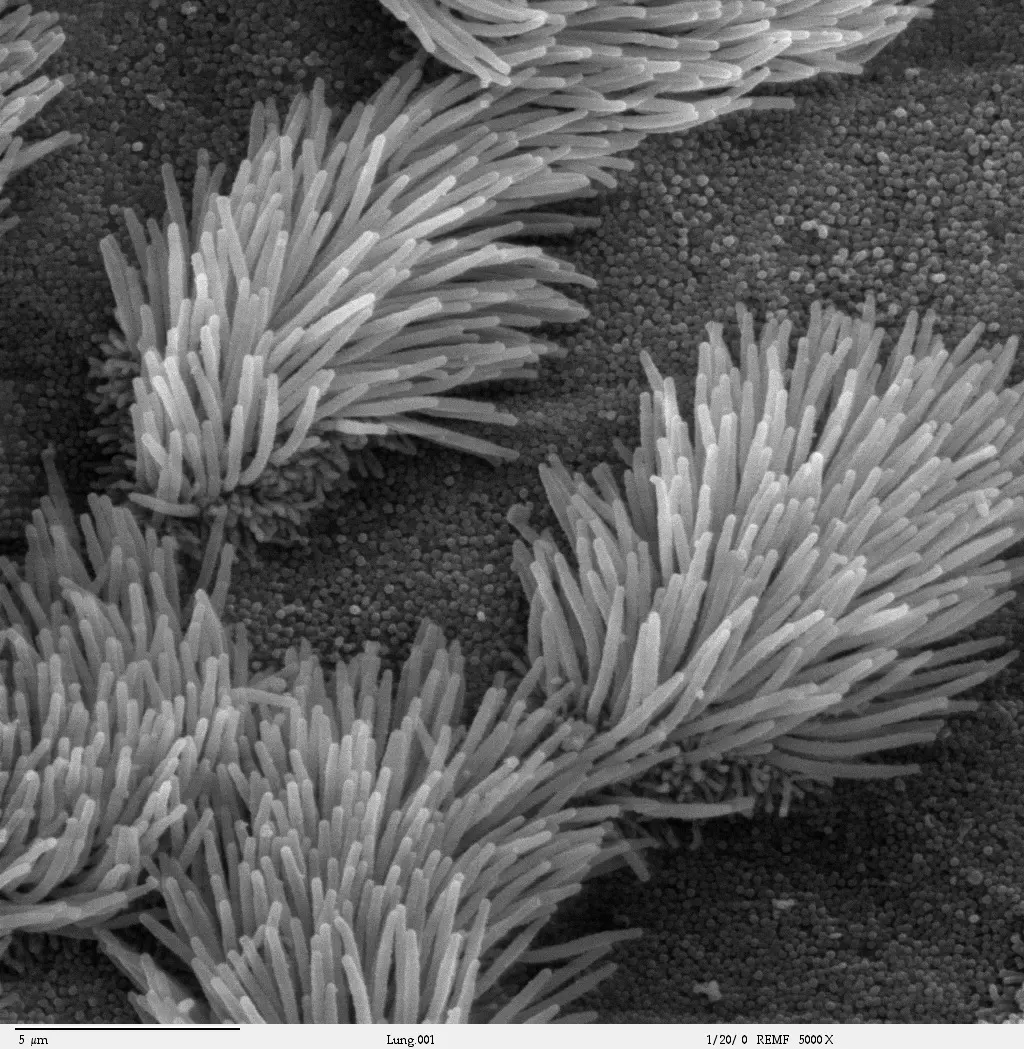
The escalator is easily damaged. Tobacco smoke slows the cilia and, over years, destroys them, so a smoker’s mucus is no longer carried up: it pools in the airways, and the only way to clear it is to cough (the morning “smoker’s cough”), and germs settle in it and cause bronchitis and pneumonia more often. Smoke from wood and dung fires in a kitchen without a chimney does the same, which is one reason why women and children in such homes in Nepal suffer more chest infections. Cold, dry air also slows the cilia, and some viruses, such as those of flu and the common cold, infect and kill the ciliated cells themselves, so a cold is often followed by a cough that takes weeks to go.
In the windpipe, which way do the cilia move the mucus, and why?
Pick an answer to see why.
Other barriers at the openings
- Tears wash the eyes and contain lysozyme, and each blink wipes the eye clean.
- Saliva washes the mouth and contains lysozyme too.
- Stomach acid (hydrochloric acid, about pH 2) kills most germs swallowed with food, water and mucus. A few, such as the bacteria of cholera and typhoid when swallowed in large numbers, survive it.
- Urine flushes the urinary passage, and the vagina is kept acid by its friendly bacteria.
- Friendly bacteria in the gut and on every mucous membrane take up the space and food that harmful ones would need. A long course of antibiotics, which kills many of them, can let harmful ones take over (see 5.4).
5.2 Role of blood in defense mechanism of human body
Germs that get past the skin and the mucous membranes meet the defenders carried by the blood: the white blood cells (leukocytes). Unlike red cells, they have a nucleus, and they are not trapped in the blood vessels: they can squeeze out between the cells of a capillary’s wall, crawling like an amoeba, to reach an infection in the tissues.
A healthy adult has about 4,000 to 11,000 white cells in each microliter (cubic millimeter) of blood, against about 5 million red cells. When there is an infection the body makes more, and a raised white cell count in a blood test is one sign a doctor looks for.
Cells: Servier Medical Art (smart.servier.com), CC BY 4.0
Inflammation: calling the defenders
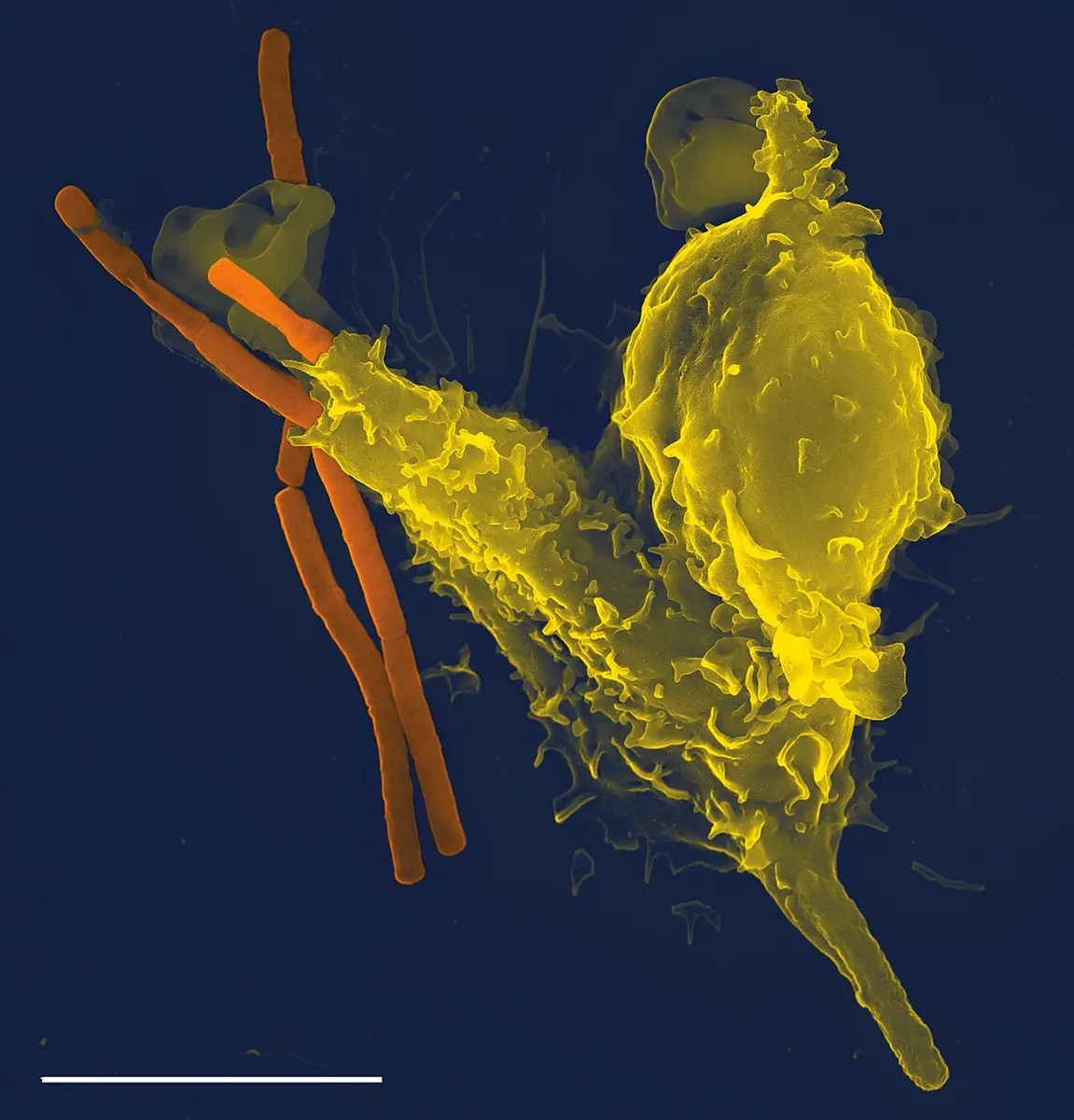
Step on a thorn, and within an hour the place is red, hot, swollen and painful. This is inflammation, the second line of defense at work. Damaged cells, and white cells called basophils and their cousins in the tissues, mast cells, release histamine and other chemicals. These widen the small blood vessels nearby, so more blood flows there (the redness and heat), and make the capillary walls leaky, so plasma and white cells pour out into the tissue (the swelling). The pressure and chemicals on nerve endings cause the pain, which makes you rest the injured part. Within hours neutrophils arrive in great numbers and start eating the bacteria.
If the fight goes on, the dead neutrophils, the bacteria they killed and broken tissue collect as a thick, yellowish liquid: pus. A boil or an infected wound full of pus is a battlefield, and the pus is mostly the bodies of the fallen defenders.
When germs spread through the body, the brain raises its temperature: a fever. A temperature of a degree or two above the usual 37 °C slows the multiplying of many bacteria and viruses and speeds up the work of white blood cells.
Phagocytosis
Phagocytosis (from the Greek phagein, to eat, and kytos, a cell) is the process by which certain white blood cells, called phagocytes, take in germs, dead cells and other particles, enclose them in a bag of membrane inside the cell and digest them. You met it as a kind of endocytosis in Unit 1.
There are two main phagocytes.
- Neutrophils are the most common white cells. They are the first to arrive at an infection, in minutes to hours, in huge numbers, and each eats a few bacteria and then dies, within a day or two. They are the main cells in pus.
- Monocytes circulate in the blood for a day or so, then leave it and grow into macrophages (“big eaters”), which live in the tissues for months. A macrophage can eat a hundred bacteria, and it also eats dead and worn-out cells (the spleen’s macrophages eat old red blood cells) and clears away the debris of an infection. Macrophages also show pieces of the germs they have eaten to lymphocytes, which helps start the third line of defense.
Phagocytosis happens in five steps.
- Chemotaxis (moving toward the germ). Bacteria and damaged tissue give off chemicals. The phagocyte senses where they are strongest and crawls toward them, squeezing out of the capillaries if it must.
- Adherence (attaching). The phagocyte’s membrane sticks to the bacterium. It grips best when the bacterium is coated with antibodies or other blood proteins, which act like handles.
- Ingestion (taking it in). The phagocyte pushes out arm-like extensions of its cytoplasm, called pseudopodia (“false feet”), round the bacterium. Their tips meet and join, and the bacterium is enclosed in a bag of membrane inside the cell, a phagosome.
- Digestion (killing it). Lysosomes, the cell’s bags of digestive enzymes, join the phagosome to make a phagolysosome. Their enzymes, and strong oxidizing chemicals the cell makes, such as hydrogen peroxide, kill the bacterium and break it down.
- Release (getting rid of the waste). The leftovers that can’t be digested are carried to the cell’s surface and thrown out (exocytosis), and the phagocyte is ready to eat again.
In phagocytosis, what is a phagosome?
Pick an answer to see why.
Antibody production
Phagocytes eat almost any germ, but they don’t learn. The third line of defense does, and it is the work of the lymphocytes.
Every germ carries on its surface particular molecules, mostly proteins and sugars, that are foreign to the body. A molecule that the body recognizes as foreign and that starts an immune response is called an antigen. The outer protein of a virus, the cell wall of a bacterium, the toxin a bacterium releases and the pollen that causes hay fever are all antigens.
There are two main kinds of lymphocyte, both made in the bone marrow.
- B lymphocytes (B cells) make antibodies.
- T lymphocytes (T cells), which mature in a gland in the chest called the thymus, either direct the response (helper T cells) or kill the body’s own cells that have been infected by a virus (killer T cells). HIV, the virus that causes AIDS, destroys the helper T cells, which is why people with untreated AIDS die of infections a healthy body would beat.
An antibody is a Y-shaped protein, made by B cells, that sticks to one particular antigen and helps to destroy it. Antibodies are also called immunoglobulins (Ig). Each one is made of four protein chains, two long heavy chains and two short light chains, held together in the shape of a Y. The tips of the two arms are the antigen-binding sites. Their shape fits one antigen, as a key fits one lock, and each kind of B cell makes antibodies with one shape only. Your body has millions of different kinds of B cell, each with its own shape, ready before any germ arrives.
Phagocyte: Servier Medical Art (smart.servier.com), CC BY 4.0
Mariana Ruiz Villarreal, LadyofHats, Public domain, via Wikimedia Commons
When a germ gets in, antibodies are made in these steps.
- Recognition. Among the millions of B cells, the few whose antibodies fit the germ’s antigen bind to it. Helper T cells, which have been shown pieces of the germ by macrophages, recognize it too and switch those B cells on.
- Multiplying. The chosen B cells divide again and again, making a large group (a clone) of identical cells, all with the right antibody.
- Plasma cells. Most of them become plasma cells, packed with rough endoplasmic reticulum, which pour out antibodies into the blood, each one thousands of antibodies every second.
- Memory cells. Some become memory cells, which live for years, sometimes for life, and remember the antigen.
Antibodies then destroy germs in several ways:
- Neutralization: they cover the parts of a virus that it uses to enter cells, or the active part of a toxin, so the virus can’t infect and the toxin can’t harm.
- Agglutination: each antibody has two arms, so it can hold two germs at once; many antibodies glue many germs into a clump, which can’t spread and is easy for phagocytes to eat.
- Marking for phagocytes (opsonization): a germ coated with antibodies is gripped and eaten by phagocytes much faster.
- Bursting the germ: antibodies stuck to a bacterium switch on a group of blood proteins (complement) that punch holes in its membrane, so it bursts.
The first time the body meets a germ, all this takes about a week, and meanwhile the germ multiplies and you fall ill. The memory cells are why the second time is different, as you will see in 5.3.
Which cells make antibodies?
Pick an answer to see why.
A single antibody can hold two bacteria at once. Which way of destroying germs depends on this?
Pick an answer to see why.
5.3 Immunity and Vaccination: Introduction and Importance
Immunity
Immunity is the body’s ability to resist a disease, by preventing the germ from getting in or by destroying it, or its toxin, before it can cause illness. A child who has had chickenpox is immune to chickenpox: the germ may enter again, but it is destroyed before it can make the child ill.
Immunity is of two kinds.
Innate (natural, inborn) immunity is the defense we are born with: the skin and mucous membranes, the phagocytes, inflammation and fever. It works against all germs alike, starts at once, and doesn’t improve with practice or remember a germ.
Acquired (adaptive) immunity is the defense the body gains during life against particular germs, through antibodies and lymphocytes. It is specific, and it has a memory. It is acquired in four ways.
| Active immunity: the body makes its own antibodies | Passive immunity: ready-made antibodies are given | |
|---|---|---|
| Natural | after catching a disease and recovering (measles, chickenpox) | a mother’s antibodies pass to her baby across the placenta, and in breast milk, above all the first milk, colostrum |
| Artificial | after a vaccine | an injection of antibodies made in another person or an animal: antivenom for a snakebite, rabies immunoglobulin after a dog bite, anti-tetanus serum |
| Active immunity | Passive immunity |
|---|---|
| The person’s own B cells make the antibodies. | Antibodies made elsewhere are given. |
| Takes one to two weeks to develop. | Works at once. |
| Memory cells are made, so it lasts long, often years or for life. | No memory cells: the antibodies are broken down, and protection fades in weeks to months. |
| Used to prevent disease (vaccines). | Used for immediate protection or treatment (after a snakebite or a dog bite), and protects newborn babies. |
The first and the second meeting with a germ
When the body meets an antigen for the first time, the primary response is slow: for the first several days there are no antibodies against it at all, while the right B cells are found and multiply. Antibodies then rise for one to two weeks, not very high, and slowly fall. Meanwhile the germ has had days to multiply, and the person is ill.
When the same antigen comes again, months or years later, the memory cells are waiting. The secondary response starts within a day or two, the antibody level rises much faster and higher, often tens or even hundreds of times higher, and it stays high for much longer. The germ is usually destroyed before it has multiplied enough to cause illness: the person may never know they met it.
Vaccination
A vaccine is a preparation of a dead or weakened germ, a harmless part of it, or its inactivated toxin, which, when given to a person, makes the body produce antibodies and memory cells against that germ, without causing the disease. Giving a vaccine, by injection or by mouth, is vaccination or immunization. It gives artificial active immunity: the body’s first meeting with the germ is a safe one, so its first real meeting with the disease is a second meeting, and gets the fast, strong secondary response.
| Kind of vaccine | What it contains | Examples in Nepal’s program |
|---|---|---|
| Live, weakened (attenuated) | the living germ, weakened so it multiplies a little but can’t cause the disease in a healthy person | BCG (tuberculosis), oral polio (OPV), measles-rubella (MR), rotavirus, Japanese encephalitis |
| Killed (inactivated) | the whole germ, killed | polio vaccine by injection (fIPV, a small “fractional” dose into the skin) |
| Toxoid | the germ’s toxin, made harmless by chemicals | tetanus and diphtheria (in Td and the pentavalent vaccine) |
| Subunit or conjugate | only one part of the germ, its antigen, sometimes joined to a protein to make it stronger | hepatitis B, Hib, pneumococcal (PCV), typhoid (TCV), HPV |
| mRNA | instructions for the body’s own cells to make one antigen of the germ for a short time | some COVID-19 vaccines |
The importance of vaccination
- It protects the person. A vaccinated child is very unlikely to catch the disease, or gets it only mildly. Vaccines prevent diseases that kill or disable: measles, whooping cough, diphtheria, tetanus, polio, tuberculosis in young children, pneumonia, rotavirus diarrhea, typhoid, Japanese encephalitis, and, with the HPV vaccine, most cancers of the cervix.
- It protects others: herd immunity. A disease spreads from person to person. If enough people are immune, an infected person meets too few people who can catch it, the chains of infection break, and the disease dies out. This protects those who can’t be vaccinated, such as newborn babies and people too ill to be vaccinated. Protection of the unvaccinated by the immunity of the people around them is called herd immunity.
- It can wipe out a disease. Smallpox is gone. Wild polio survives only in a few places; the WHO’s South-East Asia Region, which includes Nepal, was certified free of polio in 2014.
- It saves money and suffering. Preventing a disease costs far less than treating it, and children who aren’t sick don’t miss school and parents don’t miss work.
- It reduces the use of antibiotics. Fewer infections mean fewer antibiotics, and so less antibiotic resistance (see 5.4).
How many people must be immune for herd immunity? It depends on how easily the disease spreads, measured by its R₀ (“R-nought”): the number of people one infected person passes it to, on average, in a population where nobody is immune. If more than a share of the people are immune, each case passes it on to fewer than one other person on average, and the disease dies out.
Nepal’s national immunization program
Nepal began immunizing children in 1979, with BCG and DPT, and its National Immunization Program now gives vaccines against 14 diseases, free, at health posts, hospitals and outreach clinics. The vaccines must be kept cold, between 2 and 8 °C, from the factory to the child’s arm, through a chain of refrigerators, cold boxes and vaccine carriers on porters’ backs and mules: the cold chain.
The schedule as of 2026 (it changes as new vaccines are added, so a health post has the latest card):
| Age | Vaccines |
|---|---|
| At birth | BCG (tuberculosis) |
| 6 weeks | pentavalent (diphtheria, whooping cough, tetanus, hepatitis B, Hib) 1; OPV 1 (polio, by mouth); PCV 1 (pneumococcus); rotavirus 1 (by mouth) |
| 10 weeks | pentavalent 2; OPV 2; PCV 2; rotavirus 2 |
| 14 weeks | pentavalent 3; OPV 3; fIPV 1 (polio, a small dose injected into the skin) |
| 9 months | MR 1 (measles and rubella); PCV 3; fIPV 2 |
| 12 months | Japanese encephalitis |
| 15 months | MR 2; typhoid conjugate vaccine (TCV) |
| Girls in Grade 6 (out-of-school girls at 10 years) | HPV (against the virus that causes most cervical cancer) |
| Pregnant women | Td (tetanus and diphtheria), to protect the mother and the newborn from tetanus |
Nepal added the typhoid vaccine in 2022, with a campaign in April that vaccinated more than seven million children from 15 months to 14 years old, and the HPV vaccine in February 2025, with a campaign that reached about 1.46 million girls, 94 in every 100 of those it aimed at: girls in Grades 6 to 10, and girls aged 10 to 14 who weren’t in school. Since then it is a yearly vaccine for girls in Grade 6, and for 10-year-old girls who aren’t in school.
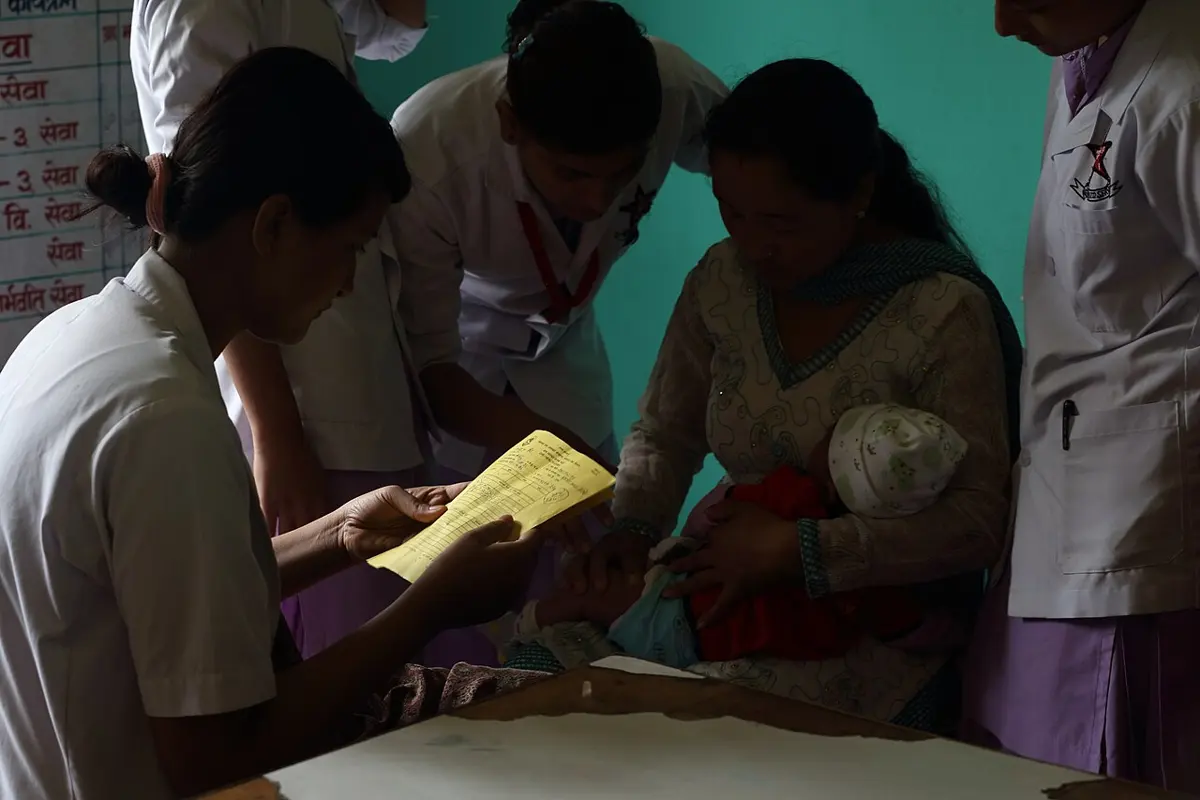
A three-week-old baby can’t yet have the measles vaccine. How can vaccinating the people around her protect her?
Pick an answer to see why.
5.4 Antibiotics: Introduction, Advantages and Disadvantages
What antibiotics are
Before the 1940s, a scratch from a rose thorn could kill. If bacteria got into it and spread through the blood, doctors had nothing to stop them. Pneumonia, infections after childbirth and infected wounds killed millions every year.
An antibiotic is a chemical substance produced by a microorganism (a bacterium or a fungus), or made in a laboratory on the same pattern, that kills bacteria or stops their growth, in amounts small enough not to harm the patient seriously. The word means “against life”; it was given this meaning by the American microbiologist Selman Waksman in the 1940s. Antibiotics are one kind of antimicrobial medicine; others act against fungi, viruses and parasites.
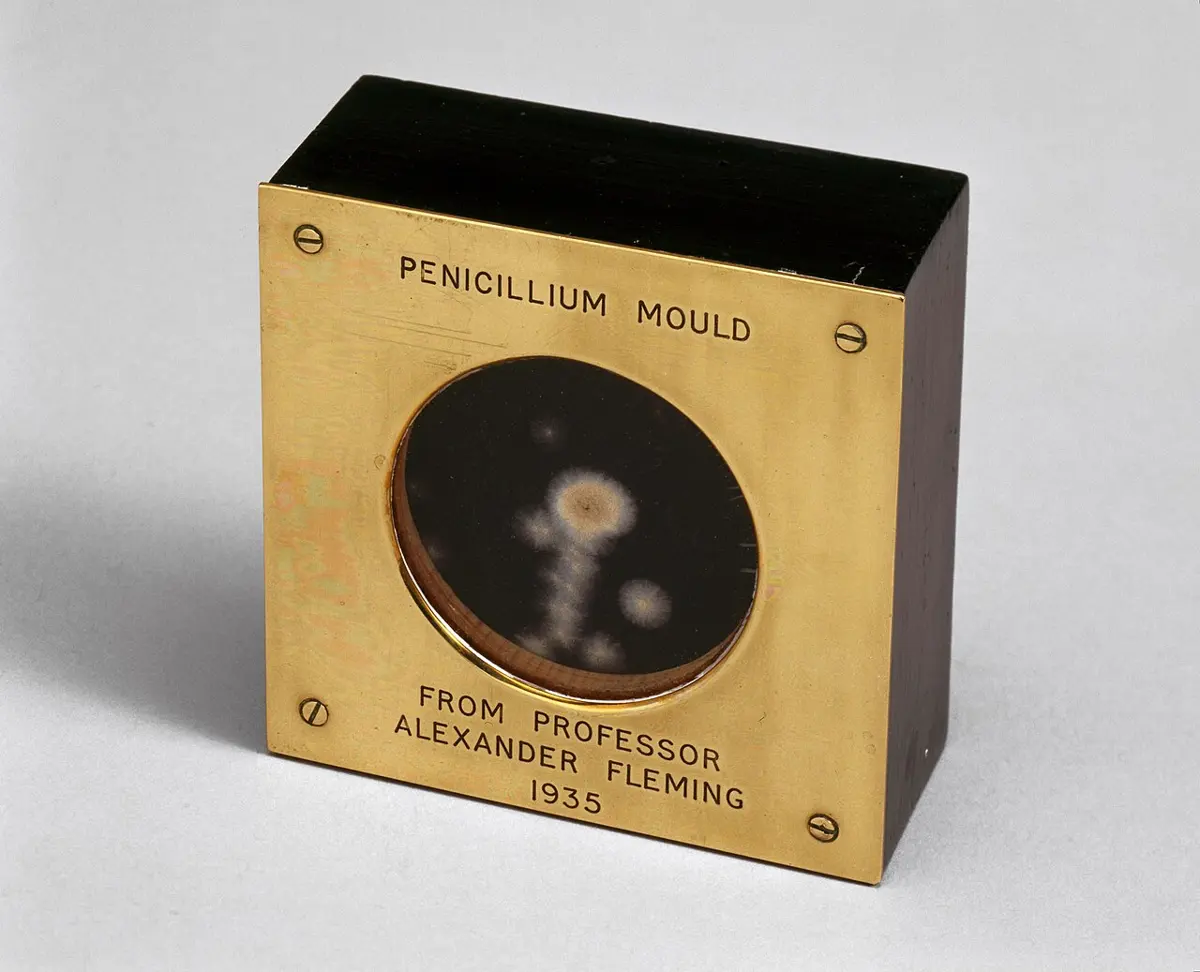
Some antibiotics and where they come from:
| Antibiotic | Made by | Used against |
|---|---|---|
| penicillin | the fungus Penicillium | throat infections, pneumonia, syphilis, infected wounds |
| cephalosporins | the fungus Acremonium (Cephalosporium) | many infections of the chest, skin, urinary tract |
| streptomycin | the soil bacterium Streptomyces griseus | tuberculosis (the first drug that cured it, 1943) |
| tetracycline | Streptomyces bacteria | cholera, some pneumonias, acne |
| erythromycin | a soil bacterium, Saccharopolyspora | whooping cough, chest infections in people allergic to penicillin |
How antibiotics work, and why they don’t harm us
Antibiotics attack parts of a bacterial cell that our cells don’t have, or have in a different form. That is why they can kill bacteria inside the body without killing the body’s cells. You saw these differences in Unit 1.
- The cell wall. Bacteria have a cell wall of peptidoglycan; human cells have no cell wall. Penicillin and cephalosporins stop bacteria building their wall, so a growing bacterium bursts.
- The ribosomes. Bacterial ribosomes are smaller (70S) than the ribosomes in the cytoplasm of our cells (80S). Streptomycin, tetracycline and erythromycin jam them, so the bacterium can’t make proteins.
- Copying DNA. Some antibacterial medicines, such as ciprofloxacin, stop the enzymes bacteria use to copy their DNA.
An antibiotic that kills bacteria is bactericidal (penicillin); one that only stops them multiplying, so the white blood cells can finish them, is bacteriostatic (tetracycline). A broad-spectrum antibiotic acts on many kinds of bacteria (tetracycline); a narrow-spectrum one on a few (penicillin, mostly on one group).
Penicillin can kill bacteria in a patient’s blood without harming the patient’s cells, because:
Pick an answer to see why.
Advantages of antibiotics
- They cure bacterial diseases that once killed: pneumonia, typhoid, cholera, tuberculosis (with several drugs together for months), meningitis, infected wounds, infections after childbirth.
- They make surgery and modern medicine possible. Operations, cesarean births, kidney transplants and cancer treatment all carry a risk of infection that antibiotics control.
- They stop the spread of some diseases, since a treated patient soon stops passing the bacteria on.
- They saved millions of lives and are a big part of the reason people live much longer now than a hundred years ago.
- Some are used to treat bacterial diseases of animals and plants.
Disadvantages of antibiotics
- Side effects. Antibiotics kill the friendly bacteria of the gut along with the harmful ones, so diarrhea is common, and fungi such as Candida may overgrow (thrush). Some cause other harm: streptomycin can damage hearing, tetracycline stains the growing teeth of young children.
- Allergy. Some people are allergic to an antibiotic, most often penicillin: a rash, and rarely a sudden, dangerous reaction (anaphylaxis). A doctor asks about allergies before giving one.
- They don’t act on viruses, and taking them when they aren’t needed brings only the side effects.
- Antibiotic resistance. Above all, every use of an antibiotic helps bacteria become resistant to it, so that it no longer cures the infection.
Antibiotic resistance
Among millions of bacteria, a few, by chance, carry a change in their DNA (a mutation) that lets them survive an antibiotic: an enzyme that breaks it, a pump that throws it out, a wall it can’t reach. When the antibiotic is used, the others die and these few survive, and with no competitors they multiply. Bacteria can also pass genes for resistance to one another, even to other kinds of bacteria, on small rings of DNA called plasmids. The more an antibiotic is used, and the more carelessly, the faster resistant bacteria spread.
Resistant infections are among the gravest health problems of our time. A large worldwide study (published in 2024) estimated that bacteria resistant to antibiotics directly caused about 1.14 million deaths in 2021, and forecast more than 39 million such deaths between 2025 and 2050, the most of all in South Asia. In Nepal, as elsewhere, some strains of typhoid, tuberculosis and hospital infections already resist the usual drugs, so patients need costlier medicines that have more side effects, and sometimes nothing works.
What makes it worse: taking antibiotics for colds and flu; buying them at a pharmacy without a doctor’s prescription; skipping doses, or stopping them on your own before the doctor said; sharing them or keeping leftovers for next time; giving them to healthy chickens, goats and fish to make them grow faster; and poor hygiene and sanitation, which spread resistant bacteria from person to person.
What everyone can do:
- Use antibiotics only when a doctor prescribes them, and never demand them for a cold or flu.
- Take them exactly as prescribed: the right dose, at the right times, for as long as the doctor says. Don’t stop or change them on your own; if you feel worse or have side effects, ask the doctor.
- Never share them or use leftovers.
- Prevent infections in the first place: wash hands with soap, drink safe water, keep food clean, and get vaccinated.
Why does using an antibiotic make resistant bacteria more common?
Pick an answer to see why.
Exercise
1. Choose the correct option
a. Which of these is part of the first line of defense of the body?
Pick an answer to see why.
b. The tiny hairs that sweep mucus up the windpipe are:
Pick an answer to see why.
c. Which white blood cells are the most numerous, and first to arrive at an infection?
Pick an answer to see why.
d. The immunity a baby gets from its mother’s milk is:
Pick an answer to see why.
e. Which of these is a toxoid vaccine?
Pick an answer to see why.
f. Penicillin was discovered in 1928 by:
Pick an answer to see why.
2. Give reasons
Smokers often suffer from a cough and chest infections.
Hint
Answer
Pus forms in an infected wound.
Hint
Answer
Vaccination is better than treatment.
Hint
Answer
3. Differentiate between
Innate immunity and acquired immunity
Hint
Answer
Active immunity and passive immunity
Hint
Answer
Vaccine and antibiotic
Hint
Answer
Primary response and secondary response
Hint
Answer
4. Answer the following questions
Describe the role of the skin in the defense of the body.
Hint
Answer
How does the mucous membrane of the respiratory tract protect the body? Draw a labeled diagram of the ciliated lining of the windpipe.
Hint
Answer
What is phagocytosis? Describe its steps.
Hint
Answer
What is an antibody? How are antibodies produced, and how do they help to destroy germs?
Hint
Answer
What is immunity? Describe the kinds of acquired immunity with an example of each.
Hint
Answer
What is vaccination? Write its importance. Name four vaccines in Nepal’s immunization program and the diseases they prevent.
Hint
Answer
What are antibiotics? Write their advantages and disadvantages.
Hint
Answer
What is antibiotic resistance? How does it develop, and how can it be slowed down?
Hint
Answer
5. Apply and think
Chickenpox has an R₀ of about 10. A school has 800 students. At least how many of them must be immune to stop chickenpox spreading through the school?
Hint
Answer
Pemba cut his hand on a rusty nail in a cowshed. At the health post he was given an injection of anti-tetanus serum (ready-made antibodies) and his first dose of the tetanus vaccine. Why both? Which kind of immunity does each give?
Hint
Answer
Think: Sushant has a runny nose and a sore throat. He asks the pharmacist for “a strong antibiotic, so I get better quickly”. What should the pharmacist tell him, and why?
Hint
Answer
Think: Simran says, “I was vaccinated against measles, so it doesn’t matter to me whether other children are vaccinated.” Do you agree? Give two reasons.
Hint
Answer
Printable PDFs
- The unit as a book (A5) 28 pages Answers as an A4 booklet, 7 sheets
- Study notes 3 pages
- Worksheet 5 pages Answer key
- Harder practice questions 2 pages Answer key
Practice every question in the book, and keep track of the ones you miss →
Found a mistake? Please tell us.