
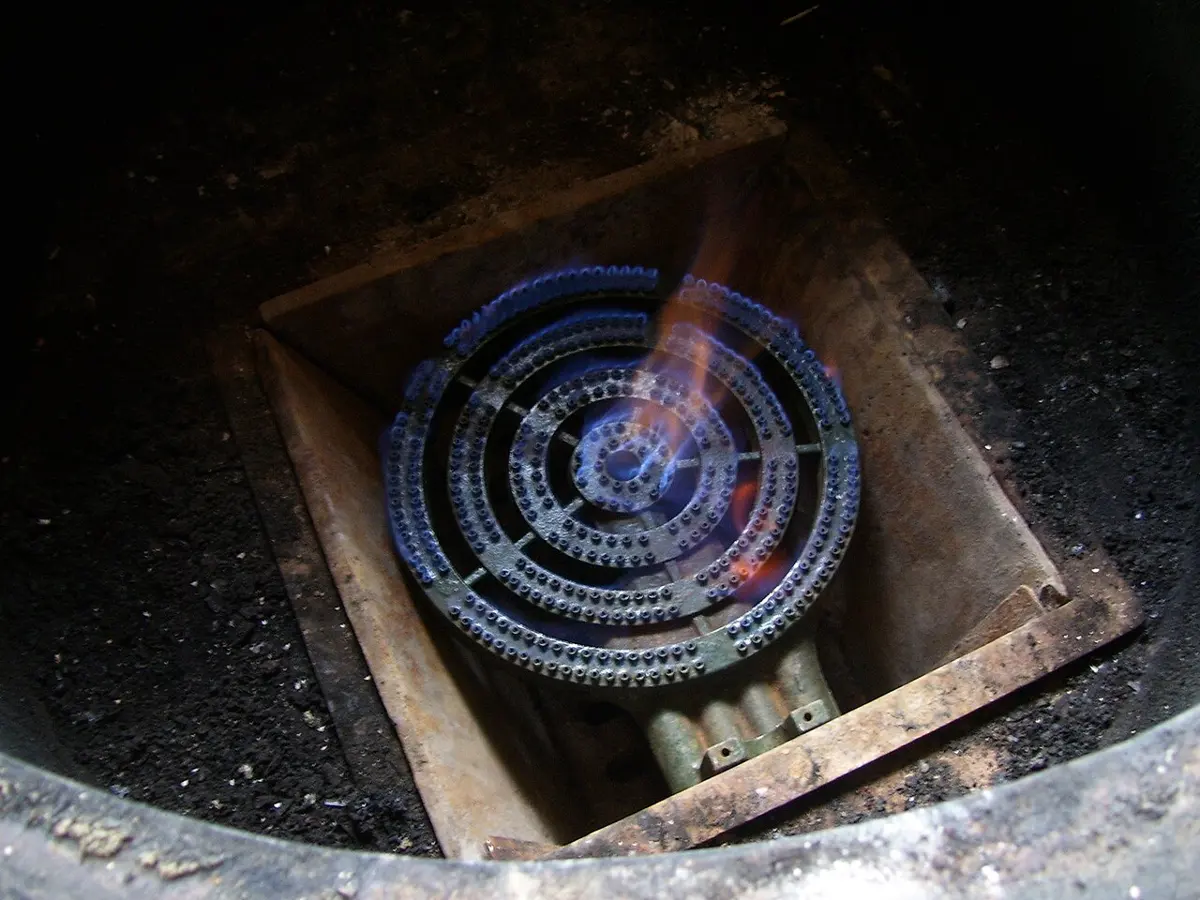
Turn the knob of a gas stove and strike a match, and a ring of blue flame roars up hot enough to boil a pot of dal in minutes. Yet the gas in the cylinder is cold. Touch the cylinder: it is no warmer than the kitchen. The oxygen in the air is cold too. Mix the two cold gases, give them a spark, and out comes heat. Where was it?
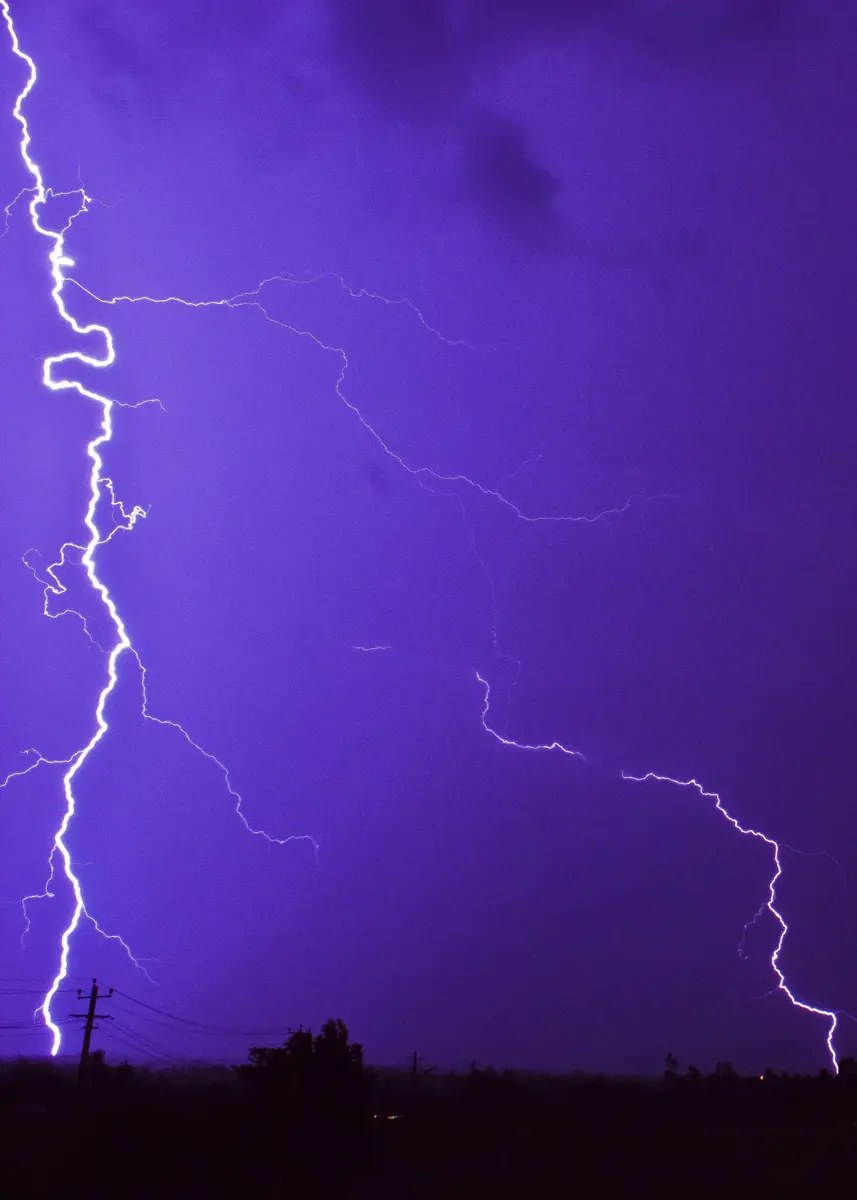
You learned in Grade 9 that reactions like this are exothermic: they give out heat Grade 9: Exothermic reaction. Others, like baking soda in vinegar, are endothermic: they take heat in, and the glass gets cooler Grade 9: Endothermic reaction. But why? Why does burning gas give out heat, while making nitric oxide in a lightning flash takes it in? The answer is in the bonds that hold the atoms together, and it is simpler than you might expect: breaking bonds takes energy, making bonds gives it out, and a reaction does both.
A bond is a pull
You met covalent bonds in Grade 9: two non-metal atoms share a pair of electrons Grade 9: Covalent bond. The shared electrons sit between the two nuclei, and both nuclei, being positive, pull on them. So the electrons hold the two atoms together, like a glue made of attraction.
Think of two strong magnets stuck together. To pull them apart, you have to pull hard, and keep pulling until they are well apart: you do work on them, and that energy comes from your arm. Now let them go near each other: they snap together, with a click, and the energy you put in comes out again, as the sound of the click, a little heat, and the motion of the magnets.
A bond is the same. Breaking a bond always takes energy in. Making a bond always gives energy out. There are no exceptions: atoms that attract each other never give out energy when you pull them apart.
The energy needed to break a bond is its bond energy. The same amount comes out when that bond forms. Some bonds are much stronger than others: two atoms sharing two pairs of electrons (a double bond) or three pairs (a triple bond, Double and triple bonds) are held more tightly than by one.
Counting bonds by the mole
One bond is far too small to measure on its own. Chemists measure bonds in huge batches, the way eggs are sold by the dozen. Their batch is the mole: 6.02 × 10²³ of anything. It is a useful number because a mole of molecules has a mass, in grams, equal to the molecular mass you learned to work out in Grade 9 Grade 9: Molecular mass: a mole of hydrogen molecules, H₂, has a mass of 2 g; a mole of water, H₂O, 18 g; a mole of methane, CH₄, 16 g. So bond energies are written in kilojoules per mole (kJ/mol): the energy to break a mole of those bonds.
| Bond | Found in | Bond energy (kJ/mol) |
|---|---|---|
| H–H | hydrogen, H₂ | 436 |
| O=O | oxygen, O₂ | 498 |
| N≡N | nitrogen, N₂ | 945 |
| Cl–Cl | chlorine, Cl₂ | 242 |
| O–H | water, H₂O | 463 |
| C–H | methane, CH₄ | 416 |
| C=O | carbon dioxide, CO₂ | 804 |
| N–H | ammonia, NH₃ | 391 |
| H–Cl | hydrogen chloride, HCl | 431 |
| N=O | nitric oxide, NO | 631 |
The same kind of bond is a little stronger in one molecule than in another, so tables give average values, and different books give slightly different numbers (C–H as 412, 413 or 416, for example). Answers worked out from them are close, but not exact.
Which of these is true for every chemical bond?
Pick an answer to see why.
Breaking and making: adding up a reaction
In a chemical reaction, the atoms don’t change: they swap partners. The bonds in the reactants break, and new bonds form to make the products. So we can model any reaction in two steps:
- Break every bond in the reactants, leaving separate atoms. This takes energy in.
- Make every bond in the products from those atoms. This gives energy out.
Then compare the two:
- If making the new bonds gives out more energy than breaking the old ones took in, the extra comes out as heat: the reaction is exothermic.
- If making the new bonds gives out less, the difference must be taken in from the surroundings: the reaction is endothermic.
Real molecules don’t fall completely to pieces and then rebuild: bonds break and form a few at a time, often at the same moment. But the total energy change is the same whichever way the reaction goes, so the two-step model gives the right answer. (This is Hess’s law, found in 1840: see the story below.)
Chemists write the energy change of a reaction as ΔH (“delta H”), the change in the energy of the chemicals. It is negative for an exothermic reaction (the chemicals lose energy, to the surroundings) and positive for an endothermic one.
In a reaction, breaking the bonds of the reactants takes in 2,000 kJ, and making the bonds of the products gives out 1,700 kJ. What happens?
Pick an answer to see why.
Energy diagrams
Chemists draw a reaction’s energy as a diagram: the energy of the reactants on one level, the products on another, and the reaction as a path from one to the other. Here the reacting chemicals are the system; everything else, the test tube, the water, the air, your hand, is the surroundings. Energy is never made or destroyed. When the system’s energy falls, exactly that much goes into the surroundings, mostly as heat; when the system’s energy rises, exactly that much comes out of the surroundings.
- In an exothermic reaction the products are lower than the reactants. The difference goes out to the surroundings, and they get hotter.
- In an endothermic reaction the products are higher. The difference comes in from the surroundings, and they get colder, unless heat is supplied.
But there is a hill on the way. You met it in Grade 10: particles react only if they collide with at least the activation energy Grade 10: Why reactions happen at all. Now you can see what that energy is for: before new bonds can form, some old ones must start to break, and that takes energy first.
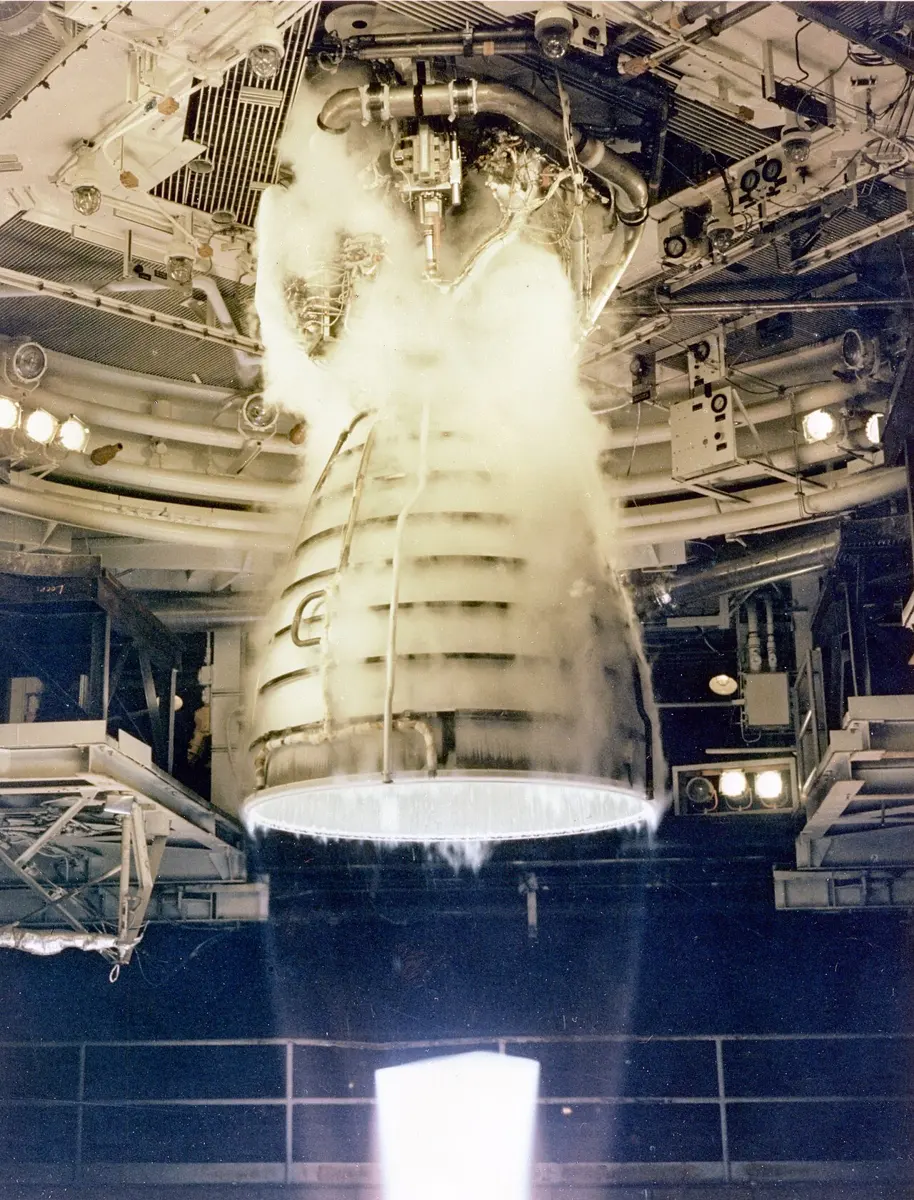
This is why the gas from a stove doesn’t catch fire by itself: its molecules and the oxygen molecules in the air hardly ever collide hard enough to get over the hill. A match or a spark gives a few of them the energy to do it. Once they react, they give out far more energy than the hill took, and that heat lifts their neighbors over the hill too. So a fire keeps itself going, as long as there is fuel and oxygen. An endothermic reaction can’t keep itself going like this: limestone turns into lime only while the kiln is kept hot.
In the energy diagram of a reaction, the products are 50 kJ higher than the reactants, and the top of the hill is 120 kJ above the reactants. Which statement is right?
Pick an answer to see why.
How much heat? From the reaction to the pot
To compare fuels, we want the heat from each gram. Burning a mole of methane gives out about 800 kJ, and a mole of methane has a mass of 16 g (12 for the carbon, 4 × 1 for the hydrogens). So each gram gives about 800 ÷ 16 = 50 kJ.
That heat goes into the surroundings. In a kitchen, we want it to go into the pot. You learned in Grade 10 how to work out the heat needed to warm water: Q = ms(T₂ − T₁), with s = 4,200 J/(kg °C) for water Grade 10: Calculating heat.
Your body uses the same reactions, slowly and at 37 °C. In respiration, glucose and oxygen make carbon dioxide and water, giving out about 2,800 kJ for each mole of glucose (180 g), about 16 kJ per gram. Food labels count carbohydrates as 17 kJ per gram.
Questions
Which statement explains why burning methane gives out heat?
Pick an answer to see why.
In an endothermic reaction, the energy of the products is
Pick an answer to see why.
Hydrogen peroxide, H–O–O–H, breaks down into water and oxygen: 2H₂O₂ → 2H₂O + O₂. The O–O single bond has a bond energy of 146 kJ/mol. Use this and the table to work out the energy change. Is the reaction exothermic or endothermic?
Hint
Answer
Draw an energy diagram for burning hydrogen (2H₂ + O₂ → 2H₂O, ΔH = −484 kJ). Mark the reactants, the products, the activation energy and the energy change. Then explain, using your diagram, why a jet of hydrogen doesn’t burn until a spark reaches it, but then keeps burning by itself.
Answer
A student says: “When ice melts, it takes in heat, so melting must be breaking bonds; and when the water freezes again, the bonds form and heat comes out.” Is the student right? What bonds are they?
Answer
Making quicklime from limestone, CaCO₃ → CaO + CO₂, takes in 178 kJ for each mole (100 g) of limestone. Putting quicklime in water, CaO + H₂O → Ca(OH)₂, gives out 65 kJ for each mole. (i) Draw both on one energy diagram. (ii) A lime kiln burns wood or coal to make quicklime. Explain why it must keep burning fuel the whole time the limestone is turning into lime.
Answer
Use bond energies to show that 2H₂O → 2H₂ + O₂, splitting water, is endothermic. How much energy must be supplied to split 36 g of water? Suggest how it could be supplied.
Answer
Bond-energy calculations give −800 kJ for burning a mole of methane, while the measured value is −802 kJ (water as steam). Give two reasons why such calculations are close but not exact.
Answer
Design an investigation to compare how much heat two fuels give out per gram, for example kerosene and ethanol in two small spirit lamps. Say what you would measure, what you would keep the same, and how you would make it a fair test.
Answer
Where to go next
- What makes a reaction go faster? The hill in the energy diagram, collisions, and why heat, crowding and catalysts speed reactions up.
- Why do some reactions stop halfway? Why an endothermic reaction can happen at all, and why some reactions run both ways at once.
- Why does salt melt at 801 °C but ice at 0 °C? The forces between particles, and the energy to pull them apart.