
In August 1945, in the last days of the Second World War, two young American officers in Washington were given a job at very short notice: draw a line across Korea. Japan had ruled Korea for a generation and was about to surrender, Soviet troops were already pushing into the north, and the United States wanted the south. Working from a National Geographic map, and without asking anyone who knew Korea, the two men chose the 38th parallel of latitude, which cut the country roughly in half and left its capital, Seoul, on the American side. Moscow accepted the line at once. Five years later a war began across it that killed millions, and Korea is still divided near it today.
That line is the Cold War in small. After 1945 two countries stood far above all the others, the United States and the Soviet Union, and people began to call them superpowers. Each believed in a different way to run a country. In the American way, people chose between parties at elections, and land, factories and shops belonged mostly to private owners. In the Soviet way, a single communist party ruled, and the state owned the land and the factories and planned what they made. Each was sure the other meant to spread its system across the world, and each gathered allies, armies and nuclear weapons, until by 1986 the world held about 70,000 of them. A war between the two would have destroyed both, so they never fought each other directly. That is why the contest is called cold. But where the two camps met in poor, divided or newly free countries, it turned hot, and the people who died in it were mostly Koreans, Vietnamese, Bengalis, Afghans and others far from Washington and Moscow.
It began with Europe. Allies in the war just won, the two saw the peace very differently. Russia had been invaded from the west again and again, most recently at the cost of more than 20 million Soviet lives. Stalin, the Soviet ruler, wanted the countries on his border to have governments he could trust, and he used the Red Army to make them so: by 1948 communist parties ruled Poland, Hungary, Czechoslovakia and the rest of Eastern Europe. The Americans, whose factories were making about half the world’s industrial goods, wanted a Europe rebuilt on open trade and elections. In March 1946 Winston Churchill, Britain’s wartime leader, said in a speech in Missouri that from the Baltic to the Adriatic “an iron curtain has descended across the Continent.” A year later the American president told Congress that “nearly every nation must choose between alternative ways of life”, and $13 billion followed to rebuild Western Europe, the Marshall Plan. Moscow, for its part, spoke of two camps, the “imperialist” one and its own.
Each side then put its camp into a treaty. In 1949 the United States, Canada and ten countries of Western Europe formed NATO, promising that an attack on one would count as an attack on all. In 1955, after West Germany joined NATO, the Soviet Union and seven Eastern European countries answered with the Warsaw Pact. Germany and Berlin were both split in two. And in 1949 China’s communists won their civil war, so the Soviet camp now stretched from the middle of Europe to the Pacific.
Korea
By 1948 Korea had two governments, in Seoul backed by the Americans and in Pyongyang by the Soviets, each claiming the whole country. The North’s leader asked Stalin again and again for leave to invade, and in April 1950 Stalin agreed, if China would send help when needed. On 25 June 1950 the North’s army crossed the parallel. By September the South’s army and its American allies were penned into the peninsula’s southeast corner.
The Soviet Union was then staying away from the UN Security Council, so it couldn’t block a resolution, and an army under the UN flag, mostly American and South Korean, came to the South’s rescue. It drove the North back over the parallel and on toward the Yalu River, China’s border. That October, Chinese troops, called volunteers, poured across the Yalu and pushed the UN armies back south. The front then settled near the parallel, and the war dragged on two more years, mostly over the thousands of Chinese and North Korean prisoners who didn’t want to go home. India found the answer: neutral countries, led by an Indian general and guarded by Indian troops, looked after those who refused. An armistice was signed in July 1953. No peace treaty has followed, so the war has never formally ended.
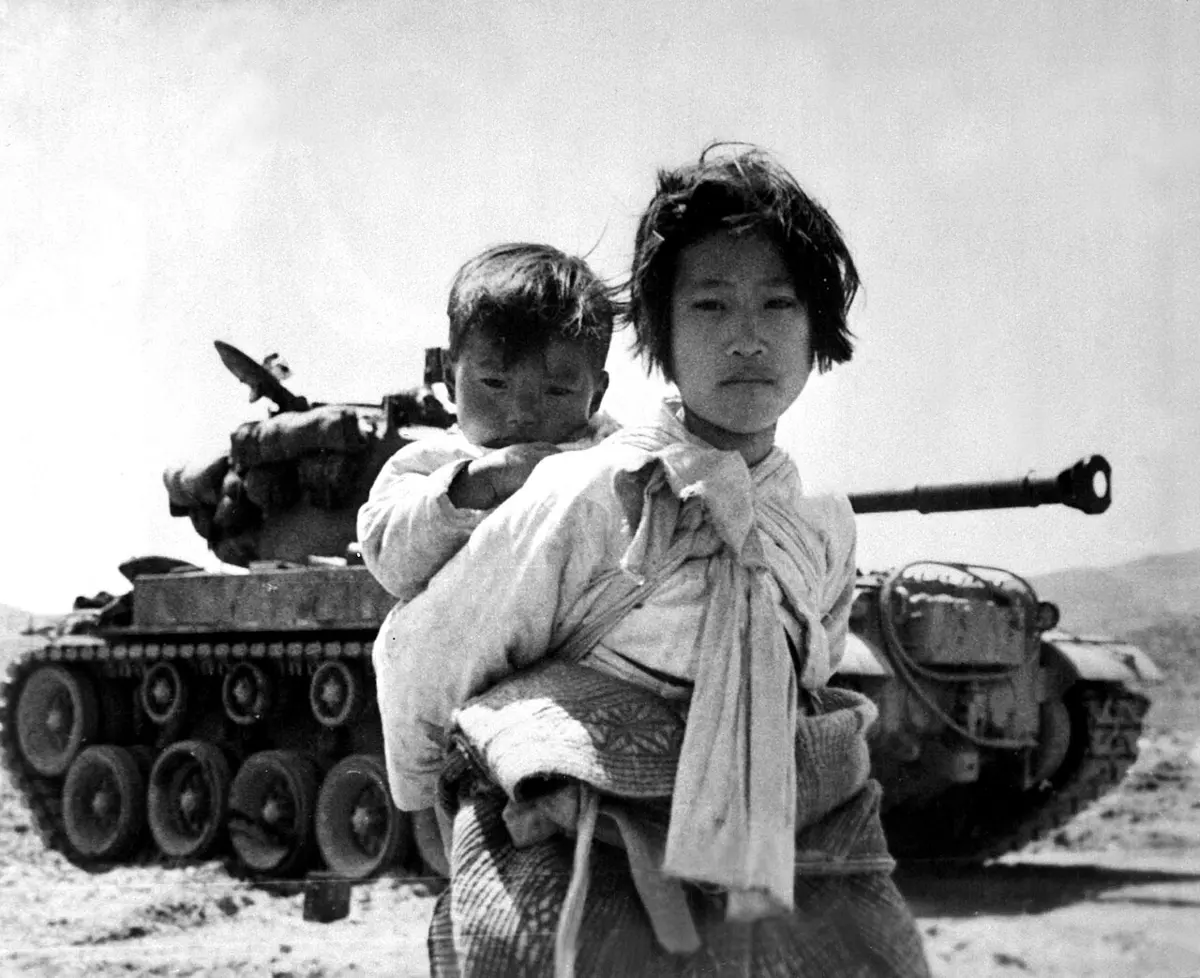
Nobody knows exactly how many died. Around a million soldiers did, and somewhere between one and a half and three million civilians. The Americans dropped more bombs on Korea than in the whole Pacific war against Japan, and most of the North’s buildings were destroyed. China now gives about 183,000 of its soldiers as dead; American estimates were twice that or more. About 36,500 Americans died. Even the war’s name depends on where you stand. South Koreans call it 6·25, after the day it began; North Koreans, the Fatherland Liberation War; the Chinese, the War to Resist America and Aid Korea.
Many countries looked at Korea and decided they wanted no part of either camp. In 1961, in Belgrade, twenty-five countries founded the Non-Aligned Movement, led by Yugoslavia, Egypt, India, Ghana and Indonesia, and Nepal’s King Mahendra sat among them. Being non-aligned meant taking aid and trade from both camps and joining the alliances of neither.
October 1962
For half a century Americans had owned much of the sugar, land and business of Cuba, an island just south of the United States. On New Year’s Day 1959 its dictator fled, and a young lawyer turned guerrilla, Fidel Castro, came to power. Cubans who remember the revolution with pride point to the land taken from great estates and to the young volunteers who in 1961 taught the countryside to read, where four people in ten could not. Others remember the old regime’s men shot after quick trials, the elections never held, and the quarter of a million Cubans who left by 1962. In April 1961 about 1,400 Cuban exiles, trained and paid by the American spy agency, the CIA, landed at the Bay of Pigs to overthrow him, and were beaten within days. Castro turned to Moscow.
The Soviet leader then made a secret offer, which Castro accepted in July 1962: nuclear missiles on Cuba. To Cubans they were protection from the next invasion; to Moscow, also an answer to American nuclear missiles just put in Turkey, on its own doorstep. On 14 October 1962 an American U-2 spy plane photographed a missile site being built.
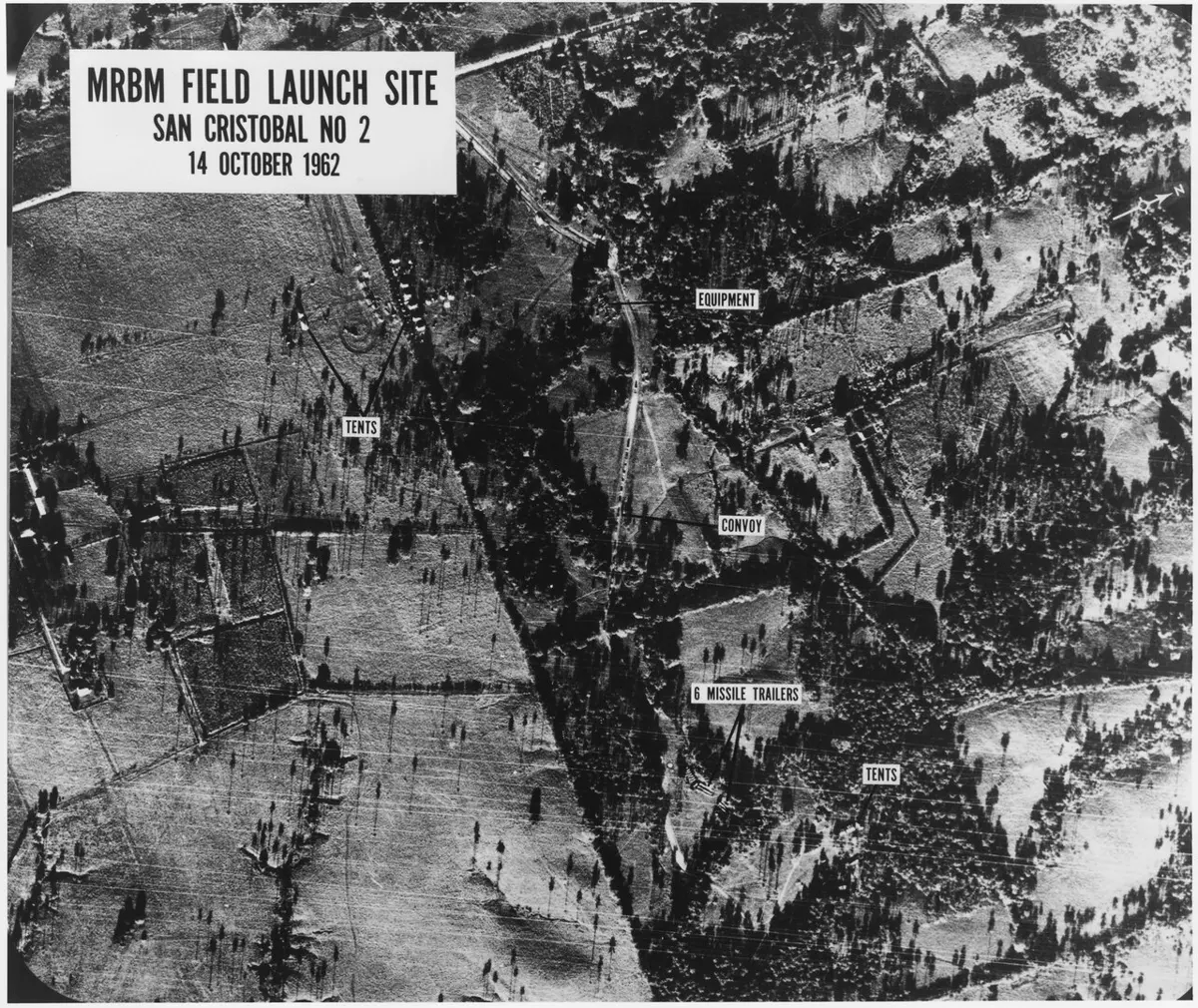
On 22 October the American president went on television, demanded that the missiles go, and ringed Cuba with warships to turn back Soviet ships carrying arms. On Saturday the 27th a Soviet missile shot down a U-2 over Cuba and killed its pilot. That same day American destroyers dropped small practice depth charges on a Soviet submarine to make it surface. Deep under water and out of touch by radio, its crew couldn’t tell whether war had begun, and it carried a torpedo with a nuclear warhead. What happened next is known only from its officers’ memories, first made public in 2002, and they don’t agree. One remembered the exhausted captain ordering the torpedo made ready; others doubt he went so far. As the story is usually told, firing it needed three officers to agree, and the third, Vasily Arkhipov, the flotilla’s chief of staff, wouldn’t, and the submarine came up.
The next day the Soviet leader agreed to take the missiles away, in return for an American promise not to invade Cuba. In a second deal, kept secret for more than twenty-five years, the Americans also took their missiles out of Turkey. Castro, who had not been asked, was furious. Both superpowers had had a fright. They set up a direct telephone line between their leaders, and in 1963 agreed to stop testing nuclear weapons in the air.
In the same weeks, on 20 October 1962, China’s army launched an offensive along two stretches of the Himalayan border it disputed with India: Aksai Chin in the west, and the land below the McMahon Line in the east. The border had never been agreed. India held to lines drawn in British times, which China had never accepted; China had built a road across Aksai Chin, which India claimed, to join Tibet to Xinjiang; and India had since pushed army posts forward into land both sides claimed. Relations had soured after 1959, when the Dalai Lama, Tibet’s leader, fled to India. Each side has its own words for what followed. China calls it a counterattack in self-defense. India’s parliament that November swore to drive “the aggressor” from India’s soil, and many Indians felt betrayed after years of the slogan “Hindi-Chini bhai-bhai”, “Indians and Chinese are brothers”. Within a month China had won; it declared a ceasefire on 21 November and pulled back in the east, keeping Aksai Chin. India counted about 1,400 of its soldiers killed and nearly 4,000 taken prisoner; China gave its own dead as 722. Here the camps broke their own pattern: Washington sent India weapons in a hurry, and Moscow, which had quarreled with China, soon sold India arms too.
Vietnam
On 2 September 1945, in Hanoi, Ho Chi Minh declared Vietnam independent of France. He began with words from the American Declaration of Independence: “All men are created equal.” France came back anyway, and fought for eight years, until its army was beaten at Dien Bien Phu in 1954. A conference in Geneva split Vietnam for the time being, Ho’s communists in the North and an American-backed government in the South, with elections to unite it by 1956. The South’s leader refused to hold them, saying no vote in the communist North could be free.
To the Americans, Vietnam was a domino: if it fell to communism, they believed, its neighbors would follow. To Ho’s followers, it was the same fight for independence they had begun against France. The North sent men and supplies south along jungle trails through Laos to the Viet Cong, the communist guerrillas in the South, and from 1965 the United States sent its own army, more than half a million soldiers by 1968, and bombed the North. In 1968 the Viet Cong and the North’s army attacked nearly every city of the South at Tet, the lunar new year, and lost the battle but convinced many Americans that the war couldn’t be won. That year, at My Lai, an American unit killed about 500 villagers, and at home great crowds marched against the war.
The last American combat troops left after a peace agreement in 1973. On 30 April 1975 the North’s army took Saigon, the South’s capital, and the country was one. In Vietnam the war is called the Resistance War against America to Save the Nation, and the day is remembered as liberation. Many in the South remember the day they lost their country: hundreds of thousands were sent to re-education camps, and nearly 800,000 “boat people” escaped by sea, while perhaps 200,000 to 400,000 more died on the way.
How many died in the war is argued, partly because so many fighters wore no uniform. Vietnam’s government counts 1.1 million dead among its own soldiers and the Viet Cong and 2 million civilians on both sides, from 1955 to 1975, and the South’s army and its allies lost close to 300,000 more. Studies of Vietnam’s population have put the Vietnamese dead in the worst ten years, 1965 to 1975, at anywhere from about one million to nearly two million. About 58,000 Americans died.
1971
When British India was divided in 1947, Pakistan was made of two parts with India between them. Most of its people lived in East Pakistan and spoke Bengali, but its army and government were run mostly from the west, and its founder declared that Urdu alone would be the national language. In the election of December 1970, the Awami League of Sheikh Mujibur Rahman, which wanted self-rule for the east, won 167 of the east’s 169 seats, a majority of the whole national assembly. It was never allowed to take power. On the night of 25 March 1971 the army struck at Dhaka, and Mujib was arrested.
Who declared Bangladesh’s independence is argued in Bangladesh itself. Its constitution records a declaration by Mujib, sent out by wireless in the first hours of 26 March, just before his arrest. A young army officer, Ziaur Rahman, later the country’s president, declared it over the radio from Chittagong in the next days, at least once in Mujib’s name, and since the change of government in 2024 Bangladesh’s schoolbooks have named Zia as the one who declared it. Over the next nine months soldiers and local militias on the army’s side killed students, teachers, Awami League supporters and above all Hindus, and raped women in great numbers. About ten million people fled to India.
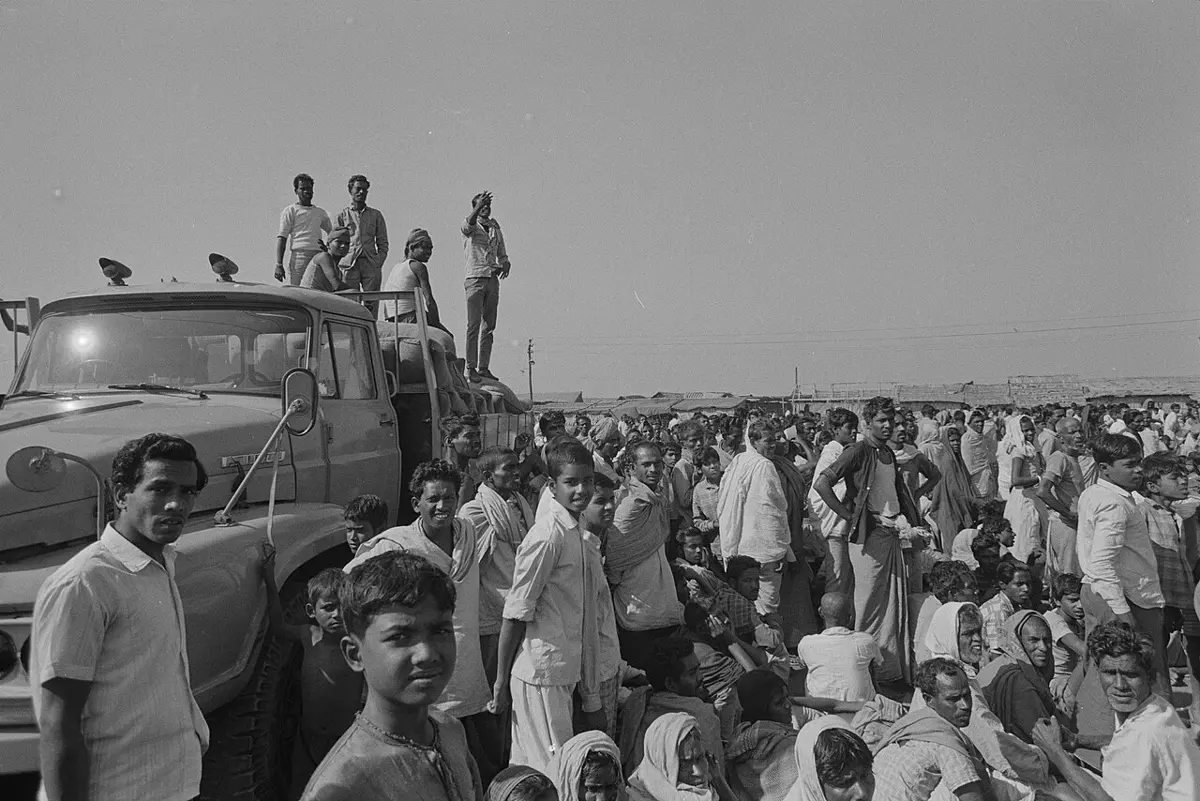
In Dhaka, twenty of the American consulate’s staff sent their government a telegram on 6 April, and the consul general added his support. “Our government has failed to denounce atrocities,” it said, and it called what was happening a conflict to which “the overworked term genocide is applicable.” Washington didn’t change course: Pakistan’s military ruler was helping the White House open secret talks with China. The consul general was called home.
India sheltered the refugees and trained and armed the Bengali fighters, the Mukti Bahini, and in August signed a treaty of friendship with the Soviet Union. By late November Indian troops were fighting Pakistan’s along the eastern border, and on 3 December Pakistan’s air force struck Indian airfields in the west; India declared war. On 16 December, in Dhaka, Pakistan’s army in the east surrendered, about 90,000 soldiers and civilians became prisoners, and Bangladesh was free. In the last days the United States sent an aircraft carrier into the Bay of Bengal, which Indians took as a threat, and the Soviet Union vetoed calls at the UN for a ceasefire. So India, the world’s largest democracy, stood with the Soviet Union, and the United States with China and a military government. In the Cold War, camps were chosen far more for power than for ideas.
How many died is one of the bitterest arguments in South Asia. Bangladesh’s official figure is three million. A commission Pakistan’s government set up after the war accepted the army’s own count, about 26,000 people killed by its troops, although the same commission heard evidence of mass killings, rapes and orders to kill Hindus, and its report was kept secret for nearly thirty years. Studies of Bangladesh’s population since then point to several hundred thousand killed, and hundreds of thousands more dead of hunger and disease. In the same war Bengali mobs and fighters killed thousands of Biharis, Urdu speakers seen as siding with the army. Bangladesh calls 1971 a genocide and its Liberation War, and many historians use the word too. Pakistan’s government rejects Bangladesh’s charges of war crimes as baseless, and its schoolbooks tell of the “fall of Dhaka” and India’s part in it. Indians remember a war they won.
Afghanistan, and the end
In 1978 a small communist party seized power in Afghanistan. It set out to change the country by force, tens of thousands of people disappeared, and revolts broke out. On 25 December 1979 the Soviet army crossed the border, killed the party’s leader in his palace and put a rival in his place. Moscow called it help to a friendly government; the UN General Assembly, by 104 votes to 18, called for the foreign troops to leave.
For nine years up to 115,000 Soviet soldiers held the cities while the mujahideen, Afghan fighters who saw the war as a holy war against godless invaders, held the hills. The mujahideen were armed and paid through Pakistan, by the United States, Saudi Arabia, China and others, billions of dollars’ worth in all. Soviet troops leveled villages to deny the fighters shelter. About five and a half million Afghans, a third of the country, fled, most of them to Pakistan and Iran. The Soviet Union lost about 14,500 soldiers. Nobody counted the Afghan dead; estimates run from about 900,000 to 1.7 million, and some go higher.
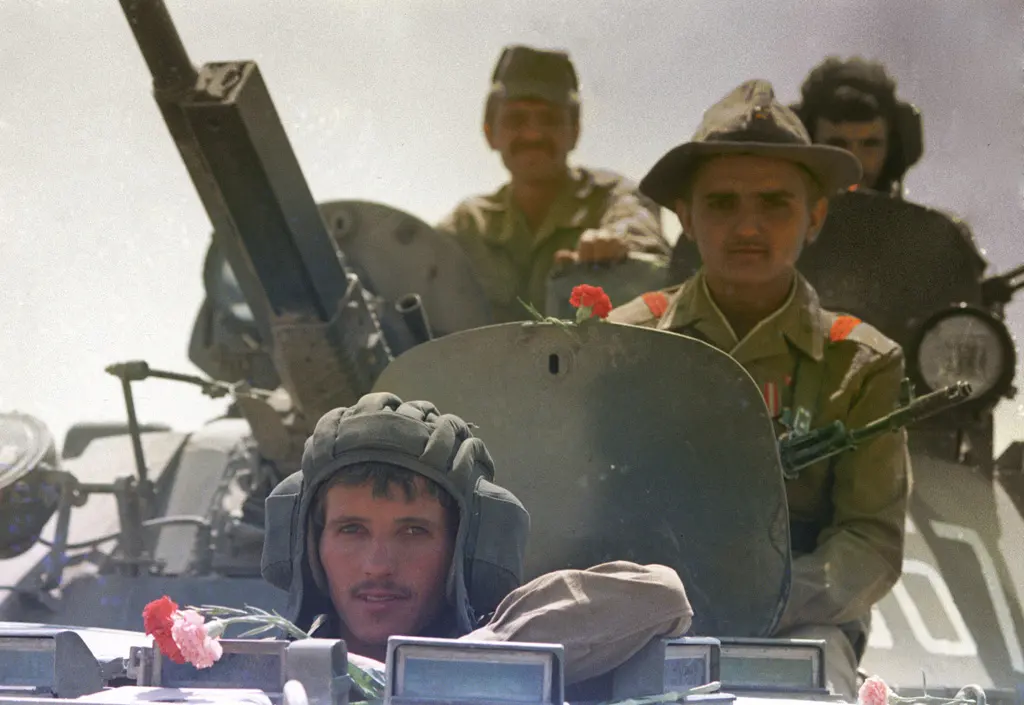
By then the Soviet Union had a new leader. Mikhail Gorbachev, who came to power in 1985, found an economy that had stopped growing, an arms race it couldn’t afford and a war it couldn’t win. He tried to open things up and remake them, glasnost (“openness”) and perestroika (“rebuilding”), agreed with the Americans to cut nuclear weapons, and brought the army home; the last Soviet soldiers left Afghanistan in February 1989. Its war went on: the government there fell to the mujahideen in 1992, who then fought among themselves.
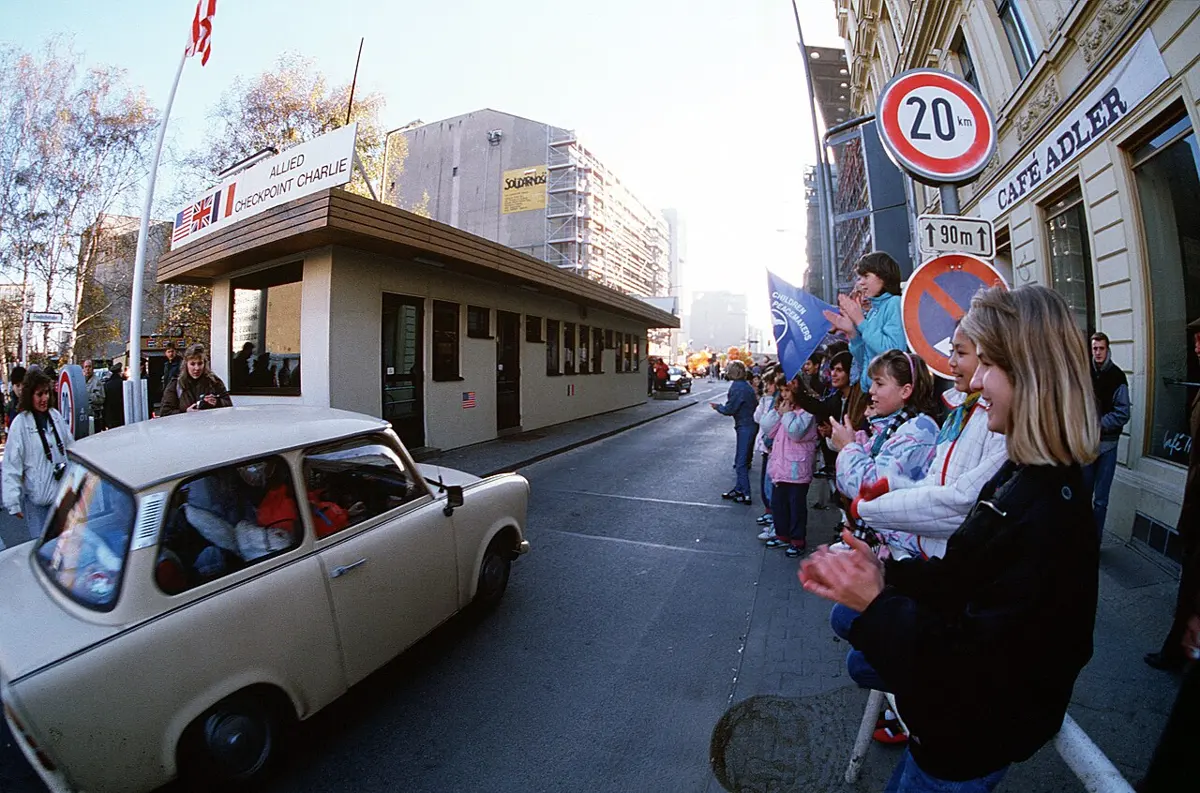
Gorbachev also let Eastern Europe go, and in 1989 it went. The Wall that East Germany had built across Berlin in 1961, to stop its people leaving, came down by accident. On the evening of 9 November a party spokesman, reading out new travel rules at a press conference broadcast live, was asked when they started. “As far as I know,” he said, “it takes effect immediately, without delay.” Crowds gathered at the crossings, and before midnight a border officer, with no orders and thousands in front of him, opened his gate. Within weeks one-party rule was ending across Eastern Europe, almost everywhere without a shot.
Then the Soviet Union itself came apart. In August 1991 communist hardliners tried to overthrow Gorbachev and failed, and one after another its fifteen republics declared themselves independent. On 25 December 1991 Gorbachev resigned, and the next day the Soviet Union ceased to exist. Abroad he was celebrated. In Russia, where the next ten years were hard, polls nearly every year since have found more than half the people regretting the union’s end.
So what is there to take from the Cold War? Two superpowers, each sure its way of life was right and the other’s a danger, divided much of the world between them, and the bomb kept them from fighting each other. Instead they armed, paid and sometimes sent soldiers into other people’s wars, and those countries paid most of the cost, in millions of lives. They came very close to nuclear war over Cuba in 1962. Many countries, India and Nepal among them, tried to stay out of both camps, and the camps themselves were less neat than they looked. Then, in two years, the contest ended, mostly peacefully. Korea is still divided near the line drawn in 1945.
Meanwhile, in Nepal: the United States, the Soviet Union, China and India all gave aid to a small country between them, each hoping it wouldn’t lean toward the others, while King Mahendra banned the parties and built the Panchayat (The rise of the Panchayat). In 1989, the year Eastern Europe’s one-party states fell, Nepalis were already restless; in the spring of 2046 (1990) a people’s movement ended the Panchayat (The fall of the Panchayat), both in Nepal’s History, for the Curious.
Found a mistake? Please tell us.