
In 1920 a government officer named Krishna Lal Adhikari published a book about growing maize. Makaiko Kheti, it was called, and that is what it was about: how to grow the crop, in a thousand printed copies. Every book printed in Nepal had to be approved by a government committee, and this one, it is said, had been. But two pandits at the palace of the prime minister, Chandra Shumsher, read it and found other meanings in it. The book spoke of red-headed and black-headed insects, and the Ranas’ caps were red and black. It spoke of a foreign breed of dog being favored over the faithful local one. Adhikari was charged with treason and sentenced to nine years in prison. The sentence could be cut to six if every copy was handed back. All but one came back, and nobody knows what happened to the last. He died in prison about three years later.
That is how little room there was. For a century, from Jung Bahadur’s rise in 1846, one family had ruled Nepal, the king kept in his palace as a figurehead, the prime minister’s office passed from brother to brother. There was no parliament, no newspaper that wasn’t the government’s, no party, no right to meet. Even a book on maize could be read as a crime.
And yet in the thirty years after Adhikari’s arrest, the Ranas were opposed from almost every side: by writers and young men with bombs, by teachers, by a preacher of the Gita, by mill workers and women, by Nepalis living in India, by a holy woman in the eastern hills, and in the end by Ranas themselves, the ones the family had pushed aside. For twenty years every one of these was put down. Then, after India became free in 1947, they began to come together, and in the winter of 1950–51 Rana rule ended in a little over three months. It wasn’t one movement that brought it down. It was many, and the timing of the world around Nepal.
Books, a library and a bomb plot
The Ranas watched the few educated people closely. In 1930 a group of young men, young writers and thinkers, decided the city needed a public library. Forty-five of them signed a request to the prime minister of the day, Bhim Shumsher. Instead of a library, they got arrested, all forty-five. One of them was the young poet Laxmi Prasad Devkota. He wrote later that they were first sentenced to three years, then let off with a fine of a hundred rupees and a written promise to stay out of public work. Nepalis still call it the पुस्तकालय पर्व (the library affair). The crime was wanting to read.
The next year, 1931, came something more dangerous. A handful of young men formed a secret society, प्रचण्ड गोरखा (Prachanda Gorkha, the fierce Gorkhas), to kill the leading Ranas and give power back to the king. Some of them were said to have links with revolutionaries in India, who were fighting the British with bombs, and to have got their bombs and revolvers from there. One of the leaders, Khadga Man Singh, was descended from a commander killed in the Kot massacre that brought Jung Bahadur to power. In looking for a way to reach the king, they confided in a man who betrayed them, and they were arrested before they could act. The punishments were heavy, from life in prison with their property taken to banishment from the Valley or being kept under guard at home, though accounts differ on who got which.
Then the Ranas quarreled among themselves. The Shumsher brothers, who had held the post since 1885, had many sons by many wives, and not all of the wives were of equal standing. In 1934 the prime minister, Juddha Shumsher, struck from the roll of succession the Ranas whose mothers he ranked lowest, the ones people called the C-class Ranas, and sent several of them out of Kathmandu to govern distant districts. They lost their hope of the top post, and some of them never forgave it. Rudra Shumsher, sent to govern Palpa, was one, and Palpa comes back at the end of this story.
By the late 1930s the opposition had three faces in Kathmandu. A group of teachers had opened a school, the Mahavir School, on the model of the national schools Gandhi’s followers ran in India. A young Brahmin named Tanka Prasad Acharya had founded a secret party, the प्रजा परिषद (Praja Parishad, the people’s council), with friends who included Dashrath Chand, from Baitadi in the far west, and Dharma Bhakta Mathema, who taught physical training to the king himself. And there was Shukraraj Shastri.
The four of 1941
Shukraraj Shastri was a Sanskrit scholar who taught at the government college in Kathmandu. His father had been punished by the Ranas long before for preaching the reforms of the Arya Samaj, a Hindu movement from India that rejected caste by birth. Shukraraj had met Gandhi in Calcutta, and when that was known he lost his job. So he began to give talks on the Gita in the open square of Indra Chowk. They were religious talks, on a sacred book no one could ban, but the government suspected that they were a way of criticizing it. With some friends, among them a young man named Gangalal Shrestha, he set up a committee for citizens’ rights, which held what is often called the first political meeting in Kathmandu. The government arrested him in 1938. He was never a member of the Praja Parishad. He was already in prison when the trouble came.
It came on a night in 1940. During Indra Jatra the curfew was lifted, and members of the Praja Parishad went through the dark streets pasting leaflets on walls and trees. The leaflets condemned the Ranas openly. Kathmandu had never seen anything like it. One man who was there remembered, years later, that he could hardly believe his eyes, and quickly hid a few to keep.
The arrests began in the autumn. About five hundred people were taken, from the Praja Parishad, the citizens’ committee and the Mahavir School, and some were tortured. The Ranas suspected the king, Tribhuvan, of being behind it, and they questioned him too, but in the end they left him on his throne. The court gave death sentences, and within a few days of each other, at the end of January 1941, four men were killed. Shukraraj Shastri was hanged from a tree at Teku, by the river, and left there all day. Dharma Bhakta Mathema was hanged. Gangalal Shrestha and Dashrath Chand were shot beside the Bishnumati. Gangalal’s wife, Hasina Devi, heavily pregnant, had walked out to Nagarjun, on the Valley’s edge, to beg the prime minister for his life, and was refused. Their son was born days before his father was shot.
Tanka Prasad Acharya, who had founded the party, was not killed. Neither was its secretary. Both were Brahmins, and under the Rana law code a Brahmin couldn’t be put to death. They went to prison instead.
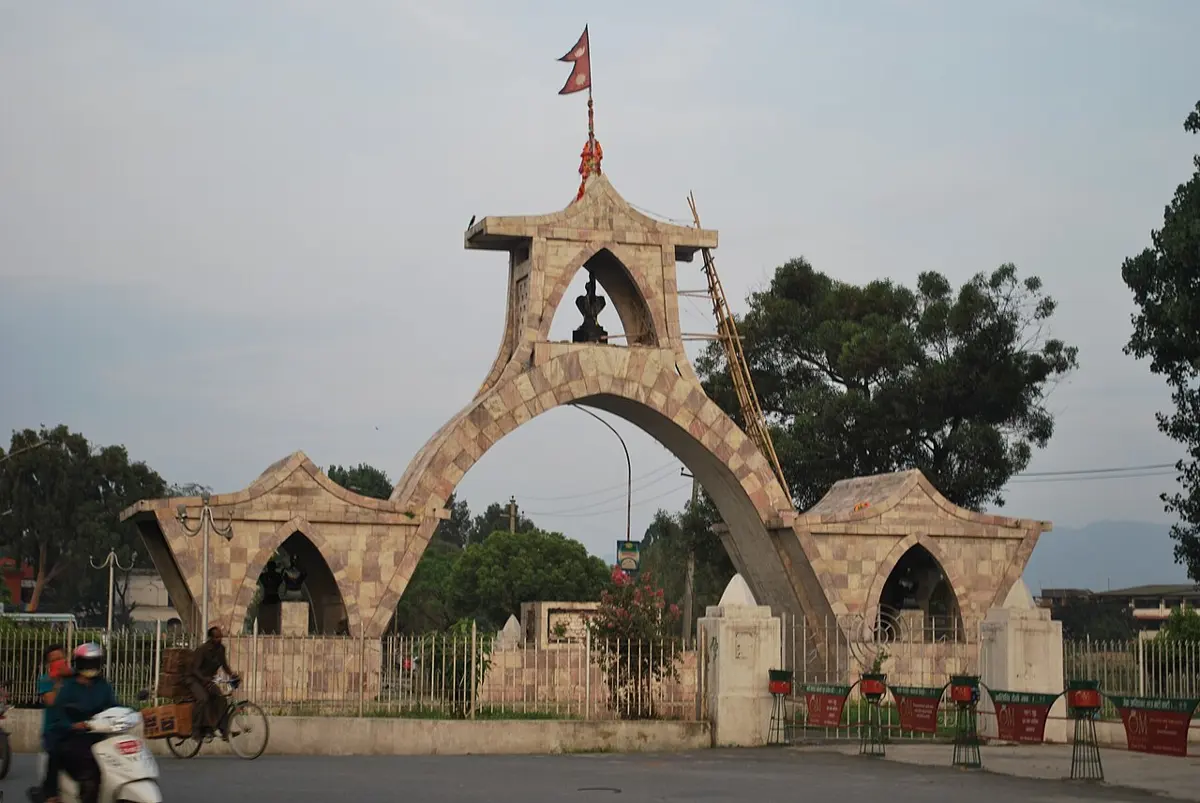
The Ranas weren’t all of one mind. One of the leading Ranas is said to have warned that the executions would only make people angrier, but the rest went along with the prime minister. And one family story, told by a Rana grandson, has a Rana, Laxman Shumsher, looking at Shukraraj’s body and saying the men had been foolish to think they would win, and then, after a moment, that one day there might be a statue in a public place of this tree, with Shukraraj hanging from it. He was half right. Statues of the four men stand in the Martyrs’ Gate at the edge of Tundikhel, and every year Nepal keeps the 16th of Magh as Martyrs’ Day.
That same year, far to the east, a different protest ended at a river. योगमाया (Yogamaya), a holy woman of the hills of Bhojpur, had been preaching for many years against injustice and the way women were treated. She and her followers had sent petitions to two prime ministers, Chandra and then Juddha, asking for a government run on dharma, the right way. After the last was refused, in the summer of 1941, she and her followers, among them a few children, walked together into the Arun river and drowned. The count most often given is sixty-eight people, with her; some accounts give fewer. The Ranas banned her writings and the talk of her, so it was decades before most Nepalis heard of her at all.
From India
For the next few years, Kathmandu was quiet. The Second World War was on, the British were the Ranas’ firm friends, and inside Nepal anyone who spoke up went to prison. The opposition had to grow somewhere else, and it grew in India.
Nepalis had long lived there, as students in Banaras, as workers in Calcutta, as soldiers and their families in the hill towns. Many young Nepalis there took part in India’s own struggle against the British, and some went to Indian jails for it, among them Bishweshwar Prasad Koirala, known everywhere as B. P. To them India’s fight and Nepal’s looked like the same fight. In October 1946, in Banaras, they founded a party for Nepal, and early in 1947 it became the Nepali National Congress. Its president was Tanka Prasad Acharya, who was still in prison in Kathmandu; B. P. did the work in his place.
The first test came in March 1947, at Biratnagar, in the Tarai. A jute mill had opened there about ten years before, with Indian owners, some Rana money and about 2,400 workers. The workers went on strike, and B. P. and other Congress leaders came to lead them. The government sent soldiers, who broke the strike, and the leaders were arrested and taken under guard to Kathmandu. Women of Biratnagar kept the protest going, and B. P.’s mother, Divya Koirala, was among those arrested.
Then the protest moved to Kathmandu. Through April and May 1947, young men and women walked the streets in a सत्याग्रह (satyagraha), Gandhi’s way of protest by peaceful disobedience, and were beaten and arrested. Students joined. A young woman, Sahana Pradhan, is remembered for telling a general to his face that men and women were equal and yet girls like her couldn’t even go to school, and within a fortnight there were morning classes for girls at the Durbar High School.
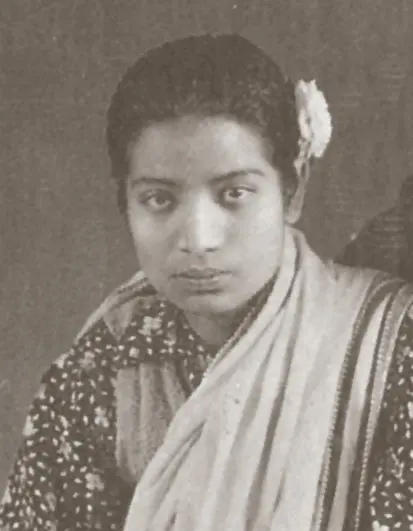
The women organized themselves too. Mangala Devi Singh, whose husband, Ganesh Man Singh, had been jailed in the arrests of 1940 and had escaped in 1944, had been the only woman among some seventy people at a meeting to start a new citizens’ rights committee, modeled on Shukraraj’s. In 1947 she and other women founded the नेपाल महिला सङ्घ (Nepal Mahila Sangh, the Nepal Women’s Association), its office passed off as a clinic. Twenty-one of them went to the prime minister to ask for the vote and for girls’ schools. They came away with a promise in writing and, soon after, a girls’ school named after him, the Padma Kanya School. The vote didn’t come with it.
The prime minister was a new one. Juddha Shumsher had given up the post at the end of 1945, and the next in line, Padma Shumsher, remembered as “the weeping Maharaja”, seems to have wanted to give a little. Under the pressure of 1947 he promised reforms, and in January 1948 he announced Nepal’s first constitution, with a parliament of two houses and a high court. On paper it was a beginning. But the harder men of the family, led by Mohan Shumsher, next in line after him, wanted none of it. Within weeks Padma was on his way out, and he left for India. Mohan became prime minister and banned the Congress. He left the constitution on the shelf for two years, and when he did open a parliament, in September 1950, it was so full of his own appointees that nobody in the opposition took it seriously.
The Ranas’ own side of these years is worth hearing. They had kept Nepal independent through a century in which the British took the rest of the subcontinent, and a Rana general wrote, long after, that Nepal owed its place among nations to them. When B. P., arrested again on a secret visit, was freed in 1949 after a long hunger strike, Mohan told him he had not been released under pressure from anyone. Even B. P. is reported to have said, many years later, that if he had known how fast the tree would fall, he wouldn’t have pushed so hard.
By then the opposition was splitting and rejoining. In 1948 two rich Ranas living in Calcutta, Subarna Shumsher and Mahavir Shumsher, founded a party of their own, the Nepal Democratic Congress, with the money to buy guns. They were grandsons of an earlier prime minister, Bhim Shumsher, and Mahavir was one of the Ranas sent away from Kathmandu in 1934. In 1949 a few young men in Calcutta, led by Pushpa Lal Shrestha, Gangalal’s brother, who had been beaten in the satyagraha of 1947, founded the Communist Party of Nepal. And in April 1950, in Calcutta, the two Congresses joined to form the Nepali Congress, with a promise to end Rana rule “by all available means”. That September, meeting at Bairgania, a village in Bihar just over the border, its leaders decided what those means would be: an armed rising, by volunteers they called the मुक्ति सेना (Mukti Sena, the liberation army).
The fall
It began with the king. On the morning of 6 November 1950, Tribhuvan set out with his family, saying he was going hunting, and went instead to the Indian embassy. He asked for asylum, and was given it. The Ranas declared him deposed and put his three-year-old grandson, Gyanendra, on the throne. Within days Tribhuvan was flown to Delhi, and the Mukti Sena crossed the border, attacked Birgunj and took it.
Over the next two months the rising spread. Volunteers, in the east many of them Rai and Limbu men, took towns in the Tarai and the hills. In Kathmandu, crowds came out again and again, and some of the marchers were killed. At Palpa, Rudra Shumsher, the C-class Rana sent away in 1934, went over to the rebels with the town. By the new year Rana officers were resigning, and the family was divided.
India’s part was large. Nehru, India’s prime minister, didn’t want a revolution on his border. He had said in 1947 that it wasn’t the time for a satyagraha, and in 1950 he complained of bungling by amateur politicians who knew nothing about insurrection. What worried him lay to the north: China had become a communist republic in 1949, and in 1950 Tibet came under its control. In December 1950 he told India’s parliament that the Himalaya were India’s real frontier, that they lay on the far side of Nepal, and that India couldn’t risk anything going wrong there; there could be no going back to the old order, he said, but he wanted a middle way that didn’t uproot the old completely. India refused to recognize the boy king, and so, in the end, did Britain.
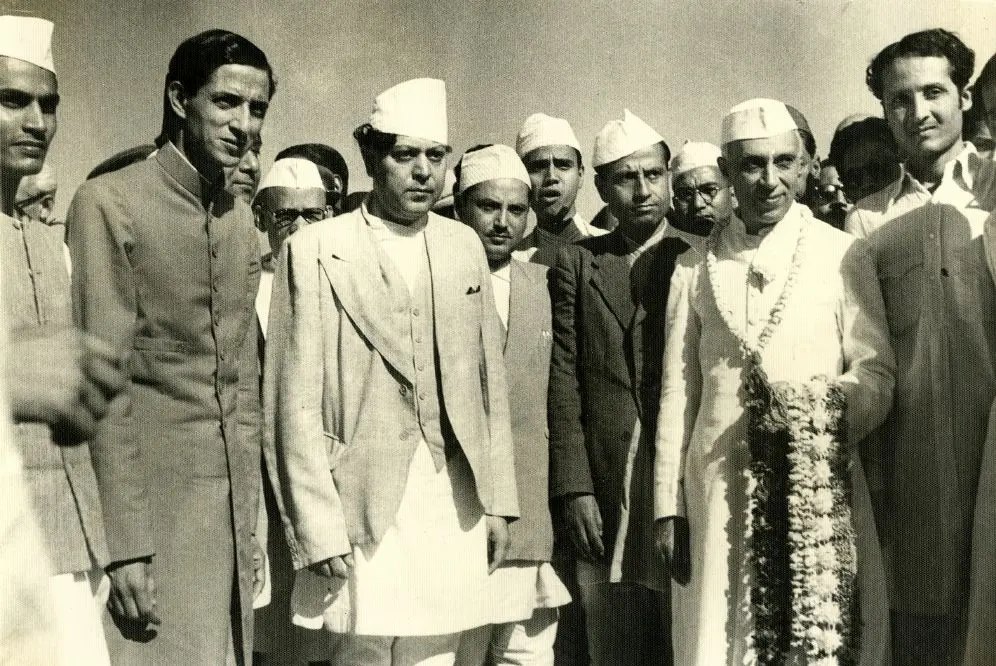
So the end was settled not in Kathmandu but in Delhi, where the three sides, the king, the Ranas and the Congress, sent their people, and India’s officials carried messages between them. In January 1951 Mohan announced that the king would be restored and that elections would be held. In the middle of February Tribhuvan flew back to Kathmandu, and on 18 February 1951 he proclaimed that Nepal would be governed under a constitution to be made by an assembly the people elected. Mohan stayed on as prime minister, at the head of a government of five Ranas and five Congress ministers, but the Ranas’ century was over. How that bargain was made, and what Nepalis have thought of it since, is the next chapter’s story.
The plain lesson of these thirty years is that the Ranas weren’t brought down by one hero or one party. A book on maize, a library, a bomb plot, a preacher’s talks, leaflets on a festival night, four executions, a mill strike, women marching, exiles in India and Ranas left out of their own family’s roll all wore the regime down from different sides, and most of them failed when they were tried. What changed in 1950 was the world around Nepal as well: the British were gone, India’s new government was willing to shelter the king, and China’s arrival in Tibet made Delhi want Nepal settled. How much each of these counted is still argued.
Meanwhile, in the world: in August 1947, a few months after Kathmandu’s satyagraha, India and Pakistan became independent, and British rule in the subcontinent ended. On 1 October 1949 Mao Zedong proclaimed the People’s Republic of China in Beijing, after a civil war that the Communist Party won.
Found a mistake? Please tell us.