
Dip two wires from a battery and a torch bulb into a glass of water with a spoonful of salt stirred in, and the bulb lights. Stir sugar into the water instead, and the bulb stays dark, however much sugar you add. Leave the salty glass connected for a while and something else happens: bubbles stream off both wires, and the water near one of them starts to smell faintly of a swimming pool. The current is not only passing through the salt water. It is breaking it apart.
That breaking apart by electricity is called electrolysis. It explains why some liquids conduct and others don’t, and it is one of the most useful tools chemistry has: it coats steel taps with shiny chromium and bangles with gold, makes the pure copper inside every electric wire, and splits water into the hydrogen that now fuels a car at Kathmandu University. This unit is about what carries the current through a liquid, why some substances carry it far better than others, and how a current changes the liquid it passes through.
8.1 Electrolytes and non-electrolytes
Two ways to carry a current
An electric current is a flow of charge, and something charged has to be free to move for it to flow. There are two quite different ways this can happen.
In a metal, the current is carried by free electrons drifting through the metal. The metal itself doesn’t change: a copper wire that has carried a current for years is still the same copper wire. This is metallic conduction.
In a liquid such as salt water, there are no free electrons. The current is carried by ions, atoms or groups of atoms with an electric charge, moving through the liquid: positive ions one way, negative ions the other. When the ions reach the metal plates that dip into the liquid, they hand over or pick up electrons there and turn into new substances. So the liquid is chemically changed as the current passes. This is electrolytic conduction.
| Metallic conduction | Electrolytic conduction |
|---|---|
| Carried by free electrons. | Carried by ions, positive and negative. |
| Happens in metals and graphite, solid or molten. | Happens in molten ionic compounds and in solutions of acids, bases and salts. |
| The conductor is not changed chemically. | The liquid is decomposed: new substances form at the plates. |
| Matter does not move; only electrons drift. | Matter moves: the ions themselves travel through the liquid. |
| Resistance rises when it is heated. | Resistance falls when it is heated (the ions move faster). |
Electrolytes
A substance that conducts electricity when it is molten or dissolved in water, and is decomposed by the current as it does, is an electrolyte. Its solution or melt contains ions that are free to move.
Acids, bases and salts are electrolytes. Examples:
- acids: hydrochloric acid (HCl), sulphuric acid (H₂SO₄), nitric acid (HNO₃), ethanoic acid (CH₃COOH, the acid in vinegar);
- bases and alkalis: sodium hydroxide (NaOH), potassium hydroxide (KOH), ammonia solution (NH₄OH);
- salts: sodium chloride (NaCl), copper sulphate (CuSO₄), potassium nitrate (KNO₃), ammonium chloride (NH₄Cl).
When sodium chloride dissolves, its ions separate and spread through the water:
and copper sulphate gives copper ions and sulphate ions:
A positive ion is called a cation and a negative ion an anion, for reasons you will see in a moment.
Non-electrolytes
A substance that does not conduct electricity, either molten or in solution, is a non-electrolyte. It dissolves (if it dissolves at all) as whole, uncharged molecules, so there is nothing charged to carry a current. Examples: sugar (sucrose, C₁₂H₂₂O₁₁), glucose (C₆H₁₂O₆), urea, ethanol (alcohol), glycerin, kerosene and petrol.
Sugar dissolves in water just as readily as salt does, but each sugar molecule stays whole. A glass of sugar water is full of molecules and empty of ions, and the bulb stays dark.
The words of electrolysis
The flow of an electric current through an electrolyte, decomposing it, is electrolysis (Greek lysis, “loosening”). The things you need have names of their own.
- Electrodes are the two plates or rods, of metal or carbon, through which the current enters and leaves the electrolyte.
- The anode is the electrode joined to the positive terminal of the battery.
- The cathode is the electrode joined to the negative terminal.
- The vessel holding the electrolyte and the electrodes is an electrolytic cell, also called a voltameter.
- Negative ions are attracted to the positive anode, so they are anions; positive ions go to the cathode, so they are cations.
An electrode that takes no part in the reaction itself, such as platinum or carbon (graphite), is called inert. An electrode that does take part, such as a copper anode in copper sulphate solution, is called active: you will see in 8.3 that it dissolves.
Which of these conducts electricity and is decomposed by it?
Pick an answer to see why.
| Electrolyte | Non-electrolyte |
|---|---|
| Conducts electricity when molten or in solution. | Doesn’t conduct, molten or in solution. |
| Forms ions in solution or when molten. | Stays as whole, uncharged molecules. |
| Is decomposed by the current (electrolysis). | Is not decomposed by a current. |
| Mostly ionic compounds and some polar covalent ones: acids, bases and salts. | Mostly covalent compounds: sugar, glucose, urea, alcohol, kerosene. |
| Examples: NaCl, CuSO₄, HCl, NaOH. | Examples: sugar, glucose, ethanol, petrol. |
8.2 Strong electrolytes and weak electrolytes
Not all electrolytes conduct equally well. Make solutions of the same strength of hydrochloric acid and of ethanoic acid, the acid in vinegar, and test them with a bulb. Hydrochloric acid lights it brightly; ethanoic acid hardly at all. Both are acids, both dissolve completely, so why the difference?
The answer is in how many of the dissolved molecules have split into ions. The fraction of the dissolved electrolyte that has split into ions is called its degree of ionization (α, the Greek letter alpha):
It is often given as a percentage. α = 1 (100%) means every molecule has split; α = 0.01 (1%) means one in a hundred.
Strong electrolytes
An electrolyte that splits almost completely into ions in solution is a strong electrolyte. Its solution is full of ions, so it conducts well. Since nearly nothing is left unsplit, its ionization is written with a single arrow:
Strong electrolytes are:
- strong acids: hydrochloric acid, sulphuric acid, nitric acid;
- strong bases: sodium hydroxide, potassium hydroxide;
- almost all salts that dissolve: sodium chloride, potassium chloride, ammonium chloride, copper sulphate, potassium nitrate, and even sodium ethanoate (CH₃COONa), the salt of a weak acid.
Weak electrolytes
An electrolyte that splits into ions only partly in solution is a weak electrolyte. Most of it stays as whole molecules, with only a few ions among them, so it conducts poorly. The ions keep joining back into molecules while other molecules split, so the two exist side by side; the ionization is written with a double arrow, ⇌, meaning it goes both ways:
Weak electrolytes are:
- weak acids: ethanoic acid (acetic acid, in vinegar), carbonic acid (H₂CO₃, in soda water), citric acid (in lemons), formic acid (in ant stings);
- weak bases: ammonia solution (ammonium hydroxide, NH₄OH);
- water itself, the weakest of all.
How weak is weak? In ethanoic acid of 0.1 mol/L (about 6 g of the acid in a liter), only about 1.3% of the molecules are split into ions at any moment: 13 in every thousand. A solution of sodium chloride of the same strength is split nearly completely, and it conducts about 20 times better.
In the tester below, the magnified circle shows only what has dissolved: the water’s own molecules, which far outnumber them, are left out.
What makes a weak electrolyte split more
The degree of ionization of a weak electrolyte is not fixed. It depends on three things.
- Its nature. Some molecules hold together more firmly than others: ethanoic acid splits more than carbonic acid, and far less than hydrochloric acid.
- Its concentration. Add more water, and a bigger fraction splits: with the ions spread farther apart, they meet and join back together less often. For ethanoic acid at 25 °C:
| Strength of ethanoic acid | Degree of ionization |
|---|---|
| 0.1 mol/L | 1.3% |
| 0.01 mol/L | 4.2% |
| 0.001 mol/L | 12.5% |
- Temperature. For most weak electrolytes, warming increases the degree of ionization a little.
Which of these is a weak electrolyte?
Pick an answer to see why.
Ethanoic acid is diluted with ten times as much water. What happens to its degree of ionization?
Pick an answer to see why.
| Strong electrolyte | Weak electrolyte |
|---|---|
| Splits almost completely into ions in solution. | Splits only partly into ions. |
| Its solution holds many ions and few or no whole molecules. | Its solution holds a few ions among many whole molecules. |
| Conducts electricity well. | Conducts electricity poorly. |
| Ionization written with one arrow: HCl → H⁺ + Cl⁻. | Ionization written with a double arrow: CH₃COOH ⇌ CH₃COO⁻ + H⁺. |
| Examples: HCl, H₂SO₄, NaOH, KOH, NaCl, NH₄Cl, CuSO₄. | Examples: CH₃COOH, H₂CO₃, NH₄OH, water. |
8.3 Arrhenius theory of electrolysis
Why do some solutions conduct and others not? Why does a weak electrolyte split more of itself into ions when it is diluted? In the 1880s these questions had no good answer. Most chemists followed Faraday and thought that the current itself pulled molecules apart into ions. The answer that stands today came from a student in Sweden.
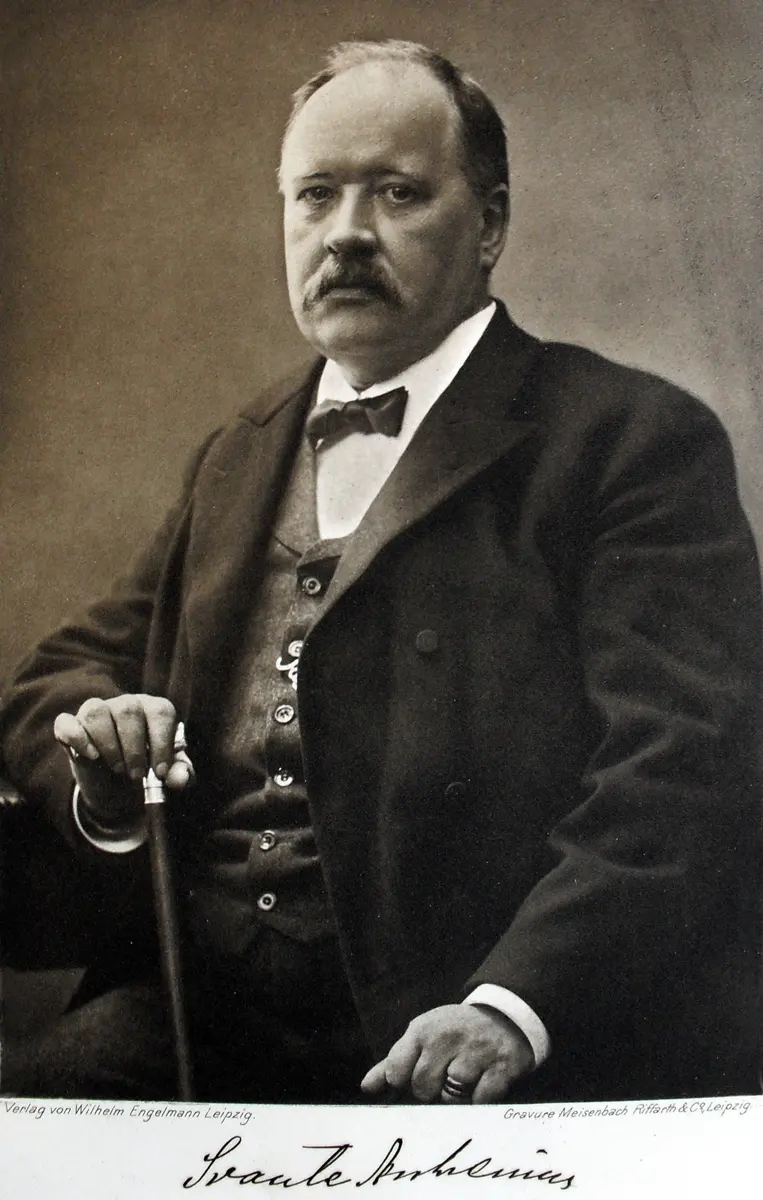
The postulates
The main points, or postulates, of Arrhenius theory of electrolytic dissociation are these.
- When an electrolyte is dissolved in water or melted, its molecules split into two kinds of charged particles, positive ions (cations) and negative ions (anions). This splitting is called ionization or dissociation, and it happens by itself, without any current. For example, NaCl → Na⁺ + Cl⁻.
- The total positive charge on the cations equals the total negative charge on the anions, so the solution as a whole is electrically neutral. In copper sulphate solution, every Cu²⁺ carries two positive charges and every SO₄²⁻ two negative ones.
- The ions are free to move about at random through the solution.
- Ionization is reversible: ions can join back into molecules, and molecules keep splitting, so both are present together: AB ⇌ A⁺ + B⁻.
- The fraction of the electrolyte that is ionized, its degree of ionization, depends on the nature of the electrolyte, its concentration (the more dilute, the more ionized) and the temperature. Strong electrolytes are nearly completely ionized; weak electrolytes only partly.
- When an electric current is passed through the solution, the ions stop moving at random: the cations move towards the cathode and the anions towards the anode. This movement of ions is the current in the solution.
- At the electrodes the ions lose their charge, they are discharged: cations take electrons from the cathode, anions give electrons to the anode, and they become neutral atoms or molecules, the products of electrolysis.
- The properties of an electrolyte’s solution are the properties of its ions. The blue of copper sulphate solution is the color of Cu²⁺ ions (dilute copper chloride and copper nitrate solutions are blue too), and all acids taste sour because they all give H⁺ ions.
The theory explains what you saw in 8.1 and 8.2: a solution conducts only if it has ions; a strong electrolyte conducts well because it has many; a weak one conducts poorly because it has few; diluting it ionizes a bigger fraction of it, so each molecule dissolved adds more to the current, even though the solution as a whole has fewer ions in each liter.
According to Arrhenius, when is sodium chloride split into ions?
Pick an answer to see why.
How electrolysis happens
Take the simplest case first: molten sodium chloride, which contains only two kinds of ion, Na⁺ and Cl⁻. Two carbon electrodes dip into it, joined to a battery.
- The battery pumps electrons into the cathode and pulls electrons out of the anode, so the cathode becomes negative and the anode positive.
- The Na⁺ ions are attracted to the cathode. There each takes one electron and becomes a sodium atom: Na⁺ + e⁻ → Na. Molten sodium collects at the cathode.
- The Cl⁻ ions are attracted to the anode. There each gives up one electron and becomes a chlorine atom, and two atoms pair up into a molecule: 2Cl⁻ → Cl₂ + 2e⁻. Chlorine gas bubbles off the anode.
- The electrons the anode takes from the chloride ions flow round the wire, through the battery, to the cathode. So the circuit is complete: electrons in the wire, ions in the liquid.
Overall: 2NaCl → 2Na + Cl₂. This is how sodium metal is made in industry, in a steel tank called a Downs cell, with calcium chloride added to the salt so that it melts at about 600 °C instead of 801 °C.
A cation gains electrons at the cathode: that is reduction. An anion loses electrons at the anode: that is oxidation. Every electrolysis is the two together, which is why electrolysis is called a redox change brought about by electricity.
Which ions are discharged?
In a solution there is a problem: water gives a few H⁺ and OH⁻ ions of its own, so there are always at least two kinds of cation and two kinds of anion near each electrode. Only one of each is usually discharged. Which one depends on three things.
- The position of the ion in the activity series. The less reactive a metal, the more easily its ions take electrons back. So Cu²⁺ and Ag⁺ ions are discharged at the cathode in preference to H⁺, while the ions of very reactive metals, K⁺, Na⁺, Ca²⁺, Mg²⁺ and Al³⁺, are not discharged from a solution in water at ordinary electrodes: hydrogen comes off instead. For anions, OH⁻ is discharged in preference to SO₄²⁻ and NO₃⁻, which are hardly ever discharged.
- Concentration. An ion present in great numbers can be discharged in preference to one that would otherwise win. In concentrated sodium chloride solution (brine), Cl⁻ ions are discharged at the anode instead of OH⁻, and chlorine comes off. In very dilute salt solution, oxygen comes off instead.
- The electrodes. Platinum and carbon are inert. But with a copper anode in copper sulphate solution, no anion is discharged at all: the anode itself gives up electrons and dissolves as Cu²⁺ ions, Cu → Cu²⁺ + 2e⁻, more easily than any anion can be discharged.
Here is what happens in the four cells of the widget.
1. Water with a little dilute sulphuric acid, platinum electrodes. The ions present are H⁺ and SO₄²⁻ from the acid and H⁺ and OH⁻ from the water. At the cathode H⁺ ions are discharged; at the anode OH⁻ ions, not SO₄²⁻:
The same four electrons make two molecules of hydrogen and one of oxygen. So the water is split, 2H₂O → 2H₂ + O₂, and the gases come off in the ratio 2 volumes of hydrogen : 1 volume of oxygen. The acid is not used up; the solution slowly gets more concentrated as the water goes. This is called the electrolysis of water.
2. Brine (concentrated sodium chloride solution), carbon electrodes. Na⁺ is too reactive to be discharged, so hydrogen comes off at the cathode; Cl⁻ is concentrated, so chlorine comes off at the anode, in equal volumes:
The Na⁺ and OH⁻ ions left behind make the solution into sodium hydroxide. This is the chlor-alkali industry, which makes three useful chemicals at once from salt water: chlorine, hydrogen and caustic soda.
3. Copper sulphate solution, carbon electrodes. Cu²⁺ is discharged before H⁺, so a pink-brown coat of copper forms on the cathode. At the anode OH⁻ is discharged and oxygen bubbles off. As the Cu²⁺ ions are used up, the blue color fades, and the H⁺ and SO₄²⁻ ions left behind make the solution acidic: it turns into dilute sulphuric acid.
4. Copper sulphate solution, copper electrodes. At the cathode, copper is deposited as before. But no gas comes off the anode: the copper anode dissolves instead, sending new Cu²⁺ ions into the solution as fast as they are removed at the cathode. The blue color stays the same; the anode gets thinner and the cathode thicker by the same mass. Copper has simply been moved from one electrode to the other, and this is the idea behind electroplating and electrorefining (8.4).
Copper sulphate solution is electrolyzed with copper electrodes. What happens at the anode?
Pick an answer to see why.
Electrolysis of water (Practical 21)
The usual apparatus for collecting the gases from the electrolysis of water is Hofmann’s voltameter, made by the German chemist August Wilhelm von Hofmann in the 1860s (Figure 8.2).
Limitations of Arrhenius theory
Arrhenius theory explains a great deal, but chemists later found that it isn’t the whole picture.
- Ionic solids are already made of ions. Sodium chloride is built of Na⁺ and Cl⁻ ions even as a crystal (Grade 9 Science, the electrovalent bond). Dissolving doesn’t create the ions, it only sets them free.
- Strong electrolytes are completely ionized. Arrhenius thought even strong electrolytes were not quite fully ionized, because their conductivity per gram falls as the solution gets more concentrated. The real reason, worked out by Peter Debye and Erich Hückel in 1923, is that in a crowded solution oppositely charged ions pull on each other and slow each other down.
- Ions in water are not bare. Each ion is surrounded by water molecules (it is hydrated), and an H⁺ ion never exists alone in water: it is joined to a water molecule as H₃O⁺, the hydronium ion.
- It applies only to solutions in water and to melts, not to other solvents.
Which of these is a postulate of Arrhenius theory?
Pick an answer to see why.
8.4 Application of electrolysis
Electrolysis moves metal from one place to another, atom by atom, and it can split compounds that no ordinary reaction will. Both make it one of the most widely used processes in industry.
Electroplating
The process of coating a metal object with a thin layer of another metal by electrolysis is called electroplating. It is done to protect the object from rusting or corrosion, to make it look better, or to give a cheap metal the surface of an expensive one.
For electroplating:
- the object to be plated is made the cathode, and it must be perfectly clean and free of grease, or the coat won’t stick;
- the anode is a plate of the metal to be coated (silver for silver plating, nickel for nickel plating);
- the electrolyte is a solution of a salt of that metal (for silver, a silver salt; for copper, copper sulphate);
- a small, steady direct current is used for a long time: a large current gives a rough, loose coat that flakes off.
During plating, the anode dissolves and the metal’s ions are deposited on the object as an even layer, as in cell 4 of the widget above (Figure 8.3).
Electroplating is everywhere around you:
- Chromium over a layer of nickel makes the shiny, rust-free surface of taps, bicycle handlebars and motorcycle parts.
- Tin on thin steel sheet makes food cans (“tins”): tin is not poisonous and doesn’t rust.
- Zinc on iron protects bolts and nails (though roofing sheets are usually dipped in molten zinc instead, which is called galvanizing).
- Silver and gold on brass, copper or nickel silver make plated jewelry, spoons and trophies that look like the real metal for a fraction of the price.

Electrorefining
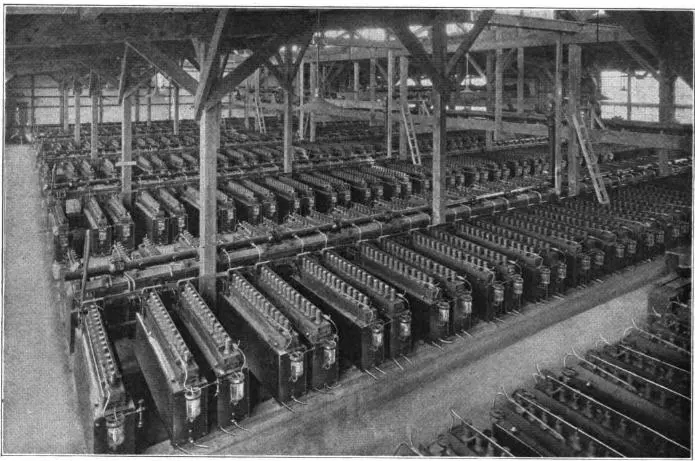
Copper fresh from the smelter is about 99% pure. That sounds pure, but the last 1% of iron, nickel, arsenic and other metals makes it conduct electricity much worse, and copper for electric wires must be at least 99.9% pure. It is purified by electrorefining, the purification of a metal by electrolysis:
- the anode is a thick slab of the impure metal;
- the cathode is a thin sheet of the pure metal (or of stainless steel, from which the copper is peeled off);
- the electrolyte is a solution of a salt of the metal: for copper, copper sulphate with some sulphuric acid.
When the current flows, copper atoms of the anode dissolve as Cu²⁺ ions, and pure copper is deposited on the cathode: the same reactions as cell 4 above. The impurities part two ways. More reactive metals such as iron, zinc and nickel dissolve too, but stay in the solution, because their ions are not discharged in preference to Cu²⁺. Less reactive ones such as gold, silver and platinum don’t dissolve at all: as the anode wears away, they fall to the bottom as anode mud, which is collected and is valuable enough to pay for much of the refining. The copper on the cathode is 99.99% pure.
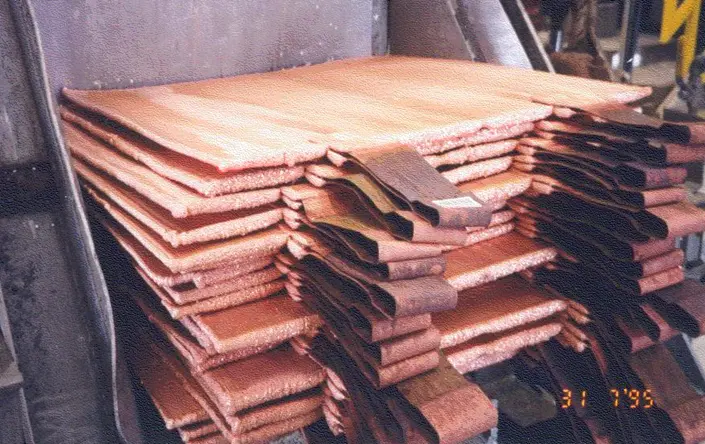
Gold, silver, nickel, lead and tin are refined in the same way.
Electrotyping
Electrotyping is making an exact copy of an object, such as a printing block, coin or medal, by depositing metal on a mold of it by electrolysis (Figure 8.6).
The steps are:
- A mold of the object is made by pressing it into wax (or, in the past, gutta-percha, a natural rubber).
- The mold doesn’t conduct, so its face is coated with fine graphite powder.
- The mold is made the cathode in copper sulphate solution, with a copper anode. Copper is deposited on the graphite, following every tiny detail of the mold.
- When the copper shell is thick enough, it is taken off the mold and backed with a cheaper metal, poured on molten (for printing plates, an alloy of mostly lead with a little tin and antimony), to make it strong.
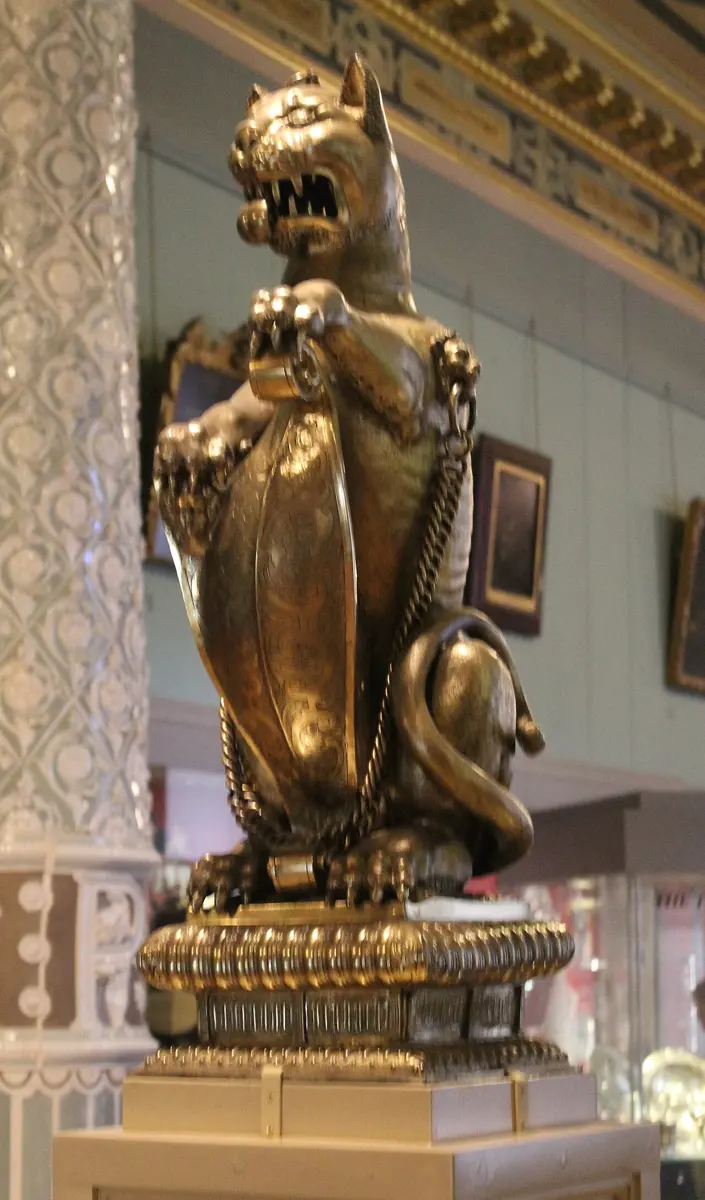
Electrotyping was invented in 1838 by Moritz Jacobi in Russia (others in England found it at about the same time). For more than a hundred years, it was how books, magazines and fine pictures were printed in long runs: a page of type was copied into a copper plate that didn’t wear out the way soft type metal did. Museums used it to copy treasures: by 1920 London’s Victoria and Albert Museum held well over a thousand electrotype copies of objects in other collections. Today the same process, called electroforming, makes the metal masters that press CDs.
Other uses of electrolysis
- Extracting reactive metals. Sodium, potassium, calcium, magnesium and aluminium are too reactive to be got from their ores by heating with carbon. They are made by electrolysis of their molten compounds. Aluminium, by the Hall–Héroult process of 1886, is made from aluminium oxide dissolved in molten cryolite, and its smelters use a few percent of all the electricity the world makes.
- Making chemicals. Chlorine, sodium hydroxide and hydrogen from brine (the chlor-alkali industry, cell 2 above); hydrogen and oxygen from water.
- Anodizing. Aluminium is made the anode in dilute sulphuric acid, which thickens its natural oxide skin, so it resists corrosion and can be dyed: colored aluminium water bottles and window frames are anodized.
| Electroplating | Electrorefining |
|---|---|
| Coats an object with a thin layer of another metal. | Purifies an impure metal. |
| The cathode is the object to be plated. | The cathode is a thin sheet of the pure metal. |
| The anode is the pure plating metal. | The anode is the impure metal. |
| Done to protect or decorate the object. | Done to get the metal 99.99% pure. |
| Example: chromium plating a tap. | Example: refining copper for wires. |
In electroplating a brass spoon with silver, the spoon is:
Pick an answer to see why.
In the electrorefining of copper, where do the gold and silver in the impure copper end up?
Pick an answer to see why.
Exercise
1. Choose the correct option
a. Which of these is a non-electrolyte?
Pick an answer to see why.
b. In electrolytic conduction, the current through the liquid is carried by:
Pick an answer to see why.
c. Which pair contains only strong electrolytes?
Pick an answer to see why.
d. During electrolysis, the anode is the electrode that is:
Pick an answer to see why.
e. Water containing a little dilute sulphuric acid is electrolyzed and 30 cm³ of hydrogen is collected. The volume of oxygen collected at the same time is about:
Pick an answer to see why.
f. Brine is electrolyzed with carbon electrodes. The products at the cathode and the anode are:
Pick an answer to see why.
g. In the electroplating of an iron key with nickel, the electrolyte should be:
Pick an answer to see why.
h. Who put forward the theory that electrolytes split into ions on dissolving, before any current is passed?
Pick an answer to see why.
2. Give reasons
Solid sodium chloride doesn’t conduct electricity, but its solution in water does.
Hint
Answer
Sugar solution doesn’t conduct electricity.
Hint
Answer
Ethanoic acid is called a weak electrolyte, though it dissolves completely in water.
Hint
Answer
A little dilute sulphuric acid is added to water before it is electrolyzed.
Hint
Answer
In electroplating, the object to be plated is made the cathode.
Hint
Answer
The blue color of copper sulphate solution fades when it is electrolyzed with carbon electrodes, but not with copper electrodes.
Hint
Answer
3. Differentiate between
Electrolytes and non-electrolytes
Hint
Answer
Strong electrolytes and weak electrolytes
Hint
Answer
Metallic conduction and electrolytic conduction
Hint
Answer
Electroplating and electrorefining
Hint
Answer
4. Answer the following questions
What is an electrolyte? Write two examples each of strong and weak electrolytes.
Hint
Answer
What is meant by the degree of ionization? Write three factors that affect it.
Hint
Answer
Write the main postulates of Arrhenius theory of electrolytic dissociation.
Hint
Answer
Write two limitations of Arrhenius theory.
Hint
Answer
With a labeled diagram, describe the electrolysis of water. Write the reactions at the cathode and the anode, and how you would test the two gases.
Hint
Answer
What is electroplating? Describe, with a labeled diagram, how an iron spoon is electroplated with copper.
Hint
Answer
How is impure copper purified by electrolysis? What happens to the impurities?
Hint
Answer
What is electrotyping? Write its steps and two uses.
Hint
Answer
5. Numerical problems
In a solution, 0.1 mol of a weak acid is dissolved and 0.0042 mol of it is split into ions. Find its degree of ionization as a percentage.
Hint
Answer
Ethanoic acid of 0.1 mol/L is 1.3% ionized. How many molecules in every 10,000 dissolved are split into ions, and how many ions do they make?
Hint
Answer
Lochan electrolyses acidified water in a Hofmann’s voltameter. After 20 minutes the cathode’s tube holds 24 cm³ of gas. (i) Which gas is it? (ii) What volume of gas is in the anode’s tube? (iii) What is the total volume of gas collected?
Hint
Answer
In electrolyzing water, Yangchen collects 45 cm³ of hydrogen and oxygen together. How much of each did she collect?
Hint
Answer
A current of 0.2 A is passed through copper sulphate solution for 25 minutes. (i) How much charge flows? (ii) How many electrons is that? (iii) How many copper atoms are deposited on the cathode? (The charge on an electron is 1.6 × 10⁻¹⁹ C.)
Hint
Answer
Water is one-ninth hydrogen by mass (2 g of hydrogen in every 18 g of water). The hydrogen station at Dhulikhel makes about 2 kg of hydrogen a day. What is the least mass of water it must split each day? About how many liters is that? (1 liter of water has a mass of 1 kg.)
Hint
Answer
Printable PDFs
- The unit as a book (A5) 28 pages Answers as an A4 booklet, 7 sheets
- Study notes 2 pages
- Worksheet 5 pages Answer key
- Harder practice questions 3 pages Answer key
Practice every question in the book, and keep track of the ones you miss →
Found a mistake? Please tell us.