
Look around a Nepali kitchen. The gas in the cylinder, the rice and the sugar, the ghee and the mustard oil, the vinegar in the achar, the kerosene for the lamp, the plastic bucket, the sanitizer by the door, even the cotton of your clothes: every one of them is made of molecules built around carbon atoms. So are you. Chemists keep a register of every substance they have described, and it holds more than 290 million of them; most are compounds of carbon.
One element, and almost all of chemistry’s variety. Why can carbon build so much? And with so many compounds, how do chemists give each one a name that tells you exactly what it is? This unit answers both questions: what makes carbon special, how its compounds fall into families, and how to read and write their names the way chemists everywhere do.
9.1 Organic compounds
What an organic compound is
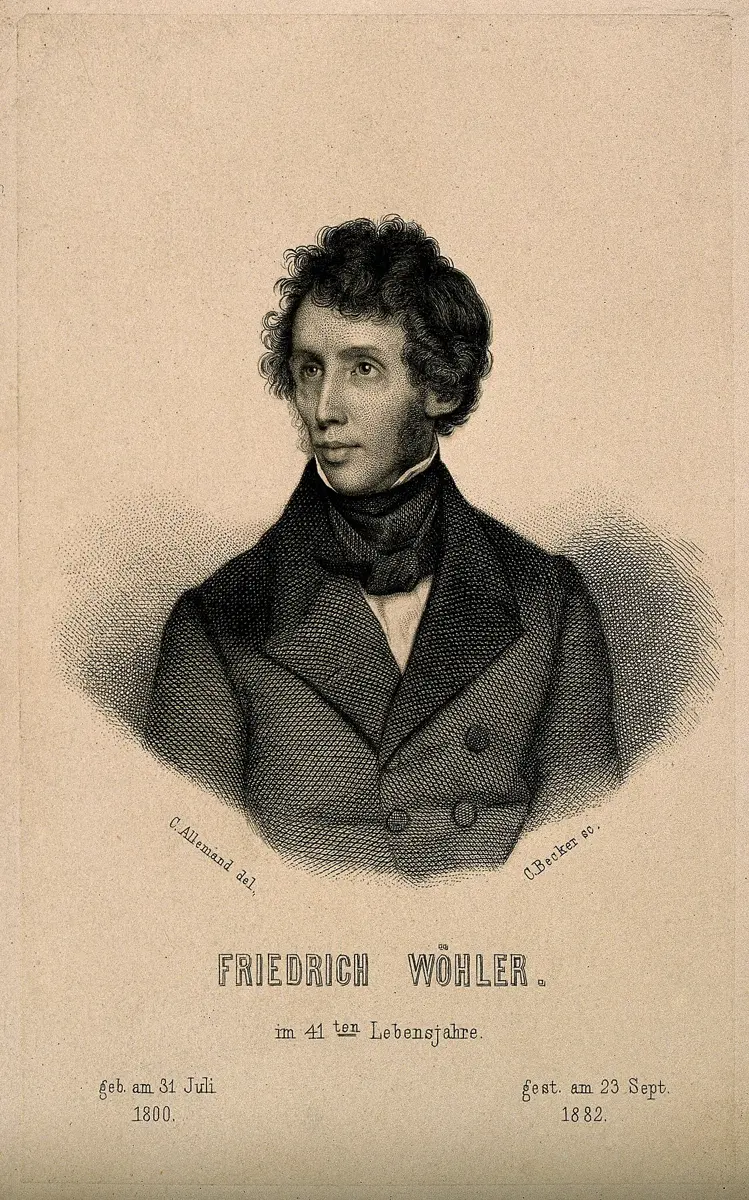
Two hundred years ago, chemists sorted substances by where they came from. Sugar, oils, urea, alcohol and dyes came from living things, plants and animals; salt, metals, sand and limestone came from the non-living earth. The Swedish chemist Jöns Jacob Berzelius was the first to draw a line between the two: compounds from living things he called organic, the rest inorganic. In 1810 he stated that living things work by a mysterious vital force, and many chemists believed that only a living thing, with its vital force, could make an organic compound.
Today the name “organic” has nothing to do with life. The plastic of a bucket and the drug in a tablet are organic compounds made in factories. What all organic compounds share is carbon, almost always joined to hydrogen:
Organic compounds are the compounds of carbon, mostly with hydrogen (the hydrocarbons) and the compounds made from them by putting other atoms, such as oxygen, nitrogen, sulphur or chlorine, in place of some of their hydrogen atoms. The study of these compounds is organic chemistry.
A few simple carbon compounds are counted as inorganic, because they behave like minerals and were studied with them: carbon monoxide (CO), carbon dioxide (CO₂), carbonic acid (H₂CO₃), the carbonates such as limestone (CaCO₃) and the hydrogencarbonates such as baking soda (NaHCO₃), the cyanides such as KCN, and the carbides such as calcium carbide (CaC₂).
Examples
Organic compounds come from plants and animals, from coal, petroleum and natural gas (the remains of living things buried millions of years ago), and from factories that build them from simpler ones.
| Compound | Formula | Where you meet it |
|---|---|---|
| methane | CH₄ | biogas (gobar gas), natural gas |
| propane and butane | C₃H₈, C₄H₁₀ | LPG, the cooking gas in cylinders |
| ethanol | C₂H₅OH | hand sanitizer, spirit lamps, alcoholic drinks |
| ethanoic acid (acetic acid) | CH₃COOH | vinegar, achar |
| methanal (formaldehyde) | HCHO | formalin, which keeps specimens in a school lab |
| propanone (acetone) | CH₃COCH₃ | nail polish remover |
| urea | CO(NH₂)₂ | urine; the most used fertilizer in Nepal’s fields |
| glucose and sucrose | C₆H₁₂O₆, C₁₂H₂₂O₁₁ | fruit and honey; table sugar |
| polythene | (C₂H₄)ₙ | plastic bags and bottles |
| starch, cellulose, proteins, fats, DNA | very large molecules | rice and wheat; cotton and paper; meat, milk and dal; ghee and oil; every living cell |
How organic and inorganic compounds differ
Organic compounds are held together by covalent bonds: their atoms share electrons. Many inorganic compounds, like common salt, are ionic: they are made of charged ions held by the pull between opposite charges. That one difference explains most of the others.
| Organic compounds | Inorganic compounds |
|---|---|
| Always contain carbon, nearly always hydrogen. | May contain any elements; most contain no carbon. |
| Covalent bonds. | Many are ionic (salts, bases). |
| Low melting and boiling points; many are gases or liquids. | Ionic ones have high melting and boiling points. |
| Most don’t dissolve in water, but dissolve in organic solvents such as kerosene, alcohol or ether. | Many dissolve in water; few dissolve in organic solvents. |
| Most burn, and leave a black char of carbon if heated without enough air. | Most don’t burn. |
| Don’t conduct electricity, melted or dissolved (they have no ions). | Ionic ones conduct when melted or dissolved in water. |
| React slowly, since their covalent bonds must break. | Ionic ones often react at once (ions are already free). |
| Very many; the same formula can belong to several compounds. | Far fewer. |
Which of these is an organic compound?
Pick an answer to see why.
Most organic compounds have low melting and boiling points because:
Pick an answer to see why.
9.2 Unique properties of carbon
Silicon sits just below carbon in the periodic table, and also has four outer electrons. Yet silicon’s compounds with hydrogen are few and catch fire in air, while carbon’s run to millions. Three properties, found together only in carbon, make the difference: it makes four bonds (tetracovalency), it joins to itself in chains (catenation), and it makes double and triple bonds (multiple bonding).
Tetracovalency of carbon
A carbon atom has 6 protons and 6 electrons: 2 in the first shell and 4 in the outer shell. To have a full outer shell of 8, it would have to gain four electrons (C⁴⁻) or lose all four (C⁴⁺). Both cost far too much energy: four extra electrons crowded onto a small atom repel each other strongly, and pulling four away from a small nucleus that holds them tightly is just as hard. So carbon does neither. It shares its four outer electrons, one with each of four other atoms, and each partner shares one back. Each shared pair is a covalent bond, and carbon ends up with eight electrons around it, counting the shared ones.
Tetracovalency is carbon’s property of forming four covalent bonds: its valency is four.
Turn a methane molecule and see the tetrahedron for yourself: stand it on any three of its hydrogens and the fourth points straight up.
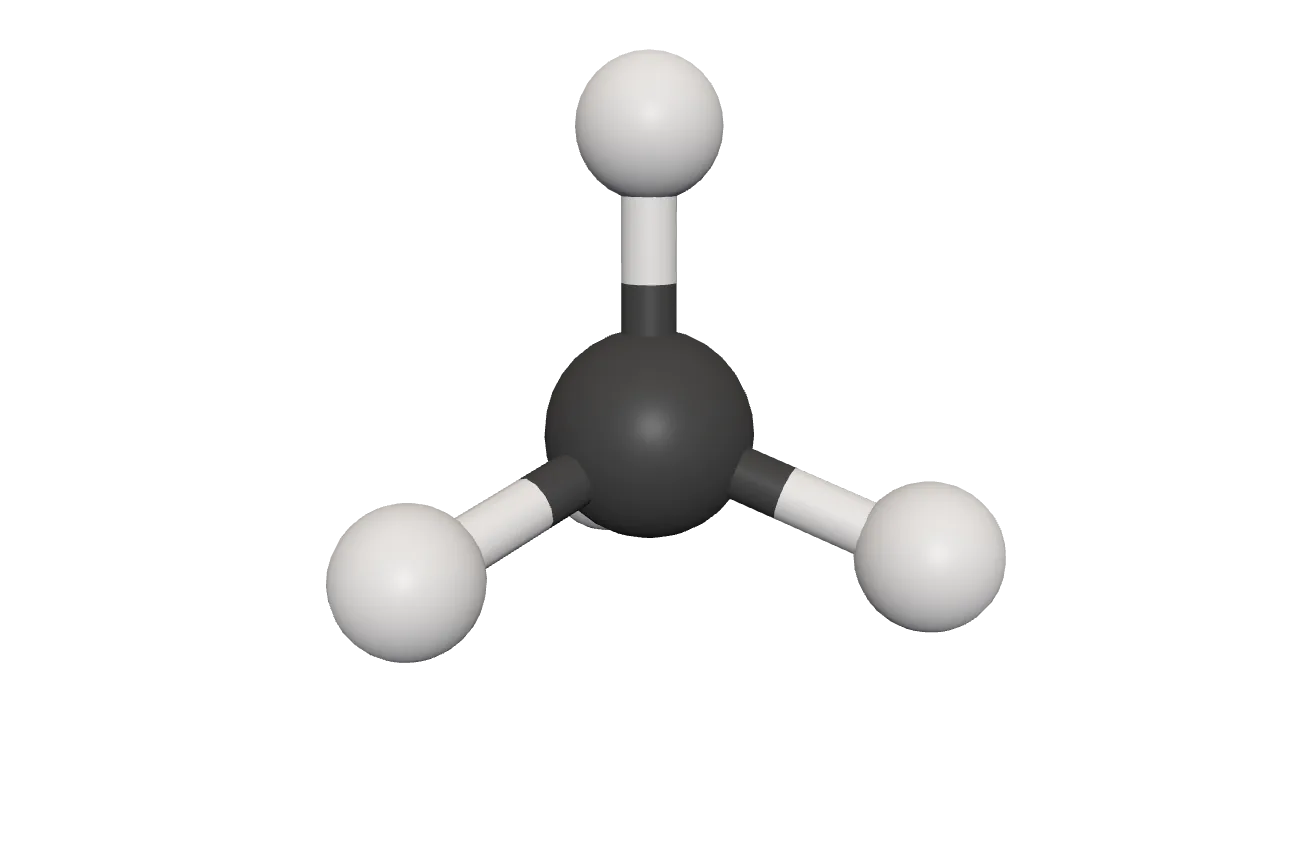
This browser can’t show the 3D model. The picture above is the same model.
A tetrahedron: the four hydrogens are as far apart as they can be, every two bonds 109.5° apart. Stood on three hydrogens, the fourth points straight up.
Carbon atom: four single bonds, one to each hydrogen.
Hydrogen atom: one single bond.
Drag to turn it. Tap an atom to see what it is.
Molecules: computed 3D conformers from PubChem, National Library of Medicine (public domain): pubchem.ncbi.nlm.nih.gov, CID 297
Each of carbon’s four bonds can join a different atom, or group of atoms: four hydrogens in methane, three hydrogens and a chlorine in chloromethane (CH₃Cl), two oxygens in carbon dioxide (through two double bonds). The four bonds spread out in three dimensions, so carbon compounds have real shapes, which matters for how they behave: the shape of a molecule decides which other molecules it fits, as a key fits its lock, and that is how your nose tells one smell from another and how a medicine finds its target.
Catenation
Carbon atoms can bond to each other, one after another, in long chains, in chains with branches, and in rings. This property is called catenation (from the Latin catena, a chain).
Other elements can catenate a little. Sulphur makes rings of eight atoms, and silicon makes short chains with hydrogen. But only carbon makes chains of any length that are stable in air. The reason is in the strength of the bonds:
- The C–C bond is strong, about 347 kJ/mol (the energy needed to break a mole of them), and about as strong as carbon’s bonds to hydrogen (413 kJ/mol) and oxygen (358 kJ/mol). A carbon chain would give out energy by burning in the oxygen of the air, but first some of its strong bonds must break, and at room temperature that doesn’t happen: the chain simply stays as it is. (A flame gives it the energy to start, which is why fuels need a match.)
- The bonds between atoms of other elements are weaker: N–N about 160 and O–O about 146 kJ/mol, so long chains of nitrogen or oxygen fall apart. Silicon’s bonds to itself are much weaker than its bonds to oxygen (Si–O, 452 kJ/mol), so silicon chains react with air: silane, SiH₄, catches fire by itself. That is why the silicon on Earth is locked up with oxygen, in sand and rocks, while carbon’s chains are everywhere in living things.
Chains can be very long. In polythene they run to tens of thousands of carbon atoms, and the single DNA molecule of one of your chromosomes holds from about a billion carbon atoms (in the smallest) to about five billion (in the largest): about 20 carbons in each of its 47 million to 250 million base pairs.
Multiple bonding
Two carbon atoms can share more than one pair of electrons with each other. Sharing one pair makes a single bond (C–C), two pairs a double bond (C=C), and three pairs a triple bond (C≡C). Carbon also makes double bonds with oxygen (C=O) and triple bonds with nitrogen (C≡N). This property is called multiple bonding.
Each carbon still makes four bonds in all, with a double bond counted as two and a triple bond as three. In ethene, H₂C=CH₂, each carbon has a double bond to the other carbon and two single bonds to hydrogens: 2 + 1 + 1 = 4. In ethyne, HC≡CH, each carbon has a triple bond and one single bond: 3 + 1 = 4.
A double bond is not twice as strong as a single one (614 kJ/mol, not 2 × 347 = 694), because its second bond is weaker than the first. That is why compounds with double and triple bonds react more readily than those with only single bonds: their extra bond opens easily, and other atoms add on there. In later grades you will learn the names of the two kinds of bond, sigma and pi.
Compounds with only single bonds between their carbon atoms are saturated: each carbon holds as many hydrogen atoms as it can. Compounds with a double or triple bond are unsaturated: they could take on more hydrogen.
Which property of carbon allows it to form the long chains in polythene?
Pick an answer to see why.
How many electrons do the two carbon atoms share between them in ethyne, HC≡CH?
Pick an answer to see why.
9.3 Alkyl group, functional group and homologous series
The simplest organic compounds contain only carbon and hydrogen: the hydrocarbons. Those with only single bonds between carbon atoms are the alkanes (methane, ethane, propane…); those with a double bond are the alkenes (ethene, propene…), and those with a triple bond the alkynes (ethyne, propyne…).
All the other families can be pictured as hydrocarbons with something added in place of a hydrogen. Three ideas let you sort the millions of compounds into a few dozen families: the alkyl group, the functional group and the homologous series.
Alkyl group
Take one hydrogen atom off an alkane, and what is left has one bond free to join something else. This group is an alkyl group (or alkyl radical). Its general formula is CₙH₂ₙ₊₁–, and it is named by changing the alkane’s ending -ane to -yl:
| Alkane | Alkyl group | Name |
|---|---|---|
| methane, CH₄ | CH₃– | methyl |
| ethane, C₂H₆ | CH₃CH₂– (C₂H₅–) | ethyl |
| propane, C₃H₈ | CH₃CH₂CH₂– (C₃H₇–), joined by an end carbon | propyl |
| propane, C₃H₈ | (CH₃)₂CH–, joined by the middle carbon | isopropyl (1-methylethyl) |
| butane, C₄H₁₀ | CH₃CH₂CH₂CH₂– (C₄H₉–) | butyl |
Propane gives two different alkyl groups, because its end and middle carbons are different: a hydrogen taken from an end carbon gives propyl, one from the middle carbon gives isopropyl. Chemists often write any alkyl group as R (for “radical” or “rest of the molecule”), so that R–OH stands for any alcohol: CH₃–OH, C₂H₅–OH and so on.
What is the formula of the alkyl group with four carbon atoms?
Pick an answer to see why.
Functional group
Methane, chloromethane, methanol and methanoic acid all have one carbon, yet one is a fuel gas, one a gas once used to cool refrigerators, one a poisonous liquid and one the acid in an ant’s sting. What makes them so different is the group in place of a hydrogen. Alkyl groups react hardly at all; the action happens at the special group.
A functional group is an atom or group of atoms in an organic molecule that decides its chemical properties. All the compounds with the same functional group form one family, and react in much the same way, whatever the size of the rest of the molecule.
| Family | Functional group | General form | General formula | Name ends in | First member |
|---|---|---|---|---|---|
| alkane | none (only C–C single bonds) | R–H | CₙH₂ₙ₊₂ | -ane | methane, CH₄ |
| alkene | C=C, double bond | CₙH₂ₙ | -ene | ethene, CH₂=CH₂ | |
| alkyne | C≡C, triple bond | CₙH₂ₙ₋₂ | -yne | ethyne, CH≡CH | |
| alcohol | –OH, hydroxyl | R–OH | CₙH₂ₙ₊₁OH | -ol | methanol, CH₃OH |
| ether | –O–, ether oxygen | R–O–R′ | CₙH₂ₙ₊₂O | alkoxyalkane | methoxymethane, CH₃OCH₃ |
| aldehyde | –CHO, aldehyde (formyl) group | R–CHO | CₙH₂ₙO | -al | methanal, HCHO |
| ketone | C=O inside the chain, carbonyl (keto) group | R–CO–R′ | CₙH₂ₙO | -one | propanone, CH₃COCH₃ |
| carboxylic acid | –COOH, carboxyl group | R–COOH | CₙH₂ₙO₂ (R–COOH: CₙH₂ₙ₊₁COOH, where n counts only R’s carbons) | -oic acid | methanoic acid, HCOOH |
In the table, R and R′ are alkyl groups (the same or different); in an aldehyde and an acid, R may also be just a hydrogen atom. The aldehyde and the ketone both have a C=O; the difference is where it is. In an aldehyde it is at the end of the chain, with a hydrogen on the same carbon (–CHO); in a ketone it is inside the chain, with carbon on both sides. A carboxyl group has a C=O and an –OH on the same carbon, and together they behave as one new group, an acid, not as an alcohol.
CH₃–CH₂–CHO belongs to which family?
Pick an answer to see why.
Which pair of families has the same general formula, CₙH₂ₙO?
Pick an answer to see why.
Homologous series
Line up the alkanes: CH₄, C₂H₆, C₃H₈, C₄H₁₀, C₅H₁₂. Each one is the one before it with one more –CH₂– unit put into the chain. The alcohols do the same: CH₃OH, C₂H₅OH, C₃H₇OH… So do the acids, the aldehydes and every other family. A family laid out like this is a homologous series.
A homologous series is a series of organic compounds with the same functional group, in which each member differs from the next by a –CH₂– group. Its members are called homologs.
The members of a homologous series:
- have the same functional group, and so similar chemical properties: every alcohol reacts with sodium to give hydrogen; every carboxylic acid turns blue litmus red;
- can be written with one general formula (CₙH₂ₙ₊₂ for the alkanes, CₙH₂ₙ₊₁OH for the alcohols);
- differ from the next member by CH₂, so their molecular masses differ by 14 (12 + 2 × 1);
- show a gradual change in physical properties: as the molecule grows, the boiling point, melting point and density rise steadily, and the smaller members of the alcohols and acids mix with water while the larger ones don’t;
- can be made by similar methods.
So the functional group decides how a compound reacts, and the size of its chain decides how it looks and behaves physically: whether it is a gas, a liquid or a solid, and how easily it boils. Methane (1 carbon) is a gas, octane (8) is a liquid in petrol, and the alkanes in candle wax have about 20 to 40 carbons and are solid.
9.4 IUPAC name, condensed formula and structural formula
Three ways to write a formula
There are three common ways to write an organic compound, each telling you more than the last. Take butane:
Molecular formula: how many atoms of each element are in one molecule: C₄H₁₀. It doesn’t say how they are joined.
Structural formula: every atom and every bond drawn as a line. It shows exactly which atom is joined to which.
Condensed formula: each carbon written with the hydrogens joined to it, one group after another: CH₃CH₂CH₂CH₃, or CH₃–CH₂–CH₂–CH₃ with its bonds shown. A branch is written in brackets after the carbon it hangs from: (CH₃)₂CHCH₃ or CH₃CH(CH₃)CH₃ is a three-carbon chain with a methyl group on the middle carbon. A double or triple bond is always shown: CH₂=CHCH₃.
A molecular formula can stand for more than one compound: C₄H₁₀ is both butane, CH₃CH₂CH₂CH₃, and 2-methylpropane, CH₃CH(CH₃)CH₃. A structural or condensed formula stands for only one. That is why chemists name compounds from their structures.
Which is the condensed formula of propan-1-ol?
Pick an answer to see why.
The IUPAC system
Ethanoic acid is called acetic acid in shops, sirka in Nepali kitchens, and Essigsäure in Germany. Old books call methanol “wood spirit” and ethene “olefiant gas”. With millions of compounds, everyday names can’t keep up, and they say nothing about the structure. So in 1892 chemists meeting in Geneva agreed on a system of names built from the structure itself. Today it is kept by the IUPAC, the International Union of Pure and Applied Chemistry (founded in 1919), and an IUPAC name is the same everywhere: from the name you can draw the molecule, and from the molecule you can work out the name.
An IUPAC name is built from parts, like a word from syllables:
Word root: the number of carbon atoms in the main chain.
| Carbons | 1 | 2 | 3 | 4 | 5 | 6 | 7 | 8 | 9 | 10 |
|---|---|---|---|---|---|---|---|---|---|---|
| Word root | meth- | eth- | prop- | but- | pent- | hex- | hept- | oct- | non- | dec- |
Primary suffix: the bonds in the main chain: -ane (all single), -ene (a double bond), -yne (a triple bond).
Secondary suffix: the functional group, if any: -ol (alcohol), -al (aldehyde), -one (ketone), -oic acid (carboxylic acid). The final “e” of -ane is dropped before a suffix starting with a vowel: propane + ol = propanol.
Prefix: the branches (methyl, ethyl…), and in an ether the alkoxy group (methoxy, ethoxy…), each with the number of the carbon it is on.
So propan-2-ol is a chain of 3 carbons (prop-), all single bonds (-an-), with an –OH (-ol) on carbon 2. 2-methylbutane is a chain of 4 carbons (but-), all single bonds (-ane), with a methyl branch on carbon 2.
Rules for naming
- Find the main chain, the longest continuous chain of carbon atoms. It need not be drawn in a straight line: follow the bonds round corners. If the compound has a functional group (–OH, –CHO, C=O or –COOH), the chain must contain the group’s carbon; if it has a double or triple bond, the chain is the one that contains it. The word root comes from this chain.
- Number the chain from the end that gives the lowest numbers, in this order of importance: first to the carbon with the functional group, then to the double or triple bond, then to the branches.
- Name each branch as an alkyl group (methyl, ethyl…), with the number of the carbon it is on. If the same branch comes twice or three times, write di- or tri-, with a number for each: 2,2-dimethyl, 2,3,4-trimethyl.
- Write branches in alphabetical order (ethyl before methyl), ignoring di- and tri-.
- Write the name as one word (except “acid”), with commas between numbers and hyphens between numbers and letters: 2,3-dimethylbutane, but-2-ene, propan-2-ol.
- If two ways of numbering give the branches different sets of numbers, compare them number by number, and choose the set that is lower at the first point of difference: 2,2,4 is lower than 2,4,4.
Alkanes
General formula: CₙH₂ₙ₊₂. Ending: -ane. Functional group: none; only C–C and C–H single bonds.
| Name | Molecular formula | Condensed formula | Boiling point |
|---|---|---|---|
| methane | CH₄ | CH₄ | −162 °C |
| ethane | C₂H₆ | CH₃CH₃ | −89 °C |
| propane | C₃H₈ | CH₃CH₂CH₃ | −42 °C |
| butane | C₄H₁₀ | CH₃CH₂CH₂CH₃ | −0.5 °C |
| pentane | C₅H₁₂ | CH₃(CH₂)₃CH₃ | 36 °C |
Alkanes are also called paraffins, from the Latin for “little affinity”: they react with little except oxygen (they burn) and, in sunlight, chlorine. Their reaction with oxygen is what we use them for: methane in biogas and natural gas, propane and butane in LPG, octane and its relatives in petrol, larger ones in kerosene and diesel, and the largest in wax and bitumen for roads.
A branched alkane has the same formula as the straight-chain one with the same number of carbons, but a different structure and name. Butane, CH₃CH₂CH₂CH₃, boils at −0.5 °C; 2-methylpropane, CH₃CH(CH₃)CH₃, also C₄H₁₀, boils at −12 °C.
Alkenes
General formula: CₙH₂ₙ (from n = 2). Ending: -ene. Functional group: C=C.
The chain is numbered from the end nearer the double bond, and the number given is that of the first of its two carbons.
| Name | Condensed formula | Common name |
|---|---|---|
| ethene | CH₂=CH₂ | ethylene |
| propene | CH₂=CHCH₃ | propylene |
| but-1-ene | CH₂=CHCH₂CH₃ | 1-butene |
| but-2-ene | CH₃CH=CHCH₃ | 2-butene |
| 2-methylprop-1-ene | CH₂=C(CH₃)CH₃ | isobutylene |
Ethene is made from petroleum in larger amounts than any other organic chemical. Most of it is joined into the long chains of polythene, the plastic of bags, bottles and water tanks; propene becomes polypropene, the plastic of chairs and buckets. Ethene is also a plant hormone: a ripe banana gives off ethene, which makes the fruit near it ripen too, and that is why a few ripe fruits in a closed sack ripen the rest quickly.
Alkynes
General formula: CₙH₂ₙ₋₂ (from n = 2). Ending: -yne. Functional group: C≡C. They are numbered like alkenes.
| Name | Condensed formula | Common name |
|---|---|---|
| ethyne | CH≡CH | acetylene |
| propyne | CH≡CCH₃ | methylacetylene |
| but-1-yne | CH≡CCH₂CH₃ | ethylacetylene |
| but-2-yne | CH₃C≡CCH₃ | dimethylacetylene |
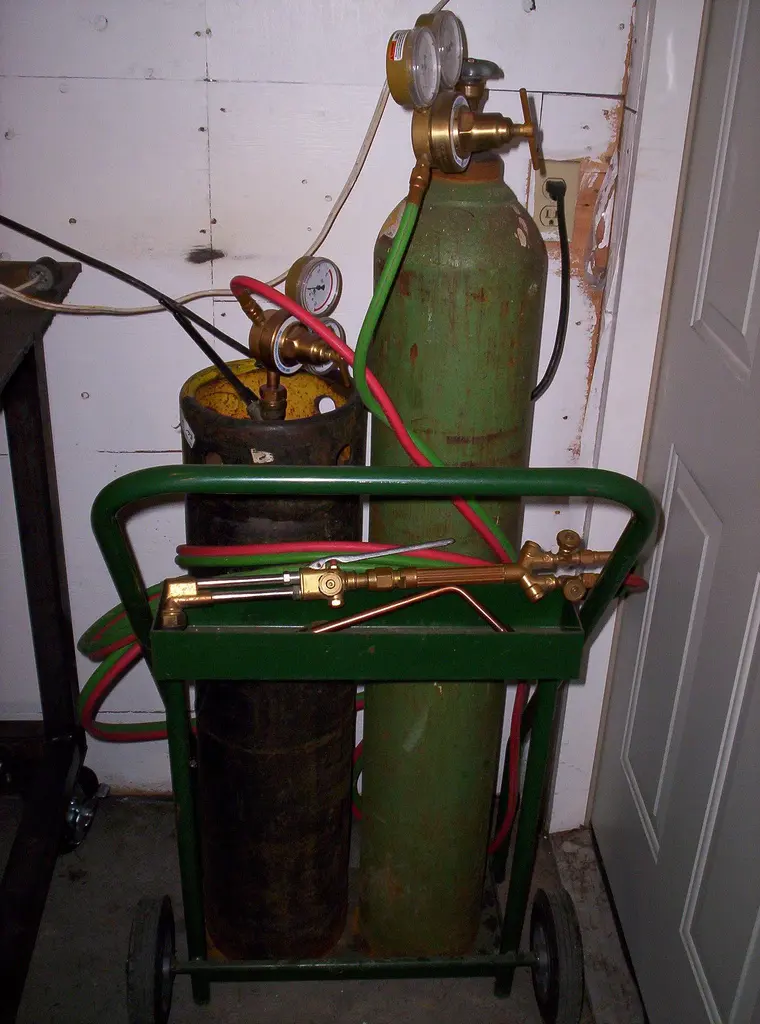
Ethyne burns in pure oxygen with a flame hotter than 3,000 °C, hot enough to melt steel, so the oxy-acetylene torch is used to weld and cut metal. Miners and cyclists once carried “carbide lamps”: water dripping onto calcium carbide, CaC₂, gives off ethyne, which burns with a bright white flame.
Alcohols
General formula: CₙH₂ₙ₊₁OH, or R–OH. Ending: -ol (alkane − e + ol). Functional group: –OH, the hydroxyl group.
The chain is numbered from the end nearer the –OH, and its number goes before -ol: propan-1-ol, propan-2-ol.
| IUPAC name | Condensed formula | Common name |
|---|---|---|
| methanol | CH₃OH | methyl alcohol, wood spirit |
| ethanol | CH₃CH₂OH | ethyl alcohol |
| propan-1-ol | CH₃CH₂CH₂OH | propyl alcohol |
| propan-2-ol | CH₃CH(OH)CH₃ | isopropyl alcohol |
| butan-1-ol | CH₃CH₂CH₂CH₂OH | butyl alcohol |
The –OH group is not the hydroxide ion (OH⁻) of a base: it is joined to carbon by a covalent bond and doesn’t break off in water, so alcohols are not alkaline. Like water’s own –OH, though, it attracts water molecules, so the first three alcohols mix with water in any amount.
Methanol is a solvent and a fuel, and is used to make methanal and plastics. It is poisonous: the body turns it into methanal and methanoic acid, and even a small amount can cause blindness or death. Methylated spirit is ethanol with methanol added on purpose, so that no one drinks it. Ethanol is the alcohol of alcoholic drinks, made by yeast fermenting sugar or starch; it is the main ingredient of most hand sanitizers (at least 60% alcohol kills most germs on the hands), the fuel of spirit lamps, and a solvent for medicines and perfumes. Propan-2-ol is the rubbing alcohol on the swabs a nurse wipes your arm with before an injection.
Ethers
General formula: CₙH₂ₙ₊₂O (from n = 2), or R–O–R′. Functional group: –O–, an oxygen between two carbon atoms.
An ether is named as an alkane with an alkoxy group on it. The longer of the two alkyl groups is the alkane; the shorter one together with the oxygen is the alkoxy group, named by changing -yl to -oxy: CH₃O– is methoxy, C₂H₅O– is ethoxy. Their everyday names list the two alkyl groups in alphabetical order, then the word ether.
| IUPAC name | Condensed formula | Common name |
|---|---|---|
| methoxymethane | CH₃OCH₃ | dimethyl ether |
| methoxyethane | CH₃OCH₂CH₃ | ethyl methyl ether |
| ethoxyethane | CH₃CH₂OCH₂CH₃ | diethyl ether |
| 1-methoxypropane | CH₃OCH₂CH₂CH₃ | methyl propyl ether |
| 2-methoxypropane | CH₃OCH(CH₃)CH₃ | isopropyl methyl ether |
Ethers have the same general formula as alcohols, but no –OH: methoxymethane and ethanol are both C₂H₆O, yet ethanol boils at 78 °C and methoxymethane at −25 °C. Without an –OH, ether molecules hardly hold on to each other.
Aldehydes
General formula: CₙH₂ₙO, or R–CHO (R may be H). Ending: -al (alkane − e + al). Functional group: –CHO, a carbon with a double bond to oxygen and a hydrogen.
The –CHO carbon is part of the main chain and is always carbon 1, so the -al never needs a number.
| IUPAC name | Condensed formula | Common name |
|---|---|---|
| methanal | HCHO | formaldehyde |
| ethanal | CH₃CHO | acetaldehyde |
| propanal | CH₃CH₂CHO | propionaldehyde |
| butanal | CH₃CH₂CH₂CHO | butyraldehyde |
| 2-methylpropanal | CH₃CH(CH₃)CHO | isobutyraldehyde |
A solution of about 37–40% methanal in water is formalin, used to preserve specimens (it kills germs and hardens tissues) and to make plastics and glues. Many larger aldehydes have strong smells and tastes: cinnamaldehyde gives dalchini (cinnamon) its flavor and vanillin gives vanilla its taste. Ethanal is made in your liver when it breaks down ethanol, and is thought to cause some of the sickness that drinking brings.
Ketones
General formula: CₙH₂ₙO (from n = 3), or R–CO–R′. Ending: -one (alkane − e + one). Functional group: C=O with a carbon on each side, the carbonyl (keto) group.
The chain is numbered from the end nearer the C=O, and its number goes before -one. The simplest ketone has 3 carbons: a C=O on the end carbon of a chain would be an aldehyde.
| IUPAC name | Condensed formula | Common name |
|---|---|---|
| propanone (propan-2-one) | CH₃COCH₃ | acetone, dimethyl ketone |
| butanone (butan-2-one) | CH₃COCH₂CH₃ | ethyl methyl ketone |
| pentan-2-one | CH₃COCH₂CH₂CH₃ | methyl propyl ketone |
| pentan-3-one | CH₃CH₂COCH₂CH₃ | diethyl ketone |
Propanone (acetone) dissolves paints, varnish and nail polish, and evaporates quickly (it boils at 56 °C), so it is the main ingredient of nail polish remover and a common solvent in factories and labs. Your body makes small amounts of propanone too, when it burns fat for energy, for example after a long fast.
Carboxylic acids
General formula: CₙH₂ₙO₂, or R–COOH (R may be H). Ending: -oic acid (alkane − e + oic acid). Functional group: –COOH, the carboxyl group: a C=O and an –OH on the same carbon.
Like an aldehyde’s carbon, the –COOH carbon is part of the main chain and is always carbon 1.
| IUPAC name | Condensed formula | Common name | Named after |
|---|---|---|---|
| methanoic acid | HCOOH | formic acid | Latin formica, ant |
| ethanoic acid | CH₃COOH | acetic acid | Latin acetum, vinegar |
| propanoic acid | CH₃CH₂COOH | propionic acid | Greek for “first fat” |
| butanoic acid | CH₃CH₂CH₂COOH | butyric acid | Latin butyrum, butter |
| hexanoic acid | CH₃(CH₂)₄COOH | caproic acid | Latin caper, goat |
Carboxylic acids are weak acids: in water, a few of their molecules give away the H of the –COOH as a hydrogen ion. So they taste sour, turn blue litmus red, and react with carbonates to give carbon dioxide (vinegar fizzes on baking soda).
Methanoic acid is in the stings of ants and some other insects, which is where its old name, formic acid, comes from. Ethanoic acid makes vinegar sour: vinegar is about 4–8% ethanoic acid in water, made by bacteria from alcohol, and it keeps achar and pickles from going bad, since most germs can’t grow in acid. Pure ethanoic acid freezes into ice-like crystals at 17 °C, so it is called glacial acetic acid. Butanoic acid gives rancid butter and old ghee their smell. Long-chain acids, such as stearic acid (C₁₇H₃₅COOH, 18 carbons), are found in fats and oils, joined to glycerol; boiled with an alkali, they become soap.
Name it
Exercise
1. Choose the correct option
a. Who first made an organic compound, urea, from an inorganic one?
Pick an answer to see why.
b. Which of these is counted as an inorganic compound, although it contains carbon?
Pick an answer to see why.
c. The angle between any two bonds of the carbon atom in methane is:
Pick an answer to see why.
d. The general formula of the alkenes is:
Pick an answer to see why.
e. Which functional group do ketones have?
Pick an answer to see why.
f. Which compound is the third member of the homologous series of carboxylic acids?
Pick an answer to see why.
g. Which pair has the same molecular formula?
Pick an answer to see why.
2. Give reasons
Carbon forms covalent compounds rather than ionic ones.
Hint
Answer
The number of organic compounds is very large.
Hint
Answer
Ethanol boils at 78 °C, but methoxymethane, with the same formula, boils at −25 °C.
Hint
Answer
The –CHO group of an aldehyde never needs a number in its name.
Hint
Answer
3. Differentiate between
Organic compounds and inorganic compounds
Hint
Answer
Aldehyde and ketone
Hint
Answer
Alcohol and ether
Hint
Answer
Saturated and unsaturated hydrocarbons
Hint
Answer
4. Answer the following questions
What are organic compounds? Which carbon compounds are not counted as organic? Give four examples of organic compounds from daily life.
Hint
Answer
Explain tetracovalency of carbon, with the electron dot structure of methane.
Hint
Answer
What is catenation? Why does carbon show catenation much more than any other element?
Hint
Answer
What is meant by multiple bonding? Draw the structural formulas of ethene and ethyne.
Hint
Answer
Define a homologous series. Write its four characteristics, with the alcohols as an example.
Hint
Answer
What are an alkyl group and a functional group? Name the alkyl groups from methane, ethane and propane, and write the functional groups of alcohols, aldehydes, ketones and carboxylic acids, with one example each.
Hint
Answer
Write the rules for giving the IUPAC name of a branched alkane, and use them to name CH₃–CH(CH₃)–CH(CH₃)–CH₃.
Hint
Answer
5. Write the IUPAC names
CH₃–CH(CH₃)–CH₂–CH₂–CH₃
Hint
Answer
CH≡C–CH₂–CH₃
Hint
Answer
CH₃–CH₂–CH(OH)–CH₂–CH₃, CH₃–CH₂–O–CH₂–CH₂–CH₃, CH₃–CH₂–CH₂–CH₂–CHO and CH₃–CH(CH₃)–CH₂–COOH
Hint
Answer
CH₃–CH₂–CO–CH₂–CH₃
Hint
Answer
HCOOH, CH₃–CH₂–COOH and CH₃–CH(CH₃)–COOH
Hint
Answer
Name the structure below.
Hint
Answer
6. Write the formulas
Write the condensed and structural formulas of: a. 2-methylpropane, b. but-2-ene, c. ethanol.
Hint
Answer
Write the condensed formulas of: a. 2,2-dimethylbutane, b. propanal, c. butanone, d. methoxyethane, e. ethanoic acid, f. 3-methylbut-1-ene.
Hint
Answer
Find the mistake in each name and correct it: a. 3-methylbutane, b. 2-ethylpropane, c. but-3-ene, d. 1-methylpropane.
Hint
Answer
7. Numerical problems
Use C = 12, H = 1, O = 16.
An alkane has a molecular mass of 58. Find its formula, and write the condensed formulas of the two compounds it could be.
Hint
Answer
An aldehyde has a molecular mass of 44. Find its formula and IUPAC name.
Hint
Answer
An alkene has a molecular mass of 70. Find its formula. Write the IUPAC names of two straight-chain alkenes with this formula.
Hint
Answer
An alkane has 22 hydrogen atoms. How many carbon atoms does it have? What are its name and molecular mass?
Hint
Answer
The first member of a homologous series has a molecular mass of 46. What is the molecular mass of its fifth member? Which series could it be?
Hint
Answer
Think: A student writes the name of CH₂=CH–CH₂–CH(CH₃)–CH₃ as “2-methylpent-4-ene”, numbering from the right so that the methyl gets the number 2. Is the student right? Give the correct name and explain the rule.
Hint
Answer
Printable PDFs
- The unit as a book (A5) 39 pages Answers as an A4 booklet, 10 sheets
- Study notes 2 pages
- Worksheet 6 pages Answer key
- Harder practice questions 2 pages Answer key
Practice every question in the book, and keep track of the ones you miss →
Found a mistake? Please tell us.