
Squeeze a lemon onto your tongue and your face screws up: that sharp, sour taste is an acid. Rub a little soapy water between your fingers and it feels slippery: that is a base. Sprinkle salt on your cucumber and you are eating a salt, the substance an acid and a base make together. These three kinds of chemical are everywhere in your home, in the fruit bowl, the bathroom cupboard and the kitchen shelf.
In this unit you will learn to tell them apart with colored indicators, see what they do to metals, chalk and each other, and find out how they are used. Then you will meet the acid that falls from the sky, the “hard” water that wastes soap and leaves white crusts in kettles, and the alloys, the mixtures of metals that make your steel plate, your brass gagri and a bronze medal.
10.1 Acids, bases and salts around us
The things we use every day contain different chemicals. Many of them are acids, bases (alkalis) or salts: in fruits and vegetables, soap and shampoo, hair conditioner, sanitizer and cleaning liquids.
Acid
What an acid is
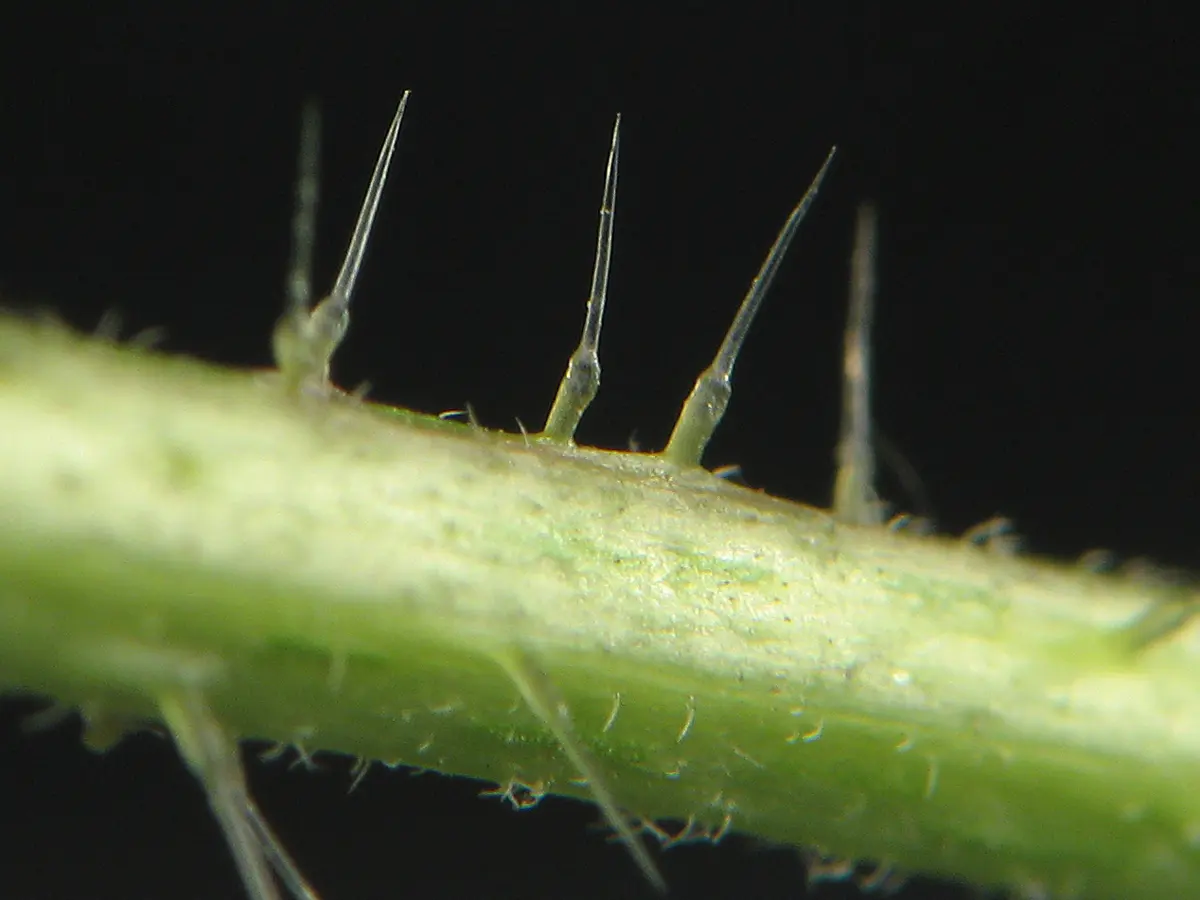
The sour substances around us are acids. Acids dissolve in water, and when they dissolve they give hydrogen ions (H⁺). So an acid is a substance that gives hydrogen ions when it is dissolved in water.
Not every acid can be eaten. By their source, acids are of two types:
- Organic acids are found naturally in plants and animals: citric acid in lemons, lactic acid in curd, acetic acid in vinegar. They are compounds of carbon, and many are safe to eat in small amounts.
- Inorganic acids (or mineral acids) are made from minerals, usually in factories and laboratories: hydrochloric acid, sulphuric acid, nitric acid. Most contain no carbon (carbonic acid, H₂CO₃, is one that does), and the strong ones are dangerous to touch or eat.
By how many hydrogen ions they give in water, acids are again of two types:
- Strong acids give many hydrogen ions: almost every molecule splits up. Hydrochloric, sulphuric and nitric acids are strong.
- Weak acids give few hydrogen ions: only a small share of the molecules split up. Citric, acetic, lactic and carbonic acids are weak.
So, mostly, inorganic acids are strong and organic acids are weak. That is why you can squeeze lemon on your food but must never let a drop of sulphuric acid touch your skin.
Which of these is a weak organic acid?
Pick an answer to see why.
Physical properties of acids
An indicator is a substance that shows, by its color, whether something is an acid or a base. Litmus, methyl orange and phenolphthalein are the indicators used in school laboratories.
The physical properties of acids:
- a.Acids taste sour.
- b.Acids are soluble in water.
- c.Acids turn blue litmus red; they don’t change red litmus.
- d.Acids turn methyl orange red.
- e.Phenolphthalein stays colorless in acids.
Chemical properties of acids
a. Acids give hydrogen ions in water
When an acid dissolves in water, its molecules split into ions. This splitting is called ionization. Every acid gives hydrogen ions:
Hydrochloric acid → hydrogen ion + chloride ion
HCl → H⁺ + Cl⁻
The hydrogen ions are what make all acids behave alike: the sour taste, the red litmus and the reactions below.
b. Acids react with metals
Acids react with many metals to form a salt of the metal and hydrogen gas:
Magnesium + hydrochloric acid → magnesium chloride + hydrogen
Mg + 2HCl → MgCl₂ + H₂
c. Acids react with metal carbonates
Acids react with metal carbonates to form a salt, water and carbon dioxide gas:
Calcium carbonate + hydrochloric acid → calcium chloride + water + carbon dioxide
CaCO₃ + 2HCl → CaCl₂ + H₂O + CO₂
d. Acids react with bases
An acid and a base react to form a salt and water. This is called neutralization, because each cancels the other’s properties:
Hydrochloric acid + sodium hydroxide → sodium chloride + water
HCl + NaOH → NaCl + H₂O
Dilute sulphuric acid is poured on a piece of zinc. A gas comes off and burns with a pop. What is the gas?
Pick an answer to see why.
Uses of acids
| Acid | Uses |
|---|---|
| Organic acids | |
| citric acid | to preserve food for a long time; to make food sour |
| ascorbic acid (vitamin C) | in medicines and tablets, as a source of vitamin C |
| acetic acid (in vinegar) | to make pickles and to preserve food |
| tartaric acid | to make baking powder |
| Inorganic acids | |
| hydrochloric acid | made in the stomach to help digest food; to clean toilets and bathrooms; to make PVC plastic |
| nitric acid | to make nitrogen fertilizers and explosives |
| sulphuric acid | in car and inverter batteries; to make fertilizers, dyes, detergents and artificial silk (rayon); to make hydrochloric acid |
Base
Metal oxides and metal hydroxides are called bases. Sodium oxide, sodium hydroxide, potassium oxide, potassium hydroxide and magnesium oxide are bases.
Some bases dissolve in water and some don’t. A base that dissolves in water is called an alkali. Sodium hydroxide and potassium hydroxide are alkalis. Copper oxide and iron oxide are bases that don’t dissolve, so they are not alkalis. Every alkali is a base, but not every base is an alkali.
When an alkali dissolves in water, it gives hydroxide ions (OH⁻). By how many hydroxide ions they give, bases are also strong or weak:
- Strong bases give many hydroxide ions: sodium hydroxide (caustic soda) and potassium hydroxide.
- Weak bases give few hydroxide ions: ammonium hydroxide (ammonia dissolved in water, a base with no metal in it).
The physical properties of bases:
- a.Bases turn red litmus blue; they don’t change blue litmus.
- b.Most bases taste bitter.
- c.Most bases feel slippery, like soapy water.
- d.Bases turn methyl orange yellow.
- e.Bases turn phenolphthalein pink.
| Indicator | In an acid | In a base | In a neutral liquid |
|---|---|---|---|
| blue litmus | turns red | stays blue | stays blue |
| red litmus | stays red | turns blue | stays red |
| methyl orange | red | yellow | yellow (methyl orange can’t tell a neutral liquid from a base) |
| phenolphthalein | colorless | pink | colorless |
Chemical properties of bases
a. Bases give hydroxide ions in water
Sodium hydroxide → sodium ion + hydroxide ion
NaOH → Na⁺ + OH⁻
b. Bases react with ammonium salts
A base reacts with an ammonium salt to give ammonia gas, a salt and water:
Ammonium sulphate + sodium hydroxide → sodium sulphate + ammonia + water
(NH₄)₂SO₄ + 2NaOH → Na₂SO₄ + 2NH₃ + 2H₂O
c. Bases react with acids
A base reacts with an acid to give a salt and water: the acid–base reaction, or neutralization.
Sulphuric acid + potassium hydroxide → potassium sulphate + water
H₂SO₄ + 2KOH → K₂SO₄ + 2H₂O
Uses of bases
| Base | Uses |
|---|---|
| calcium hydroxide (slaked lime) | to make bleaching powder; to whitewash walls before painting a house; to reduce the acidity of soil |
| magnesium hydroxide (milk of magnesia) | as an antacid, to neutralize too much acid in the stomach (hyperacidity, or “gastric”) |
| sodium hydroxide (caustic soda) | to make soap, textiles and paper; in processing petroleum products |
| ammonium hydroxide | as a laboratory reagent; to make chemical fertilizers, rayon cloth, plastics and dyes |
Farmers sometimes spread lime (calcium hydroxide) or wood ash on their fields. Why?
Pick an answer to see why.
Salt
When an acid reacts with a base, the products are a salt and water. A salt is the compound formed when the hydrogen of an acid is replaced by a metal (or by ammonium), as happens in a reaction between an acid and a base. Common salt, sodium chloride, is just one of many salts: copper sulphate, washing soda and baking soda are salts too.
Depending on the acid and the base that make it, a salt can be neutral, acidic or basic. There are three types:
- a.Neutral salts are formed by a strong acid and a strong base (or a weak acid and a weak base). Sodium chloride (NaCl), from hydrochloric acid and sodium hydroxide, is neutral.
- b.Acidic salts are formed by a strong acid and a weak base. Ammonium chloride (NH₄Cl), from hydrochloric acid and ammonium hydroxide, is acidic.
- c.Basic salts are formed by a strong base and a weak acid. Sodium carbonate (Na₂CO₃, washing soda), from sodium hydroxide and carbonic acid, is basic.
The physical properties of salts:
- Table salt is salty, but most salts don’t taste salty: many have no taste and some are bitter. (Many salts are poisonous, so never taste them.)
- Most salts dissolve in water (though not all: chalk and marble, calcium carbonate, don’t).
- Most are white or colorless, but some are colored: copper sulphate is blue, iron sulphate green, potassium permanganate purple.
- Neutral salts don’t change the color of indicators.
- Salts have high melting and boiling points. Common salt melts at about 800 °C.
Chemical properties of salts
a. Salts split into ions in water
When a salt dissolves in water, it splits into positive ions of the metal and negative ions of the non-metal part:
Sodium chloride → sodium ion + chloride ion
NaCl → Na⁺ + Cl⁻
b. Salts react with acids
Some salts react with acids to form a new salt and a new acid:
Sulphuric acid + sodium chloride → sodium sulphate + hydrochloric acid
H₂SO₄ + 2NaCl → Na₂SO₄ + 2HCl
c. Salts react with bases
Some salts react with bases to form a new salt and a new base (here the new base, ammonia, escapes as a gas):
Ammonium chloride + calcium hydroxide → calcium chloride + ammonia + water
2NH₄Cl + Ca(OH)₂ → CaCl₂ + 2NH₃ + 2H₂O
d. Displacement reactions
A more reactive metal displaces (pushes out) a less reactive metal from its salt, and forms a new salt:
Iron + copper sulphate → ferrous sulphate (iron sulphate) + copper
Fe + CuSO₄ → FeSO₄ + Cu
A copper wire is dipped in a colorless solution of silver nitrate. After a while, shiny crystals of silver grow on the wire and the solution turns blue. What does this tell you?
Pick an answer to see why.
Uses of salts
| Salt | Uses |
|---|---|
| table salt (sodium chloride) | to flavor food; to preserve food (achar, dried fish, butter); to make sodium hydroxide, washing soda, baking soda and soap |
| washing soda (sodium carbonate) | for washing and cleaning; to remove the permanent hardness of water; to make glass, paper and soap |
| baking soda (sodium bicarbonate) | to make baking powder; to make antacids; in some fire extinguishers |
10.2 Acid rain
Bare oak: W. Heubach (d. 1923) in O. Schmeil, Lehrbuch der Botanik (1911), public domain
Fish: DataBase Center for Life Science (DBCLS), CC BY 4.0, via Wikimedia Commons
Truck: traced from a photo by Exynoss78739, CC BY 4.0, via Wikimedia Commons
Rain is never perfectly pure water. As it falls, it dissolves a little carbon dioxide from the air, forming weak carbonic acid. So ordinary rain is slightly acidic, with a pH of about 5.6. (The pH scale runs from 0 to 14: 7 is neutral, below 7 is acidic, above 7 is basic.) This slight acidity does no harm.
Acid rain is rain made much more acidic, with a pH below 5.6 and often around 4 to 4.5, by strong acids formed in the air. These acids form in two ways:
- a.Natural causes. Volcanoes give out sulphur dioxide; lightning, and the decay of dead plants and animals, produce oxides of nitrogen and sulphur. In the air these react with water to form sulphuric acid and nitric acid, which fall with the rain.
- b.Human causes. Most acid rain is caused by people. Burning fossil fuels (coal, petrol, diesel) in power stations, brick kilns, factories and vehicles puts oxides of sulphur and nitrogen into the air. They react with water to form sulphuric acid and nitric acid (and carbonic acid from carbon dioxide), which come down with the rain.
Effects of acid rain on the environment
Rainwater is a major part of the environment: it refills rivers, lakes and the water under the ground, and every living thing needs it. When it is acidic, the harm spreads:
- It makes rivers, lakes and ponds acidic, which harms fish and other water life. Fish eggs and young fish die first.
- It damages the leaves of plants and lowers the quality of the soil by washing away its nutrients.
- If it goes on for a long time, whole forests are destroyed.
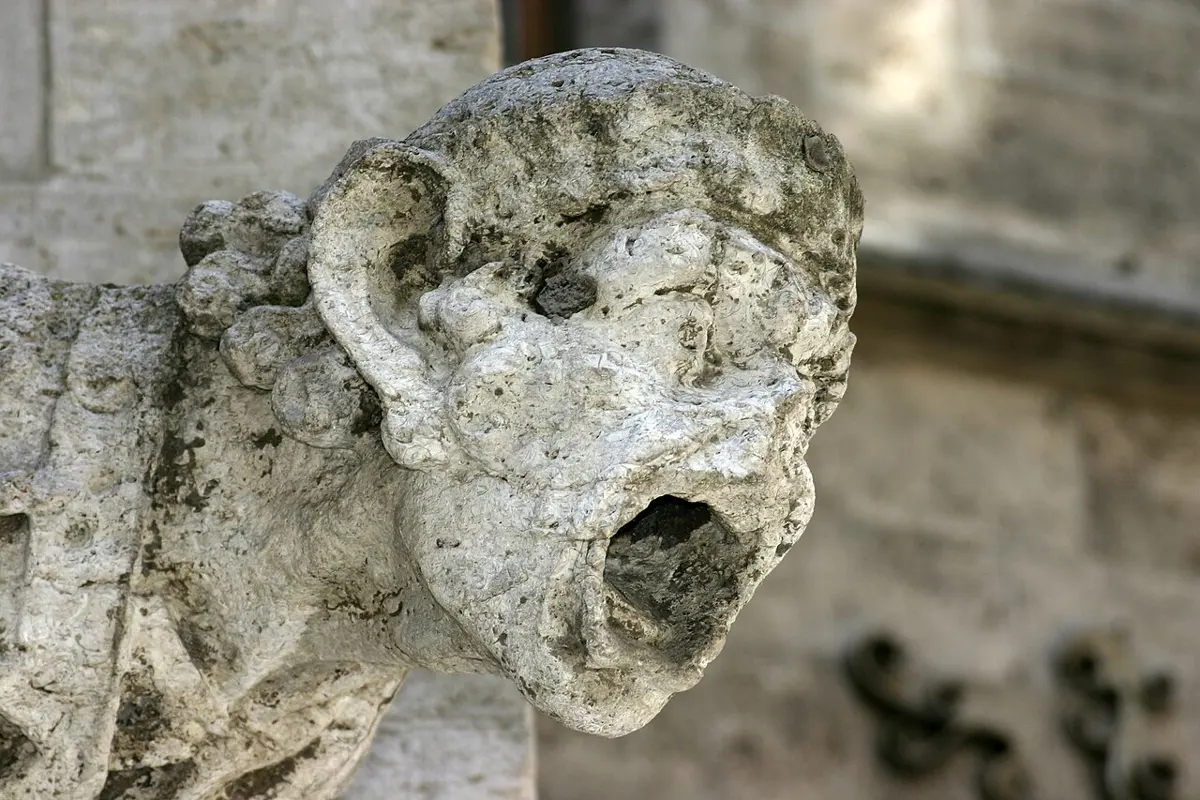
- It eats away temples, monuments and statues, especially those of marble and limestone (calcium carbonate, which reacts with acid just as in Activity 10.5), and corrodes metal.
Ways to prevent acid rain
- Use less fossil fuel: walk, cycle or take public transport, and keep vehicles well maintained.
- Reduce air pollution by using renewable energy, such as hydroelectricity and solar energy, instead of coal and oil. Nepal’s electric buses and cooking on electric stoves help.
- Build industries and factories away from where people live, and make them clean their smoke (filters can remove sulphur dioxide) before it leaves the chimney.
Exercise (acids, bases, salts and acid rain)
1. Choose the correct answer
a. Which of these is a property of an acid?
Pick an answer to see why.
b. Which of these turns red litmus blue?
Pick an answer to see why.
c. Bubbles come out as soon as pieces of zinc are put in a liquid in a test tube. What is the liquid?
Pick an answer to see why.
d. Why is ash used to reduce the acidity of soil?
Pick an answer to see why.
e. Which salt is used in fire extinguishers?
Pick an answer to see why.
2. Differentiate between
Organic acid and inorganic acid
Answer
Strong acid and weak acid
Answer
Bases and alkalis
Answer
3. Give reasons
Rainwater is usually slightly acidic.
Answer
Ammonium chloride is an acidic salt.
Answer
Lemon juice and sulphuric acid are both acidic, but sulphuric acid destroys cloth and lemon juice doesn’t.
Answer
People with acidity (gastritis) feel better after taking magnesium hydroxide.
Answer
4. Answer these questions
What is an acid?
Answer
Show in a table how acids change indicators.
Answer
Define base.
Answer
Show in a table how bases change indicators.
Answer
What is a salt?
Answer
Show in a table how salts change indicators.
Answer
List the causes of acid rain.
Answer
How do you know that acid rain is harmful?
Answer
What can be done to prevent acid rain?
Answer
What would you suggest to improve farm production that has gone down because of acid rain?
Answer
Two samples, A and B, were tested with indicators:
| Sample | Methyl orange | Litmus paper | Phenolphthalein |
|---|---|---|---|
| A | red | red | X |
| B | Y | blue | pink |
- i.What colors do X and Y stand for?
- ii.Which of A and B will give carbon dioxide when it reacts with calcium carbonate?
Answer
10.3 Hardness of water
Water that lathers easily with soap is called soft water. Water that gives little lather is called hard water. Usually, surface water (rain, and most rivers and lakes) is soft, and groundwater (from wells, tube wells and springs) is hard. So, by how it lathers with soap, water is of two types: soft water and hard water.
Soft water
Soft water has little or no dissolved salts of calcium and magnesium. Soap lathers easily in it, so less soap is needed to wash clothes. Rainwater, distilled water and most surface water are soft. Boiled water is soft too, if its hardness was the temporary kind (below).
Hard water
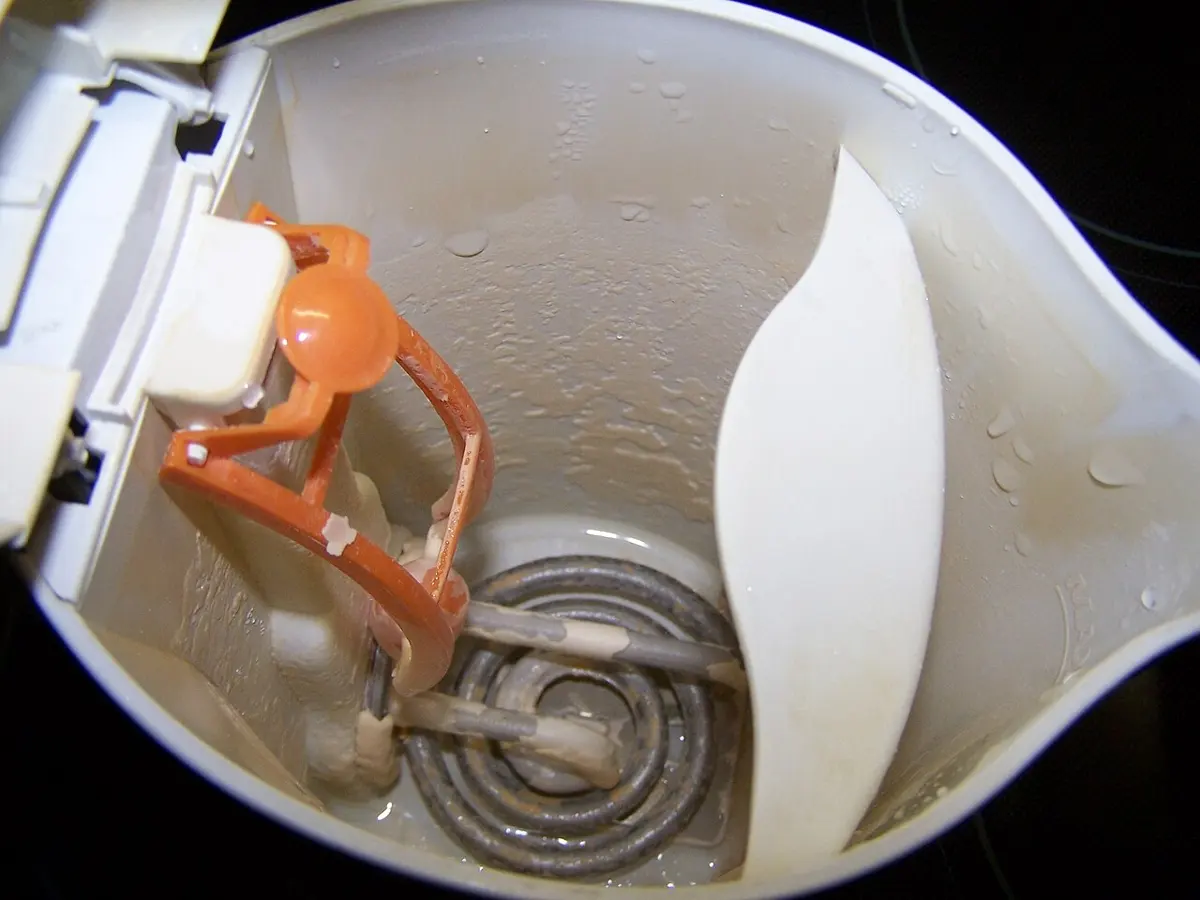
Hard water has dissolved salts of calcium and magnesium: their sulphates, chlorides and bicarbonates. These salts react with soap to form a sticky, white, insoluble scum instead of lather, so a lot of soap is wasted. Clothes washed in hard water slowly turn dull and grayish, and a whitish crust builds up inside pipes, kettles and boilers. Groundwater is usually hard: as rainwater soaks down through the ground, it dissolves calcium and magnesium from rocks such as limestone.
The hardness of water is of two types: temporary hardness and permanent hardness.
Temporary hardness
Temporary hardness is caused by the dissolved bicarbonates of calcium and magnesium: calcium bicarbonate, Ca(HCO₃)₂, and magnesium bicarbonate, Mg(HCO₃)₂. It can be removed by boiling or by adding lime (calcium hydroxide).
Ways to remove temporary hardness
a. Boiling. When the water is boiled, the dissolved bicarbonates break down into insoluble carbonates, which settle out as a white solid. The water above is soft.
Calcium bicarbonate → calcium carbonate + water + carbon dioxide
Ca(HCO₃)₂ → CaCO₃ + H₂O + CO₂
b. Clark’s method. Adding just the right amount of calcium hydroxide (lime) to the water turns the dissolved bicarbonates of calcium and magnesium into insoluble carbonates. They settle at the bottom as a solid (a precipitate) and are removed by filtering. Removing temporary hardness with calcium hydroxide is called Clark’s method.
Ca(HCO₃)₂ + Ca(OH)₂ → 2CaCO₃ + 2H₂O
Permanent hardness
Permanent hardness is caused by the dissolved sulphates and chlorides of calcium and magnesium, such as calcium sulphate and magnesium chloride. Boiling can’t remove it. It is removed with washing soda or with zeolite (sodium aluminium silicate, a crystalline solid).
Ways to remove permanent hardness
a. Washing soda. Washing soda (sodium carbonate) turns the dissolved sulphates and chlorides of calcium and magnesium into insoluble carbonates, which are removed by filtering.
Calcium sulphate + sodium carbonate → calcium carbonate + sodium sulphate
CaSO₄ + Na₂CO₃ → CaCO₃ + Na₂SO₄
b. The permutit method. Removing permanent hardness with zeolite is called the permutit method. A tank is filled with layers of gravel, coarse sand and sodium zeolite. As the hard water trickles down through the zeolite, the calcium and magnesium ions in the water swap places with the sodium ions in the zeolite. The calcium and magnesium stay stuck in the zeolite; the sodium goes into the water, where it doesn’t cause hardness. Soft water comes out at the bottom. When the zeolite is full of calcium, it is washed with strong salt (sodium chloride) solution, which puts the sodium back, and it can be used again and again.
Water from a well gives little lather. After boiling and cooling, it lathers well. What kind of hardness did it have?
Pick an answer to see why.
| Soft water | Hard water |
|---|---|
| little or no dissolved calcium or magnesium salts | has dissolved calcium and magnesium salts |
| lathers easily with soap | gives little lather and a white scum |
| less soap is needed | more soap is wasted |
| e.g. rainwater, distilled water | e.g. water from many wells and tube wells |
Alloys
A material made by mixing a metal evenly with other metals or with a non-metal (melted together, then cooled) is called an alloy. An alloy is a homogeneous mixture: it is the same all the way through. In daily life we use alloys far more than pure metals, because mixing improves the metal’s properties and makes it more useful.
For example, aluminium is light, which makes it good for airplane bodies, but pure aluminium is soft and weak. Mixed with a little copper, manganese and magnesium, it becomes duralumin, which is nearly as strong as steel but still light.
Properties of alloys
- Alloys are harder and stronger than the metals they are made of, and less easily drawn into wires or beaten into sheets (less ductile and malleable).
- Many alloys don’t rust or corrode easily.
- An alloy’s melting point is different from those of its metals: usually lower (solder melts more easily than tin or lead alone), sometimes higher.
- An alloy can have a different color from its metals. Reddish copper and silvery-gray zinc make yellow brass; gold mixed with copper makes pinkish “rose gold”; and silver and zinc, both white metals, can even make a pink alloy.
- On the whole, the properties of an alloy are better for its job than those of the pure metals.
Why is a little copper mixed into the gold used for jewelry?
Pick an answer to see why.
Some alloys used in daily life
a. Steel
Steel is iron mixed evenly with a small amount of carbon (usually less than 2%). Pure iron is soft and bends easily, so it is hard to use for building. A little carbon makes it hard and strong. Steel is used for buildings (the rods in concrete), bridges, railings, vehicles and tools.
Ordinary steel still rusts. Stainless steel is iron mixed with chromium and nickel (and a little carbon). The chromium forms an invisible, very thin layer on the surface that stops air and water from reaching the iron, so stainless steel doesn’t rust easily. It is used for kitchen utensils and for surgical instruments in hospitals.
b. Brass
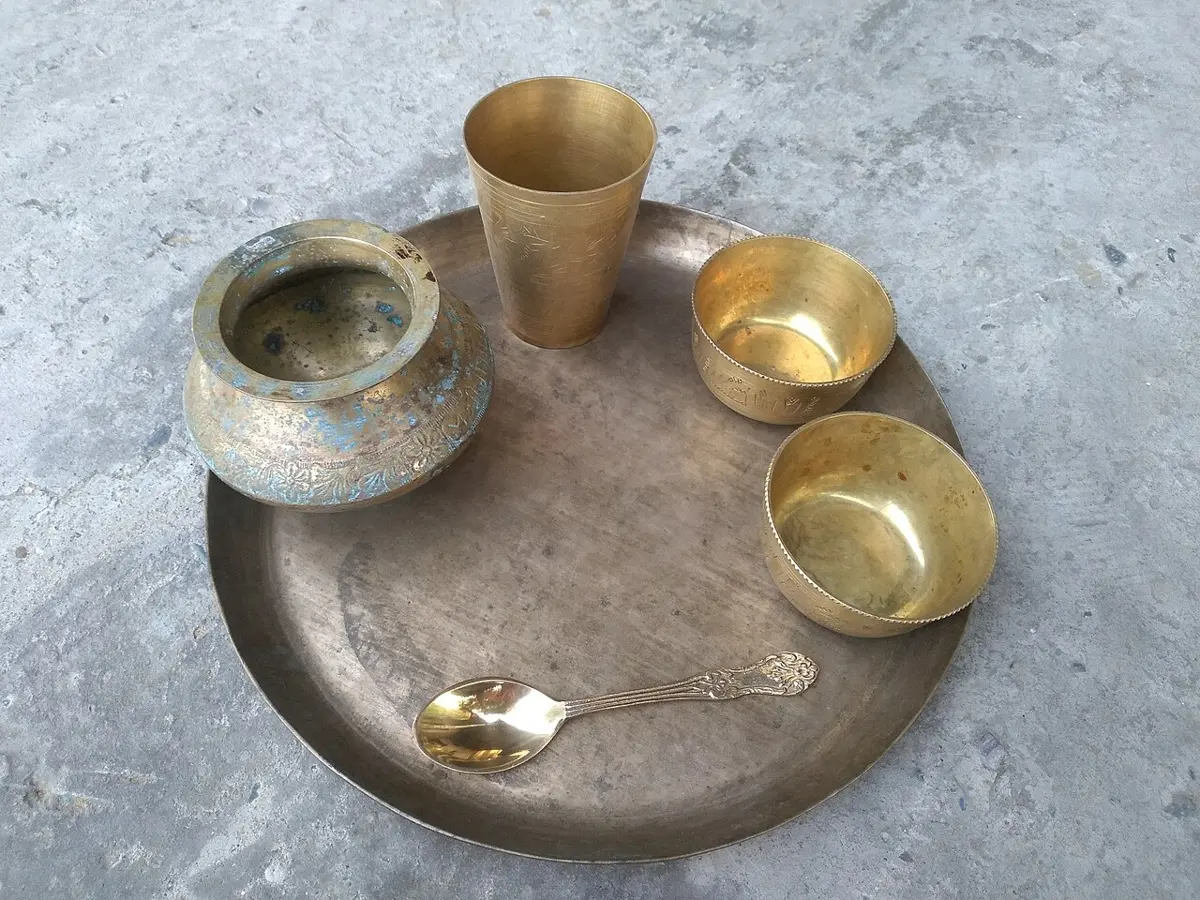
Brass (pital) is an alloy of copper and zinc. It is golden yellow, doesn’t rust, and is easy to cast and shape. It is used for puja items, gagri (water pots), lota, idols and statues, and for nuts, bolts, taps, plumbing fittings and machine parts.
c. Bronze
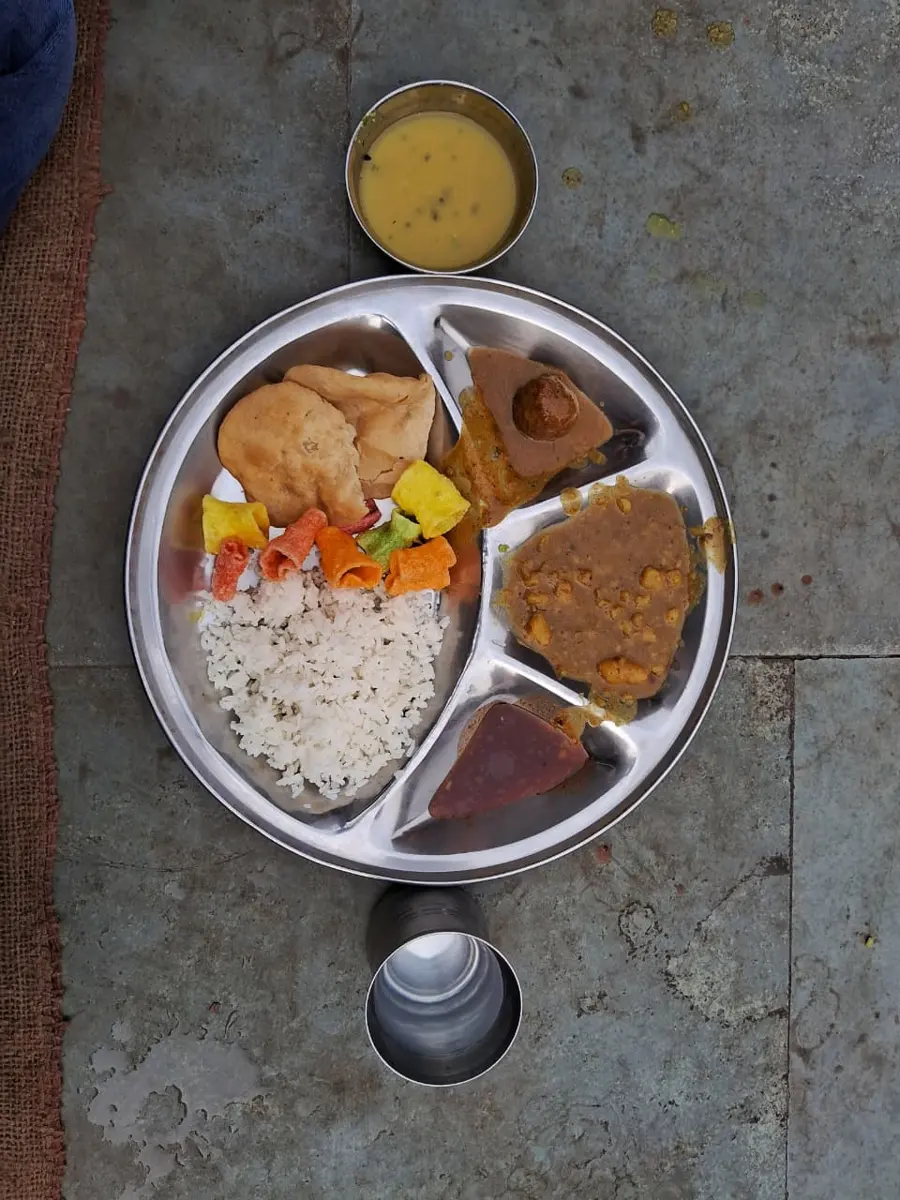
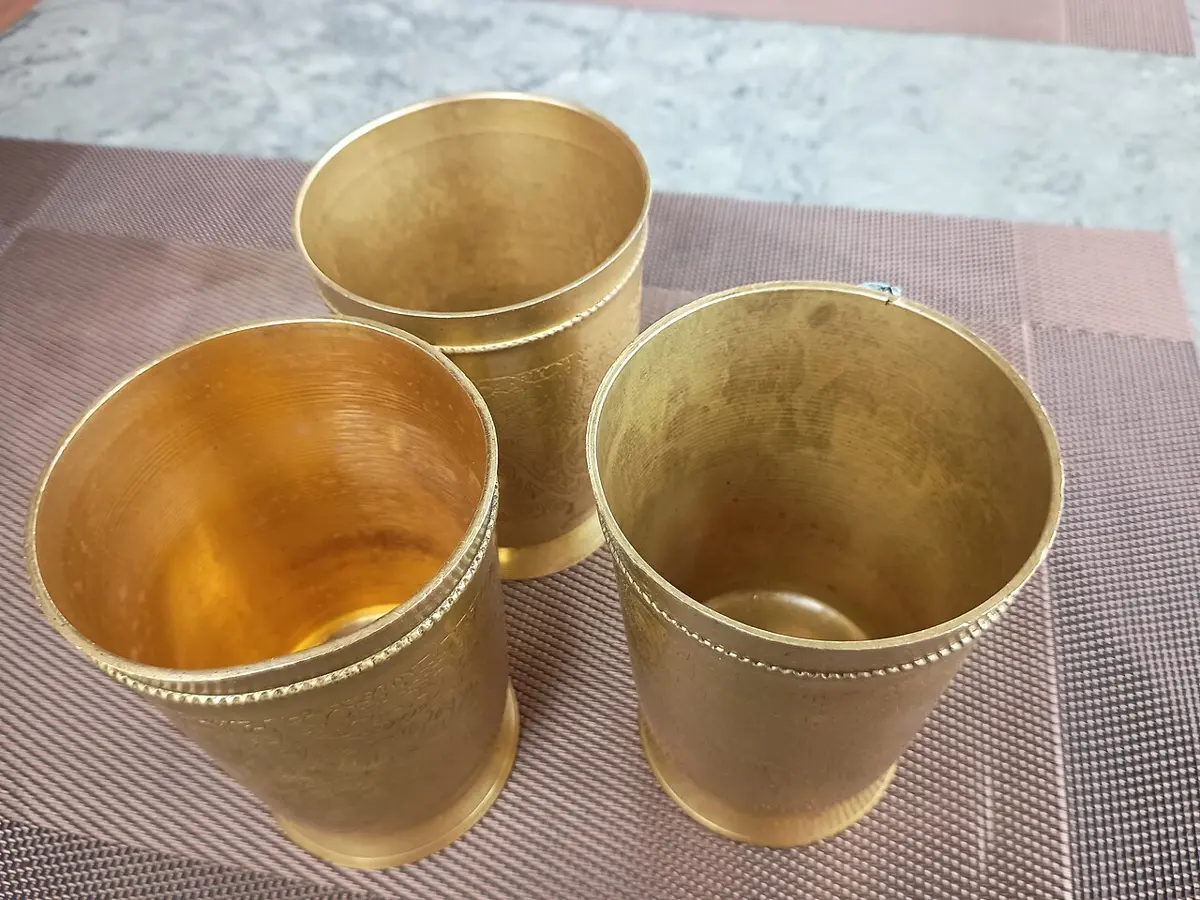
Bronze (kansa) is an alloy of copper and tin. It is used for dinner plates, bowls and tumblers, and for medals, coins, bells, ship parts and statues. Many of the beautiful metal statues made by the craftsmen of Patan are cast in bronze or copper alloys by the lost-wax method: a wax model is covered in clay, the wax is melted out, and molten metal is poured into the hollow it leaves.
| Alloy | Made of | Uses |
|---|---|---|
| steel | iron + a little carbon | buildings, bridges, railings, tools |
| stainless steel | iron + chromium + nickel (+ a little carbon) | kitchen utensils, surgical instruments |
| brass | copper + zinc | puja items, gagri, idols, taps, nuts and bolts |
| bronze | copper + tin | plates, bowls, tumblers, medals, bells, statues |
| duralumin | aluminium + copper, manganese, magnesium | airplane bodies |
| 22-carat gold | gold + a little copper and silver | jewelry |
Exercise
1. Choose the correct answer
a. Which of these salts is found in hard water?
Pick an answer to see why.
b. Which method removes the permanent hardness of water?
Pick an answer to see why.
c. Which of these waters is the least hard?
Pick an answer to see why.
d. Why are alloys used more and more instead of pure metals?
Pick an answer to see why.
e. Which metals are mixed to make brass?
Pick an answer to see why.
f. Which property of iron is lost when chromium and nickel are mixed with it to make stainless steel?
Pick an answer to see why.
g. Which alloy is formed when copper is mixed with tin?
Pick an answer to see why.
h. Which of these sentences is true?
Pick an answer to see why.
2. Differentiate between
Soft water and hard water
Answer
Temporary hardness and permanent hardness of water
Answer
Clark’s method and the permutit method
Answer
Pure metals and alloys
Answer
Steel and stainless steel
Answer
3. Give reasons
Steel is used more than iron for kitchen utensils.
Answer
Rainwater lathers more with soap when washing clothes.
Answer
Well water is hard.
Answer
Alloys are used more and more instead of pure metals.
Answer
4. Answer these questions
Define hardness of water.
Answer
What causes the hardness of water?
Answer
Roshan drew water from a well to wash his school uniform on Saturday, but the soap gave very little lather. What would you suggest so that he gets enough lather even with well water?
Answer
Riya always washes her clothes in tube-well water. Her white clothes have become dull instead of bright. Why? What would you suggest to her?
Answer
How is the hardness of water removed by the permutit method? Describe with a diagram.
Answer
What is an alloy?
Answer
Which metals are mixed in these alloys?
- i.steel
- ii.stainless steel
- iii.brass
- iv.bronze
Answer
Why are alloys becoming more popular? Make a list.
Answer
Rama won a bronze medal in a competition. Which metals are mixed to make her medal?
Answer
Quiz yourself: Materials and Chemicals We Use, Grades 5–10 →
Practice every question in the book, and keep track of the ones you miss →
A companion to your textbook, not a replacement for it: study from the book your school uses, and where the two differ, follow your teacher. Found a mistake? Please tell us.