
Picture a herd of yaks grazing on a high meadow below the snow, and a rhododendron (lali gurans) tree in bright red flower on a cool hillside. Now picture the hot, flat Terai, with its sal forests, its rice fields and its rhinos. Would you ever see a yak in the Terai? Would a rhododendron grow there?
Everything around a living thing, the air, water, soil, light, heat, and the other plants and animals, is its environment. Different places have different environments, so different plants and animals live in them. Nepal climbs from about 60 m above sea level in the Terai to 8,849 m at the top of Sagarmatha in only about 200 km, so it has hot, mild, cold and frozen environments packed close together. That is why so many kinds of living things are found here.
The presence of many different kinds of plants, animals and other living things in a place is called biodiversity (bio = life, diversity = variety). Biodiversity and the environment are closely linked: the environment decides what can live in a place, and the living things in turn change their environment (forests make the air moist and hold the soil; earthworms make the soil loose and rich).
What does biodiversity mean?
Pick an answer to see why.
4.1 Natural resources
4.1.1 What natural resources are
Think about your morning. You woke up in a house made of bricks (from soil), wood (from a forest) or stone. You drank water from a tap or a spring. You ate rice and dal grown in the soil, cooked on a fire of firewood or on gas that came out of the ground. All of these came from nature.
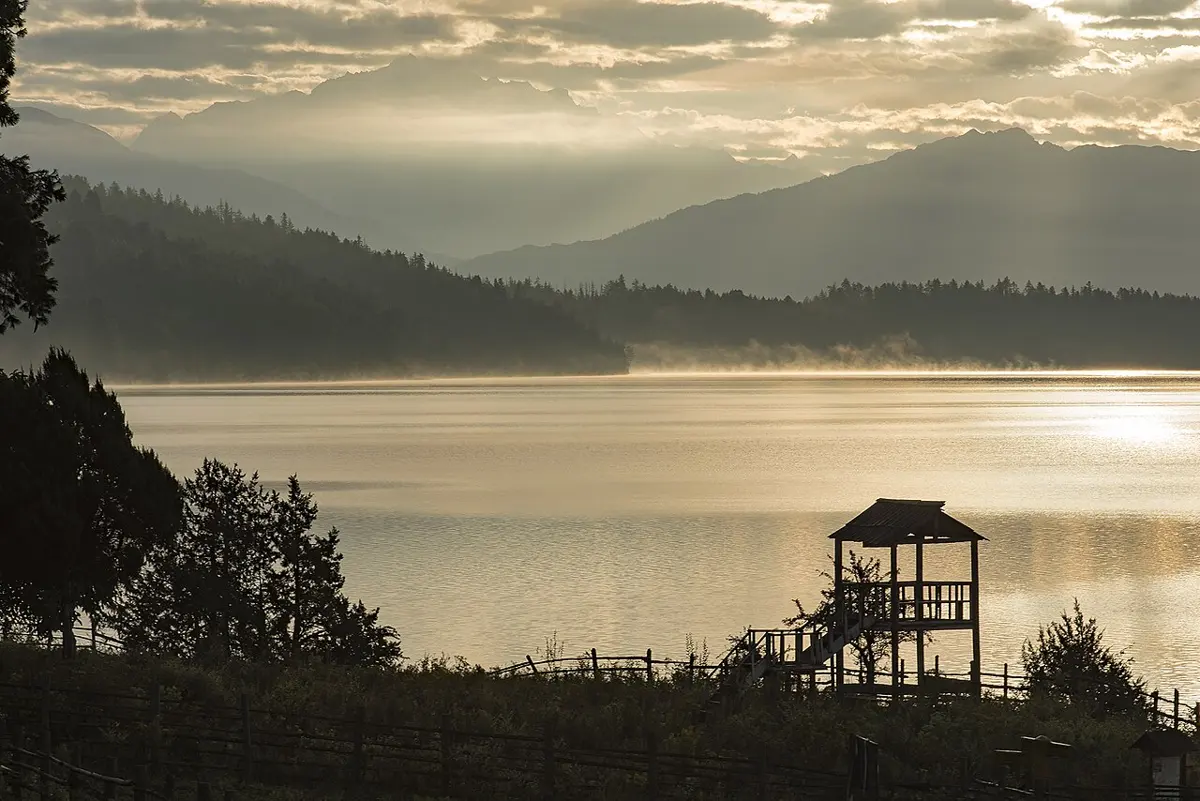
Anything we get from nature that is useful to living things is a natural resource. Water, air, soil, sunlight, rocks and the minerals in them, forests, wild plants and animals, coal, petroleum and natural gas are all natural resources. We use them as food, as fuel (coal, firewood, petroleum), and as the raw materials from which industries make things: timber for furniture, cotton for cloth, iron ore for steel, limestone for cement. Without natural resources, people and other animals could not survive, farm or run industries. They are nature’s gift to living things.
Which of these is not a natural resource?
Pick an answer to see why.
4.1.2 Classification of natural resources
Natural resources can be sorted (classified) in more than one way.
By where they come from:
- Living (biotic) resources come from living things: forests, crops, wild plants and animals, fish, livestock.
- Non-living (abiotic) resources come from non-living things: air, water, soil, rocks, minerals.
By whether they can be replaced:
- Renewable natural resources are replaced by nature again and again, as fast as we normally use them, so they don’t run out: air, water, sunlight, forest products and soil. Rain refills the rivers every year; a cut tree’s place can be taken by a new one.
- Non-renewable natural resources exist only in a limited amount and take millions of years to form, so once used up they can’t be replaced in a human lifetime: coal, petroleum, natural gas, metals and rocks. Much of the world’s coal formed from forests that grew about 300 million years ago.
Why are coal and petroleum called non-renewable?
Pick an answer to see why.
4.1.3 Importance of water resources, water reserves and wetlands
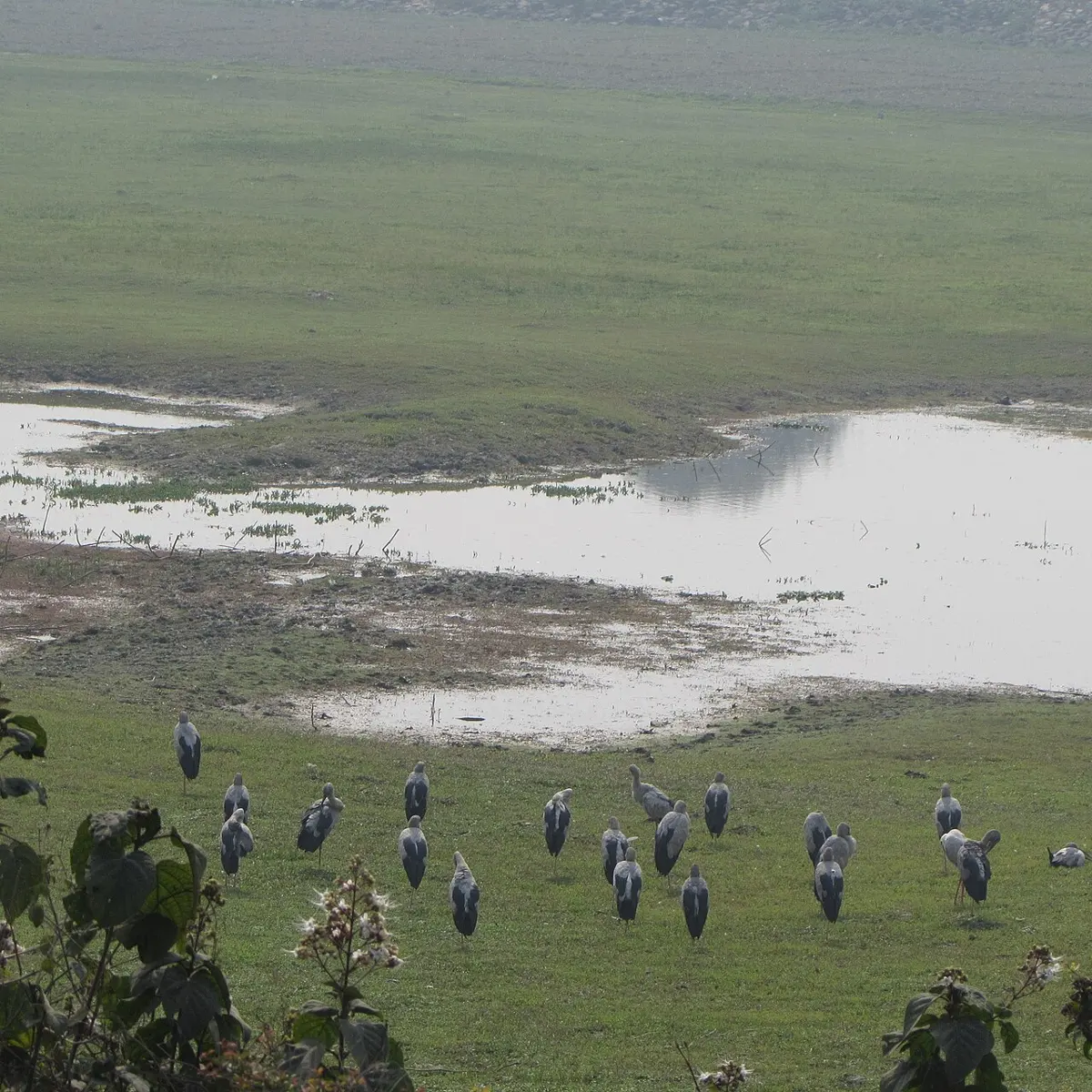
Water is found in many places and many forms in nature: rain, snow and ice, rivers, lakes, ponds, springs and water underground. These are called water resources. There are two main kinds:
- Surface water: water on top of the ground, in rivers, streams, lakes, ponds and wetlands.
- Groundwater (underground water): rainwater that has soaked down into the soil and rocks. It comes up in springs, wells and tube wells.
Water reserves
A water reserve is a place where water from rain and from streams collects and is stored, forming a big store of water. Ponds, lakes and reservoirs (artificial lakes behind a dam) are water reserves. They come in all sizes, from a village pond to a lake several kilometers across. Some of Nepal’s main water reserves are Rara Lake (Mugu), Gosaikunda (Rasuwa), Ghodaghodi Lake (Kailali), Bishazari Lake (Chitwan) and Jagadishpur Reservoir (Kapilvastu), which was built for irrigation in the 1970s; and our many rivers carry and store water too.
The whole area of land from which rain flows into one river or lake is called its watershed (or catchment). Keeping a watershed under forest keeps its river or lake full of clean water.
Wetlands
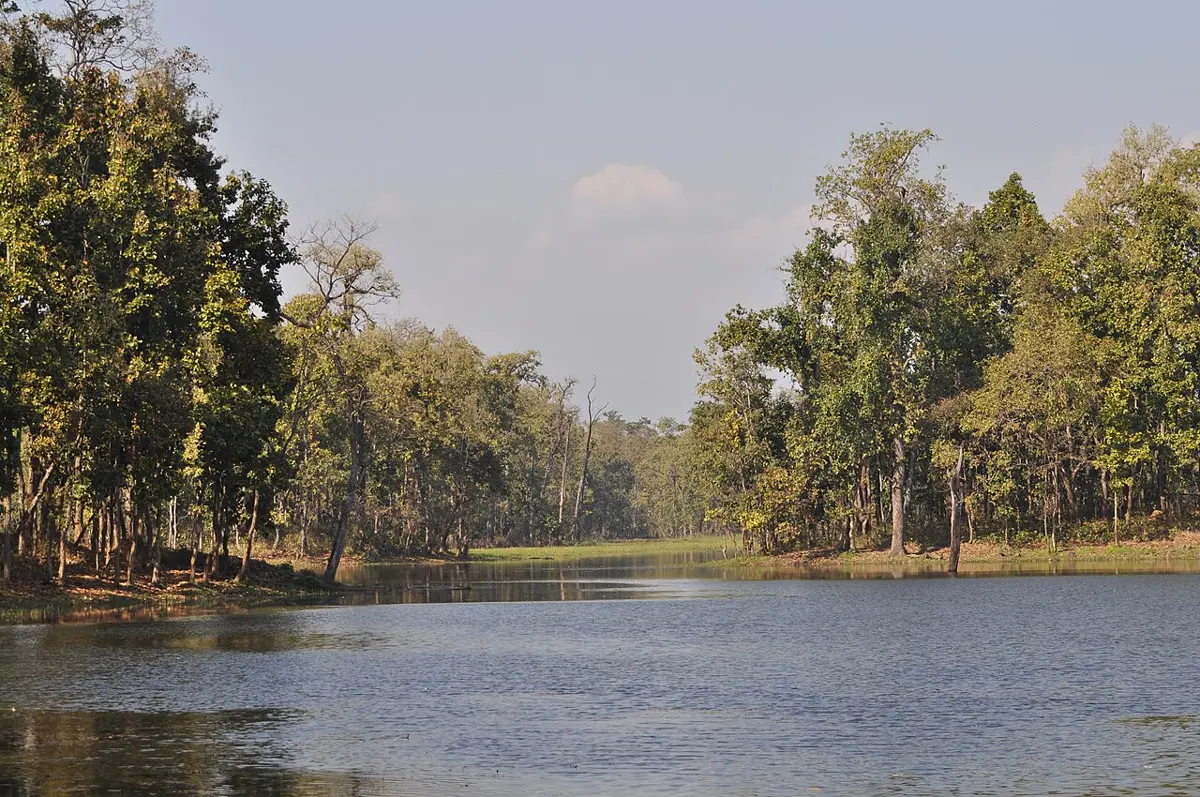
A wetland is land that is soaked with water, or covered by shallow water, for all or much of the year: marshes and swamps (simsar), shallow lakes and their muddy, reedy edges. Water stays there all through the year, and the land around it stays wet and marshy, so special plants (reeds, water lilies, tall grasses) and animals live there. Koshi Tappu, on the Sapta Koshi river in the eastern Terai, is Nepal’s best-known wetland.
Reeds: proportions from O. W. Thomé, Flora von Deutschland (1885), public domain
Lotus: F. M. Blanco, Flora de Filipinas (1880s), public domain
Carp: DataBase Center for Life Science (DBCLS), CC BY 4.0, via Wikimedia Commons
Cranes: Andy Wilson, CC0, via PhyloPic
Wetlands and water reserves are very important for keeping nature in balance:
- The plants and animals found in them (fish, snails, water chestnut, lotus roots) are food for people and for other animals.
- They are the habitat (home) of many plants and animals. Fish, frogs and other water animals breed in their shallow water.
- Many birds migrate (travel) to them for part of the year, to escape very cold or very hot seasons elsewhere and to breed.
- They store rainwater and give water for drinking, irrigation, fishing and other uses. By soaking up flood water, they also protect the villages and fields downstream.
- They keep the temperature of the area even, and they help to run the water cycle (evaporation, clouds and rain) and refill the groundwater.
Which of these is the best description of a wetland?
Pick an answer to see why.
How does a wetland next to a river reduce flood damage downstream?
Pick an answer to see why.
4.2 Depletion of natural resources
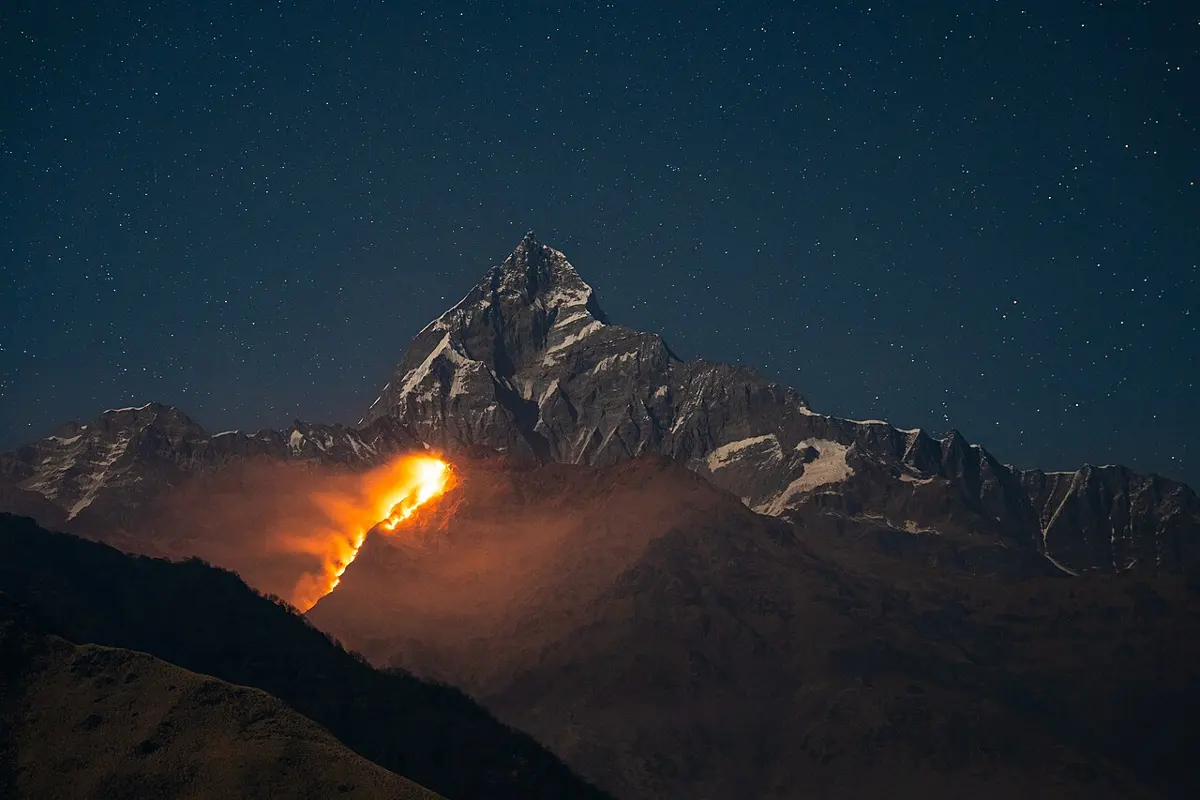
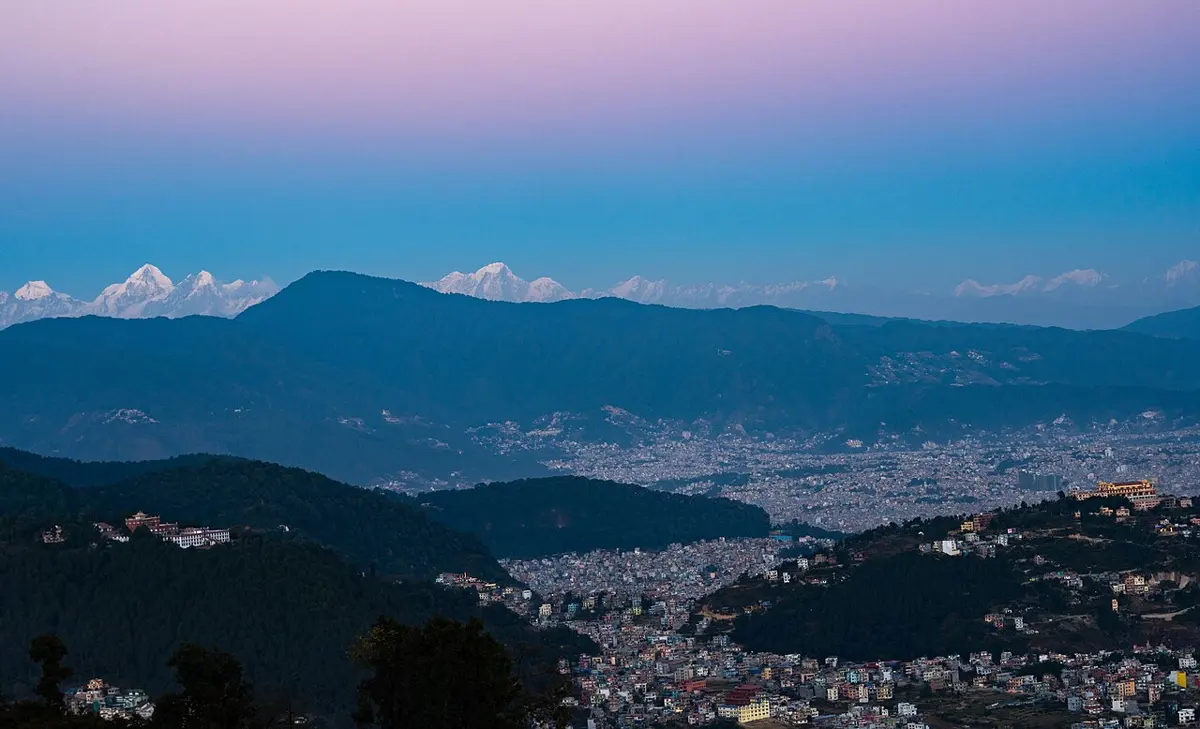
The using up of natural resources faster than they can be replaced, or their destruction, is called depletion of natural resources.
As the number of people grows, so does the use of metals, petroleum, natural gas, timber and water. Forests are cut faster than they grow back. Every year, forest fires, most of them started by people and some by lightning, fill the air with smoke, burn crops and destroy the homes of wildlife; fires and deforestation together are reducing biodiversity. To grow more crops on less land, some farmers use chemical fertilizers and pesticides without control, and in time the soil loses its fertility. Growing industries release wastes that pollute the air, water and soil, so people can’t get fresh air to breathe. Paving over land and pumping too much water lower the level of the groundwater. Natural events destroy resources too: a volcanic eruption burns forests, and floods and landslides wash away soil.
The main causes of depletion of natural resources are:
- Overpopulation and unbalanced migration: more people need more food, water, fuel, land and houses; when many people move to one area (the Kathmandu Valley, the Terai towns), its resources are overused while villages are left empty.
- Unmanaged agriculture: too much chemical fertilizer and pesticide, burning crop waste, and farming on steep slopes without terraces.
- Deforestation and forest fires.
- Overconsumption: using far more than we need, and wasting it.
- Pollution of air, water and soil.
- Industrial and technical development, when it takes resources without care for the future.
- Natural disasters: floods, landslides, droughts, earthquakes.
Which of these would help a community forest to last for ever?
Pick an answer to see why.
4.3 Management of solid waste
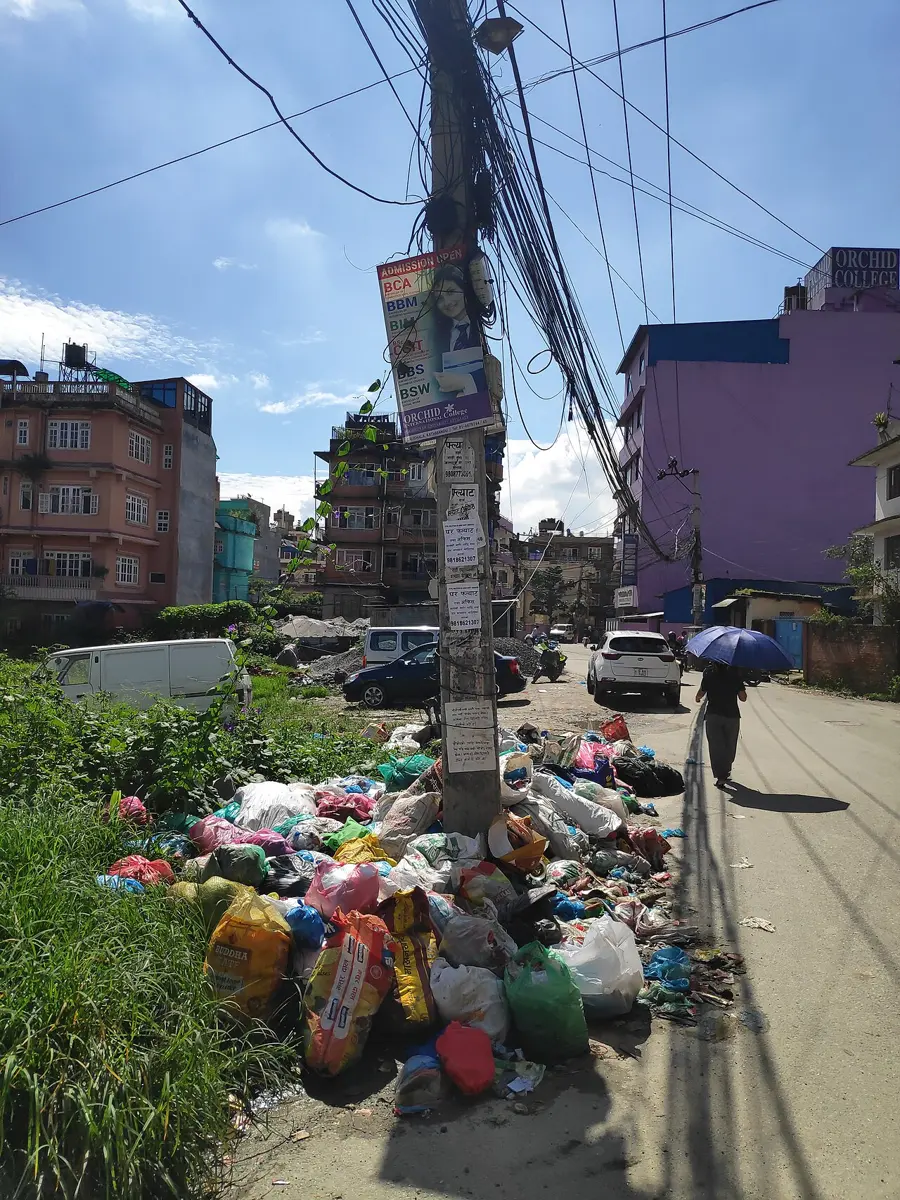
Every home, farm and factory throws things away. From our houses come fruit and vegetable peels, leftover food, dust, paper, plastic bags and bottles. From industries come solid scraps, harmful gases and chemicals. From farms come straw, husks and stalks after the harvest. All these unwanted things are called waste or garbage. If waste is not managed properly, it causes pollution that can seriously harm us and other living things, and it spoils the balance of the environment.
Waste can be solid, liquid or gas. It can also be sorted in another way:
- Biodegradable waste is broken down (rotted) by bacteria and fungi into harmless substances that go back into the soil: peels, leftover food, leaves, paper, cotton cloth, cow dung.
- Non-biodegradable waste is not broken down by living things, or only over hundreds of years: plastic, glass, metal cans, batteries, polythene bags.
Different kinds of waste must be managed in different ways. When waste is managed properly, the environment stays clean, healthy and balanced; when it isn’t, it pollutes the soil and water too. Today, managing waste has become one of the biggest problems for city governments in Nepal and in many countries. The Kathmandu Valley alone produces well over 1,000 tonnes of waste every day, and more than half of it is kitchen waste that could have become compost.
Which of these wastes is non-biodegradable?
Pick an answer to see why.
The 3R model
Proper management of solid waste does more than solve the waste problem. It gives industries raw materials, saves natural resources, and can even earn money. One of the best ways of managing solid waste is the 3R model:
A. Reduction (reduce)
B. Reuse
C. Recycle
A. Reduction
Reduction means using natural resources and things wisely and less, so that less waste is made and less pollution is caused. For example:
- Take a reusable cloth or jute bag (jhola) to the market instead of taking a new polythene bag each time. If fewer polythene bags are used, fewer will be made, and there will be less to throw away.
- Don’t bring home unnecessary packaging: buy loose rice and lentils instead of small packets.
- Use fewer chemical fertilizers and pesticides: use organic manure (compost, dung) instead of chemical fertilizers, and biological methods to control pests (birds, frogs and helpful insects that eat them) instead of harmful insecticides.
- Write on both sides of the paper; repair things instead of buying new ones.
B. Reuse
Reuse means using a thing again, for the same or another purpose, instead of throwing it away. When the same thing is used again, fewer new things need to be bought, so fewer are made, and the harm to the environment is less. For example:
- One strong shopping bag can be used again and again.
- Clothes that no longer fit you can be given to someone who will wear them.
- Tins, plastic jars and glass bottles of powdered milk, chocolates and other products can store grain, flour, tea leaves, sugar and salt. Bigger containers can be used as flower pots.
- Plastic bags from rice and flour, and milk packets, can be made into pots for seedlings.
- Plastic and glass bottles can decorate a terrace, a porch or a garden.
C. Recycle
Recycling means using old, used things as the raw material for making new things. For example:
- Old newspapers, books and exercise books are pulped in paper mills to make new paper.
- Old pots and tools of iron, copper, brass and aluminium, and old wires, vehicles and machines, are melted to make new metal pots and articles.
- Old plastic bags, pipes, buckets and containers are melted by heating and remolded into new plastic articles.
That is why the scrap collector (kawadi) buys your old newspapers, bottles and tins: they are raw materials. Every recycled aluminium can saves about 95 % of the energy needed to make a new one from ore.
The 3R model is therefore very useful for managing solid waste.
Melting old plastic pipes to mold new buckets is an example of
Pick an answer to see why.
Mint: H. A. Köhler, Medizinal-Pflanzen (1887), public domain
Exercise
1. Choose the correct option
a. Which one is a non-renewable natural resource?
Pick an answer to see why.
b. How does natural imbalance occur?
Pick an answer to see why.
c. How can we reduce the loss of life and property on the banks of rivers?
Pick an answer to see why.
d. What kind of solid waste management is remolding used plastics?
Pick an answer to see why.
e. What do water resources, water reserves and wetlands all have in common?
Pick an answer to see why.
f. Which statement defines biodiversity?
Pick an answer to see why.
2. Fill in the blanks
Use these words: environment, balanced environment, recycle, renewable, non-renewable, biodiversity, reduction. (Three words are not needed.)
The presence of a variety of animals and plants is ……… .
Answer
The maintenance of balance in the amounts of living beings and non-living things is called a ……… .
Answer
The practice of not bringing home the packaging of things we buy is called ……… .
Answer
A natural resource that is replaced soon after it is used up in a place is called a ……… resource.
Answer
3. Answer the following questions
Write the importance of biodiversity.
Answer
How can we keep an ecosystem balanced?
Answer
What is a wetland?
Answer
Why are water reserves important?
Answer
Mention the major methods of solid waste management.
Answer
How does using a lot of chemical fertilizers and insecticides, to grow more crops on less land, deplete natural resources?
Answer
Explain the importance of wetlands.
Answer
“Nepal is rich in biodiversity.” Justify the statement.
Answer
Write the differences between:
- i.reuse and recycle
- ii.a water reserve and a wetland
- iii.renewable and non-renewable resources
Answer
Explain the relationship between the environment and biodiversity.
Answer
What precautions should be taken while using natural resources?
Answer
What are natural resources? On what bases are they classified?
Answer
Describe any five causes of depletion of natural resources in short.
Answer
4. Look at the photo and answer the questions
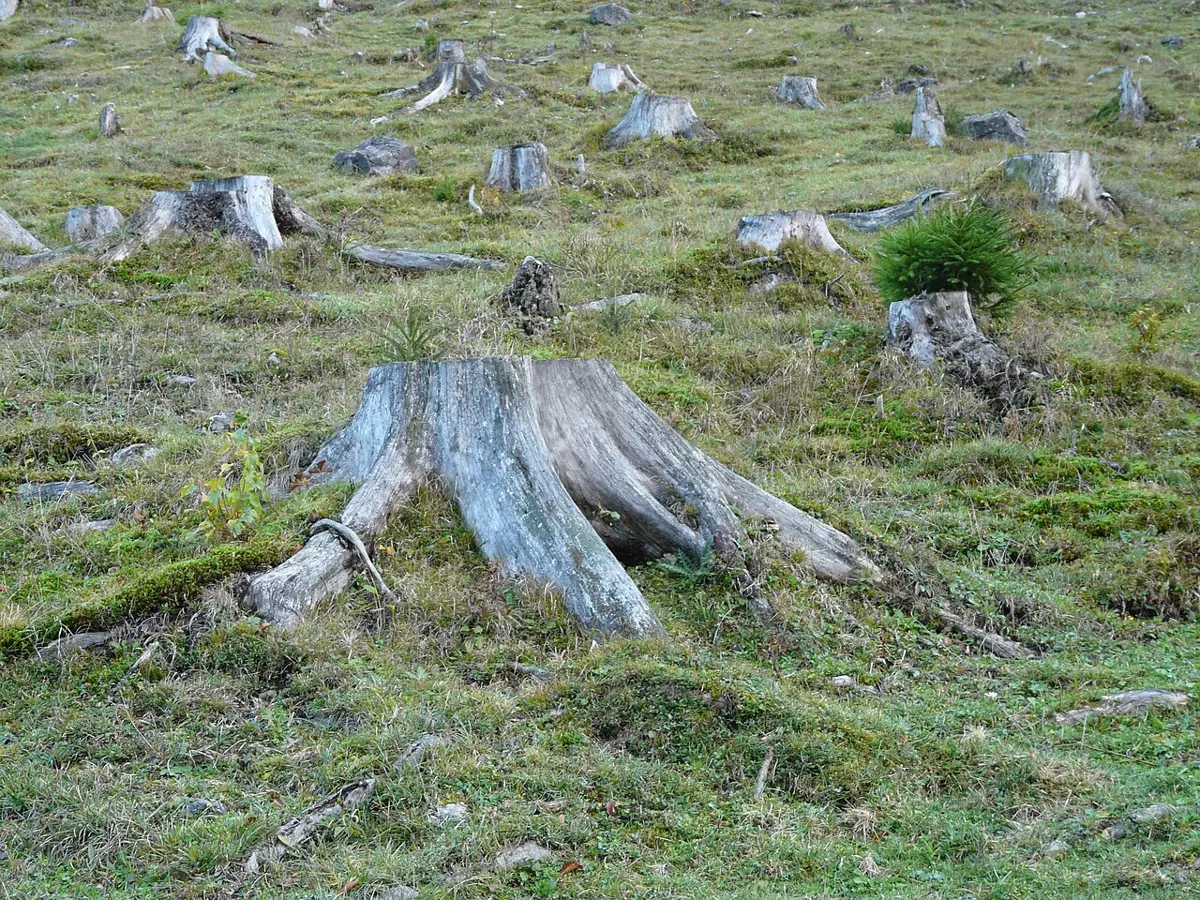
What is the impact of this activity on agriculture?
Answer
What are its effects on water resources and water reserves?
Answer
How does the activity affect wildlife?
Answer
Which natural resources are shown in the photo?
Answer
What could you do to restore the balance?
Answer
Quiz yourself: Environment and Biodiversity, Grades 5–10 →
Practice every question in the book, and keep track of the ones you miss →
A companion to your textbook, not a replacement for it: study from the book your school uses, and where the two differ, follow your teacher. Found a mistake? Please tell us.