
A dark cloud hangs over the hill. Will it rain? You can’t be sure, so you say It may rain, or It might rain. Then your friend walks in with a wet umbrella. Now you are almost sure: It must be raining outside. Three small words, three different amounts of being sure.
This unit is about degrees of probability: how sure we are that something is true, or that it will happen. You will read a story about four old animals who frighten a gang of thieves, and a short poem about an arrow and a song. You will listen to a weather expert on the radio, guess what may happen in pictures, and learn when to say may, might, must and will.
Getting started
A. What may happen next?
The unit opens with four pictures.
- Dark gray clouds fill the sky over a green hill and a tree.
- A dog barks at a man who is walking past.
- A girl walks along a garden path under an umbrella, while a big, bright sun shines down.
- A woman stands thinking, her finger on her chin. Behind her, a little girl peeps out from behind a door.
Look at the pictures and say what may happen next.
Model answers
Probability means how likely something is to happen. When something is likely, it will probably happen. When it is unlikely, it probably won’t.
B. Listen and sing
The poem is by George Santayana (1863–1952), a thinker and poet who was born in Spain and wrote in English. It is a sonnet, a poem of fourteen lines, and the song is its first eight. It is in his book Sonnets and Other Verses (1894).
What it says. The poet says that the world outside may be full of chaos (complete disorder and confusion). But he has another, smaller world inside his own thoughts, and that one is a paradise, a perfect, happy place. There his dreams open out like a flag unrolling in the wind (unfurled). He lies curled up inside his own nature, as if in a shell, and slumbers (sleeps). He doesn’t notice how the sky outside changes. Out there, perhaps (the old word is perchance), a new god of love is flying, or an old king of the gods is being thrown down from his throne. He doesn’t care. Inside, he is at peace.
How it sounds. It is slow and calm, like someone talking quietly to himself. The ends of the lines rhyme in a ring: world, unfurled, curled and hurled rhyme with each other, and so do lies, paradise, skies and flies.
C. Look at the sky
Go outside and look at the sky. What does it look like? Is it likely to rain, or will there be sunshine? Share it with the class.
A model answer
Reading I: The Musicians of Ilam
Before you read
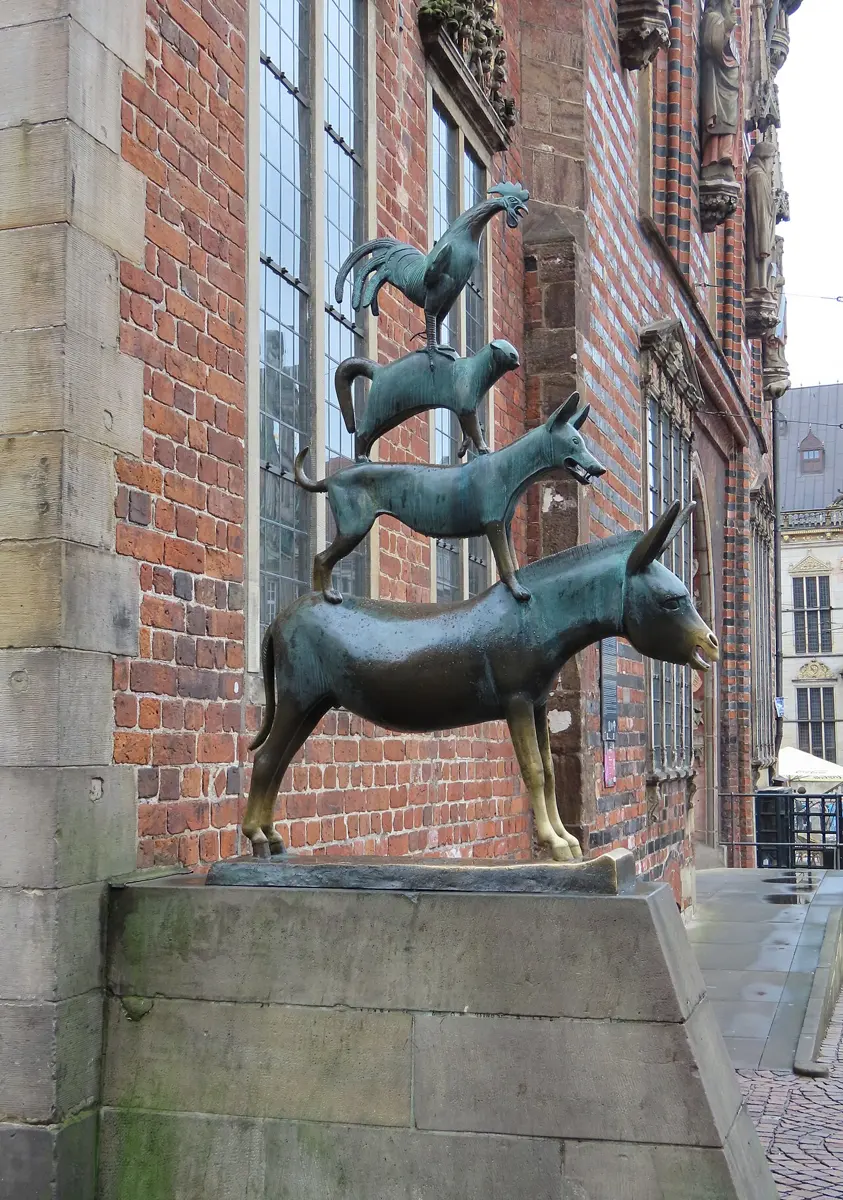
The pictures beside the story show a man pulling an old donkey by a rope, a donkey meeting a dog lying in the grass, and a thin brown dog walking. Later pictures show the four animals with a cock, a bowl of food, and the animals asleep round a door. The last two show a man running in fright from a dog, and a man with a cock flying at his head and a donkey kicking out behind him.
What animals do you see in the pictures?
A model answer
What happened to the men in the last two pictures?
A model answer
The story, part by part
The story is an old folk tale from Germany, retold here with a town in Nepal in it. It is told in short, simple sentences, with lots of talk between the animals.
1. Four animals nobody wants. An old donkey has worked hard all his life, carrying loads for his master. Now he is old, and the man refuses to feed a useless donkey any more. The donkey decides to go to Ilam, join a band (a group of people who play music together) and become a musician, a person who plays music. On the road he meets an old, tired dog whose master plans to kill him. Then they meet a cat who is too old to catch mice, so her mistress (the woman who owns her) won’t feed her. Last comes a cock, who crows sadly that his mistress is going to cook him tomorrow. Each time, the animals say the same thing: Come with us to Ilam.
2. A house in the forest. Night falls while the four friends are still in a big forest. They see a small light and follow it to a house. Inside, a gang of thieves (a group of bad people working together) is eating a huge meal, laughing and talking. The hungry animals want that meal, so they make a plan.
3. The plan. Quietly, they climb onto each other’s backs: the dog on the donkey, the cat on the dog, the cock on top. Then all four make their loudest noise at once. The donkey brays (makes a donkey’s loud, rough sound), the dog barks, the cat miaows and the cock crows. Then they crash in through the window. The thieves are terrified, very frightened, and run off into the forest. The animals eat the whole meal, put out the light and go to sleep: the cock on the beam over the door (a long, heavy piece of wood that holds up a roof), the cat by the fire, the dog behind the door, and the donkey on straw in the yard.
4. One thief comes back. In the forest the thieves see the light go out. All is quiet, and they feel silly for running away. One of them creeps back. In the dark he sees the cat’s shining eyes and thinks they are the fire, so he pokes his candle at them to light it. The cat jumps up and scratches his face. He runs for the door and steps on the dog, which bites his leg. He stumbles (nearly falls) across the yard, the donkey kicks him, and the cock flies down, screeching.
5. The thief’s story. The thief limps back (walks badly because his leg hurts) and tells the others a frightening tale. Everything that happened to him has become something much worse in his mind: the cat is a witch who scratched his face, the dog a man with a knife who stabbed him in the leg, the donkey a monster with a big stick, and the cock a judge shouting to bring the thief to him.
6. The end. The thieves run far away and never come back. The four friends never get to Ilam at all. They live happily together in the house in the forest.
Why did the animals climb onto each other’s backs?
Pick an answer to see why.
What did the thief think the cat’s eyes were?
Pick an answer to see why.
Words from the story
| Word | Meaning |
|---|---|
| band | a group of people who play music together |
| musician | a person who plays music |
| crow | (of a cock) to make its loud morning call, cock-a-doodle-doo |
| gang | a group of people, often bad ones, who do things together |
| bray | (of a donkey) to make its loud, rough sound |
| terrified | very, very frightened |
| beam | a long, heavy piece of wood that holds up a roof |
| poke | to push something quickly with a finger, stick or other pointed thing |
| scratch | to make marks or cuts with something sharp, such as claws |
| stumble | to nearly fall while walking or running |
| limp | to walk badly because one leg hurts |
| stab | to push a knife into someone |
A. Find the words
Find the words from the story for these meanings.
- a.a member of a music band
- b.very frightened
- c.a big and long piece of wood for holding a roof
- d.pushed somebody with a stick or finger
- e.made marks with something sharp
- f.nearly fell over
Answer
B. Short answers
Why was the donkey upset?
A model answer
What were the thieves doing in the house?
A model answer
Why were the thieves terrified?
A model answer
Where did the cock and the dog sleep?
A model answer
Why did a thief poke his candle in the cat’s eyes?
A model answer
What could be the other suitable titles to the story?
Some answers
C. Why were they neglected?
To neglect someone is not to give them the care they need.
Why are the masters of the donkey and the dog neglecting them? Give your reasons.
A model answer
Speaking: may and might
A. Guess what may happen
There are two examples. A picture of dark clouds over a hill says: I think it may rain today. A picture of an old man with a walking stick crossing a road in front of a red bus says: The bus might hit the man.
When you are not sure that something will happen, use may or might with the plain verb: may rain, might hit. Might is a little less sure than may, but in everyday talk most people use them in the same way.
Look at the pictures and guess what may or might happen. The pictures show:
- a.a dog barking at a man, who drops his stick and runs
- b.two children walking at the edge of a steep slope, in a forest where an animal watches from the trees
- c.a boy with his head in his hands, in front of a pile of open books
- d.a man walking in heavy rain without an umbrella
- e.one boy pushing another boy as they walk
- f.a group of children dancing while a boy plays a madal
Model answers
The traffic is very heavy this morning. Which sentence says what is possible?
Pick an answer to see why.
Listening: the weather expert
A. Before you listen
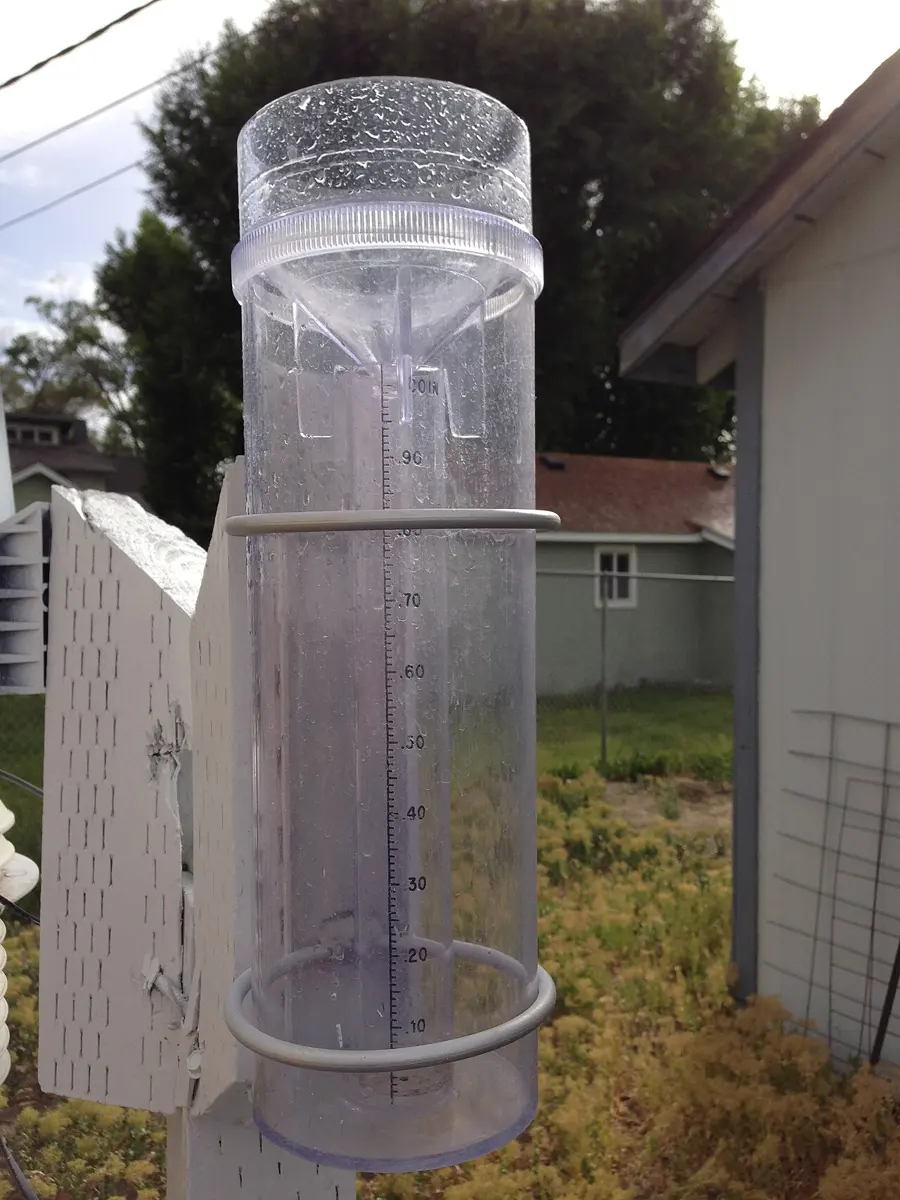
The picture shows a clear plastic tube marked with numbers, standing in a holder.
- a.Do you know the name of the equipment?
- b.What is its function?
Answers
A meteorologist is a scientist who studies the weather and forecasts it, that is, says what it will probably be like. In Nepal, the Department of Hydrology and Meteorology gives the country’s weather forecasts every day.
The recording
Listen once for the main idea, and a second time for the missing words.
This is a short radio talk. The host of the program (the person who leads it) welcomes a well-known weather expert, Dr. Ali, to the studio. She asks him about the weather for the coming week, place by place, and he answers each question.
Listen for the words that show how sure he is. He uses will when he is sure, may when something is possible, and he even says how big the chance is.
B. Fill in the blanks
Fill in the blanks with the correct words.
- a.……… is the host of the program.
- b.Dr. Ali is a famous ………
- c.The weather will improve in most of the ……… tomorrow.
- d.There is a possibility of rainfall in the ……… hills.
- e.The weather of the Terai will be ……… at the weekend.
Answer
Dr. Ali says some districts in the upper hills may get rain tomorrow afternoon. How sure is he?
Pick an answer to see why.
C. Tonight’s weather report
Listen to the weather report in the evening. What will be the weather of your province tomorrow? Note down the weather.
A model note
Grammar: may, might, must and will
A. Study the sentences
Here are three examples, and what each one means.
| Sentence | How sure? | Why? |
|---|---|---|
| I am not sure, but I may come to meet you tomorrow. | perhaps (about half) | The speaker says so: I am not sure. |
| It’s cloudy. It might rain today. | perhaps (maybe less than half) | Clouds don’t always bring rain. |
| He is in school uniform. So, he must be a student. | almost sure | The uniform is a clear sign. |
So these words are like steps on a ladder of being sure:
- might: it is possible, but I’m not very sure.
- may: it is possible; perhaps it’s true, perhaps not.
- must: I’m almost sure it’s true, because I can see a clear sign (we call this a deduction, working something out from clues).
- will: I’m sure it will happen.
- can’t: I’m almost sure it is not true. He has just eaten. He can’t be hungry.
Put each word on the line from sure it isn’t to sure it is. A wrong tap tells you which way to move.
Dorje is wearing a thick coat, a woolly hat and gloves. Which sentence is the best guess?
Pick an answer to see why.
B. May, might or must?
Before you choose, ask: is there a clear clue? If there is, the answer is usually must. If you are only guessing about the future, use may or might.
Fill in the blanks with may, might or must.
- a.You ……… feel nervous while performing on the stage.
- b.He is working very hard. He ……… pass the exam.
- c.They are not at home today. They ……… have gone to college.
- d.The sky is cloudy. It ……… rain in the evening.
- e.He has a gun in his hand and he is in uniform. He ……… be a policeman.
- f.All the students are playing in the ground. It ……… be the lunch break.
- g.She is a middle-aged woman. She is carrying a baby. So, she ……… be the mother of the baby.
- h.I am free tomorrow. I ……… play football.
Answer
C. Will
The book’s examples are They will come back home soon and He will win the race. You met will in Unit 7 to make predictions. Here it tells us the speaker thinks something will happen, or decides to do something.
will + the plain verb: will come, will win, will help. Often it comes with words that show how sure you are: I think…, I hope…, perhaps, maybe, probably.
Complete the sentences using will and the right verbs.
- a.She ……… to meet her sister.
- b.Don’t be sad. You ……… a good time.
- c.I think I ……… to Pokhara next month.
- d.Maybe I ……… to your party.
- e.Perhaps I ……… for a while.
- f.Don’t worry. I ……… you.
- g.I hope you ……… with me tomorrow.
Answer
Which one is written correctly?
Pick an answer to see why.
Writing
A. Put the paragraph right
The paragraph about Saroj has lost most of its capitals and full stops. Find where each sentence ends, and which words are names.
Rewrite the following paragraph correctly.
saroj is an honest boy he reads in nepal secondary school in grade six he has many friends in school Some of his friends are: sonu muna sujal and bibhan All of his friends are hard working one day his sister told him not to be late for home. He replied: “Sure, I will be in time
Answer
B. A growing population
A paragraph about the future uses the words of this unit. Use will for what you are sure of, may and might for what is possible, and must for what we have to do.
The population of the world is growing rapidly these days. Think of the problems the growing population will create in the near future. Write a paragraph about it. Use the clues given in the box.
Clues: cost of living · diseases · deforestation · pollution · other problems
A model answer
Reading II: The Arrow and the Song
Before you read
What is the man doing in the picture?
A model answer
The poem, verse by verse
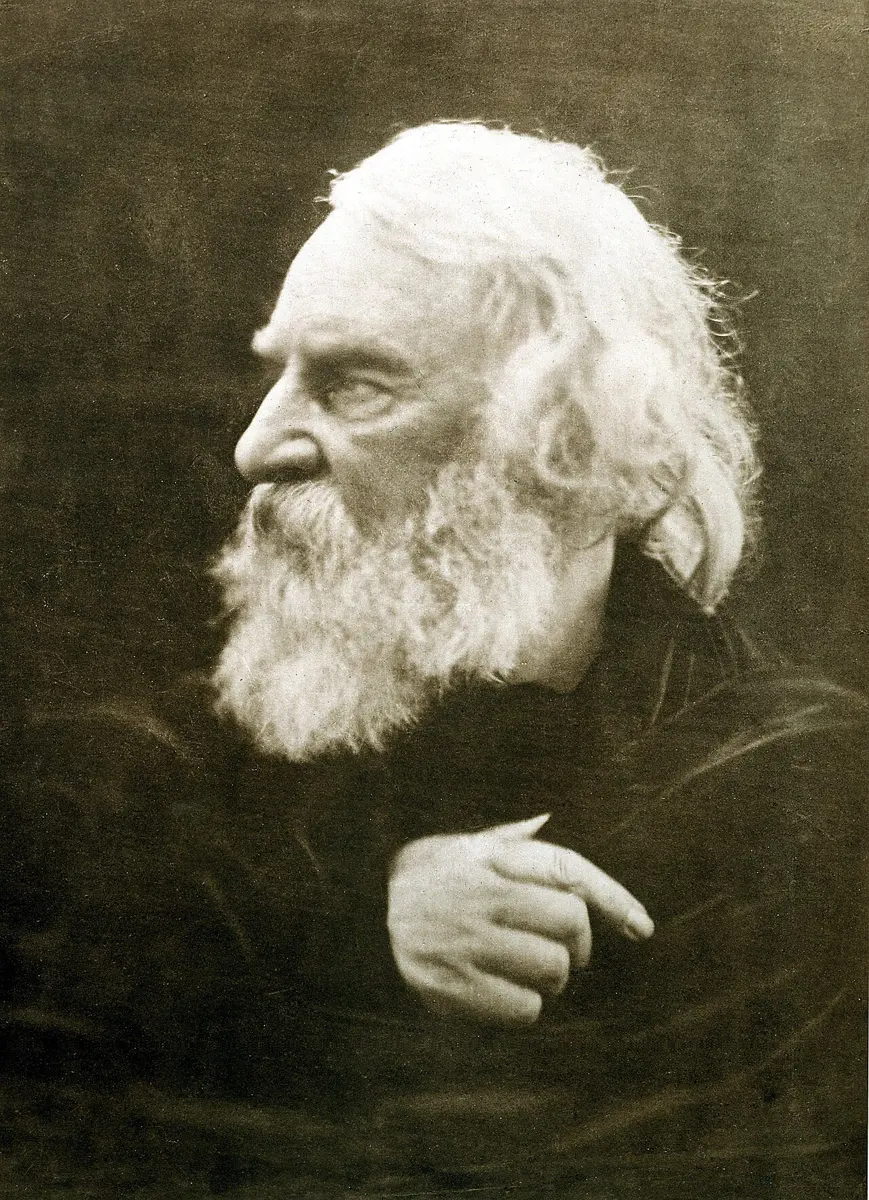
The poem is by the American poet Henry Wadsworth Longfellow (1807–1882). He wrote it in 1845, and it came out in his book The Belfry of Bruges and Other Poems. It has three verses of four lines, and each pair of lines rhymes (air and where, strong and song, oak and unbroke). Its beat is steady, like footsteps.
Verse 1: the arrow. The poet shoots an arrow into the air. It flies so swiftly (fast) that his sight (his eyes) can’t follow it in its flight, so he doesn’t know where it comes down.
Verse 2: the song. He sings a song into the air. Like the arrow, it is gone, and he doesn’t know where it lands, because nobody has eyes keen (sharp) and strong enough to watch a song fly.
Verse 3: found again. A long, long time later, he finds the arrow stuck in an oak tree, still unbroke (an old, poetic word for unbroken). And he finds the song too, every word of it, in the heart of a friend who remembered it.
What it means. The second verse is built exactly like the first, and the last verse answers both. An arrow is a hard, sharp thing that can hurt. A song is soft, kind and invisible. You can’t see where either one goes, but both last. The things we say and do to others, good or bad, stay with them long after we have forgotten. So send out songs, not arrows!
What is the poet’s song most like, in our lives?
Pick an answer to see why.
Words from the poem
| Word | Meaning |
|---|---|
| shot | sent from a bow (past of shoot) |
| swiftly | very fast |
| follow | to keep your eyes on something as it moves |
| keen | sharp, able to see or hear well |
| oak | a big, strong tree with very hard wood |
| unbroke | an old word for unbroken, not broken |
A. True or false
The poet knew where the arrow had gone.
Pick an answer to see why.
The arrow was found by others.
Pick an answer to see why.
The poet found his arrow unbroken.
Pick an answer to see why.
B. Answer the questions
Where did the poet shoot the arrow?
A model answer
Did the poet know where the arrow fell?
A model answer
Where did the song fall?
A model answer
Did the poet find the arrow soon?
A model answer
Where did the poet find the arrow?
A model answer
Where did the poet find the song?
A model answer
Project work
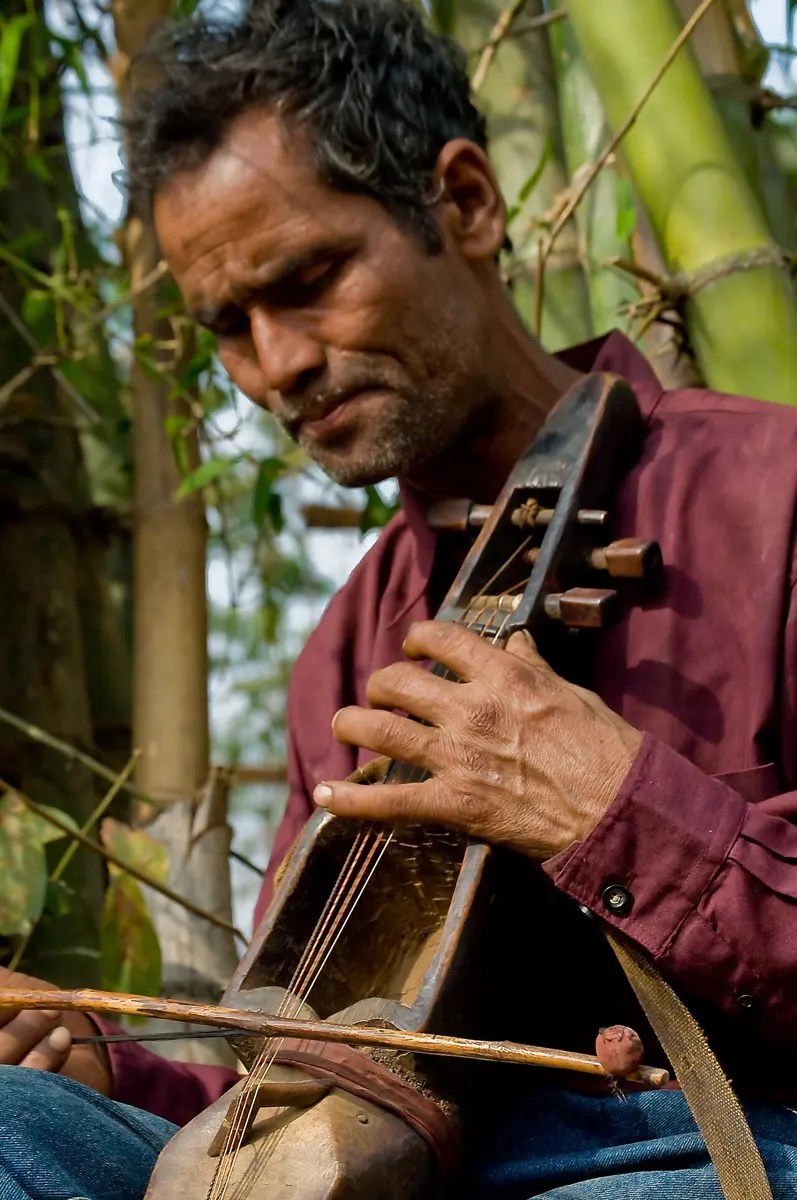
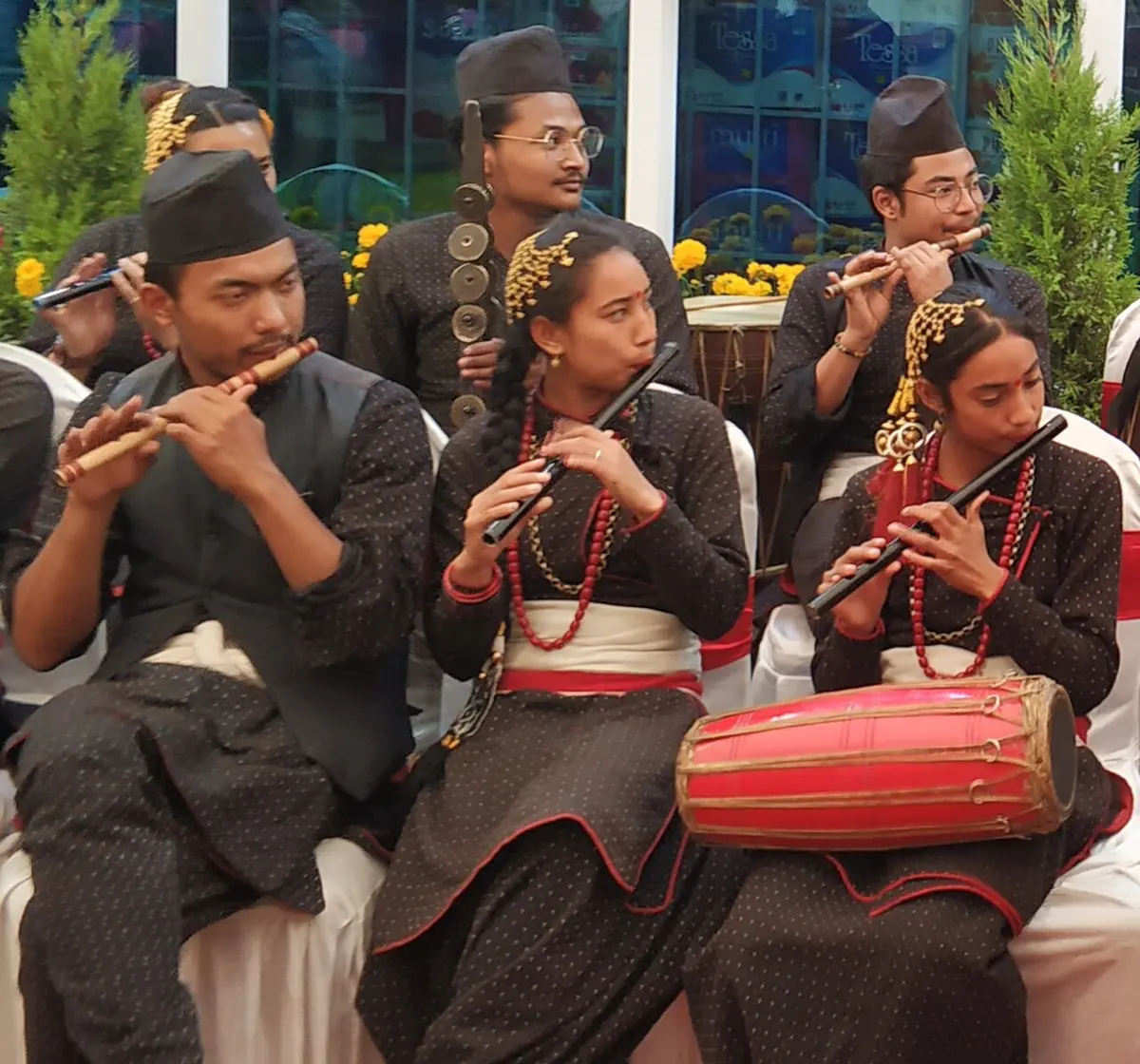
Extra bit: may, might and must
This is how the words of this unit work, all in one place.
May and might: when we are not sure about something, now or in the future.
- Pasang isn’t here yet. He might be stuck in traffic.
- My cousins may visit us next week.
- I might see you at the fair.
Must: when we feel sure something is true, because it is the only real possibility.
- That must be Aakriti’s bag. Her name is on it.
- Rohan must live near here, because he always walks to school.
- Come in and warm up. You must be freezing out there!
The house is dark and the door is locked. Which one fits best?
Pick an answer to see why.
Exercise
Practice the whole unit. Try each one, then open the answer.
Complete with may, must or can’t.
- a.Sabina is carrying five library books, and today they are due back. She ……… be going to the library.
- b.I don’t know where Ujwal is. He ……… be in the garden.
- c.You have just eaten four rotis. You ……… be hungry!
- d.Take a jacket. It ……… get cold tonight.
Answer
Write the sound each animal makes: donkey, dog, cat, cock.
Answer
Correct the mistakes.
- a.It may rains tomorrow.
- b.May be she is ill.
- c.He might to come today.
- d.I think I will to go home.
Answer
Write three sentences about tomorrow: one with will, one with may and one with might.
Model answers
What is the lesson of The Musicians of Ilam? Write two or three sentences.
A model answer
Printable PDFs
- Study notes 2 pages
- Harder practice questions 2 pages Answer key
Practice every question in the book, and keep track of the ones you miss →
A companion to your textbook, not a replacement for it: study from the book your school uses, and where the two differ, follow your teacher. Found a mistake? Please tell us.