
Black clouds are piling up over the hills, and the wind smells of rain. You don’t need a weather report to say what will happen next. People make guesses about the future all day long. Some guesses are good ones, because we can see the signs. Others are only hopes.
This unit is about predicting: saying what will happen. You will read about what pollution is doing to our land, air and water, and what could happen next. You will read a week’s weather forecast in pictures and listen to a weather report for six cities of Nepal. You will learn when to say will, when to say going to, and when to use the present continuous for the future. In the Extra bit you will meet the four kinds of sentences.
Getting started
A. What will happen next?
The unit opens with four pictures.
- Dark clouds fill the sky over green hills.
- Two runners are about to reach the finishing tape of a race. One of them is just ahead.
- A boy is walking across a zebra crossing at the traffic lights, while a bus, cars and a motorbike wait.
- A hillside where many trees have been cut down, with only stumps left.
Look at the pictures and say what will happen next.
Model answers
A prediction is a guess about the future. A good prediction has a reason: It’s going to rain, because the clouds are black.
B. Listen and sing
The poem is a short part of The Dykes, by the English writer Rudyard Kipling, from his book of poems The Five Nations. A dyke (also spelled dike) is a long, strong wall of earth or stone built beside the sea to keep the water off low land.
The speakers live behind dykes that their fathers and grandfathers built long ago. They have not looked after them. Again and again they were warned that the walls were getting weak, and again and again they put off the repairs. Now the sea is coming, and all they can do is wait for the day and share their shame. They fear the wall may fall, and they know they have let down both their fathers, who built it, and their sons, who will suffer.
The poem sounds slow and heavy, like waiting for something bad. Two pairs of lines rhyme: shame with same, and delayed with betrayed. Its words of the future, we can only wait and it may fall, are predictions, which is why the poem is in this unit.
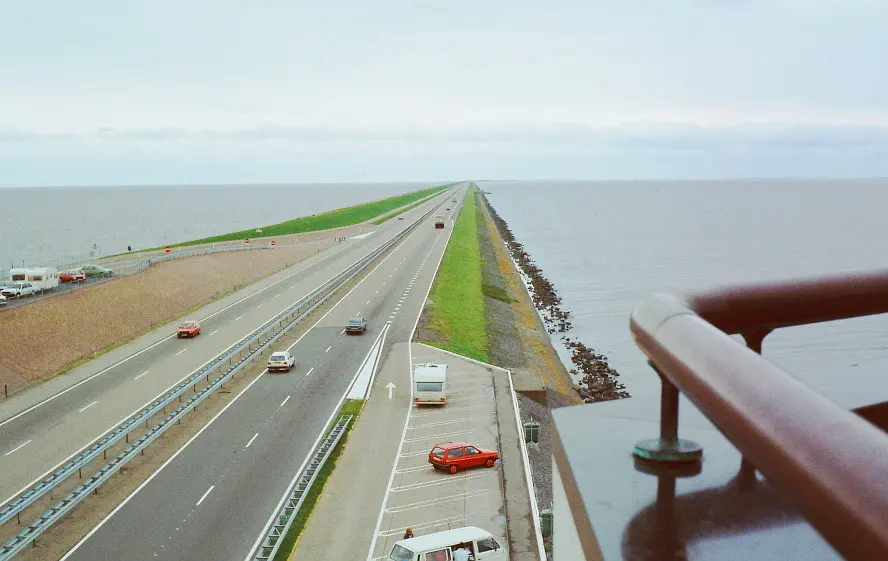
C. Your village in ten years
Tell your friend what your village or city will look like after ten years.
A model answer
Reading I: Human and the Environment
Before you read
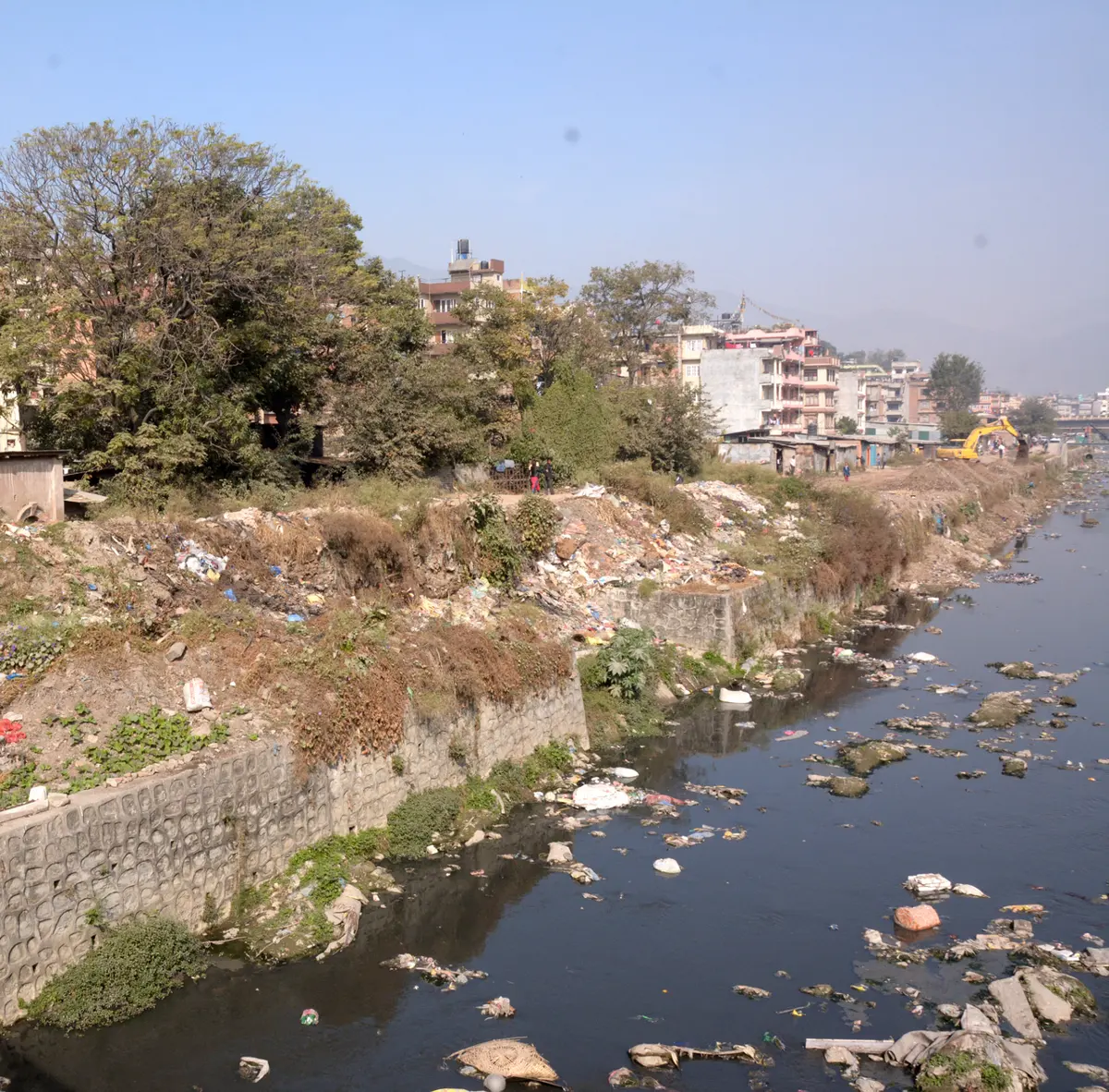
There are four small pictures beside the text: an old car puffing out black smoke, people dumping rubbish into a river, factory chimneys pouring smoke into the sky, and a hillside of tree stumps.
What do you see in the pictures?
A model answer
What are the results of such activities?
A model answer
The text, part by part
- Nowhere is safe. Every part of the environment has been harmed by pollution. The land, the air and the water all over the world have been contaminated, made dirty and unsafe, by more and more waste. It comes from factories, homes and vehicles. Some waste is only an eyesore, an ugly sight. Some is a real threat: it can make people ill, and even kill them.
- Waste from factories. The worst waste often comes from factories. It can contain toxic (poisonous) substances that kill plants and animals. Where the government doesn’t control them properly, factories let this waste pour into rivers, and their chimneys fill the air with poisonous fumes, harmful smoke and gas.
- Fuel and traffic. In towns, people burn fossil fuels, oil, coal and gas, for heating. This puts a lot of carbon dioxide into the air. Some cities have made smokeless zones, where burning smoky fuel is not allowed. But the fumes from cars, buses and trucks keep the air dirty, so air pollution is still a big problem.
- All of us. Each of us is a little guilty. Nearly everything we buy comes in a packet, a bottle or a can, of plastic, glass or aluminum, and we usually throw it away. Factories are being asked to recycle these materials: to use them again to make new things.
- What could happen. The text ends with a warning and a question. Scientists say that the extra carbon dioxide in the air is warming the Earth. Warmer air melts the ice near the North and South Poles, and the sea level rises. Low land where many people live could go under water. Can we take such a risk?
According to the text, where does most of the waste come from?
Pick an answer to see why.
Words from the text
| Word | Meaning |
|---|---|
| effect | a change that something causes |
| contaminated | made dirty, impure or poisonous |
| eyesore | something ugly to look at |
| threat | a danger; something that may cause harm |
| toxic | poisonous |
| pour into | to flow into, in large amounts |
| fumes | smoke or gas that smells bad and is harmful to breathe |
| atmosphere | the air around the Earth |
| exhaust | the waste gas that comes out of a car’s engine |
| guilty | having done something wrong |
| recycle | to treat used things so that they can be used again |
| disastrous | causing very great damage |
A. Find the words
Write the words from the text for these meanings.
- a.been made impure
- b.danger
- c.poisonous
- d.smoke
- e.responsible for a particular wrongdoing
- f.causing great damage
Answer
B. Answer the questions
What are the sources of waste?
A model answer
What causes the death of plants and animals?
A model answer
Give examples of fossil fuels.
A model answer
Why haven’t the smokeless zones worked?
A model answer
How are we responsible for environmental pollution?
A model answer
What causes the rise in temperature?
A model answer
What will be the result of melting ice?
A model answer
C. Keep the school clean
Suppose you are the school captain. How will you keep your school clean and tidy?
A model answer
Reading II: Weather Forecast
Before you read
What is the following text about?
A model answer
Where do you find this type of text?
A model answer
Reading a forecast in pictures
A forecast says what the weather will be. This one uses a small picture for each day instead of words.
| Picture | Weather word |
|---|---|
| a bright sun | sunny |
| gray clouds | cloudy |
| a cloud with raindrops | rainy |
| a cloud with snowflakes | snowy |
| a cloud blowing air | windy |
| a thermometer in flames | hot |
| a thermometer with ice | cold |
Try reading it. Each question asks about one day; when you find the answer, the day lights up and its weather word appears.
A. What’s the weather like?
Complete the sentences from the forecast.
- a.On Wednesday, it is snowy.
- b.On Saturday, it is ………
- c.On Sunday, it is ………
- d.On Friday, ………
- e.It is ……… on Thursday.
- f.It is ……… on Monday.
- g.It is ……… on Tuesday.
Answer
B. Yes or no?
Look at the days and weather pictures and write Yes or No.
- a.It is sunny on June 23.
- b.It is cloudy on June 21.
- c.It is hot on June 25.
- d.It is rainy on June 24.
- e.It is rainy on June 22.
- f.It is sunny on June 20.
- g.It is hot on June 26.
- h.It is snowy on June 23.
- i.It is rainy on June 21.
- j.It is windy on June 24.
Answer
C. Weather or season?
Weather is what the air and sky are like at one time, today or this week: hot, rainy, windy. A season is a part of the year that comes back every year: spring, summer, fall (also called autumn) and winter.
Write WEATHER or SEASON.
- a.Hot: weather
- b.Rainy
- c.Fall
- d.Snowy
- e.Winter
- f.Windy
- g.Summer
- h.Sunny
- i.Cold
- j.Spring
Answer
D. Tomorrow’s weather
Listen to the English news on Radio Nepal this evening. What will the weather be tomorrow? Write it in your notebook and tell it to the class.
A model answer
Speaking: making predictions
A. Ramesh and Ramila
In the conversation, two friends talk about the cold morning. One says it is cold, the other agrees and thinks rain is coming. When the first says there has been no sun since morning, the second guesses the day will stay cloudy.
Notice how sure each prediction is.
| How sure? | What you say |
|---|---|
| very sure | It will definitely rain. · It is going to rain. (I can see the signs.) |
| quite sure | It will probably rain. · I think it will rain. |
| not sure | It may rain. · It might rain. · Perhaps it will rain. |
| quite sure it won’t | It probably won’t rain. · I don’t think it will rain. |
| very sure it won’t | It definitely won’t rain. |
Shreya can see big black clouds right over her school. What is the best thing to say?
Pick an answer to see why.
B. In these situations
Talk to each other in pairs. Make a prediction for each situation.
- a.It’s raining heavily.
- b.Gita studies very well.
- c.It’s very windy.
- d.He looks tired.
- e.She looks happy.
Model answers
Listening: the weather report
A. Before you listen
The picture shows a television screen. On it, a woman stands beside a chart of weather symbols (sun, clouds, rain) under the words Today’s Forecast.
- a.What is the woman doing?
- b.Have you ever watched a weather report on television?
- c.In which unit is rainfall measured?
Model answers
The recording
A news reader called Yugin gives the weather of the last 12 hours for six cities: for each one, the maximum (highest) and minimum (lowest) temperature in degrees Celsius, and the rainfall, if any. Listen for the numbers.
B. Complete the table
Listen to the recording and complete the table.
| City | Maximum (°C) | Minimum (°C) | Rainfall (mm) |
|---|---|---|---|
| Biratnagar | 32 | ……… | no rainfall |
| Janakpur | ……… | 23 | no rainfall |
| Kathmandu | 26 | 13 | ……… |
| Pokhara | ……… | 12 | 20 |
| Butwal | 33 | ……… | no rainfall |
| Birendranagar | ……… | 13 | 10 |
Answer
Now read the full report. The questions light up the city they are about.
C. Tonight’s report
Listen to the weather report on the radio or television this evening. Note down the places with the highest and the lowest temperatures of the day.
A model answer
Grammar: will, going to and the present continuous
A. Look at the pictures
The first picture shows a busy crossing, with a yellow van driving straight at two boys on the road: The van is going to hit the boys. The second shows a young woman with a suitcase, holding up her passport and ticket, with a plane behind her: She will go abroad.
B. Three ways to talk about the future
In Grade 5 you learned will and going to. Here they are again, with a third way.
1. will + the plain verb
- a guess or an opinion, often with I think, I’m sure, probably: I’m sure Nepal will win. Do you think it’ll snow* in Jumla?*
- a fact about the future: The shop will be closed on Saturday. Grandma will be seventy next month.
- a choice, an offer or a promise made as you speak: You look tired. I’ll carry* your bag.*
2. am / is / are going to + the plain verb
- a plan made before you speak: I’m going to clean* my room this afternoon.* We’re going to plant* trees on Saturday; we bought the saplings yesterday.*
- something you can see coming now: Look! The bus is going to leave!
3. the present continuous (am / is / are + -ing)
- an arrangement already fixed with other people, with a time or a place: I’m visiting* my aunt in Pokhara on Saturday. (The bus ticket is booked.)* We’re having* a class party on Friday.*
Try each one on a line of time. The dot on now is a choice made as you speak; a dot before now is a plan made earlier.
“I forgot my pencil.” “Don’t worry. ______ you one.”
Pick an answer to see why.
Pratik has climbed onto a thin branch, and it is bending. “Get down! It ______ break!”
Pick an answer to see why.
C. Choose the correct option
Choose the correct option to complete the sentences.
- a.Don’t worry about your test! I’m sure ……… (i. you’ll pass / ii. you’re going to pass)
- b.I ……… on Sunday. I have a doctor’s appointment. (i. won’t come / ii. ’m not coming)
- c.Are you hot? OK, ……… open the window. (i. I’m going to / ii. I’ll)
- d.Don’t leave your bag there! Someone ……… (i. ’s stealing it / ii. ’ll steal it)
- e.It’s already 9:50! ……… late for school. (i. We’re going to be / ii. We’ll be)
- f.I forgot your drink! ……… go and get it now. (i. I’m going to / ii. I’ll)
- g.Do you think they ……… the presents we got for them? (i. ’ll like / ii. ’re going to like)
- h.“I haven’t got my phone.” “That’s OK. ……… you mine.” (i. I’ll lend / ii. I’m going to lend)
Answer
Writing
A. Our school next year
Use will for things you think will happen and going to for plans you already know about.
What changes will occur in your school next year? Write a paragraph.
A model answer
B. After the final exam
Write any five things you will do after your final exam.
A model answer
Project work
Extra bit: kinds of sentences
Every sentence does one of four jobs.
| Kind | What it does | Ends with | Example |
|---|---|---|---|
| declarative | makes a statement, tells something | . | He is the leader of our group. |
| interrogative | asks a question | ? | What’s your name? Do you like apples? |
| imperative | gives an order, an instruction or a request | . (or !) | Drink enough water. Please sit down. |
| exclamatory | shows a strong feeling: surprise, joy, anger | ! | Wow! What a beautiful garden it is! |
Which is an imperative sentence?
Pick an answer to see why.
Exercise
Practice the whole unit. Try each one, then open the answer.
Complete with will, going to or the present continuous.
- a.Look at that boy on the wall! He ……… (fall).
- b.I think robots ……… (do) most housework in the future.
- c.We ……… (fly) to Bhadrapur tomorrow at 9. The tickets are booked.
- d.“The phone is ringing.” “I ……… (answer) it.”
Answer
Write the weather word for each.
- a.There’s snow everywhere.
- b.The sun is shining.
- c.The wind is blowing hard.
- d.There are clouds everywhere.
Answer
Name the kind of each sentence.
- a.How fast she runs!
- b.Is the river polluted?
- c.Don’t throw plastic into the river.
- d.The air in Kathmandu is dusty in winter.
Answer
Name two causes of air pollution from Reading I, and say what you think will happen if they don’t stop.
A model answer
Make a prediction about tomorrow for each.
- a.Today the sky is clear and blue.
- b.Abinash has been practicing football every day.
Model answers
Printable PDFs
- Study notes 2 pages
- Harder practice questions 2 pages Answer key
Practice every question in the book, and keep track of the ones you miss →
A companion to your textbook, not a replacement for it: study from the book your school uses, and where the two differ, follow your teacher. Found a mistake? Please tell us.