
Lie on your back on a clear night, far from the town lights. Look up. Thousands of stars twinkle. The Moon glows. One bright dot doesn’t twinkle at all: it may be a planet. Now wait an hour and look again. The stars have moved across the sky!
But the stars didn’t move. You did. The Earth under you is spinning, and it carries you round with it. In this unit you will find out what is up in the sky, why we have day and night, why the seasons change, and why the Moon changes its shape every night.
Heavenly bodies
Everything we see above the Earth is the sky. The Sun, the Moon, the planets and the stars are all in the sky. There are countless big and small things up there. They are called heavenly bodies (or celestial bodies).
Heavenly bodies are not all alike.
- Some are close to the Earth, and look big. Others are far away, and look small.
- Some have their own light. Others shine only because the light of another body falls on them.
- Some move across the sky. Others seem to stay in place.
By these differences, heavenly bodies are sorted into stars, planets, satellites, comets, asteroids (small rocky “baby planets”) and meteors.
The Earth we live on is a heavenly body too. As far as we know, it is the only one with the right air, water and temperature for living things.
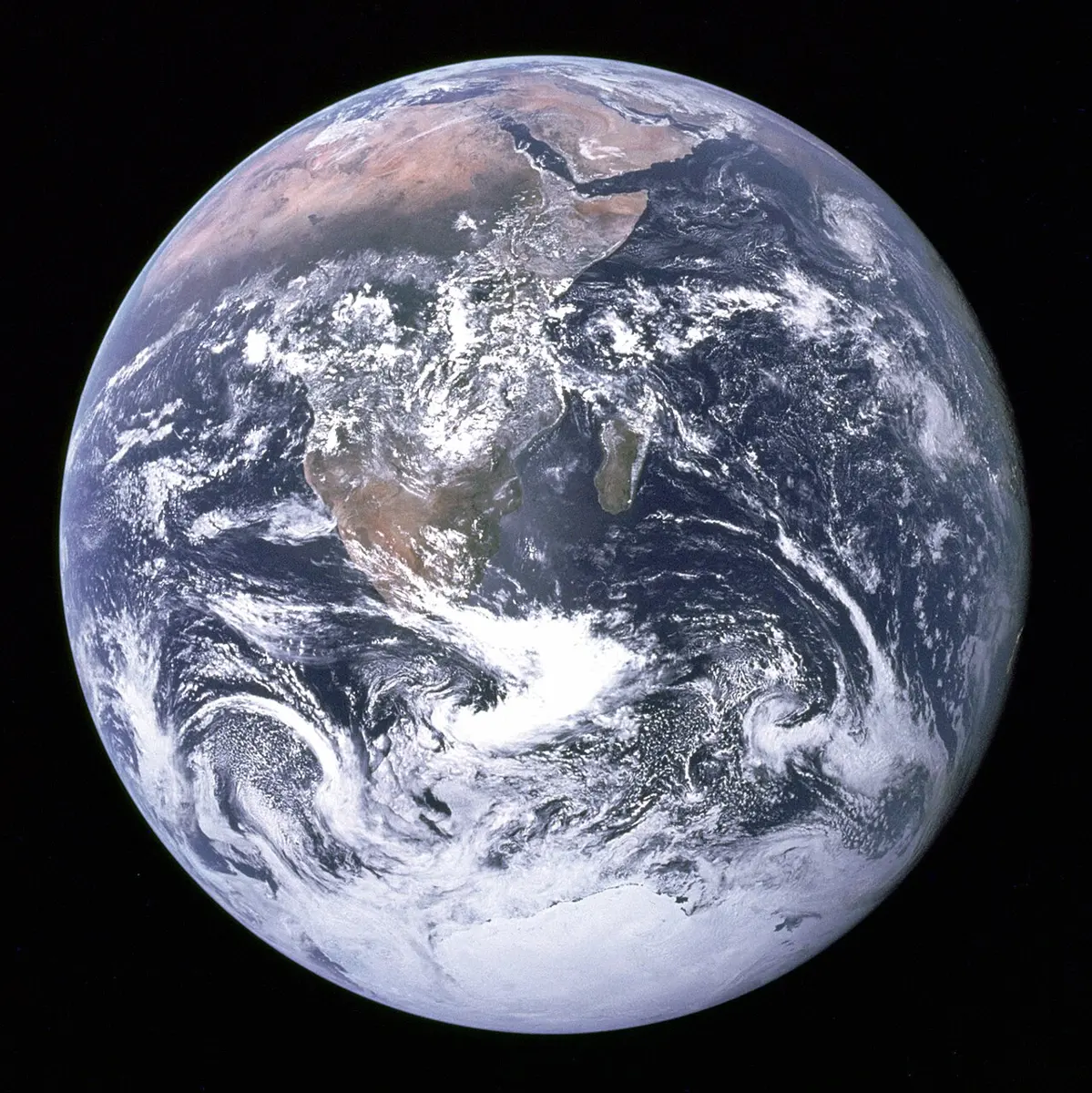
Long ago, people believed that the Earth stood still, in the middle of everything. They thought the Sun, the Moon and the stars all went round it. Then scientists looked carefully and measured. They found that the Earth goes round the Sun.
Then why does the Sun seem to move across our sky? Think of riding in a bus. The houses beside the road seem to rush past you. But the houses are still. The bus is moving. In the same way, the Earth spins, and that makes the Sun seem to move round us.
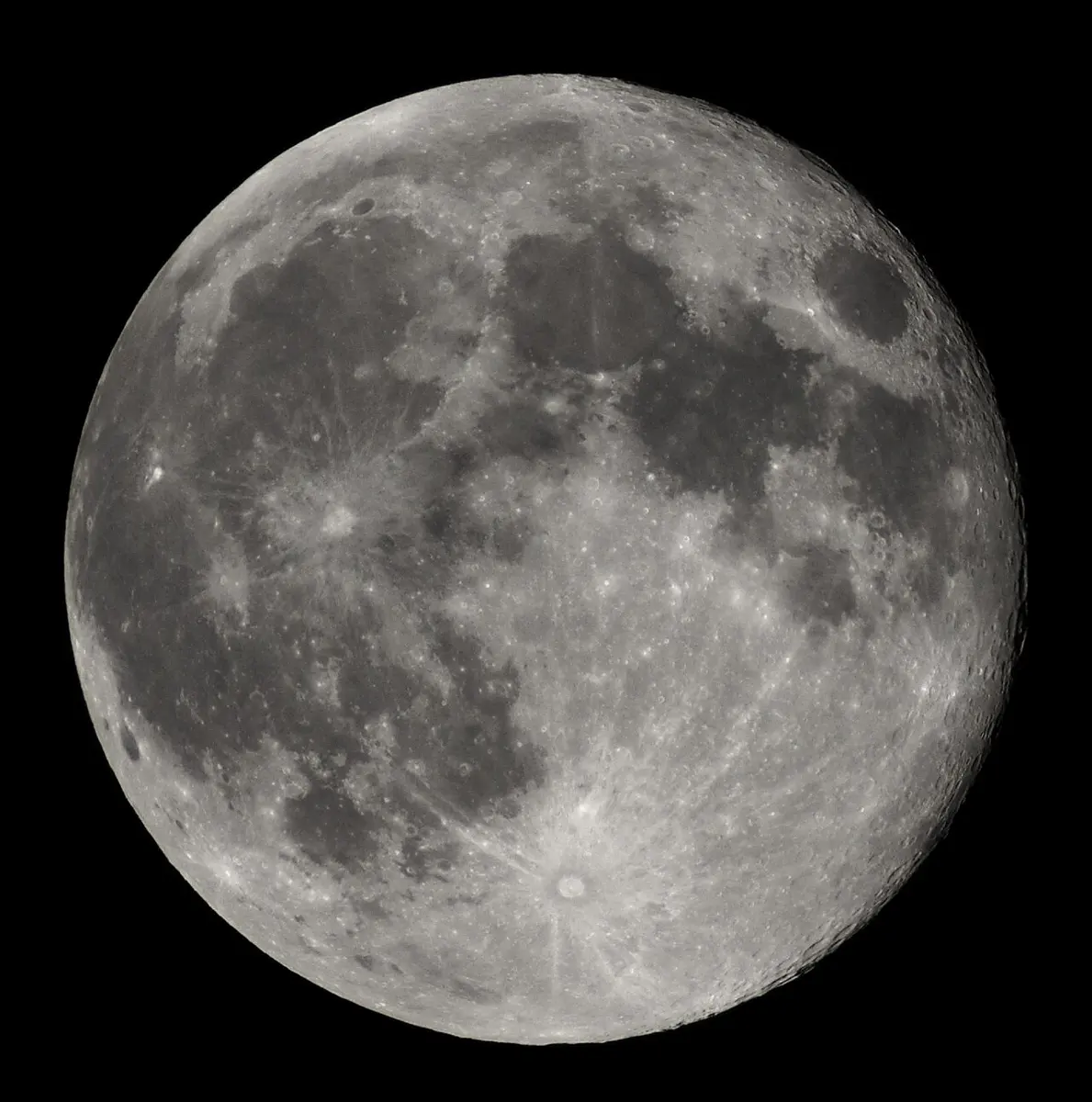
The heavenly body that we see in different shapes, at different times of the night, is the Moon. Just as the Earth goes round the Sun, the Moon goes round the Earth. The Moon has no light of its own. It shines because sunlight falls on it. So moonlight gives us hardly any heat. It rises and sets at a different time each day.
Stars
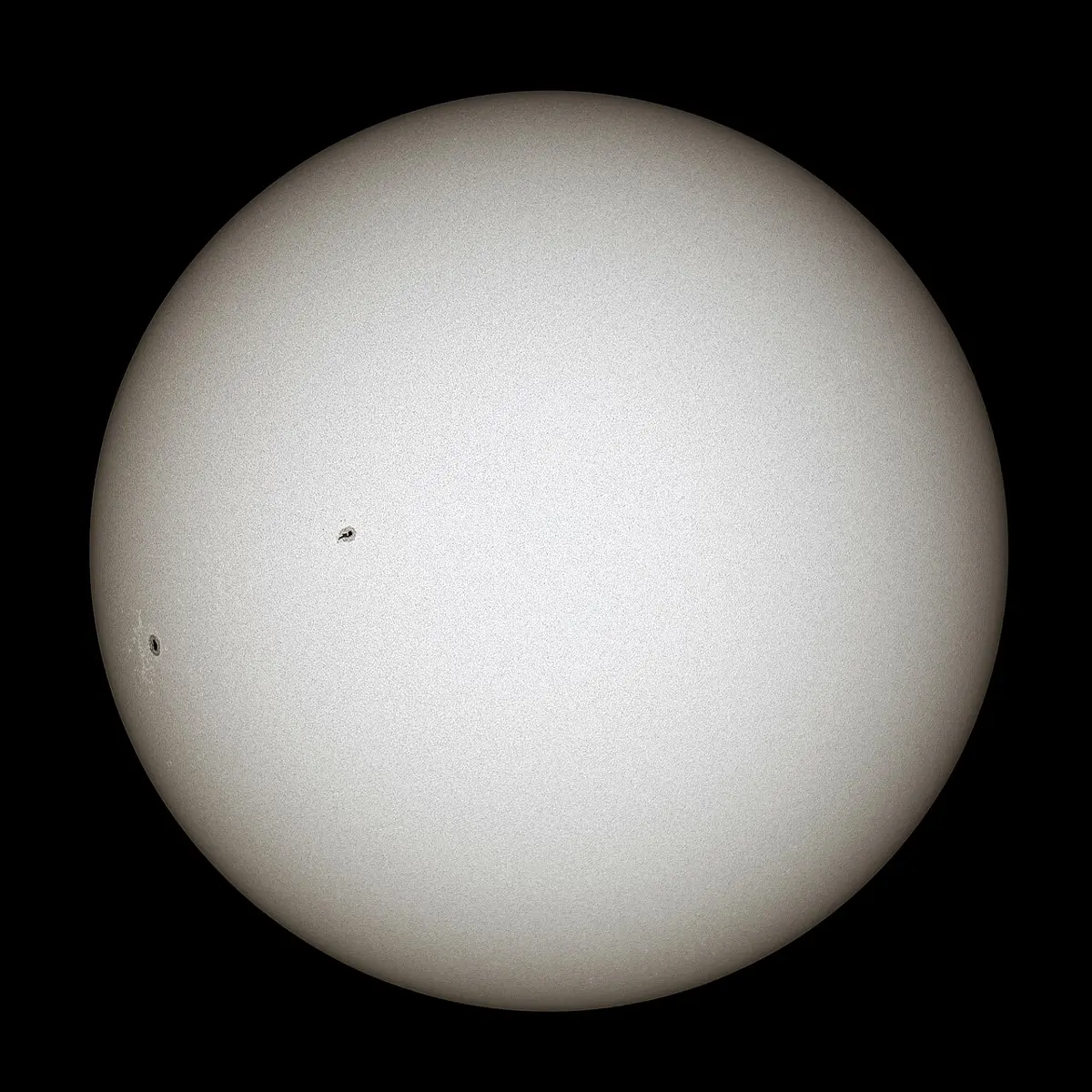
A star is a huge, very hot ball of glowing gas. It shines with its own light. On a dark night, you can see thousands of them. There are far more than anyone could count.
Stars are enormous. The Sun is a star too. It is only a medium-sized one. It looks much bigger and brighter than the other stars because it is so much closer to us. The next nearest star is about 270,000 times farther away than the Sun.
Planets
A planet is a big, round heavenly body that goes round the Sun along a fixed path. Its path is called its orbit. A planet has no light of its own. It shines because sunlight falls on it.
There are eight planets going round the Sun. The Earth is one of them.
Satellites
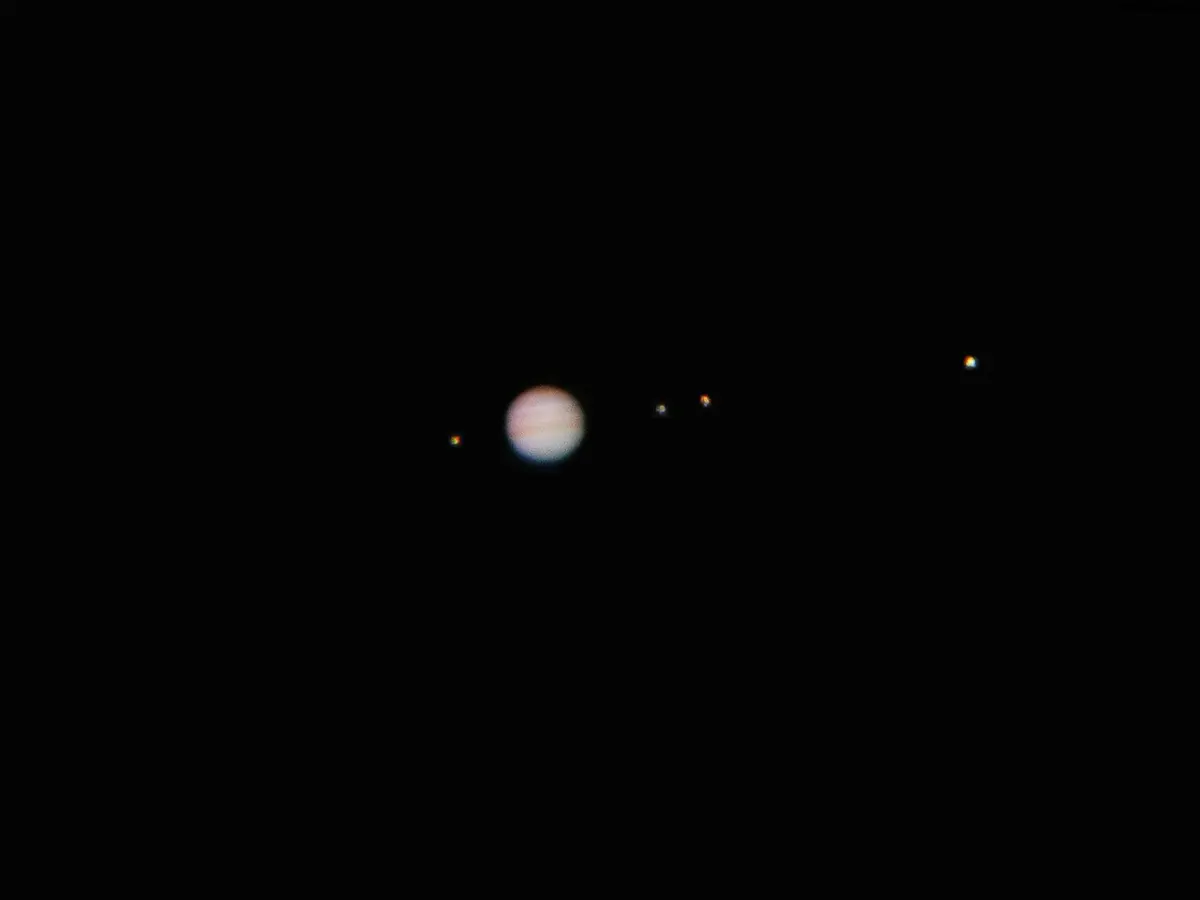
Some planets have smaller bodies going round them. A body that goes round a planet is called a satellite. Like a planet, a satellite moves along a fixed path, its orbit.
The Moon is the Earth’s only natural satellite.
The solar system
The Sun is in the middle. Eight planets go round it, and many satellites go round the planets. The Sun and everything that goes round it make a family. This family is called the solar system. (Sol means the Sun.)
Here are the eight planets, in order from the Sun, and their satellites (moons).
| No. | Planet | Number of moons (as of 2026) |
|---|---|---|
| 1. | Mercury | 0 |
| 2. | Venus | 0 |
| 3. | Earth | 1 |
| 4. | Mars | 2 |
| 5. | Jupiter | 115 |
| 6. | Saturn | 293 |
| 7. | Uranus | 29 |
| 8. | Neptune | 16 |
To remember the order, say: “My Very Eager Mother Just Served Us Noodles.”
The time the Earth takes to go round the Sun once is called one year. It is about 365 days. The time the Moon takes to go round the Earth once is called a month. It is about 30 days (29½ days, from one full moon to the next).
What is a body that goes round a planet called?
Pick an answer to see why.
Why does the Sun look bigger and brighter than other stars?
Pick an answer to see why.
Exercise (Heavenly bodies)
1. Is it correct (✓) or wrong (✗)?
a. The Sun is a moving heavenly body.
Pick an answer to see why.
b. There are countless stars in the sky.
Pick an answer to see why.
c. Stars shine with their own light.
Pick an answer to see why.
d. Stars go round the Sun.
Pick an answer to see why.
e. The Earth is a member of the solar family.
Pick an answer to see why.
2. Fill in the blanks
star, Moon, Sun, satellite, planet, Earth
Planets go round the ______.
Answer
Planets go round the Sun.
Heavenly bodies that go round the planets are called ______.
Answer
Heavenly bodies that go round the planets are called satellites.
The Sun is a medium-sized ______.
Answer
The Sun is a medium-sized star.
The Moon takes about a month to go round the ______.
Answer
The Moon takes about a month to go round the Earth.
The ______ is the Earth’s only satellite.
Answer
The Moon is the Earth’s only satellite. (“Planet” is not needed.)
3. Match the planets with their number of satellites
Match each planet with a number of satellites: Mars, Saturn, Venus, Jupiter, Earth. The numbers to choose from are 0, 1, 2, 62, 14 and 67.
Answer
| Planet | Number of satellites |
|---|---|
| Mars | 2 |
| Saturn | 62 |
| Venus | 0 |
| Jupiter | 67 |
| Earth | 1 |
(14 is left over: it was once given for Neptune.) These are older counts. As of 2026, Jupiter has 115 known moons and Saturn 293. Mars, Venus and the Earth haven’t changed.
4. Choose the best answer
a. What is a heavenly body that goes round a planet called?
Pick an answer to see why.
b. Which of these is a star?
Pick an answer to see why.
c. What takes 24 hours?
Pick an answer to see why.
d. Which of these is correct?
Pick an answer to see why.
5. Answer these questions
Give some examples of heavenly bodies.
Answer
The Sun, the Moon, stars, the planets (such as the Earth, Mars and Jupiter), comets, asteroids and meteors.
Write any two differences between stars and planets.
Answer
- Stars have their own light. Planets have no light of their own; they shine because sunlight falls on them.
- Stars are huge balls of very hot gas. Planets are much smaller and cooler.
- Planets go round the Sun. Stars don’t go round the Sun.
- Stars twinkle. Planets shine with a steady light.
Draw a neat picture of the Earth going round the Sun, and the Moon going round the Earth. Label it.
Answer
Draw the Sun in the middle, and a big ring (the Earth’s orbit) around it. Draw the Earth on that ring. Draw a small ring around the Earth (the Moon’s orbit), and the Moon on it. Add arrows going the same way round, anticlockwise. Label the Sun, the Earth, the Moon and both orbits.
Of the eight planets, why does only the Earth have living things?
Answer
- The Earth is at the right distance from the Sun. It is not too hot, like Mercury and Venus, and not too cold, like Mars and the planets beyond it.
- It has liquid water.
- It has air, with oxygen to breathe and carbon dioxide for plants.
- Its air keeps the temperature right, and its ozone layer shields life from the Sun’s harmful rays.
Do other stars have planets and satellites, like our solar system? Find out and write.
Answer
Yes. Many other stars have planets going round them. Planets of other stars are called exoplanets. Astronomers found the first ones in the 1990s. As of 2025, more than 6,000 had been found. Some of them have moons too. Scientists are looking for ones that might have water and life.
Motion of the Earth
The Earth is a moving heavenly body. It moves in two ways at the same time.
- It spins on its own axis, like a top. This is its rotation.
- It goes round the Sun, along a fixed orbit, with the Sun in the middle. This is its revolution.
Rotation of the Earth
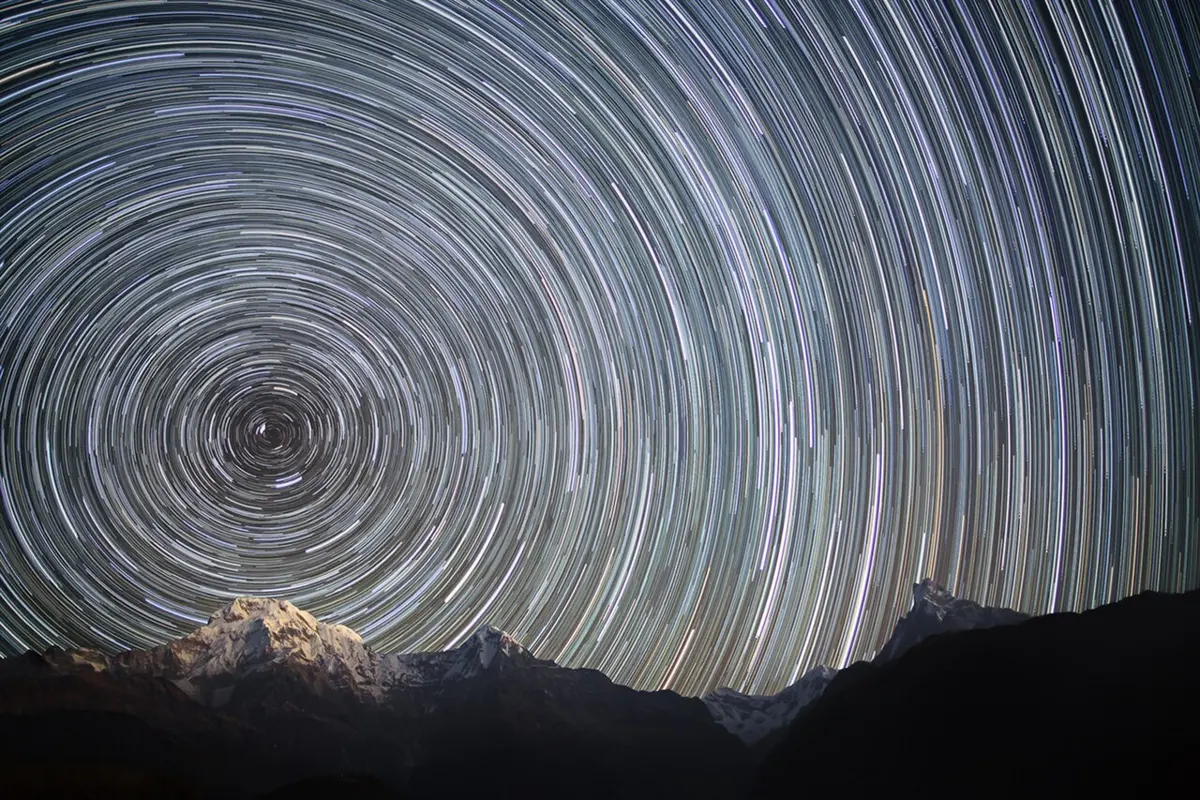
The Earth spins on its axis all the time, from west to east, like a grinding stone. This spinning is called the rotation of the Earth.
As it spins, the half of the Earth facing the Sun gets sunlight. The other half gets none. It is day in the sunlit half, and night in the dark half.
A globe has a rod through its middle, from the North Pole to the South Pole. The globe turns around this rod. The rod is the globe’s axis. The Earth spins around an imaginary line like it. The Earth’s axis runs through its center, from the North Pole to the South Pole.
The Earth’s axis is not straight up and down. It is tilted. It makes an angle of 66.5° with the flat plane of the Earth’s orbit. (That is 23.5° away from straight up.) A school globe is tilted in the same way.
The Earth takes one day (24 hours) to spin once on its axis. This movement is called its daily motion (or daily rotation). It gives us day and night.
Because the Earth spins, it is not the same time everywhere. When the Sun is rising in one place, it is setting in another. Places to the east see the Sun first. So their clocks are ahead. For example, when it is 3:00 PM in Nepal, it is 6:15 PM in Japan, which is far to the east.
Why do we have day and night?
Pick an answer to see why.
It is 3:00 PM in Nepal. What time is it in Japan?
Pick an answer to see why.
Revolution of the Earth
The Earth goes round the Sun along a fixed orbit. This movement is called the revolution of the Earth, or its annual motion. (Annual means once a year.) One trip round takes about 365 days: one year.
The equator is an imaginary line round the middle of the Earth, halfway between the North Pole and the South Pole. The half of the Earth north of it is the northern hemisphere. Nepal is in it. The half south of it is the southern hemisphere.
All through the year, the Earth’s axis leans the same way in space. So in June, the northern half (where Nepal is) leans towards the Sun. In December, it leans away.
The Earth goes round the Sun, and spins on a tilted axis. So sunlight does not fall equally on every part of the Earth all year. This is why:
- the length of day and night changes through the year;
- the seasons change: summer, autumn, winter and spring.
In Nepal, the longest day is around 21 June, and the shortest around 21 December. Around 21 March and 23 September, day and night are equal all over the Earth.
Why do the seasons change?
Pick an answer to see why.
Exercise (Motion of the Earth)
1. Is it correct (✓) or wrong (✗)?
a. Day and night happen because the Earth spins on its axis.
Pick an answer to see why.
b. The Earth takes 365 days to spin once on its axis.
Pick an answer to see why.
c. The Earth spins clockwise on its axis.
Pick an answer to see why.
d. Because the Earth spins, the time is different in different places.
Pick an answer to see why.
e. The seasons change because the Earth’s distance from the Sun changes.
Pick an answer to see why.
2. Fill in the blanks
faster, 66.5°, axis, orbit, equal, slow, 23.5°
An imaginary line through the center of the Earth, joining the North and South Poles, is called its ______.
Answer
An imaginary line through the center of the Earth, joining the North and South Poles, is called its axis.
The Earth’s axis is tilted at an angle of ______ to the plane of its orbit.
Answer
The Earth’s axis is tilted at an angle of 66.5° to the plane of its orbit. (That is 23.5° from straight up.)
If sunlight fell evenly on every side of the spinning Earth, day and night would be ______.
Answer
If sunlight fell evenly on every side of the spinning Earth, day and night would be equal.
On the Earth, the time in the east is ______ than the time in the west.
Answer
On the Earth, the time in the east is faster (ahead) than the time in the west.
3. Choose the best answer
a. How long does the Earth take to go once round its orbit?
Pick an answer to see why.
b. Why do the seasons change on the Earth?
Pick an answer to see why.
c. Which of these causes day and night on the Earth?
Pick an answer to see why.
d. What makes the Sun set?
Pick an answer to see why.
4. Answer these questions
Write any three differences between the Earth’s daily motion and its annual motion.
Answer
- Daily motion is the Earth spinning on its axis. Annual motion is the Earth going round the Sun.
- Daily motion takes 24 hours (one day). Annual motion takes about 365 days (one year).
- Daily motion gives us day and night. Annual motion, with the tilted axis, gives us the seasons and the change in the length of days.
Write any two effects of the Earth’s rotation.
Answer
Any two:
- Day and night.
- The time is different in different places.
- The Sun, the Moon and the stars seem to rise in the east and set in the west.
What would happen if the Earth’s axis stood straight up, at 90° to the plane of its orbit? Give a reason.
Answer
- There would be no seasons. Each place would have nearly the same weather all year.
- Day and night would be equal (12 hours each) everywhere, every day of the year.
Reason: neither half of the Earth would ever lean towards or away from the Sun. So every place would get the same sunlight all year round.
Different parts of the Earth have different climates at the same time. Why?
Answer
- The Earth is round. Near the equator, sunlight falls straight down, so it is hot. Near the poles, sunlight falls at a slant and spreads out, so it is cold.
- The Earth’s axis is tilted. When the northern half leans towards the Sun, it has summer while the southern half has winter, and the other way round.
- Height matters too: high mountains, like the Himalaya, are colder than low plains, like the Terai.
Figure 8.10 shows the Earth at four places on its orbit round the Sun. The numbers 1 to 8 mark the northern and southern halves at each place. Is the day longer, shorter or equal to the night at each number? Copy and fill in the table.
| Northern half | Southern half |
|---|---|
| 1.the shortest day | 2. |
| 3. | 4. |
| 5. | 6. |
| 7. | 8. |
Answer
| Northern half | Southern half |
|---|---|
| 1.the shortest day (longest night) | 2.the longest day (shortest night) |
| 3.day and night equal | 4.day and night equal |
| 5.the longest day (shortest night) | 6.the shortest day (longest night) |
| 7.day and night equal | 8.day and night equal |
At places 1 and 2, the North Pole leans away from the Sun: winter in the north (December). At 5 and 6, it leans towards the Sun: summer in the north (June). At 3 and 4, and at 7 and 8, the axis leans sideways, so day and night are equal everywhere (March and September).
Moon and its phases
Do you see the Moon in the sky every evening? Look for a few days and you will see that you don’t. Some evenings it is round and bright. Some evenings it is a thin curve. And some nights it is not there at all.
The Moon goes round the Earth along an oval (elliptical) orbit. It takes about a month. This time is called a lunar month. (Luna means the Moon.) Each day of the lunar month is called a tithi.
Each day, the Moon moves about 12° further round its orbit: about one thirtieth of a full circle. So it goes all the way round in about a month. As it goes round, it is sometimes between the Sun and the Earth, and sometimes on the far side of the Earth.
- New moon (Aunsi): the Moon is between the Sun and the Earth. Its sunlit half faces away from us. Its dark half faces the Earth. So we can’t see it, by day or by night. A few days before the new moon, a thin Moon can be seen in the morning. A few days after, a thin Moon shows in the evening.
- Full moon (Purnima): the Earth is between the Sun and the Moon. The whole sunlit half of the Moon faces us. We see a round, bright Moon all night long. It rises at sunset and sets at sunrise.
After the full moon, the Moon rises about 50 minutes later each day. It also gets smaller and less bright. Its rising gets later and later until, on the new moon day, the Moon rises at almost the same time as the Sun.
The changing shapes of the Moon that we see are called the phases of the Moon.
Bright half and dark half
From the new moon to the full moon, the lit part of the Moon grows bigger each day. This half of the lunar month is called the bright half (Shukla Paksha).
After the full moon, the lit part shrinks each day, until the new moon. This half is called the dark half (Krishna Paksha).
The tithis of the bright half have Shukla in front of their names. The tithis of the dark half have Krishna in front. For example, Shukla Pratipada is the first day after the new moon (Aunsi). Krishna Pratipada is the first day after the full moon (Purnima).
The time from one full moon to the next is one lunar month.
Exercise (Moon and its phases)
1. Is it correct (✓) or wrong (✗)?
a. The Moon rises in the east and sets in the west.
Pick an answer to see why.
b. The Moon stays in the sky all day long, every day.
Pick an answer to see why.
c. Every day the Moon rises 2 hours later than the day before.
Pick an answer to see why.
d. The Moon shines in the evening during the bright half (Shukla Paksha).
Pick an answer to see why.
e. There is moonlight in the evening during the dark half (Krishna Paksha).
Pick an answer to see why.
2. Fill in the blanks
bright half (Shukla Paksha), 60, new moon (Aunsi), full moon (Purnima), 24, increase, decrease
The time from the new moon to the full moon is called the ______.
Answer
The time from the new moon to the full moon is called the bright half (Shukla Paksha).
One day has ______ hours.
Answer
One day has 24 hours.
When the Moon is between the Earth and the Sun, it is called the ______.
Answer
When the Moon is between the Earth and the Sun, it is called the new moon (Aunsi).
The size and brightness of the Moon ______ during the dark half (Krishna Paksha).
Answer
The size and brightness of the Moon decrease during the dark half (Krishna Paksha). (“60”, “full moon” and “increase” are not needed.)
3. Choose the best answer
a. On which tithi does the Moon rise in the evening and set in the morning?
Pick an answer to see why.
b. Why does the Moon have phases?
Pick an answer to see why.
c. As the Moon goes round, the Earth comes between the Sun and the Moon. When, and how, does the Moon look then?
Pick an answer to see why.
d. When does the Moon look like the one in Figure 8.16?
Pick an answer to see why.
4. Answer these questions
What are the phases of the Moon?
Answer
The changing shapes of the Moon that we see from the Earth, day by day through a lunar month, are called the phases of the Moon: from the new moon, through a thin curve, a half Moon, to the full moon, and back again.
Where are the Moon, the Earth and the Sun at the new moon and at the full moon? Draw a picture to show it.
Answer
- New moon: the Moon is between the Sun and the Earth, in one line: Sun, Moon, Earth.
- Full moon: the Earth is between the Sun and the Moon, in one line: Sun, Earth, Moon.
In each drawing, shade the half of the Moon and the half of the Earth that face away from the Sun.
Why can’t we see the Moon on the new moon day? Give a reason.
Answer
On the new moon day, the Moon is between the Sun and the Earth. The Sun lights up only the half of the Moon that faces it. That lit half faces away from us. The dark half faces the Earth, so we see nothing. The Moon is also in the sky with the Sun, in the daytime, lost in the Sun’s glare.
If the Moon shone with its own light, how would its shape look to us? Why?
Answer
It would always look full and round, every night. There would be no phases. Reason: its whole face would glow by itself. It would not matter where the Sun was, or which part of it the Sun lit up.
Dolma’s parents are farmers. They plan to get up early and start harvesting the paddy by moonlight, before sunrise. From what you know about the phases of the Moon, from which tithi should they start? Give reasons.
Answer
They should start on the full moon day (Purnima), and harvest in the early mornings of the next week or so (Krishna Pratipada to about Krishna Ashtami).
Reasons:
- On Purnima, the full Moon shines all night. Before dawn, it is still in the western sky, big and bright.
- After Purnima, the Moon rises later each night. So it is still high in the sky in the early morning, and it is still fairly big and bright for about a week.
- In the bright half, the Moon sets before dawn: in the evening at first, then later each night. So the hours before sunrise are dark, except for a day or two before Purnima. That is no good for harvesting before sunrise.
Practice every question in the book, and keep track of the ones you miss →