
Look at a bag of cement in a building site in Bhaktapur. Somewhere, limestone was dug out of a hill, crushed, heated in a kiln hotter than lava, ground to a powder, packed, carried and sold, and every step had to pay for itself. Knowing that limestone and clay turn into cement at 1450 °C is chemistry. Turning that knowledge into thousands of tonnes of cement a day, safely, cheaply and without poisoning the river beside the factory, is applied chemistry.
This unit is about that second half: what a chemical industry is and why a country needs one, how a company turns an idea into a product people buy, how money flows round a factory, how a chemical plant is designed and run, the two ways of running it (in batches or without stopping), and what the chemical industry does to the air, water and land around it. The next unit, Modern Chemical Manufactures, takes you inside five real plants.
16.1.1 Pure and applied chemistry

Chemistry has two halves that need each other.
Pure chemistry (also called theoretical or fundamental chemistry) is the branch of chemistry that seeks knowledge for its own sake: what substances are made of, how atoms bond, why reactions happen and how fast. It is done in research laboratories and universities, and its results are new understanding.
Applied chemistry is the branch of chemistry that uses the principles and theories of chemistry to solve real-world problems, using what is already known effectively, efficiently, economically and in an eco-friendly way. Its results are products and processes: cement, fuels, detergents, soaps, food, medicines, paints, fertilizers, pesticides, textiles, paper and pulp.
A simple way to see the difference: a student who learns at school how acids react with bases is learning pure chemistry. The same student, years later, using that knowledge to design an antacid tablet for a stomach ache, is doing applied chemistry. Pure chemistry is the first step; applied chemistry takes it into everyone’s life.
A chemist works out exactly why some soaps lather badly in hard water. Another uses that result to make a detergent that works in Kathmandu’s hard tap water. Which is applied chemistry?
Pick an answer to see why.
16.1.2 Chemical industry and its importance
You may have heard of some chemical companies: Surya Paints and Chemicals and Asian Pharmaceuticals in Nepal, Gujarat Alkalies and Chemicals and Tata Chemicals in India, Dow Chemical in the USA, Saudi Kayan Petrochemical in Saudi Arabia. There are thousands more, making things you use every day.
A chemical industry is a manufacturing business that converts raw materials into chemicals, either commodity chemicals (made in huge amounts and sold to other industries: sulphuric acid, ammonia, caustic soda) or products for consumers (soap, paint, medicine). Chemists, research scientists, chemical engineers, technicians, operators and many others work in it.
Importance of chemical industries
Chemical industries turn raw materials into a huge range of products. It is hard to think of anything in your home that no chemical industry had a hand in making. Some of their importance:
- i.They give jobs to chemical engineers, chemists, technicians, operators and many more.
- ii.They make fertilizers, pesticides and insecticides for farming.
- iii.They make medicines and vaccines, including new ones for diseases that had no cure.
- iv.They make everyday products: soap, detergent, shampoo, perfume and petroleum products.
- v.They make polymers and plastics for packing, wiring, clothing, home decoration, water tanks, pipes, storage containers, furniture and electronics.
- vi.They add directly to a country’s economy, its gross domestic product (GDP), and to its exports.
- vii.They make chemicals that preserve food, keep its quality and improve its taste.
- viii.They are centers of research: new materials, genetic engineering, artificial organs and much more.
16.1.3 Stages in producing new products
A chemical company survives only if it makes good business. If it doesn’t keep improving its products, in quality and in what customers need, a rival will take its market. So companies bring out new products in a careful, step-by-step way, which spends a little money to test an idea before spending a lot to make it. Business books divide it into eight stages (Figure 16.2).
Step 1: Idea generation
The first step: searching for ideas, each thought of in terms of what customers need and what profit it could make. Ideas come from inside the company (its research and development department, its market research, its own staff) and from outside it (customers, suppliers, distributors, even competitors). New ideas come from:
- i.finding gaps and trends in the market;
- ii.studying and asking what customers need;
- iii.reading the feedback and complaints about competitors’ products and services;
- iv.brainstorming.
Step 2: Idea screening
The ideas are filtered, and only the ones most likely to make a profit are kept. Many companies have an idea committee that accepts or rejects each idea by asking questions such as:
- i.Is a new product needed, and do customers want it?
- ii.What competition will it face?
- iii.Can the company make it, and can it sell it?
- iv.What will the idea do to the company, its customers and others who have a stake in it?
An idea goes ahead only if the answers are favorable. Screening is a way of managing risk: a bad idea dropped now costs almost nothing.
Step 3: Concept development and testing
The surviving idea is written up as a product concept: a clear description of the product, what it does and who it is for. The concept is shown to a small group of possible customers, who are asked what they think (concept testing). The aim is to find problems and their solutions before anything is made. If people like the concept, the company goes on.
Step 4: Marketing strategy development
The company writes its plan for reaching the people who might buy the product and turning them into customers: its positioning (how it differs from rivals), price, distribution (how it reaches shops), promotion (advertising), budget and expected profit. The goal is an advantage over rival companies that lasts, by knowing what customers need and want.
Step 5: Business analysis
This step decides whether the product makes sense in money and in the market. The company works out:
- i.Will the product be profitable?
- ii.Will demand for it be steady, or seasonal?
- iii.Who will its competitors be?
- iv.What will it cost to launch?
- v.How much profit will it make?
If the numbers show a profit, the idea goes ahead; if not, it is dropped.
Step 6: Product development
Now the product is actually made, first on a small scale, to see whether it works. Its first working version is a prototype. Research and development makes and improves it; the finance department provides the money, the production department works out how to make and deliver it, and the advertising department plans how to tell people about it. In chemistry this is the pilot plant: a small version of the factory that shows whether the laboratory recipe works at a larger scale.
Step 7: Test marketing
The product is sold for a while in a small market (one city, one district) to see how real customers respond to it and to its marketing. If test marketing goes badly, the company can change the product or the plan and try again. It cuts the risk of a costly failure, which matters most for expensive products.
Step 8: Commercialization (product launch)
The final step, taken only after successful test marketing: the product is launched in the full market, with full-scale production, distribution, advertising and sales promotion. The company has to get the timing, price, packaging, name (branding), promotion and target market right, and watch the competition, customers’ reviews and tests of the product after launch.
A company shows a written description of a new toothpaste to a small group of customers and asks their opinion. Which stage is this?
Pick an answer to see why.
16.1.4 Economics of production
Production is how much output can be made with a given set of inputs. Output is the quantity of goods and services produced in a given time. Inputs are what goes into making them; the two main ones are labor (people’s work) and capital (machines, buildings, money). Productivity is output per unit of input:
Productivity rises when more output is made with the same labor and capital.
Every company tries to combine its inputs so as to make the most profit. Where labor is cheap and machines are expensive, a company may choose a labor-intensive factory (many workers, simpler machines). Where labor is expensive, it chooses a capital-intensive factory (fewer workers, more machines and automation). It also weighs the cost of its inputs and the technology available. For example, if you owned a food-packaging company and wanted to open a new factory in a city where wages are low, you would choose a labor-intensive factory; in a city where wages are high, a capital-intensive one. A chemical plant such as an ammonia or a cement plant is almost always capital-intensive: a few hundred people run a plant worth billions of rupees.
Three types of production
- i.Primary production produces raw materials, needed by the secondary industries: agriculture, mining, fishing, forestry, quarrying limestone.
- ii.Secondary production turns raw materials into finished goods: manufacturing plants, factories, construction companies.
- iii.Tertiary production provides services, including selling the finished goods: wholesalers, retailers, transport, banking, communication.
A cement bag passes through all three: limestone quarried (primary), made into cement (secondary), carried and sold by a dealer (tertiary).
Factors of production
How efficient a company is depends on how well it uses its factors of production. There are four: land (including the raw materials that come from it), labor, capital and entrepreneurship (the person or team who brings the others together, takes the risk and makes the decisions). They are also divided by how quickly their amount can be changed:
| Fixed factors | Variable factors | |
|---|---|---|
| Meaning | factors whose amount can’t readily be changed in a short time | factors whose amount can be changed easily, as output changes |
| Examples | land, plant, factory building, machinery, heavy equipment | labor, raw materials, fuel, electricity, water |
| As output rises | stay the same | rise with it |
Why productivity matters
Rising productivity lets a company and a country do better:
- wages can rise, because each worker produces more;
- prices can fall, because each item costs less to make;
- profits rise;
- the economy grows.
Which of these is a variable factor of production for a soap factory?
Pick an answer to see why.
16.1.5 Cash flow in the production cycle
Once a company starts making a product, it needs cash: to buy raw materials, pay wages and bills, and keep the plant running, before the products are sold and paid for. Cash flow is the movement of money into and out of a company over a period of time:
- cash inflow: money coming in, from selling products (the main source), from loans and from investors;
- cash outflow: money going out, for raw materials, wages (payroll), rent, electricity and fuel, taxes, repaying loans and paying suppliers’ bills (accounts payable), and buying new machines.
Net cash flow = cash inflow − cash outflow. If more comes in than goes out in a month, the net cash flow is positive.
A company can be profitable and still run out of cash, if its money is tied up in stock or in bills its customers haven’t paid yet. The cash conversion cycle (or cash cycle) measures this: it is the time, in days, between paying out cash for raw materials and getting cash back from customers for the products made from them.
A shorter cash conversion cycle is better: the company’s money comes back sooner, so it needs less of its own money tied up. A company shortens it by keeping less stock (inventory), by collecting customers’ payments quickly, and by paying its suppliers as late as they allow.
Cash flow over a product’s life
A new product goes through stages: research and development, launch (introduction), growth, maturity and decline (Figure 16.3). Its cash flow follows a typical curve:
- Development: money is spent on research, a pilot plant and testing, and nothing is sold: cash flow is negative.
- Launch: sales begin but are small, while advertising and building the full plant cost a lot: cash flow is still negative, at its lowest.
- Growth: sales rise fast; cash flow turns positive and climbs.
- Maturity: sales are at their highest and steady; the plant is paid for and advertising costs less: cash flow is highest.
- Decline: newer products or rivals take customers; sales and cash flow fall.
Which is the main source of cash inflow for a chemical company?
Pick an answer to see why.
16.1.6 Running a chemical plant
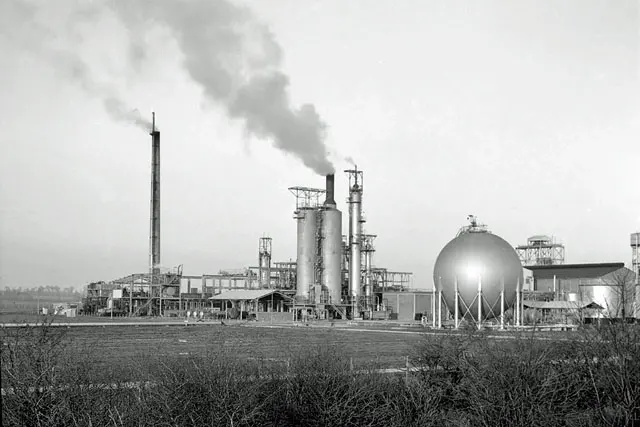
What is a chemical plant? Have you ever visited one?
A chemical plant is an industrial plant that makes or processes chemicals on a large scale. Its products range from basic chemicals such as ammonia and sulphuric acid to complex compounds such as medicines and plastics. A chemical plant is a set of specialized equipment (reactors, columns, heat exchangers, pumps, compressors, tanks and pipes) and the technology to run it, that turns raw materials into the products wanted.
Chemical plants are grouped by their raw materials and products. Some common types:
- a.Petrochemical plants use petroleum-based raw materials, crude oil and natural gas, to make chemicals such as ethylene, propylene, benzene and xylene, the starting materials for plastics, synthetic fibers, rubber and much else.
- b.Pharmaceutical plants make and purify medicines. They use organic and inorganic chemicals as raw materials to produce medicines, vitamins, vaccines and other pharmaceutical products.
- c.Fertilizer plants make fertilizers such as urea, ammonium salts, phosphates and potash, which keep soil fertile and help crops grow.
- d.Chlor-alkali plants electrolyze brine (sodium chloride solution) to make chlorine, sodium hydroxide (caustic soda) and hydrogen, used for PVC plastic, detergents, paper, soap and water treatment Grade 11: Unit 17.
- e.Agrochemical plants make pesticides, herbicides (weed killers) and fungicides to protect crops from pests, weeds and diseases.
Safety in a running plant
Whatever a plant makes, running it needs special care, because it works with high temperatures, high pressures, and toxic, flammable and corrosive substances. It needs plant managers, engineers, operators, skilled technicians and other workers. Today many plants are run largely by automation: sensors measure temperature, pressure, flow and level everywhere in the plant, and control systems (now often helped by artificial intelligence) adjust valves and pumps faster than a person could, so a large plant can be run by fewer, highly skilled people. Even so, regular inspection and maintenance are essential, to find leaks of toxic substances, corrosion and worn parts before they cause an explosion, a fire or a poisoning.
Some safety measures in every chemical plant:
- safe design: relief valves and bursting discs on vessels under pressure, alarms, and automatic shut-down;
- protective clothing and equipment for workers (helmets, goggles, gloves, masks, breathing sets);
- training, clear operating procedures and safety drills;
- regular inspection, testing and maintenance;
- safe storage and labeling of chemicals, with spill kits and fire-fighting equipment ready;
- emergency plans for the plant and for the people living nearby.
16.1.7 Designing a chemical plant
A chemical plant combines a physical structure (vessels, pipes, buildings) with chemical processes. Designing a chemical plant means using the principles of engineering and chemistry to plan a plant that turns raw materials into valuable products efficiently, safely and cheaply. It is the work of chemical engineers, with chemists, mechanical, electrical and civil engineers and safety experts. The design covers:
- i.Objectives and scope: what the plant will make, how much, and to what purity.
- ii.Process and site selection: which chemical route to use, and where to build: near the raw materials, the market, water, power and transport.
- iii.Equipment selection and sizing: which reactors, columns, pumps and heat exchangers, and how big each must be. This rests on material and energy balances: working out, for every unit, how much of each substance goes in and comes out, and how much heat must be added or taken away.
- iv.Piping and instrumentation diagram (P&ID): a detailed drawing of every pipe, valve, sensor and control loop.
- v.Safety and environmental considerations: how to keep hazards in, and waste and emissions down.
- vi.Cost estimation: what building and running the plant will cost.
- vii.Risk assessment and management: what could go wrong, how likely and how bad, and how to prevent it.
- viii.Operation and maintenance: how the plant will be run, started, stopped, inspected and repaired.
Some challenges in designing a chemical plant:
- i.keeping the workers and the surrounding area safe;
- ii.finding a process that is efficient and cost-effective;
- iii.choosing materials for the plant that stand up to the chemicals and to the reaction conditions (hot acid eats ordinary steel);
- iv.making the plant able to run continuously, with few stoppages;
- v.keeping emissions, waste and the use of resources to a minimum, to protect the environment.
Good design, careful operation and attention to safety together give efficient production, steady product quality, safe workers and a protected environment.
Who designs a chemical plant?
Pick an answer to see why.
16.1.8 Continuous and batch processing
Picture two plants. In plant A, a vessel is filled, the reaction is run, the vessel is emptied and cleaned, and the cycle starts again: production comes in separate lots, or batches. In plant B, raw materials flow in and product flows out all the time, without stopping, under the same conditions day and night. Plant B gives a product of more uniform quality. Plant A’s way is batch processing; plant B’s is continuous processing (Figure 16.5).
Batch processing is a way of making a product by a set sequence of one or more steps carried out in a fixed order on a definite amount of material; at the end of the sequence a definite quantity of product, a batch, is obtained, and the sequence is repeated for the next batch. It is common in making medicines, special chemicals, cosmetics, paints and food, where many different products are made in the same equipment, in modest amounts. A kitchen making dal bhat for a family works in batches.
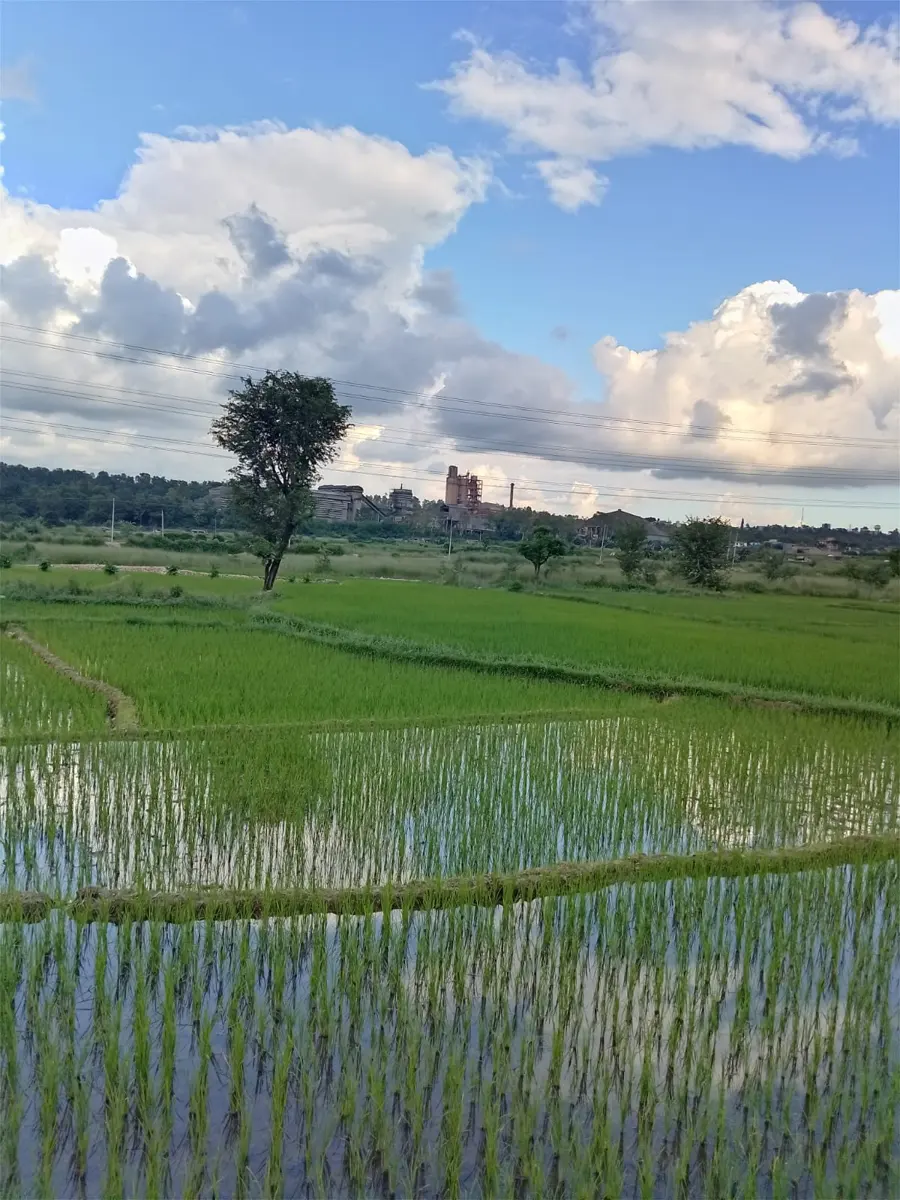
Continuous processing makes a product without interruption or pauses between batches: raw materials are fed in and product taken out all the time. It is used for products made in very large amounts that don’t need to be varied: petrochemicals and oil refining, paper and pulp, fertilizers, sulphuric acid, electricity generation and water treatment. For most such products, continuous flow saves cost, energy and time. Cement is made continuously at Hetauda Cement Industries in Nepal: limestone and clay are fed into one end of the rotating kiln, and clinker comes out of the other, day and night.
Some examples:
| Type of industry | Batch processing | Continuous processing |
|---|---|---|
| Chemical | special chemicals, cosmetics, pharmaceuticals | petrochemical refining, ammonia, sulphuric acid |
| Food and drink | baking, brewing, sweets | bottling and packaging |
| Pharmaceutical | making and blending medicines, packaging | tablet making on a large line |
| Textile | dyeing and printing | spinning and weaving |
| Water treatment | treating small volumes of water | large city water treatment plants |
Which is an advantage of continuous processing over batch processing?
Pick an answer to see why.
16.1.9 Environmental impact of the chemical industry
The chemical industry provides essential products for farming, health care, manufacturing and the home. But it also uses a great deal of energy, water and raw materials, and makes waste and emissions. Its main effects on the environment:
Air pollution. Chemical industries release pollutants into the air: volatile organic compounds (solvent vapors), nitrogen oxides, sulphur dioxide, particulate matter (dust and soot), and sometimes toxic gases such as chlorine or ammonia. These cause smog and acid rain, breathing problems and damage to plants and buildings.
Greenhouse gas emissions. Most chemical industries burn fossil fuels for energy, and some processes give out greenhouse gases themselves: carbon dioxide (making cement from limestone, , and hydrogen from natural gas), methane and nitrous oxide. They add to climate change: global warming, melting glaciers (in the Himalaya too) and rising sea level.
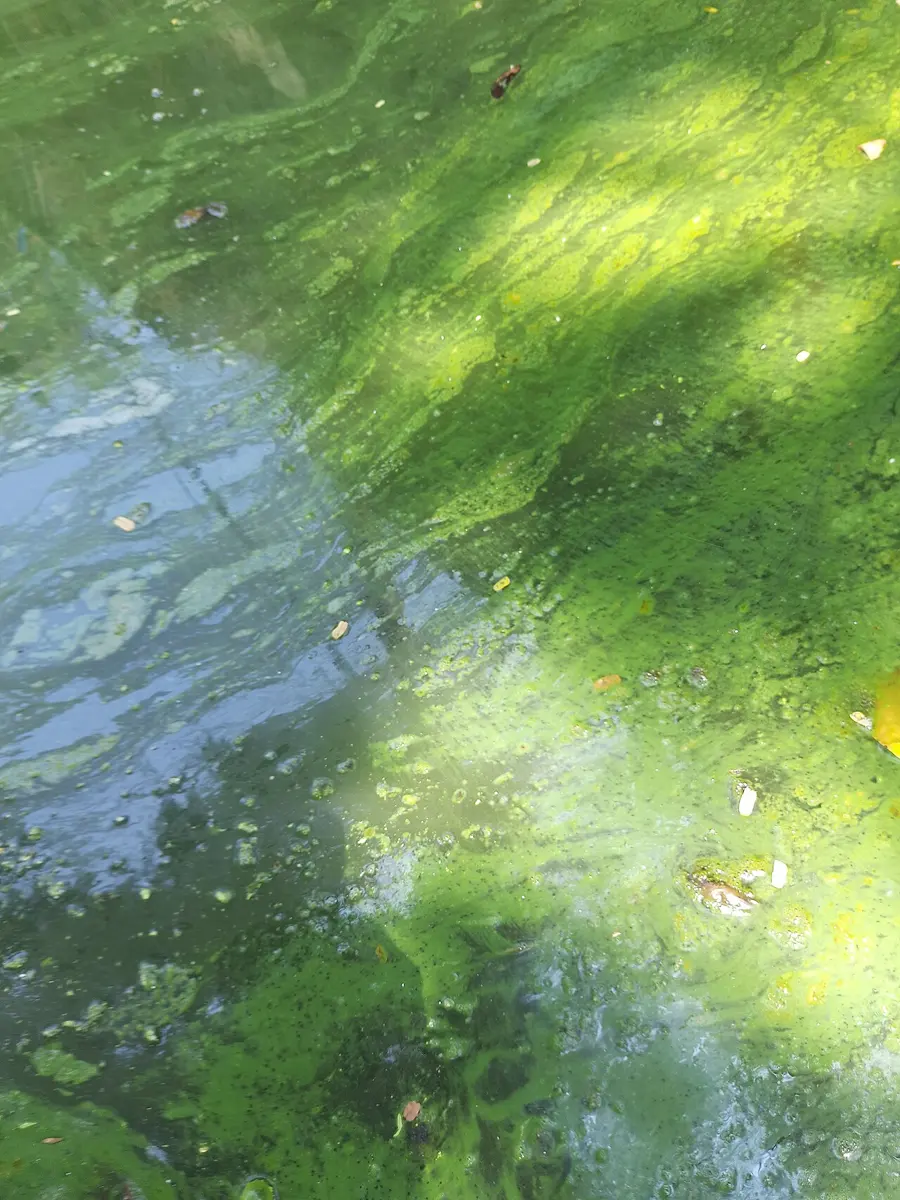
Water pollution. Chemicals discharged untreated, or poorly treated, into rivers and lakes: toxic chemicals, acids, heavy metals (mercury, lead, chromium, cadmium), oils and dyes. They harm aquatic life and make water unsafe to drink.
Soil contamination. Chemical waste dumped carelessly, or leaking from factories, storage tanks and pipelines, poisons the soil and lowers its fertility, harming farming and other uses of the land.
Depletion of natural resources. The industry uses non-renewable resources, fossil fuels and minerals, as raw materials and fuel, leaving less for future generations.
Preventing chemical pollution
Companies, communities, governments and others together can reduce or prevent chemical pollution:
- i.Strict regulations by governments on how chemicals are made, used and disposed of, with limits on what may be released, and inspections.
- ii.Green chemistry: using less hazardous or non-toxic chemicals in place of harmful ones, and processes that make less waste in the first place.
- iii.Proper handling, storage and transport of chemicals, to prevent spills, leaks and accidental releases.
- iv.Good waste management: recycling, treating waste water and gases before release (scrubbers, filters, treatment plants), and safe disposal of hazardous waste.
- v.Regular monitoring of air, water and soil quality, to catch pollution early.
- vi.Public awareness, so that people and communities know the risks and press for prevention.
Project work
Exercise
A. Multiple choice questions
- What is the name of the early working version of a product, made during new product development?
Pick an answer to see why.
- You gather customers in the target market and show them a description of your product. What is this process called?
Pick an answer to see why.
- At what stage in the new product development process would you launch the product, with full-scale production, distribution, advertising and sales promotion?
Pick an answer to see why.
- What is the first stage in the new product development process?
Pick an answer to see why.
- What distinguishes batch processing from continuous processing?
Pick an answer to see why.
- Which of the following is an advantage of continuous processing over batch processing?
Pick an answer to see why.
- Which is true of continuous processes?
Pick an answer to see why.
- Who designs a chemical plant?
Pick an answer to see why.
- Which of the following best describes cash flow in a chemical industry?
Pick an answer to see why.
- What is the main source of cash inflow in an industry?
Pick an answer to see why.
- Which of these can increase cash outflow in an industry?
Pick an answer to see why.
- How does depreciation affect cash flow in a chemical plant?
Pick an answer to see why.
- What is the cash flow at the beginning of a product’s life?
Pick an answer to see why.
B. Short answer questions
Define:
- a.applied chemistry
- b.cash flow
- c.economics of production
- d.batch processing
Answer
Differentiate between:
- a.pure chemistry and applied chemistry
- b.idea generation and idea screening
- c.batch process and continuous process
- d.fixed and variable factors of production
- e.cash inflow and cash outflow
- f.concept development and product development
- g.designing a chemical plant and running a chemical plant
Answer
Give reasons:
- a.Test marketing helps in the commercialization of a new product.
- b.Cash flow is greatest at the maturity of a product, compared with the early stage.
- c.Material and energy balances must be considered in designing a chemical plant.
- d.Chemical pollution can be reduced by using green solvents.
Answer
What is a chemical industry? Write any three ways in which it is important.
Answer
What is applied chemistry? Why is it called “applied”? Give one application of it.
Answer
What is cash flow in the production cycle? What are the key factors that affect a company’s cash flow?
Answer
What is a new product? What are the stages of developing a new product?
Answer
What is meant by running a chemical plant? What safety measures should be taken while running one?
Answer
C. Long answer questions
One of the stages of developing a new product is research and development.
- a.What are the stages in developing a new product?
- b.What is the role of research and development in this process?
- c.Write any three challenges commonly met in developing a new product, and suggest how to overcome them.
Answer
Urea is made in a chemical plant from ammonia, which is itself made by the Haber–Bosch process.
- a.Define a chemical plant.
- b.What raw materials are used in making urea?
- c.What is urea used for in daily life?
- d.How does it pollute the environment, and what are the preventive measures?
Answer
Batch processing and continuous processing are the two main ways of processing in industry.
- a.Define batch processing and continuous processing, with their key characteristics and how they differ in operation.
- b.Write the advantages and disadvantages of each, in terms of flexibility, control and use of resources.
- c.Give an example of a chemical process or industry in which batch processing is preferred.
Answer
A chocolate company makes several brands of chocolate bar. Each brand has a different shape, size and recipe, but the process and raw materials are almost the same, with small changes.
- a.Which kind of processing (batch or continuous) does the company use? Give a reason.
- b.Write any three characteristics of this kind of processing.
Answer
Sulphuric acid is made mainly by the contact process in a plant, the most widely used method in the world.
- a.Why is this plant called a chemical plant?
- b.What are the uses of sulphuric acid?
- c.Write any three environmental impacts of the plant.
- d.How can the pollution from this process be controlled?
Answer
Figure 16.8 shows how sales and cash flow change over a product’s life.
- a.What is cash flow in the production cycle?
- b.In which stages is cash flow negative while sales are positive?
- c.Why does cash flow start to decrease after maturity?
- d.How are sales and cash flow related while the product grows?
Answer
Printable PDFs
- Study notes 3 pages
- Worksheet 4 pages Answer key
Quiz yourself: Materials and Chemicals We Use, Grades 5–12 →
Practice every question in the book, and keep track of the ones you miss →
A companion to your textbook, not a replacement for it: study from the book your school uses, and where the two differ, follow your teacher. Found a mistake? Please tell us.