
From a distance, the forest edges around Chitwan’s grasslands look green and healthy. Up close, a fast-growing climber from Central and South America, Mikania micrantha, has wrapped itself over shrubs and young trees, smothering them under a blanket of heart-shaped leaves. Nobody planted it there; almost nothing in Nepal eats it; and the rhinos and deer that feed beneath it are losing their food. One plant, out of place, can unbalance a whole ecosystem.
An ecosystem in balance is one in which its species and its non-living factors interact in a way that keeps it stable and keeps life going. Ecological imbalance is a disturbance of this natural equilibrium. When the balance is upset, the results can include the loss of species and of biodiversity, the spread of invasive species and a changing climate. This unit looks at four of its causes: a strengthened greenhouse effect, the thinning of the ozone layer, acid rain, and biological invasion.
4.3.1 Greenhouse effect and climate change
The Sun sends its energy to the Earth as radiation, most of it visible light. Some is reflected back to space by clouds, ice and the ground; the rest passes through the air and is absorbed by the Earth’s surface, which warms up. The warm surface then gives out energy of its own, not as light but as invisible infrared radiation (heat). Certain gases in the air, the greenhouse gases, absorb much of this infrared and send part of it back down to the surface, keeping it warmer than it would otherwise be.
The greenhouse effect is the natural process by which greenhouse gases in the atmosphere trap the heat (infrared) radiated by the Earth’s surface, warming the surface and the lower atmosphere.
The greenhouse effect is natural, and we depend on it: without any greenhouse gases the Earth’s average surface temperature would be about −18 °C instead of about 15 °C.
Greenhouse gases. Water vapor is the most abundant greenhouse gas. Human activities don’t change its amount directly (it rains out within days), but a warmer air holds more of it, which adds to warming. The other major greenhouse gases are carbon dioxide (CO₂), methane (CH₄) and nitrous oxide (N₂O), and these are released in large amounts by human activities:
- carbon dioxide: burning coal, oil and gas; cutting and burning forests; making cement;
- methane: flooded rice fields, the digestion of cattle, buffaloes and goats, rotting waste in landfills, leaks of natural gas;
- nitrous oxide: nitrogen fertilizers in the soil, manure.
By raising the amounts of these gases, human activity has enhanced the greenhouse effect, and the Earth is warming: this is global warming, and the changes in weather and climate it brings are climate change.
Consequences of the greenhouse effect
Useful consequences. The natural greenhouse effect keeps the Earth warm enough for life. Its artificial use, in greenhouses of glass or plastic, lets farmers:
- grow tropical plants in cold regions;
- grow off-season fruits, vegetables and flowers (plastic tunnels around Kathmandu and in Jumla and Mustang grow tomatoes and greens through the winter).
Harmful consequences of the enhanced greenhouse effect (global warming):
- Rising sea level: seawater expands as it warms (thermal expansion), and melting glaciers and ice sheets add water to the oceans.
- Extreme weather: more frequent and intense heat waves, very heavy rain, floods, storms and droughts.
- Species distribution and migration change: plants and animals move towards the poles or up mountains, following the climate they need.
- New pests and diseases spread to places that were too cold for them.
- Many species become vulnerable to extinction, especially those that can’t move.
- Invasive species increase, as warmer conditions suit them.
Mitigating the greenhouse effect
- Reduce the emission of greenhouse gases: switch from burning fossil fuels to alternative sources of energy, such as hydroelectricity, solar and wind power.
- Forests store carbon and take carbon dioxide from the air (carbon sequestration): plant trees (afforestation), reduce deforestation and manage forests sustainably. Nepal’s community forests have helped its forest cover grow over the last thirty years.
- Use electric or low-emission vehicles: Nepal makes almost all its electricity from water, so an electric bus or an induction stove in Nepal runs on clean energy.
- Waste less food and energy; turn landfill gas and dung into biogas, which captures methane as fuel.
Which gas is the most abundant greenhouse gas in the atmosphere?
Pick an answer to see why.
Which of these is not a greenhouse gas?
Pick an answer to see why.
Which of these adds methane to the air in Nepal?
Pick an answer to see why.
4.3.2 Ozone layer depletion
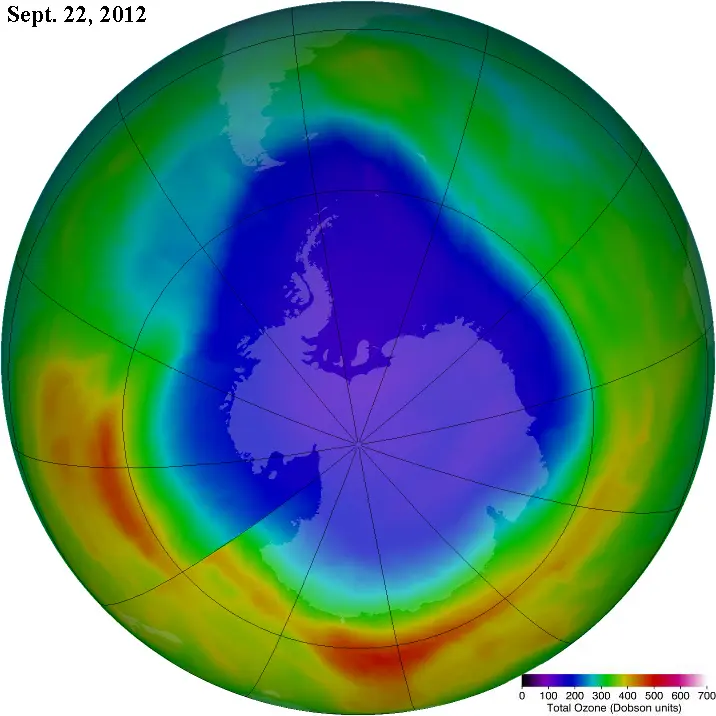
Ozone (O₃) is a molecule made of three oxygen atoms. About 90% of the atmosphere’s ozone is in the stratosphere, roughly 15–35 km above the ground, where it forms the ozone layer. The ozone layer absorbs most of the Sun’s ultraviolet (UV) radiation, especially the harmful UV-B and UV-C, and stops it reaching the surface. UV radiation causes skin cancer and cataracts, and harms crops and the plankton of the sea.
Ozone is constantly being made and broken down in the stratosphere: UV light splits oxygen molecules into atoms, which join other oxygen molecules to make ozone, and ozone in turn absorbs UV and splits. In a natural balance, the amount stays about the same. Ozone layer depletion is the thinning of the ozone layer, when ozone is destroyed faster than it is made.
Causes
The main cause is the release of certain human-made chemicals, the ozone-depleting substances (ODS):
- chlorofluorocarbons (CFCs), once used in refrigerators, air conditioners, foam and aerosol sprays;
- halons, used in fire extinguishers (they contain bromine, which destroys ozone even faster than chlorine);
- industrial chemicals such as methyl bromide (a pesticide for soil and stored grain) and carbon tetrachloride (a solvent).
These substances are very stable, so they drift up, unchanged, into the stratosphere over a few years. There, strong UV radiation breaks them apart and frees chlorine and bromine atoms. These atoms act as catalysts in a chain reaction that destroys ozone:
The chlorine atom comes out of the second step unchanged, ready to attack another ozone molecule. A single chlorine atom can destroy over 100,000 ozone molecules before it is finally removed from the stratosphere.
Consequences of ozone layer depletion
With a thinner ozone layer, more UV radiation reaches the Earth’s surface, which can lead to:
- a greater risk of skin cancer and cataract (clouding of the eye’s lens);
- suppression of the immune system of humans and other animals;
- harm to plants: reduced photosynthesis, stunted growth and lower crop yields, and harm to the phytoplankton at the base of ocean food chains, affecting farming and biodiversity;
- changes in the circulation of the atmosphere, which affect the climate;
- economic costs: health care, lost work, damage to crops and to materials such as plastics and paints that UV weakens.
Mitigation of ozone layer depletion
- Stop using CFCs, halons and other ODS, and use safer substitutes. This is what the world did: under the Montreal Protocol of 1987, every country in the world agreed to phase them out (Nepal joined in 1994). It is the most successful environmental treaty ever made: the amount of chlorine in the stratosphere is falling, and the World Meteorological Organization’s 2022 assessment expects the ozone layer to recover to its 1980 level by about 2040 over most of the world, 2045 over the Arctic and 2066 over Antarctica.
- Cut nitrous oxide (N₂O) emissions. Nitrous oxide, from nitrogen fertilizers and manure, also destroys ozone in the stratosphere, and with CFCs controlled it is now the largest ozone-depleting emission. Using fertilizer carefully, and replacing some of it with legumes and compost, protects the ozone layer as well as the climate.
Why can a single chlorine atom destroy so many ozone molecules?
Pick an answer to see why.
In which layer of the atmosphere is most of the ozone?
Pick an answer to see why.
Which of these, released into the air, carries bromine up to the ozone layer?
Pick an answer to see why.
4.3.3 Acid rain
Acid rain is rain, snow, fog or dust that has become acidic because of sulphuric and nitric acids formed in the air from pollutants. Even clean rain is slightly acidic, with a pH of about 5.6, because it dissolves a little carbon dioxide from the air, forming weak carbonic acid. Acid rain has a much lower pH, usually between 4 and 5.
Causes
The main cause is the emission of sulphur dioxide (SO₂) and oxides of nitrogen (NO and NO₂, together written NOₓ). They come from burning fossil fuels such as coal and oil in power plants, factories, brick kilns and vehicles. In the air they react with oxygen and water vapor to form sulphuric acid and nitric acid:
These acids mix with cloud droplets and fall as acidic rain, often hundreds of kilometers from where the gases were released.
Effects of acid rain
- Surface water: lakes and streams become acidic; fish eggs and young fish die, and the aluminium washed out of acid soils poisons fish’s gills.
- Soils: acid rain changes the soil’s chemistry, washing away nutrients such as calcium and magnesium and killing many soil microorganisms, so the soil’s chemical and biological properties change.
- Forests and plants: it damages leaves and slows growth, and with the soil’s nutrients washed away, trees weaken and die, especially on high mountains often in acid cloud.
- Human health: the pollutant gases that cause acid rain, and the fine acid particles they form, cause lung diseases such as asthma and bronchitis; acid fog and mist can irritate the eyes and airways. Acid rain itself is no more harmful to touch than ordinary rain: walking in it, or swimming in a lake it has acidified, does no harm to the skin; the harm to people comes from breathing the gases and particles.
- Buildings and monuments: it eats away stone made of limestone and marble (calcium carbonate), and corrodes metals:
Control measures
- Reduce emissions of oxides of sulphur and nitrogen from power plants, factories and vehicles: strict emission standards, low-sulphur fuel, scrubbers in chimneys, catalytic converters in vehicles, and a switch to renewable energy.
- Liming: adding lime or powdered limestone to acidified lakes, ponds and soils neutralizes the acid and helps aquatic life recover (a repair, not a cure: it must be repeated as long as the acid rain falls).
- Awareness: as responsible citizens, people should know the harm acid rain does, and press industries not to release untreated waste gases.
Why is clean rain slightly acidic even where there is no pollution?
Pick an answer to see why.
Which pair of gases is the main cause of acid rain?
Pick an answer to see why.
Why does acid rain damage marble statues and limestone temples?
Pick an answer to see why.
4.3.4 Biological invasion
Biological invasion is the introduction, establishment and spread of a species in a new environment where it is not native.
- Native species live naturally in an area and have been there a long time, playing their part in the local ecosystem: sal, chilaune, the one-horned rhinoceros.
- Exotic (alien) species have been brought into a new environment by people, on purpose or by accident. Many exotic species cause no problem: potato, maize and tomato all came to Nepal from the Americas.
- Invasive alien species are exotic species that spread on their own and cause harm to the local environment, economy or health.
Features of invasive species
Invasive species often have features that make them stronger competitors than the native species:
- Fast growth and reproduction: a high rate of reproduction lets them colonize new areas rapidly.
- Tolerance of a wide range of conditions: they can live in many kinds of environment, including disturbed ones, where native species struggle.
- Few natural predators and diseases: the enemies that kept them in check at home were left behind, so they spread unchecked.
- Aggressive competition for resources such as light, water, nutrients and space, which reduces the populations of native species.
- Efficient dispersal: many light seeds carried by wind, seeds with hooks carried on animals, or pieces that root easily.
Causes of spread
The spread of invasive species is mostly due to human activity, often unintended:
- Globalization and trade: with more trade and travel, species and their seeds travel too: in the ballast water that ships take on in one port and empty in another, in contaminated goods, grain and soil, and on vehicles.
- Accidental release: through carelessness or lack of awareness: pets released into the wild, animals escaping from farms, plants brought in for gardens or crops that escape.
- Land-use change: cleared, burnt, overgrazed or disturbed land is easily invaded; roadsides are the main paths along which invasive plants spread up the hills.
- Climate change: warmer conditions let species move into areas that were too cold for them, and weaken established ecosystems so they are more open to invasion.
Impacts of invasive species
An invasion adds a species to an area at first, but its effects are mostly harmful:
- Disturbance of ecosystems: invasive species crowd out native species, may become new predators, carry new diseases, and change the soil’s microbes and the physical structure of the habitat, making it unfit for native species.
- Economic damage: lower farm yields, higher costs of control, choked lakes, canals and hydropower intakes, and spoiled scenery.
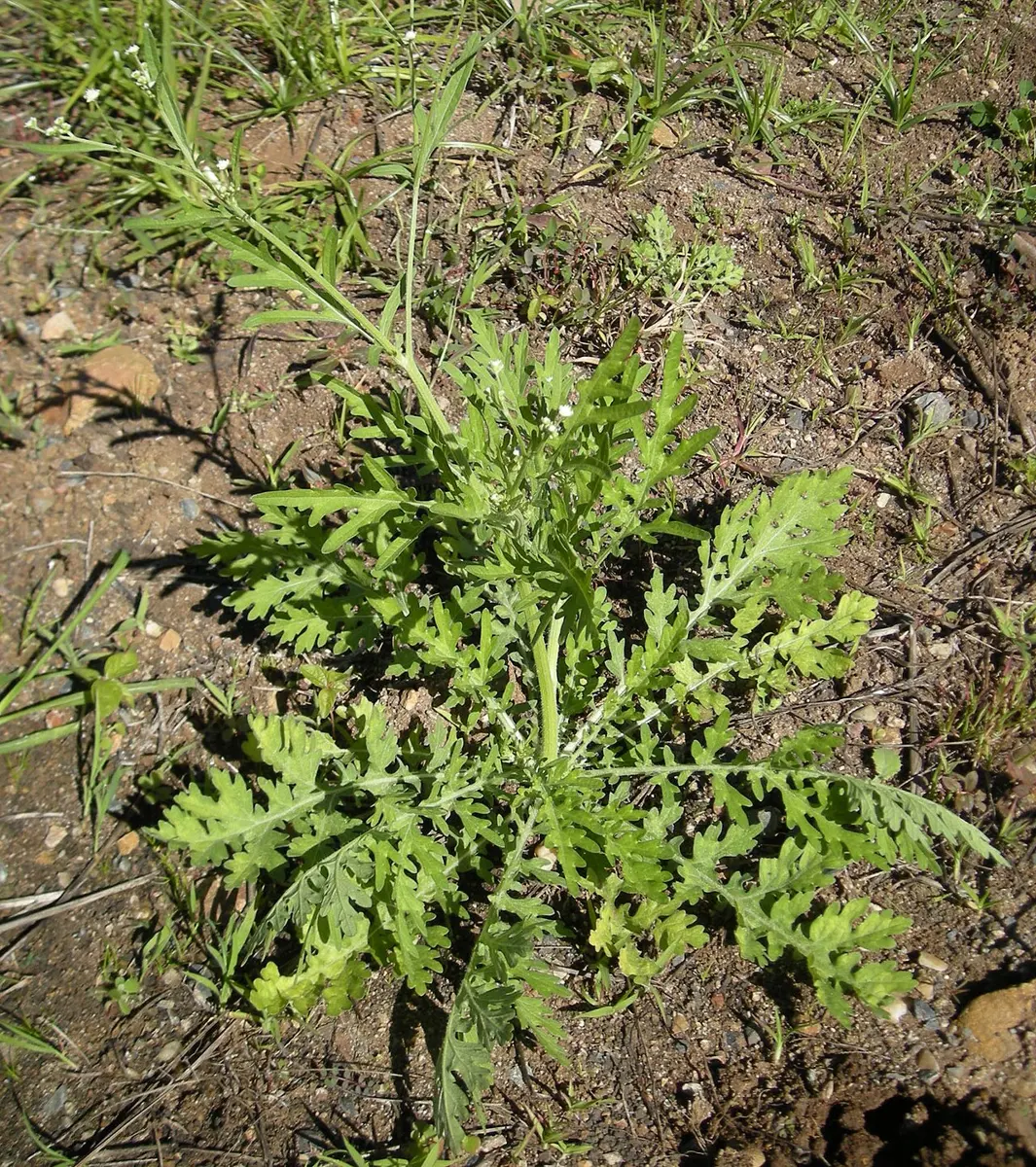
- Health: some carry or spread diseases, and some cause allergies (the pollen and sap of Parthenium cause skin rashes and asthma).
- Loss of biodiversity: the overall result, which upsets the natural processes that keep ecosystems healthy.
Management of invasive species
- Prevention: the best and cheapest way; inspect cargo and regulate the import of live plants and animals (quarantine).
- Early detection and rapid response: a new invader found early may be wiped out before it becomes established.
- Control:
- a. mechanical: uprooting, cutting and removing by hand or machine;
- b. chemical: herbicides and pesticides, used carefully so as not to harm native species and the environment;
- c. biological: bringing in a natural enemy (a predator, a parasite or a disease) of the invader from its home, after testing that it will attack nothing else.
- Public education and awareness: people who know the invaders can avoid spreading them and report new sightings to the authorities.
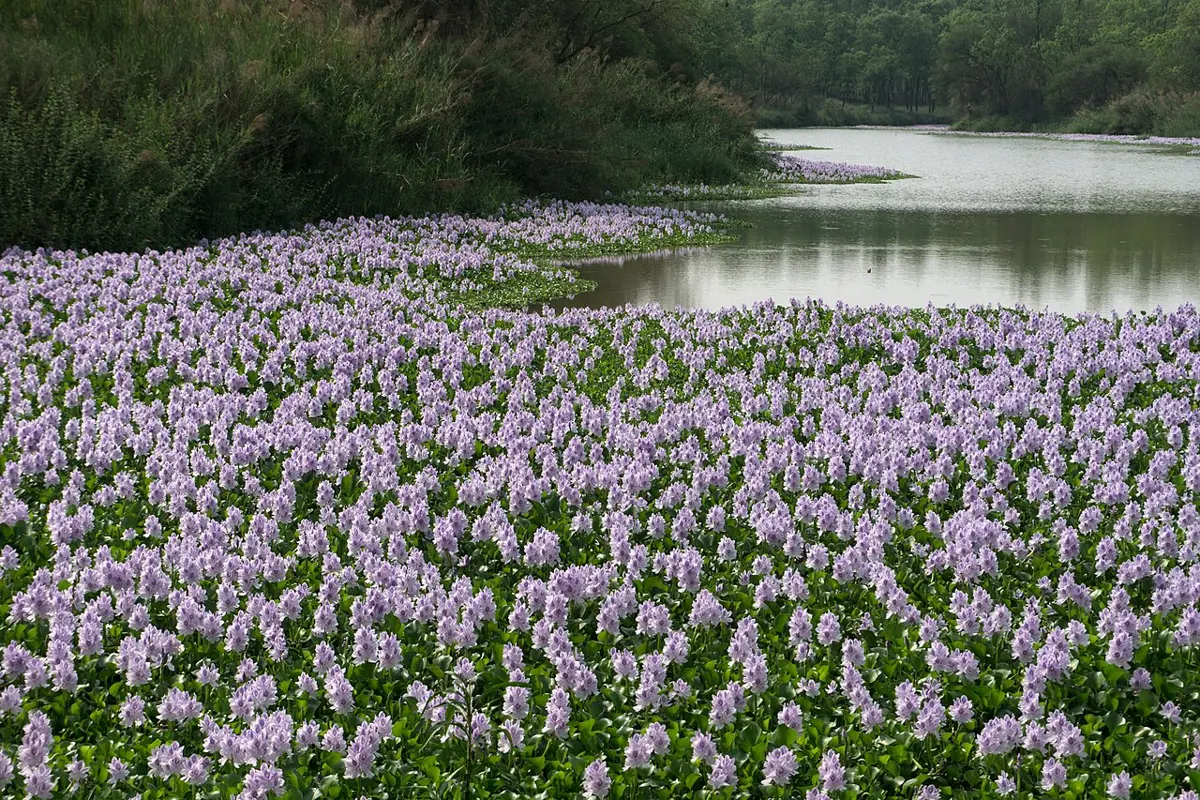
Using the invader can help too: water hyacinth is made into baskets, mats and compost, and Lantana stems into furniture, which turns removal into income.
Invasive species in Nepal
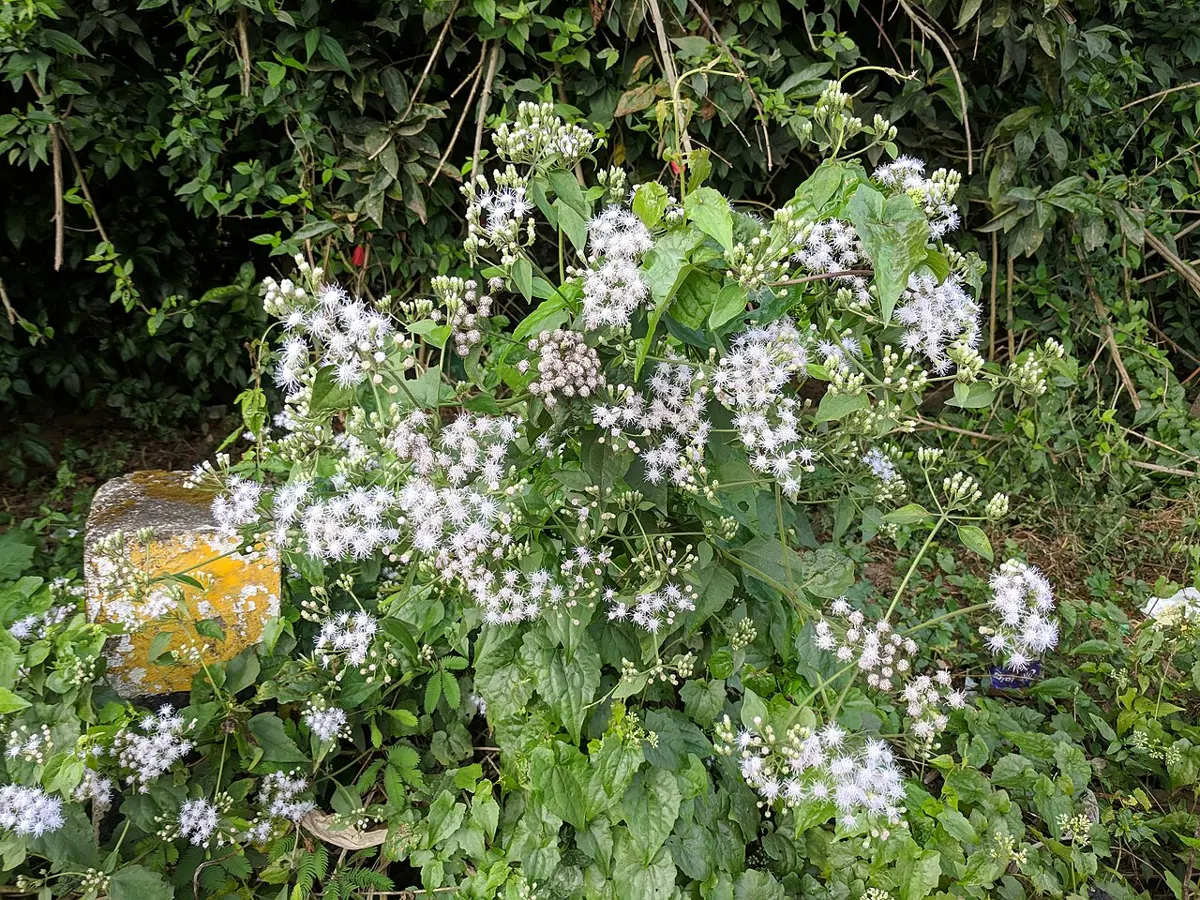
Nepal has recorded about 182 alien species of flowering plants that have become wild, and about 27 of them are invasive (a 2021 count). Four of Nepal’s invasive plants are among the world’s 100 worst invasive species: Mikania micrantha, Chromolaena odorata, Lantana camara and water hyacinth.
| S.N. | Scientific name | Common name | Native home | Harm |
|---|---|---|---|---|
| 1 | Mikania micrantha | lahare banmara (mile-a-minute) | Central and South America | a climber that smothers trees, shrubs and grassland, including in Chitwan’s rhino habitat |
| 2 | Ageratina adenophora | banmara (Crofton weed) | Mexico | covers hill pastures, forest edges and fallow fields; harmful to livestock |
| 3 | Lantana camara | kirne kanda | tropical America | thorny thickets in forests and pastures; poisonous to cattle |
| 4 | Parthenium hysterophorus | paati jhar (congress grass) | tropical America | spreads in fields and roadsides; causes skin allergy and asthma; lowers crop yields |
| 5 | Eichhornia crassipes (now Pontederia crassipes) | jalkumbhi (water hyacinth) | South America | covers lakes such as Phewa and Begnas, blocking light and oxygen and choking boats and canals |
| 6 | Oncorhynchus mykiss | rainbow trout | western North America | farmed in cold, clear hill rivers; could compete with native fish such as the snow trout if it escapes and breeds in the wild |
| 7 | Pomacea species | golden apple snail | South America | introduced to Asia as food; a serious pest of young rice plants where it has spread |

Potato came to Nepal from South America and is grown everywhere, but it hasn’t spread into the forests on its own. What is it?
Pick an answer to see why.
Which feature helps an invasive plant most when it first arrives in a new country?
Pick an answer to see why.
Exercise
A. Tick the correct alternative
- Which of the following is a greenhouse gas?
Pick an answer to see why.
- What role do forests play in mitigating the greenhouse effect?
Pick an answer to see why.
- What is the composition of an ozone molecule?
Pick an answer to see why.
- What is one measure to control acid rain?
Pick an answer to see why.
- What is the term for the introduction, establishment and spread of a species in a new environment where it is not native?
Pick an answer to see why.
- How can the spread of invasive species be managed?
Pick an answer to see why.
B. Answer the following questions
What are the primary greenhouse gases responsible for the greenhouse effect, and how do human activities contribute to their increase in concentration?
Answer
What measures can be taken to mitigate the greenhouse effect?
Answer
What is ozone layer depletion? What are the consequences of ozone layer depletion?
Answer
Explain the process of formation of acid rain.
Answer
Define biological invasion and differentiate between native, exotic and invasive species.
Answer
What are the control measures for biological invasions?
Answer
Printable PDFs
- Study notes 3 pages
- Worksheet 5 pages Answer key
Quiz yourself: Environment and Biodiversity, Grades 5–12 →
Practice every question in the book, and keep track of the ones you miss →
A companion to your textbook, not a replacement for it: study from the book your school uses, and where the two differ, follow your teacher. Found a mistake? Please tell us.