
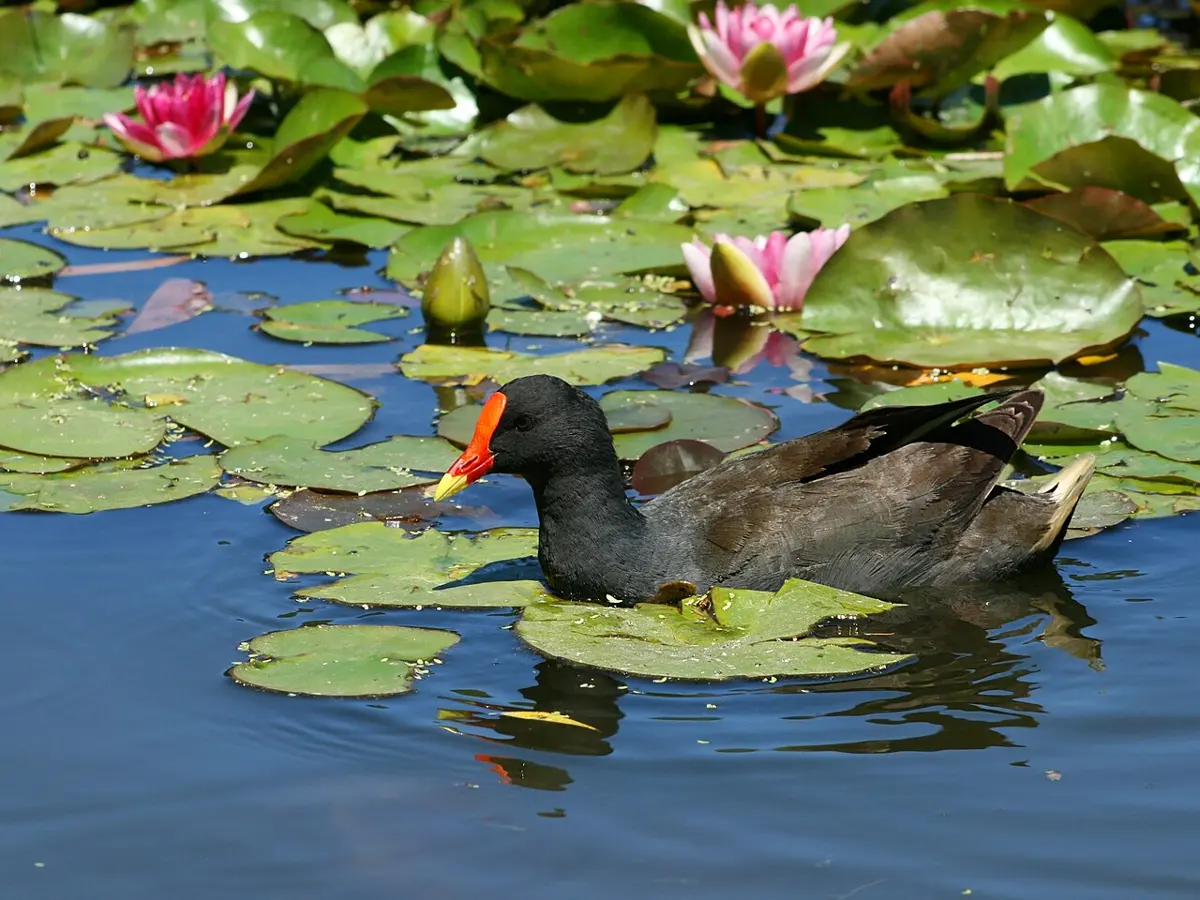
A water lily and a cactus could hardly live in more different places. The water lily’s roots sit in mud under a meter of water, and its round leaves lie flat on the surface; it never runs short of water, but its roots get almost no oxygen. The cactus (Opuntia) grows on dry, stony ground where it may not rain for months; it has no leaves at all, only thick green stems guarded by spines. Each would die in the other’s home within weeks. What makes each one fit so exactly to its own?
This unit is about adaptation: the features that let plants live where they do, and especially how plants of water and plants of dry places are built for opposite problems.
4.2.1 Concept of adaptation
There are millions of species on Earth, living in every kind of natural environment, and the environment keeps changing. Organisms whose features suit the changing environment survive and leave more offspring than those whose features don’t. Over many generations this natural selection builds up the features that fit each species to its home: that is how adaptations arise, and why they are central to evolution.
Ecological adaptation is the process by which organisms adjust to their environment in order to survive and reproduce successfully, and also the features that result. Adaptations are of three kinds:
- morphological (structural): the shape and structure of the body, such as the spines of a cactus or the floating leaves of a water lily;
- physiological: how the body works, such as a xerophyte closing its stomata in the heat of the day;
- behavioral: what the organism does, such as a plant’s leaves folding at night, or an animal migrating.
The aim of every adaptation is the same: to make the individual fit to get food and space for its survival, and the chance to reproduce and raise its young.
Plants, like animals, have basic needs: light, air, water, nutrients, soil and a suitable climate. Not every habitat provides all of them: a pond has too much water and too little oxygen in the mud; a desert has too little water and too much heat. To live in such places, plants have evolved special adaptations. By how much water they get and the kind of habitat, plants are grouped as:
- Hydrophytes: plants of water or very wet places (Greek hydor, water; phyton, plant).
- Mesophytes: plants of places with a moderate, regular supply of water (mesos, middle).
- Xerophytes: plants of dry places (xeros, dry).
A plant closes its stomata during the hottest hours of the day and opens them in the evening. Which kind of adaptation is this?
Pick an answer to see why.
Which of these is an adaptation?
Pick an answer to see why.
Why does a plant growing in a pond look so different from one growing in a desert?
Pick an answer to see why.
4.2.2 Hydrophytes
Plants that grow in wet places, or partly or completely under water, are called hydrophytes or aquatic plants. Examples: Hydrilla, Pistia (water lettuce), Eichhornia (water hyacinth, jalkumbhi) and Lemna (duckweed).
By where they grow in a body of fresh water, hydrophytes fall into five categories:
a. Free-floating. They float freely on the surface, in contact with water and air but not with the soil. Examples: Pistia, Eichhornia, Lemna.
b. Rooted with floating leaves. Their roots are fixed in the mud, but their leaves, on long stalks, float on the surface; the rest of the plant is under water. Examples: Nymphaea (water lily), Nelumbo (lotus, kamal), Marsilea, Trapa (singhada, the water chestnut).
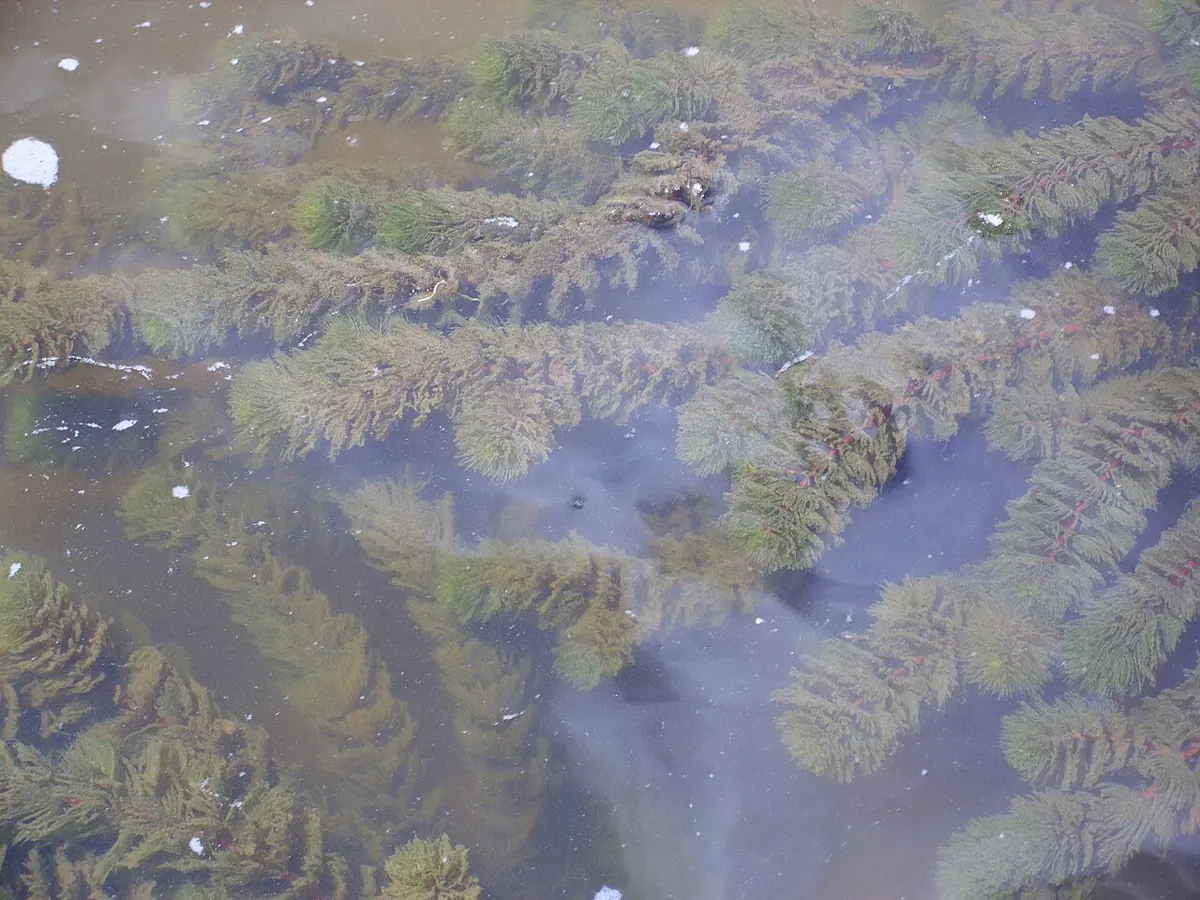
c. Submerged floating. They are in contact only with water: completely under water and not rooted in the mud. Examples: Ceratophyllum (hornwort), which has no roots at all, and Utricularia (bladderwort).
d. Rooted submerged. Completely under water but rooted in the mud. Examples: Hydrilla, Vallisneria, Chara.
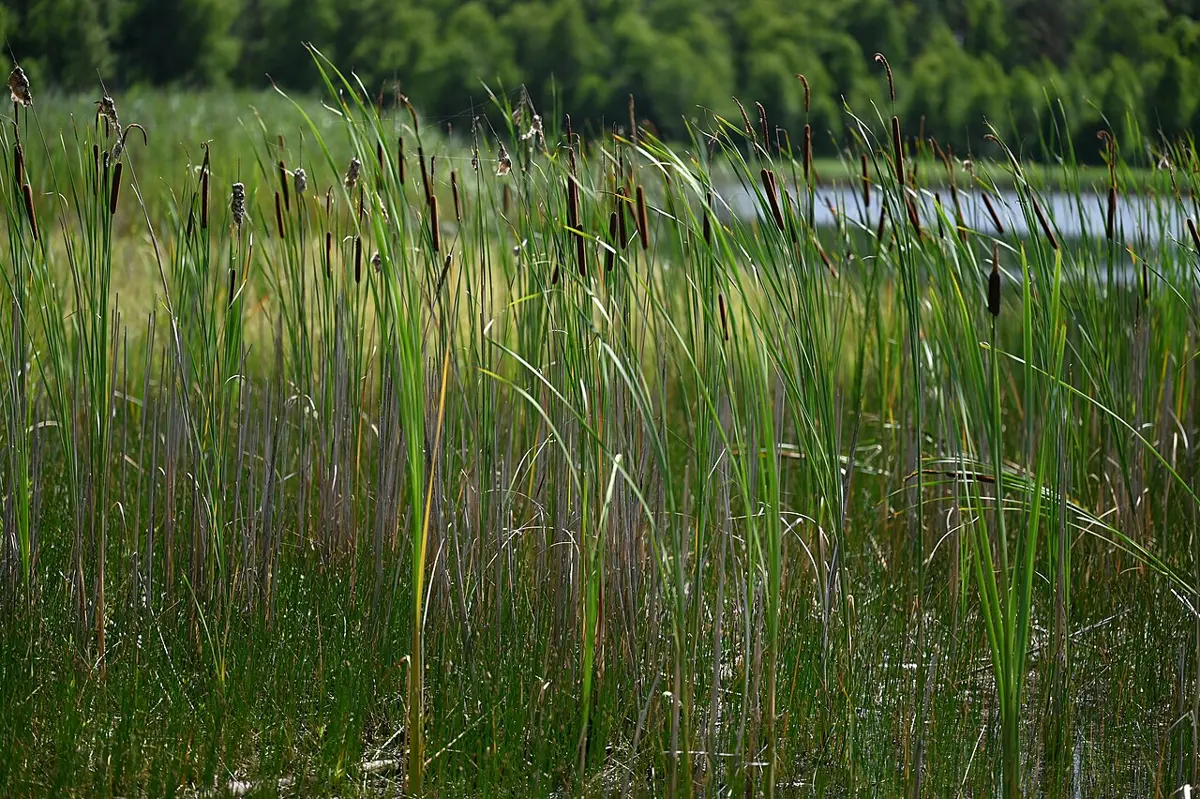
e. Rooted emergent (amphibious). They grow in shallow water at the edges of ponds and lakes, rooted in the waterlogged soil, with their shoots partly or completely above the water. Examples: Typha (cattail), Sagittaria (arrowhead), Ranunculus.
Pistia: W. H. Fitch, Curtis's Botanical Magazine, public domain
Lotus: F. M. Blanco, Flora de Filipinas (1880s), public domain
Hydrilla: Alex Abair, CC BY 4.0, via Wikimedia Commons
Reeds: proportions from O. W. Thomé, Flora von Deutschland (1885), public domain
Trapa (singhada), grown in ponds of the Tarai for its nut, is rooted in the mud and has a rosette of leaves lying on the surface. To which category does it belong?
Pick an answer to see why.
Adaptations of hydrophytes
Water gives a plant problems of its own: plenty of water, but little oxygen (it dissolves poorly in water and moves slowly through it), less light the deeper you go, and water that moves and holds the plant up. Hydrophytes show these features:
a. Roots. Roots may be absent (Ceratophyllum, Utricularia) or poorly developed, because water and minerals can be absorbed by the whole surface of the plant. Root hairs are usually absent, and so are root caps. In free-floating plants the roots are many, fibrous and hang in the water, mainly to balance the plant and keep it upright; in Eichhornia, Pistia and Lemna the root cap is replaced by a loose sheath, the root pocket. The roots of hydrophytes are generally fibrous, short, and unbranched or little branched.
b. Stems. In free-floating plants the stem is short, thick and spongy, often a horizontal runner that floats; in submerged plants it is long, slender, spongy and flexible, bending with the current instead of breaking.
c. Leaves. In submerged plants the leaves are thin, small or ribbon-like, and often finely divided, so that dissolved gases and light reach every cell and moving water passes through without tearing them. In floating plants they are large and flat, with a waxy coat on the upper surface that sheds water and keeps the stomata from clogging. (Some plants, such as Sagittaria, have both kinds of leaf on one plant: ribbons under water and arrow-shaped blades above it, a condition called heterophylly.)
d. Flowers and reproduction. Flowers are rare in submerged forms; where they are made, they usually open on or above the water surface. Pollination and seed dispersal are by water, insects and birds. Vegetative reproduction (by runners, broken pieces, offsets) is very common: it is how Eichhornia and Hydrilla spread so fast.
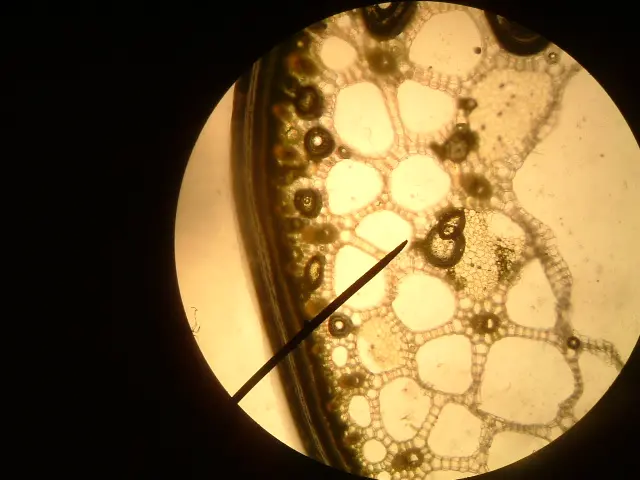
e. Anatomical adaptations.
- Aerenchyma, tissue with large air spaces, is well developed in the stems, leaf stalks and leaves. It stores the oxygen made in photosynthesis and the carbon dioxide of respiration, carries oxygen down to the roots buried in mud with little oxygen, and makes the plant buoyant.
- Mechanical tissue (sclerenchyma) and vascular tissue, especially xylem, are poorly developed: the water holds the plant up and supplies water everywhere.
- The cuticle is absent or very thin in submerged parts, so that water and gases pass in easily.
- Stomata are absent in submerged leaves; in floating leaves they are present only on the upper surface, facing the air.
f. Physiological adaptations.
- A low compensation point: they can make more food than they use in respiration even in the dim light under water.
- A low osmotic concentration of the cell sap, since water is always available.
- Submerged plants absorb nutrients through their whole surface, and exchange gases with the water through their surface cells (the epidermis).
- Transpiration is absent in submerged plants; floating and emergent plants, whose leaves lie in sun and air, transpire very fast.
Why are the leaves of many submerged plants finely divided or ribbon-like?
Pick an answer to see why.
Why are the stomata of a floating leaf, like that of a water lily, on its upper surface only?
Pick an answer to see why.
Mesophytes
Between the two extremes are the mesophytes, plants of places where the soil holds a moderate and regular supply of water and the air is neither very dry nor saturated. Most crops (rice in the dry season excepted), garden plants, and the trees of Nepal’s hill forests, such as chilaune, katus and oak, are mesophytes.
They show no extreme adaptations: a well-developed, branched root system with root hairs and root caps; erect, branched stems with well-developed vascular and mechanical tissue; broad, flat, thin leaves with a moderate cuticle and stomata mostly on the lower surface; and a balance between the water they absorb and the water they transpire. Under a dry spell, they close their stomata and wilt.
Which is a mesophyte?
Pick an answer to see why.
Where are the stomata of a mesophyte’s leaf mostly found?
Pick an answer to see why.
4.2.3 Xerophytes
Xerophytes are plants adapted to survive in dry (arid) places, where water is scarce for much of the year. They are characteristic of deserts and semi-deserts, but many can also grow where water is plentiful. Examples: Opuntia (prickly pear), Aloe (ghiu kumari), Agave and Euphorbia.
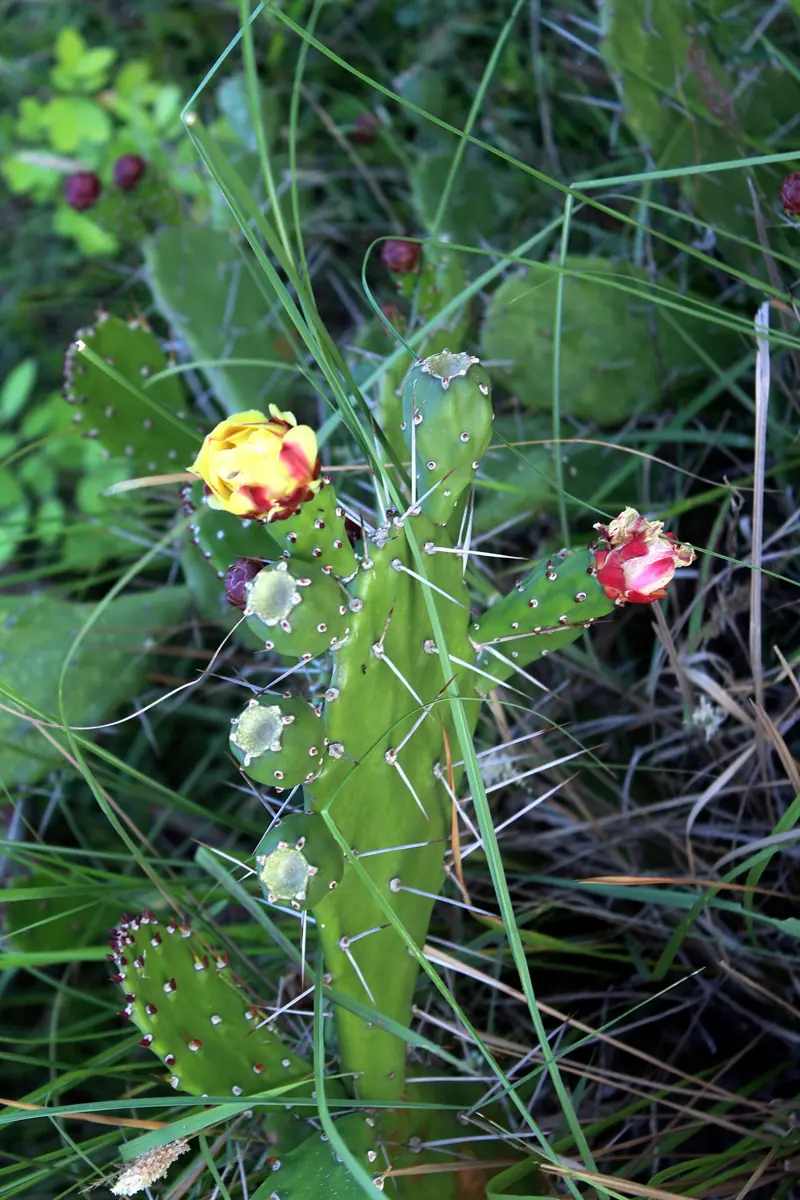
In Nepal you don’t have to go to a desert to find them. Euphorbia royleana (siundi), a cactus-like shrub with thick, green, ridged stems, grows on dry, rocky slopes of the hills and is planted as a hedge; Agave lines the roads of the dry inner valleys; and in Upper Mustang, in the rain shadow of the Himalaya, almost every plant shows some xerophytic feature.
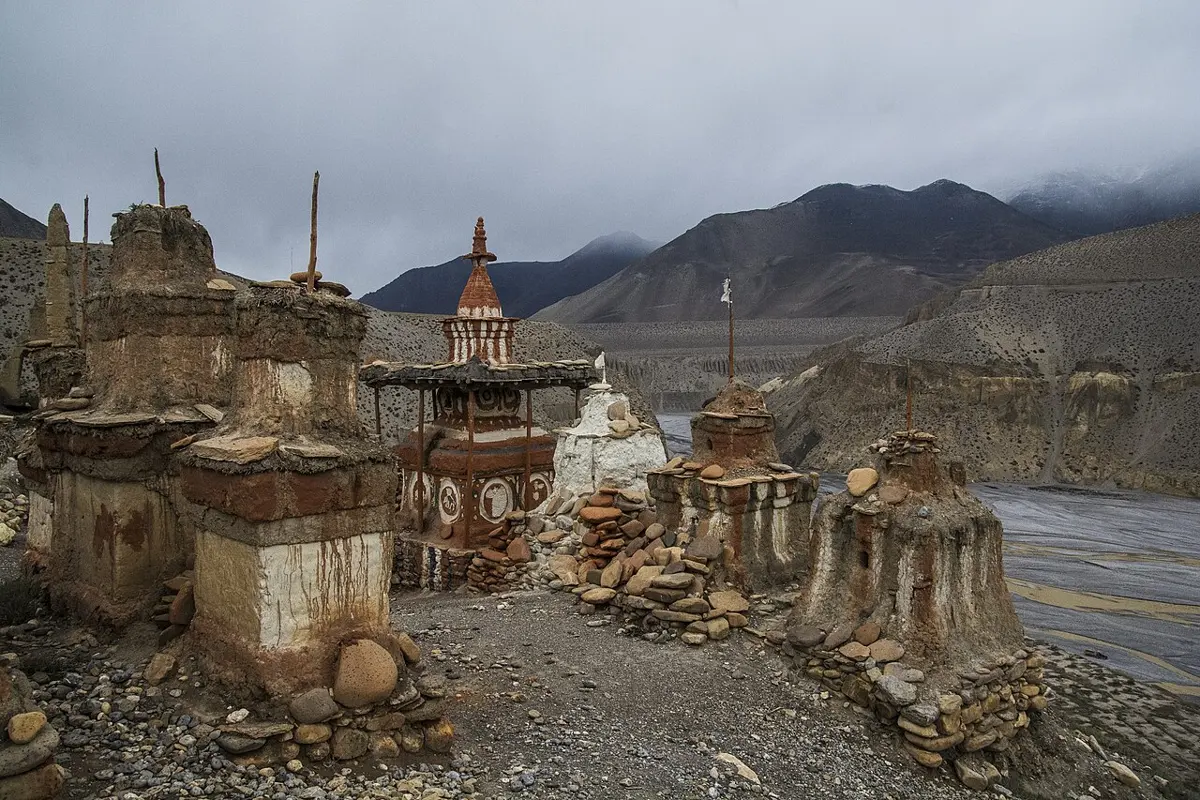
By how they cope with dry conditions, xerophytes fall into three categories.
a. Ephemerals (drought evaders, drought escapers). They avoid the dry season instead of resisting it: they germinate when there is enough moisture, grow, flower and set seed within a few weeks, and survive the dry months as seeds. Examples: Solanum xanthocarpum (kantakari), Tephrosia purpurea, Tribulus terrestris (gokhur).
b. Succulents (drought endurers). They have special water-storing parenchyma tissue that fills up with water during rain or high humidity and lasts them through the dry spell. The fleshy, succulent organ may be the root (Asparagus), the stem (Opuntia, Euphorbia) or the leaves (Aloe, Agave, Bryophyllum); the rest of the plant body is usually reduced.
c. True xerophytes (drought resisters). They are able to keep growing through very dry, hot conditions, without storing water: woody trees, shrubs and herbs with deep roots, small hard leaves and thick cuticles. Examples: Acacia nilotica (babul), Nerium (oleander, karvir), Zizyphus (bayar).
After the first monsoon showers in a dry place, a small herb sprouts, flowers and sets seed within six weeks, and dies before the dry season. What kind of xerophyte is it?
Pick an answer to see why.
Adaptations of xerophytes
The problem of a xerophyte is the opposite of a hydrophyte’s: to get as much water as it can, store it, and lose as little as possible.
a. Roots. A well-developed root system: in true xerophytes the roots go very deep to reach water far below the surface (the roots of mesquite, Prosopis, have been found more than 50 m down), or spread widely just under the surface to catch every shower (as in cacti). Root hairs are many, near the tips of the growing rootlets.
b. Leaves. Leaves, where present, are modified to reduce transpiration:
- they may be small, reduced to scales, or turned into spines (Opuntia);
- the leaf blade may roll or fold in dry weather, hiding the stomata inside (many desert grasses);
- some shed their leaves in the dry season;
- the surface is often shiny and glazed (waxy) to reflect light and heat.
c. Stems. Woody and hard in some (true xerophytes); fleshy and water-storing in others (succulents). In some the stem is green and flattened and does the leaf’s work of photosynthesis, a phylloclade (Opuntia, Euphorbia); in others branches are turned into thorns.
d. Flowers and reproduction. Flowers are usually made when moisture is available, after rain. Some store water in fleshy parts. They are pollinated by insects, birds and, in some cacti and agaves, bats; many reproduce vegetatively too (a fallen Opuntia pad roots and becomes a new plant).
e. Anatomical adaptations.
- A thick cuticle and a thick-walled, sometimes multi-layered epidermis (Nerium), with a waxy coat, cut water loss.
- Sunken stomata: stomata set in pits or grooves (stomatal crypts) lined with hairs, where the trapped, still, moist air slows the escape of water vapor. They are often on the lower surface only, and fewer in number.
- Well-developed conducting (vascular) and mechanical (sclerenchyma) tissues, which stop the plant collapsing as it loses water.
- Water-storing parenchyma in succulents.
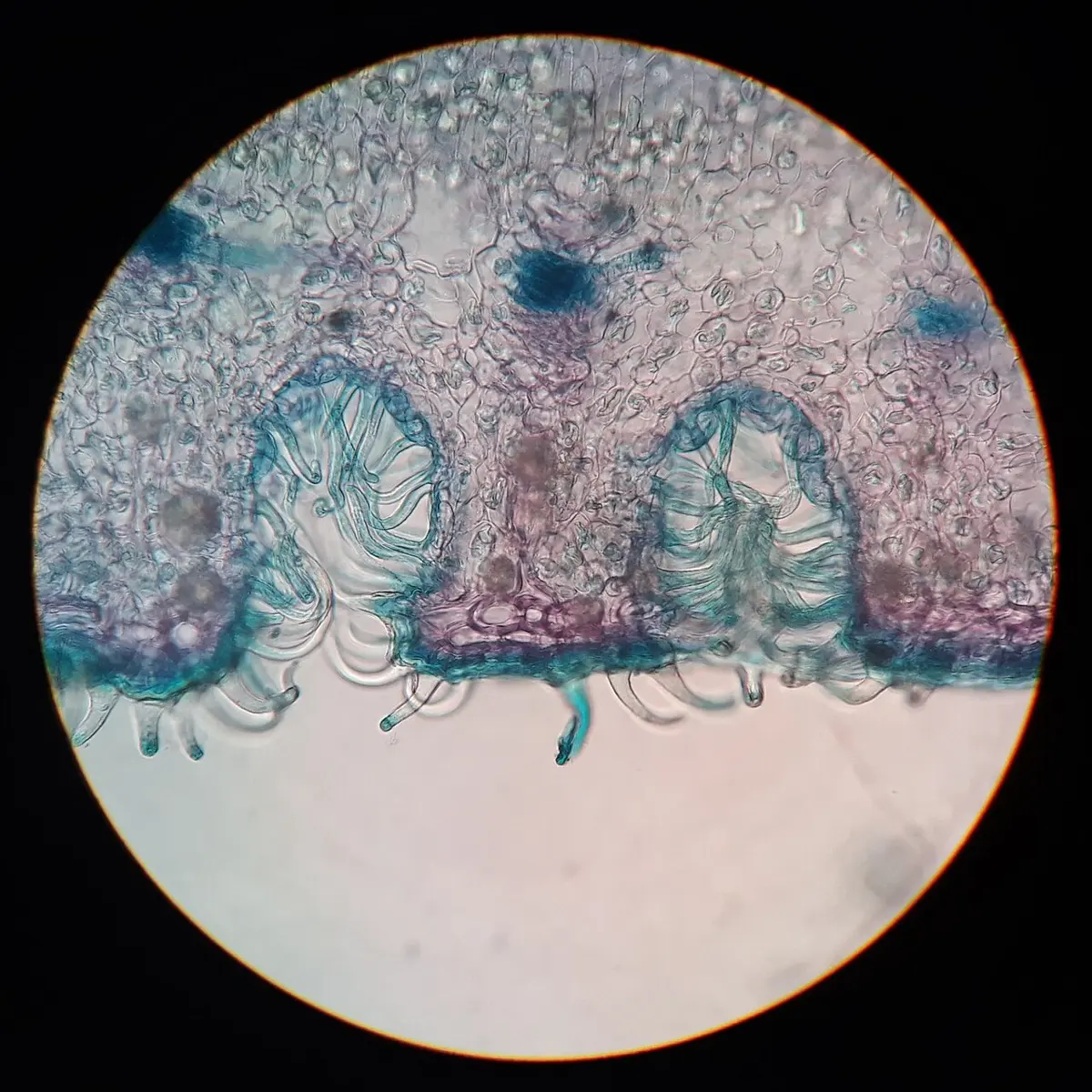
f. Physiological adaptations. The cell sap has a high osmotic concentration, so roots can draw water from dry soil. Many succulents, such as Opuntia, Aloe and Agave, open their stomata only at night, when it is cool, take in carbon dioxide and store it as an acid, and use it for photosynthesis in the day with their stomata closed. This is called CAM (crassulacean acid metabolism), and it saves a great deal of water.
| Feature | Hydrophyte | Xerophyte |
|---|---|---|
| Roots | absent or few and short; no root hairs; root pockets in free-floating plants | long and deep, or wide-spreading; many root hairs |
| Stem | soft, spongy, flexible | hard and woody, or fleshy (succulent); sometimes flat and green, or thorny |
| Leaves | thin and divided (submerged) or broad and flat (floating) | small, scaly, spiny, rolled, or absent |
| Cuticle | absent or thin | thick and waxy |
| Stomata | absent (submerged); upper surface (floating) | sunken, few, mostly on the lower surface |
| Air spaces | large (aerenchyma) | few, small |
| Mechanical and vascular tissue | poorly developed | well developed |
| Cell sap | low osmotic concentration | high osmotic concentration |
How do sunken stomata reduce transpiration?
Pick an answer to see why.
Exercise
A. Tick the correct alternative
- What type of leaves do submerged hydrophytes typically have?
Pick an answer to see why.
- A water lily (Nymphaea) is rooted in the mud of a pond, and its broad leaves lie flat on the water on long stalks. To which category of hydrophytes does it belong?
Pick an answer to see why.
- How do xerophytic leaves minimize the rate of transpiration?
Pick an answer to see why.
- Which category of xerophytes completes its life cycle in a short period of time when sufficient moisture is available?
Pick an answer to see why.
- What is another term used to describe ephemerals?
Pick an answer to see why.
- Which of the following is an example of a plant belonging to the category of ephemerals?
Pick an answer to see why.
B. Answer the following questions
What is ecological adaptation? Why is it important for species survival?
Answer
How do plants adapt to environments where not all necessary needs are provided?
Answer
Explain the anatomical and physiological adaptations of hydrophytes to their aquatic environment.
Answer
How do ephemerals adapt to a dry environment?
Answer
Explain the concept of xerophytes and their adaptations to arid environments.
Answer
What distinguishes true xerophytes from other categories in terms of their adaptation to arid conditions?
Answer
Printable PDFs
- Study notes 3 pages
- Worksheet 5 pages Answer key
Quiz yourself: Environment and Biodiversity, Grades 5–12 →
Practice every question in the book, and keep track of the ones you miss →
A companion to your textbook, not a replacement for it: study from the book your school uses, and where the two differ, follow your teacher. Found a mistake? Please tell us.