
Skip to content

← Grade 10 Optional Math

Matrix and Determinant

Unit 6 · CDC textbook pages 56–84

Hide the stories, facts, photos, activities and interactives, for revising before an exam
In this unit 12 sections
  1. 6.1 Introduction
  2. 6.2 Transpose of a matrix
  3. Exercise 6.1
  4. 6.3 Multiplication of matrices
  5. Exercise 6.2
  6. 6.4 Determinant of a matrix
  7. Exercise 6.3
  8. 6.5 Inverse matrix
  9. Exercise 6.4
  10. Project work
  11. How the SEE asks it
  12. Miscellaneous exercise

You want to send a friend a message that nobody else can read. Here is one way. Turn each letter into a number (A = 1, B = 2, … Z = 26, a space 0), take the numbers two at a time, write each pair as a column, and multiply every column by a grid of four numbers you both keep secret, the key. Out come numbers that look like nothing at all.

But how does your friend turn them back into the word? And is every grid of four numbers a good key? This unit answers both. The grids are matrices; turning one round is its transpose; the key is used by multiplying matrices; one number, its determinant, says whether a key can be undone; and the matrix that undoes it is its inverse. The message is read back at the end of 6.5.

N14E5P16A1L12␣0145432416135181202412K × column2312wordnumberssent
Figure 6.1 The word NEPAL, with a space to make the pairs even, sent with the key K on the right. Each pair of numbers is a column; the key times the column gives the two numbers that are sent.

6.1 Introduction

A matrix is a set of numbers arranged in rows and columns, in a rectangle, inside brackets. Matrices are named with capital letters. You met them in Grade 9; here is what this unit uses.

  • A matrix with m rows and n columns has order m × n (“m by n”): rows first, always. (3−5724−6) \begin{pmatrix} 3 & -5 & 7 \\ 2 & 4 & -6 \end{pmatrix} is a 2 × 3 matrix. Each number in it is an element (or entry).
  • A row matrix has one row, (321) \begin{pmatrix} 3 & 2 & 1 \end{pmatrix} ; a column matrix has one column; a square matrix has as many rows as columns.
  • The zero matrix O has every element 0. The identity matrix I is square, with 1s along its leading diagonal (top left to bottom right) and 0s everywhere else: I=(1001) I = \begin{pmatrix} 1 & 0 \\ 0 & 1 \end{pmatrix} .
  • Two matrices are equal when they have the same order and every pair of matching elements is equal.
  • Matrices of the same order are added or subtracted element by element, and kA multiplies every element of A by the number k.

The word matrix was first used for such an arrangement by the English mathematician James Joseph Sylvester, and using capital letters such as A and B for whole matrices, and calculating with them as single objects, was developed by Arthur Cayley in 1858. Determinants are older: methods found in the unpublished work of Gottfried Wilhelm Leibniz were later turned into definite rules by Gabriel Cramer.
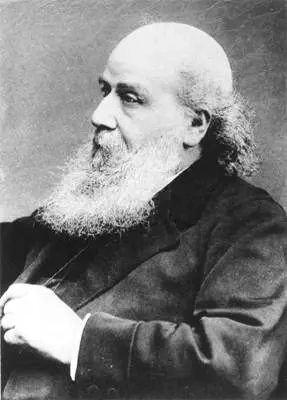
An old black-and-white photograph of a bald, bearded man in a dark coat, seen from the waist up
Figure 6.2 James Joseph Sylvester, who named the matrix in 1850. Photo: Wikimedia Commons, Public domain

Matrices are used throughout computer science, engineering, economics and statistics, because they let a computer handle thousands of numbers with one instruction. A spreadsheet has them built in: Google Sheets’ MMULT, TRANSPOSE, MDETERM and MINVERSE do this unit’s four operations on a block of cells. Determinants are used for area and volume: in Unit 9 you will see a matrix stretch a square, and its determinant tells you how many times the area grows Grade 10: The determinant is the change in area.

What is the order of (20−1543) \begin{pmatrix} 2 & 0 \\ -1 & 5 \\ 4 & 3 \end{pmatrix} ?

Pick an answer to see why.

6.2 Transpose of a matrix

3−5724−6A2 × 3rowsbecomecolumns3−5724−6AT3 × 2
Figure 6.3 The first row of A (blue) becomes the first column of AT A^{\mathrm T} ; the second row (red) becomes the second column. A 2 × 3 matrix turns into a 3 × 2 one.

The matrix made by writing the rows of a matrix as columns (and so its columns as rows) is its transpose. The transpose of A is written A′, At A^{t} or AT A^{\mathrm T} . For the matrix above,
AT=(32−547−6) A^{\mathrm T} = \begin{pmatrix} 3 & 2 \\ -5 & 4 \\ 7 & -6 \end{pmatrix}

If A has order m × n, then AT A^{\mathrm T} has order n × m. The element in row i, column j of A is in row j, column i of AT A^{\mathrm T} . A square matrix keeps its order, and its leading diagonal stays where it is: everything else is reflected in that diagonal, as if it were a mirror.

6.2.1 Properties of the transpose

Let A and B be matrices of the same order, and k any real number. Each property below is checked on an example.

a. The transpose of a sum is the sum of the transposes: (A+B)T=AT+BT (A + B)^{\mathrm T} = A^{\mathrm T} + B^{\mathrm T} .

With A=(2013) A = \begin{pmatrix} 2 & 0 \\ 1 & 3 \end{pmatrix} and B=(1204) B = \begin{pmatrix} 1 & 2 \\ 0 & 4 \end{pmatrix} :
A+B=(3217),(A+B)T=(3127) A + B = \begin{pmatrix} 3 & 2 \\ 1 & 7 \end{pmatrix}, \quad (A + B)^{\mathrm T} = \begin{pmatrix} 3 & 1 \\ 2 & 7 \end{pmatrix}
AT+BT=(2103)+(1024)=(3127) A^{\mathrm T} + B^{\mathrm T} = \begin{pmatrix} 2 & 1 \\ 0 & 3 \end{pmatrix} + \begin{pmatrix} 1 & 0 \\ 2 & 4 \end{pmatrix} = \begin{pmatrix} 3 & 1 \\ 2 & 7 \end{pmatrix}
The same.

b. The transpose of a difference is the difference of the transposes: (A−B)T=AT−BT (A - B)^{\mathrm T} = A^{\mathrm T} - B^{\mathrm T} .

With A=(536−2) A = \begin{pmatrix} 5 & 3 \\ 6 & -2 \end{pmatrix} and B=(−7248) B = \begin{pmatrix} -7 & 2 \\ 4 & 8 \end{pmatrix} :
A−B=(5+73−26−4−2−8)=(1212−10),(A−B)T=(1221−10) A - B = \begin{pmatrix} 5 + 7 & 3 - 2 \\ 6 - 4 & -2 - 8 \end{pmatrix} = \begin{pmatrix} 12 & 1 \\ 2 & -10 \end{pmatrix}, \quad (A - B)^{\mathrm T} = \begin{pmatrix} 12 & 2 \\ 1 & -10 \end{pmatrix}
AT−BT=(563−2)−(−7428)=(1221−10) A^{\mathrm T} - B^{\mathrm T} = \begin{pmatrix} 5 & 6 \\ 3 & -2 \end{pmatrix} - \begin{pmatrix} -7 & 4 \\ 2 & 8 \end{pmatrix} = \begin{pmatrix} 12 & 2 \\ 1 & -10 \end{pmatrix}

c. A number can be taken out: (kA)T=kAT (kA)^{\mathrm T} = kA^{\mathrm T} .

With A=(238−351) A = \begin{pmatrix} 2 & 3 \\ 8 & -3 \\ 5 & 1 \end{pmatrix} and k = 2:
2A=(4616−6102),(2A)T=(416106−62) 2A = \begin{pmatrix} 4 & 6 \\ 16 & -6 \\ 10 & 2 \end{pmatrix}, \quad (2A)^{\mathrm T} = \begin{pmatrix} 4 & 16 & 10 \\ 6 & -6 & 2 \end{pmatrix}
2AT=2(2853−31)=(416106−62) 2A^{\mathrm T} = 2\begin{pmatrix} 2 & 8 & 5 \\ 3 & -3 & 1 \end{pmatrix} = \begin{pmatrix} 4 & 16 & 10 \\ 6 & -6 & 2 \end{pmatrix}

d. Transposing twice gives the matrix back: (AT)T=A (A^{\mathrm T})^{\mathrm T} = A .

With A=(−147−3) A = \begin{pmatrix} -1 & 4 \\ 7 & -3 \end{pmatrix} : AT=(−174−3) A^{\mathrm T} = \begin{pmatrix} -1 & 7 \\ 4 & -3 \end{pmatrix} , and turning that round again gives (−147−3)=A \begin{pmatrix} -1 & 4 \\ 7 & -3 \end{pmatrix} = A . Rows become columns, then columns become rows again.

e. The transpose of a zero matrix is a zero matrix: OT=O O^{\mathrm T} = O .

O=(0000),OT=(0000)=O O = \begin{pmatrix} 0 & 0 \\ 0 & 0 \end{pmatrix}, \qquad O^{\mathrm T} = \begin{pmatrix} 0 & 0 \\ 0 & 0 \end{pmatrix} = O
A zero matrix that isn’t square turns into the zero matrix of the swapped order: the 2 × 3 zero matrix becomes the 3 × 2 one.

f. The transpose of an identity matrix is itself: IT=I I^{\mathrm T} = I .

(1001)T=(1001) \begin{pmatrix} 1 & 0 \\ 0 & 1 \end{pmatrix}^{\mathrm T} = \begin{pmatrix} 1 & 0 \\ 0 & 1 \end{pmatrix}
The 3 × 3 identity (100010001) \begin{pmatrix} 1 & 0 & 0 \\ 0 & 1 & 0 \\ 0 & 0 & 1 \end{pmatrix} is its own transpose in the same way. Its 1s are on the leading diagonal, which the transpose doesn’t move, and its 0s are all alike.

g. Symmetric matrices. A square matrix that equals its own transpose, AT=A A^{\mathrm T} = A , is a symmetric matrix. Its elements are mirrored across the leading diagonal: (abbc) \begin{pmatrix} a & b \\ b & c \end{pmatrix} is symmetric, and so is
B=(523248381) B = \begin{pmatrix} 5 & 2 & 3 \\ 2 & 4 & 8 \\ 3 & 8 & 1 \end{pmatrix}
Check: the 2 in row 1, column 2 matches the 2 in row 2, column 1; the 3s and the 8s match the same way.

Worked examples

A matrix has order 4 × 1. What is the order of its transpose?

Pick an answer to see why.

Exercise 6.1

Question 1

A. What is meant by the transpose of a matrix?

Pick an answer to see why.

B. If C=(5−1−2468) C = \begin{pmatrix} 5 & -1 & -2 \\ 4 & 6 & 8 \end{pmatrix} , which of these is CT C^{\mathrm T} ?

Pick an answer to see why.

C. A=(5−3−34) A = \begin{pmatrix} 5 & -3 \\ -3 & 4 \end{pmatrix} is a symmetric matrix. Which of these is AT A^{\mathrm T} ?

Pick an answer to see why.

D. If P=(032147) P = \begin{pmatrix} 0 & 3 \\ 2 & 1 \\ 4 & 7 \end{pmatrix} and Q=(3−5−6182) Q = \begin{pmatrix} 3 & -5 \\ -6 & 1 \\ 8 & 2 \end{pmatrix} , which of these is (P+Q)T (P + Q)^{\mathrm T} ?

Pick an answer to see why.

Question 2

Find the transpose of each matrix.

a.

R=(321) R = \begin{pmatrix} 3 & 2 & 1 \end{pmatrix}

Answer
b.

W=(−345) W = \begin{pmatrix} -3 \\ 4 \\ 5 \end{pmatrix}

Answer
c.

X=(−1537) X = \begin{pmatrix} -1 & 5 \\ 3 & 7 \end{pmatrix}

Answer
d.

Y=(3472−110) Y = \begin{pmatrix} 3 & 4 & 7 \\ 2 & -1 & 10 \end{pmatrix}

Answer
e.

Z=(015−445) Z = \begin{pmatrix} 0 & 1 \\ 5 & -4 \\ 4 & 5 \end{pmatrix}

Answer
f.

M=(671052−134) M = \begin{pmatrix} 6 & 7 & 1 \\ 0 & 5 & 2 \\ -1 & 3 & 4 \end{pmatrix}

Answer

Questions 3 to 7

3.

If P=(9485) P = \begin{pmatrix} 9 & 4 \\ 8 & 5 \end{pmatrix} , prove that (PT)T=P (P^{\mathrm T})^{\mathrm T} = P .

Answer
4.

If M=(pqrabcxyz) M = \begin{pmatrix} p & q & r \\ a & b & c \\ x & y & z \end{pmatrix} :

  • a.Find MT M^{\mathrm T} and (MT)T (M^{\mathrm T})^{\mathrm T} .
  • b.Write the relation between M and (MT)T (M^{\mathrm T})^{\mathrm T} .
Answer
5.

If A=(13−24) A = \begin{pmatrix} 1 & 3 \\ -2 & 4 \end{pmatrix} and B=(0−325) B = \begin{pmatrix} 0 & -3 \\ 2 & 5 \end{pmatrix} :

  • a.Find AT+BT A^{\mathrm T} + B^{\mathrm T} .
  • b.Find (A+B)T (A + B)^{\mathrm T} .
  • c.Are (A+B)T (A + B)^{\mathrm T} and AT+BT A^{\mathrm T} + B^{\mathrm T} equal? Give a reason.
Answer
6.

If A=(1357) A = \begin{pmatrix} 1 & 3 \\ 5 & 7 \end{pmatrix} and B=(2468) B = \begin{pmatrix} 2 & 4 \\ 6 & 8 \end{pmatrix} :

  • a.Prove that (A+B)T=AT+BT (A + B)^{\mathrm T} = A^{\mathrm T} + B^{\mathrm T} .
  • b.Is A + B a symmetric matrix? Give a reason.
Answer
7.

If A=(abcd) A = \begin{pmatrix} a & b \\ c & d \end{pmatrix} , B=(4−3−2−5) B = \begin{pmatrix} 4 & -3 \\ -2 & -5 \end{pmatrix} and AT=B A^{\mathrm T} = B , find a, b, c and d.

Answer

6.3 Multiplication of matrices

In CDC’s book this section is numbered 6.2, Determinant 6.3 and Inverse 6.4. Here the sections run 6.1 to 6.5 in order, and the exercises keep CDC’s numbers, 6.1 to 6.4.

Adding matrices is done element by element. Multiplying them is not, and the reason is the secret message: each number sent mixes both numbers of a pair. The first coded number of NE was 2 × 14 + 3 × 5 = 43: the key’s first row times the pair’s column, multiplied element by element and added. That one step, a row times a column, is all of matrix multiplication.

The rule: the element in row i, column j of AB is row i of A times column j of B, multiplied pair by pair and added. For 2 × 2 matrices,
(abcd)(pqrs)=(ap+braq+bscp+drcq+ds) \begin{pmatrix} a & b \\ c & d \end{pmatrix} \begin{pmatrix} p & q \\ r & s \end{pmatrix} = \begin{pmatrix} ap + br & aq + bs \\ cp + dr & cq + ds \end{pmatrix}

A row can be multiplied by a column only if they have the same number of elements. So AB is possible only when the number of columns of A equals the number of rows of B. If A is m × n and B is n × p, the product has a row for each row of A and a column for each column of B:
Am×n×Bn×p=(AB)m×p A_{m \times n} \times B_{n \times p} = (AB)_{m \times p}
The two inside numbers must match; the two outside numbers give the order of the answer. A 2 × 3 matrix times a 3 × 2 matrix is 2 × 2; a 2 × 2 matrix times a 3 × 2 matrix can’t be found at all.

Try it

Row times column

Tap an entry of the product, then swap the order.

A
3456
2 × 2
×
B
1−3−2−5
2 × 2
=
AB
2 × 2
Matrices:

Row 1 of A times column 1 of B: 3 × 1 + 4 × (−2) = −5, the entry in row 1, column 1 of AB.

Row 1 of A times column 2 of B: 3 × (−3) + 4 × (−5) = −29, the entry in row 1, column 2 of AB.

Row 2 of A times column 1 of B: 5 × 1 + 6 × (−2) = −7, the entry in row 2, column 1 of AB.

Row 2 of A times column 2 of B: 5 × (−3) + 6 × (−5) = −45, the entry in row 2, column 2 of AB.

Row 1 of B times column 1 of A: 1 × 3 + −3 × 5 = −12, the entry in row 1, column 1 of BA.

Row 1 of B times column 2 of A: 1 × 4 + −3 × 6 = −14, the entry in row 1, column 2 of BA.

Row 2 of B times column 1 of A: −2 × 3 + −5 × 5 = −31, the entry in row 2, column 1 of BA.

Row 2 of B times column 2 of A: −2 × 4 + −5 × 6 = −38, the entry in row 2, column 2 of BA.

Row 1 of A times column 1 of B: 2 × (−1) + 4 × 8 + 0 × 3 = 30, the entry in row 1, column 1 of AB.

Row 1 of A times column 2 of B: 2 × 4 + 4 × 2 + 0 × 7 = 16, the entry in row 1, column 2 of AB.

Row 2 of A times column 1 of B: 3 × (−1) + 5 × 8 + 1 × 3 = 40, the entry in row 2, column 1 of AB.

Row 2 of A times column 2 of B: 3 × 4 + 5 × 2 + 1 × 7 = 29, the entry in row 2, column 2 of AB.

Row 1 of B times column 1 of A: −1 × 2 + 4 × 3 = 10, the entry in row 1, column 1 of BA.

Row 1 of B times column 2 of A: −1 × 4 + 4 × 5 = 16, the entry in row 1, column 2 of BA.

Row 1 of B times column 3 of A: −1 × 0 + 4 × 1 = 4, the entry in row 1, column 3 of BA.

Row 2 of B times column 1 of A: 8 × 2 + 2 × 3 = 22, the entry in row 2, column 1 of BA.

Row 2 of B times column 2 of A: 8 × 4 + 2 × 5 = 42, the entry in row 2, column 2 of BA.

Row 2 of B times column 3 of A: 8 × 0 + 2 × 1 = 2, the entry in row 2, column 3 of BA.

Row 3 of B times column 1 of A: 3 × 2 + 7 × 3 = 27, the entry in row 3, column 1 of BA.

Row 3 of B times column 2 of A: 3 × 4 + 7 × 5 = 47, the entry in row 3, column 2 of BA.

Row 3 of B times column 3 of A: 3 × 0 + 7 × 1 = 7, the entry in row 3, column 3 of BA.

Every entry of the product comes from one row of the first matrix and one column of the second, which is why the first matrix’s rows must be as long as the second’s columns. Swapping the order changes every entry, and with the 2 × 3 and 3 × 2 matrices it even changes the size of the answer: AB is 2 × 2 but BA is 3 × 3.

6.3.1 Properties of matrix multiplication

a. Not commutative. In general AB ≠ BA, as Activity 1 showed. (For some pairs they happen to be equal, A and I for one, but you can never assume it.)

b. Associative. (AB)C = A(BC), whenever the products can be found: three matrices in a row can be multiplied starting from either end, as long as their order is kept.

With A=(2031) A = \begin{pmatrix} 2 & 0 \\ 3 & 1 \end{pmatrix} , B=(4−1−25) B = \begin{pmatrix} 4 & -1 \\ -2 & 5 \end{pmatrix} and C=(1360) C = \begin{pmatrix} 1 & 3 \\ 6 & 0 \end{pmatrix} :
AB=(8+0−2+012−2−3+5)=(8−2102) AB = \begin{pmatrix} 8 + 0 & -2 + 0 \\ 12 - 2 & -3 + 5 \end{pmatrix} = \begin{pmatrix} 8 & -2 \\ 10 & 2 \end{pmatrix}
(AB)C=(8−1224+010+1230+0)=(−4242230)(i) (AB)C = \begin{pmatrix} 8 - 12 & 24 + 0 \\ 10 + 12 & 30 + 0 \end{pmatrix} = \begin{pmatrix} -4 & 24 \\ 22 & 30 \end{pmatrix} \quad \text{(i)}
BC=(4−612+0−2+30−6+0)=(−21228−6) BC = \begin{pmatrix} 4 - 6 & 12 + 0 \\ -2 + 30 & -6 + 0 \end{pmatrix} = \begin{pmatrix} -2 & 12 \\ 28 & -6 \end{pmatrix}
A(BC)=(−4+024+0−6+2836−6)=(−4242230)(ii) A(BC) = \begin{pmatrix} -4 + 0 & 24 + 0 \\ -6 + 28 & 36 - 6 \end{pmatrix} = \begin{pmatrix} -4 & 24 \\ 22 & 30 \end{pmatrix} \quad \text{(ii)}
From (i) and (ii), (AB)C = A(BC).

c. Distributive. A(B + C) = AB + AC, whenever the sums and products can be found.

With A=(1203) A = \begin{pmatrix} 1 & 2 \\ 0 & 3 \end{pmatrix} , B=(1425) B = \begin{pmatrix} 1 & 4 \\ 2 & 5 \end{pmatrix} and C=(−1−360) C = \begin{pmatrix} -1 & -3 \\ 6 & 0 \end{pmatrix} :
B+C=(0185),A(B+C)=(0+161+100+240+15)=(16112415)(i) B + C = \begin{pmatrix} 0 & 1 \\ 8 & 5 \end{pmatrix}, \quad A(B + C) = \begin{pmatrix} 0 + 16 & 1 + 10 \\ 0 + 24 & 0 + 15 \end{pmatrix} = \begin{pmatrix} 16 & 11 \\ 24 & 15 \end{pmatrix} \quad \text{(i)}
AB=(1+44+100+60+15)=(514615),AC=(−1+12−3+00+180+0)=(11−3180) AB = \begin{pmatrix} 1 + 4 & 4 + 10 \\ 0 + 6 & 0 + 15 \end{pmatrix} = \begin{pmatrix} 5 & 14 \\ 6 & 15 \end{pmatrix}, \quad AC = \begin{pmatrix} -1 + 12 & -3 + 0 \\ 0 + 18 & 0 + 0 \end{pmatrix} = \begin{pmatrix} 11 & -3 \\ 18 & 0 \end{pmatrix}
AB+AC=(16112415)(ii) AB + AC = \begin{pmatrix} 16 & 11 \\ 24 & 15 \end{pmatrix} \quad \text{(ii)}
From (i) and (ii), A(B + C) = AB + AC.

d. Identity. If A is a square matrix and I the identity matrix of the same order, AI = IA = A: I does for matrices what 1 does for numbers.

With A=(2314) A = \begin{pmatrix} 2 & 3 \\ 1 & 4 \end{pmatrix} :
AI=(2314)(1001)=(2+00+31+00+4)=A AI = \begin{pmatrix} 2 & 3 \\ 1 & 4 \end{pmatrix} \begin{pmatrix} 1 & 0 \\ 0 & 1 \end{pmatrix} = \begin{pmatrix} 2 + 0 & 0 + 3 \\ 1 + 0 & 0 + 4 \end{pmatrix} = A
IA=(1001)(2314)=(2+03+00+10+4)=A IA = \begin{pmatrix} 1 & 0 \\ 0 & 1 \end{pmatrix} \begin{pmatrix} 2 & 3 \\ 1 & 4 \end{pmatrix} = \begin{pmatrix} 2 + 0 & 3 + 0 \\ 0 + 1 & 0 + 4 \end{pmatrix} = A

e. The transpose of a product turns the order round: (AB)T=BTAT (AB)^{\mathrm T} = B^{\mathrm T} A^{\mathrm T} . Example 4 below checks it. (ATBT A^{\mathrm T} B^{\mathrm T} is usually different, and for matrices that aren’t square it often can’t even be found.)

Worked examples

A is a 3 × 2 matrix and B is a 2 × 4 matrix. What is the order of AB?

Pick an answer to see why.

Exercise 6.2

Question 1

A. When can two matrices be multiplied?

Pick an answer to see why.

B. A, B and C are matrices and (AB)C = A(BC). What is this property called?

Pick an answer to see why.

C. A, B and C are matrices and A(B + C) = AB + AC. What is this property called?

Pick an answer to see why.

D. A is a square matrix, I the identity matrix of the same order, and AI = IA = A. What is this property called?

Pick an answer to see why.

E. If P=(1234) P = \begin{pmatrix} 1 & 2 \\ 3 & 4 \end{pmatrix} and I=(1001) I = \begin{pmatrix} 1 & 0 \\ 0 & 1 \end{pmatrix} , what is PI?

Pick an answer to see why.

F. If W=(−345) W = \begin{pmatrix} -3 \\ 4 \\ 5 \end{pmatrix} and R=(321) R = \begin{pmatrix} 3 & 2 & 1 \end{pmatrix} , what is the order of WR?

Pick an answer to see why.

Question 2

Say whether each product can be found, and find it if it can.

a.

(54)(13) \begin{pmatrix} 5 & 4 \end{pmatrix} \begin{pmatrix} 1 \\ 3 \end{pmatrix}

Answer
b.

(13)(54) \begin{pmatrix} 1 \\ 3 \end{pmatrix} \begin{pmatrix} 5 & 4 \end{pmatrix}

Answer
c.

(321)(−345) \begin{pmatrix} 3 & 2 & 1 \end{pmatrix} \begin{pmatrix} -3 \\ 4 \\ 5 \end{pmatrix}

Answer
d.

(015−445)(3472−110) \begin{pmatrix} 0 & 1 \\ 5 & -4 \\ 4 & 5 \end{pmatrix} \begin{pmatrix} 3 & 4 & 7 \\ 2 & -1 & 10 \end{pmatrix}

Answer
e.

(−1537)(6182) \begin{pmatrix} -1 & 5 \\ 3 & 7 \end{pmatrix} \begin{pmatrix} 6 & 1 \\ 8 & 2 \end{pmatrix}

Answer
f.

(1423)(−340612) \begin{pmatrix} 1 & 4 \\ 2 & 3 \end{pmatrix} \begin{pmatrix} -3 & 4 \\ 0 & 6 \\ 1 & 2 \end{pmatrix}

Answer

Questions 3 to 8

3.

If Q=(36−2−4) Q = \begin{pmatrix} 3 & 6 \\ -2 & -4 \end{pmatrix} , find Q2 Q^2 .

Answer
4.
  • a.If M=(−23−12) M = \begin{pmatrix} -2 & 3 \\ -1 & 2 \end{pmatrix} and N=(4−350) N = \begin{pmatrix} 4 & -3 \\ 5 & 0 \end{pmatrix} , find MN and NM.
  • b.If C=(3501) C = \begin{pmatrix} 3 & 5 \\ 0 & 1 \end{pmatrix} , D=(−24−13) D = \begin{pmatrix} -2 & 4 \\ -1 & 3 \end{pmatrix} and E=(2−364) E = \begin{pmatrix} 2 & -3 \\ 6 & 4 \end{pmatrix} , find C(D + E).
Answer
5.
  • a.If A=(1−1−11) A = \begin{pmatrix} 1 & -1 \\ -1 & 1 \end{pmatrix} , prove that A2=2A A^2 = 2A .
  • b.If X=(1−13−3) X = \begin{pmatrix} 1 & -1 \\ 3 & -3 \end{pmatrix} and Y=(2−52−5) Y = \begin{pmatrix} 2 & -5 \\ 2 & -5 \end{pmatrix} , prove that XY is a zero matrix.
  • c.If R=(2−31−2) R = \begin{pmatrix} 2 & -3 \\ 1 & -2 \end{pmatrix} , prove that R2=I R^2 = I , the 2 × 2 identity matrix.
Answer
6.

If A=(214−1) A = \begin{pmatrix} 2 & 1 \\ 4 & -1 \end{pmatrix} , prove that A2−A−6I=O A^2 - A - 6I = O , where I and O are the identity and zero matrices of order 2 × 2.

Answer
7.

If U=(3004) U = \begin{pmatrix} 3 & 0 \\ 0 & 4 \end{pmatrix} , V=(pq0r) V = \begin{pmatrix} p & q \\ 0 & r \end{pmatrix} and UV = U + V, find p, q and r.

Answer
8.

If X=(63−20) X = \begin{pmatrix} 6 & 3 \\ -2 & 0 \end{pmatrix} and Y=(251−4) Y = \begin{pmatrix} 2 & 5 \\ 1 & -4 \end{pmatrix} , prove that (XY)T=YTXT (XY)^{\mathrm T} = Y^{\mathrm T} X^{\mathrm T} .

Answer

Question 9

A=(0213) A = \begin{pmatrix} 0 & 2 \\ 1 & 3 \end{pmatrix} , B=(3546) B = \begin{pmatrix} 3 & 5 \\ 4 & 6 \end{pmatrix} , C=(6879) C = \begin{pmatrix} 6 & 8 \\ 7 & 9 \end{pmatrix} and I=(1001) I = \begin{pmatrix} 1 & 0 \\ 0 & 1 \end{pmatrix} .

a.

Prove that AB ≠ BA.

Answer
b.

Prove that A(BC) = (AB)C.

Answer
c.

Prove that A(B + C) = AB + AC.

Answer
d.

Prove that IA = AI = A.

Answer
e.

Prove that (AB)T=BTAT (AB)^{\mathrm T} = B^{\mathrm T} A^{\mathrm T} .

Answer

6.4 Determinant of a matrix

A square matrix’s numbers written between two upright bars, instead of brackets, are its determinant: one number worked out from all of them. Only a square matrix has a determinant, and a determinant is a single number (a scalar), not a matrix. The determinant of A is written |A|, or det A, or D. Cayley introduced the two upright bars in 1841.

6.4.1 Determinant of a matrix of order one

A 1 × 1 matrix has one element, and its determinant is that element. If A=(8) A = \begin{pmatrix} 8 \end{pmatrix} , then |A| = 8; if B=(−7) B = \begin{pmatrix} -7 \end{pmatrix} , then |B| = −7.

6.4.2 Determinant of a matrix of order two

For a 2 × 2 matrix A=(abcd) A = \begin{pmatrix} a & b \\ c & d \end{pmatrix} ,
∣A∣=∣abcd∣=ad−bc |A| = \begin{vmatrix} a & b \\ c & d \end{vmatrix} = ad - bc
Multiply along the leading diagonal (top left to bottom right), multiply along the other diagonal (bottom left to top right), and take the second product from the first. ad − bc is called the expansion of the determinant.

abcd+ad−bc
Figure 6.4 The determinant of a 2 × 2 matrix: the product down the leading diagonal (blue) minus the product up the other one (red).

For example, if B=(2311) B = \begin{pmatrix} 2 & 3 \\ 1 & 1 \end{pmatrix} ,
∣B∣=∣2311∣=2×1−3×1=2−3=−1 |B| = \begin{vmatrix} 2 & 3 \\ 1 & 1 \end{vmatrix} = 2 \times 1 - 3 \times 1 = 2 - 3 = -1
A determinant can be negative, zero or positive.

What does the number tell you? Look back at the secret message: a matrix moves a whole column of numbers somewhere new. Think of the column as a point: the matrix moves every point of the plane, and the unit square, the square with corners (0, 0), (1, 0), (1, 1) and (0, 1), becomes a parallelogram. Its area is the size of the determinant. A negative determinant means the square has also been flipped over.

In Unit 9 you can drag a matrix’s two columns and watch this happen: A matrix at work. The parallelogram’s area is always |ad − bc|. When one column is a multiple of the other, the parallelogram collapses onto a line: its area is 0, the determinant is 0, and the whole plane is squashed flat. That is what a singular matrix does.

6.4.3 Singular matrix

Let A=(2613) A = \begin{pmatrix} 2 & 6 \\ 1 & 3 \end{pmatrix} . Then
∣A∣=∣2613∣=2×3−6×1=6−6=0 |A| = \begin{vmatrix} 2 & 6 \\ 1 & 3 \end{vmatrix} = 2 \times 3 - 6 \times 1 = 6 - 6 = 0
A square matrix whose determinant is 0 is a singular matrix: if |A| = 0, A is singular. In a 2 × 2 singular matrix one row is a multiple of the other (here the first row is twice the second), and so is one column.

6.4.4 Non-singular matrix

Let M=(4356) M = \begin{pmatrix} 4 & 3 \\ 5 & 6 \end{pmatrix} . Then
∣M∣=∣4356∣=4×6−3×5=24−15=9≠0 |M| = \begin{vmatrix} 4 & 3 \\ 5 & 6 \end{vmatrix} = 4 \times 6 - 3 \times 5 = 24 - 15 = 9 \ne 0
A square matrix whose determinant is not 0 is a non-singular matrix, also called a regular matrix: if |A| ≠ 0, A is non-singular. Section 6.5 shows why the difference matters: only a non-singular matrix can be undone.

Worked examples

Which of these matrices is singular?

Pick an answer to see why.

Exercise 6.3

Question 1

A. If A=(abcd) A = \begin{pmatrix} a & b \\ c & d \end{pmatrix} , what is |A|?

Pick an answer to see why.

B. If A=(−5) A = \begin{pmatrix} -5 \end{pmatrix} , what is |A|?

Pick an answer to see why.

C. If A=(2314) A = \begin{pmatrix} 2 & 3 \\ 1 & 4 \end{pmatrix} , what is |A|?

Pick an answer to see why.

D. If ∣2x1x∣=0 \begin{vmatrix} 2 & x \\ 1 & x \end{vmatrix} = 0 , what is x?

Pick an answer to see why.

Question 2

Find the value of each determinant.

a.

det⁡(2) \det \begin{pmatrix} 2 \end{pmatrix}

Answer
b.

det⁡(−7) \det \begin{pmatrix} -7 \end{pmatrix}

Answer
c.

∣2314∣ \begin{vmatrix} 2 & 3 \\ 1 & 4 \end{vmatrix}

Answer
d.

∣sin⁡A−cos⁡Acos⁡Asin⁡A∣ \begin{vmatrix} \sin A & -\cos A \\ \cos A & \sin A \end{vmatrix}

Answer
e.

∣x+yx−yx−yx+y∣ \begin{vmatrix} x + y & x - y \\ x - y & x + y \end{vmatrix}

Answer
f.

∣x+yx−yx+yx−y∣ \begin{vmatrix} x + y & x - y \\ x + y & x - y \end{vmatrix}

Answer
g.

∣3−4−35∣ \begin{vmatrix} 3 & -4 \\ -3 & 5 \end{vmatrix}

Answer
h.

∣x+yx−yx2+xy+y2x2−xy+y2∣ \begin{vmatrix} x + y & x - y \\ x^2 + xy + y^2 & x^2 - xy + y^2 \end{vmatrix}

Hint
Answer

Question 3

Find the determinant of each matrix.

a.

(10) \begin{pmatrix} 10 \end{pmatrix}

Answer
b.

(−8) \begin{pmatrix} -8 \end{pmatrix}

Answer
c.

(xyyx) \begin{pmatrix} x & y \\ y & x \end{pmatrix}

Answer
d.

(1−324) \begin{pmatrix} 1 & -3 \\ 2 & 4 \end{pmatrix}

Answer
e.

(10542) \begin{pmatrix} 10 & 5 \\ 4 & 2 \end{pmatrix}

Answer
f.

(−7112−4) \begin{pmatrix} -7 & 11 \\ 2 & -4 \end{pmatrix}

Answer

Question 4

Find the value of x in each.

a.

∣3x28∣=20 \begin{vmatrix} 3 & x \\ 2 & 8 \end{vmatrix} = 20

Answer
b.

∣5−22x−3∣=1 \begin{vmatrix} 5 & -2 \\ 2x & -3 \end{vmatrix} = 1

Answer
c.

∣3x2−43∣=8 \begin{vmatrix} 3x & 2 \\ -4 & 3 \end{vmatrix} = 8

Answer
d.

∣x−2x3x4x∣=100 \begin{vmatrix} x & -2x \\ 3x & 4x \end{vmatrix} = 100

Answer

Question 5

If A=(2432) A = \begin{pmatrix} 2 & 4 \\ 3 & 2 \end{pmatrix} and B=(1−562) B = \begin{pmatrix} 1 & -5 \\ 6 & 2 \end{pmatrix} , find the determinants of these matrices.

a.

A − 3B

Answer
b.

2A + B

Answer
c.

3A − 2B

Answer
d.

A + 2B

Answer

Question 6

Prove each of these.

a.

∣x2y2yx∣=(x−y)(x2+xy+y2) \begin{vmatrix} x^2 & y^2 \\ y & x \end{vmatrix} = (x - y)(x^2 + xy + y^2)

Answer
b.

∣x+yy+zz−yx−y∣=x2−z2 \begin{vmatrix} x + y & y + z \\ z - y & x - y \end{vmatrix} = x^2 - z^2

Answer
c.

∣a−1a2−a+1a+1a2+a+1∣=−2 \begin{vmatrix} a - 1 & a^2 - a + 1 \\ a + 1 & a^2 + a + 1 \end{vmatrix} = -2

Answer
d.

∣1+x111+y∣=xy(1+1x+1y) \begin{vmatrix} 1 + x & 1 \\ 1 & 1 + y \end{vmatrix} = xy\left(1 + \dfrac{1}{x} + \dfrac{1}{y}\right)

Answer

Question 7

7.

If M=(5243) M = \begin{pmatrix} 5 & 2 \\ 4 & 3 \end{pmatrix} and N=(1−362) N = \begin{pmatrix} 1 & -3 \\ 6 & 2 \end{pmatrix} , verify that |MN| = |M||N|.

Answer

6.5 Inverse matrix

Every number except 0 has a number that undoes it: 5 × 1/5 = 1. For matrices the job of 1 is done by I, so the question is: for a matrix A, is there a matrix that multiplies it to give I?

If for a square matrix A there is a matrix B with
AB=BA=I AB = BA = I
then A and B are inverse matrices of each other: B=A−1 B = A^{-1} (“A inverse”) and A=B−1 A = B^{-1} . A matrix must be non-singular to have an inverse.

6.5.1 Finding the inverse of a 2 × 2 matrix

Let A=(abcd) A = \begin{pmatrix} a & b \\ c & d \end{pmatrix} , with |A| = ad − bc ≠ 0, and call its inverse A−1=(pqrs) A^{-1} = \begin{pmatrix} p & q \\ r & s \end{pmatrix} . Then AA−1=I AA^{-1} = I :
(abcd)(pqrs)=(ap+braq+bscp+drcq+ds)=(1001) \begin{pmatrix} a & b \\ c & d \end{pmatrix} \begin{pmatrix} p & q \\ r & s \end{pmatrix} = \begin{pmatrix} ap + br & aq + bs \\ cp + dr & cq + ds \end{pmatrix} = \begin{pmatrix} 1 & 0 \\ 0 & 1 \end{pmatrix}
Equal matrices have equal elements, so
ap+br=1(i)aq+bs=0(ii)cp+dr=0(iii)cq+ds=1(iv) \begin{aligned} ap + br &= 1 \quad \text{(i)} & aq + bs &= 0 \quad \text{(ii)} \\ cp + dr &= 0 \quad \text{(iii)} & cq + ds &= 1 \quad \text{(iv)} \end{aligned}
To find p, multiply (i) by d and (iii) by b and subtract: (ad − bc)p = d. To find r, multiply (i) by c and (iii) by a and subtract: (bc − ad)r = c. In the same way, (ii) and (iv) give q and s:
p=dad−bc,r=−cad−bc,q=−bad−bc,s=aad−bc p = \frac{d}{ad - bc}, \quad r = \frac{-c}{ad - bc}, \quad q = \frac{-b}{ad - bc}, \quad s = \frac{a}{ad - bc}
Taking 1ad−bc \dfrac{1}{ad - bc} out as a common factor:
A−1=1ad−bc(d−b−ca)=1∣A∣(d−b−ca) A^{-1} = \frac{1}{ad - bc} \begin{pmatrix} d & -b \\ -c & a \end{pmatrix} = \frac{1}{|A|} \begin{pmatrix} d & -b \\ -c & a \end{pmatrix}

In words, three steps:

  1. Swap the two elements on the leading diagonal (a and d).
  2. Change the signs of the other two (b and c), leaving them where they are.
  3. Divide by the determinant.

Back to the secret message

The key was K=(2312) K = \begin{pmatrix} 2 & 3 \\ 1 & 2 \end{pmatrix} , with |K| = 4 − 3 = 1. Its inverse is
K−1=11(2−3−12)=(2−3−12) K^{-1} = \frac{1}{1} \begin{pmatrix} 2 & -3 \\ -1 & 2 \end{pmatrix} = \begin{pmatrix} 2 & -3 \\ -1 & 2 \end{pmatrix}
Your friend multiplies each pair that arrived by K−1 K^{-1} . The first was 43, 24:
(2−3−12)(4324)=(86−72−43+48)=(145) \begin{pmatrix} 2 & -3 \\ -1 & 2 \end{pmatrix} \begin{pmatrix} 43 \\ 24 \end{pmatrix} = \begin{pmatrix} 86 - 72 \\ -43 + 48 \end{pmatrix} = \begin{pmatrix} 14 \\ 5 \end{pmatrix}
14 and 5: N and E. The other pairs give 16, 1 (P, A) and 12, 0 (L and a space). Because K−1K=I K^{-1}K = I , multiplying by K−1 K^{-1} always gives back exactly the pair that was sent. And a singular key, such as (1224) \begin{pmatrix} 1 & 2 \\ 2 & 4 \end{pmatrix} , is useless: it sends AB, (1, 2), and CA, (3, 1), both to (5, 10), and nobody can say which was meant.

Try it

Send your own word

Type a word, pick a key, and read it back with the key’s inverse.

letters
NE
PA
L␣
–
numbers
145
161
120
–
sent: K × pair
4324
3518
2412
–
read: K−1 × sent
NE
PA
L␣
–
Key K
determinant |K|
1
inverse K−1
2−3−12 1/1 2−3−12 none

The determinant is 1, so K−1 has whole numbers: your friend multiplies each coded pair by it and reads the word back exactly.

The determinant is 1, so K−1 has fifths in it. It still undoes the key: every coded pair comes back to its letters.

The determinant is 0. Each coded pair’s second number is twice its first, so half of the message is lost: AB, (1, 2), and CA, (3, 1), both become (5, 10). No inverse can tell them apart.

With either of the first two keys the word always comes back. With the third, whose determinant is 0, every coded pair has its second number twice its first: half the message is gone, and there is no inverse to read it with.

6.5.2 Properties of the inverse

Worked examples

What is the inverse of (3152) \begin{pmatrix} 3 & 1 \\ 5 & 2 \end{pmatrix} ?

Pick an answer to see why.

Exercise 6.4

Question 1

A. If A=(abcd) A = \begin{pmatrix} a & b \\ c & d \end{pmatrix} , which of these is A−1 A^{-1} ?

Pick an answer to see why.

B. When is the inverse A−1 A^{-1} of a matrix A not defined?

Pick an answer to see why.

C. Which of these is a property of the inverse?

Pick an answer to see why.

D. If A=(2314) A = \begin{pmatrix} 2 & 3 \\ 1 & 4 \end{pmatrix} , which of these is A−1 A^{-1} ?

Pick an answer to see why.

Question 2

Multiply each pair of matrices, and show that they are inverses of each other.

a.

A=(3121) A = \begin{pmatrix} 3 & 1 \\ 2 & 1 \end{pmatrix} and B=(1−1−23) B = \begin{pmatrix} 1 & -1 \\ -2 & 3 \end{pmatrix}

Answer
b.

A=(5−3−32) A = \begin{pmatrix} 5 & -3 \\ -3 & 2 \end{pmatrix} and B=(2335) B = \begin{pmatrix} 2 & 3 \\ 3 & 5 \end{pmatrix}

Answer
c.

A=(2153) A = \begin{pmatrix} 2 & 1 \\ 5 & 3 \end{pmatrix} and B=(3−1−52) B = \begin{pmatrix} 3 & -1 \\ -5 & 2 \end{pmatrix}

Answer
d.

A=(4759) A = \begin{pmatrix} 4 & 7 \\ 5 & 9 \end{pmatrix} and B=(9−7−54) B = \begin{pmatrix} 9 & -7 \\ -5 & 4 \end{pmatrix}

Answer

Question 3

Find the inverse of each matrix.

a.

A=(2134) A = \begin{pmatrix} 2 & 1 \\ 3 & 4 \end{pmatrix}

Answer
b.

B=(7432) B = \begin{pmatrix} 7 & 4 \\ 3 & 2 \end{pmatrix}

Answer
c.

P=(2031) P = \begin{pmatrix} 2 & 0 \\ 3 & 1 \end{pmatrix}

Answer
d.

R=(cos⁡A−sin⁡Asin⁡Acos⁡A) R = \begin{pmatrix} \cos A & -\sin A \\ \sin A & \cos A \end{pmatrix}

Answer

Question 4

These pairs of matrices are inverses of each other. Find a and b, or p and q.

a.

(a152) \begin{pmatrix} a & 1 \\ 5 & 2 \end{pmatrix} and (2−1−5b) \begin{pmatrix} 2 & -1 \\ -5 & b \end{pmatrix}

Answer
b.

(p2p−9−q3) \begin{pmatrix} p & 2p - 9 \\ -q & 3 \end{pmatrix} and (35qp) \begin{pmatrix} 3 & 5 \\ q & p \end{pmatrix}

Hint
Answer

Questions 5 and 6

5.

If A−1=(3254) A^{-1} = \begin{pmatrix} 3 & 2 \\ 5 & 4 \end{pmatrix} , find A.

Answer
6.

If A=(2053) A = \begin{pmatrix} 2 & 0 \\ 5 & 3 \end{pmatrix} and B=(4172) B = \begin{pmatrix} 4 & 1 \\ 7 & 2 \end{pmatrix} :

  • a.Find |A| and |B|.
  • b.Find A−1 A^{-1} and B−1 B^{-1} .
  • c.Find (AB)−1 (AB)^{-1} .
  • d.Verify that (AB)−1=B−1A−1 (AB)^{-1} = B^{-1}A^{-1} .
Answer

Project work

How the SEE asks it

In the SEE’s Optional Mathematics paper (75 marks, 3 hours), Matrix and Determinant is one of the units of Algebra (Units 1 to 6 of this book). CDC’s specification grid gives Algebra 17 marks, in three kinds of question:

Group Kind of question Algebra’s marks Levels
A multiple choice, 1 mark each 2 knowledge 1, application 1
B within the content area: questions on Algebra alone, each of 2 to 4 parts 10 knowledge 2, understanding 2, application 4, higher ability 2
C across content areas: one question joining Algebra with another area 5 understanding 2, application 2, higher ability 1

In CDC’s model paper this unit opens a group B question: for a 2 × 2 matrix, find its transpose (1 mark, knowledge) and its inverse (1 mark, application); the question then goes on to linear programming. And a group C question joins it with Unit 9: a 2 × 2 matrix transforms a triangle (2 marks), and two of its parts ask whether the matrix is singular and how it could be made so (1 mark, higher ability), and whether the matrix and its transpose give the same transformation (2 marks, higher ability).

What each kind asks, and where its marks are:

  • Transpose: written AT A^{\mathrm T} in CDC’s model paper and A′ in many books; either is right. Rows as columns, often with a property to verify, (A+B)T (A + B)^{\mathrm T} or (AB)T (AB)^{\mathrm T} .
  • Product: say whether it can be found, then a row times a column for each element; equations such as A2−5A+6I=O A^2 - 5A + 6I = O ; unknowns from AB = A + B or from a product equal to I.
  • Determinant: ad − bc; singular or not; an unknown that makes a matrix singular.
  • Inverse: the determinant first (if it is 0, say there is no inverse), then swap, change signs, divide; (AB)−1=B−1A−1 (AB)^{-1} = B^{-1}A^{-1} to verify.

Here is a question of the longer kind, written for this book, with how it is marked.

Miscellaneous exercise

These questions join this unit with the other units of Algebra, as the longer SEE questions do: functions (Unit 1), polynomials (Unit 2), linear programming (Unit 3), quadratic equations (Unit 4) and surds (Unit 5). Look back at those units for any method you need.

1.

In the mapping diagram, the function g(x) is from set A to set B, and h(x) from B to C.

A123g(x)B246h(x)C357
Figure 6.5 The functions g from A to B and h from B to C.
  • a.Write the composite function from A to C in symbols.
  • b.Write it as ordered pairs.
  • c.Is the inverse of this composite function defined? If it is, write it as ordered pairs.
Answer
2.

The functions are f(x) = 2x + 3 and g(x) = x − 2.

  • a.Find the composite functions f(g(x)) and g−1(f(x)) g^{-1}(f(x)) .
  • b.When f(x) is divided by g(x), find the quotient and the remainder.
  • c.Show the linear inequality 2x + 3y > 6 on a graph.
  • d.What is a surd equation? Solve 2x+3=1 \sqrt{2x + 3} = 1 and check the answer.
Answer
3.

The polynomials are f(x)=x3−2x2−4x+8 f(x) = x^3 - 2x^2 - 4x + 8 and d(x) = x + 2.

  • a.Write the remainder when f(x) is divided by d(x).
  • b.Is d(x) a factor of f(x)? Give a reason.
  • c.Find the factors of f(x) using the factor theorem.
  • d.If d(x) is a function, find d−1(x) d^{-1}(x) .
Answer
4.

Look at the graph of the system and answer the questions.

14124XYOABC
Figure 6.7 The feasible region OABC.
  • a.Write the coordinates of the points O, A, B and C.
  • b.From the feasible values, find the maximum and minimum of the objective function f(x, y) = 20x + 15y.
  • c.Write the four inequalities of the shaded region.
  • d.Taking the equation of line AB as f(x) and that of line BC as g(x), find f ∘ g(x).
Answer
5.

Look at the graph and answer the questions.

−3−11123XYOVPQ
Figure 6.8 A curve with its lowest point V, through P and Q.
  • a.What is the curve called?
  • b.Write the coordinates of its vertex.
  • c.Find the equation of its axis of symmetry.
  • d.Find the equation of the curve.
Answer
6.

If A=(2−3−47) A = \begin{pmatrix} 2 & -3 \\ -4 & 7 \end{pmatrix} :

  • a.Say whether A−1 A^{-1} is defined, with a reason.
  • b.If A−1 A^{-1} is defined, find it.
  • c.Which of (491649) \begin{pmatrix} 4 & 9 \\ 16 & 49 \end{pmatrix} and (16−27−3661) \begin{pmatrix} 16 & -27 \\ -36 & 61 \end{pmatrix} is A2 A^2 ? Find it.
Answer
7.

If A=(1235) A = \begin{pmatrix} 1 & 2 \\ 3 & 5 \end{pmatrix} and B=(4172) B = \begin{pmatrix} 4 & 1 \\ 7 & 2 \end{pmatrix} :

  • a.What is a transpose matrix? Write AT A^{\mathrm T} .
  • b.Verify that (A+B)T=BT+AT (A + B)^{\mathrm T} = B^{\mathrm T} + A^{\mathrm T} .
  • c.Can AB be found? Give a reason.
  • d.If AB can be found, verify that (AB)−1=B−1A−1 (AB)^{-1} = B^{-1}A^{-1} .
Answer
8.

P=(2m759) P = \begin{pmatrix} 2m & 7 \\ 5 & 9 \end{pmatrix} , and its inverse is Q=(9n−54) Q = \begin{pmatrix} 9 & n \\ -5 & 4 \end{pmatrix} .

  • a.Write the determinant of an identity matrix.
  • b.Find m and n.
  • c.Find the determinant of P.
  • d.Find QT Q^{\mathrm T} .
Answer
9.

If A=(4−2−32) A = \begin{pmatrix} 4 & -2 \\ -3 & 2 \end{pmatrix} and B=(−11−54) B = \begin{pmatrix} -1 & 1 \\ -5 & 4 \end{pmatrix} :

  • a.Define an inverse matrix.
  • b.Is ((A+B)T)T ((A + B)^{\mathrm T})^{\mathrm T} equal to A + B? Show it by calculation.
  • c.Find the determinant of BA.
Answer
Where these facts come from
  • The history of matrices and determinants: the Nine Chapters on the Mathematical Art (about 200 to 100 BC), Seki (1683), Leibniz’s letter (1693), Cramer’s rule (1750), Cauchy’s multiplication theorem for determinants (1812), Cayley’s two upright bars (1841), Sylvester’s word matrix (1850, “an oblong arrangement of terms” giving determinants from the square arrays inside it), Cayley’s 1858 memoir (matrix algebra, the inverse from the determinant, a 2 × 2 matrix satisfying its own characteristic equation, checked for 3 × 3) (6.1, 6.3, 6.4): MacTutor, “Matrices and determinants”, read October 2026.
  • Sylvester (1814 to 1897): actuary, Florence Nightingale’s tutor, law at Lincoln’s Inn with Cayley, walking round the courts, Johns Hopkins (1877) and the American Journal of Mathematics (6.1): MacTutor, “James Joseph Sylvester”, read October 2026.
  • Cayley (1821 to 1895): his limited Cambridge fellowship, 14 years as a lawyer, about 250 papers in that time, discussing mathematics with Sylvester at Lincoln’s Inn (6.1): MacTutor, “Arthur Cayley”, read October 2026.
  • The Hill cipher: Lester S. Hill, 1929, based on linear algebra, letters as numbers modulo 26, an invertible key matrix, decoding with its inverse, and its weakness against a known stretch of message (the opening, 6.5): Wikipedia, “Hill cipher”, read October 2026.
  • Spreadsheet functions MMULT (columns of the first matrix must equal rows of the second), MDETERM, MINVERSE and TRANSPOSE (6.1, Project work): Google Docs Editors Help, “MMULT”, “MINVERSE” and “TRANSPOSE”, read October 2026.
  • Balancing a chemical equation with a matrix, the methane example (6.3): Wikipedia, “Chemical equation”, “Matrix method”, read October 2026.
  • The photograph of James Joseph Sylvester: its Wikimedia Commons file page.
  • CDC’s specification grid and model paper for Optional Mathematics, 2082 (How the SEE asks it): the textbook folder, Specification Grids/grid-Opt. Math-G10.

A companion to your textbook, not a replacement for it: study from the book your school uses, and where the two differ, follow your teacher. Found a mistake? Please tell us.