
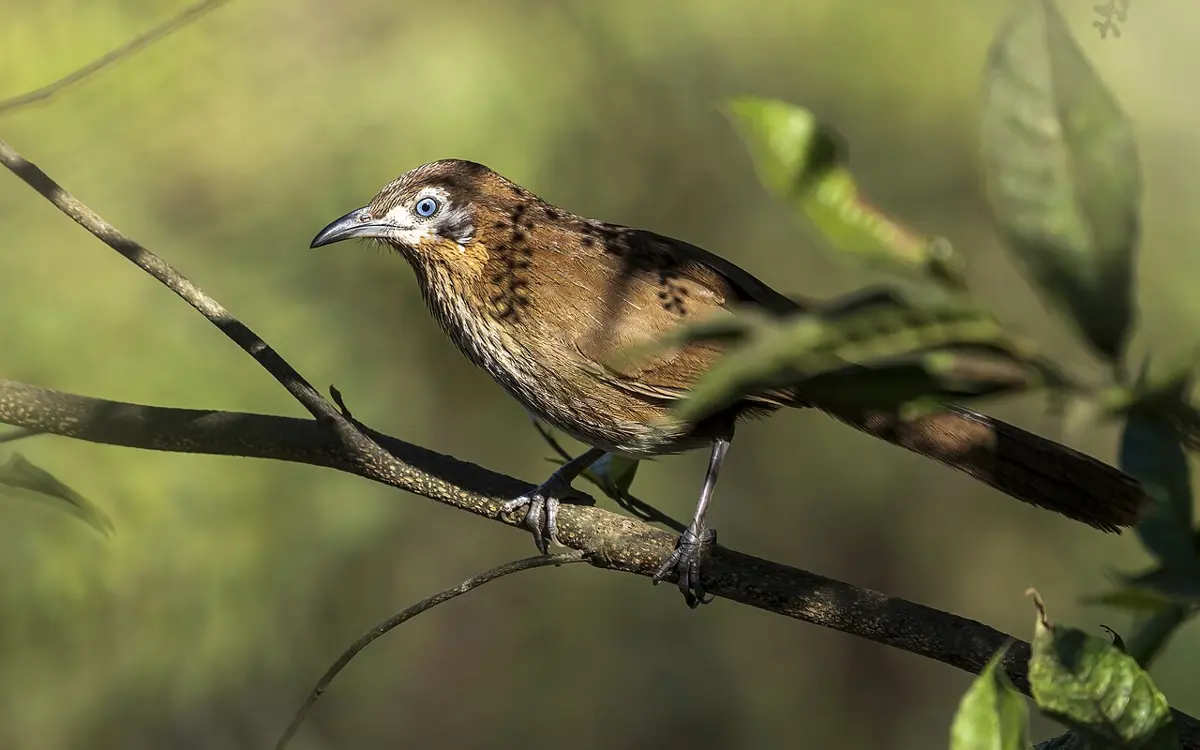
In the scrubby hills around the Kathmandu Valley lives a shy brown bird with a long tail and a streaky chest, the spiny babbler. It is found in Nepal and nowhere else on Earth. A species found in only one place is endemic to it, and the spiny babbler is Nepal’s only endemic bird. Somewhere, long ago, a population of its ancestors became a species of its own.
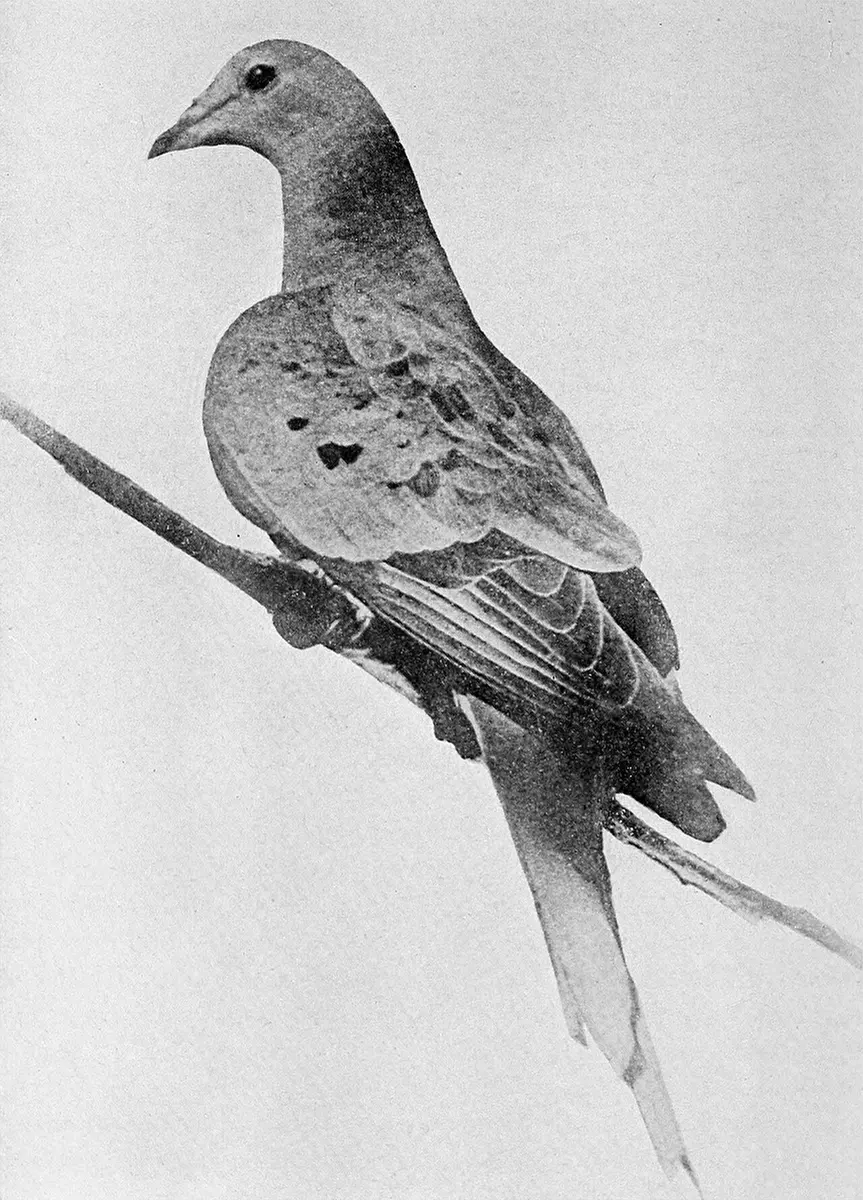
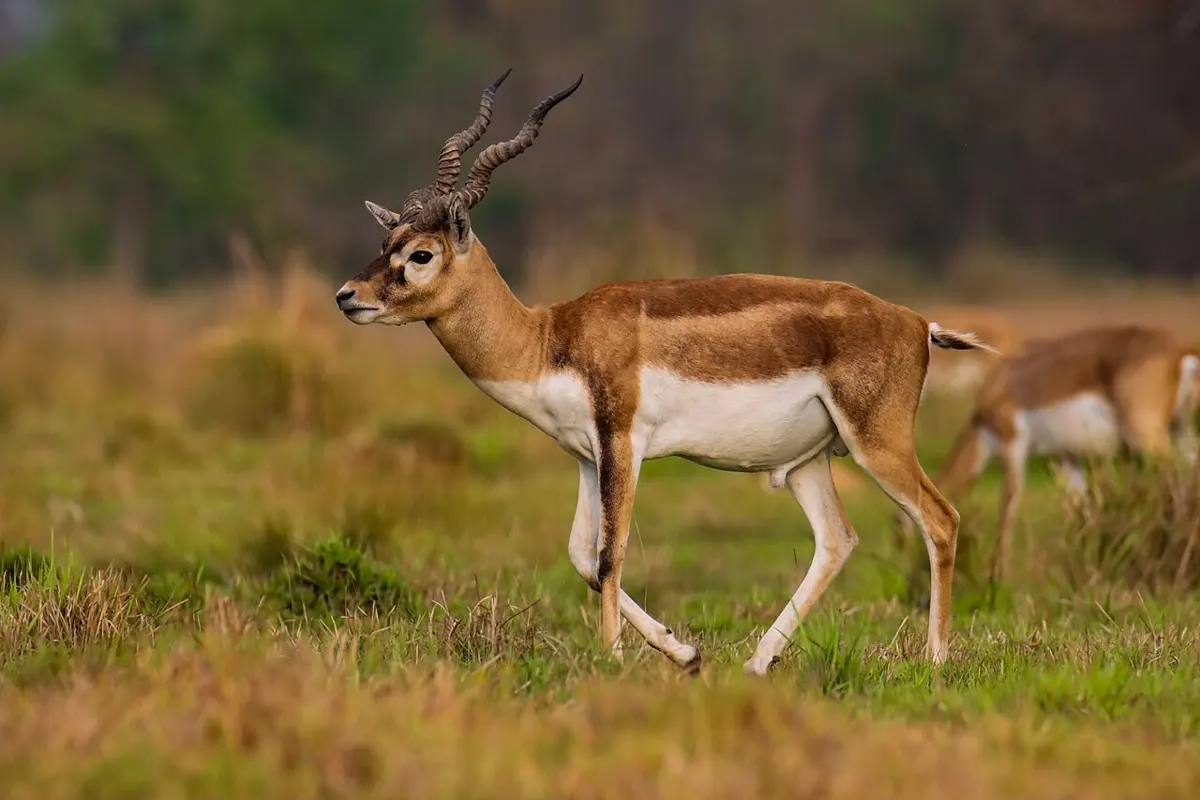
Species also end. In the mid-1970s, Nepal’s blackbuck, the antelope with corkscrew horns, were down to about nine animals in a patch of grassland at Khairapur in Bardiya. In North America, a pigeon that once flew in flocks of billions was gone forever by 1914.
So how does one species become two, and why does a species vanish? Both answers turn out to depend on the same thing: what happens to a population when its surroundings change. This topic shows how scientists find the evidence, and how you can use a model to test ways of saving a species before it is too late.
What counts as a species?
You met Darwin’s answer to how new species arise in Grade 9: useful variations add up over many generations, and groups of the same ancestor living in different places can become different species Grade 9: Origin of new species. But that leaves a question. Dogs come in every size from a Chihuahua to a Tibetan mastiff, yet they are all one species. Lions and tigers look more alike than a Chihuahua and a mastiff, yet they are two. What decides?
The answer most biologists use for animals is this: a species is a group of populations whose members can breed with each other in nature and have young that are themselves fertile (able to have young), and that can’t do this with other groups. Two populations that can no longer breed together, even if they meet, are reproductively isolated.
A mule shows what that means. A horse and a donkey can mate, and the young, a mule, is strong and useful. But a horse has 64 chromosomes and a donkey 62, so a mule gets 32 + 31 = 63, which can’t pair up properly when it makes eggs or sperm. Mules are almost always sterile (they can’t have young). The horse and the donkey stay two species.
Two populations of frogs live in ponds 50 km apart. In the laboratory they mate and have healthy tadpoles, which grow up and breed. In nature they never meet. Are they one species or two?
Pick an answer to see why.
How one species becomes two
Think of a population of small birds in a forest. Every generation, birds from one end of the forest pair up with birds from the other, and their young fly off to new places. Any new version of a gene that appears in one bird can spread, generation by generation, through the whole population. This movement of genes from one part of a population to another is gene flow. Gene flow is what keeps a species one species: whatever changes in one place soon reaches everywhere.
Now suppose something cuts the forest in two: a river changes its course, a glacier pushes down a valley in an ice age, a strip of land rises out of the sea, or a few birds are blown to an island far away. Birds no longer cross. This is geographic isolation, and from now on each half changes on its own, in three ways you have already met:
- a.New mutations appear in each half, and they are different ones (Three sources of difference).
- b.Natural selection favors different variations where the surroundings differ: a wetter side, a colder side, different food, different enemies.
- c.Chance decides which versions of genes happen to be passed on, especially in a small population. The change in a population’s genes from chance alone is called genetic drift.
As the differences pile up, the two halves come to look, sound and behave differently. If the barrier disappears and they meet again, they may no longer recognize each other as mates: different songs, different colors, different breeding seasons. Or they may mate, but their young are weak or sterile, like a mule. Either way, they are reproductively isolated: there are now two species. A new species formed after a population has been split by geography is called allopatric speciation (allopatric: “in another homeland”).
You should find something surprising: even one bird crossing each generation keeps the two sides together, however many generations pass. Every new version that spreads on one side soon leaks across to the other. This is why a barrier has to be nearly complete for a new species to form, and why it usually takes so long.
In the model, the two sides stay alike when even one bird crosses each generation. Why?
Pick an answer to see why.
Which of these is the best example of reproductive isolation?
Pick an answer to see why.
Evidence 1: shrimps on two sides of Panama
How can anyone test an idea about something that takes many thousands of years? One way is to find a barrier whose age is known, and look at what has happened on its two sides.
The Isthmus of Panama is the narrow strip of land joining North and South America. Until about 3 million years ago there was a gap there, and the water of the Caribbean Sea and the Pacific Ocean mixed through it. When the land rose and closed the gap, the sea animals living there were cut in two, all at about the same time.
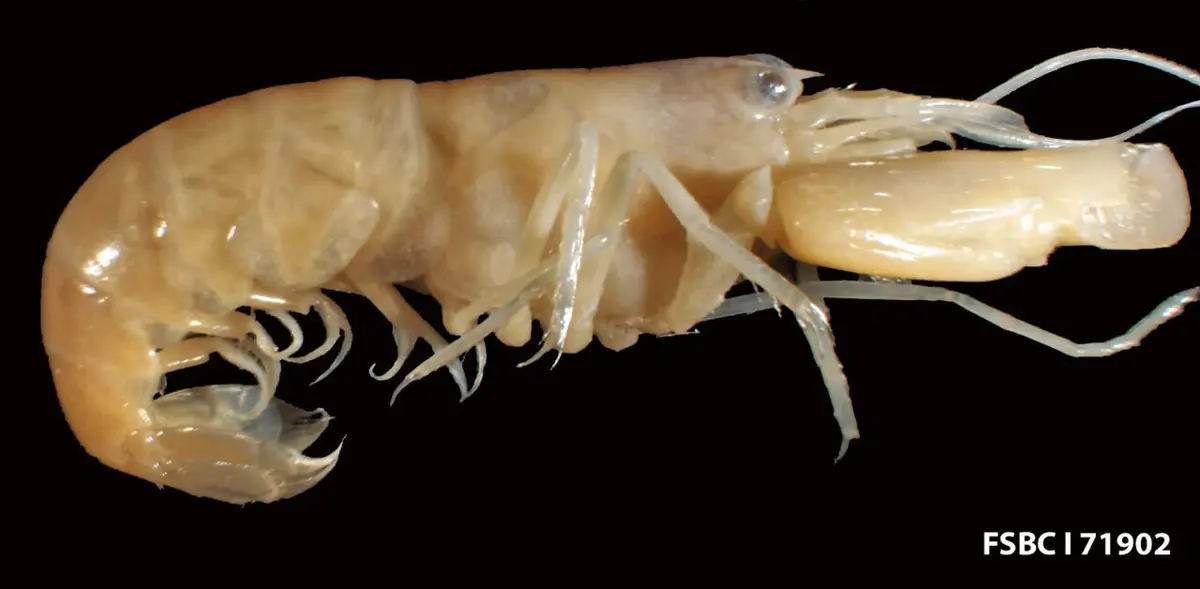
In 1993 the American biologist Nancy Knowlton and her colleagues studied seven pairs of snapping shrimps, each pair made of one species in the Caribbean and its closest relative in the Pacific. The two species of a pair look almost the same. Their DNA showed that each pair had once been one population. Then the scientists put males and females from the two sides together in tanks. Shrimps from the same side usually paired up; shrimps from opposite sides mostly did not, and often snapped at each other instead. In about 3 million years, the populations on the two sides had become reproductively isolated, just as the idea predicts.
The DNA held a further clue: some pairs had drifted apart more than others. The scientists concluded that some populations had been cut off earlier, as the seaway grew shallower and changed, several million years before it closed completely. The more time apart, the more different: just what you would expect if differences pile up after a split.
Evidence 2: a ring of warblers around Tibet
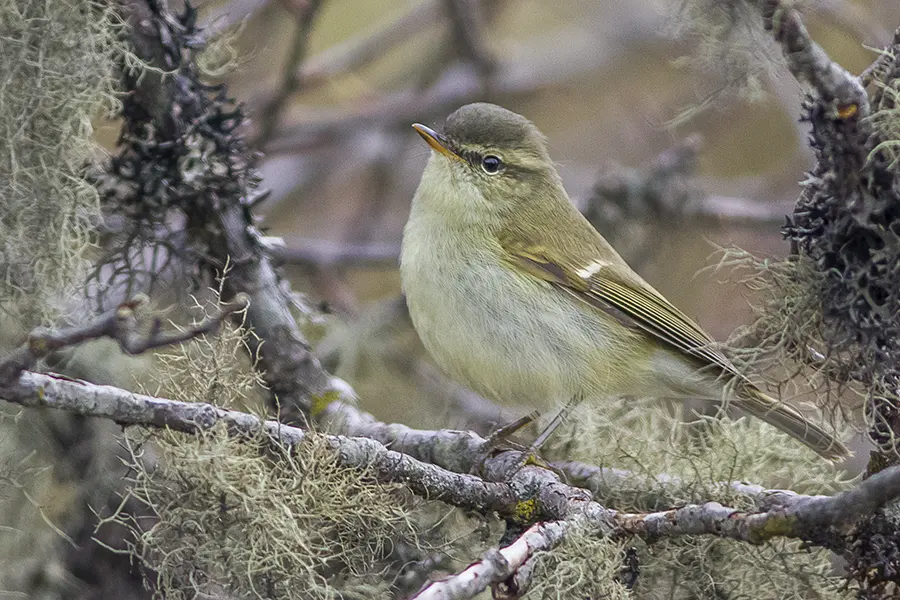
In summer, the forests of Nepal’s Himalaya fill with small green-gray birds that flit through the leaves catching insects. One of them is the greenish warbler. It breeds in a great ring of forests around the Tibetan Plateau, which is too high and too dry for it: along the Himalaya (Nepal included), north through the mountains of Central Asia on the west side and of China on the east, and on into Siberia from both sides.
Going round the ring, the birds change little by little, from one population to the next: their size, their wing bars, and above all their songs, which grow longer and more complicated towards the north. Neighboring populations along the ring breed together. But in central Siberia, where the western and eastern ends of the ring meet, the birds are so different that they mostly don’t interbreed: the western form has one pale wing bar and the eastern form two, their songs are different, and a male ignores the song of the other form. Around the ring, you can see every step between one population and two species. It is like being able to see a split that would usually take thousands of generations, laid out in space instead of time.
Watching a new species start
The Big Bird lineage is unusual: a new species usually takes much longer, and it is too soon to be sure the lineage will last. But it shows that the barrier that keeps species apart can be in the animals’ behavior, as well as in the land.
When the environment changes
The isthmus rising out of the sea was a change in the environment. So are a drought, a flood, a forest cut down, a lake fed with fertilizer, or the sea emptied of fish. When the environment changes, scientists see three kinds of result: some species increase, new species can emerge (as on two sides of the isthmus), and some species die out. Often all three at once. For each, the question is about cause and effect: did this change in the environment really cause that change in the living things? To answer it, scientists look for evidence that the effect came after the cause, that it is bigger where the change was bigger, and that nothing else explains it better.
Some species gain
A change that harms one species is often good news for another.
- Fertilizer and sewage. Rain washes fertilizer from fields, and towns let out sewage, into lakes and rivers. Both are full of nitrogen and phosphorus, which plants need. In water rich in them, fast-growing plants such as algae and water hyacinth multiply until they cover the surface. Studies of Pokhara’s Phewa Lake find more and more nutrients flowing into it from farms and from the hotels and houses along its shore, and water hyacinth has spread so thickly over parts of the lake that clearing it is a yearly job. Under the floating mat, the water gets little light, and when the plants die and rot, bacteria use up the oxygen that fish need.
- Cutting a forest opens the ground to grasses, weeds and the animals that eat them, while species of the deep forest decline. In Nepal’s Terai, the invasive climber Mikania spreads fastest where the forest canopy has been opened up.
Traits shift
An environmental change can also change which traits a species has, by natural selection, within a few generations.
- Drought. In 1977 almost no rain fell on Daphne Major. The plants made few seeds, and the finches soon ate the small, soft ones. Mostly big, hard seeds were left, which only finches with deep, strong beaks could crack. About 85 % of the island’s medium ground finches died, and the survivors were mostly the big-beaked ones. Their young, the next year, had beaks that were deeper, on average, than the population’s before the drought. The Grants measured this beak by beak.
- Fishing. Off Newfoundland, in Canada, the cod were fished so hard in the 1980s that few fish lived long enough to grow big. Fish that began breeding young and small left more young, because they bred before they were caught. Studies of the cod caught over the years show they were maturing younger and smaller and smaller, until in 1992 the fishery collapsed and was closed. Decades later the cod have still not fully recovered.
After 1977, the medium ground finches on Daphne Major had deeper beaks, on average. Which explanation fits the evidence best?
Pick an answer to see why.
How species end
Extinction, the death of the last member of a species, is part of evolution, as normal as new species beginning. Most estimates say that more than 99 % of all the species that have ever lived are now extinct. Over most of the history of life, species have died out slowly, one here and one there, at a low rate called the background rate: in the past, new species appeared about as fast as old ones disappeared.
Five times in the last 500 million years, though, something went badly wrong. In what was, for the Earth, a short time (often a few million years or less, and in one case perhaps less than a year), about three-quarters or more of all species disappeared. These are the mass extinctions, called the “Big Five”.
The most famous is the last, about 66 million years ago, when an asteroid about 10 km across hit the Earth in what is now Mexico. Dust and soot darkened the sky, plants stopped growing, and the dinosaurs (all except the birds) died out, along with about three-quarters of all species. The worst was the end-Permian, 252 million years ago, when huge volcanic eruptions in Siberia warmed the planet and stripped the oxygen from the seas.
What these have in common is speed. Life has survived many changes in climate over the ages. When a change is slow, over hundreds of thousands of years, populations can move to places that still suit them, and natural selection has time to work. When the change is fast, many species simply can’t keep up.
Is it happening now?
Since the year 1500, people have recorded the extinction of 164 species of birds, out of about 11,000 (as of 2025, IUCN Red List). Is that more than the background rate? You can work it out.
Today’s rate is far above the background rate, but nowhere near a mass extinction yet: so far, about 1.5 % of the known species of birds and of mammals are recorded as extinct, not three-quarters. Scientists are concerned because of where today’s rate leads, if it carries on for centuries.
When the climate warms on a mountain
Warming is a change you can see on Nepal’s mountains. As you climb, the air gets cooler, by about 6 to 7 °C for every 1,000 m. So each plant and animal of the mountains lives in a band of height where the temperature suits it. If the climate warms, that band moves up the mountain.
The widget shows two dangers. If the climate changes faster than a species can spread, it dies out at the warm edge before it can settle the cool land above. And even a species that keeps up runs into the shape of the mountain: the higher it goes, the less land there is, until it reaches the top and has nowhere left to go. Ecologists call this the escalator to extinction.
Two places warm by the same 3 °C. In place A it happens over 1,000 years; in place B over 100 years. In which is an alpine plant more likely to survive, and why?
Pick an answer to see why.
The danger of being few
Once a species is down to a few hundred animals, new dangers appear that have nothing to do with what first made it rare.
- Bad luck. A flood, a fire or a disease outbreak can wipe out a small population that lives all in one place.
- Losing variation. In a small population, chance (genetic drift) loses versions of genes every generation, just as in the river model: each generation’s genes are a small sample of the last one’s, and a version carried by only a few animals is easily missed. With less variation, the population is less able to adapt when its environment changes again.
- Inbreeding. In a small population, sooner or later everyone is related to everyone. Relatives are more likely to carry the same harmful recessive version of a gene, so their young are more likely to get two copies of it, and to be weak, sick or sterile. This is inbreeding depression.
Each makes the population smaller, which makes the others worse: biologists call it the extinction vortex.
How fast is the variation lost? In an ideal population of N breeding animals, each generation keeps a fraction 1 − 1/(2N) of the variation it had. After t generations, the share that is left is
where H stands for the genetic variation (the chance that the two copies of a gene in an animal are different versions; H₀ now, Hₜ after t generations).
Nepal’s rhinos came close to the bottom of the vortex. As the forests and grasslands of the Chitwan valley were cleared for farms in the 1960s and poachers took their horns, the rhinos fell to about 100 by 1968. Protected since Chitwan National Park was founded in 1973, they grew to 752 in Nepal’s 2021 count Grade 10: Nepal’s success stories. But all of today’s rhinos in Nepal are descended from those few, and some of the variation they lost can’t come back.
Testing a solution
Conservation costs money and land, and people live beside the parks. So it matters which plans actually work. Scientists test them in two ways: with models, before trying a plan, and with evidence, afterwards. Here are four kinds of plan, and what the evidence says about each. You met protected areas, breeding centers and the laws that protect wildlife in Grade 10 Grade 10: Conservation of wildlife; this section asks how well each works.
Don’t keep them all in one place
Nepal’s blackbuck show the danger of a single herd. From about nine animals in the mid-1970s, the herd at Khairapur grew to 242. But a flood of the Babai river in August 2014 is reported to have swept about 40 of them away, and in the 15 months to October 2026, 34 died, many of them killed by leopards and dogs, and 20 more went missing, leaving 210 (Kathmandu Post, October 2026). So since 2012 a second herd has been built up at Hirapur in Shuklaphanta, from zoo animals and, in 2015, 14 blackbuck from Khairapur. Nepal did the same with its rhinos: from 1986 to 2003 it moved 87 rhinos from Chitwan to Bardiya and Shuklaphanta, so that no single disaster could reach them all. Spreading out doesn’t protect against everything, though: during and after the armed conflict, poaching helped cut Bardiya’s rhinos from 67 in 2005 to 22 in 2008. A threat that is everywhere at once hits every herd.
Join the habitat up
In the Terai, forests that were once continuous are now patches between farms and towns. A wildlife corridor is a strip of forest, protected or replanted, that lets animals move from one patch to another. The Khata corridor joins Bardiya National Park to India’s Katarniaghat Wildlife Sanctuary. Camera traps there have recorded tigers passing through between the two, and some tigers living and breeding in the corridor itself.
The model gives you two ways to the goal: bigger patches, or a corridor between them. A corridor that lets just a few animals cross each generation makes two small patches behave almost like one big one. That is why conservation biologists often say that about one migrant per generation is enough to stop small populations drifting apart, and why corridors can be cheaper than doubling the size of a park. But the model counts only genes: a real corridor must also be safe to cross, and animals passing through farmland meet people and livestock (How Many Tigers Can Chitwan Hold?).
Breed them and release them
Since the late 1970s Nepal has raised gharials, the fish-eating crocodiles of its rivers, at its breeding center at Kasara in Chitwan, and released the young into the Rapti and Narayani rivers. The evidence on how well it works is mixed. Counts in Chitwan rose to 265 by the start of 2024. But a study of the counts from 2017 to 2022 found that the population had grown by only about 80 while 404 young gharials had been released: most released animals seem to die, or to be washed downstream into India, where a dam blocks the way back. The study pointed to sand mining, fishing nets and the dam as the real limits. So captive breeding helps only if the river itself can keep the young alive: it treats the effect, not the cause.
Bring in new genes
A government plans to save a rare frog by raising thousands of tadpoles in tanks and releasing them into its last stream, which is polluted by a factory upstream. What is the most important weakness of the plan?
Pick an answer to see why.
Questions
Which change would most likely lead to a new species forming?
Pick an answer to see why.
Nepal’s daily maximum temperatures rose by about 2.4 °C between 1971 and 2014. A scientist finds that a Himalayan butterfly now lives 200 m higher up than in 1971. Which further evidence would best support the claim that warming caused the change?
Pick an answer to see why.
Explain why gene flow keeps a species from splitting, and why a barrier such as the Isthmus of Panama can lead to two species.
Answer
Gene flow carries new versions of genes from one part of a population to the others as animals move and breed with each other. Every new mutation that spreads in one place is also carried to the others, so the whole population changes together and stays one species. A barrier such as the isthmus stops gene flow. Then the two parts collect different mutations, are shaped by natural selection in different surroundings, and change by chance in different ways. Over a long time, the differences in their behavior or bodies grow so big that, even if they meet, they don’t breed together or their young are sterile: they have become two species. The snapping shrimps on the two sides of the isthmus are an example: after about 3 million years apart, shrimps from the two sides rarely pair up.
For each of these changes, say whether it is likely to make some species increase, cause a new species, or cause an extinction, and explain the cause and effect.
- a.A farm’s fertilizer washes into a pond every rainy season.
- b.Over hundreds of thousands of years, a rising mountain ridge splits a population of beetles that can’t fly.
- c.An island’s forest is cut down, and the island has a bird found nowhere else that nests only in old trees.
Answer
- a.Some species increase. The nitrogen and phosphorus in the fertilizer feed fast-growing algae and floating plants, which multiply and cover the pond; when they die and rot, bacteria use up the oxygen, so fish and other animals may decline.
- b.A new species may form. The ridge stops gene flow between the two beetle populations; over a long time, mutation, natural selection and chance make them different until they can no longer breed together.
- c.Extinction is likely. The bird lives in only one place and needs old trees to nest. With the forest gone, it can’t breed, and it has nowhere else to go. The change is fast compared with the time it would take to adapt to nesting somewhere else.
A population of 40 animals is cut off from all others. Assuming it behaves like an ideal population, what share of its genetic variation will be left after 30 generations? Is that enough to meet a goal of keeping 90 %?
Answer
About 69 % is left, well short of 90 %. (A real population of 40 acts like an ideal one that is smaller still, so it would lose even more.)
In the Design a corridor widget, find two different plans that meet the goal of 90 % after 30 generations. Compare them: what would each cost in land, and what else (not in the model) could go wrong with each?
Answer
For example: (1) two patches of about 140 animals each, with no corridor, meet the goal on their own; (2) two patches of 80 animals each, joined by a corridor that lets 5 cross each generation, also meet it (so do two patches of 100 with 2 crossing). Plan 1 needs nearly twice as much forest; plan 2 needs much less, plus a corridor. But the model leaves out things that matter: a corridor through farmland brings animals close to people and livestock, so some may be killed in conflicts, and diseases can travel along a corridor too; the big patches of plan 1 must hold enough prey for 140 animals each. A real plan would also count the effective population size, which is smaller than the number of animals.
Revise the model. The Design a corridor widget assumes that the number of animals never changes. Describe how you would change the model to test whether a corridor also protects the population from a disaster like the 2014 Babai flood, and what you would expect to find.
Answer
I would add the number of animals in each patch to the model, let it grow each generation towards a limit (the carrying capacity), and give each patch a small chance each generation of a disaster that kills most of its animals. Then I would run it many times, with and without a corridor, and count how often the whole population dies out. I would expect the corridor to lower that chance a great deal: after a disaster wipes out one patch, animals from the other can walk back in and refill it, as long as the disasters in the two patches are independent. Without a corridor, an empty patch stays empty.
The passenger pigeon went from billions to none in about a century. Use the idea of the rate of environmental change to explain why it couldn’t adapt.
Answer
Adapting by natural selection takes many generations, and needs inherited variation that helps some birds survive the new conditions. The pigeon’s environment changed in a few decades, very fast compared with that: its forests were cleared and it was hunted on a huge scale. No variation could protect a pigeon from being shot in its nesting colony, and the change was too fast for anything new to arise. Once the flocks were small and scattered, the birds may also have been unable to breed well without their huge colonies, so the population kept falling even after the hunting slowed.
Where to go next
- How Does DNA Show That All Life Is Related? Every split between species leaves its mark in DNA. How the differences are read as a family tree of all life.
- Why Do Antibiotics Stop Working? A change in the environment, a medicine, selects new traits in bacteria within days.
- Can a Forest Come Back? What happens to a whole ecosystem after a disturbance, and how to design ways to help it recover.