
In the 1970s, experts looked at Nepal’s hills and saw disaster coming. Villages were cutting trees for firewood, fodder and new fields faster than the trees could grow; goats and cattle grazed the young ones; bare slopes washed away in every monsoon. A World Bank report in 1979 warned that without huge tree-planting programs, the forests of the hills would be largely gone by 1990.
They were not. Walk up many of the hills around Kathmandu today and you climb through forest that your grandparents may remember as bare, eroded slopes. As of 2024, forest and shrubland covered about 46 % of Nepal, and much of the forest that came back was never planted. It grew back by itself, once people stopped it being cut and grazed.
So can a forest come back? Often, yes, but not always, and not just anyhow. This topic is about how ecosystems stay steady, how they change, how they rebuild themselves after damage, and how people can design ways to help.
Steady, but never still
You learned in Grade 9 that an ecosystem is a community of living things and its non-living surroundings, linked by food chains and webs, and that competition and predation keep the numbers of each kind “in balance” Grade 9: Ecosystem. What does “in balance” really mean?
Think of a sal forest in the Terai. Count its trees, deer, birds and beetles this year, and again in ten years. The numbers will not be the same: a dry year kills some seedlings, a good year for fruit means more monkeys, a storm brings down an old tree. But the forest is still a sal forest, with roughly the same kinds of living things in roughly the same numbers. Its numbers go up and down around a steady level. Ecologists call an ecosystem like this stable: not unchanging, but staying within a range.
What keeps it there? The web of interactions you met in Grade 9.
- When deer become many, they eat more of their food, so fewer young survive; and tigers and leopards find them more easily. The numbers fall back.
- When a big tree falls, it opens a gap in the canopy. Sunlight reaches the floor, and seedlings that were waiting in the shade race upwards. Within a few decades one of them fills the gap.
- When a flood leaves sand on a riverbank, grasses grow from roots and seeds left in the ground, and the bank is green again by the next monsoon.
Anything that suddenly changes an ecosystem, kills some of its living things or frees up space, is a disturbance: a storm, a flood, a fire, a landslide, an animal grazing, a person cutting. A disturbance doesn’t have to be a disaster. Many ecosystems have small disturbances all the time, and recover from them. How quickly and how fully an ecosystem recovers after a disturbance is its resilience.
A storm blows down a few old trees in a community forest in Kavre. Twenty years later, the forest looks much as it did before. Which best describes this?
Pick an answer to see why.
Disturbance that keeps an ecosystem going
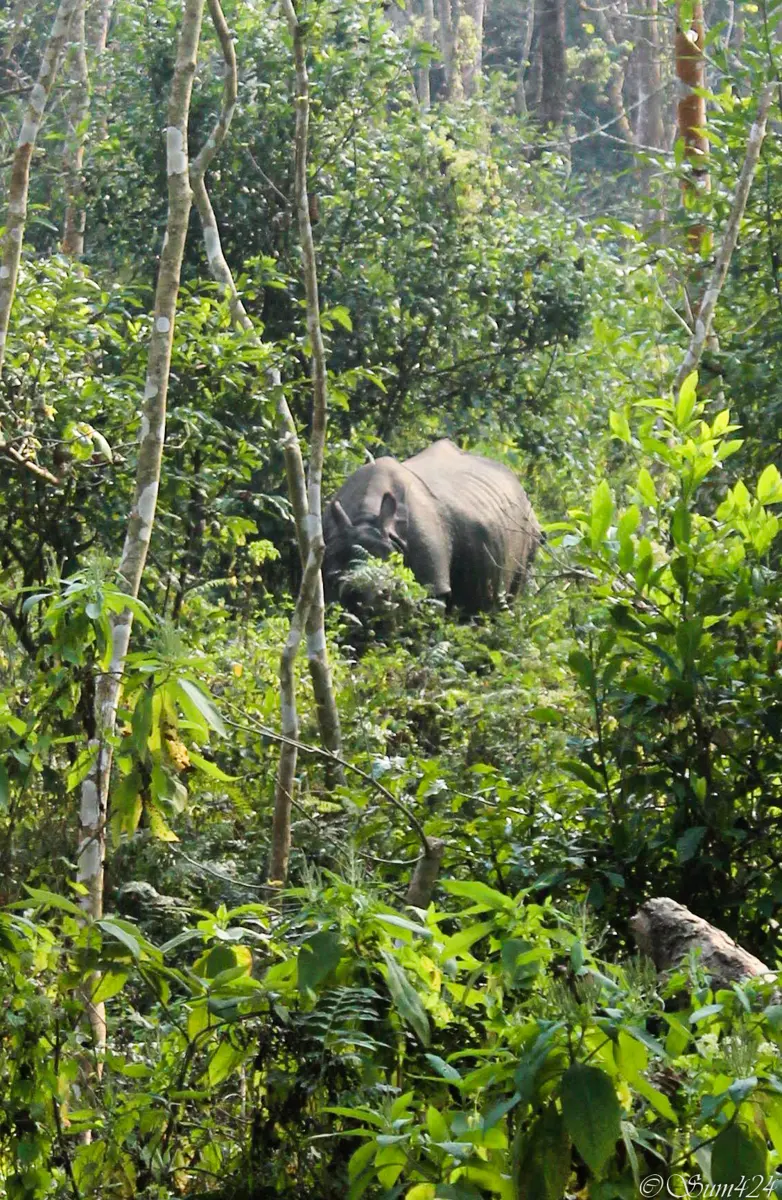
Some ecosystems actually need their disturbance. The tall grasslands of Chitwan and Bardiya, where rhinos graze and tigers hide, grow on the floodplains of rivers like the Rapti and the Karnali. Every monsoon the rivers flood, wander across their beds, cut away banks and drop fresh sand and silt somewhere else.
On new sand, tall grasses such as kans (Saccharum spontaneum) move in first. If the land is left long enough without a flood, khair (Acacia catechu) and sisau (Dalbergia sissoo) trees take root, then other riverine trees, and on the oldest, highest ground, sal forest. The floods keep resetting this sequence, so at any time the floodplain is a patchwork of new sand, grassland, young riverine forest and old forest. Ecologists working in these parks expect that where dams and barrages reduce the floods, and grazing stops, riverine forest will spread at the expense of the grasslands.
So the floods are not the enemy of Chitwan’s grasslands: they are what keeps them grassland. That is why the parks cut and burn some grasslands each year, to do what the floods no longer do everywhere.
When the change is too big
Some disturbances are too big for an ecosystem to bounce back from quickly. They change the conditions themselves: the soil, the water, the climate.
- A landslide strips a hillside down to rock and rubble. The forest’s seeds, roots and soil are gone with it. The 2015 Gorkha earthquake set off at least 25,000 landslides in and around central Nepal.
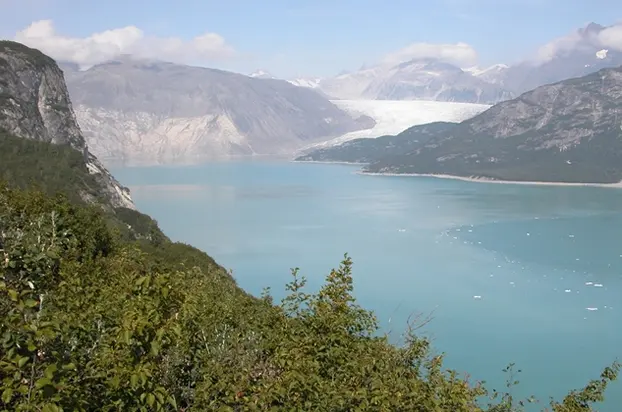
- A glacier that retreats leaves bare, ground-up rock where no plant has grown for thousands of years.
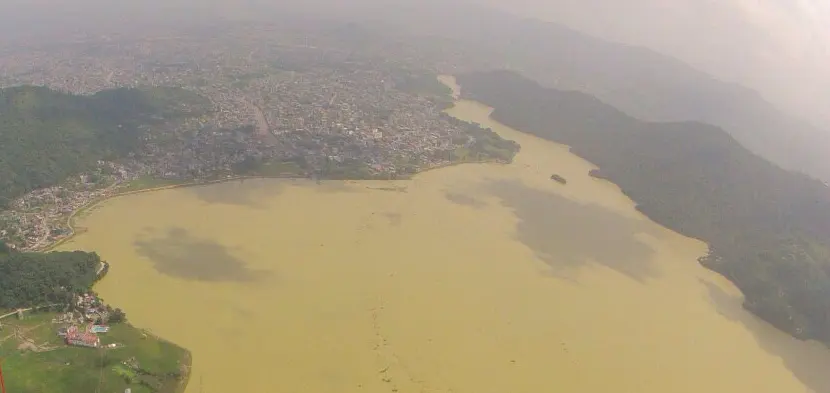
- A lake slowly fills with mud from the streams that run into it. Where a stream enters, a delta builds out; reeds grow on it, then grasses, then trees, and the lake gets smaller.
- Sea-level rise pushes salt water into coastal forests, and the trees die standing: the coast’s forest becomes a salt marsh.
- Heavy grazing, year after year, eats every tree seedling; with no roots holding it, the soil washes off; on thin soil, only tough grasses and thorny shrubs that animals avoid can grow.
After changes like these, what grows is a different community of living things: a new ecosystem, at least for many years.
Ecologists picture stability with a ball in a valley.
The second valley is the worrying part. Once a hillside has lost its soil, it may stay as grass and scrub even after the grazing stops: there is no soil for tree seedlings, and the grass fires that often sweep it in the dry season kill the few that do start. Pushing the ball back up the hill, into the forest valley, then takes work: the subject of the last part of this topic.
Which of these is most likely to turn a forest into a new ecosystem, rather than one that recovers by itself within a few decades?
Pick an answer to see why.
Succession: how bare ground fills up
So what does happen on a bare landslide? Look at an old landslide scar beside a highway, and then at one a few years older, and you can see the answer.
The change in the community of living things in a place over time, as one group of species replaces another, is called succession. It happens in roughly the same order wherever the climate is similar.
- Bare rock and rubble. No soil, little water held, the full sun and the wind. Very few things can live here.
- The pioneers. The first living things to settle a bare place are its pioneer species: lichens and mosses that grip bare rock, and grasses and small herbs whose tiny, light seeds blow in. They grow fast and need full sun. As they die and rot, they mix with the crumbling rock: the first thin soil.
- Shrubs. In that soil, shrubs take root. They grow taller than the grasses and shade them out.
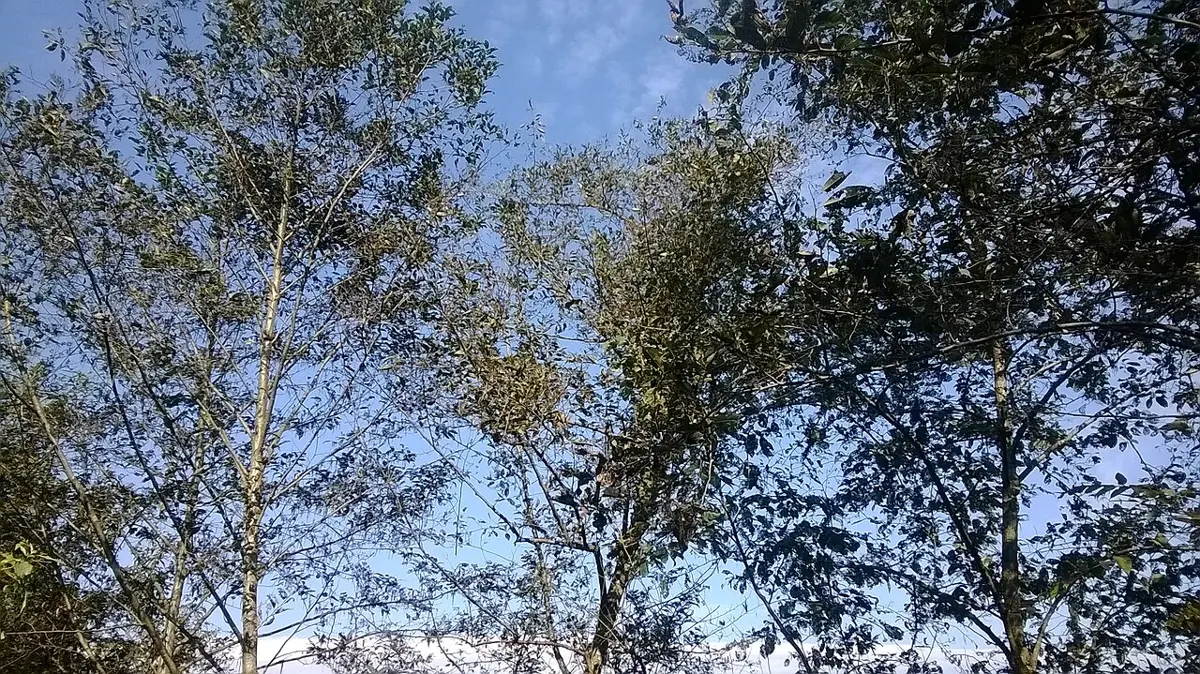
- Pioneer trees. In Nepal’s middle hills the first tree on a landslide is often utis, the Nepal alder (Alnus nepalensis). Its seeds are light and blow far, and it grows fast in full sun. Bacteria living in lumps (nodules) on its roots take nitrogen from the air and turn it into compounds a plant can use, so utis grows on soil with almost no nitrogen, and its fallen leaves enrich the soil for everything else.
- Broad-leaved forest. Under the utis, seedlings of trees that grow well in shade take hold: in the middle hills, chilaune (Schima wallichii) and katus (Castanopsis). Utis seedlings can’t grow in shade, so as the old utis die, these broad-leaved trees take their place. The forest that finally lasts, whose own young can grow in its shade, is sometimes called the climax community.
Each stage changes the conditions: more soil, more nitrogen, more shade, more moisture held. Those changes make the place better for the next group of species and worse for the group that made them. Succession is not a plan: each species simply grows where it can, and the conditions it creates decide who comes next.
Two kinds of succession
On a landslide, a glacier’s rubble or a new lava flow, succession starts with no soil at all. That is primary succession, and it is slow: building soil from rock takes decades or centuries.
When a field is abandoned, a forest is cleared or burned, or a flood lays a thin layer of silt over a meadow, the soil is still there, full of seeds, roots and soil life. Succession starts much further along. That is secondary succession, and it is much faster. It is what happened on many of Nepal’s hills: the soil was mostly still there under the grazed scrub, and old roots and stumps sprouted as soon as the cutting and grazing stopped.
In the model, why does the forest come back so much faster on an abandoned field than on a fresh landslide?
Pick an answer to see why.
Did Nepal’s forests really come back?
In the 1970s and 80s many writers made the claim you read at the start: the hills of Nepal were being stripped of their forests, so fast that soon there would be none. The argument went: more people need more firewood, fodder and fields, so more forest is cut, so more soil washes away, so more people go hungry and cut still more. It became known as the theory of Himalayan environmental degradation.
Today you read the opposite: Grade 10 tells the story of Nepal’s forests coming back, and storing carbon as they grow Grade 10: Measures to control climate change. Which is right, and how would you know?
To test a claim, scientists use three things, which you can use too:
- The claim: what exactly is said (here: “the hill forests will be largely gone by 1990”).
- The evidence: measurements that bear on it.
- The reasoning: why the evidence supports the claim, or doesn’t.
Here is the evidence from Nepal’s national forest surveys:
| Survey | Forest | Shrubland | Forest and shrubland together |
|---|---|---|---|
| 1978–79 (Land Resources Mapping Project) | 38 % | 4.7 % | 42.7 % |
| 1990s (National Forest Inventory) | 29 % | 10.6 % | 39.6 % |
| 2010–14 (Forest Resource Assessment, published 2015) | 40.36 % | 4.38 % | 44.74 % |
| 2024 (reported in the Economic Survey, 2026) | 43.38 % | 2.7 % | 46.08 % |
(All as shares of Nepal’s area, 147,181 km².)
Look at the first two rows. Between 1979 and the 1990s, forest fell from 38 % to 29 %, but shrubland rose from 4.7 % to 10.6 %. Much of the lost forest hadn’t become bare ground: it had become scrub, cut and grazed back. The degradation was real. But the land was still covered, and as you saw in the widget, scrub on soil is the starting point of fast secondary succession.
Then the trend turned. By 2015 the forest was back above 40 %, and in 2024 it was 43 %.
What caused the comeback?
The evidence shows the forest came back. But why? That is a second claim, and it needs its own evidence.
The most famous reason is community forestry. In 1957 the government nationalized Nepal’s forests. Many villages that had looked after their forests lost their say in them, and with it their reason to protect them. In 1978 the government began handing patches of forest back to village panchayats, and the Forest Act of 1993 let forest offices hand national forests to community forest user groups: the households who use a forest, who make their own rules for it. The groups ban grazing in young forest, decide when and how much fodder, firewood and timber may be cut, appoint forest watchers and fine those who break the rules. The forest is theirs to manage, so they have a reason to look after it.
As of early 2026, 23,162 community forest user groups were managing about 2.51 million hectares of forest, more than a third of Nepal’s forest (Ministry of Finance, Economic Survey 2082/83).
Is community forestry the cause? Scientists have tested it. A study of more than 18,000 community forests (Oldekop and others, 2019) compared places with community forests with similar places without them, and found that between 2000 and 2012 community forests had reduced deforestation by about a third and reduced poverty a little too. But other studies point to causes working at the same time:
- Millions of young Nepalis went to work in cities and abroad. Fewer people farmed the steep terraces, and many fields far from the village were left to grow back: secondary succession.
- Many families now cook with LPG or electricity instead of firewood, and depend less on the forest for fodder and leaf litter.
- More farmers grow fodder trees on their own land, so they need to cut less in the forest.
So the honest answer is: community forestry protected the forests, and changes in how people live took pressure off them. Both let the forests’ own succession do the rest. Most of the regrowth was natural regeneration: trees growing from seeds, roots and stumps already there, not trees people planted.
A newspaper says: “Community forestry alone brought back Nepal’s forests.” Which piece of evidence would most weaken this claim?
Pick an answer to see why.
Helping a forest come back
If succession rebuilds forests by itself, what is left for people to do? A great deal. Look again at the ball and the valleys in Figure 24.2. Helping an ecosystem recover means three things.
- Stop the push. Remove what is holding the ecosystem down: stop the grazing, the cutting, the repeated fires. This alone is often enough when the soil is still there (secondary succession).
- Help the pioneers. Where the soil is gone, plant or sow pioneers that build soil and hold the slope: grasses, then nitrogen-fixing trees like utis. They do the hard first steps faster.
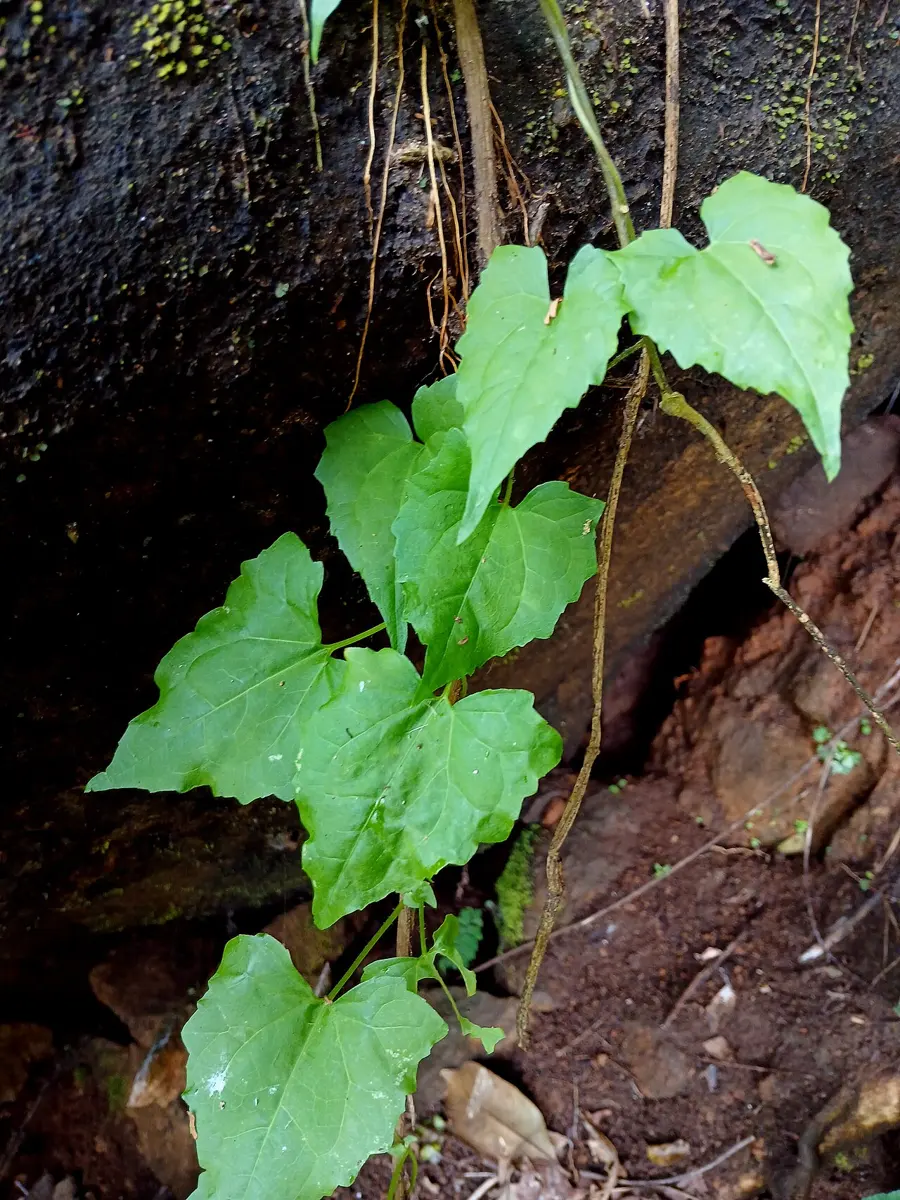
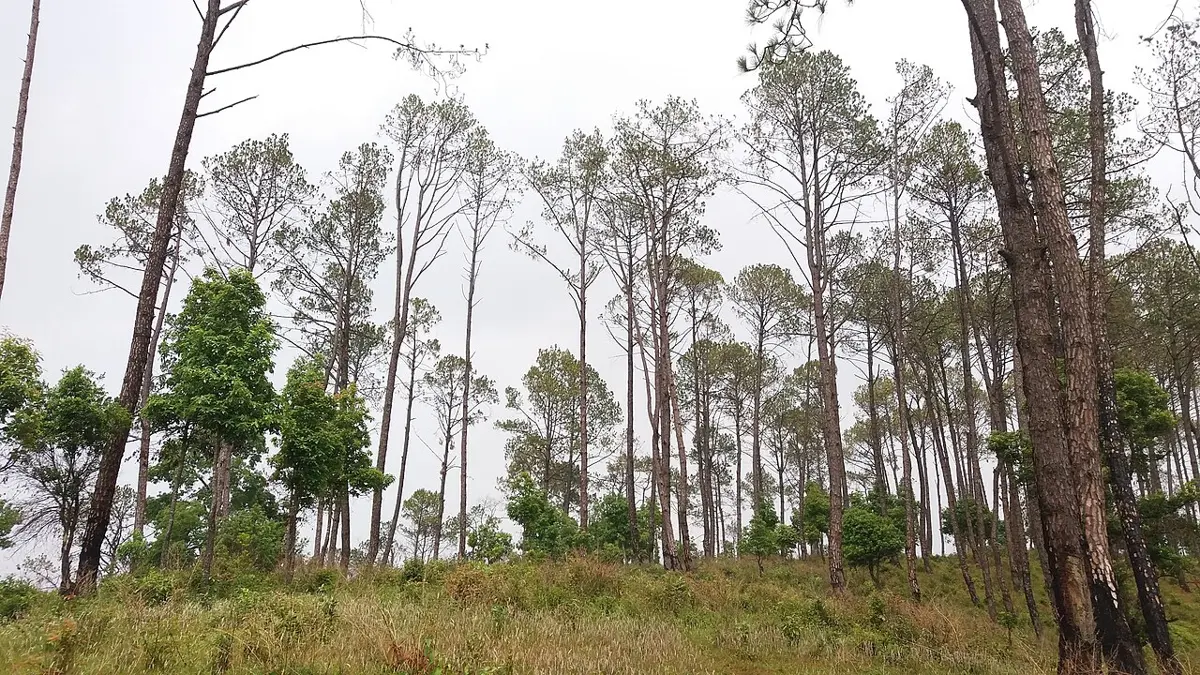
- Watch out for invaders. An invasive species is one brought from elsewhere that spreads fast and pushes out the native plants. You met banmara in Grade 8 Grade 8: Causes of biodiversity degradation. Invaders can take over a disturbed place before the native pioneers arrive, and stop succession going its usual way. In Chitwan, a survey published in 2013 found Mikania micrantha, a climbing vine from tropical America, in 44 % of the rhino habitats sampled; where it grows thickly it smothers the grasses and young trees that rhinos and deer feed on.
Design a solution
Many of the threats to Nepal’s ecosystems come from things people build and do: a new road, a dam, a town spreading over farmland, a weed carried in by accident. Listing measures, like those in Grade 10 Grade 10: Conservation of wildlife, is a start. An engineer or an ecologist goes further: they design a solution, test it against what it has to achieve, and improve it. You can do the same, in four steps.
- Define the problem. What exactly is wrong, and for whom? Then list the criteria (what a good solution must achieve) and the constraints (limits it must stay within: money, time, the law, what is available locally).
- Think of several solutions. Not just the first one.
- Evaluate them against the criteria, and look at the trade-offs: what you give up in one criterion to gain in another.
- Refine. Improve the best one, or combine the strengths of several, and test again.
Let’s try it on a problem Nepal has thousands of times over.
The problem: a road that keeps sliding
A new rural road has been cut along a hillside. Above it, the cut slope is steep and bare. In every monsoon, rain soaks into it, mud and stones slide onto the road, the road is blocked for days, and the bare scar grows a little bigger each year.
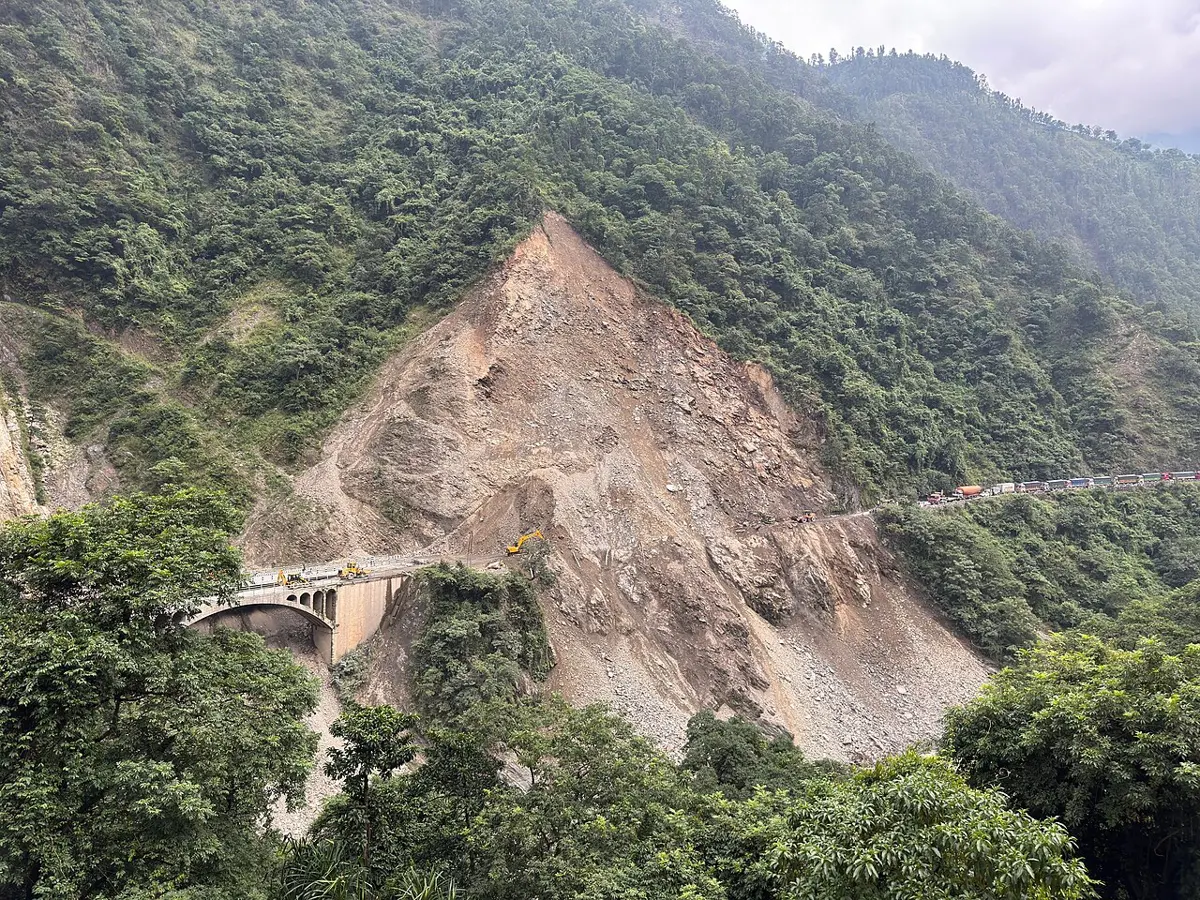
Criteria: the road must be safe within a year or two; the slope must stay safe for decades; the work should help, not harm, the people and nature around it. Constraints: a rural municipality’s small budget; materials that can be carried in; work that local people can do and maintain.
Possible solutions for slopes like this, all used in Nepal:
- a.A concrete or masonry retaining wall at the foot of the slope. Strong at once, but expensive, it holds only the bottom of the slope, and water building up behind a solid wall can push it over.
- b.A gabion wall and drains. Gabions are wire-mesh baskets filled with stones, stacked like bricks. They are cheaper, can be built with local stones and labor, bend a little without breaking, and let water drain through. Drains above and beside the slope lead rainwater away before it soaks in.
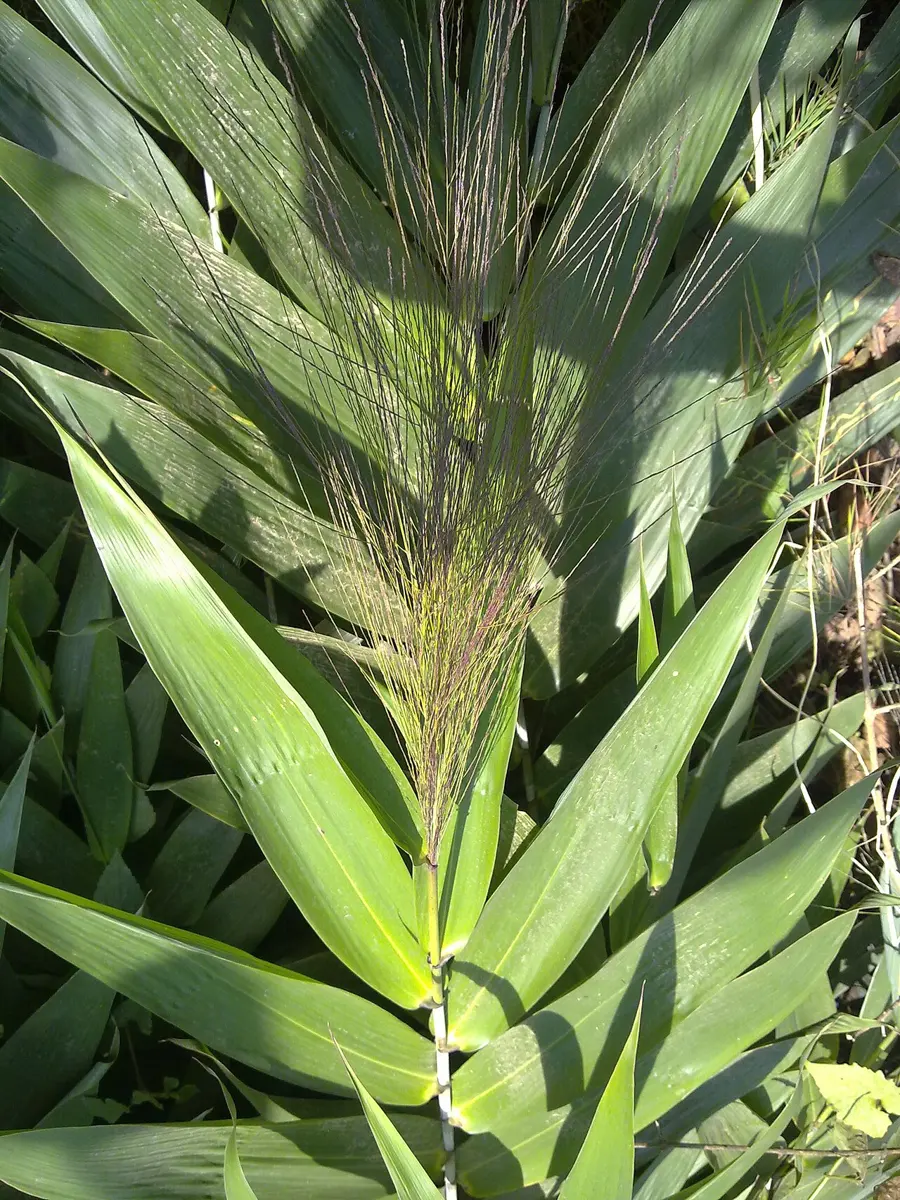
- c.Plants: bio-engineering. Lines of grass planted across the slope, such as amriso (broom grass) and Napier grass, with bamboo and trees such as utis. Roots bind the soil, leaves break the force of the rain, and the plants soak up water. Cheap, and the grass gives fodder and brooms to sell. But the roots need a few monsoons to grow strong. This is helping succession along, on purpose.
- d.Fence out the animals and wait for natural succession. The cheapest, but slow on a steep, bare scar, which may keep slipping meanwhile.
- e.A combination: drains, a small gabion wall at the foot, and plants on the slope.
Evaluate with a decision matrix
To compare designs fairly, give each one a rating for each criterion (here, 1 = poor to 5 = excellent), decide how much each criterion matters (its weight), multiply, and add up. This is a decision matrix.
| Design | Safe soon | Low cost | Lasts | People and nature |
|---|---|---|---|---|
| a.Concrete wall | 4 | 1 | 3 | 1 |
| b.Gabion wall and drains | 4 | 3 | 3 | 2 |
| c.Plants only | 2 | 5 | 4 | 5 |
| d.Fence and wait | 1 | 5 | 3 | 4 |
| e.Drains, small gabion wall and plants | 4 | 2 | 5 | 4 |
These ratings are our own rough judgments, made up for practice. A real team would measure the costs, test the soil and ask the people who live there.
The matrix shows the trade-offs: the concrete wall buys safety now with money and nature; plants buy cheapness and nature with time. It also shows why designers refine: by taking the strong parts of several designs, the combination does well whatever the priorities. That is what Nepal’s Department of Roads now does on many hill roads: drains and small structures to make a slope safe at once, and plants to take over and hold it for good.
Questions
Which is an example of primary succession?
Pick an answer to see why.
Utis is often the first tree to grow on a landslide in the middle hills. Which feature helps it most there?
Pick an answer to see why.
Explain the difference between a stable ecosystem and an unchanging one, using a forest as an example.
Answer
An unchanging ecosystem would have exactly the same living things in exactly the same numbers every year: no real ecosystem is like that. A stable ecosystem changes all the time but stays within a range: in a forest, trees die and seedlings replace them, deer numbers rise in good years and fall in bad ones, a storm opens gaps that fill again. Over decades it remains the same kind of forest, with roughly the same kinds of living things in roughly the same numbers, because interactions such as competition for light and predation pull the numbers back after each change.
Why is secondary succession usually much faster than primary succession?
Answer
Secondary succession starts where the soil is still there, after a field is abandoned, a forest cleared, or a fire. The soil already holds water, nutrients and organisms, and is full of seeds, roots and stumps that can sprout at once. Primary succession starts on bare rock or rubble with no soil: pioneers like lichens, mosses and grasses must first build a thin soil, over years or decades, before shrubs and trees can grow.
Each stage of succession makes conditions worse for the species that created them. Explain this with two examples from the middle hills.
Answer
- a.Grasses and herbs need full sun. By adding dead matter to the soil, they let shrubs take root, and the shrubs grow taller and shade the grasses out.
- b.Utis needs full sun as a seedling. By adding nitrogen and leaf litter to the soil and casting shade, it creates the conditions in which shade-tolerant chilaune and katus seedlings grow under it; its own seedlings can’t grow in that shade, so as the old utis die, the broad-leaved trees take their place.
The grasslands of Chitwan and Bardiya are kept as grassland by floods. A barrage built upstream stops the floods.
- i.Predict what will happen to the grasslands over the next 30 years.
- ii.What will this mean for rhinos and deer?
- iii.Suggest one way park managers could reduce the effect, and one trade-off it involves.
Answer
- i.Without floods to clear them and lay down new sand, the grasslands will go on with succession: khair and sisau trees will take root, then other riverine trees, and the grassland will shrink as forest replaces it.
- ii.Rhinos, hog deer and swamp deer feed mainly in the grasslands, so their food and habitat will shrink and their numbers may fall; fewer deer means less food for tigers.
- iii.Managers can cut, burn or uproot young trees in the grasslands to do the floods’ job. Trade-offs: it costs money and labor every year; burning can kill small animals and harms the air; and cutting must be done in the right season so as not to disturb nesting birds.
A student claims: “Nepal’s forest fell from 38 % in 1979 to 29 % in the 1990s, so in those years Nepal lost nearly a quarter of all its trees.” Use the table of surveys to evaluate the claim.
Answer
The numbers are right: (38 − 29) ÷ 38 × 100 % = 24 %, nearly a quarter, of the area counted as forest was lost. But the conclusion goes further than the evidence. In the same years shrubland rose from 4.7 % to 10.6 %, so much of the “lost” forest had become scrub, still covered with woody plants, not bare ground; forest and shrubland together fell only from 42.7 % to 39.6 %. The two surveys also used different methods, so part of the difference may come from how forest was measured. A fairer conclusion: much of Nepal’s forest was thinned into scrub, and some was cleared.
A slope above a school slips every monsoon. The school has a small budget and the slope must be safe within two years.
- i.List two criteria and two constraints.
- ii.Suggest a design and explain how each part of it works.
- iii.Name one trade-off in your design.
Answer
- i.Criteria, for example: the slope must not slip onto the school within two years; it must stay stable for decades; it should not harm the stream below. Constraints: the small budget; materials and labor available locally; work done outside school hours, before the monsoon.
- ii.A good answer combines measures: a catch drain above the slope to lead rainwater away before it soaks in; a low gabion wall at its foot to hold it at once; lines of grass (amriso or Napier) across the slope, and bamboo or utis, whose roots will bind the soil as they grow; and a fence to keep goats off the young plants.
- iii.For example: the gabion wall costs more than plants alone, but makes the slope safe sooner; or the fence keeps animals out, so families lose some grazing for a few years.
In the decision matrix, a third village weights all four criteria equally (weight 1). Score designs a, c and e, and say which wins. Then explain why a designer might still choose e.
Answer
Out of a best possible 20: a = 4 + 1 + 3 + 1 = 9 (45 %); c = 2 + 5 + 4 + 5 = 16 (80 %); e = 4 + 2 + 5 + 4 = 15 (75 %). Design c, plants only, wins by a point. But e is close behind, and it is the only design that scores well on being safe soon and on lasting. If the road carries buses or school children, the risk of the first few monsoons may matter more than the matrix’s equal weights suggest; a designer would point this out and might refine c by adding just the drains, which are cheap and make plants work better.
Where to go next
- How Many Tigers Can Chitwan Hold? What limits a population, and how the size of Chitwan’s grasslands and forests sets how many deer and tigers it can feed.
- Where Does a Fallen Leaf Go? The leaves that build a landslide’s new soil: how decomposers return their matter, and how carbon goes round between the air, the forest and the soil.
- Does the Fix Actually Work? More on designing and testing solutions to environmental problems, from smoke-free stoves to cleaner rivers.