
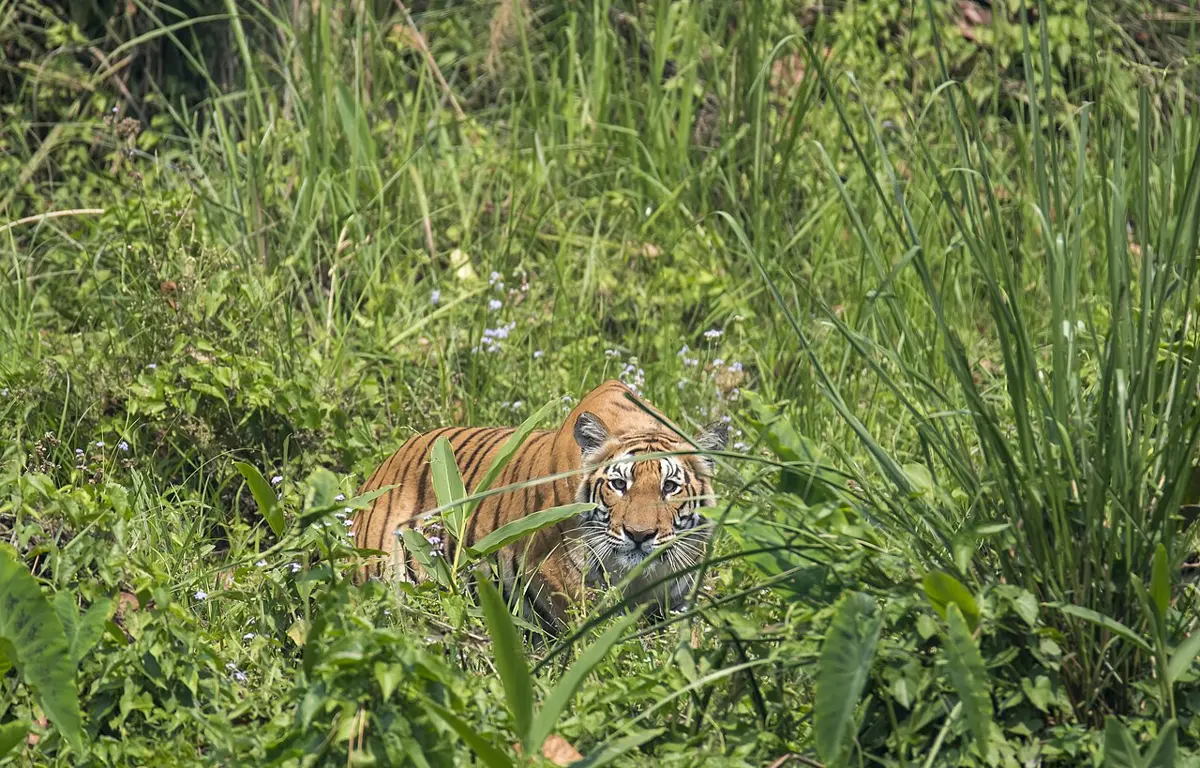
Chitwan National Park is Nepal’s tiger country. In 2026, Nepal’s tiger count found 145 tigers in Chitwan and the buffer zone around it. That is more than in any other park in Nepal. But it is a tiny number next to the animals tigers eat. When scientists counted the deer and wild pigs in the park in 2019, they worked out that there were about 68,000 of them: nearly 50,000 chital (spotted deer) alone.
So for every tiger there are hundreds of deer and pigs. Why? Why doesn’t the forest fill up with tigers, the strongest hunters in it? It isn’t only that tigers are hunted by people, or that they need space. Even in a forest with no people at all, tigers would be rare. The reason is hidden in the food: where it comes from, and what happens to it when it is eaten. In this topic you will follow it, from the sunlight to the tiger, and see why big hunters are always few.
Who eats whom
You learned in Grade 6 that every ecosystem has three kinds of living things.
- a.Producers make their own food. Green plants and algae do it using the energy of sunlight, in the green chloroplasts inside their cells. You met chloroplasts in Grade 8 Grade 8: Plastids.
- b.Consumers can’t make food, so they eat other living things. A primary consumer eats plants (a chital eating grass). A secondary consumer eats primary consumers (a tiger eating a chital). A tertiary consumer eats secondary consumers.
- c.Decomposers, such as fungi and bacteria, break down dead plants and animals and their droppings.
Food chains
Write who eats whom in a line, with arrows, and you have a food chain:
grass → chital → tiger
Each arrow means “is eaten by”. It points from the food to the eater, which is the way the food, and the energy in it, moves. Every food chain starts with a producer. Here are a few more from Nepal:
- algae → tadpole → fish → kingfisher (a pond)
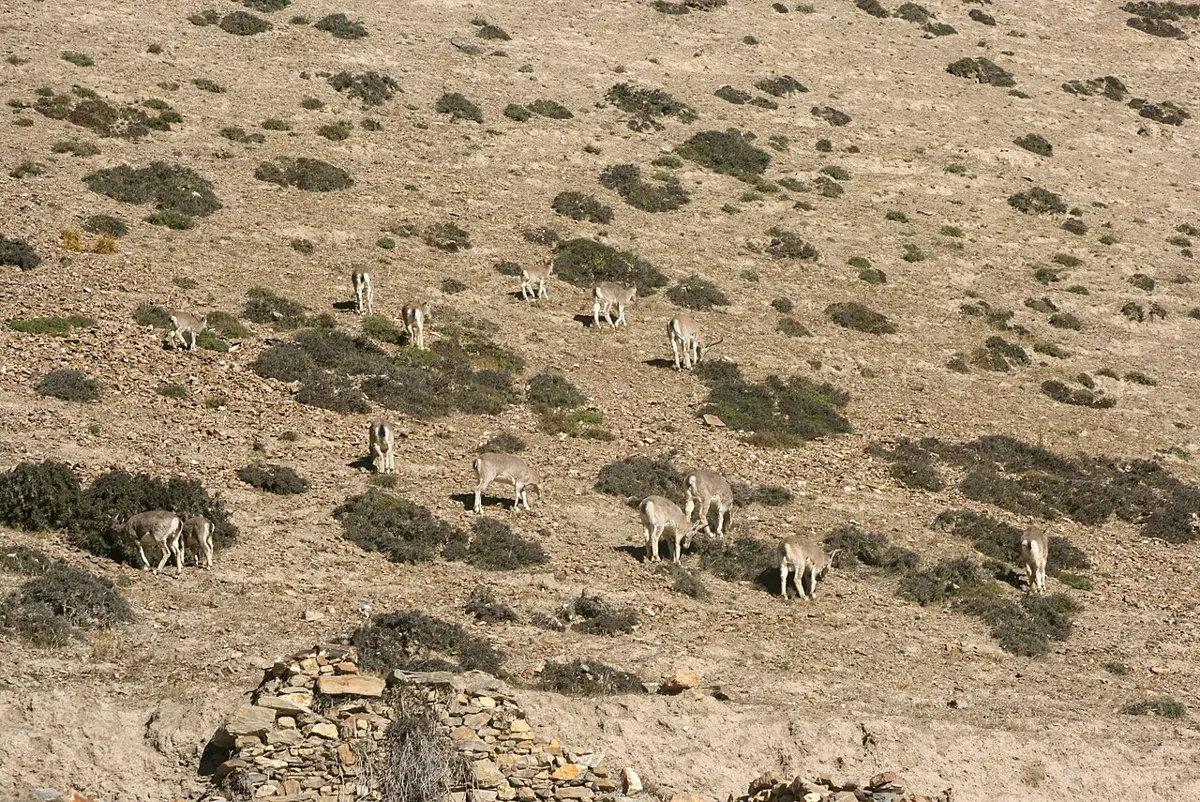
- grass → blue sheep → snow leopard (the high Himalaya)
- rice → rat → rat snake → eagle (a rice field)
Each step in a chain is called a trophic level (feeding level). Producers are the first level, plant-eaters the second, the animals that eat them the third, and so on. You will meet food chains again in Grade 9 Grade 9: Food chain.
Which food chain is drawn correctly?
Pick an answer to see why.
Food webs
Real animals rarely eat only one thing. A tiger in Chitwan eats chital, sambar, wild pigs, hog deer and barking deer. A chital is hunted by tigers, leopards and pythons. So the food chains in a forest cross and join, like the threads of a net. All the food chains of an ecosystem joined together make a food web. You will meet food webs in Grade 9 too Grade 9: Food web.
A food web shows something a chain can’t: what an animal can do when one food runs short. If the chital have a bad year, a tiger can hunt more sambar and wild pigs. An animal with many foods is safer than one with only one.
In Chitwan, leopards and tigers both hunt chital. A disease kills many of the chital. What does the food web help you predict?
Pick an answer to see why.
Three ways to live together
Eating is only one way living things affect each other. Ecologists sort the ways two kinds of living things affect each other, their interactions, by asking: who gains, and who loses?
Predation. One animal, the predator, kills and eats another, the prey. The predator gains; the prey loses its life. A tiger killing a chital, a kingfisher catching a fish, a frog snapping up a fly.
Competition. Two living things need the same thing, and there isn’t enough for both: the same food, water, light or space. Each gets less than it would alone, so both lose. Chital and hog deer both graze the grass of Chitwan’s grasslands. Weeds in a rice field take light, water and nutrients that the rice needs. Competition happens between members of the same kind too: two tigers fighting over the same stretch of forest.
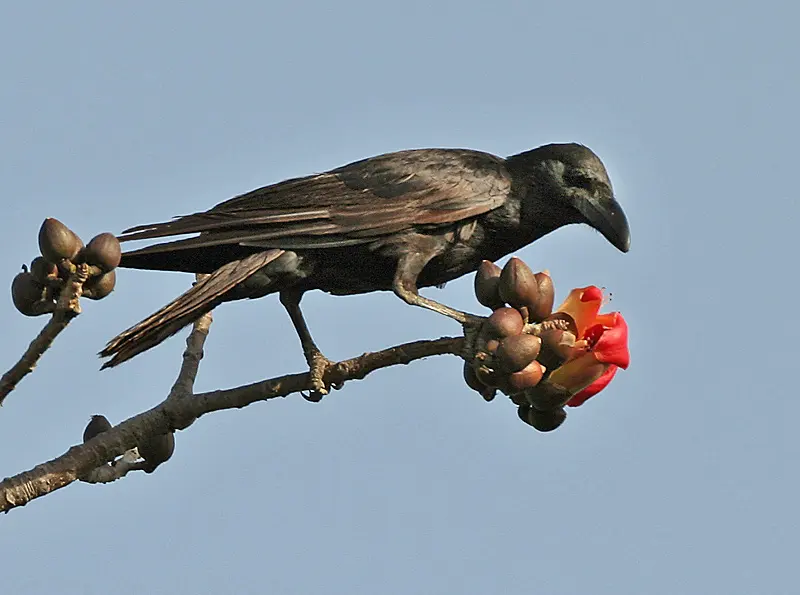
Mutualism. Two living things help each other, and both gain. In February and March, the simal (silk-cotton) trees of the Terai are covered in big red flowers full of sweet nectar. Mynas, bulbuls, crows and other birds come to drink it, and they carry the trees’ pollen from flower to flower on their heads. The birds get food; the trees get their seeds made.
| Interaction | First | Second | Example in Chitwan |
|---|---|---|---|
| predation | gains (predator) | loses (prey) | tiger and chital |
| competition | loses | loses | tiger and leopard, both hunting chital |
| mutualism | gains | gains | simal tree and mynas |
There are other kinds: in parasitism, a tick or a tapeworm feeds on its host without killing it. In Grade 9 you will meet them all, with more examples Grade 9: Interaction between living beings.
Rhododendron flowers give sunbirds nectar, and the sunbirds carry the flowers’ pollen. What kind of interaction is this?
Pick an answer to see why.
The same patterns everywhere
Here is something surprising. Go to a very different place, a meadow high in the Himalaya, or a village pond, and you find the same patterns of interactions, played by different living things.
| Chitwan grassland | Himalayan meadow | Village pond | |
|---|---|---|---|
| producers | grasses | grasses and herbs | algae and water plants |
| plant-eaters that compete | chital, hog deer | blue sheep, marmots | tadpoles, snails |
| predators that compete | tigers, leopards | snow leopards, wolves | fish, diving beetles |
| partners that help each other | simal trees and mynas | primulas and bumblebees | lotus and the bees and beetles that visit it |
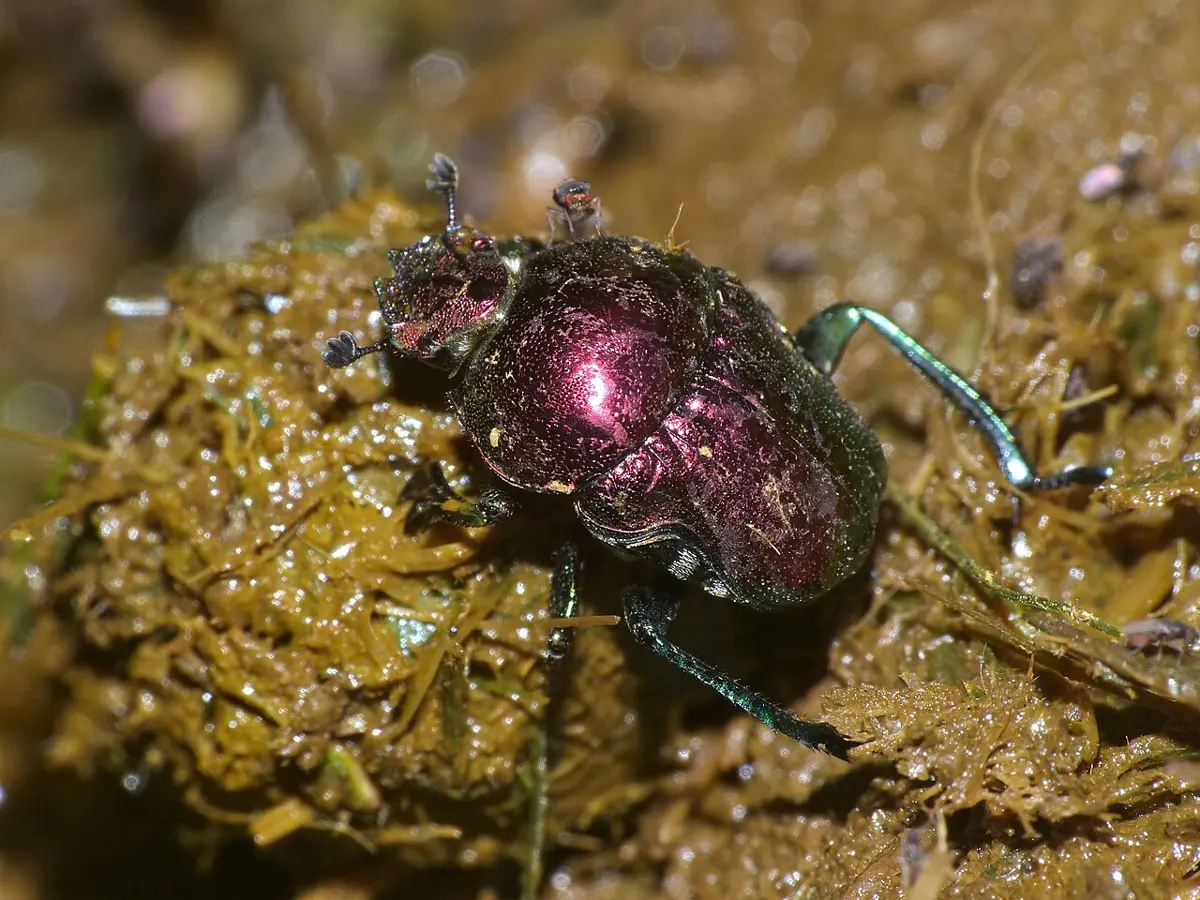
| decomposers | fungi, bacteria, dung beetles | fungi, bacteria | bacteria, fungi |
Because the patterns are the same, the predictions are the same too. If you know what happens when the predators are taken out of one ecosystem, you can predict what will happen in another.
You should find that the answers follow the same rules, whatever the ecosystem:
- Take out a predator, and its prey increases, at first. More plant-eaters eat more plants, so the plants decrease. The other predator, its competitor, has more prey to itself.
- Take out a plant-eater, and its predators go short of food. The other plant-eater has more plants, but now it is hunted harder.
- Take out a partner, and the other partner suffers too.
- Take out the producers or the decomposers, and everything else goes down in the end.
These are predictions, not certainties: real ecosystems have many more living things, and each case must be checked. But they are good predictions, because the same patterns have been seen again and again.
Energy flows one way
Now back to the question. Why so few tigers? Follow the energy.
All the energy in a food chain comes from the Sun. A blade of grass catches sunlight in its chloroplasts and uses its energy to make food, sugars that it builds into leaves, stems and roots. The energy is now stored in the grass.
A chital eats the grass. What does it do with the energy in it? You know the answer from your own body (What Happens to the Dal Bhat You Eat?): a little of your food builds you, and most of it is burned to keep you going.
- a.Most of it the chital uses just to stay alive: to walk, to chew, to keep its heart beating and to keep its body warm, day and night. That energy ends up as heat, given off into the air.
- b.Some of it was never digested. It leaves in the chital’s droppings, and dung beetles and other decomposers use it.
- c.Only a small part becomes new chital: muscle, fat, bone, a growing fawn.
When a tiger eats the chital, it gets only that small part (c). And the tiger, in turn, burns most of what it eats, and keeps only a little as new tiger.
Scientists have measured this in many ecosystems. The amount that passes from one level to the next is different in different places: in most ecosystems it is somewhere between about 5% and 20%. On average it is roughly one-tenth. This is often called the ten per cent rule, but it is a rough average, not an exact law.
So energy goes one way: in as sunlight, through the food chain, and out as heat. Heat can’t be turned back into food: no plant or animal can use it to grow. So energy is never used twice. An ecosystem needs new sunlight every single day.
And so, few tigers
Now you can answer the question. Tigers eat at the third level of the food chain. Only about a hundredth of the energy the grass stores reaches them. So a forest that can feed many thousands of deer can feed only a few hundred tigers, or fewer. This is true of every top predator, everywhere: snow leopards, eagles, sharks, polar bears. Big hunters are always few, because they are at the end of a long line of energy losses.
You can see the same thing by counting. A tiger kills about 50 large animals a year, roughly one a week. Deer and wild pigs have enough young each year to replace about 15 in every 100 of their animals, so hunters can take that many without the herds shrinking. Leopards and wild dogs take some of them, so a tiger’s share is about 1 in 10. So each tiger needs about 50 × 10 = 500 prey animals living around it. The Indian tiger scientist Ullas Karanth and his colleagues used these numbers in 2004 to predict how many tigers the prey of eleven forests in India could feed, and their predictions came close to the tigers really counted there.
Why are there far fewer tigers than chital in Chitwan?
Pick an answer to see why.
Matter goes round and round
Energy passes through once. But what about the stuff that living things are made of, their matter? When a tiger dies, where does its body go?
It doesn’t vanish. Vultures, jackals, insects and maggots eat some of it. Fungi and bacteria, the decomposers, break down the rest, along with fallen leaves, dead wood and droppings. They use some of it for themselves, and turn the rest back into simple substances: minerals that go into the soil and water, and gases that go into the air. Plants take those minerals up through their roots, and take in gases from the air through their leaves, and build them into new leaves. A deer eats the leaves, and the matter is on its way round again.
So matter goes round and round. The tiny particles that everything is made of, its atoms, are never used up and never destroyed. The atoms in a blade of grass today may have been part of a tiger a hundred years ago, and part of a dinosaur before that.
Things to notice:
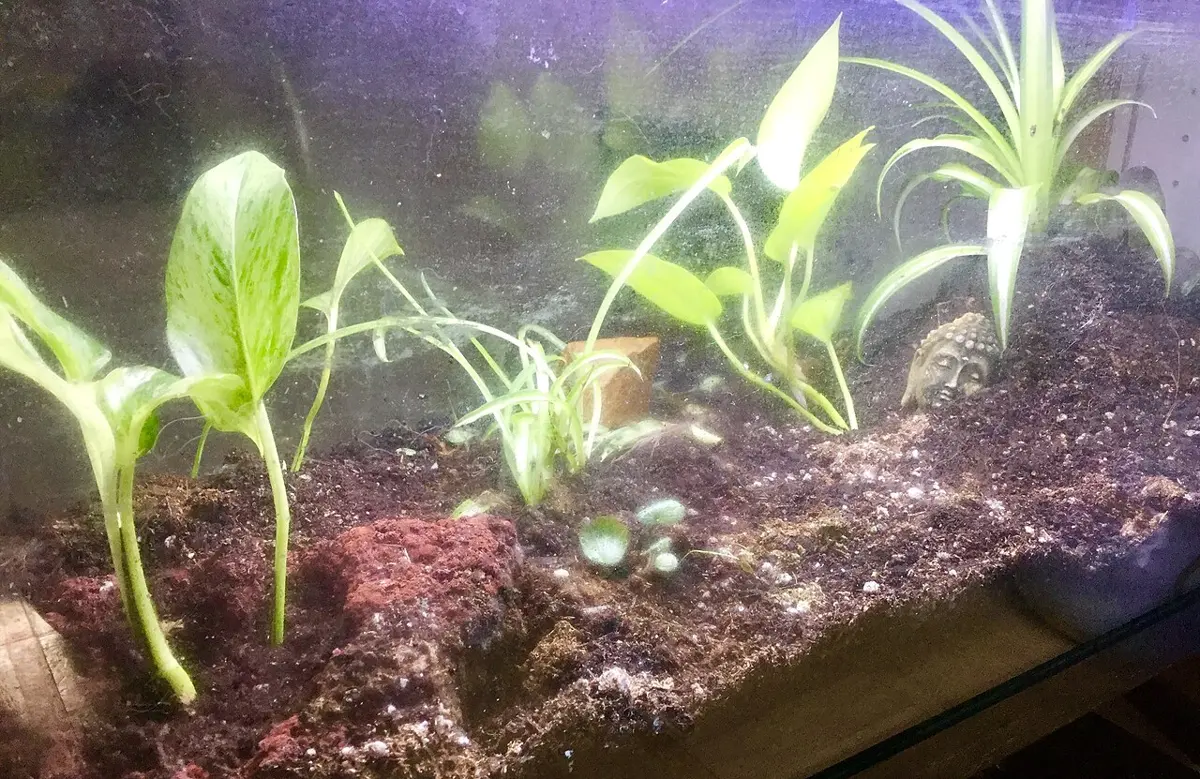
- With the lamp and the decomposers on, the jar keeps going: the same 60 bits of matter go round and round. Energy comes in as light and goes out as heat, about the same amount out as in.
- Turn off the lamp, and no new energy comes in. The plants can’t make food, the snails starve, and everything goes back to the air and water. But the amount of matter doesn’t change: still 60 bits.
- Turn off the decomposers, and the dead pile up. The matter in them is stuck, and the plants run short.
Which of these goes round and round in an ecosystem, and is used again?
Pick an answer to see why.
Drawing the boundary
To make a model of an ecosystem, scientists first decide what they are studying. The part of the world they choose is called the system, and the line around it is its boundary. Everything outside is the surroundings. Then they ask: what crosses the boundary?
For the sealed jar, the boundary is easy: it is the glass. Energy crosses it: light comes in, heat goes out. Matter can’t cross it, so the amount of matter inside stays the same. Ecologists call a system like this, which matter can’t get into or out of, a closed system.
For a real ecosystem, you choose the boundary yourself. Choose Chitwan National Park.
Energy crosses the park’s boundary in the same way as the jar’s: sunlight in, heat out. But matter crosses it too. Rain falls in. The Rapti river carries water and soil out. Wind blows air across. A young tiger leaves the park to look for a home of its own; a flock of birds flies in for the winter.
Even so, no matter is created or destroyed. If you could add up everything that crossed the boundary, the matter inside would have changed by exactly what came in minus what went out. That is how scientists keep track of the matter in a forest, a lake, or a field: they draw a boundary, and measure what crosses it.
In a sealed jar with plants, snails and soil, under a lamp, what crosses the jar’s boundary?
Pick an answer to see why.
Questions
In the food chain algae → tadpole → fish → kingfisher, which is the secondary consumer?
Pick an answer to see why.
Blue sheep and yaks both graze the same high pastures. A herder brings many more yaks to a valley. What is most likely to happen to the blue sheep there?
Pick an answer to see why.
Draw a food chain of three or four links from a Himalayan meadow. Label the producer, the primary consumer and the secondary consumer, and say what the arrows mean.
Answer
For example: grass → blue sheep → snow leopard. The grass is the producer (it makes food from sunlight); the blue sheep is the primary consumer (it eats plants); the snow leopard is the secondary consumer (it eats the plant-eater). Each arrow means “is eaten by”: it points from the food to the eater, the way the food and its energy move. (Another chain: grasses → marmot → wolf.)
The grass in a park stores 2,000,000 kJ of energy in a year. Deer eat the grass, and tigers eat the deer. If about a tenth of the energy passes on at each step:
- i.How much energy reaches the deer?
- ii.How much reaches the tigers?
- iii.Where does the rest of the energy go?
Answer
- i.2,000,000 ÷ 10 = 200,000 kJ.
- ii.200,000 ÷ 10 = 20,000 kJ, just 1% of the grass’s energy.
- iii.Most of it is used by the grass, the deer and the tigers to live (growing, moving, breathing, keeping warm) and ends up as heat, given off into the air. Some is in parts that aren’t eaten or digested (roots, bones, droppings), which feed the decomposers, who also give it off as heat in the end.
Explain, using what happens to energy at each step of a food chain, why there are always far fewer tigers than deer.
Answer
Each animal uses most of the energy in its food just to stay alive (to move, breathe and keep warm), and that energy is given off as heat. Some passes out in droppings. Only a small part, roughly a tenth, is stored in its body, where the next animal in the chain can get it. So the deer get only a small part of the energy the grass stores, and the tigers get only a small part of what the deer have, about a hundredth of the grass’s energy in all. A small amount of energy can feed only a few animals, so each tiger needs hundreds of deer (about 500 by Karanth’s rule), and there can only be a few tigers.
In a mangrove forest by the sea, crabs and snails both eat fallen mangrove leaves. Fish and herons both eat crabs and snails. Bees pollinate the mangroves’ flowers. Predict what would happen if the herons were all driven away, and name the kind of interaction behind each part of your prediction.
Answer
With no herons, fewer crabs and snails are eaten (predation removed), so at first there are more of them. More crabs and snails eat more of the fallen leaves. The fish, which compete with the herons for crabs and snails, have more food to themselves, so there are likely to be more fish. The crabs and snails also compete with each other for leaves, so as they increase, each gets less, and their numbers may level off. The mangroves and the bees (mutualism) are not directly affected. This is the same pattern seen in a Chitwan grassland or a village pond.
A sealed jar holds soil, a plant and some snails. It is put in a dark cupboard for two months. Describe what happens to (i) the matter and (ii) the energy in the jar.
Answer
- i.Matter: the amount of matter in the jar stays exactly the same, because nothing can get in or out. But it changes form. With no light, the plant can’t make food, so it slowly dies. The snails eat it, then starve and die. The decomposers break down the dead plant and snails, and return their matter to the soil, water and air inside the jar.
- ii.Energy: no new energy comes in, because there is no light. The energy that was stored in the plant and snails is used up by them and by the decomposers, and leaves the jar as heat. In the end, the jar has the same matter but almost no energy stored in living things, and nothing can live in it.
In 2019 Chitwan had about 72 prey animals in each square kilometer, over 952 km². Suppose good protection raised that to 90 per square kilometer. Using the rule of 500 prey animals for each tiger, how many tigers could the park’s prey then feed?
Answer
Prey animals = 90 × 952 = 85,680.
Tigers = 85,680 ÷ 500 = about 171 tigers, compared with about 136 with the prey of 2019. More food, more tigers.
A student says: “Decomposers are important because they recycle energy and matter back to the plants.” Which part is right, and which is wrong? Explain.
Answer
The part about matter is right: decomposers break down dead things and droppings into minerals and gases, which plants take up and use again. The part about energy is wrong: decomposers use the energy stored in the dead for their own lives, and it leaves as heat. Plants can’t use heat to make food; they get all their energy from new sunlight. Matter goes round and round; energy flows through once.
Draw a model of a village pond as a system. Mark its boundary, show with arrows how matter goes round inside it, and show what crosses the boundary: (i) energy and (ii) matter.
Answer
A good model has a dashed line round the pond (its water, mud and the living things in it), and inside, arrows from water, mud and air → algae and water plants → tadpoles and snails → fish → dead remains and droppings → decomposers → back to the water and mud.
- i.Energy crossing the boundary: sunlight coming in (to the algae and plants); heat going out (from every living thing, and the decomposers).
- ii.Matter crossing the boundary: rain and streams bringing water in; water evaporating out; a heron or kingfisher catching fish and flying away with them; leaves falling in from nearby trees; frogs leaving the pond.
Where to go next
- Why Do Animal Numbers Rise and Fall? How the amount of food decides whether a population grows or shrinks, and how to read the graphs that show it: read it.
- What Is a Forest Worth? Forests clean water, hold soil and feed bees for our crops; how to compare ways of protecting them: read it.
- What Happens to the Dal Bhat You Eat? How your body breaks food down, builds you from it, and burns it for energy: read it.
Going further still: in Going Further, Grades 9–12, How Many Tigers Can Chitwan Hold? counts Chitwan’s prey and works out how many tigers it can feed, and Where Does a Fallen Leaf Go? measures the energy at each level of a food chain, and follows the carbon in a leaf round the carbon cycle.