
A cold winter morning. Someone pours you a glass of tea from the flask, and you take a big sip. Before you have even thought the word “hot!”, your lips have jerked away and you have spilled some on your sleeve. A moment later your tongue starts to sting.
The next morning, you blow on your tea before you drink it. Nobody had to tell you.
Two things happened. Something in your lips felt the heat and sent a message, fast, so that your body could act at once. And something in your brain kept a record of it, so that a day later you acted differently. In this topic you will follow a message from the outside world into your body, along your nerves to your brain, and find out what your brain does with it.
Your body’s detectors
You use your sense organs every day to observe the world: your eyes, ears, nose, tongue and skin Grade 8: Grade 8: Observation. But how does an eye or a fingertip actually notice anything?
Each sense organ has receptors: special cells, or the very ends of nerve cells, that respond to one kind of change around them. A change that a receptor responds to is a stimulus (plural stimuli). When a stimulus reaches a receptor, the receptor starts a message, a tiny electrical signal, in a nerve.
| Stimulus | Receptors | Where |
|---|---|---|
| light | rods and cones (about 120 million rods and 6 million cones in each eye) | the back of the eye (retina) |
| sound | hair cells (about 15,000 in each ear) | the inner ear |
| chemicals in food | taste cells, in taste buds | the tongue and mouth |
| chemicals in the air | smell cells (about 400 different kinds) | high up inside the nose |
| touch, pressure, vibration | touch receptors | the skin |
| heat and cold | temperature receptors | the skin, mouth and tongue |
| damage | pain receptors | almost everywhere |
You may have learned that there are five senses. There are more. Close your eyes and touch your nose with one finger: you can, because stretch receptors in your muscles and joints tell your brain where every part of your body is. Receptors in your inner ear tell you which way is up, so you keep your balance on a bus. Other receptors inside you notice when your stomach is full, your bladder needs emptying, or there is too much carbon dioxide in your blood (that is what makes you gasp after holding your breath).
Which of these is a stimulus?
Pick an answer to see why.
Inside a fingertip
Your skin is full of receptors, and they are not all the same. Some are bare nerve endings. Others are wrapped in tiny capsules that make them respond to one kind of touch. Look at Figure 14.1: it is a slice of fingertip, less than 3 mm deep, about as thick as two coins stacked.
Skin: traced from Gray's Anatomy, Fig. 940 (1918), public domain
Each kind of receptor answers only its own stimulus well. Light shining on your skin doesn’t make you see. Sound doesn’t make your tongue taste anything. And here is the strange part: your brain knows what a message means by where it comes from, not by what started it.
Chilli and mint
Bite into a green khursani and your mouth feels as if it is burning. Chew pudina, mint, and it feels cool. Neither is hot or cold. What is happening?
Chilli contains a chemical called capsaicin. It switches on the same receptors in your mouth that respond to real heat, above about 43 °C. Those receptors send exactly the message they send for hot tea, so your brain feels heat. Mint contains menthol, which switches on the receptors that respond to coolness. Your mouth is the same temperature all the time; only the messages change.
Receptors notice changes
Put on a shirt, and you feel it on your skin. A minute later, you don’t, though it is still there. Many receptors respond strongly when something changes, and then send fewer and fewer messages if it stays the same. This is why you notice the smell of a kitchen when you walk in, but the cook doesn’t. It is also why you can be fooled.
After sitting in a room for ten minutes, you no longer notice the ticking of the clock on the wall. Why?
Pick an answer to see why.
More receptors, finer touch
Your fingertips are packed with touch receptors. The skin of your back has far fewer. You can measure the difference.
| Part of the body | Two-point threshold (roughly) |
|---|---|
| fingertip | 2–3 mm |
| upper lip | 5 mm |
| palm | 10 mm |
| forehead | 15 mm |
| foot | 20 mm |
| forearm | 35 mm |
| back | 39 mm |
| calf | 45 mm |
These are the average results of a study by the American scientist Sidney Weinstein, published in 1968. Your own results will be a little different.
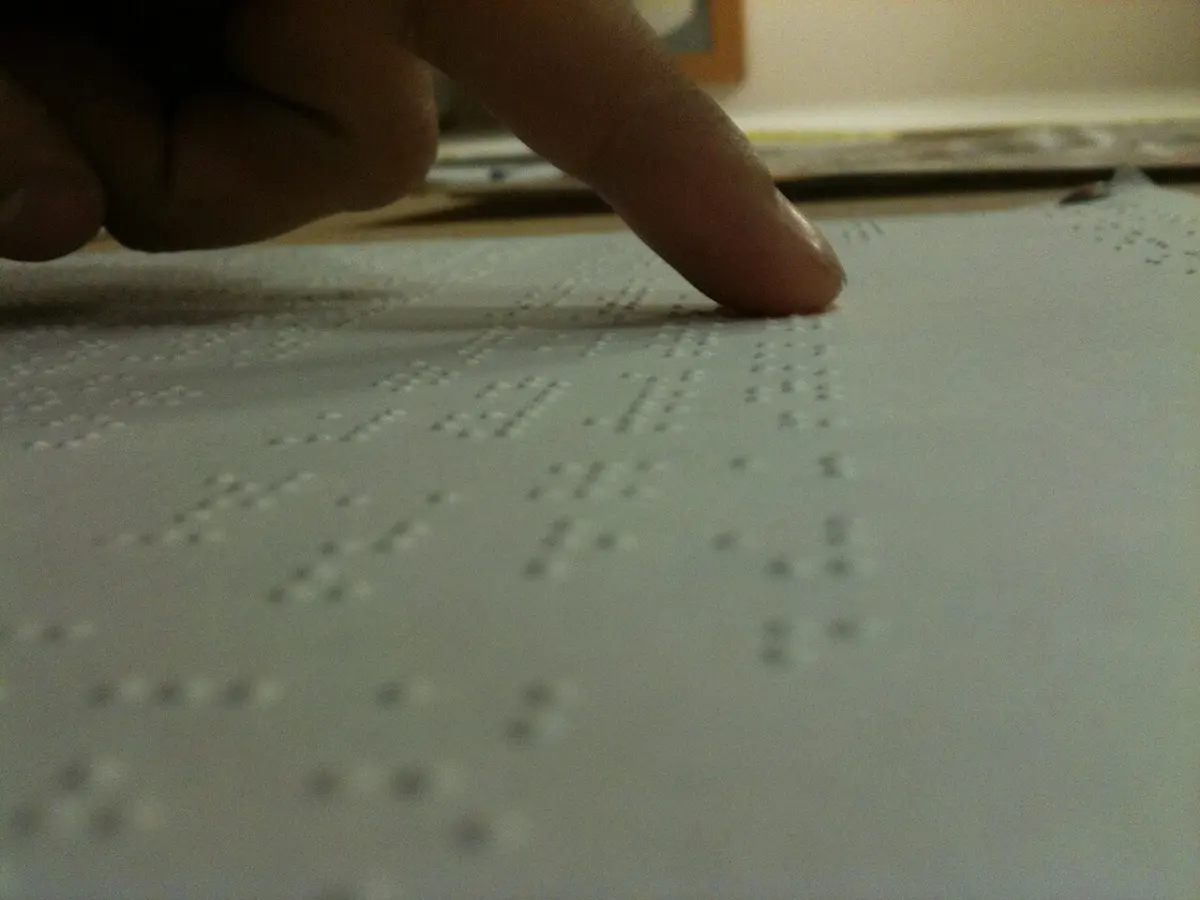
Messages along nerves
A receptor has noticed something. Now the message has to travel. You learned in Grade 8 that nerve cells are long and thin, like threads Grade 8: Shape and size of cells; in Grade 9 you will meet their parts, the dendrites, cell body and axon Grade 9: Neuron, and the sensory nerves that carry messages in from the receptors to the spinal cord and brain Grade 9: Nerve fibers. A nerve is a bundle of many of these long fibers, like the wires in a cable.
So the path of a touch on your fingertip is:
receptor in the skin → sensory nerve up the arm → spinal cord in the neck → up the spinal cord → brain
Only when the message reaches the brain do you feel anything. Until then, nothing has happened that you know about.
How fast?
Nerve messages are fast, but not instant, and they are not all equally fast. Thick nerve fibers, wrapped in a fatty coat, carry messages faster than thin ones.
| Kind of message | Fibers | Speed |
|---|---|---|
| touch and pressure | thick, coated | about 35–75 m/s |
| sharp pain, cold | thin, lightly coated | about 5–30 m/s |
| slow, burning pain, warmth | thinnest, no coat | about 0.5–2 m/s |
Even the fastest is much slower than the electricity in a wire, which carries a signal at more than half the speed of light. For comparison, a fast bus on the highway goes about 25 m/s (90 km/h).
You touch a hot iron with a fingertip. Which message reaches your brain last?
Pick an answer to see why.
Act now
What happens to a message once it arrives? Sometimes the body must act at once. Your hand pulls away from the hot iron; your lips jerk back from the tea; you blink when dust flies at your eye.
The very fastest of these, the reflex actions, don’t even wait for the brain to decide. The message reaches the spinal cord (or, for the head, the brainstem), and goes straight back out along a motor nerve to a muscle. You will meet this short path, the reflex arc, in Grade 9 Grade 9: Reflex action. The message to the brain arrives a moment later, and that is when you feel “hot!”, after your hand has already moved.
Most of what you do is not a reflex. When a ball is thrown at you, a bus horn sounds behind you, or your name is called in class, the message goes to the brain, which works out what it means and decides what to do; then it sends orders out to your muscles. All of this takes time: your reaction time.
Measure your reaction time
How can a distance be a time? A falling ruler speeds up in a way that is always the same, because gravity pulls on everything the same way. So the distance it falls tells you exactly how long it was falling: the time between your partner letting go and your fingers closing.
| Caught at | Reaction time |
|---|---|
| 5 cm | 0.10 s |
| 10 cm | 0.14 s |
| 15 cm | 0.17 s |
| 20 cm | 0.20 s |
| 25 cm | 0.23 s |
| 30 cm | 0.25 s |
Notice that the ruler falls only 5 cm in the first tenth of a second, but the 10 cm from 20 to 30 cm take less than a twentieth of a second. It keeps speeding up, so twice the distance does not mean twice the time.
What makes reaction time longer or shorter?
Your reaction time is the time for your eyes to notice, the messages to travel, your brain to decide, and your muscles to move. Anything that slows one of these slows you down. You can test this yourself, as a scientist would.
Scientists have measured reaction times for different senses. Many studies have found that people react a little faster to a sound or a touch (about 0.14–0.16 s) than to a light (about 0.18–0.20 s), for the simplest kind of task, when you only have to press a button.
Catching a falling ruler is not a reflex action. What is the best evidence for this?
Pick an answer to see why.
Store it for later
Not every message leads to action. Most of what your senses pick up, your brain ignores: the color of the wall, the feel of your chair. Some of it is stored, so that you can use it later. Stored information is memory.
The hot tea is stored. So is the way to your school, your friend’s face, the smell of your grandmother’s kitchen at Dashain, how to ride a bicycle, and the multiplication table of 7. When you learn something, connections between nerve cells in your brain change: some grow stronger, and new ones form. Your brain is physically a little different after you have learned something.
Two kinds of memory
Someone tells you a phone number: 98 41 5 3 6 2 7 0. You repeat it to yourself until you find a pen. If someone talks to you, it is gone. That was your short-term memory: it holds a few things, for less than half a minute unless you keep repeating them.
Things you go over, use and connect to what you already know pass into your long-term memory, which can keep them for years: facts and events (what you ate yesterday, the capital of Nepal), and skills (writing, swimming, riding a bicycle).
In 1956 the American psychologist George Miller found that most people’s short-term memory holds about seven things, give or take two. But a “thing” can be a single digit, or a group. A Nepali mobile number has ten digits, too many to hold one by one. Split into three groups, “984 – 153 – 6270”, it becomes easier. Grouping things into bigger pieces like this is called chunking.
Which of these is a long-term memory?
Pick an answer to see why.
Why we forget
In the 1880s the German psychologist Hermann Ebbinghaus tested his own memory. He learned lists of made-up syllables, like “DAX” and “BUP”, which meant nothing, so that what he already knew couldn’t help him. After a wait, he learned each list again, and measured how much less time it took the second time. If he had remembered everything, relearning would take no time: 100 % of the work saved. If he had forgotten everything, it would take as long as the first time: nothing saved.
Look at Figure 14.4. After only 20 minutes, almost half the work of learning was lost; after a day, two-thirds. But after a month, he still saved about a fifth: something had stayed. Scientists who repeated his experiment in 2015 got very similar results.
What you can do about it is what scientists have found works best:
- a.Test yourself instead of rereading: cover the page and try to remember, then check. Each time you pull a memory out, it gets stronger.
- b.Space it out. Go over something again after a day, then a few days later, then a week later, rather than all at once the night before. The site’s flash cards, like those in Science and Math in Nepali, bring back the cards you don’t know yet.
- c.Sleep. While you sleep, your brain goes over the day and strengthens what it has stored.
- d.Connect it to what you already know, or to a picture or a story. Things that matter to you, or that surprise or frighten you, are remembered best: one sip of hot tea was enough.
Sita has a test on Friday. Which plan will help her remember the most a week later?
Pick an answer to see why.
Putting it together
Now you can answer the question in the title, and follow the hot tea all the way.
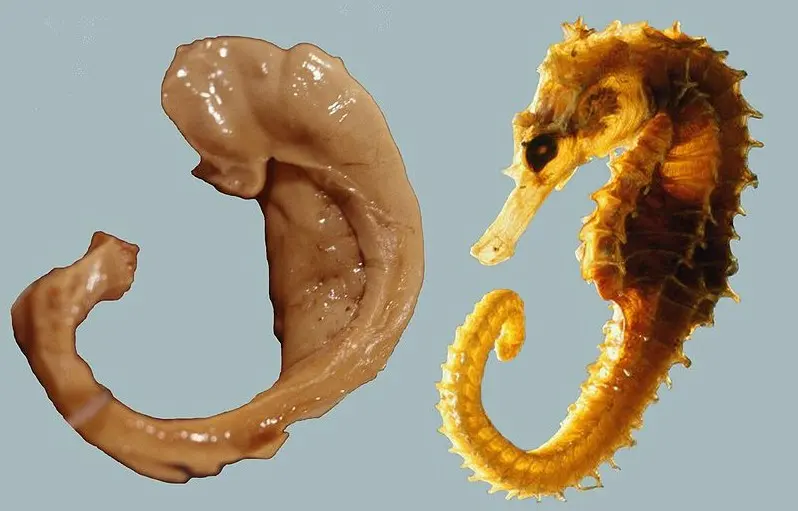
Brain: Patrick J. Lynch (CC BY 2.5), recolored
Questions
You walk into a room where incense is burning, and notice the smell at once. Ten minutes later you can hardly smell it. What is the best explanation?
Pick an answer to see why.
Which pair is correctly matched?
Pick an answer to see why.
Explain why a drop of water falling on the back of your hand can be felt, but the same drop falling on your hand while you are wearing a woolen glove often can’t.
Answer
A nerve path from the foot to the brain is 1.2 m long. Work out how long a message takes along it at (i) 60 m/s (touch), (ii) 20 m/s (sharp pain), (iii) 1.2 m/s (burning pain).
Answer
Three students did the ruler drop ten times each. Their averages were: Asha 14 cm, Bikash 21 cm, Chandra 17 cm (made-up data).
- a.Who had the fastest reaction time? Use the table to give it in seconds, roughly.
- b.Bikash says, “I was slowest because I was chatting with Chandra while I waited.” Explain why this could make him slower.
- c.Why did each student do ten drops, not one?
Answer
Henry Molaison could remember his childhood, and could learn to trace a star in a mirror, but couldn’t remember meeting Brenda Milner the day before. What do these three facts together tell us about memory?
Answer
Use what you have learned in this topic to explain, step by step, what happens from the moment a mosquito lands on your arm to the moment you slap it. Then explain why, after being bitten by mosquitoes many times, you might slap at any small tickle on your arm.
Answer
Here are four pieces of evidence. Use them together to explain the statement: “Your senses send messages to your brain, which uses them either to act at once or to store them as memories.”
- i.Capsaicin in chilli makes your mouth feel burning hot, though it is not hot.
- ii.The time between a ruler being dropped and a person catching it is about 0.2 s, and is longer when the person is distracted.
- iii.A stubbed toe gives a quick sharp pain, then a slower ache about a second later.
- iv.After one burnt tongue, a child blows on hot tea for years.
Answer
Quiz yourself: Life Processes and the Human Body, Grades 5–10 →
Where to go next
- What Happens to the Dal Bhat You Eat? Your nerves and brain need a steady supply of sugar and oxygen. How your body breaks food down and delivers it to every cell.
- Why Do Birds Sing and Flowers Smell Sweet? Animals’ senses at work: songs, colors and scents, and how animals and plants use them to find a partner or a pollinator.
- Why Is Speeding So Dangerous? Reaction time on the road: how far a car goes before the driver even starts to brake.