
In the hills south of Kathmandu, at Pharping, water has run downhill for as long as there have been hills. On the evening of 22 May 1911, some of it was sent through a turbine instead, and lights came on at Tundikhel, in the middle of Kathmandu. It was Nepal’s first power station, two turbines of 250 kilowatts each, and one of the earliest in South Asia.
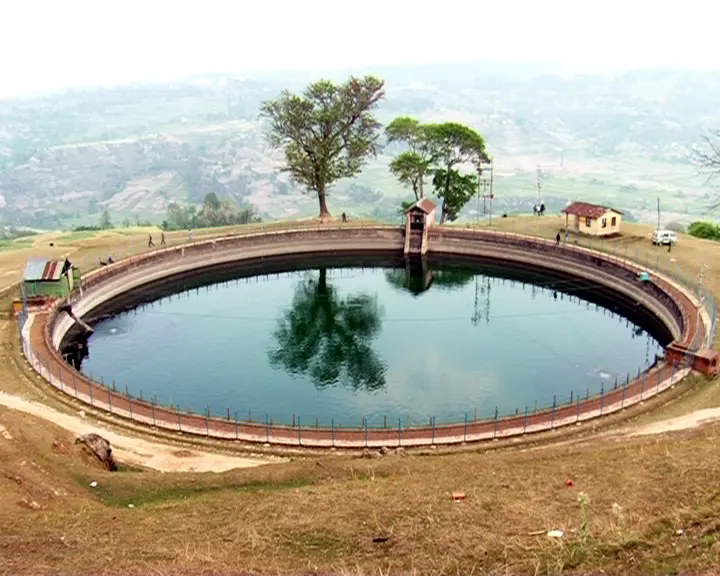
Nothing about the water changed that evening. It weighed the same and fell as far as it always had. What changed was that people knew how to turn its fall into light, could pay for the machines to do it, and wanted the light. That is the whole idea of this chapter in one picture. A resource isn’t a thing lying in the ground or running down a hill. It is a thing people have found a use for.
An American economist, Erich Zimmermann, set out this idea in 1933, in a book about the world’s resources, and in its new edition of 1951 he put it in five words: “resources are not, they become.”
What makes a resource
For anything on Earth to be a resource, three things have to be true at once. Someone has to know how to use it. They have to be able to reach it at a cost worth paying. And they have to want what it gives. Take any one away, and the stuff is still there, but it is only stuff.
Oil is the famous case. People had long known it where it seeped out of the ground, and gathered a little from the seeps and from shallow holes, but there was no great market for it. In the 1850s that changed. In 1853 Samuel Kier, in Pittsburgh, began refining crude oil into kerosene, a lamp oil that could take the place of the whale oil that lit American homes. Suddenly the seeps were worth drilling for. In August 1859, at Titusville in Pennsylvania, a man named Edwin Drake drove an iron pipe down through the loose ground to the rock and drilled on inside it. At 21 meters, oil rose up the hole, and it was pumped out with a hand pump. Soon others were drilling all along the creek. Oil had become a resource, and engines would later make it a far bigger one.
It works the other way too. Whale oil had been the lamp oil. Kerosene was much cheaper, and once it took whale oil’s place in the lamps, whale oil was worth much less.
And being there isn’t enough; it has to be concentrated. The rare earths, a group of metals that go into strong magnets, are not rare at all in the Earth’s crust. What is rare is a place where they are bunched up enough to be worth digging. Most of the crust has a little of nearly everything. A mine is where nature has done most of the sorting already.
Resources also differ in whether they come back. A forest that is cut can grow again. A river is refilled by rain every year, so the water that falls through a turbine this monsoon will be replaced by next monsoon’s. These are renewable, as long as they aren’t used faster than they renew. Coal, oil and the ores of metals are not. Coal is the remains of swamp forests buried hundreds of millions of years ago, oil the remains of tiny sea creatures buried and slowly cooked. They formed far too slowly to be replaced on any timescale that matters to people. Burned once, they are gone. Metals at least can be used again: the copper in an old wire can become a new one.
Where they are, and who has them
So where are they? Each resource sits where the Earth’s long history happened to put it, and the reasons are the ones the earlier chapters of this book have been building.
Forests grow where it is warm enough and wet enough for trees, so they follow the climates. Coal lies where great swamps once grew and sank and were buried. Oil lies where the remains of sea life were buried without air, heated just enough, and caught under a cap of rock that wouldn’t let it escape; Why Is There Oil in Some Places but Not Others? tells that recipe, and why Nepal’s crumpled rocks have so far found gas but no oil. Many metal ores lie where hot water once ran through cracks above cooling magma. Falling water is strongest where heavy rain meets high, steep land.
None of these is spread evenly, and some are bunched up astonishingly.
More than half of all the world’s forest is in just five countries: Russia, Brazil, Canada, the United States and China, with Russia alone holding a fifth. China mines more than half of the world’s coal and makes almost a third of the world’s electricity from falling water. The Democratic Republic of the Congo, in the middle of Africa, mines about three-quarters of the world’s cobalt, a metal whose biggest use is in rechargeable batteries, and China about seven-tenths of the rare earths. Oil is less lopsided: the United States pumps the most, about a fifth, ahead of Saudi Arabia and Russia.
The bars don’t show how rich these countries are, and that is deliberate. Having a resource and growing rich from it are different things. Some countries with oil or diamonds have stayed poor, and some with almost nothing in the ground have grown rich. Why is a question for economists. Geography’s part is the where.
Nepal appears on none of the bars. It has found no oil and mines very little coal, and its minerals, from the limestone of Chobhar that goes into cement to iron, copper and the gold in river sands, are for a later chapter, Nepal’s own. (नेपालमा खनिज र जलस्रोत, in the Grade 9 सामाजिक book, lists them in Nepali.) But Nepal has one resource in great measure, and it is the one that lit the lamps at Tundikhel.
Falling water
The energy in falling water comes from two things: how much water there is and how far it falls. Double either, and you double the power. A cubic meter of water a second, a thousand liters, falling 100 meters through a turbine, gives about a megawatt.
Now think about Nepal’s shape. In under 150 kilometers from north to south, the land drops from the highest mountains on Earth to less than a hundred meters above the sea, and the monsoon drops most of a year’s rain on it in a few months. Nepal has, by one count, about 6,000 rivers and streams. Plenty of water, falling a very long way, in a short distance. Nepal’s textbooks give the sums: about 83,000 megawatts if every drop could be used, and about 42,000 that could really be built. Almost all the electricity Nepal makes, about 99 percent in 2024, comes from falling water. Across the world it is about one-seventh.
Which places use it fully, how a stream becomes a power station, and whether Nepal should build more of them, are told elsewhere: How Much Electricity Can a Small Stream Make? and Which Energy Should Nepal Use? The point here is the geography. Nepal didn’t choose its resource. Its mountains and its monsoon chose it, and people found the use.
The hills that were going to be bare
Nepal’s forests are a resource too, and for a while in the 1970s and 1980s much of the world was sure they were about to disappear.
The story went like this. More and more people were being born in the hills. They needed firewood to cook, leaves and grass to feed their animals, and new fields to grow food, so they cut the forests faster than the forests could grow. Bare slopes washed away in the monsoon. The soil and the extra water poured down the rivers into India and Bangladesh, bringing worse floods and filling river beds with silt. Each step made the next worse. It was a neat chain, it sounded like common sense, and it was repeated by scientists, aid agencies, journalists and governments. A World Bank report of 1979 said that without tree planting on a huge scale, the forests people could reach in the hills would have largely disappeared by 1990, and those in the Terai by 2000. Aid money poured in to stop it.
Then a group of researchers started checking each link of the chain. They were led by Jack Ives, a geographer at the University of Colorado who had begun a mountain research program for the United Nations University in 1978, and Bruno Messerli of the University of Bern. In 1986 they gathered the people working on the question at a conference at Mohonk, in New York State, and in 1989 Ives and Messerli published the result as a book, The Himalayan Dilemma. Ives had given the chain a name, which stuck: the Theory of Himalayan Environmental Degradation.
Link after link, the evidence was missing or pointed the other way. The numbers the chain rested on, how much forest was being cut and how fast it grew back, turned out to be too few, too rough or simply made to fit. One group of researchers wrote that the real question had become not “What are the facts?” but “What would you like the facts to be?” The cutting in the middle hills turned out to be old: it had gone on for centuries and, by their reading, had mostly slowed by the 1920s and 1930s, long before the population boom it was blamed on. In the Everest region, where slopes forested in the 1950s were said to have been stripped by the 1970s, a researcher, Alton Byers, went back with the old photographs and took the same views again. By Ives’s account, they showed no such loss.
The farmers themselves came out looking very different. Their terraces, carved over centuries into the steepest hillsides, were a vast work of soil conservation, not soil destruction. Landslides turned out to be fewer, not more, where more people lived, because there were more hands to mend a terrace wall after the rain. And most of the mud the rivers carry comes from the mountains themselves, rising and wearing down, as they have for millions of years. Without that mud, much of Bangladesh would not exist: its land is built from it.
The floods didn’t fit either. Larry Hamilton, one of the researchers, summed it up in a sentence: “It floods in Bangladesh when it rains in Bangladesh.” A later study of Bangladesh’s records, by Thomas Hofer and Bruno Messerli, found no sign that its floods had grown bigger or more frequent in 120 years. What had grown were the losses, because more people were living on the land the rivers flood.
None of this meant that the hills had no problems. There were plenty, and much of the real clearing of forest, especially in the Terai, was done for government and business, not by hill farmers. It meant that the hill farmer had been made the villain of a story that the evidence didn’t support. Much of the account of how the theory fell comes from Ives and his colleagues themselves, who were also its loudest critics, and work in India’s Garhwal and Kumaon found the land there getting worse, from roads and other causes, so not every one of the conference’s conclusions held everywhere. But the main point has held up: the disaster that was predicted didn’t come.
The forests come back
What came instead was the opposite.
In 2019 a team led by Jefferson Fox, at the East-West Center in Hawaii, mapped Nepal’s trees year by year from satellite pictures. In 1992 trees covered about 26 percent of the country. By 2016 they covered about 45 percent. In twenty-four years the tree cover had almost doubled. The forest figures Nepal reports to the UN’s Food and Agriculture Organization, which count only land that meets the definition of a forest rather than every tree, rise less steeply, from about 39 percent of the country in 1990 to about 43 percent in 2025. How much depends on what you count. That it went up is not in doubt. And it was mostly not planted: of the forest Nepal reported in 2025, only about one hectare in seventeen was a plantation. The rest had grown back by itself.
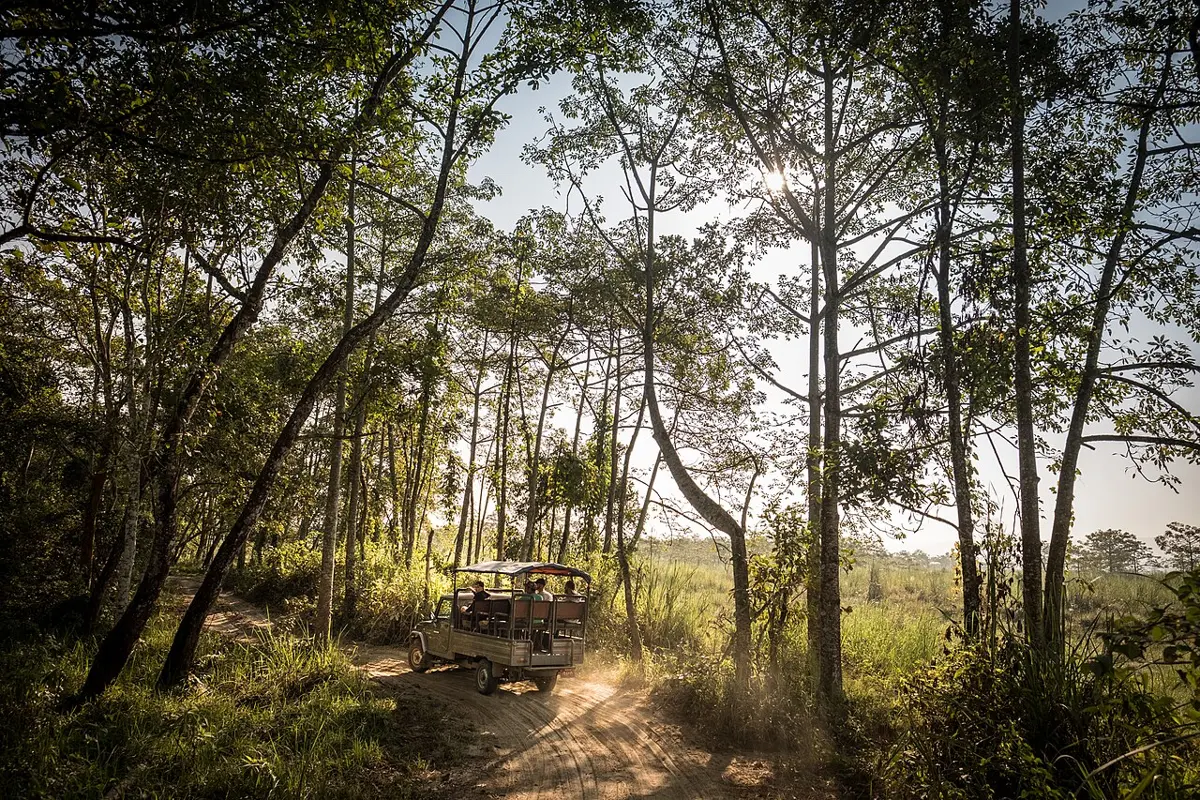
Why? Here the argument starts, and it hasn’t finished.
One answer is the people who use the forests. In 1957 the government nationalized the country’s private forests, and many villages lost their say in forests they had long looked after. From 1978 the government began to hand some back to local councils, and the Forest Act of 1993 let the households who use a forest manage it as a community forest user group: the state still owns the land, but the group makes the rules for using it and shares what it gives. By the 2010s Nepal had more than 18,000 community forests. A study published in 2019 compared places that had them with similar places that didn’t, allowing for how many families had someone working abroad, and found that from 2000 to 2012 the community forests had, on average, cut the loss of forest by about a third and the poverty around them by a little. An old theory said that anything shared is bound to be ruined; the economist Elinor Ostrom won a Nobel Prize in 2009 for showing how people who share a forest or a stream often look after it well.
The other answer is the people who left. From 2008 to 2019 alone, Nepal issued more than 3.5 million permits to work abroad, and many more people moved to Nepal’s own towns. On this view, fewer hands were left to farm the steep, far-off fields, and the trees took them back. The money they send home buys gas cylinders, and a family that cooks on gas needs less firewood. Fox’s team found tree cover rising most where the ground was roughest, on the shadier north-facing slopes, and farthest from the district’s headquarters: exactly the fields that are hardest to farm and the first to be given up. They also found trees rising faster in places where families received money from children working away.
So which was it? Fox’s team found both linked to the forests’ return. Other researchers say the two are hard to pull apart, since they happened in the same years and often in the same villages. A fair summary is that the community groups protected the forests, and people leaving took the pressure off, and the forests did the rest themselves. How a forest grows back, step by step, from grass to pioneer trees to a full canopy, is in Can a Forest Come Back?
The hill forests that were supposed to be largely gone by 1990 are greener now than they were then. The trees are the same kind of resource as the water at Pharping. What they are worth, and whether they stay, depends less on the trees than on what the people around them know, want and decide.
Found a mistake? Please tell us.