
Stems That Do More
A stem has nodes, buds and internodes, even when it hides underground as a rhizome, corm or bulb, or flattens out to look like a leaf.
A stem has nodes, where leaves and buds grow, with internodes between them. A root never has nodes or buds, so they are how you recognize a stem, even one that looks nothing like a stem. A modified stem may grow sideways underground as a rhizome, swell into a short corm, or sit inside a bulb of fleshy leaves, storing food. Its buds can grow into new plants: vegetative propagation. A few stems even flatten out and make food like leaves.
See it in our garden
- Buddha Belly Bamboo: the rings on its canes are nodes, and the stretches between them are internodes.
- Galangal: its rhizome grows sideways just under the soil and sends up shoots from the buds along it.
- Taro (Pindalu): the pindalu under the soil is a corm, a short swollen stem whose buds grow into new plants.
- Rain Lily: its small bulb stores the food for the white flowers that come up after heavy rain.
- Tapeworm Plant: the flat green ribbons are stems, not leaves; the lines across them are nodes.
- Butcher’s Broom: what look like leaves are flat stems. Look for the small bump in the middle of each one, where its tiny flowers grow.
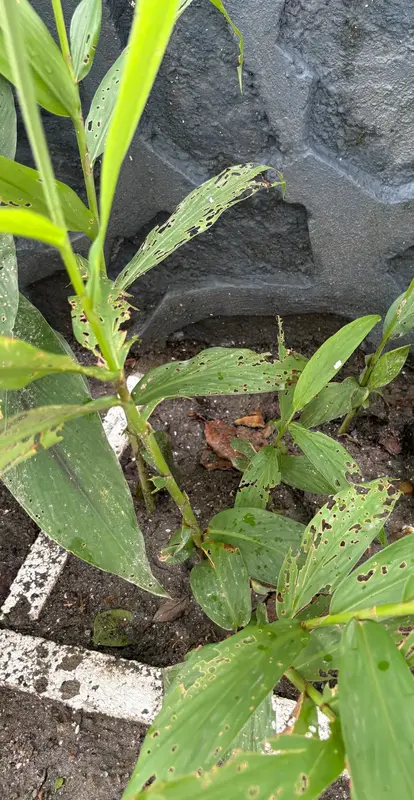
Galangal
Alpinia galanga
The part used in cooking is a rhizome, a stem that grows sideways underground. You can tell it is a stem and not a root by its rings (the nodes) and the buds that grow from them. A cousin of ginger with a sharper, more peppery bite.
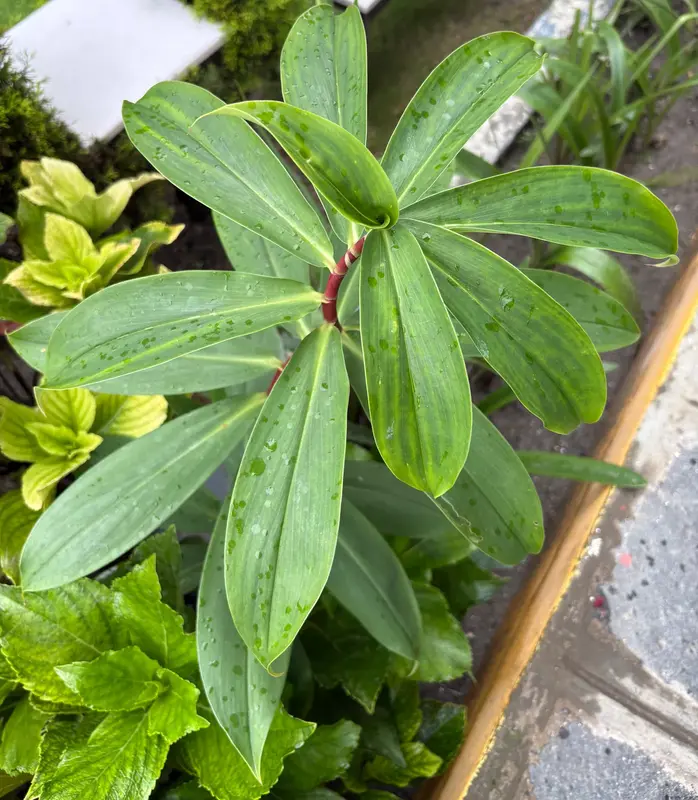
Crepe Ginger
Cheilocostus speciosus
It grows from a thick rhizome, an underground stem used in traditional medicine. Above ground, its leaves climb the stem in a neat spiral staircase, and its white flowers have crinkled petals like crepe paper.
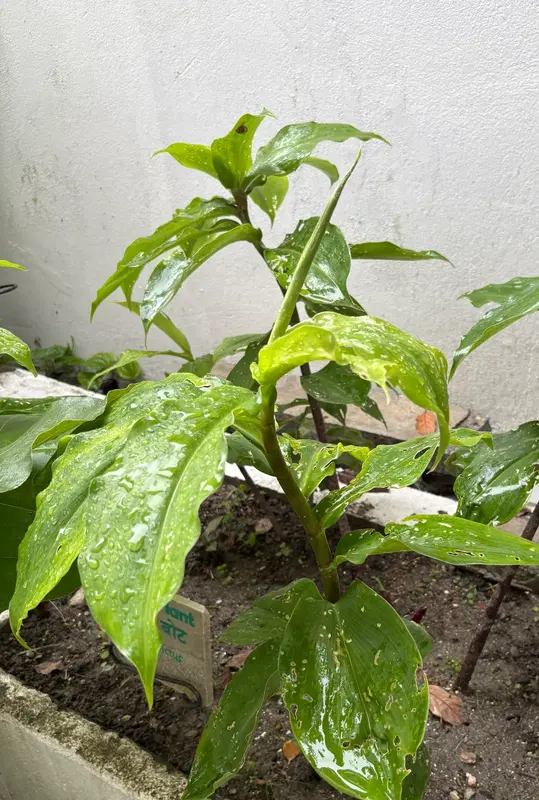
Insulin Plant
मधुमेह बोट
Costus igneus
A relative of ginger that spreads by an underground rhizome; new shoots come up from its buds. Notice how its leaves spiral up the stem. Its name comes from a folk belief that its leaves lower blood sugar; scientists are still studying that, so it is no replacement for medicine.
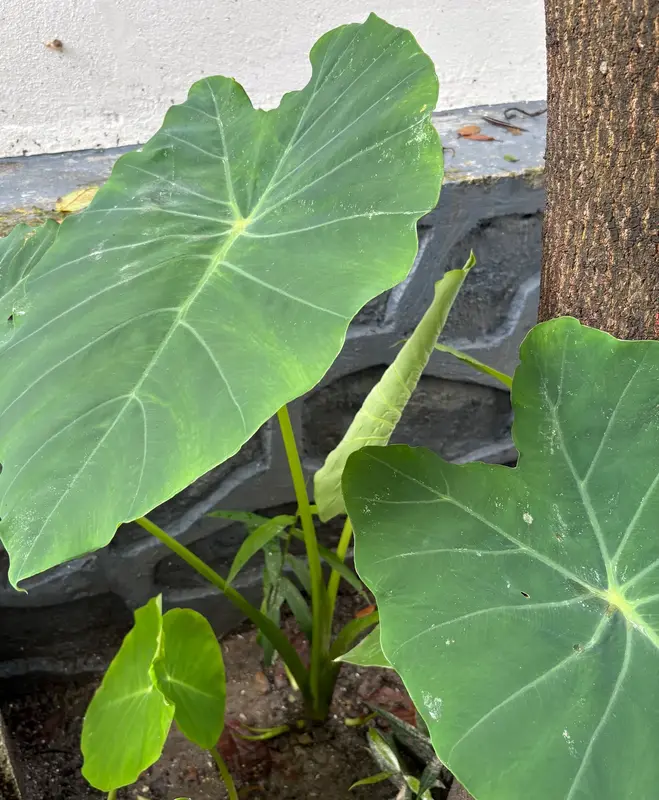
Taro (Pindalu)
कर्कलो (पिँडालु)
Colocasia esculenta
The pindalu we eat is a corm: a short, swollen underground stem, with rings for nodes and buds that grow into new plants. Its corms and leaves (karkalo) are eaten across Nepal, always cooked: raw, they sting the mouth. Water beads up and rolls right off its leaves.
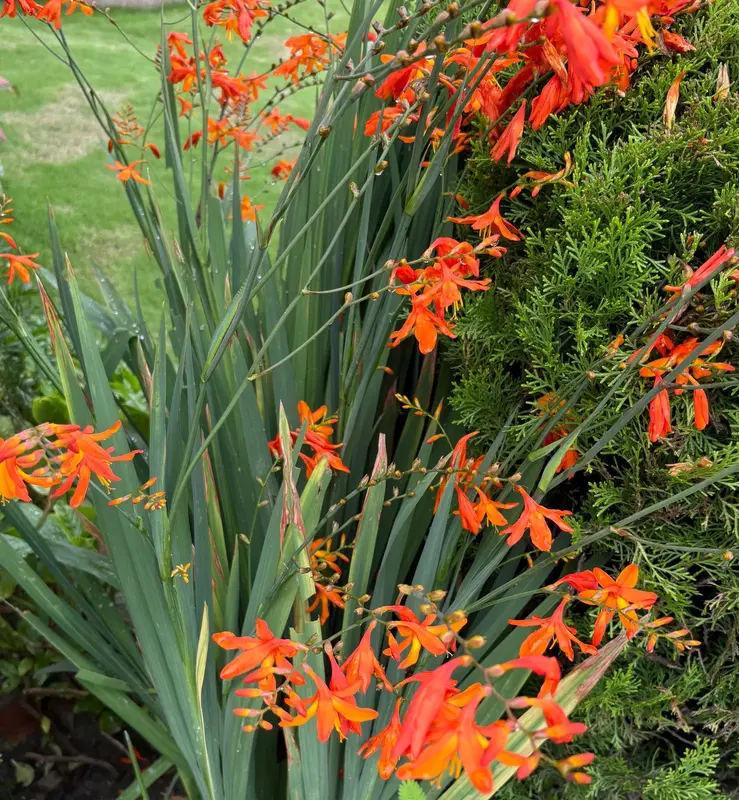
Crocosmia
रुद्रावती
Crocosmia sp.
It grows from a corm, a short swollen underground stem, and makes new corms each year, so a clump keeps spreading. Its orange flowers open one after another along arching stems; in its native Africa sunbirds visit them.
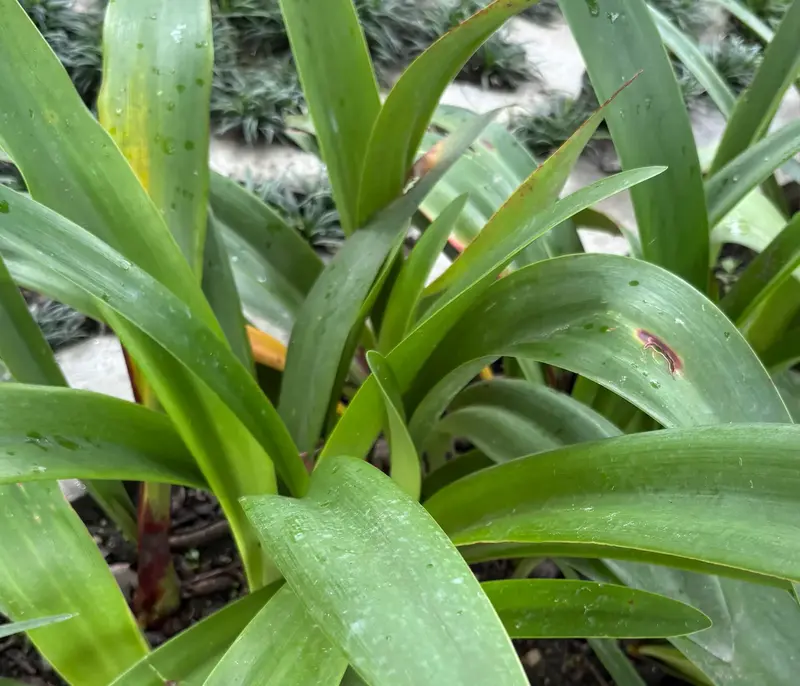
Amaryllis
Hippeastrum sp.
It grows from a big bulb: a short stem underground wrapped in thick, fleshy leaf bases that store food, like an onion’s layers. The flower sold as amaryllis is really a Hippeastrum from South America; the true Amaryllis is a different plant from South Africa.
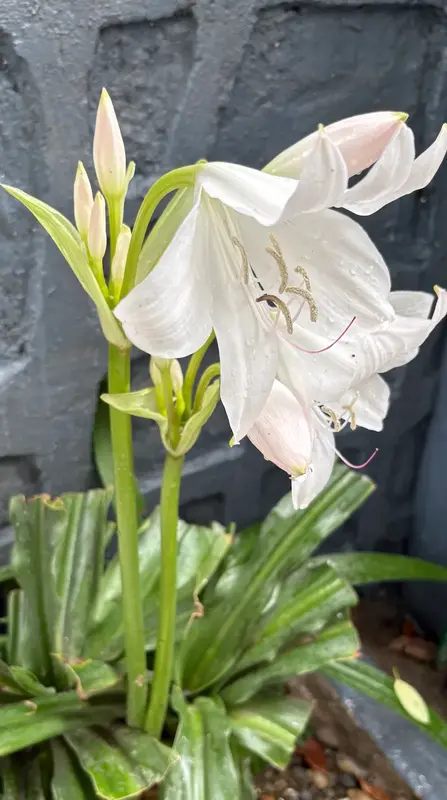
Crinum Lily
सुदर्शन फूल
Crinum × powellii
It grows from a huge bulb, a short underground stem wrapped in fleshy leaf bases, and sends up clusters of fragrant pink trumpet flowers, each with six petals: the monocot pattern of threes.
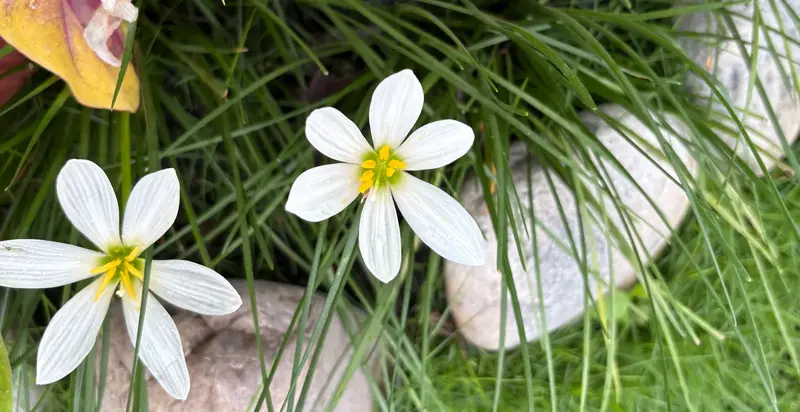
Rain Lily
लसुने फूल
Zephyranthes candida
It grows from a small bulb, which stores enough food to send up white six-petaled flowers a few days after heavy rain, popping up among its grassy leaves.
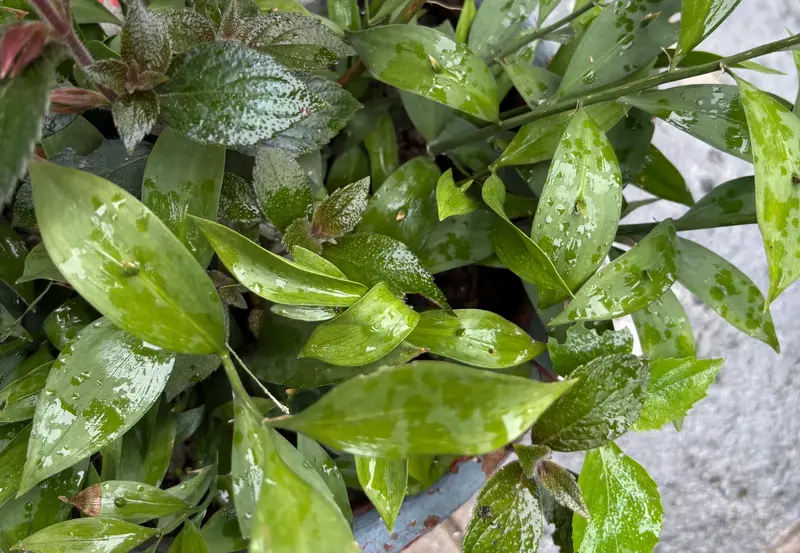
Butcher’s Broom
Ruscus aculeatus
What look like stiff, prickly leaves are cladodes, flattened stems that make food like leaves. The clue: tiny flowers, then red berries, grow right in the middle of them, and flowers only ever grow from stems. Butchers once scrubbed their chopping blocks with bundles of it.
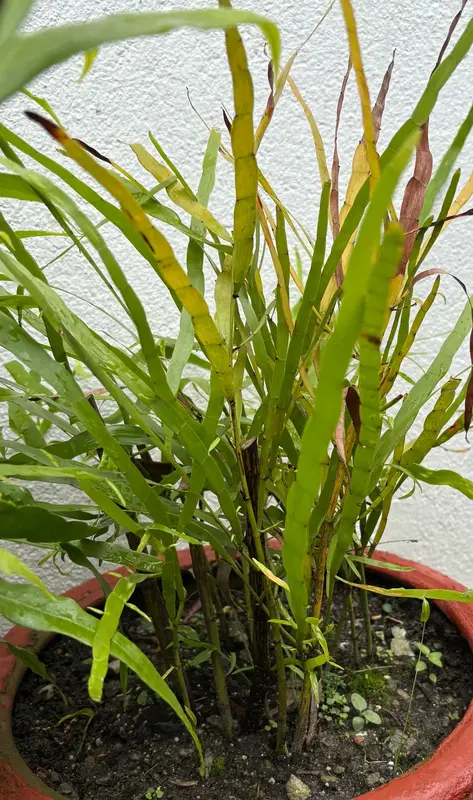
Tapeworm Plant
Homalocladium platycladum
Its segmented, ribbon-like “leaves” are really cladodes, flat green stems that do the food-making; the lines across them are nodes. True leaves appear only briefly and then drop.
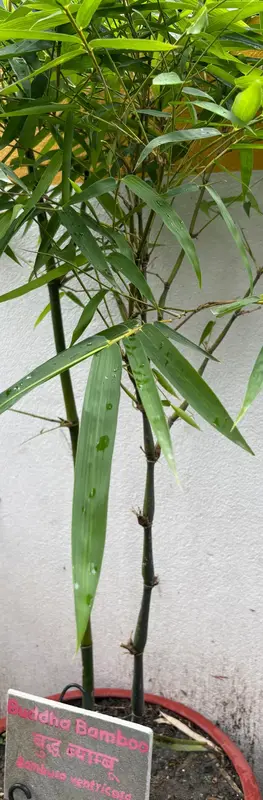
Buddha Belly Bamboo
Bambusa ventricosa
The best place to see what makes a stem a stem: rings called nodes, with buds and leaves at them, and the stretches between, the internodes. In a pot or dry soil, this bamboo’s internodes swell into round “bellies.” Bamboo is a giant grass.
More in The Plant Body
The garden is alive and changes through the year. Some plants flower, fruit, or rest only in certain seasons, so what you see depends on when you visit.
See them for yourself
Every plant here grows on our campus in Bhaktapur. Walk the garden on your visit.
Book a Visit